Connexion
Key Moments From the Georgia Senate Debate Beween Ossoff and Collins
Senator Jon Ossoff, a Democrat, called his Republican opponent, Representative Mike Collins, a bigot. Mr. Collins called the incumbent a radical “trust-fund kid.”

Military families admit ‘mixed emotions’ as aircraft carrier finally returns to San Diego after fraught stretch at sea that took severe toll
By 4am on Thursday, the sky still pitch black, 19-year-old Pvt Grayden Monroe and his mom had already arrived to the naval base in San Diego, California. As the very first military family members to get there, they huddled on a set of metal bleachers overlooking the dark water. The duo were waiting for Monroe’s 21-year-old sister to step off the USS Abraham Lincoln, the embattled aircraft carrier that’s been at sea for the better part of a year.
Monroe, a soldier stationed at Fort Campbell, was wearing his army uniform for the occasion. “I hope she’s proud of me,” he said of his sister, “and I hope she knows damn well that I’m just as proud of her.”
Continue reading...
© Photograph: Mike Blake/Reuters

© Photograph: Mike Blake/Reuters

© Photograph: Mike Blake/Reuters

© Associated Press
Lawyer for CNN, MS Now and Politico says Trump admitted he banned networks from White House over their coverage
Donald Trump continues to be the strongest witness for the media companies arguing that they were unfairly barred from the White House at his direction, a lawyer representing CNN, MS Now and Politico told a federal judge on Thursday afternoon.
The media coalition was in court asking the judge to extend the temporary restraining order (TRO) he issued on 24 September requiring the White House to lift the ban for 14 days. That temporary reprieve was scheduled to expire on Thursday, but district court judge Timothy Kelly, a Trump appointee, said he would extend it until Tuesday and that he would probably rule on a motion for a preliminary injunction by that day. That means the White House will be forced to allow journalists from CNN, MS Now and Politico to continue accessing the building until at least Tuesday.
Continue reading...
© Photograph: Evan Vucci/Reuters

© Photograph: Evan Vucci/Reuters

© Photograph: Evan Vucci/Reuters

Lithuania plans to deploy up to 100 soldiers to support border guards along its frontier with Russia's Kaliningrad Oblast, Defense Minister Robertas Kaunas said on 7 October.
Lithuanian Interior Minister Martynas Katelynas has described the deployment as a preventive measure linked to possible Russian mobilization and a recent incident on the Latvia-Belarus border, where masked, armed escorts tried to push a group of migrants into Latvia. Katelynas said Lithuania could face people trying to avoid mobilization and seeking asylum.
Kaunas said he had granted permission to use Lithuanian soldiers to strengthen border protection for the next several weeks.
“The order starts being implemented immediately,” he wrote on Facebook.
The Kremlin denies a new mobilization is coming. In early September, Russian President Vladimir Putin called reports of one "complete nonsense" and "an information attack on Russia." Ukraine's military and foreign intelligence services say Russia's General Staff has prepared a scenario to mobilize 600,000 people over 2026 and 2027. On 28 September, President Volodymyr Zelenskyy said that "in effect, the Russians have already begun additional mobilization."
On 8 October, the Lithuanian army said soldiers were being brought in to help the State Border Guard Service from that day. A company-sized unit was planned for the assignment, initially for two weeks, with the option to extend. Soldiers will patrol with border guards in frontier-station areas, while mobile patrols, mobile observation posts, and military police crews may be added as needed. The army described the deployment as preventive and a normal form of interagency cooperation.
Kaunas had told LRT TV the soldiers would stay until 16 October. On the morning of 8 October, he said the deployment "was supposed to start" overnight and that he would check with the army. On 8 October, the Lithuanian army said soldiers were being brought in to help the State Border Guard Service from that day. Kaunas also said that “on the Kaliningrad side” there were no physical barriers, unlike the border with Belarus.
On 8 October, Katelynas said the border guard service’s capacity was insufficient, with shifts growing while officer numbers were not increasing. He said the threat level had not changed. In a Facebook post the previous day, he said the situation at Lithuania’s border was calm and there was no reason to panic. He said Russia was planning mobilization after the elections and that Lithuania may face people trying to avoid it and seeking asylum.
Lithuania's State Border Guard Service had turned back 1,693 people trying to cross illegally from Belarus this year and about 26,300 since the migration crisis began, as reported by ELTA on 8 October. Katelynas said 43 migrants tried to enter southern Lithuania last week and were turned back.

© Associated Press

© Nikolay Doychinov for The New York Times
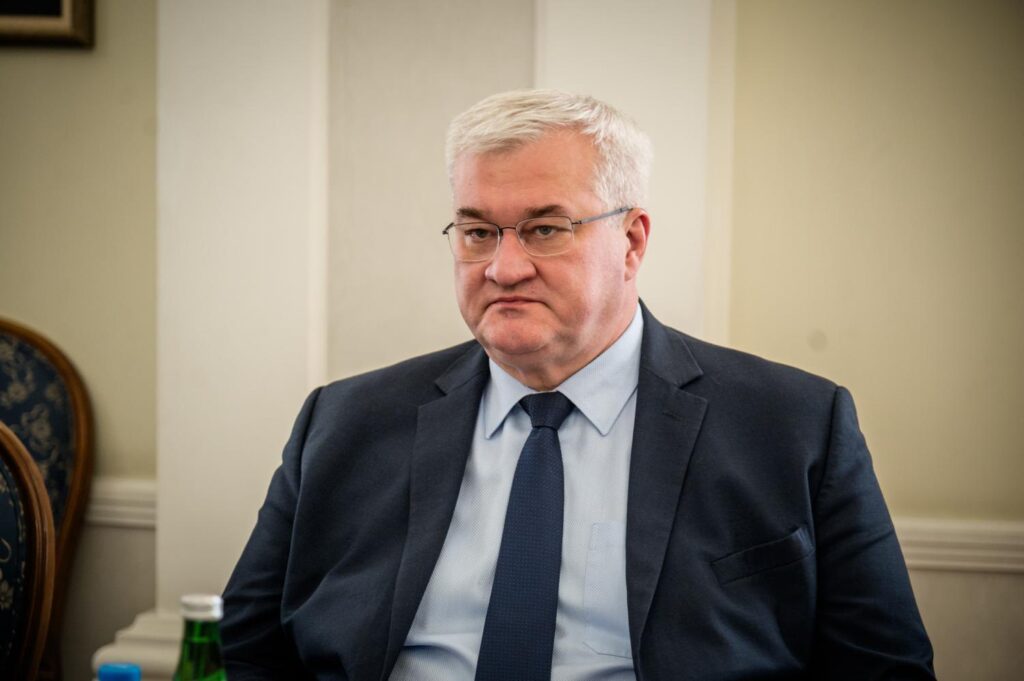
Ukrainian Foreign Minister Andrii Sybiha said Russia's handling of a suspected pneumonic plague case fit what he described as Moscow's history of concealing information about dangerous incidents, citing the 1979 anthrax outbreak, the Chornobyl disaster, and the COVID-19 pandemic, according to his post on X on 8 October.
A 28-year-old worker at the Irkutsk Anti-Plague Research Institute, Daria Shipilova, died at Shelekhov District Hospital on 2 October. The hospital was placed under quarantine, and nearly 200 people who had contact with her were put under medical observation.
Sybiha has called on Russia to disclose all the facts surrounding the case, provide transparent epidemiological data, and cooperate with international mechanisms.
"Russia has a long record of concealing the truth: the 1979 anthrax leak in Sverdlovsk, the 1986 Chornobyl disaster, and the true scale of COVID-19 in 2020–2022," he said.
Plague is caused by the bacterium Yersinia pestis, which is usually found in small mammals and their fleas. Bubonic plague, the most common form, is caused by the bite of an infected flea. Pneumonic plague is the most virulent form: left untreated, it can be fatal within 18 to 24 hours of onset, though common antibiotics can cure it if given early.
But each time, the consequences were devastating.
Sybiha added that there is compelling evidence that Russia has used chemical weapons in Ukraine and has threatened to use nuclear weapons in its genocidal war. His remarks came amid rumors that the plague could have originated in a biological laboratory developing weapons.
"The world must not wait for another catastrophe before asking questions," he said.
Russia must disclose all the circumstances surrounding the case, provide transparent epidemiological data, and cooperate with international mechanisms because “when dangerous pathogens are involved, secrecy is a threat to everyone,” Sybiha added.
The World Health Organization (WHO) says it still lacks the data it needs for a full risk assessment, while Russia has told the organization that no cases of plague have recently been reported in Irkutsk Oblast.
WHO Director-General Tedros Adhanom Ghebreyesus says that the organization has asked Russia for "further information on the laboratory tests conducted on the individual who died and the contacts," more details on what prompted the public health measures, and the health status of the contacts. The organization also seeks verification of media reports of a second employee with pneumonia of undetermined cause.
Based on "unofficial information," the public health risk to the general population appears to be low, WHO spokesperson Christian Lindmeier says, according to Forbes.
On 6 October, US Secretary of State Marco Rubio said information з приводу вирогідної хвороби from Russia was "still quite limited."
The next day at the White House, a reporter asked US President Donald Trump whether the plague in Russia was a bioweapon, according to CNN.
"Well, we don't think so. We're going to find out soon enough, but we don't think so," he said.
The reporter also asked whether Trump was “getting the same vibe right now from Russia that you got from China at the start of COVID.”
"Well, China didn't say much, and Russia's not saying much either, but they do say they have it very much under control," Trump answered.
According to city’s rent board, eviction notices are up 44% and tenants are on edge over landlords swooping in over their homes
To say that Maria Zamudio and her team have been busy lately would be a gross understatement.
Every Monday at 9am, the phone lines at the downtown clinic of San Francisco’s Housing Rights Committee start ringing, and they keep ringing until closing at 5pm. In-person counseling appointments for renters facing eviction or landlord misconduct fill days in advance. After every weekend, the staff of seven sits in their office and sifts through more than 150 voicemails. The rental assistance hotline averages 200 calls a week.
Continue reading...
© Illustration: Guardian Design / Getty Images

© Illustration: Guardian Design / Getty Images

© Illustration: Guardian Design / Getty Images

© Ukrainian State Emergency Service, via Agence France-Presse

© Sergei Supinsky/Agence France-Presse — Getty Images
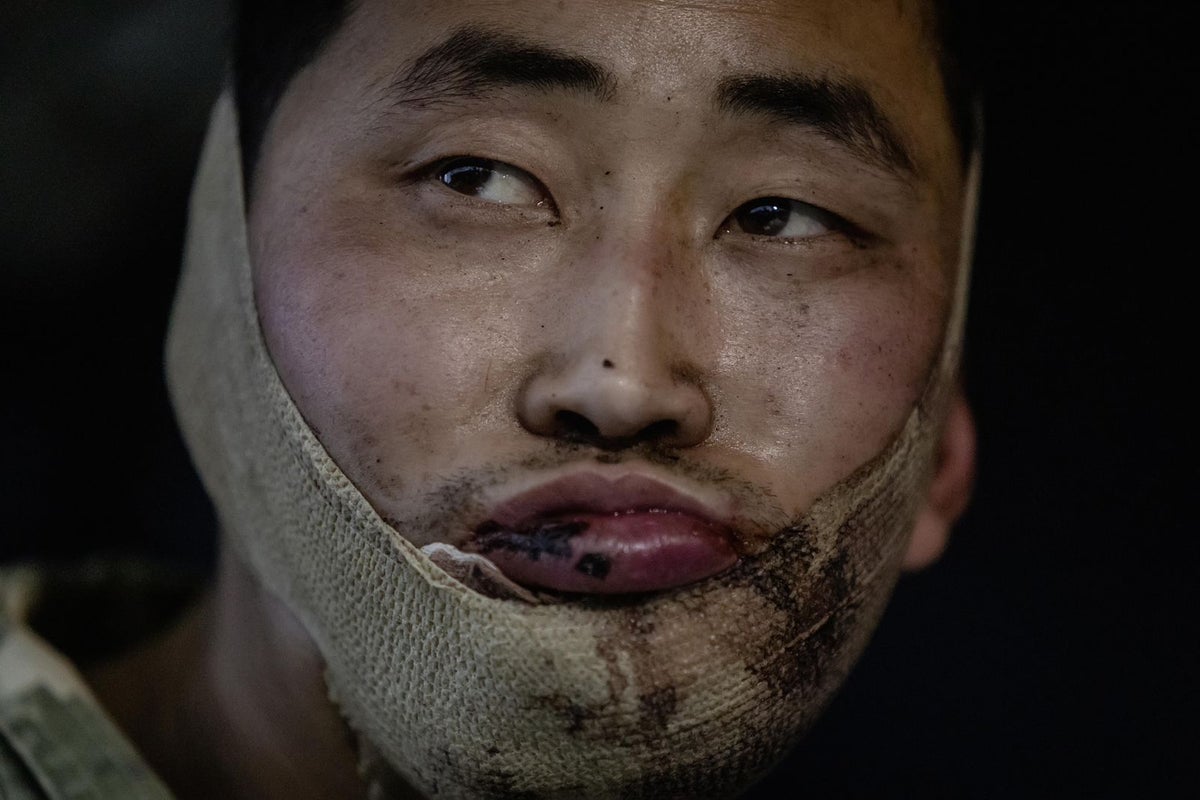
The unusual public confrontation between Ukraine and South Korea has raised questions about how relations between two nations facing the consequences of growing Russian-North Korean military cooperation deteriorated so sharply. Shweta Sharma reports
© @ZelenskyyUa/X

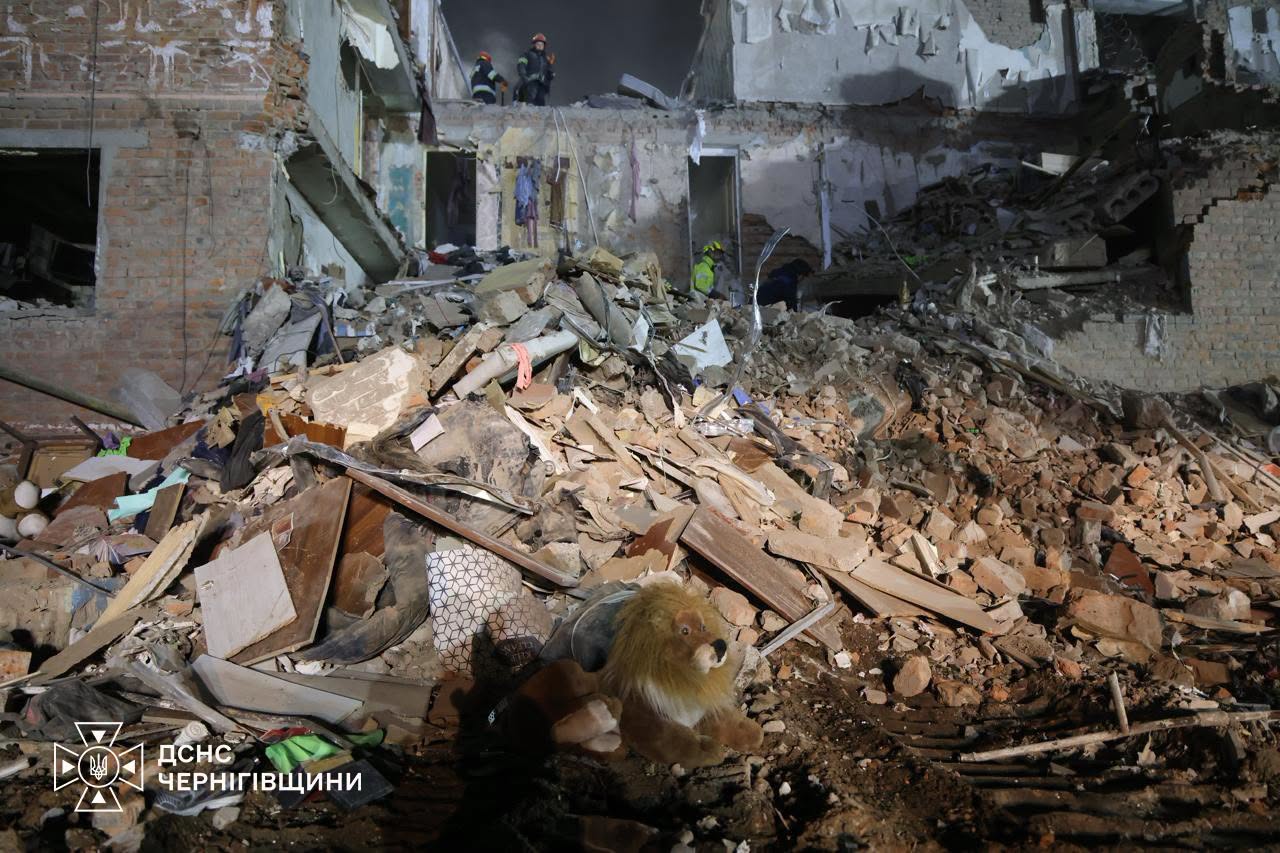
A Russian missile strike on an apartment building in Pryluky, a town in northern Ukraine's Chernihiv Oblast, killed 22 people on 7 October, regional police reported on the morning of 8 October. Five of the dead were children: three one-year-old boys, an eight-year-old boy, and a 13-year-old girl, police said.
Russian strikes on Pryluky, Kremenchuk, Oleksandriia, and Kyiv killed 28 people on 7 October, Interior Minister Ivan Vyhivskyi said. For the town, it was the second deadly missile strike since May. Behind the toll are families like this one: three generations hit by a single strike.
Three-year-old Zlatoslava is now in the Chernihiv Oblast children's hospital, Pryluky district police chief Vladyslav Stoianov told. Her mother, Kateryna, is hospitalized too. The two had come on the evening of 6 October to visit Kateryna's sister, police officer Yuliia Malysh. The girl's father stayed home in Lynovytsia, a village 15 km away.
Yuliia was wounded and is in hospital, Stoianov said. Her husband, Oleh Malysh, was killed. Until recently, Oleh had fought at the front in the Chernihiv Oblast police rifle battalion. The sisters' mother, Liudmyla, had also come over that evening, and she died too. All the family details come from Stoianov, who was describing a colleague's family.
Footage of an emergency worker carrying a little girl from the ruins reached almost all media, Vyhivskyi wrote in the same post. Suspilne first reported that the filmed rescuer had carried Zlatoslava. It then corrected itself: he had carried a different child, five-year-old Zoriana. Vyhivskyi also gives the girl's age as five, and he named the rescuer as State Emergency Service section commander Pavlo Levchenko. With colleagues, Levchenko freed the girl and her mother after the blast threw them out of the building.


© Isabel Infantes/Reuters
AI is already implicated in violent deaths and nearly started world war three. Those bad things? They only happen to other people
Sam Altman, the chief executive of OpenAI, has some words for you about his company and the future of artificial intelligence.
“One of the differences between us and some of the stricter AI safety people is that we believe that the world should accept some bad things happening for the benefits of this technology and people having the agency [to use it],” Altman told Politico’s new technology podcast and newsletter Decoded.
Moustafa Bayoumi is the author of the award-winning books How Does It Feel to Be a Problem?: Being Young and Arab in America and This Muslim American Life: Dispatches from the War on Terror. He is professor of English at Brooklyn College, City University of New York, and a Guardian US columnist
Continue reading...
© Photograph: Heather Diehl/Getty Images

© Photograph: Heather Diehl/Getty Images

© Photograph: Heather Diehl/Getty Images

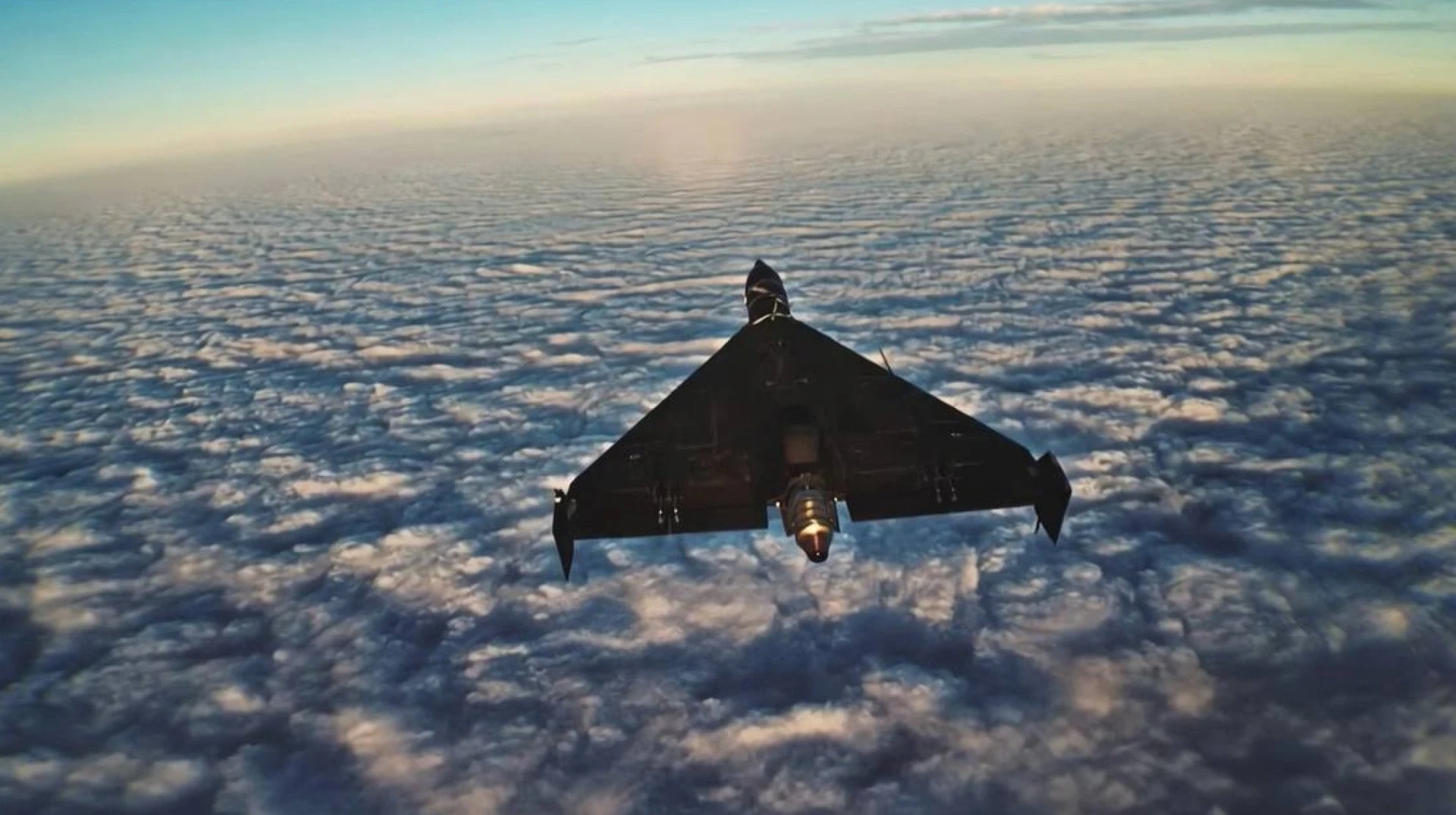
Russia is concentrating missiles on a smaller, more specific set of targets, and its jet-powered attack drones are part of the reason, the Institute for the Study of War (ISW) assessed. Its combined attack overnight on 7 October killed 22 people in Pryluky, the State Emergency Service (SES) said as of the morning of 8 October. Russian milbloggers noted the shift the same day.
Russia often uses concentrated drone and missile strikes to overwhelm localized Ukrainian air defenses and destroy urban centers, ISW noted. Pryluky, where the strike killed children, was one of the areas a Russian channel says drew a significant share of the Kh-101s that night. With winter close, ISW expects the same pattern against Ukraine's energy grid, with jet drones partly letting Russia keep its missiles for priority targets without firing many more.
Russia launched 48 Kh-101, Iskander-K, and Kalibr cruise missiles overnight on 7 October, Ukraine's Air Force reported. It also fired ballistic missiles, Zircon and Oniks anti-ship missiles, and 130 strike and decoy drones, 46 of them jet-powered Shahed-type models.
Russian milbloggers claimed the same day that Moscow had grouped a large part of its missile salvo into repeated waves on a few areas, while other weapons kept stretching Ukraine's air defenses elsewhere. The pro-war Russian Telegram channel Dva Mayora described the change as a switch from striking with splayed fingers to a series of hits with missile "fists." Defenders must then absorb a sharply rising load around one chosen site as one wave follows another, the channel claimed.
Citing Ukrainian monitoring channels, it claimed that roughly 30 or more Kh-101 cruise missiles flew toward Pryluky, Kremenchuk, Svitlovodsk, and Oleksandriia in Chernihiv, Poltava, and Kirovohrad oblasts. It put the Kremenchuk group at up to 15 missiles, Kh-101s and Kalibrs among them, aimed at the area of Kremenchuk and its hydroelectric plant.
ISW said the jet-powered versions penetrate Ukrainian air defenses deeper and more reliably than propeller models. In ISW's assessment, that partly lets Russia concentrate cruise and ballistic missiles on priority targets without significantly raising missile use. Russia builds about 3,000 Geran-4 and Geran-5 jet drones a month, Ukraine's military intelligence agency (HUR) told Militarnyi in August.
ISW expects Russia to apply the pattern in a likely brutal winter campaign against energy infrastructure. Russia likely intends to make city life untenable and force Ukraine to capitulate to its demands, ISW assessed. Such tactics have not worked before and are unlikely to work now, analysts added.
They called cheap countermeasures to jet drones and small cruise missiles vital, alongside Western air defense aid such as US-made Patriots, which can stop ballistic missiles. Ukraine has already paired a Soviet-era Kub launcher with American RIM-7 interceptors to catch jet drones.

© Agence France-Presse — Getty Images

© Adnan Abidi/Reuters
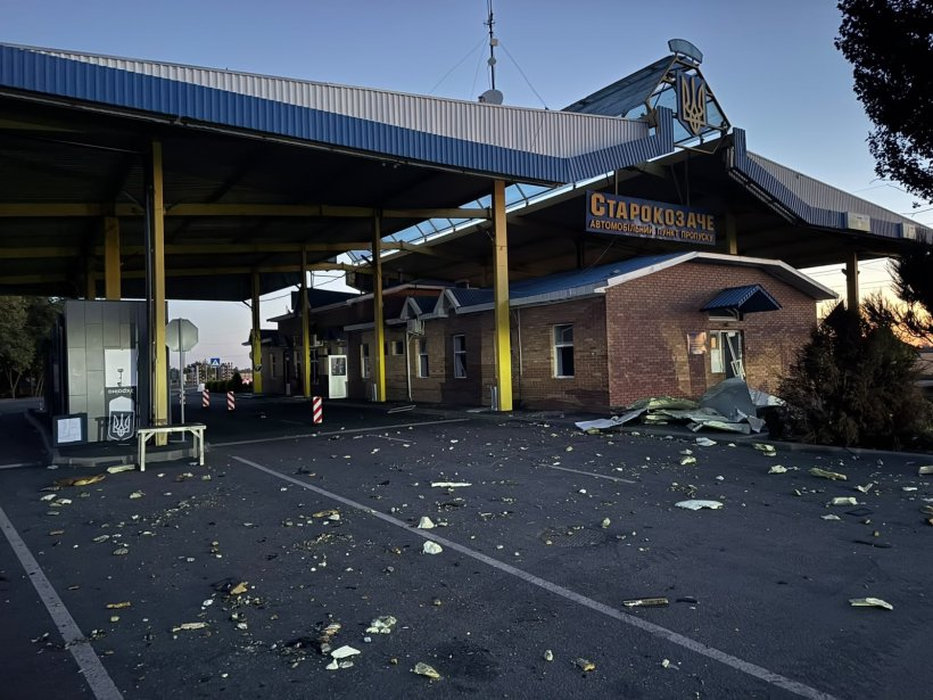
Ukraine plans 135 basic mobile shelters for civilians at 28 of its border crossings, the State Agency for Restoration and Infrastructure Development said on 7 October.
Since the start of September, Russian drones have repeatedly struck crossings on Ukraine's borders with Moldova and Romania. Since mid-September, strikes have also reached the Polish border near the Yahodyn crossing in Volyn Oblast. On 13 September, a Russian drone strike set a gas station near the crossing on fire. On 28 September, the blast wave from another strike damaged the checkpoint building. On 25 September, First Deputy Minister for Restoration, Infrastructure and Transport Serhii Derkach said Ukraine is exploring with its neighbors whether some checkpoints could move onto their territory. No agreement has been reported. On 2 October, Moldovan Interior Minister Daniella Misail-Nichitin said Moldova had set up shelters next to its crossings with Ukraine and started relocating staff from joint checkpoints.
The shelters will stand at the crossings and on the roads leading to them. Regional recovery services in Vinnytsia, Odesa, Chernivtsi, Zakarpattia, and Volyn oblasts are running the purchases. The agency said the shelters will make the border safer for people crossing it and for checkpoint staff.

In Chernivtsi Oblast, one of the 10 tenders the agency lists on Prozorro, Ukraine's public procurement system, covers eight shelters for 50 people each and three for 20 each, Ukrinform reported. They will stand on the approach road to the Porubne–Siret international crossing on the Romanian border. The work is expected to cost UAH 38.5 million (about $855,000), excluding VAT.
On 5 October, at about 09:38, a projectile fell near the Palanca–Maiaky–Udobne crossing on the Moldovan border. It ricocheted off the ground into a shuttle bus parked by the barrier and also damaged a control booth. One Moldovan border officer suffered light injuries, and the crossing was suspended, Moldova's Border Police said, linking the incident to Russia's attacks on Ukrainian infrastructure. Moldovan authorities did not specify the projectile's type or origin.
Overnight on 9 September, Russian drones struck the Starokozache crossing with Moldova, killing two people and injuring three. On 1 September, Russian Shahed drones hit the Orlivka ferry crossing on the Danube, opposite Romania's Isaccea, and temporarily shut it down. Another Russian strike on 6 September halted the crossing again.

© Anindito Mukherjee for The New York Times

© Anna Watts for The New York Times