❌

Vue normale

  • ✇Euromaidan Press
  • Ukraine’s FM links Russian plague scare to history of cover-ups, from anthrax to Chornobyl and COVID-19
    Ukrainian Foreign Minister Andrii Sybiha said Russia's handling of a suspected pneumonic plague case fit what he described as Moscow's history of concealing information about dangerous incidents, citing the 1979 anthrax outbreak, the Chornobyl disaster, and the COVID-19 pandemic, according to his post on X on 8 October. A 28-year-old worker at the Irkutsk Anti-Plague Research Institute, Daria Shipilova, died at Shelekhov District Hospital on 2 October. The hospital was placed under quar
     

Ukraine’s FM links Russian plague scare to history of cover-ups, from anthrax to Chornobyl and COVID-19

8 octobre 2026 à 10:38

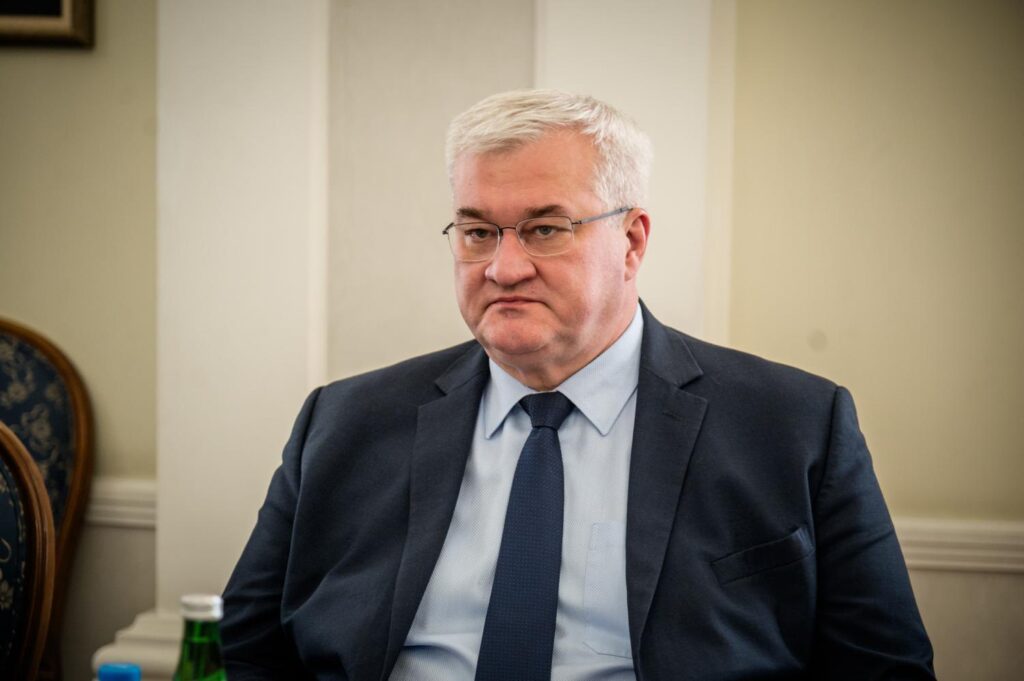
Ukrainian Foreign Minister Andriy Sybiha.

Ukrainian Foreign Minister Andrii Sybiha said Russia's handling of a suspected pneumonic plague case fit what he described as Moscow's history of concealing information about dangerous incidents, citing the 1979 anthrax outbreak, the Chornobyl disaster, and the COVID-19 pandemic, according to his post on X on 8 October.

A 28-year-old worker at the Irkutsk Anti-Plague Research Institute, Daria Shipilova, died at Shelekhov District Hospital on 2 October. The hospital was placed under quarantine, and nearly 200 people who had contact with her were put under medical observation.

Sybiha has called on Russia to disclose all the facts surrounding the case, provide transparent epidemiological data, and cooperate with international mechanisms.


"Russia has a long record of concealing the truth: the 1979 anthrax leak in Sverdlovsk, the 1986 Chornobyl disaster, and the true scale of COVID-19 in 2020–2022," he said.

Plague is caused by the bacterium Yersinia pestis, which is usually found in small mammals and their fleas. Bubonic plague, the most common form, is caused by the bite of an infected flea. Pneumonic plague is the most virulent form: left untreated, it can be fatal within 18 to 24 hours of onset, though common antibiotics can cure it if given early.

But each time, the consequences were devastating.

Sybiha warns of the risks of secrecy

Sybiha added that there is compelling evidence that Russia has used chemical weapons in Ukraine and has threatened to use nuclear weapons in its genocidal war. His remarks came amid rumors that the plague could have originated in a biological laboratory developing weapons.

"The world must not wait for another catastrophe before asking questions," he said.

Russia must disclose all the circumstances surrounding the case, provide transparent epidemiological data, and cooperate with international mechanisms because “when dangerous pathogens are involved, secrecy is a threat to everyone,” Sybiha added.

WHO seeks more information from Russia

The World Health Organization (WHO) says it still lacks the data it needs for a full risk assessment, while Russia has told the organization that no cases of plague have recently been reported in Irkutsk Oblast.

WHO Director-General Tedros Adhanom Ghebreyesus says that the organization has asked Russia for "further information on the laboratory tests conducted on the individual who died and the contacts," more details on what prompted the public health measures, and the health status of the contacts. The organization also seeks verification of media reports of a second employee with pneumonia of undetermined cause.

Based on "unofficial information," the public health risk to the general population appears to be low, WHO spokesperson Christian Lindmeier says, according to Forbes.

US officials say they know little about what is happening in Russia

On 6 October, US Secretary of State Marco Rubio said information з приводу вирогідної хвороби from Russia was "still quite limited."

The next day at the White House, a reporter asked US President Donald Trump whether the plague in Russia was a bioweapon, according to CNN.

"Well, we don't think so. We're going to find out soon enough, but we don't think so," he said.

The reporter also asked whether Trump was “getting the same vibe right now from Russia that you got from China at the start of COVID.”

"Well, China didn't say much, and Russia's not saying much either, but they do say they have it very much under control,"  Trump answered.

  • ✇The Kyiv Independent
  • UK sanctions Russian officials and lab over chemical weapons use in Ukraine
    The United Kingdom has imposed new sanctions on Russian individuals and an organization involved in the use and transfer of chemical weapons in Ukraine, the British government announced on July 7.According to the updated sanctions list published on the U.K. government's official website, the new measures target Russia's Scientific Research Institute of Applied Chemistry, as well as Lieutenant General Alexei Rtishchev, head of Russia's Radiological, Chemical and Biological Defense Troops, and his
     

UK sanctions Russian officials and lab over chemical weapons use in Ukraine

7 juillet 2025 à 15:32
UK sanctions Russian officials and lab over chemical weapons use in Ukraine

The United Kingdom has imposed new sanctions on Russian individuals and an organization involved in the use and transfer of chemical weapons in Ukraine, the British government announced on July 7.

According to the updated sanctions list published on the U.K. government's official website, the new measures target Russia's Scientific Research Institute of Applied Chemistry, as well as Lieutenant General Alexei Rtishchev, head of Russia's Radiological, Chemical and Biological Defense Troops, and his deputy, Andrei Marchenko.

The U.K. government said that both of them "have been responsible for, engaging in, providing support for, or promoting prohibited activity related to chemical weapons."

The Scientific Research Institute of Applied Chemistry was sanctioned for providing Russia's military with handheld chemical grenades, which have been used against Ukrainian Armed Forces.

The new British sanctions come amid growing international concern over Russia's escalating use of banned chemical agents in its war against Ukraine.

On July 4, the Netherlands Military Intelligence and Security Service (MIVD) reported that Russian troops are increasingly deploying chemical weapons— including chloropicrin, a highly toxic World War I-era agent, in the field.

The agents are reportedly dropped by drones to flush Ukrainian soldiers from trenches, leaving them exposed to further drone or artillery strikes. While Russia previously used tear gas, the confirmed use of chloropicrin, a substance banned under international law, is "absolutely unacceptable," Dutch Defense Minister Ruben Brekelmans said.

Ukrainian authorities say Russia has conducted more than 9,000 chemical attacks since the full-scale invasion began in 2022. At least three Ukrainian soldiers have reportedly died from direct exposure.

Exclusive: Ukraine pitches deepwater gas, oil refinery projects to US under landmark minerals deal
Projects Kyiv has submitted to the U.S. for consideration as part of a profit-sharing deal for Ukraine’s resources include a shelf and deepwater project and an oil refinery that comes under frequent attack by Russia, Ukraine’s Economy Minister Yuliia Svyrydenko told the Kyiv Independent in an interview published on July 7. After months of hard-fought negotiations around the investment agreement — known more widely as the “minerals deal” for its focus on Ukraine’s critical minerals — the two sid
UK sanctions Russian officials and lab over chemical weapons use in UkraineThe Kyiv IndependentLiliane Bivings
UK sanctions Russian officials and lab over chemical weapons use in Ukraine
  • ✇The Kyiv Independent
  • Russia intensifying use of chemical weapons in Ukraine, Dutch intelligence reports
    Russia is escalating the use of chemical weapons against Ukrainian forces, the Netherlands Military Intelligence (MIVD) reported on July 4.Russian troops use banned chemical agents as psychological warfare to panic Ukrainian forces, forcing soldiers from dugouts and trenches with gas grenades dropped by drones, making them easy targets for subsequent drone or artillery attacks.According to MIVD report, it was previously known that Russia usesd tear gas, but now intelligence has confirmed the use
     

Russia intensifying use of chemical weapons in Ukraine, Dutch intelligence reports

4 juillet 2025 à 07:05
Russia intensifying use of chemical weapons in Ukraine, Dutch intelligence reports

Russia is escalating the use of chemical weapons against Ukrainian forces, the Netherlands Military Intelligence (MIVD) reported on July 4.

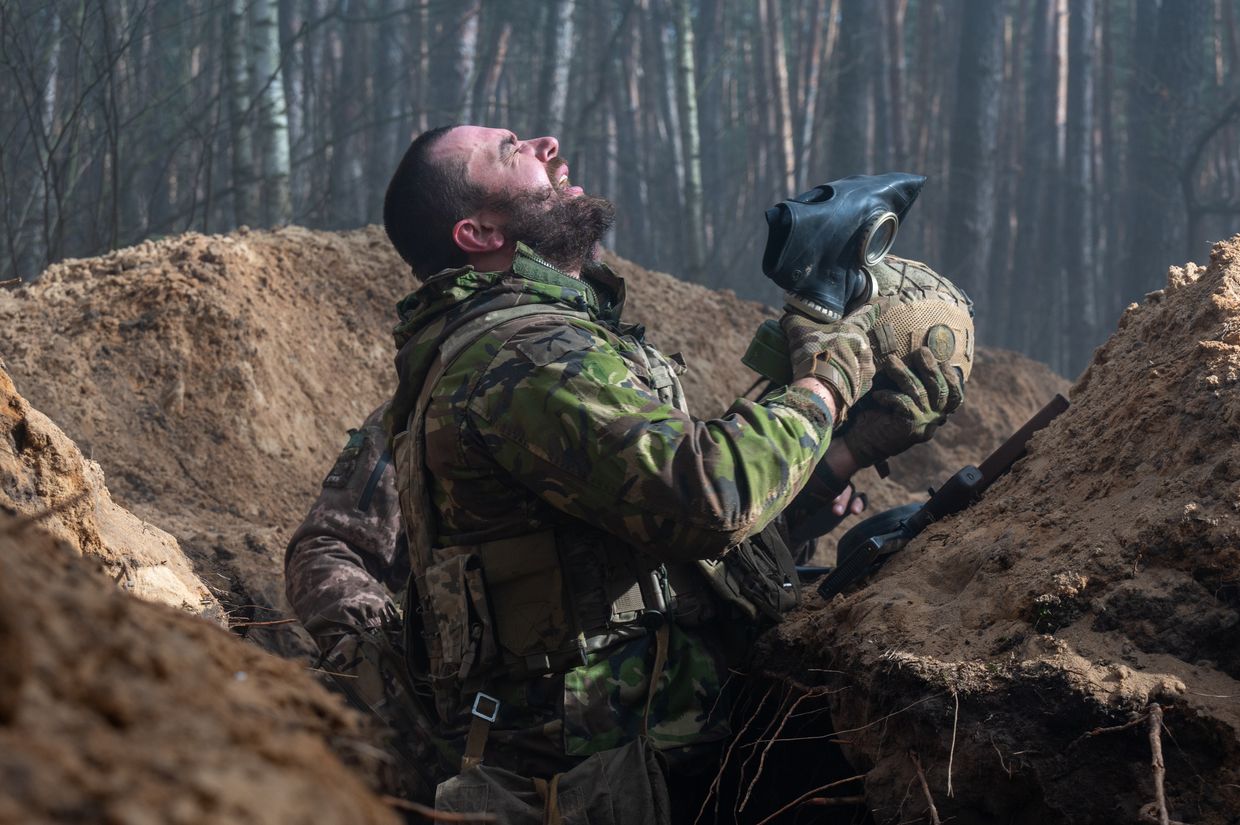
Russian troops use banned chemical agents as psychological warfare to panic Ukrainian forces, forcing soldiers from dugouts and trenches with gas grenades dropped by drones, making them easy targets for subsequent drone or artillery attacks.

According to MIVD report, it was previously known that Russia usesd tear gas, but now intelligence has confirmed the use of chloropicrin — a substance that can kill in high concentrations in enclosed spaces.

Use of of chloropicrin, banned under international law, was discovered by the Netherlands Military Intelligence and Security Service (MIVD) and General Intelligence and Security Service (AIVD) together with the German foreign intelligence service BND.

The Kyiv Independent previously reported rising chemical attacks, but Ukraine could not accurately identify the chemical substances due to lack of equipment.

The U.S. State Department had already reported in May that Russian forces have used the chemical agent chloropicrin in Ukraine. The May 1 announcement was part of a larger statement about the introduction of new U.S. sanctions against more than 280 individuals and entities.

For now, the original statement has been removed from the U.S. State Department website.

Russia is using this type of weapon more frequently and "with ease," says MIVD Director Vice Admiral Peter Reesink.

Dutch Defense Minister Ruben Brekelmans, who announced the news to the Dutch parliament, called the situation "absolutely unacceptable," calling for "more sanctions, isolation of Russia and unwavering military support for Ukraine."

"We are making this public now because Russia's use of chemical weapons must not become normalized," Brekelmans said. "If the threshold for using this type of weapon is lowered, it is dangerous not only for Ukraine but also for the rest of Europe and the world."

Since the start of the full-scale invasion in 2022, Russia has conducted over 9,000 chemical attacks. At least three Ukrainian soldiers have died directly from exposure to toxic substances, according to Ukraine's Ministry of Defense.

Dutch intelligence has established that Russian military leadership actively facilitates chemical attacks, and the use of banned substances has become standard practice for Russian forces.

Moscow is also increasing investments in chemical weapons programs, expanding research and recruiting new scientists, MIVD and AIVD observe.

The U.S. has accused Russia of deploying chloropicrin, often used in agriculture and widely weaponized as a “vomiting agent” during World War I.

‘Deliberately massive and cynical’ — Russian attack on Ukraine began as Trump and Putin spoke, Zelensky says
“Patriots and their missiles are real defenders of life,” President Volodymyr Zelensky said. “It is very important to maintain the support of partners in ballistic missile defense.”
Russia intensifying use of chemical weapons in Ukraine, Dutch intelligence reportsThe Kyiv IndependentAnna Fratsyvir
Russia intensifying use of chemical weapons in Ukraine, Dutch intelligence reports
❌