Dozens evacuated after flash-flood event near Bright Angel Canyon and Phantom Ranch, officials say
One person died and about 15 people were missing or unaccounted for after a major flash flood swept through the Grand Canyon national park in Arizona on Saturday afternoon, according to the National Park Service.
The flash-flood event occurred in the area of Bright Angel Canyon and the Phantom Ranch, where park staff and the Arizona department of public safety had evacuated more than 60 people as of Sunday morning.
Trump officials shuttering three projects on foodborne parasite, two defunded by Congress, Politico reports
The Trump administration is shuttering two of the three US Department of Agriculture research projects studying cyclospora after the foodborne parasite has sickened tens of thousands of Americans during the summer, Politico reported on Sunday.
The two projects were defunded by Congress earlier in the year, while the third is due to be moved in coming months from Maryland to Iowa as part of a broader USDA reorganization, according to the report.
During a 10-season career with the Rams, who drafted him with the 13th overall pick in 2014, Donald was a three-time defensive player of the year and an eight-time first team All-Pro. He won a Super Bowl with the Rams at the end of the 2021 season before announcing his retirement in March 2024 at the age of 32.
Dawn is champion after public voting of eight yellow-bellied marmots as they fattened up for long winter ahead
A marmot contest started by researchers who turned to OnlyFans to help save a decades-long research project has chosen its champion in its inaugural Fat Marmot Week.
Dawn was crowned the winner of Fat Marmot Week 2026 after securing back-to-back victories in both the mass-gain and popular-vote competitions, according to the organizers of the marmot project at the Rocky Mountain Biological Laboratory.
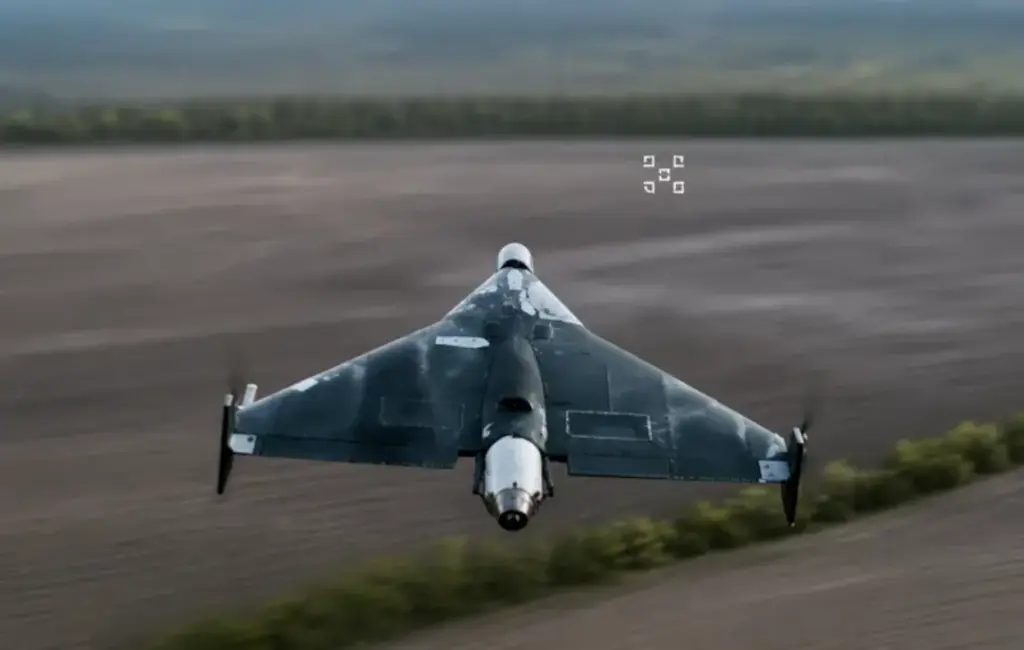
Ukraine has four potential interceptor systems that could shoot down Russia’s increasingly common jet-powered Geran attack drones, Ukrainian Defense Minister Yevhen Khmara said on 30 August, according to Suspilne.
Russia has sharply increased its use of the faster drones against Ukrainian cities, causing major damage to civilian infrastructure and many civilian casualties. The attacks are putting near-unprecedented strain on Ukraine’s air defenses.
All four interceptor systems have undergone field testing, Khmara said. Ukraine now aims to bring them to the required level as quickly as possible and scale production to thousands of units.
“The search for countermeasures against jet-powered drones continues,” Khmara told journalists, according to Suspilne. “There are already four potential interceptors that can shoot down jet-powered ‘Shaheds.’ Field tests have already been conducted on them.”
Russia is rapidly expanding Geran attacks
Russia's Gerans are jet-powered adaptations of the Iranian-designed Shahed attack drones that Russia has produced domestically throughout the full-scale war. The faster Geran variants give Ukrainian air defenses less time to detect and engage them.
Ukrainian defense technology adviser Serhii “Flash” Beskrestnov said Russia used more than 2,500 jet-powered Gerans against Ukraine in August, up from about 1,500 in July.
He also said the drones are being launched against Ukraine almost directly from Russian factories, highlighting the rapid expansion of their production and use.
Zelenskyy calls for faster production
Ukrainian President Volodymyr Zelenskyy has made countering the Gerans a priority as Russia sustains repeated attacks on Ukrainian cities.
At a 28 August meeting of Ukraine’s military leadership, Zelenskyy said the country needed to maximize domestic weapons production, with the immediate focus on defending against jet-powered Gerans and increasing Ukraine’s own long-range strikes against Russia.
“[The] main thing is our defense against jet-powered ‘Shaheds,’” Zelenskyy said in his evening address.
He said Russia had adopted a tactic of keeping Kyiv and other cities under repeated air raid alerts, with Gerans reaching the capital as well as cities including Kharkiv and Zaporizhzhia.
Explore further
Four days of Russian attacks keep Kyiv under near-constant fire. Ukraine is struggling to defend its skies
“All our means of countering [them] are already being used,” Zelenskyy said, adding that Ukraine needs a significant acceleration in production of interceptors specifically designed for the jet-powered drones.
Khmara said the four potential interceptors are now at the field-testing stage, with the next step being to bring them into production at a scale of thousands of units.
For Ukraine, that scale is critical. The country must defend a large territory against increasingly large Russian drone barrages while also preserving limited air-defense resources for ballistic and other missiles that require more advanced interceptors.
Tom Homan denies British far-right commentator, who was deported one day after arrest, got preferential treatment
The White House “border czar,” Tom Homan, denied on Sunday that deporting the British far-right commentator Milo Yiannopoulos just a day after being arrested by US Immigration and Customs Enforcement (ICE) amounted to preferential treatment.
Homan said it was his understanding that Yiannopoulos, 41, had overstayed what he believed to be a visitor visa, had not appeared at an immigration hearing and was issued a final order of removal on 22 July.
‘Alt-right’ agitator and former Trump backer deported from US is said also to be too extreme for Reform
As he arrives back in the UK after being deported from the US by the Trump administration, the far-right provocateur Milo Yiannopoulos may be wondering what lies ahead for him in his native country.
The “alt-right” agitator, 41, made his name in the US by promoting Donald Trump and associating with his allies before the 2016 election.
Trump’s threat comes after host described success record of candidates whom president had endorsed as ‘mixed’
Donald Trump on Sunday said NBC’s Kristen Welker – host of Meet the Press – should face “rebuke or punishment” from the Federal Communications Commission (FCC).
Welker, during a live segment for a local Washington DC affiliate, described the success record of political candidates whom the president had endorsed as “mixed”. The segment aired before Sunday’s edition of Meet the Press.
Outsourcing the industry to China cannot continue, but Europe knows it can no longer count on the US for a solution
The alarm sounded 16 years ago. In 2010, China blocked exports of key rare earths to Japan in a row over disputed islands in the East China Sea. The critical minerals are essential to everything from advanced weaponry and iPhones to electric vehicle batteries and wind turbines, so the rest of the world took note. But it didn’t take much action. China still accounts for about 70% of rare-earth mining globally and 90% of separation and processing.
Then, last year, Beijing forced Donald Trump to back away from his trade war – not with its retaliatory tariffs, but the curbing of rare-earth exports. A scramble for new supplies began in earnest. The year-long trade truce is due to expire in November. The price of erbium, an element essential to communications infrastructure, has already jumped because of fears that export controls will soon be renewed.
Another Russian strike has destroyed tens of thousands of Ukrainian books around Kyiv, adding to a summer of attacks that has wiped out millions of copies and damaged the warehouses, printing plants and markets that keep Ukraine’s publishing industry running.
Since Russia’s full-scale invasion began in 2022, Ukrainian publishers, printers, bookstores, warehouses and other parts of the literature industry have repeatedly been hit by Russian attacks.
The destruction has drawn comparisons to earlier Russian and Soviet efforts to suppress the Ukrainian language, culture and national identity, with publishers and cultural figures warning that the current attacks are damaging not only businesses and infrastructure but the means through which Ukrainian culture is produced and preserved.
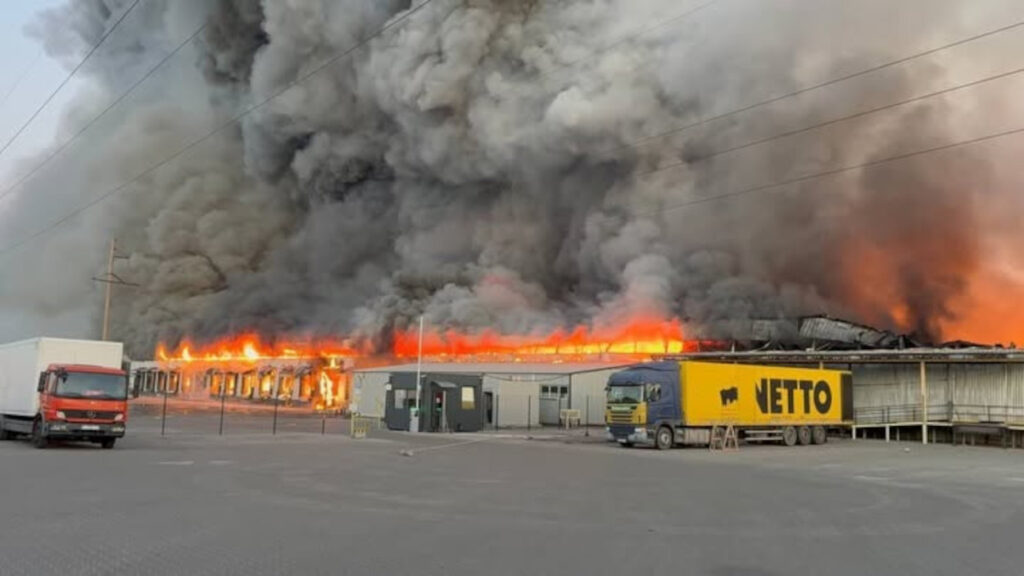
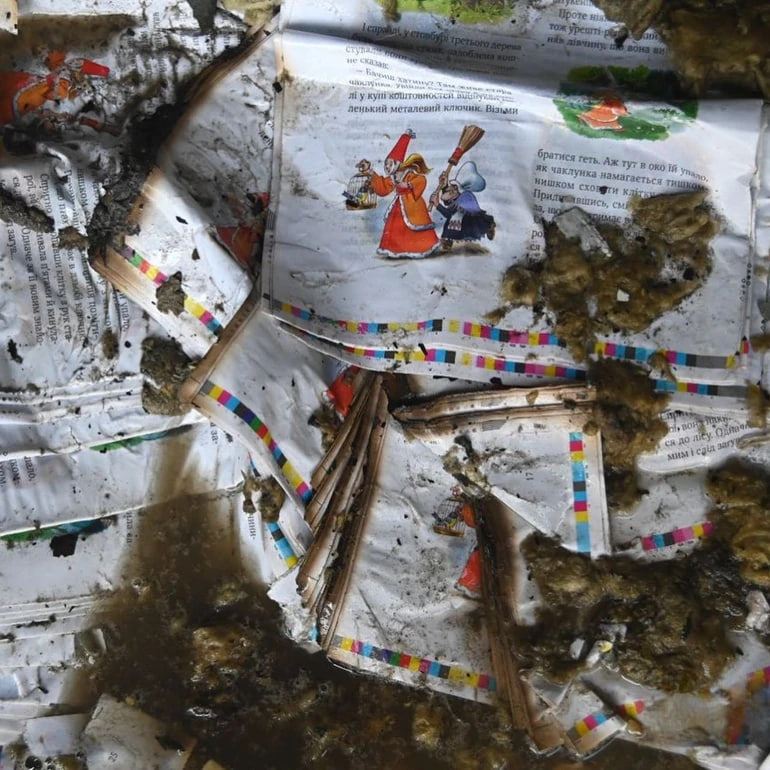
The latest loss came on 28 August, when a Russian drone struck a Nova Post fulfillment and sorting center in Sviatopetrivske, Kyiv Oblast. More than 60,000 books stored there were destroyed, including books belonging to Ukrainian publishers and retailers such as Vivat, A-BA-BA-HA-LA-MA-HA, Osnovy, Readeat and Book.ua.
The destruction is taking a growing toll on Ukrainian culture
Nova Post director Yevhen Tafiichuk said the strike destroyed the company's most modern robotic fulfillment center, along with books from several publishers and stores. He said the company is working with affected partners to compensate their losses and is moving toward a decentralized fulfillment system to reduce the risk of losing large inventories in a single strike.
“For centuries, the enemy has tried to destroy the Ukrainian language, culture and memory. Once, it burned libraries and banned printing; today, it launches missiles at printing plants and warehouses filled with books,” Tafiichuk said.
The latest destruction comes after the Ukrainian publishing industry estimated that Russian attacks had already destroyed about 13 million books in July and August – nearly a third of the number of books Ukrainian publishers printed during all of 2025.
Explore further
Russia has burned 13 million Ukrainian books in three months, nearly third of everything country printed in 2025
Another warehouse full of books goes up in flames
The Sviatopetrivske strike hit a logistics facility rather than a publishing house itself, but the consequences spread across much of the book market.
Readeat founder Dmytro Feliksov said more than 60,000 physical books were destroyed and estimated his company's losses at more than UAH 23 million. The warehouse held stock for several publishers and booksellers.
Vivat CEO Yuliia Orlova said the publisher also lost books stored at the Kyiv warehouse in the attack. The company had already begun moving some print runs to other parts of Ukraine, including Lviv, after earlier Russian strikes destroyed publishing infrastructure. But many new releases and books by Ukrainian authors remained in Kyiv.
The same attack destroyed a warehouse used by A-BA-BA-HA-LA-MA-HA to fulfill direct orders. The losses came as publishers were already trying to spread their inventories across multiple locations to reduce the risk posed by Russian strikes.
Millions of books destroyed across Ukraine, publishers hit again and again
On 1 August, a Russian strike on the warehouses of RNK-Ranok destroyed nearly 8 million books, including hundreds of thousands of school textbooks. The Ukrainian Book Institute said the loss from that strike alone was equivalent to about 30% of the country's annual book production.
A separate Russian strike on 19 July destroyed the Konvi printing facility and about 250,000 books belonging to Knyholav, along with print runs and materials belonging to numerous other publishers.
BookChef has suffered some of the largest losses around Kyiv. A Russian strike in July destroyed about 800,000 books at its main warehouse. A second strike in August hit a backup warehouse opened after the first loss, destroying more than 100,000 additional books, Interfax-Ukraine reported.
The attacks have also damaged publishing offices and warehouses. On 16 August, Russian strikes near Kyiv’s Pochaina metro station damaged the offices and warehouses of BookChef and RM, including areas where books were stored.
Kyiv’s Pochaina market also burned
The damage is not limited to modern distribution centers.
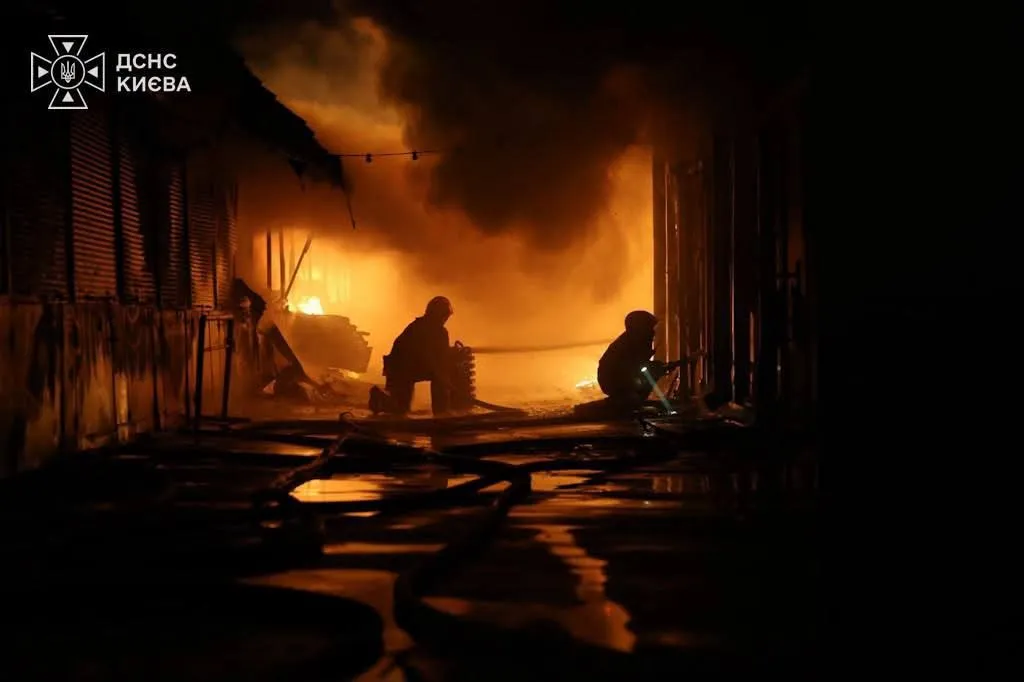
On 16 August, a Russian strike set fire to Kyiv’s Pochaina book market, one of the capital’s best-known places to buy new, used and second-hand books. Much of the market burned, with the fire covering more than 2,000 square meters of commercial space.
The market, formerly known as Petrivka, had operated for about 30 years and was a major hub for second-hand books and other goods. Dozens of thousands of books were destroyed, according to local reporting.
Kyiv’s Pochaina book market was hit again during Russia’s overnight missile attack, with rows of stalls burned and books damaged.
“Pochaina Book Market is finished. Three missiles hit the stalls. This time, the story is over,” Oleksandr Krasovytskyi, CEO of Folio publishing… pic.twitter.com/fum3LNN5Dt
The destruction was extensive enough that 60–70% of the market's commercial space was lost. The surviving Bukinist section began reopening later in August, with booksellers returning to trade where their stock had survived, RBC reported.
The market's destruction also meant the loss of a part of Kyiv's book culture that cannot simply be replaced by reprinting new editions. Second-hand books, older editions and used collections had been traded there for generations.
Explore further
Kyiv’s largest book market hit by Russian missiles
The losses are hitting an already fragile industry
The Ukrainian publishing sector had been growing before Russia's latest attacks, helped in part by rising demand for Ukrainian-language books during the full-scale invasion.
But publishers now face the repeated cost of replacing destroyed print runs, warehouses and equipment while also trying to keep books moving to stores and readers.
Olesia Ostrovska-Liuta, director general of Mystetskyi Arsenal, said the Ukrainian book industry had only recently begun to grow, making the latest losses especially painful.
“Losses are accumulating, while the tools to minimize them are being built extremely slowly,” she said. “Culture will not disappear, but it will once again be drained of its strength.”
Publishers seek help to rebuild and protect a supply chain under attack
The Ukrainian Publishing Association has called for additional support, including war-risk insurance for book stocks, affordable financing to rebuild printing capacity and the restoration of state purchases of books for libraries.
The Ukrainian Book Institute has also appealed for international support for the publishing sector, saying Russia has systematically targeted publishing houses, bookstores, printing facilities and warehouses since the start of the full-scale invasion.
For publishers, the latest strikes show that moving books from a printer to a reader has itself become a wartime vulnerability. A single warehouse can contain the output of dozens of publishers, and losing it can erase months of work and leave books unavailable even when the companies themselves survive.
Nova Post says it is responding by distributing inventory across more locations rather than relying on large centralized facilities. The strategy may help reduce future losses, but it also reflects how deeply Russia’s ongoing attacks have altered the basic infrastructure through which Ukrainians produce, store and buy books.
Meanwhile, Trump posts video of himself kicking over a Lake Ontario sign and replacing it with Lake America sign
Donald Trump and Canada continued a verbal duel on Saturday over the US government’s administrative renaming of Lake Ontario, with the Ontario premier erecting a giant sign saying “Lake Ontario. Now and Always” – and the American president posting a video of him tearing down an avatar of that sign, erecting a replacement saying Lake America, and dancing to YMCA.
Rhetoric over the naming of Lake Ontario is the public face of an escalating trade dispute between the US and its northern neighbor involving a 50% US tariff on Canadian steel and retaliatory tariffs from Ottawa.
Democratic Senate nominee is eager to push past series of controversies involving allegations of antisemitism
Michigan’s Democratic US Senate candidate Abdul El-Sayed apologized to the state’s Jewish Democratic caucus on Saturday for comments he made after an attack on a synagogue in March, which he tied to Israel’s actions in the Middle East.
“My comments may have been misconstrued to justify something I did not mean to justify,” El-Sayed told reporters after he addressed the caucus at a party convention in Lansing. “To anyone who feels like my comments might have been hurtful, I’m really sorry. That was not my intention.”
Ukraine’s Defense Forces struck three Russian military and energy targets overnight on 29-30 August, including a major oil refinery in Leningrad Oblast, a site used to store and launch attack drones in Rostov Oblast, and an airfield in Krasnodar Krai, Ukraine’s General Staff said.
Ukraine has increasingly targeted energy and military infrastructure inside Russia as part of an effort to disrupt the resources supporting Moscow’s war effort. Russia’s military relies heavily on fuel and other petroleum products produced at major refineries, while oil exports provide revenue that helps fund the war.
The General Staff said the strikes caused fires at all three sites. The extent of the damage is still being assessed.
Ukraine strikes one of Russia’s largest oil refineries
In Kirishi, Leningrad Oblast, Ukrainian forces struck the Kirishi oil refinery, also known as KINEF, Russia’s 2nd largest oil refinery.
The refinery has an annual processing capacity of about 20 million metric tons of crude oil and produces motor fuels, aviation fuel, diesel and other petroleum products, according to the General Staff. It also supplies fuel for Russia’s military.
KINEF has been targeted repeatedly since Russia launched its full-scale invasion. The latest strike is at least the sixth reported Ukrainian attack on the refinery.
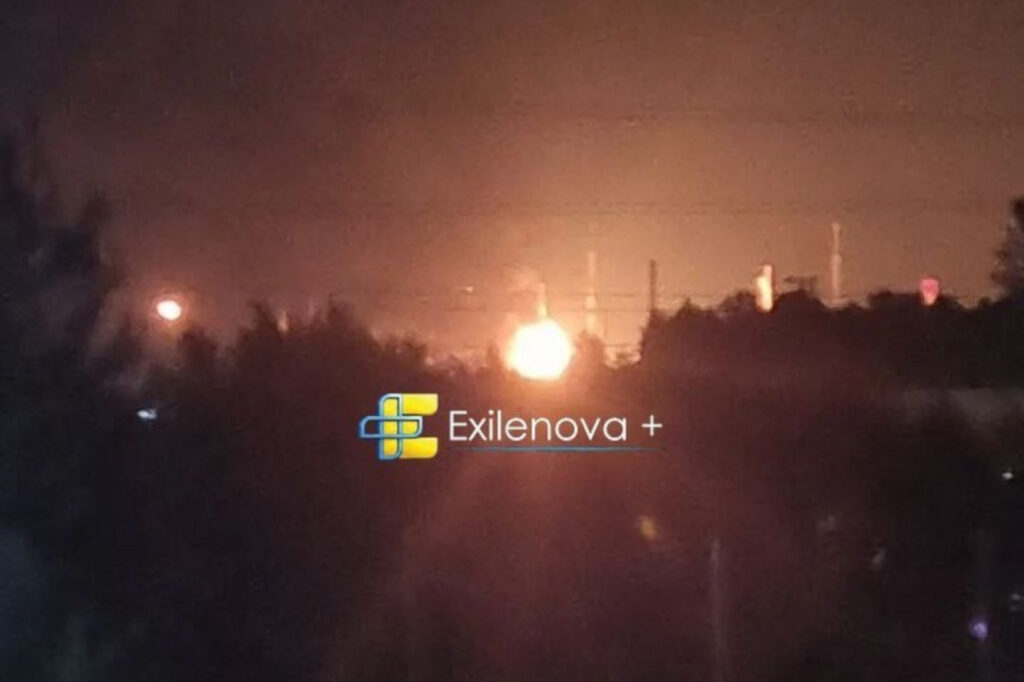
Ukraine struck Russia’s second-largest oil refinery, KINEF in Leningrad Oblast, overnight, causing a fire at the site.
The refinery has been repeatedly targeted by Ukraine since Russia launched its full-scale invasion.
Russian authorities acknowledged damage in Kirishi following the overnight attack, according to Russian OSINT outlet ASTRA. Leningrad Oblast Governor Alexander Drozdenko claimed several residential buildings were damaged, with windows blown out in some apartments, while a fire broke out in the city’s industrial zone. He said the industrial fire and fires from drone debris had been extinguished.
ASTRA reported that videos from residents showed a large fire at what appeared to be the KINEF refinery. ASTRA also geolocated footage of an explosion at the upper floors of an apartment building in Kirishi, where residents reported hearing air defense activity. The footage has not been independently verified.
Drone launch site struck in Rostov Oblast
Ukrainian forces also struck a site in Millerovo, Rostov Oblast, used to store, prepare and launch attack drones.
The General Staff said a fire was reported at the facility following the strike.
Millerovo has been repeatedly used by Russian forces as a base for launching attacks against Ukraine. Striking drone infrastructure can disrupt the storage, preparation and deployment of the weapons used in Russia’s ongoing aerial campaign.
Explore further
One alternative to air defense: Ukraine strikes Russian Bastion system used to attack Ukrainian cities from Crimea
Fire reported at Yeysk airfield
A Ukrainian strike also hit Yeysk airfield in Russia’s Krasnodar Krai, according to the General Staff.
A fire was reported at the site after the strike. The General Staff did not provide details on which facilities or equipment at the airfield were damaged.
The three strikes were part of a broader Ukrainian campaign against Russian military infrastructure and the energy facilities supporting Russia’s war effort.
Russia’s Defense Ministry claimed that its air defenses intercepted or destroyed 494 fixed-wing drones overnight across Russia and occupied Ukrainian territory. It said the drones were detected over Leningrad, Bryansk, Belgorod, Kaluga, Kursk, Tver, Smolensk, Oryol, Pskov, Tula, Novgorod and Rostov oblasts, as well as Krasnodar Krai, Moscow, occupied Crimea and the Azov and Black seas.
The General Staff said operations against key Russian targets are continuing, while the extent of the damage from the overnight strikes is still being determined.
The movement against datacenters is uniting Americans because they perfectly illustrate how a few individuals hold all the power to control decisions that affect our lives
Bryce Gustafson has been knocking on doors in Indiana for more than a decade. The lead organizer with Citizens Action Coalition (CAC), a consumer and environmental organization, he usually encounters a mix of reactions when he’s out canvassing; whatever issue he’s talking about, there’s always at least a few people on the other side. But at a recent festival in the rural town of Monrovia, Indiana, he was struck by an unusual spirit of unity.
He was there about a proposed datacenter, a 550-acre (222-hectare) Google project in this small town of 1,600 people. “I had 50 people I talked to,” Gustafson told me. “Nobody wanted that datacenter in their community. And at least a half a dozen people came up to me to say, ‘Hey, I voted for Trump. What the heck’s he doing, supporting these things?’”
US republicans are tarnishing their plant-eating opponents at every opportunity. Yet vegans are perfectly suited to hold power – let me count the ways
Cool news, fellow soy boys and girls – we’ve been promoted from feeble, tofu-eating wokerati to dangerous radicals unfit for public office. Politico reports that US Republicans have started throwing “vegan” around as a tactic to tarnish their political opponents. “He’s a vegan,” Trump warned of Democratic Texas senatorial candidate James Talarico in May, while Talarico’s opponent, state attorney-general Ken Paxton, is trying to get the nickname “Tofu Talarico” to stick. Paxton also called him “a vegan who thinks God is non-binary”, which I find hilarious as a political put-down – give the man a Netflix special. (Sidenote: I investigated, and according to the Catholic catechism, God is “neither man nor woman”.)
Republicans have also been digging up past pro-plant-based statements from Colorado congressional candidate Manny Rutinel: a campaign committee press secretary described him on X as “a far-left vegan activist who wants to end animal agriculture”, posting an old pic of Rutinel bare-chested and wearing a Peta anti-meat banner. Other Dems have also been accused of, erm, liking animals and eating plants: Arizona congressional candidate Amish Shah has been attacked for his “wacky liberal agenda pushing vegan policies” and Lindsay James in Iowa drew heat for merely supporting the idea of “meatless May”.
Widely used chemical TBBPA may present a danger to US public, and especially children, independent research finds
The Environmental Protection Agency is manipulating safety data around a highly toxic flame retardant deployed across the US economy, public health advocates allege.
The chemical, TBBPA, has been found in dust in US homes and in consumer goods at combined levels that independent research has found may present a danger to the public, and especially small children.
The Canadian province's premier, Doug Ford, installed a billboard-sized sign on the lake's shoreline after the US president signed an executive order on Thursday directing US federal agencies to change the lake's name on US maps, documents and databases to 'Lake America'. Ford told reporters that the lake's name, which is more than 400 years old, would remain unchanged. Trade talks between the US and Canada collapsed last week, with each side blaming the other for derailing three days of intensive negotiations
Russia has kept Kyiv and surrounding areas under near-continuous attack for four days, repeatedly sending drones and missiles toward the capital and other Ukrainian regions.
The prolonged attacks have kept air defense crews and emergency workers operating almost constantly, while disrupting civilian life across Kyiv and the surrounding oblast.
Ukrainian President Volodymyr Zelenskyy said on 30 August that Russia had launched nearly 2,000 attack drones, more than 1,600 guided aerial bombs and 31 missiles of various types against Ukraine over the past week. The missiles included North Korean ballistic weapons.
The current attacks follow months of increasingly heavy Russian aerial strikes against Kyiv and other Ukrainian cities. Russia has ramped up its use of ballistic missiles while also expanding its use of newer jet-powered Geran drones, which have repeatedly targeted the capital and surrounding areas.
Four days of attacks
Kyiv and Kyiv Oblast have been under repeated attack since 27 August, with waves of drones arriving throughout the day and night.
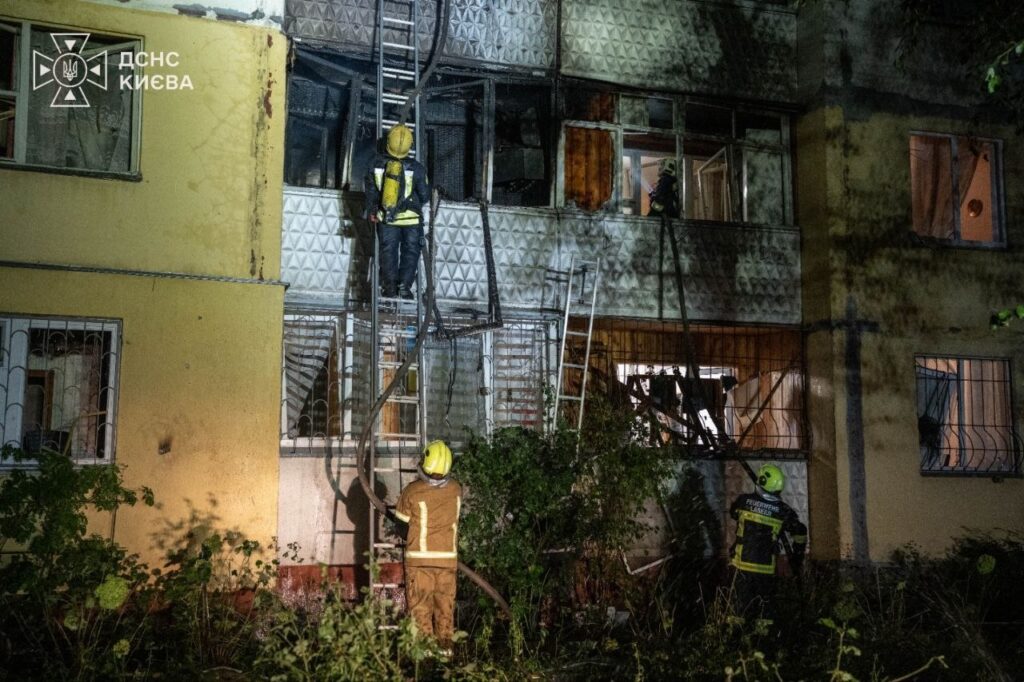
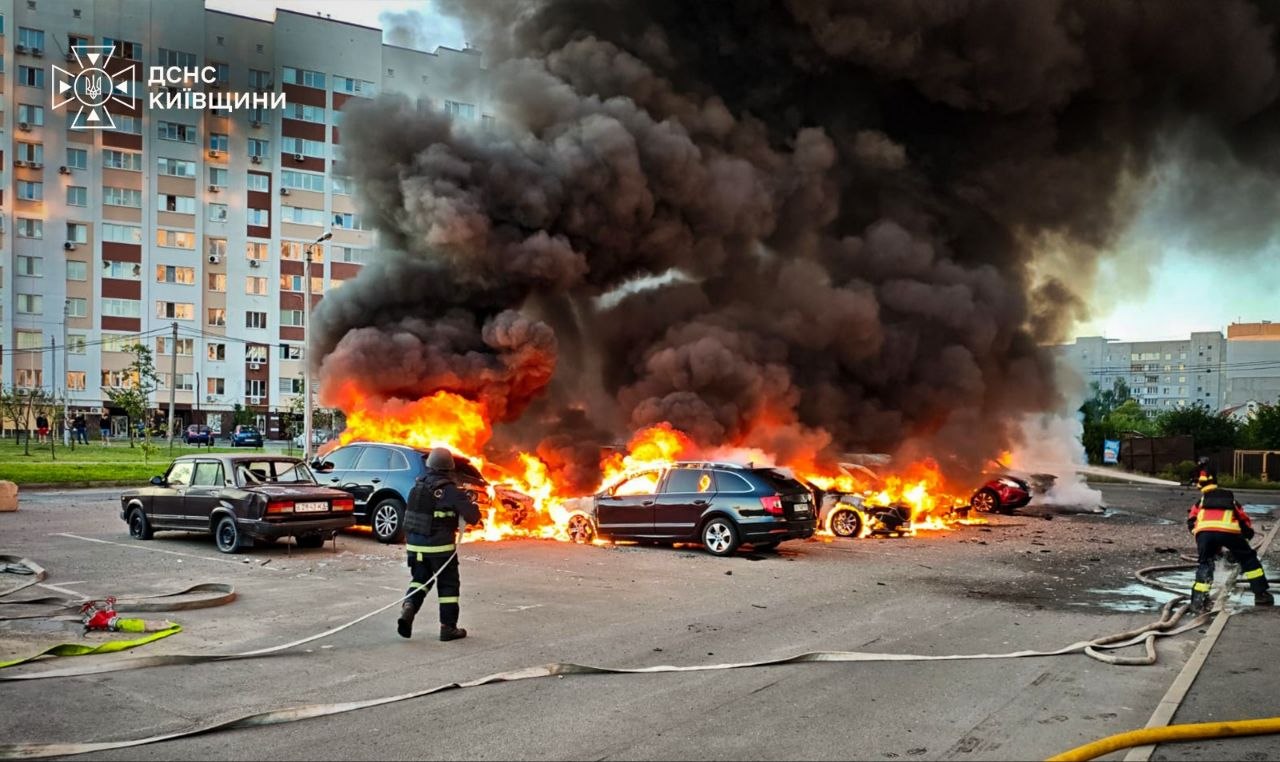
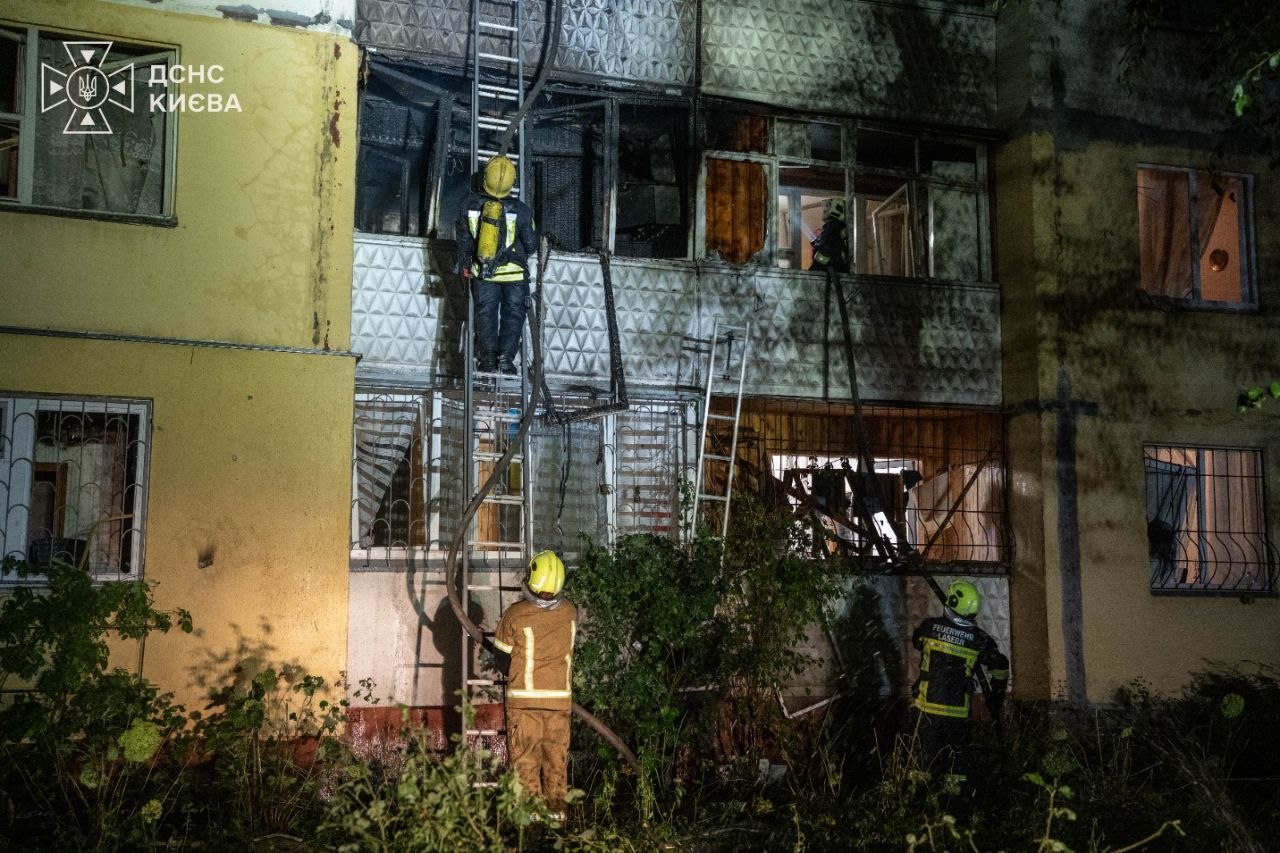
The attacks have hit residential buildings, warehouses, businesses and other civilian infrastructure. They have also repeatedly forced firefighters and rescue crews to stop their work and move to safety before returning once the immediate threat passes.
At least three people were injured in a Russian overnight attack on Kyiv, as the capital entered a fourth consecutive day of near-continuous Russian attacks.
In the Obolonskyi district, a strike caused a fire from the second to fifth floors of a 12-story residential building.… pic.twitter.com/rTT5TZvNEA
In Myla, Kyiv Oblast, rescue workers are still clearing the aftermath of the 28 August attack that killed 38 people, injured 20 and left four people missing.
Rescue crews continue working in Myla, Kyiv Oblast, clearing debris, extinguishing fires, and searching for explosive remnants after Russia’s deadly attack on 28 August.
The continuing attacks have also affected movement around the capital. Air raid alerts, damaged infrastructure and the threat of further strikes have disrupted traffic and travel both within Kyiv and on routes connecting the city with the surrounding region.
Explore further
Kyiv has been under attack for 2 days nonstop. Russia is targeting the capital’s civilian supply chains
Air defenses under pressure
The attacks are putting Ukraine's air defense network under some of its heaviest pressure since the full-scale invasion began.
Ukraine has to defend a vast area against increasingly large drone barrages while also dealing with ballistic and other missiles that are more difficult to intercept.
Ukraine relies on US-made Patriot systems to counter ballistic missiles, but limited stocks of Patriot interceptors and insufficient deliveries from partners have left a critical gap in its air defenses, which Russia is now exploiting to cause major damage to civilian infrastructure and greater civilian casualties.
The repeated use of jet-powered drones adds another challenge. Russia has increasingly deployed these faster Geran drones, adapted from the Iranian Shahed design, in attacks on Kyiv and other Ukrainian cities, including against civilian infrastructure.
Zelenskyy said the government’s priority now is to provide greater protection against the Russian attacks.
Attacks continue across Ukraine
The pressure is not limited to Kyiv.
Zelenskyy said Russian forces are carrying out attacks virtually around the clock against frontline and border communities, including Nikopol, Kramatorsk, Kherson and communities in Kharkiv, Zaporizhzhia, Dnipropetrovsk, Donetsk and Sumy oblasts.
Russian forces attacked Donetsk Oblast 30 times on 30 August, damaging residential areas and causing four fires, Ukraine’s State Emergency Service reported.
In Sloviansk, Russian shelling set balconies and apartments on fire on the fifth through seventh floors of a nine-story… pic.twitter.com/12GbUDsRpL
Across these areas, the attacks are keeping emergency services active while damaging homes, businesses and civilian infrastructure.
In Kyiv, meanwhile, the fourth day of attacks has left residents dealing with repeated air raid alerts, disrupted movement and the continuing risk of new strikes even as crews are still clearing the damage from previous ones.
Record inundations wrecked homes and took seven lives but Trump has not approved emergency aid and the state has cut funds for environmental agencies
It’s been 10 days since the floodwater receded from Cambridge City’s main street and yet signs of disaster are all around.
Abandoned cars, toilets and bathtubs are strewn across parks and side streets on a recent visit to the city. Garages have been lifted from their foundations and moved by the rushing water. Dumpsters up and down the street are overflowing with people’s belongings, with red paint sprayed on homes indicating which houses have been cleared by water rescue teams.
The move sends the right signal. While we’re at it, can we ban using ringtones and scooting on the sidewalk?
Imagine driving in Italy, with its narrow, cobblestone streets and scooter enthusiasts. I find it hard enough to drive in Los Angeles, a city designed specifically with the automobile in mind. I’d probably squash a pedestrian or two trying to navigate Italian roads.
The modern world is just too hectic for the ancient streets of Europe, so Italy is considering doing the only sensible thing it can: outlawing texting in crosswalks. The Italian government’s updated draft of its highway code proposes fines of €75 or more for anyone caught sending a DM, updating their LinkedIn, finishing Wordle on the fifth guess, or anything else phone-related that might make them miss an oncoming metal projectile. I’m sure most people will risk the slap on the wrist to get that message off, but it at least sends a signal to the Italian people that paying attention to traffic is actually kind of important.
Dave Schilling is a Los Angeles-based writer and humorist
As Americans face an affordability crisis and war with Iran, the president is focused on … changing the names of things
Is it a key policy move which will “recognize the extraordinary contributions of the American people”? Or “real foolishness”?
Whatever the impact of Donald Trump unusual decision to retitle Lake Ontario as Lake America, days after Canada’s prime minister refused to be cowed by Trump’s punitive tariffs, it has certainly divided opinion – but perhaps it shouldn’t have come as a surprise.
Inside the US state department, critics are still attacking a shuttered office established to counter foreign propaganda. Now, some of its work is also being resumed
A botched leak of purportedly explosive government files to a prominent conservative online personality was supposed to offer proof of what the Trump administration and its allies have long alleged: that a little-known office inside the US state department, created to fight foreign propaganda, had secretly become a tool for domestic censorship.
Two former high-ranking officials at the Global Engagement Center (GEC), a target of Republican ire that lost its funding in 2024 and was disbanded after Donald Trump’s return to office in 2025, say the documents show nothing of the kind.
Angie Nixon won one of the biggest upsets in US midterm primaries – and if elected, the Democrat would be the first African American senator in Florida history
The Democratic establishment had the money, the machinery and the candidate with national name recognition. Angie Nixon had a bookshop called Café Resistance and a grassroots campaign for the Senate. On primary election night in Florida, Nixon won in arguably the biggest upset of the primary season. But at least one person was not shocked: Angie Nixon herself. “We weren’t surprised,” the 42-year-old reflects after overcoming a vast fundraising disadvantage to defeat Alex Vindman, a combat veteran who testified against Donald Trump during his first impeachment. “We actually knew we were going to win; we just didn’t know that we were going to win by that much. We put in the work and so super excited about the outcome. It shows that good old-fashioned grassroots organising will beat big money each and every day.”
Nixon won 56.1% of the vote to Vindman’s 43.9%. The result stirred tensions within the Democratic party in a year defined by the struggle between moderates and economic populists. In Florida – a state that has trended increasingly Republican in recent years and is now Trump’s home state – Democrats have now nominated a member of the Democratic Socialists of America (DSA) who speaks openly about class war.
As with its approach to Hormuz, the US has mistaken applying pressure for an actual strategy. But Tehran has chips of its own to play
Donald Trump has found a new way to promise victory over Iran. After months of war have failed to force Iran’s capitulation or collapse, his administration has unveiled what the US Treasury secretary, Scott Bessent, calls Operation Economic Outcast: an effort to cut it off from what remains of the global economy and threaten foreign governments, banks and companies with sanctions if they continue doing business with Tehran.
There is no question that Iran is vulnerable. Its economy has been battered by years of sanctions, war and a months-long US naval blockade. Iranian officials acknowledge that oil exports and access to foreign currency have been severely constrained. Ordinary Iranians are already enduring high inflation, currency depreciation and worsening living standards. Further economic strangulation will inflict significant additional hardship.
Sina Toossi is a senior non-resident fellow at the Center for International Policy, where his work focuses on US-Iran relations, US policy toward the Middle East and nuclear issues
A Ukrainian maker known for ground robots has built a flying attack drone. Ratel Robotics has unveiled the Ratel K1, a strike FPV drone for ground targets with a tactical range of up to 30 kilometers, according to Defender Media.
The K1 will likely join the number of weapons that clear out Russian logistics. The campaign scales medium-range drone strikes against Russian supply convoys, depots, command nodes, and air defenses 20 to 200 kilometers behind the front. On 29 May, Ukrainian forces destroyed 483 Russian vehicles in a single day, an all-time record that pushed cumulative Russian motor-transport losses past 100,000.
A 30-kilometer FPV sits at the near edge of that fight, reaching supply routes and second-line positions that shorter drones cannot.
The company came from ground robots
Ratel Robotics is a Ukrainian ground robotics maker whose fielded line includes logistics, casualty evacuation, mining, and demining platforms. The K1 is its move into aerial strike, and the company brings a wartime production record to it rather than starting from scratch.
Ratel's ground systems took part in the military parade in Kyiv on 24 August, marking Ukraine's 35th Independence Day, the company said. The firm has also joined a campaign, with the National WWII Museum and the Tallboy brand, to raise nearly $447,000 for a planned museum of modern military technologies, according to Ratel.
The specifications come from the maker
The K1 is built on a 22-inch frame, reaches a top speed of 75 kilometers per hour, remains airborne for up to 35 minutes, and carries up to 2 kilograms.
The drone uses a digital video system and a daytime camera and is controlled via a satellite link through Starlink. Per Brave1 Market, it has no built-in autonomous navigation, no auto-takeoff, and no automatic return-to-home landing.
The manufacturer is currently working on the next iteration of the Ratel K1, refining the system based on test results and operational experience.
Reform UK denies donor and crypto-billionaire’s global interests in arms and military could present a conflict of interest over its defence spending policy
As he struggles with questions about the millions he has received from the billionaire Christopher Harborne, Nigel Farage has made no secret of his enthusiastic support for the industry that made part of his benefactor’s fortune – cryptocurrency. The Reform UK leader even urged the governor of the Bank of England to drop a crypto policy that may be costly for Harborne.
But another element of Harborne’s business interests could prove still more consequential if it shapes Farage’s positions. There appears to be no precedent for a major UK donor who is so entwined with the military.

 Connexion





























 Supernova+