Vue lecture

Ukraine's 2026 budget could face $19B shortfall as Europe weighs how to fill the gap, FT reports
Ukraine's 2026 budget could face $19B shortfall as Europe weighs how to fill the gap, FT reports

The European Commission is discussing with EU member states various options to cover Ukraine's budget deficit for next year, which could range from $8 billion to $19 billion, the Financial Times reported on July 8.

International partners have provided Ukraine with over $39 billion for its wartime economy so far this year, Prime Minister Denys Shmyhal announced.

The financial hole in Ukraine's budget is linked to reduced U.S. support and the lack of prospects for a swift ceasefire with Russia that Europe had hoped for, the Financial Times reported.

A senior EU official told the publication that many of Ukraine's partners had previously counted on a peace deal in 2025, but are now forced to revise their funding plans.

This includes the European Commission, which has already adjusted spending from Ukraine-related funding streams.

Without support from Western partners, Kyiv would face a budget deficit of $19 billion in 2026, according to the Financial Times. However, even if additional international financing for the wartime economy can be secured, a gap of at least $8 billion would remain.

To support Ukraine's budget, Europe is considering providing military aid in the form of off-budget grants that would be recorded separately as external transfers but would count toward NATO member countries' national defense spending targets.

One EU diplomat told the Financial Times that military support for Ukraine is viewed as a contribution to the defense of all of Europe.

In a document for G7 countries reviewed by Financial Times, Kyiv proposed that European allies co-finance Ukrainian forces, framing this as a service to strengthen continental security.

Other support options under discussion include potentially accelerating payments from the existing $50 billion G7 loan program and reinvesting frozen Russian assets in higher-yield financial instruments that the EU allocated to help service the debt.

According to the Financial Times, two sources confirmed that the commission planned to discuss these options with EU finance ministers on July 8.

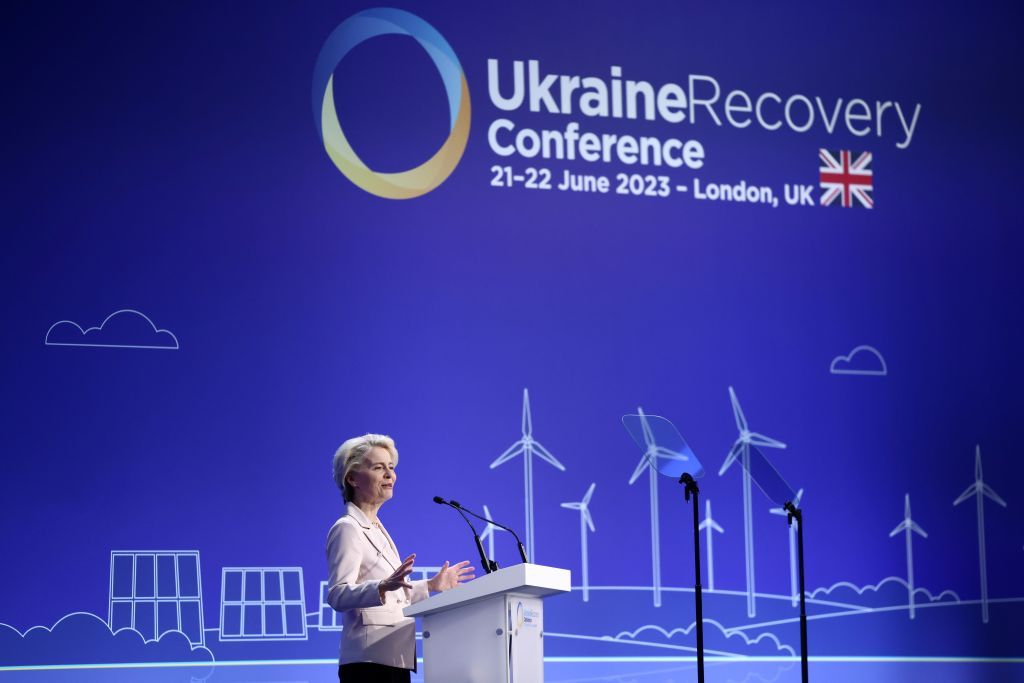
The funding issue will also be raised at the Ukraine Recovery Conference in Rome on July 10-11, dedicated to Ukraine's reconstruction needs. European Commission President Ursula von der Leyen will attend the event.

  •  

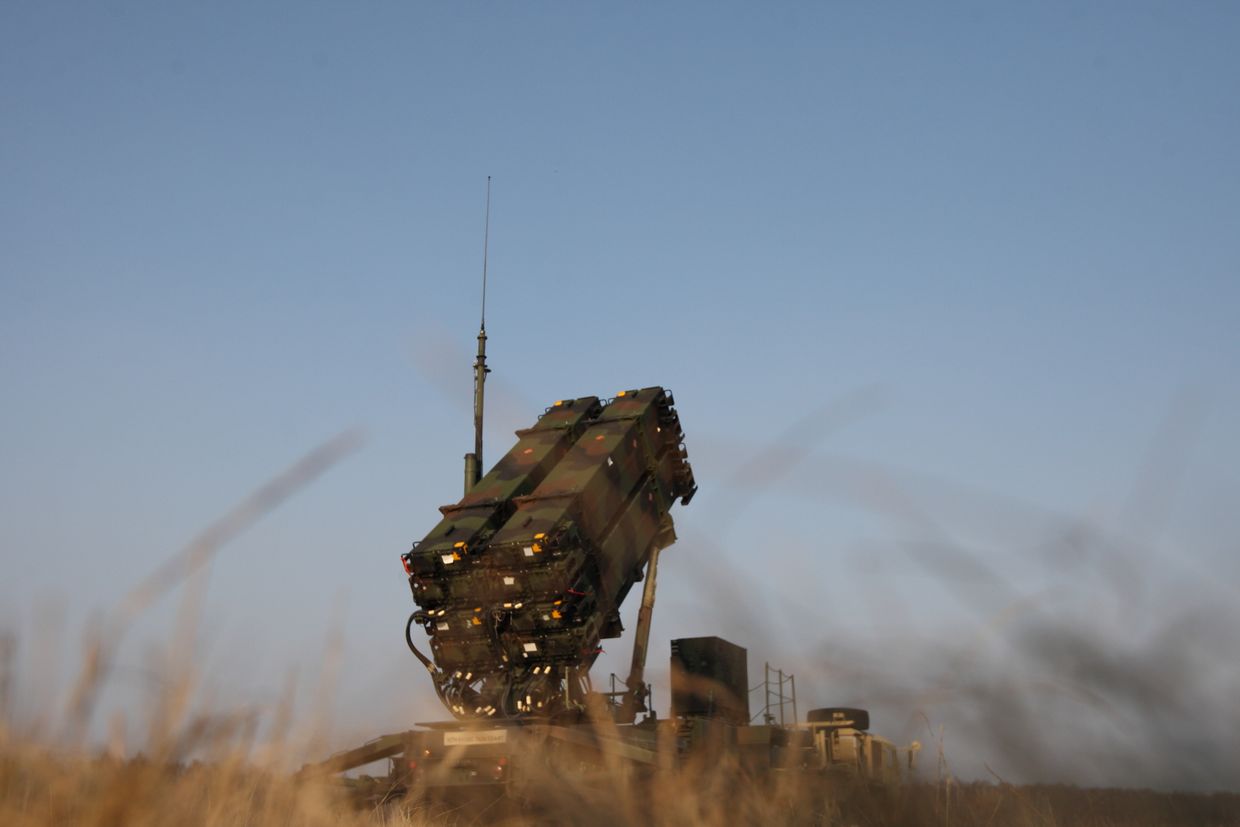
US only has 25% of Patriot missiles needed for war plans, Guardian reports

US only has 25% of Patriot missiles needed for war plans, Guardian reports

The United States has only about 25% of the Patriot missile interceptors it needs to meet Pentagon military plans, a shortage that led U.S. President Donald Trump's administration to pause a major transfer of weapons to Ukraine, the Guardian reported on July 8.

The decision to halt the delivery, made on July 2, followed an internal review showing low stockpiles of critical air defense systems. The depletion was largely due to recent U.S. operations in the Middle East, including the interception of Iranian missiles after strikes on the American Al Udeid airbase in Qatar, according to the Guardian.

According to officials familiar with the matter, the Pentagon's munitions tracker, used to measure the minimum supplies needed for U.S. war plans, showed Patriot interceptor levels had fallen below acceptable levels. That prompted concerns that sending more to Ukraine could put U.S. defense readiness at risk, the Guardian wrote.

The freeze reportedly affected Ukraine's two key arms transfer methods: drawdowns from Pentagon stockpiles and the Ukraine Security Assistance Initiative (USAI), through which the Defense Department orders new weapons from contractors.

Because U.S. orders take priority, Ukrainian requests for new weapons, including Patriot missiles, face years-long delays.

The pause came at a critical time for Kyiv, as Russia intensifies large-scale aerial attacks on Ukrainian cities. With limited options to acquire precision-guided and other key munitions, Ukrainian forces have increasingly relied on Western-supplied air defenses to counter the growing threat.

For its latest aid package, the U.S. had planned to send dozens of Patriot interceptors, along with Hellfire missiles, air-to-air Sparrows, GMLRS rockets, and anti-tank weapons, according to the Guardian.

NBC News reported on July 4 that U.S. Defense Secretary Pete Hegseth unilaterally halted a weapons shipment to Ukraine despite internal military assessments showing the aid would not compromise American military readiness.

The assessment concluded that while some munitions stockpiles, including precision weapons, were low, they had not fallen below critical thresholds.

Amid the ongoing questions over Washington's weapons pause, Trump has apparently promised to send 10 Patriot interceptors to Ukraine, Axios reported on July 8. Sources also told the Wall Street Journal (WSJ) that Trump claimed he wasn't behind the decision to halt arms to Kyiv in a recent phone call with President Volodymyr Zelensky.

How to enter Ukraine’s defense market: A short guide for foreign companies
Editor’s Note: The opinions expressed in the op-ed section are those of the authors and do not purport to reflect the views of the Kyiv Independent. For editorial coverage of Ukraine’s weapons procurement, the country’s Defense Ministry and the scandal-ridden Defense Procurement Agency click on the links
US only has 25% of Patriot missiles needed for war plans, Guardian reportsThe Kyiv IndependentVladyslav Bandrovsky
US only has 25% of Patriot missiles needed for war plans, Guardian reports
  •  

Putin throws 'a lot of bullsh*t', Trump says as he 'looks strongly' at Russia sanctions bill

Putin throws 'a lot of bullsh*t', Trump says as he 'looks strongly' at Russia sanctions bill

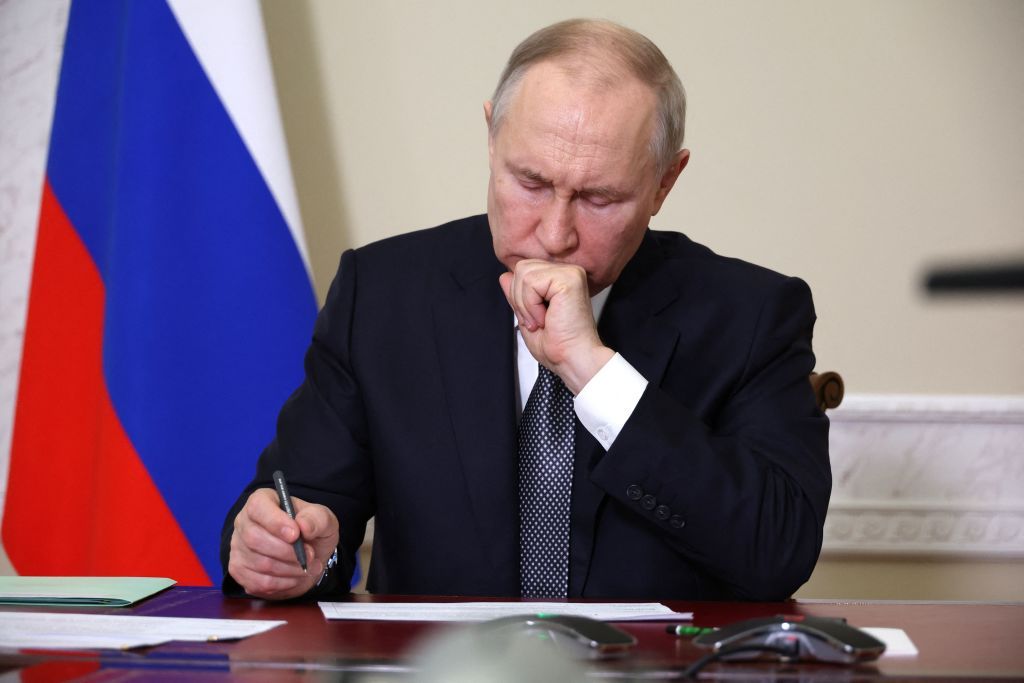
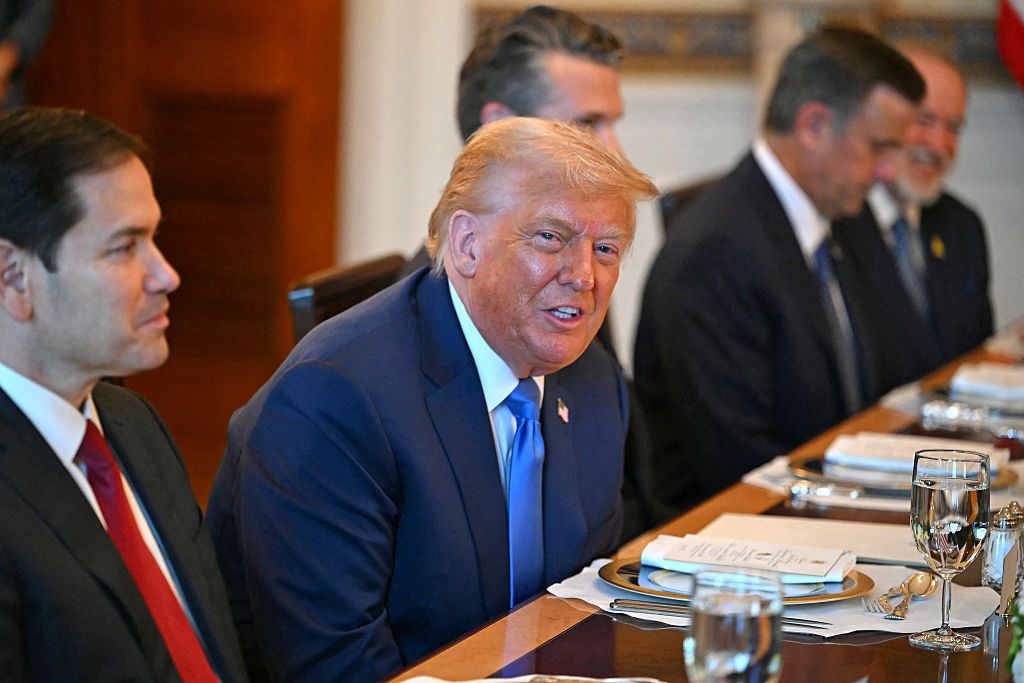
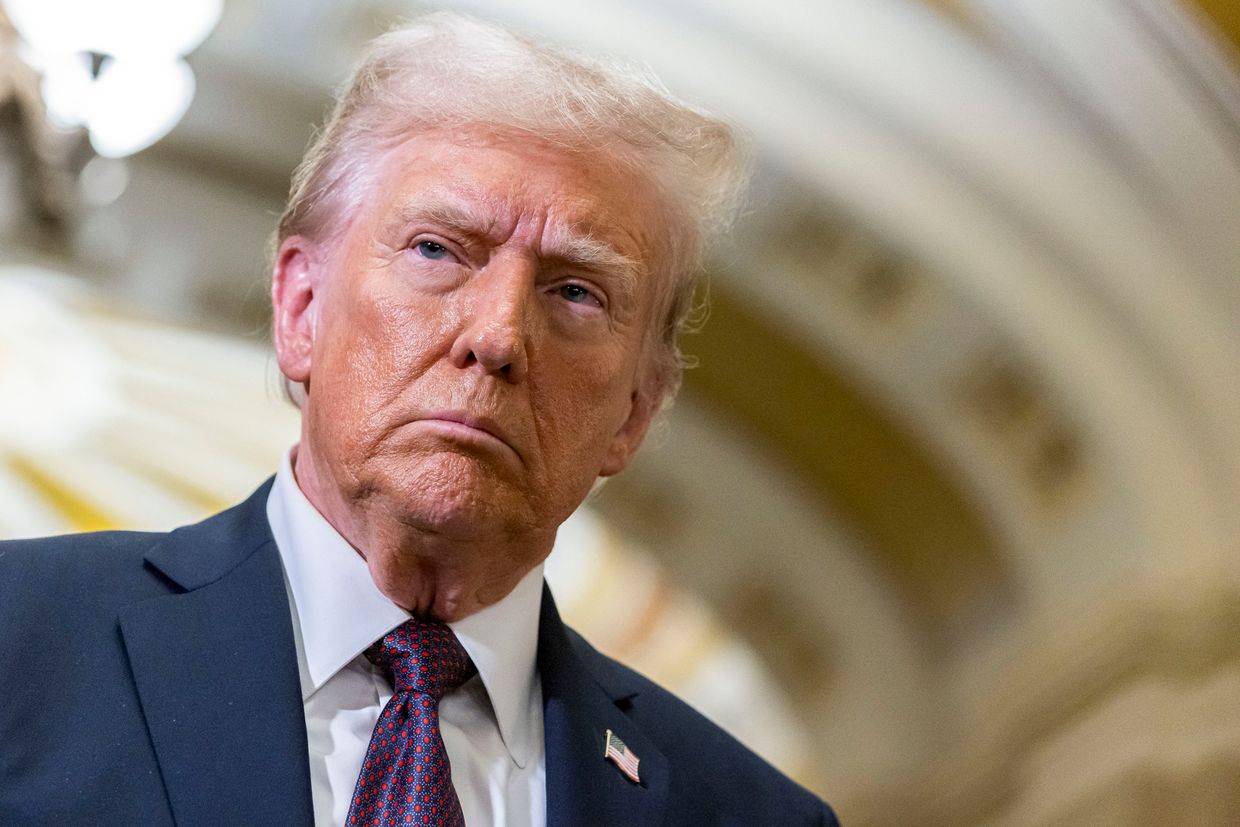
U.S. President Donald Trump said on July 8 he was "not happy" with Russian President Vladimir Putin.

"We get a lot of bullsh*t thrown at us by Putin," he said at a cabinet meeting. "He's very nice all the time, but it turns out to be meaningless."

Trump has vacillated for months between criticizing Putin and praising the Kremlin. So far, he has failed to increase military aid to Ukraine or sanction Russia despite Moscow's refusal to accept a ceasefire.

During his election campaign, Trump repeatedly pledged to end the war in Ukraine within "24 hours." However, his efforts to broker a peace deal between Ukraine and Russia have seen no progress.

Trump also addressed U.S. legislation on sanctions, saying the Senate's Russia sanctions bill was "totally optional" for him to implement or terminate.

"I'm looking at it very strongly," Trump said.

The bill would impose 500% tariffs on imports from countries purchasing Russian oil, gas, uranium, and other products. It was introduced in April but has seen no progress since then.

Earlier, Trump signaled growing openness to tougher measures against Moscow, ABC News reported on June 29.

According to Senator Lindsey Graham, Trump privately told him it was "time to move" the Russia sanctions bill.

"I’m confident the president is ready for us to act," Graham said.

The Senate is expected to vote on the bill after Congress returns from a break in July.

"(Putin is) killing a lot of people — his soldiers and their soldiers mostly. And it's now up to 7,000 a week," Trump said on July 8, referring to Russia's battlefield losses.

In recent weeks, Trump has been critical of the Russian president. Following a phone call with Putin on July 3, Trump said he was "very disappointed," signaling growing frustration with the Kremlin.

When asked by a journalist on July 8 whether he would take action, Trump responded: "Wouldn't be telling you... We want to have a little surprise."

Trump also commented on the the current pause in weapons deliveries to Ukraine. He pointed to the previous transfer of advanced systems, including Javelin anti-tank missiles and Patriot air defense systems, calling them "the best equipment in the world."

His remarks come after the United States halted military aid shipments to Ukraine on July 2 amid an internal Pentagon review of stockpile capacity. The freeze coincided with a surge in Russian aerial attacks, leaving Ukraine increasingly vulnerable amid a shortage of U.S.-supplied air defense systems.

The U.S. halted weapons shipments to Ukraine amid a capability review, the White House and Pentagon previously confirmed, with Trump later denying the pause.

On July 7, the Pentagon said it would renew shipments, saying the additional defensive weapons were intended to help Ukraine protect itself while the U.S. works toward "a lasting peace."

Dnipropetrovsk village likely contested despite Russia’s claim of its capture
The village of Dachne in the southern part of Dnipropetrovsk Oblast appears to be contested, according to the Finnish Black Bird Group open-source intelligence collective. The Russian Defense Ministry on July 7 claimed to have seized Dachne, which would mark the first village to be under Russian control in the industrial Dnipropetrovsk Oblast, located just west of the war-torn Donetsk Oblast. The Ukrainian military denied the claimed capture, calling it “disinformation.” Viktor Tregubov, spok
Putin throws 'a lot of bullsh*t', Trump says as he 'looks strongly' at Russia sanctions billThe Kyiv IndependentAsami Terajima
Putin throws 'a lot of bullsh*t', Trump says as he 'looks strongly' at Russia sanctions bill
  •  

Russia's crude exports fall to lowest level since February

Russia's crude exports fall to lowest level since February

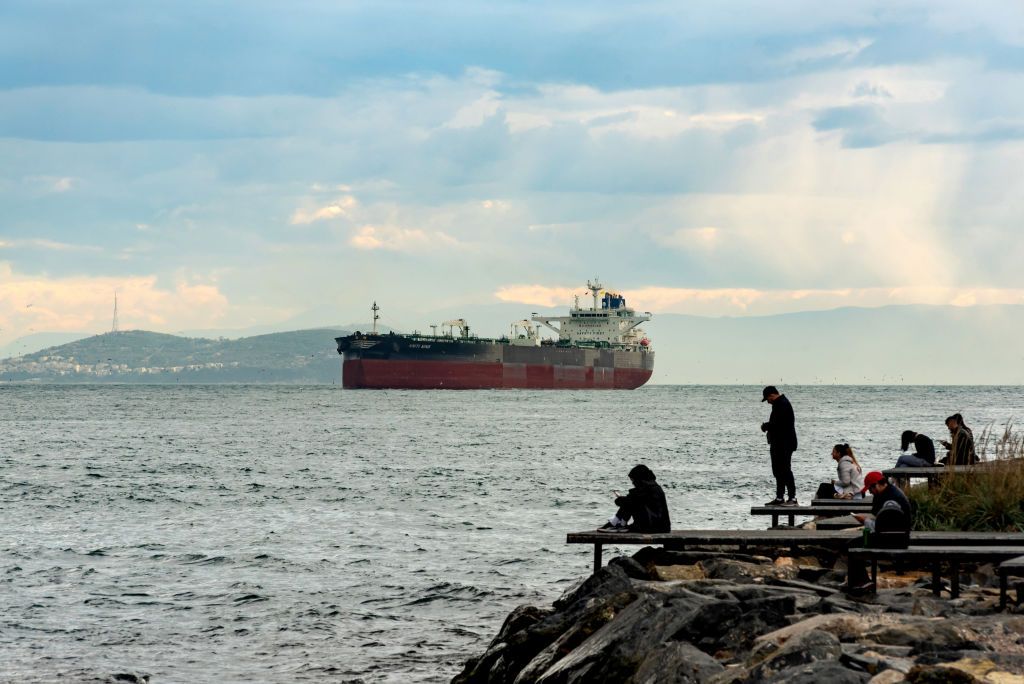
Russia's crude oil shipments have dropped to their lowest level since February, as refinery processing outpaces production growth and trims available export volumes, Bloomberg reported on July 8.

Russia has used its revenues from energy exports to finance the war in Ukraine.

Seaborne crude flows averaged 3.12 million barrels a day over the four weeks to July 6, a 3% decline from the previous period ending June 29, according to tanker-tracking data compiled by Bloomberg. That's the lowest level recorded since the four-week period ending Feb. 23.

The gross value of Moscow's oil exports rose by about $100 million, or 8%, to $1.36 billion for the week ending July 6, Bloomberg said. That increase was due to higher volume, although average export prices declined for a second consecutive week.

Most of Russia's oil continues to head to Asia. Shipments to the region averaged 2.73 million barrels per day, slightly lower than the previous month. Flows to Turkey fell to 370,000 barrels a day, and shipments to Syria held steady at 25,000 barrels a day.

The European Union is seeking to tighten sanctions on Russia. Ambassadors have yet to approve the EU's 18th sanctions package due to opposition from Hungary and Slovakia. The bloc failed to adopt the new package on June 27.

The new package includes restrictions targeting Russia's energy and banking sectors, as well as transactions linked to the Nord Stream gas pipeline.

Death of top Russian oil executive fuels fresh scrutiny of elite’s ‘window falls’
The unexplained death of a top Russian oil executive on July 4 is fueling renewed scrutiny over the rising number of high-profile Russian officials and businessmen who have died under mysterious circumstances, specifically, have fallen out of windows. Andrei Badalov, vice president of Transneft, Russia’s largest state-controlled pipeline transport company,
Russia's crude exports fall to lowest level since FebruaryThe Kyiv IndependentTim Zadorozhnyy
Russia's crude exports fall to lowest level since February
  •  

Three men convicted in London arson plot tied to Russia's Wagner Group

Three men convicted in London arson plot tied to Russia's Wagner Group

Three men were found guilty on July 8 in connection with an arson attack on Ukraine-linked businesses in London, which British authorities say was orchestrated by Russia's Wagner mercenary group, Reuters reported.

The alleged ringleader, Dylan Earl, 21, had already pleaded guilty to aggravated arson over the 2024 blaze targeting companies that were supplying Elon Musk's Starlink satellite equipment to Ukraine, according to Reuters.

The systems are considered vital to Ukraine's communications and defense against Russia's ongoing invasion.

Earl also became the first person convicted under the U.K.'s National Security Act after admitting to a separate plot to attack a wine shop and restaurant in London’s upscale Mayfair district and to kidnap its owner, a prominent critic of Russian President Vladimir Putin.

Two others, Jake Reeves, 23, and Earl’s associate, also pleaded guilty to aggravated arson, with Reeves admitting to a charge under the National Security Act for receiving a material benefit from a foreign intelligence agency.

A jury at London's Old Bailey court convicted three additional men, Nii Kojo Mensah, 23, Jakeem Rose, 23, and Ugnius Asmena, 20, of aggravated arson. They had denied the charges. A fourth man, Paul English, 61, was acquitted.

Two other defendants, Ashton Evans, 20, and Dmitrijus Paulauskas, 23, were charged with failing to disclose knowledge of terrorist activity. Evans was convicted on one count and cleared of another. Paulauskas was acquitted of both charges and reportedly broke down in tears as the verdict was read.

Commander Dominic Murphy of the London Metropolitan Police reportedly said he was confident the Wagner Group and the Russian state were behind the attacks.

The U.K. has designated the Wagner Group as a terrorist organization.

Earl had exchanged hundreds of encrypted messages with a supposed Wagner handler using the alias "Privet Bot" on Telegram. According to reporting by the Organized Crime and Corruption Reporting Project (OCCRP), the account was previously advertised by Grey Zone, a Wagner-affiliated channel.

Prosecutors said Earl expressed interest in fighting for Wagner and was encouraged to recruit contacts from British soccer hooligan networks, Irish republican groups, and organized crime circles, Reuters reported. He and Evans also admitted to unrelated charges of dealing cocaine.

The Russian Embassy in London has denied any involvement in the warehouse attack and accused the British government of blaming Russia for domestic issues.

The Kremlin has consistently rejected accusations of sabotage and espionage, despite growing evidence and convictions tied to Russian-linked operations across Europe.

‘Neither side wasted time’ — Ukraine’s economy minister on minerals deal negotiations with Trump’s ‘business-oriented’ administration
Ukraine’s Economy Minister Yuliia Svyrydenko says her task is simple — to get the investment fund behind the closely watched minerals deal with the U.S. off the ground, and prove its detractors wrong. “There are so many criticisms from different parties that this fund is just a piece of paper we can put on the shelves — that it won’t be operational,” Svyrydenko, who is also Ukraine’s first deputy prime minister, tells the Kyiv Independent at Ukraine’s Cabinet of Ministers on July 4, the morning
Three men convicted in London arson plot tied to Russia's Wagner GroupThe Kyiv IndependentLiliane Bivings
Three men convicted in London arson plot tied to Russia's Wagner Group
  •  

Trump reportedly pledges to send 10 Patriot missiles to Ukraine, asks Germany to send battery

Trump reportedly pledges to send 10 Patriot missiles to Ukraine, asks Germany to send battery

U.S. President Donald Trump has promised to send 10 Patriot interceptors to Ukraine - a smaller number than had been paused previously while en route to the country, Axios reported on July 8, citing its sources.

Trump has also suggested that Germany sell one of its Patriot batteries to Ukraine, according to three sources cited by Axios. They said the U.S. and European allies would split the cost of the purchase.

The discussion comes as Ukraine is calling upon its allies, particularly the United States, to support Ukrainian air defense by supplying "life-saving" Patriot systems and relevant missiles.

The Pentagon said on July 2 that some military assistance to Ukraine had been halted as the U.S. Defense Department conducts a review of foreign aid deliveries.

On July 7, the Pentagon said it would renew shipments, saying the additional defensive weapons were intended to help Ukraine protect itself while the U.S. works toward "a lasting peace."

Merz called Trump to request the release of the paused interceptors, according to Axios. During the call, Trump proposed that Germany sell one of its own Patriot batteries to Ukraine.

While no agreement has been reached, officials on both sides say negotiations are ongoing. German officials maintain that Berlin has already sent a higher share of its available Patriot systems to Ukraine than any other NATO country, including the U.S.

Russia has escalated its aerial campaign against Ukraine in recent weeks, launching large-scale missile and drone attacks that have killed and injured hundreds of civilians across multiple cities.

The suspension of U.S. arms deliveries, which include Patriots and precision-guided munitions, drew criticism from Kyiv. During a July 4 phone call with Ukrainian President Volodymyr Zelensky, Trump said he was not responsible for halting the aid, according to the Wall Street Journal.

He reportedly told Zelensky that a review of U.S. munitions stockpiles was initiated after last month's U.S. strikes on Iranian nuclear sites, but denied ordering a full pause in shipments.

NBC News reported that Defense Secretary Pete Hegseth halted the shipments unilaterally on July 2, despite internal Pentagon assessments that the move would not jeopardize U.S. military readiness.

Special Envoy Keith Kellogg and Ukrainian Defense Minister Rustem Umerov are set to meet in Rome later this week to discuss resuming the stalled military aid, Politico reported on July 7.

Seeing war through the lens of narcissism
We usually think of narcissism as a personal flaw — a grandiose ego, a craving for attention, a lack of empathy. But what if narcissism is not just a diagnosis, but a lens? A way of understanding how individuals — and even entire nations — cope with wounds too painful to face directly?
Trump reportedly pledges to send 10 Patriot missiles to Ukraine, asks Germany to send batteryThe Kyiv IndependentDr. Gary E Myers
Trump reportedly pledges to send 10 Patriot missiles to Ukraine, asks Germany to send battery

  •  

Ukraine sanctions 5 Chinese firms for supplying components used in Russian drones

Ukraine sanctions 5 Chinese firms for supplying components used in Russian drones

President Volodymyr Zelensky signed an order on July 8 imposing sanctions on five Chinese-registered companies accused of supplying components found in Russian Shahed-type drones used to attack Ukraine.

The decree follows a statement by Ukraine's Security Service (SBU), which said it recovered Chinese-made parts from downed drones during a July 4 air assault on Kyiv.

Sanctions were imposed on Central Asia Silk Road International Trade, Suzhou Ecod Precision Manufacturing, Shenzhen Royo Technology, Shenzhen Jinduobang Technology, and Ningbo BLIN Machinery.

The list was published on the Presidential Office's website alongside the official decision by Ukraine's National Security and Defense Council.

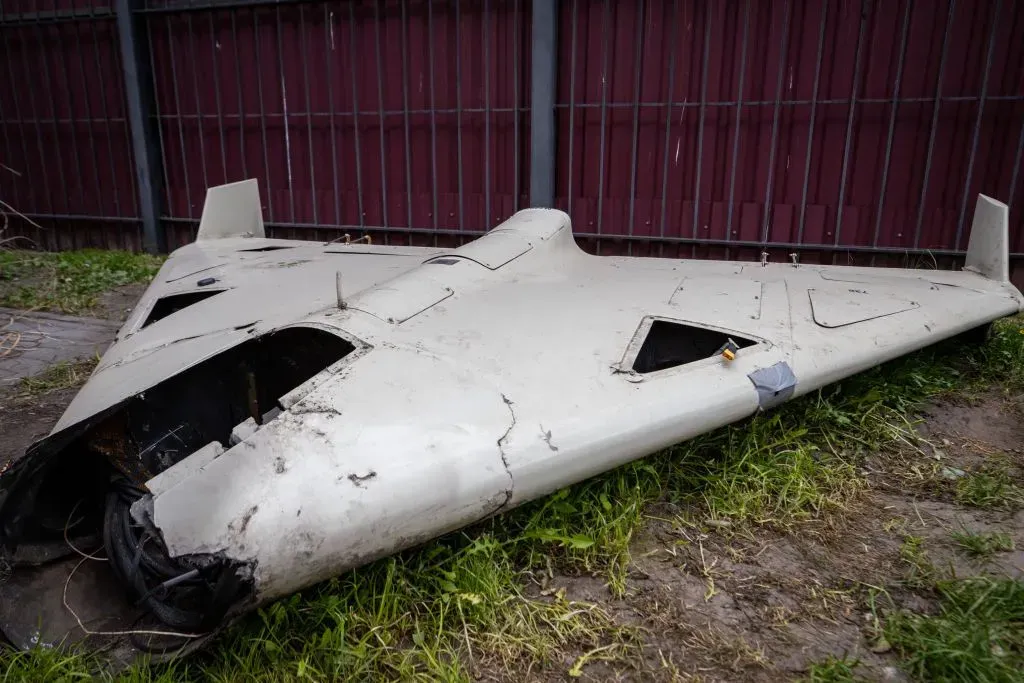
Russia's domestically produced drones based on Iran's Shahed-136 is a loitering munition extensively used by Russia to target Ukrainian cities, and is assembled with components sourced from around the world. Kyiv has warned that some of these parts continue to flow through countries that have not joined Western sanctions.

China has emerged as one of Moscow's key wartime partners, helping Russia circumvent sanctions and becoming the largest supplier of dual-use goods aiding its defense sector.

Vladyslav Vlasiuk, the Ukrainian president's commissioner for sanctions, told journalists on July 7 that Russia's growing ability to sustain weapons production is being driven by a flow of Chinese components and materials.

Zelensky has repeatedly accused China of backing Russia and providing technological and logistical support for its war effort. On May 29, he said Beijing had blocked the sale of drones to Ukraine while continuing to supply them to Russia.

Ukraine has already sanctioned several Chinese companies tied to Russia's war effort.

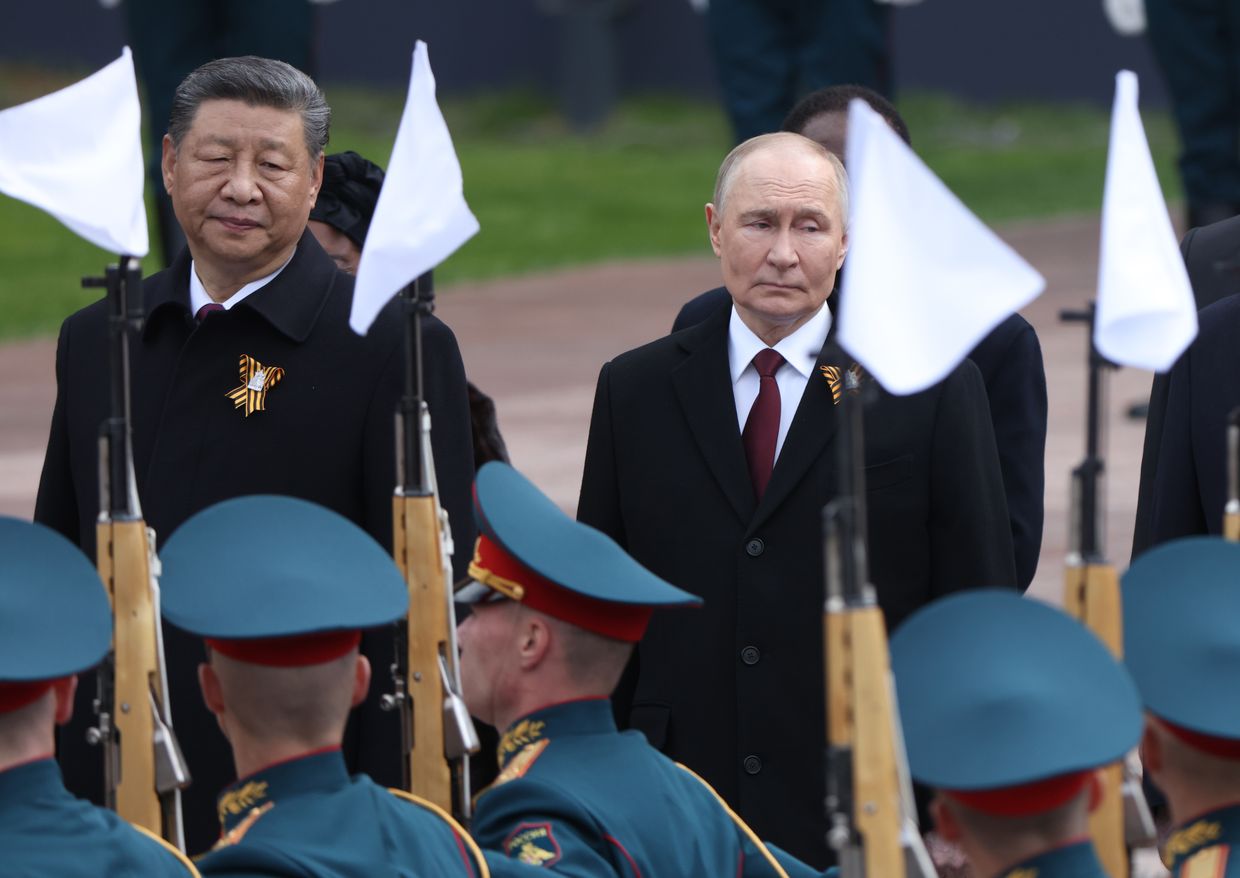
As Russian-Chinese relations deepen, Russian President Vladimir Putin is expected to visit China in September, where he is scheduled to meet with Chinese leader Xi Jinping.

Putin signs decree allowing foreigners to serve in Russian army during mobilization
Russian President Vladimir Putin’s partial mobilization decree from Sept. 21, 2022, remains in force and has never been formally rescinded.
Ukraine sanctions 5 Chinese firms for supplying components used in Russian dronesThe Kyiv IndependentTim Zadorozhnyy
Ukraine sanctions 5 Chinese firms for supplying components used in Russian drones
  •  

Putin signs decree allowing foreigners to serve in Russian army during mobilization

Putin signs decree allowing foreigners to serve in Russian army during mobilization

Russian President Vladimir Putin signed a decree on July 7 permitting foreigners to serve in the Russian army during periods of mobilization, expanding military recruitment efforts.

Putin's partial mobilization decree from Sept. 21, 2022, remains in force and has never been formally rescinded. Ending it would require a separate presidential decree specifying a termination date.

Previously, it was allowed only during states of emergency or under martial law. Despite its full-scale invasion of Ukraine, Russia has avoided formally declaring martial law.

According to the document, the Kremlin is also permitting qualified specialists who have reached the age limit to sign contracts with Russia's Foreign Intelligence Service (SVR), Federal Security Service (FSB), or other state security agencies.

The changes aim to strengthen recruitment as Moscow tries to keep up the pace of troop replenishment without causing another wave of unpopular conscription. The Kremlin has heavily relied on financial incentives and aggressive campaigns to attract new volunteers.

Moscow currently recruits 30,000 to 40,000 individuals into its army each month, sources familiar with U.S. and EU intelligence told the Wall Street Journal.

On March 31, Putin authorized the spring conscription of 160,000 men — the country's largest call-up in 14 years. Though Russian officials claim conscripts are not sent to the front, human rights groups and relatives have reported that many are pressured into signing contracts.

In May, Russia's Investigative Committee Head Alexander Bastrykin said 20,000 naturalized migrants were sent to fight in Ukraine after failing to register for military service.

In the summer of 2024, Russian lawmakers passed a law allowing the revocation of citizenship for naturalized individuals who do not comply with military registration requirements.

Rotterdam port prepares for NATO arms shipments amid Russia threat
Rotterdam has previously handled weapons shipments, but this marks the first time that it will designate a special berth for military use.
Putin signs decree allowing foreigners to serve in Russian army during mobilizationThe Kyiv IndependentTim Zadorozhnyy
Putin signs decree allowing foreigners to serve in Russian army during mobilization
  •  

'Torture was not just cruel, it was inhuman' — Ukrainian soldier dies weeks after release from Russian captivity

'Torture was not just cruel, it was inhuman' — Ukrainian soldier dies weeks after release from Russian captivity

Less than a month after his release from Russian captivity, 57-year-old soldier Valery Zelensky died of injuries sustained under torture, Ukrainian media outlet Suspilne reported on July 6.

Zelensky had spent 39 months in Russian captivity. He was released as part of the landmark 1,000-for-1,000 prisoner deal on May 25. Just 22 days later, on June 16, his heart stopped.

At the beginning of the full-scale invasion, his unit delivered weapons to Ukrainian forces in Mariupol, his daughter, Valeria Zelenka, said.

"When the offensive began, they were told that volunteers were needed to go on the assault. Out of 40 (people), eight said, 'We're going.' My father was one of them," she added.

The family did not immediately find out that he had been taken prisoner for some time, and he was considered missing in action. During his years in captivity, Zelensky's family received only one letter. He had long appeared on prisoner exchange lists but did not return until this year.

"The torture was not just cruel, it was inhuman. But he endured it," his daughter told Suspilne.

"He told me, 'Daughter, I endured it because of Kyokushin (a style of karate). I have discipline, I'm tough. My body and muscles protected me.'"

Valeria said her father had been overjoyed to come home and meet his grandson for the first time. He also expressed a desire to learn Ukrainian after years of speaking Russian.

Doctors initially treated him for suspected pancreatic issues, but his condition quickly deteriorated. During surgery, they discovered his organs were severely damaged. He died in intensive care days later.

"My father told me, 'Three people died among us from torture. And when I was in a very bad state, I asked God: Please let me see the eyes of my beloved,'" his daughter said.

A medical report listed extensive injuries. He had a non-functioning shoulder and arm and showed signs of multiple organ failures.

"The first feeling is inexhaustible pain that your loved one is no longer here. He was simply tortured," Valeria said. "And there is relief that he no longer feels that torture."

Zelensky's return was part of a wider prisoner exchange agreed during a first round of direct talks between Ukrainian and Russian delegations in Istanbul.

The case is the latest in a number of Ukrainian soldiers' deaths after their return from Russian captivity, highlighting the effects of "widespread and systematic" torture of prisoners of war (POWs) in Russian prisons, reported by the U.N.

Serhii Dobrovolskyi, a Ukrainian soldier who had been in Russian captivity since 2023, died just a month after his release at the end of May as part of a 1000-for-1000 prisoner swap, an official from the soldier's home region announced on June 21.

In 2023, a high-ranking officer from the "Azov" brigade, Oleh Mudrak, died at 35 years old, months after his release from Russian captivity.

As a POW, he survived the Olenivka camp explosion and endured a dramatic weight loss in just 100 days, as seen in the photos published by Stanislav Aseyev, a Ukrainian writer and activist.

Dmytro Shapovalov, a 32-year-old defender of Ukraine who was exchanged in 2023 after over a year in Russian prisons, died on June 9, according to Suspilne.

Ukrainian prisoners of war (POWs) held in Russian captivity often face torture, abuse, and inhumane treatment, according to Ukrainian officials and human rights groups.

Many former POWs have reported beatings, starvation, and psychological pressure.

The exact number of Ukrainians currently held by Russia remains unknown. Kyiv continues to call for a full all-for-all exchange. Moscow has repeatedly rejected the offer.

‘Beyond cynical’ – Russian doctor carved ‘Glory to Russia’ scar on POW during operation, Ukraine says
After more than three years of Russia’s full-scale invasion, each new revelation of cruel treatment of Ukrainians in Russian captivity hardly surprises anyone. But when a photo recently emerged online, showing a “Glory to Russia” scar on the body of a Ukrainian prisoner of war (POW), it sent shockwaves
'Torture was not just cruel, it was inhuman' — Ukrainian soldier dies weeks after release from Russian captivityThe Kyiv IndependentDaria Shulzhenko
'Torture was not just cruel, it was inhuman' — Ukrainian soldier dies weeks after release from Russian captivity
  •  

Europe's largest port prepares for NATO arms shipments, potential war with Russia

Europe's largest port prepares for NATO arms shipments, potential war with Russia

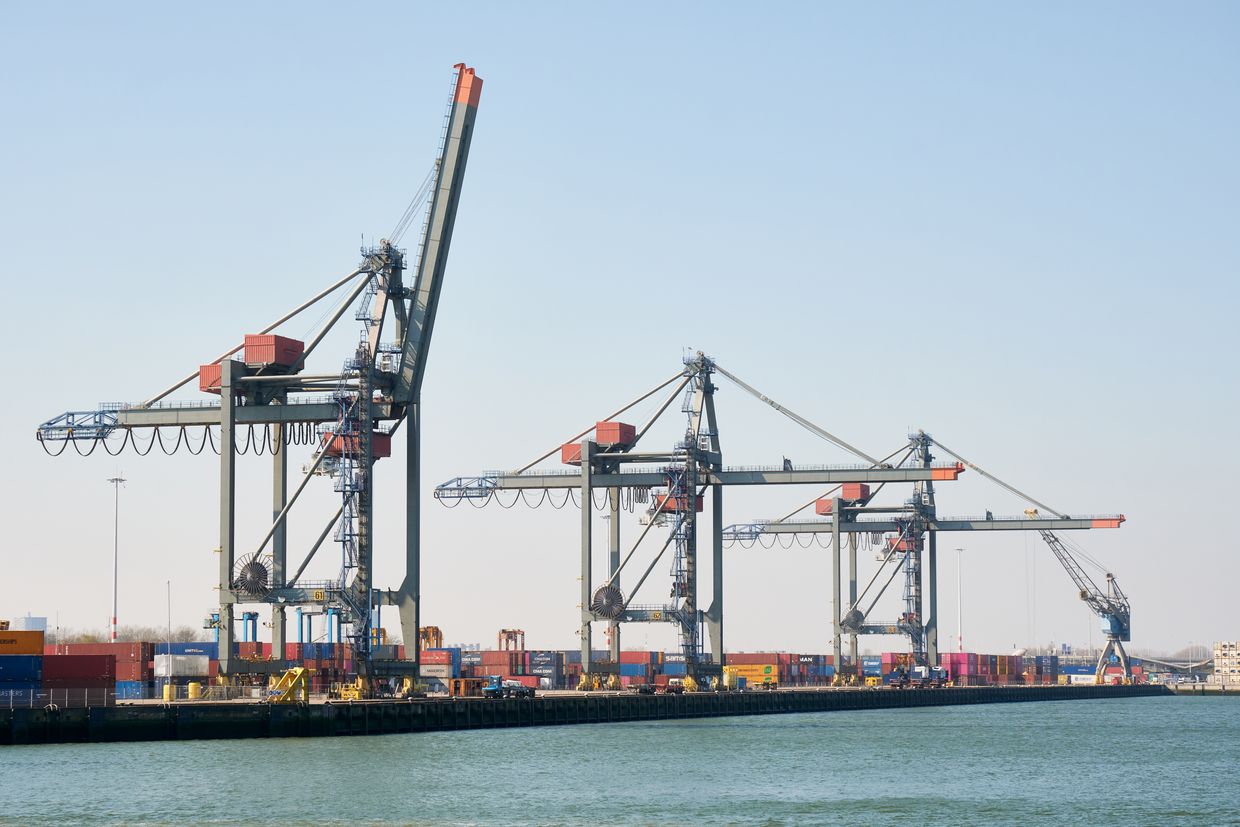
In anticipation of a potential war with Russia, the port of Rotterdam in the Netherlands has begun reserving space for NATO ships carrying military cargo and is mapping out logistics routes for weapons transfers, the Financial Times reported on July 8.

The decision comes as NATO allies increasingly warn of the risk of a large-scale war with Russia within five years. Rotterdam has previously handled weapons shipments, but this marks the first time that it will designate a special berth for military use.

Part of the container terminal will be repurposed to ensure the safe transfer of ammunition and other equipment between vessels. Military supply logistics will be coordinated with the port of Antwerp in neighboring Belgium.

"We see each other less and less as competitors," Boudewijn Siemons, Chief Executive of the Port of Rotterdam Authority, said, referring to the port of Antwerp.

"If large volumes of military goods would have to be shipped, we'd look to Antwerp or other ports to take over some capacity and the other way around."

Siemons added that not all terminals are equipped to handle military-grade cargo, making the logistical coordination crucial, particularly for shipments from the U.S., U.K., and Canada.

In May, the Dutch Defense Ministry confirmed that space would be allocated for military supplies at NATO's request. The move is part of broader efforts by European allies to reduce dependence on the U.S. for defense logistics.

Russia's military spending has surged amid its full-scale invasion of Ukraine. According to the International Institute for Strategic Studies, Moscow's 2024 defense budget rose by 42% in real terms, reaching $462 billion, surpassing the combined total of all European countries.

NATO Secretary General Mark Rutte said on July 5 that a Chinese military move against Taiwan could prompt Beijing to encourage Russia to open a second front against NATO states.

Rutte has repeatedly warned that Russia could rebuild its military capabilities fast enough to pose a direct threat to NATO territory, urging allied governments to act swiftly and decisively.

‘Neither side wasted time’ — Ukraine’s economy minister on minerals deal negotiations with Trump’s ‘business-oriented’ administration
Ukraine’s Economy Minister Yuliia Svyrydenko says her task is simple — to get the investment fund behind the closely watched minerals deal with the U.S. off the ground, and prove its detractors wrong. “There are so many criticisms from different parties that this fund is just a piece of paper we can put on the shelves — that it won’t be operational,” Svyrydenko, who is also Ukraine’s first deputy prime minister, tells the Kyiv Independent at Ukraine’s Cabinet of Ministers on July 4, the morning
Europe's largest port prepares for NATO arms shipments, potential war with RussiaThe Kyiv IndependentLiliane Bivings
Europe's largest port prepares for NATO arms shipments, potential war with Russia
  •  

Overcoming Slovakia, Hungary opposition, EU set to approve new Russia sanctions package this week, Ukrainian official says

Overcoming Slovakia, Hungary opposition, EU set to approve new Russia sanctions package this week, Ukrainian official says

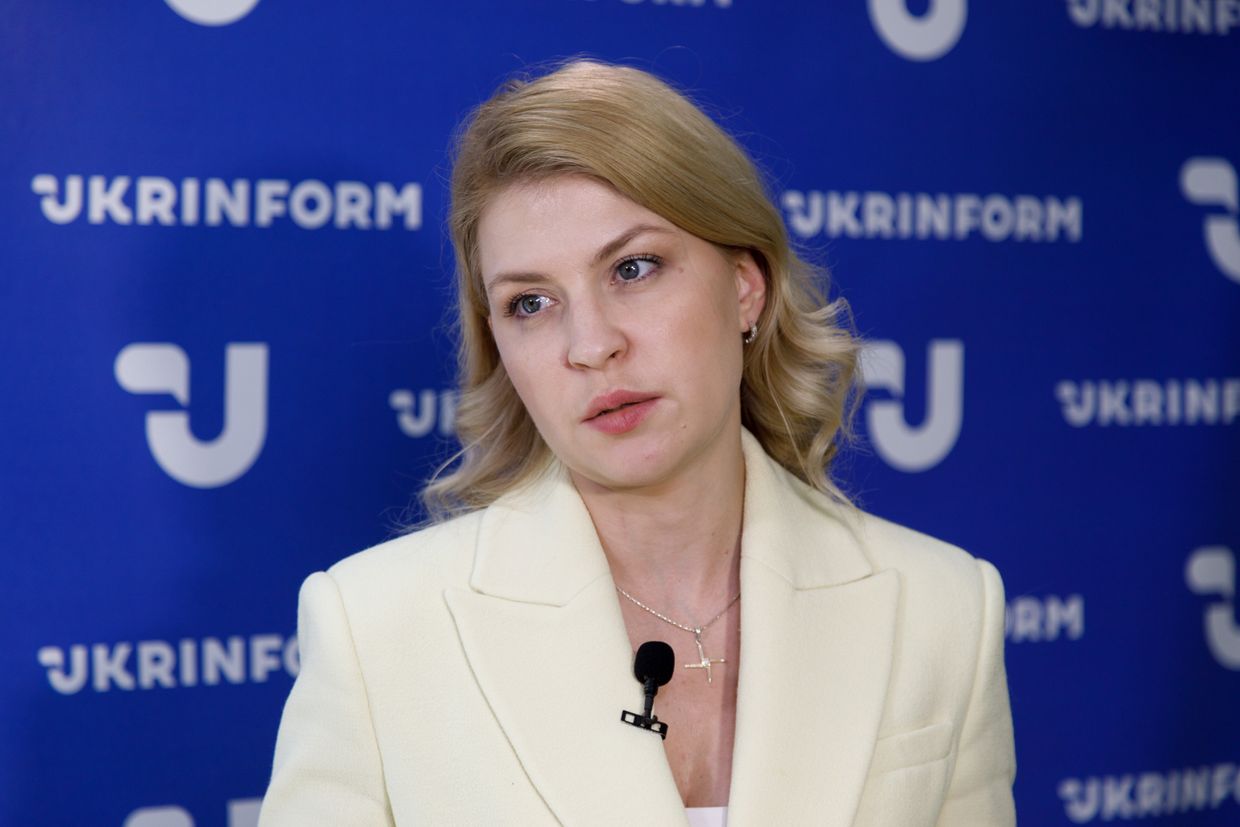
After failing to approve 18th package of sanctions against Russia due to opposition from Hungary and Slovakia, EU countries are expected to finalize an agreement this week, Ukrainian Deputy Prime Minister Olha Stefanishyna said on July 7.

Since EU sanctions require unanimous approval, a single veto could prevent implementation. In late June, EU ambassadors did not approve the sanctions package because of objections from Budapest and Bratislava.

"According to my information, European countries will still reach an agreement this week on the 18th package of sanctions, together with Slovakia and Hungary," she told Ukrainian broadcaster ICTV.

The delay followed earlier signs of resistance from both governments, despite the package being introduced shortly after the previous round of sanctions took effect on May 20.

"It is noteworthy that during the previous period, when the decision on the 17th package was being made, Hungary did not vote for this decision until the last day," Stefanishyna said.

"There was even almost a day when these sanctions were not put into effect."

Unlike Hungarian Prime Minister Viktor Orban, who has consistently opposed sanctions and military aid for Ukraine, Slovakia has not previously attempted to block new EU measures.

Bratislava requested a delay in adopting the latest package until the bloc clarifies the financial implications of RePowerEU — an initiative to end reliance on Russian fossil fuels by 2030.

"Without radical political leadership in the European Union, it will be very difficult," Stefanishyna said, warning of future veto threats by individual member states.

The 18th package includes new restrictions targeting Russia's energy and banking sectors, as well as transactions linked to the Nord Stream pipeline project.

These measures are part of a broader European effort to tighten pressure on Moscow as it continues to reject calls for an unconditional ceasefire in Ukraine.

While the EU pushes forward with additional restrictions, the United States has not imposed new sanctions on Russia since President Donald Trump took office in January.

‘Neither side wasted time’ — Ukraine’s economy minister on minerals deal negotiations with Trump’s ‘business-oriented’ administration
Ukraine’s Economy Minister Yuliia Svyrydenko says her task is simple — to get the investment fund behind the closely watched minerals deal with the U.S. off the ground, and prove its detractors wrong. “There are so many criticisms from different parties that this fund is just a piece of paper we can put on the shelves — that it won’t be operational,” Svyrydenko, who is also Ukraine’s first deputy prime minister, tells the Kyiv Independent at Ukraine’s Cabinet of Ministers on July 4, the morning
Overcoming Slovakia, Hungary opposition, EU set to approve new Russia sanctions package this week, Ukrainian official saysThe Kyiv IndependentLiliane Bivings
Overcoming Slovakia, Hungary opposition, EU set to approve new Russia sanctions package this week, Ukrainian official says
  •  

9 killed, 81 injured in Russian attacks on Ukraine over past day

9 killed, 81 injured in Russian attacks on Ukraine over past day

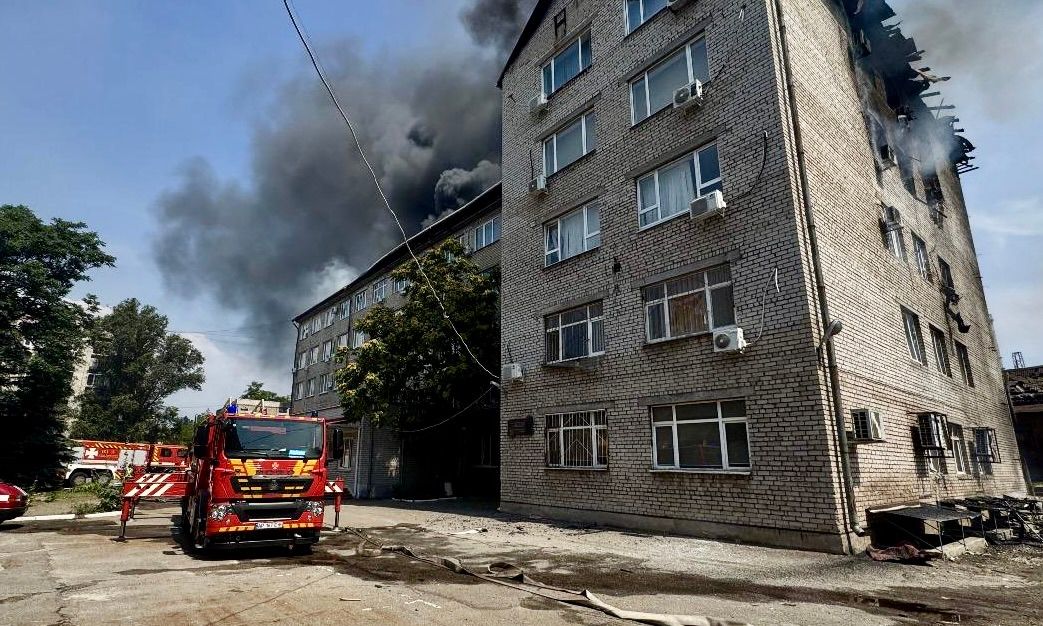
At least nine civilians were killed and 81 others injured in Russian attacks across Ukraine over the past 24 hours, regional authorities reported on July 8.

Ukraine's Air Force said Russia launched 54 drones overnight, including Iranian-designed Shahed-type attack drones, and fired four S-300/400 guided missiles.

Air defenses intercepted 34 drones, while another eight were likely used as radar-jamming decoys. Drones struck five locations across the country.

The overnight assault was repelled using aircraft, electronic warfare, mobile fire groups, and missile defense systems, the military said.

In Kharkiv Oblast, one person was killed and 40 others were injured, including three children, as the city of Kharkiv and seven other settlements came under attack, Governor Oleh Syniehubov reported.

Russian strikes on Zaporizhzhia Oblast injured 20 people and damaged at least 64 houses and apartment buildings, Governor Ivan Fedorov said.

In Donetsk Oblast, three civilians were killed — two in Oleksiyevo-Druzhkivka and one in Novotroitske — and 10 more were injured, according to Governor Vadym Filashkin.

In Sumy Oblast, four people were killed and four more injured in Russian strikes, the local administration reported.

One person was killed and four others were injured in Kherson Oblast, where Russian forces hit residential areas and public infrastructure, damaging two apartment buildings and 17 houses, according to Governor Oleksandr Prokudin.

Three people were injured in Dnipropetrovsk Oblast, where Russian troops attacked with first-person-view (FPV) drones, Governor Serhii Lysak said.

The wave of attacks follows Russia's ongoing refusal to accept a ceasefire and comes amid rising use of drone and missile strikes against Ukraine's civilian infrastructure.

‘They have to be able to defend themselves’ — Trump says US will send additional weapons shipments to Ukraine, criticizes Putin
“They’re getting hit very hard. We’re gonna have to send more weapons, your defensive weapons primarily,” U.S. President Donald Trump said.
9 killed, 81 injured in Russian attacks on Ukraine over past dayThe Kyiv IndependentVolodymyr Ivanyshyn
9 killed, 81 injured in Russian attacks on Ukraine over past day
  •  

On 1-year anniversary, Ukraine names Russian officer linked to deadly strike on Kyiv Okhmatdyt children's hospital

On 1-year anniversary, Ukraine names Russian officer linked to deadly strike on Kyiv Okhmatdyt children's hospital

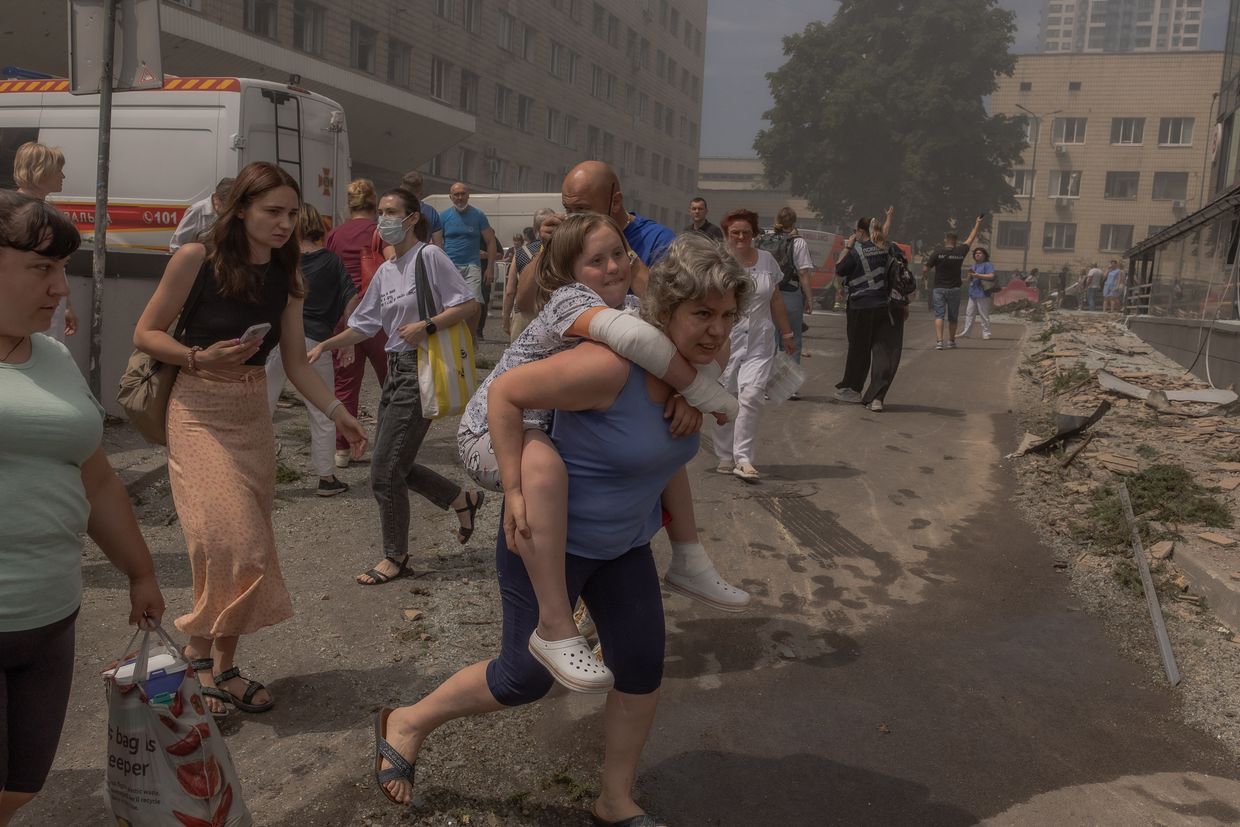
Ukraine's military intelligence (HUR) identified Russian Armed Forces Major Denis Sheynov as allegedly involved in the July 2024 missile strike on Kyiv's Okhmatdyt children's hospital, HUR reported on July 8.

The strike, which killed two adults and injured at least 34 people, directly hit the country's largest pediatric medical center, where 627 children were receiving treatment at the time.

According to HUR, Sheynov is the head of the special engineering service of the 121st Heavy Bomber Aviation Regiment, part of Russia's 22nd Heavy Bomber Aviation Division, tasked with executing the strike.

Sheynov, born in Saratov on Jan. 30, 1978, was reportedly responsible for the technical preparation of the X-101 air-launched cruise missiles used in the attack.

He graduated from the Saratov Higher Military Command Engineering School Missile Forces, and previously served in Syria in 2018. Sheynov has been awarded several medals by the Russian government, including for participation in the Syrian war.

Ukrainian authorities previously charged Russian Lieutenant General Sergey Kobylash in absentia for ordering the strike, which was widely condemned internationally.

Kobylash gave the order at around 9:15 a.m., while the hospital was struck at 10:45 a.m.

‘They have to be able to defend themselves’ — Trump says US will send additional weapons shipments to Ukraine, criticizes Putin
“They’re getting hit very hard. We’re gonna have to send more weapons, your defensive weapons primarily,” U.S. President Donald Trump said.
On 1-year anniversary, Ukraine names Russian officer linked to deadly strike on Kyiv Okhmatdyt children's hospitalThe Kyiv IndependentVolodymyr Ivanyshyn
On 1-year anniversary, Ukraine names Russian officer linked to deadly strike on Kyiv Okhmatdyt children's hospital
  •  

Russia's Black Sea Fleet shrinks presence in key Crimean bay, Ukrainian partisans say

Russia's Black Sea Fleet shrinks presence in key Crimean bay, Ukrainian partisans say

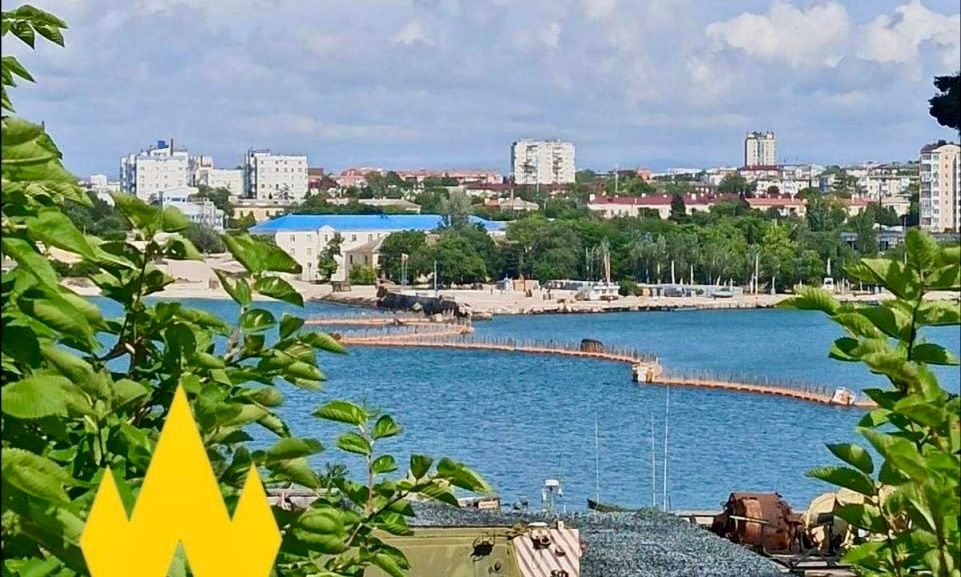
Striletska Bay near Sevastopol, once a key base for Russian warships in occupied Crimea, is now nearly empty and used primarily for mooring tugboats and small patrol craft, the Atesh partisan group reported on July 8.

According to the group, Russia now uses the bay mainly for maintenance work and rare anti-sabotage defense drills, having pulled most major vessels from the area.

"Recently, the bay has been practically empty... The degradation of the occupation fleet in Sevastopol is becoming increasingly obvious. Striletska Bay, which previously housed a large number of combat vessels, is now idle." Atesh said.

The remaining combat units are periodically rotated and redeployed in an apparent effort to avoid detection by Ukrainian reconnaissance.

"Every object is under control — no ship will go unnoticed," Atesh said, adding that all ship movements are being tracked and shared with the Ukrainian Armed Forces.

Sevastopol has served as the base for Russia's Black Sea Fleet since the illegal annexation of Crimea in 2014. Repeated Ukrainian attacks using naval drones, missiles, and long-range drones have forced the Kremlin to reduce its naval presence in occupied Crimea.

Ukraine has destroyed several Russian vessels, including the Caesar Kunikov landing ship, the Sergei Kotov patrol ship, the Ivanovets missile corvette, and multiple high-speed landing crafts.

The shrinking Russian presence in Sevastopol comes as Ukraine steps up drone attacks against other Black Sea Fleet locations. On July 6, drones struck the fleet's facilities in Novorossiysk, Krasnodar Krai, a key port east of Crimea across the Kerch Strait.

‘They have to be able to defend themselves’ — Trump says US will send additional weapons shipments to Ukraine, criticizes Putin
“They’re getting hit very hard. We’re gonna have to send more weapons, your defensive weapons primarily,” U.S. President Donald Trump said.
Russia's Black Sea Fleet shrinks presence in key Crimean bay, Ukrainian partisans sayThe Kyiv IndependentVolodymyr Ivanyshyn
Russia's Black Sea Fleet shrinks presence in key Crimean bay, Ukrainian partisans say
  •  

Trump reportedly told Zelensky he's not responsible for US arms halt to Ukraine

Trump reportedly told Zelensky he's not responsible for US arms halt to Ukraine

U.S. President Donald Trump told President Volodymyr Zelensky during a phone call on July 4 that he was not responsible for the suspension of U.S. arms shipments to Ukraine, The Wall Street Journal (WSJ) reported on July 7, citing unnamed sources familiar with the matter.

The suspension of aid, which includes Patriot air defense missiles and precision-guided munitions, has drawn criticism from Kyiv amid an intensifying Russian aerial campaign that has killed and injured hundreds of civilians in recent weeks.

According to WSJ, Trump told the Ukrainian president that he had ordered a review of Pentagon munitions stockpiles following last month's U.S. strikes on Iran's nuclear sites, but he did not direct the military to halt weapons deliveries.

NBC News reported on July 4 that Defense Secretary Pete Hegseth unilaterally halted the shipment to Ukraine on July 2, despite internal Pentagon assessments showing the aid would not compromise U.S. military readiness.

According to Politico, U.S. Special Envoy Keith Kellogg and Defense Minister Rustem Umerov are scheduled to meet in Rome later this week to discuss restarting U.S. military aid to Ukraine.

Trump did not acknowledge a halt in U.S. weapons shipments to Ukraine. On July 7, he said the U.S. would provide Ukraine with "more weapons," pointing to the scale of Russia's attacks.

"They have to be able to defend themselves, they're getting hit very hard now," Trump told reporters alongside a U.S. and Israeli delegation at the White House.

The comments follow Trump's July 3 call with Russian President Vladimir Putin, after which he said he was "very disappointed" with the Kremlin's continued refusal to end hostilities.

The following day, Trump and Zelensky spoke by phone in what the U.S. president described as a "very strategic" conversation focused on Ukraine's need for air defenses.

Two rounds of direct talks between Russia and Ukraine held in Istanbul in May and June led only to prisoner exchanges, with no breakthrough on ending hostilities. Moscow has maintained maximalist conditions while rejecting calls for an unconditional ceasefire.

Russia striking NATO while China invades Taiwan ‘plausible’ scenario, experts say
If Beijing moves against Taiwan, NATO might soon find itself in a two-front war with China and Russia — or so the alliance’s secretary general believes. “If Xi Jinping would attack Taiwan, he would first make sure that he makes a call to his very junior partner in all of this, Vladimir Vladimirovich Putin… and telling him, ‘Hey, I’m going to do this, and I need you to to keep them busy in Europe by attacking NATO territory,’” Secretary General Mark Rutte said in a July 5 interview with the New
Trump reportedly told Zelensky he's not responsible for US arms halt to UkraineThe Kyiv IndependentMartin Fornusek
Trump reportedly told Zelensky he's not responsible for US arms halt to Ukraine
  •  

General Staff: Russia has lost 1,028,610 troops in Ukraine since Feb. 24, 2022

General Staff: Russia has lost 1,028,610 troops in Ukraine since Feb. 24, 2022

Russia has lost 1,028,610 troops in Ukraine since the beginning of its full-scale invasion on Feb. 24, 2022, the General Staff of Ukraine's Armed Forces reported on July 8.

The number includes 1,070 casualties that Russian forces suffered over the past day.

According to the report, Russia has also lost 10,995 tanks, 22,967 armored fighting vehicles, 54,456 vehicles and fuel tanks, 30,034 artillery systems, 1,434 multiple launch rocket systems, 1,192 air defense systems, 421 airplanes, 340 helicopters, 44,230 drones, 28 ships and boats, and one submarine.

Russia striking NATO while China invades Taiwan ‘plausible’ scenario, experts say
If Beijing moves against Taiwan, NATO might soon find itself in a two-front war with China and Russia — or so the alliance’s secretary general believes. “If Xi Jinping would attack Taiwan, he would first make sure that he makes a call to his very junior partner in all of this, Vladimir Vladimirovich Putin… and telling him, ‘Hey, I’m going to do this, and I need you to to keep them busy in Europe by attacking NATO territory,’” Secretary General Mark Rutte said in a July 5 interview with the New
General Staff: Russia has lost 1,028,610 troops in Ukraine since Feb. 24, 2022The Kyiv IndependentMartin Fornusek
General Staff: Russia has lost 1,028,610 troops in Ukraine since Feb. 24, 2022
  •  
❌