Trump Aides Seek to Jump-Start Diplomacy With Iran as Crisis Widens

© Pool photo by Yuki Iwamura

© Pool photo by Yuki Iwamura

© Pool photo by Yuki Iwamura

© Dave Sanders for The New York Times

© Dave Sanders for The New York Times
In 2024 ethics filing, US health secretary pledged to ‘not engage in writing, editing, marketing or promotional services for any of these books during government service’
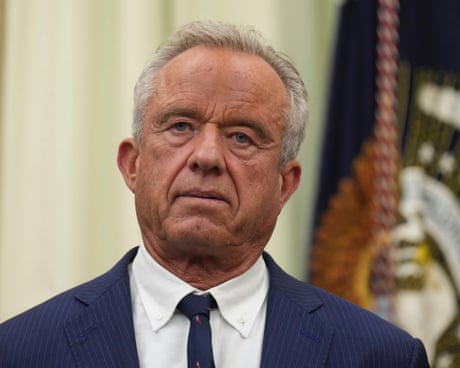
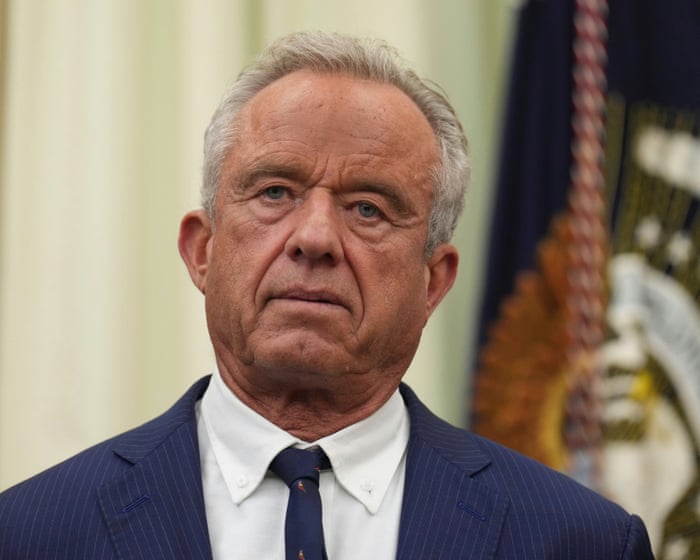
Robert F Kennedy Jr, the US health secretary, received $4m over the last year in book advances from allies within the Make America Healthy Again movement, according to a new report.
The advances were for upcoming books by Skyhorse Publishing, a publishing house belonging to Tony Lyons, a friend of Kennedy Jr who is also president of Maha Center, a non-profit that describes itself as “tackling America’s health crisis through education, investigation, innovation and action”.
Continue reading...
© Photograph: Jacquelyn Martin/AP

© Photograph: Jacquelyn Martin/AP

© Photograph: Jacquelyn Martin/AP
President lays out red carpet as treasury secretary announces extension of ‘Busan agreement’ pausing trade war hostilities
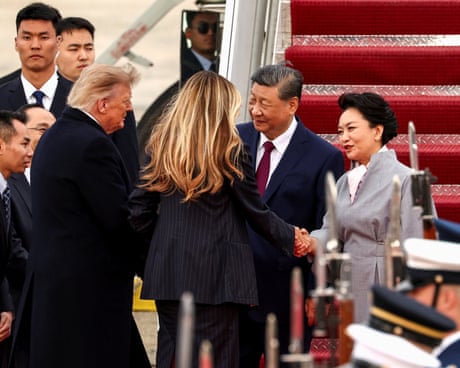
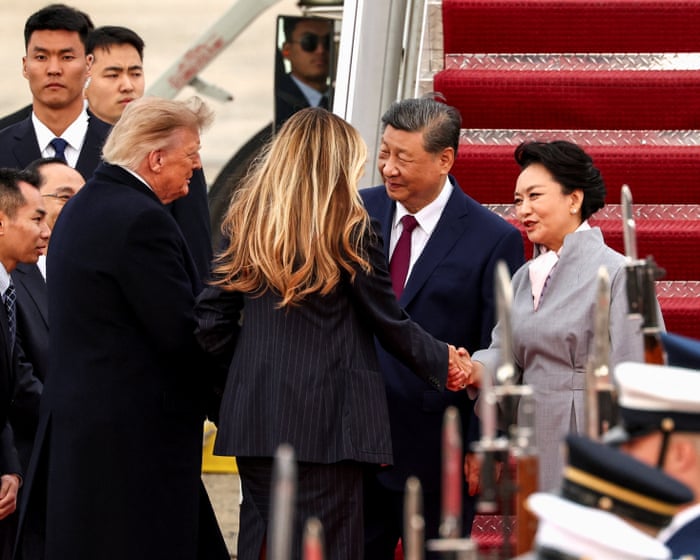
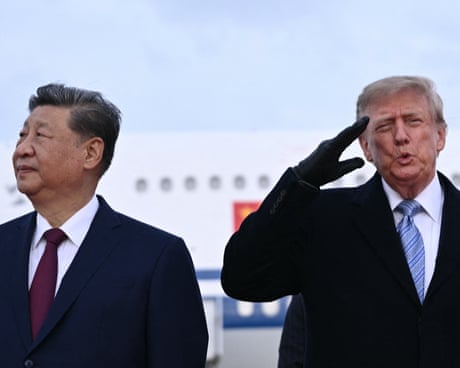
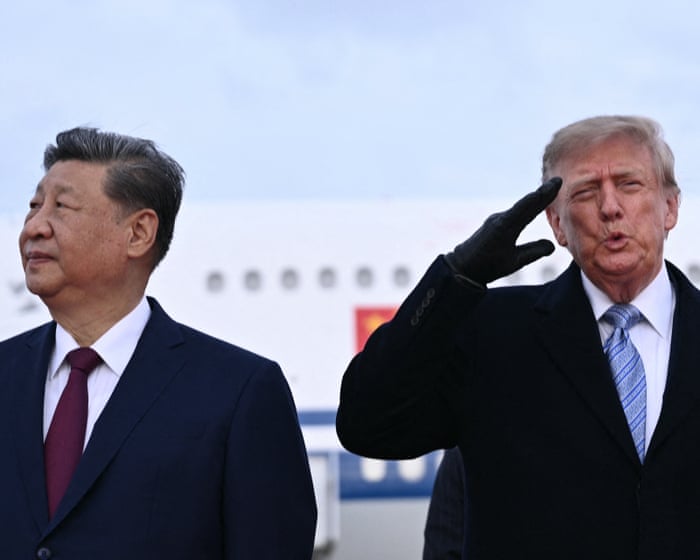
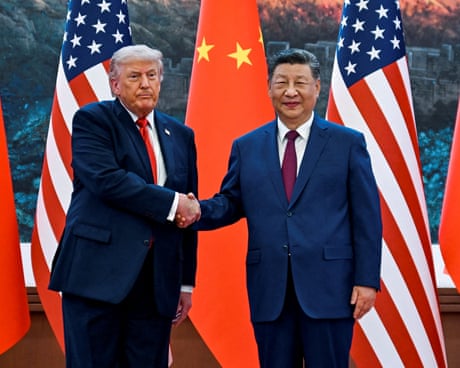
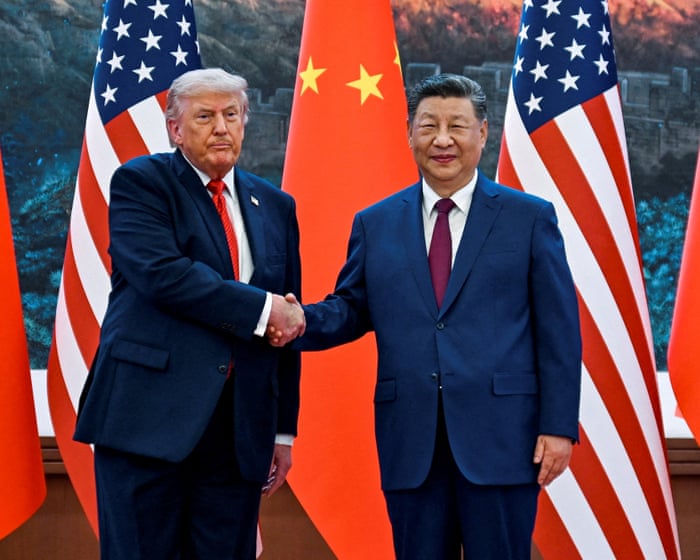
Donald Trump has welcomed Xi Jinping to the US, taking the unusual step of greeting the Chinese leader on the tarmac at Joint Base Andrews to kick off his state visit to Washington.
Xi’s plane was met with a lavish arrival ceremony that included a 30-metre-long (100ft) red carpet flanked by US service members, a military flyover by two B-1 bombers and a presentation of the flags and national anthems of both countries.
Continue reading...
© Photograph: Kevin Lamarque/Reuters

© Photograph: Kevin Lamarque/Reuters

© Photograph: Kevin Lamarque/Reuters

© Kenny Holston/The New York Times

© Kenny Holston/The New York Times

© Kenny Holston/The New York Times

© Kenny Holston/The New York Times

© Arfa Momin/The New York Times

© Ng Han Guan/Associated Press

© Ruth Fremson/The New York Times

© Ruth Fremson/The New York Times
Andy Burnham’s accusation against the Kremlin tells half the story. Domestic extremists amplified by US big tech are part of the same problem
In November 2020, Barack Obama warned of an “epistemological crisis” facing western democracies. Polarisation and radicalisation were corroding trust in established information sources. “If we do not have the capacity to distinguish what’s true from what’s false, then by definition the marketplace of ideas doesn’t work,” the former US president said.
That vulnerability has grown since then. Democracy’s enemies have become more determined to exploit it. This is the threat that Andy Burnham highlighted in a speech at the United Nations this week. The prime minister accused Russia of waging an “industrial-scale assault” on the UK’s information environment using bot armies and fake websites to spread falsehoods, interfere in elections, foment discord and poison inter-community relations.
Continue reading...
© Photograph: Grant Rooney Premium/Alamy

© Photograph: Grant Rooney Premium/Alamy

© Photograph: Grant Rooney Premium/Alamy
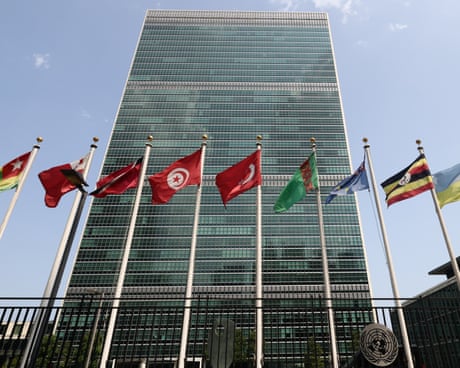
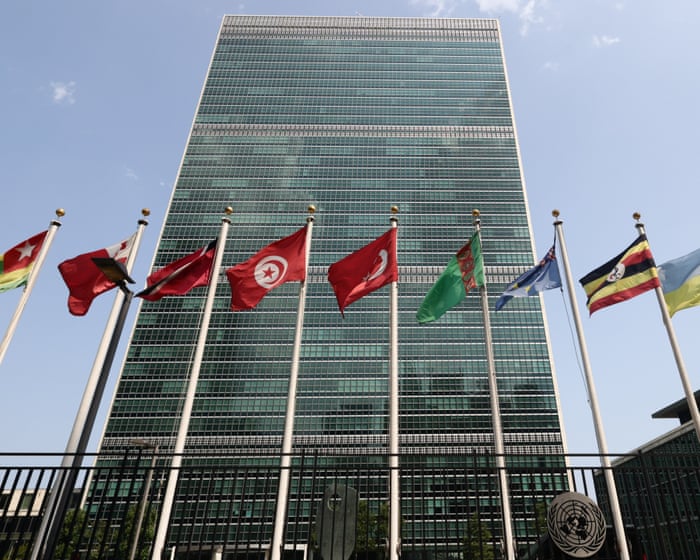
As the secretary general, António Guterres, prepares to step down, the general assembly is highlighting the scale of the organisation’s challenges
The United Nations was created, its charter states, to “save succeeding generations from the scourge of war”. Donald Trump used his address to the general assembly to threaten Iran, another member state, with annihilation again. The charter also speaks of the obligations of international law. On Venezuela, Mr Trump gloated that “to the victor belong the spoils”. His speech in New York on Tuesday might be regarded as an improvement on last year’s only in that it was not an explicit, full-scale attack on the UN itself, merely on its founding principles.
The absences this year are perhaps as telling as the US president’s hostile presence. Vladimir Putin has not attended for more than a decade. Nor has Xi Jinping – but the snub is more striking as he is in Washington to meet the US president. India’s Narendra Modi is not present; nor are Cyril Ramaphosa, Bola Tinubu or Abdel Fatah al-Sisi – the leaders of Africa’s three giants, South Africa, Nigeria and Egypt. While their reasons are various, the gaps speak collectively to Mr Trump’s wrecking capability and the broader challenges faced by the UN.
Do you have an opinion on the issues raised in this article? If you would like to submit a response of up to 300 words by email to be considered for publication in our letters section, please click here.
Continue reading...
© Photograph: NurPhoto/Getty Images

© Photograph: NurPhoto/Getty Images

© Photograph: NurPhoto/Getty Images
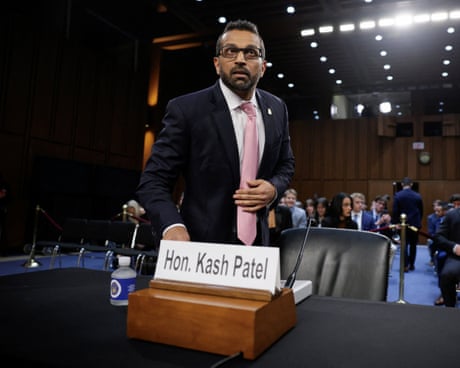
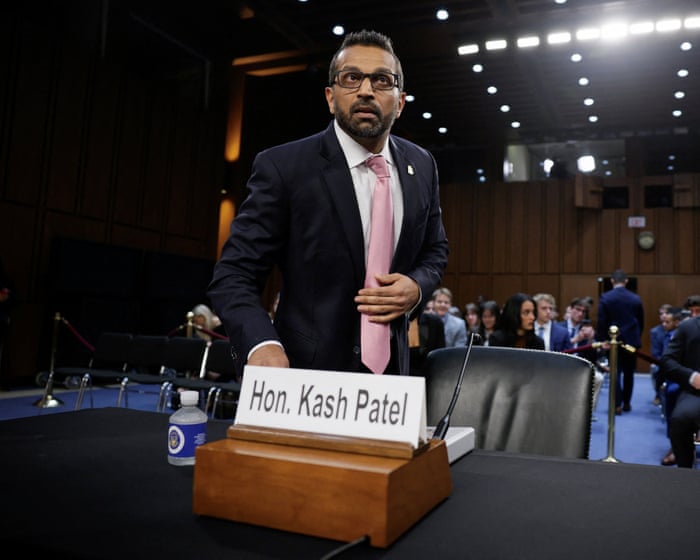
FBIjobs.gov offline on Wednesday as ShinyHunters group claims to have accessed records of agents and applicants
The FBI is investigating an apparent breach of its jobs website as a criminal hacking group claimed to have accessed “very sensitive data” on nearly all agents and job applicants.
“The FBI is aware of claims regarding unauthorized activity affecting FBIjobs.gov and is currently investigating,” the bureau said in a statement. The website, the main portal for prospective employees to learn about the FBI and initiate the application process, remained offline Wednesday morning.
Continue reading...
© Photograph: Evan Vucci/Reuters

© Photograph: Evan Vucci/Reuters

© Photograph: Evan Vucci/Reuters
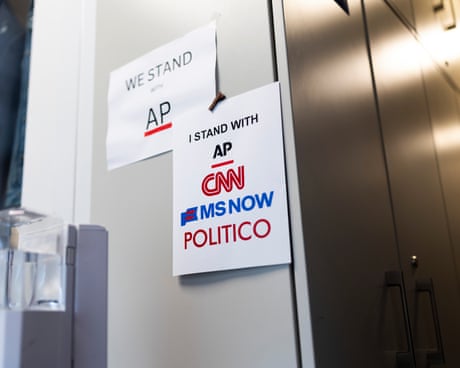
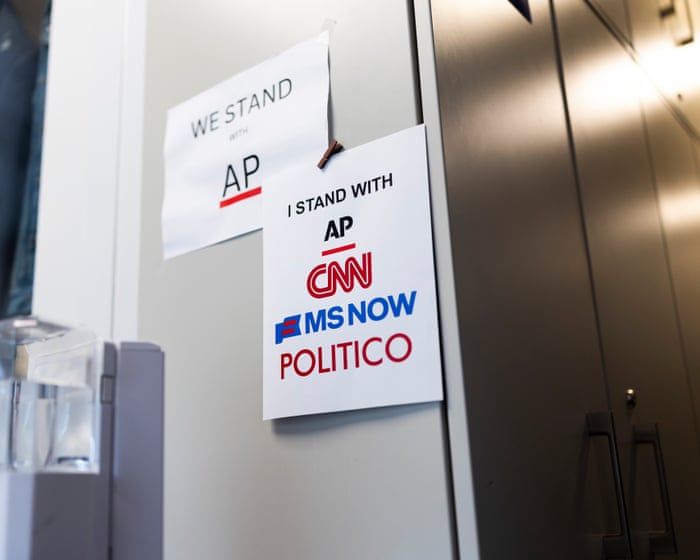
Justice department cites national security to support ban on CNN, Politico and MS Now as trio file lawsuit in response
The US Department of Justice has defended Donald Trump’s decision to ban three new organizations from the White House, arguing in a court filing that access to the grounds was a “privilege” and citing national security concerns.
Lawyers for the US president doubled down on Trump’s claims about CNN, Politico and MS Now reporting “Fake News”, and insisted the ban did not violate the first amendment because “access to the White House is a privilege, not a right”.
Continue reading...
© Photograph: Finn Gomez/Getty Images

© Photograph: Finn Gomez/Getty Images

© Photograph: Finn Gomez/Getty Images
Two leaders could discuss tech safety issues and US-China trade ties but may skip over climate emergency
The leaders of the world’s two superpowers are meeting in the US on Thursday for Xi Jinping’s first state visit to the US in more than a decade. The last time the Chinese president was hosted in Washington (by Barack Obama in 2015), the issues on the agenda included cybercrime, technology, the climate crisis and human rights. The star of the day was Ne-Yo, who serenaded Xi and his wife, Peng Liyuan, with Peng reportedly singing along at the state dinner.
This time, Xi is meeting Donald Trump, who has overhauled the world order and recalibrated the US-China relationship. Trump is contending with a China that is in a much stronger position than it was 10 years ago. Here are five things to look out for at the US-China summit.
Continue reading...
© Photograph: Brendan Smialowski/AFP/Getty Images

© Photograph: Brendan Smialowski/AFP/Getty Images

© Photograph: Brendan Smialowski/AFP/Getty Images
Kirsten Gillibrand says acting US navy secretary told her of attempted suicides after carrier strike group’s lengthy deployment as part of US war in Iran. This blog is now closed.
Rubio also briefly addressed Trump’s meeting with Delcy Rodriguez, the interim Venezuelan president, who last night posed for a friendly photo with Trump at a Manhattan hotel only miles from where her predecessor, Nicolás Maduro, was incarcerated.
“It was a short meeting, but it was a very important meeting,” Rubio said.
Continue reading...
© Photograph: Thananuwat Srirasant/Getty Images

© Photograph: Thananuwat Srirasant/Getty Images

© Photograph: Thananuwat Srirasant/Getty Images
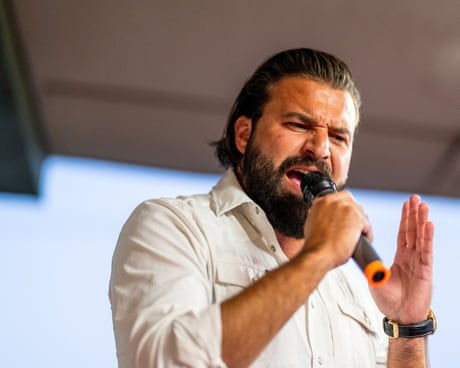
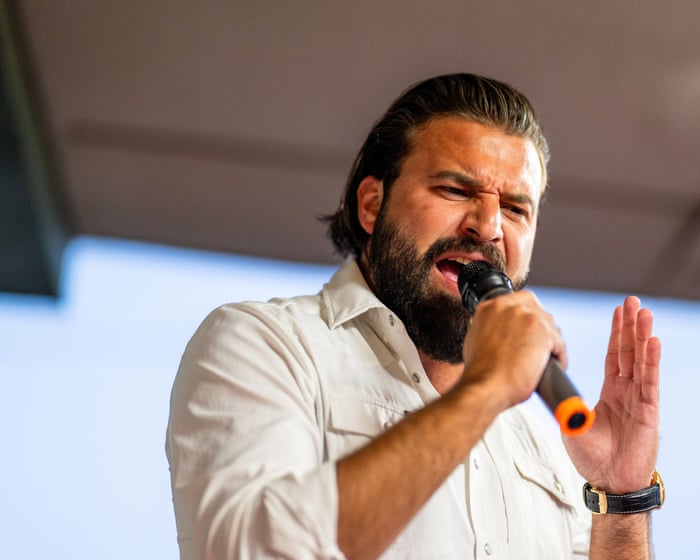
Brandon Herrera, a YouTuber known for making outrageous pro-gun statements, is the frontrunner to represent a district devastated by mass shootings
The video begins with Brandon Herrera staring intently into the camera. He is filming himself in a hotel room seated between twin beds, his black hair slicked back and beard neatly trimmed. He is wearing a T-shirt branded with his trademark nickname, “The AK Guy”, above the image of a semi-automatic rifle primed for action.
Three days earlier, on 3 August 2019, a white nationalist armed with a semi-automatic firearm not dissimilar to the one stamped across Herrera’s chest entered a busy Walmart store in the Texas border city of El Paso and opened fire.
Continue reading...
© Photograph: Brandon Bell/Getty Images

© Photograph: Brandon Bell/Getty Images

© Photograph: Brandon Bell/Getty Images

© Lexi Parra/The New York Times
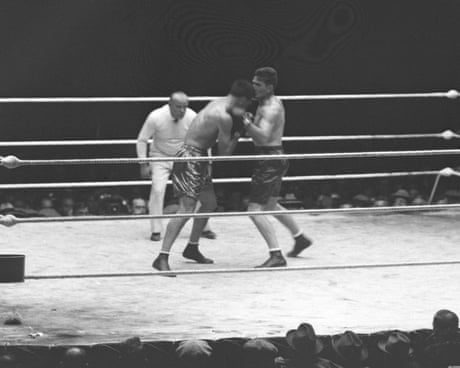
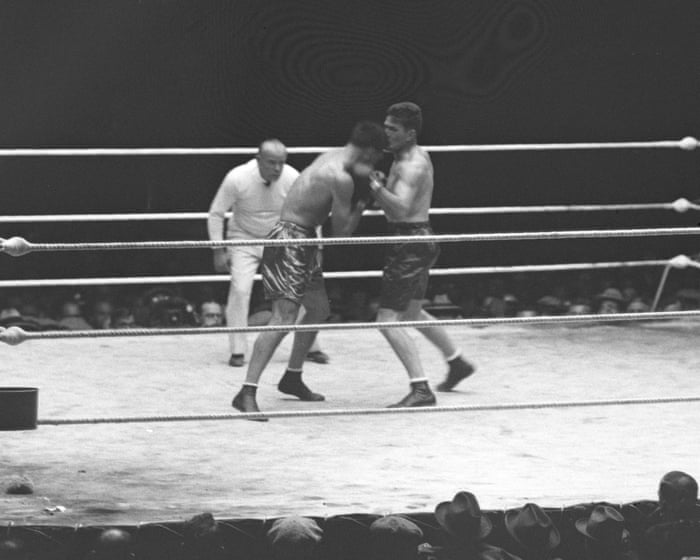
On 23 September 1926, two of the best heavyweights in American history met in front of 120,000 fans in Philadelphia. The fight drew in a nation
The two fights between Jack Dempsey and Gene Tunney rank with boxing’s most-storied championship bouts and are among the greatest sports spectacles ever seen in America. Wednesday marks the one hundredth anniversary of their first encounter.
Dempsey bridged boxing’s old and modern eras and was one of the most charismatic fighters in history. When Dempsey was young, biographer Randy Roberts recounts, “he lived in mining camps and hobo jungles, rode the rods, and more than once begged for food. What separated him was his willingness, even eagerness, to work. He accepted any type of employment from washing dishes, cutting lawns, and scrubbing floors to the harder work of coal-mining, digging ditches, and picking fruit.”
Continue reading...
© Photograph: The Stanley Weston Archive/Getty Images

© Photograph: The Stanley Weston Archive/Getty Images

© Photograph: The Stanley Weston Archive/Getty Images
Fears persist about Trump ‘sucking up’ to Xi on Taiwan, but few concrete outcomes anticipated from US meeting
When Xi Jinping, China’s leader, touches down in Maryland on Wednesday, he will step out into the arms – perhaps a hug, if Donald Trump’s wishes come true – of a US president who has shown China more bonhomie than any of his recent predecessors.
The meeting between Xi and Trump this week will be the second time that the leaders of the world’s two biggest economies have talked face to face this year. At the previous summit, held in Beijing in May, there was much talk of building a “strategic stability” between the two powers. But there was little by way of concrete outcomes: the countries remain at loggerheads over trade, export controls and geopolitics.
Continue reading...
© Photograph: Kenny Holston/Reuters

© Photograph: Kenny Holston/Reuters

© Photograph: Kenny Holston/Reuters

© NOAA Fisheries

© Laurent Cipriani/Associated Press

© Doug Mills/The New York Times

Ukraine's defense makers have signed the first 26 deals under a program that lets them lease or rent new equipment, with the right to subsequently purchase it into ownership, while the state covers most of the bill. The preferential-leasing scheme has channeled about $2 million so far, with producers paying just 5% of the leasing fee and the state covering the rest, the Defense Ministry said.
For many Ukrainian arms makers, the bottleneck is not orders but the cash to expand fast enough to fill them, Deputy Defense Minister Hanna Hvozdiar says, and the program is the state's answer.
Producers can lease equipment, machinery, automation equipment, transportation, and even factory space, paying 5 percent per year while the state subsidizes the rest, up to about $11 million per contract over five years.
The state covers most of the cost
Beyond capping the borrower's rate at 5 percent, the contracts can defer lease payments for up to a year, easing the squeeze while new equipment is bought and installed.
Only companies that hold "critically important" status in the defense sector, a label the state gives firms it deems essential to the war effort, can take part. The 26 deals are only the first, the ministry said, with the program still open to new applicants.
Three banks run the leasing
The Defense Ministry launched the program in April and named Ukreximbank, PUMB, and MTB Bank as the first authorized lessors, it said. In August, it spelled out what producers can lease, from machines, mobile production platforms, and technological gear to the non-residential real estate a plant needs to run.
Ukraine races to scale production
The leasing program is one piece of a broader drive to get money flowing to Ukraine's defense industry so it can produce more, faster. The government has been building financing tools around the sector, including a push by former Defense Minister Mykhailo Fedorov to raise the country's largest defense-tech venture fund.

© Chang W. Lee/The New York Times

© Adam Davis/EPA, via Shutterstock

© Dave Sanders for The New York Times

A high profile hacking group claims it has breached multiple FBI-related services and stolen data “on all FBI employees and applicants.” A representative of the group, called ShinyHunters, told 404 Media the data includes FBI agents’ names, home addresses, phone number, and information on their spouse.
The data breach could be massively significant and may have all sorts of national security and counterintelligence implications. Criminals from the same ecosystem as ShinyHunters have previously used hacked data like phone records to track, intimidate, and harass the FBI agents investigating them. The highly sensitive data could also be a boon to foreign intelligence agencies who want to better understand how one of the most important law enforcement and intelligence agencies in the U.S. operates. And if the data fell into the hands of more criminals, FBI agents and their spouses could face serious threats to their safety.
“We hacked the FBI. We hold data on all FBI employees and applicants,” the representative of the group told 404 Media.

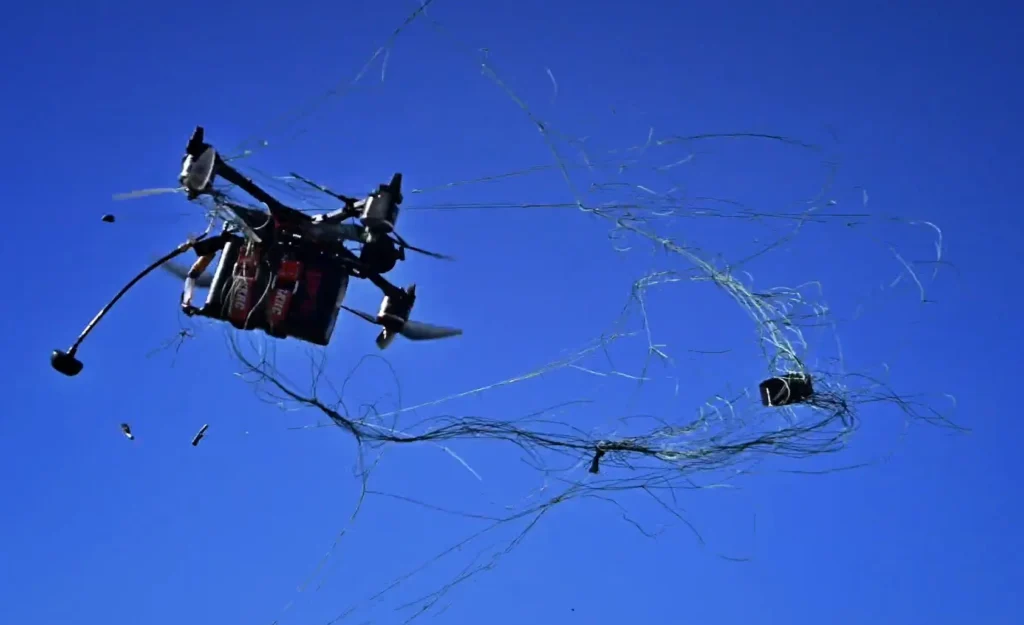
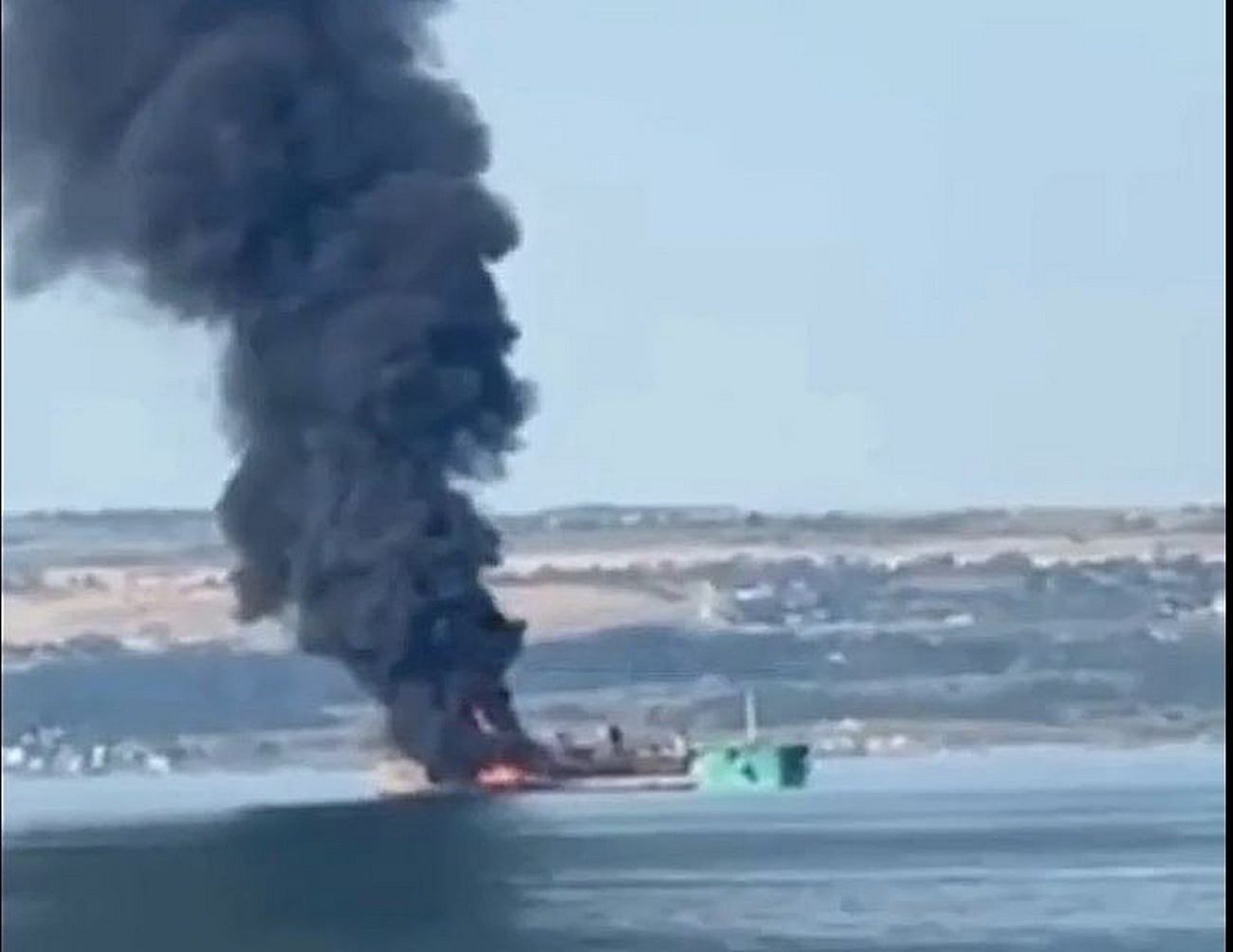
Operation MoLoChKa has now disabled 300 Russian shadow fleet ships in 11 weeks, SBS commander Robert "Madyar" Brovdi announced. The Unmanned Systems Forces (SBS) campaign has frozen the Azov Sea and the Kerch Strait, Brovdi said.
SBS drones struck 134 vessels in the Azov Sea and 166 in the Black Sea since Operation MoLoChKa began on 6 July, the SBS wrote—all, Brovdi specified, stripped of the ability to move under their own power. He called it the "300th fleet," playing on the Ukrainian army's code for a wounded man, and "a suitcase without a handle and a torment for the worm budget."
The Azov Sea "stands and will stand, together with the Kerch Strait," Brovdi said. The northern and northeastern Black Sea operates on what he called a "maybe we'll slip through" gamble.

The 300-ship count is the latest in a rapid progression. The SBS reported 201 vessels disabled by 29 July—just three weeks into the operation—when Brovdi said Crimea's supply route was "blocked indefinitely." By 11 September, the tally had reached 285, with 215 struck in July, 54 in August, and 16 in the first 11 days of September. The pace slowed as traffic in the strike zone thinned out.
The SBS figures are the unit's own and cannot be independently verified.
In late August, MSC Mediterranean Shipping Co., the world's largest container carrier, suspended new bookings for transport through the Russian port of Novorossiysk. Russia itself closed the Don-Azov shipping channel and the Kerch Strait in July after the opening wave of strikes.
By early August, Ukraine had turned Novorossiysk—Russia's main Black Sea export gateway—into a chokepoint, and in mid-August Ukrainian forces struck four Russian warships there in a single night. A 141-meter vessel disappeared near Novorossiysk the same week.
The SBS is running a second operation alongside MoLoChKa. Operation Crimean Switch Off, also launched on 6 July, had struck 374 energy nodes across occupied Crimea and other occupied areas in eastern and southern Ukraine by 10 September. The campaign has blacked out Crimea on multiple nights. Brovdi has said the SBS could strike seven times more targets with faster funding.

© Cassidy Araiza for The New York Times

© Sean Gallup/Getty Images

© The New York Times

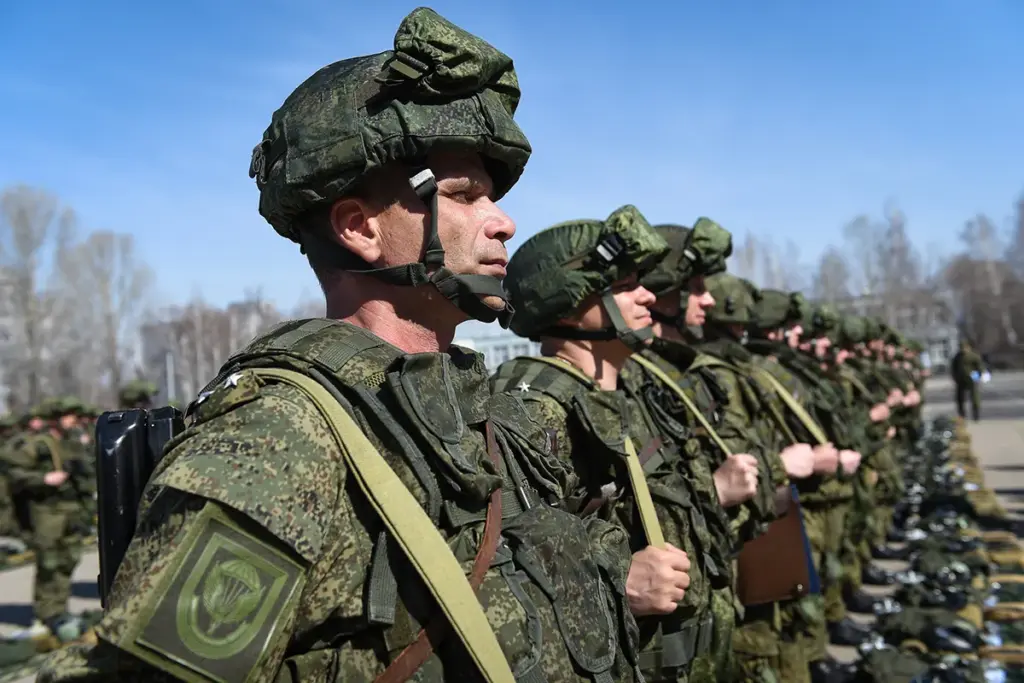
More than two-thirds of the Russian soldiers holding the Zaporizhzhia front carry criminal records. Ukraine's "South" grouping says a third of them enlisted to escape prosecution, most are over 30, and no fresh reinforcements are arriving, spokesperson Anastasia Shevchenko told Ukrinform.
The reasons they signed up track with that: 31 percent enlisted to dodge criminal liability, 24 percent for money, 26 percent on ordinary contracts, and 13 percent through mobilization. It is Russia's prison pipeline in a single snapshot, a model that has pulled well over 100,000 inmates into the war with pardons and suspended sentences and thrown many of them at Ukrainian lines in disposable assault waves.
"It is worth noting that 69 percent of the Russian personnel have a criminal record," Shevchenko said.
The model dates to Wagner's prison recruiting in 2022 and has run under the Defense Ministry since.
A middle-aged force holds the line
The men are not young. More than a third, 36 percent, are between 31 and 40; another 24 percent are 41 to 50; 31 percent are 21 to 30; and just 9 percent are 20 or under.
This is a force of grown men with records, not fresh conscripts, and it points to who Russia can still find willing to fight in the south: people with little to lose and a sentence to escape among Ukrainian civilians, women and children.
The prison pipeline runs dry
What Shevchenko did not report is any sign of that force being rebuilt. Russia has enough men and equipment to keep fighting on the Zaporizhzhia front, she says, but no substantial replenishment is coming.
That fits a wider problem for Russia: its supply of convict recruits is thinning as word of the front's lethality spreads through the prisons, with some inmates now signing military contracts only to bolt on the way to the front, in one case killing their escort to get away.
Russia's practice of replenishing its ranks from prisons is breaking down, and officials are resorting to ever more coercive measures to keep the flow going.

© Gordon Welters for The New York Times

© Amir Hamja for The New York Times


A man who volunteered to fight for Ukraine has landed in a Russian prison—seized not on the battlefield but on another continent, according to an investigation by Finnish daily Helsingin Sanomat (HS). He had gone to West Africa for civilian work when a Russia-aligned junta grabbed him and handed him to Moscow.
Russia has turned the Sahel's coup governments into clients, trading security for mining access. Its grip now reaches far enough that in what Yle calls the first such case, a man who once fought against Moscow was picked up on another continent and delivered to its courts—the war's reach no longer stops at Ukraine's borders.
The 50-year-old, identified in the reporting only as Mikael, joined a Ukrainian army unit soon after Russia's full-scale invasion in 2022. Fluent in Finnish and Russian, he later worked as a liaison between foreign fighters and Ukrainian troops. His return to Finland at the end of winter 2025 was abrupt: Ukrainian authorities had opened an investigation into his handling of funds and imported cars.
HS's investigation also found he had given false information about himself to both his family and Finnish authorities, and that his Finnish criminal record includes embezzlement and fraud. By spring, he joined about ten men bound for Sierra Leone to guard a gold mine, HS reported, as Yle relayed. They wanted work that wasn't the war.
When most of the group moved on, Mikael and an Italian named Paolo—another Ukraine volunteer—continued to Burkina Faso for the same mining firm. Within hours of reaching their hotel in Ouagadougou in June 2025, men blindfolded and handcuffed the two and drove them off, according to the same HS investigation, carried by NV. Burkina Faso's Russia-backed junta found Mikael's Ukrainian military passport and identified both as men who had fought in Ukraine. Italy's embassy freed Paolo after three months. Mikael stayed behind.
In autumn 2025, Burkina Faso secretely handed Mikael to Russia, which charged him with "mercenarism"—the statute carrying seven to 15 years that Moscow uses against foreigners who fought for Ukraine. His trial lasted about two months. Moscow's Basmanny District Court, which handles cases the state treats as sensitive, ruled in November 2025 and classified its decision. The sentence and its finality stay unknown, and he now sits in a prison in Samara. Mikael holds no Finnish passport: born in the Soviet Union, he lived in Finland on a residence permit and traveled on documents marking him "stateless"—a status HS's investigation calls into question.
HS's investigation, though, found he likely holds a Russian passport—a status Russia has not confirmed, and one that may explain why Helsinki never treated him as its own to rescue. His relatives pressed Finland's Foreign Ministry to help while he was still in Burkina Faso, but it never demanded his return. Russia tried him, it seems, as a foreigner—a citizen would have faced treason charges. Finnish police, the security service, and the Foreign Ministry are now investigating, with National Bureau of Investigation commissioner Sami Liimatainen saying they aim to locate a missing man and suspect no crime.

© Independent Photo Agency, via Alamy

© Haiyun Jiang/The New York Times
© Kenny Holston/The New York Times

© Chang W. Lee/The New York Times