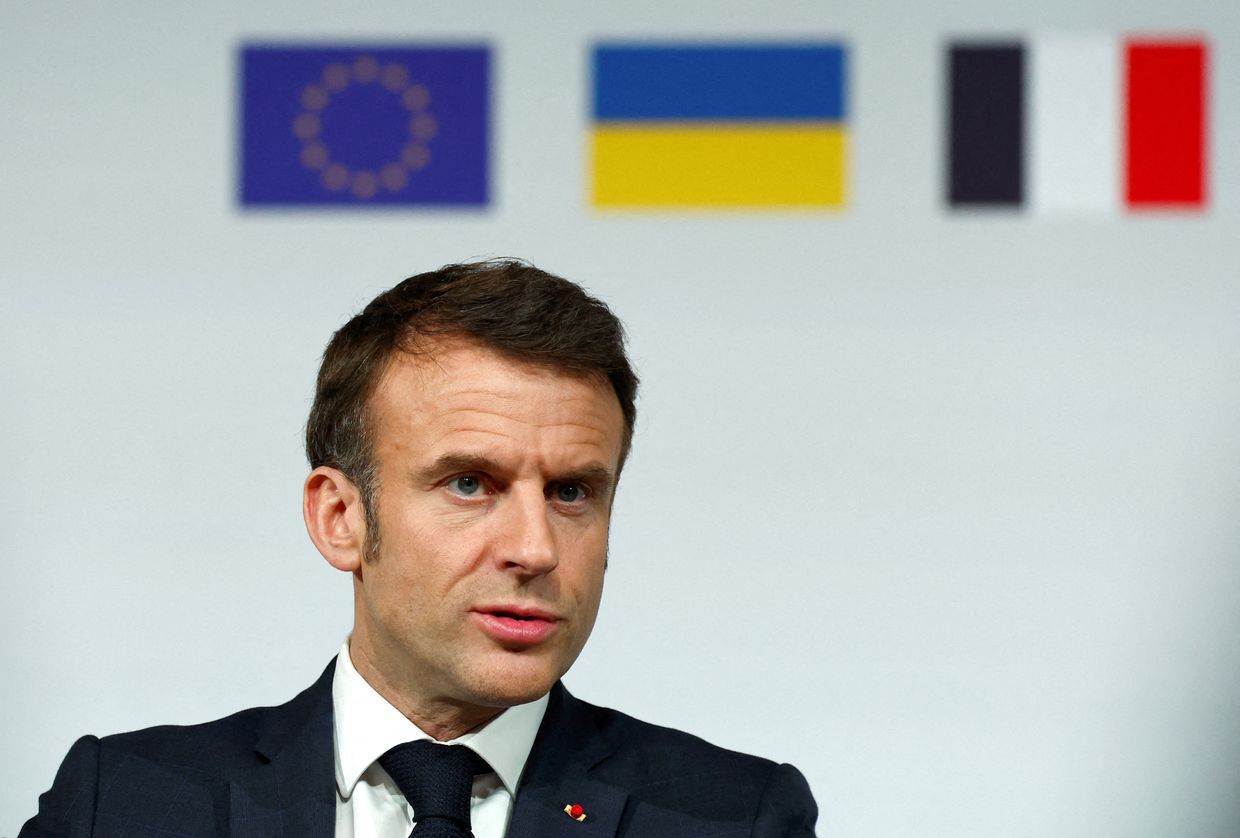
China's Foreign Minister Wang Yi reportedly told the EU's top diplomat Kaja Kallas on July 3 that the country cannot afford for Russia to lose the war in Ukraine amid fears the U.S. would shift focus towards Beijing, the South China Morning Post (SCMP) reported, citing sources familiar with the conversation.
As the war in Ukraine drags on, Wang's reported comments suggest that Russia's war in Ukraine may serve China's strategic needs as focus is deviated away from Beijing's mounting preparation to launch its own possible invasion into Taiwan.
China has been a key ally to Russia during its full-scale war, helping Moscow evade Western sanctions and becoming the leading source of dual-use goods fueling the Russian defense industry.
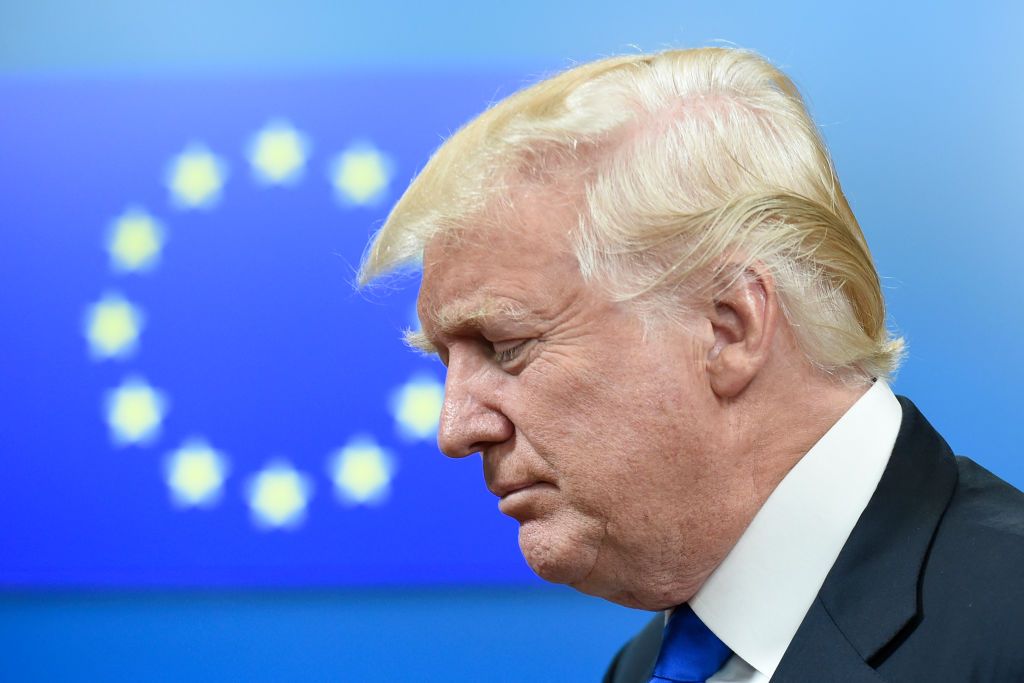
U.S. President Donald Trump, who has not managed to broker a promised ceasefire between Moscow and Kyiv, has long viewed China as the United States' main adversary and is predominantly focused on relations between the two nations.
In June, Bloomberg reportedTrump is pulling back from pressuring China over its support for Russia’s war effort, instead prioritizing other aspects of the U.S.-China relationship. The publication reported that the administration lowered the issue of Russia's war against Ukraine on its list of foreign policy priorities and is focusing on bilateral issues with Beijing, though they noted Trump could still shift course.
The frankness of Wang's reported admission was greeted with surprise by EU official, according to Hong Kong-based SCMP, amid China's past public statements in favor of a peace deal. Two sources familiar with the meeting told SCMP that they believed Wang was providing Kallas with a lesson in realpolitik during the four-hour encounter.
Wang on July 3 again reportedly rejected Western accusations that it was providing funding and weaponry to support Moscow's war effort in Ukraine.
President Volodymyr Zelensky has repeatedly accused Beijing of providing weaponry to Moscow. On May 29, Zelensky said that China had stopped selling drones to Ukraine and Western countries while continuing to supply them to Russia.
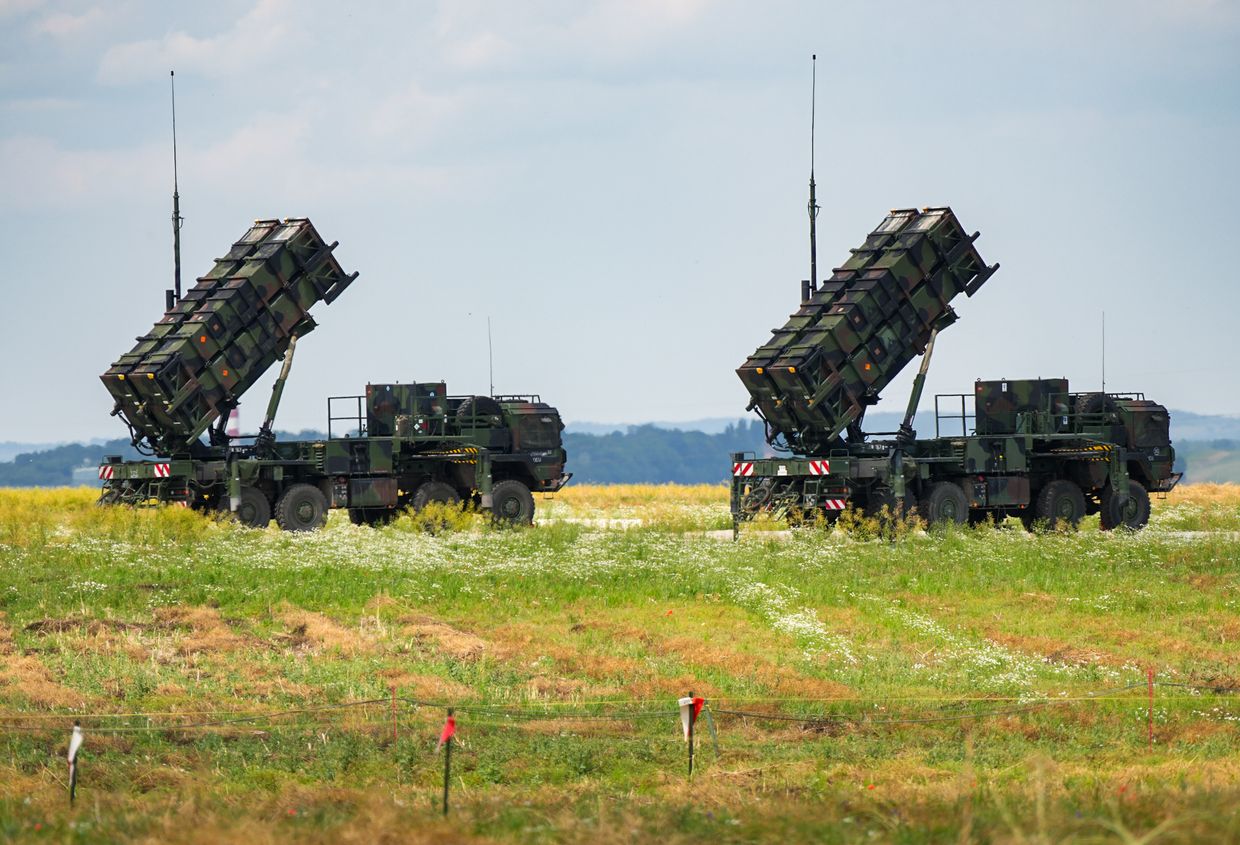
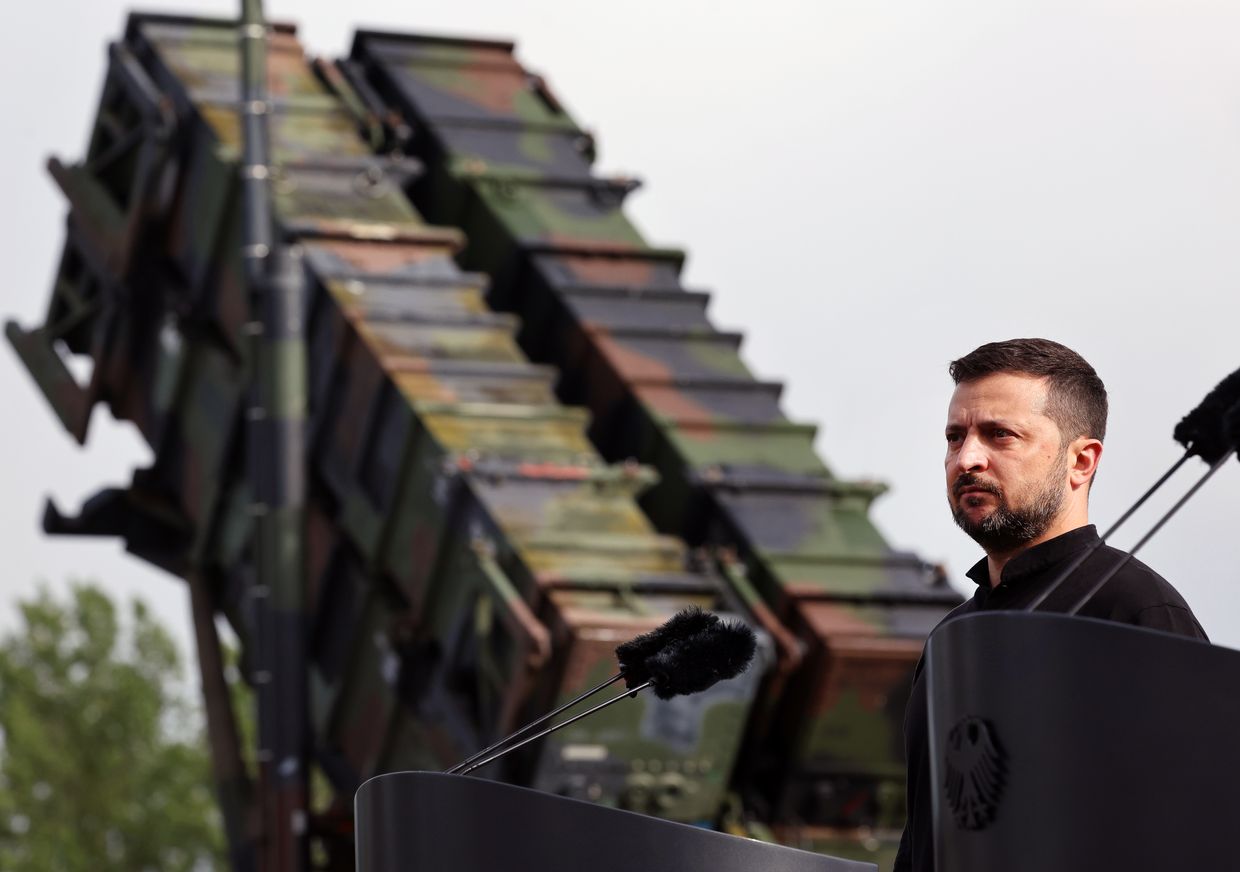
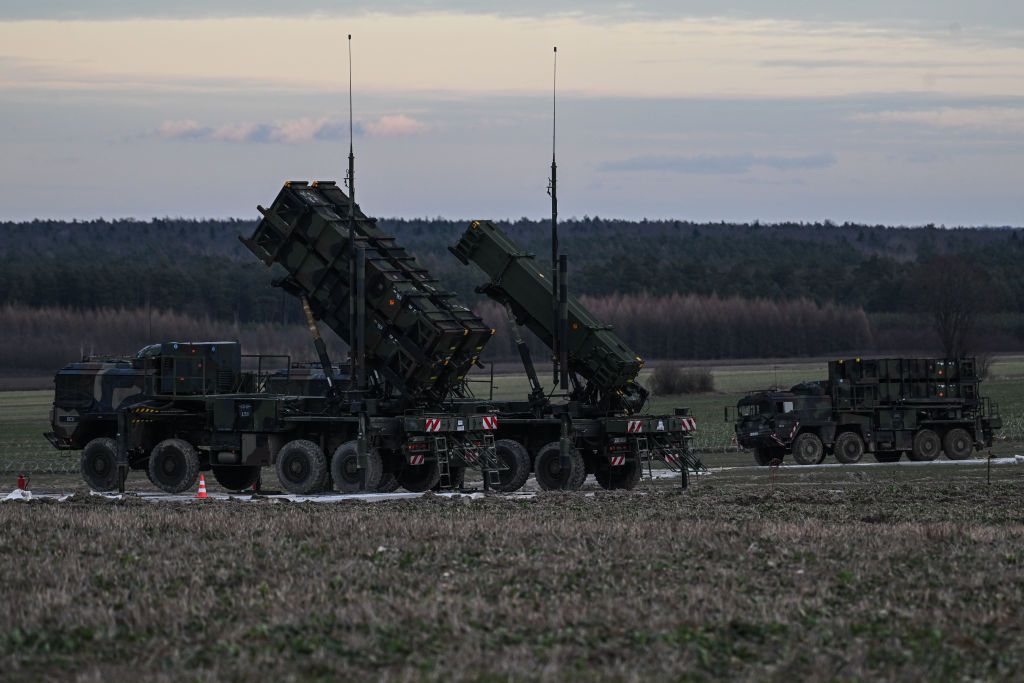
Wang's comments come amid waning support from Kyiv's main military backer, the United States. On July 1, the U.S. Defense Department paused shipments of key weapons systems to Ukraine, including Patriot air defense missiles and precision-guided munitions.
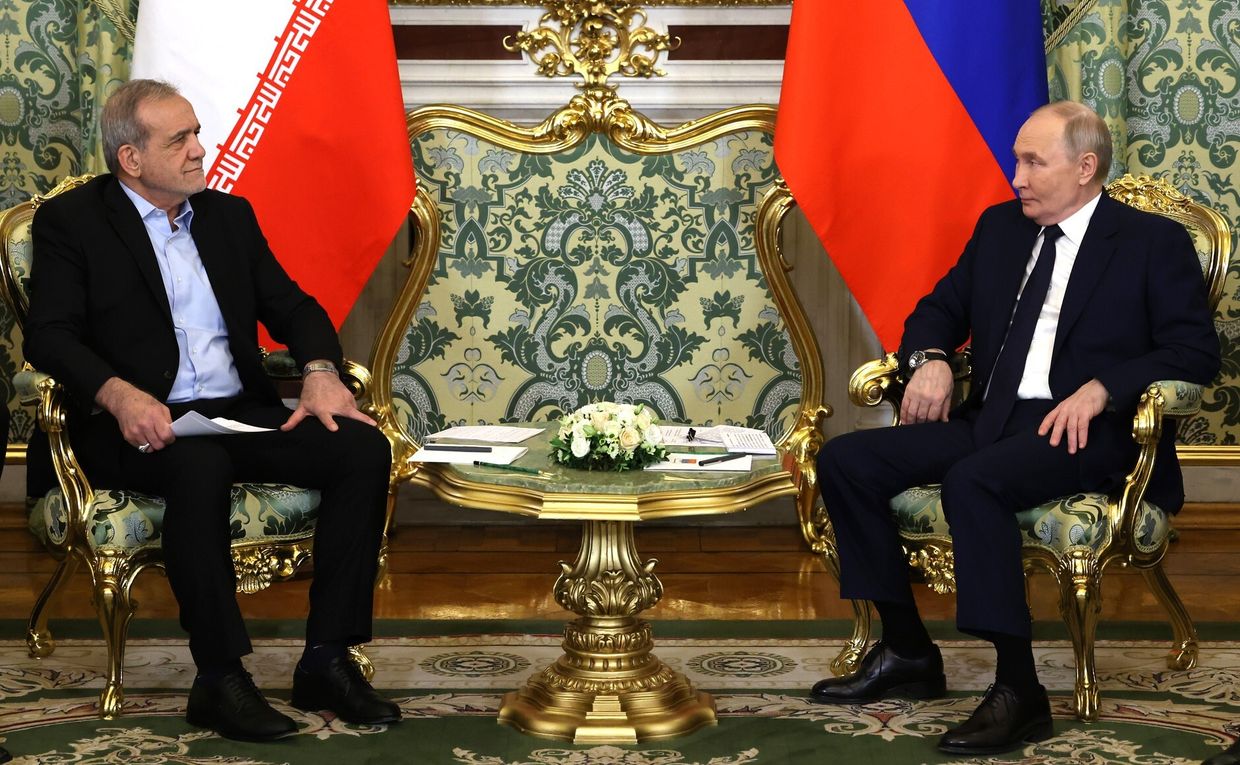
As Russian-Chinese relations continue to grow, Russian President Vladimir Putin agreed to meet Chinese President Xi Jingping in September in China for the Shanghai Cooperation Organization summit.
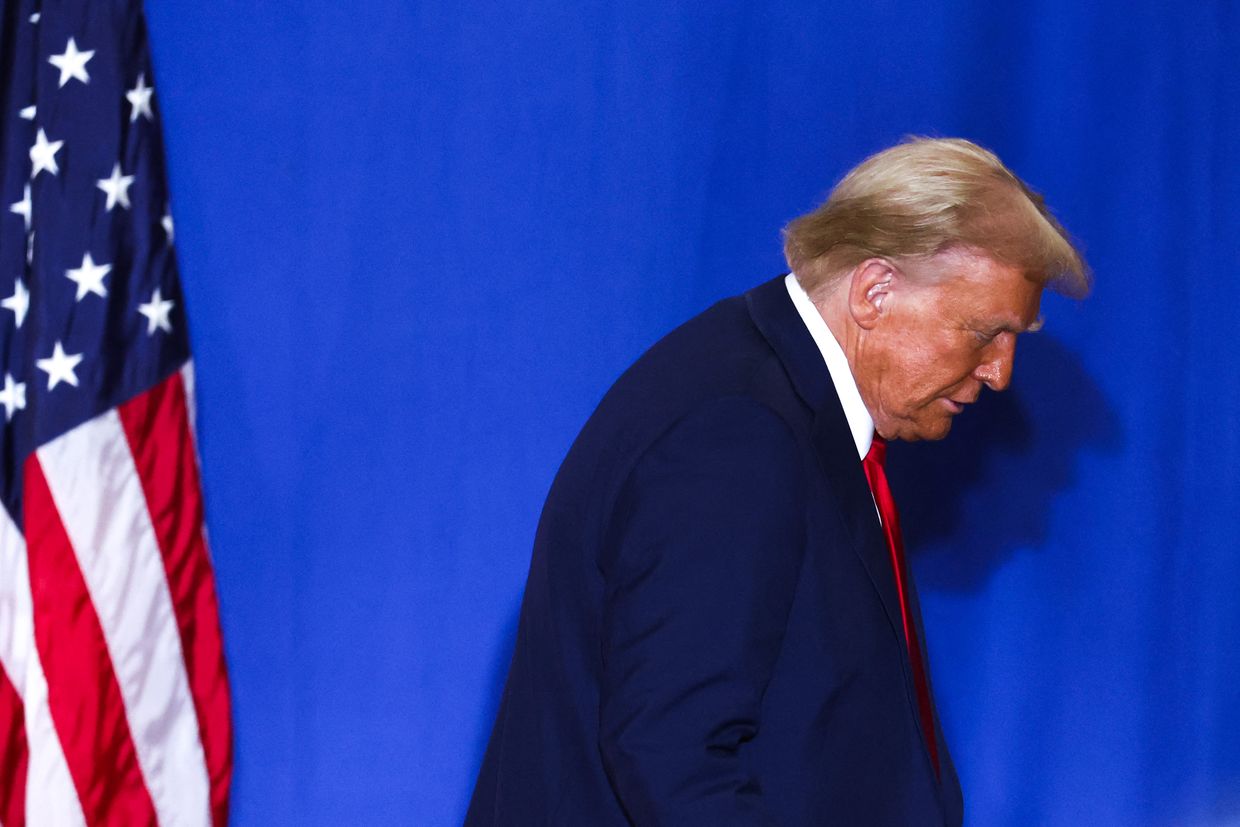
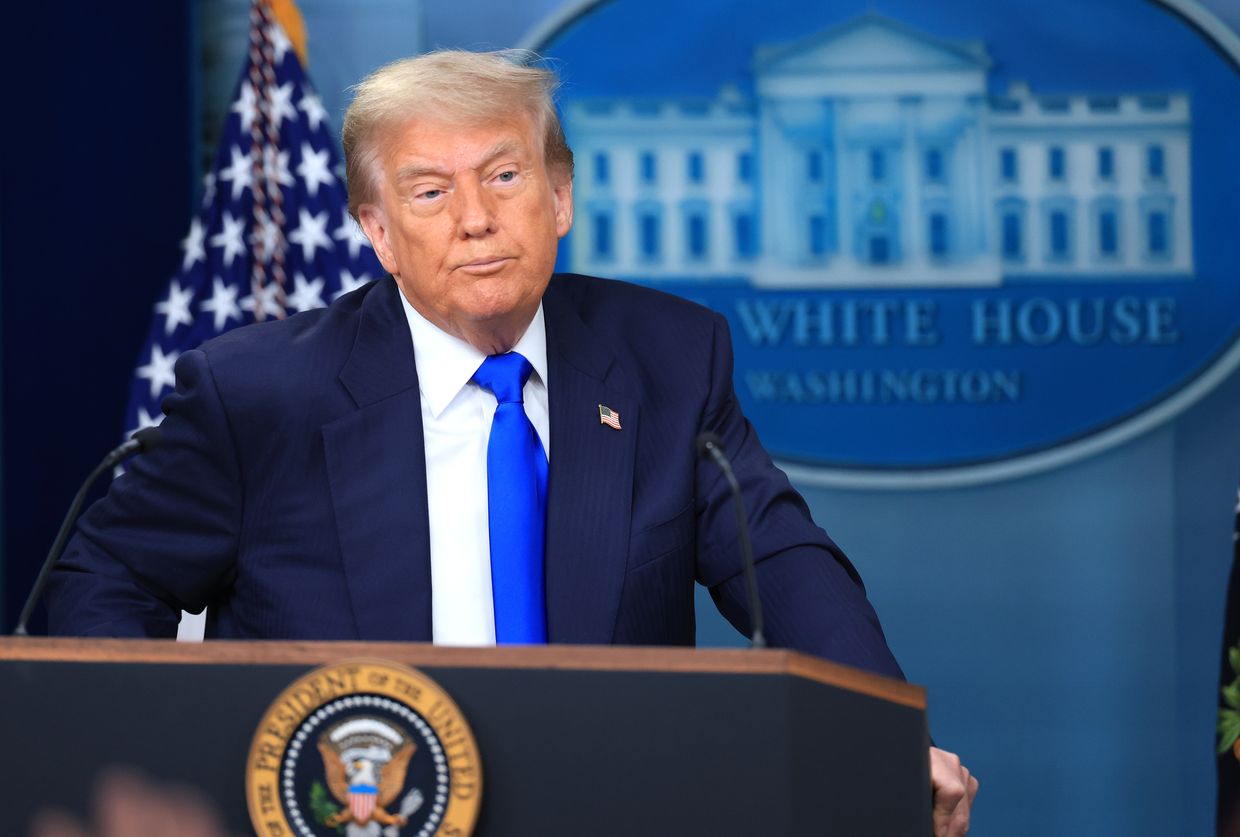
U.S. President Donald Trump told reporters on July 3 that he "didn't make any progress" on ending the war in Ukraine during his call with Russian President Vladimir Putin earlier in the day.
"We had a call. It was a pretty long call. We talked about a lot of things," Trump saidahead of his flight to an Iowa event.
When asked if he had made any progress with Putin on the call, Trump responded: "No, I didn't make any progress with him today at all."
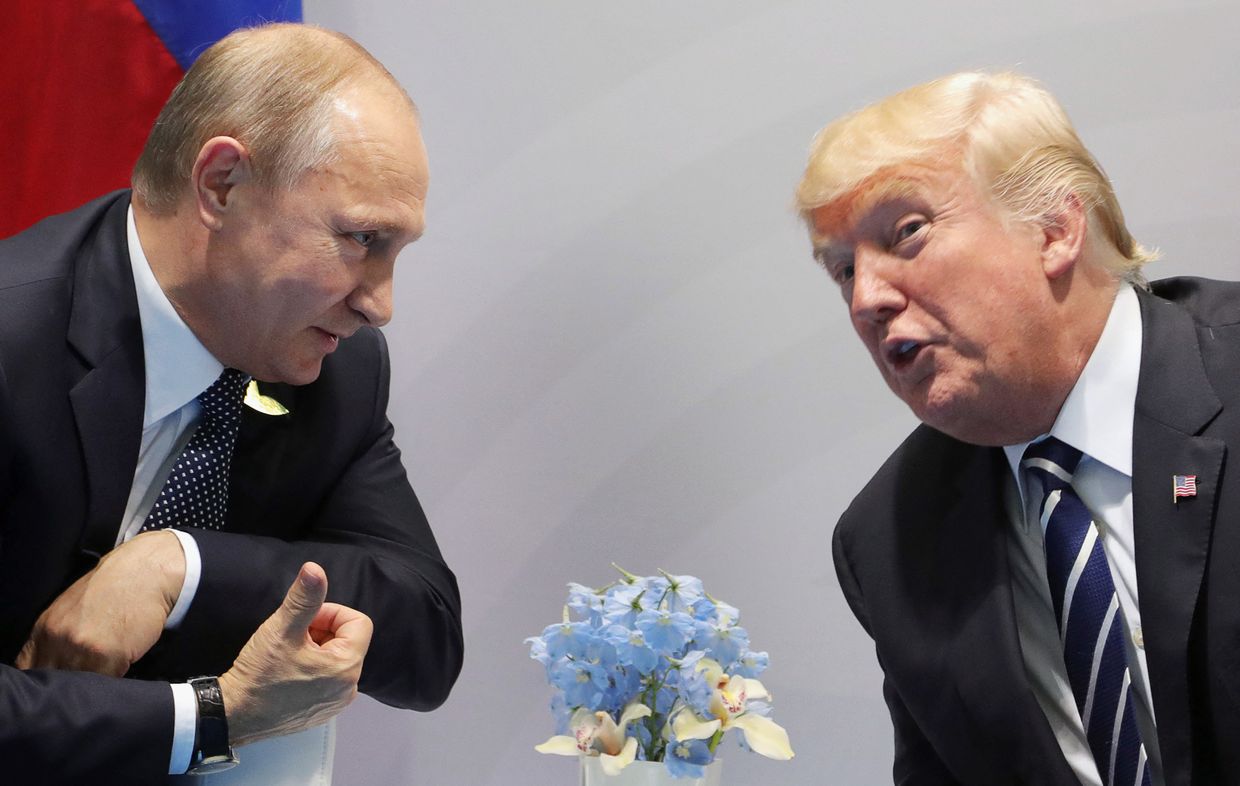
The two leaders held an hour-long conversation early in the on July 3 focused on Russia's war in Ukraine and the situation in the Middle East. The call marks the sixth conversation between the two men since Trump took office in January.
Kremlin aide Yury Ushakov told reporters earlier in the day that Putin said "Russia will continue to pursue its goals" in the war against Ukraine.
"Our president said that Russia will pursue its goals, specifically addressing the root causes that led to the current situation, and will not back down from these objectives," Ushakov added.
The White House did not provide a read out of the meeting, and Trump did not provide further comment on the phone call.
Since taking office, Trump has attempted to broker a ceasefire between Ukraine and Russia to no avail. Despite two rounds of negotiations between Kyiv and Moscow, Putin has refused to implement a ceasefire, citing his maximalist demands.
While Trump has expressed frustration with Russia's continued aggression, his administration has not imposed new sanctions nor taken steps to pressure the Kremlin directly.
Putin's message came amid a surge of Russian drone and missile attacks across Ukraine that have killed and injured hundreds of civilians in recent weeks.
The strikes have destroyed numerous infrastructure as Russia intensifies its assault despite repeated calls from Kyiv, Washington, and European leaders for an unconditional ceasefire.
The phone call also came just a day after the U.S. Defense Department paused shipments of key weapons systems to Ukraine, including Patriot air defense missiles and precision-guided munitions. Ukraine's Foreign Ministry has warned that the delay undermines defense efforts and risks emboldening Russia to escalate further.
President Volodymyr Zelensky, speaking from Denmark earlier in the day, said that achieving peace would require direct talks between national leaders.
The president described Trump and Putin as "completely different people" but emphasized that only Putin makes decisions in Russia.
"In Russia, only Putin makes decisions, which is why we need a meeting at the leadership level if we want to have peace," Zelensky said.
Editor's note: This is a developing story and is being updated.
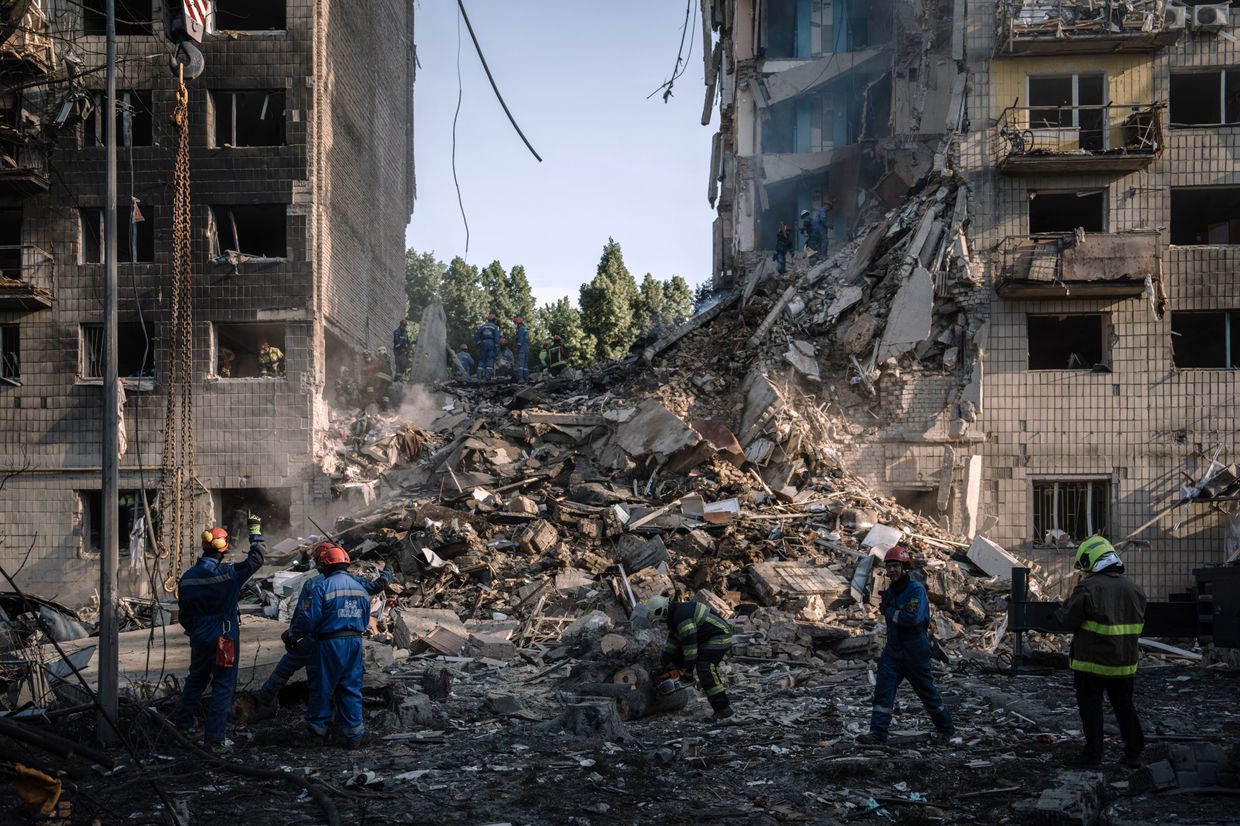
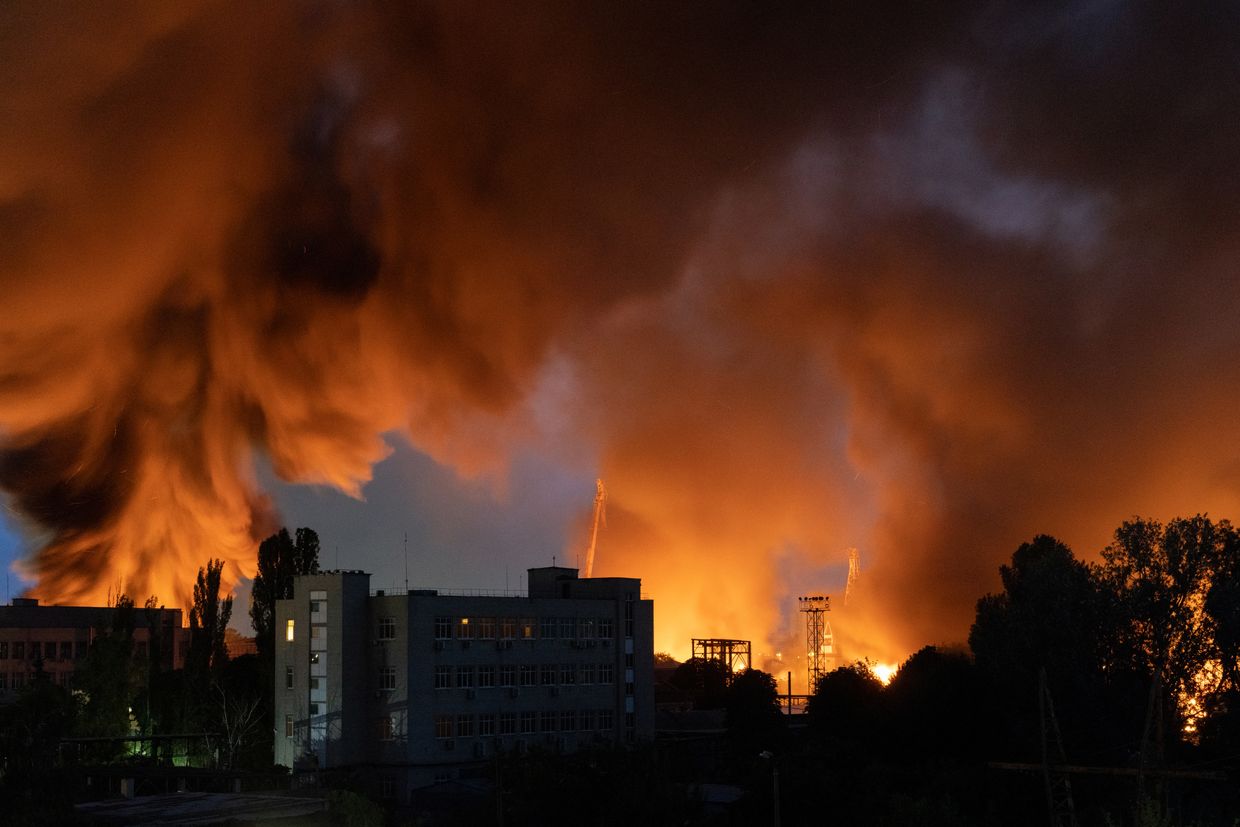
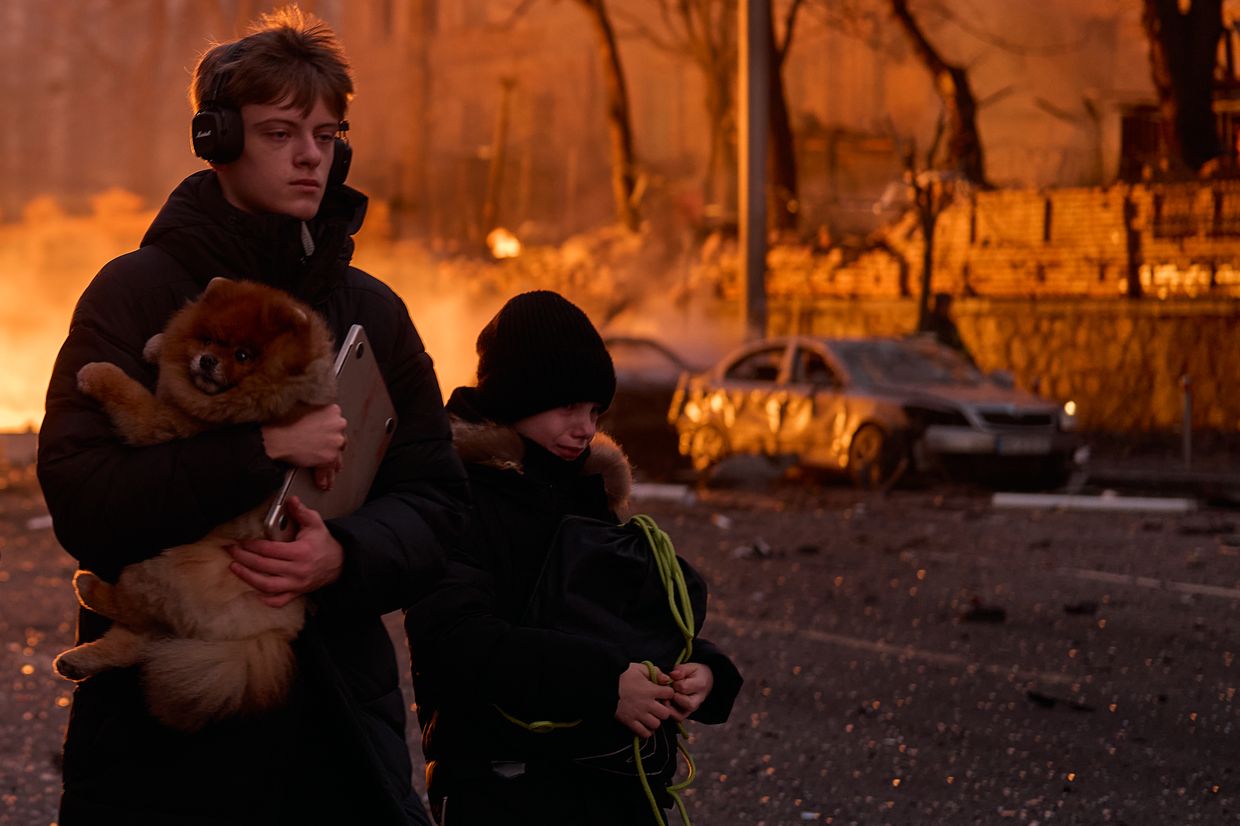
Explosions rocked the city of Kyiv for more than seven hours overnight on July 4, as Russia launched a record missile and drone attack targeting the capital and other cities across Ukraine.
At least one person was killed, and 23 others injured in Kyiv. Mayor Vitali Klitschko said 14 people had been hospitalized, while Tymur Tkachenko, head of the Kyiv City Military Administration, in the afternoon confirmed a body had been found during rescue operations.
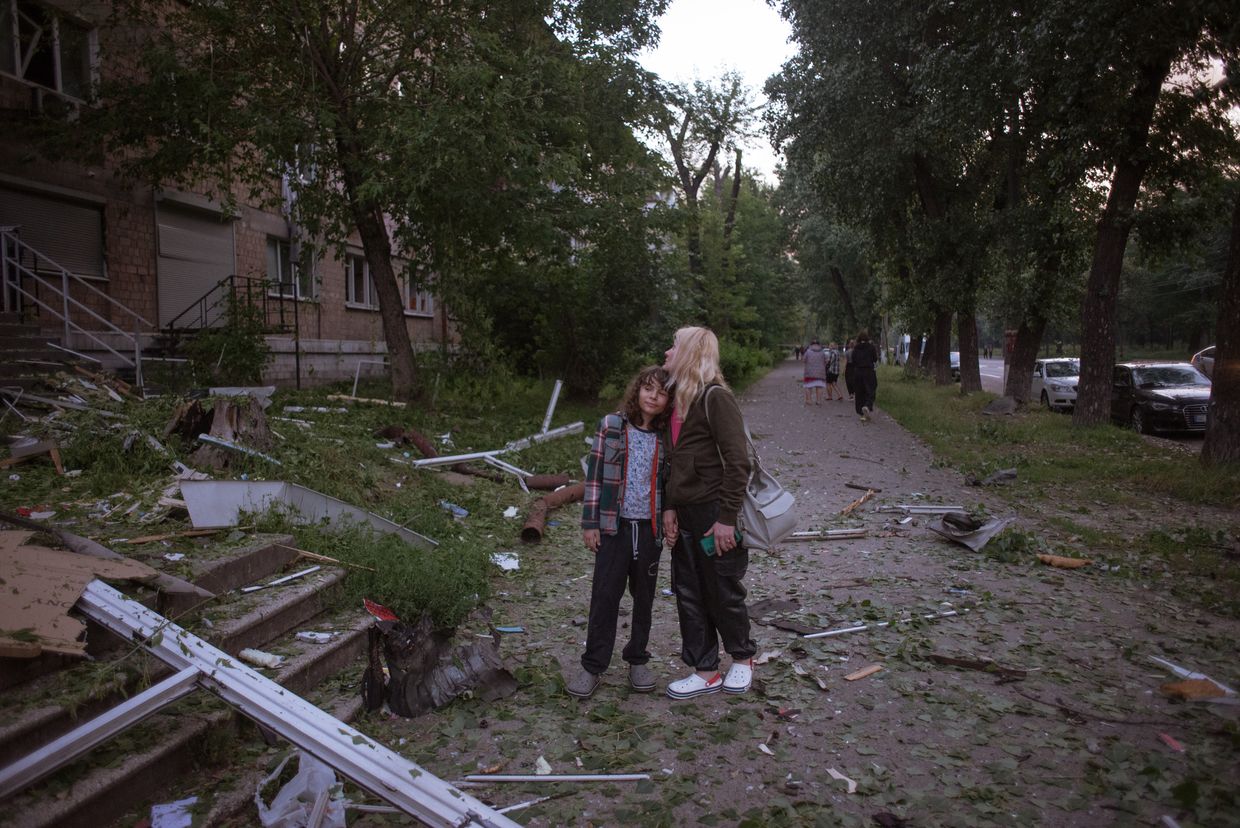
"Today’s attack was like the worst nightmare come to life," Kyiv resident Olha Vershynina told the Kyiv Independent at the site of damaged residential buildings in the capital's Solomianskyi district. "Because when the strike happened, the lights went out and glass came crashing down on my head.
"It was terrifying. Our entire building was shaking."
President Volodymyr Zelensky said Russia launched a record 550 drones and missiles during the seven-hour barrage. Kyiv Independent journalists on the ground heard multiple rounds of explosions in the city beginning around 8 p.m. local time on July 3 and continuing into the early hours of July 4
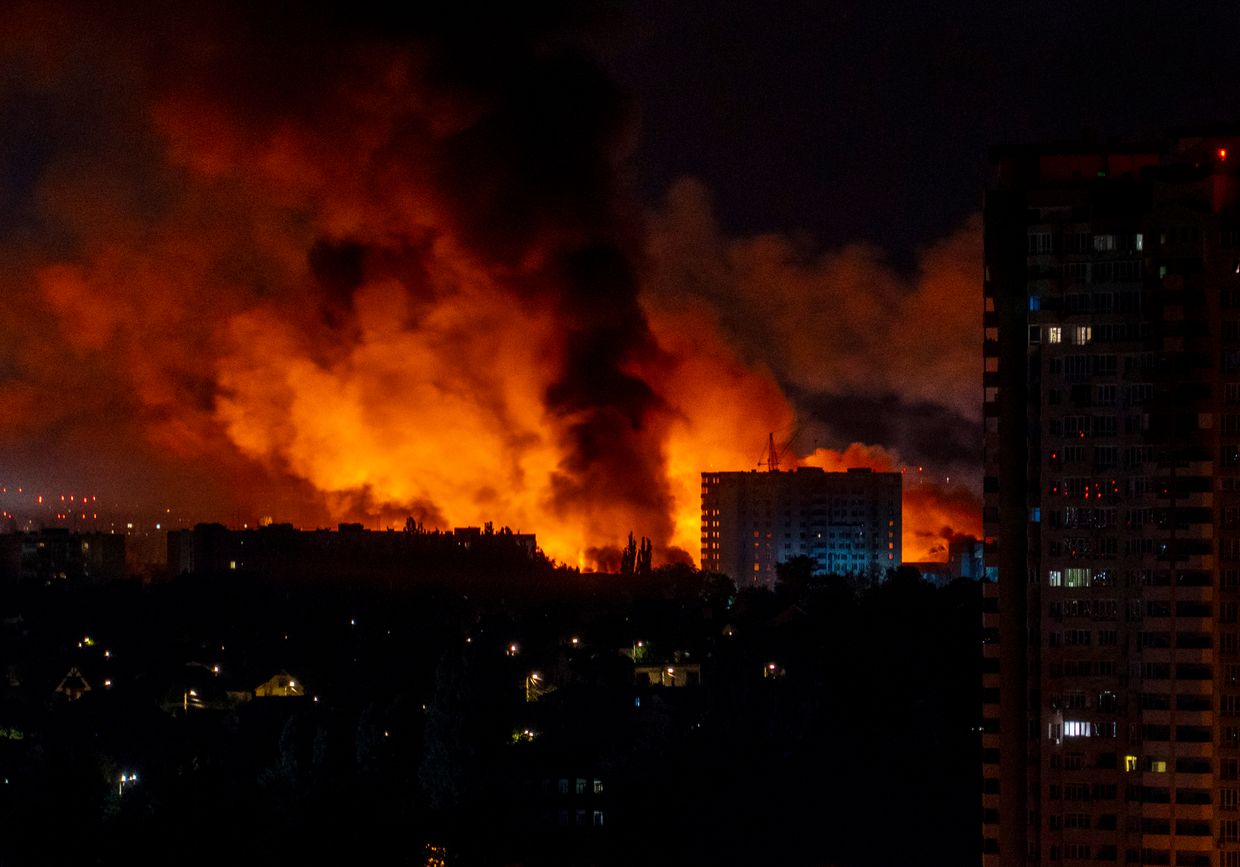
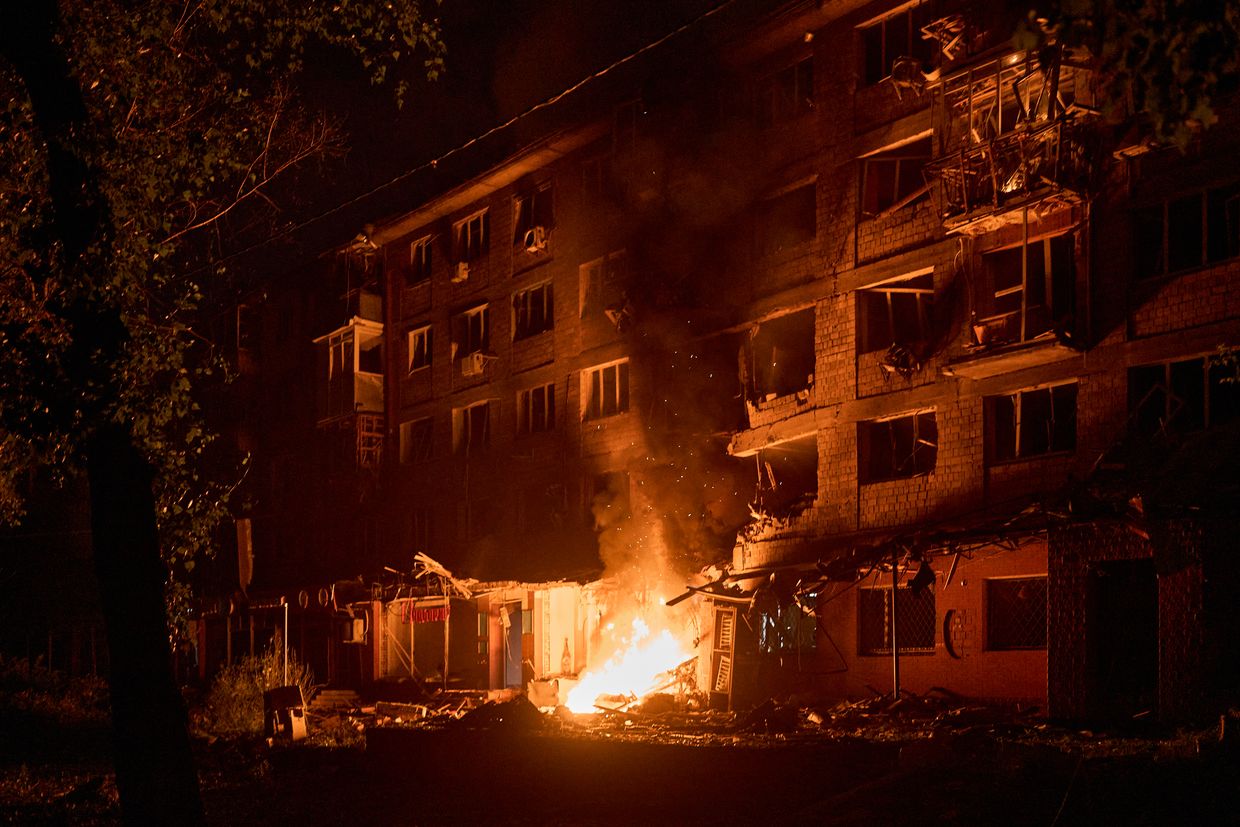
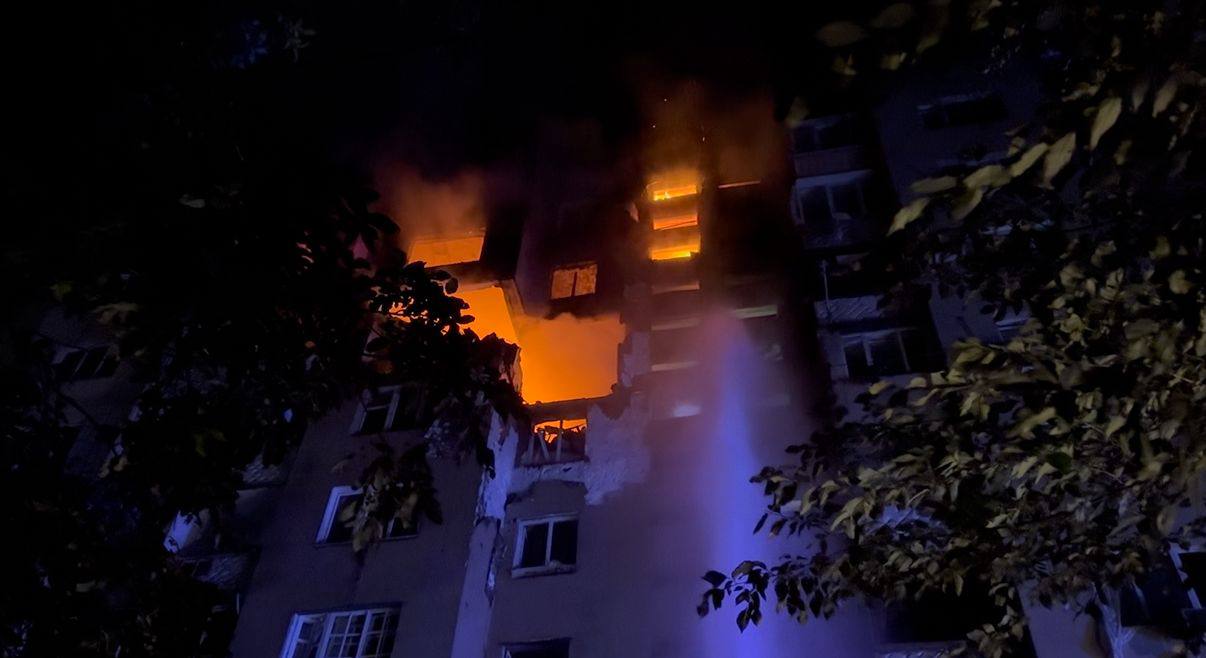
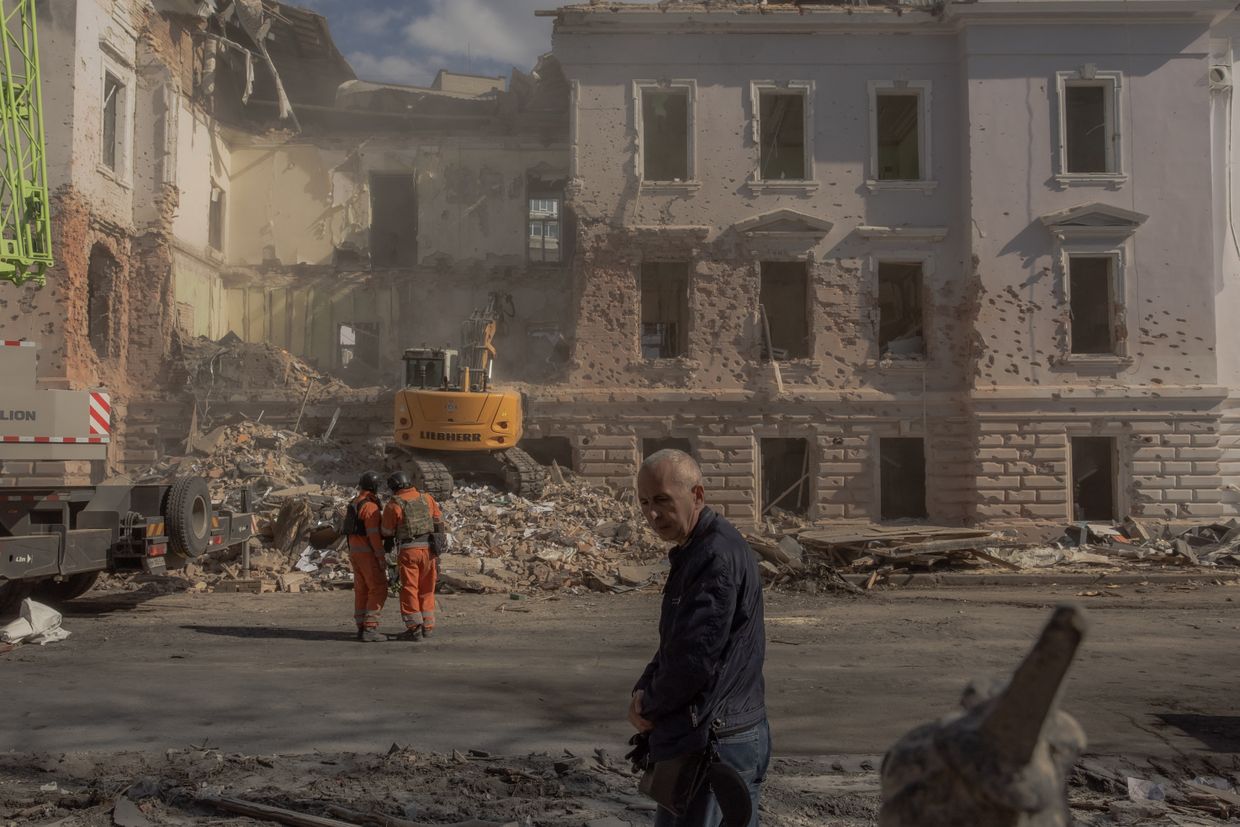
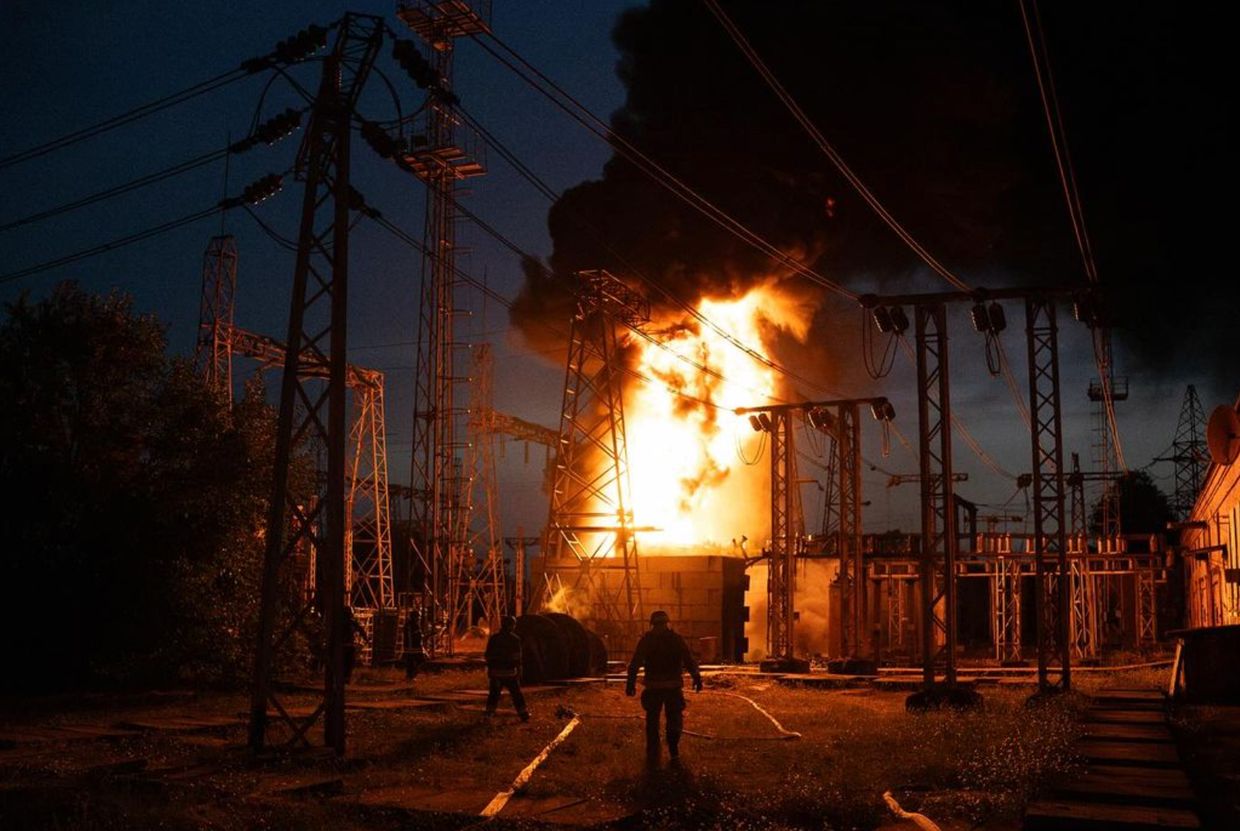
The attack damaged apartment buildings, businesses, a school, a medical facility, railway lines, and other civilian infrastructure in multiple districts. Fires blazed across the city, making the air dangerous to breathe.
Tymur Tkachenko, head of the Kyiv City Military Administration, warned residents to close their windows due to dangerous levels of "combustion products" in the air.
"Russia, a terrorist country, has wreaked havoc," Tkachenko wrote on Telegram. "The Russians bring nothing but terror and murder. That is a fact."
Liliia Kuzmenko, 23-years-old and eight months pregnant, moved to Kyiv a month ago with her husband from the embattled city of Pokrovsk, Donetsk Oblast.
"The kind of explosions I heard here were unlike anything I heard in Pokrovsk. It’s just beyond words," she told the Kyiv Independent. "Fortunately, everything in our apartment is intact. But in others, the windows were blown out, and everything fell apart."
"Russia is once again demonstrating that it is not going to end the war and terror."
Ukraine's Air Force reported that Russia had launched a ballistic missile towards Kyiv at around 12:30 a.m, and then additional missiles around 2:30 a.m.
"This time was truly terrifying.," Maria Maznichenko, a pensioner who lives in Kyiv's Solomianskyi district. "The explosions kept coming. Shaheds drones were flying in every minute, like a swarm of bees — one after another. It was very frightening."
Flames and smoke billow from buildings in Kyiv, Ukraine, on July 4, 2025, during mass Russian drone and missile strikes. (Oleksii Filippov/AFP via Getty Images)
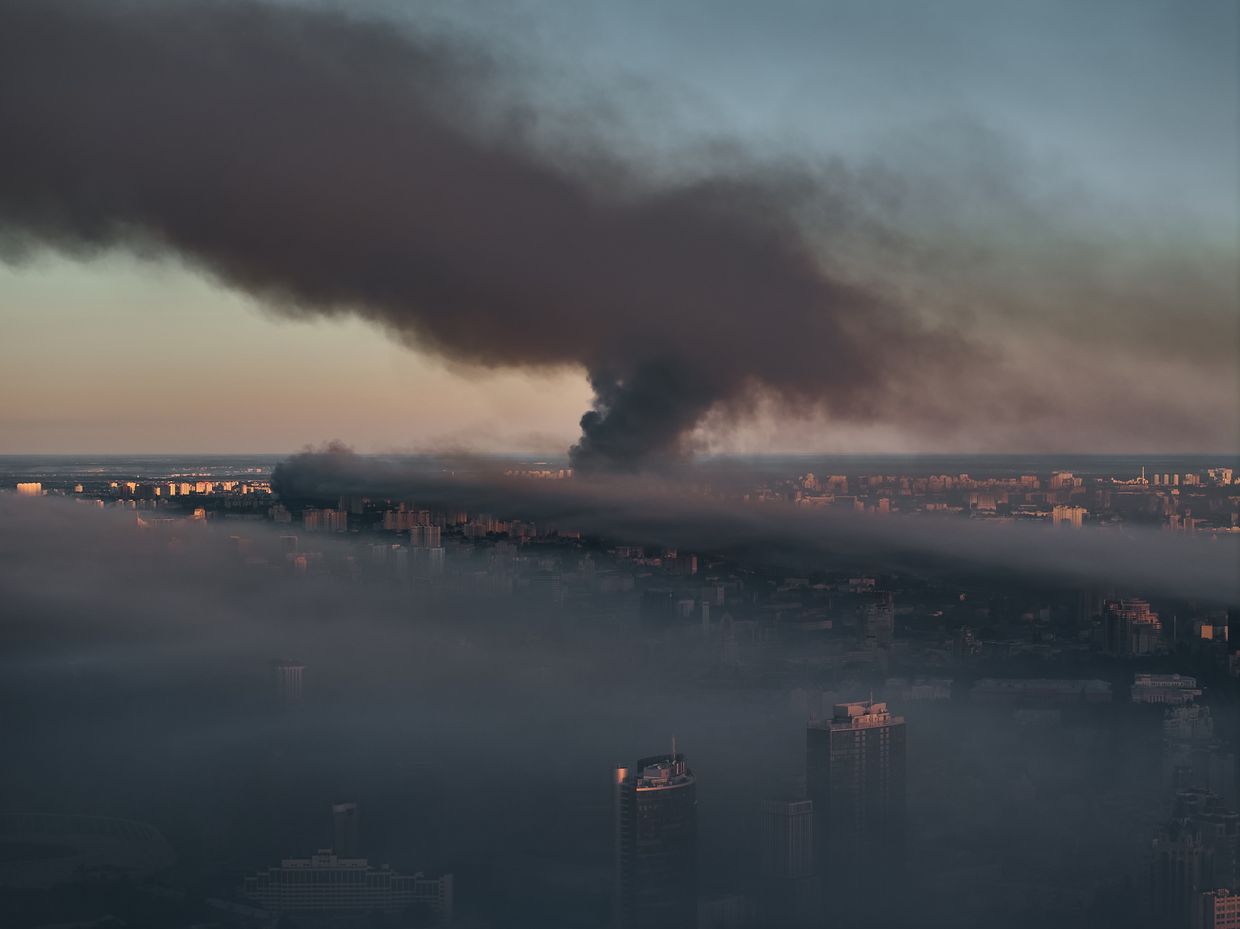
As officials reported real-time updates on damage and casualties amid the ongoing assault, Kyiv Independent reporters in the city said that smoke from explosions clogged the air even in neighborhoods far from the attack sites.
The massive assault came hours after a phone call between Russian President Vladimir Putin and U.S. President Donald Trump, during which Putin reaffirmed that "Russia will continue to pursue its goals" in Ukraine despite calls for a ceasefire from the West.
"The first air raids in our cities and regions began yesterday almost simultaneously with the start of media discussions of President Trump's phone call with Putin," Zelensky said in a post on social media on July 4.
"This was one of the most large-scale air attacks – deliberately massive and cynical... Russia is once again demonstrating that it is not going to end the war and terror."
Tkachenko reported that an earlier drone strike damaged a residential building in the city's Obolon district, causing a fire to break out on the roof.
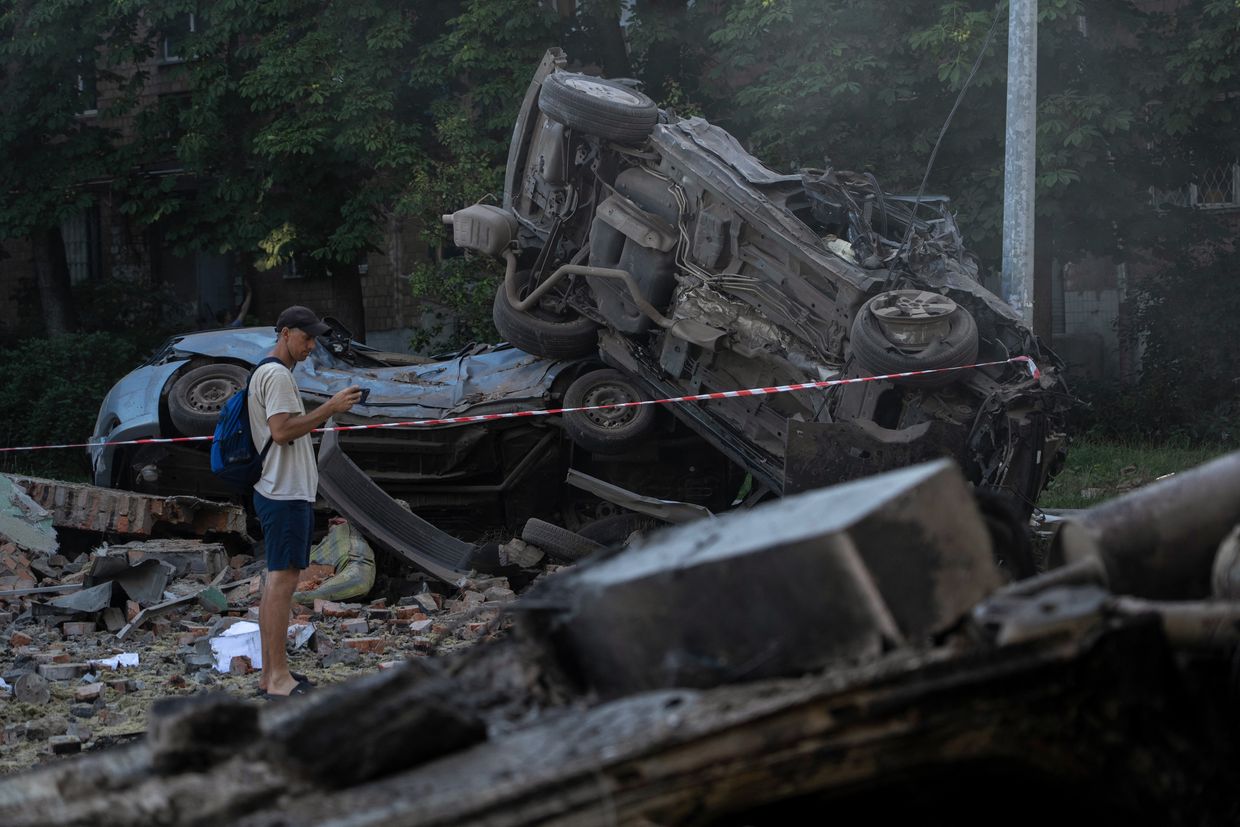
In the Sviatoshynskyi district, drone wreckage caused fires at storage facilities and hit the courtyard of a 16-story apartment building, Klitschko said. Vehicles in the area caught fire after the attack. Another fire broke out at a business in the district due to falling drone debris.
In the Dniprovskyi district, drone debris fell near a school and several residential buildings, Tkachenko reported.
Fires also broke out in the Solomianskyi district, Klitschko said. An administrative building was in flames after the attack, as were storage facilities and a garage. Debris damaged "non-residential buildings" in the area.
A damaged civilian home burns in Kyiv, Ukraine, on July 4, 2025, after being hit by a kamikaze drone during a mass drone and missile attack by Russia. (Kostiantyn Liberov/Libkos/Getty Images)Local residents take cover in a metro station used as a shelter in Kyiv, Ukraine, on July 4, 2025, during a mass drone and missile attack by Russia. (Kostiantyn Liberov/Libkos/Getty Images)
Klitschko reported another fire on the first floor of an 8-story residential building in the Shevchenkivskyi district, but said the building was not inhabited. Another fire broke out at a business in the same district.
A medical facility in the Holosiivskyi district was damaged in the attack, Klitschko said.
Ukrainian Railways (Ukrzaliznytsia) said that the attack damaged rail infrastructure in Kyiv and cautioned residents to expect delays due to diverted routes.
Polish Foreign Minister Radoslaw Sikorski said that the consular section of Poland's embassy in Kyiv was damaged during Russia's attack on Kyiv. "I just spoke with Ambassador (Piotr) Lukasiewicz; everyone is safe and unharmed," Sikorski said.
He added that Ukraine urgently needs air defense systems.
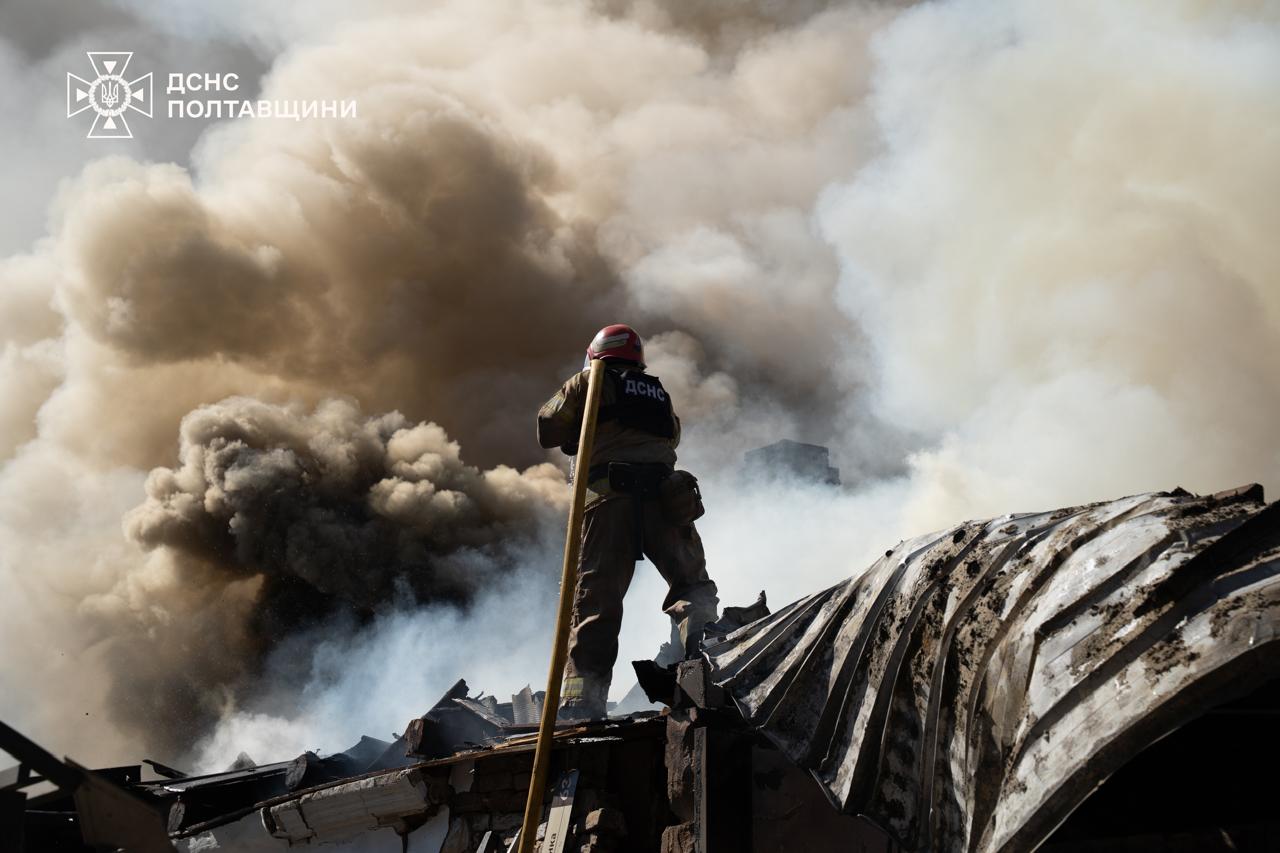
Russia also targeted other regions of Ukraine with overnight attacks. Downed drones struck property and a vehicle in the city of Poltava, regional Governor Volodymyr Kohut reported. The strike injured two people.
A man looks at the wreckage of cars in Kyiv, Ukraine, on July 4, 2025, after mass Russian drone and missile strikes. (Oleksii Filippov/AFP via Getty Images)A large plume of smoke covers Kyiv, Ukraine, on July 4, 2025, after a mass drone and missile attack by Russia. (Kostiantyn Liberov/Libkos/Getty Images)
Kyiv and other major Ukrainian cities have faced intensified drone and missile strikes in recent weeks, with Russia deploying Iranian-designed Shahed drones in record numbers.
Russia on June 17 launched one of its largest attacks against Kyiv since the start of the full-scale war, killing 28 people and injuring 134 others. Less than a week later, ballistic missiles and kamikaze drones assailed the city in another mass strike.
Ukrainian officials have warned that continued attacks are aimed at wearing down air defense systems and terrorizing civilians.
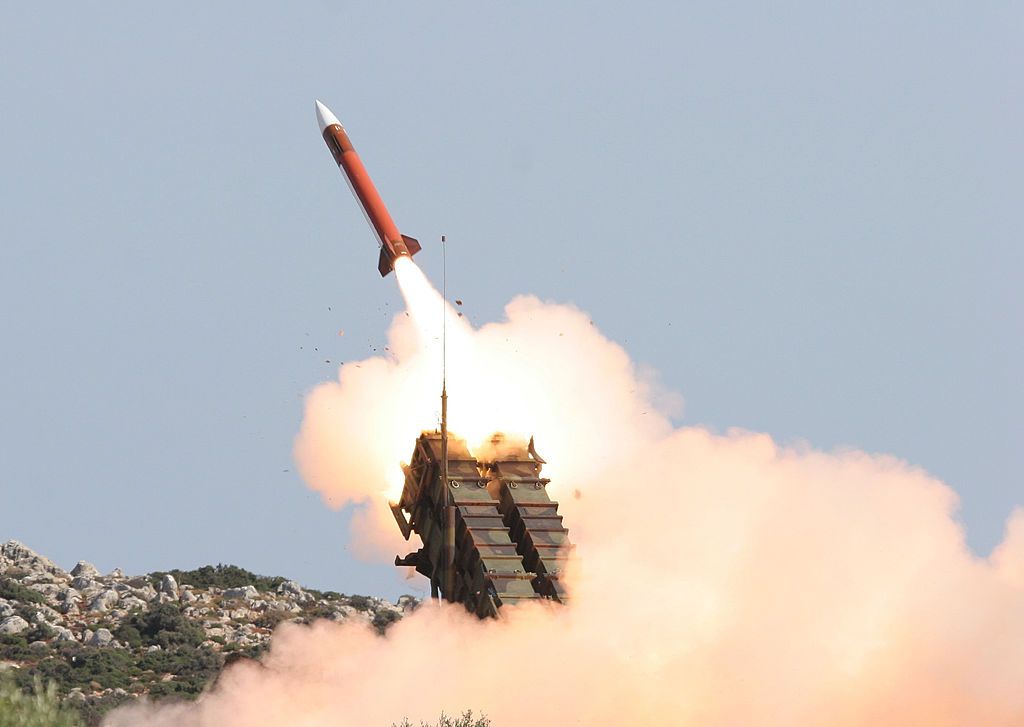
Despite Russia's escalating attacks and Ukraine's desperate need for air defense munitions, the U.S. has decided to halt shipments of Patriot missiles and other promised weapons to Kyiv, claiming it needs to bolster its own stockpiles.
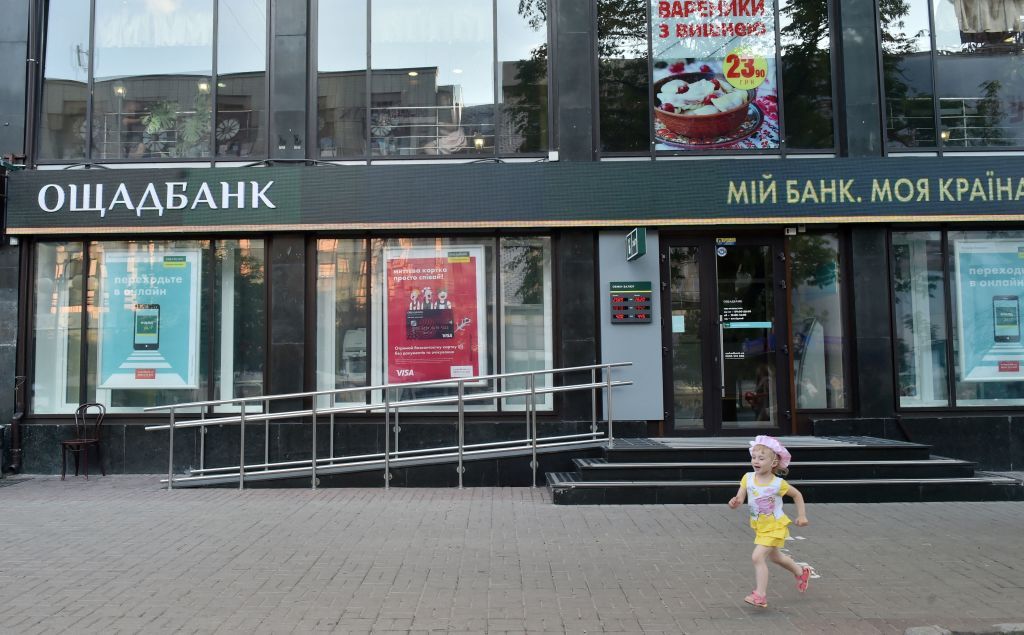
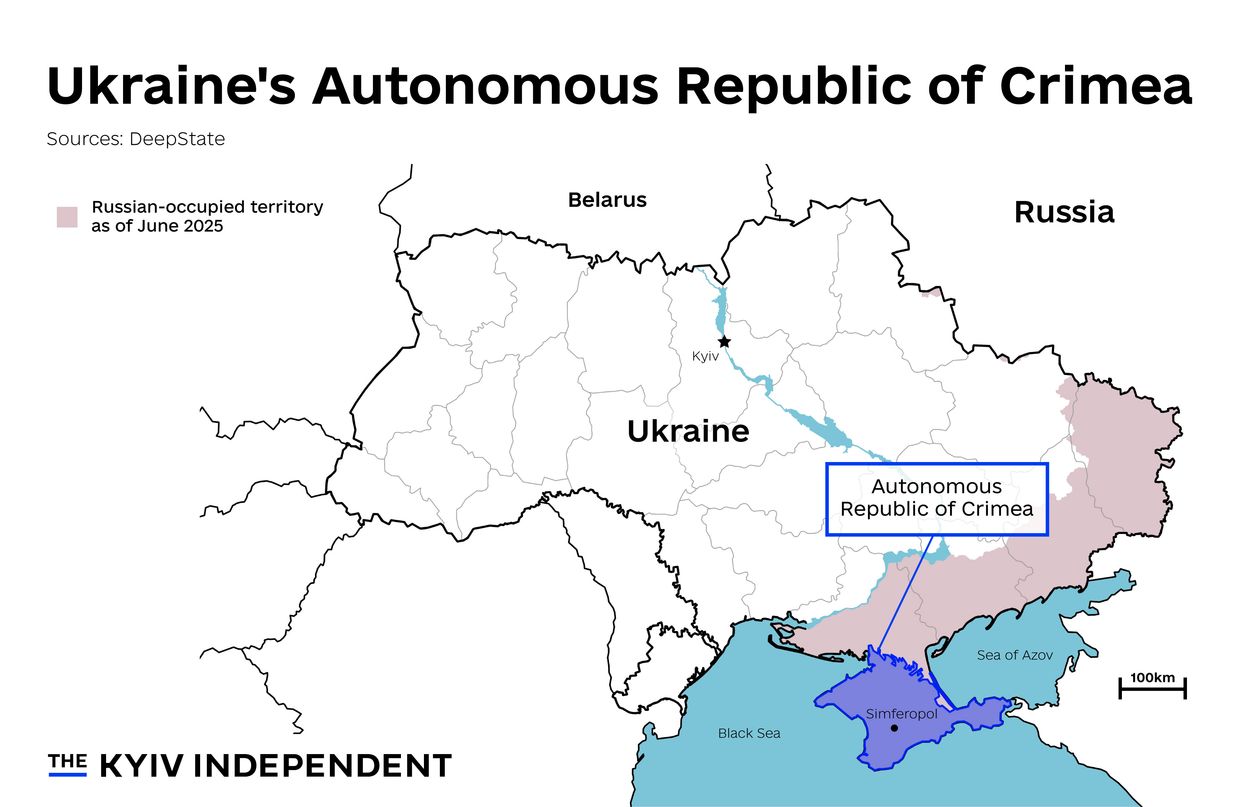
Ukraine’s Oschadbank won an appeal against Russia on July 1 after the Paris appeals court rejected Moscow’s challenge to a 2018 arbitration ruling ordering compensation for losses due to Russia's annexation of Crimea, the bank announced in a press release on July 3.
The Paris Court of Appeal upheld the November 2018 arbitration tribunal decision requiring Russia to compensate Oschadbank for damages incurred when Moscow annexed the Ukrainian peninsula in 2014.
The ruling orders Russia to pay more than $1.5 billion in damages and an additional 300,000 euros ($330,000) in legal costs to Ukraine's largest state-owned bank, according to a press release.
"The victory proves that efforts to force the aggressor state to answer legally for damages caused by the occupation of part of Ukraine's territory have good prospects," said Rosa Tapanova, a member of Oschadbank's supervisory board.
Oschadbank Chairman Serhii Naumov said it's the first Ukrainian bank to win such a case against Russia.
The decision follows Oschadbank's recent seizure of over 87 million euros ($102 million) in Russian assets in France as part of its campaign to recover war-related losses. The bank has been pursuing Russian assets across multiple jurisdictions to enforce the arbitration award.
"We understand that the Russian Federation will never voluntarily comply with the court's decision, and we are prepared for a long struggle," said Arsen Miliutin, deputy chairman of Oschadbank's management board.
"At the same time, we are confident that we will win, and Russia will pay not only the amount of damages caused, but also interest for all this time."
The Oschadbank victory adds to a growing list of Ukrainian legal wins against Russia. On June 23, Naftogaz CEO Serhii Koretskyi announced that an international arbitration tribunal in Switzerland had ordered Russia's Gazprom to pay the Ukrainian state energy company $1.37 billion after the Russian firm stopped fulfilling contract obligations in May 2022.
During a phone call with U.S. President Donald Trump on July 3, Russian President Vladimir Putin said "Russia will continue to pursue its goals" in the war against Ukraine, Kremlin aide Yury Ushakov said.
The hour-long conversation between the two presidents focused on Russia's war in Ukraine and the situation in the Middle East, according to Ushakov.
"Trump once again emphasized the need to end military hostilities as soon as possible. Vladimir Putin noted that Russia continues to seek a political negotiated solution to the conflict," Ushakov said.
"Our president said that Russia will pursue its goals, specifically addressing the root causes that led to the current situation, and will not back down from these objectives."
The Kremlin aide added that the two leaders discussed cultural diplomacy, specifically the exchange of films promoting what Ushakov described as "traditional values close to Russia and the U.S. presidential administration."
In response, U.S. President Donald Trump said later in the day that he "didn't make any progress" on ending the war in Ukraine during his call with Putin.
"No, I didn't make any progress with him today at all," told reporters in response to questions about the call.
Putin's message came amid a surge of Russian drone and missile attacks across Ukraine that have killed and injured hundreds of civilians in recent weeks.
The strikes have destroyed numerous infrastructure as Russia intensifies its assault despite repeated calls from Kyiv, Washington, and European leaders for an unconditional ceasefire.
The phone call also came just a day after the U.S. Defense Department paused shipments of key weapons systems to Ukraine, including Patriot air defense missiles and precision-guided munitions. Ukraine's Foreign Ministry has warned that the delay undermines defense efforts and risks emboldening Russia to escalate further.
President Volodymyr Zelensky, speaking from Denmark earlier in the day, said that achieving peace would require direct talks between national leaders.
The president described Trump and Putin as "completely different people" but emphasized that only Putin makes decisions in Russia.
"In Russia, only Putin makes decisions, which is why we need a meeting at the leadership level if we want to have peace," Zelensky said.
According to Ushakov, the presidents did not discuss the possibility of a meeting, but "the idea is in the air," and they agreed to continue communication.
Moscow and Kyiv have held two rounds of face-to-face talks in Istanbul this year, first on May 16 and again on June 2, following more than three years with no direct negotiations.
The meetings resulted in several prisoner exchanges, but no steps toward a ceasefire.
While Trump has expressed frustration with Russia's continued aggression, his administration has not imposed new sanctions nor taken steps to pressure the Kremlin directly.
Ukraine signed a major deal with U.S. company Swift Beat to co-produce hundreds of thousands of drones this year, President Volodymyr Zelensky announced on July 3 during his visit to Denmark.
The long-term strategic partnership agreement was signed by Ukraine's Defense Minister Rustem Umerov and Eric Schmidt, the CEO of Swift Beat, in Denmark on the same day.
Under the deal, the company will produce various kinds of unmanned aerial vehicles for Ukraine, including those designed to intercept Russian drones and missiles, reconnaissance, attack, and other drones, Zelensky said in a statement published on the website of the President's Office.
"The key priority is interceptor drones that have already proven effective in Ukraine," Zelensky said. "We've tested models from several companies, and now we're signing serious contracts."
Swift Beat will increase its production capacity, aiming to produce hundreds of thousands of drones for Ukraine this year, with plans to scale up production in 2026, according to Zelensky.
"Modern drones will be supplied to Ukraine as a priority, on special terms and at cost," Zelensky said.
The announcement comes just a day after the U.S. Defense Department (DOD) has halted shipments of some air defense missiles and other weapons previously promised to Kyiv. Ukraine has been trying to negotiate buying U.S. weapons for months after U.S. President Donald Trump, who has opposed military aid to Kyiv, took office in January.
Swift Beat has a significant presence in Ukraine, according to Zelensky's office. It specializes in autonomous AI-powered drones and cooperates with Ukrainian engineers and the military, conducting drone testing on Ukrainian territory, the statement reads.
Zelensky arrived in Denmark on July 3 to mark the country's assumption of the rotating presidency of the Council of the European Union.
Zelensky also said that during his visit, he plans to raise the issue of political blockages hindering Ukraine's path to joining the European Union.
"We're ready to open three accession clusters and want to start with one now, in the very near future. But political blockages remain, purely political," he said.
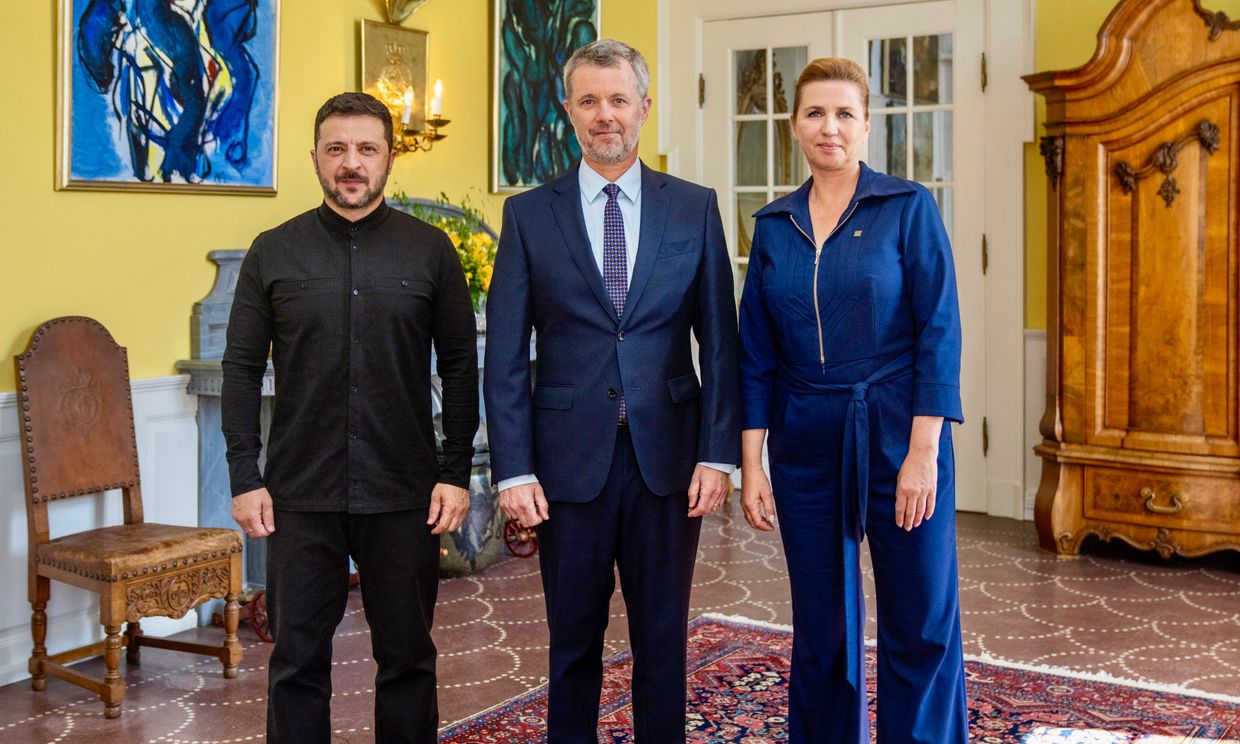
Denmark's King Frederik (C), President Volodymyr Zelensky (L), and Denmark's Prime Minister Mette Frederiksen (R) in Aarhus, Denmark, on July 3, 2025. (Ida Marie Odgaard / Ritzau Scanpix / AFP)
While EU member states agreed to take into account the European Commission's assessment that Ukraine is ready to open the first, Fundamentals cluster, the process remains stalled due to Hungary's refusal to grant unanimous support.
Ukraine applied for EU membership in 2022 and was granted candidate status shortly thereafter, but full negotiations require the approval of all 27 EU member states.
Denmark has been a key backer of Ukraine since the start of Russia's full-scale invasion in 2022. In February 2024, Copenhagen signed a 10-year bilateral security agreement with Kyiv, pledging long-term defense cooperation until Ukraine secures NATO membership.
Zelensky said he expects Denmark to expand its financial support for Ukraine's drone and missile production initiatives.
"What we've just signed requires significant funding. I'm counting on our relationship with Denmark," the president said.
The Ukrainian president will also participate in official events commemorating Denmark's presidency of the Council. According to Danish broadcaster DR, the events will be attended by Denmark's royal family, government officials, and EU leaders.
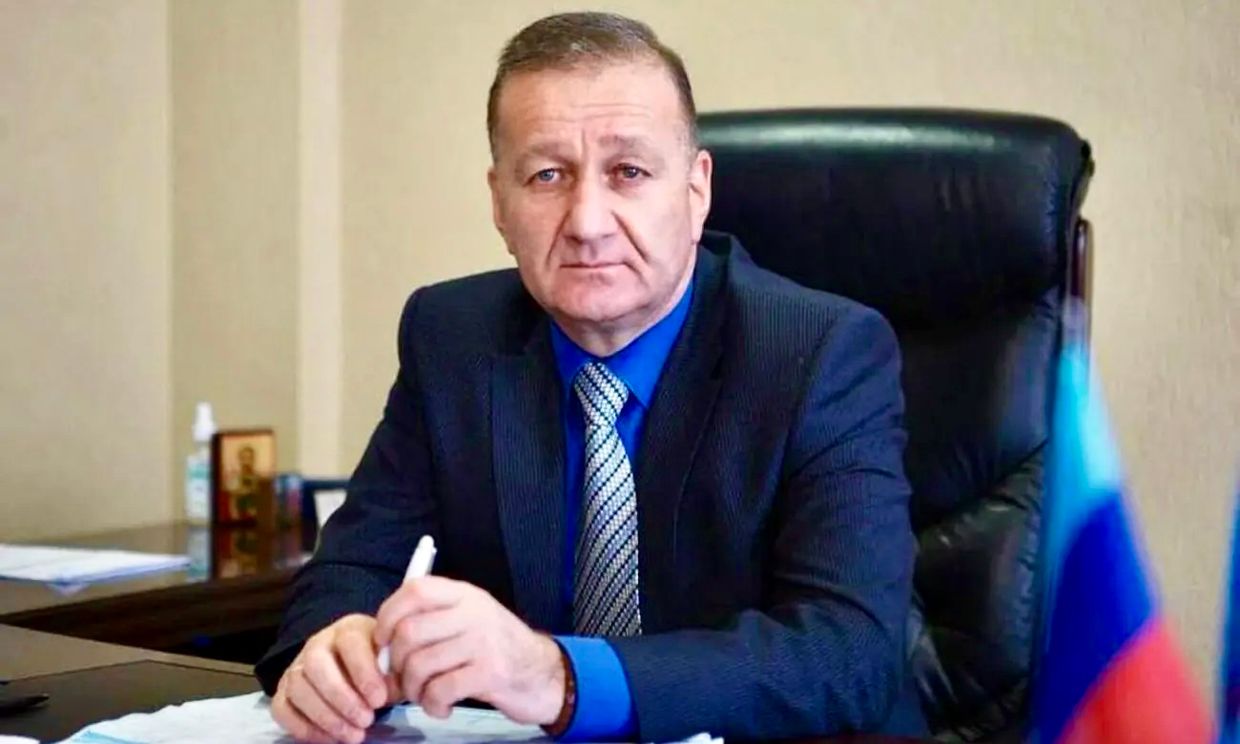
A midday explosion in the center of Russian-occupied Luhansk killed Manolis Pilavov, the city's former Russian-installed mayor, Russian state news agency TASS reported on July 3.
Pilavov headed the occupation administration of Luhansk city from December 2014 until stepping down in November 2023. He had been wanted in Ukraine since 2015 on charges including attempting to violently overthrow the constitutional order and violating Ukraine's territorial integrity.
The blast occurred around noon local time, according to TASS. Three people were reportedly injured, one of them in serious condition.
Ukraine has not commented on Pilavov's reported death. Explosions targeting collaborators and occupation officials have become more frequent in recent months.
Pilavov, born in 1964, held several posts in the local Luhansk administration before Russia occupied parts of Ukraine's eastern Luhansk Oblast in 2014.
He served as a city council member representing the now-banned pro-Russian Party of Regions and later actively supported the local Russian occupation administration.
Ukrainian authorities say Pilavov participated in separatist propaganda events and encouraged support for Moscow's proxy occupation structures shortly after Russian-backed militants took control of parts of Luhansk Oblast in 2014.
Luhansk remains under Russian occupation, with its city center and government institutions controlled by Kremlin-installed proxies.
Ukraine's Security Service (SBU) detained a Ukrainian Air Force major suspected of spying for Russian Federal Security Service (FSB), the agency reported on July 3.
The alleged spy, arrested during a special operation in Lviv Oblast, was reportedly recruited through his ex-wife, a former military officer now cooperating with Russian forces in occupied Melitopol.
According to the SBU, the officer was gathering coordinates of operational airfields, logistics hubs, and maintenance centers used by Ukrainian combat aircraft. If successful, Russia intended to launch missile and drone strikes on those locations.
The SBU said the operation was coordinated with Ukraine's Commander-in-Chief and that the agent was supervised by Aleksandr Belodedov, an officer in the FSB's Alpha special operations unit.
Authorities said they intercepted the agent before any damage was done, documenting his communication with Russian intelligence and securing military sites at risk.
The suspect has been charged with high treason committed during wartime by a group of individuals under Ukraine's Criminal Code. He remains in custody and faces life imprisonment with asset seizure.
His ex-wife was also charged in absentia for treason during wartime.
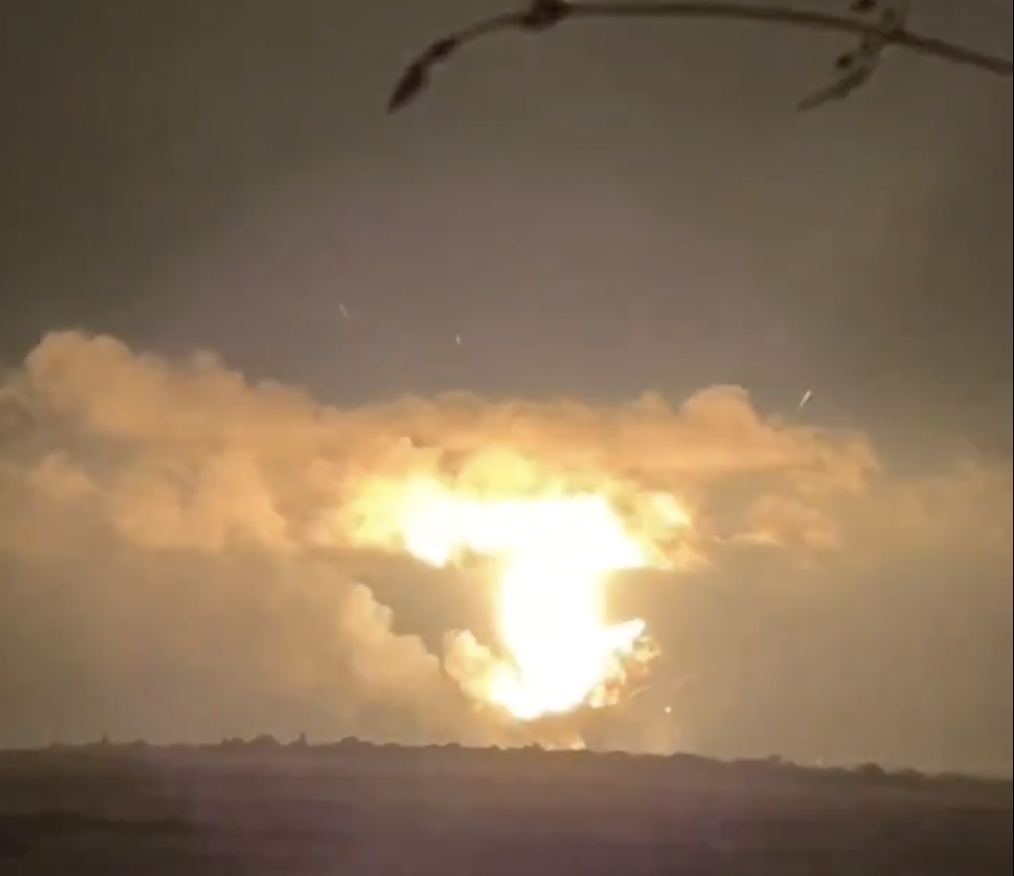
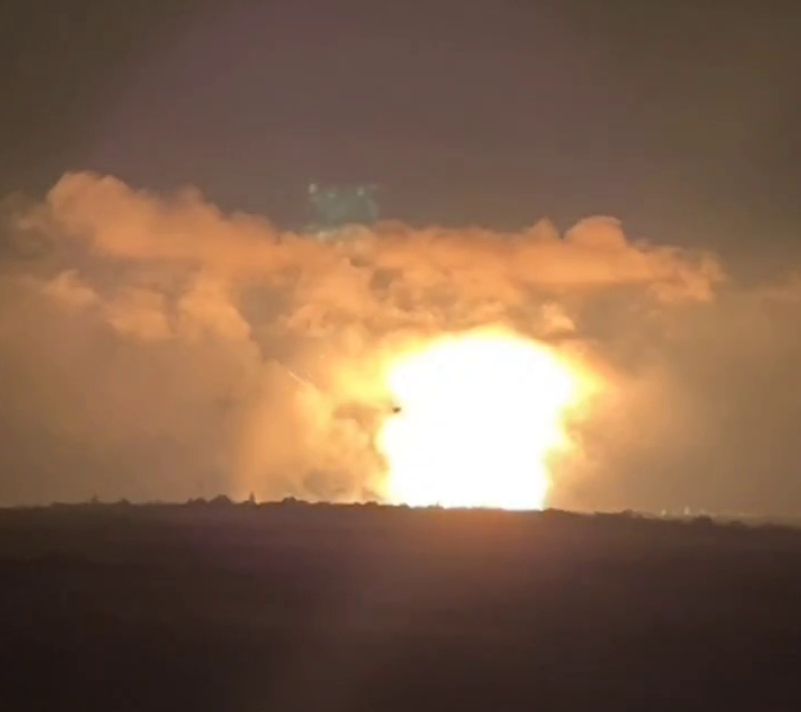
Ukrainian drones struck a Russian ammunition depot in occupied Donetsk Oblast overnight on July 3, setting off a series of huge explosions, Ukraine's State Security Service said on July 3.
"Starting at 10 p.m., explosions rang out at the depots, followed by a powerful secondary detonation of ammunition and a fire," the SBU said in a post on social media.
According to the SBU, the ammunition depot is located in the occupied Ukrainian city of Khartsyzsk, near Donetsk, which is "of important strategic importance, as it is used by the Russians as a rear base."
"The enemy has placed command posts, logistics centers, and ammunition depots there. All of them are legitimate military targets," the statement added.
Unconfirmed videos posted to social media show a fire already burning followed by a large explosion and shockwave.
— Illia Ponomarenko 🇺🇦 (@IAPonomarenko) July 2, 2025
Elsewhere on July 3, Ukraine confirmed strikes on the Energia factory in Russia's Lipetsk Oblast overnight, a facility that produces components for missiles and drones, including batteries for the Iskander missile system and cruise missiles.
Andrii Kovalenko, head of the Counter-Disinformation Center at Ukraine's National Security and Defense Council, confirmed the strike, calling Energia "one of the most critical targets for Russia."
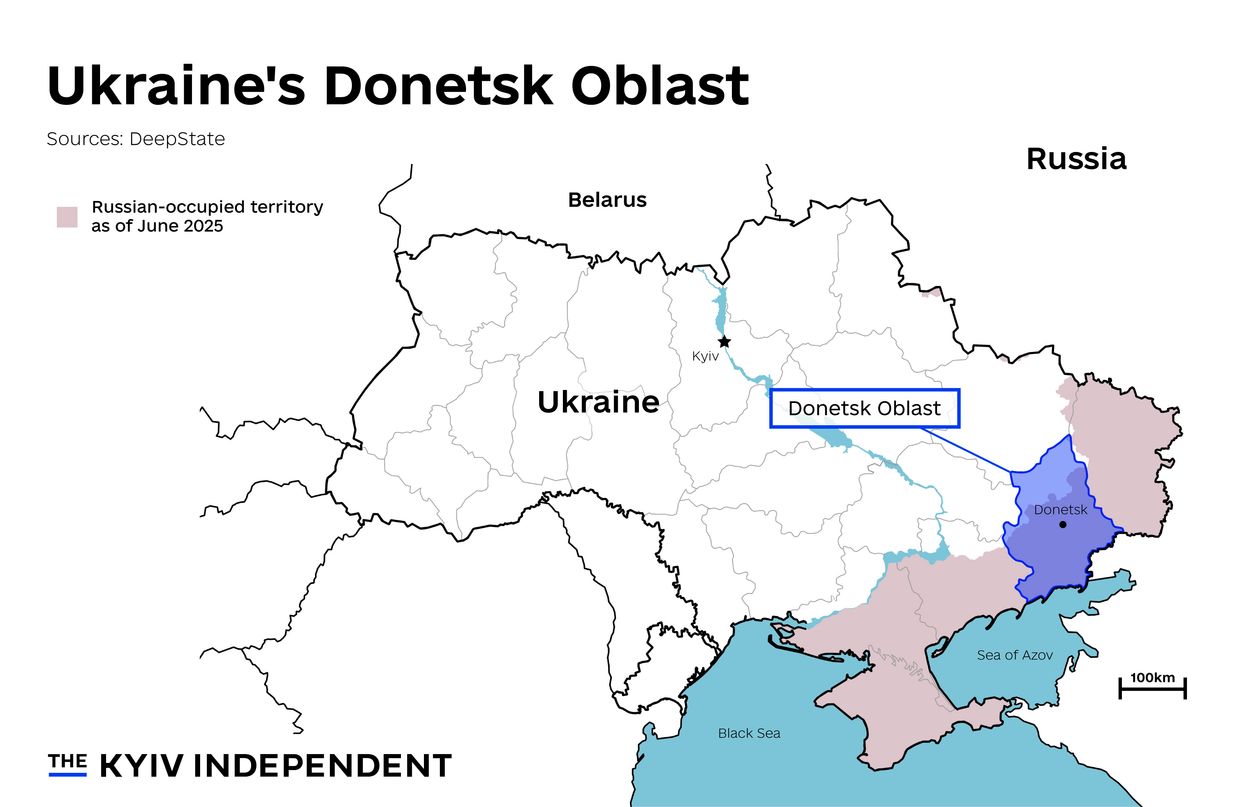
Ukraine's Donetsk Oblast (Nizar al-Rifai/The Kyiv Independent)
According to Kovalenko, the facility manufactures batteries for missile guidance and glider modules, including for the Iskander system and cruise missiles.
Ukraine's military regularly strikes military targets in Russian-occupied territories and deep within Russia in an attempt to diminish Moscow's fighting power as it continues its war against Ukraine.
On the evening of June 30, Ukraine similarly struck a command post of the 8th Combined Arms Army of the Russian Armed Forces in the Russian-occupied part of Donetsk Oblast.
Russia has for months focused its offensive efforts on the embattled town of Pokrovsk in Donetsk Oblast and has recently been escalating attempts to break through to neighboring Dnipropetrovsk Oblast, a region that has not yet seen combat.
Editor's note: This is a developing story and is being updated.
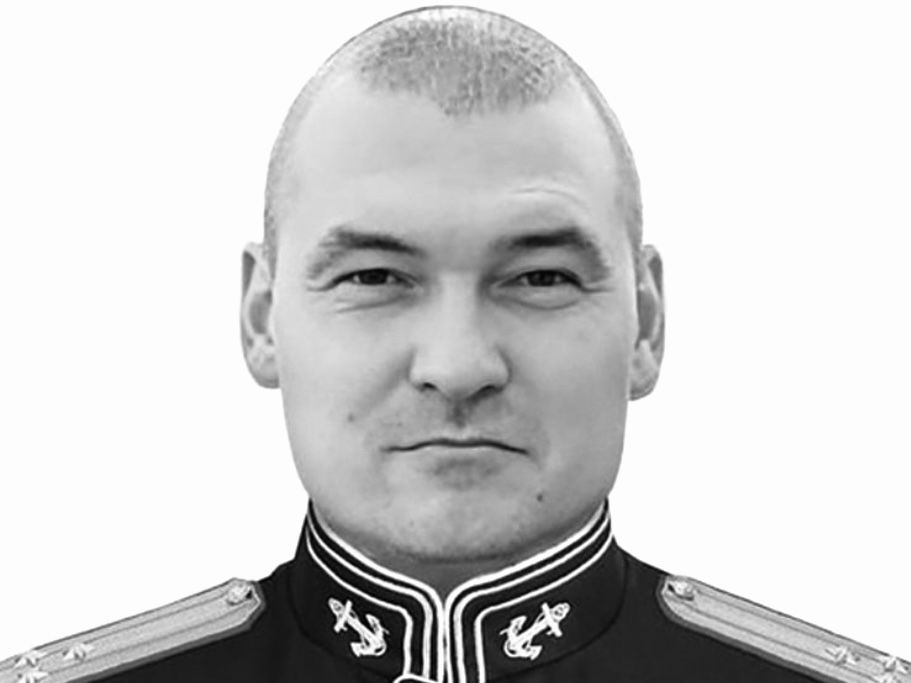
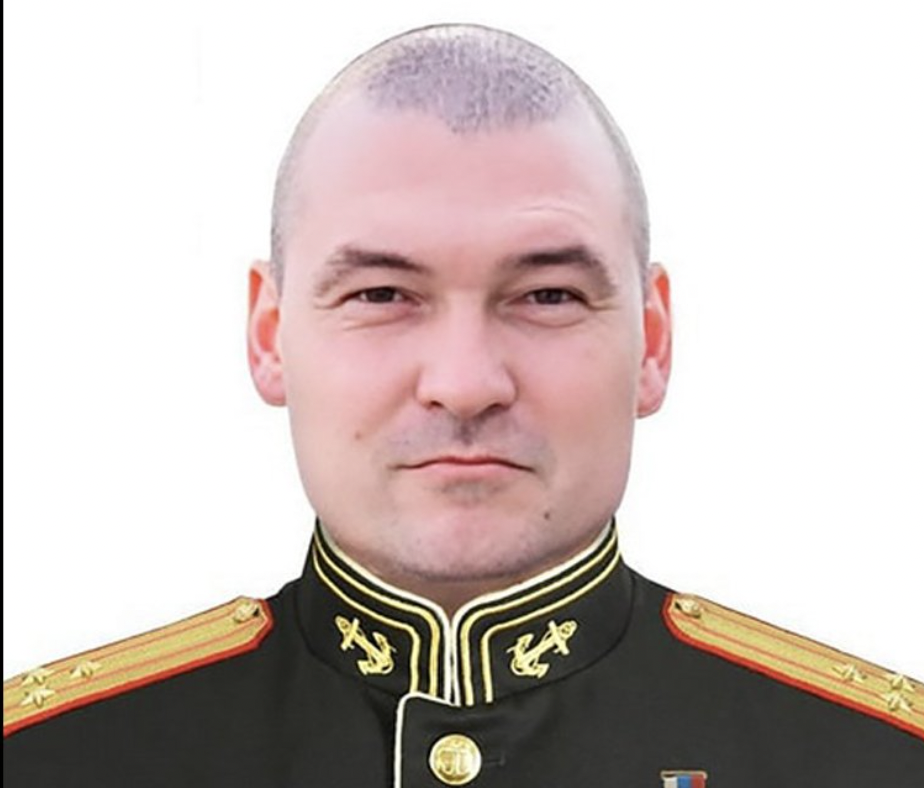
A deputy commander of Russia's navy has been killed in a Ukrainian strike in Kursk Oblast, a Russian official confirmed on July 3.
Major General Mikhail Yevgenyevich Gudkov was killed alongside his deputy and several other Russian soldiers, Oleg Kozhemyako, governor of Russia's Primorsky Krai, said in a post on social media.
According to Russian milbloggers, 22 people in total were killed as a result of a Ukrainian HIMARS strike in Russia's Kursk Oblast bordering Ukraine. Kyiv has yet to comment on the attack.
Gudkov was appointed deputy commander-in-chief of the Russian Navy in March 2025. Prior to that, he led the 155th Separate Marine Brigade, which has been involved in combat operations against Ukraine.
Ukraine has accused the 155th Separate Marine Brigade of committing numerous war crimes. According to the country's Air Assault Forces, members of the brigade are responsible for executing prisoners of war and humiliating captured Ukrainian soldiers.
Gudkov held the titles of Hero of Russia and Hero of Primorye, Russia's far eastern region where he previously served, Kozhemyako said.
HIMARS, whose prowess became a popular motif of internet memes, was a game-changer for Ukraine when they first arrived in the summer of 2022.
Initially supplied with GMLRS rockets with a range of around 70 kilometers, they allowed Ukraine to target Russian forces on the other side of the front line far more accurately than they had previously.
In the fall of 2023, the U.S. began supplying Kyiv with an older model of ATACMS – fired from HIMARS launchers – with a range of around 165 kilometers, greatly increasing the range that Ukraine could strike within.
Russia's high-ranking military officials have been killed on a regular basis throughout the full-scale invasion — a recent report from BBC Russia identified ten generals 10 generals and 524 lieutenant colonels and colonels.
Ukrainian forces launched a cross-border incursion into Russia's Kursk Oblast in August 2024, making it the first large-scale invasion of Russian territory by foreign troops since World War II. The move was intended to disrupt a planned Russian offensive targeting Ukraine's Sumy Oblast and to relieve pressure on the Donetsk front.
Since then, Ukraine claims it has inflicted 63,402 Russian troop casualties in the oblast, including 25,625 killed and 971 captured. Ukrainian forces also say they have destroyed or damaged over 5,664 pieces of Russian military equipment in the area.
Russia retook most of the lost territory during a renewed offensive in March 2025, supported by North Korean troops.
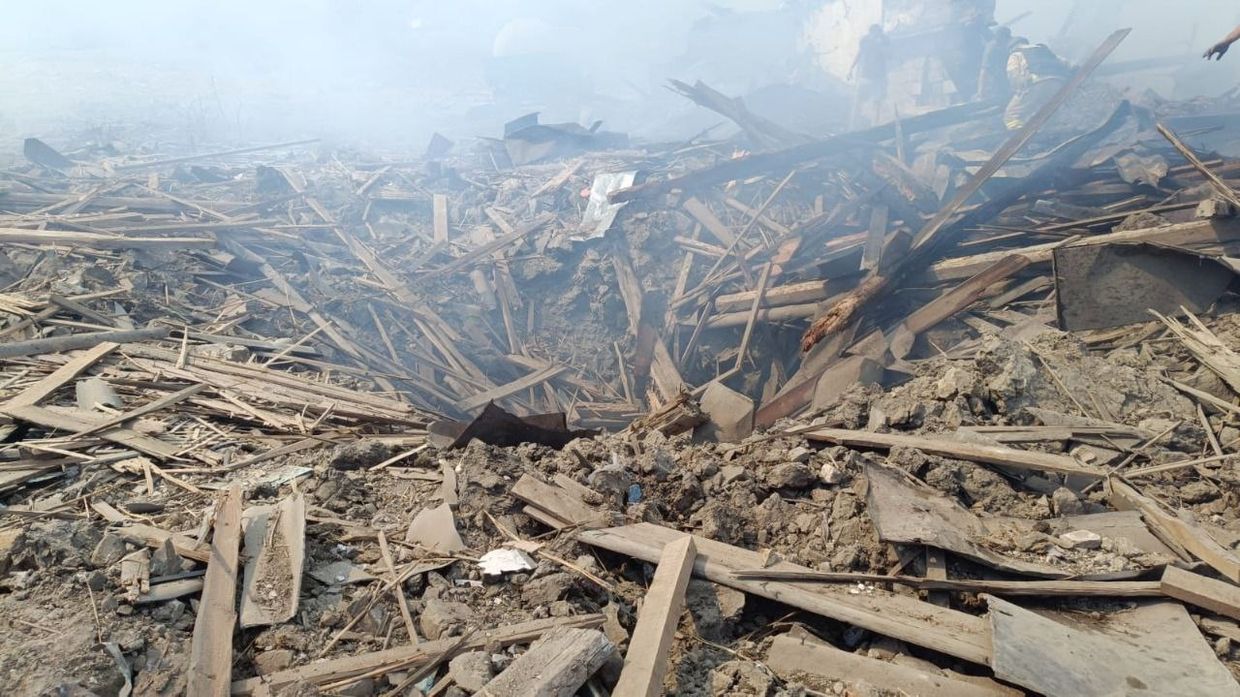
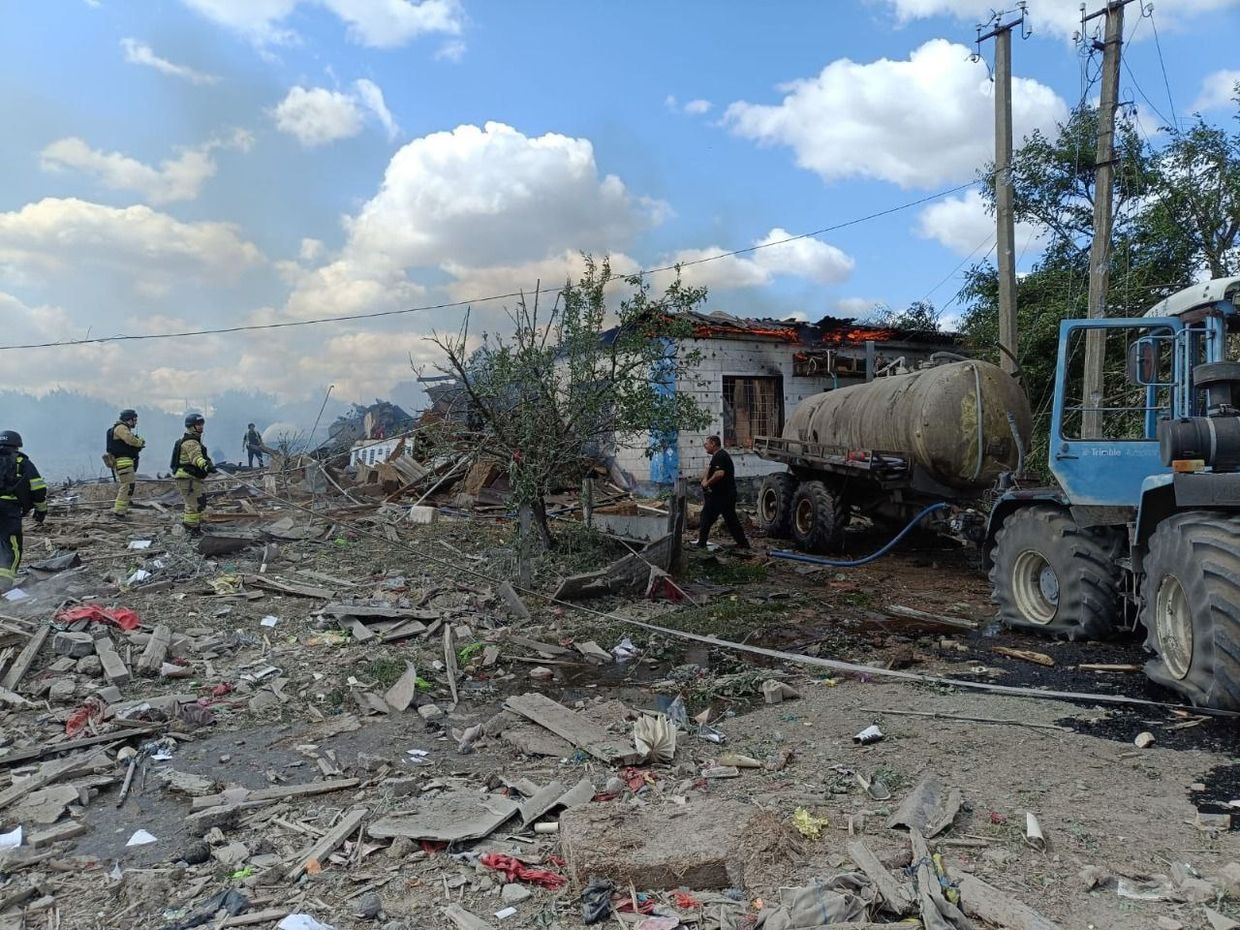
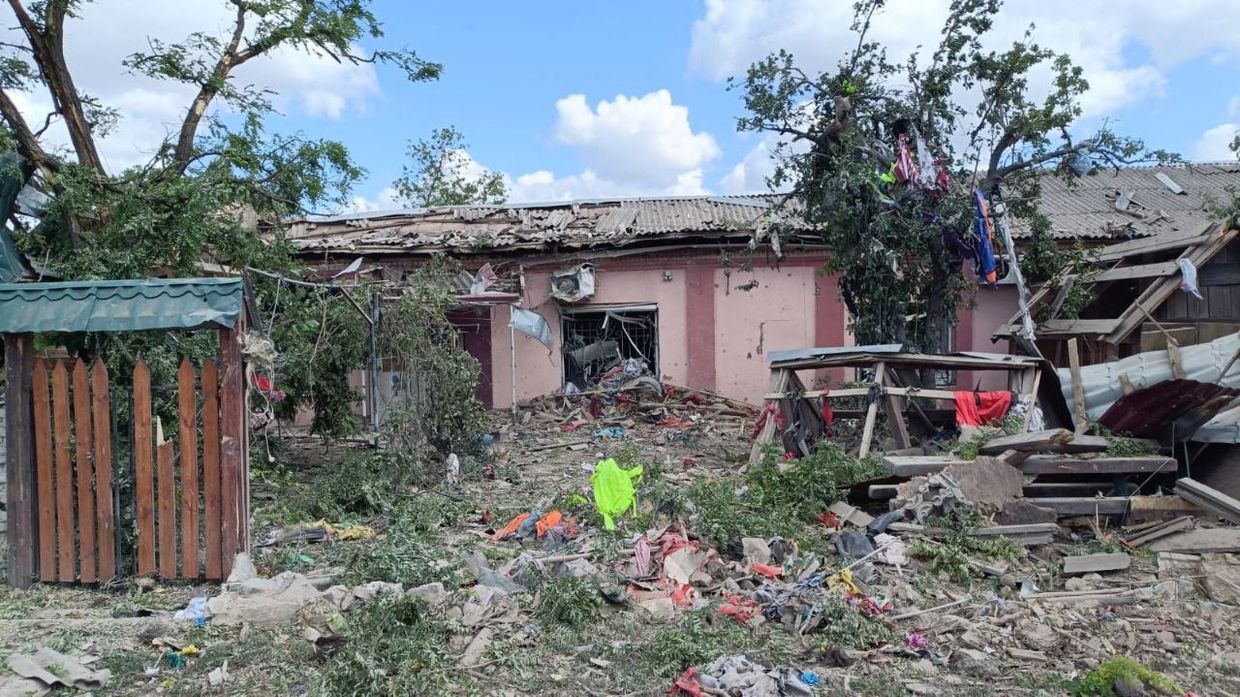
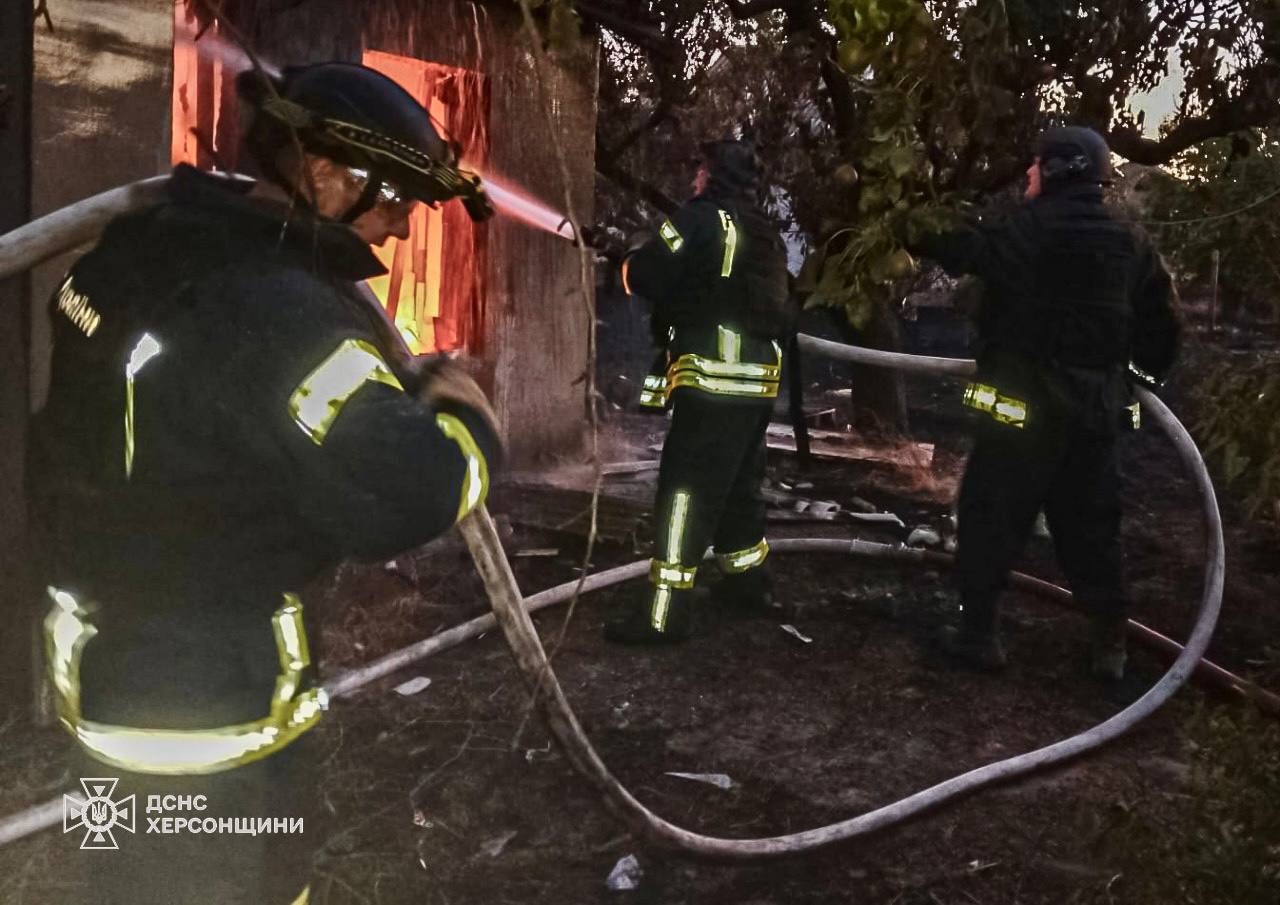
At least three people were killed and 34 injured across Ukraine in Russian drone and missile attacks, Ukrainian regional officials reported on July 3.
Ukraine's Air Force reported that Russia used 52 drones launched from several directions, including Oryol, Millerovo, and Primorsko-Akhtarsk. Air defenses destroyed 40 of them, including 22 shot down and 18 jammed electronically.
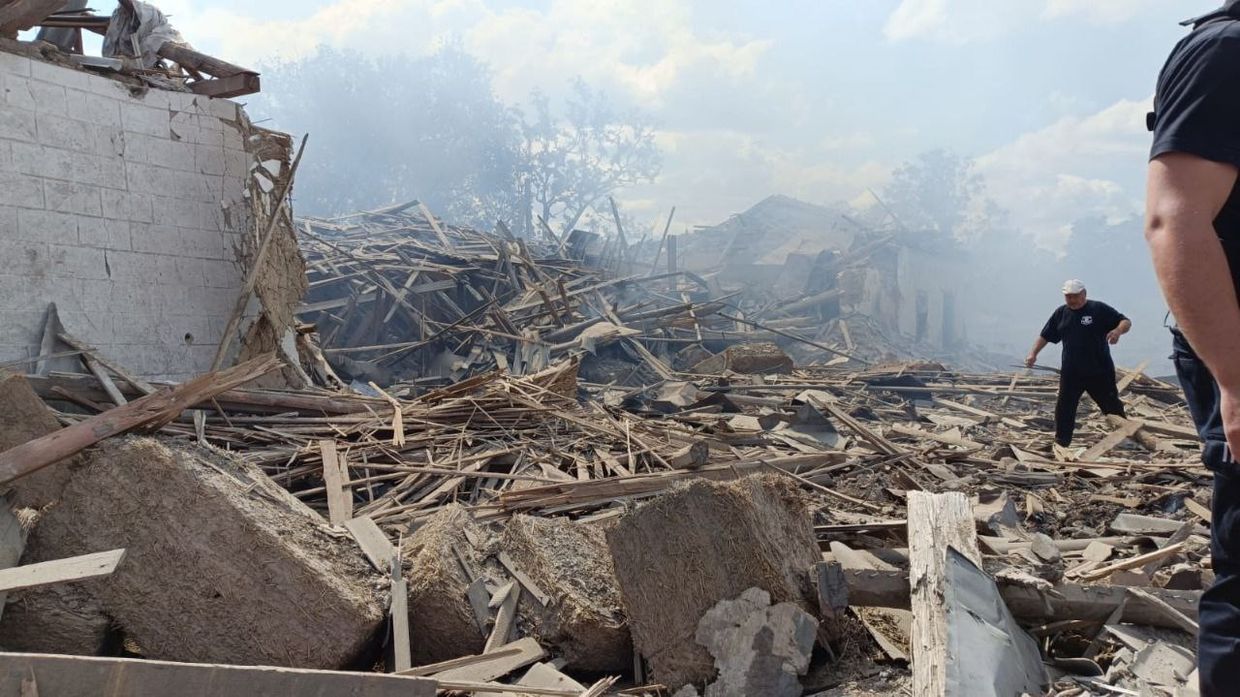
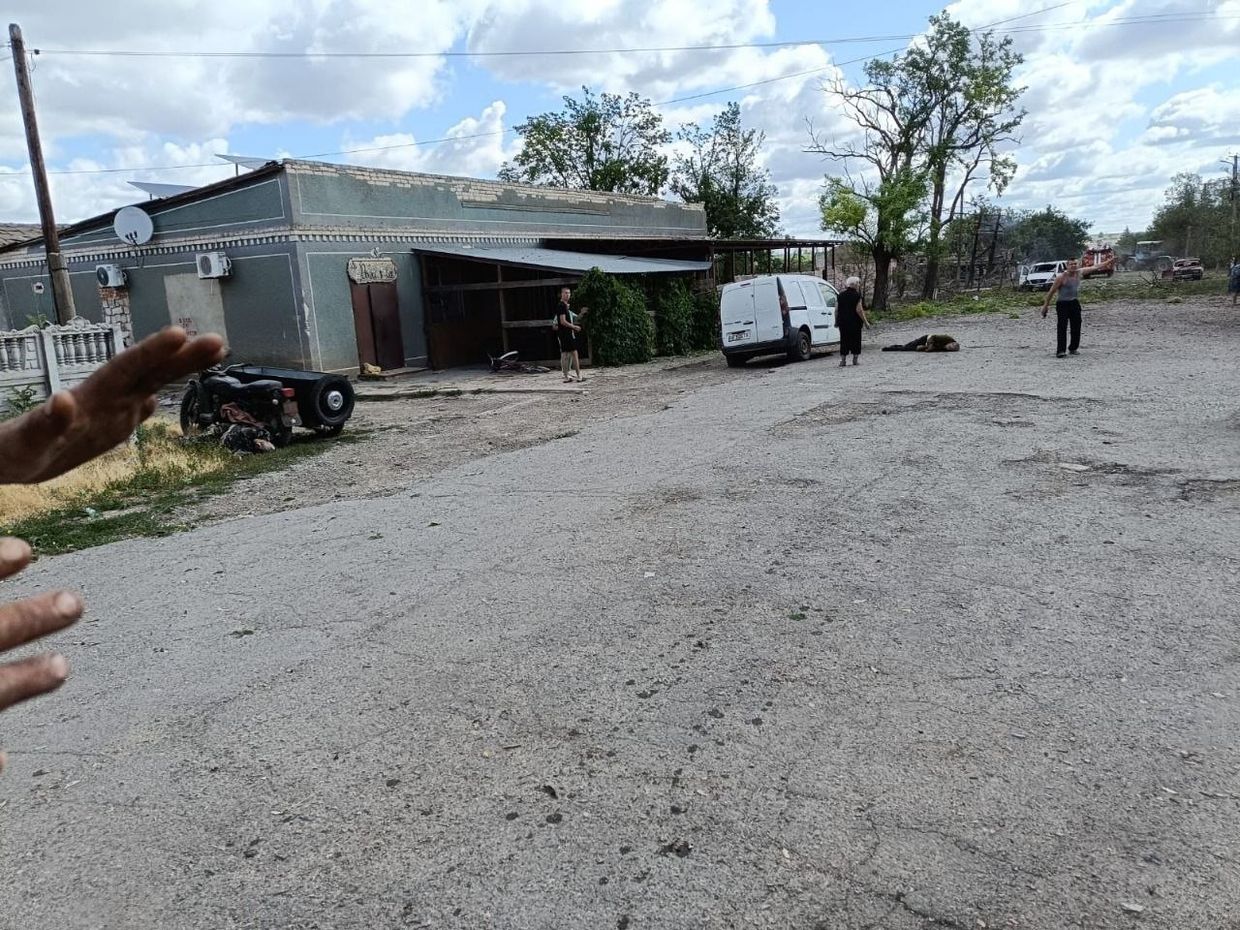
In Donetsk Oblast, three people were killed and at least nine injured in multiple settlements, Governor Vadym Filashkin said. Damage was reported to residential buildings, cars, and utility infrastructure across Pokrovsk, Kostyantynivka, and other towns.
In Kherson Oblast, Russian forces shelled over 30 towns and villages, wounding nine civilians, Governor Oleksandr Prokudin said. Strikes hit both residential neighborhoods and critical infrastructure. One person was hospitalized in Kherson city after being hit by a drone.
In Dnipropetrovsk Oblast, seven civilians were injured, including a 17-year-old girl, as Russia used artillery and drones to strike Nikopol and Synelnykove districts, Governor Serhii Lysak said. Fires broke out in wheat fields, and residential buildings and infrastructure were damaged.
In Odesa, five people were injured, including two children aged 7 and 9, in a Russian drone strike on a residential building, Governor Oleh Kiper reported. Several apartments were destroyed or damaged.
In Zaporizhzhia Oblast, one person was injured and nine settlements were struck over 430 times in the past 24 hours, Governor Ivan Fedorov said. The attacks included airstrikes, FPV drones, and artillery, causing damage to houses and infrastructure.
In Kharkiv Oblast, two people were injured in separate strikes, Governor Oleh Syniehubov said. Civilian infrastructure was damaged in multiple areas, including houses and vehicles.
Editor's note: This item has been updated to include the statement from Ground Forces spokesperson Vitalii Sarantsev.
A Russian strike on Poltava, central Ukraine, killed two people and injured 47 others on the morning of July 3, local and military officials said.
The attack, which occurred around 9 a.m. local time, sparked fires and damaged civilian infrastructure, according to Governor Volodymyr Kohut and Ukraine's Ground Forces.
The State Emergency Service reported that 84 emergency workers, including psychologists, pyrotechnicians, and medics, were deployed at the site of the attacks. Firefighters extinguished the fires, cleared the rubble, and rescued 10 people from the damaged buildings.
According to the statement of Ukraine's Ground Forces, one of the strikes caused a fire at the Poltava conscription office, a local military facility. A separate strike near the Poltava conscription office set fire to a private residential property, authorities said.
Speaking on national television, Ukraine's Ground Forces spokesperson Vitalii Sarantsev said that Russia was deliberately targeting conscription offices to disrupt Ukraine's mobilization efforts.
"We will continue to strengthen our army, train our troops, and involve more people in defense to deliver a strong response to the enemy," Sarantsev said.
This wasn't the first time Russia has been linked to such attacks. Back in February, Moscow recruited the man who carried out a deadly bombing at a military enlistment office in the city of Rivne in northwestern Ukraine.
U.S. weapons already in Poland en route to Ukraine have been halted, including advanced air defense systems and precision missiles, the Wall Street Journal reported on July 2.
The Pentagon confirmed the halt in a July 2 briefing, citing an ongoing "capability review" aimed at ensuring U.S. military assistance "aligns with its strategic defense priorities."
The shipment in Poland includes over two dozen PAC-3 Patriot missiles, more than two dozen Stinger air-defense systems, Hellfire air-to-ground missiles, and over 90 AIM air-to-air missiles intended for use with Ukraine's F-16 fighter jets, according to U.S. administration and congressional officials cited by the Wall Street Journal.
"We see this as a common-sense, pragmatic step towards having a framework to evaluate what munitions are sent and where," Pentagon spokesperson Sean Parnell said.
The decision has sparked backlash from both sides of the political aisle in Washington. Republican Rep. Brian Fitzpatrick, co-chair of the Congressional Ukraine Caucus, called the pause "unacceptable," while Democratic Senator Richard Blumenthal labeled it "fallacious and maybe even disingenuous."
The pause comes at a critical moment for Ukraine, which faces intensified Russian missile and drone strikes. On June 29, Russia launched the largest aerial assault against Ukraine since the start of its full-scale invasion in February 2022, targeting civilian infrastructure and cities far beyond the frontline.
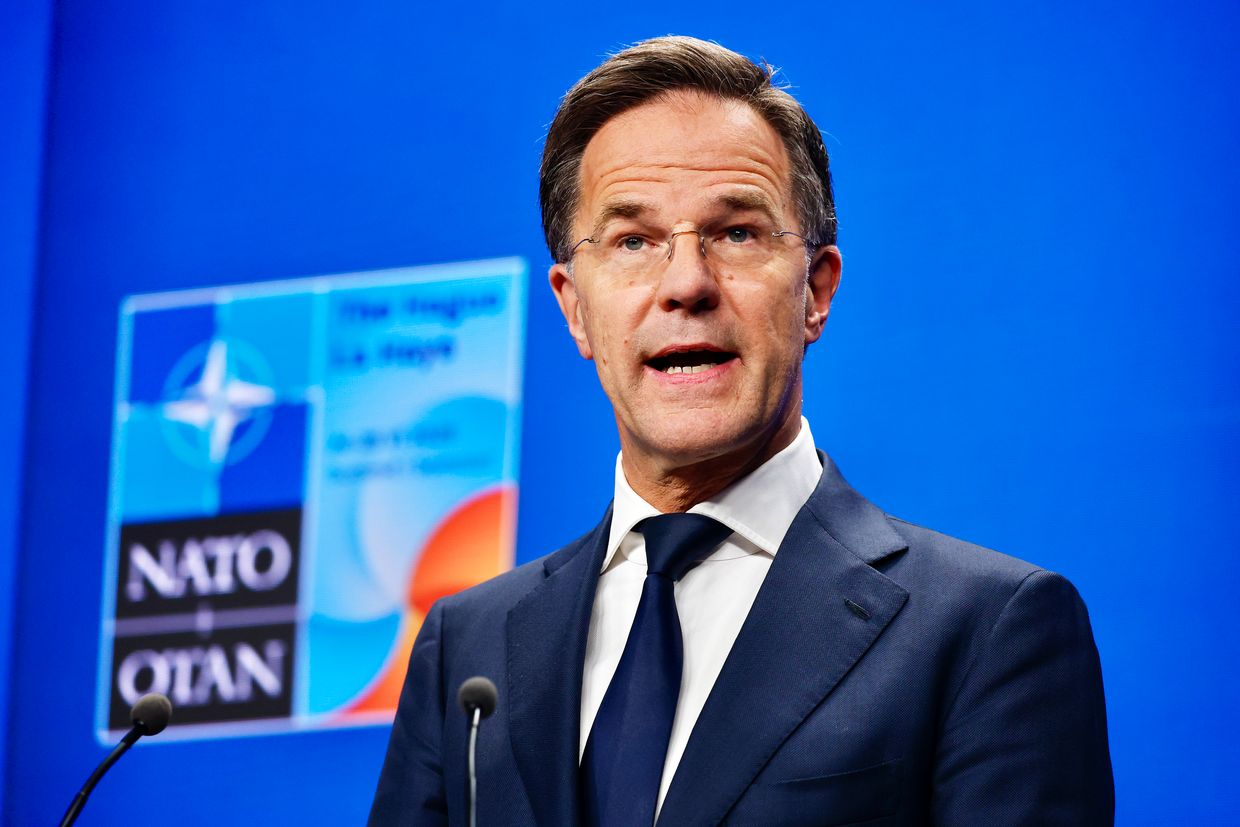
NATO Secretary General Mark Rutte, speaking on July 2, emphasized the urgency of continued Western support for Kyiv. "I totally understand that the U.S. always has to make sure its interests are covered," he said. "But in the short term, Ukraine cannot do without all the support it can get."
The Pentagon has not provided a timeline for when the held-back shipments might resume.
Russia has lost 1,023,090 troops in Ukraine since the beginning of its full-scale invasion on Feb. 24, 2022, the General Staff of Ukraine's Armed Forces reported on July 3.
The number includes 1,000 casualties that Russian forces suffered just over the past day.
According to the report, Russia has also lost 10,986 tanks, 22,936 armored fighting vehicles, 53,887 vehicles and fuel tanks, 29,815 artillery systems, 1,427 multiple launch rocket systems, 1,191 air defense systems, 420 airplanes, 340 helicopters, 43,098 drones, 3,436 cruise missiles, 28 ships and boats, and one submarine.
A bipartisan group of U.S. lawmakers are voicing their opposition to the Trump administration's decision to halt shipments of some air defense missiles and other weapons previously promised to Kyiv.
The U.S. Defense Department (DOD) made the decision to pause the aid deliveries after conducting a review of U.S. munitions stocks, reportedly concerned about dwindling levels of artillery rounds, air defense missiles, and precision munitions.
Among the items being held back from Ukraine are over two dozen Patriot air defense missiles, over two dozen Stinger air-defense systems, precision artillery rounds, Hellfire missiles, drones, and more than 90 AIM air-to-air missiles that Ukraine launches from F-16 fighter jets. The Washington Post reported that the weapons were already in Poland being prepped for delivery to Ukraine.
Republican Rep. Brian Fitzpatrick, the co-chair of the Congressional Ukraine Caucus, lambasted the decision in a post on X.
I will be aggressively looking into this matter and will be demanding accountability. We must build up our own Defense Industrial Base here in the U.S. while simultaneously providing the needed assistance to our allies who are defending their freedom from brutal invading… https://t.co/pRTOMCghWh
— Rep. Brian Fitzpatrick 🇺🇸 (@RepBrianFitz) July 2, 2025
Fitzpatrick, a staunch ally of Ukraine who has previously visited the front line, said he "will be aggressively looking into this matter and will be demanding accountability."
"We must build up our own Defense Industrial Base here in the U.S. while simultaneously providing the needed assistance to our allies who are defending their freedom from brutal invading dictators. To not do both is unacceptable," the Congressman added.
In a letter to U.S. President Donald Trump about the reported halt of air defense deliveries, Fitzpartick requested an emergency briefing from the White House and DOD on the shipments.
"Ukraine's courage must continue to be met with action, and the United States must continue to lead with clarity and purpose," Fitzpartick wrote.
Another Republican House member, Rep. Michael McCaul, said he is examining "very intensely" whether the Pentagon’s freeze breaches legislation on aid to Ukraine passed in 2024, Politico reported.
As Trump continues to call for a ceasefire from Moscow, McCaul said that the decision comes "at the wrong time."
"If you want to get (Russian President Vladimir Putin) to the negotiating table in good faith, you have to put leverage and pressure on him, and that would be (Senator) Lindsey Graham’s economic sanctions and the flow of weapons," McCaul said. "If you take the flow of weapons out, yeah, then you’re not, you don’t have the leverage over Putin to negotiate."
Other Republican members of Congress have thus far dismissed concerns over the reported halts, stating that they are waiting to be briefed with additional information before speaking about the reports.
On the other side of the isle, Democratic lawmakers have also lambasted the real world implications of halting military aid for Ukraine.
Senator Richard Blumenthal, a member of the Senate Armed Services Committee, said in an interview that more civilians are "going to lose more lives, more people will be maimed and injured — more homes, hospitals, schools will be destroyed," calling the decision, "fallacious and maybe even disingenuous."
Since his inauguration in January, Trump has not approved any additional military aid packages for Ukraine. Defense Secretary Pete Hegseth also announced recently that the U.S. will reduce the total aid it sends to Ukraine in its upcoming defense budget.
In his evening address on July 2, President Volodymyr Zelensky said Ukrainian and U.S. officials are working through the aid issue at a "working level," including discussions on critical air defense support. Head of the Presidential Office Andriy Yermak held a late night phone call with Rep. Brian Mast, Chair of the House Committee on Foreign Affairs.
Ukraine's Defense Ministry said it has not received any formal notification of delays or cancellations but has requested urgent consultations with U.S. defense officials.
The Foreign Ministry also summoned U.S. Charge d'Affaires John Ginkel, warning that "any hesitation" in military support would encourage further Russian aggression.
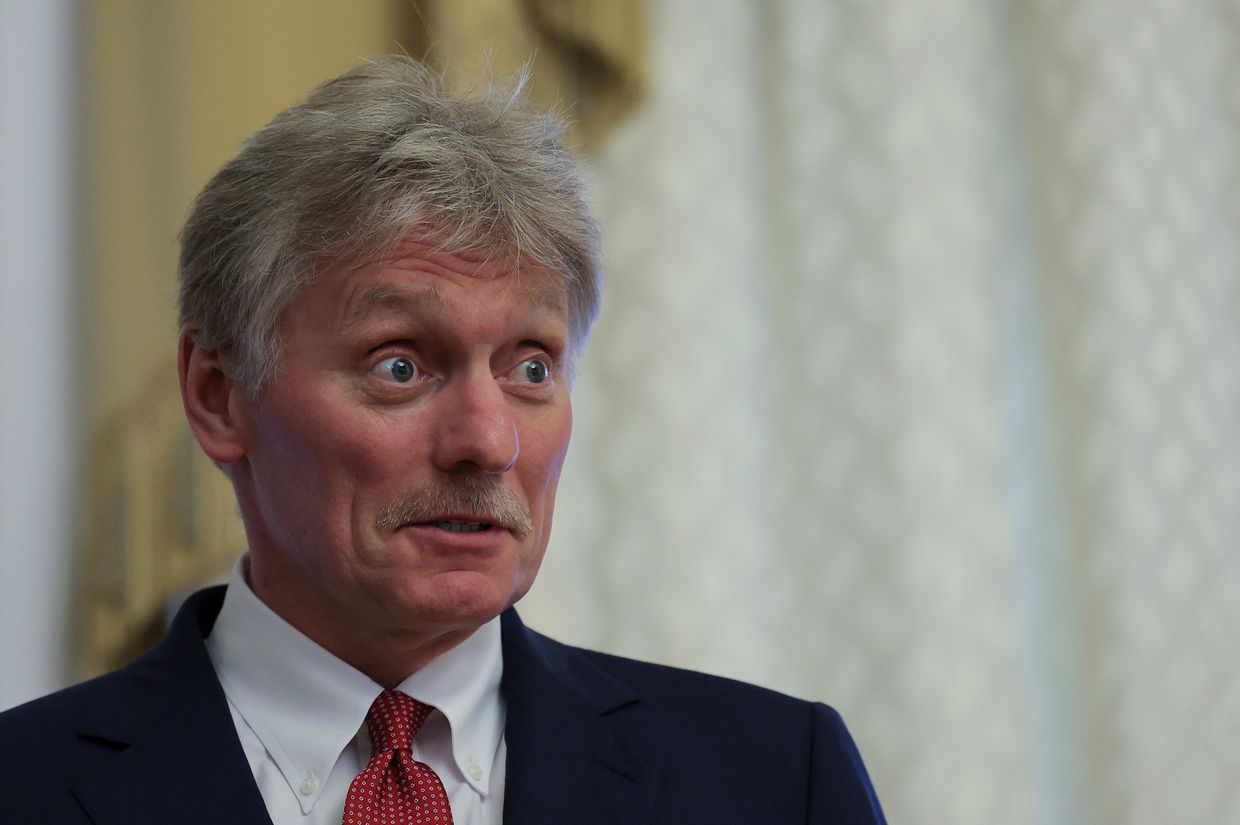
The Kremlin welcomed the decision, with spokesperson Dmitry Peskov saying, "The fewer weapons that are supplied to Ukraine, the closer the end of the (war)."
NATO Secretary General Mark Rutte expressed understanding of Washington's desire to safeguard its stockpiles but said, "Ukraine cannot do without all the support it can get."
Editor's note: This is a developing story and is being updated.
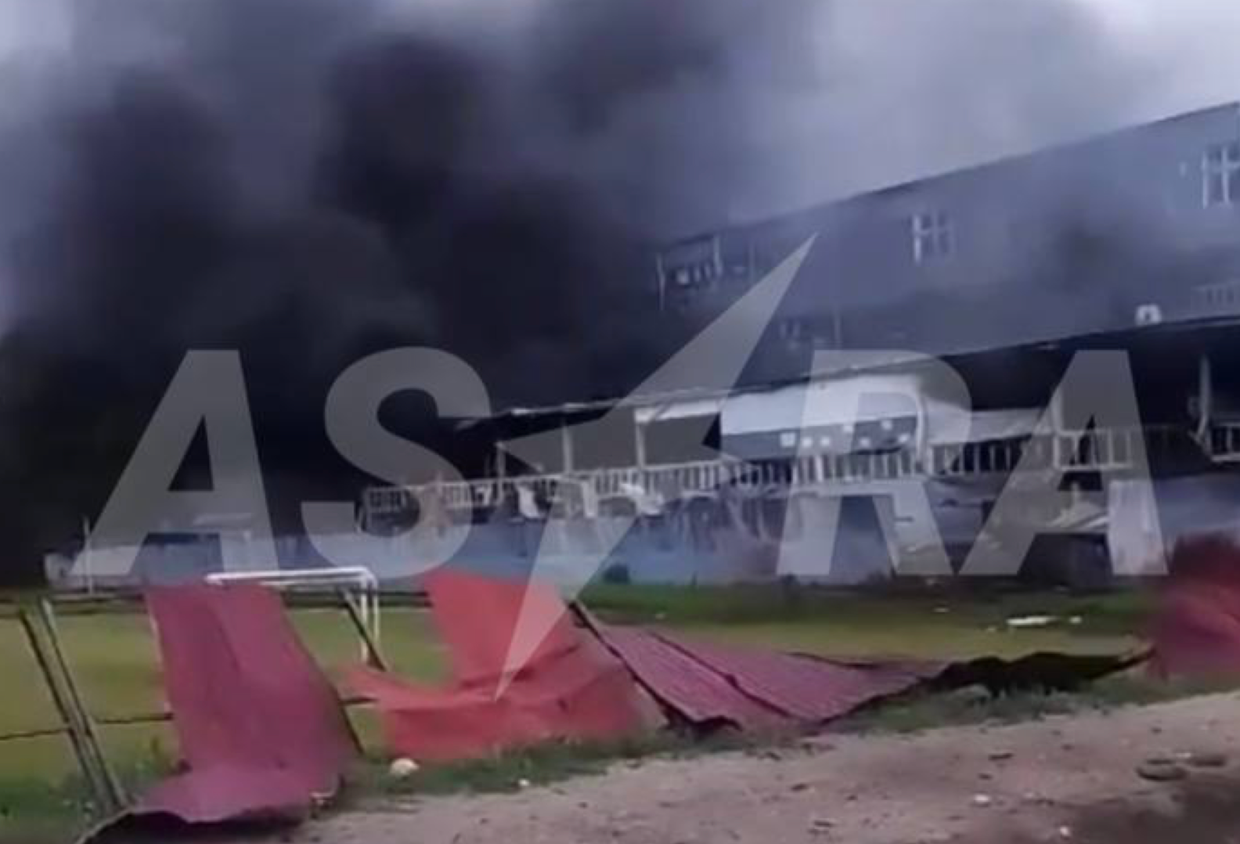
Ukraine reportedly struck a Russian ammunition depot in the town of Khartsyzk in occupied Donetsk Oblast on July 2, Russian Telegram channels reported.
Videos posted on social media purportedly show massive explosions near the reported ammunition depot, located just east of the Russian-occupied city of Donetsk.
The Kyiv Independent cannot immediately verify the reports.
Ukraine's military has not commented on the reported attack. No information was immediately available as to the extent of the damage caused.
0:00
/
A purported video of explosions at a Russian ammunition depot in occupied Donetsk Oblast on July 2, 2025. (ASTRA/Telegram)
Ukraine's military regularly strikes military targets in Russian-occupied territories and deep within Russia in an attempt to diminish Moscow's fighting power as it continues its war against Ukraine.
On the evening of June 30, Ukraine similarly struck a command post of the 8th Combined Arms Army of the Russian Armed Forces in the Russian-occupied part of Donetsk Oblast.
Russia has for months focused its offensive efforts on the embattled town of Pokrovsk in Donetsk Oblast and has recently been escalating attempts to break through to neighboring Dnipropetrovsk Oblast, a region that has not yet seen combat.
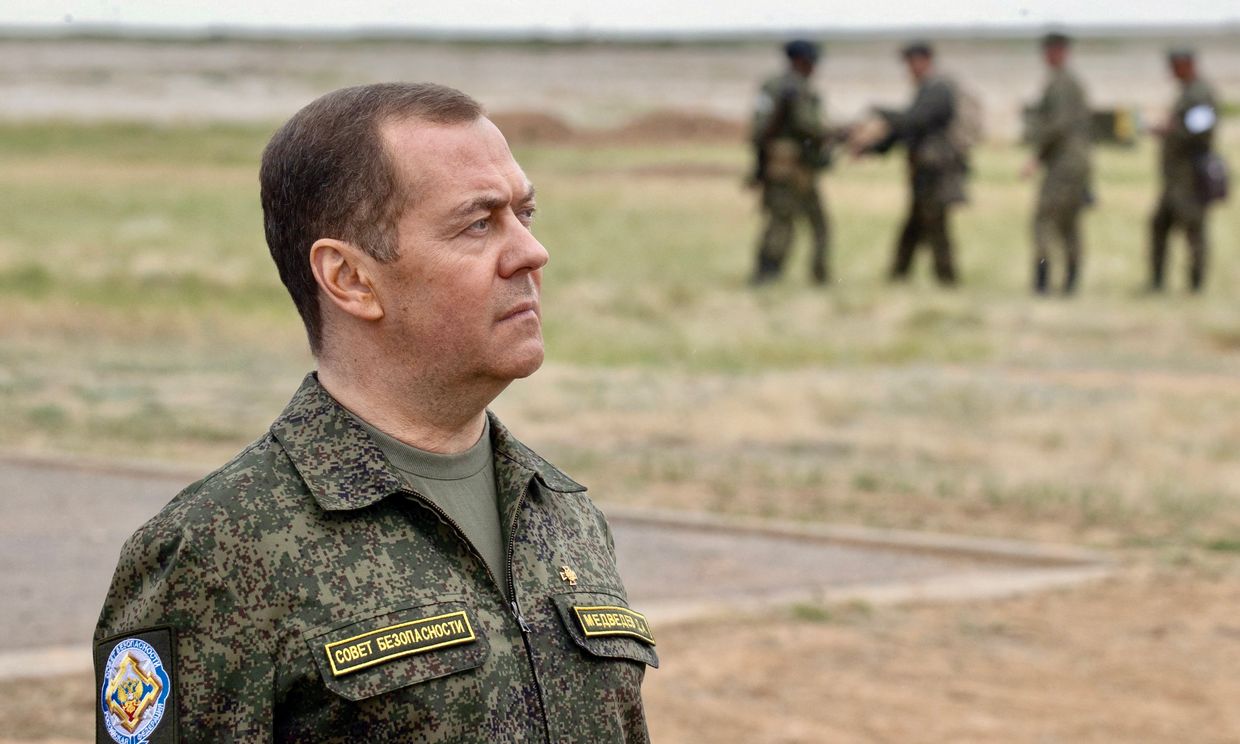
More than 210,000 Russians signed contracts with the Defense Ministry from January to July 2025 to fight in Ukraine, Dmitry Medvedev, the deputy chairman of Russia's Security Council, said on July 2.
"The pace is quite decent, good," Medvedev said at a meeting of the commission on Armed Forces staffing. "I hope that we will be able to maintain the same momentum in the future."
An additional 18,000 individuals have joined volunteer units, Medvedev added.
The revelation comes as Russia continues to escalate its war effort despite repeated calls from Ukraine, the U.S., and European partners for an unconditional ceasefire.
According to Western and Ukrainian intelligence cited by the Wall Street Journal, Russian forces recruit 30,000 to 45,000 new troops monthly — nearly twice the rate of Ukraine's mobilization, which President Volodymyr Zelensky said stands at 25,000–27,000 troops per month.
Ukraine estimates that Russia has suffered nearly 1 million casualties since the full-scale invasion began in February 2022. However, Moscow has offset its losses through aggressive recruitment and a steady influx of contract soldiers.
In late 2024, Russian President Vladimir Putin signed a decree increasing the size of the Armed Forces to 2.38 million personnel, including 1.5 million military service members.
Russia also this year launched its largest conscription drive in 14 years, aiming to enlist 160,000 men for mandatory service. The country holds two annual conscription campaigns, in spring and fall, requiring one year of service from eligible men.
While conscripts are not typically deployed to combat zones, the Kremlin has leaned on financial incentives and promises of pardons to recruit civilians and former inmates for its war.
Following the deeply unpopular partial mobilization of September 2022, which triggered an exodus of over 261,000 Russians, Moscow has avoided mass drafts, relying instead on contract-based service.
The Trump administration's decision to halt deliveries of key military aid to Ukraine has caught European partners off guard and prompted urgent requests for clarification, Bloomberg reported on July 2, citing unnamed sources.
The pause affects the delivery of several weapons critical to Ukraine's defense, including Patriot air defense missiles, precision-guided artillery shells, Hellfire missiles, and munitions for F-16 fighter jets.
The White House confirmed the hold, describing it as part of a broader reassessment of U.S. military stockpiles. Since U.S. President Donald Trump took office in January, the U.S. has not approved any new military aid packages for Ukraine.
According to Bloomberg, some European allies hope the Trump administration will soften or reverse the decision. The timing of the pause has raised particular concern as Ukraine faces one of the most intense waves of Russian missile and drone attacks since the start of the war.
In his evening address on July 2, President Volodymyr Zelensky said Ukrainian and U.S. officials are working through the aid issue at a "working level," including discussions on critical air defense support.
Ukraine's Defense Ministry said it has not received any formal notification of delays or cancellations but has requested urgent consultations with U.S. defense officials.
The Foreign Ministry also summoned U.S. Charge d'Affaires John Ginkel, warning that "any hesitation" in military support would encourage further Russian aggression.
The Kremlin welcomed the decision, with spokesperson Dmitry Peskov saying, "The fewer weapons that are supplied to Ukraine, the closer the end of the (war)."
NATO Secretary General Mark Rutte expressed understanding of Washington's desire to safeguard its stockpiles but said that "Ukraine cannot do without all the support it can get."
U.S. Defense Secretary Pete Hegseth previously signaled a shift in policy, indicating that future defense budgets would prioritize domestic needs over military support for Ukraine.
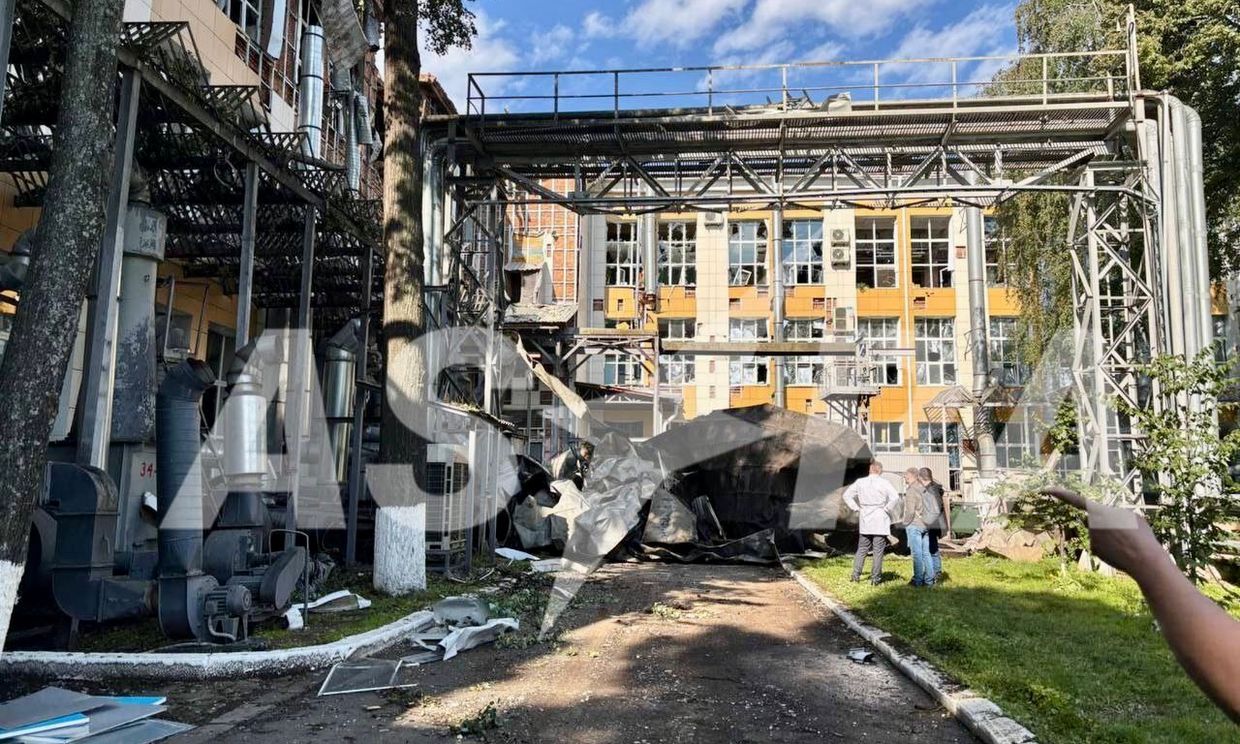
The Kupol plant in Russia's Udmurt Republic ceased operations following a Ukrainian drone attack, independent media outlet Astra reported on June 2, citing emergency service sources.
Located more than 1,300 kilometers (800 miles) from the front line, the plant produces Tor and Osa air defense systems, as well as Harpy-type attack drones. It is under international sanctions as part of Russia's defense-industrial complex.
Two drones hit their intended targets during the strike with one flying through the windows of one workshop, and the second hitting the roof of another, causing an explosion and fire. The resulting blaze led to the collapse of 1,300 square meters of roofing, Astra reported.
Four workshops were destroyed in the first building of the complex, reportedly halting operations in areas responsible for metalworking, microchip soldering, and drone production.
Udmurt Republic Governor Alexander Brechalov said on June 1 that three people were killed and 45 injured in the attack, including 35 hospitalizations and six in serious condition.
Astra earlier reported that no air raid siren was issued in Izhevsk ahead of the attack. Residents claimed to be unable to receive emergency alerts due to persistent mobile internet outages.
Ukraine's General Staff confirmed the strike via its official Telegram channel, framing it as part of Kyiv's campaign to degrade Russia's defense-industrial base far from the front.
The plant was previously targeted in a Ukrainian drone strike on Nov. 17, 2024. That attack damaged equipment used to produce Tor missile systems and radar components.
Izhevsk, the capital of the Udmurt Republic, is known as a center of Russia's arms manufacturing industry and the birthplace of the Kalashnikov rifle.
The latest attack underscores Ukraine's capacity to strike deep into Russian territory.
NATO Secretary General Mark Rutte said on July 2 that he understands Washington's need to safeguard its own defense needs, but emphasized that Ukraine urgently requires sustained Western support.
"I totally understand that the U.S. always has to make sure its interests are covered," Rutte told Fox News. "When it comes to Ukraine, in the short term, Ukraine cannot do without all the support it can get."
His remarks come as the U.S. Defense Department has halted deliveries of key weapons systems previously promised to Kyiv, including Patriot missiles, precision-guided artillery shells, Hellfire missiles, and munitions compatible with F-16 fighter jets.
The White House confirmed the pause in shipments, citing a broader reassessment of U.S. military stockpiles. No new U.S. military aid packages have been approved since U.S. President Donald Trump took office in January.
"I understand the U.S. has to take care of its stockpiles, and at the same time, we have to allow for some flexibility here," Rutte said. "Europeans, in the meantime, are really stepping up."
During last week's NATO summit in The Hague, Trump and President Volodymyr Zelensky met behind closed doors. Rutte described the conversation as "a very good discussion, particularly focusing on air defense systems."
The reporting of paused deliveries comes as Ukraine faces one of the heaviest barrages of Russian drone and missile strikes since the start of the full-scale invasion.
Ukraine's Defense Ministry responded by saying it has not received formal notification of delays or cancellations and has requested urgent consultations with U.S. defense officials.
The Foreign Ministry summoned U.S. Charge d'Affaires John Ginkel the same day, warning that any hesitation in maintaining Ukraine's defense capabilities would embolden Russia.
The Kremlin welcomed the halt in arms shipments, saying it brings the war closer to an war.
"The fewer weapons that are supplied to Ukraine, the closer the end of the (war)," Kremlin spokesperson Dmitry Peskov said in response to the information.
U.S. Defense Secretary Pete Hegseth has previously indicated that the upcoming defense budget will scale back long-term military support for Ukraine, reflecting a shift in Washington's priorities.
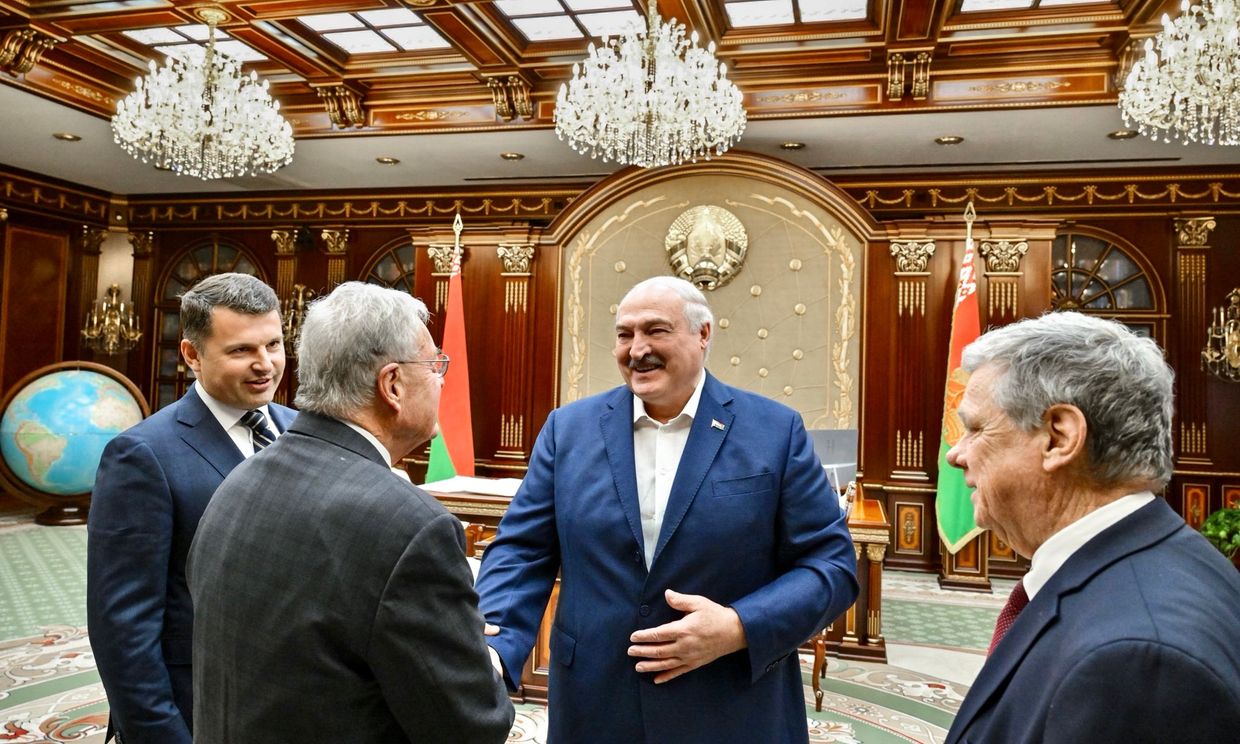
U.S. Special Envoy for Ukraine Keith Kellogg denied on July 1 that he agreed to "work on" halting Ukraine's drone attacks on Russia, contradicting Belarusian dictator Alexander Lukashenko's claim.
Speaking at a state event on Belarus's Independence Day, Lukashenko said he relayed Russian President Vladimir Putin's position to Kellogg during their June 21 meeting in Minsk.
According to Lukashenko, the Russian president is willing to consider a ceasefire in Ukraine if Ukrainian forces stop conducting drone strikes on Russian territory.
"I conveyed this position to the Americans," Lukashenko said on July 1. "We will work on it, said (the U.S. special envoy), in this direction."
Kellogg pushed back on the claim, writing on X that the quote was "taken out of context" and misrepresented the substance of their talks.
"At no point did I make comments related to Ukraine's prosecution of the war outside of a total ceasefire," he said. "In my conversation with Lukashenko, we discussed a full and unconditional ceasefire."
The June meeting between Kellogg and Lukashenko marked the highest-level U.S. visit to Belarus since former Secretary of State Mike Pompeo's 2020 trip. Belarusian state media widely portrayed Kellogg's visit as a sign of thawing relations.
Shortly after the talks, Belarus released opposition leader and political prisoner Siarhei Tsikhanouski, who had been jailed since the 2020 presidential election.
Lukashenko has ruled Belarus since 1994 and remains a key ally of the Kremlin. His regime has allowed Russian troops and equipment to use Belarusian territory to attack Ukraine since the start of the full-scale invasion in February 2022.
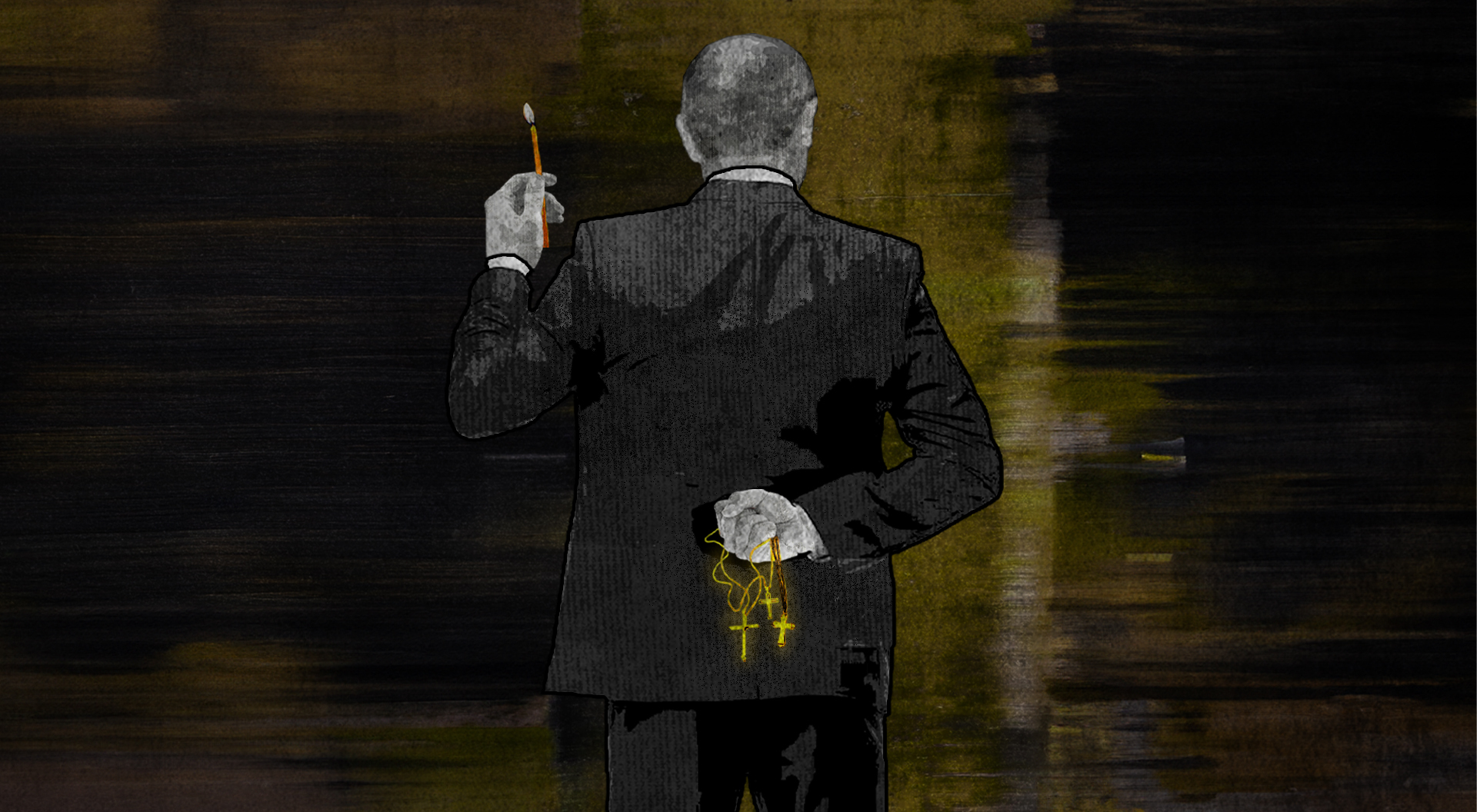
Metropolitan Onufrii of Kyiv, the primate of the Ukrainian Orthodox Church of the Moscow Patriarchate, has had his Ukrainian citizenship suspended by a presidential decree, the Security Service of Ukraine (SBU) announced on July 2.
The SBU said it had established that Onufrii, also known by his secular name, Orest Berezovskyi, voluntarily received Russian citizenship in 2002 and failed to inform Ukrainian authorities of the fact. The new Ukrainian law on multiple citizenship lists holding a Russian passport as grounds for the removal of Ukrainian citizenship.
The security agency also said Onufrii has maintained ties with the Russian Orthodox Church (ROC) and actively resisted Ukraine's efforts to secure ecclesiastical independence from Moscow and its leader, Patriarch Kirill.
The Ukrainian Orthodox Church of the Moscow Patriarchate (UOC-MP) has faced growing scrutiny and public criticism in Ukraine since the start of Russia's full-scale invasion in 2022, with many officials accusing it of maintaining loyalty to Moscow and undermining Ukraine's sovereignty.
The Moscow-linked church is separate from the Orthodox Church of Ukraine, which was granted autocephaly (autonomy) by Ecumenical Patriarch Bartholomew I of Constantinople in 2019.
"Despite the full-scale invasion, Berezovsky (Onufrii) continues to support the policies of the Russian Orthodox Church and its leadership, particularly Patriarch Kirill (Gundyaev)," the SBU said in a statement.
Zelensky signed a law in 2024 banning the activities of religious organizations affiliated with Russia. The law was widely seen as targeting the UOC-MP, which remains legally subordinate to the Moscow-based ROC despite its claim to have severed ties.
Since the start of the full-scale invasion in February 2022, over 100 UOC-MP clergy members have come under criminal investigation for alleged collaboration with Russian forces or spreading pro-Kremlin propaganda, according to the SBU. Nearly 50 have been charged, and courts have issued verdicts in 26 cases.
The UOC-MP continues to insist that it operates within Ukrainian law and that its 2022 declaration of independence from Moscow was genuine, though many in Ukraine view it as purely symbolic and lacking credibility.
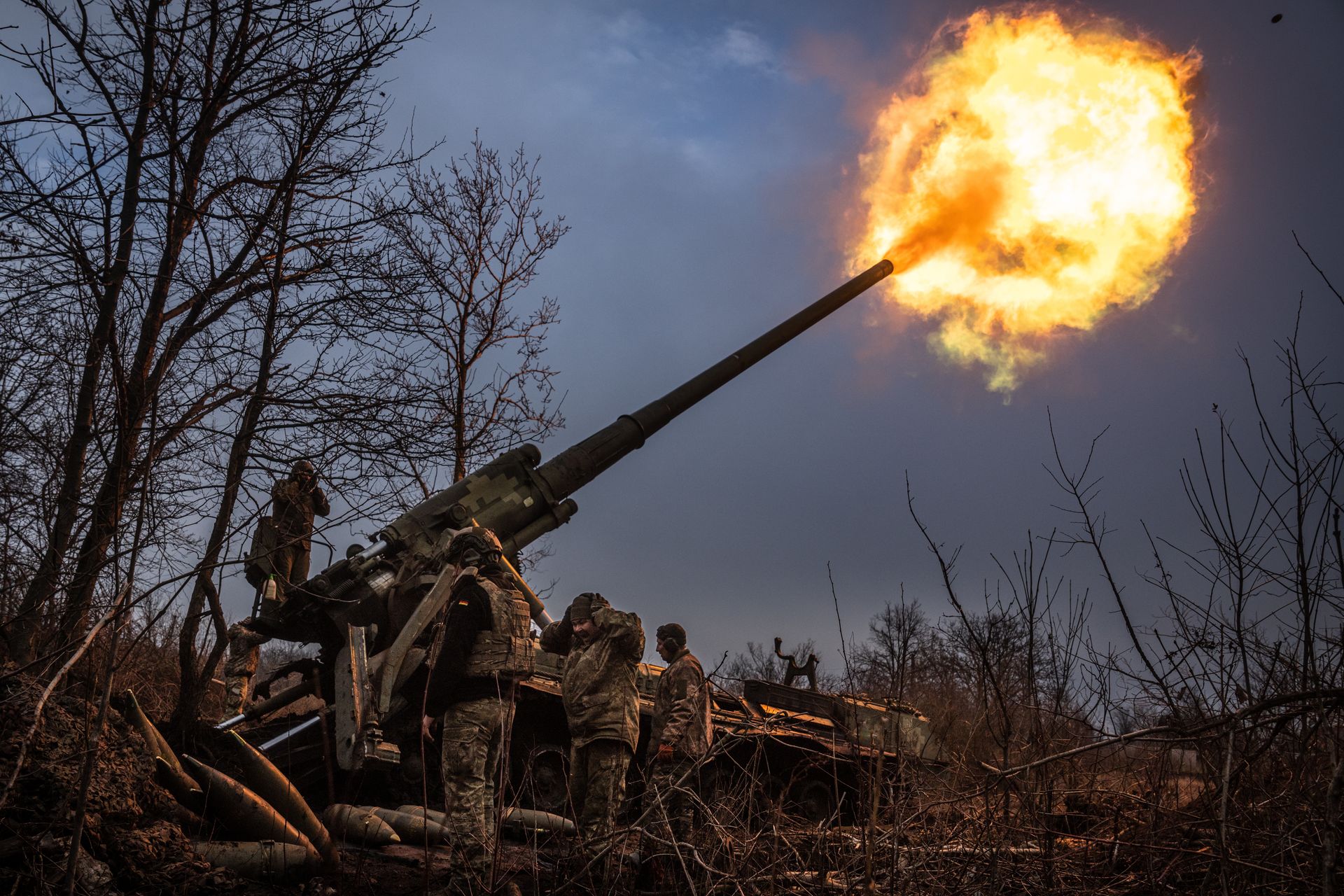
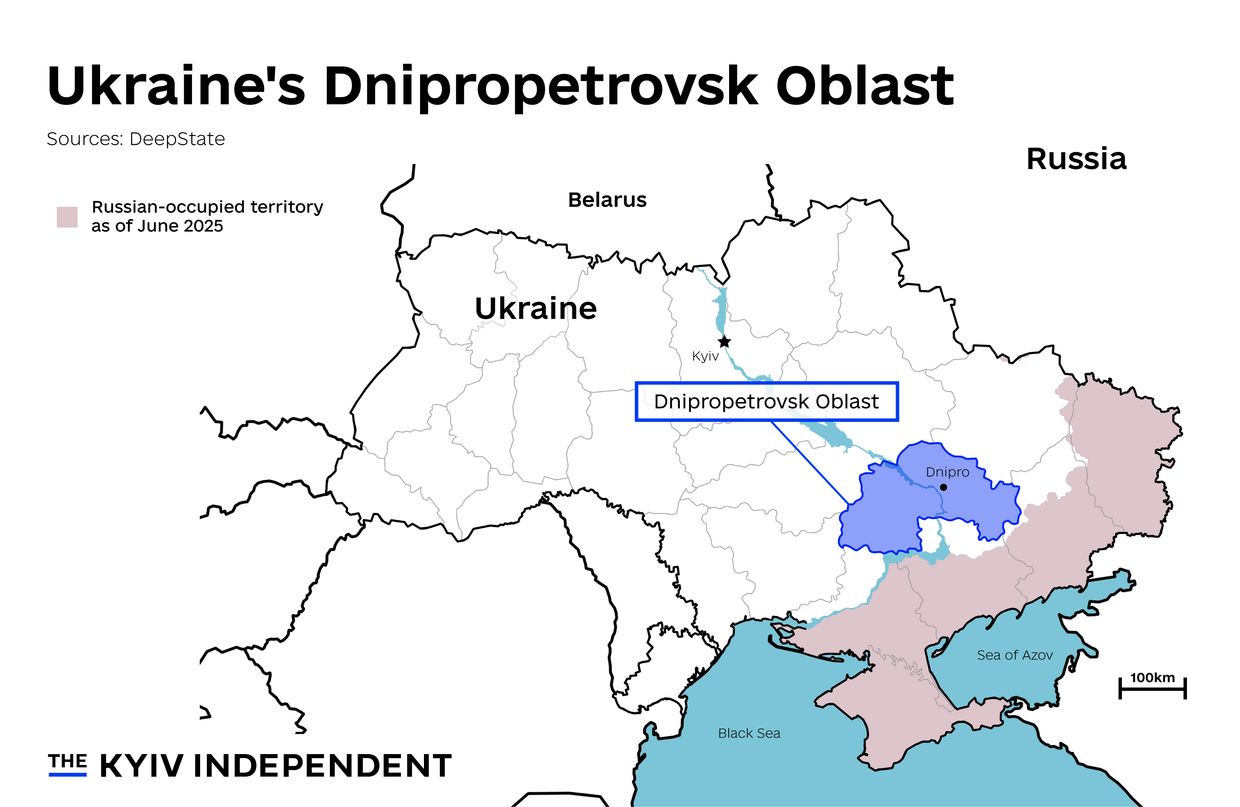
Russian forces have not succeeded in crossing into Dnipropetrovsk Oblast, Ukraine's military said on July 2, refuting another Russian claim of a breakthrough into the central-eastern region.
The General Staff of the Armed Forces of Ukraine dismissed Russian claims of territorial gains as disinformation and said a recent small incursion was repelled.
According to the statement, a small Russian reconnaissance group managed to briefly enter the village of Dachne, located on the edge of Dnipropetrovsk Oblast. The group reportedly took photos with a Russian flag, but Ukrainian forces "eliminated them."
Russian troops have intensified efforts to breach the administrative border between Donetsk and Dnipropetrovsk oblasts in eastern Ukraine, but have failed to gain ground despite repeated assaults, the military said.
"(Russian troops) have had no success in achieving this demonstrative goal, no matter how many 'meat wave assaults' they launch with small infantry units and sabotage-reconnaissance groups," the General Staff said in a statement.
Donetsk Oblast, which has been a focal point of Russia's invasion since 2014 and a major battleground since the full-scale invasion in 2022, borders the more centrally located Dnipropetrovsk Oblast. Russian forces have not entered Dnipropetrovsk Oblast territory in force, although they regularly strike the region with missiles, drones, and aerial bombs.
In a separate incident, two Russian soldiers were captured during a subsequent assault on Dachne and are now in Ukrainian custody, the military said. They were detained by a unit of Ukrainian Marines and added to "Ukraine's prisoner exchange pool."
Ukraine's Dnipropetrovsk Oblast (Nizar al-Rifai/The Kyiv Independent)
"Therefore, the Russian propaganda about the seizure of the bridgehead in Dnipropetrovsk Oblast is not true. Dachne remains under the control of the Ukrainian Defense Forces," the statement read.
The new claims echo a similar incident in May when Russian sources circulated a photo purporting to show Russian troops at the border of Dnipropetrovsk Oblast near the village of Novomykolaivka.
At the time, Ukrainian officials, including Dnipropetrovsk Oblast Governor Serhii Lysak, dismissed the photo as fake. The monitoring group DeepState later confirmed that the image had been taken in the village of Troitske in Donetsk Oblast and featured a Ukrainian vehicle abandoned under fire, which Russian forces later used for staged photos.
Russian forces have recently stepped up offensive operations across multiple sectors of the front line. Viktor Tregubov, spokesperson for Ukraine's Khortytsia group of forces, said on June 16 that Moscow had increased attacks in the Novopavlivka sector.
Tregubov noted that the escalation near Novopavlivka indicates an effort to breach into Dnipropetrovsk Oblast. "But they have failed to succeed," he said in a televised address.
Kremlin spokesperson Dmitry Peskov told Russian state-controlled media on June 9 that Russian forces were conducting operations in Dnipropetrovsk Oblast as part of efforts to create a so-called "buffer zone" on Ukrainian territory.
These remarks followed Russian President Vladimir Putin's May 22 statement that Russia was working to establish a "security buffer zone" along the Ukrainian border regions of Kursk, Bryansk, and Belgorod.
North Korea is preparing to set an additional 25,000-30,000 soldiers to join Russian forces fighting against Ukraine, almost thrice as many as were dispatched last year, CNN reported on July 2, citing undisclosed Ukrainian officials.
The fresh units may arrive in the coming months and are likely to be engaged in combat in Russian-occupied Ukrainian territories, including during "large-scale offensive operations," according to a Ukrainian military intelligence (HUR) assessment reviewed by CNN.
The news underscores North Korea's growing involvement in the Russia-Ukraine war and the deepening military ties between Pyongyang and Moscow.
North Korea initially dispatched around 11,000 soldiers to Russia in the fall of 2024 to help fend off a Ukrainian incursion into Russia's Kursk Oblast. According to various estimates, North Korean soldiers suffered between 4,000 and 6,000 casualties during this deployment.
Ukraine's HUR also noted signs that Russian military aircraft are being refitted to transport North Korean troops from their homeland across Russia's Siberia, CNN reported. Satellite imagery detected a ship involved in last year's deployment at a Russian port and a cargo aircraft at North Korea’s Sunan airport, according to the outlet.
Estimates reported by CNN exceed those of South Korea's intelligence, which expects Pyongyang to send an additional 15,000 soldiers to Russia as early as July or August.
Following his visit to Pyongyang in June, Russian Security Council Secretary Sergei Shoigu also announced that North Korea would send 1,000 sappers and 5,000 military engineers to Russia's Kursk Oblast.
Pyongyang's assistance to Russia has not been limited to troops, with North Korea being a key source of artillery shells and ballistic missiles for Russian forces.
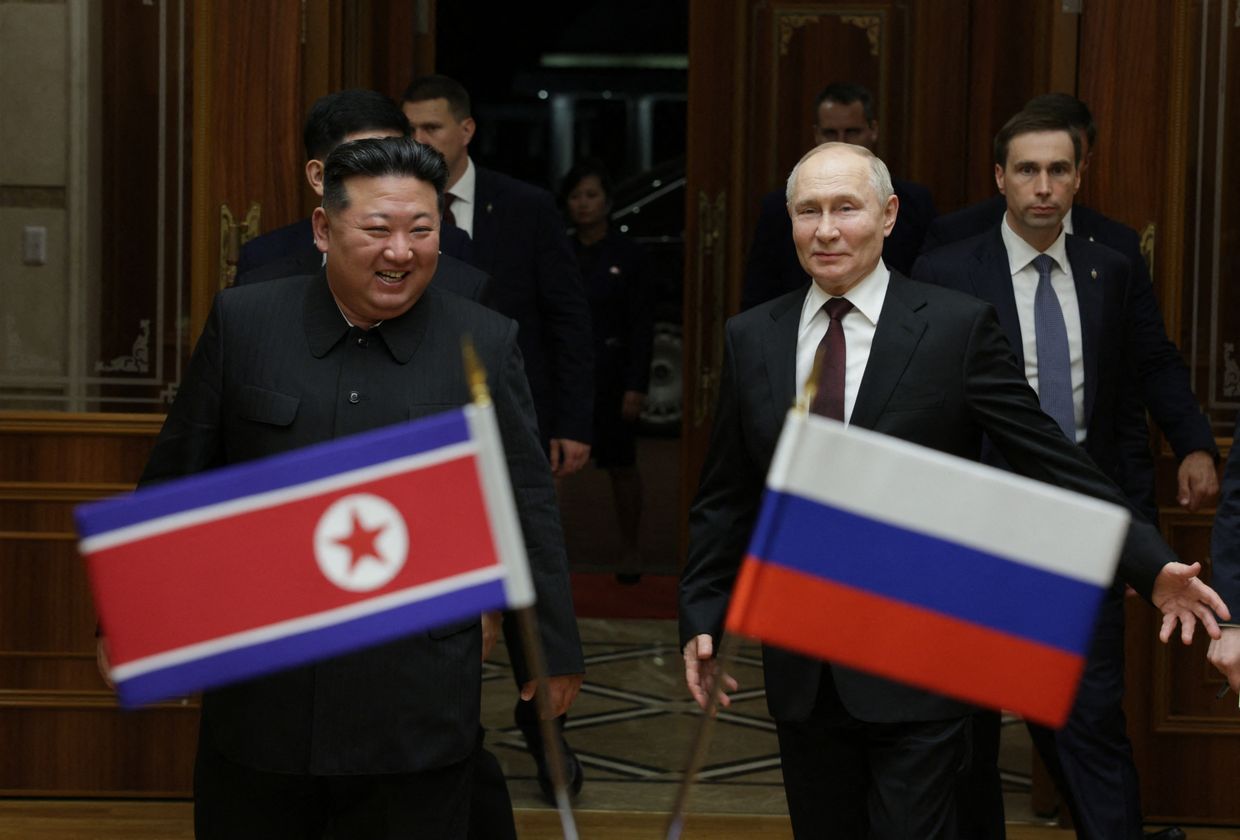
Russian President Vladimir Putin and North Korean dictator Kim Jong Un signed the Comprehensive Strategic Partnership Agreement in Pyongyang in June 2024. Under the treaty, the two countries pledged to provide aid to one another if either is attacked.
While the countries initially denied involvement of North Korean troops in the Russia-Ukraine war, both Putin and Kim acknowledged the deployment earlier this year.
The United States' reported decision to suspend some arms deliveries to Ukraine could help bring Russia's war in Ukraine to an end, the Kremlin said on July 2, according to Russian state-controlled media.
"The fewer weapons that are supplied to Ukraine, the closer the end of the... (Russia-Ukraine war)," Kremlin spokesperson Dmitry Peskov told reporters.
Peskov's comments came after Politico reported that the U.S. Defense Department has paused shipments of key air defense and precision munitions to Ukraine over concerns about declining U.S. stockpiles.
Among the withheld items are Patriot air defense missiles, precision artillery rounds, Hellfire missiles, and other munitions used by Ukraine's F-16 fighter jets.
Ukraine's Foreign Ministry summoned U.S. Charge d'Affaires John Ginkel on July 2 to voice concern over the reported pause in weapons shipments.
Deputy Foreign Minister Mariana Betsa warned during the meeting that "any delay or hesitation in supporting Ukraine's defense capabilities will only encourage Russia to continue war and terror, rather than pursue peace."
According to Politico, Pentagon policy chief Elbridge Colby ordered the halt in June following a review of U.S. ammunition levels. The White House confirmed the decision, saying it was part of a broader reassessment of American military aid to foreign partners.
"(The decision) was made to put America's interests first following a DOD review of our nation's military support and assistance to other countries across the globe," White House Deputy Press Secretary Anna Kelly said in a statement.
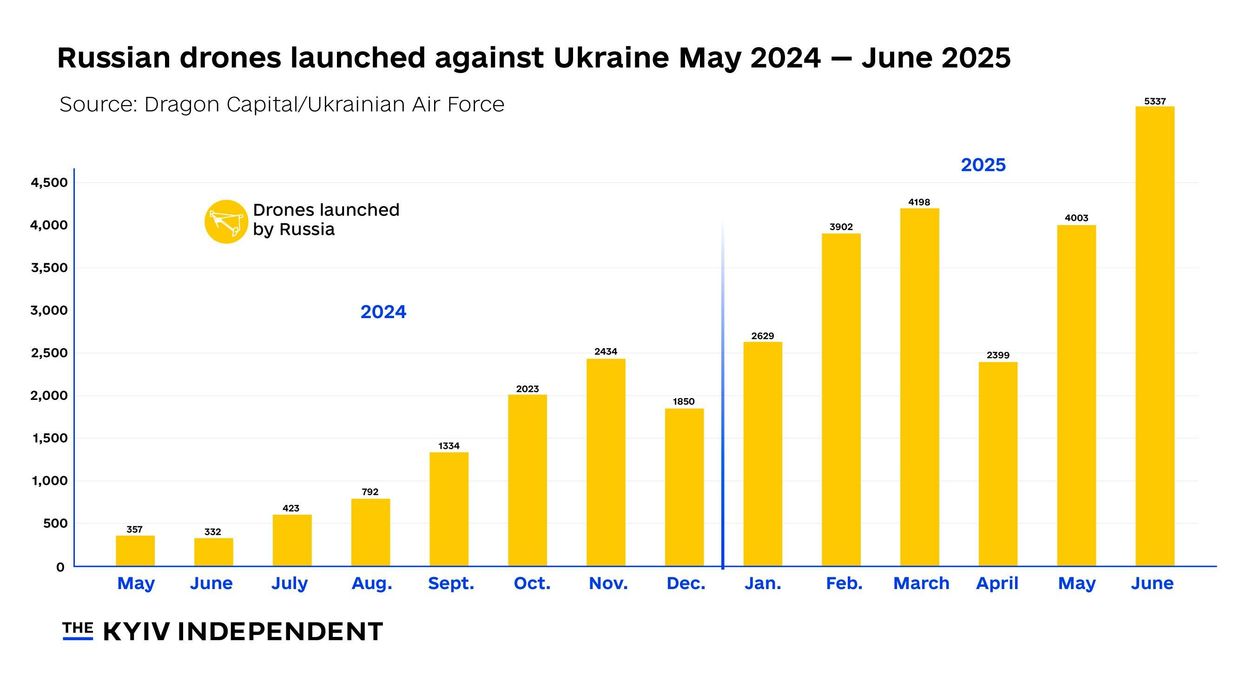
The move comes as Ukraine faces intensifying Russian attacks. In June, Russia launched a record 5,337 Shahed-type attack drones at Ukrainian targets, the highest monthly total since the start of the full-scale invasion in February 2022.
The U.S. has not approved any new military aid packages after U.S. President Donald Trump took office in January. Defense Secretary Pete Hegseth has also signaled that future U.S. defense budgets will reduce the scale of assistance to Ukraine.
At a NATO summit in The Hague in late June, Trump said Washington was considering whether it could help provide more Patriot missiles to Kyiv but emphasized that U.S. and Israeli needs take precedence.
"They are very hard to get. We need them too," Trump said after meeting with President Volodymyr Zelensky.
The Kremlin has long argued that Western arms shipments to Ukraine only prolong the conflict and raise the risk of escalation, while continuing to attack Ukrainian cities and advance on the battlefield.
Armenian authorities should "seriously" consider banning the broadcast of Russian television channels in Armenia, Armenian Parliament Speaker Alen Simonyan said on July 1, citing concerns over interference and deteriorating ties.
"We must very seriously discuss the suspension of the Russian television channel broadcast in the territory of Armenia," Simonyan told reporters, according to Armenpress. He criticized recent content aired by Russian state broadcasters, which the Armenian government has denounced as harmful to bilateral ties.
The remarks come as Armenia continues to pivot away from Moscow's sphere of influence and seeks to bolster ties with the West.
Simonyan suggested that individuals connected to Armenian-Russian oligarch Samvel Karapetyan may be financing efforts to meddle in Armenia's internal matters.
"If there are channels that allow themselves to interfere in Armenia’s domestic affairs, perhaps we ought to respond likewise, by at least banning their entry into the homes of our society," he said.
Tensions between Armenia and Russia have mounted since Moscow's failure to intervene during Azerbaijan's military operation in Nagorno-Karabakh in September 2023, which resulted in the mass displacement of ethnic Armenians.
In April, Armenian President Vahagn Khachaturyan signed a law initiating the country's formal accession process to the European Union.
Though symbolic, the legislation marks a significant political shift, embedding European integration into Armenian law. The bill, passed by parliament in March, was backed by 64 lawmakers and opposed by seven.
Armenian Prime Minister Nikol Pashinyan has said that EU membership would require a referendum, while the Kremlin warned that joining both the EU and the Russian-led Eurasian Economic Union (EAEU) is "simply impossible." The EAEU, established in 2015, includes Russia, Belarus, Kazakhstan, Armenia, and Kyrgyzstan.
The Ukrainian Foreign Ministry told U.S. Charge d'Affaires John Ginkel that any delays in U.S. military aid would only prolong the war, the Foreign Ministry said on July 2 after the Pentagon reportedly paused some weapons shipments.
Ginkel met Deputy Foreign Minister Mariana Betsa at the request of Ukraine's chief diplomat, Andrii Sybiha.
During the meeting, the Ukrainian side warned that "any delay or hesitation in supporting Ukraine's defense capabilities will only encourage Russia to continue war and terror, rather than pursue peace."
The meeting came amid reporting in the U.S. media that the U.S. Defense Department had paused some of the previously allocated shipments of weapons to Kyiv as part of a review. Among the withheld items are Patriot air defense missiles, precision artillery rounds, Hellfire missiles, and other munitions used by Ukraine's F-16 fighter jets.
White House spokesperson Anna Kelly later confirmed the move, saying that the decision "was made to put America's interests first following a (Defense Department) review of our nation's military support and assistance to other countries across the globe."
The Ukrainian Foreign Ministry did not explicitly confirm the pause in its statement. According to the ministry's readout, Betsa underscored Ukraine's gratitude for U.S. aid and stressed the critical importance of continued deliveries, namely air defenses.
Separately, parliamentary defense committee member Fedir Venislavskyi told RBK-Ukraine that Ukraine has not received an official confirmation of the suspension.
"Any restrictions on the supply of those resources that are very important to us are undoubtedly negative," Venislavskyi said, adding that Ukraine nevertheless has some "reserve capacities."
In the conversation with Ginkel, Betsa also stressed that Russia continues to reject a U.S.-proposed ceasefire that Kyiv agreed to during talks in Jeddah on March 11 and only intensifies its aerial attacks and ground offensives against Ukraine.
"Ukraine supports peace efforts and supports the U.S. calls for an immediate end to the killings and the war, stressing the need to compel Russia to seek peace," the Foreign Ministry said in a statement.
"Under these circumstances, strengthening Ukraine's defense capabilities and ramping up coordinated transatlantic pressure on Russia are critically important."
The aid pause comes in a critical moment as Russia is ramping up its aerial strikes across Ukraine and intensifying offensive operations along the front line. In June, Russia launched a record 5,337 Shahed-type attack drones at Ukrainian targets, the highest monthly total since the start of the full-scale invasion in February 2022.
The Trump administration has yet to approve any new major aid package for Ukraine and revealed plans to reduce military assistance in next year's budget. The pause comes despite U.S. President Donald Trump recently signaling support for further Patriot supplies to Kyiv.
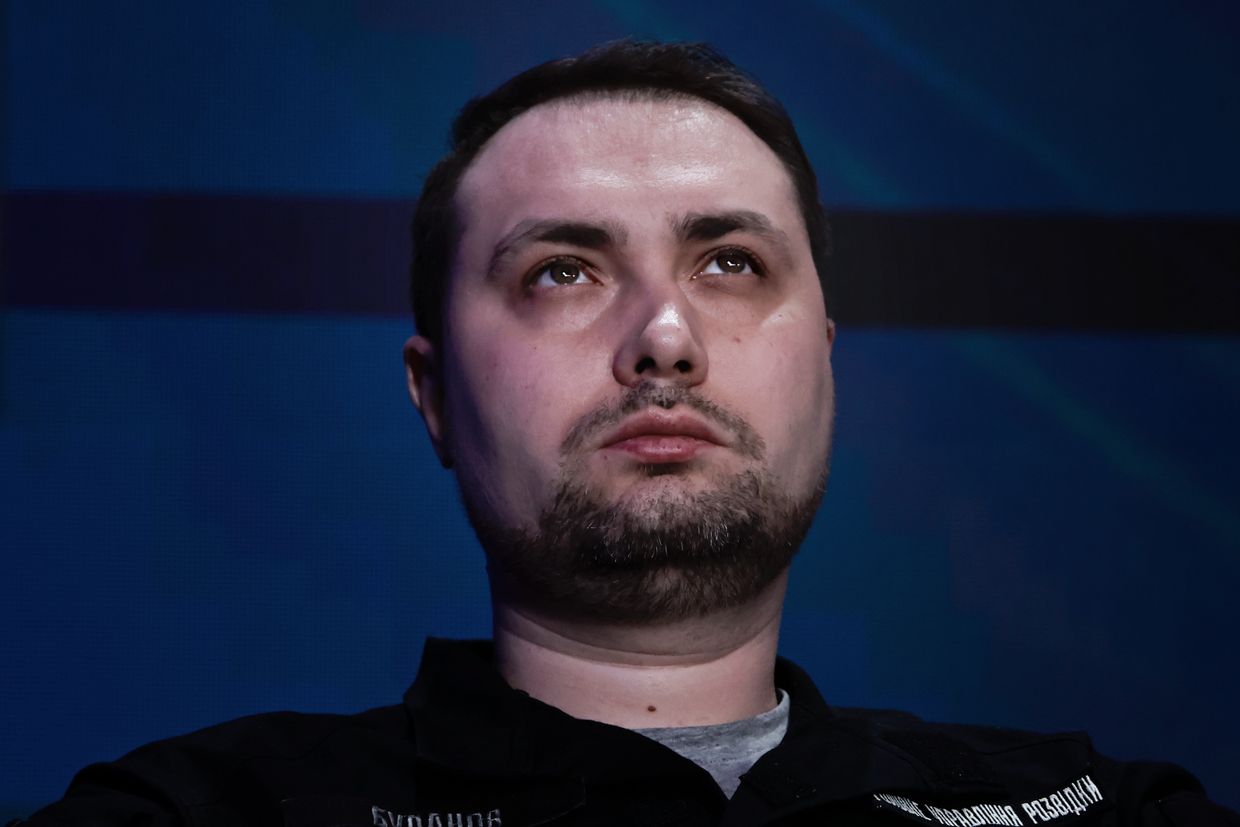
Russia has the capacity to launch as many as 500 Iranian-designed Shahed attack drones at Ukraine in a single attack, but doing so on a daily basis is not possible, Ukraine's military intelligence chief Kyrylo Budanov said on July 2, according to Suspilne.
In recent weeks, Russia has intensified its drone assaults on Ukrainian cities, often launching hundreds in a single day. The largest aerial attack since the start of the full-scale invasion occurred overnight on June 29, when Moscow launched 477 drones and 60 missiles across Ukraine.
"Launching 450–500 Shaheds every day — it's just not realistic," said Budanov during a ceremony recognizing five Ukrainian intelligence achievements in the national record book, according to public broadcaster Suspilne.
"But unfortunately, they do have the ability to do it periodically. They can realistically launch up to 500 in one strike," Budanov added.
Budanov also said Russia is upgrading the capabilities of the Shahed-type drones by improving their CRPA (Controlled Reception Pattern Antenna) systems, which protect the drones from GPS jamming. He noted that Russian engineers are now producing 16-channel CRPA antennas, which are harder to counter electronically.
Russian drones launched against Ukraine by month (Nizar al-Rifai/The Kyiv Independent)
"These antennas are currently produced in Russia, but the engineer who developed this CRPA antenna was here in Ukraine," Budanov said.
"Back in the early 2000s, no one here needed it, so the engineer moved to Russia. One (of the two engineers involved in the development) has already died under unclear circumstances. The other is still alive, though probably not for long."
Russia has used thousands of Shahed-type drones throughout its full-scale invasion to strike Ukrainian cities and infrastructure, often in large overnight waves. Ukrainian air defenses have adapted over time but face growing challenges as Moscow improves drone resilience and electronic warfare capabilities.
President Volodymyr Zelensky said that Moscow has launched 28,743 Shahed-type drones at Ukraine since the start of Russia's full-scale invasion.
Budanov also said Russia has made unsuccessful attempts to develop its own naval drones. The last known effort came in early June, when experimental models detonated before reaching Ukrainian territorial waters, he said.
"They didn't achieve results. Based on our information, they were heading toward the city of Yuzhne, searching for targets," he said.
Ukraine has been using domestically developed Magura naval drones to target Russian military assets in the Black Sea, keeping much of Russia's fleet pinned in port.
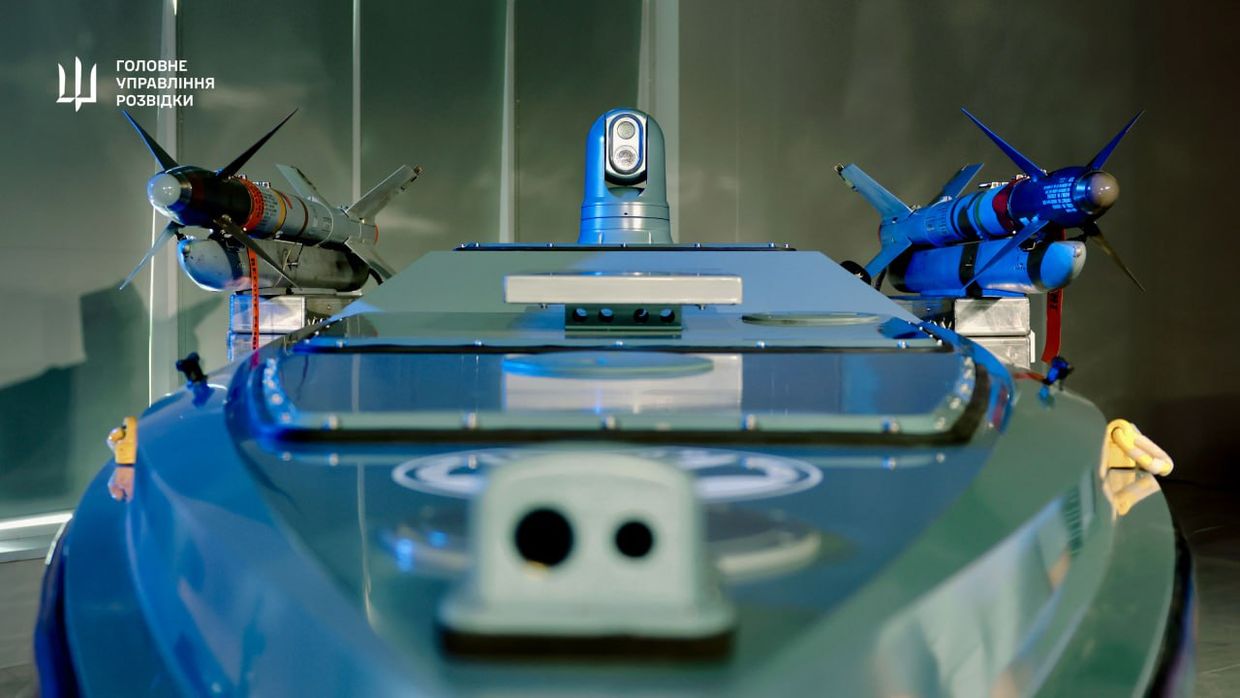
Despite their small size, the unmanned surface vessels have proven effective, including in a May 2 operation when Ukraine's military intelligence used Magura-7 drones armed with air-to-air missiles to shoot down two Russian Su-30 fighter jets near Novorossiysk. It was the first recorded instance of fighter jets being downed by naval drones.
Russian authorities are planning to begin gas extraction from the Sea of Azov, citing Soviet-era geological data and identifying 22 potential offshore fields, including several located near the occupied Ukrainian city of Berdiansk, Ukrainian officials told Suspilne on July 1.
According to the Berdiansk Municipal Military Administration, Russia's Federal Subsoil Resources Agency (Rosnedra) has announced plans to explore and possibly develop gas fields such as the Morske, Pivnichno-Kazantypske, and Skhidno-Kazantypske deposits.
"(Russia) has declared commercial reserves of gas in the Sea of Azov, referring to Soviet archives listing 22 oil and gas structures," Ksenia Kleshchenko, acting head of communications for the Berdiansk administration, told Suspilne.
"These include the Morske field, discovered in 1977 (and still under conservation). It is necessary to conduct further exploration and pilot operation."
Kleshchenko noted that the Pivnichno-Kazantypske and Skhidno-Kazantypske fields were discovered in the late 1990s and early 2000s during Ukraine's independence, but have not been developed. Ukrainian company Chornomornaftogaz had conducted surveys at the Pivnichno-Kazantypske and Strilkove sites before Russia annexed Crimea in 2014 and seized Ukrainian offshore assets.
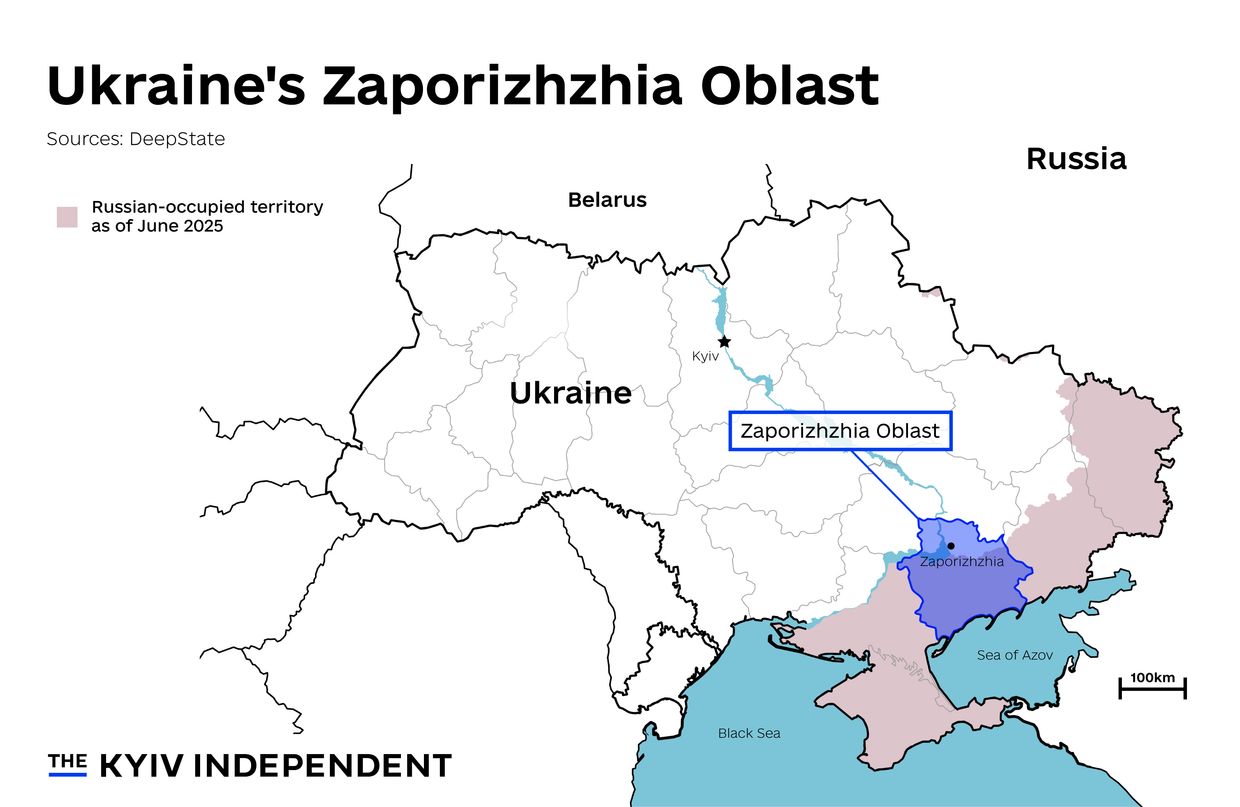
Ukrainian authorities say the Kremlin's interest in mineral resources may have partially motivated the occupation of southern Zaporizhzhia Oblast, including Berdiansk.
Ukraine's Zaporizhzhia Oblast (Nizar al-Rifai/The Kyiv Independent)
"All of the (Russia's) 'plans' are focused on enriching themselves and the Russian Federation, but not on the welfare of the citizens of the occupied territories," the Berdiansk administration said in a statement. "While residents of Berdiansk face constant water and electricity outages, (Russian authorities) are laying grand schemes to exploit the region’s resources."
The administration also warned of potential environmental consequences. Due to the shallow average depth of the Sea of Azov, around 14 meters (about 46 feet), any extraction could cause serious ecological damage. The exploratory work is reportedly planned for 2026–2030.
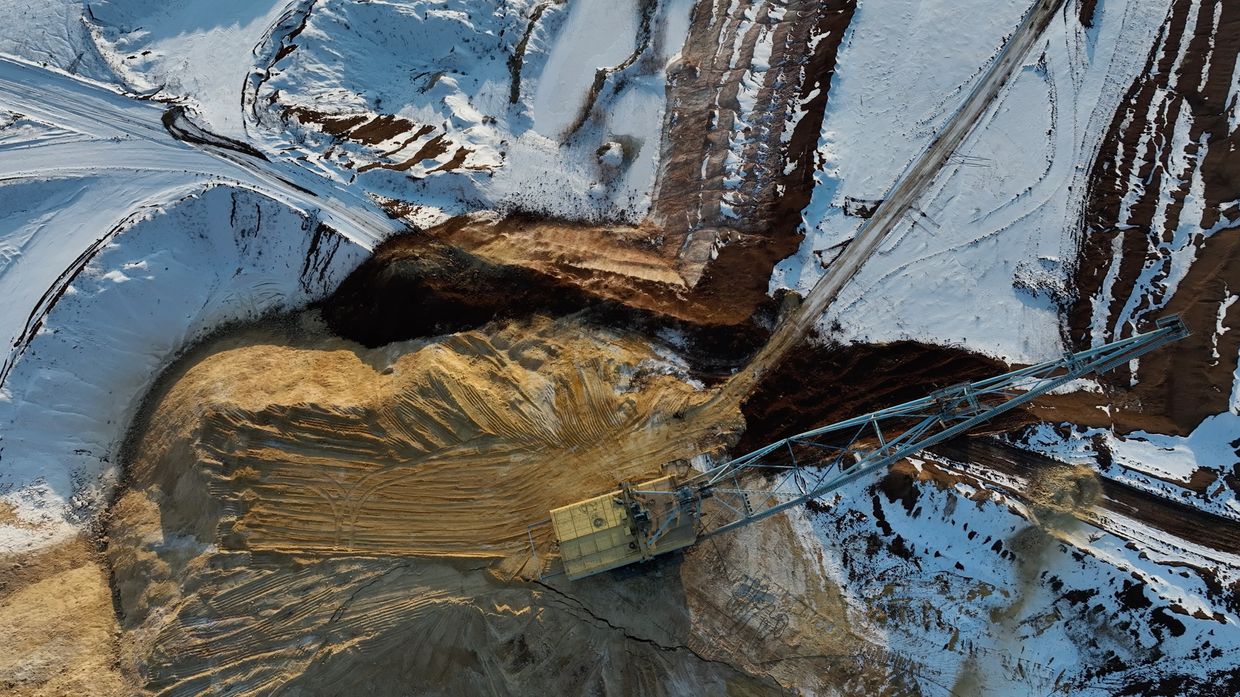
Russia's interest in resource-rich territories extends beyond the Sea of Azov. In June, Russian forces took control of a major lithium deposit near the village of Shevchenko in Donetsk Oblast, one of Ukraine's most valuable sites for the mineral used in electric vehicle batteries.
Ukraine has now lost two of its four known lithium deposits to Russian occupation, including the Kruta Balka deposit in Zaporizhzhia. According to the Kyiv School of Economics, Ukraine holds about one-third of the European Union's lithium reserves.
Ukrainian prosecutors have documented cases of Russian forces summarily executing 273 Ukrainian prisoners of war (POWs), the Liga.net news outlet reported, citing a statement from the Prosecutor General's Office.
Kyiv and the U.N. have raised alarm over the rising number of such cases, saying they point to a systematic policy by Russia to murder Ukrainian captives. Half of the document cases were recorded this year alone.
Seventy-seven criminal cases have been launched in connection with the killings of POWs, while only two people were convicted, and a trial against a third person is ongoing. The statement did not clarify whether the convictions were issued in absentia.
A total of 188 people have been convicted of various war crimes, including 18 captured Russian soldiers and one civilian, who were convicted in person. The rest were convicted in absentia.
Earlier this week, Ombudsman Dmytro Lubinets reported a case of the likely murder of a Ukrainian POW who was apparently tied to a motorcycle by Russian soldiers and dragged along the road.
Ukraine's military intelligence agency (HUR) said in May that it alone had documented more than 150 cases of Ukrainian soldiers being executed after surrendering to Russian forces. Multiple intelligence reports suggest that Russian soldiers have received explicit orders to kill prisoners of war.
The United Nations Independent International Commission of Inquiry on Ukraine confirmed in March growing numbers of incidents in which Russian forces killed or maimed surrendering Ukrainian troops.
A separate Ukrainian investigation is also underway into the killing of around 50 Ukrainian POWs in the Russian-run Olenivka prison in 2022. Kyiv blamed the killings on Russia, saying Moscow's forces deliberately put Azov fighters in a separate building that was later destroyed.
Russia denied responsibility, claiming the explosion was caused by a Ukrainian HIMARS strike—a version U.N. investigators have rejected.
Although Moscow blocked an independent investigation by denying U.N. monitors access, Lubinets recently said that an internal U.N. analysis concluded Russia was to blame.
At least two civilians were killed and 33 were injured in Russian attacks against Ukraine over the past 24 hours, according to local governors.
Ukraine's Air Force said Russia launched 114 Shahed-type and decoy drones overnight from multiple directions, as well as four S-300 missiles. Air defenses shot down 40 drones, while 39 disappeared from radars or were intercepted by electronic warfare.
In Kherson Oblast, Russian forces shelled a hospital in Kherson city late on July 1, injuring eight people, including patients and medical staff, Governor Oleksandr Prokudin said.
Two other people were injured elsewhere in the region over the past day. Attacks damaged residential buildings, a farm, a business, and vehicles across more than 30 settlements.
In Kharkiv Oblast, four people were injured in attacks on Kharkiv city and six other communities, Governor Oleh Syniehubov reported. Russian forces used guided aerial bombs, various drones, and artillery. Civilian infrastructure, including houses, a transport stop, an emergency medical facility, and businesses, was damaged or destroyed.
In Donetsk Oblast, two civilians were killed and 10 others injured by Russian attacks on July 1, according to Governor Vadym Filashkin. In the city of Sloviansk, a mail terminal operated by Nova Poshta, Ukraine’s largest postal service, was destroyed. No employees were injured, according to an official statement.
In Dnipropetrovsk Oblast, five people were injured, four of whom were hospitalized, after a drone strike on Nikopol, Governor Serhii Lysak said.
Russian attacks damaged a private enterprise in Kryvyi Rih and a farm in the Samar district. Fires were reported in both locations. Drone and artillery strikes also hit residential and infrastructure targets in Nikopol and Pokrovske communities.
In Zaporizhzhia Oblast, four civilians were injured in Russian attacks on Vasylivka and Polohy districts, Governor Ivan Fedorov reported. Over the day, Russian forces launched 376 strikes across 14 settlements, using aircraft, drones, multiple rocket launchers, and artillery.
Russian forces likely executed another Ukrainian prisoner of war (POW), Ombudsman Dmytro Lubinets said on July 1, referring to a recent video that appears to show the captive tied to a motorcycle and dragged along a road.
The alleged execution adds to growing evidence that Russian forces are systematically violating the Geneva Conventions by killing Ukrainian captives.
"A video is circulating on social media showing a man being tied to a motorcycle and dragged along the road," Lubinets said in a statement.
"It is a clear act of demonstrative cruelty and yet another war crime by the Russian Federation."
Lubinets said he has sent official letters regarding the suspected war crime to the United Nations and the International Committee of the Red Cross (ICRC).
"Russia is acting as a terrorist state. And it must be held fairly accountable for every crime," he added.
Ukraine's military intelligence agency (HUR) alone reported in May that it had documented more than 150 cases of Ukrainian soldiers being executed after surrendering to Russian forces. Officials noted that these were only the confirmed incidents, and the real number is likely higher.
HUR and other agencies say such executions are not isolated but part of a broader, deliberate policy directed by Russia's military leadership. Multiple intelligence reports suggest that Russian soldiers have received explicit orders to kill prisoners of war.
The United Nations Independent International Commission of Inquiry on Ukraine confirmed in March growing numbers of incidents in which Russian forces killed or maimed surrendering Ukrainian troops.
The commission cited testimony from Russian deserters who said they were instructed not to take prisoners but to shoot them on sight.
Earlier this year, the U.N. Human Rights Monitoring Mission in Ukraine reported a sharp increase in POW executions, documenting 79 killings across 24 incidents since August 2024. In many cases, the victims were unarmed or wounded, and some were killed in groups.
Russia has lost 1,022,090 troops in Ukraine since the beginning of its full-scale invasion on Feb. 24, 2022, the General Staff of Ukraine's Armed Forces reported on July 2.
The number includes 1,110 casualties that Russian forces suffered just over the past day.
According to the report, Russia has also lost 10,985 tanks, 22,931 armored fighting vehicles, 53,786 vehicles and fuel tanks, 29,794 artillery systems, 1,427 multiple launch rocket systems, 1,191 air defense systems, 420 airplanes, 340 helicopters, 43,013 drones, 3,436 cruise missiles, 28 ships and boats, and one submarine.
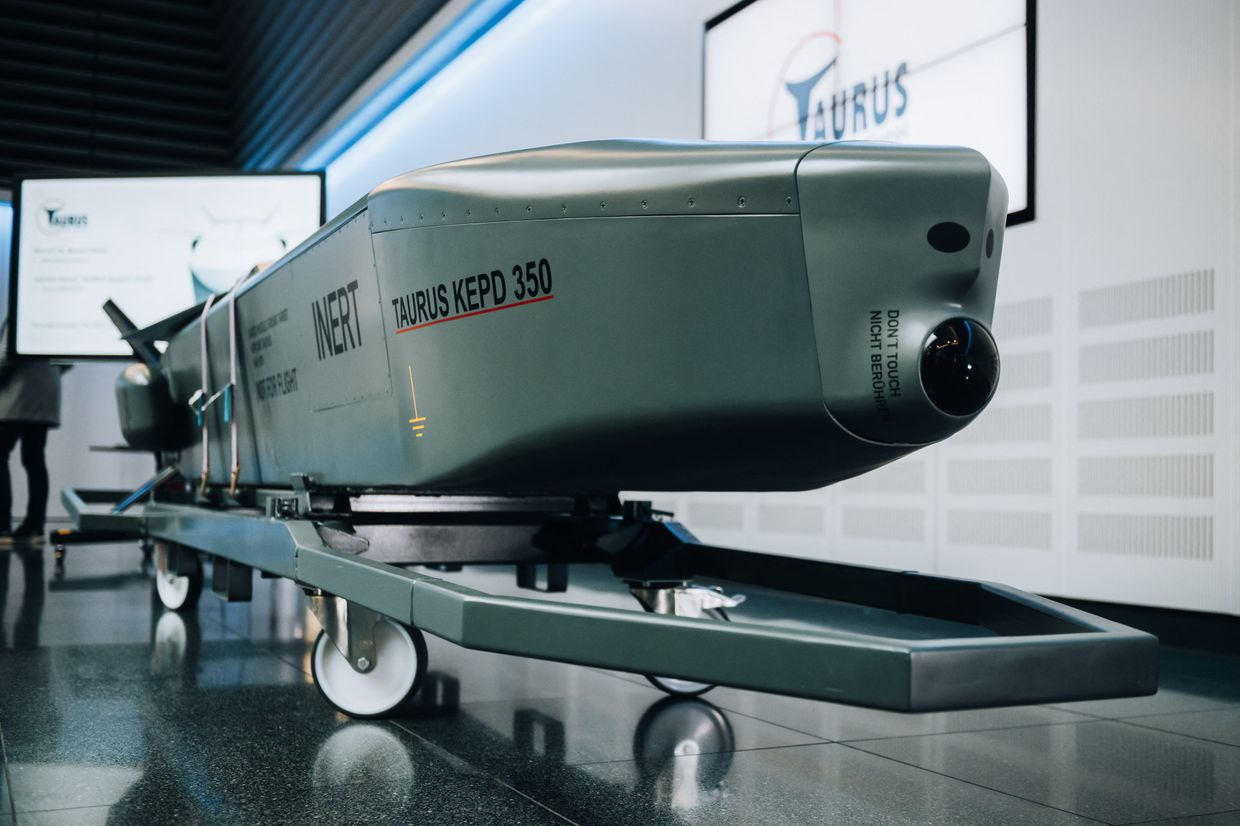
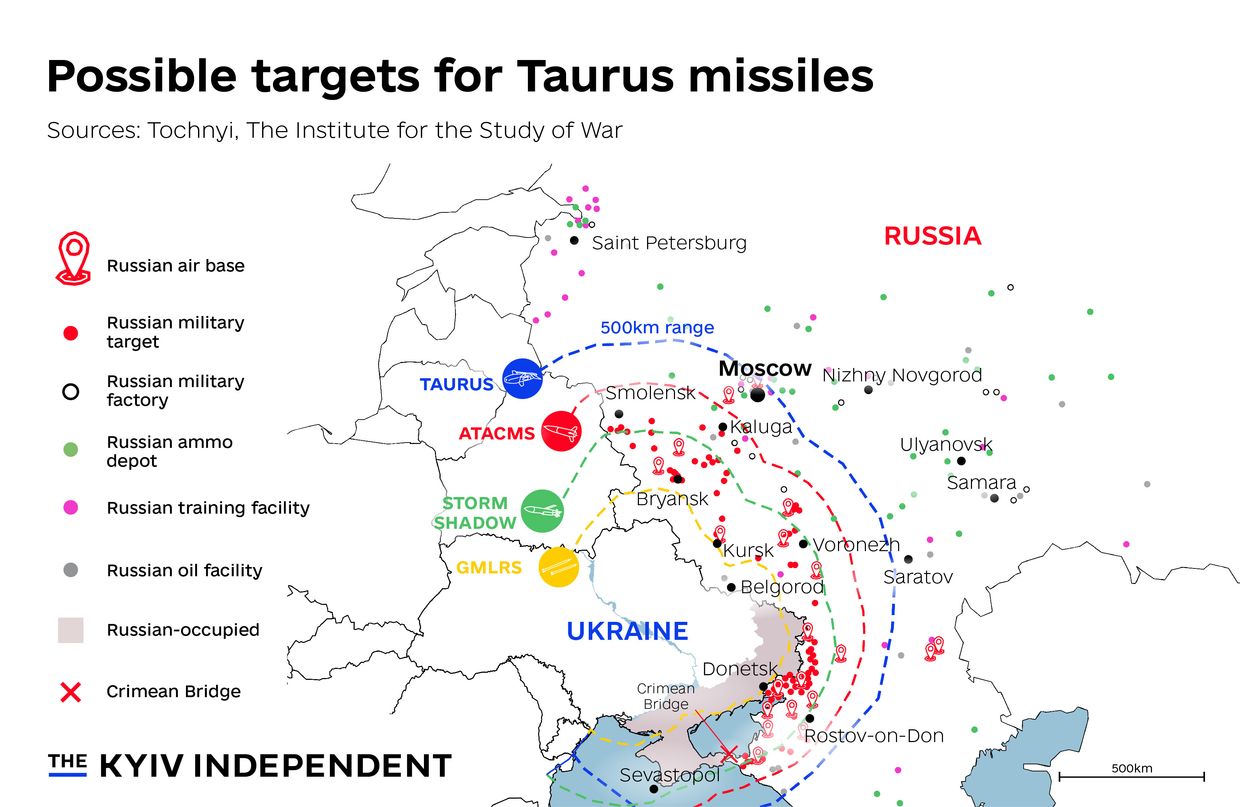
German Chancellor Friedrich Merz said on July 1 that the decision to supply Taurus cruise missiles to Ukraine remains under consideration but stressed that Germany will not become a party to the war.
"It has always been clear that if we supply the Taurus, this weapon will be used not by German soldiers, but by Ukrainians," Merz told Tagesschau. "By the way, the same applies to other cruise missiles supplied by the United Kingdom or France."
The Taurus is a powerful cruise missile capable of striking targets at a distance of 500 kilometers (300 miles) — a greater range than the long-range weapons Ukraine has received from other partners.
Speaking to the outlet, Merz highlighted the complexity of the Taurus system, noting that it requires extensive training before Ukrainian forces can operate it. In terms of range, speed, and payload, the Taurus missile is similar to the Storm Shadow, which is produced by MBDA’s French division. The key difference lies in the warhead design — Taurus can be programmed to detonate after penetrating fortified targets, such as bunkers or reinforced facilities.
Possible targets for Taurus missiles. (Nizar al-Rifal/The Kyiv Independent)
“The problem for us is that this system is extremely complex, and training soldiers on it takes at least six months. Are they already being trained? We haven't agreed on that yet,” he said. “I discussed this with President (Volodymyr) Zelensky, and I also raised it within the coalition. We haven’t started yet. It is and remains an option.”
The chancellor also added that Germany would no longer publicly disclose details about its military support to Ukraine in order to prevent Moscow from assessing the full scope of Western assistance.
Since Russia launched its full-scale invasion of Ukraine in February 2022, Germany has provided Kyiv with approximately 47.8 billion euros (about $51.8 billion) in total bilateral support, making it Ukraine’s second-largest country donor. This aid includes military equipment, humanitarian assistance, support for refugees, infrastructure repair, and financial aid for energy and winter relief, with military support alone totaling around 28 billion euros ($30 billion).
Ukrainian drones struck the Saratovorgsintez oil refinery in Russia's Saratov Oblast, causing damage to the facility, Ukraine's General Staff reported on July 1.
"An important facility has been hit," the General Staff said via its official Telegram channel.
The Saratovorgsintez refinery and chemical plant, owned by Russian energy giant Lukoil, is located nearly 1,500 kilometers (930 miles) from Ukraine's border in the city of Saratov. The city hosts multiple strategic military and industrial sites.
The refinery was targeted to "reduce the enemy's offensive capabilities," the General Staff wrote.
"The occupiers use the capacity of this refinery to supply fuel and lubricants to Russian military units involved in the armed aggression against Ukraine."
The attack was a joint operation carried out by Ukraine's military intelligence agency (HUR) and other military units, the General Staff said. A fire broke out at the site of the attack and damage to the refinery's technological installations has been confirmed. The full consequences of the strike are still being investigated.
The Kyiv Independent could not verify these claims.
The report is the latest in a series of announcements on July 1 about successful Ukrainian strikes on Russian targets. Earlier in the day, HUR released footage of Ukraine's UJ-26 drones, commonly known as Bober (Beavers), targeting high-value Russian air defenses and a fighter jet in occupied Crimea.
A source in the Security Service of Ukraine (SBU) told the Kyiv Independent that Ukrainian drones struck a major Russian military plant in the city of Izhevsk, over 1,300 kilometers (800 miles) from the front lines.
Ukraine also hit a Russian command post in occupied Donetsk Oblast, according to the General Staff.
A Russian missile attack killed the commander of the 110th Separate Mechanized Brigade, Serhii Zakharevych, and injured 30 people in Huliaipole in Dnipropetrovsk Oblast on July 1, President Volodymyr Zelensky said in his evening address.
The Russian army struck the Kamianske district, where the village of Huliaipole is located, in the morning on July 1, Governor Serhii Lysak reported.
Huliaipole, with a pre-war population of around 1,200, lies in the western part of Dnipropetrovsk Oblast, roughly 70 kilometers (40 miles) from the front line.
Ukraine's Dnipropetrovsk Oblast (Nizar al-Rifai/The Kyiv Independent)
"We will definitely respond to the Russians for this attack," Zelensky said, adding that the investigation into the Russian attack is currently underway and he is waiting for a report from the military command.
Zakharevych graduated from the Odesa Institute of the Ground Forces. After graduation, he led a platoon in a reconnaissance company of the 30th Separate Mechanized Brigade and the 1st Tank Brigade.
In February 2025, he was appointed commander of the 110th Separate Mechanized Brigade. Prior to that, he served as deputy commander of the 33rd Mechanized Brigade.
Zakharevych was involved in preparing three qualification courses for the Ukrainian Special Forces and headed the 47th Special Forces detachment. He participated in multiple combat missions at the front.
"Our army has lost another representative of a new generation of Ukrainian officers who grew up in combat and became models of courage and proactive military leadership," the General Staff's statement read.
Ukraine struck a command post of the 8th Combined Arms Army of the Russian Armed Forces in the Russian-occupied part of Donetsk Oblast, Ukraine's General Staff reported on July 1, a day after the attack.
On the evening of June 30, explosions were heard in the Russian-occupied Donetsk, the Russian Telegram channel Shot reported. According to residents, several fires were spotted in different parts of the city.
The attack has significantly hampered Russia's ability to plan and conduct operations in the Pokrovsk and Toretsk areas of the front line, the General Staff's statement read.
Russian losses are still being determined.
Ukraine's military regularly strikes military targets in Russian-occupied territories and deep within Russia in an attempt to diminish Moscow's fighting power as it continues its war against Ukraine.
Russia has for months focused its offensive efforts on the embattled town of Pokrovsk in Donetsk Oblast and has recently been escalating attempts to break through to neighboring Dnipropetrovsk Oblast, a region that has not yet seen combat.
Ukraine denied reports that Russian forces breached the regional border in May and June.
Editor's note: The story was updated as the President's Office confirmed that following the call with Vladimir Putin, Emmanuel Macron also called Volodymyr Zelensky.
French President Emmanuel Macron and his Russian counterpart Vladimir Putin held a call on July 1 for the first time since 2022, discussing Russia's war against Ukraine and the conflict in the Middle East, the Kremlin's press service reported.
The conversation between the two leaders took place as the Russian army continues to advance along the front line, trying to gain a foothold in Sumy Oblast and enter Dnipropetrovsk Oblast.
Moscow has repeatedly rejected the U.S.-backed ceasefire proposal, stalling peace talks with Ukraine.
Following the call with Putin, Macron also called Zelensky to discuss his conversation with the Russian president, a source in the President's Office told the Kyiv Independent.
The call between Zelensky and Macron was "constructive," the source added. Putin's position remained unchanged: he does not show any willingness to end the war in Ukraine, according to the source.
The call between Putin and Macron lasted over two hours, BFM TV reported, citing the Elysee Palace.
During the conversation with Macron, Putin called Russian war "a direct consequence of the policy of Western powers" that "ignored Russia's security interests, created an anti-Russian bridgehead in Ukraine," the Kremlin said.
Macron, in turn, noted France's unwavering support for Ukraine's sovereignty and territorial integrity, Suspilne reported, citing the Elysee Palace.
The French president also called for "a ceasefire to be established as soon as possible and for negotiations to begin."
The leaders will continue to discuss Russia's war in Ukraine, according to the Elysee Palace.
The presidents also discussed the situation in the Middle East regarding the Iranian-Israeli conflict and the U.S. strikes on Iranian nuclear facilities.
Macron frequently called Putin in the first year of Russia's full-scale invasion of Ukraine. Their previous call took place in September 2022.
Ukraine boosted electricity exports by 150% in June 2025 compared to the previous month, reaching over 237,000 megawatt-hours (MWh), according to consulting firm ExPro Electricity.
This marks Ukraine's return to exporting more electricity than it imports for the first time since October 2023, ExPro analysis reports.
Electricity cannot be stored in large volumes for long periods, so it can be exported during certain hours when there is surplus in Ukraine’s energy system, and imported during deficit hours.
Hungary imported the majority of Ukrainian exports, with shipments jumping from 34,000 to 122,000 MWh in a single month.
The recovery represents a dramatic turnaround from June 2024, when Ukraine had no exports at all and imported 858,000 MWh, four times more than in June 2025.
Russia continues to target Ukraine's energy infrastructure, with the latest strike hitting a critical energy facility in Kherson Oblast on June 27 that caused widespread blackouts across multiple communities.
Governor Oleksandr Prokudin warned residents to prepare for prolonged outages as power engineers work to restore electricity, saying "Russia decided to plunge Kherson Oblast into darkness."
In February 2025, Emergency energy power shutdowns were introduced in eight Ukrainian oblasts due to Russian attacks on the country's energy system.
The Russian army attacked an evacuation vehicle carrying three wounded civilians, which resulted in the death of one of them, Ukraine's National Police reported on July 1.
Russia has for months focused its offensive efforts on the embattled town of Pokrovsk in Donetsk Oblast and has recently been escalating attempts to break through to neighboring Dnipropetrovsk Oblast, a region that has not yet seen combat.
According to the police, Russian forces attacked the evacuation vehicles provided by chaplains three times: at the entrance to the city, in the city center, and during the evacuation of civilians from Pokrovsk. The police called Russia's actions "targeted hunting."
The police picked up one injured person in the city, and the other two — on the way to the hospital. In the meantime, the Russian army hit the car with a Molniya drone. As a result of the attack, one of the police officers was injured.
As the evacuation vehicle came under fire, one of the injured could not be brought to the hospital in time and died of blood loss.
"We called for reinforcements and sent the injured civilian with them, hoping for a miracle. But it did not happen, Russia took another life," Hennadii Yudin, head of the "White Angel" police unit, said.
Another injured man, who was evacuated with a shrapnel wound, is undergoing treatment, the police said.
Commander-in-Chief Oleksandr Syrskyi reported on June 27 that Russia has amassed "about 111,000 personnel" in the Pokrovsk sector, but Ukrainian forces are holding the line.
Russia's so-called "peace memorandum" demands that Ukraine recognize Russia's annexation of Crimea, as well as Kherson, Donetsk, Zaporizhzhia, and Luhansk oblasts — none of which are fully under Moscow's control.
Editor's note: The story was updated with information about the death of one of the pilots who was operating the plane.
A Russian Air Force Su-34 fighter jet crashed during a training exercise in Nizhny Novgorod Oblast, Russian state media Ria Novosti reported on July 1, citing Russia's Defense Ministry.
One of the pilots died due to sustained injuries, Russian media outlet Mash reported later in the day. After ejecting, he landed on a tree. Medics could not save him, according to Mash.
One of the landing gear struts was not released during landing. The crew made several attempts to fix the malfunction in flight, but it did not help.
The crew successfully ejected from the plane, and there were no casualties, according to the ministry.
The Russian Su-34 is a Soviet-era medium-range fighter-bomber.
Plane and helicopter crashes have become more commonplace in Russia since the beginning of the full-scale invasion of Ukraine and the subsequent imposition of Western sanctions.
According to the U.K. intelligence, Russia has lost over 30 Su-34 aircraft since the start of the full-scale invasion in 2022.
Moscow does not comment on its losses it faces inn its war against Ukraine.
President Volodymyr Zelensky said on July 1 that he had signed the ratification documents establishing the Special Tribunal for the Crime of Aggression against Ukraine, marking a major step toward prosecuting Russia's leadership.
Ukraine and the Council of Europe signed the agreement establishing the Special Tribunal on June 25 during a ceremony in Strasbourg. Zelensky and Council of Europe Secretary General Alain Berset signed it after more than three years of advocacy and diplomacy.
"The agreement must now be swiftly ratified so that the process of creating the tribunal can begin," Zelensky said in a statement. He also instructed Ukraine's government to urgently submit necessary legislative changes to parliament to ensure Kyiv's full implementation of the agreement.
"I ask members of parliament to treat this as an immediate priority," Zelensky added, urging lawmakers to pass the needed legislation without delay.
The tribunal, once established, would specifically target Russia's top political and military leadership for the crime of aggression, defined as the illegal use of force by one state against another, which existing international bodies, like the International Criminal Court (ICC), are not able to prosecute due to jurisdictional limitations.
Zelensky also called on the Foreign Ministry and the Presidential Office to finalize a roadmap with international partners for the tribunal's launch.
"Already this year, Russia must begin to feel that accountability for the crime of aggression is inevitable," he said. "Aggression is a crime, and Russia's truly inevitable punishment for this crime is in the global interest of everyone in the world who wants their people to live in peace."
Speaking at the Parliamentary Assembly of the Council of Europe (PACE) on June 25, Zelensky thanked the body for championing the idea from its inception and pushing forward international accountability for Russia's invasion.
"It was here in this assembly, that the first call for such a tribunal was made," Zelensky said. "The idea was born here – and now it’s gaining real support from partner countries in Europe and beyond."
The tribunal is designed to close a legal gap that currently prevents the ICC from prosecuting Russia for the crime of aggression, although the court has issued arrest warrants for Russian President Vladimir Putin and Russian children's rights commissioner Maria Lvova-Belova in connection with the deportation of Ukrainian children.
Alongside the tribunal, the Council of Europe has also helped establish the Register of Damage, which has received over 34,000 claims from Ukrainians documenting losses and harms caused by the war.
Zelensky has repeatedly stressed the need for full justice and has called for the prosecution of all Russian officials responsible for planning and executing the war.
Ukraine's military intelligence agency (HUR) released on July 1 video footage showing domestically produced drones striking multiple Russian air defense assets and a fighter jet in occupied Crimea in what it described as a successful special operation.
The undated footage shows the combat use of UJ-26 drones, commonly known as Bober (Beavers), targeting high-value Russian military systems.
"These reliable weapons in the hands of HUR special forces are turning critically important Russian targets into useless scrap," the agency said in a statement.
HUR added that the Bober drones are effectively "gnawing through" Russia's expensive air defense systems "like barberries."
0:00
/
A Ukrainian drone targets and destroys Russian military assets in occupied Crimea, according to Ukraine's military intelligence agency. (HUR / Telegram).
The released footage shows that the strikes destroyed or severely damaged several Russian military assets, including a Pantsir-S1 air defense system and its crew, a Niobium-SV radar, a Pechora-3 coastal radar, a Protivnik-GE radar, and a Su-30 fighter jet stationed at the Saky airfield in occupied Crimea.
The Kyiv Independent could not verify HUR's claims.
The strikes are part of Ukraine's ongoing efforts to degrade Russian military capabilities in Crimea, which has been under Russian occupation since 2014. Moscow reported Ukrainian drone strikes against the peninsula earlier on July 1, with the Crimean Wind Telegram channel reporting attacks in the vicinity of S-300/S-400 air defense systems.
Ukraine has increasingly deployed new drone systems to target Russian military assets on the front line and deep inside the Russian rear.
Ukraine's Autonomous Republic of Crimea. (Nizar al-Rifai/The Kyiv Independent)
Commander-in-Chief Oleksandr Syrskyi said on July 1 that he had ordered a ban on the concentration of troops and equipment at training facilities to better protect against Russian missile attacks.
"My categorical order is to ensure and increase the safety of service members at training centers and training grounds," Syrskyi said on social media after listening to reports on the implementation of safety measures.
"The concentration of personnel and military equipment, as well as the placement of service members in tent camps, is prohibited!"
The command follows a string of Russian missile attacks against Ukrainian military training facilities that have resulted in a number of killed and injured service members.
Deadly strikes deep inside the Ukrainian rear have sparked a public backlash and increased scrutiny aimed at the military command.
Former Ground Forces Commander Mykhailo Drapatyi promised to address the issue, but resigned after another attack against a shooting range in Sumy Oblast on May 20, which killed six soldiers and injured a dozen more.
Syrskyi said that new shelters and protective structures are being constructed at training facilities.
"I emphasized the mandatory compliance with shelter requirements at training centers and ranges, as well as the proper and timely notification of air raid alerts."
In a most recently reported case, a Russian missile attack killed three soldiers and injured 14 at the training ground of a Ukrainian mechanized brigade on June 22.
North Korean leader Kim Jong Un has publicly honored his country's soldiers killed while fighting in Russia's war against Ukraine, in a rare acknowledgment by Pyongyang of its battlefield losses, the Guardian reported on July 1.
South Korea estimates that North Korea has sent around 15,000 troops to support Russia, suffering approximately 4,700 casualties, including 600 deaths. More deployments are expected as early as July or August, South Korea's National Intelligence Service (NIS) said.
Photographs of Kim resting his hands on flag-draped coffins were displayed during a gala concert in Pyongyang on June 30 to commemorate the first anniversary of a military treaty signed between North Korea and Russia.
Russian President Vladimir Putin and Kim signed the Comprehensive Strategic Partnership Agreement in Pyongyang in June 2024. Under the treaty, the two countries pledged to provide aid to one another if either is attacked.
The images of the concert showed at least six coffins and emotional scenes of Kim alongside top officials, including his sister Kim Yo Jong and Foreign Minister Choe Son Hui, all dressed in winter clothing, suggesting the repatriation may have taken place months ago.
The event at East Pyongyang Grand Theatre included performances by North Korean and visiting Russian artists and displayed images celebrating the alliance, including scenes of soldiers from both countries waving flags and purported pages from a blood-stained notebook said to belong to a North Korean soldier killed in Russia's Kursk Oblast.
The Guardian reported that the ceremony was the first time North Korean state media had shown footage and photos of fallen troops in a way accessible to the North Korean public.
Footage broadcast on state-run KRT showed Kim appearing emotional at times while seated next to Russian Culture Minister Olga Lyubimova and his daughter, Kim Ju Ae. Audience members were seen wiping away tears.
Kim met with Lyubimova in Pyongyang on June 29 to discuss expanding bilateral cooperation in culture and the arts.
North Korea held a farewell ceremony for soldiers killed in Russia’s Kursk region. State TV aired footage of Kim Jong Un tearfully standing by a coffin — including hired state actors who were forced to cry. A concert in East Pyongyang also featured Russian songs. https://t.co/xV0TkminHspic.twitter.com/WVWSSM5P1Y
North Korea initially denied sending combat troops to Ukraine, but Kim's tribute follows official confirmations of Pyongyang's direct military involvement in the Russia-Ukraine war. In April, both Kim and Putin described North Korean troops deployed to Ukraine as "heroes."
Kim also announced plans to build a monument in Pyongyang to honor the fallen and lay flowers at their tombstones.
Pyongyang has reportedly begun recruiting additional soldiers for future deployments. The move would add to what Seoul describes as significant military support from North Korea, including more than 10 million artillery shells and multiple ballistic missile transfers in exchange for economic and technical assistance from Moscow.
North Korea may also send up to 25,000 laborers to Russia to support drone production, including Shahed-type loitering munitions at the Alabuga Special Economic Zone in Tatarstan.
Russian Security Council Secretary Sergei Shoigu visited North Korea on June 17 under a special directive from Putin and announced a deal for Pyongyang to send 1,000 sappers and 5,000 military engineers to Russia's Kursk Oblast.
Thousands of North Korean troops reportedly participated in front-line operations there, helping Russia repel a Ukrainian cross-border offensive that began in August 2024. Ukrainian forces briefly held 1,300 square kilometers (500 square miles) in Kursk Oblast before losing most of the territory during a Russian counteroffensive in March 2025, reportedly supported by North Korean units.
U.K. defense intelligence places North Korean casualties from that operation at more than 6,000.
Editor's note: This is a developing story and is being updated. The article contains graphic footage.
A Russian missile attack against the village of Huliaipole in Dnipropetrovsk Oblast on July 1 resulted in deaths and injuries, the Southern Defense Forces reported.
"As a result of the strike, a cultural center, two shops, and several private homes were destroyed or damaged," the statement read.
Russia launched two ballistic missiles, likely Iskander-M, against the village at 9:15 a.m. local time, the military reported.
The strike was reported earlier on July 1 by Serhii Lysak, the regional governor. No exact casualty figures have been provided so far, and officials promised detailed information at a later date.
The aftermath of a Russian missile attack against Huliaipole, Dnipropetrovsk Oblast, Ukraine, on July 1, 2025. (Southern Defense Forces/Telegram)
The aftermath of a Russian missile attack against Huliaipole, Dnipropetrovsk Oblast, Ukraine, on July 1, 2025. (Southern Defense Forces/Telegram)
The aftermath of a Russian missile attack against Huliaipole, Dnipropetrovsk Oblast, Ukraine, on July 1, 2025. (Southern Defense Forces/Telegram)
The aftermath of a Russian missile attack against Huliaipole, Dnipropetrovsk Oblast, Ukraine, on July 1, 2025. (Southern Defense Forces/Telegram)
The aftermath of a Russian missile attack against Huliaipole, Dnipropetrovsk Oblast, Ukraine, on July 1, 2025. (Southern Defense Forces/Telegram)
Huliaipole, with a pre-war population of around 1,200, lies in the western part of eastern Dnipropetrovsk Oblast, roughly 70 kilometers (40 miles) from the front line.
"Russia once again confirms its status as a terrorist state. It kills innocent civilians," the military said in a statement.
Dnipropetrovsk Oblast is regularly targeted by Russian drone and missile attacks. Moscow's ground troops have also been attempting to break into the region, though Kyiv has denied Russian claims that they had been successful.
Ukraine's Dnipropetrovsk Oblast (Nizar al-Rifai/The Kyiv Independent)
Russian strikes across Ukrainian regions killed at least four civilians and injured at least 15 over the past day, regional authorities reported on July 1.
Russia launched 47 Shahed-type attack drones and decoys against Ukraine overnight, the Air Force reported. Ukrainian air defenses shot down 14 drones, while 33 were intercepted by electronic warfare or disappeared from radars, according to the statement.
Russian attacks injured three civilians in Donetsk Oblast, Governor Vadym Filashkin reported.
In Kharkiv Oblast, two women aged 60 and 81 were injured during a Russian attack on the Tsykruny village, Governor Oleh Syniehubov reported.
Russian attacks across Kherson Oblast killed two people and injured five, said the regional governor, Oleksandr Prokudin. Three high-rise buildings and eight houses were damaged.
In Mykolaiv Oblast, a 45-year-old man was killed and a 37-year-old woman was injured during Russian shelling of the Kutsurub community on June 30, Governor Vitalii Kim reported. Houses, two schools, and a shop were damaged, and a fire erupted because of the attack.
A 75-year-old man was killed and his 76-year-old wife was injured during another artillery attack against the community on the morning of July 1, Kim said.
Editor's note: This story was updated with information shared by an SBU source.
Ukrainian drones struck a major Russian military plant in the city of Izhevsk, over 1,300 kilometers (800 miles) from the front in Ukraine, a source in the Security Service of Ukraine (SBU) told the Kyiv Independent on July 1.
The SBU source said the agency's long-range drones targeted the Kupol plant in Russia's Udmurt Republic on the morning of July 1. At least two confirmed strikes struck production and storage facilities, starting a fire at the site, according to the source.
The facility produces Tor and Osa air defense systems, as well as Harpy attack drones for the Russian military, and is under international sanctions as part of Russia's defense-industrial complex.
"With surgical precision, the SBU continues to carry out strikes against Russia's military-industrial enterprises contributing to the war effort against Ukraine," the source said.
"Each such operation weakens (Russia's) offensive potential, disrupts weapons production chains, and proves that no part of Russia is a safe zone for its military infrastructure."
Residents of Izhevsk reported explosions early on July 1, while local authorities confirmed a drone strike on a facility in the city. Alexander Brechalov, head of Russia's Udmurt Republic, said emergency services had responded to the attack and that further information would be provided as it became available.
One of the facilities in Izhevsk was targeted by Ukrainian drones — local authorities
“All emergency services have arrived at the scene. I’ll share more details as they come in,” wrote Udmurt Republic head Alexander Brechalov on his Telegram channel.
Brechalov later reported casualties, citing deaths and serious injuries, but did not provide specific figures.
Russia's aviation agency temporarily suspended flights in and out of the city's airport following the incident.
Russian Telegram channels reported that no air raid siren was sounded before the drone attack on the Kupol plant. According to Astra, Izhevsk residents also could not access warnings via Telegram due to mobile internet outages, which locals say have persisted for nearly two weeks.
The city was previously targeted on Nov. 17, 2024, when a drone strike damaged a factory known for producing air defense systems, including Tor missile systems and radar components used by the Russian military. That strike marked the first known Ukrainian drone attack on the region during the full-scale war.
Russia's Defense Ministry said its air defenses shot down 60 Ukrainian drones overnight across several regions, including 17 over occupied Crimea, 16 over the Rostov Oblast, and 11 over the Sea of Azov. Others were reportedly downed over the Kursk, Saratov, Belgorod, Voronezh, and Oryol oblasts, as well as the Black Sea.
In occupied Crimea, local Telegram channels reported explosions near the town of Kurortne on the Kerch Peninsula, where Russian S-300/S-400 surface-to-air missile systems and radar stations are allegedly located. A monitoring group cited NASA satellite data showing a large fire in the area overnight, though there was no official confirmation of any damage to the air defense assets.
Local residents reported explosions between 0:20 a.m. and 0:50 a.m. in the cities of Kerch and Feodosia.
The Kyiv Independent could not independently verify the claims.
Ukraine's defense technology cluster Brave1 has launched the development of anti-drone rifle rounds, significantly increasing the chances of hitting fast-moving aerial targets, the group said in a statement on June 30.
According to Brave1, the ammunition appears similar to standard rounds used in automatic rifles but features a specially designed warhead that increases the likelihood of shooting down FPV (first-person-view) drones or commercial quadcopters such as the DJI Mavic before they strike.
These types of drones are being used extensively on the battlefield by both Ukrainian and Russian forces. The cost-effective FPV drones have proven highly effective in destroying expensive military equipment.
The manufacturer has already codified the new rounds according to NATO standards, Brave1 said. The goal is to supply every infantry soldier with a magazine of specialized ammunition for use in case of aerial threats.
"These rounds that significantly improve the chances of hitting a moving target are a new development by Brave1," Digital Transformation Minister Mykhailo Fedorov said.
"Our common goal is to ensure that every infantryman has a magazine of such ammunition and can equip his rifle with it in case of an air threat."
Ukraine continues to scale up its drone warfare capabilities. The Defense Ministry said on March 10 that it plans to purchase 4.5 million FPV drones in 2025 at a cost exceeding Hr 110 billion ($2.6 billion), with most of the funds allocated through the Defense Procurement Agency.
President Volodymyr Zelensky has set a goal of producing at least 30,000 long-range drones in 2025.
Russia has lost 1,020,980 troops in Ukraine since the beginning of its full-scale invasion on Feb. 24, 2022, the General Staff of Ukraine's Armed Forces reported on July 1.
The number includes 970 casualties that Russian forces suffered just over the past day.
According to the report, Russia has also lost 10,983 tanks, 22,928 armored fighting vehicles, 53,696 vehicles and fuel tanks, 29,754 artillery systems, 1,427 multiple launch rocket systems, 1,190 air defense systems, 420 airplanes, 340 helicopters, 42,940 drones, 3,436 cruise missiles, 28 ships and boats, and one submarine.

 Connexion
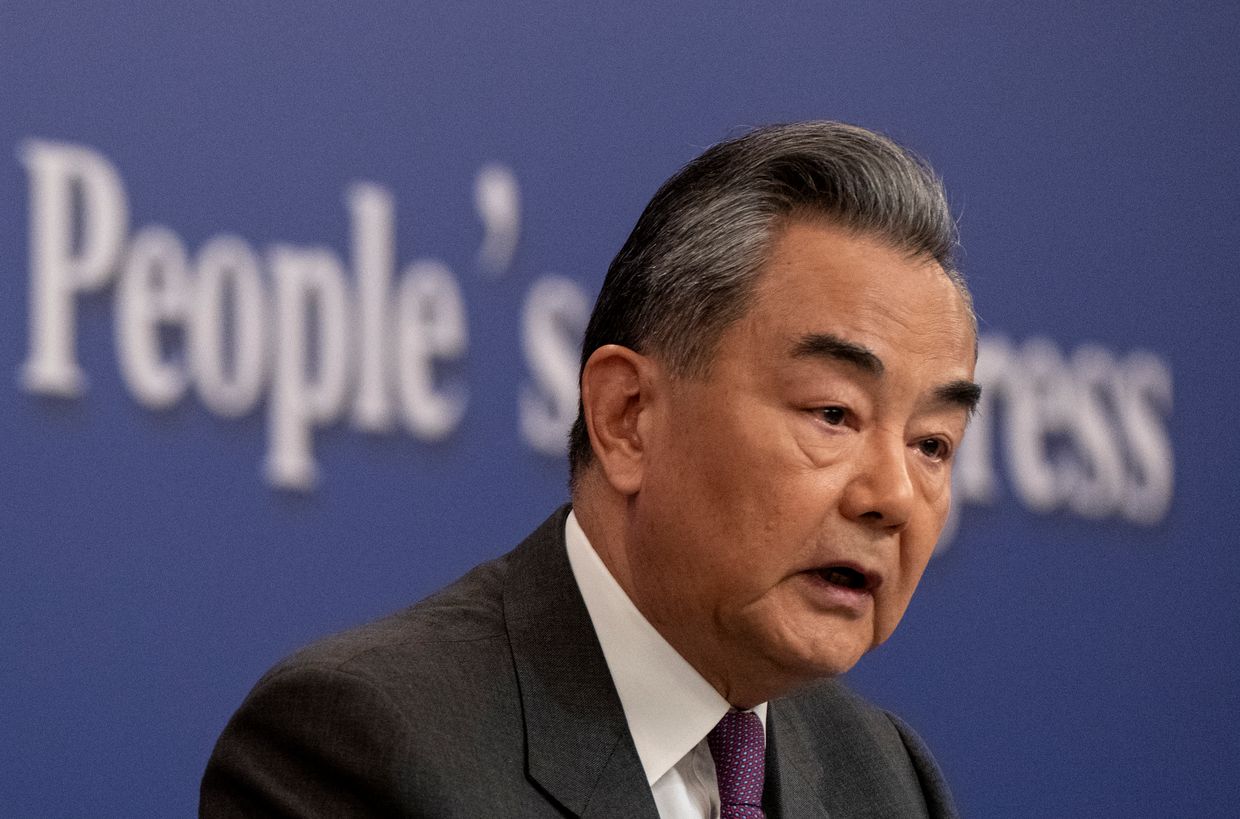
 The Kyiv IndependentDmytro Basmat