Il y a visiblement une profession qui déteste l’IA plus que toute autre, ce sont les assureurs chargés du traitement des sinistres, rapporte Wired. Ils sont les premiers à se plaindre de « dirigeants obsédés par l’IA qui l’imposent, à eux et à leurs clients ». C’est en tout cas ce qu’on apprend d’une étude de Glassdoor sur le ressenti des travailleurs face à l’IA qui a étudié les réflexions des employés sur l’IA issue des avis qu’ils laissent sur leur employeur sur le grand site participatif d’évaluation des environnements de travail. Tout secteur confondu, rapporte l’étude, les mentions de l’IA dans les avis Glassdoor ont augmenté de 240 % entre mai 2025 et mai 2026. Mais si par le passé, les avis mentionnant l’IA étaient majoritairement positifs (81 % d’avis positifs en 2019), cette tendance s’inverse : en 2026, on ne compte plus que 43 % d’avis positifs, 4 % d’avis mitigés et 53 % d’avis négatifs.
L’étude empirique de Glassdoor montre un renforcement de la tension sociale autour de l’IA. Hormis les dirigeants d’entreprises qui demeurent le groupe le plus favorable à l’IA, certains métiers adhèrent à ses avantages, comme les responsables des ventes et des produits, les recruteurs, les architectes logiciels ainsi que les analystes et ingénieurs de données. A l’inverse, d’autres professions y sont majoritairement hostiles, notamment les rédacteurs, les journalistes, les comptables, les agents de service client, les designers et professionnels de l’informatique. Mais les plus hostiles restent les gestionnaires de sinistres : 98 % de leurs commentaires étant négatifs.
Les femmes et la génération Z (nés entre 1997-2012) sont les plus critiques à l’égard de l’IA. Les travailleurs plus âgés ont tendance à avoir une opinion plus positive de l’IA, tandis que les plus jeunes sont plus critiques. Au sein de chaque génération, les hommes sont plus enclins à mentionner l’IA, et les femmes se montrent plus critiques que les hommes à son sujet. Chez les hommes de la génération X (nés entre 1960 et 1980), 50 % des commentaires sur l’IA sont positifs, alors que 42 % des commentaires des femmes de cette même génération sont négatifs. Les différences liées au poste occupé et au secteur d’activité expliquent entièrement cet écart. Les commentaires des hommes de la génération Y (milléniaux, nés entre 1980 et 1997) sont positifs à 44 %, contre 33 % pour les femmes. Les différences de poste et de secteur n’expliquent qu’un quart de cet écart. Les hommes de la génération Z affichent 42 % d’avis positifs, contre 21 % pour les femmes de la même génération ; ici, le poste et le secteur d’activité n’entrent pas en ligne de compte. Cet écart persiste même après ajustements statistiques.
Les commentaires sur l’IA reflètent des opinions tranchées Les mentions de l’IA apparaissent généralement dans des avis Glassdoor très positifs ou très négatifs, en particulier concernant la direction et les perspectives de l’entreprise. Seuls 23 % des auteurs d’avis critiques envers l’IA approuvent le PDG, et 18 % perçoivent des perspectives commerciales positives. À l’inverse, 86 % des auteurs d’avis positifs sur l’IA approuvent le PDG et 81 % envisagent des perspectives commerciales favorables. Les auteurs d’avis positifs sur l’IA sont plus attachés à leur entreprise Les employés ayant cité l’IA comme un point positif sont 47 % moins susceptibles de postuler à d’autres emplois sur Glassdoor. Ceux qui émettent des critiques sur l’IA postulent à d’autres emplois dans des proportions similaires aux employés ne mentionnant pas l’IA. Aucun secteur ni aucune taille d’entreprise ne recueille une majorité de commentaires positifs sur l’IA, mais certains affichent un taux de critique élevé. Les travailleurs du secteur technologique mentionnent l’IA 3,6 fois plus souvent que la moyenne. Les secteurs suivants en termes de fréquence sont les médias et la communication (1,8 fois) ainsi que la gestion et le conseil (1,1 fois le taux de référence). L’IA est la plus populaire dans le secteur juridique, bien que les avis y soient partagés à parts égales (50/50). D’autres secteurs se montrent extrêmement critiques à l’égard de l’IA, notamment les arts (89 % d’avis négatifs), les organisations à but non lucratif (85 %), les assurances (81 %), les télécommunications (80 %) et le transport/la logistique (79 %). Les petites entreprises (200 employés ou moins) ont tendance à susciter davantage de commentaires positifs sur l’IA (50 % d’avis positifs), un chiffre qui tombe à 33 % pour les entreprises de plus de 10 000 employés.
Bon, revenons à nos agents d’assurances. « Nous sommes épuisés par la quantité d’IA qu’on nous impose », témoigne l’un d’eux à Wired. En fait, la profession traverse une crise majeure. Le nombre de postes a baissé de 5% au cours de la dernière décennie et de plus de 21% entre mai 2025 et 2026, et les postes de débutants ont chuté de plus de 50% depuis 2025. Pour le bureau des statistiques du travail américain, cette chute serait liée au déploiement technique. « Des startups spécialisées, commeLiberateouPace, ont levé des millions de dollars en promettant de « réinventer » l’assurance, tandis que les assureurs ont intensifié le recours à l’IA pour traiter un volume croissant de dossiers. Concrètement, cela peut se traduire par un échange avec un chatbot plutôt qu’avec une personne physique pour déclarer un sinistre. Au lieu d’envoyer des agents inspecter une habitation endommagée, des outils d’IA peuvent analyser des photos ou des vidéos pour estimer le montant des indemnisations. L’IA peut également résumer des centaines de pages de dossiers médicaux afin d’en extraire les informations essentielles. Ou bien, l’outil d’IA d’un assureur pourrait traiter les informations transmises par un assuré – photos, vidéos, documents, reçus – puis effectuer un versement, le tout en quelques secondes », comme le propose Lemonade dont le chatbot traiterait 55% de l’ensemble des dossiers de sinistres, laissant à ses employés la gestion des dossiers les plus complexes. Mais les professionnels du secteur ont surtout l’impression d’être remplacés par des modèles d’IA… sans que les clients ne comprennent très bien que les conclusions d’une expertise (et ses erreurs) sont bien plus le fait de robots que d’experts.
Comme le résume l’historien Brian Merchant sur son blog qui s’est également intéressé à l’étude : « les personnes qui décrivent l’IA en termes très positifs occupent, pour la grande majorité, des postes de direction ; ce sont les cadres de niveau directeur ou supérieur qui manifestent le plus d’enthousiasme à son égard. Les responsables des ventes – en somme, les chefs d’équipe commerciale – se montraient également bien plus favorables que défavorables à l’IA, dans une proportion d’environ deux pour un. Les chefs de produit, les recruteurs et les ingénieurs logiciels affichent eux aussi un avis plutôt positif, avant que les opinions ne tendent vers un certain équilibre ». A l’inverse, remarque l’historien, si l’on observe les professions qui décrivent l’IA en termes très négatifs, on voit apparaître une toute autre configuration sociale. Merchant souligne que le basculement des avis négatifs a progressé et qu’il s’affirme à mesure que les entreprises adoptent massivement des solutions d’automatisation basées sur l’IA. Mais, il semble que « plus les travailleurs sont exposés à l’IA, moins ils l’apprécient ». Pour Merchant, « le ressenti vis-à-vis de l’IA au travail dépend probablement du pouvoir dont vous disposez au sein de l’entreprise ». Le rapport à l’IA est distribué selon le pouvoir dont on dispose sur ces outils. L’appréciation est directement liée à la position sociale qu’on occupe.
« Pour percevoir l’IA de manière positive, il faut avoir la main sur les décisions concernant son utilisation (ou non) et disposer d’une marge de manœuvre suffisante pour se sentir protégé contre le risque de remplacement, de surveillance ou de dégradation des conditions de travail ». Les cadres et les patrons ont bien peu de comptes à rendre quant à leur utilisation de l’IA. A l’inverse, les employés, eux, n’ont bien souvent aucune liberté dans leur rapport à l’IA. Pour Brian Merchant, la question de la responsabilité éclaire la différence de perception. C’est pourquoi les emplois d’employés sont bien plus en colère contre l’IA que les cadres. Cela explique que les comptables, les conseillers clientèles ou les informaticiens de base soient mis en difficulté par ces outils, car c’est sur eux que repose la tension de la vérification entre « le patron exige que toute l’entreprise utilise l’IA » et « la moindre erreur est de votre faute et vous en êtes responsable ». Entre ceux qui sont contraints et ceux qui restent libres. La tension entre ceux que ces outils assistent et libèrent et ceux que ces outils contrôlent et limitent, n’est pas tant une différence d’approche de l’IA, qu’une différence sociale entre le haut et le bas du déploiement de l’IA.
Il y a visiblement une profession qui déteste l’IA plus que toute autre, ce sont les assureurs chargés du traitement des sinistres, rapporte Wired. Ils sont les premiers à se plaindre de « dirigeants obsédés par l’IA qui l’imposent, à eux et à leurs clients ». C’est en tout cas ce qu’on apprend d’une étude de Glassdoor sur le ressenti des travailleurs face à l’IA qui a étudié les réflexions des employés sur l’IA issue des avis qu’ils laissent sur leur employeur sur le grand site participatif d’évaluation des environnements de travail. Tout secteur confondu, rapporte l’étude, les mentions de l’IA dans les avis Glassdoor ont augmenté de 240 % entre mai 2025 et mai 2026. Mais si par le passé, les avis mentionnant l’IA étaient majoritairement positifs (81 % d’avis positifs en 2019), cette tendance s’inverse : en 2026, on ne compte plus que 43 % d’avis positifs, 4 % d’avis mitigés et 53 % d’avis négatifs.
L’étude empirique de Glassdoor montre un renforcement de la tension sociale autour de l’IA. Hormis les dirigeants d’entreprises qui demeurent le groupe le plus favorable à l’IA, certains métiers adhèrent à ses avantages, comme les responsables des ventes et des produits, les recruteurs, les architectes logiciels ainsi que les analystes et ingénieurs de données. A l’inverse, d’autres professions y sont majoritairement hostiles, notamment les rédacteurs, les journalistes, les comptables, les agents de service client, les designers et professionnels de l’informatique. Mais les plus hostiles restent les gestionnaires de sinistres : 98 % de leurs commentaires étant négatifs.
Les femmes et la génération Z (nés entre 1997-2012) sont les plus critiques à l’égard de l’IA. Les travailleurs plus âgés ont tendance à avoir une opinion plus positive de l’IA, tandis que les plus jeunes sont plus critiques. Au sein de chaque génération, les hommes sont plus enclins à mentionner l’IA, et les femmes se montrent plus critiques que les hommes à son sujet. Chez les hommes de la génération X (nés entre 1960 et 1980), 50 % des commentaires sur l’IA sont positifs, alors que 42 % des commentaires des femmes de cette même génération sont négatifs. Les différences liées au poste occupé et au secteur d’activité expliquent entièrement cet écart. Les commentaires des hommes de la génération Y (milléniaux, nés entre 1980 et 1997) sont positifs à 44 %, contre 33 % pour les femmes. Les différences de poste et de secteur n’expliquent qu’un quart de cet écart. Les hommes de la génération Z affichent 42 % d’avis positifs, contre 21 % pour les femmes de la même génération ; ici, le poste et le secteur d’activité n’entrent pas en ligne de compte. Cet écart persiste même après ajustements statistiques.
Les commentaires sur l’IA reflètent des opinions tranchées Les mentions de l’IA apparaissent généralement dans des avis Glassdoor très positifs ou très négatifs, en particulier concernant la direction et les perspectives de l’entreprise. Seuls 23 % des auteurs d’avis critiques envers l’IA approuvent le PDG, et 18 % perçoivent des perspectives commerciales positives. À l’inverse, 86 % des auteurs d’avis positifs sur l’IA approuvent le PDG et 81 % envisagent des perspectives commerciales favorables. Les auteurs d’avis positifs sur l’IA sont plus attachés à leur entreprise Les employés ayant cité l’IA comme un point positif sont 47 % moins susceptibles de postuler à d’autres emplois sur Glassdoor. Ceux qui émettent des critiques sur l’IA postulent à d’autres emplois dans des proportions similaires aux employés ne mentionnant pas l’IA. Aucun secteur ni aucune taille d’entreprise ne recueille une majorité de commentaires positifs sur l’IA, mais certains affichent un taux de critique élevé. Les travailleurs du secteur technologique mentionnent l’IA 3,6 fois plus souvent que la moyenne. Les secteurs suivants en termes de fréquence sont les médias et la communication (1,8 fois) ainsi que la gestion et le conseil (1,1 fois le taux de référence). L’IA est la plus populaire dans le secteur juridique, bien que les avis y soient partagés à parts égales (50/50). D’autres secteurs se montrent extrêmement critiques à l’égard de l’IA, notamment les arts (89 % d’avis négatifs), les organisations à but non lucratif (85 %), les assurances (81 %), les télécommunications (80 %) et le transport/la logistique (79 %). Les petites entreprises (200 employés ou moins) ont tendance à susciter davantage de commentaires positifs sur l’IA (50 % d’avis positifs), un chiffre qui tombe à 33 % pour les entreprises de plus de 10 000 employés.
Bon, revenons à nos agents d’assurances. « Nous sommes épuisés par la quantité d’IA qu’on nous impose », témoigne l’un d’eux à Wired. En fait, la profession traverse une crise majeure. Le nombre de postes a baissé de 5% au cours de la dernière décennie et de plus de 21% entre mai 2025 et 2026, et les postes de débutants ont chuté de plus de 50% depuis 2025. Pour le bureau des statistiques du travail américain, cette chute serait liée au déploiement technique. « Des startups spécialisées, commeLiberateouPace, ont levé des millions de dollars en promettant de « réinventer » l’assurance, tandis que les assureurs ont intensifié le recours à l’IA pour traiter un volume croissant de dossiers. Concrètement, cela peut se traduire par un échange avec un chatbot plutôt qu’avec une personne physique pour déclarer un sinistre. Au lieu d’envoyer des agents inspecter une habitation endommagée, des outils d’IA peuvent analyser des photos ou des vidéos pour estimer le montant des indemnisations. L’IA peut également résumer des centaines de pages de dossiers médicaux afin d’en extraire les informations essentielles. Ou bien, l’outil d’IA d’un assureur pourrait traiter les informations transmises par un assuré – photos, vidéos, documents, reçus – puis effectuer un versement, le tout en quelques secondes », comme le propose Lemonade dont le chatbot traiterait 55% de l’ensemble des dossiers de sinistres, laissant à ses employés la gestion des dossiers les plus complexes. Mais les professionnels du secteur ont surtout l’impression d’être remplacés par des modèles d’IA… sans que les clients ne comprennent très bien que les conclusions d’une expertise (et ses erreurs) sont bien plus le fait de robots que d’experts.
Comme le résume l’historien Brian Merchant sur son blog qui s’est également intéressé à l’étude : « les personnes qui décrivent l’IA en termes très positifs occupent, pour la grande majorité, des postes de direction ; ce sont les cadres de niveau directeur ou supérieur qui manifestent le plus d’enthousiasme à son égard. Les responsables des ventes – en somme, les chefs d’équipe commerciale – se montraient également bien plus favorables que défavorables à l’IA, dans une proportion d’environ deux pour un. Les chefs de produit, les recruteurs et les ingénieurs logiciels affichent eux aussi un avis plutôt positif, avant que les opinions ne tendent vers un certain équilibre ». A l’inverse, remarque l’historien, si l’on observe les professions qui décrivent l’IA en termes très négatifs, on voit apparaître une toute autre configuration sociale. Merchant souligne que le basculement des avis négatifs a progressé et qu’il s’affirme à mesure que les entreprises adoptent massivement des solutions d’automatisation basées sur l’IA. Mais, il semble que « plus les travailleurs sont exposés à l’IA, moins ils l’apprécient ». Pour Merchant, « le ressenti vis-à-vis de l’IA au travail dépend probablement du pouvoir dont vous disposez au sein de l’entreprise ». Le rapport à l’IA est distribué selon le pouvoir dont on dispose sur ces outils. L’appréciation est directement liée à la position sociale qu’on occupe.
« Pour percevoir l’IA de manière positive, il faut avoir la main sur les décisions concernant son utilisation (ou non) et disposer d’une marge de manœuvre suffisante pour se sentir protégé contre le risque de remplacement, de surveillance ou de dégradation des conditions de travail ». Les cadres et les patrons ont bien peu de comptes à rendre quant à leur utilisation de l’IA. A l’inverse, les employés, eux, n’ont bien souvent aucune liberté dans leur rapport à l’IA. Pour Brian Merchant, la question de la responsabilité éclaire la différence de perception. C’est pourquoi les emplois d’employés sont bien plus en colère contre l’IA que les cadres. Cela explique que les comptables, les conseillers clientèles ou les informaticiens de base soient mis en difficulté par ces outils, car c’est sur eux que repose la tension de la vérification entre « le patron exige que toute l’entreprise utilise l’IA » et « la moindre erreur est de votre faute et vous en êtes responsable ». Entre ceux qui sont contraints et ceux qui restent libres. La tension entre ceux que ces outils assistent et libèrent et ceux que ces outils contrôlent et limitent, n’est pas tant une différence d’approche de l’IA, qu’une différence sociale entre le haut et le bas du déploiement de l’IA.
A federal appeals court sided with Republicans seeking to use district boundaries redrawn last year to give the G.O.P. an advantage in the upcoming midterms.
The Supreme Court has twice cleared a path for Missouri to hold its general election under an older map that would likely help Democrats retain both of their congressional seats in the state.
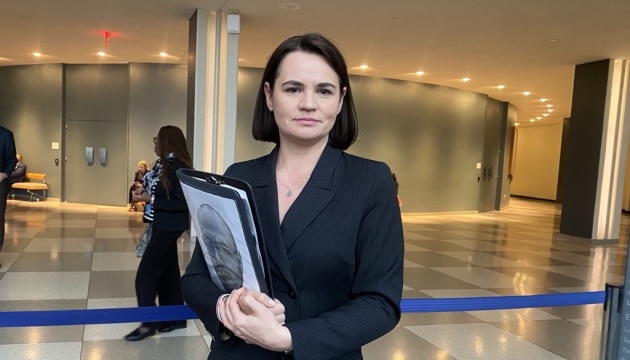
Belarusian opposition leader Sviatlana Tsikhanouskaya considers the threat of increased Russian provocations against Ukraine from Belarusian territory to be real.
Un résidant de Montréal a été arrêté la fin de semaine dernière en lien avec l’assassinat du président haïtien Jovenel Moïse, survenu en 2021. Ashkard Pierre, un ancien employé du consulat d’Haïti à Montréal, a été surpris par la Gendarmerie royale du Canada (GRC) lors d’une délicate opération menée dans l’arrondissement de Mercier–Hochelaga-Maisonneuve en coordination avec le FBI américain.
At 2:30 in the morning of 14 September, one week after he first claimed his innocence and then resigned, Ukraine's prosecutor general Ruslan Kravchenko crossed the border and left the country. Hours before he went, he used his office to sign a criminal suspicion against the chief of the anti-corruption bureau investigating him. His wife had crossed a day earlier.
Such was the unglorious fate of President Zelenskyy's man, the prosecutor general who in July 2025 nearly leashed Ukraine's independent anti-corruption agencies. Saved by mass street protests, the anti-graft institutions built after the Euromaidan revolution rebounded, and went first after President Zelenskyy's friend Tymur Mindich, then after his right hand Andriy Yermak.
And now they had reached the prosecutor general himself: in Ukraine, the one official who can veto any anti-corruption case against a member of parliament.
"For the first time in Ukraine, after a suspicion was announced, it was the prosecutor who fled abroad, not the suspect," anti-corruption campaigner Daria Kaleniuk wrote as it happened.
Victor Pshonka, the prosecutor general who helped Yanukovych consolidate authoritarian power (left) and ex-President Viktor Yanukovych. Photo from open sources
Things are, of course, far better than in 2014, when then Prosecutor General Pshonka criminalized the Euromaidan revolution and pursued the political rivals of then President Yanukovych, before both fled to Russia. Papers later found in Pshonka's abandoned mansion, published by Ukrainska Pravda, showed his office drawing up plans to arrest MPs and open thousands of criminal cases against Maidan activists, using prosecution, in the office's own notes, as a political instrument.
But things are still not as good as in 2019, the one time the office worked the other way. That year Ukraine's new chief prosecutor, Ruslan Riaboshapka, named fresh suspects in the PrivatBank case, which ran into Ihor Kolomoisky, the oligarch whose television channel had helped put Zelenskyy in office. He also refused to sign charges against Zelenskyy's political opponent Petro Poroshenko, calling them groundless.
Head of president's office Andriy Bohdan (C) presents Ruslan Riaiboshapka (R) as a new Prosecutor General together with previous PG Yuriy Lutsenko. Kyiv, 30 August 2019. Photo: gp.gov.ua
Signature-gathering for Riaboshapka's dismissal began the next day. Parliament removed him in March 2020, and his successor rolled back the reforms he had tried to launch. David Arakhamia, the head of Zelenskyy's parliamentary faction, later named the refusal to charge Poroshenko as the last drop.
It keeps repeating. The official whose job is to hold the powerful to account ends up serving them instead.
Of the prosecutors general who followed Riaboshapka, two left under a cloud.
Andriy Kostin resigned in 2024 after investigators exposed a nationwide market in fake disability certificates used to dodge mobilization, a scheme that reached prosecutors inside his own service. And now Kravchenko, whom Ukraine's anti-corruption agencies had begun investigating over the alleged protection of an international network of fraudulent call centers.
2023: Ukrainian Prosecutor General Andrii Kostin during a meeting with Ukrainian representatives of law enforcement agencies in Kherson Oblast.
It keeps repeating. The official whose job is to hold the powerful to account ends up serving them instead. The problem is structural, and so is the fix: the same mechanism behind Ukraine's working post-Euromaidan reforms. A bill to have independent experts vet candidates for the Prosecutor General exists; it has sat in parliament since June, untouched.
Whether Zelenskyy's Servant of the People party, which holds the Rada majority, will let it move is unclear. What hangs on the answer is whether Ukraine finishes becoming a state of law, or stays a state of protection.
Unlimited power, total political control
Iryna Korzhenkova, parliamentary analyst at Chesno
For the office meant to guarantee that everyone, including those in power, is equal before the law, real powers are necessary. The problem in Ukraine, said Iryna Korzhenkova, a parliamentary analyst at the Chesno movement for political transparency, is that those powers come bundled with total political control.
The president appoints the prosecutor general with the Rada's consent, under a procedure that provides neither transparent selection nor any assessment of competence. He can be dismissed by a simple 226-vote majority. No prosecutor general has served a full term, and the average tenure is under two years.
"The position that is supposed to keep politicians in check works as their insurance policy instead," Korzhenkova told Euromaidan Press.
Capturing the office is a tempting political prize. Under Article 482-2 of the Criminal Procedure Code, only the prosecutor general can register a criminal case against a sitting MP, and only he can approve a search, a wiretap, or a detention against one.
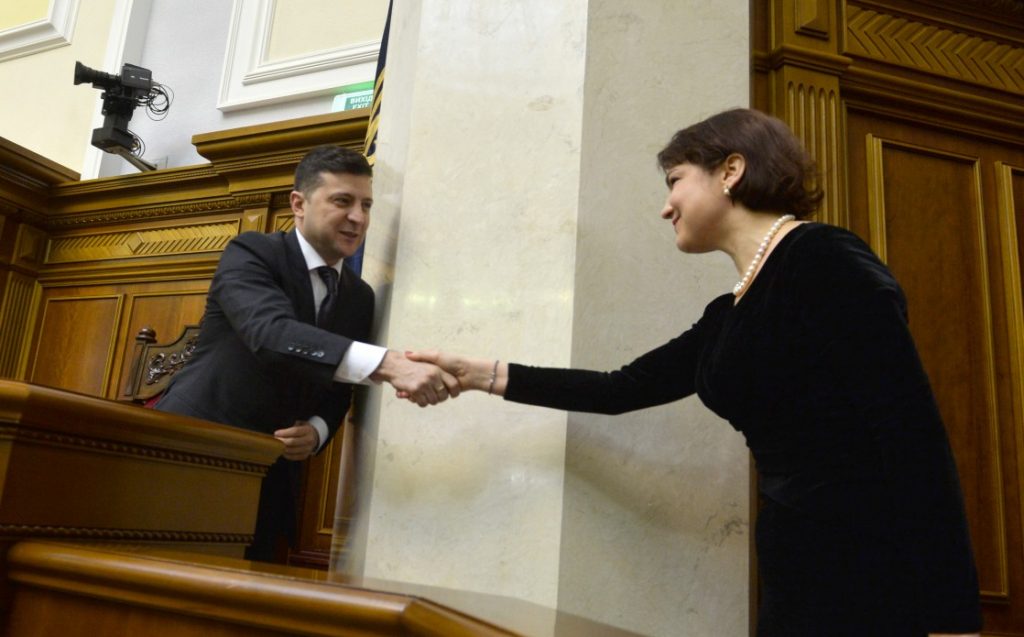
Since MPs lost their formal immunity in 2020, in the same reform that handed the prosecutor general sole power to open cases against them, this has becomea kind of modified immunity: one politically appointed person can decline to open a case, and no court can challenge the refusal. This was the case in 2020, when then Prosecutor General Iryna Venediktovarejected a draft suspicion against an MP handed to her by NABU, reversing only under public pressure.
March 2020: President Zelenskyy shakes hands with Iryna Venediktova, newly appointed Prosecutor General. Photo: president.gov.ua
So valuable is the office that in 2016 parliament stripped out the need for a law degree altogether, to fit the president's man, Poroshenko ally Yuriy Lutsenko; the press called it "the personal law of Lutsenko."
His appointment came as the old guard crushed a reform born on the wings of Euromaidan: a team of reformist prosecutors who had just exposed the "diamond prosecutors," senior officials caught with bags of cash and gems linked to the sitting prosecutor general, was purged, and the case died.
Explore further
How Ukraine’s old guard killed the prosecution reform
A demand the EU has made since 2014
Depoliticizing this chair has been an EU condition for Ukraine's membership path since 2014, and a live one since negotiations on the Fundamentals cluster, the first stage of accession talks and the one covering rule of law, opened in June.
This is why the day that Kravchenko fled, the EU issued a reminder that Ukraine promised to reform the Prosecutor General's Office and introduce a contest for the chair.
"The prosecutor general is the gateway to the criminal justice system for everyone in power," Korzhenkova explained.
Today, that gateway is held by the political majority: appointed by Zelenskyy, dismissable by his Servant of the People party, which controls parliament. Any case against that majority has to pass a filter the majority appoints.
Ukrainian President Volodymyr Zelenskyy, European Commission President Ursula von der Leyen, and European Council President António Costa meet during the informal EU summit in Cyprus, 23 April 2026. Credit: President.gov.ua
The EU's interest in prying the office loose is twofold, she said.
Brussels sends Ukraine money and must be sure that money stolen gets prosecuted;
and it has watched the reform reverse in Poland and Bulgaria, which is why it now wants the guarantees written in before the fact.
The internal price is steeper still: war raises the cost of a dependent prosecution, with defense procurement, mobilization, and aid flows all resting on it.
Europe's own standard, set out by the Council of Europe in its 2014 charter on prosecutors, prescribes no single model. Governments may have a hand in choosing the prosecutor general, so long as the method earns public confidence and the term is stable enough to make the office "independent of political changes."
On dismissal it is blunter: protection from "arbitrary or politically motivated dismissal" is "particularly relevant" for prosecutors general, and the law "should clearly define the conditions of their pre-term dismissal."
Ukraine fails at both ends, and, as Korzhenkova puts it, no version that leaves the president's discretion untouched can meet that standard.
The international expert lifehack
"Hands off NABU and SAPO," says a cardboard poster of a young woman at protests against a law to curb the independence of Ukraine's anti-corruption agencies in Kyiv, late July 2025. Photo: Evgeny Sosnovsky
But how do you clean an office when cronyism runs through the class that appoints it? Ukraine has a partial answer, from the part of its post-Euromaidan reforms that worked.
The directors of the National Anti-Corruption Bureau (NABU), Special Anti-Corruption Prosecutor's Office (SAPO), and the National Agency on Corruption Prevention are chosen through open competitions in which a panel of independent experts, foreign ones among them with a decisive vote, can veto compromised candidates.
The Ukrainian half of a commission can be captured. The foreigners with a decisive vote are the part no Ukrainian official can phone up and instruct.
The success of those agencies, now breaking up the very rings of cronyism they were built to reach, is why the Venice Commission and Ukraine's Western partners have consistently defended the model.
In a 2021 joint statement, the EU, US, and partner embassies called the international experts' role "temporary but crucial," aimed at resisting "the influence of vested interests." When Zelenskyy's team moved to strip NABU and SAPO of their independence in July 2025, the G7 ambassadors publicly welcomed the reversal that restored it.
Those independently selected agencies produced Operation Midas, the case that reached Mindich and forced out Yermak, and, weeks later, Operation Forrest Gump.
Composite image depicting NABU investigators examining documents, conducting searches, and seizing cash during raids targeting corruption schemes during Operation Midas. November 2025.
The High Anti-Corruption Court (HACC), created in 2018 through the same kind of expert council, reaches officials the courts never could: it convicted the highest-ranking judge in the country, Vsevolod Kniaziev, over part of a $2.7 million bribe. Before it existed, all of Ukraine's general courts together had delivered roughly 40 verdicts in NABU and SAPO cases; in seven years the specialized court has delivered 431, against 601 people, and for the first time a sitting MP drew a real prison term.
Explore further
Ukraine’s Anti-Corruption Court is breaking the cycle of impunity
The foreign vote is not a hypothetical safeguard. At an August hearing for Olha Stefanishyna, the former deputy prime minister for European integration, a SAPO prosecutor read out messages in which, they say, she steered the very commissions that select Ukraine's watchdog agencies. To the head of the 2022 panel choosing the NABU director: "Do what you want, I need numbers 60 and 62 from the list. Postpone the sessions, I shouldn't have to think for you." Her influence reached three commissions at once.
In 2015, the National Anti-Corruption Bureau and the Specialized Anti-Corruption Prosecutor’s Office were established in Ukraine to fight the top-level corruption. In 2019, the High Anti-Corruption Court completed the chain. The NABU agents are in the photo. Photo: nabu.gov.ua
She calls the case a storm in a teacup, and the charges are unproven. But it is the reformers' own argument: the Ukrainian half of a commission can be captured. The foreigners with a decisive vote are the part no Ukrainian official can phone up and instruct.
The model is no panacea, Korzhenkova warns:
"The international experts are not the motor of reform. They are a circuit breaker. They can keep out the worse candidate. They cannot make those in power want to do better."
The anti-corruption court convicts, but whether the guilty serve time is another matter. Of its 398 convictions in seven years, more than half were settled by plea bargain, others ended in fines or suspended sentences, and a stack of cases had simply run out the clock before any verdict. As of the last public tally, in spring 2026, only about 80 of the convicted had actually drawn real jail time.
For years, the court sat short of judges, which Ekonomichna Pravda read as quietly convenient for those in power: an understaffed court slows cases and lets them lapse without the visible fight of dismantling it. Most of the vacancies were only filled in August 2026, when the EU tied the appointments to money Ukraine needed.
What the bill would do, and the perennial objection
Ukraine's former Prosecutor General Ruslan Kravchenko. Photo: his facebook
Full depoliticization would mean amending the constitution, which martial law rules out, and the EU mandates no specific route. So the reformers' instrument is an ordinary law, bill 15343.
It adds a filter to the current system: the president would pick not freely, as now, but from candidates pre-selected by an open competition run by a six-member commission, three of them vetted by Ukraine's international partners. Four votes choose a candidate, two of them the internationals'.
And it moves the power to discipline and dismiss a sitting prosecutor general to the High Council of Justice, the body that governs Ukraine's judges, itself reformed in 2021 through the same international-expert vetting, and the one disciplinary body not under the prosecutor general's own control.
If the mechanism works, and Ukraine has used it for its anti-corruption prosecution, bureau, and court, the obvious question is why the prosecutor general was left out.
The answer is not constitutional, though a constitutional objection has been raised. A legal analysis on the site Sud.ua argued the model has no analog in most of the EU and breaks the constitution: the president is reduced to a technical executor of the commission's choice, and the judges' council is handed power over the head of the prosecution, which is not the judiciary. Foreign experts with a veto over a constitutional office, one commentator wrote, are a gift to any populist and to Moscow.
The High Council of Justice, the key body of the judicial government, was considered the main enemy of real reform and was relaunched in 2021. Photo: ukrinform.ua
But this is the argument Ukraine's powerful always reach for when the anti-corruption bodies get close.
In 2020, when NABU accused the judge Pavlo Vovk of running a scheme to seize control of the courts, the same sovereignty-and-separation-of-powers reasoning was deployed to shield him, and EP reported at the time that the prosecutor general's own office was accused of moving to disrupt the case against him. The office meant to prosecute the powerful was protecting them instead, which is the whole reason reformers want it taken out of political hands.
There is no legal reason the reform cannot be done, Korzhenkova says. The same constitutional objections applied to the Constitutional Court and the High Council of Justice, both reformed through international vetting; the filter was added anyway.
"The constitutional argument suddenly appeared only for the prosecutor general," she said.
The real reason for the stall is political: the prosecutor general is the last great lever that decides who gets prosecuted, and the majority that would have to give up control of it is the same majority those prosecutions would reach.
The Rada's own tempo shows it. To save the system from a scandal, it found 317 votes to dismiss Kravchenko in a single day and installed an acting prosecutor general by decree. To limit the system, it has left the bill untouched for three months; in early September the relevant committee declined even to put it on the agenda, and moved only after individual MPs pushed.
At least 50 members of the current parliament, Chesno documents, are themselves under criminal suspicion.
What happens now
Kravchenko's replacement Anton Kovalskyi has worked in prosecution for 15 years. Photo: Khmelnytskyi regional prosecutor's office
The interim answer is Anton Kovalskyi, the Khmelnytskyi Oblast chief prosecutor, appointed acting prosecutor general by decree on 17 September, chosen the old way: hand-picked, from at least four candidates, with no public account of why him.
The Anti-Corruption Action Center laid out the rest in a dossier: property registered to relatives, a wife from Russia whose year-old sole proprietorship reported earnings of over UAH 500,000 ($11k) a month, a deputy whose father-in-law fled to Russia and was convicted in absentia of collaboration.
Asked whether the reform bill would have produced a different result, Korzhenkova declined to guess, and said the guessing is the problem. "I don't know, and neither does anyone else, and that is exactly it."
Under an open competition, his selection would have been vetted by international experts; everyone could have submitted data on the candidates.
The bill would not have guaranteed a good prosecutor general, but it would at least have made the appointed one checkable. This is what the Rada majority is, for now, declining to allow.
The case that finally reached Kravchenko had a name. NABU and SAPO called it Carthage: a scheme, run out of the Prosecutor General's Office itself, to shield a network of fraudulent call centers, with five officials handed suspicions.
Carthage put investigators inside his building, and Carthage he was answering when, on his way out, he turned the office's power to prosecute the man using it against him and signed a suspicion against Semen Kryvonos, the NABU director.
Explore further
Ukraine’s prosecutor general resigns as the watchdogs he was appointed to leash close in
Kryvonos says it never reached him; the office itself later conceded that the suspicion was legally void.
Kravchenko's last act as prosecutor general was a business trip he wrote for himself, five days in Paris for a hearing of the PACE parliamentary network, and he left by car on 13 September. He was due back on the 18th. He did not return, and his former office says it does not know whether he has asked for asylum in the EU.
Ukraine has spent a decade building institutions that reach the powerful. The prosecutor general's office is the one it never got to. The man who ran it signed his own exit papers and was across the border by half past two in the morning.
Several Connecticut families have filed a legal challenge against Connecticut Children’s Medical Center for ending medical care for transgender adolescents last year.
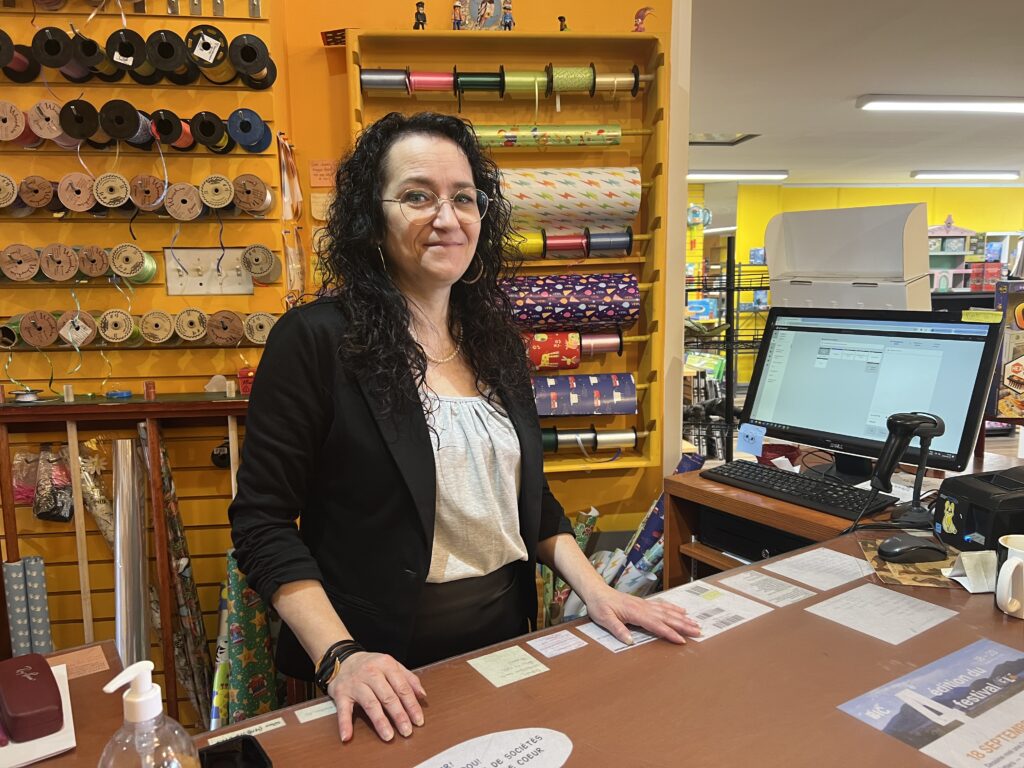
« Ça ne roule pas. À la fin de la journée, il faut être capable de payer nos affaires et les employés. Nos représentants qui nous vendent la marchandise ne nous aident pas. Ils nous tirent dans les pieds en rentrant nos produits dans les pharmacies, les librairies et les papeteries. Même Canac vend des jouets à Noël. Nous allons ravoir des magasins généraux comme dans le temps », exprime-t-elle.
« Tous les magasins de jouets ferment, Benjo, Toys “R” Us, etc. Ils sont en train de tuer le jouet et je vois des propriétaires de compagnie de distribution qui se plaignent sur Internet parce que nous faisons faillite et que nous ne sommes pas capables de les payer. »
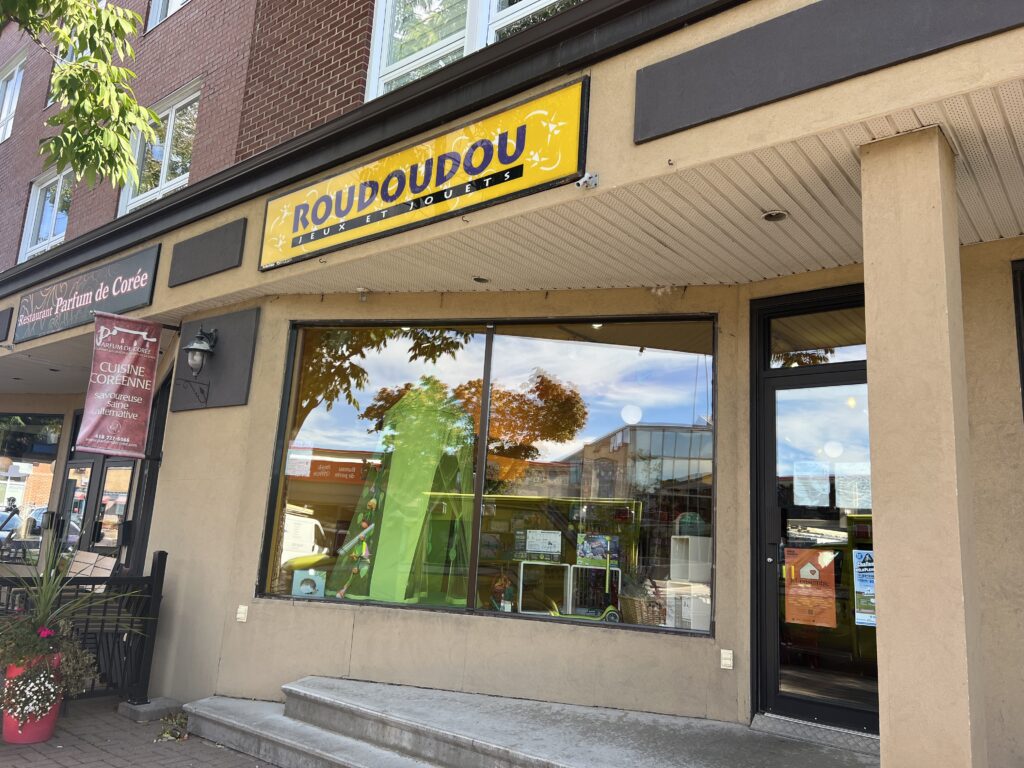
La vente de fermeture est commencée depuis le 19 septembre. (Photo Le Soir.ca-Annie Levasseur)
Cette dernière soutient que la vente en ligne prend beaucoup de place avec des plateformes comme Amazon, mais qu’elle enregistrait très peu de transactions sur le site Internet de Roudoudou.
« SI j’avais une commande en ligne par mois, c’était beau. Il ne faut pas juste que tu sois en ligne, il faut que tu sois un géant. Les gens pensent que ça va coûter moins cher, mais quand je faisais mes prix, je regardais Amazon et mes compétiteurs et j’étais toujours en bas. »
L’évolution de la technologie
Selon Pascale Vachon, l’évolution de la technologie entraîne un important désintérêt des jeunes envers les jouets.
« Les parents ploguent leurs enfants sur les écrans en très bas âge. Ils sont surstimulés et lorsqu’ils ont huit ans, c’est comme s’ils n’étaient plus des enfants, ils sont rendus des préadolescents. Si tu lui donnes des blocs, il trouve ça plate et il ne sait pas quoi faire avec ça. »
La façade de la boutique située sur la rue Saint-Germain Ouest, (Photo Le Soir.ca-Annie Levasseur)
La Rimouskoise a été gérante du commerce, qui appartient au montréalais Philip Strauss, pendant les 25 dernières années. Depuis l’annonce de la fermeture, les commentaires des clients sont nombreux.
« Les gens sont très déçus, mais je n’ai parlé qu’à des clients. Ils me disent que ça leur rappelle des souvenirs de leur enfance transmis de génération en génération. Samedi, le lendemain de l’annonce, la moitié des personnes qui étaient ici n’étaient pas des clients. Nous n’avons pas senti que les gens de Rimouski tiennent à leurs magasins. Ce n’est pas normal de faire 300 $ de ventes un vendredi. »
La fermeture de Roudoudou entraîne six pertes d’emplois. Pour l’instant, un seul employé a réussi à se relocaliser. Le commerce sera ouvert pour encore deux semaines ou jusqu’à ce que la marchandise soit écoulée.
Surrogate who rejected abortion request had asked justices to halt court order recognizing LA couple as legal parents
The supreme court has refused to get involved with a custody dispute between an Alaska surrogate and a California couple whose child was born with a rare and serious heart defect.
On Tuesday, Justice Elena Kagan denied an emergency request from McKenna West, an Alaska nurse and surrogate who had asked the US’s highest court to halt a California court order recognizing the couple, Omar Ahmed and Nausheen Gilkar, as the boy’s legal parents.
Former VP, who lost state to Trump in 2024 elections, is lending her popularity to unite fractured party
Kamala Harris returned to Michigan on Tuesday to campaign for Abdul El-Sayed, lending her popularity among Black voters to a progressive Senate nominee still working to unite a party fractured by a bruising primary – and the former vice-president’s loss to Donald Trump in the state.
Appearing with El-Sayed at a Detroit birth center, Harris used a roundtable on Black maternal health to frame that November’s contest against the Republican Mike Rogers as a fight over women’s access to care.
Lawyers for James ‘Fergie’ Chambers, wanted over alleged support for Hamas, say client is being persecuted
The Spanish government has decided to allow the Trump administration’s controversial extradition request to extradite wealthy activist James “Fergie” Chambers to continue in the country’s courts.
Chambers, a US citizen and wealthy donor to leftwing and humanitarian projects, is currently imprisoned in Madrid. It is the first known case of the US seeking to extradite a citizen over alleged support for Hamas, an accusation tied to money Chambers has donated to support Palestinians, including the Sameer Project, in Gaza.
Cinéma 4 de Rimouski a entamé, le dimanche 20 septembre, sa 51e saison avec une programmation automnale variée qui fera voyager les cinéphiles à traversdes œuvres de partout dans le monde.
« Nous avons une programmation de 12 films pour la session d’automne. Nous en avons du Québec, de la France, de l’Italie, de l’Espagne et même du Japon. C’est très varié cette année et nous en sommes très contents. Il y a des drames historiques, policiers et psychologiques. Une autre programmation sera offerte pour l’hiver-printemps », affirme la présidente du conseil d’administration de Cinéma 4, Véronique Le Hir.
Les films sont présentés tous les dimanches, à 17 h et à 19 h 30, à l’auditorium D-114 du Cégep de Rimouski.
« Nous étions auparavant à la salle Georges-Beaulieu, mais elle est devenue une salle consacrée à l’enseignement de la musique. Nous avons donc déplacé nos activités », indique madame Le Hir.
Des films de répertoire
Depuis ses débuts, Cinéma 4 a pour objectif de présenter des films de réalisateurs indépendants qui ne sont généralement pas offerts dans les cinémas commerciaux.
« C’est toujours du cinéma indépendant pour lequel les critiques ont été intéressantes et qui sort du créneau des films commerciaux. Ce ne sont pas des documentaires. Ce sont des films de fiction qui ont été primés ou mis en nominations dans différents festivals. Nous les présentons toujours en version originale et ils sont sous-titrés en français au besoin », mentionne Véronique Le Hir.
L’organisme à but non lucratif est géré par un conseil d’administration. Il a commencé à projeter des films en 1971 au Centre civique de Rimouski et a été incorporé quatre ans plus tard. Cinéma 4 a dû prendre une pause entre 2020 et 2024 en raison de la pandémie, puisque les locaux du Cégep de Rimouski n’étaient pas ouverts au public.
« Nous avons remarqué, l’hiver dernier, une très belle progression de la fréquentation. Pour la saison 2025-2026, nous avons enregistré 1 600 entrées. Après l’arrêt des activités, plusieurs personnes ignoraient que nous avions recommencé. Il a fallu refaire de la promotion et regagner notre public. Il y a vraiment des cinéphiles avertis dans la région. Ils suivent les sorties », explique la présidente.
Le public de Cinéma 4 provient principalement de Rimouski-Neigette, mais les amateurs de cinéma se déplacent aussi de La Mitis et des Basques pour assister aux projections.
« Ce sont des films présentés dans les grands centres, mais qui souvent ne se rendent pas dans les autres régions du Québec. Ça vient donc chercher un public qui apprécie le cinéma de répertoire. »
L’horaire et les billets pour la programmation d’automne sont disponibles au cinema4rimouski.com.
L’entrée est gratuite pour les 17 ans et moins ainsi que les personnes étudiantes du Cégep de Rimouski, de l’Institut maritime du Québec et de l’Université du Québec à Rimouski sur présentation de la carte étudiante. Pour les autres, le prix d’une entrée est de 9 $. Le film Vivaldi et moi sera présenté le dimanche 27 septembre.
Une femme dans la quarantaine a été trouvée morte dans un édifice à logements du centre-ville de Montréal, mardi après-midi. Le SPVM qualifie pour le moment cet évènement de « mort suspecte ».
The EU locked in its sanctions on Russia for an unprecedented three years this week, and paid for it by letting two of the country's richest men off the list. Alisher Usmanov and Mikhail Fridman were delisted at the insistence of Slovakia, France, and Luxembourg, DW reported.
France pushed to remove Usmanov, a Kremlin-linked metals and telecoms magnate, as part of a secret deal to free prisoners held in Azerbaijan, and Luxembourg pushed to remove Fridman, who is pursuing the country for about $16 billion in arbitration over the losses his sanctions caused, the Financial Times reported.
Kyiv's reaction was immediate and furious
Foreign Minister Andrii Sybiha called the decision shameful and unjustified and urged EU states to impose their own national sanctions on the pair.
"In Moscow, they celebrate, because they got what they wanted: a sense of impunity, humiliation of the European Union, and division among Europeans," he wrote on X.
President Volodymyr Zelenskyy, who raised the issue with European Commission chief Ursula von der Leyen in New York, called the delisting "suicidal and counterproductive."
"Wars end with resolve and strength, not concessions to the aggressor's cronies," he said, thanking von der Leyen for agreeing to work on adding more Russian names to the lists.
At the same time, he stated that he "is grateful to Ursula for her willingness to work on adding more Russian individuals to the EU sanctions lists."
The step was a bargain of durability for names. Rather than roll the sanctions over for the usual six months, the EU previously extended them to 22 September 2029, keeping some 2,600 Russians and companies, including President Vladimir Putin, frozen out for three years, after weeks of deadlock that at one point nearly let the whole regime lapse.
The deal came only after the bloc pushed its deadline back a week to buy time, and its Irish presidency called the result a difficult compromise.
Gone was any shred of US idealism. It was a spectacle of raw power – a power that is likely to only diminish in the years ahead
Expectations were low for Donald Trump’s address to the UN on Tuesday, and yet somehow it was even worse than expected. He does not perform well in formal settings, like chambers of government, preferring a blingier room, like Mar-a-Lago, or an outdoor rally. For years, he has made no secret of his hostility to the UN, and the very principles of international order that define it.
In recent years, that hostility has deepened into something more like a full-on assault, with frequent attacks on the international criminal court (perhaps out of fear that he will someday be indicted), on the UN’s climate agenda, and on Unesco (which the US decided to withdraw from in July 2025).
Russia has destroyed a Ukrainian toilet-paper maker's warehouse for the second time. According to Snow Panda, an everyday brand of toilet paper, paper towels, and wipes, a Russian strike on 22 September again leveled its warehouse complex. This time, its workers came through unhurt, the company said.
The strike is a small piece of a systematic campaign against Ukraine's civilian economy. Russia has destroyed more than two-fifths of the country's modern warehouse space, some 2.1 million square meters, hitting the depots of retailers, food companies, drugmakers, and couriers far from the front.
Snow Panda makes nothing military, only household paper goods, and it has now been struck twice, in a pattern where rebuilt or dispersed storage becomes the next target.
A second strike levels the warehouse
"On 22 September, as a result of a Russianstrike, our warehouse complex was completely destroyed for the second time," the company said.
It provided no further detail on the damage or losses, but emphasized the outcome that mattered most to it.
"The most important thing is that the people are alive and unharmed," its press service said.
July's missile hit the main hub
The first blow came on 1 July, when a Russian missile struck the Snow Panda plant in Odesa Oblast and wounded people there. The company called it its most important hub, the point from which its goods and those of other brands were shipped across the country.
"Now we are assessing the scale of the destruction and making the first decisions to save our life's work," it declared after that strike.
Russia targets the civilian economy
Snow Panda's losses fit what Ukraine has faced all summer, as Russia turns drones and missiles on the warehouses, distribution centers, and railways that keep the country supplied. The target list has run from a toy retailer's depot near Kyiv to food, medicine, and parcel warehouses across the country.
Retailers, grocery chains, and pharmaceutical distributors have all been hit, often more than once, pushing companies to scatter their stock into smaller sites that then draw the next strike.
Bea Bruske, president of the Canadian Labour Congress, said the Liberal government’s proposed Bill C-39 would roll back the right to strike. Jobs Minister Patty Hajdu said the legislation is meant to encourage unions and employers to focus on getting a negotiated deal.
The US will carry a proposal to Russia to halt strikes on Ukraine's energy systems amid talks over the so-called "energy ceasefire" ahead of the cold season. Ukrainian President Volodymyr Zelenskyy says he and US President Donald Trump discussed the energy truce at the UN, and that Washington made no unilateral demands of Kyiv, agreeing only to pass the mutual offer to Moscow, his office said.
The outcome eases the worry that shadowed the earlier round, when Trump blamed Ukraine's strikes for record US diesel prices above $6 a gallon and pressed Kyiv to stop hitting Russian refineries, CNBC reported.
Zelenskyy offers a mutual halt
"We talked about an energy truce for us. If they do not want us to attack oil-refining capacities, then let them not touch our energy system, our water supply," he said.
The US side, he continues, would relay the offer to Russia. The two presidents met in New York on the sidelines of the UN General Assembly on 22 September.
Air defense stays unresolved
At the same time, no agreement was announced on launching production of Patriot interceptor missiles in Ukraine, the only ones that can intercept Russia's ballistic missiles.
According to the president, his adviser, Pavlo Palisa, spoke with representatives of Raytheon, the Patriot interceptor producer. Zelenskyy added that Ukraine had asked Trump to help accelerate the process.
“We need the licenses to prepare for Patriot production. Raytheon is ready, and I asked President Trump to help with this. He responded positively,” the president said.
Zelenskyy stressed that Ukraine plans to launch the project within the next year to 18 months, emphasizing that “this is work for the long term, for the future.”
The two leaders also discussed other bilateral and multilateral issues, including a winter air defense package for Ukraine, but no specific details or concrete agreements were announced.
President made more than 440 purchases and 700 sales despite voter anger over elected officials trading stocks
Donald Trump made over a thousand stock sales and purchases worth between $79m and $270m in July, according to a Guardian analysis of his latest financial disclosure released Tuesday.
His two largest sales were of Amazon and Microsoft stock, selling between $5m and $25m each on 20 July. That same day, he also sold up to $5m worth of Oracle and Costco stock, $500,000 to $1m in Nvidia, and bought up to $5m worth of shares in Intuit and Salesforce, among dozens of other transactions.
Ukraine's defense makers have signed the first 26 deals under a program that lets them lease or rent new equipment, with the right to subsequently purchase it into ownership, while the state covers most of the bill. The preferential-leasing scheme has channeled about $2 million so far, with producers paying just 5% of the leasing fee and the state covering the rest, the Defense Ministry said.
For many Ukrainian arms makers, the bottleneck is not orders but the cash to expand fast enough to fill them, Deputy Defense Minister Hanna Hvozdiar says, and the program is the state's answer.
Producers can lease equipment, machinery, automation equipment, transportation, and even factory space, paying 5 percent per year while the state subsidizes the rest, up to about $11 million per contract over five years.
The state covers most of the cost
Beyond capping the borrower's rate at 5 percent, the contracts can defer lease payments for up to a year, easing the squeeze while new equipment is bought and installed.
Only companies that hold "critically important" status in the defense sector, a label the state gives firms it deems essential to the war effort, can take part. The 26 deals are only the first, the ministry said, with the program still open to new applicants.
Three banks run the leasing
The Defense Ministry launched the program in April and named Ukreximbank, PUMB, and MTB Bank as the first authorized lessors, it said. In August, it spelled out what producers can lease, from machines, mobile production platforms, and technological gear to the non-residential real estate a plant needs to run.
Ukraine races to scale production
The leasing program is one piece of a broader drive to get money flowing to Ukraine's defense industry so it can produce more, faster. The government has been building financing tools around the sector, including a push by former Defense Minister Mykhailo Fedorov to raise the country's largest defense-tech venture fund.
Le Service de police de la Ville de Montréal (SPVM) sollicite l’aide du public pour retrouver Jesus Sami Zelaya Chamorro, un citoyen de 68 ans disparu depuis déjà une semaine.
President Trump’s statement to the U.N. General Assembly that he could “drive them into hell with no chance of survival” was a jarring departure in a forum devoted to world peace.
Testing said to reveal injury is worse than anticipated
Quarterback was hurt against Rams on Monday
New York Giants quarterback Jaxson Dart will be out for an extended period of time and could miss the rest of the NFL season after suffering a knee injury in Monday night’s loss to the Los Angeles Rams, according to reports Tuesday.
ESPN reported that the injury to Dart’s left knee was more severe than initially anticipated. Adam Schefter said further testing has left the Giants and Dart facing the possibility of season-ending surgery.
How do you deal with a problem like The Donald? The simple answer is that you don’t. You can’t. The normal rules of political engagement don’t apply. The US president is like a five-year-old child with the world as his set of toys: a King Baby.
Nothing is ever constant or predictable. What’s agreed one day can be forgotten the next. Any deal can be interrupted with a temper tantrum at any time. Trying to second-guess Donald Trump is a fool’s errand.
La construction de l’immeuble de quatre étages de 155 appartements au coût de 37 M$ sur la rue Alcide-C.-Horth à Rimouski, réalisée par l’entreprise d’économie sociale l’UTILE et la firme de génie-conseil gbi, a été récompensée lors de la 24e édition des Grands Prix du génie-conseil québécois 2026 dans la catégorie « Gestion de projet ».
L’événement, présenté lundi (21 septembre) à Montréal, réunissait 450 participants. En tout, 63 projets d’ingénierie réalisés récemment se trouvaient en nomination dans 14 catégories.
Le projet de Rimouski a été livré en un temps record de 10 mois de chantier, juste à temps pour la rentrée 2025, en exploitant la construction modulaire avec l’aide des Industries Bonneville.
Plusieurs des composantes de l’immeuble de 126 studios et 29 appartements quatre et demi ont été construites en usine.
Montage financier
Le fonds Capital social d’investissement immobilier, qui est administré par l’Association des groupes de ressources techniques du Québec, a participé au montage financier sous la forme d’un prêt de 20,7 M$.
Le projet de Rimouski a aussi reçu une subvention de 4,7 M $ provenant de la Société d’habitation du Québec, la Ville de Rimouski a contribué pour 715 000 $, incluant la valeur du terrain, tandis que l’Association générale étudiante du campus de Rimouski de l’UQAR a versé 250 000 $.
En juin dernier, le conseil municipal de Rimouski a accordé une deuxième prolongation de délai à l’UTILE, cette fois de 150 jours, pour enclencher les travaux de construction pour la phase 2 de son projet de logements étudiants sur la rue Alcide-C.-Horth.
Ses dirigeants avaient demandé l’obtention d’un délai supplémentaire pour amorcer la construction de la phase 2. Ce délai prenait fin le 15 juin. La nouvelle prolongation est active jusqu’au 12 novembre.
Même s’il fait tout pour éviter son procès depuis six ans, un Montréalais accusé d’avoir harcelé trois jeunes femmes et adolescentes fait enfin face à la justice. Se disant un « mâle alpha », Maxime Delorme aurait inondé une adolescente de messages sexuels insistants pendant plus d’un an.

 Connexion