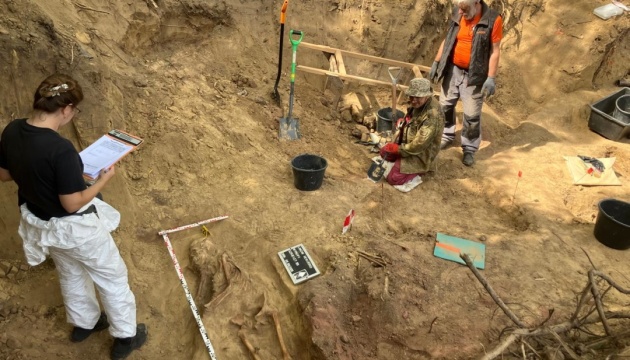
The remains of 29 Polish Army soldiers and seven German servicemen who were killed in the autumn of 1939 have been exhumed at the Holosko Cemetery in Lviv during an exhumation and search operation conducted by a team of Ukrainian and Polish specialists.
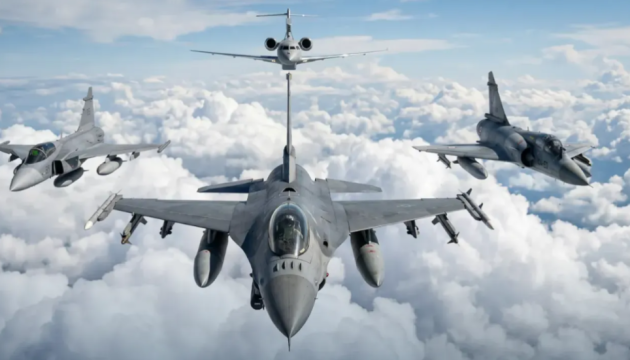
At a meeting of the Secretariat and working groups of the Air Force Coalition in Kyiv, five areas of support for Ukraine were identified, including the development of aviation infrastructure and the helicopter component, as well as scaling up defense-industrial and military-technical cooperation.
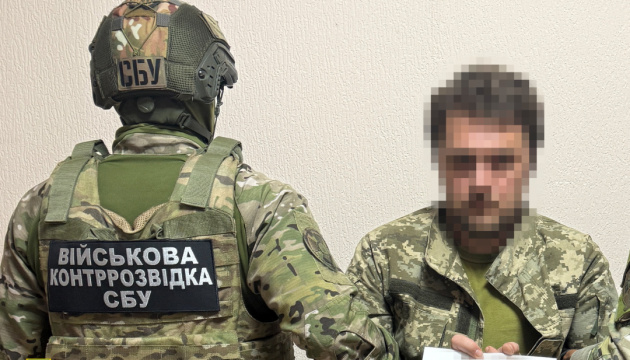
The military counterintelligence unit of the Security Service of Ukraine (SBU), with the assistance of the Commander-in-Chief of the Ukrainian Armed Forces, has detained a Russian agent couple in Kharkiv: a serviceman of the Ukrainian Defense Forces and his wife.
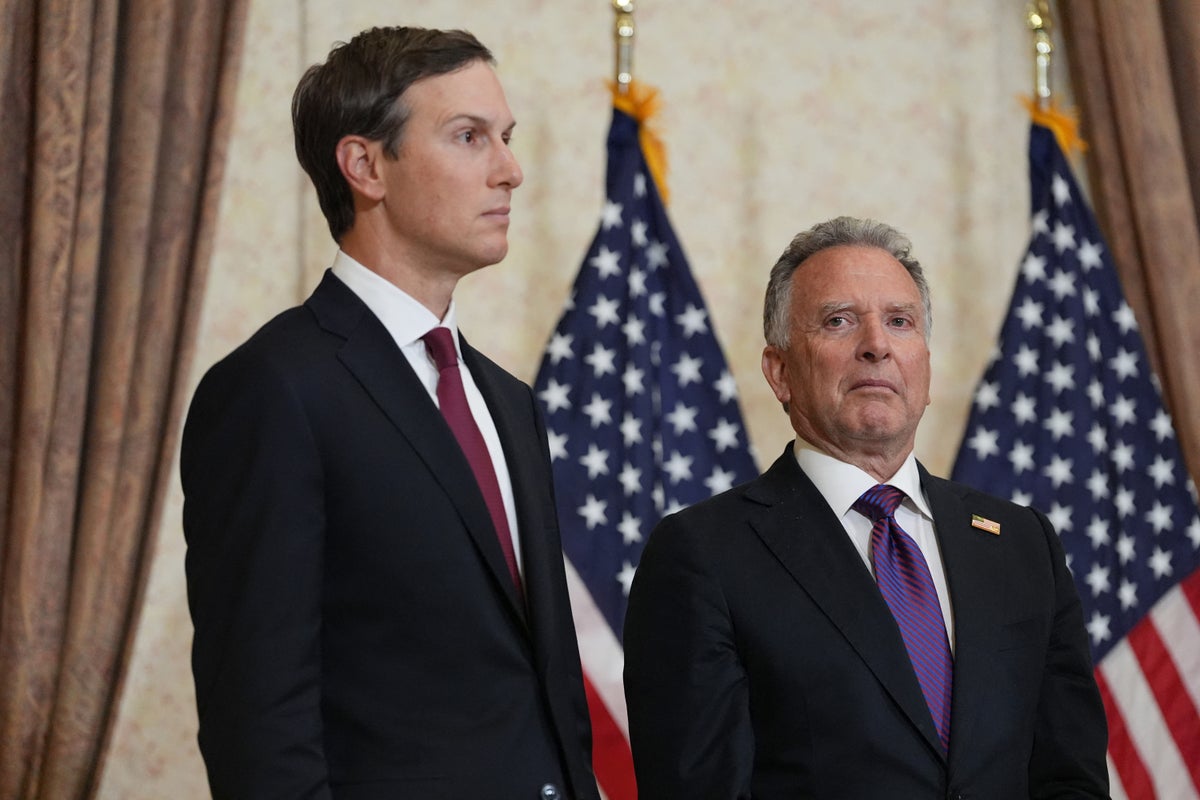
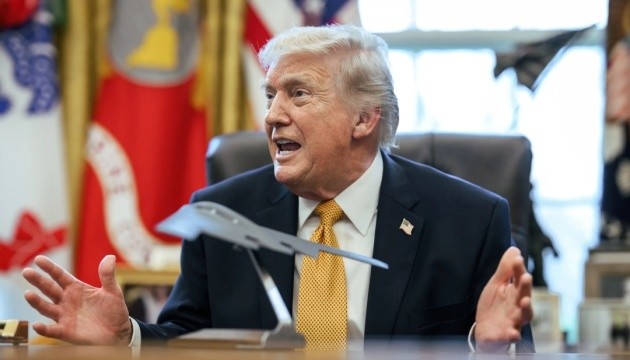
U.S. President Donald Trump said his special envoys Steve Witkoff and Jared Kushner will travel to Moscow and Kyiv with a proposal to end Russia’s war against Ukraine.
Ukrainian Defense Forces units have been ordered to temporarily observe a ceasefire along the line of contact from 00:00 on 5 September through 23:59 on 8 September, Ukrainska Pravda reported, citing sources in several military brigades and a senior security official.
The order comes as US President Donald Trump’s special envoys Steve Witkoff and Jared Kushner are expected to visit Moscow and Kyiv this weekend for talks aimed at ending Russia’s war against Ukraine.
According to Ukrainska Pravda’s sources, Ukrainian units operating across the front have received instructions to observe the temporary “silence regime” during the four-day period.
An air raid alert was issued in Kyiv at 00:00 on 5 September just as the temporary ceasefire was due to take effect, with Russian drones reported over Kyiv and Kharkiv oblasts.
Pause coincides with US envoys’ visits
Witkoff and Kushner are expected to meet Russian President Vladimir Putin in Moscow on 5 September before traveling to Kyiv for talks with Ukrainian President Volodymyr Zelenskyy on 6 September.
Their visit comes after months of stalled negotiations. US-mediated talks between Russia and Ukraine froze in February following the outbreak of war between the US, Israel and Iran, while subsequent contacts between US, Russian and Ukrainian officials have failed to produce a breakthrough.
Explore further
Witkoff and Kushner to visit Kyiv and Moscow to revive peace talks as Russia ramps up attacks across Ukraine
Zelenskyy said on 4 September that Ukraine would ensure conditions for the US envoys’ safe travel and called for Russia to reciprocate by refraining from strikes during the period needed for the meetings and related logistics.
The reported Ukrainian order would extend the pause beyond the envoys’ visits, covering 5–8 September.
Russia has continued its intensive drone campaign against Ukrainian cities even as diplomatic contacts have resumed. Kyiv remains skeptical of Moscow’s willingness to accept a genuine ceasefire, with Ukrainian officials warning that Russia may use negotiations to buy time while continuing its military campaign.
German security authorities have found strong indications that a suspected arson attack near defense companies in Munich may have been carried out on behalf of a Russian intelligence service, German broadcaster Tagesschau reported on 3 September.
The attack is part of a growing series of suspected sabotage and espionage operations in Germany as European governments warn that Russia is using covert methods to target countries supporting Ukraine.
Two Bulgarian nationals were arrested after allegedly throwing incendiary devices at a construction site near the headquarters of Rohde & Schwarz in Munich. One device started a fire, while another was found unexploded and neutralized by police specialists. No one was injured and there was no major damage. The two suspects were placed in pre-trial detention on 4 September, according to Tagesschau.
Rohde & Schwarz develops defense and security technology, including systems used to detect, track and jam drones. The construction site is also near the headquarters of Helsing, a German defense company that produces AI-enabled combat drones and supplies Ukraine’s armed forces.
It has not been established whether either company was specifically targeted.
Investigators suspect Russian intelligence link
According to Tagesschau, German security authorities have strong indications that the Munich attack could have been carried out by so-called “low-level” or disposable agents working for Russian intelligence services.
Such agents can be recruited through intermediaries to carry out individual tasks for payment, ranging from photographing defense companies to conducting sabotage operations.
German authorities have already identified other cases in which people were allegedly recruited to gather information on defense companies involved in supporting Ukraine.
In August, German authorities arrested a 33-year-old Ukrainian citizen in Thuringia who is accused of photographing a Bavarian defense company in June and sending the images to an alleged handler. Investigators suspect the activity was preparation for a sabotage operation, according to Tagesschau.
German authorities also arrested two people in March over an alleged plot to spy on a Bavarian drone manufacturer and its managing director. Investigators said they believed the operation may have been intended to prepare the man’s assassination.
Power-grid attacks remain unresolved
The Munich attack came days after two attempts to sabotage Germany’s electricity grid in Brandenburg and North Rhine-Westphalia.
The attacks involved improvised devices apparently designed to cause short circuits on high-voltage lines. German investigators are treating the cases as possible terrorism or anti-constitutional sabotage, according to Tagesschau.
Authorities believe the two attacks may be connected, but have not established who was behind them. A Russian intelligence connection remains possible, although investigators currently have no evidence linking the power-grid attacks to the suspected Russian operation in Munich.
German authorities are investigating multiple possible forms of hybrid activity rather than assuming that every recent sabotage incident has the same origin.
More than 165 suspected sabotage cases and 747 suspicious drone incidents in Germany this year
The incidents come amid a broader increase in suspected sabotage and espionage activity in Germany.
A confidential assessment by Germany’s Federal Criminal Police Office (BKA) recorded more than 165 suspected sabotage cases across Germany between January and the end of August, according to Tagesschau.
The assessment also recorded 112 crimes linked to espionage, including 26 cases in which authorities suspect agent activity for sabotage purposes.
German authorities recorded 747 suspicious drone incidents during the same period, involving 1,068 drones spotted over critical infrastructure, military facilities and defense companies.
The figures do not establish that Russia was responsible for all of these incidents. But German authorities have increasingly identified Russian intelligence services as a potential source of sabotage and espionage as Moscow seeks to pressure European countries supporting Ukraine.
Germany and its allies have also accused Russia of being behind an August drone attack at Leipzig/Halle Airport, which Berlin and its partners described as part of a Russian hybrid campaign intended to intimidate and divide European countries supporting Ukraine.
Explore further
Germany blames Moscow for Leipzig drone attack, closes consulate and cultural center among sweeping diplomatic measures
The suspected Munich attack adds to growing evidence that Russia’s war against Ukraine is being accompanied by covert operations targeting the defense industry and critical infrastructure of countries helping Kyiv.
Budapest praised the Verkhovna Rada—Ukraine’s parliament—after it voted 261–0 to classify mass arrests, deportations, and persecution by the Soviet military administration in Zakarpattia (also known as Transcarpathia) from 1944 to 1946 as crimes of the communist regime.
The vote makes the Verkhovna Rada the first state body in the world to recognize the repression of Zakarpattia’s Hungarian community as a crime, according to European Pravda. It creates an opening for historical reconciliation after years of minority-rights disputes, strained relations, and blocking Ukraine’s EU accession. However, Budapest continues to press Kyiv for further concessions.
After Soviet forces took control of Zakarpattia—Ukraine’s westernmost region, bordering Hungary and home to the country’s largest ethnic Hungarian community—the NKVD, Stalin’s secret police, and SMERSH, Soviet military counterintelligence, detained civilian men aged 18 to 50 under the pretext of mobilization.
The men were deported without trial to labor camps and the Soviet Gulag prison-camp system. Hungary’s Foreign Ministry said tens of thousands of Hungarian- and German-speaking men were deported, and many thousands died under the inhumane conditions of forced labor.
The campaign became known in Hungarian as malenkijrobot. Derived from a Russian phrase meaning “a little work,” Soviet troops used this deceptive phrase when taking people away.
Hungarian Foreign Minister Anita Orbán—no relation to former Prime Minister Viktor Orbán—called the declaration “a fitting tribute” to thousands targeted by Soviet terror because of their Hungarian identity. She said Hungary was ready to help uncover the truth about the past and honor the victims.
Hungary welcomes the Ukrainian parliament’s declaration condemning Soviet authorities' coercive measures against the Hungarian community in Transcarpathia between 1944 and 1946. The declaration is a fitting tribute to the thousands of victims of deportation and forced labor…
The resolution calls for memorials, archival publications, research, and the inclusion of the repression in educational programs. It also draws a parallel with Russia’s present-day occupation practices, saying Moscow is committing similar large-scale repression against civilians in occupied Ukraine.
Marton Hajdu, chair of the Hungarian parliament’s foreign affairs committee, nevertheless said reconciliation must be accompanied by Kyiv’s full implementation of its June agreement with Budapest on minority rights.
A cautious thaw in Hungarian-Ukrainian relations
The exchange adds to tentative signs of improving relations since Péter Magyar ended Viktor Orbán’s 16 years in power in April. Magyar’s government summoned Russia’s ambassador after Moscow struck Zakarpattia and later closed a money-laundering case involving $82 million belonging to Ukraine’s state-owned Oschadbank, reversing another Orbán-era dispute.
Budapest and Kyiv also reached a June agreement covering Hungarian-language education and the use of Hungarian in public services. Yet Magyar’s government has continued to slow parts of Ukraine’s EU accession process amid domestic pressure to defend Zakarpattia’s Hungarian community. The recognition of Soviet crimes, therefore, provides new common ground without settling the wider disagreements between the neighbors.
The Office of the Prosecutor General will provide anti-corruption authorities with all necessary information within the law and suspend an employee suspected of unlawful activity related to the operation of fraudulent call centers.
The Specialized Anti-Corruption Prosecutor’s Office (SAPO) and the National Anti-Corruption Bureau of Ukraine (NABU) are conducting a special operation to expose a criminal organization allegedly led by an official of the Office of the Prosecutor General.
Italy's Premier Giorgia Meloni celebrated a milestone for her government, using a rally of supporters in the southern city of Bari to argue that four years of political stability have strengthened Italy at home and abroad
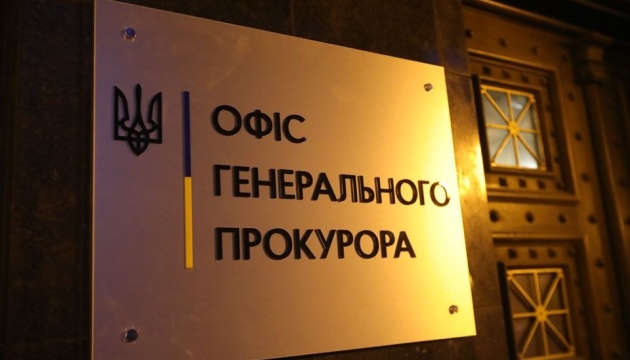
Ukraine’s National Anti-Corruption Bureau (NABU) and Specialized Anti-Corruption Prosecutor’s Office (SAPO) have launched an operation targeting an alleged criminal organization headed by an official of the Prosecutor General’s Office and involved in protecting a network of fraudulent call centers and laundering assets.
Fraudulent call centers have become a major organized-crime problem in Ukraine, with authorities investigating hundreds of suspected operations and working with international partners to pursue these networks.
NABU announced the operation on 4 September, saying further details would be released later.
Deputy department head reportedly detained
Ukrainska Pravda, citing sources, reported that NABU and SAPO had detained Serhii Kropyva, deputy head of the Prosecutor General’s Office’s Department of International Legal Cooperation.
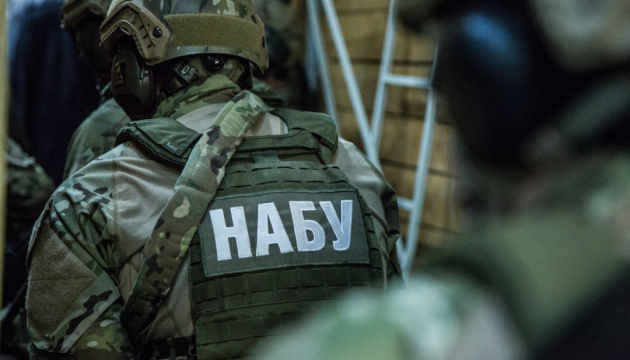
Ukrainska Pravda also reported that investigators were carrying out searches at the Prosecutor General’s Office. The outlet published footage showing NABU employees entering the building, including climbing over its fence with ladders.
The allegations against Kropyva have not been detailed publicly by NABU, and his detention has not been officially confirmed by the Prosecutor General’s Office.
Prosecutor General’s Office pledges cooperation
The Prosecutor General’s Office said the circumstances surrounding the possible involvement of one of its employees in illegal activity connected to fraudulent call centers must be established by investigators.
The office said it would provide anti-corruption authorities with all information and assistance required by law and that the case should receive an objective legal assessment.
The employee under investigation will be suspended from official duties for the duration of the pre-trial investigation, according to the Prosecutor General’s Office.
Ukraine has been targeting fraudulent call centers
The Prosecutor General’s Office said authorities have carried out more than 1,050 searches over the past 12 months and shut down around 340 fraudulent call centers comprising more than 5,000 operator positions.
Ukrainian prosecutors have also participated in 37 international joint investigation teams coordinated by Eurojust and supported by Europol, the office said.
Authorities are currently investigating 147 criminal proceedings related to the activity. More than 183 people have been notified of suspicion, while indictments against 93 people have been sent to court, according to the Prosecutor General’s Office.
The established losses suffered by victims amount to tens of millions of hryvnias, it said.
Kropyva’s previous positions
According to Ukrainska Pravda, Kropyva previously worked in Ukraine’s Cyber Police, where he headed its Kyiv department and later served as first deputy head.
The outlet reported that former Prosecutor General Iryna Venediktova appointed Kropyva to head a newly created department in 2022 without a competitive selection process. The department was responsible for economic crimes and state cybersecurity, according to Ukrainska Pravda.
Before joining the Prosecutor General’s Office, Kropyva reportedly served as deputy head of the Odesa Regional State Administration under Oleh Kiper.
The investigation is ongoing, and the allegations have not yet been adjudicated by a court.
The Cabinet of Ministers of Ukraine adopted a decision to introduce two levels of air alerts, with yellow for drone attacks and red for a heightened threat of missile or combined strikes, Prime Minister Serhii Koretskyisaid on 3 September. Under the yellow level, designated businesses can operate if they meet safety requirements, while a red alert will require work to stop and people to move to shelters.
Russia continues to attack Ukrainian cities with drones and other long-range weapons, repeatedly disrupting civilian and economic activity. Ukrainian President Volodymyr Zelenskyysaid Russia is using mass drone attacks to wear down civilian life and economic activity, while the existing system of signaling all aerial threats in the same way no longer fits Russia's tactics.
How it will work
Businesses cleared to operate under a yellow alert must ensure staff and visitors can reach shelters. Where that access is missing, the Cabinet is giving businesses three months to provide it.
The General Staff, the Air Force, the government, the Defense Ministry, the Interior Ministry, and the State Emergency Service will set the specific indicators for declaring each level weekly, Zelenskyy said.
What still has to be worked out
Zelenskyy also directed officials to develop geographic targeting for alerts, so warnings can be limited to areas facing an actual threat. The measure is still being worked out and is not yet part of the new system.
The new approach is intended to allow economic activity to continue during drone threats while preserving stricter measures for more serious attacks. The government has not yet finalized which businesses will qualify to remain open under a yellow alert or all of the criteria for applying the two levels.
President Volodymyr Zelensky discussed Ukraine’s defense needs and preparations for a meeting with U.S. President’s envoys with NATO Secretary General Mark Rutte.
US President Donald Trump’s special envoys Steve Witkoff and Jared Kushner are expected to travel to Moscow and Kyiv this weekend for talks aimed at restarting efforts to end Russia’s war against Ukraine, Axios reported, citing US officials.
The planned trip comes as Washington seeks to revive negotiations that stalled earlier this year and as Russia continues its military campaign against Ukraine. Russia has dramatically stepped up its attacks on Ukraine in recent weeks, launching increasingly large waves of drones and missiles against Ukrainian cities and infrastructure.
Moscow talks Saturday, Kyiv on Sunday
Witkoff and Kushner are expected to travel to Moscow on Friday, 4 September, and meet Russian President Vladimir Putin on Saturday, 5 September, Axios reported.
They are then scheduled to travel to Kyiv for talks with Ukrainian President Volodymyr Zelenskyy on Sunday, 6 September. Zelenskyy confirmed the planned meetings on 4 September.
The Kyiv visit would be the first by Witkoff and Kushner since Trump returned to the White House. The two envoys have traveled to Moscow several times to meet Putin but have not previously visited Kyiv during the current Trump administration.
Ukrainian and US officials have discussed a Kyiv visit for several months, but it has reportedly been postponed multiple times for various reasons.
Zelenskyy confirms visit, calls for reciprocal pause in strikes
Zelenskyy said Ukraine is preparing for the envoys’ visit and will ensure the necessary conditions for their safe arrival.
He said Ukraine would refrain from airstrikes against Russia for the period required for the talks and related logistics, and called on Moscow to provide a reciprocal pause in its air attacks.
“We care specifically about them, not Russia,” Zelenskyy said, adding that Kyiv expects Russia to “mirror” the pause.
Zelenskyy said Ukraine wants the visit and negotiations to be as constructive and substantive as possible, while acknowledging that the outcome will depend on the proposals Witkoff and Kushner bring and Russia’s response to them.
Talks stalled earlier this year
The Trump administration’s mediation between Russia and Ukraine was effectively frozen in February after the outbreak of the US-Israeli war with Iran.
Witkoff and Kushner have continued holding separate discussions with Russian and Ukrainian negotiators in the months since, but the talks have produced little significant progress.
The renewed push comes as Washington has again sought a path toward direct negotiations. CIA Director John Ratcliffe also recently traveled to Moscow and discussed the possibility of restarting diplomatic efforts, including a potential Trump-Putin-Zelenskyy summit.
Kyiv remains skeptical of Moscow’s intentions
The diplomatic effort comes alongside continued Russian attacks and an increasingly escalatory military situation.
Kyiv has faced near-constant large-scale drone attacks in recent weeks, while Ukrainian officials have warned that Russia may be preparing further military escalation. Axios reported that Ukrainian officials remain highly skeptical of Putin’s intentions and believe Russia could be preparing a major escalation in the war.
Explore further
Russian drone strikes SBU headquarters in central Kyiv. Zelenskyy says “geography” of Ukraine’s response is set
At the same time, Ukrainian officials have continued to argue that negotiations should not be abandoned.
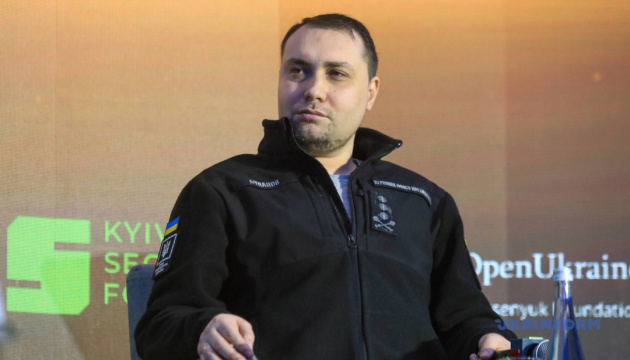
Kyrylo Budanov, Zelenskyy’s chief of staff and former military intelligence chief, told The New York Times that US-mediated talks could resume in September. He said, however, that conditions for a ceasefire were unlikely to emerge before spring 2027.
Budanov has argued that Ukraine must keep diplomatic channels open even while fighting continues, saying that “the war cannot be eternal.”
The planned meetings will therefore take place against a backdrop of continued battlefield fighting and increased air attacks, with major disagreements still unresolved between Kyiv and Moscow.
Ukraine’s baseline annual need for external financing remains at around $50 billion. At the same time, if the war continues, the country’s preliminary unfunded financing need for 2027 is estimated at $32.6 billion.
Russia will face even more special operations, dismantled espionage networks, and destroyed personnel and equipment in response to the strike on the building of the Central Directorate of the Security Service of Ukraine (SSU).
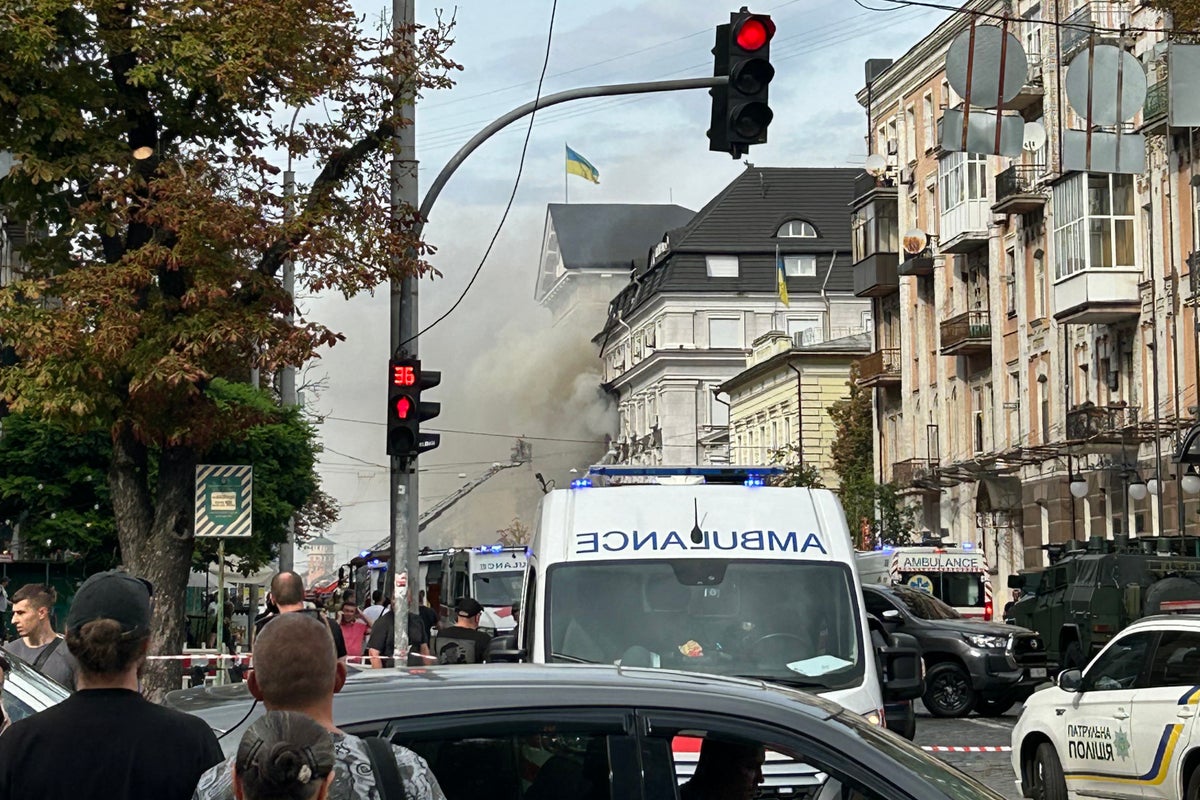
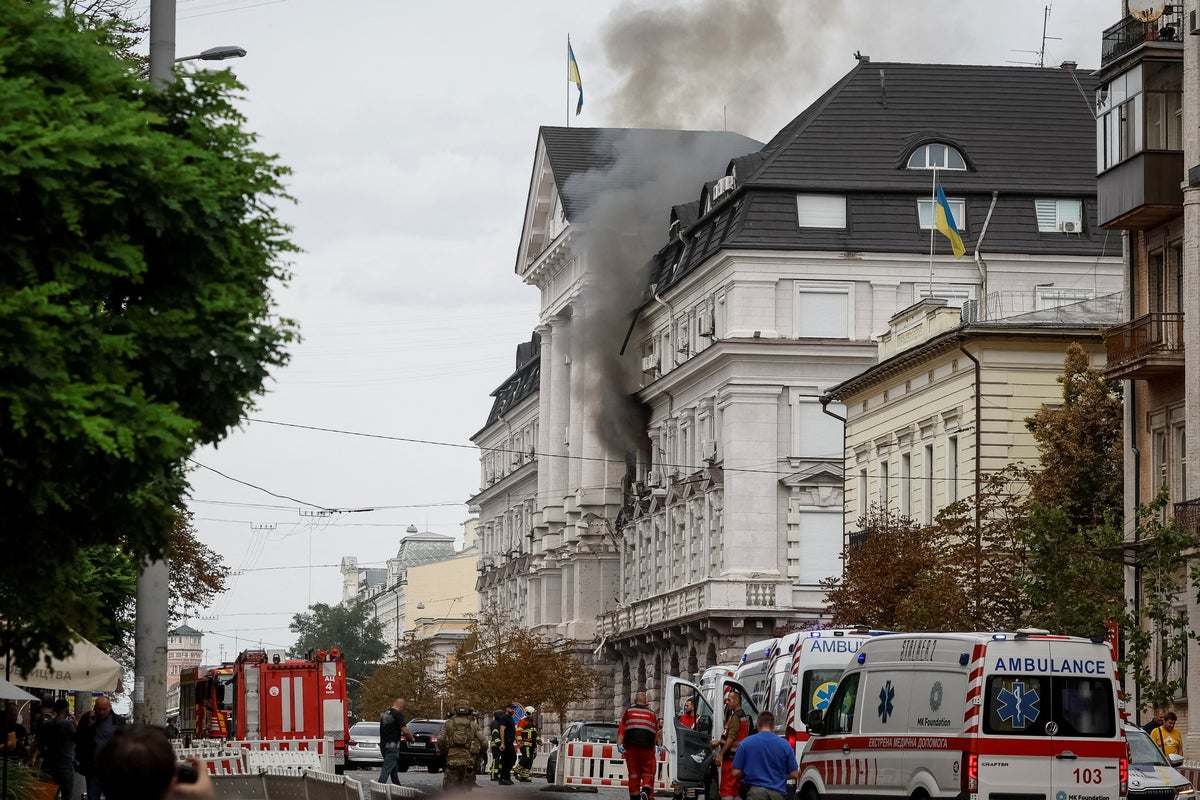
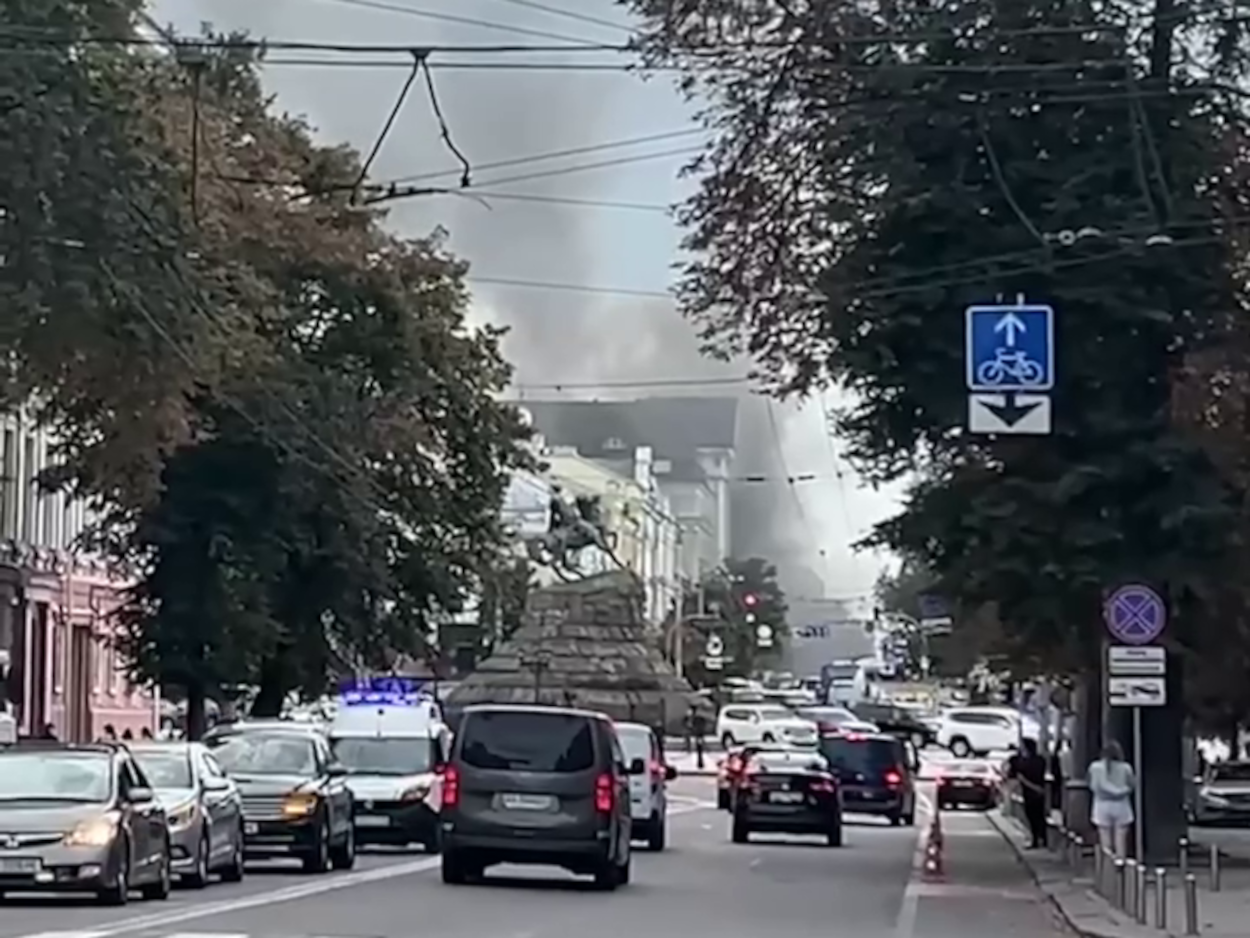
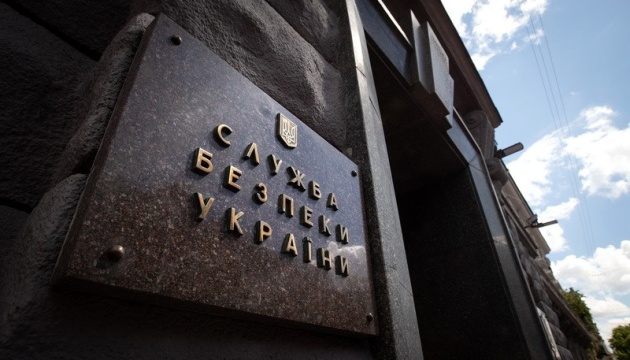
A Russian drone struck the central building of Ukraine’s Security Service (SBU) on Volodymyrska Street in central Kyiv on September 4, injuring 12 people, according to Ukrainian officials.
The strike hit the SBU’s central headquarters directly opposite St. Sophia’s Cathedral, one of Kyiv’s best-known historic landmarks.
Kyiv Mayor Vitali Klitschko said nine of the injured were hospitalized, with two in serious condition.
Drone targeted SBU chief’s office
Ukrainian President Volodymyr Zelenskyy said the drone was directed toward the office of SBU chief Oleksandr Poklad inside the building.
The SBU confirmed that the strike was deliberately aimed at Poklad’s office, but said he was not injured.
Zelenskyy said he had ordered Poklad to prepare a “meaningful” and, if possible, symmetrical response to the Russian attack, with Ukraine’s military supporting the operation.
Later, Zelenskyy said Ukraine had already determined the "geography" of its response and would choose the timing based on when it could achieve an effective result.
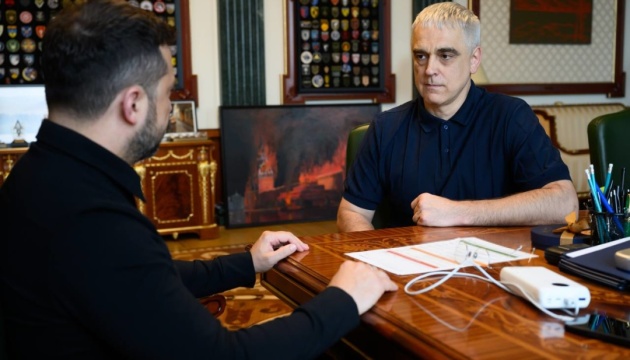
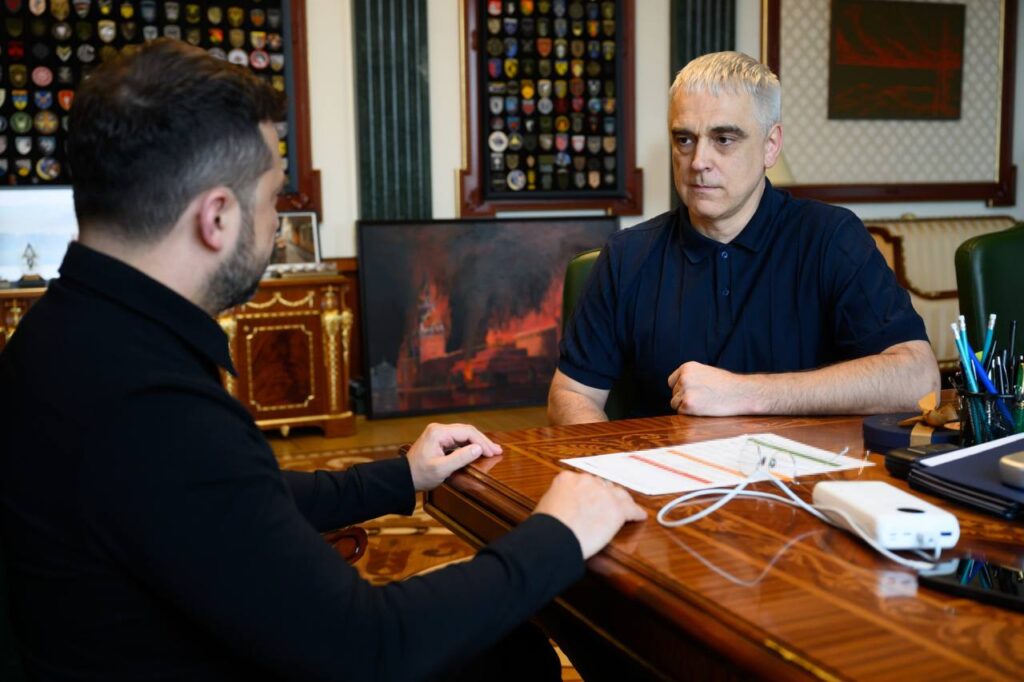
SBU chief Oleksandr Poklad meets with Ukrainian President Volodymyr Zelenskyy following a Russian drone strike on SBU headquarters in Kyiv, 4 September 2026. Photo: Zelenskyy
Ukrainian Foreign Minister Andrii Sybiha called the strike on the SBU headquarters “major escalation that demands resolute responses,” saying it showed Moscow’s rejection of diplomacy during a renewed push for peace.
The Russian attack on Ukraine’s Security Service Headquarters is a major escalation that demands resolute responses.
Moscow launched this strike during a renewed push for peace — laying bare its true rejection of diplomacy.
The strike occurred in the middle of the day in one of central Kyiv’s busiest areas, with large numbers of civilians and vehicles on nearby streets, according to Euromaidan Press sources on the ground.
The attack came amid a sustained Russian campaign of drone attacks on Kyiv and the surrounding oblast, with the capital repeatedly targeted by large waves of jet-powered Geran drones and other weapons.
The attacks have increasingly brought explosions, fires and falling debris to residential and civilian areas across the capital and its suburbs, forcing emergency crews to respond repeatedly as the city remains under a persistent aerial threat.
Russia’s new models of Geran drones, developed from Iranian-designed Shaheds, are harder for Ukrainian air defenses to intercept. Moscow is deploying them in growing numbers, increasing the chances that drones reach Ukrainian cities and intensifying the threat to civilians.
Building damaged and fire breaks out
The drone strike caused a fire in the building, which emergency crews later extinguished.
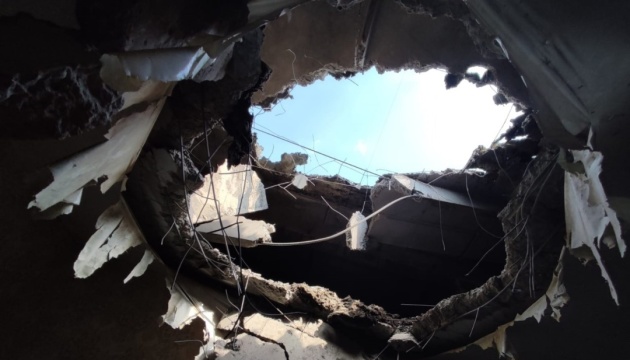
Klitschko said sections of the building’s ceiling and an exterior wall were destroyed. Emergency services remained at the scene after the fire was brought under control.
The SBU said the damaged headquarters would be restored.
The agency also vowed that Russia would face a response through further Ukrainian operations, including strikes against Russian assets and networks.
A Russian drone struck the Ukrainian Security Service (SBU) headquarters on Volodymyrska Street in central Kyiv on September 4, injuring 12 people.
The drone was deliberately directed at the office of SBU chief Oleksandr Poklad, according to Ukrainian officials, but he was not… pic.twitter.com/DQ76MyAEeO
The Russian strike also damaged a building within the National Conservation Area “Sofia Kyivska,” located directly across Volodymyrska Street from the SBU headquarters, according to Suspilne.
According to the reserve’s director general Nelia Kukovalska, the blast shattered windows and destroyed the glass entrance structure of the complex’s Consistory building, whose exterior faces Volodymyrska Street.
No one at the reserve was injured, as staff and visitors took shelter. The historic St. Sophia Cathedral itself was not damaged, according to Kukovalska.
The St. Sophia Cathedral in Kyiv was founded in 1011, under the reign of Volodymyr the Great, the king who ruled Kyivan Rus from 980 to 1015. (Photo: ukrmandry.com.ua)
The nearby Zavertailo bakery was also damaged, though all staff and customers survived after taking shelter in the basement.
Ukrainian Foreign Minister Andrii Sybiha called on partners to increase pressure on Russia in response to the strike on the Security Service of Ukraine (SSU) building near St. Sophia Cathedral.
President Volodymyr Zelensky said that a Russian drone struck the central building of the Security Service of Ukraine (SSU) on Volodymyrska Street in Kyiv, opposite St. Sophia’s Cathedral. According to him, the drone was directed straight at the office of SSU Chief Oleksandr Poklad.
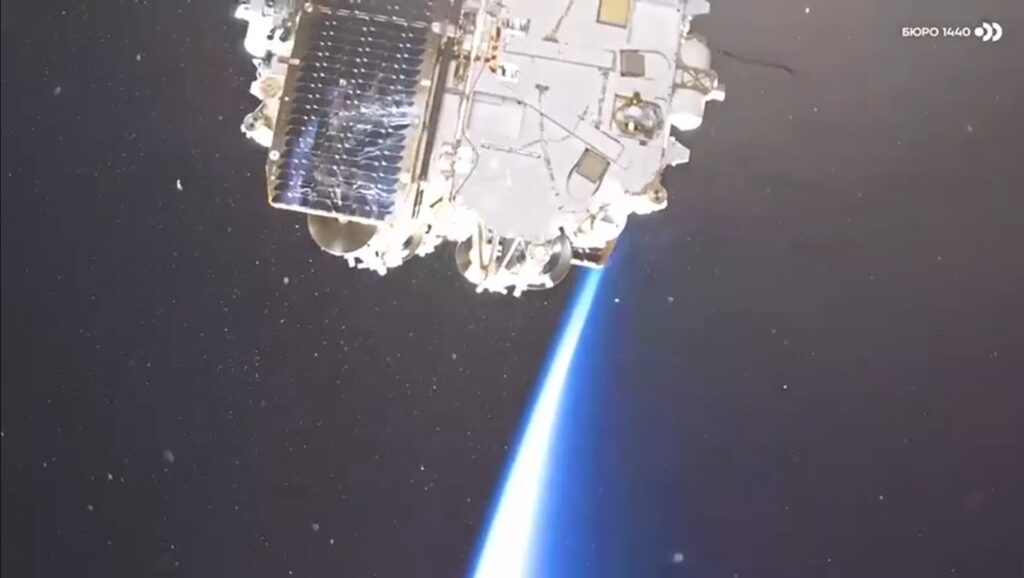
Russia's newest batch of Starlink-style satellites is gaining altitude sooner and sitting higher than the country's already-working first batch did at the same point, an analysis by Ukrainian defense outlet Militarnyi found. That complicates recent reports that the batch will stay far below its working altitude—though a few of the craft clearly have malfunctioned.
Moscow is racing to field its own orbital network to replace the Starlink service its troops used without authorization, a system experts warn could one day relay commands to long-range strike drones.
Where the "failure" verdict came from
Business Insider reported that all 16 satellites in the second Rassvet batch—launched 19 July—had fallen short of their target orbit, citing public US Space Force tracking data. The Institute for the Study of War (ISW) noted that many of the craft sat between 300 and 400 kilometers, well below their intended orbit. Russia looks unprepared to deploy at this pace and will likely face further delays, ISW assessed. At those low heights, thicker air drags on satellites and shortens their lives. Rassvet—Russian for "Dawn"—is built by the Russian firm Bureau 1440. Moscow rushed the network in after SpaceX cut off Russian forces' access to Starlink.
What the altitude data shows
Militarnyi's own reading of the tracking record points the other way. A rocket drops the satellites near 300 kilometers, and they raise themselves over months on their own engines. The July batch fired those engines days earlier than the March group, giving it a head start. By day 46, the new batch's median altitude was 365 kilometers, against 314 for the first. Thirteen of the new craft had passed 320 kilometers and ten cleared 350, against five and one for the first batch. The newer craft climb at a slower daily pace, but the early start left them well ahead on height.
Militarnyi cautions that the batch cannot be judged before roughly 100 to 125 days after launch—around late October—the window in which most of the March craft passed 500 kilometers.
The malfunctions are real
Two satellites show no real climb and are sinking toward the atmosphere, a third rose and slipped back, and a fourth stalled with the cause unclear. The March launch lost one craft outright and left two more stuck below working height. The company had listed a target orbit near 800 kilometers, yet the first batch settled far lower and still works. Militarnyi counts thirteen of its satellites in a stable orbit near 508 kilometers, where Business Insider and ISW put twelve of them at roughly 550. By its count, they now open at least two communication windows over Ukraine each day, each running longer than an hour.
Russian drone and missile attacks on Kyiv once came mostly at night. Now, a shift in tactics has brought attacks day and night, shattering the expectation that daylight means a return to normal life and leaving residents exhausted by constant disruption.
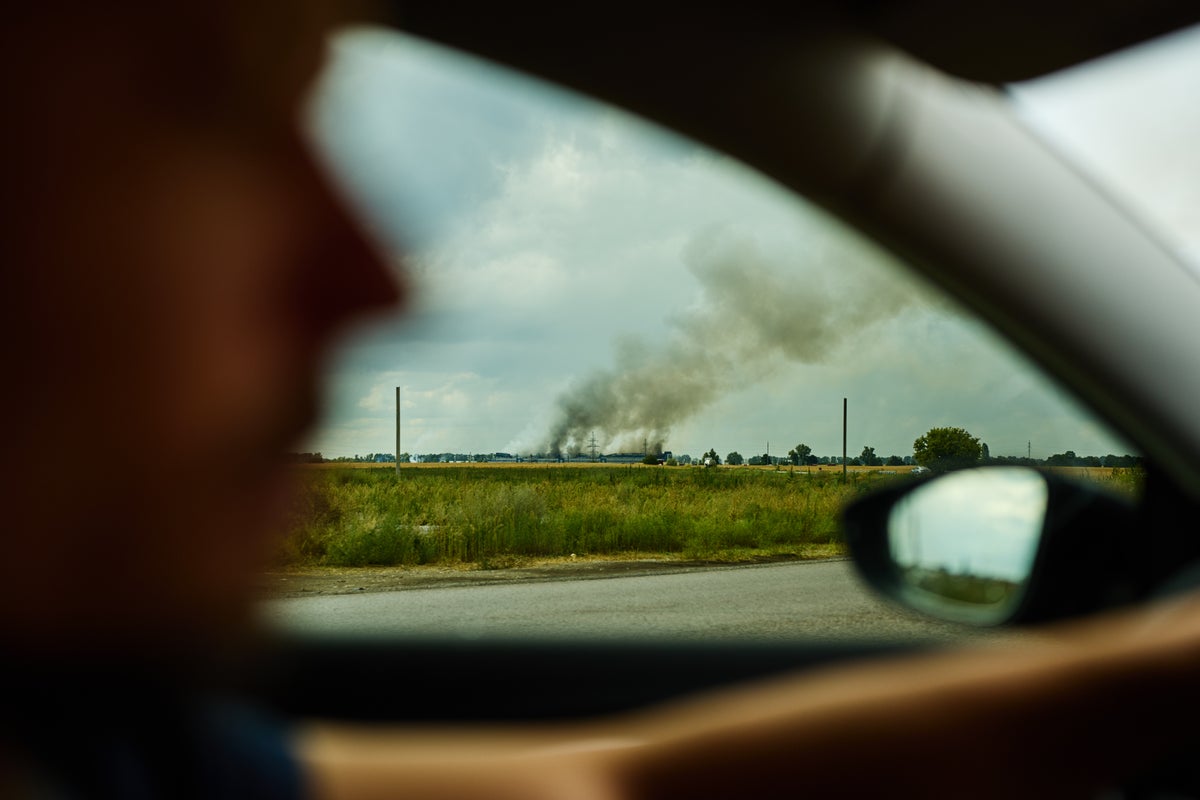
Ukrainian drones set fire to two fuel depots around Sochi and hit a Russian air defense position overnight on 4 September, according to monitoring channels. They also reported that drones struck an explosives factory and a petrochemical plant in Bashkortostan the same night, more than a thousand kilometers from Ukraine. Russian officials acknowledged the depot fire and said nothing about the air defense site.
The strikes are part of Ukraine's long-range campaign against Russian refineries, fuel depots, and military plants, run with cheap drones deep inside Russia. Oil proceeds fuel Russia's war machine and its whole economy.
Two depots burned behind their anti-drone screens
Astra's OSINT analysts geolocated the fires to the Rosneft-Kubannefteprodukt depot in Sochi's Adler district and to the Lukoil-Yugneftprodukt depot on the federal territory of Sirius. Sochi mayor Andrei Proshunin confirmed a fire at a depot. The regional operational headquarters claimed there were no casualties. Sochi is a Russian resort city on the eastern Black Sea coast, about 600 km from the frontline in Ukraine.
Fires broke out at two fuel depots in and beside Sochi, southern Russia, after drones struck overnight
One is a Rosneft depot in the resort's Adler district, the other a Lukoil site on the federal territory of Sirius, reported the Russian news Telegram channel Astra, which… pic.twitter.com/JqXiw2pRYG
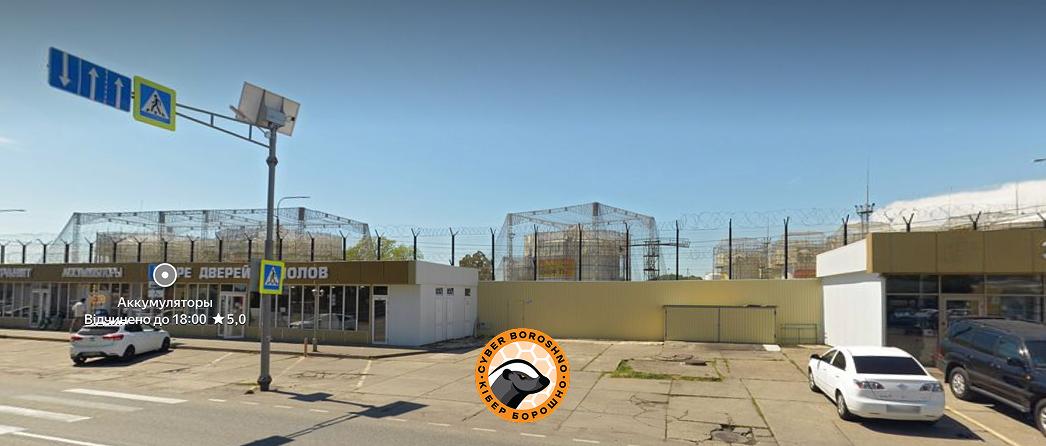
The Ukrainian OSINT channel Cyberboroshno identified one of the hit sites as the BATO aviation fuel terminal, which fuels aircraft at airports across Krasnodar Krai. Every tank there stood behind purpose-built protective structures, Militarnyi reported, and the Lukoil site holds 12 tanks with a combined volume of about 8,400 m³. The burning depot sits roughly 100 meters from Sochi international airport, Russia's fifth-busiest by passenger traffic in 2024, the Russian outlet Agentstvo found.
Protective structures around the fuel tanks at the BATO aviation fuel terminal in Sochi, Russia, September 2026. Photo: Cyberboroshno
Panoramic imagery from this year shows anti-drone netting around the tanks at both depots. Two days before the strikes, Russian Deputy Prime Minister Aleksandr Novak claimed Russian refineries were better protected than those in the UAE, and Russian President Vladimir Putin said their protection level was now completely different.
An air defense position caught fire near the Abkhazia border
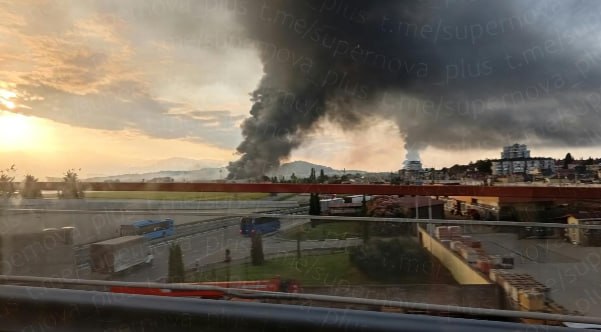
Astra analyzed eyewitness footage and placed a detonation and fire at a launch position near the settlement of Sirius, by the Psou river on the Abkhazia border, where an S-300 or S-400 system is based. The Ukrainian monitoring channels Exilenova+ and Supernova+ said drones struck the air defenses directly. Russia's Defense Ministry and local authorities reported nothing about it.
The site of the strike on Russian air defense positions in Sochi, Russia, 4 September 2026. Photo: Exilenova+
Drones had tried the same area in May. A Ukrainian sea drone struck the Russian supply vessel Nefrit at Sochi port the previous day.
Explosives and petrochemicals hit in Bashkortostan
Drones reached Sterlitamak on the morning of 4 September, hitting the Avangard plant and the Sterlitamak Petrochemical Plant, footage published by Supernova+ shows. Residents reported a series of explosions, and one man said on video that about a dozen drones had already flown toward the petrochemical works. The frames show Ukrainian FP-1 strike drones.
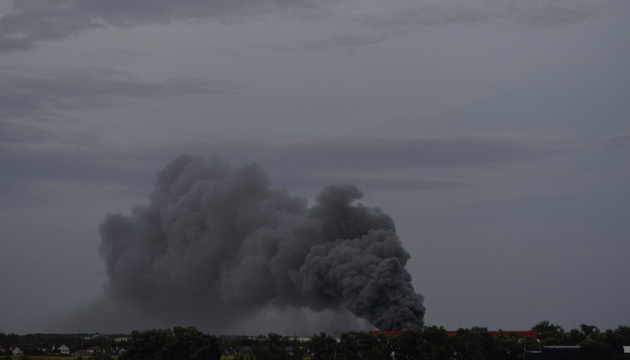
Smoke over Sterlitamak, Russia, after the strike on the Avangard plant, 4 September 2026. Photo: Supernova+
Russia's Defense Ministry claimed it downed 490 drones overnight across several regions, occupied Crimea, and the Black Sea.
Avangard makes explosives, ammunition, and casings on Russian state defense orders, and also disposes of ballistic missile solid fuel. It belongs to Rostec and sits on the sanctions lists of several countries. The petrochemical plant, about 1,300 km from Ukraine's border, produces rubber, aviation gasoline, and the additive ionol for Russian industry, Militarnyi said. Drones have hit it in November 2025 and in January and April 2026.
The State Bureau of Investigation (SBI) has denied information circulating on social media and in some Telegram channels alleging that it had handed over the personal data of the Security Service of Ukraine (SSU) personnel to the Russian side.
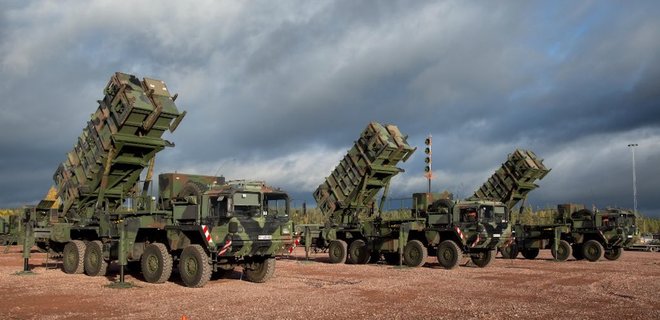
Spain will send Ukraine more Patriot interceptor missiles, Foreign Minister José Manuel Albares confirmed, according to Le Monde.
Patriot interceptors are among the few weapons Ukraine has that can stop Russian ballistic missiles. The specialized rounds are scarce worldwide, and manufacturer Raytheon cannot build them fast enough to meet demand. Each costs $3 million to $4 million.
Spain confirms the flow will grow
Albares spoke at an informal meeting of European Union foreign ministers in Ireland on 2 September. He reaffirmed Madrid's support as Kyiv pressed for more interceptors. "We have been doing this for a long time, and we will continue to do so," he said. He confirmed that Madrid is preparing a new batch. EU foreign policy chief Kaja Kallas said the bloc is also working with non-member states to lift Ukraine's air defenses.
Madrid and Kyiv meet in Wicklow
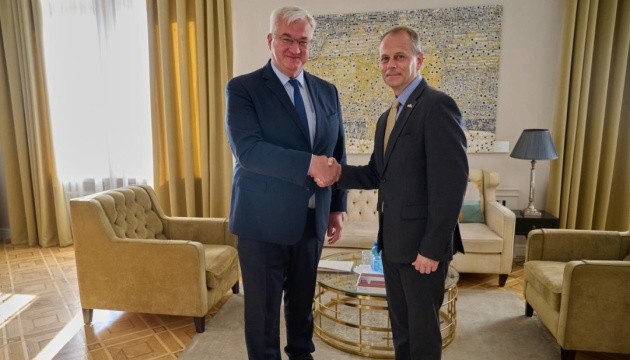
The confirmation followed talks with Ukrainian Foreign Minister Andrii Sybiha. They met on the sidelines of the same EU gathering, in Wicklow. Sybiha said he pressed Ukraine's urgent need to strengthen its air and ballistic missile defenses. He also thanked Spain for its solidarity. Albares reaffirmed Spain's role as a founding member of the Integrated Anti-Ballistic Missile Coalition, which ten countries launched in Paris on 13 July. The group aims to build a shared anti-ballistic capability, and its declaration calls the coalition purely defensive. Spanish military instructors are training Ukrainian technicians to maintain the systems.
What Spain has promised so far
Spain is not just giving—it is also buying. In December 2025, Madrid signed a $1.7 billion contract with US arms maker Raytheon for four new Patriot systems. It was Spain's largest Patriot order yet. The deal covers radars, launchers, command-and-control stations, and training. Spanish firm Sener builds the control system for the GEM-T interceptor those launchers fire. Spain is one of only a handful of European countries that operate Patriots.
What Spain has already sent
Spain has supplied Ukraine with Patriot missiles before. In March, Madrid pledged five older PAC-2 interceptors from an air-defense artillery regiment at Marines, near Valencia. Madrid has pledged €1 billion ($1.16 billion) in military aid for 2026. Ukraine has spent months urging partners to release interceptors from their stockpiles.
The Defense Forces of Ukraine struck a site used to launch combat drones, as well as command posts, reconnaissance and communications assets belonging to Russian forces, on September 3 and overnight into September 4.
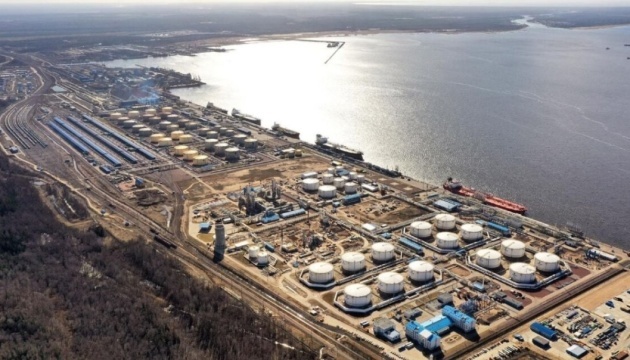
The General Staff of the Ukrainian Armed Forces has confirmed that two major oil refineries in Russia were forced to halt operations following strikes, including Lukoil-Nizhegorodnefteorgsintez in the Nizhny Novgorod region and Novatek-Ust-Luga in the Leningrad region.
 Connexion









(@andrii_sybiha) September 4, 2026