5 Takeaways From the Senate Debate in Maine

© Pool photo by Gregory Rec


© Pool photo by Gregory Rec


© Oliver Bunic/Agence France-Presse — Getty Images


© Brendan Mcdermid/Reuters


© Al Drago for The New York Times


© Al Drago for The New York Times


© Doug Mills/The New York Times


© Doug Mills/The New York Times

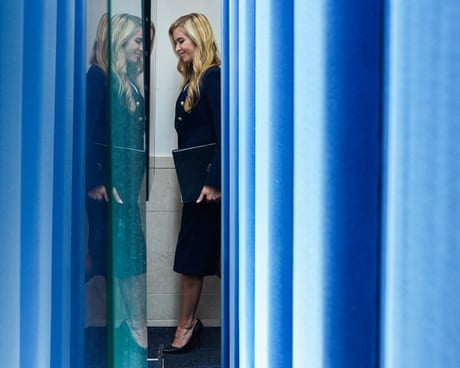
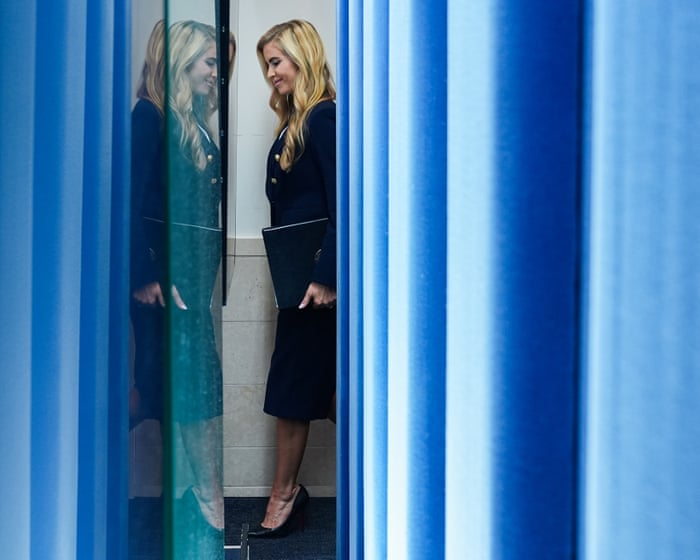
Katie Zacharia faces mounting questions over her legal credentials after admitting she did not pass the bar exam
Donald Trump’s new White House press secretary says it is “unknown” how much she will engage with the press, amid mounting questions over her legal credentials after admitting she did not pass the bar exam.
In a brief interview with the Guardian, Katie Zacharia detailed the whirlwind sprint to replace her predecessor Karoline Leavitt as the US president’s chief spokesperson.
Continue reading...
© Photograph: Julia Demaree Nikhinson/AP

© Photograph: Julia Demaree Nikhinson/AP

© Photograph: Julia Demaree Nikhinson/AP


© Doug Mills/The New York Times


© Tierney L. Cross/The New York Times


© Doug Mills/The New York Times


© Nathalia Angarita for The New York Times


© Tyler Hicks/The New York Times


© Kenny Holston/The New York Times; Antranik Tavitian for The New York Times


© Nicole Bengiveno/The New York Times


© Patrick T. Fallon/Agence France-Presse — Getty Images

DoJ had demanded that LA county confirm citizenship of people on list in thumb drive, but officials refused
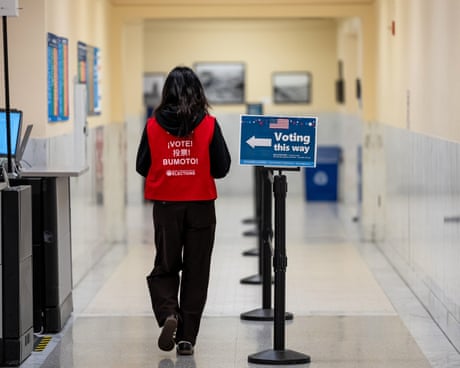
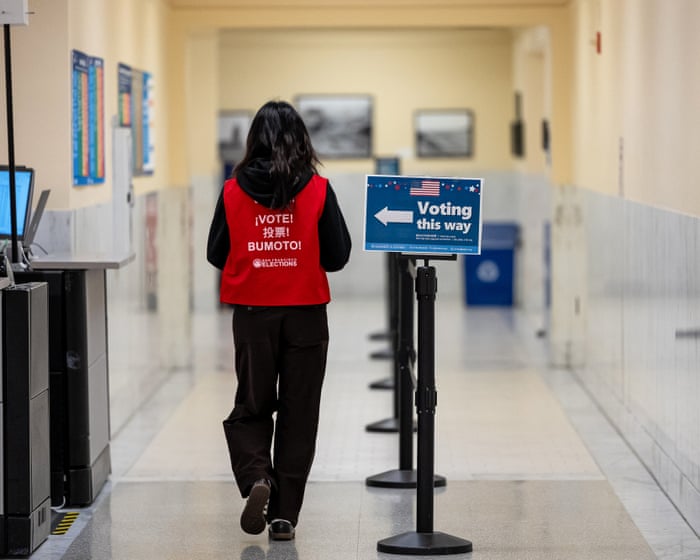
The US Department of Justice sued California on Thursday, seeking a court order to prevent the state from tabulating certain ballots cast in the midterm elections.
The suit came two days after the department made a specious demand to the state. On Tuesday, the department sent election officials in Los Angeles county a thumb drive with a handwritten password purporting to contain the names of noncitizens registered to vote. The department asked officials to confirm the citizenship of anyone on the list and set aside ballots from those whose status could not be confirmed. It gave the state 48 hours – an extremely narrow window – to take action. It did not provide details on how it came up with the names on the list. In its lawsuit, filed in federal court in the central district of California, the justice department said it had provided the state with more than 20,000 names of likely noncitizens.
Continue reading...
© Photograph: David Paul Morris/Bloomberg via Getty Images

© Photograph: David Paul Morris/Bloomberg via Getty Images

© Photograph: David Paul Morris/Bloomberg via Getty Images

UK defence secretary trying to cool tensions and is arguing it is in America’s economic interests to support Kyiv
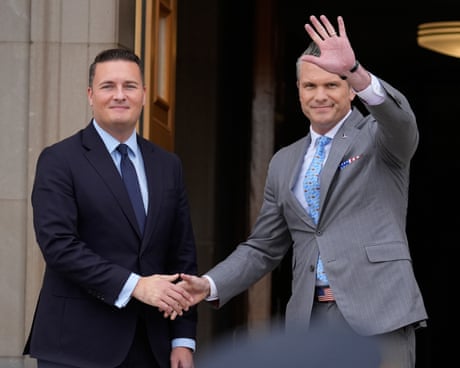
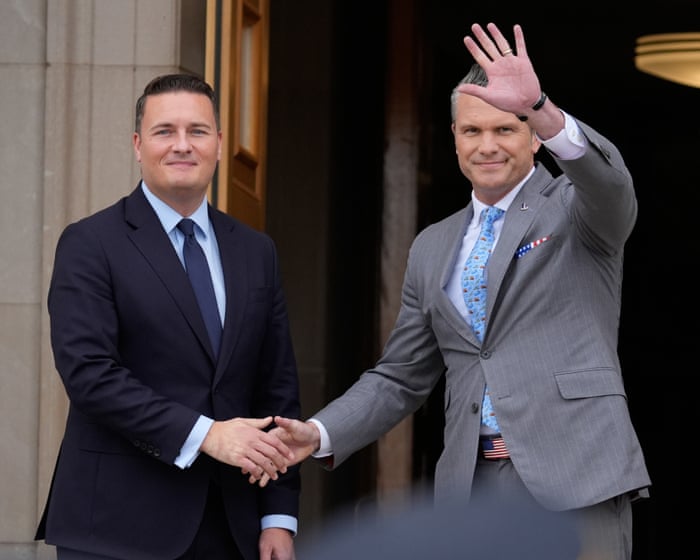
Wes Streeting urged the US to stand by Ukraine on his visit to the American capital and sought to cool tensions between the two countries in the wake of the Starlink row that is threatening to set back Kyiv’s war effort.
The British defence secretary, giving a speech before a meeting with his US counterpart, Pete Hegseth, argued that supporting Ukraine was in the long-term interests of Washington – and a business opportunity.
Continue reading...
© Photograph: Manuel Balce Ceneta/AP

© Photograph: Manuel Balce Ceneta/AP

© Photograph: Manuel Balce Ceneta/AP


© Kenny Holston/The New York Times

Soldier who killed 13 people in 2009 will still be executed, but president said ‘people would rather not watch him die’
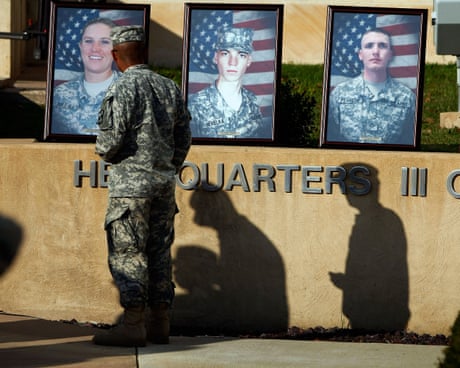
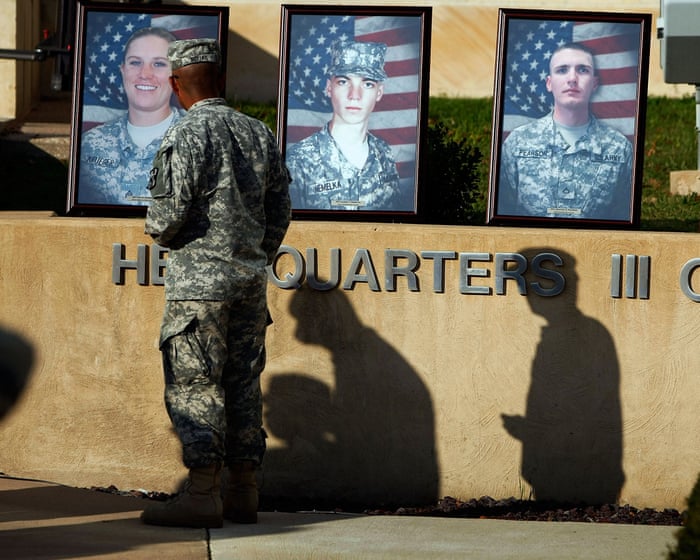
Donald Trump has shelved a widely condemned plan to livestream the execution of Nidal Malik Hasan, who was convicted of killing 13 people at a military base at Fort Hood in Texas in 2009.
In a social media post on Thursday, Trump argued that broadcasting such an execution “might have been a strong deterrent for the World to witness how America deals with Terrorists and SCUM like Hasan” but said that “many very good and well meaning people would rather not watch him die, through streaming, or through any other visual device”.
Continue reading...
© Photograph: Jessica Rinaldi/Reuters

© Photograph: Jessica Rinaldi/Reuters

© Photograph: Jessica Rinaldi/Reuters


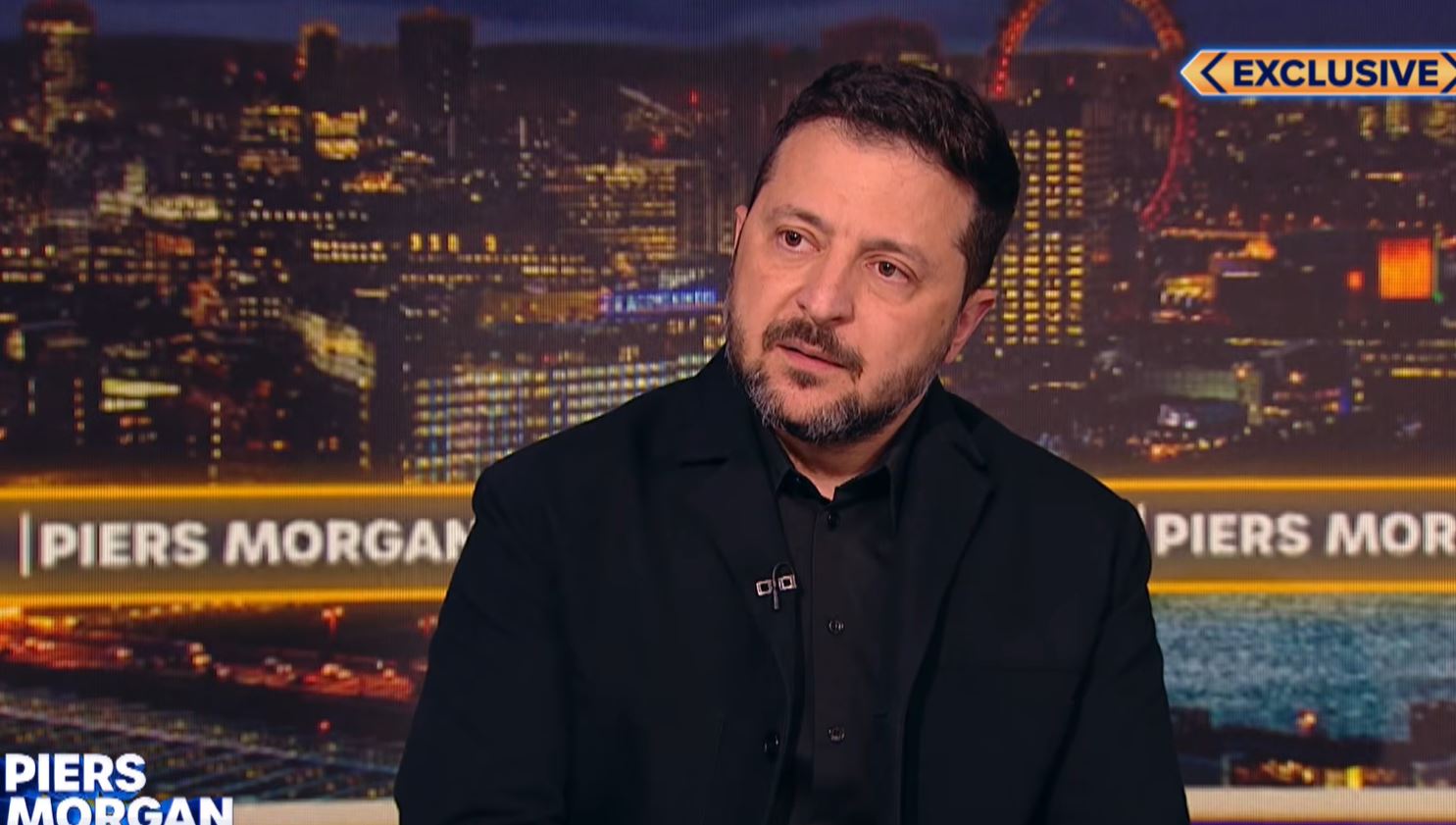
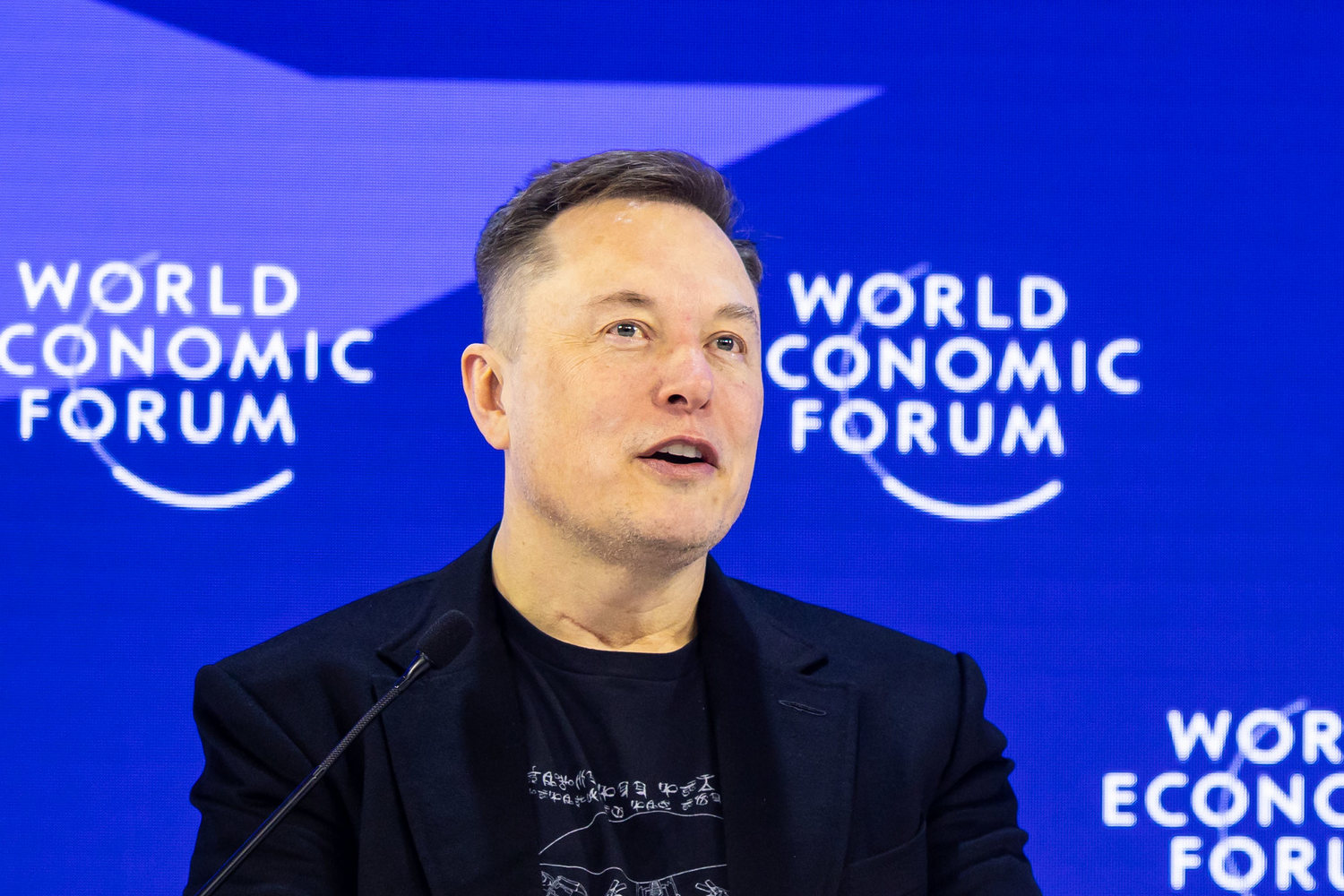
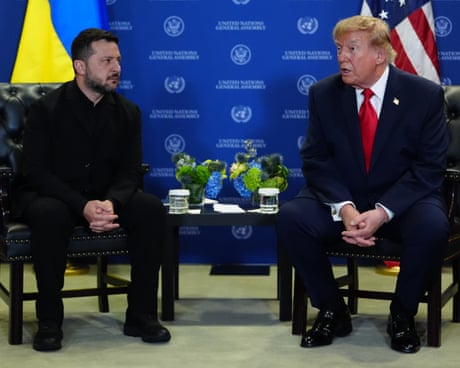
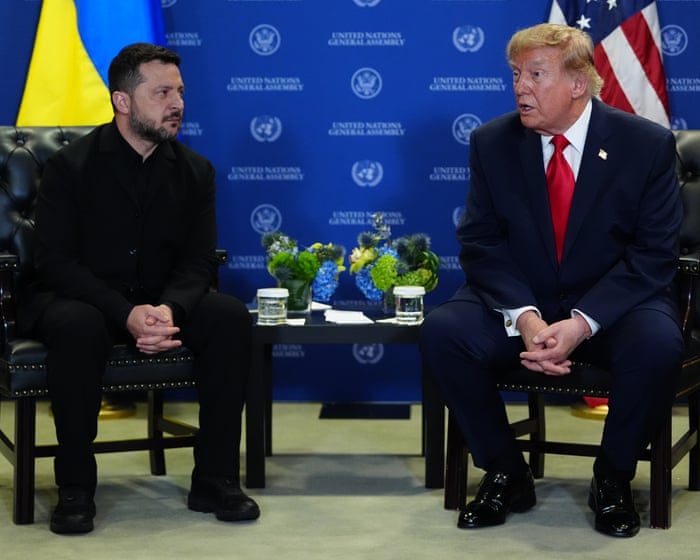
Tech billionaire Elon Musk wrote on X on 15 October: “And so the slaughter continues … Time for Zelensky to go.” Four days earlier, he had posted that Zelenskyy had gone too far, after US President Donald Trump said it was time for Ukraine to get a new president. Asked by Morgan on 14 October whether he would resign, Zelenskyy said he would not: “It’s my responsibility.”
Musk’s post comes as Washington squeezes Kyiv instead of Moscow: Ukraine’s military satellite links slowed, US missile warnings went missing, and the US threatened to cut intelligence unless Kyiv stops hitting Russian refineries.
Zelenskyy said elections could not be held under constant Russian attack: “From the point of security, you can’t do elections.”
Of any future president, he said: “I’m sure the new man or woman will defend our country.” He also reminded Trump that Crimea and parts of Donbas were already occupied when he took office, under another president, long before the full-scale invasion.
“I’m a realist, and I understand that people are more important than one kilometer or two kilometers. It’s not about kilometers. It’s about land and homes,” he told Morgan.
Zelenskyy has said Ukraine is ready for elections if a full 60-day ceasefire is in place. Numerous sources told The Atlantic that Trump sees Zelenskyy as the main obstacle to a peace deal and related business deals with Russia. One Trump adviser said he is also an obstacle to Trump’s hopes for the Nobel Peace Prize.
Ukrainian forces reported restrictions on Starshield, the SpaceX satellite system they use for battlefield communications and drone operations, and Zelenskyy warned the decision would cost lives. On 14 October, Musk said Starshield is owned and controlled by the US government, which sets its limits, and that commercial Starlink cannot be used for offensive military action. Zelenskyy told the FT he did not know whether the decision was SpaceX’s or the US government’s, adding: “I think it’s about SpaceX.” A senior US official told Axios the Trump administration had nothing to do with the restrictions.
On two consecutive nights, air raid alerts in Kyiv sounded only after Russian ballistic missiles were already approaching or striking the capital. Zelenskyy said Ukraine received no warning from partners of the launches on 12 and 13 October, which hit civilian infrastructure and a major power plant. A Ukrainian official told CNN the loss of intelligence “will give Russians a real leverage on a frontline.” A European official questioned Washington’s explanation that weather caused the gaps in missile warnings. Trump denied halting intelligence sharing.
Washington had warned it could suspend intelligence sharing if Ukraine kept striking Russian refineries, Axios reported. A US official disputed that any explicit threat was made. Sources told CNN the US had also threatened to halt European purchases of US weapons for Ukraine. Zelenskyy told the FT the warning came through military channels.
To lower energy costs before next month’s midterm elections, Trump has pressed Kyiv to stop refinery strikes, CNN reported. Zelenskyy said he felt betrayed after Trump announced a diesel supply deal with Russia. On 14 October in London, he told the FT that Ukraine would resume strikes on Russian oil refineries.

Voters’ opposition to the state of Trump’s economy is well established – despite his desperate attempts to deflect
It’s indisputable that the political polarization of our time has reduced (and confused) the influence of economic conditions on US elections.
In September of 2024, in the waning weeks of the Joe Biden presidency, 65% of Republicans believed the US economy was getting worse. About six months later, as Donald Trump launched a trade war on the rest of the world with his “liberation day” tariffs, the share of Republican pessimists had dropped to 33%.
Continue reading...
© Photograph: Manuel Balce Ceneta/AP

© Photograph: Manuel Balce Ceneta/AP

© Photograph: Manuel Balce Ceneta/AP


Ukrainian officials contacted the White House, CIA, and Pentagon after the restrictions, which Ukraine says affected both Starlink and Starshield, Axios reported on 14 October. A senior US official told Axios the Trump administration had nothing to do with the restrictions. On the same day, Elon Musk said on X that Starshield systems are owned and controlled by the US government, and that any speed or usage limits are decided by the US military and ultimately the president.
The restrictions could affect Ukraine’s ability to intercept Russian attack drones and carry out mid-range strikes against Russian forces and military targets in occupied Ukrainian territories. A speed cap of 160 km/h was insufficient to intercept some jet-powered drones, an unnamed Ukrainian official told Axios. Ukrainian officials told Axios they suspect SpaceX imposed the restrictions to pressure Kyiv to accept US President Donald Trump’s demand to stop striking Russian oil refineries, though the motive remains unconfirmed. But Starlink does not work inside Russia, and the drones attacking Russian oil facilities use other communications systems, according to Reuters.
Musk did not directly address the throttling, Axios noted. Starlink, he wrote, “is a commercial service owned and controlled by SpaceX,” limited to civilian or defensive use.
White House officials told the Ukrainians they don’t have control over SpaceX, two sources told Axios. One said the administration would reach out to SpaceX to figure out what happened. The White House did not immediately respond to Axios’s request for comment.
Presidential adviser Serhii Beskrestnov said on 14 October that SpaceX had imposed a 160 km/h limit on Starshield’s “military package” overnight without warning. Ukraine’s 7th Rapid Reaction Corps said mid-range strike drones must reach high speed quickly and that an unstable connection “will make it impossible to launch such aircraft or use them as intended.” One unit on the Huliaipole front had to cancel some missions, the corps told Novynarnia.
Ukrainian officials told Axios the system turned off when drones exceeded 160 km/h, and sometimes 80 km/h, before service was partially restored on 14 October. The Defense Ministry said SpaceX continues to restrict Starlink to 160 km/h and that it remains in communication “with partners and SpaceX regarding stable service conditions and the prevention of sudden restrictions,” Axios reported.
The restrictions followed Trump’s 9 October deal with Russian President Vladimir Putin easing sanctions on Russian diesel. A day later, Trump told reporters: “We said you could do whatever you want to Russia, don’t hit the refineries,” the Kyiv Independent reported.

This live blog is now closed.
The US government could spend hundreds of thousands of dollars on a media campaign in South Africa to figure out why more white Afrikaners are not applying to become refugees to the US, as Donald Trump had hoped.
State department officials, according to an August proposal seen by the Guardian, outlined a roughly $335,000 research and advertising effort after applications to the refugee program “trended lower than expected” since Afrikaners were allowed to apply directly online in November 2025. The document, written by the US mission in South Africa with a department research unit for the embassy in Pretoria, admits officials know little about why.
Continue reading...
© Photograph: Joe Raedle/Getty Images

© Photograph: Joe Raedle/Getty Images

© Photograph: Joe Raedle/Getty Images

Kimberly Guilfoyle’s departure has renewed scrutiny of the president’s picks for diplomatic posts, from France to Jamaica
Donald Trump has appointed family members, friends and loyal political allies to represent the US on the world stage, dispatching an extraordinary array of characters to embassies across the world.
While presidents of both parties have long rewarded donors and allies with plum ambassadorships, Trump has chosen loyalists willing to go to bat for him regardless of the implications for US-foreign relationships.
Continue reading...
© Photograph: Getty Images

© Photograph: Getty Images

© Photograph: Getty Images

Exclusive: Trump has falsely claimed Afrikaners are facing ‘white genocide’, but very few have applied to live in US
The US government could spend hundreds of thousands of dollars on a media campaign in South Africa to figure out why more white Afrikaners are not applying to become refugees to the US, as Donald Trump had hoped.
State department officials, according to an August proposal seen by the Guardian, outlined a roughly $335,000 research and advertising effort after applications to the refugee program “trended lower than expected” since Afrikaners were allowed to apply directly online in November 2025. The document, written by the US mission in South Africa with a department research unit for the embassy in Pretoria, admits officials know little about why.
Continue reading...
© Photograph: Julia Demaree Nikhinson/AP

© Photograph: Julia Demaree Nikhinson/AP

© Photograph: Julia Demaree Nikhinson/AP

Claims that James Talarico suffered a mental health crisis spread across rightwing media, offering a warning about disinformation ahead of the US midterm election
Where is James Talarico? The question ricocheted around rightwing echo chambers before metastasising into a conspiracy theory – and a reminder of the persistent danger of disinformation in the US midterm elections.
The smear campaign began when Talarico, the Democratic candidate for the US Senate in Texas, was not seen in public for nine days. His campaign was slow to explain why. While nature abhors a vacuum, Donald Trump and social media seize on one and weaponise it.
Continue reading...
© Photograph: Bloomberg/Getty Images

© Photograph: Bloomberg/Getty Images

© Photograph: Bloomberg/Getty Images

The president is used to bullying his media targets. The quagmire that is his libel actions shows the broadcaster is working to a different script
For the greatest account of the BBC’s finest hour, one must turn to Penelope Fitzgerald’s novel, Human Voices, written in 1980 and set 40 years earlier, at the corporation’s Portland Place wartime HQ. Flanked by sandbags and infused with a smell of cooking “from the deep hold that suggested more strongly than ever a cruise on the Queen Mary”, the organisation that Fitzgerald describes is at once noble and deeply eccentric. “Broadcasting House stood headed on a fixed course south,” she writes. “With the best engineers in the world, and a crew varying between the intensely respectable and barely sane, it looked ready to scorn any disaster.”
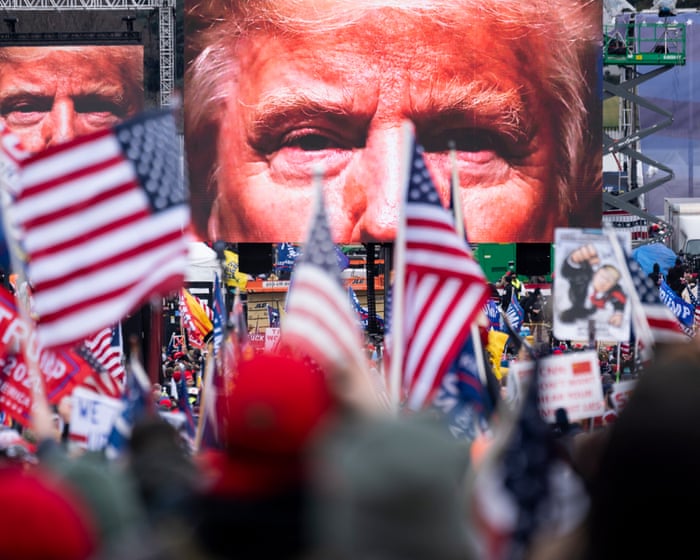
In other words, a formidable foe, one that in the spring of 1940, in the face of anticipated Nazi invasion, decided “without prompting, that truth was more important than consolation, and, in the long run, would be more effective”. I bring this up in respect to the gathering storm of Donald Trump versus the BBC, a fight triggered by the US president’s $10bn defamation lawsuit – $10bn! It’s a wonder he didn’t go for $10 gazillion – brought against the corporation at the end of last year in response to a poorly edited episode of Panorama. The BBC was at fault, editing together comments made by the US president at a rally on 6 January 2021 to give, as the corporation’s apology put it, “the mistaken impression that President Trump had made a direct call for violent action”. But it is fighting the lawsuit.
Emma Brockes is a Guardian columnist
Continue reading...
© Photograph: Bill Clark/CQ-Roll Call, Inc/Getty Images

© Photograph: Bill Clark/CQ-Roll Call, Inc/Getty Images

© Photograph: Bill Clark/CQ-Roll Call, Inc/Getty Images

As the midterm elections loom, Oliver Laughland and Tom Silverstone travel to rural West Virginia, a Republican party stronghold, to explore how soaring gas prices, war in the Middle East and datacenter expansion are affecting Donald Trump's popularity among his base. Although the state remains staunchly Republican, there are signs of a new politics emerging – and local Democrats are looking to capitalize on it
Continue reading...
© Photograph: The Guardian

© Photograph: The Guardian

© Photograph: The Guardian

Nearly 61% believe country is in recession and 65% of independents say economy is worse, according to new Harris poll
With the midterm elections less than three weeks away, key voting groups including independents, rural voters and even some Republicans are increasingly disenchanted with Donald Trump’s economy, according to an exclusive Harris poll for the Guardian.
The majority of those surveyed were pessimistic about the economy, with three-quarters of Americans saying they are concerned about a recession while 61% wrongly believe that the US is already experiencing one. By its typical definition, the US is not currently experiencing a recession.
Continue reading...
© Photograph: Robert Nickelsberg/Getty Images

© Photograph: Robert Nickelsberg/Getty Images

© Photograph: Robert Nickelsberg/Getty Images


© Pool photo by Henry Nicholls


Ukraine will resume strikes on Russian oil refineries, ending a three-day pause it held at Washington’s request, Ukrainian President Volodymyr Zelenskyy told the Financial Times in an interview published on 15 October. Russia kept bombing Ukraine’s energy system throughout the pause, while Kyiv lost US missile warnings and its Starlink service slowed. Zelenskyy said Ukraine would halt energy strikes again only in exchange for more US air defense.
Ukraine's deep-strike campaign targets the Russian oil industry, which fuels Russia's army in Ukraine and earns the export revenue funding the war. Striking the plants that turn Russian crude into fuel, 12 of them hit in September alone, is one of the few levers Kyiv controls on Moscow’s war income. US President Donald Trump has blamed those strikes for higher US fuel prices, which most analysts attribute to the Iran war, and Washington has threatened to withhold intelligence, and reportedly weapons, unless Kyiv gives it up. Each step Washington takes toward Moscow, from fuel waivers to talk of frozen assets, widens the gap Europe and Ukraine must fill, while Russia gains revenue and time to keep striking.
Zelenskyy said he stopped the refinery strikes for three days to meet US wishes, but Russia kept hitting Ukraine’s energy infrastructure and killing civilians. During the pause, Ukraine received no US warnings of ballistic missile launches, he said. Starlink also slowed across the country, hampering front-line operations and mid-range strikes on Russian military targets, he added.
Russia used those days to fire 39 ballistic missiles and more than 120 drones at Ukraine’s grid overnight into 14 October, leaving at least 600,000 people without power. “We hold energy ceasefire from our side,” Zelenskyy told Piers Morgan on 14 October. Of the Starlink slowdown, he added: “I’m sure that they knew what they did.”
Ukraine could again stop hitting Russian energy only if it receives more US interceptors for its Patriot systems, Zelenskyy told the FT. He warned that a halt could simply invite more US-Russia deals that feed Russia’s war machine, and predicted the next one would involve gas.
US intelligence officials had warned Ukraine’s embassy in Washington that a new strike on Russia’s energy facilities would end all intelligence sharing at once, The Washington Post reported, citing a person familiar with the matter. Washington has not fully cut it off, but the threat stands, the person said. Trump said on 13 October that the US was still sharing intelligence.
A senior US official told Axios the administration had nothing to do with the Starlink limits, which Elon Musk had blamed on the US military. The administration is also considering easing sanctions on shadow fleet tankers, which have carried oil from Russia, Iran, and Venezuela, so the blacklisted vessels could haul non-sanctioned cargo, a US official told Reuters. The US Energy Department said the move would not help Russia ship its oil or fuel.
Washington eased sanctions on Russian oil this spring, after which Russia’s oil income jumped $890 million in a week, and it extended that waiver despite telling allies it would not. US envoys also proposed unfreezing part of Russia’s frozen assets to lure Moscow back to talks, an idea European officials rejected, the Financial Times reported.

In today’s newsletter: As Russia resists a ceasefire and Trump’s shifting priorities unsettle allies, an end to the conflict isn’t getting any closer
Good morning. In his usual asinine unconventional approach to international relations, Donald Trump announced on Sunday (via Truth Social, how else) an “ENERGY CEASEFIRE in the War between Russia and Ukraine”, apparently without checking with either side. Volodymyr Zelenskyy, who said any such deal was “news to me,” nonetheless declared he was “ready and we will accept it”. Vladimir Putin responded by blowing up some Ukrainian power plants.
This has been the tenor of much diplomacy during Trump’s tenure: false starts, U-turns, incoherent positions (and some playful flirting with Vlad). Meanwhile fighting continues, and America’s allies attempt to manage the fallout. Andy Burnham hosted Zelenskyy at Downing Street yesterday, stating the UK is doubling down on its support for Ukraine, and pointedly calling on others to “follow suit”.
UK | Sally Rooney has said she is being forced to withdraw her books from sale in the UK because of her support for the banned organisation Palestine Action.
Gaza | Israel is refusing to allow a key military outpost project for Donald Trump’s Board of Peace to proceed in Gaza, the Guardian has learned.
EU | Britain will benefit from much closer trading relations with the EU even if that means giving up its ability to negotiate free trade agreements, the Scotland secretary has said.
Ukraine | Ukraine’s military has suddenly had its access to Starlink satellite internet terminals restricted as the Trump administration has increased pressure on Ukraine to immediately halt long-range strikes on Russia’s oil industry.

Vaccine | Guinea-Bissau has not approved the controversial hepatitis B study in newborns that would be funded by the US government and private partners, the African country’s minister of health said.
Continue reading...
© Photograph: Julia Demaree Nikhinson/AP

© Photograph: Julia Demaree Nikhinson/AP

© Photograph: Julia Demaree Nikhinson/AP

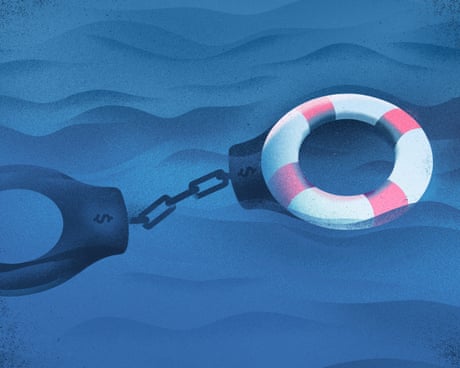
Finance ministers gathering for the IMF annual meeting know the need for multilateral cooperation to deal with many crises. There is little chance of that
Not much has gone right for the global economy this year, and plenty has gone wrong. Two big regional wars are destabilising prices and supply chains everywhere. Businesses and consumers are feeling the effects of a serious energy shock. Rising inflation has made it a lot more expensive for governments to finance their debts. China and the US are at loggerheads over trade.
Yet, so far, the impact has been modest. It is something of a miracle that the finance ministers and central bank governors gathered for this year’s annual meeting of the International Monetary Fund (IMF) in Bangkok are not having to deal with a full-blown crisis. This is not like the autumn of 2008, when the meetings took place during the worst of the global banking meltdown.
Larry Elliott is a Guardian columnist
Continue reading...
© Illustration: Sébastien Thibault/The Guardian

© Illustration: Sébastien Thibault/The Guardian

© Illustration: Sébastien Thibault/The Guardian