The hackers behind the massive FBI breach told 404 Media on Monday they do not intend to publish the data.The breach, in which the hackers stole personal information on “all FBI employees and applicants” including physical addresses, job roles, names of spouses, and medical records, represents a significant national security and counterintelligence threat. Criminals in the same ecosystem as the hacking group, called ShinyHunters, have previously used hacked phone data to track and harass the
The hackers behind the massive FBI breach told 404 Media on Monday they do not intend to publish the data.
The breach, in which the hackers stole personal information on “all FBI employees and applicants” including physical addresses, job roles, names of spouses, and medical records, represents a significant national security and counterintelligence threat. Criminals in the same ecosystem as the hacking group, called ShinyHunters, have previously used hacked phone data to track and harass the FBI agents investigating them. When 404 Media first broke news of the breach, the group sent the personal data of an agent and their spouse who they said was investigating the group.
Russia is likely attempting to force Ukraine to capitulate by spring 2027 through a large-scale campaign of long-range strikes, the Institute for the Study of War (ISW) said in its 27 September report. Russian President Vladimir Putin's new theory of victory relies heavily on the mass use of jet-powered drones and ballistic missiles against Ukraine, the institute assesses.
Russia keeps shifting to faster jet-powered drones that Ukraine's defenses struggle to stop, forcing it to spend sc
Russia is likely attempting to force Ukraine to capitulate by spring 2027 through a large-scale campaign of long-range strikes, the Institute for the Study of War (ISW) said in its 27 September report. Russian President Vladimir Putin's new theory of victory relies heavily on the mass use of jet-powered drones and ballistic missiles against Ukraine, the institute assesses.
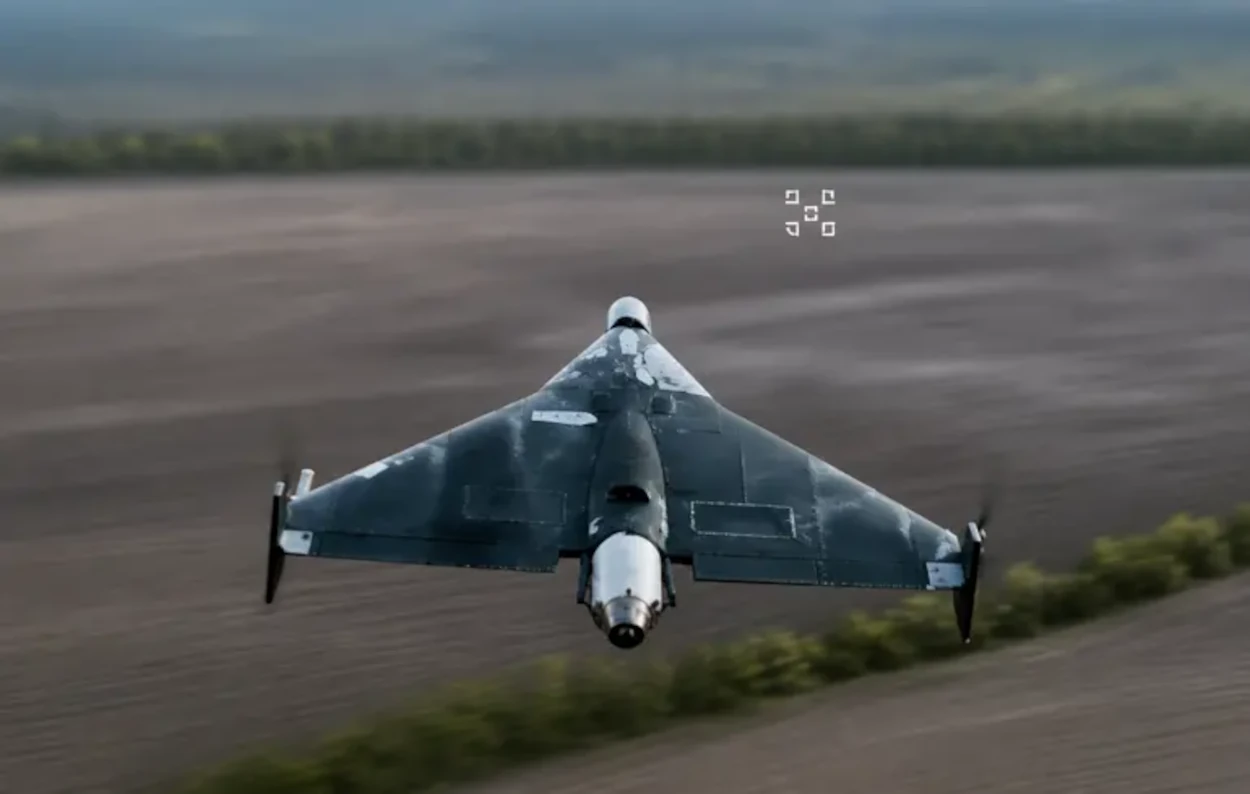
Russia keeps shifting to faster jet-powered drones that Ukraine's defenses struggle to stop, forcing it to spend scarce missiles on them. Russia's use of jet-powered drones rose eightfold from June to August, with Moscow launching around 7,700 such drones since their initial deployment, Ukrainian Air Force spokesperson Yurii Ihnat said on 23 September. But Putin likely does not expect the campaign to last indefinitely, and he may hold off on a new mobilization until he sees whether the strikes work, ISW assesses.
Putin's modified theory of victory
Putin's modified theory of victory largely depends on Russia's ability to mass-launch cheap jet-powered Gerans that get through Ukrainian defenses often enough, the institute notes.
Even a Kremlin-linked Russian milblogger claimed on 27 September that the Russian strategy, which relies heavily on long-range strikes, is costly and cannot continue indefinitely, not least because Ukraine is hitting Russia harder too, according to the analysis.
At the same time, Putin stated on 25 September that Ukraine "must feel" Russia's "retaliatory" strikes. ISW assesses that this suggests he intends to intensify Russia's strike campaign in winter, as he has in previous winters.
The aftermath of the Russian attack on Kyiv, Ukraine, 27 December 2025. Photo: National Police
If Putin is counting on Ukraine to break and capitulate this winter, he may be ignoring what the campaign will cost Russia over time, the institute notes. This strategy also counts on Ukraine's shortage of Patriot interceptors against ballistic missiles, and on the country's power grid and other vital systems giving way under months of strikes.
Until that approach runs out, Putin is unlikely to back down on his demands or agree to real ceasefire talks, ISW assesses.
Ukrainian interceptors could disrupt Russia's plan
A Kremlin-linked Russian milblogger claimed on 27 September that Russian forces launched predominantly jet-powered Geran-5 drones at Odesa, Mykolaiv, and Kyiv during the night of 26–27 September. According to the blogger, Russia's diverse arsenal of strike weapons and Ukraine's shortage of air defense assets allow Russian forces to maintain the current pace of strikes and expand the range of targets, ISW writes in its analysis.
At the same time, Ukrainian President Volodymyr Zelenskyy said on 26 September that Ukraine's interception rate for jet-powered Shahed drones currently stands at 55%. Of more than 2,730 such drones Russia had launched in September by then, Ukrainian forces had downed or suppressed more than 1,500, he added.
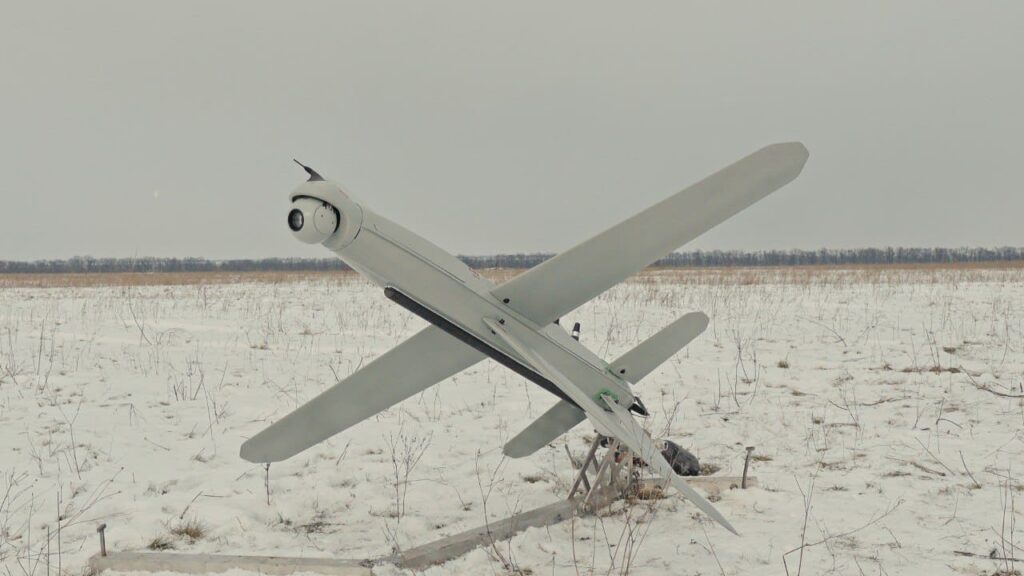
Jet-powered drones Geran-5 (above) and Geran-4 (below). Image: TurDef
Ukraine is testing interceptor drone prototypes in combat conditions, Ukrainian Presidential Office head Kyrylo Budanov told Novyny.LIVE on 27 September. The mass deployment of interceptors capable of shooting down jet-powered Gerans could begin within several months, he added. Ukrainian companies have already successfully tested several interceptor drones capable of intercepting Russian jet-powered drones in field conditions, the institute notes.
At the same time, it remains unclear whether Ukraine will be able to scale up its interceptor program quickly enough and achieve sufficient success to disrupt the intensification of Russia's campaign during the winter, ISW notes.
Why Putin may hold off on a new mobilization
Expanding Russia's arsenal of strike weapons is cheaper than carrying out a second mobilization economically, militarily, and socially, a Kremlin-linked Russian milblogger cited by the institute claimed.
Putin may put off large-scale forced mobilization until he sees whether the strikes deliver, ISW assesses, though his officials have been laying the groundwork for it despite Kremlin denials. Still, the need to replace Russia's enormous battlefield losses could push him to order such a mobilization as early as this fall, ISW notes, as Ukrainian and other sources have repeatedly reported he is preparing to do.
Ukraine's government plans to pay for its army, pensions, and public-sector wages first, and freeze the parks, fountains, and repaving. Prime Minister Serhii Koretskyi says his Cabinet reordered its spending priorities because part of the international aid it counted on has not arrived.
The war is costing the country at least $155 billion this year, Koretskyi stated earlier.
Defense and people come first
"We continue to take tough anti-crisis measures to ensure the most importan
Ukraine's government plans to pay for its army, pensions, and public-sector wages first, and freeze the parks, fountains, and repaving. Prime Minister Serhii Koretskyi says his Cabinet reordered its spending priorities because part of the international aid it counted on has not arrived.
The war is costing the country at least $155 billion this year, Koretskyi stated earlier.
Defense and people come first
"We continue to take tough anti-crisis measures to ensure the most important thing, the needs of defense and our people," Koretskyi says.
The state will continue to pay for the army, pensions, social benefits, and the salaries of teachers, doctors, and other public-sector workers. Everything deemed non-critical is on hold: new construction, reconstruction, capital repairs, and tidying-up projects, among them parks, squares, fountains, and repaving.
"It is worth finally ceasing to spend money on non-priority things," he continues, promising the state will return to them later.
The aid runs late
On 27 September, Ukraine's prime minister stated that the shortfall in the defense budget's needs stands at $27 billion.
"The president, the government, and all branches of authority are working with partners to find mechanisms and sources to cover the remaining $20 billion," he stressed.
These funds are critically needed to supply the Defense Forces with drones, missiles, equipment, and other resources ahead of winter.
"The government, for its part, guarantees that by 15 October, all government decisions required to receive the international financial assistance promised by partners will be implemented," he stated.
Local budgets get the same call
Koretskyi extended the order downward, urging local councils to review their own budgets and cut spending that is not a priority now. The message across government is the same: pool what is available for the army and citizens, and leave the fountains and the rest for after the war.
Russian troops retreating near Kupiansk abducted civilians, including children and elderly residents, and drove them into a gas pipeline to cover their withdrawal, the 2nd National Guard Corps Khartia said. The men of military age walking with them in civilian clothes were most likely Russian soldiers who had removed their uniforms, the corps added. Its reconnaissance drones filmed the group on 27 September. Ukrainian forces watched the column but did not open fire because of the civilians
Russian troops retreating near Kupiansk abducted civilians, including children and elderly residents, and drove them into a gas pipeline to cover their withdrawal, the 2nd National Guard Corps Khartia said. The men of military age walking with them in civilian clothes were most likely Russian soldiers who had removed their uniforms, the corps added. Its reconnaissance drones filmed the group on 27 September. Ukrainian forces watched the column but did not open fire because of the civilians, ArmyInform reported.
Ukraine's military has accused Russia of using civilians as human shields in Kupiansk before. During its offensive, Russian troops also tried to enter the city through an inactive gas pipeline. Now, Khartia says, a pipe once used by Russian saboteurs is carrying abducted civilians toward occupied territory.
Nine people forced into the pipeline
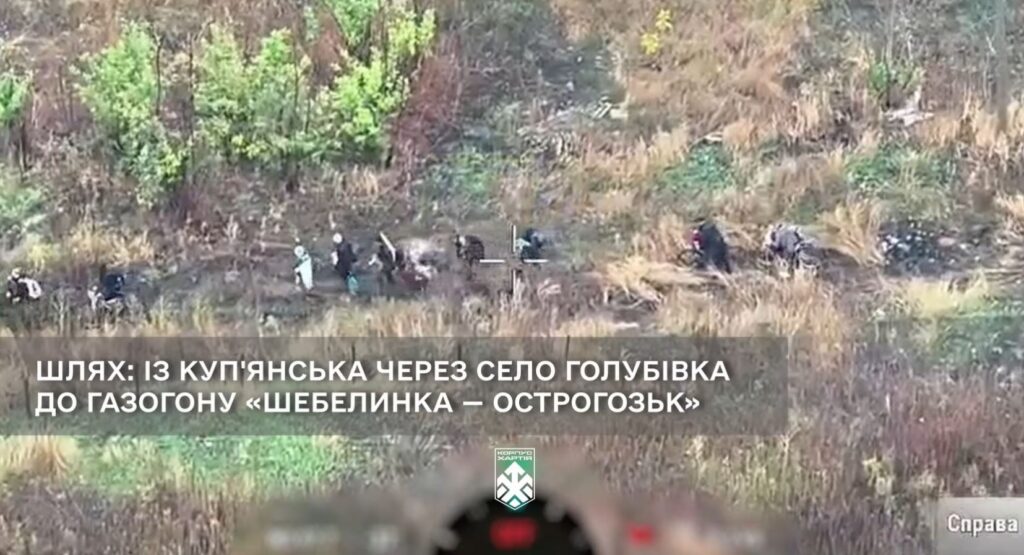
Khartia filmed the group as the corps pressed its counteroffensive in the Kupiansk community in Kharkiv Oblast. The footage shows nine people: children, elderly residents, and a person on crutches. Men of military age in civilian clothing walk alongside them.
The group was led from Kupiansk through Holubivka village to the Shebelynka-Ostrohozhsk gas pipeline.
Civilians enter an opening in the ground near the Shebelynka-Ostrohozhsk gas pipeline near Kupiansk, Kharkiv Oblast, 27 September 2026. Screenshot: Khartia Corps
The footage shows them being led into the pipe, where they face a walk of about 10 km in darkness. The pipe exits in a forest, and the civilians will likely be taken to occupied territory.
"We documented this case. The materials will be handed over for a war crimes investigation," the corps said.
Explore further
Russia holds 2,000 people hostage in Oleshky without food or water—Ukraine flew 4,000 kg of food to locals across the Dnipro
Ukrainian forces held fire—Russia counted on it
Ukrainian troops saw the group and did not open fire because children and elderly people were among them. Russia counted on exactly that, Khartia said.
The corps warned that Russian propaganda could present the footage as an "evacuation" or "rescue" of civilians, Militarnyi reported. Khartia calls it an abduction.
Khartia's counteroffensive near Kupiansk comes alongside other Ukrainian advances farther south. In northern Donetsk Oblast, the Third Army Corps' Operation Vivaldi has regained control of 125 km², including 50 km² previously under Russian occupation, and inflicted more than 3,000 Russian personnel losses, the corps said. The operation has effectively erased Russia's planned Lyman pincer. Near Kupiansk, Ukraine's defense forces continue pushing Russian forces toward the Oskil River, and the liberation of forests near Dvorichna and Zapadne has reduced the threat to the city.
Russia says it is punishing Ukraine, and it is not hiding it. Dmitry Peskov, Kremlin spokesperson, says Ukraine must "pay a price" for its actions in recent months and calls Russia's intensified strikes "part of this price," according to UNIAN, citing Russian media.
Russia rarely admits its strikes are meant to punish a country rather than hit military targets, but Peskov did just that, casting the wave of attacks on Ukraine, which have struck apartment blocks, trains, and this week Ky
Russia says it is punishing Ukraine, and it is not hiding it. Dmitry Peskov, Kremlin spokesperson, says Ukraine must "pay a price" for its actions in recent months and calls Russia's intensified strikes "part of this price," according to UNIAN, citing Russian media.
Russia rarely admits its strikes are meant to punish a country rather than hit military targets, but Peskov did just that, casting the wave of attacks on Ukraine, which have struck apartment blocks, trains, and this week Kyiv's Academy of Sciences, as a "price" Ukraine has to pay. In the Kremlin's telling, Ukraine is being punished for its own deep strikes inside Russia.
Moscow calls the strikes a 'price'
Asked how Ukraine's strikes had affected Russia's position on peace talks, Peskov says Ukraine "will have to pay a price for the actions that have taken place in recent months," adding, "This is what is happening now."
Russia, he says, must ensure "no one gets the idea to announce plans to inflict devastating strikes on it."
Kyiv's deep strikes draw the reprisal
The "actions" are Ukraine's strikes deep in the Russian rear, targeting its assets, helping it to fund the war. Russian President Vladimir Putin complained last week of a large Ukrainian drone attack on Moscow during Russia's parliamentary election and a June strike on St. Petersburg during an economic forum, Reuters reported.
Ukraine has also battered Russian refineries with long-range drones and missiles, cutting fuel output enough to spark shortages and force Moscow to curb exports and buy fuel abroad.
The price falls on civilians
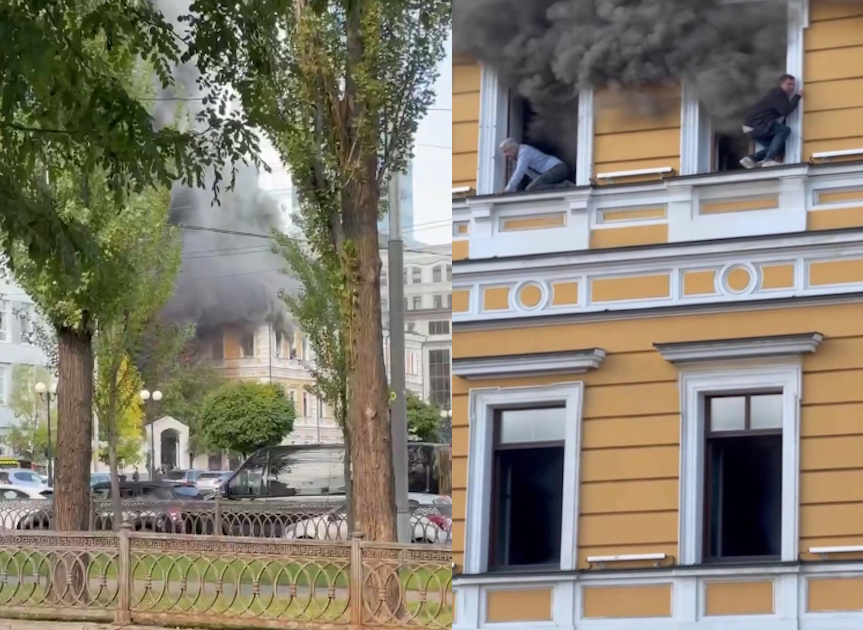
What the Kremlin calls a price has fallen largely on Ukrainian civilians. Through September, Russian strikes have hit trains, data centers, gas stations, and educational institutions, and on 28 September, a drone set fire to the National Academy of Sciences in central Kyiv as people inside fled through the windows.
Ukraine's 40th Separate Marine Brigade cleared 5 square kilometers in the Pokrovsk direction, captured two Russian soldiers, and stopped Russian infiltration there, the brigade said on 27 September.
Even small gains count on one of the most heavily contested fronts of Russia's war, where Russia has spent years and repeated offensives trying to push farther west. Ukrainian forces continue to carry out local operations there despite sustained Russian attacks.
Operation Audit
The bri
Ukraine's 40th Separate Marine Brigade cleared 5 square kilometers in the Pokrovsk direction, captured two Russian soldiers, and stopped Russian infiltration there, the brigade said on 27 September.
Even small gains count on one of the most heavily contested fronts of Russia's war, where Russia has spent years and repeated offensives trying to push farther west. Ukrainian forces continue to carry out local operations there despite sustained Russian attacks.
Operation Audit
The brigade called the operation Audit and said its sniper company, reconnaissance company, and 1st Marine Battalion carried it out. The marines said they eliminated the remaining Russian troops identified in the cleared area. The brigade released video footage that it said documented the operation.
Pokrovsk front under sustained pressure
The Pokrovsk front has been among the most heavily attacked sectors for years. From 22 to 27 September, Ukraine's General Staff reported 20 to 29 Russian attacks there a day, peaking on 24 September, with Kostiantynivka the other main focus.
Russian troops infiltrate this front in small groups, sometimes one soldier at a time. The marines said the ones they found had been sent to hide in shelters and wait for the right moment to advance further. The operation halted that infiltration push in the sector, the brigade said.
Russia's long campaign for Pokrovsk
Russia launched its offensive toward Pokrovsk in February 2024, according to the Institute for the Study of War (ISW). Over a grinding campaign, Russian forces seized Pokrovsk and most of Myrnohrad, ISW assessed.
ISW assessed in February 2026 that Russia had failed to capitalize on the seizure of Pokrovsk and had been unable to make significant advances west of the city since December 2025. Russian forces had not even taken Hryshyne, a settlement just 2 kilometers northwest, ISW noted at the time.
A Ukrainian Hornet drone struck a Russian radar system about 120 kilometers behind the front, Taras Myshak, senior communications officer of the 59th Separate Assault Brigade of Unmanned Systems, said on Suspilne on 28 September, ArmyInform reported. The brigade's Signum unmanned systems battalion carried out the strike about a week earlier, he added.
Russia's air defenses depend on radars to see Ukrainian drones and missiles coming. Every radar it loses weakens that watch and gives the
A Ukrainian Hornet drone struck a Russian radar system about 120 kilometers behind the front, Taras Myshak, senior communications officer of the 59th Separate Assault Brigade of Unmanned Systems, said on Suspilne on 28 September, ArmyInform reported. The brigade's Signum unmanned systems battalion carried out the strike about a week earlier, he added.
Russia's air defenses depend on radars to see Ukrainian drones and missiles coming. Every radar it loses weakens that watch and gives the next Ukrainian strike a better chance of getting through.
According to Myshak, the target was a "quite expensive" Russian radar system.
A radar system is effectively the "eyes" of the Russian air defense system: it detects aerial targets, determines their coordinates, and transmits information to other elements of the system.
Russians continue probing Ukrainian defenses
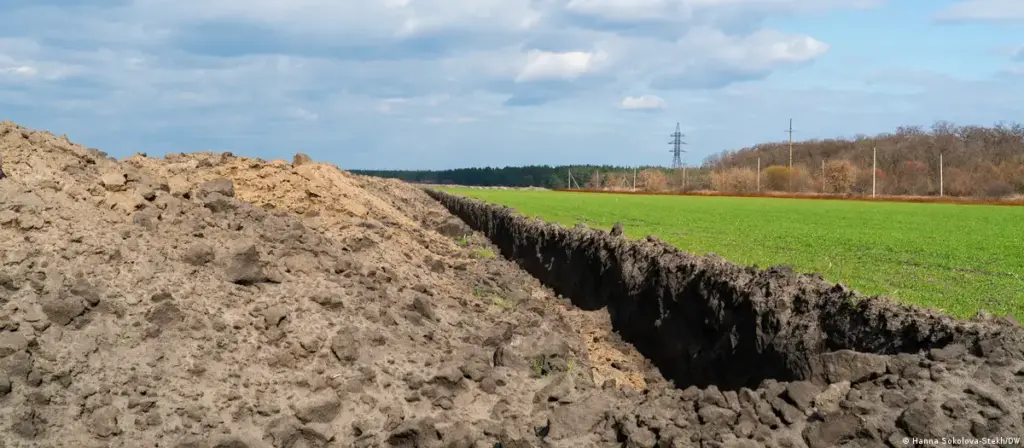
Russian forces in the brigade's zone, roughly along the Donetsk Oblast border, continue to operate in small infantry groups and use infiltration tactics, Myshak says. At the same time, the Russians are trying to cut Ukrainian logistics, he adds, saying that the brigade is effectively holding the Russian army back from infiltrating into Dnipropetrovsk Oblast.
Defensive fortifications in Dnipropetrovsk Oblast, Ukraine. Illustrative photo: Hanna Sokolova-Stekh/DW
The Russians' main means in this sector remain drones and infantry, the serviceman says. The number of infantry has decreased somewhat compared with previous periods, but the pressure from the enemy has not stopped, he adds.
"Of course, they will try, they will constantly probe, so to speak, our defense with their infiltrations. And likewise with drones, of various ranges, working on logistics, making it impossible for us to enter positions, to deliver everything necessary to the positions, in order to make our defense impossible," Myshak emphasized.
At the same time, Ukrainian troops are trying not only to defend against these actions but also to deprive the Russians of radars, electronic warfare systems, and other equipment, the serviceman says. "We likewise don't let them relax," he said.
Russians tried to prevent the strike, but Ukrainian forces hit the target
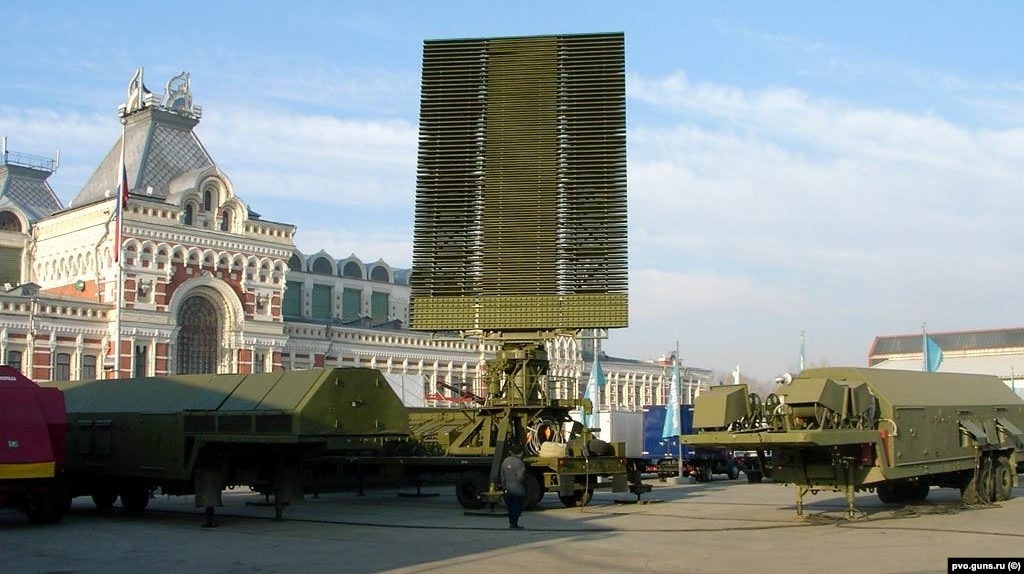
This was likely the same strike that Ukrainian volunteer fundraiser Serhii Sternenko reported on his Telegram channel on 18 September. Operators of the Signum unit of the 59th Brigade, together with the First Separate Unmanned Systems Center, hit a Russian Nebo-M radar about 120 kilometers from the front line, he wrote.
The radar, which Sternenko valued at about $100 million, was damaged over two drone sorties, which also wounded two Russian servicemen, according to his post. During the operation, the Russians tried to jam the drone's video feed with electronic warfare, but the operators flew on using only flight data and their own experience, he added.
The unfolded Protivnik-GE radar station of the Nebo-M complex, with other components of the system folded nearby. Screenshot from pvo.guns.ru via RFE/RL
Ukraine systematically knocks out the "eyes" of Russian air defense
In October 2024, Ukraine's military said it had hit a Russian Nebo-M radar station with ATACMS ballistic missiles to blunt Moscow's ability to spot and shoot down aircraft and missiles, Reuters reported. The military estimated each such system at more than $100 million.
Ukraine is systematically increasing its use of medium-range strike drones, which can hit targets up to 200 kilometers deep inside enemy territory, the Ukrainian Defense Ministry reported in May this year. Russian air defenses and radars are among the main priorities of such operations, as their destruction weakens the system for detecting and intercepting aerial targets, the ministry said. Medium-class drones, including the FP-2, Hornet, and Bulava, play a critical role in such strikes, the ministry noted.
According to the General Staff of the Armed Forces of Ukraine, Ukrainian forces struck at least 25 major Russian air defense and radar systems during April, about 12 of which were radar systems, the Ukrainian Defense Ministry also wrote in May this year.
Russia has fielded a Geran-5 variant that can steer by images of the ground below without satellite navigation, the Ukrainian monitoring channel Polkovnyk GSh reported. A second Russian jet drone also filmed a strike on Kyiv live and relayed control signals to the drone that hit it, presidential adviser on defense technology Serhii Beskrestnov, known as Flash, said.
Russia's air war on Ukrainian cities has turned into a race of adaptations. As Ukraine got better at catching slow drones,
Russia has fielded a Geran-5 variant that can steer by images of the ground below without satellite navigation, the Ukrainian monitoring channel Polkovnyk GSh reported. A second Russian jet drone also filmed a strike on Kyiv live and relayed control signals to the drone that hit it, presidential adviser on defense technology Serhii Beskrestnov, known as Flash, said.
Russia's air war on Ukrainian cities has turned into a race of adaptations. As Ukraine got better at catching slow drones, Moscow made them fly faster, and now its jet drones also see for themselves and talk to each other.
A Geran-5 that reads the ground
The channel labels it the Geran-5 K5. Its DSMAC-type module corrects the drone's route by matching images of the ground below against stored references, like the one on Russia's Kh-101 cruise missile. The K5 also has a new fuselage, the channel said.
Because it flies faster than the Geran-4 and the standard Geran-5, it is often mistaken for Dan-T cruise missiles, the channel said. Official Ukrainian sources have not confirmed the K5 designation or the DSMAC-class system, Militarnyi noted.
The base Geran-5 carries a warhead of about 90 kg and cruises at 450–600 km/h, Ukraine's military intelligence (HUR) found in January. It relies on a jam-resistant Kometa-M12 satellite navigation system and a mesh modem. HUR's component list includes no terrain-matching optics.
Explore further
800 jet drones in four days: Russia is now firing type Ukraine’s interceptors cannot catch
One drone struck, another filmed and relayed
Russia published footage of its 25 September strike on the Inkom business center in Kyiv, which killed four people, Kyiv Mayor Vitali Klitschko said. The video was filmed from high above the target and fueled speculation about how it was shot. Beskrestnov dismissed the theories.
"Let me say right away: no secret satellites, no FPV from a Shahed, no Russian agents, no mysterious drones," Beskrestnov wrote.
Russia hit the building with a Geran-5, a jet-powered drone that functions as a small cruise missile. At the same time, a jet Shahed flew into Kyiv and circled the target at almost 3 km altitude, he said. It served as a mesh relay, passing radio signals to the Geran-5. It also filmed the attack and transmitted the video immediately. The Shahed then left Kyiv and destroyed a McDonald's warehouse.
Mesh networking lets Russian drones relay control signals through one another. Russia already flies its jet Shaheds under mesh control.
The Russian military is now capable of acquiring real-time, high-quality BDA of its strikes with Geran-type OWA-UAVs/cruise missiles in downtown Kyiv.
In the footage below, we can see the moment of a Russian strike with Geran-5 cruise missile on the "Inkom" business center… pic.twitter.com/mPx4Kf9tmH
Status-6, an X account that monitors the war, reposted the Russian video and suggested a Gerbera-type drone had filmed it. Beskrestnov identifies the camera as the second jet Geran.
"This is certainly a complex Russian drone operation that requires precise calculations and coordination between pilots. I'm even sure they were sitting next to each other," he wrote.
New sensors across the Geran family
Russia's jet Shaheds sometimes switch off their engines before an attack and glide toward the target, Beskrestnov wrote. It is still unclear whether that is a malfunction or a deliberate move to approach slowly and precisely. In the same post, he showed a Geran-4 Seeker, a jet drone that hunts for targets with a front camera. It carries two mesh antennas on its tail, one pointing down and one up.
With colder weather, warm objects will become prey for Geran Seekers equipped with thermal cameras, Beskrestnov warned. He posted a thermal image of a locomotive that a Shahed operator filmed from 5–6 km away.
Wreckage of what the monitoring channel Polkovnyk GSh identifies as the new Geran-5 K5, a Russian jet drone that functions as a small cruise missile. Photo: Telegram/Polkovnyk GSh
Ukraine catching up again
Ukraine's interceptors are catching just over half of Russia's jet drones. Beskrestnov confirmed on 19 September that a Ukrainian jet-powered interceptor works and has enough speed margin for different targets, calling it "functional, real, and ready for refinement." Separately, drone maker Wild Hornets says its STING interceptor is heading toward mass production after its first kills against jet Gerans.
Speed alone will not catch them, Beskrestnov argued earlier. Interceptors need machine vision to lock on and guide themselves in.
The threat is in the skies daily. On 28 September, a Russian jet drone hit the National Academy of Sciences in central Kyiv in the middle of the working day, killing a woman.
This piece contains references to eating disorders. If you or someone you know needs help, support is available.Human contractors hired to improve Microsoft’s Copilot AI chatbot are constantly bombarded with lewd or sexually explicit photo editing requests and images that users have uploaded, including upskirt photos or putting women into sexual positions. These contractors are then asked to review whether the generated image successfully fulfilled the prompt — such as, did the image generato
This piece contains references to eating disorders. If you or someone you know needs help, support is available.
Human contractors hired to improve Microsoft’s Copilot AI chatbot are constantly bombarded with lewd or sexually explicit photo editing requests and images that users have uploaded, including upskirt photos or putting women into sexual positions. These contractors are then asked to review whether the generated image successfully fulfilled the prompt — such as, did the image generator make the woman’s AI-enlarged breasts big enough.
A Russian strike on an apartment building in Kharkiv injured dozens of people, many of them children, early on 28 September, regional prosecutors reported. Through the rest of the day, Russian drones hit Kyiv, Dnipro, and other cities, killing civilians in several of them.
Russia has moved much of its aerial campaign to jet-powered drones that fly too fast for the cheap interceptors Ukraine built against older models. Every switch to a faster weapon reopens gaps in city defenses that Uk
A Russian strike on an apartment building in Kharkiv injured dozens of people, many of them children, early on 28 September, regional prosecutors reported. Through the rest of the day, Russian drones hit Kyiv, Dnipro, and other cities, killing civilians in several of them.
Russia has moved much of its aerial campaign to jet-powered drones that fly too fast for the cheap interceptors Ukraine built against older models. Every switch to a faster weapon reopens gaps in city defenses that Ukraine had only just begun to close.
Two floors partly destroyed in a Kharkiv apartment block
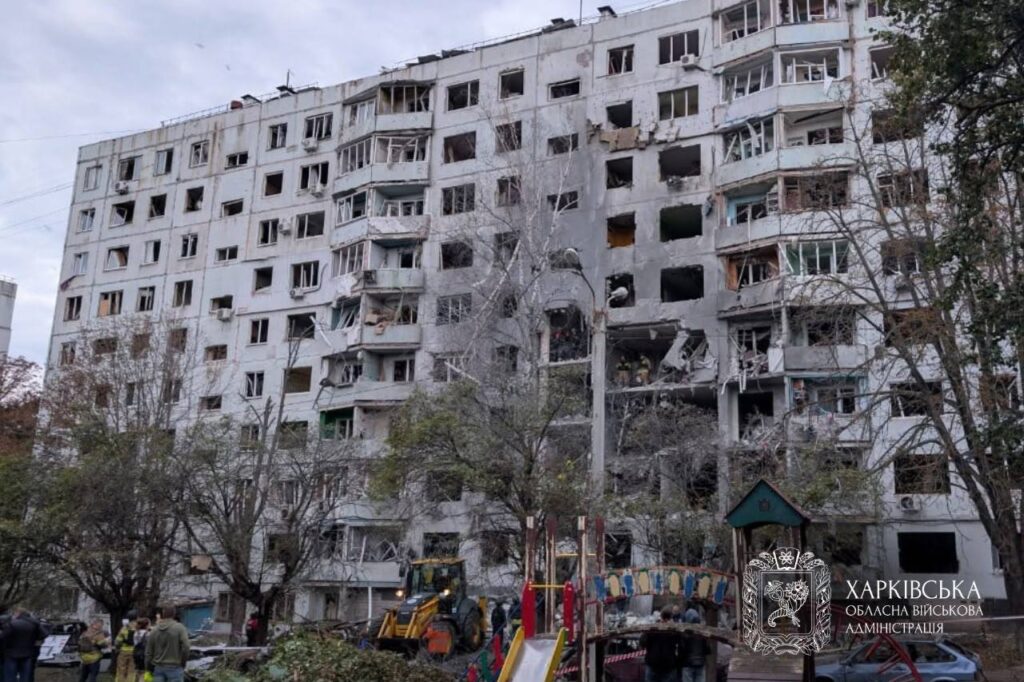
Russia hit a nine-story building in Kharkiv's Saltivskyi district around 04:00. By early afternoon, the count had risen to 43 injured, including 11 children, prosecutors said.
A man of 43 and a girl of 14 remain in hospital with blast wounds, and the others have moderate or light injuries, Kharkiv Oblast head Oleh Syniehubov said. Three children lived in the apartment that took the hit. Their father carried them out himself, and none of them was seriously hurt.
Rescuers on the destroyed floors of an apartment building hit by Russia in Kharkiv, Ukraine, 28 September 2026. Photo: Kharkiv Oblast Military Administration
The strike hit the second floor and destroyed the ceiling between the third and fourth floors. Rescuers brought 32 people out of the building. Across the district, the attack damaged 18 apartment buildings and blew out more than 1,500 windows. More than 100 volunteers are helping city services seal them, Syniehubov added.
A resident who fled Kramatorsk a year and a half ago said her family never heard the blast itself.
"We didn't hear any explosion. Glass came pouring down, and a column of smoke stood there," Yuliia Baldzhy told Suspilne Kharkiv. "The children were sleeping in another room, and my husband and I barely squeezed through, grabbed them, and got out."
Yuliia Baldzhy, a resident of the damaged apartment building in the Saltivskyi district of Kharkiv, Ukraine, 28 September 2026. Photo: Suspilne Kharkiv
Kharkiv Mayor Ihor Terekhov said the city had not taken a hit "of this level" in some time. Officials are still establishing the weapon. Syniehubov named guided aerial bombs (KABs) and counted six of them over the oblast in the past day. Prosecutors named a UMPB-5, a Russian munition, as the preliminary version. Terekhov said the city was checking whether it was a KAB or a Banderol, a small cruise missile.
Fire among wrecked structures after overnight Russian strikes in Kharkiv Oblast, Ukraine, 28 September 2026. Photo: Kharkiv Oblast Military Administration
Russia has hit Kharkiv high-rises with guided bombs before. In November 2024, one such strike injured 25 people, including an infant.
Explore further
Combat shows speed alone can’t catch Russia’s jet-powered drones, despite eight Ukrainian makers’ assurances. So why can’t they stop them?
Kyiv hit through the night and into the day
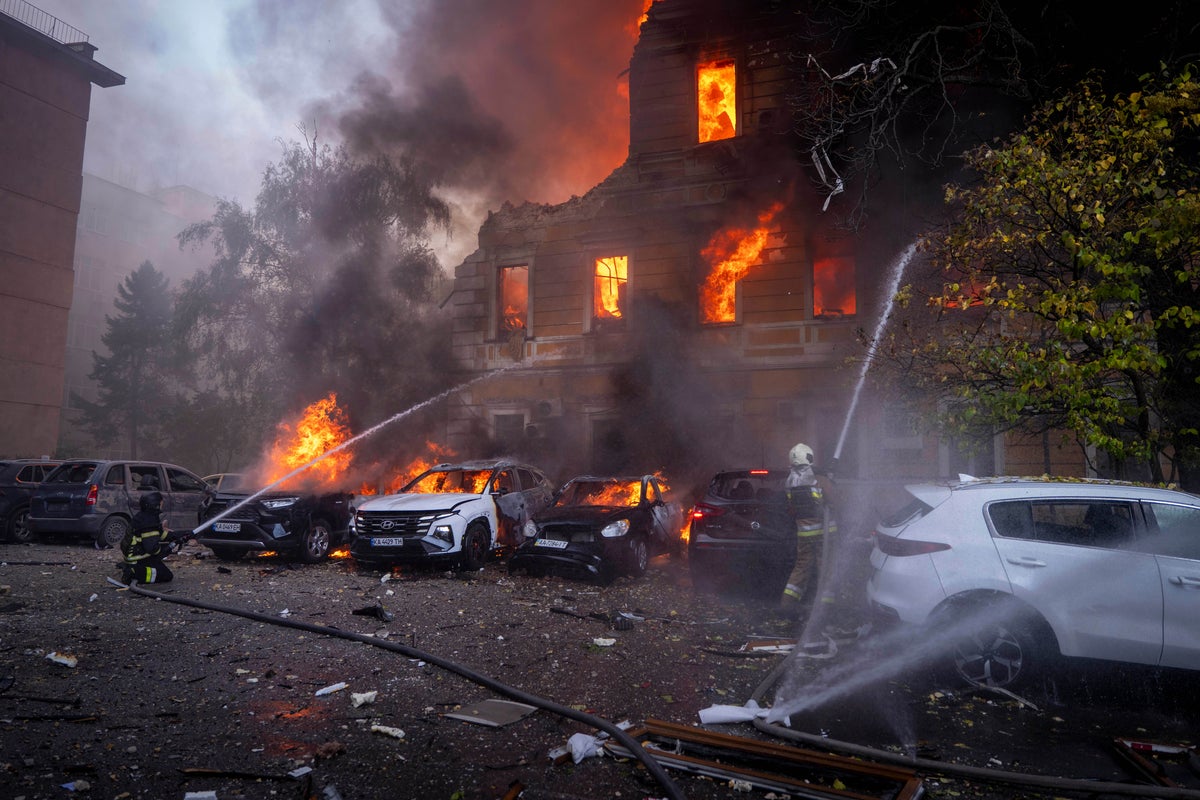
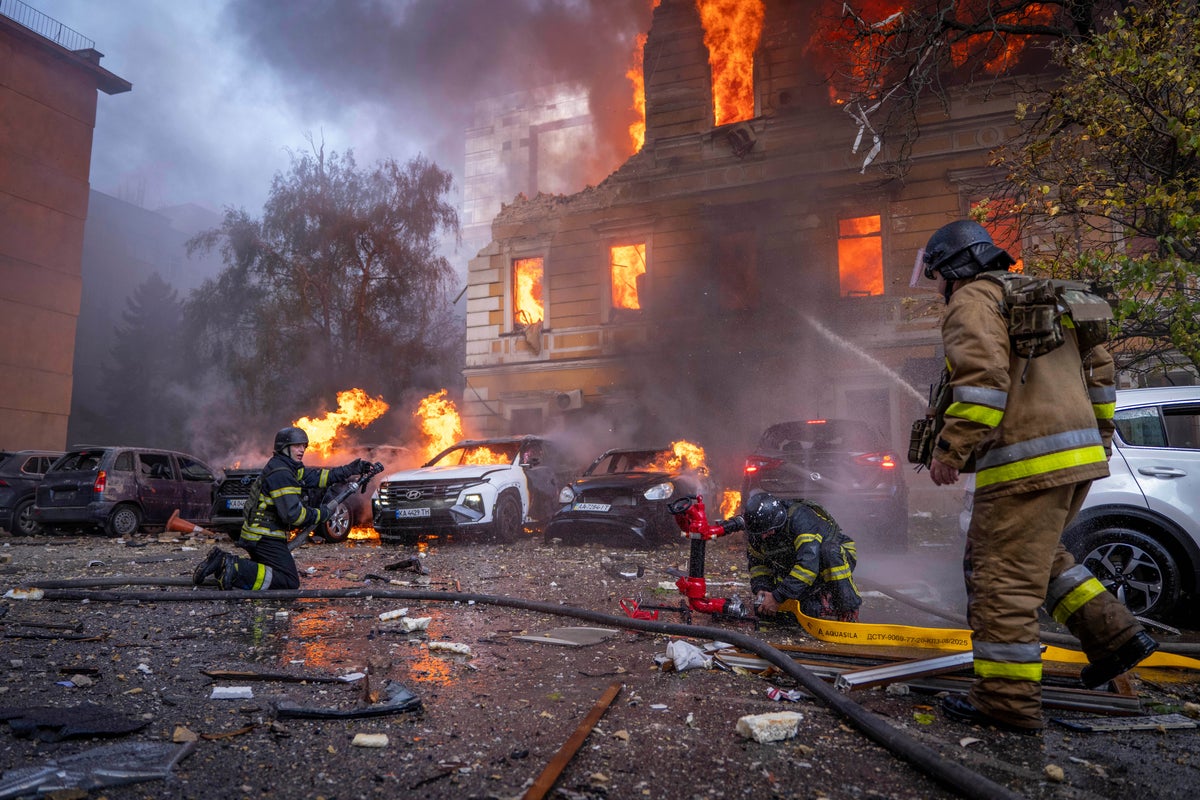
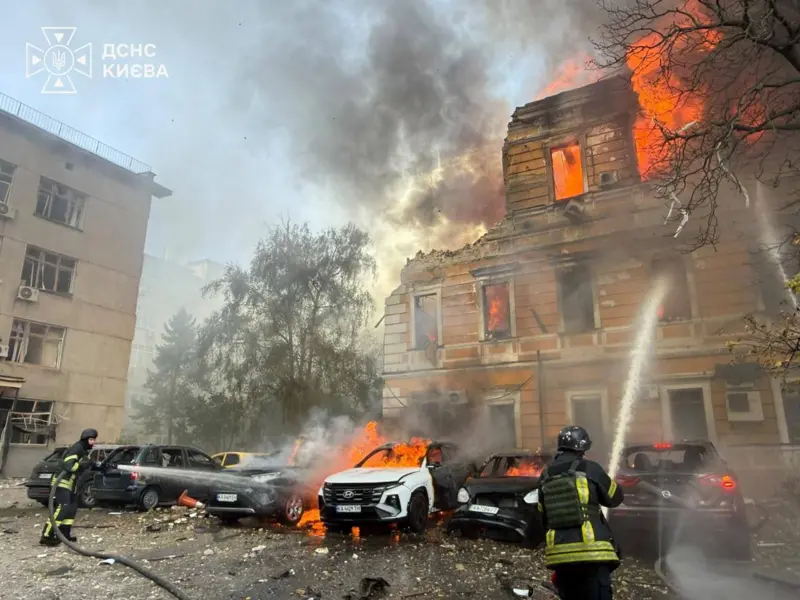
In the middle of the working day, a Russian jet drone struck the main building of the National Academy of Sciences in Kyiv's historic center. The attack killed a woman and injured five people, the Kyiv City Military Administration said. Three of them were hospitalized, Klitschko said. People climbed out of windows to escape the fire.
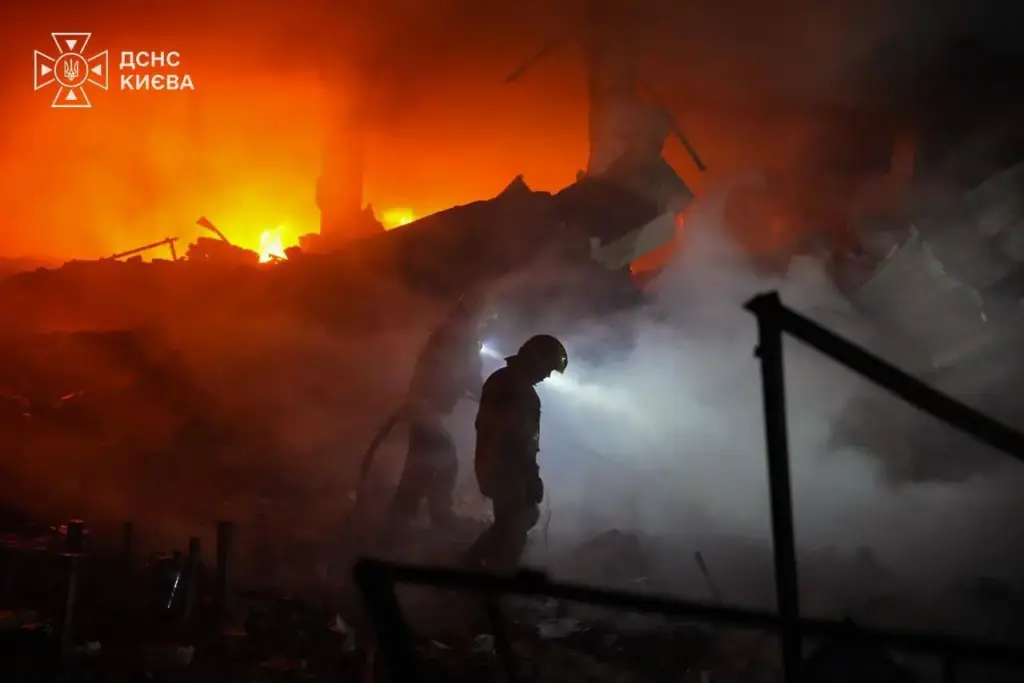
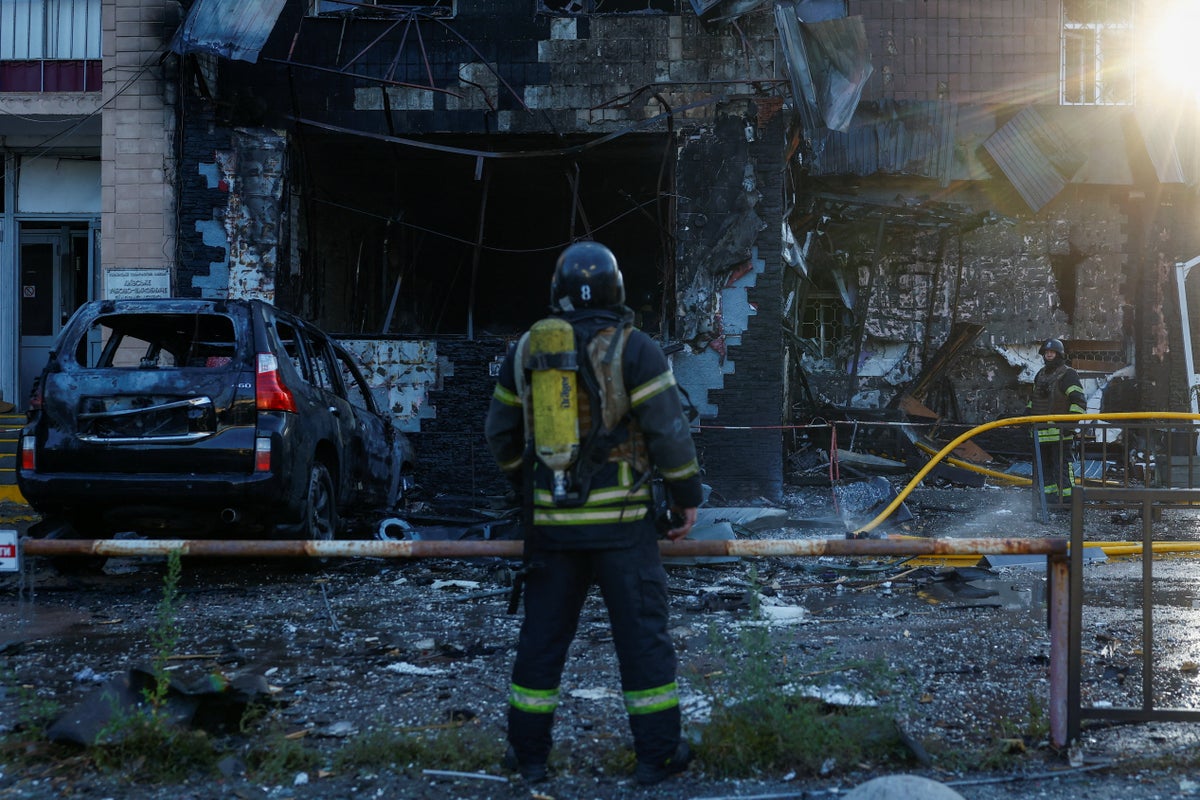
Firefighters put out fires at the main building of the National Academy of Sciences of Ukraine and at burning cars after a Russian drone strike in Kyiv, Ukraine, 28 September 2026. Photo: State Emergency Service of Kyiv
"Russia will definitely get a response to this," Ukrainian President Volodymyr Zelenskyy said.
Overnight and into the morning, Russian drones hit a gas station in Obolon, a café by a gas station, office buildings, and a 16-story residential building in Podil. The attacks injured three teenagers in Podil, Kyiv Mayor Vitali Klitschko said. A 17-year-old boy was hospitalized.
A firefighter tackles a blaze in a two-story house after a Russian drone attack in Kyiv, Ukraine, 28 September 2026. Photo: State Emergency Service of Kyiv
Nationwide, Russia launched 165 drones overnight, 79 of them jet-powered, the Air Force reported. Air defenses downed or suppressed 112, and hits were recorded at 14 locations.
The capital is now under attack daily. On 27 September, Russian strikes injured nine people in Kyiv, and Russia hit a Kyiv data center twice. That evening, a Russian drone struck the Stolychnyi market in Sofiivska Borshchahivka, just outside the city, and killed two people. Zelenskyy wrote that one of the two killed in Kyiv Oblast was a citizen of Azerbaijan.
Deaths in Dnipro and Synelnykove
Around 11:15, a Russian drone hit a business center in central Dnipro, killing three people. The number of injured rose to 15, Dnipropetrovsk Oblast head Oleksandr Hanzha said. Rescuers led 47 people out of the burning building, regional council head Mykola Lukashuk said.
"Nearby are residential buildings, a park, a library, offices, shops. The center of Dnipro. In the middle of the working day, hundreds of people are here," Hanzha wrote.
In Synelnykove, a Russian strike on a logistics company's branch killed one person. It injured three others, including a 15-year-old boy now in hospital in serious condition.
Overnight, Russian drones also hit infrastructure in the Vasylkivka community and a market in Nikopol.
Strikes across other regions
In Kharkiv Oblast on 27 September, a Russian FPV drone killed a 67-year-old driver in Shestakove, prosecutors said. A drone on fiber-optic control also killed a 41-year-old woman in a car in Velykyi Burluk and injured a 46-year-old man.
Debris at a warehouse after an overnight Russian strike in Odesa Oblast, Ukraine, 28 September 2026. Photo: Odesa Oblast Military Administration
Explosions sounded in Poltava overnight. In Rivne Oblast, a Russian attack damaged a detached house without injuring anyone. In Odesa Oblast, Russia struck a warehouse, and an evening attack injured a man of 62 and a woman of 63. Zelenskyy also listed a Palau-flagged ship hit in Odesa Oblast and an ice cream plant damaged in Zhytomyr Oblast, in the same post.
Russia has struck the National Academy of Sciences of Ukraine (NAS) in Kyiv on the afternoon of Monday, 28 September. People inside the building are climbing out onto the windows to avoid being burned alive.
Since the start of the full-scale invasion, Russia has damaged more than 4,650 educational institutions in Ukraine. Another 423 educational institutions have been completely destroyed, Ukrainian Ombudsperson Dmytro Lubinets reports.
The Academy was founded in Kyiv on 27 November
Russia has struck the National Academy of Sciences of Ukraine (NAS) in Kyiv on the afternoon of Monday, 28 September. People inside the building are climbing out onto the windows to avoid being burned alive.
Since the start of the full-scale invasion, Russia has damaged more than 4,650 educational institutions in Ukraine. Another 423 educational institutions have been completely destroyed, Ukrainian Ombudsperson Dmytro Lubinets reports.
The Academy was founded in Kyiv on 27 November 1918. Its first president was the eminent, world-renowned scientist Volodymyr Vernadsky.
As of 1 January 2026, the total number of people working at the NAS of Ukraine was 23,982, including 13,003 researchers. Among them are 2,332 doctors of science and 6,435 candidates of science.
Volunteers say the world looks away
According to Telegram channel "Lachen Writes": "There are injured and dead as a result of Russia's strike on the National Academy of Sciences."
Meanwhile, military volunteer Serhii Sternenko, whose fund has purchased 291,502 FPV drones and helped the Ukrainian military shoot down 12,954+ aerial targets, commented on it this way: "Just hell."
"The world just watches this. Europe is lifting sanctions on Russian oligarchs. Trump asks Ukraine not to hit Russia's oil refineries. Unpunished evil will come for them too," he wrote.
The toll remains unclear
Another journalist, Andrii Tsaplienko, who posted a video showing people trying to save themselves, added his own comparison for the drone strike.
"Footage reminiscent of 11 September at the World Trade Center," he wrote.
Ukrainian President Volodymyr Zelenskyy says a rescue operation is underway: the fire is being extinguished, and people who may have been inside the building are being searched for. He adds that "there will definitely be a response to this from Russia."
"And every one of Ukraine's partners must see, from this terror and these strikes, that support for Ukraine is truly support for people's lives, support for the principle that terror must never and nowhere be normalized," he stresses.
Russia must answer for all of this and feel real consequences. Thank you to everyone who is helping Ukraine!
Ukraine is carrying out strikes on Russia's railways, the acting governor of Bryansk Oblast says. Yegor Kovalchuk claims that Ukrainian drones collapsed part of a bridge and derailed dozens of rail cars across the region, in a post on Telegram.
Bryansk is the main launchpad for Russia's drone and ballistic strikes on Kyiv and on the Chernihiv and Sumy oblasts, and its lines likely carry supplies that feed those attacks. For nearly a month, Russian jet-powered drones have been striking
Ukraine is carrying out strikes on Russia's railways, the acting governor of Bryansk Oblast says. Yegor Kovalchuk claims that Ukrainian drones collapsed part of a bridge and derailed dozens of rail cars across the region, in a post on Telegram.
Bryansk is the main launchpad for Russia's drone and ballistic strikes on Kyiv and on the Chernihiv and Sumy oblasts, and its lines likely carry supplies that feed those attacks. For nearly a month, Russian jet-powered drones have been striking Kyiv from the region.
Kovalchuk reports damage in three districts but adds that no one was hurt in those drone attacks.
The launchpad's railways take hits
On the Dyatkovo–Lyudinovo line, a drone attack brought down part of a bridge and derailed 10 cars, Kovalchuk says. In the Unecha district, 18 empty gondola cars derailed. In the Navlia district, a strike damaged the track without stopping trains.
Repairs will begin, he notes, once the National Guard has inspected the sites.
Russia's campaign dwarfs it
Ukraine's strikes on Bryansk are modest beside what Russia is doing to Ukraine's railways. In the first eight months of 2026, Ukraine's state operator logged more than 1,600 attacks on its rolling stock and infrastructure, Oleh Holovashchenko of Ukrzaliznytsia tells DW.
Russia has damaged more than 500 locomotives since the invasion, over half of them this year, and has increasingly hunted moving trains to sever the corridors that carry Ukraine's exports and supplies.
A drone finds a train near Poland
The campaign even reaches Ukraine's western edge. On 13 September, a Russian jet Geran struck the locomotive of a passenger train at the Yahodyn crossing in Volyn, two kilometers from the Polish border.
A dispatcher spotted the drone in time to evacuate the passengers, among them former CIA director David Petraeus, and a diplomatic train carrying former British prime minister Boris Johnson had left early.
Seoul called on Kyiv to explain and apologize for making public the transfer of two North Korean prisoners of war, saying Ukraine had broken an agreement to keep the move private and later denied that such an agreement existed, Reuters reported on 27 September. Seoul also said it was reviewing additional measures if necessary.
The dispute puts new pressure on ties between Ukraine and South Korea as Seoul supports Kyiv while also dealing with growing military cooperation between Pyongyan
Seoul called on Kyiv to explain and apologize for making public the transfer of two North Korean prisoners of war, saying Ukraine had broken an agreement to keep the move private and later denied that such an agreement existed, Reuters reported on 27 September. Seoul also said it was reviewing additional measures if necessary.
The dispute puts new pressure on ties between Ukraine and South Korea as Seoul supports Kyiv while also dealing with growing military cooperation between Pyongyang and Moscow.
Seong Ghi-hong, senior presidential secretary for public relations, said Seoul "expresses strong regret over Ukraine's unilateral disclosure and its subsequent false announcement that there had not been a nondisclosure agreement,"according to the Korea Herald.
Seoul said Ukraine had requested that the transfer remain confidential, citing fears of a backlash at home for passing up a chance to trade the two soldiers for Ukrainian prisoners held by Russia, though a presidential official called the handover humanitarian, not a prisoner exchange, the Korea JoongAng Daily reported. Seoul went along with the request to protect the soldiers and their families and for diplomatic and security reasons, Seong said, according to the Korea Herald.
Ukraine had denied that the two countries had agreed to keep the transfer private. Dmytro Lytvyn, an adviser to Ukrainian President Volodymyr Zelenskyy, replied to a critic on Facebook that "there was no agreement to remain silent" and that hiding the prisoners' destination "would also be wrong," the Korea JoongAng Daily reported.
Zelenskyy announced the transfer on 23 September during a speech at the UN General Assembly. He said Ukraine had recently sent two North Korean prisoners of war to South Korea. He also described one soldier's attempt to kill himself after realizing he would be captured and accused North Korean leader Kim Jong Un of using his soldiers "like currency," pointing to Pyongyang's improved ballistic missiles and drone capabilities as what it gets in return.
The next day, South Korean President Lee Jae-myung said the transfer should not have been disclosed and that the two sides had agreed to keep it private. A South Korean presidential official said Ukraine had told Seoul in advance that Zelenskyy might mention the transfer and Seoul had asked that the soldiers' destination not be disclosed, though it was unclear how he would phrase it, the Korea JoongAng Daily reported.
The two soldiers—Ri, 26, a reconnaissance sniper, and Baek, 21, a rifleman—were captured by Ukrainian forces in Russia's Kursk Oblast in January 2025, according to their interview with South Korea's Chosun Ilbo. Both had served in North Korea's Reconnaissance General Bureau and later asked to go to South Korea in media interviews and handwritten letters to defector groups.
The two countries' foreign ministers discussed the prisoners' status in March and June, reaching a shared understanding that the case should be resolved under international law and humanitarian principles, according to South Korea's Foreign Ministry. On 8 July, at the NATO summit in Ankara, Lee and Zelenskyy agreed to handle the case on humanitarian grounds while respecting the soldiers' wishes.
The two soldiers arrived in South Korea the weekend before Zelenskyy announced their transfer at the UN General Assembly, opposition lawmaker Yu Yong-weon said.
North Korea's role in Russia's war
North Korea began sending troops to support Russia's war in late 2024, with initial estimates putting the deployment at more than 10,000 soldiers. Many were sent to Russia's Kursk Oblast. The two countries signed a strategic partnership pact with a mutual defense clause in Pyongyang in June 2024.
Ukraine's 3rd Army Corps has defeated Russia at the key settlement of Nove in Donetsk Oblast by pointing it the wrong way. Russia has poured its reserves into counterattacks on a feint axis and "slept through" the real strike, which took the important hub in the village and closed the decisive third season of the Vivaldi offensive, commander Andrii Biletskyi said.
Vivaldi is Ukraine's counteroffensive aimed at disrupting Russian forces' plans to encircle the fortress-belt cities in Done
Ukraine's 3rd Army Corps has defeated Russia at the key settlement of Nove in Donetsk Oblast by pointing it the wrong way. Russia has poured its reserves into counterattacks on a feint axis and "slept through" the real strike, which took the important hub in the village and closed the decisive third season of the Vivaldi offensive, commander Andrii Biletskyi said.
Vivaldi is Ukraine's counteroffensive aimed at disrupting Russian forces' plans to encircle the fortress-belt cities in Donetsk Oblast from the north and south. Among them are Sloviansk, Kramatorsk, Druzhkivka, and Kostiantynivka. These cities have helped hold back Russian forces since 2014.
Over its first two "seasons," the 3rd Army Corps and attached units have retaken more than 125 square kilometers, half of it de-occupied outright, and inflicted more than 3,000 casualties on Russian forces.
The operation in Nove was its "third season," Biletskyi said, the turning point of the whole operation. The corps liberated Nove, Ridkodub, and Katerynivka and restored control of Karpivka and Novomykhailivka, adding 51 square kilometers, bringing the total liberated since the offensive began to 176. Ukrainian forces have taken 250 Russians captive.
The feint drew Russia's reserves
The victory, by Biletskyi's account, was won by deception.
"The enemy was convinced the main direction of the strike was Shandryholove–Zelena Dolyna," he revealed, and it burned its reserves counterattacking there.
He added that the Russians slept through the real strike, which was concentrated on taking Nove. The village was the prize, a key Russian hub on the bridgehead, ringed by heights that command the surrounding ground.
"Who controls the heights holds the initiative," Biletskyi said.
By spending its reserves on the wrong axis, he suggested, Russia had little left to hold Nove when the real assault arrived.
Old APCs crack the defense
To break the strongest fortifications, the corps said, it used a homemade weapon: Soviet BTR-60 armored carriers converted into remote-controlled kamikaze robots, driven into Russia's toughest positions and detonated.
In 2024, the Ukrainian forces received another local upgrade of the post-Soviet BTR-60 wheeled armored personnel carrier. This time it was fitted with the BM-7 "Parus" turret, known from the BTR-4 "Bucephalus" The main armament consisted of a 30 mm ZTM-1 automatic cannon paired with a 7.62 mm KT-7.62 universal machine gun.
Additional armament might include a set of four anti-tank guided missile launchers mounted on the sides, or two launchers and a 30 mm KBA-117 automatic grenade launcher. As a result, this upgraded BTR-60 saw a significant improvement in firepower, although the vehicle still has very weak armor and less-than-optimal access to the troop compartment.
It was the latest of the corps' robotic improvisations in Vivaldi, which have included air-dropped ground drones and Bullspike grenade-launcher-armed UGVs. They are Bulgarian hand-held, rocket-propelled anti-tank grenade launchers based on the Soviet RPG-22, which the Bulgarian defense industry previously produced under license.
The corps has leaned on such machines throughout the operation to keep its infantry out of the deadliest fights.
Whole units surrender
As the defense broke down, Russians gave up in groups, including officers, pilots, and artillery soldiers, the corps said. The 3rd Assault Brigade carried much of the fighting, while the 3rd Border Guard Detachment, named for the fallen Colonel Yevhen Pikus, retook Ridkodub and dug in on the new line, with the 10th Mobile Border Guard Detachment "DOZOR" taking an active part in the assault.
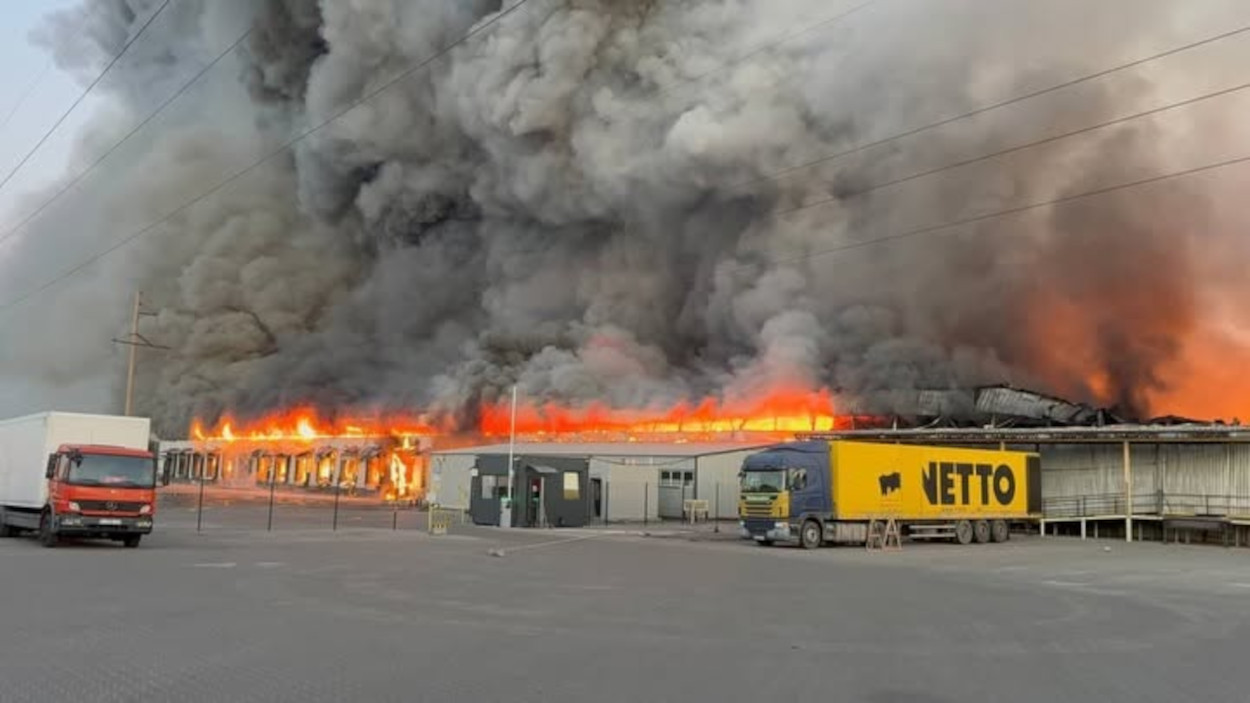
Ukrainian drones struck two fuel depots in Krasnodar Krai overnight on 28 September, setting both on fire, Militarnyi reported. The targets were the NFB-Pavlovskaya depot in Pavlovskaya and the Edelveys-95 depot near Novotitarovskaya, about 25 km from Krasnodar.
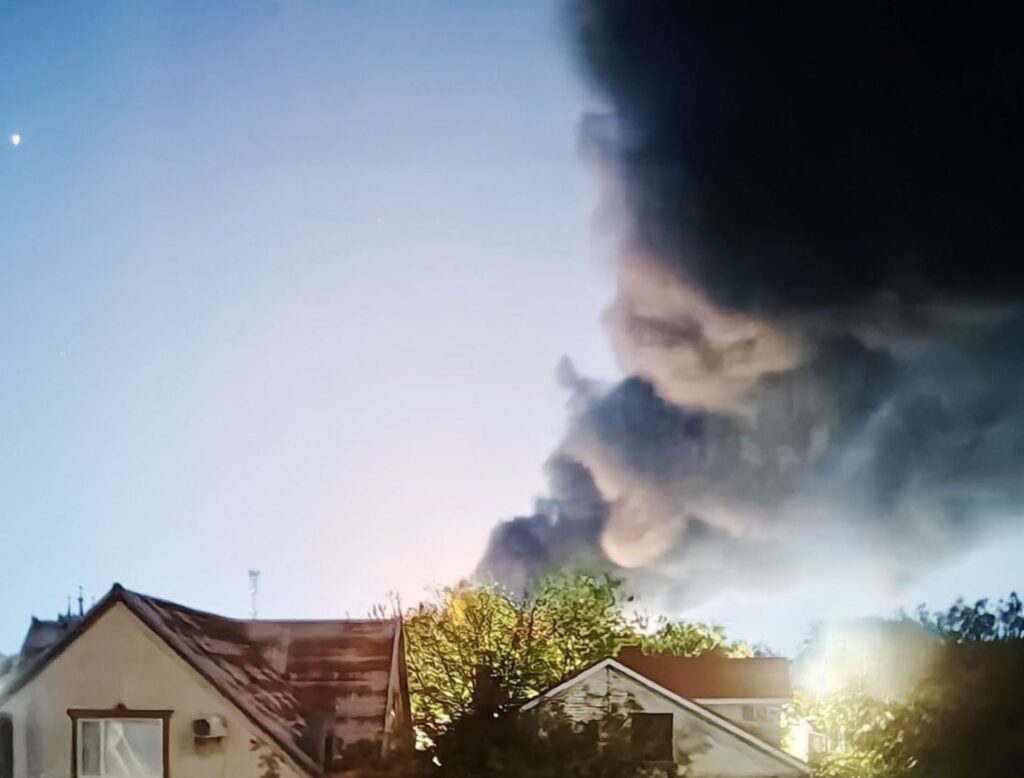
Ukraine's deep-strike drone campaign has knocked out a significant share of Russia's refining capacity over the past year, hitting refineries and the fuel depots that store and distribute their output. Washington is pressing Kyiv to
Ukrainian drones struck two fuel depots in Krasnodar Krai overnight on 28 September, setting both on fire, Militarnyi reported. The targets were the NFB-Pavlovskaya depot in Pavlovskaya and the Edelveys-95 depot near Novotitarovskaya, about 25 km from Krasnodar.
Ukraine's deep-strike drone campaign has knocked out a significant share of Russia's refining capacity over the past year, hitting refineries and the fuel depots that store and distribute their output. Washington is pressing Kyiv to ease targeting of Russian refineries while Ukraine pitches a possible energy truce between Ukraine and Russia that Moscow has rejected.
Residents heard six explosions near the railway
A drone alert was declared in the region at 23:43. Residents of Novotitarovskaya then reported drones overhead and at least six explosions near the railway, Russian news Telegram channel Astra reported. Fires broke out at both depots. NASA FIRMS satellite data confirmed both blazes by 04:24, Militarnyi reported, citing imagery published by Ukrainian Telegram channel Exilenova+.
NFB-Pavlovskaya handles cargo operations with petroleum products, including wholesale trade in motor fuel and petroleum storage, Militarnyi reported.
Edelveys-95 is a similar facility. It specializes in wholesale distribution of diesel fuel (Euro-5 standard) and gasoline (AI-92, AI-95, and AI-100), Astra reported. Its capacity is 4,500 cubic meters, and it has its own rail siding for receiving and shipping fuel. The company has been selling petroleum products for 30 years, buying directly from Russia's largest refineries, according to its website.
Ilsky refinery struck days earlier in the same region
The overnight strikes came two days after SBU drones struck the Ilsky oil refinery in the same region on 26 September, triggering fires near the ELOU-AVT unit and the tank farm. Ilsky is one of the largest refineries in Russia's Southern Federal District, with a design capacity of roughly 6.6 million tonnes of crude per year, and has been struck more than 18 times since the start of Russia's full-scale invasion.
Ukraine's sustained campaign against Russian fuel infrastructure has earlier pushed Russia's fuel shortages into Central Asia and forced Moscow to seek emergency refining deals abroad.

 Connexion