❌

Vue normale

$16 bn or lives of Ukrainians: Kyiv is furious after EU took two of Russia’s richest men off its sanctions list

22 septembre 2026 à 17:39

eu remains ambitious opening all ukraine clusters several capitals hold back · post ukrainian flags flying front european parliament brussels eastnewsua colors flag cities protest against russian invasion news reports

The EU locked in its sanctions on Russia for an unprecedented three years this week, and paid for it by letting two of the country's richest men off the list. Alisher Usmanov and Mikhail Fridman were delisted at the insistence of Slovakia, France, and Luxembourg, DW reported.

France pushed to remove Usmanov, a Kremlin-linked metals and telecoms magnate, as part of a secret deal to free prisoners held in Azerbaijan, and Luxembourg pushed to remove Fridman, who is pursuing the country for about $16 billion in arbitration over the losses his sanctions caused, the Financial Times reported.

Kyiv's reaction was immediate and furious

Foreign Minister Andrii Sybiha called the decision shameful and unjustified and urged EU states to impose their own national sanctions on the pair.

"In Moscow, they celebrate, because they got what they wanted: a sense of impunity, humiliation of the European Union, and division among Europeans," he wrote on X.

President Volodymyr Zelenskyy, who raised the issue with European Commission chief Ursula von der Leyen in New York, called the delisting "suicidal and counterproductive."

"Wars end with resolve and strength, not concessions to the aggressor's cronies," he said, thanking von der Leyen for agreeing to work on adding more Russian names to the lists.

At the same time, he stated that he "is grateful to Ursula for her willingness to work on adding more Russian individuals to the EU sanctions lists."

The step was a bargain of durability for names. Rather than roll the sanctions over for the usual six months, the EU previously extended them to 22 September 2029, keeping some 2,600 Russians and companies, including President Vladimir Putin, frozen out for three years, after weeks of deadlock that at one point nearly let the whole regime lapse.

The deal came only after the bloc pushed its deadline back a week to buy time, and its Irish presidency called the result a difficult compromise.
Russia is spending jet-powered drones on Ukraine’s toilet-paper factory. It’s same campaign that has destroyed 2.1 million square meters of Ukraine’s warehouses

22 septembre 2026 à 17:14

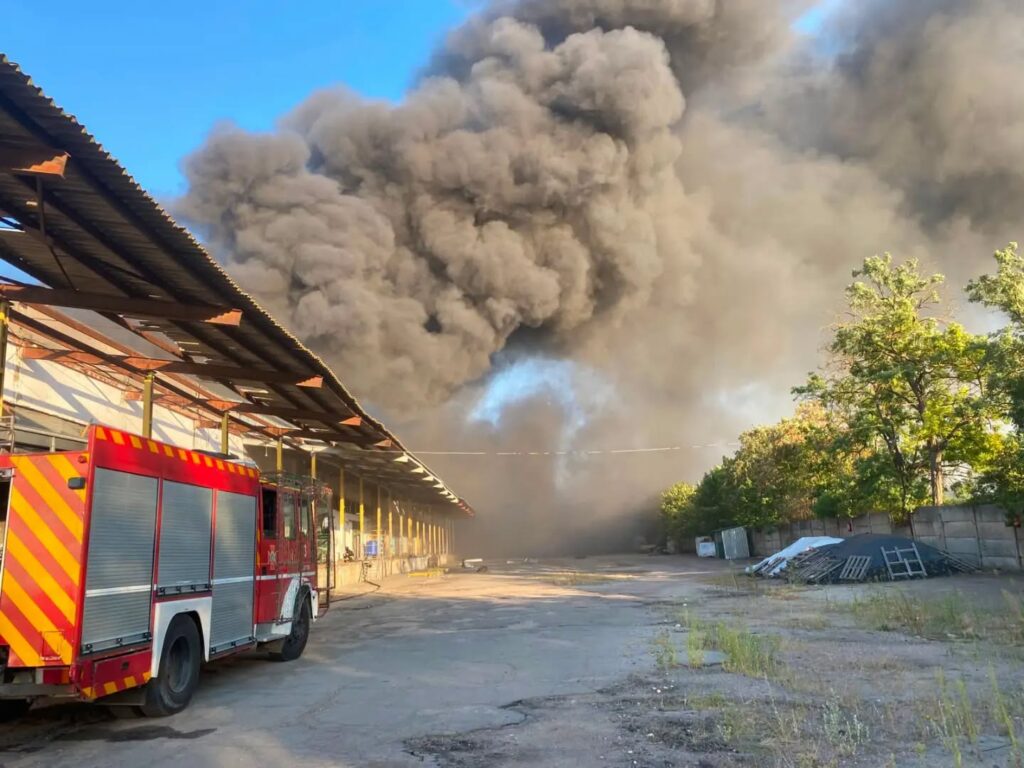
aid ukrainian red cross stockpiled winter kherson burned russian drone attack · post smoke rising over warehouse where caused fire 23 2026 fb kherson784818077_2 ukraine news reports

Russia has destroyed a Ukrainian toilet-paper maker's warehouse for the second time. According to Snow Panda, an everyday brand of toilet paper, paper towels, and wipes, a Russian strike on 22 September again leveled its warehouse complex. This time, its workers came through unhurt, the company said.

The strike is a small piece of a systematic campaign against Ukraine's civilian economy. Russia has destroyed more than two-fifths of the country's modern warehouse space, some 2.1 million square meters, hitting the depots of retailers, food companies, drugmakers, and couriers far from the front.

Snow Panda makes nothing military, only household paper goods, and it has now been struck twice, in a pattern where rebuilt or dispersed storage becomes the next target.

A second strike levels the warehouse

"On 22 September, as a result of a Russian strike, our warehouse complex was completely destroyed for the second time," the company said.

It provided no further detail on the damage or losses, but emphasized the outcome that mattered most to it.

"The most important thing is that the people are alive and unharmed," its press service said.

July's missile hit the main hub

The first blow came on 1 July, when a Russian missile struck the Snow Panda plant in Odesa Oblast and wounded people there. The company called it its most important hub, the point from which its goods and those of other brands were shipped across the country.

"Now we are assessing the scale of the destruction and making the first decisions to save our life's work," it declared after that strike.

Russia targets the civilian economy

Snow Panda's losses fit what Ukraine has faced all summer, as Russia turns drones and missiles on the warehouses, distribution centers, and railways that keep the country supplied. The target list has run from a toy retailer's depot near Kyiv to food, medicine, and parcel warehouses across the country.

Retailers, grocery chains, and pharmaceutical distributors have all been hit, often more than once, pushing companies to scatter their stock into smaller sites that then draw the next strike.

  • ✇Euromaidan Press
  • Ukraine offers Russia deal: stop hitting our power, and we stop hitting yours. US will pass it to Moscow
    The US will carry a proposal to Russia to halt strikes on Ukraine's energy systems amid talks over the so-called "energy ceasefire" ahead of the cold season. Ukrainian President Volodymyr Zelenskyy says he and US President Donald Trump discussed the energy truce at the UN, and that Washington made no unilateral demands of Kyiv, agreeing only to pass the mutual offer to Moscow, his office said. The outcome eases the worry that shadowed the earlier round, when Trump blamed Ukraine's strik
     

Ukraine offers Russia deal: stop hitting our power, and we stop hitting yours. US will pass it to Moscow

22 septembre 2026 à 16:42

The US will carry a proposal to Russia to halt strikes on Ukraine's energy systems amid talks over the so-called "energy ceasefire" ahead of the cold season. Ukrainian President Volodymyr Zelenskyy says he and US President Donald Trump discussed the energy truce at the UN, and that Washington made no unilateral demands of Kyiv, agreeing only to pass the mutual offer to Moscow, his office said.

The outcome eases the worry that shadowed the earlier round, when Trump blamed Ukraine's strikes for record US diesel prices above $6 a gallon and pressed Kyiv to stop hitting Russian refineries, CNBC reported.

Zelenskyy offers a mutual halt

"We talked about an energy truce for us. If they do not want us to attack oil-refining capacities, then let them not touch our energy system, our water supply," he said.

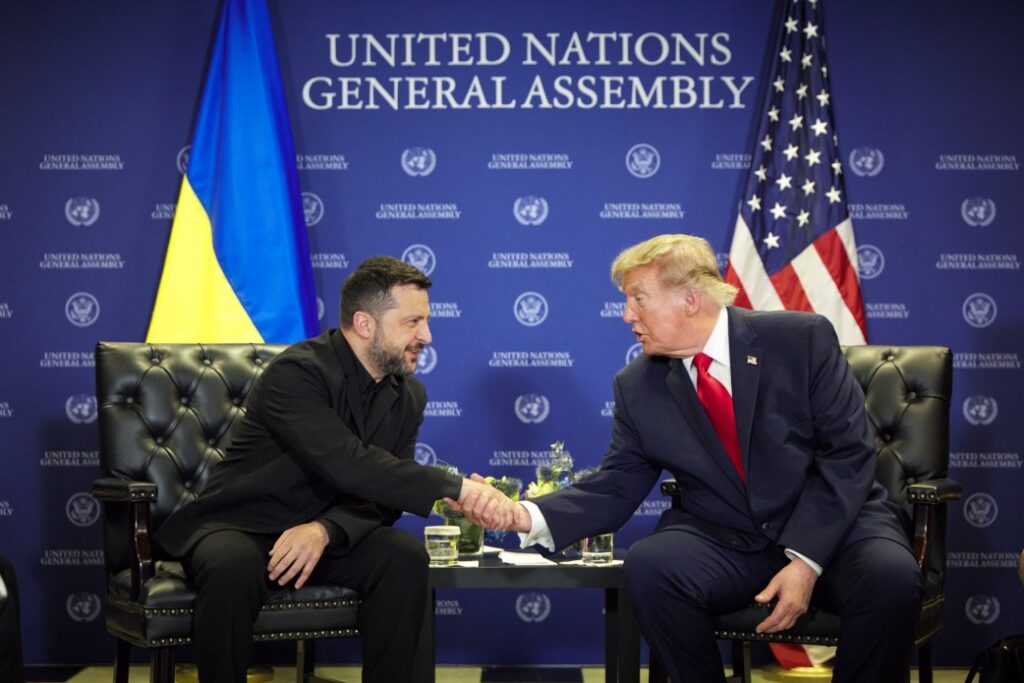
The US side, he continues, would relay the offer to Russia. The two presidents met in New York on the sidelines of the UN General Assembly on 22 September.

Air defense stays unresolved

At the same time, no agreement was announced on launching production of Patriot interceptor missiles in Ukraine, the only ones that can intercept Russia's ballistic missiles.

According to the president, his adviser, Pavlo Palisa, spoke with representatives of Raytheon, the Patriot interceptor producer. Zelenskyy added that Ukraine had asked Trump to help accelerate the process.

“We need the licenses to prepare for Patriot production. Raytheon is ready, and I asked President Trump to help with this. He responded positively,” the president said.

Zelenskyy stressed that Ukraine plans to launch the project within the next year to 18 months, emphasizing that “this is work for the long term, for the future.”

The two leaders also discussed other bilateral and multilateral issues, including a winter air defense package for Ukraine, but no specific details or concrete agreements were announced.

Arms makers in Ukraine sign first 26 deals in program that lets them lease equipment for 5% of cost, with state paying other 95%

22 septembre 2026 à 16:11

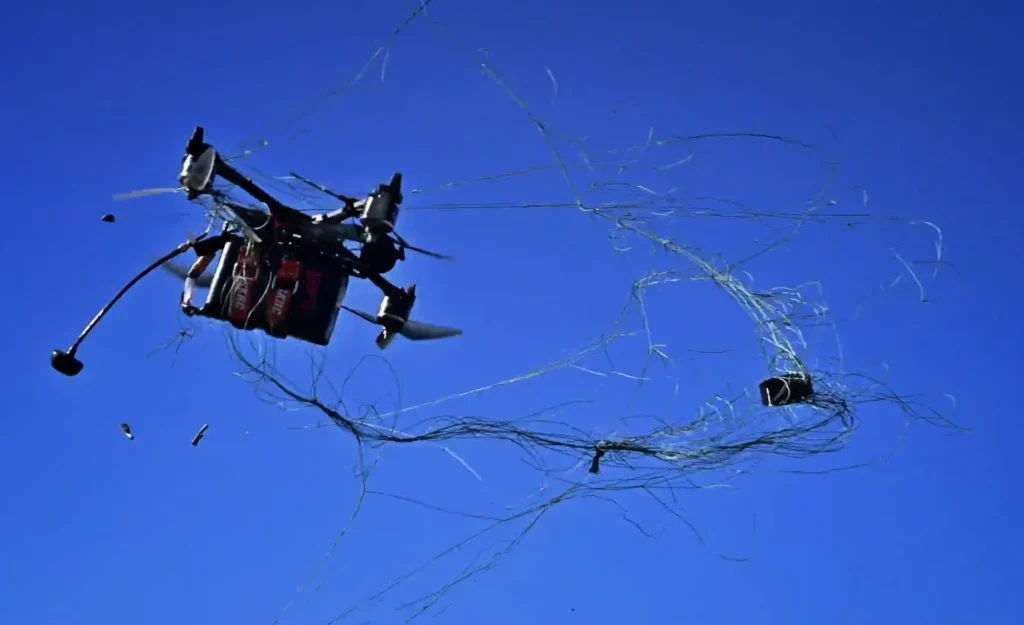
An FPV drone snared by a net fired from a Chipa net gun, developed by BlueBird Tech. Photo: BlueBird Tech via Defense Blog

Ukraine's defense makers have signed the first 26 deals under a program that lets them lease or rent new equipment, with the right to subsequently purchase it into ownership, while the state covers most of the bill. The preferential-leasing scheme has channeled about $2 million so far, with producers paying just 5% of the leasing fee and the state covering the rest, the Defense Ministry said.

For many Ukrainian arms makers, the bottleneck is not orders but the cash to expand fast enough to fill them, Deputy Defense Minister Hanna Hvozdiar says, and the program is the state's answer.

Producers can lease equipment, machinery, automation equipment, transportation, and even factory space, paying 5 percent per year while the state subsidizes the rest, up to about $11 million per contract over five years.

The state covers most of the cost

Beyond capping the borrower's rate at 5 percent, the contracts can defer lease payments for up to a year, easing the squeeze while new equipment is bought and installed.

Only companies that hold "critically important" status in the defense sector, a label the state gives firms it deems essential to the war effort, can take part. The 26 deals are only the first, the ministry said, with the program still open to new applicants.

Three banks run the leasing

The Defense Ministry launched the program in April and named Ukreximbank, PUMB, and MTB Bank as the first authorized lessors, it said. In August, it spelled out what producers can lease, from machines, mobile production platforms, and technological gear to the non-residential real estate a plant needs to run.

Ukraine races to scale production

The leasing program is one piece of a broader drive to get money flowing to Ukraine's defense industry so it can produce more, faster. The government has been building financing tools around the sector, including a push by former Defense Minister Mykhailo Fedorov to raise the country's largest defense-tech venture fund.

NATO’s top generals meet in Copenhagen with Ukraine at top of agenda, as warnings grow that Russia may strike Alliance next

22 septembre 2026 à 13:47

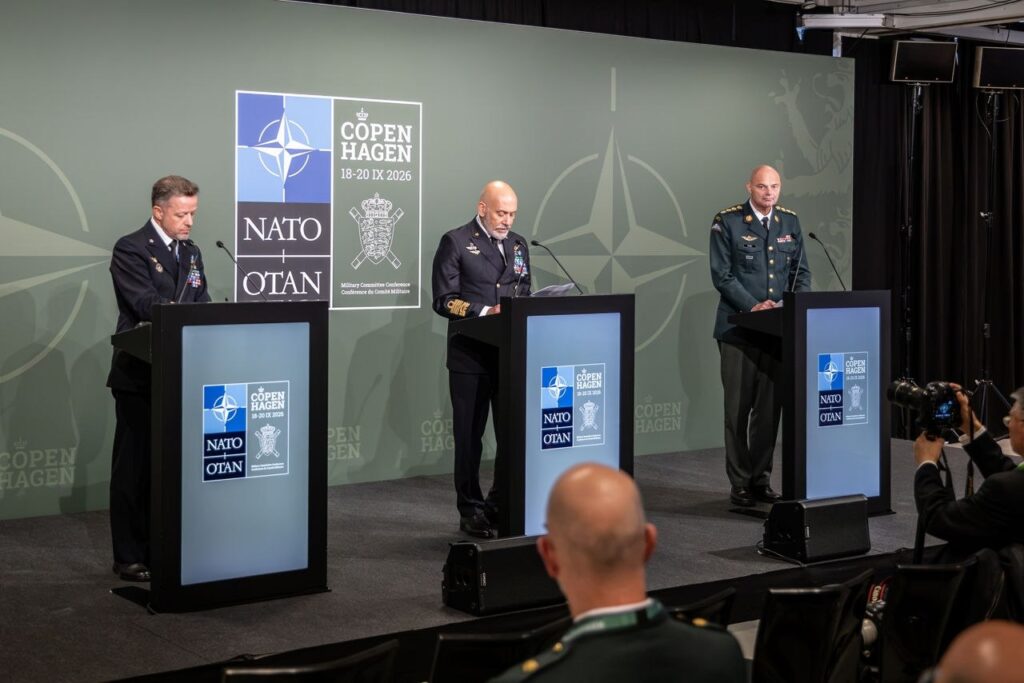
Admiral Giuseppe Cavo Dragone is delivering a speech during a NATO meeting in Copenhagen. Source: NATO Representation in Ukraine

NATO's top generals gathered in Copenhagen, and Ukraine was at the center of the table. The Alliance's Military Committee, its 32 chiefs of defense and two strategic commanders, met to reaffirm support for Ukraine, accelerate its readiness, and appoint a new chairman, Ukraine's General Staff said.

The meeting comes as intelligence services and Western leaders warn that Russia may be preparing to move against NATO itself, not only Ukraine. Polish Prime Minister Donald Tusk has recently told his parliament that intelligence points to Russian plans for drone and missile strikes on NATO countries.

Ukraine anchors the agenda

The annual conference, held in Copenhagen and chaired by Admiral Giuseppe Cavo Dragone alongside the Alliance's two strategic commanders, followed up on decisions from the recent NATO summit in Ankara and centered on deterrence, defense, and new technology, with Ukraine running through it all, according to the NATO Representation in Ukraine.

Cavo Dragone said the Alliance maintains its unwavering support for Ukraine, and that allies continue to send equipment, conduct training, and provide aid while absorbing the hard lessons of Ukraine's defense.

The chair calls out Russia

Cavo Dragone framed the moment bluntly. The Alliance had again seen "the reckless behavior of Russia, including airspace violations, drone incidents, hybrid activities," he said at a joint press conference. He credited allied forces for their swift responses to those incidents and vowed the Alliance would defend every inch of its territory.

Germany's Breuer takes the helm

The chiefs have also elected General Carsten Breuer, Germany's chief of defense, as the next chair of the Military Committee, NATO's highest military body. He will take over in the summer of 2027 for a three-year term, succeeding Cavo Dragone.

Breuer, Germany's chief of defense since 2023, was the front-runner, and his selection, backed by Washington, hands the role to Europe's largest military spender and signals Germany's growing weight in the Alliance's command.

Ukraine’s Donetsk counteroffensive wins not by force but by stealth: it gathers troops under Russian nose and seizes two villages before they react

22 septembre 2026 à 13:30

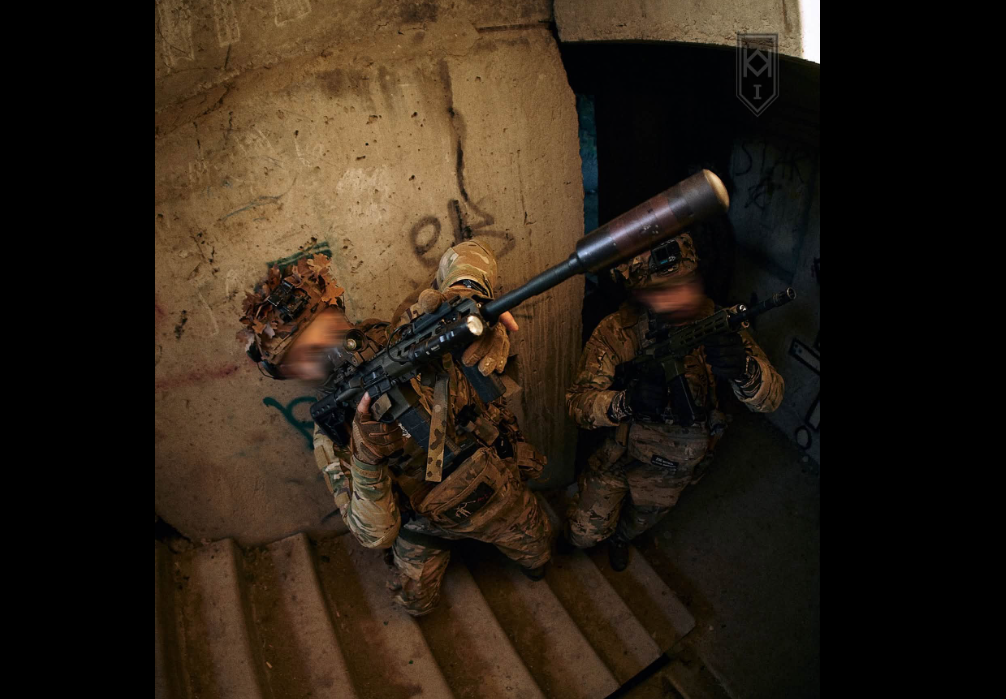
Ukrainian soldiers. Source: The Third Separate Assault Brigade of the Ukrainian Ground Forces

Ukrainian troops gathered for an assault on two Russian-held villages, and the Russians never saw them coming. A captain of the 60th Mechanized Brigade, with the callsign Akhmet, says the concealed buildup near Derylove and Drobysheve was what allowed his units to take the villages once Operation Vivaldi began, Suspilne reports.

The account fills in how Vivaldi actually takes ground: not by overwhelming force but by concealment, timing, and technology. Only the first phase of the "Operation Vivaldi" counteroffensive, which the Third Army Corps is running near Lyman in northern Donetsk Oblast, has cleared 75 square kilometers of Russian infiltrators and liberated another 10 square kilometers of territory.

Concealment set up the assault

The brigade's task was to free Derylove and take control of Drobysheve. The key, Akhmet says, was accumulating forces as covertly as possible in Drobysheve and on the outskirts of Derylove, so the units could begin exactly on schedule.

The Russians, he believes, failed to spot the buildup because Ukraine had done its reconnaissance well during the planning and preparation. Constant coordination with neighboring units, sharing information, and lending help mattered too. The point was to keep the movement and massing hidden until the appointed hour, so nothing tipped the Russians off before the assault opened.

The captain coordinates the fight

As a battle captain, Akhmet oversaw the tasks set by brigade command and the work of several strands at once: reconnaissance, drones, electronic warfare, and air defense.

"We determine where the enemy sits, we inflict fire damage on Russian soldiers, and we cover our groups on the ground," he said.

The job was to find the Russians, strike them, and shield the assault teams as they moved up.

Timing cleared the infantry's path

The brigade also located where Russian drones were taking off and hit those launch points at set times, to keep enemy operators from scouting and firing on the Ukrainian troops working below. Getting the timing right was the whole point, Akhmet explains, so the infantry could move to its positions and reach cover without being caught in the open.

The two villages were a piece of a larger aim: the Institute for the Study of War has assessed that Vivaldi disrupted Russia's plan to encircle the fortified belt of Donetsk cities.

Ukraine shoots down Russian drones by hundred thousand: 350,000 this year, filmed and verified hit by hit in DELTA

22 septembre 2026 à 13:16

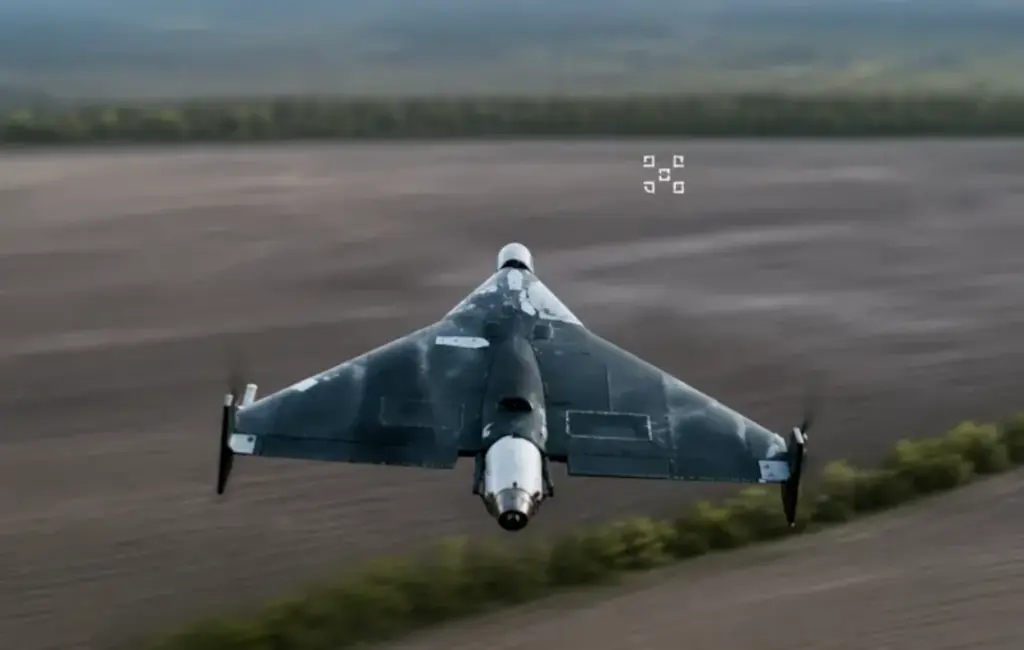
money engineering what stands between ukraine russia's fastest drones zelenskyy says · post russia’s new “geran-4 seeker” shahed variant geran-4 news ukrainian reports

Ukraine's forces have shot down more than 350,000 Russian drones since the start of the year. The count, some 220,000 fixed-wing drones, 100,000 quadcopters, and 31,000 long-range Gerans, was filmed hit by hit in the DELTA combat system and verified by the Brave1 defense-innovation cluster, the Defense Ministry said.

Meanwhile, Russia is now threatening NATO countries directly, its drones probing Polish and Baltic skies, and those countries manage to down only a small fraction of what crosses their borders. In one incursion, Poland shot down just four of about 19 Russian drones.

Ukraine's 350,000 is the record of a force that has had to master drone defense at an industrial scale, night after night.

The tally runs to hundreds of thousands

Most of the kills belong to the Defense Forces' unmanned-systems units, which downed more than 320,000 Russian fixed-wing and copter drones. Those units, together with mobile fire groups and army aviation, also brought down faster Geran-type attack drones.

The pace has been relentless: in August alone, Ukraine destroyed some 35,000 fixed-wing drones and nearly 24,000 copters, the ministry said.

DELTA verifies every hit

Every downing is logged and confirmed in DELTA, the digital system Ukraine uses to run the battlefield, and which the ministry calls a key to its edge over Russia. Filming and verifying each kill lets commanders study how it was done and scale up whatever works.

The purpose is concrete: knocking down fixed-wing drones blinds Russian reconnaissance, and blunts strikes on cities and critical infrastructure, while downing copters keeps Russia from finding and hitting front-line positions. Each drone stopped, the ministry says, is potentially the life of a Ukrainian soldier or civilian saved.

The same threat now shadows NATO

That threat is spreading. Prime Minister Donald Tusk told Poland's parliament that intelligence points to Russian plans for drone and missile strikes on countries backing Ukraine.

The allies being warned are the ones that have struggled to stop even a handful of drones, while Ukraine, out of necessity, has learned to bring them down by the hundred thousand.

Germany cut Russian gas after 2022 invasion of Ukraine. Now, its far-right AfD party is in talks with Gazprom to bring it back, and Kremlin welcomes decision

22 septembre 2026 à 13:01

berlin commits $500 million ukraine sourcing weapons directly reserves germany eu's flags berlin's government quarter front german parliament protokoll-inlandde bundestag goal rapid delivery air defense other vital gear nato says

Germany's far-right AfD has confirmed it is in talks with Gazprom to bring Russian gas back to Germany. Its foreign-policy speaker met the Russian gas giant's chief in Moscow to discuss resuming supplies, a step that would reverse the break with Russian energy Germany made after the 2022 invasion, the party told DW.

The AfD is openly working to undo one of the West's central responses to the war. Before 2022, Russia supplied about 55 percent of Germany's gas, a dependence federal officials later blamed for Berlin's slow initial reaction to the invasion.

Cutting it cost Moscow its biggest European market. Restoring it would hand back one of its largest revenue streams at a time when energy sales fund the war.

The Kremlin has already publicly welcomed the AfD’s efforts to engage in dialogue with Moscow. Dmitriy Peskov, press secretary for Russian President Vladimir Putin, has also reacted positively to the party’s growing popularity.

The AfD confirms the Moscow talks

The confirmation came from Beatrix von Storch, deputy leader of the AfD's Bundestag faction.

The party's foreign-policy speaker, Markus Frohnmaier, was in Moscow and personally spoke with Mr. Miller of Gazprom, she said, referring to Alexei Miller, the company's chairman.

"Of course, we are interested in resuming trade. We need affordable energy and the widest possible supply, so we consider it in our interest to get supplies from Russia too, which is why we are holding these talks," she said.

The politics run through the east

The talks land as the AfD surges at the polls, topping recent votes in eastern Germany and in Berlin, contests in which Russia's war against Ukraine figured in the party's platform. Asked what signal those results send Moscow, von Storch cast the war less as foreign policy than as a domestic worry.

"Of course, it is an important topic. People fear war and that Germany will be drawn into it, let itself be drawn in, or directly enter it," she said.

Danish defense startup guarding undersea cables runs on 15 Ukrainian suppliers. Ukrainian fund is putting in €2 million in it

22 septembre 2026 à 11:53

Denmark

A Ukrainian fund is investing in a Danish defense startup, a reversal for a country far better known for taking in foreign capital than for sending it abroad. Resist.UA is backing BlueShadow, a maritime security firm run by a former US Navy submarine commander but largely engineered in Ukraine, to build defenses for coasts and undersea cables against drones and hybrid attacks.

BlueShadow is registered in Denmark, but almost its entire engineering team works in Ukraine, and it folds gear from more than 15 Ukrainian suppliers of drones, sensors, and communications into a single system.

Resist.UA, which signed a letter of intent to join the company's €2 million pre-seed round, runs a new €50 million fund, Resist 2.0, designed to bring Ukraine's battlefield-proven technology to global markets.

Ukraine engineers the Danish startup

The company was founded in 2025 and is led by Charles Maher, a former commander of a US Navy nuclear submarine, according to Defender Media.

This summer, it registered as a Ukrainian legal entity and builds on Ukrainian components, planning to fit its maritime platforms with M-Fly's RB-220 gimbal, a day-and-night targeting sensor used until now only on flying drones.

The two sides first met in January 2026 and formalized the partnership as BlueShadow raised its round and Resist.UA launched its second fund.

The systems guard the sea

BlueShadow is building two of them. BlueDragon, still in development, is designed to shield Ukraine's coastal cities, ports, and shipping lanes from drone strikes. BlueSentry, which the company plans to launch in October, is aimed at protecting ports, offshore wind farms, undersea cables, and maritime borders from hybrid attack, the kind of sabotage that has repeatedly damaged Baltic Sea infrastructure.

"This partnership will fuel the next phase of our mission to protect people, infrastructure, commerce, and natural resources at sea," the company said.

Ukraine's defense tech turns outward

Ukrainian defense technology, tested in real combat, has drawn growing investor interest, and Ukrainian figures are now building funds to channel it: the former Defense Minister, Mykhailo Fedorov, is raising what he calls the country's largest defense-tech venture fund.

Last September, Poland downed four of 19 Russian drones. This September, drone reached NATO’s missile shield in Redzikowo, and troops guarding it called 112

22 septembre 2026 à 11:33

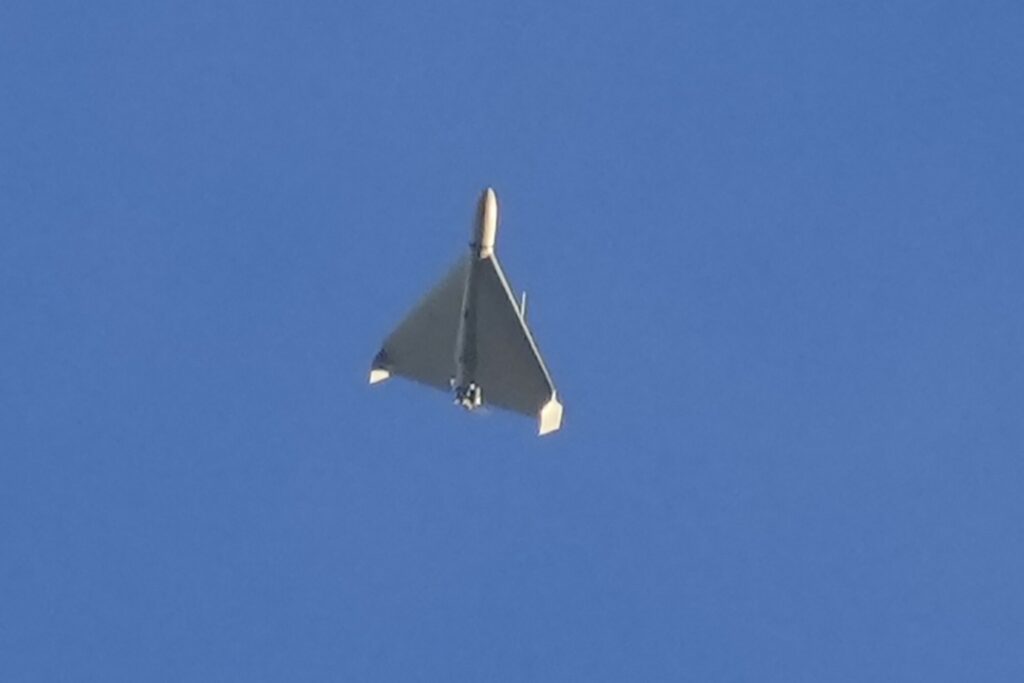
shahed-136 Geran-2 iranian airborne A drone is seen in the sky seconds before it attacked buildings in Kyiv, Ukraine, on Oct. 17, 2022. The Russian military has been using the Iranian Shahed exploding drones to strike Ukraine's vital infrastructure for more than a year. (AP Photo/Efrem Lukatsky/EastNews

An unknown drone has flown right up to the US missile-defense base in northern Poland, and how the military responded has raised questions about how well the site is protected from the air. Rather than shoot the drone down near Redzikowo, a cornerstone of NATO's missile shield, the unit followed a set of procedures that included a call to 112, Poland's civilian emergency line, Onet reported.

Meanwhile, European intelligence officials are considering the possibility that Russia could test NATO’s resolve in the near future. According to one official, a potential attack could occur “within months, not years," The Guardian reports.

Surveillance systems detected the drone about half a kilometer from the base on 15 September, where it operated for roughly five minutes.

This incident is linked to a similar one in 2025. Almost a year ago, also in September, around 19 Russian drones crossed into Polish airspace. Poland shot down only four Russian drones with modern Polish F-16s and Dutch F-35s. Meanwhile,  Ukraine downs 87.4% of Russian long-range drones. Poland only shot down 17-21% of the drones that entered its airspace.

The base sits at the heart of NATO's shield

Redzikowo hosts the US Navy's Aegis Ashore installation, an American component of NATO's missile-defense system and one of the most sensitive military sites in Poland. It matters strategically to Poland, NATO, and the US. While American personnel guard it, Poland has taken primary responsibility for its security and assigned a dedicated unit.

Even before the base opened, there were efforts to secure anti-drone systems for it, on the logic that a site best protected from the ground can stay exposed from the air.

The ministry keeps its methods quiet

The Polish Defense Ministry says it established where the operator was flying from, notified the relevant services, including the police, and treats every case of unauthorized drone activity near a guarded site seriously. What it will not say is whether it tried to neutralize the drone, or whether the anti-drone and electronic-warfare systems at Redzikowo were used at all, citing security.

Warnings pile up across the flank

The stakes are rising along NATO's eastern edge. Prime Minister Donald Tusk told parliament on 17 September that, by the assessment of NATO, Ukrainian, and US intelligence, Russia's plans include drone and missile strikes on countries backing Ukraine, Poland among them, possibly staged to look "accidental" and test whether Article 5 means anything. Warsaw insists it is ready and will hit back at any attack. The Redzikowo drone, and the four-of-nineteen record behind it, are why that confidence keeps drawing questions.

Russia is holding Ukraine’s south with convicts: 69 percent have records. And they’re fighting where civilians live

22 septembre 2026 à 10:49

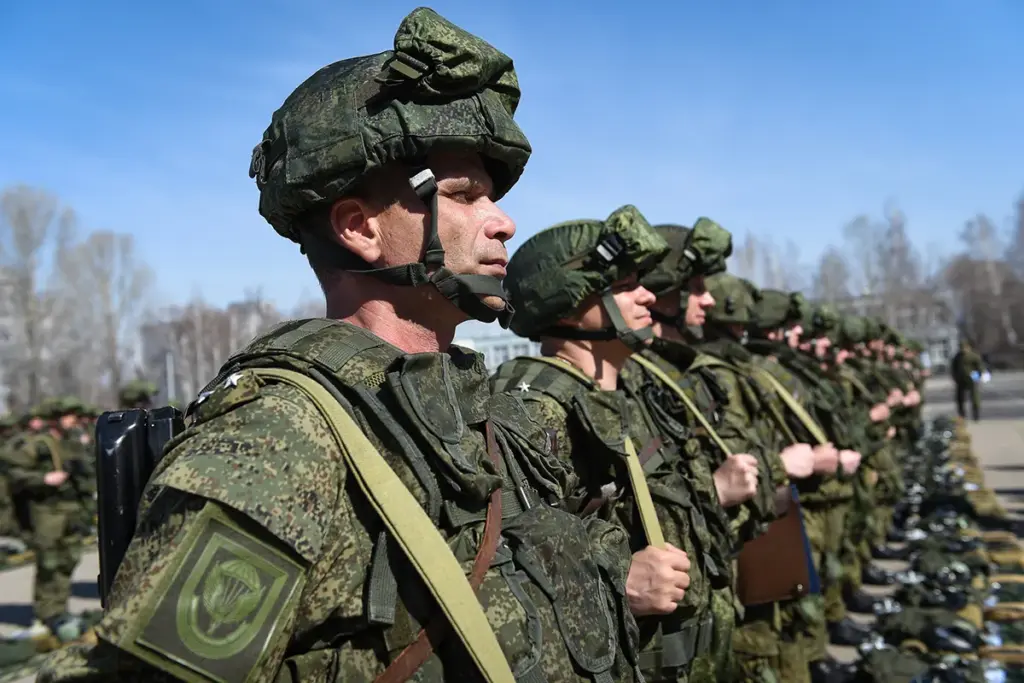
Russian soldiers in camouflage uniforms and helmets stand in formation outdoors.

More than two-thirds of the Russian soldiers holding the Zaporizhzhia front carry criminal records. Ukraine's "South" grouping says a third of them enlisted to escape prosecution, most are over 30, and no fresh reinforcements are arriving, spokesperson Anastasia Shevchenko told Ukrinform.

The reasons they signed up track with that: 31 percent enlisted to dodge criminal liability, 24 percent for money, 26 percent on ordinary contracts, and 13 percent through mobilization. It is Russia's prison pipeline in a single snapshot, a model that has pulled well over 100,000 inmates into the war with pardons and suspended sentences and thrown many of them at Ukrainian lines in disposable assault waves.

"It is worth noting that 69 percent of the Russian personnel have a criminal record," Shevchenko said.

The model dates to Wagner's prison recruiting in 2022 and has run under the Defense Ministry since.

A middle-aged force holds the line

The men are not young. More than a third, 36 percent, are between 31 and 40; another 24 percent are 41 to 50; 31 percent are 21 to 30; and just 9 percent are 20 or under.

This is a force of grown men with records, not fresh conscripts, and it points to who Russia can still find willing to fight in the south: people with little to lose and a sentence to escape among Ukrainian civilians, women and children.

The prison pipeline runs dry

What Shevchenko did not report is any sign of that force being rebuilt. Russia has enough men and equipment to keep fighting on the Zaporizhzhia front, she says, but no substantial replenishment is coming.

That fits a wider problem for Russia: its supply of convict recruits is thinning as word of the front's lethality spreads through the prisons, with some inmates now signing military contracts only to bolt on the way to the front, in one case killing their escort to get away.

Russia's practice of replenishing its ranks from prisons is breaking down, and officials are resorting to ever more coercive measures to keep the flow going.

❌