States Sue Over Move to End to Federal Funds for Transgender Youth for Transition Care

© Nathan Frandino/Reuters


© Nathan Frandino/Reuters

Police officer who fatally shot unarmed 22-year-old Glenwood Pysher IV faces voluntary manslaughter charge
A Pennsylvania police officer was charged on Tuesday with voluntary manslaughter for last week’s fatal shooting of a college student who was looking for his friends late at night and went to the wrong house.
Police body-camera video reviewed by investigators showed the officer yelled: “Drop to the ground,” then: “Stop or I’ll ...”. Before he finished the sentence, he fired two shots at the man who was unarmed and had his hands in the air. He hit 22-year-old Glenwood Earl Pysher IV twice in the chest, killing him.
Continue reading...
© Photograph: Matt Rourke/AP

© Photograph: Matt Rourke/AP

© Photograph: Matt Rourke/AP


© Philip Cheung for The New York Times


© Rich Pedroncelli/Associated Press


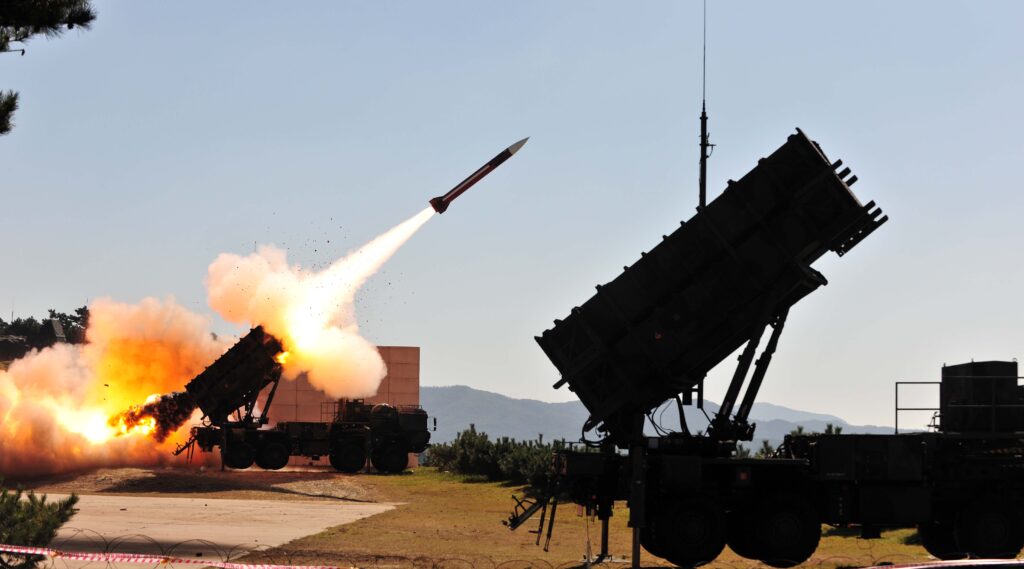
Ukraine has asked the EU to spend billions from its support loan on Patriot air-defense missiles, a request European Commission President Ursula von der Leyen confirmed the bloc is weighing. How far the money would stretch depends on a price only Washington controls.
Russia keeps firing more ballistic missiles at Ukrainian cities than the country can shoot down, the warheads hardest for its air defenses to stop. Only a US-made Patriot system can catch them, and their interceptors remain in short supply worldwide, so who pays for them and Washington that agrees or disagrees to sell them now shapes how many cities stay covered.
The European Commission has already received a payment request covering Ukraine's air defenses, including the PAC-3 interceptors that arm Patriot systems. Von der Leyen put it at "several billion euros" and said member states were reviewing it, without naming a figure.
Suspilne, citing its own sources, reported that the request seeks just over $2.3 billion, with another $4.6 billion from the loan's defense tranche going to arms manufactured in Ukraine and the EU, mostly drones.
The money would come from the EU's $104 billion support loan for 2026–27. Because PAC-3 is US technology, spending loan money on it needs an EU exemption. National representatives will take up the decision on 7 September.
Defense Express has calculated how many interceptor missiles Ukraine can get with the loan. At the $4–5 million per round the US Army pays, $2.3 billion would fund 460-580 interceptors. At the $6.61 million export price Germany paid in late 2024, about 315. At up to $12.3 million each, the US cleared for Saudi Arabia on 30 January 2026, just 190.
For Ukraine, the harder question is not price but whether it can get the missiles at all. Even 315 rounds would equal about half the world's current yearly output, which the sole producer, Lockheed Martin, is straining to lift from around 600 a year to 2,000 by 2030.
Kyiv has been short of interceptors for months. In August, Zelenskyy said Ukraine reached a deal with the US for monthly Patriot deliveries, but that it still needs at least around 5% of American output to get through winter. EU Foreign Policy Chief Kaja Kallas has urged member states to hand over interceptors, especially those with shelf lives nearing their end.

Experts have expressed deep concerns that the practice runs afoul of the fourth amendment’s right to privacy
Federal prosecutors have declined to say whether they secretly obtained phone records for the journalist Don Lemon using an unusual administrative summons, his lawyers said in a Monday court filing, highlighting concern about a controversial legal authority the government has claimed to gather information as it charged Lemon and dozens of others with civil rights crimes in connection to a January protest at a church in Saint Paul, Minnesota.
In January, officials served Verizon with an administrative summons for a log of Lemon’s phone records between 19 December and 20 January. The subpoena did not come from a grand jury, as is typical in criminal investigations, and also was not a court-approved search warrant. Instead, it was a unilateral request from the Department of Homeland Security (DHS), which said it was requesting the information under 19 USC 1509 – an obscure law that gives the department power to investigate records related to customs issues. Experts say the government is abusing that authority to gather records on journalists, activists, unions, non-profits and online critics, and have expressed deep concerns that the practice runs afoul of the fourth amendment’s right to privacy.
Continue reading...
© Photograph: Paras Griffin/Getty Images

© Photograph: Paras Griffin/Getty Images

© Photograph: Paras Griffin/Getty Images


Kazakhstan’s privately owned Kondensat refinery will process Russian crude and return about 70% of the resulting petroleum products to Russia, Kazakh Energy Minister Yerlan Akkenzhenov said on 25 August, Radio Liberty reported.
Based on figures reported by Radio Liberty, the roughly 70% of Kondensat’s maximum gasoline output bound for Russia would amount to about 0.3% of the country’s daily summer gasoline demand. That makes the arrangement a limited stopgap rather than a solution. John Roberts of the Atlantic Council nevertheless told the outlet that even small additional supplies could help during an acute shortage, including at the front: “It helps, but it doesn’t solve the problem.”
Ukrainian drone strikes have knocked dozens of Russian refineries offline in recent months, forcing Moscow to restrict fuel exports and reimpose rationing, Radio Liberty reported. Gasoline caps returned to Moscow and St. Petersburg in August, while Rosneft reportedly limited fills to 30 liters per car at every station nationwide.
Kondensat has processed Russian oil before. The refinery began handling supplies delivered through Tatneft’s TANECO refinery in 2024, when Kazakhstan and Russia agreed to permit exports of fuel produced from Russian feedstock back to Russia. The arrangement was renewed in 2025, according to Radio Liberty.
Central Asia has no spare refining capacity that could materially change Russia’s situation, Ukrainian energy analyst Hennadiy Riabtsev told Radio Liberty’s Schemes project. Possible contributions from Kazakhstan, Kyrgyzstan, India, China, and Belarus would remain a drop in the ocean for the Russian market, he said.
Prospective suppliers also understand that Russian fuel demand supports the war effort and that assisting Moscow could carry sanctions risks, Ukraine’s presidential sanctions commissioner, Vladyslav Vlasiuk, told Schemes. Kyiv therefore does not expect a queue of countries willing to supply Russia with petroleum products, he said.
Russia’s shortage has spread from gas station queues to farming and public transport, with fuel-sale restrictions officially covering more than 40 regions by July, Euromaidan Press reported, citing The Moscow Times. Moscow’s export restrictions have also raised prices and tightened supplies across Central Asia.
Yet Russia’s growing dependence gives Kazakhstan additional bargaining room. Ukrainian strikes have previously prompted Russian retailer Wildberries to expand its warehousing operations in Kazakhstan, while Astana has promoted domestic competitors.


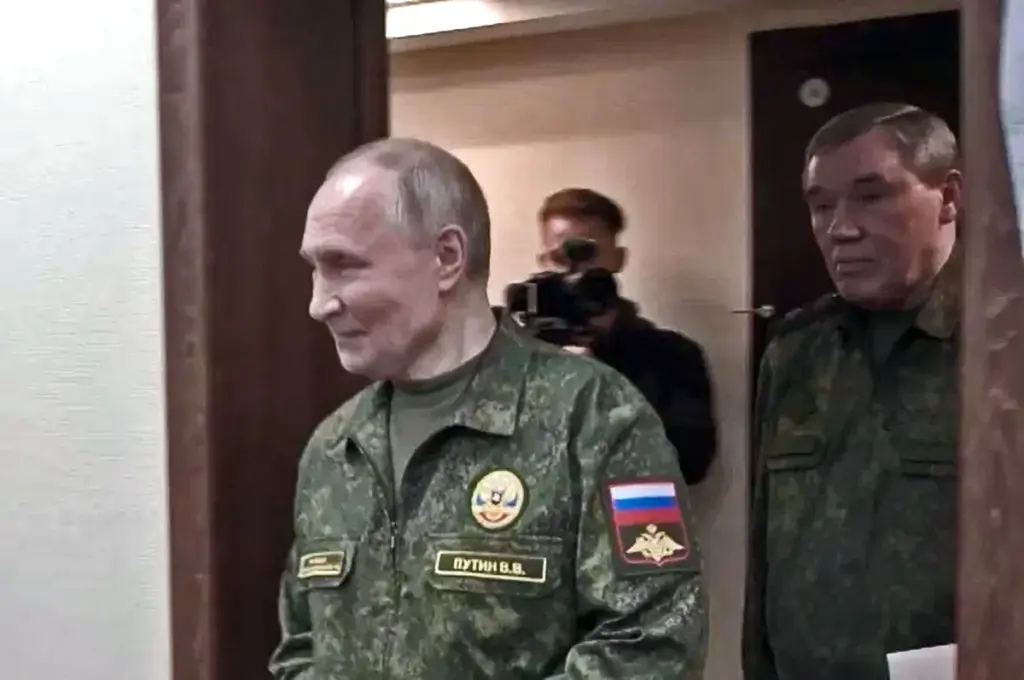
Asked about reports in Ukrainian and Western media that Russia could order a mass mobilization after September’s parliamentary elections, Vladimir Putin replied: “That’s complete nonsense. It’s an information attack on Russia,” RBC reported. He was speaking after the Shanghai Cooperation Organization summit in Bishkek.
Ukraine’s military and foreign intelligence services say Russia’s General Staff has prepared a scenario for mobilizing an additional 600,000 people during 2026 and 2027—300,000 each year. Their briefing described a contingency, not an issued call-up, and did not say mobilization had begun. If activated, the agencies said, the recruits would primarily reinforce units fighting Ukraine and newly formed military units.
Ukraine’s intelligence services linked the scenario to mounting battlefield losses and a slowdown in contract recruitment. They said Russia lost roughly 240,000 personnel from January through July, including at least 140,000 killed or permanently lost, while recruiting about 232,000 contract soldiers. The figures could not be independently verified.
Russia’s military also rehearsed procedures for mobilizing residents of Kaliningrad Oblast in July, Ukrainska Pravda reported, citing The Wall Street Journal.
Reports of a possible draft have generated concern inside Russia. More than 20,000 people crossed into Georgia through the Verkhny Lars checkpoint in a single day amid fears of mobilization, as EP previously reported.
Ukrainian President Volodymyr Zelenskyy said in August that Moscow planned to mobilize several hundred thousand people after the elections and roughly the same number in 2027, citing military intelligence. HUR deputy chief Vadym Skibitskyi later assessed that a call-up could provide troops for a northern offensive by February 2027, while stressing that the agency saw no preparations underway at the time.
Dmitry Medvedev, Vasily Nebenzya, and the State Duma’s defense committee have all denied plans for another mass draft. Russian officials issued similar denials shortly before Putin announced the 2022 call-up. RBC notes that the decree authorizing that mobilization was never formally revoked. No new call-up has been publicly announced or reported as underway.


Ukraine’s General Staff confirmed that Ukrainian forces struck the Novatek-Ust-Luga production complex in Russia’s Leningrad Oblast on 1 September, saying the target was hit and a fire followed. The scale of the damage remains under assessment.
Russian authorities initially acknowledged damage and a fire but did not identify the facility. Ukraine’s military intelligence later named the Novatek complex as the target, and the General Staff has now confirmed the strike and said the facility supports Russia’s armed forces. It did not explain how, nor say whether, production was disrupted.
Ukraine’s military intelligence agency, HUR, was first to identify the target, saying on 1 September that its operators had struck the complex alongside Ukraine’s Defense Forces in a joint deep-strike operation. Key elements of the site’s oil-processing installation and other equipment were hit, and a large fire broke out, the agency said. The General Staff confirmed the strike the following day.
Video of the overnight attack on the port of Ust-Luga in Russia’s Leningrad region. pic.twitter.com/dXG5XTkhab
— Exilenova+ (@Exilenova_plus) September 1, 2026
The Novatek complex at Ust-Luga separates stable gas condensate—a liquid produced during natural gas extraction—into fuel and petroleum components and handles their shipment through the Baltic port. Its design capacity exceeds six million tons a year, the General Staff said. The plant produces light and heavy naphtha, kerosene, a diesel fraction, and a marine-fuel component.
Before Ukraine named the target, Leningrad Oblast Governor Alexander Drozdenko acknowledged infrastructure damage and a fire at Ust-Luga on 1 September, but did not identify the specific facility. HUR subsequently named the Novatek complex as the target and reported damage to key equipment.
The operation continued Ukraine’s campaign against Ust-Luga’s energy and port infrastructure. Ukrainian agencies confirmed the first strike on Novatek’s complex overnight on 24–25 March. Drones returned on 31 March, setting fuel-storage tanks ablaze, damaging a pier and pumping equipment, and temporarily halting port operations, followed by another reported attack on 7 April. Ukrainian drones last hit the port on 14 August, marking the sixth such attack there in 2026.
Yesterday a16z published an article in which NYU Professor of Design, AI and Media Theory Ruby Thelot argued that “enshittification,” or the concept that technology platforms get worse after they lock in users, isn’t real. In reality, Thelot says, people use social media more than ever and report that they are satisfied with it.
Thelot argues that, enshittification, a term coined by Cory Doctrow which has become one of the stickiest ideas of our era to explain the current state of technology and capitalism, is a misdiagnosis of what he describes as “platform narcissism.” The idea is that people, namely older people like Doctrow and western geratric millennials who used to get a lot of value out of Facebook, selfishly think platforms should continue to cater to their needs even though they aged out of them and should be focused on raising their kids. The platforms are actually popular and well liked, but by younger people who are using Instagram and deriving value from it in a way older people can’t understand, or by people in other countries and contexts than their own. Additionally, Thelot argues, the theory of enshittification allows users who should log off an excuse to stay on platforms that it is fashionable to hate. They spend time there, but say they hate it and can’t leave because they are trapped.
“Perhaps the reason why the platform seems worse is because your life has changed,” Thelot says. “Over the same period of time, your goals have changed, and they no longer fit with the platform’s new features. Why the hell would a fifty-five year-old be watching Reels? Go take care of your kids.”
The indisputable fact of Thelot’s argument is that various social media platforms have more users and are more profitable than ever. This data is readily available from reliable market surveys, polls, and quarterly earning reports from the companies themselves. It’s important to note that companies like Meta have a history of juking the numbers, and that despite this it recently reported its first ever decline of 20 million users, but Thelot’s point stands: Instagram, Facebook, and TikTok are massively popular.
I will also cosign Thelot’s advice that people should log off. There are many reasons why some people can’t, present company included, but it’s never not good advice and even if you have to be on social media you can probably reduce your time scrolling.
Thelot’s argument falls apart when he tries to prove people are actually satisfied with their time on these platforms. To prove this, he points to research from American Customer Satisfaction Index, a private company which surveys customers’ satisfaction with various products and services. In its ACSI Entertainment Study 2026 it surveyed 30,886 customers and found that overall satisfaction with social media rose by 1 percent to a score of 75 out of 100. If satisfaction with social media is rising instead of falling and doesn’t have a terrible score, it’s doing the opposite of enshittifying and people don’t actually hate it, he argues.
Kudos to Thelot for finding data that appears to contradict the human civilization-wide backlash to social media and nearly the only political issue that a deeply divided country can agree on, but this is cherry picking.
Here are the type things customers are asked to evaluate with a score of 0-100 in the survey this rising satisfaction score for social media: “Quality of mobile app, reliability of mobile app (minimal down time, crashes, lags), loading speed and reliability, ease of navigation, ease of using the site on different devices, speed and reliability of video clips, variety of services and information, freshness of content, relevance of content, ability to use site without disruption, personal relevance of ads seen.”
Customers scored all these aspects of social media highly (between 68 and 84), and I agree with their evaluation. Instagram loads really fast. I can scroll videos on TikTok very quickly. I watched one YouTube Short about Warhammer 40,000 lore, and then was served more than a dozen other YouTube Shorts about Warhammer 40,000 lore that were both fresh and relevant. I do not contest any of this and I don’t think that is why both my friends in the DSA and my Trump supporting family members agree that Instagram is bad.
If we wanted to find out why Americans have negative feelings about social media or why we think these platforms are enshittifying, we might ask questions like: Does using Instagram make you feel good? Do you think children younger than 13 should have unlimited access to TikTok? Has Facebook been a net positive for your family?
Let’s look at some other data. A recent survey from The Searchlight institute found that voters “overwhelmingly believe social media has a negative impact on society.” Last year, anEmerson College poll found that Americans have low confidence in information they get from social media and that social media platforms are most responsible for the creation of “fake news.” In 2021, the Cato Institute found that 75 percent of Americans don’t trust social media to make fair content moderation decisions. In August, a Reuters/Ipsos poll found that three in five Americans support stronger oversight of social media companies. 35 percent said social media stressed them out. 52 percent said they spend too much time on social media. A Pew poll in July found that 6 in 10 Americans supported a social media ban for kids under 16.
These opinions, especially as they relate to the impact social media has on younger people, has nothing to do with how fast videos load on Instagram or how effective the ads are. The apps function well technically and the ads are making money, this is self-evident and the reason we have a problem. The reason people feel like social media is enshittifying is that these companies promised to connect people across the world but in reality have chased engagement, catering to basest the human urges to hold our attention. Kids especially feel socially pressured to use these apps because that’s what every other kid is doing and where they feel their community is. It is such a clearly awful and obvious result of the way these apps have enshittified that in August Meta agreed to pay $17 billion dollars in penalties and finally curb the most dangerous aspects of its platforms over claims it endangered children.
People need to be on Linkedin to find jobs. Municipalities and news organizations share important updates on social media first. You might be pulled onto Facebook or WhatsApp against your will because your local school or community of parents congregate there. That doesn’t mean they like it. It is possible to hate something with your entire being and still participate in it.
There are Warhammer and cute cat videos, but every scroll is a spin of a slot machine that cycles between hate, fear, jealousy, disgust, and horniness. We all see it and no amount of pro big tech propaganda, funded by the same firm that invested in these companies is going to convince anyone otherwise.


Estonia is automatically diverting emails using Russia’s .ru internet domain into quarantine for additional security checks before they reach state institutions connected to the country’s secure government network, Justice and Digital Affairs Minister Liisa Pakosta told Estonia's public broadcaster ERR.
The measure is intended to protect Estonian government computer systems amid a post-2022 surge in cyberattacks that officials link to Russia. It applies only to institutions operating inside the secure state network, leaving local governments and some state bodies outside.
Many Estonian residents, particularly Russian speakers, still use .ru email services, ERR noted. Because the filter is triggered solely by the address ending, legitimate messages will be screened alongside potentially malicious ones and may take longer to arrive.
Pakosta said the safeguard was necessary because cyberattacks against Estonia had increased “exponentially” since 2022 and that many were linked to Russia. She said such attacks had not succeeded against Estonia, while major public-sector cyberattacks had succeeded in both Latvia and Lithuania.
The rerouting is automatic and handled centrally, so agencies do not need to take any action, Pakosta said. A large proportion of state institutions have already moved behind the government’s unified cyber shield, while the transition continues.
Pakosta described the quarantine as one small measure within Estonia’s wider cybersecurity work. Estonia’s courts have gone further, saying they will ask parties in legal proceedings to stop using .ru addresses for official communication, according to ERR.
Estonia's email quarantine forms part of a broader Baltic effort to limit Russian influence and strengthen defenses against military, cyber, and covert threats.
Estonia, Latvia, and Lithuania are constructing a Baltic Defense Line, a planned network of bunkers, anti-tank ditches, and other barriers, along their borders with Russia and Belarus. Latvia has also banned imports of Russian and Belarusian books, clothing, toys, and other goods.
The threat extends beyond cyberattacks: an Estonian court found that Russia’s military intelligence agency, the GRU, ordered the 2024 firebombing of a Ukrainian restaurant in Tallinn, part of a wider Russian sabotage campaign targeting European supporters of Ukraine.


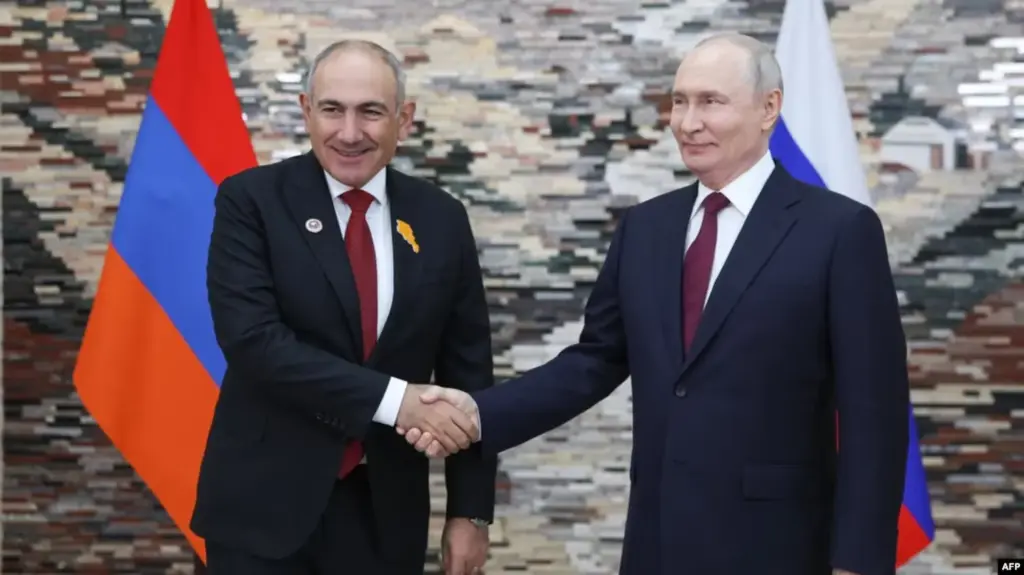
Russian President Vladimir Putin said Armenia's 2025 law launching the EU accession process "amounts to a declaration of withdrawal" from the Russia-led Eurasian Economic Union. Armenian Prime Minister Nikol Pashinyan replied that Armenia had filed no notice to leave and had violated none of the bloc's rules. The leaders met on 1 September in Bishkek, Kyrgyzstan, during a Shanghai Cooperation Organization summit.
The exchange turns Armenia's westward shift into an open dispute over how far it has already moved from Moscow. Yerevan is preparing an EU application and has frozen participation in Russia's military alliance, but it still belongs to the trade bloc. Russia remains Armenia's largest trade partner, accounting for about 35% of its foreign trade.
In the opening minutes, Putin acknowledged that Armenia's aspiration to join the EU was the country's "legitimate right," but said it "creates difficulties" given Armenia's membership in the bloc that links Russia, Belarus, Kazakhstan, Kyrgyzstan, and Armenia. He told Pashinyan that adopting a law launching the process of joining another organization "amounts to a declaration of withdrawal from ours."
Putin urged Armenia to decide quickly and repeated his call for a referendum on whether Armenia should remain in the trade bloc or pursue EU membership, telling Pashinyan to give the people a choice so the matter could be closed.
Pashinyan pushed back. He noted that the bloc's rules have no mechanism to expel a member state—only a voluntary withdrawal process requiring six months' notice—and that Armenia has filed no such notice. He told Putin the issue had not matured enough for a referendum, arguing that Armenia first needs to submit a formal EU application, receive a response, and agree on an accession roadmap.
Armenia's parliament passed a law launching the EU accession process in March 2025, though the government has said the law does not amount to a formal membership bid. On 24 August, Pashinyan told lawmakers that the government would begin preparing a formal application "in the near future." Armenia has also dropped the "strategic partner" label for Russia from its new government program and effectively frozen its participation in the Russian-led Collective Security Treaty Organization since early 2024.
Since May 2026, Moscow has imposed a series of bans on Armenian agricultural imports—including fruit, vegetables, and mineral water—citing phytosanitary concerns. The EU called the measures "economic coercion" and announced a support package of more than €50 million for Armenia in June.
After the meeting, Pashinyan posted a video describing the talks as "very good" and saying the two leaders had agreed to continue a "sincere and constructive dialogue" during a future visit to Moscow. He said bilateral relations needed to be "rethought" under new circumstances.

Whether or not US president fits the definition of a Russian asset, his actions align closely with the Kremlin’s interests
• Don’t get This Is Europe delivered to your inbox? Sign up here
Could Donald Trump be a Russian asset? The headline on a review in the Guardian of my new book Betrayal has provoked heated international debate. Written by the historian Lawrence Freedman, the piece generated thousands of comments from across Europe and beyond on social media. Many people responded with a single word: “Duh!”
Trump’s relationship with Vladimir Putin is the biggest mystery in international politics. In 2017 I wrote a book called Collusion, which set out Moscow’s operation to support and cultivate Trump, going back decades. The US president, of course, denies links with Russia. But in his second term, his behaviour towards Putin has been as weird and perplexing as during his first.
Continue reading...
© Photograph: Thilo Schmülgen/Reuters

© Photograph: Thilo Schmülgen/Reuters

© Photograph: Thilo Schmülgen/Reuters


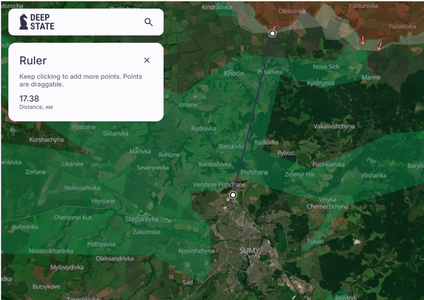
On 1 September, Russian President Vladimir Putin said during a conversation with journalists that Russian troops had 12 km left to reach Sumy. Censor.NET estimated from DeepState’s map that Russian forces were approximately 17 km from Sumy’s administrative boundary.
Russian military commanders have systematically exaggerated their gains on the battlefield. The Institute for the Study of War (ISW) describes such claims as part of a Kremlin information campaign aimed at creating the impression of major Russian gains. In this case, the Russian president cited exaggerated gains that, compared with his previous claims, appear to be a setback.
“The ‘North’ group of forces continues to create a security belt along the Russian-Ukrainian border in the border areas of the Sumy region... There are 12 km left to Sumy, to the Sumy ring road,” Putin said during the press conference.
Censor.NET reported that Russian forces were about 17 km from Sumy without specifying the reference point, while Putin did not say which section of the city’s ring road his 12 km figure referred to.

On 28 June, during an interview with Russian propagandist Pavel Zarubin, Putin said that Russian troops had “about 10.5 km” left to reach Sumy. At the time, he also explained the offensive as the creation of a “security zone” along Russia’s border.
Putin’s claimed distance to Sumy therefore increased by approximately 1.5 km in just over two months, contradicting the Kremlin’s portrayal of a continuing advance.
In July 2026, Putin claimed that Russian forces had “completely captured” Kostiantynivka. Ukraine’s General Staff rejected the claim, saying Ukrainian forces continued defensive operations in the city. ISW also said some videos of Russian flags being raised in Kostiantynivka were likely AI-altered.
On 2 December 2025, Putin claimed that Russian forces had captured Pokrovsk in Donetsk Oblast. ISW found no evidence confirming the city’s complete capture and assessed that its fall would not enable Moscow to achieve a significant breakthrough.


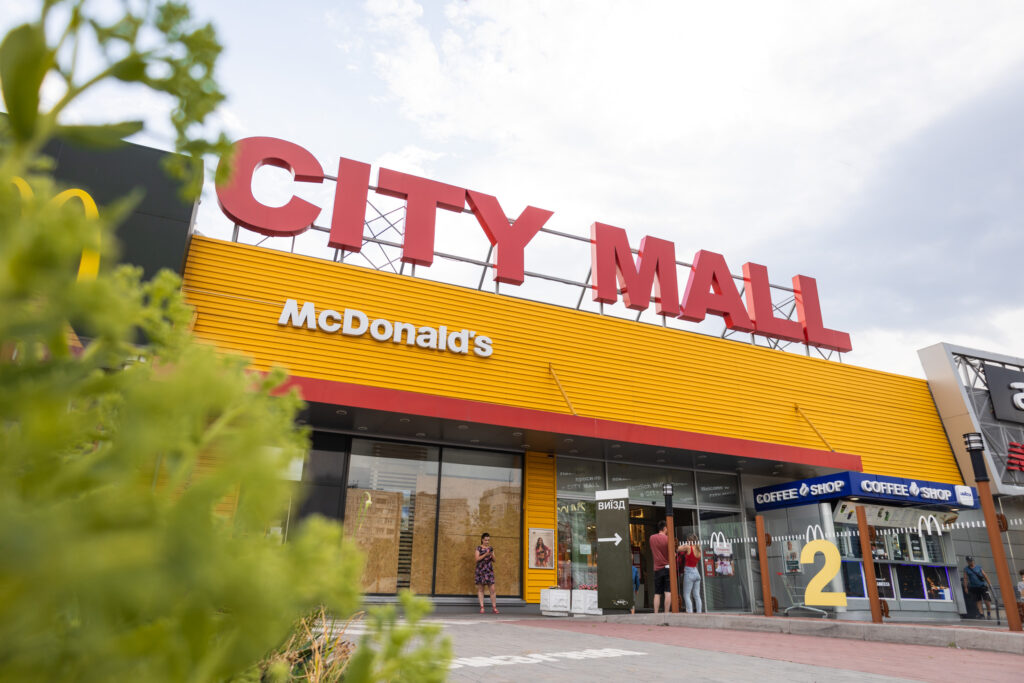
Zaporizhzhia’s largest shopping and entertainment complex, City Mall, will remain closed throughout September following a Russian drone strike on a neighboring hypermarket last week.
Russia’s attacks are increasingly disrupting the basic civilian life of Ukrainian cities, as strikes on shops and other commercial facilities make it harder for businesses to operate and residents to go about their daily lives. The pattern is especially pronounced in cities close to the front, where Russia is unable to seize territory but can continue attacking from the air.
City Mall announced the closure on 1 September, apologizing to visitors and saying it would provide updates on when operations could resume. The complex did not give an official reason for the decision.
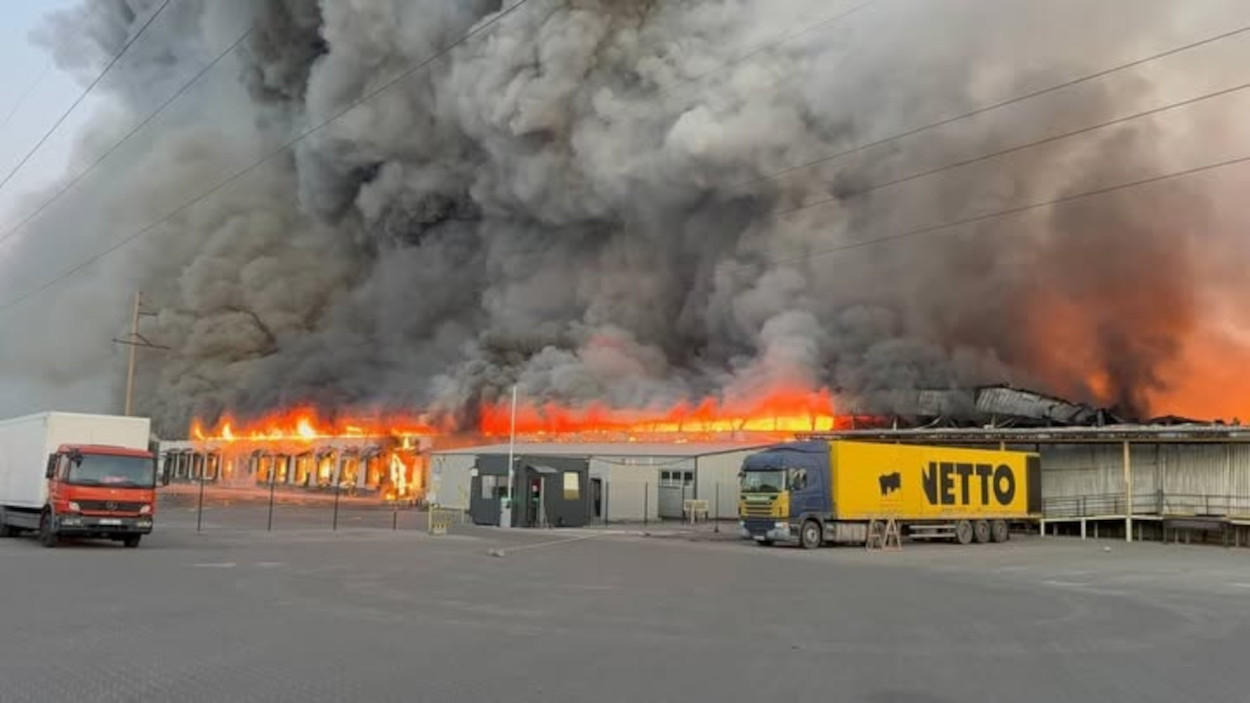
The announcement came four days after a Russian strike hit an Epicentr hypermarket located near the mall on 28 August. The attack sparked a fire covering about 2,000 square meters.
Shopping centers and other commercial facilities have increasingly been caught up in Russia’s attacks on Ukrainian cities.
In recent weeks, Russia has stepped up attacks on commercial sites and retail storage facilities, particularly in and around Kyiv, as well as other major cities closer to Russia and the frontlines.
On 21 August, a Russian drone strike on a shopping center in Kryvyi Rih killed at least 15 people and injured 130, including 23 children, according to local authorities. A second strike hit emergency responders about 30 minutes later as they worked at the scene.
The attacks have also hit Ukraine’s retail sector financially. As of August, three shopping centers had been destroyed and nine more damaged by Russian attacks since the beginning of 2026, with direct losses to the sector reaching 3.226 billion hryvnias ($72.5 million), according to industry data cited by Censor.NET.
Fear of attacks is also keeping shoppers away. Air raid alerts accounted for 21.8% of shopping centers’ operating hours in August, up from 20.1% in July and 9.4% a year earlier.
For Zaporizhzhia, the pressure is particularly severe. The major city lies close to the front line and has faced sustained Russian attacks throughout the full-scale war.
Unable to seize the city through ground advances, Russia has repeatedly used missiles and drones to strike its infrastructure and civilian areas.
The result is a city where even businesses that survive direct strikes can be forced to close because of the continuing threat.

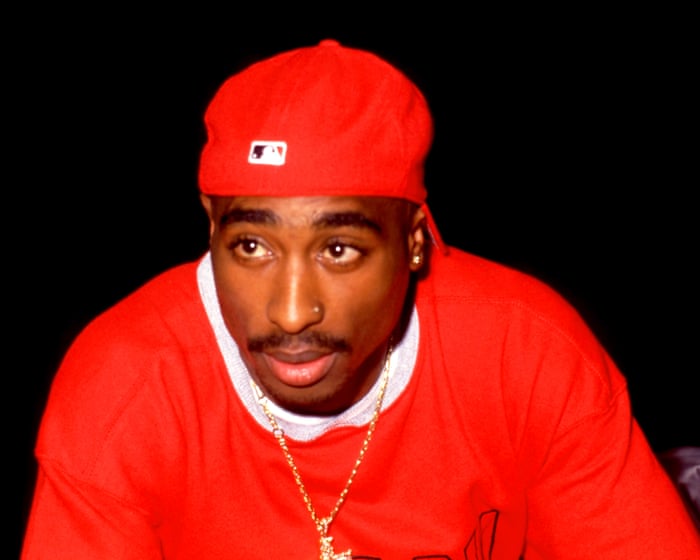
Rapper’s supporters reflect on ‘astonishing’ events leading to Duane Davis being found guilty over 1996 fatal shooting
A criminal conviction this week in the murder of Tupac Shakur, the first since the rapper was gunned down in 1996, sent shockwaves through his sea of fans who have waited three decades for answers.
Duane “Keffe D” Davis, a former California gang leader, was found guilty of murder on Monday for the role he played in orchestrating the fatal shooting of Shakur.
Continue reading...
© Photograph: Bob Berg/Getty Images

© Photograph: Bob Berg/Getty Images

© Photograph: Bob Berg/Getty Images

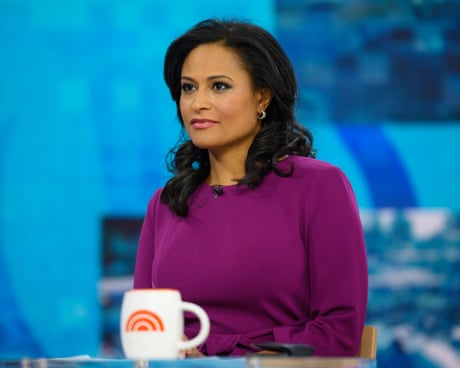
The president’s call for the FCC to scrutinize Kristen Welker’s innocuous remarks is a sign of desperation
With his approval ratings tanking, the crucial midterm elections looming, and his war with Iran turning into a quagmire, Donald Trump has entered full freak-out mode.
It’s not hard to tell. Just look at what happened this week when he lashed out at Kristen Welker, the well-respected host of NBC’s Meet the Press, and one of the best-known journalists in the nation.
Continue reading...
© Photograph: NBC/NBCU Photo Bank/Getty Images

© Photograph: NBC/NBCU Photo Bank/Getty Images

© Photograph: NBC/NBCU Photo Bank/Getty Images