Warsaw police have arrested a man suspected of stabbing two Ukrainians on a bus over their nationality, police said. A court ordered him held in custody, and the charges he faces carry long prison terms.
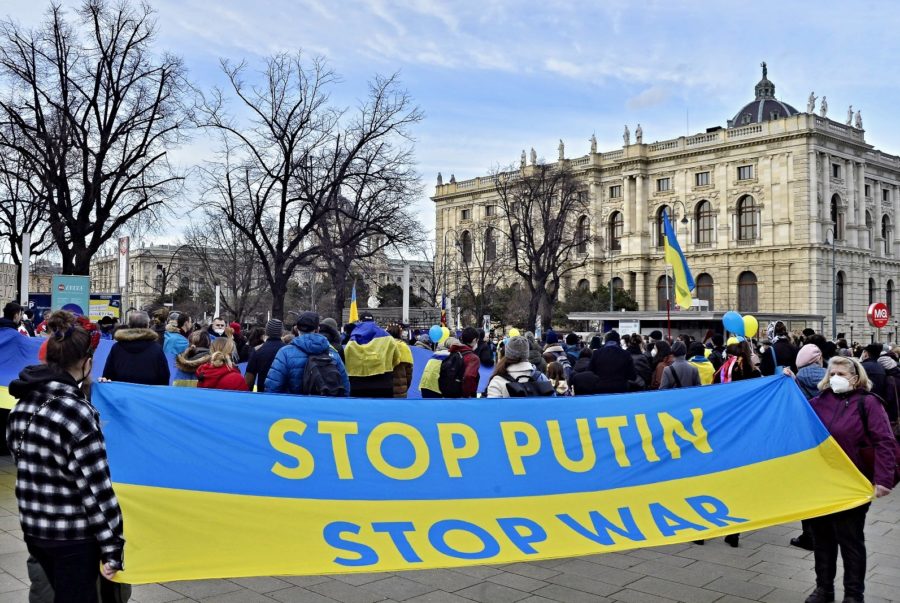
Russia's full-scale war drove nearly a million Ukrainians to seek protection in Poland, and attacks on them for their nationality grew this year. Polish police received 180 reports of hate crimes against Ukrainians in the first half of 2026, over 30% more than a year earlier.
Police
Warsaw police have arrested a man suspected of stabbing two Ukrainians on a bus over their nationality, police said. A court ordered him held in custody, and the charges he faces carry long prison terms.
Russia's full-scale war drove nearly a million Ukrainians to seek protection in Poland, and attacks on them for their nationality grew this year. Polish police received 180 reports of hate crimes against Ukrainians in the first half of 2026, over 30% more than a year earlier.
Police tracked the suspect to a forest
The attack took place on a Warsaw city bus in mid-October. The attacker stabbed and slashed two passengers, both Ukrainian citizens, and fled before police arrived. Both victims went to hospital with multiple stab and cut wounds. Police found that he attacked them because of their nationality.
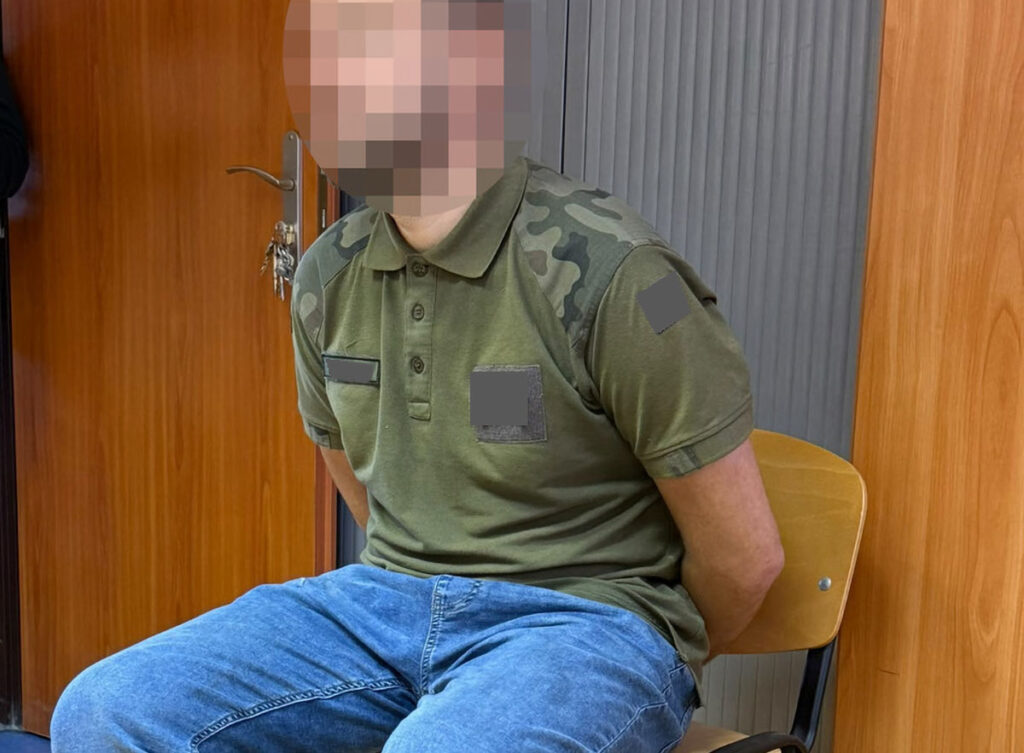
Officers quickly identified the suspect but spent days locating him. The 30-year-old was hiding and living in a forest in Warsaw's northern Bielany district, where police detained him last weekend.
Old shed in a wooded area of Warsaw's Bielany district, from the police release on the arrest of the suspect in the bus knife attack on two Ukrainians, October 2026. Photo: Warsaw Police
He faces three charges. Two concern the bus attack: attempting to cause grievous bodily harm, and causing injuries lasting more than seven days. The third covers threats against another man at a Warsaw venue in August 2024.
Police said he acted as a repeat offender, within five years of serving a prison term for a similar crime. The charges carry three to 20 years in prison. At prosecutors' request, a court ordered him held for three months.
This year's attacks on Ukrainians in Poland
In early August, Ukraine's ambassador to Poland, Vasyl Bodnar, said anti-Ukrainian remarks and attacks had risen by about 30%. Days later, people rallied in 22 Polish cities against violence toward Ukrainians and other minorities.
Explore further
Poland paused a military aid package over Lviv’s vote honoring WWII nationalists, Ukrainian source says. Polish ministry denies it
Other recent cases this year include:
In late July, police in Wrocław detained two of three men suspected of beating a young Ukrainian couple.
On 14 August, a woman allegedly attacked a Ukrainian girl and her younger brother in a Bydgoszcz park after hearing them speak Ukrainian. Prosecutors charged her four days later.
In September, a man punched a 20-year-old Ukrainian tourist in the head at a crossing in central Warsaw, knocking him unconscious. Police detained the attacker, who gave no motive.
Tensions rose again in late September, when a Ukrainian man allegedly killed a priest in a knife attack at a monastery in Jarosław. Bodnar said some Polish politicians and journalists used it to argue for deporting Ukrainians.
Meanwhile, police in southwestern Poland detained a Russian citizen suspected of spying, after catching him photographing trains and railway infrastructure. Russia's suspected sabotage campaign keeps reaching Poland and the rest of Europe, and Ukraine's intelligence warned last week that Russia may stage sabotage in Eastern Europe and try to pin it on Kyiv.
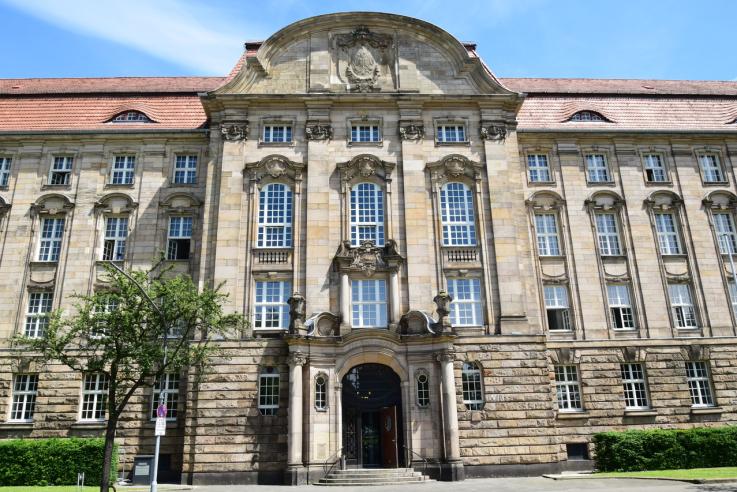
The Higher Regional Court in Düsseldorf has ordered two 19-year-old Germans held pending extradition to Bulgaria, which accuses them of setting fire to Starlink antennas at a satellite ground station near Sofia, the court and Düsseldorf prosecutors said on 29 October. The men, from Duisburg and Moers, were arrested on 23 October, German prosecutors told Reuters.
As Russia presses its war on Ukraine, Starlink keeps Ukraine’s drone units and front-line troops connected, and its ground sit
The Higher Regional Court in Düsseldorf has ordered two 19-year-old Germans held pending extradition to Bulgaria, which accuses them of setting fire to Starlink antennas at a satellite ground station near Sofia, the court and Düsseldorf prosecutors said on 29 October. The men, from Duisburg and Moers, were arrested on 23 October, German prosecutors told Reuters.
As Russia presses its war on Ukraine, Starlink keeps Ukraine’s drone units and front-line troops connected, and its ground sites in Europe have become targets. Within a month, fires and attempted fires hit Starlink sites in Poland, Bulgaria, and Lithuania, and Warsaw and Vilnius have linked them to Russia. The Bulgarian case now has its first arrests, and Sofia says the same pair struck another EU country, which would make it more than a one-off.
Sofia says the pair struck another EU country on 18 October
Bulgarian Interior Minister Ivan Demerdzhiev said he expected both suspects to be handed over to Bulgaria, and that the same two carried out a similar attack in another EU member state on 18 October, the state news agency BTA reported on 28 October. He did not name the country outright, but went on to cite Lithuania’s prime minister on an attempted arson there.
Overnight on 18 October, intruders tried to set fire to a Lithuanian company that stores Starlink equipment used by Ukraine, but tipped-off guards foiled the attempt. Lithuania’s prime minister called it part of Russia’s hybrid war.
Bulgarian Prime Minister Rumen Radev said the suspects had been detained in Germany several days earlier, and that disclosing their names sooner would have let them flee. The opposition wants to know whether a foreign security service warned Bulgaria at least a week before the attack, and how two 19-year-olds could enter the country and leave unnoticed. Parliament has failed three times to gather a quorum for a sitting to hear Radev and the security chiefs.
The suspects refuse a quick handover
The two did not agree to a simplified extradition, and the court will rule later on whether handing them over is admissible, according to the court’s statement carried by the dts news agency. Any extradition is to be approved only on the condition that, after a final sentence, they are offered a transfer back to Germany to serve it. Their lawyers plan to contest the Bulgarian warrant, dpa reported.
Explore further
17 public broadcasters mapped Russia’s hybrid war on Europe. Germany: four dots
Bulgarian prosecutors say the pair crossed from Serbia as tourists on 9 October, set fire to eight antennas at the Plana teleport south of Sofia, and drove back to Serbia the same night. They were charged in absentia, a Sofia court confirmed European arrest warrants for them, and they face three to 12 years in prison if convicted.
Sofia City prosecutors announced the arrests on 27 October and said German authorities are gathering evidence for the case under a European investigation order. The pre-trial investigation continues, they said.
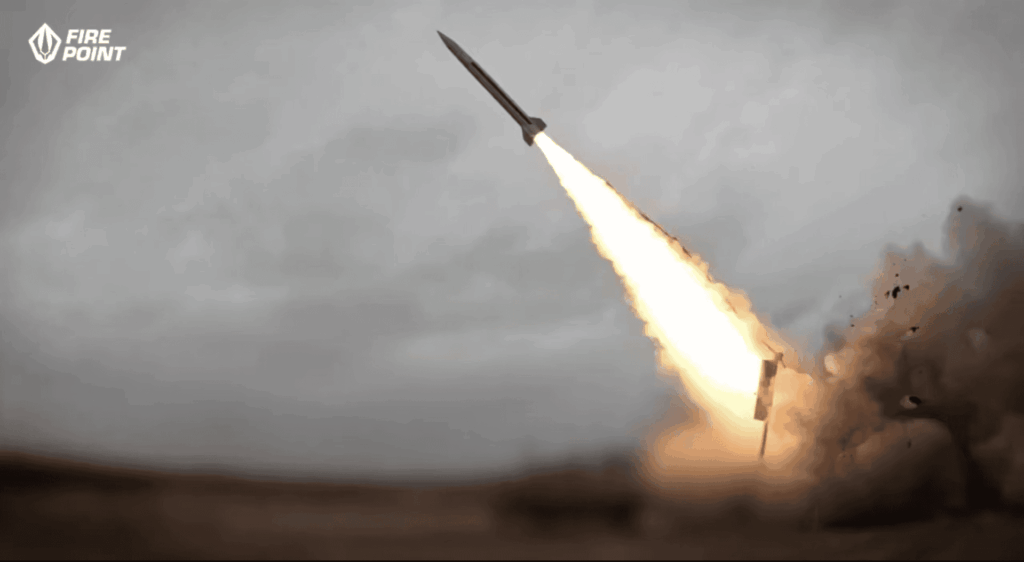
Ukraine has finished its share of FREYJA, a joint European project to build a system against ballistic missiles, President Volodymyr Zelenskyy told journalists on 17 October, Ukrinform reported. He added that Kyiv wants to test the first system as soon as possible.
Ukraine still relies on US-made Patriot interceptors to stop Russian ballistic missiles. Zelenskyy told ABC News on 23 October that Ukraine had received only 24 of them from the US in three months, while it needs 350 a month
Ukraine has finished its share of FREYJA, a joint European project to build a system against ballistic missiles, President Volodymyr Zelenskyy told journalists on 17 October, Ukrinform reported. He added that Kyiv wants to test the first system as soon as possible.
Ukraine still relies on US-made Patriot interceptors to stop Russian ballistic missiles. Zelenskyy told ABC News on 23 October that Ukraine had received only 24 of them from the US in three months, while it needs 350 a month on average. FREYJA can not close that gap soon, because the system is still in development.
Ukraine’s missile and launcher, partners’ radars and sensors
Zelenskyy said the partners’ share of the work, with 10 countries taking part, is still underway. He also said he had discussed the project with French President Emmanuel Macron, and he named Norway as a key partner.
Explore further
Ukraine’s missile, Europe’s sensors—FREYJA enters active development on an early-2027 clock
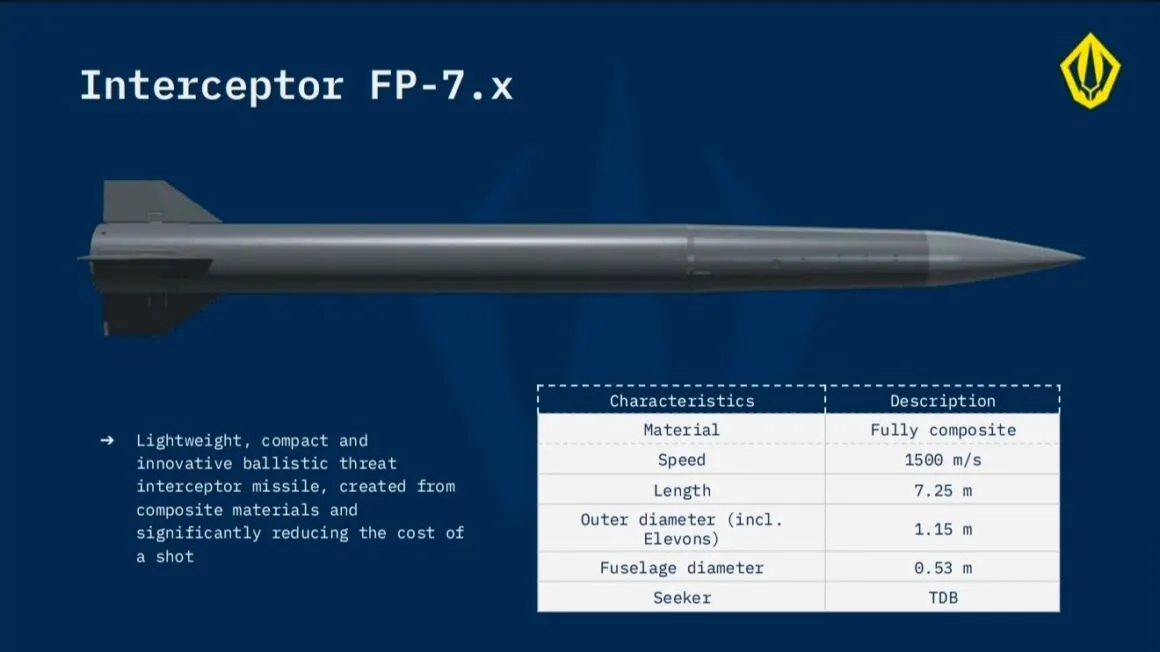
Zelenskyy did not say what the partners still have to deliver. In August, he said Ukraine is capable of making the missile and launcher, while partners would supply critical components such as radars and sensors.
One part not made in Ukraine
In May, Fire Point co-founder and chief designer Denys Shtilerman said all components of the FP-7.x interceptor are made in Ukraine except one. “As for that one part we don’t manufacture in Ukraine, we’ve contracted a certain quantity of it. We already have it,” he said, but did not name the part.
In June, however, Shtilerman told the Financial Times that mass production depended on an infrared seeker Fire Point hoped to get from Germany’s Diehl Defence. Neither statement says whether the seeker is that one part.
Fire Point co-founder Iryna Terekh said in September that FREYJA was going through testing and technical integration in combat conditions in Ukraine. The company plans its first intercept of a ballistic target by mid-2027.
The official timeline has since moved closer. On 21 October, Zelenskyy wrote that officials had identified where to speed up so FREYJA reaches testing by the end of this year. A test is still a step short of an intercept.
L’intelligence artificielle facilite désormais la création de fausses images intimes à caractère sexuel, mais les lois et les mécanismes de protection peinent à suivre. Un nouveau rapport réalisé par IVADO et l’Eon Institute, qui compare les réponses du Canada et du Mexique, constate que les victimes se heurtent encore à d’importants obstacles pour obtenir justice. […]
L’intelligence artificielle facilite désormais la création de fausses images intimes à caractère sexuel, mais les lois et les mécanismes de protection peinent à suivre. Un nouveau rapport réalisé par IVADO et l’Eon Institute, qui compare les réponses du Canada et du Mexique, constate que les victimes se heurtent encore à d’importants obstacles pour obtenir justice. […]
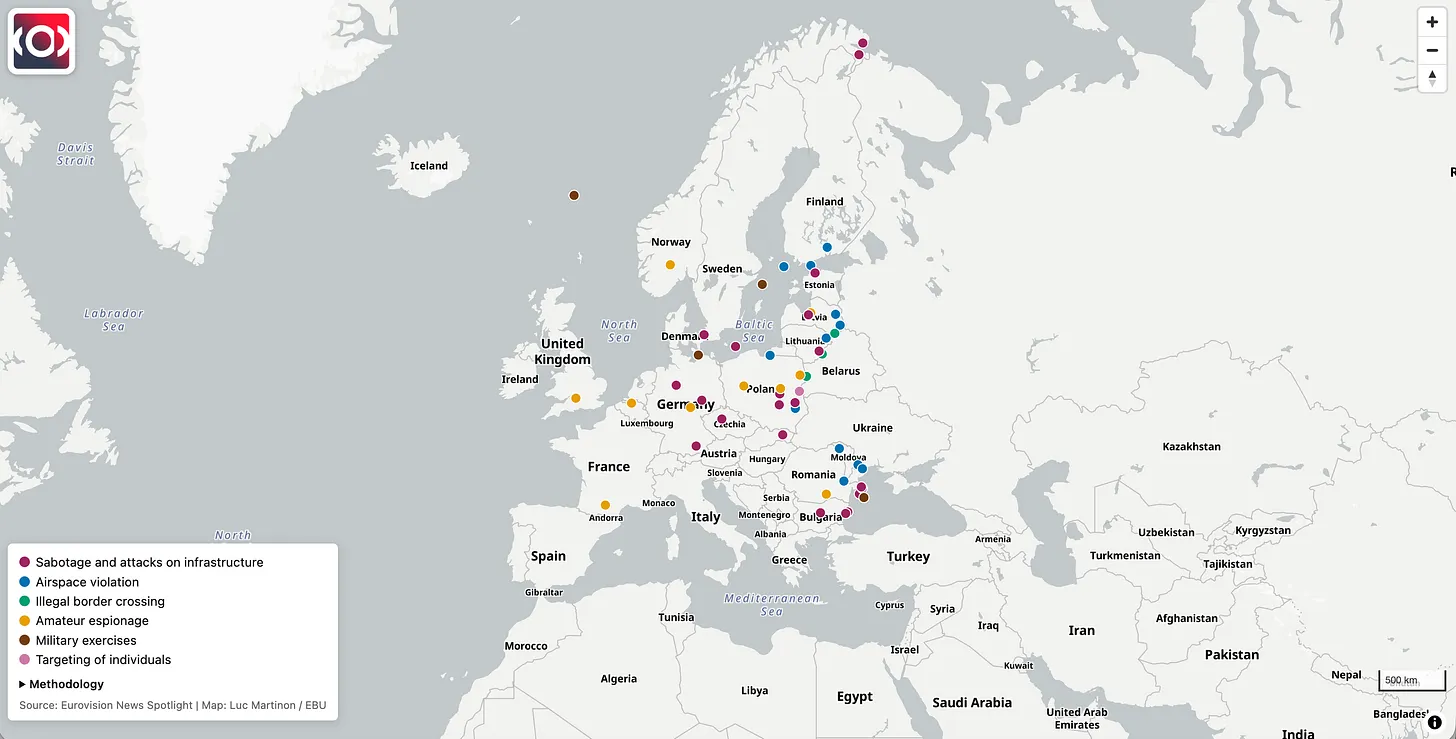
Journalists from 17 European public service broadcasters, coordinated by the European Broadcasting Union’s (EBU) Eurovision News Spotlight network, published an interactive map on 23 October 2026. It documents hybrid incidents linked to Russia across 17 European countries between 1 April and 15 October. Journalists compiled a database of hundreds of reported incidents, categorizing each by type and the source and strength of its alleged links to Russia, then verifying them through open-sou
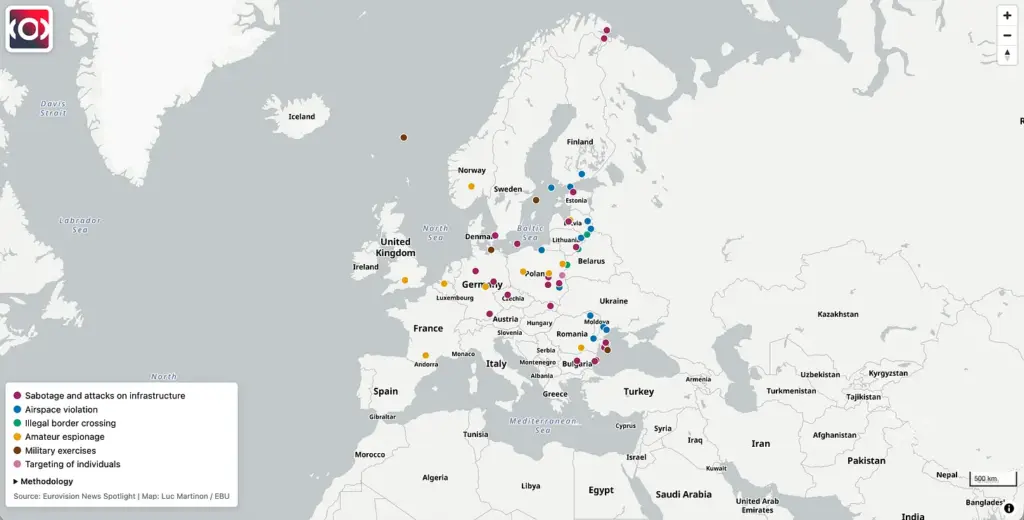
Journalists from 17 European public service broadcasters, coordinated by the European Broadcasting Union’s (EBU) Eurovision News Spotlight network, published an interactive map on 23 October 2026. It documents hybrid incidents linked to Russia across 17 European countries between 1 April and 15 October. Journalists compiled a database of hundreds of reported incidents, categorizing each by type and the source and strength of its alleged links to Russia, then verifying them through open-source research.
The map comes as officials warn the campaign is growing. On 28 September, EU foreign policy chief Kaja Kallas said in Brussels that Russia was planning more acts of sabotage to divide societies and intimidate them into abandoning their support for Ukraine. The points on the map represent an incomplete list of publicly known cases attributed to Russia or suspected of being linked to it, the report states.
The map covers airspace violations, sabotage attempts, “disposable” agents with no formal intelligence training, migration used as a weapon, and Russian military activity near or across European borders. It excludes cyberattacks, influence operations, and espionage by trained intelligence officers.
The EBU calls the result a very conservative estimate, not an official tally. Russia has consistently denied responsibility for the incidents. Many single points represent several incidents of the same type in one area or in quick succession. In Moldova, for example, Defense Minister Anatolie Nosatîi said on 30 September that the government had recorded 84 drone incursions.
Four German incidents are on the map, out of many more
The map shows four incidents in Germany, according to BR.
The four incidents in Germany on the EBU hybrid war map, 2 August to 14 September 2026. Other dots mark Russia-linked incidents in neighboring countries. Map: Luc Martinon/EBU, Eurovision News Spotlight; edited by Euromaidan Press
On 2 August, German authorities arrested a 33-year-old Ukrainian man in Thuringia on suspicion of photographing a Bavarian weapons manufacturer for a foreign intelligence service as part of an alleged sabotage plot.
On 4 August, a drone carrying explosives and a detonator struck the wing of a Ukrainian An-124 cargo plane at Leipzig/Halle Airport but failed to explode.
On 3 September, attackers threw firebombs from a car onto a construction site next to defense firms in Munich, and German security authorities suspect Russian intelligence.
On 14 September, investigators learned of a crashed drone found near the Bundeswehr’s Wunstorf air base.
Internal papers from the new Joint Hybrid Defense Center, seen by Correctiv, record 163 suspected sabotage cases in 2026 up to 19 August. The targets included rail lines, military facilities, substations, and radio masts. The same papers record 1,034 drone overflights of critical infrastructure, military sites, and defense companies, and 25 espionage investigations. The papers cover possible attacks by Russia, China, and Iran, and media did not report a breakdown of the sabotage cases by country.
European leaders sound the alarm over Russian hybrid attacks
On 15 April, Swedish civil defense minister Carl-Oskar Bohlin said pro-Russian groups had moved from denial-of-service attacks to attempts at destructive cyberattacks, including one on a Swedish power plant in 2025. On 1 September, German Foreign Minister Johann Wadephul named Russia as the perpetrator of the Leipzig attack and accused Moscow of “blatant hostility” toward Germany.
On 18 September, French President Emmanuel Macron said Russia’s hybrid attacks would not go unanswered and ordered a plan to protect France’s critical infrastructure. On 1 October, German Chancellor Friedrich Merz said Germany was preparing for new hybrid attacks, “including serious ones.” NATO Secretary General Mark Rutte on 14 October called the attacks a sign of Russian weakness at a press conference in Tallinn and said NATO would react where needed without being “rattled.”
From the 17th to the 20th century, Ukrainian lands were split between empires and states. Their rulers tried to assimilate Ukrainians and block their self-determination by going after what set them apart: their language and culture.
Nobody has an exact count of the bans. Historian Pavlo Hai-Nyzhnyk says there were more than 100 and that the real number is likely higher, because governors issued local bans too.
These measures differed in purpose and reach. Some restricted publishing,
From the 17th to the 20th century, Ukrainian lands were split between empires and states. Their rulers tried to assimilate Ukrainians and block their self-determination by going after what set them apart: their language and culture.
Nobody has an exact count of the bans. Historian Pavlo Hai-Nyzhnyk says there were more than 100 and that the real number is likely higher, because governors issued local bans too.
These measures differed in purpose and reach. Some restricted publishing, schooling, or official use; others suppressed cultural institutions or pushed assimilation. Most served the forced Russification of Ukrainians in the Russian Empire and the USSR. The timeline below is a selection of documented events, not a count of bans.
Russia has not stopped. Since 2014, schooling in Ukrainian has collapsed in the territories it occupies, and in 2025 it removed Ukrainian from the federal school programs it imposes there.
Here are some of the most important restrictions on Ukrainian language and cultural life imposed by the regimes ruling over Ukraine.
Graphic by Ganna Naronina from the article A short guide to the linguicide of the Ukrainian language. Click to enlarge.
17th century
1627: Muscovy. Moscow church authorities condemn Kyrylo Trankvilion-Stavrovetskyi’s Didactic Gospel, a collection of sermons printed in Ukraine in 1619, and order copies burned in Moscow.
1697: Polish-Lithuanian Commonwealth. An act requires tribunal and court decisions in the Grand Duchy of Lithuania to be written in Polish, displacing Ruthenian in those courts.
18th century
1720: Russian Tsardom. Peter I’s decree restricts the Kyiv and Chernihiv presses to approved reprints of church books and requires them to conform to Russian editions, suppressing local textual and linguistic differences.
1728: Russian Empire. Under the Decisive Points (Reshytelni punkty), the legal texts used in the Hetmanate’s courts are to be translated into Russian and compiled into a single code.
1730s: Russian Empire. Under Empress Anna, Kyiv’s archbishop is instructed to replace older locally printed church books with Moscow editions.
1769: Russian Empire. The Holy Synod refuses the Kyiv-Pechersk Lavra permission to print primers in the local language and tells it not to submit such requests again.
1775: Russian Empire. A Russian army destroys the Zaporozhian Sich, the Cossacks’ last stronghold and one of Ukraine’s own political institutions.
1780s: Russian Empire. Samuil Myslavskyi, metropolitan of Kyiv from 1783, insists on literary Russian as the only language of instruction at the Kyiv-Mohyla Academy.
1789: Polish-Lithuanian Commonwealth. The Commission of National Education orders the Ukrainian parish schools of Right-Bank Ukraine Polonized.
19th century
1847: Russian Empire. After suppressing the Cyril and Methodius Brotherhood, a secret society that called for a federation of free Slavic peoples, the authorities ban and withdraw from sale specified works by Taras Shevchenko, Panteleimon Kulish, and Mykola Kostomarov.
1859: Austrian Empire. Austrian officials back a plan to replace the Cyrillic alphabet used for Ukrainian in Galicia with a Latin one. Ukrainian opposition defeats the plan in what became known as the “alphabet war.”
1862: Russian Empire. The authorities close the Sunday schools, free schools for working adults and young people, including Ukrainian ones. They begin reopening under tighter control in 1864.
1863: Russian Empire. Interior Minister Pyotr Valuev’s circular tells censors not to approve Ukrainian religious, school, and popular-reading books, while still allowing fiction under censorship. It claims that most Little Russians themselves argue that “there was not, is not, and cannot be any special Little Russian language.”
1864: Russian Empire. The 1864 statute requires Russian as the teaching language in the elementary schools it regulates.
1869: Austria-Hungary. Polish becomes the internal language of administration and the courts in Galicia. The 1867 school arrangements had already strengthened Polish dominance, while leaving limited room for Ukrainian-language schooling.
1876: Russian Empire. Alexander II’s secret Ems Ukaz severely restricts Ukrainian publishing and bans Ukrainian publications from abroad, Ukrainian stage performances and public readings, and Ukrainian lyrics printed with music. Exceptions allow historical documents in their original spelling and fiction in Russian spelling under censorship.
1881: Russian Empire. New rules ease parts of the Ems Ukaz: Ukrainian plays may be staged with a governor’s special permission. Theater troupes performing only in Ukrainian stay banned.
1883: Russian Empire. Kyiv Governor-General Aleksandr Drenteln bars Ukrainian theater troupes from performing in the Kyiv, Podillia, Volhynia, Poltava, and Chernihiv governorates.
1910: Russian Empire. A circular from Pyotr Stolypin’s interior ministry tells governors to refuse registration to non-Russian national societies, Ukrainian ones included, and to review existing ones for closure. Kyiv’s Prosvita is dissolved the same year.
1914–15, 1916–17: Russian Empire. Russian occupation authorities suppress Ukrainian institutions and publications in Galicia and Bukovyna. The first occupation brings mass arrests and deportations, the destruction of Ukrainian books, and the arrest of Metropolitan Andrei Sheptytskyi.
1923: Soviet Ukraine. Dmytro Lebid, second secretary of the Communist Party of Ukraine, sets out the “theory of the struggle of two cultures,” which holds that the Russian culture of the city is more advanced than the Ukrainian culture of the village. The party rejects it and adopts Ukrainization the same year.
1924: Poland. Three laws of 31 July make Polish the state language of administration and the courts, keep limited rights for minority languages, and set school rules that favor Polish-Ukrainian bilingual schools over separate Ukrainian ones.
1924: Romania. The primary education law requires citizens of Romanian origin who have “lost their mother tongue” to send their children to Romanian schools. Ukrainian historians say it was applied to Ukrainians in Bukovyna.
1925: Poland. The Lviv Underground Ukrainian University, which had taught clandestinely since 1921, stops teaching after police raids and the Polish state’s refusal to recognize it.
1926: USSR. In a letter to Kaganovich and the Ukrainian Politburo, Stalin attacks Oleksandr Shumskyi and Mykola Khvylovyi and rejects Ukrainizing Russian workers “from above,” while still backing controlled Ukrainization of official institutions.
1932–33: USSR. A secret resolution of 14 December 1932 orders the Ukrainian-language paperwork and press of the North Caucasus switched to Russian at once and its schools prepared for teaching in Russian. In Soviet Ukraine, it puts Ukrainization under tighter party control and demands purges of “nationalist” elements. The repression of 1933 dismantles Ukrainization.
1938: USSR. A decree of 13 March makes Russian a compulsory subject in the non-Russian schools of the national republics and regions.
1947: Poland. In Operation Vistula, Polish authorities forcibly resettle about 150,000 Ukrainians to northern and western Poland, under an assimilation policy that sought to keep them below 10% of any locality.
1958–59: USSR. The school reform expands parents’ choice of teaching language and makes the study of Ukrainian optional in Russian-language schools in Soviet Ukraine.
1960s–70s: Romania and Poland. Romania nearly eliminates Ukrainian-language schooling from the mid-1960s. In Poland, Ukrainian schools and Ukrainian classes shrink.
1972: USSR. The party’s resolution on the USSR’s 50th anniversary promotes the “new historical community, the Soviet people,” an idea first voiced in 1961. Soviet ethnographers wrote that the spread of Russian among non-Russian peoples played the paramount role in forming this community.
1978: USSR. The USSR Council of Ministers orders wider study of Russian in the union republics. Ukraine’s implementing resolution of 2 November requires Russian from first grade in Ukrainian-language schools from the 1980/81 school year.
1983: USSR. A resolution of 26 May gives specified teachers of Russian in non-Russian schools in villages and small towns a 15% pay raise from 1984.
1984: USSR. The school reform resolution of 12 April adds two to three hours of Russian a week in grades 2 to 11 of non-Russian schools.
1989: USSR. The Communist Party’s party platform of 20 September calls for making Russian, by law, the language of the whole country alongside the republics’ state languages.
1990: USSR. The April 1990 law on the languages of the peoples of the USSR makes Russian the official language of the Soviet Union, while letting the republics set their own state languages.
21st century
2014–18: Crimea. Under Russian occupation, schooling in Ukrainian collapses. In 2013/14, 12,694 children studied in Ukrainian in 7 schools and 829 classes; by 2017/18, 318 children did, in one school and 13 classes, the UN human rights office reports, noting the figures conflict in places.
2020: DNR and LNR. The so-called DNR votes to amend its “constitution” on 6 March, dropping Ukrainian as a “state language” and leaving only Russian. The so-called LNR does the same in June.
2022: Occupied Kherson and Zaporizhzhia oblasts. Russia’s Education Ministry says on 12 August that schools in newly occupied areas will teach in Russian, with Ukrainian allowed only as an optional “native” language. Occupation authorities then cap Ukrainian at three hours a week, Human Rights Watch reports.
2023: Occupied Donetsk and Luhansk oblasts. Russia removes nearly all Ukrainian literature from local libraries, most likely destroying it, Ukraine’s National Resistance Center reports. The so-called LNR publishes a list of banned books.
2024: International Court of Justice. On 31 January, the court ruled, 13 votes to 2, that Russia violated the UN convention against racial discrimination in how it ran school education in Ukrainian in occupied Crimea.
2025: Russia. Education Ministry Order No. 729, in force since 15 December, removes Ukrainian language and literature from Russia’s federal primary and lower-secondary programs, the UN human rights office reports. Russia imposes these programs on schools in the occupied territories, where about 582,000 children study, the Almenda center says.
What we changed in October 2026
Editor’s note, 27 October 2026: We first published this timeline in 2017. Like many lists of bans on Ukrainian that circulate online, it repeated some claims that have no document behind them. In October 2026, we went back to historians’ work and to the decrees themselves.
We removed about fifteen entries. Most we could not confirm; a few were not about language. We corrected others where the documents say something different: some bans had exceptions, some dates were off by a year, and the end of Ukrainization came in 1932–33. We replaced the old count of 60 bans, which we could not trace, with a historian’s estimate. And we added what Russia has done to the Ukrainian language in the territories it has occupied since 2014.
If you have a document for something we left out, write to us.
Austria has ordered four Russian diplomats to leave the country over suspected espionage, declaring them persona non grata following findings by Austrian security authorities, Austrian media outlet Heute reported on 23 October.
The expulsions come as European countries step up efforts to counter suspected Russian intelligence operations amid Moscow’s war against Ukraine. Three of the diplomats worked at the Russian Embassy in Vienna, while the fourth served in Russia’s delegation to the
Austria has ordered four Russian diplomats to leave the country over suspected espionage, declaring them persona non grata following findings by Austrian security authorities, Austrian media outlet Heute reported on 23 October.
The expulsions come as European countries step up efforts to counter suspected Russian intelligence operations amid Moscow’s war against Ukraine. Three of the diplomats worked at the Russian Embassy in Vienna, while the fourth served in Russia’s delegation to the Organization for Security and Co-operation in Europe (OSCE), which is headquartered in Vienna.
Austria’s Foreign Ministry said the four had engaged in “activities incompatible with their diplomatic status,” a term usually used for spying, Reuters reported. It did not disclose details of the alleged activities or the intelligence findings behind the decision.
The three embassy diplomats were declared persona non grata under Article 9 of the Vienna Convention on Diplomatic Relations. The fourth, who worked on military security and arms control at Russia’s OSCE delegation, was also ordered to leave Austria.
Vienna remains a hub for Russian intelligence
The latest expulsions bring the number of Russian diplomats Austria has expelled since 2020 to 18, according to Reuters. In May 2026, Austria expelled three Russian Embassy employees suspected of using antennas on diplomatic buildings to intercept satellite internet data transmitted by international organizations based in Vienna.
Vienna’s concentration of international organizations, including the OSCE and United Nations agencies, has made it a key location for intelligence activity. A 2024 report by The Wall Street Journal, described Vienna as a major Russian spy hub for operations targeting Western countries, including surveillance of arms supplies to Ukraine.
Explore further
WSJ: Vienna has become major Russian spy hub for anti-Western operations in Europe
Russia’s Deputy Foreign Minister Dmitry Lyubinsky said Moscow’s response to the expulsions was unavoidable, according to Russian state news agency TASS, AP reported.
Norway has put into force a new round of sanctions against Russia that hits banks, listed oil refineries, ports, airports, and suppliers of Russia’s military industry, the Norwegian Foreign Ministry announced. The rules mirror the EU’s 21st sanctions package, which Brussels adopted in July.
The EU’s 22nd package, adopted on 12 October, is principally a list of names, while the 21st brought significant new measures, lawyers noted. Among them are new tools against the shadow fleet, the ta
Norway has put into force a new round of sanctions against Russia that hits banks, listed oil refineries, ports, airports, and suppliers of Russia’s military industry, the Norwegian Foreign Ministry announced. The rules mirror the EU’s 21st sanctions package, which Brussels adopted in July.
The EU’s 22nd package, adopted on 12 October, is principally a list of names, while the 21st brought significant new measures, lawyers noted. Among them are new tools against the shadow fleet, the tankers with murky ownership that Russia uses to move oil around sanctions. That fleet also sails along Norway’s coast, and a new Norwegian Coastal Administration report found that it poses a growing threat to security and the environment there.
Banks, refineries, and Sheremetyevo
Norway is not an EU member, but it has joined every EU sanctions package against Russia, with a few exceptions and national adjustments. Oslo backed this one politically on 11 August, and the rules took effect on 21 October. Part of the package was already in force. It placed travel restrictions and asset freezes on 48 people and asset freezes on 168 entities, and it listed 41 shadow fleet vessels on 14 August.
Norway’s transaction ban now covers 33 more Russian credit and financial institutions. A separate ban covers 22 more abroad, including in India, Mongolia, Nigeria, and the UAE.
Explore further
Norway sends 69 Russians home without their ship, held for Ukraine
Another transaction ban reaches listed refineries in Russia and third countries that process Russian oil or help dodge sanctions. A Georgian refinery joins that list on 25 January 2027. The same ban adds two Russian ports and four Russian airports, including Moscow’s Sheremetyevo.
Drone gear and the shadow fleet
Export curbs on dual-use goods now cover 51 new entities that back Russia’s military industry. Some are in China, including Hong Kong, and others are in India, Kazakhstan, Kyrgyzstan, Türkiye, and the UAE. The banned-exports list adds nickel and beryllium powder, along with drone gear such as jamming and interception systems, launchers, and servo motors.
Oslo can now also list ships that service sanctioned shadow fleet tankers or swap cargo with them at sea. Elsewhere in Europe, France’s navy and UK forces have boarded sanctioned shadow fleet tankers this year.
Three men were found guilty on July 8 in connection with an arson attack on Ukraine-linked businesses in London, which British authorities say was orchestrated by Russia's Wagner mercenary group, Reuters reported.The alleged ringleader, Dylan Earl, 21, had already pleaded guilty to aggravated arson over the 2024 blaze targeting companies that were supplying Elon Musk's Starlink satellite equipment to Ukraine, according to Reuters. The systems are considered vital to Ukraine's communications and
Three men were found guilty on July 8 in connection with an arson attack on Ukraine-linked businesses in London, which British authorities say was orchestrated by Russia's Wagner mercenary group, Reuters reported.
The alleged ringleader, Dylan Earl, 21, had already pleaded guilty to aggravated arson over the 2024 blaze targeting companies that were supplying Elon Musk's Starlink satellite equipment to Ukraine, according to Reuters.
The systems are considered vital to Ukraine's communications and defense against Russia's ongoing invasion.
Earl also became the first person convicted under the U.K.'s National Security Act after admitting to a separate plot to attack a wine shop and restaurant in London’s upscale Mayfair district and to kidnap its owner, a prominent critic of Russian President Vladimir Putin.
Two others, Jake Reeves, 23, and Earl’s associate, also pleaded guilty to aggravated arson, with Reeves admitting to a charge under the National Security Act for receiving a material benefit from a foreign intelligence agency.
A jury at London's Old Bailey court convicted three additional men, Nii Kojo Mensah, 23, Jakeem Rose, 23, and Ugnius Asmena, 20, of aggravated arson. They had denied the charges. A fourth man, Paul English, 61, was acquitted.
Two other defendants, Ashton Evans, 20, and Dmitrijus Paulauskas, 23, were charged with failing to disclose knowledge of terrorist activity. Evans was convicted on one count and cleared of another. Paulauskas was acquitted of both charges and reportedly broke down in tears as the verdict was read.
Commander Dominic Murphy of the London Metropolitan Police reportedly said he was confident the Wagner Group and the Russian state were behind the attacks.
The U.K. has designated the Wagner Group as a terrorist organization.
Earl had exchanged hundreds of encrypted messages with a supposed Wagner handler using the alias "Privet Bot" on Telegram. According to reporting by the Organized Crime and Corruption Reporting Project (OCCRP), the account was previously advertised by Grey Zone, a Wagner-affiliated channel.
Prosecutors said Earl expressed interest in fighting for Wagner and was encouraged to recruit contacts from British soccer hooligan networks, Irish republican groups, and organized crime circles, Reuters reported. He and Evans also admitted to unrelated charges of dealing cocaine.
The Russian Embassy in London has denied any involvement in the warehouse attack and accused the British government of blaming Russia for domestic issues.
The Kremlin has consistently rejected accusations of sabotage and espionage, despite growing evidence and convictions tied to Russian-linked operations across Europe.
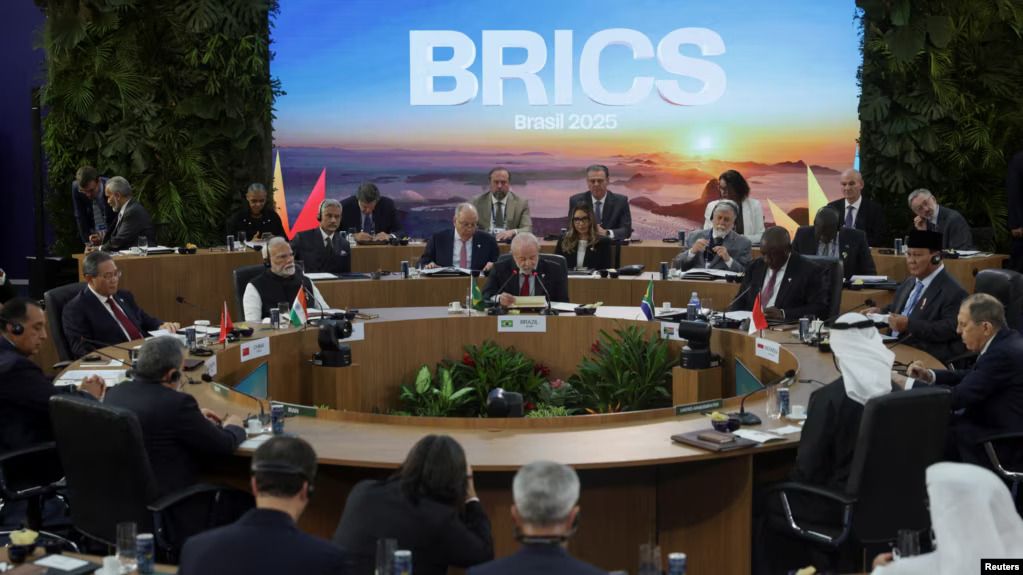
BRICS summit participants condemned recent attacks on Russia’s railway infrastructure, according to a joint declaration on July 6 from Rio de Janeiro."We condemn in the strongest possible terms the attacks on bridges and railway infrastructure deliberately targeting civilians in the Bryansk, Kursk and Voronezh regions of the Russian Federation on May 31, and June 1 and 5 2025, which resulted in the deaths of several civilians, including children," the document says.Bryansk, Kursk, and Voronezh o
BRICS summit participants condemned recent attacks on Russia’s railway infrastructure, according to a joint declaration on July 6 from Rio de Janeiro.
"We condemn in the strongest possible terms the attacks on bridges and railway infrastructure deliberately targeting civilians in the Bryansk, Kursk and Voronezh regions of the Russian Federation on May 31, and June 1 and 5 2025, which resulted in the deaths of several civilians, including children," the document says.
Bryansk, Kursk, and Voronezh oblasts are all located near Ukraine’s northeastern border and have played a central role in Russia’s war effort, serving as key logistical hubs and launch sites for missile and drone attacks on Ukrainian cities–often targeting civilian infrastructure and causing casualties.
In their declaration, BRICS leaders also called for a negotiated peace agreement between Russia and Ukraine.
“We recall our national positions concerning the conflict in Ukraine as expressed in the appropriate forum, including the UN Security Council and the UN General Assembly,” the document said. “We expect that current efforts will lead to a sustainable peace settlement.”
The statement comes a few days after a phone call between U.S. President Donald Trump and Russian President Vladimir Putin on July 3, in which Putin said "Russia will continue to pursue its goals" in the war against Ukraine, Kremlin aide Yury Ushakov said.
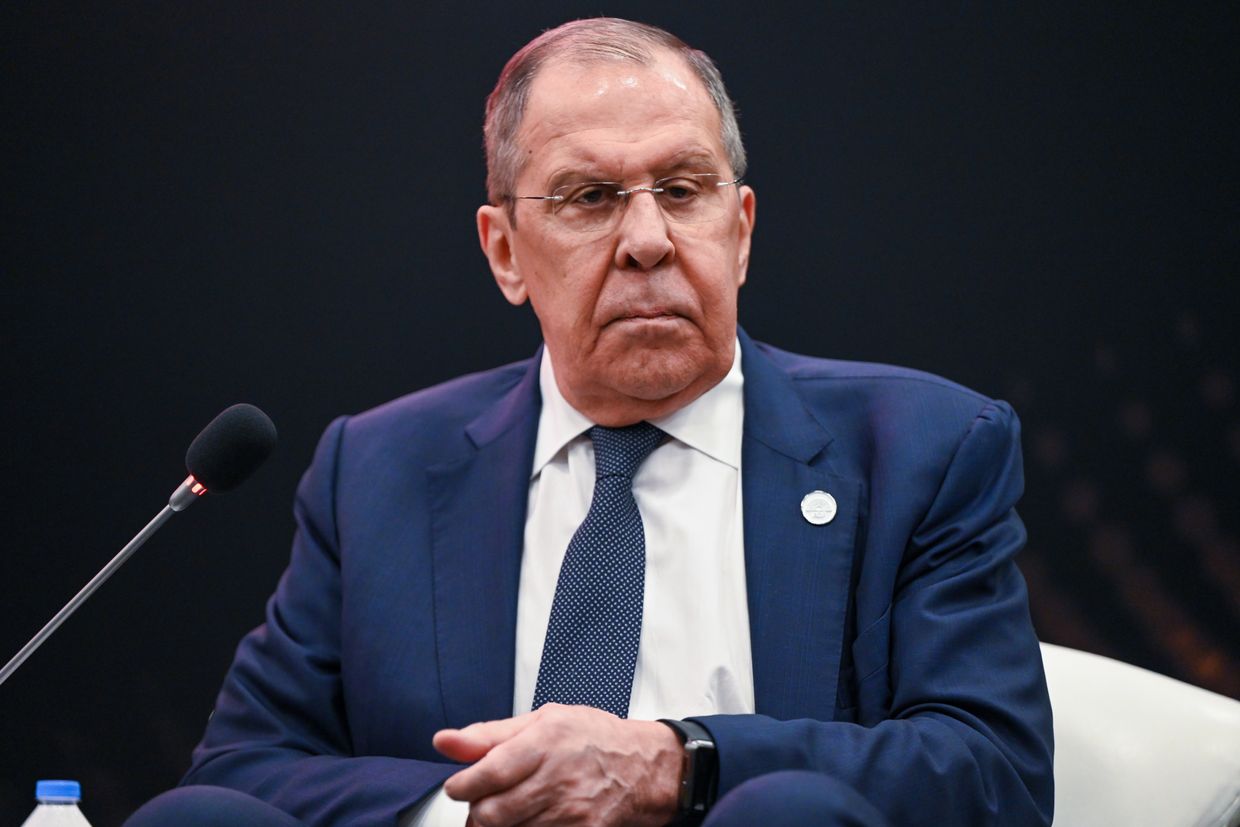
Russian Foreign Minister Sergey Lavrov attended the summit in person, while Russian President Vladimir Putin participated via video link.
Brazil is a member of the ICC and a signatory to the Rome Statute, meaning it is obliged to arrest Putin if he enters the country.
The ICC issued a warrant for the Russian leader's arrest in March 2023 over the illegal deportation of Ukrainian children during Russia's full-scale invasion of Ukraine.
The BRICS declaration also condemned recent U.S. and Israeli airstrikes on Iranian nuclear facilities as violations of international law and criticized the presence of foreign forces in Syria and Gaza, calling for Israeli withdrawal from Syrian territory.
BRICS, originally composed of Brazil, Russia, India, China, and South Africa, has expanded in recent years to include Iran, Egypt, the UAE, Ethiopia, and Indonesia.
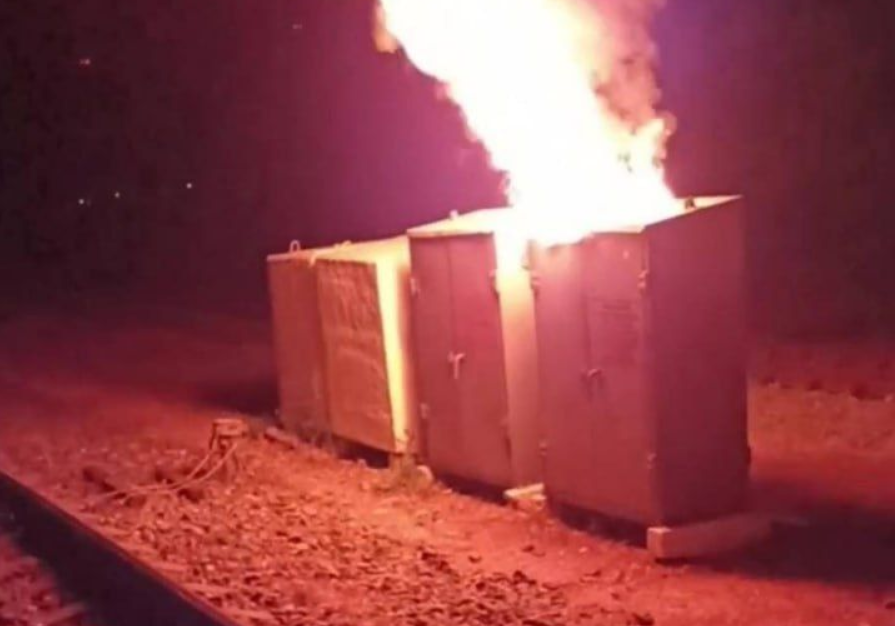
The Atesh partisan group set fire to a signal cabinet that helps control traffic on a railway line near the Russian-occupied city of Yasynuvata in Donetsk Oblast, a route used for Russia's military logistics, the group claimed on Telegram on June 28.Yasynuvata lies some 22 kilometers (12.5 miles) from the occupied city of Donetsk and is considered to be a major railway junction in the region.According to the group, the sabotaged section is located near Russian military units, warehouses, and ind
The Atesh partisan group set fire to a signal cabinet that helps control traffic on a railway line near the Russian-occupied city of Yasynuvata in Donetsk Oblast, a route used for Russia's military logistics, the group claimed on Telegram on June 28.
Yasynuvata lies some 22 kilometers (12.5 miles) from the occupied city of Donetsk and is considered to be a major railway junction in the region.
According to the group, the sabotaged section is located near Russian military units, warehouses, and industrial facilities.
Atesh said the attack disrupted the delivery of a train carrying fuel for Russian forces.
"On Ukraine's Constitution Day, we remind the occupiers that this is an independent and free country. And Donetsk will always be Ukrainian," the statement read.
The Kyiv Independent could not verify these claims.
The Atesh partisan group regularly conducts sabotage attacks in Russia and Ukraine's Russian-occupied territories.
In early June, Atesh claimed to have destroyed a signal cabinet on the new Volnovakha-Mariupol railway, which had been recently built by occupying Russian forces.
Ukraine's security service (SBU) is teaching teenagers how to avoid recruitment by Russian intelligence online, the New York Times (NYT) reported on June 21."Maybe not all of these special operations are reported in the media — but believe me, the enemy is not sleeping... They are working actively and carrying out illegal activities, as strange as it may sound, directly inside your phones," SBU spokesperson Roksolana Yavorska-Isaienko told students.Approximately 22% of Ukrainians recruited by Ru
Ukraine's security service (SBU) is teaching teenagers how to avoid recruitment by Russian intelligence online, the New York Times (NYT) reported on June 21.
"Maybe not all of these special operations are reported in the media — but believe me, the enemy is not sleeping... They are working actively and carrying out illegal activities, as strange as it may sound, directly inside your phones," SBU spokesperson Roksolana Yavorska-Isaienko told students.
Approximately 22% of Ukrainians recruited by Russian intelligence to conduct sabotage or terrorist attacks are minors, Artem Dekhtiarenko, SBU spokesperson, said on April 2.
Russian intelligence attempts to recruit Ukrainian civilians online, offering easy money in return for sharing sensitive data or preparing sabotage or terrorist acts.
Russian intelligence finds its recruits using social platforms, including Telegram, Discord, and TikTok.
Unsuspecting teenagers are often offered hundreds or even thousands of dollars to conduct simpler tasks such as delivering packages or taking photos of energy sites, the NYT reports.
More serious tasks are commonly assigned to teenagers once they have been blackmailed for conducting less serious operations beforehand or when their phones are hacked to reveal compromising photos.
Russian intelligence is actively attempting to recruit Ukrainian nationals for illegal operations across the EU, Ukraine's military intelligence agency (HUR) said on June 2.
"The recruitment of Ukrainians for hostile operations in Europe is yet another tool of hybrid aggression that the Russian Federation is waging against Ukraine and the entire European community," HUR said.
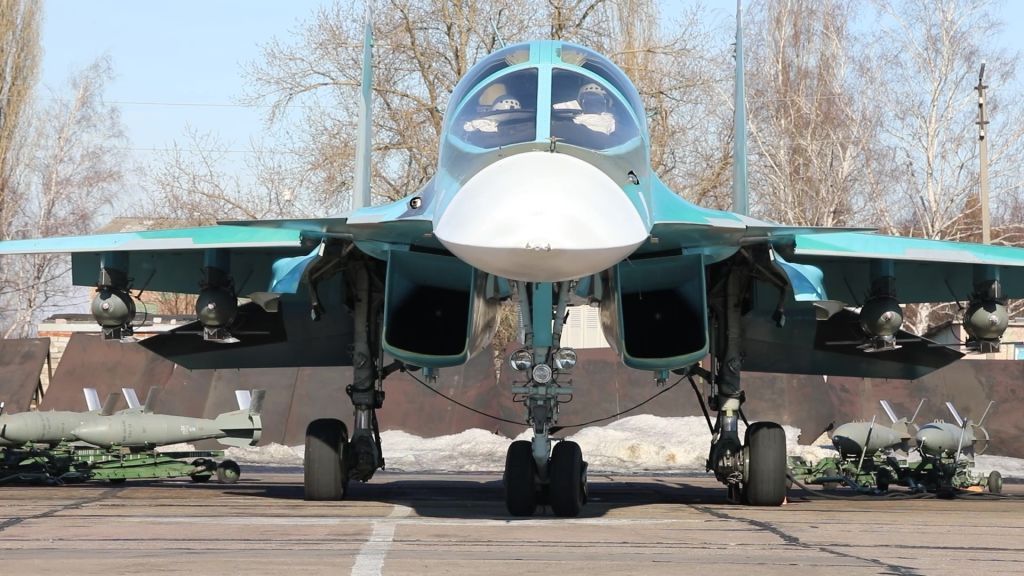
The SBU caught a Russian agent as he was filming a military airfield in preparation for a Russian strike, the agency reported on June 15.
The Russian Federal Security Service (FSB) recruited the unemployed 24-year-old via the Telegram messaging app to collect coordinates for air attacks on airfields and logistic depots, the SBU said.
The Russian FSB allegedly offered "easy money" and instructed the recruit to find military facilities and carry out reconnaissance on the ground.
Ukraine’s Security Service (SBU) caught a Russian agent red-handed as he was filming a military airfield in preparation for a Russian strike, the agency reported on June 15. According to the SBU, the Russian Federal Security Service (FSB) recruited the unemployed 24-year-old via the Telegram messaging app to collect coordinates for air attacks on airfields and logistic depots. The FSB had allegedly instructed him to find military facilities and carry out reconnaissance on the ground in exchange
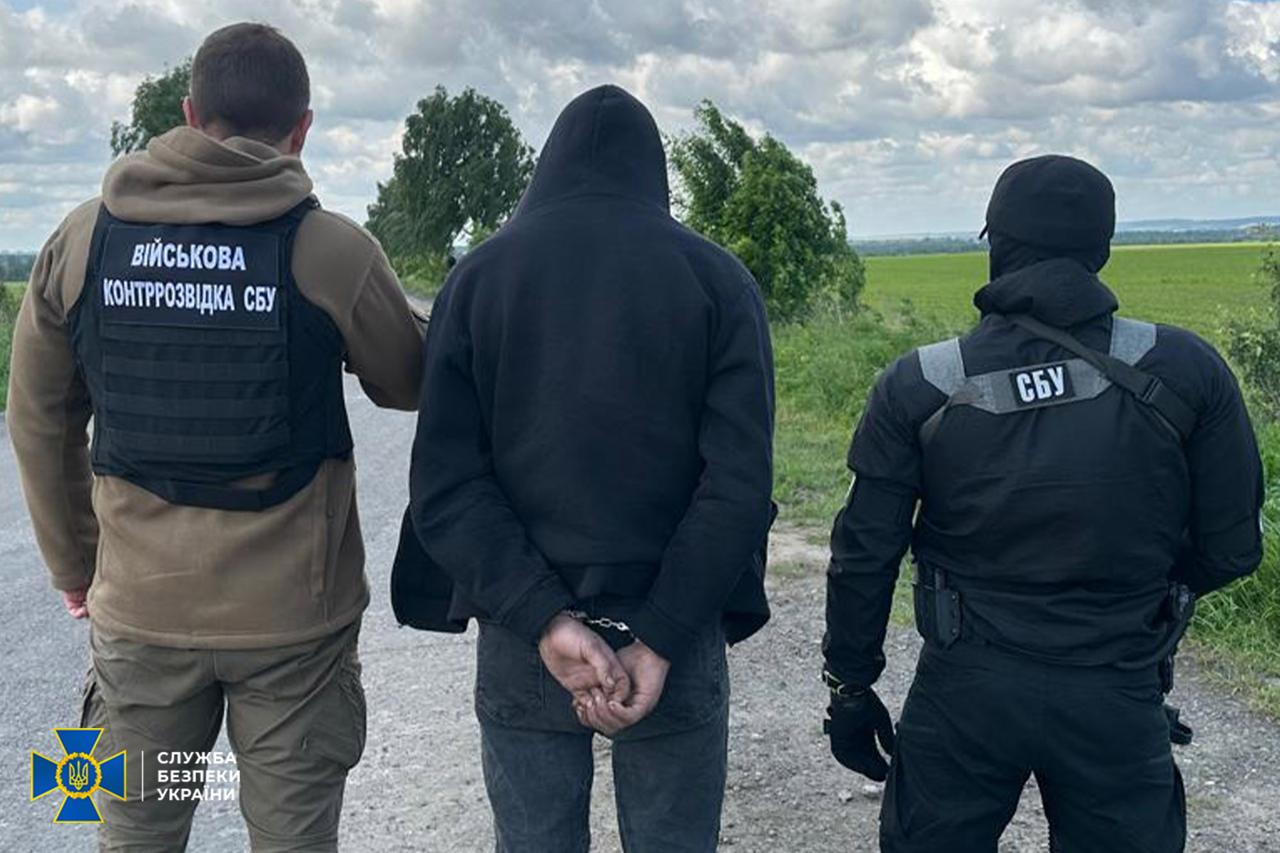
Ukraine’s Security Service (SBU) caught a Russian agent red-handed as he was filming a military airfield in preparation for a Russian strike, the agency reported on June 15.
According to the SBU, the Russian Federal Security Service (FSB) recruited the unemployed 24-year-old via the Telegram messaging app to collect coordinates for air attacks on airfields and logistic depots.
The FSB had allegedly instructed him to find military facilities and carry out reconnaissance on the ground in exchange for “easy money.”
The man was detained outside an airfield in Rivne Oblast while filming its outer perimeter with a hidden camera in his car. The SBU seized a phone and the camera on the scene, while other evidence was taken from the agent’s apartment.
If found guilty, he faces life imprisonment for high treason.
The SBU regularly announces it has foiled Russian agents and terrorist plots against military and civilian targets. The FSB usually targets unemployed people, those with criminal records, or addicts, according to the SBU's data.
In April, the SBU detained an instructor at a training center in Lviv Oblast who was planning to assassinate the base's commanders. That same month, the SBU detained nine FSB agents, including five minors, for plotting terrorist attacks in central and eastern Ukraine.
More than a fifth of FSB recruits in Ukraine are minors.
Ukraine’s military intelligence (HUR) ignited an electrical substation during a sabotage operation in the Russian city of Kaliningrad, causing $5 million in damage and cutting electricity to a military production site, a source in HUR told the Kyiv Independent. In the early hours of June 14, Ukrainian agents drained the coolant from the substation’s power transformer before setting the facility on fire. The inferno inflicted major damage on the facility and caused a power cut, impacting nearby R
Ukraine’s military intelligence (HUR) ignited an electrical substation during a sabotage operation in the Russian city of Kaliningrad, causing $5 million in damage and cutting electricity to a military production site, a source in HUR told the Kyiv Independent.
In the early hours of June 14, Ukrainian agents drained the coolant from the substation’s power transformer before setting the facility on fire. The inferno inflicted major damage on the facility and caused a power cut, impacting nearby Russian military sites.
"We once again remind you that Russia no longer has a rear either in the east, in the west, or anywhere else on the planet. Everything Russian involved in the war against Ukraine will burn, sink, and be destroyed regardless of its level of protection or location," the source said.
0:00
/
Ukrainian agents sabotage an electrical substation in Kaliningrad, Russia. June 14, 2025. (HUR)
The attacks involve HUR, Ukraine’s Security Service (SBU) as well as partisan and sabotage groups.
HUR was behind explosions near Desantnaya Bay in Russia's far eastern Vladivostok on May 30, which reportedly damaged military personnel and equipment. The operations took place approximately 6,800 kilometres from the Ukrainian border, making it Ukraine's furthest incursion into Russian territory, if confirmed.

 Connexion