The only fraternal organization for women special operations veterans held a gala to mark the wars that began 25 years ago. It came as the Pentagon questions women’s roles in the military.
The only fraternal organization for women special operations veterans held a gala to mark the wars that began 25 years ago. It came as the Pentagon questions women’s roles in the military.
Active duty and retired armed forces members and their families and communities gathered at the Bowery Hotel on Thursday evening to honor and celebrate women in special operations at a gala in New York City.
Ukraine's 3rd Army Corps has retaken 150–240 sq km north of Lyman since May
It erased 18 months of Russian groundwork for a northern march on Sloviansk
Almost nobody reported it for three months—not even Russian war correspondents
The fighting continues north of Lyman, but on Ukraine's terms
On 22 May, a mechanized battalion of Ukraine's 3rd Assault Brigade—backed by at least two more brigades, the 60th Mechanized and the 66th, attached to the 3rd Army Corp
Ukraine's 3rd Army Corps has retaken 150–240 sq km north of Lyman since May
It erased 18 months of Russian groundwork for a northern march on Sloviansk
Almost nobody reported it for three months—not even Russian war correspondents
The fighting continues north of Lyman, but on Ukraine's terms
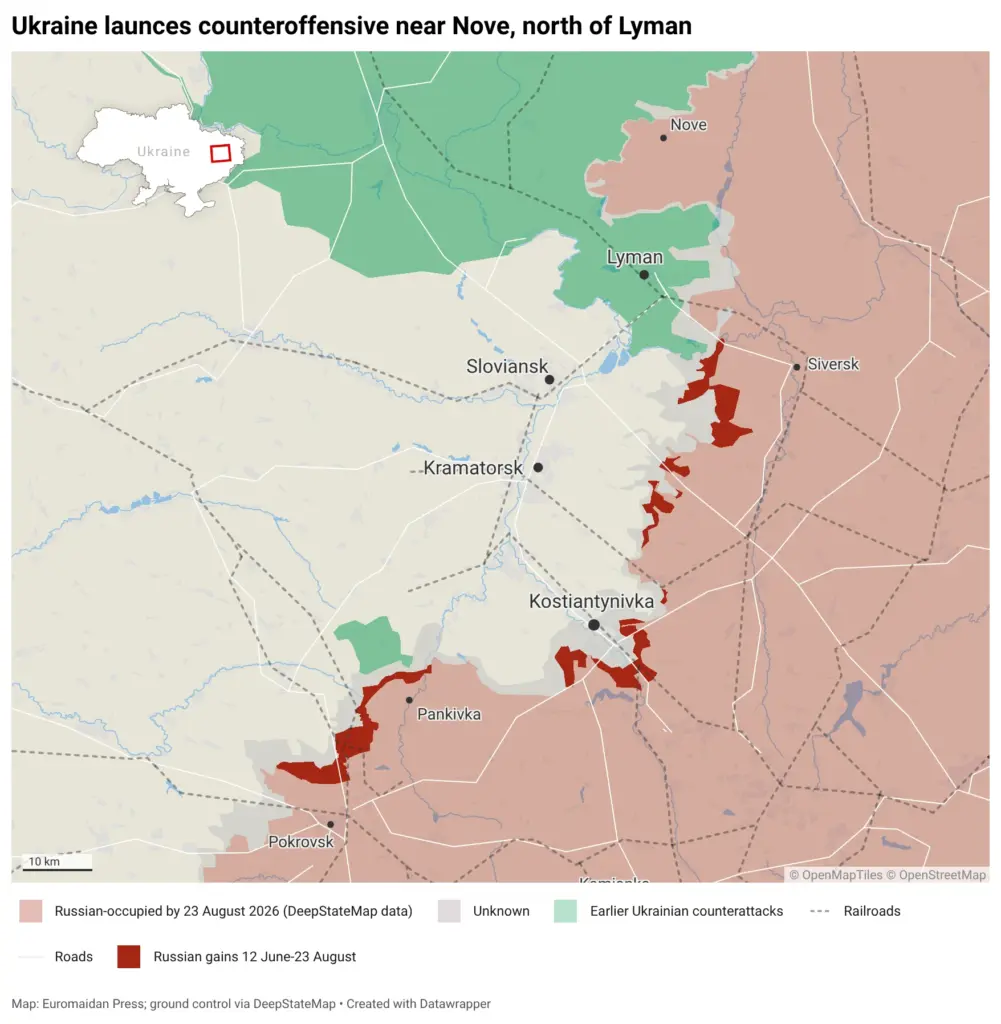
On 22 May, a mechanized battalion of Ukraine's 3rd Assault Brigade—backed by at least two more brigades, the 60th Mechanized and the 66th, attached to the 3rd Army Corps for the operation—attacked Russian positions around the village of Nove, 15 km north of the town of Lyman in eastern Ukraine's Donetsk Oblast. Russian drones were heavily jammed that day. Roughly five Ukrainian vehicles were hit, most by fiber-optic drones—the only kind still able to fly.
Nobody outside the Ukrainian army reported it for three months. The first fragmentary accounts surfaced in late August; the full picture only this week. By then the 3rd Army Corps had taken back somewhere between 150 and 240 sq km and wrecked Russian plans for a northern siege of Sloviansk, one of the last two big free cities in Donetsk. Observer Thorkill, writing in Polish, called it a success on an operational scale.
The presence of that Ukrainian armor around Nove, which at the time anchored the right flank of a 100 sq km salient held by regiments of the Russian 20th Combined Arms Army, was an ominous sign for the Russians. After months of careful preparation by the 3rd Army Corps, the Armed Forces of Ukraine (AFU) were strong north of Lyman. Russian forces were weak.
This has effectively been a 20-month operation. Ukrainian forces spent that stretch building one of the biggest bunny-ears situations of the war: russian forces pushed in deep enough that abandoning the position became politically and institutionally difficult, but never wide… pic.twitter.com/QxhzWv2v8V
"The moment AFU could start moving vehicles through the area, the battle was basically over," mapper Vitaly wrote three months later. "Vehicles didn't win it, they showed up because the conditions that had made vehicle movement impossible were already gone." Ukrainian drones were everywhere. And Russian drones, effectively jammed by electronic warfare, could barely fly.
Not everyone reads those months the same way. Thorkill, who tracked the sector throughout, puts the breakthrough at 17 to 18 August, and writes that for most of July and early August the 3rd Corps' attacks were repelled by the Russian 144th Motor Rifle Division. On that account the slow months were not a steady advance. What turned them, he says, is not clear: someone on the Ukrainian side made the difference north of Kolodiazi. He is candid about the limits of what can be seen. Some sources say the Russians withdrew, others deny it, others say they were partly cut off. What he can confirm from satellite imagery is that Ukrainian forces retook Serednie and Zelena Dolyna.
Overextended and pummeled by drones, the Russians barely clung to their salient north of Lyman, which sat between the Nitrius and Zherebets rivers. They were especially exposed at its western edge, where they had pushed across the Nitrius. The Russians had hoped the salient would be a "base for an offensive on Lyman, which could have allowed further offensives to Izium and Sloviansk [and] threatened the northern supply road to Donbas," according to mapper Clément Molin.
The main offensive axis comes from Nove and goes all the way south. We know there are two main support axes, one east and on west. The one east is recent and there are very few proofs, we just know that they nearly reached the Zherebet river.
Instead, the salient became a trap as the Ukrainian 3rd Army Corps relentlessly—but quietly—exploited the fragility of the Russian 20th Combined Arms Army. The Russians have now been pushed back toward the Zherebets, leaving behind their uncounted dead ... and their ambitions for a quick northern march on Lyman and then Sloviansk and neighboring Kramatorsk.
It had taken Russian forces 18 months to set the conditions for a push toward Sloviansk from the north. In the three months beginning with that mechanized assault around Nove, the Russians "apparently lost 1.5 years of progress in the area," Vitaly concluded. Estimates of the ground retaken vary: Molin puts it at more than 200 sq km, the AKM Mapping account at 151, and Konrad Muzyka of Rochan Consulting at around 240.
The appearance of Ukrainian armor around Nove in late May was a strong indication that the 3rd Army Corps had the momentum. But that doesn't mean the Corps' eventual victory in the battle for the Lyman salient was a foregone conclusion. On paper, the Russians have a manpower and firepower advantage in Donetsk.
Situation near Nove as of 23 August. Map: Euromaidan Press
A bridgehead too far
The 20th Combined Arms Army advanced too far, too fast. And the terrain favored the Ukrainian defenders, who could pluck at the Russians' supply lines from entrenched positions until the time was right for a counterattack.
"Russia putting itself inside a deep, narrow pocket only made the final phase easier," Vitaly explained. "Once AFU had enough control over the surrounding movement, every new Russian mission sent into the area walked into a reinforced perception trap—troops committed to hold positions that existed far more convincingly in reports than as a functioning front."
The silence
What kept the trap working was that nobody talked about it. The Ukrainian general staff said nothing. Pro-Ukrainian analysts, who normally map every advance within hours, held their tongues until late August. So did the Russians.
Observer Andrew Perpetua, who has followed Ukraine's other quiet operations around Kupiansk and in southern Donetsk, called this one tighter still. The Lyman operation "seemed even more protected since even the most in the know and honest Russian reporters seem to be missing it. Or at least silent about it," he wrote. "It was honestly shocking to watch how out of the loop the Russians really were, which I think is in large part due to the collective action of OSINT to avoid speaking about the situation."
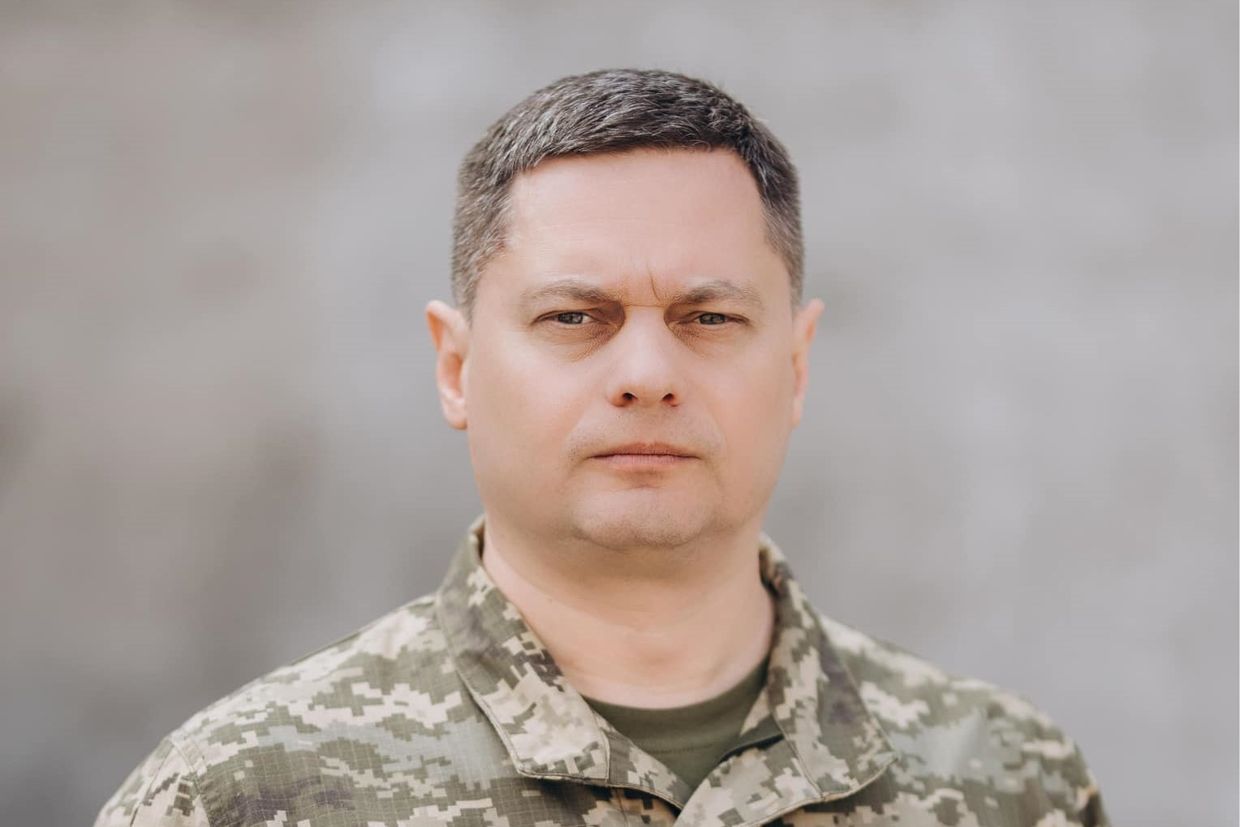
Perpetua's reading is that the lying is heaviest exactly where Russian forces are being pushed back. Nearby Sviatohirsk is the case in point. Vladimir Putin recently announced its capture. On 7 September, the commander of the 3rd Army Corps, Brig. Gen. Andrii Biletskyi, walked around the town on camera.
Explore further
Ukraine’s secret counteroffensive is more successful than we thought
The 3rd Army Corps cut across the salient around three weeks ago, reaching the northern edge of Kolodiazi and trapping an unknown number of Russian stragglers between the Ukrainian vanguard and the old Russian bridgehead. Most of the encircled Russians appear to have escaped. "There is a large area where there may still be Russian soldiers," Molin warned. "Most of the villages westwards have been cleared, but not the treelines."
On 24 August the Ukrainians mounted a second mechanized attack, so the operation has not stopped. But the 3rd Army Corps is likely shifting from attacking to consolidating and defending—and clearing out the Russian stragglers that, left alone, could sow chaos in the new gray zone that was once a Russian salient.
Russian channels have started to admit the problem. Rybar wrote of "problems near Lyman," conceding that Ukrainian units have been attacking southward from Ridkodub for months and that Russian forces "do not even control the airspace immediately near the front line." The fighting continues, but on Ukraine's terms, for now.
How much it changes is the one thing the analysts do not agree on. "This is one of the most important victory for Ukraine in 2026," Molin wrote, a victory that "will delay the offensive on northern Donbas." Thorkill, in the same post that called it an operational-scale success and rated it larger than the 7th Rapid Reaction Corps' gains near Velyka Novosilka in July, ends on the opposite note: it will not, he writes, affect in any way the situation of Ukrainian forces on the direction that matters most at present, the Kramatorsk agglomeration.
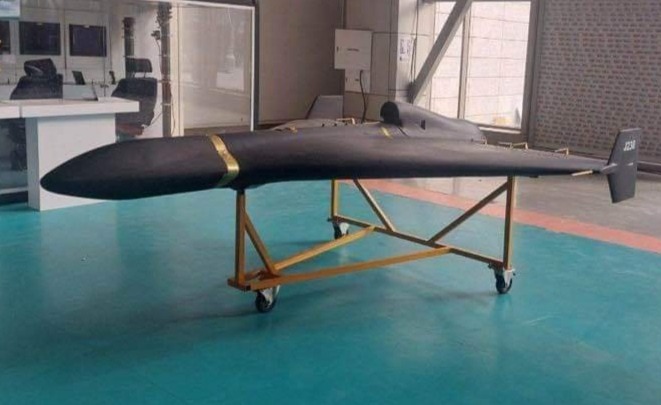
Ukraine is getting closer to home-built interceptors designed to hunt down Russia's fast jet Gerans. Those interceptors have shown very positive early results, and the harder job now is producing enough of them to match the speed at which Ukraine downs the slower drones, Serhii Bratchuk, spokesperson for the Ukrainian Volunteer Army, said on Radio NV.
The jet-powered Geran is the problem Ukraine has been racing to solve. It flies too fast for the mobile gun teams and li
Ukraine is getting closer to home-built interceptors designed to hunt down Russia's fast jet Gerans. Those interceptors have shown very positive early results, and the harder job now is producing enough of them to match the speed at which Ukraine downs the slower drones, Serhii Bratchuk, spokesperson for the Ukrainian Volunteer Army, said on Radio NV.
The jet-powered Geran is the problem Ukraine has been racing to solve. It flies too fast for the mobile gun teams and light interceptors that bring down the slower, piston-engine version. Alongside ballistic missiles, those drones have already done strategic damage: they helped Russia destroy about 90 percent of Ukraine's modern warehouse capacity.
A working interceptor changes that only if Ukraine can field it in numbers, which is why Bratchuk framed the fight ahead as one of production rather than invention.
Interceptors show early promise
However, Bratchuk would not put a date on their release, saying that "right now, our developers are testing our jet interceptor drones."
"We can't talk about details, but from what I know and what I see, the results are very positive, and we are counting on them," he shared.
Four Ukrainian companies already have interceptor drones in field trials, and President Zelenskyy has said that 67 firms in all are working to shoot down the jet drones en masse.
Production must catch up
Ukraine has to lift jet-drone interception to the level it has reached against the conventional Gerans, Bratchuk said, the ones Ukrainians nickname "mopeds" for their buzzing engines. Only then, he argued, can Ukraine say it is closing the sky to the fast drones as it has to the slow ones.
Russia keeps firing both types, in the south and elsewhere, and often at night, precisely to overload Ukraine's air defenses.
Russia scales, and Ukraine must too
Bratchuk gave Russia its due on the one thing that will decide this contest, its ability to turn out weapons in volume.
"Credit to the Russians. They know how to scale," he said.
Ukraine has to learn the same lesson, he argued, and he believes it can, having pulled off fast build-ups before.
"There are examples where we really do learn fast and scale up the relevant processes. So when it comes to jet interceptor drones, we very much want that scaling," he added.
Gen. Christopher T. Donahue greeted service members before the 2023 renaming of Fort Bragg in North Carolina. The general had extensive combat experience and strong support in the Army.
The move came days after the resignation of Daniel P. Driscoll, who had clashed with Defense Secretary Pete Hegseth over the purge of top generals in the Army.
The move came days after the resignation of Daniel P. Driscoll, who had clashed with Defense Secretary Pete Hegseth over the purge of top generals in the Army.
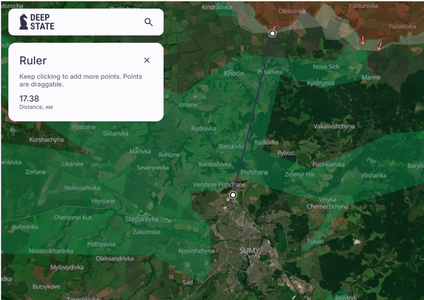
On 1 September, Russian President Vladimir Putin said during a conversation with journalists that Russian troops had 12 km left to reach Sumy. Censor.NET estimated from DeepState’s map that Russian forces were approximately 17 km from Sumy’s administrative boundary.
Russian military commanders have systematically exaggerated their gains on the battlefield. The Institute for the Study of War (ISW) describes such claims as part of a Kremlin information campaign aimed at c
On 1 September, Russian President Vladimir Putinsaid during a conversation with journalists that Russian troops had 12 km left to reach Sumy. Censor.NET estimated from DeepState’s map that Russian forces were approximately 17 km from Sumy’s administrative boundary.
Russian military commanders have systematically exaggerated their gains on the battlefield. The Institute for the Study of War (ISW) describes such claims as part of a Kremlin information campaign aimed at creating the impression of major Russian gains. In this case, the Russian president cited exaggerated gains that, compared with his previous claims, appear to be a setback.
What Putin said
“The ‘North’ group of forces continues to create a security belt along the Russian-Ukrainian border in the border areas of the Sumy region... There are 12 km left to Sumy, to the Sumy ring road,” Putin said during the press conference.
Censor.NET reported that Russian forces were about 17 km from Sumy without specifying the reference point, while Putin did not say which section of the city’s ring road his 12 km figure referred to.
Approximate visualization of Censor.NET’s reported 17 km distance from the DeepState frontline toward Sumy. Map: DeepState / Chart: Euromaidan Press
Putin previously gave a different distance
On 28 June, during an interview with Russian propagandist Pavel Zarubin, Putin said that Russian troops had “about 10.5 km” left to reach Sumy. At the time, he also explained the offensive as the creation of a “security zone” along Russia’s border.
Putin’s claimed distance to Sumy therefore increased by approximately 1.5 km in just over two months, contradicting the Kremlin’s portrayal of a continuing advance.
Other exaggerations
In July 2026, Putin claimed that Russian forces had “completely captured” Kostiantynivka. Ukraine’s General Staff rejected the claim, saying Ukrainian forces continued defensive operations in the city. ISW also said some videos of Russian flags being raised in Kostiantynivka were likely AI-altered.
On 2 December 2025, Putin claimed that Russian forces had captured Pokrovsk in Donetsk Oblast. ISW found no evidence confirming the city’s complete capture and assessed that its fall would not enable Moscow to achieve a significant breakthrough.
Russia is looking for its next foreign recruits in Indonesia, Kyiv says. Ukraine's Foreign Intelligence Service reports that it has obtained documents on at least eight Indonesian citizens recruited into the Russian occupation army.
Russia has recruited at least 27,000 foreign nationals from more than 130 countries since February 2022, a joint report by the International Federation for Human Rights and Truth Hounds found in April, separate from roughly 14,000 North Kore
Russia is looking for its next foreign recruits in Indonesia, Kyiv says. Ukraine's Foreign Intelligence Service reports that it has obtained documents on at least eight Indonesian citizens recruited into the Russian occupation army.
Russia has recruited at least 27,000 foreign nationals from more than 130 countries since February 2022, a joint report by the International Federation for Human Rights and Truth Hounds found in April, separate from roughly 14,000 North Korean troops. Up to 20% of these fighters do not survive the first four months.
The scheme runs on false promises
"The scheme by which Moscow seeks foreign cannon fodder has already been tested on dozens of other countries," the Foreign Intelligence Service said.
Recruiters offer high pay, non-combat work, fast-tracked Russian citizenship, and social guarantees, drawing in people who often have no idea where they are actually being sent, the service said. The same model worked earlier on citizens of Nepal, Cuba, Kenya, and India, and most ended up on the front line without training, with some dying in the first weeks.
Recruitment fills three needs at once
Each foreigner serves several functions for the Kremlin, the service said. A recruit fills a personnel gap at the front and doubles as propaganda about supposed global support for the war.
The third driver is domestic. Discontent over the economy, the war, and plans for a new wave of mobilization has cut the number of Russians willing to sign contracts, bringing dissatisfaction to 69 percent.
The pattern is widening by design
Indonesia is the latest example of Russia's system to fight with its hands of foreign mercenaries.
"Indonesia, the world's largest Muslim country with a population of over 280 million, has joined the list of countries that have become the Kremlin's latest market for cheap human labor for the war," the service said.
Russia is ramping up a campaign of covert mobilization to recruit troops for its war against Ukraine. Over the past month and a half, residents of at least 17 Russian regions have complained of forcible detention, beatings, and coercion into signing contracts with the Russian Defense Ministry, the independent outlet Verstka reported, citing three legal-aid organizations.
Russia recruited 403,000 soldiers in 2025 and set a target of 409,000 for 2026, Ukraine's military i
Russia is ramping up a campaign of covert mobilization to recruit troops for its war against Ukraine. Over the past month and a half, residents of at least 17 Russian regions have complained of forcible detention, beatings, and coercion into signing contracts with the Russian Defense Ministry, the independent outlet Verstka reported, citing three legal-aid organizations.
Russia recruited 403,000 soldiers in 2025 and set a target of 409,000 for 2026, Ukraine's military intelligence chief Kyrylo Budanov said. Since April, Russian companies have been ordered to nominate two to five employees each for military service.
The School of the Conscript recorded 11 complaints in July and August. Five came from Udmurtia, one each from Primorye, Irkutsk, Ryazan, and Arkhangelsk oblasts, one from Buryatia, and one from the temporarily occupied territories of Donetsk Oblast.
The victims share a profile
The men targeted are not chosen at random. In most appeals, complainants say the victims are men with alcohol, drug, or mental health problems, older or physically disabled men, men living alone, and men with pending legal trouble, said Timofey Vaskin, who heads the legal department at the School of the Conscript.
Four cases show the method
Idite Lesom documented how the coercion works in practice. In Novorossiysk, a man was taken to a police station, beaten, had drugs planted on him, and was made to sign a contract.
In Arkhangelsk Oblast, a man detained for drinking on the street was sent to the front. In Omsk, a man was taken from his workplace, held, and had the contract signed for him. In Udmurtia, a man was removed from a psychiatric register and sent to Donetsk Oblast.
Recruiters work from state records
The targeting runs on official data. Authorities know who carries debts, who is under investigation, and who has recently lost a driver's license, and those are the people they pursue, said Idite Lesom's director, Grigory Sverdlin.
Volunteers are getting harder to find, which is why the pressure is increasing, he added. Call to Conscience advised men in affected regions to grant relatives the power of attorney to represent them at enlistment offices, avoid drinking alone, and refuse to sign a contract under any circumstances.
Russian forces have gained ground on the eastern approaches to Sloviansk and continue to prioritize an eastern route toward the city, according to the Institute for the Study of War (ISW). Their earlier push from the northeast had bogged down, and Russia now aims to set up a future assault on one of the last major cities Ukraine still holds in Donetsk Oblast. A quick move on the city itself remains extremely unlikely, ISW said.
Russia's 2026 summer campaign in the east
Russian forces have gained ground on the eastern approaches to Sloviansk and continue to prioritize an eastern route toward the city, according to the Institute for the Study of War (ISW). Their earlier push from the northeast had bogged down, and Russia now aims to set up a future assault on one of the last major cities Ukraine still holds in Donetsk Oblast. A quick move on the city itself remains extremely unlikely, ISW said.
Russia's 2026 summer campaign in the east has advanced through field edges and small villages rather than the breakthroughs the Kremlin keeps promising, the grinding pattern that has defined the fighting across Donetsk Oblast for years.
Explore further
Kostiantynivka: Why one city in Donbas matters so much that Putin lies about having captured it
The eastern approach
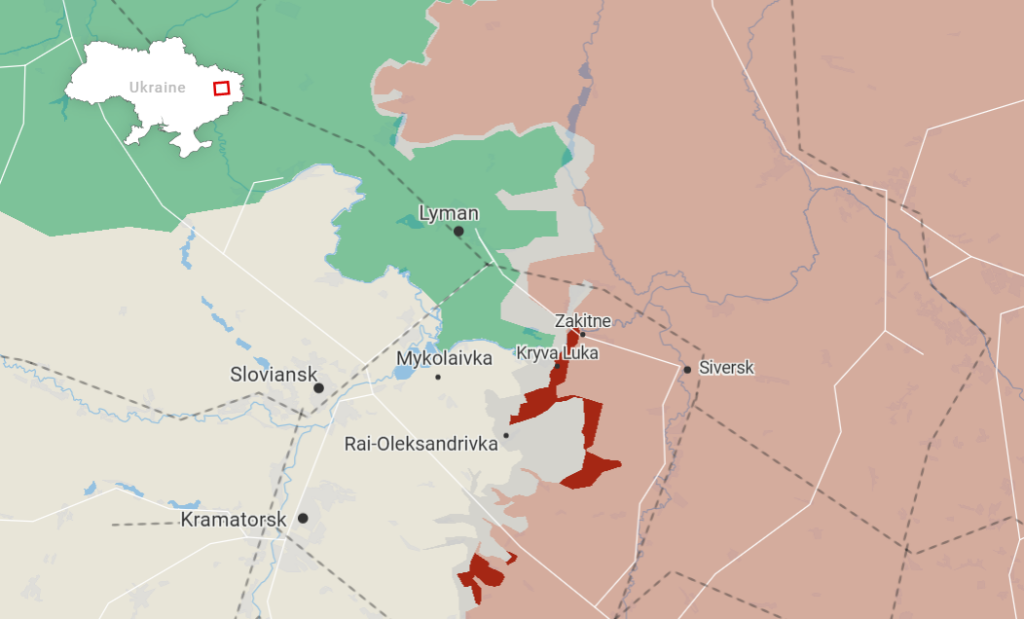
Ukrainian military observer Kostiantyn Mashovets reported that Russian forward units are advancing across several tactical areas at once in the Sloviansk direction. He said the command of Russia's 3rd Combined Arms Army rushes assault infantry forward right after each successful infiltration. Russian troops reached the southeastern edge of Pyskunivka, east of Sloviansk, from the east and northeast, moving off positions they had seized on the southern bank of the Siverskyi Donets, Mashovets said. Zakitne lies northeast of Pyskunivka and Kryva Luka southeast of it, and ISW read the advance as evidence Russia has consolidated positions in both.
They also infiltrated the southern and southeastern outskirts of Mykolaivka from western Rai-Oleksandrivka. ISW assessed that Russia is running a dual effort to connect its units near Kryva Luka with those at Rai-Oleksandrivka, so it can assault Mykolaivka from dominant terrain to the east and south at once. Mashovets added that other Russian groups slipped through three settlements along the E-40 Bakhmut-Sloviansk highway, trying to hold the western bank of the Siverskyi Donets-Donbas Canal and reach the river just east of the city.
ISW observed reports on 23 August that Ukrainian forces repelled a Russian infiltration attempt in Mykolaivka.
Oleksandr Borodin, spokesperson for Ukraine's 3rd Army Corps, said the Lyman direction falls in his corps' zone and that Russia's goal there is to half-encircle the Sloviansk-Kramatorsk agglomeration from the flank—first securing bridgeheads across the rivers, then cutting logistics. He called those plans unrealistic:
"We have quite serious defensive positions there and have been preparing for a long time. The capabilities they currently have to try to accomplish this task are insufficient even to come close to achieving such a goal."
Why Moscow switched directions
Russia prioritized attacking Sloviansk from the northeast through Lyman when it opened its spring-summer 2026 offensive, but that effort has largely stalled. The Siverskyi Donets River, which loops north and northeast of the city, together with a web of canals, handed Ukrainian defenders a natural moat. So Russian commanders now treat Mykolaivka as a key prize. Taking it would let them strike west toward Sloviansk from the east, skirting the water obstacles that blocked the northeastern route.
Explore further
Ukrainian intelligence units will not help: Analyst warns that once Russia breaks into Sloviansk and Kramatorsk, reinforcing them only delays inevitable
A slow road into the Fortress Belt
Sloviansk anchors the northern end of Ukraine's Fortress Belt, a chain of fortified cities that has blunted Russian advances in Donetsk Oblast since 2014. ISW cautioned that Russian forces are extremely unlikely to make fast gains west of Mykolaivka, since they still need to seize several more settlements first.
Ukraine's President Volodymyr Zelenskyy said on 23 August that Putin has ordered his army to seize all of Donetsk Oblast by 31 December. By ISW's count, it is the 15th such deadline since 2022, and Russia has missed every one that has come due.
Zelenskyy put Russia's frontline casualties this year at around 267,000, including about 155,000 killed, and said 70% to 80% of them fall in the Kostiantynivka direction. Russia holds about 79.89% of Donetsk Oblast, by ISW's count, and Zelenskyy said the Kremlin is preparing to mobilize around 300,000 men after the 18–20 September State Duma elections, partly to reinforce Donetsk and Luhansk oblasts.
Ukrainian analysts warn that the situation on a key stretch of the Donetsk front is becoming increasingly dangerous for two cities central to Ukraine's defense. The eastern flank of the Sloviansk-Kramatorsk agglomeration is taking on an increasingly threatening character, and earlier stabilization measures are clearly not working, military analyst Oleksandr Kovalenko said.
The two cities anchor the line that has held Russia back for over a decade. Sloviansk and Kramator
Ukrainian analysts warn that the situation on a key stretch of the Donetsk front is becoming increasingly dangerous for two cities central to Ukraine's defense. The eastern flank of the Sloviansk-Kramatorsk agglomeration is taking on an increasingly threatening character, and earlier stabilization measures are clearly not working, military analyst Oleksandr Kovalenko said.
The two cities anchor the line that has held Russia back for over a decade. Sloviansk and Kramatorsk form part of the so-called fortress belt, the line of Ukrainian fortifications that has restrained the Russian advance since 2014. The agglomeration serves as the most important bastion and logistics hub for Ukrainian forces in the east. A threat to it is a threat to the backbone of Ukraine's defense in Donbas.
Russia is 12 to 13 km away
Kovalenko laid out how close Russian forces have come. Their forward positions are 12-13 kilometers from Sloviansk and Kramatorsk. He warned that if Russia's pace does not slow, the first infiltrations into both cities could come by December 2026.
The advance is measured in ground lost. The problem on the eastern flank runs about 30 kilometers, where Russia's 3rd Combined Arms Army operates.
"Only in the third week of August, Russian forces captured 21 square kilometers of Ukrainian territory in this section of the frontline," the expert said.
Russia uses the terrain of the "Cretaceous Flora" reserve, its hilly micro-relief rather than open steppe, to advance, absorbing not just square kilometers into pockets but villages and settlements.
The flank threatens neighboring sectors
The deterioration is spreading pressure sideways. The advance creates pressure from the southern bank of the Siverskyi Donets on the zone of the 3rd Army Corps, which had stabilized the Lyman direction and pinned Russian forces near Yampil, Kovalenko believes. The former Siverskyi direction saw the fastest rate of territorial loss of any sector in 2025, slowed in April and May 2026, but the 3rd Combined Arms Army's advance has not yet been stopped.
The cumulative loss is large. After losing more than 500 square kilometers over a year, the unstable flank, sagging since June 2025, is becoming a problem for other directions, looming over or pressuring them.
Kovalenko argued the sector has gone months without attention while threatening both the main agglomeration and the successfully held directions around it.
Analysts urge reinforcement before it is too late
Kovalenko proposed a specific fix. The sector must be reinforced as soon as possible, he said, suggesting that the nearest resource, Andrii Biletsky's 3rd Army Corps, often described as one of the most capable formations in Ukraine's forces, be used at least to relieve both banks of the Siverskyi Donets.
"Once infiltrations into Sloviansk and Kramatorsk begin, reinforcing garrisons and landing intelligence-directorate troops will not solve the problem but only delay the inevitable," he warned.
A second analyst gave a similar warning. Yurii Butusov, a drone company commander in the National Guard's "Khartia" corps, said that if Ukraine's forces retreat from there, Russia gains tactical advantages and Sloviansk-Kramatorsk is gradually lost, ultimately leading to the loss of the Donbas.
He also said that only Biletskyi can take responsibility for this battle.
"Only orderly command and organization at the front now will allow us to turn the course of a battle that is so far not going in our favor," Butusov said.
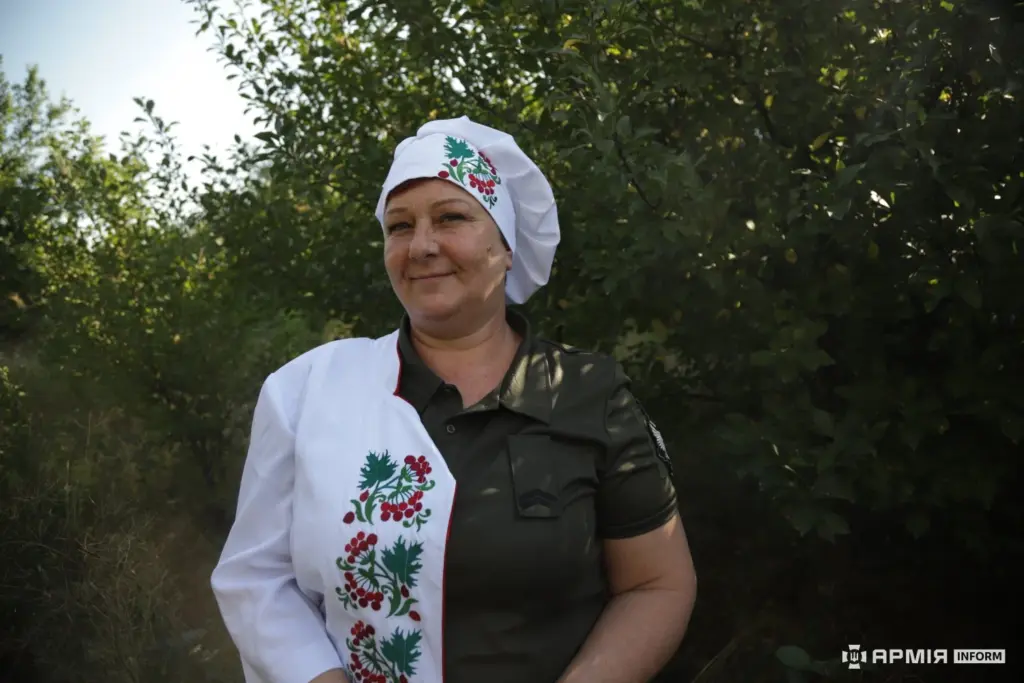
Mariia's working day starts at 4:30 a.m. A cook with the reconnaissance battalion of Ukraine's 40th Artillery Brigade, she has cooked for as many as 860 soldiers at once—borsch at military scale, and the steady work of keeping a brigade fed—Army Inform writes in a profile of her service.
Mariia's seven years in uniform put a human scale on a war that began in 2014: one working life spent feeding soldiers.
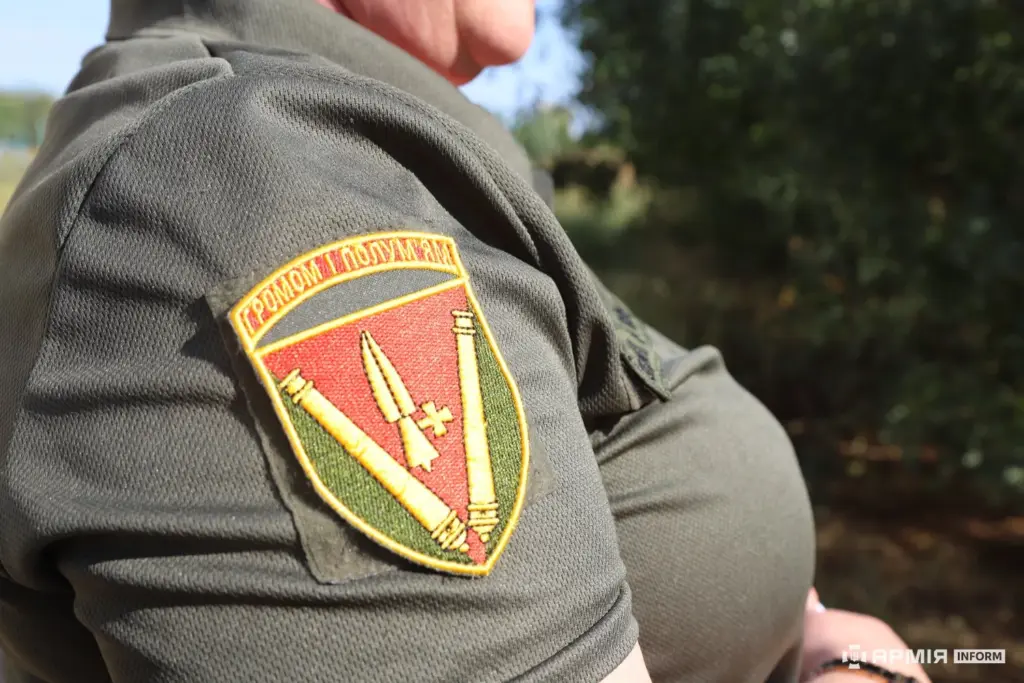
The sleeve insignia of Ukraine's 40th Separate Artillery Briga
Mariia's working day starts at 4:30 a.m. A cook with the reconnaissance battalion of Ukraine's 40th Artillery Brigade, she has cooked for as many as 860 soldiers at once—borsch at military scale, and the steady work of keeping a brigade fed—Army Inform writes in a profile of her service.
Mariia's seven years in uniform put a human scale on a war that began in 2014: one working life spent feeding soldiers.
The sleeve insignia of Ukraine's 40th Separate Artillery Brigade, whose motto reads "With thunder and flame." Photo: Taras Peretiatko / Army Inform
Mariia's path to that kitchen began long before the full-scale invasion. She wanted to enlist in 2014, when Russia's war in the Donbas started, and joined the army in 2019, she told Army Inform. Her first posting took her to Popasna, in the east, where she served for eight months. Russia's full-scale invasion, in February 2022, caught her unit in Kharkiv Oblast.
One moment from the first weeks of the invasion has stayed with her, she told Army Inform: in March 2022, an elderly couple who assumed the soldiers had nothing gave them what little they had themselves—ten eggs and four cigarettes. She has kept cooking in the years since.
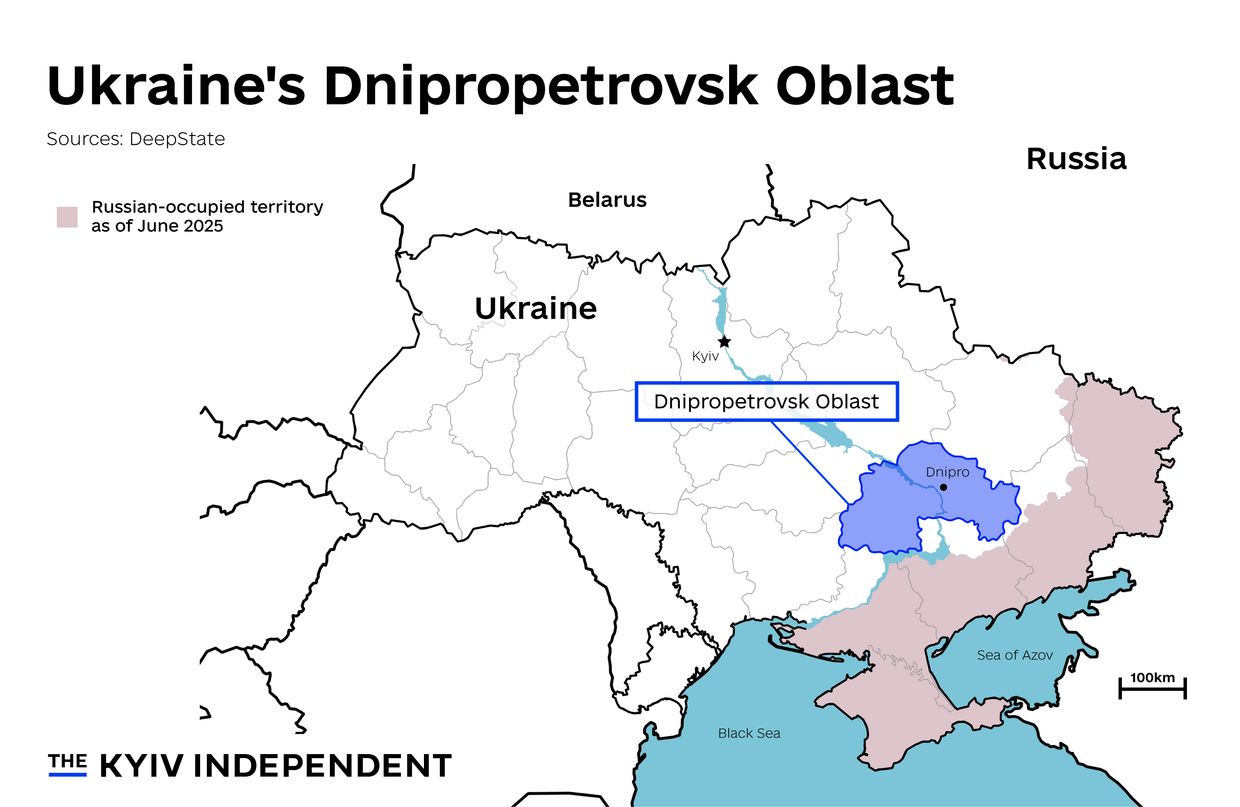
Russian forces have not succeeded in crossing into Dnipropetrovsk Oblast, Ukraine's military said on July 2, refuting another Russian claim of a breakthrough into the central-eastern region.The General Staff of the Armed Forces of Ukraine dismissed Russian claims of territorial gains as disinformation and said a recent small incursion was repelled.According to the statement, a small Russian reconnaissance group managed to briefly enter the village of Dachne, located on the edge of Dnipropetrovsk
Russian forces have not succeeded in crossing into Dnipropetrovsk Oblast, Ukraine's military said on July 2, refuting another Russian claim of a breakthrough into the central-eastern region.
The General Staff of the Armed Forces of Ukraine dismissed Russian claims of territorial gains as disinformation and said a recent small incursion was repelled.
According to the statement, a small Russian reconnaissance group managed to briefly enter the village of Dachne, located on the edge of Dnipropetrovsk Oblast. The group reportedly took photos with a Russian flag, but Ukrainian forces "eliminated them."
Russian troops have intensified efforts to breach the administrative border between Donetsk and Dnipropetrovsk oblasts in eastern Ukraine, but have failed to gain ground despite repeated assaults, the military said.
"(Russian troops) have had no success in achieving this demonstrative goal, no matter how many 'meat wave assaults' they launch with small infantry units and sabotage-reconnaissance groups," the General Staff said in a statement.
Donetsk Oblast, which has been a focal point of Russia's invasion since 2014 and a major battleground since the full-scale invasion in 2022, borders the more centrally located Dnipropetrovsk Oblast. Russian forces have not entered Dnipropetrovsk Oblast territory in force, although they regularly strike the region with missiles, drones, and aerial bombs.
In a separate incident, two Russian soldiers were captured during a subsequent assault on Dachne and are now in Ukrainian custody, the military said. They were detained by a unit of Ukrainian Marines and added to "Ukraine's prisoner exchange pool."
Ukraine's Dnipropetrovsk Oblast (Nizar al-Rifai/The Kyiv Independent)
"Therefore, the Russian propaganda about the seizure of the bridgehead in Dnipropetrovsk Oblast is not true. Dachne remains under the control of the Ukrainian Defense Forces," the statement read.
The new claims echo a similar incident in May when Russian sources circulated a photo purporting to show Russian troops at the border of Dnipropetrovsk Oblast near the village of Novomykolaivka.
At the time, Ukrainian officials, including Dnipropetrovsk Oblast Governor Serhii Lysak, dismissed the photo as fake. The monitoring group DeepState later confirmed that the image had been taken in the village of Troitske in Donetsk Oblast and featured a Ukrainian vehicle abandoned under fire, which Russian forces later used for staged photos.
Russian forces have recently stepped up offensive operations across multiple sectors of the front line. Viktor Tregubov, spokesperson for Ukraine's Khortytsia group of forces, said on June 16 that Moscow had increased attacks in the Novopavlivka sector.
Tregubov noted that the escalation near Novopavlivka indicates an effort to breach into Dnipropetrovsk Oblast. "But they have failed to succeed," he said in a televised address.
Kremlin spokesperson Dmitry Peskov told Russian state-controlled media on June 9 that Russian forces were conducting operations in Dnipropetrovsk Oblast as part of efforts to create a so-called "buffer zone" on Ukrainian territory.
These remarks followed Russian President Vladimir Putin's May 22 statement that Russia was working to establish a "security buffer zone" along the Ukrainian border regions of Kursk, Bryansk, and Belgorod.
President Volodymyr Zelensky on June 19 appointed Brigadier General Hennadii Shapovalov as the new commander of Ukraine's Ground Forces, following the resignation of Mykhailo Drapatyi earlier this month. Drapatyi stepped down on June 1 after a Russian missile strike killed at least 12 Ukrainian soldiers at a training ground in Dnipropetrovsk Oblast. He described the casualties as young recruits who "should have learned, lived, and fought — not died." Zelensky accepted Drapatyi's resignation and
President Volodymyr Zelensky on June 19 appointed Brigadier General Hennadii Shapovalov as the new commander of Ukraine's Ground Forces, following the resignation of Mykhailo Drapatyi earlier this month.
Drapatyi stepped down on June 1 after a Russian missile strike killed at least 12 Ukrainian soldiers at a training ground in Dnipropetrovsk Oblast. He described the casualties as young recruits who "should have learned, lived, and fought — not died."
Zelensky accepted Drapatyi's resignation and appointed him Commander of the Joint Forces on June 3. An investigation into the incident is ongoing, with the Ground Forces promising accountability if misconduct or negligence is confirmed.
Shapovalov, born in 1978 in Kirovohrad Oblast, is a career officer who graduated from the Military Institute of Tank Troops in Kharkiv and later studied at the National Defense University of Ukraine. He also received training at the U.S. Army War College.
Shapovalov previously led Ukraine's South Operational Command in 2024 and was appointed in February 2025 as Ukraine's representative to the NATO Security Assistance and Training for Ukraine (NSATU) mission in Germany.
Drapatyi, in his final remarks as Ground Forces chief on June 11, said he had overhauled more than half of the command's senior leadership, launched a revamp of recruitment centers, and pushed through reforms focused on decentralization, accountability, and modernization.
Zelensky said Drapatyi's new role would allow him to focus "exclusively on combat issues" as Ukraine faces intensifying Russian attacks across several fronts.
Ukraine's 59th Brigade of the Unmanned Systems Forces said on June 17 that former fighter Ryan O'Leary no longer has access to current information about the unit's operations and cannot speak on its behalf.The statement follows public criticism from O'Leary, an American volunteer and former commander of the Chosen Company, who alleged widespread leadership failures within Ukraine's Armed Forces. On June 14, O'Leary said mismanagement within the military, rather than Russia's action, was responsi
Ukraine's 59th Brigade of the Unmanned Systems Forces said on June 17 that former fighter Ryan O'Leary no longer has access to current information about the unit's operations and cannot speak on its behalf.
The statement follows public criticism from O'Leary, an American volunteer and former commander of the Chosen Company, who alleged widespread leadership failures within Ukraine's Armed Forces.
On June 14, O'Leary said mismanagement within the military, rather than Russia's action, was responsible for "more deaths," accusing commanders of prioritizing personal power over troop welfare.
"The officer corps behaves like a caste system of untouchables or 'army lords,'" he wrote on X.
Chosen Company, originally formed as the 312 Swedish Volunteer Company at the start of Russia's full-scale invasion in 2022, has drawn members from more than 31 countries.
Its first commander, Swedish veteran Edvard Selander Patrignani, was killed in action in July 2022. O'Leary took command afterward, and the unit was integrated into the 59th Brigade in early 2023.
O'Leary accused the former commander of the 59th Brigade, Lieutenant Colonel Bohdan Shevchuk, of sending intelligence officers into reckless assaults, resulting in avoidable casualties. Shevchuk was recently removed from command after being accused of submitting false reports.
"In the first two months of his command, he sent soldiers into unattainable positions with no hope of reinforcement or survival," O'Leary claimed.
In response, the 59th Brigade, deployed in the Pokrovsk sector in Donetsk Oblast, said O'Leary voluntarily resigned from service on Feb. 8, 2024, and has not taken part in any operations or internal decisions since.
"He does not have up-to-date information on the state of affairs in the unit and cannot comment on it," the brigade said. "The dissemination of unfounded accusations and misinformation undermines morale and negatively affects the unit's combat readiness."
The 59th Brigade emphasized that its soldiers continue to perform combat missions under challenging conditions and "maintain high efficiency and effectiveness."
O'Leary had announced the disbandment of the Chosen Company on May 26, but said he would wait to discuss details until his contract officially ended.

 Connexion