Vue normale

Putin calls Zelenskyy’s airspace warning “state terrorism” as shares in Russia’s national airline fall 5%

2 septembre 2026 à 05:17

Vladimir Putin stands behind a lectern during a press conference, with the RIA Novosti logo visible above him.

Russian President Vladimir Putin said Moscow would “find a way to respond” if civilian “tragedies” followed President Volodymyr Zelenskyy’s warning that Ukrainian drone operations were making Russian skies unsafe. Zelenskyy told foreign airlines and insurers that the “safe moments” in Russian airspace were over.

Zelenskyy’s warning seeks to extend the cost of Russia’s war beyond damaged military and energy facilities to airlines, insurers, and travelers. It does not mean Russian airspace is legally or completely closed. However, carriers that continue flying over Russia face higher costs from repeated airport shutdowns during drone alerts, as well as the danger that military activity in Russian airspace could endanger civilian aircraft.

Putin spoke after a 1 September Shanghai Cooperation Organization summit in Bishkek, where Russia and China coordinate regional security. Zelenskyy’s warning amounted to “a bid for state terrorism” if he had made it publicly, the Russian president said, adding that Russia does not negotiate with “terrorists.” Putin also said Russian forces were preparing massive strikes on Ukraine’s energy infrastructure.

In his evening video address, Zelenskyy said Ukraine did not threaten civilian aircraft but would keep striking Russian military targets and parts of the economy supporting the war. Ukraine’s Presidential Office head Kyrylo Budanov backed the decision, saying long-range weapons would systematically strike military targets in Russia while the invasion continued.
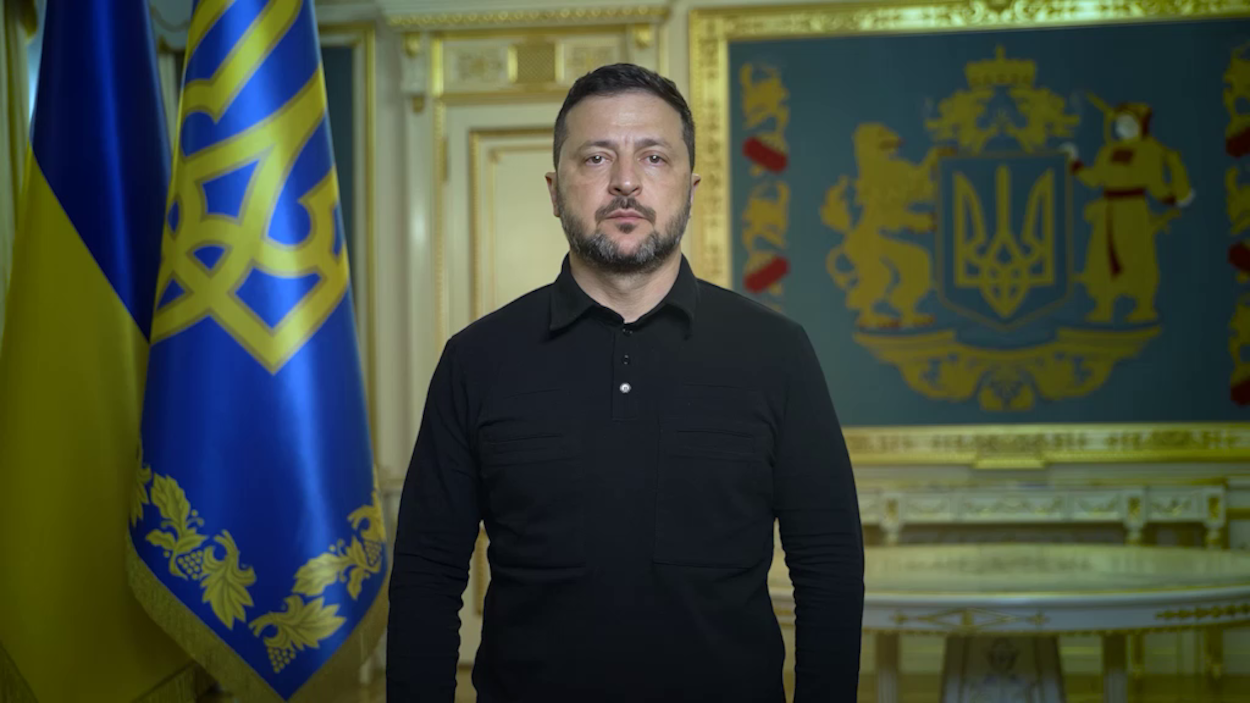
Ukrainian President Volodymyr Zelenskyy during his evening address, 1 September 2026. Screenshot from video: Zelenskyy
Explore further

“Russian airspace will effectively be closing”: Zelenskyy warns airlines Russian skies are no longer safe

Shares in Aeroflot, Russia’s national airline, fell to an intraday low of 30.36 rubles at about 20:40 Moscow time, down 5.11%, Meduza reported, citing Moscow Exchange data. The timing does not establish that Zelenskyy’s speech alone drove the decline.

Wall Street Journal correspondent Yaroslav Trofimov posted a chart of the decline on X, writing, “Aeroflot shares after Zelensky’s warning.”

Aeroflot shares after Zelensky’s warning. https://t.co/L7h2S99jqT pic.twitter.com/Q80gPfYWlo

— Yaroslav Trofimov (@yarotrof) September 1, 2026

European and US carriers already avoid Russian airspace, but airlines from China, Türkiye, the United Arab Emirates, and other Gulf states continue using it, Reuters reported. Aviation-risk firm Osprey Flight Solutions assessed that daily attacks deep inside Russia were nearly certain through 2026 and warned of possible misidentification.

Andrii Kovalenko, head of Ukraine’s Center for Countering Disinformation, said it was “strange” to hear terrorism accusations from “the leader of a terrorist organization masquerading as the Russian state.” Putin’s reaction showed Moscow feared pressure on its airspace, he argued.

Previous closures of Russian airspace due to Ukrainian attacks

Russian airports were repeatedly shut during Ukrainian drone alerts well before Zelenskyy’s warning. On 6 July 2025, Moscow airports canceled 171 flights while airports in five other cities suspended operations.

A 27 May attack closed airports serving Moscow and several other cities after Russia claimed it intercepted 99 drones. Another wave caused flight disruption and mobile internet outages around Moscow, while a 29 May alert again halted flights at Moscow airports.

More recently, Russian authorities restricted operations at Moscow airports during Ukrainian drone attacks, delaying more than 450 flights
Ukrainian intelligence units will not help: Analyst warns that once Russia breaks into Sloviansk and Kramatorsk, reinforcing them only delays inevitable

22 août 2026 à 12:42

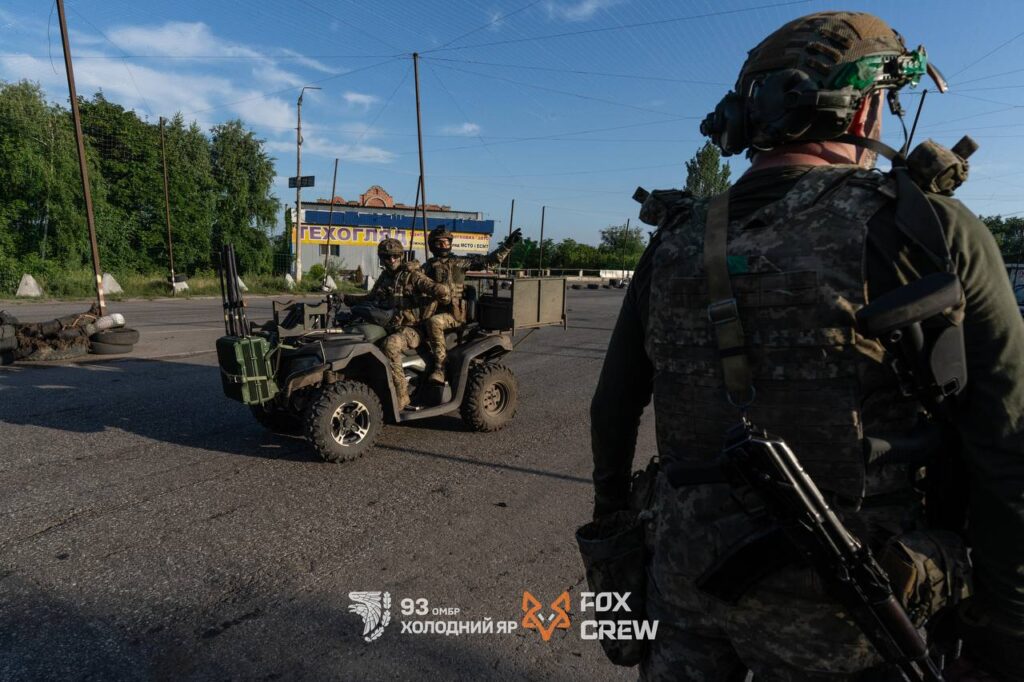
Soldiers of the 93rd Separate Mechanized Brigade’s Fox Crew prepare for a logistics run near the Kramatorsk–Kostiantynivka road in Donetsk Oblast. The unit, once focused on anti-tank warfare, now uses strike drones to disrupt Russian supply lines. Credit: 93rd Separate Mechanized Brigade / Fox Crew.

Ukrainian analysts warn that the situation on a key stretch of the Donetsk front is becoming increasingly dangerous for two cities central to Ukraine's defense. The eastern flank of the Sloviansk-Kramatorsk agglomeration is taking on an increasingly threatening character, and earlier stabilization measures are clearly not working, military analyst Oleksandr Kovalenko said.

The two cities anchor the line that has held Russia back for over a decade. Sloviansk and Kramatorsk form part of the so-called fortress belt, the line of Ukrainian fortifications that has restrained the Russian advance since 2014. The agglomeration serves as the most important bastion and logistics hub for Ukrainian forces in the east. A threat to it is a threat to the backbone of Ukraine's defense in Donbas.

Russia is 12 to 13 km away

Kovalenko laid out how close Russian forces have come. Their forward positions are 12-13 kilometers from Sloviansk and Kramatorsk. He warned that if Russia's pace does not slow, the first infiltrations into both cities could come by December 2026.

The advance is measured in ground lost. The problem on the eastern flank runs about 30 kilometers, where Russia's 3rd Combined Arms Army operates.

"Only in the third week of August, Russian forces captured 21 square kilometers of Ukrainian territory in this section of the frontline," the expert said.

Russia uses the terrain of the "Cretaceous Flora" reserve, its hilly micro-relief rather than open steppe, to advance, absorbing not just square kilometers into pockets but villages and settlements.

The flank threatens neighboring sectors

The deterioration is spreading pressure sideways. The advance creates pressure from the southern bank of the Siverskyi Donets on the zone of the 3rd Army Corps, which had stabilized the Lyman direction and pinned Russian forces near Yampil, Kovalenko believes. The former Siverskyi direction saw the fastest rate of territorial loss of any sector in 2025, slowed in April and May 2026, but the 3rd Combined Arms Army's advance has not yet been stopped.

The cumulative loss is large. After losing more than 500 square kilometers over a year, the unstable flank, sagging since June 2025, is becoming a problem for other directions, looming over or pressuring them.

Kovalenko argued the sector has gone months without attention while threatening both the main agglomeration and the successfully held directions around it.

Analysts urge reinforcement before it is too late

Kovalenko proposed a specific fix. The sector must be reinforced as soon as possible, he said, suggesting that the nearest resource, Andrii Biletsky's 3rd Army Corps, often described as one of the most capable formations in Ukraine's forces, be used at least to relieve both banks of the Siverskyi Donets.

"Once infiltrations into Sloviansk and Kramatorsk begin, reinforcing garrisons and landing intelligence-directorate troops will not solve the problem but only delay the inevitable," he warned.

A second analyst gave a similar warning. Yurii Butusov, a drone company commander in the National Guard's "Khartia" corps, said that if Ukraine's forces retreat from there, Russia gains tactical advantages and Sloviansk-Kramatorsk is gradually lost, ultimately leading to the loss of the Donbas.

He also said that only Biletskyi can take responsibility for this battle.

"Only orderly command and organization at the front now will allow us to turn the course of a battle that is so far not going in our favor," Butusov said.

New Iranian loitering munition has started reaching Ukraine, analyst says. It’s built to hit deep behind front

10 août 2026 à 07:06

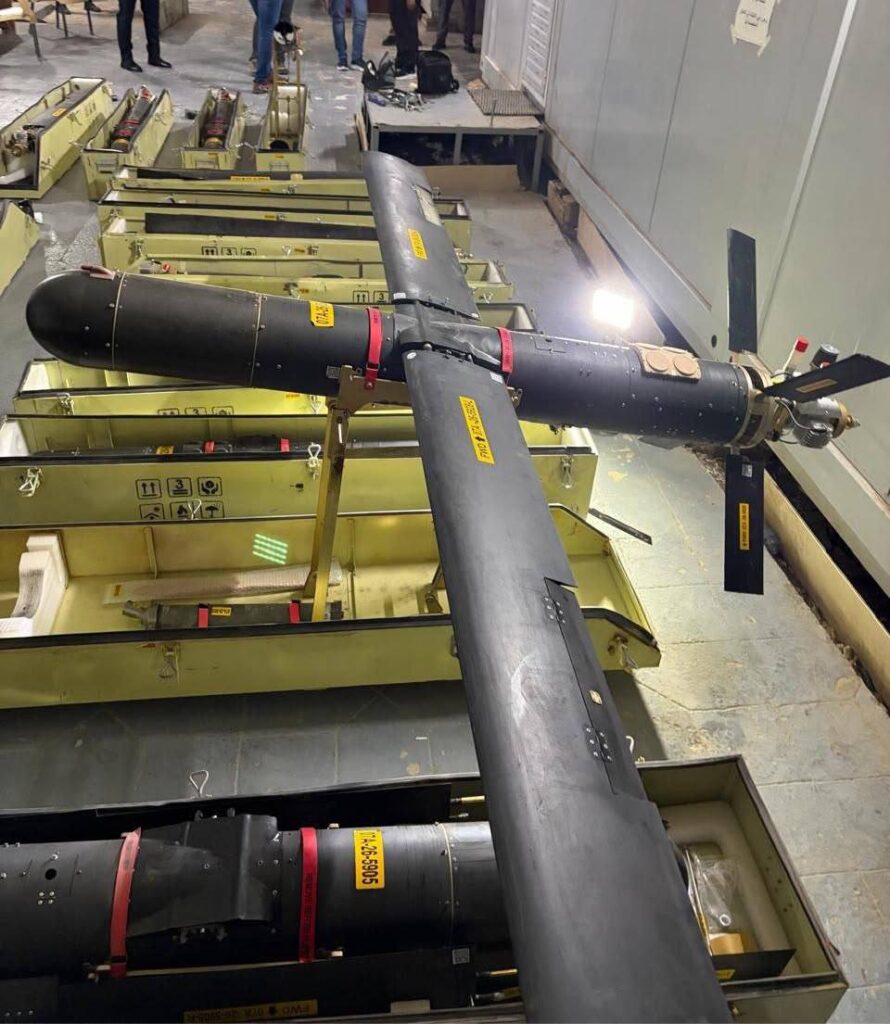
An Iranian Shahed-107 drone. Source: Oleksandr Kovalenko

Iran is using the war in Ukraine to make its attack drones deadlier. Iran has been refining its Shahed-107 kamikaze drones based on the experience of the war in Ukraine, military analyst Oleksandr Kovalenko said.

Ukraine has become the testing ground where Iran improves the weapons, and Russia then fires at it. The Shahed-107's warheads have received additional shrapnel elements, and a detailed aerodynamic study shows a significant improvement in the drone's structure, Kovalenko explains.

The Shahed is being upgraded from combat experience

Kovalenko said the modifications come directly from how the drones perform in Ukraine. The warheads now carry extra fragmentation elements, increasing their lethality against people and soft targets, and the airframe's aerodynamics have been reworked.

A new loitering munition may be coming

Kovalenko also warned about a weapon already appearing over Ukraine. Karar drones have recently begun reaching Ukraine, not yet on a large scale, but enough to cause some confusion in identifying the weapon. He said he would not be surprised if they appear more widely soon.

He described its specifications.

"The Karar is a loitering munition, more a flying bomb than a drone by classification, equipped with a DLE 111 gasoline engine, with a range of about 300 kilometers on a 28-liter tank and a 15-kilogram warhead," Kovalenko said.

He called it an extremely cheap means of terror for the middle rear zone.

The warning is about the rear

Kovalenko's concern is where such a weapon reaches. A cheap loitering munition with a 300-kilometer range could strike areas well behind the front that have been relatively safe, extending the threat deeper into Ukraine.

Kovalenko framed the weapon's arrival in stark terms, saying that when it appears, people should simply accept what will happen, and declining even to name the region where he expects it to appear. That is his characterization: a single analyst's warning about a weapon whose wider use he anticipates but that has not yet reached scale. EP cannot independently verify Karar's specifications or its deployment.

❌