Ukraine has drawn up a list of those who build Russia's ballistic missiles and wants all of them sanctioned by its allies. Kyiv is asking partners to impose sanctions on more than 100 Russian ballistics producers, presidential sanctions commissioner Vladyslav Vlasiuk said at a press conference in Kyiv, according to Ukrinform.
The demand rests on physical evidence. An Iskander that Russia fired at Kyiv Oblast on 10 July held more than 140 foreign components, 62 of them A
Ukraine has drawn up a list of those who build Russia's ballistic missiles and wants all of them sanctioned by its allies. Kyiv is asking partners to impose sanctions on more than 100 Russian ballistics producers, presidential sanctions commissioner Vladyslav Vlasiuk said at a press conference in Kyiv, according to Ukrinform.
The demand rests on physical evidence. An Iskander that Russia fired at Kyiv Oblast on 10 July held more than 140 foreign components, 62 of them American, alongside parts from Switzerland, Germany, Taiwan, China, and Japan, Vlasiuk reported in July. Most were made recently, which means the parts are still reaching Russia. Naming the factories is Ukraine's attempt to close the gap at the production end rather than chase each shipment.
The plan runs on synchronization
The commissioner laid out several parts of the plan at the press conference. The first is getting the same producers sanctioned everywhere at once, so a firm blocked in one country cannot operate through another. He said the files were handed to partners a few weeks ago, and Ukrainian specialists expect to identify every producer on allied lists by September or October.
The plan also covers what Vlasiuk called kinetic sanctions, meaning strikes on Russian defense-industry sites. He named the Kamensky Combine, which makes components for rocket fuel, as one such target.
The critical parts are still foreign
Ukraine keeps finding Western microelectronics in identified Russian ballistics, including Iskander-M missiles and those used by the S-400 system, with parts traced to the US, Japan, Germany, Taiwan, France, Britain, and Switzerland. The most sensitive elements are the Kometa satellite navigation system and autonomous inertial guidance units, which run on American, Swiss, and French microelectronics.
Ballistics is the most demanding product for quality and precision, Vlasiuk said, which is why those two systems are the chokepoint.
Ukraine wants smaller packages, sooner
The commissioner asked partners to adopt more stringent export controls, up to licensing or banning the export of sensitive components to third countries that help Russia evade sanctions. Ukraine has also compiled a list of more than 10 critical materials, including ammonium perchlorate, aluminum powder, and tungsten, as well as the numerically controlled machine tools Russia needs to build the missiles.
The EU has already begun work on a large 22nd sanctions package. Ukraine is urging it not to wait, asking instead for an interim ballistics package in September and another in October, moving in small steps as Ukraine, Britain, and Canada already do.
The prime minister has promised to be ‘bolder’ than his predecessor in taking the UK back to the heart of Europe but Downing Street refused to provide a ‘running commentary’ on discussions
The prime minister has promised to be ‘bolder’ than his predecessor in taking the UK back to the heart of Europe but Downing Street refused to provide a ‘running commentary’ on discussions
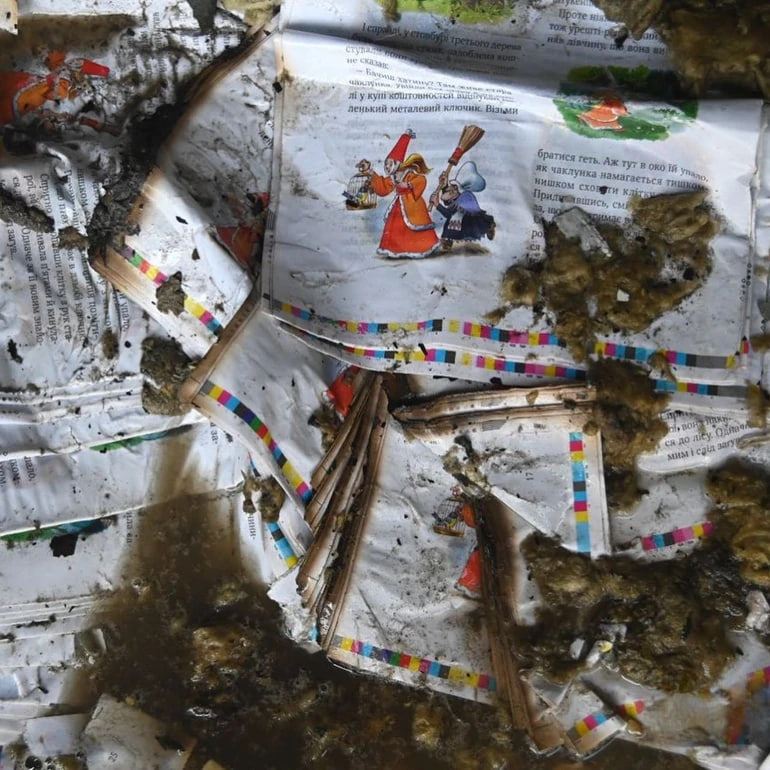
Russia has destroyed so many Ukrainian books this summer that the industry says it is fighting to survive. Russia has burned about 13 million books in three months, and the Ukrainian Publishing Association has asked President Volodymyr Zelenskyy to convene a meeting of the National Security and Defense Council on the state and recovery of the publishing industry, association head Artem Bidenko said.
The number of books lost amounts to nearly a third of the 33.21 million
Russia has destroyed so many Ukrainian books this summer that the industry says it is fighting to survive. Russia has burned about 13 million books in three months, and the Ukrainian Publishing Association has asked President Volodymyr Zelenskyy to convene a meeting of the National Security and Defense Council on the state and recovery of the publishing industry, association head Artem Bidenko said.
The number of books lost amounts to nearly a third of the 33.21 million copies Ukrainian publishers printed in all of 2025. The whole book market turns over about to $169–193 million a year, roughly the revenue of a single mid-sized shopping mall, so strikes have pushed a small, vulnerable sector toward collapse.
The strikes have become systematic
Russia has hit Ukraine's printing capacity repeatedly. On 23 May 2024, a Russian missile struck the Faktor-Druk printing house in Kharkiv, killing seven workers as they printed children's books at a plant that produced roughly a third of all books in Ukraine, and earlier strikes destroyed the capacity of Pobutelektrotekhnika, one of Ukraine's largest printers.
This summer, the attacks have turned systematic. Russian strikes destroyed the Konvi printing house, and another hit a Kharkiv warehouse storing products of the Ranok publisher and the KnyhoLend chain, destroying about 8 million books, including 620,000 textbooks, with damage from that single strike estimated at $24 million. Direct losses to the industry now stand at at least $29 million, which the association believes understates the real figure.
The damage runs across the whole market
The strikes have hit retailers and publishers alike. This year, Russian attacks damaged Kyiv's Pochaina book market, the Alpaka bookstore, a Knyharnia Ye store in Podil, and Ranok's Kyiv logistics, and harmed the publishers Nash Format, Laboratoria, and BookChef, among others.
The sector was already tiny. As of August 2026, the total floor space of all of Ukraine's brick-and-mortar bookstores only slightly exceeds the area of six football fields, according to the Ukrainian Book Institute, and the industry projects that total print runs may fall by 15% this year and sales by a quarter.
After a fire at the RNK-Ranok warehouses on 1 August, the institute estimated that total losses amounted to about 30% of Ukraine's annual book output.
Publishers say existing support does not reach them
The association says current mechanisms miss the industry's main asset. A war-risk compensation program in effect since 1 January 2026 covers real estate but not goods in circulation or finished products. For publishers, this means the book print runs that are among their principal assets. The program only compensates property destroyed after a firm joined the program in higher-risk areas.
The association asked for measures it says need no billions and face no legal obstacle:
war-risk insurance extended to book stocks
affordable loans to rebuild printing capacity
restored state purchasing of books for libraries, suspended in 2022.
For 2026, only $627,000 was allocated to fund up to 75 books, while libraries in only about 21% of communities are refreshed annually, and Russian-language books still account for more than 40% of library holdings.
If Ukrainian publishers disappear, the association warns, foreign companies focused on commerce could take their place, ending the support for Ukrainian authors and identity that domestic publishing provides.
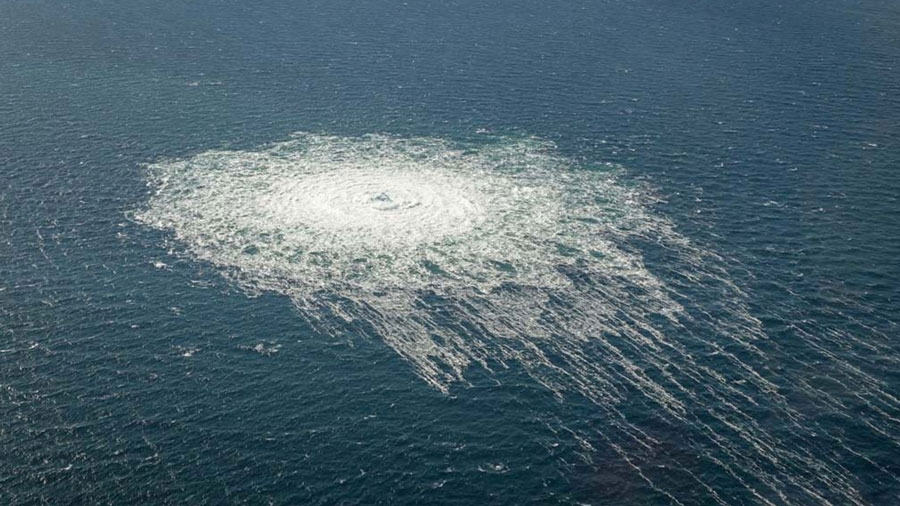
Ukraine has opened its own criminal investigation into the 2022 destruction of the Nord Stream gas pipelines, months after Germany charged a Ukrainian over the blasts, Suspilne reported. Prosecutors in Kyiv registered the case on war-crimes grounds and say they will test whether Russia staged the sabotage to discredit Ukraine. Serhii Kuznietsov is due to stand trial in Germany in October.
The undersea link was built to carry Russian gas around Ukraine and tie Europe mor
Ukraine has opened its own criminal investigation into the 2022 destruction of the Nord Stream gas pipelines, months after Germany charged a Ukrainian over the blasts, Suspilne reported. Prosecutors in Kyiv registered the case on war-crimes grounds and say they will test whether Russia staged the sabotage to discredit Ukraine. Serhii Kuznietsov is due to stand trial in Germany in October.
The undersea link was built to carry Russian gas around Ukraine and tie Europe more tightly to Moscow, a dependence Europe scrambled to shed after Russia's 2022 invasion.
Kyiv will test a Russian false-flag version
Ukraine's Security Service, under the Prosecutor General's Office, opened proceedings on 9 July under the article on violations of the laws and customs of war. Kuznietsov's Ukrainian lawyer, Mykola Katerynchuk, told Suspilne about the case.
The Prosecutor General's Office confirmed it is supervising a probe into the "possible commission in September 2022, amid the international armed conflict between Russia and Ukraine, by citizens of Ukraine, of actions connected to the undermining" of both pipelines in the Baltic Sea. It said the case was registered after the "independent discovery in the media" that Germany had charged a Ukrainian citizen.
Given Russia's use of hybrid methods, investigators will also examine whether Russians organized the explosions as a "false flag" operation, using Ukrainian citizens or imitating their participation to discredit Ukraine.
The office said it used the laws-and-customs-of-war charge because it matches the qualification chosen by Germany's Federal Prosecutor's Office.
Explore further
Russia laid Nord Stream to bypass Ukraine amid preparations for war. Four years after it exploded, Kyiv says it had nothing to do with blasts
The case against Serhii Kuznietsov
The pipelines exploded on 26 September 2022. On 8 August 2025, Germany's Federal Court of Justice issued an arrest warrant for Kuznietsov, alleging he led a group of six who mined the pipelines and detonated them remotely.
Italian police arrested him on 21 August 2025, and Italy's Supreme Court later confirmed his extradition to Germany. A Polish court, by contrast, refused a German request for another Ukrainian suspect, Volodymyr Zhuravlov.
On 2 July 2026, Germany's Federal Prosecutor's Office published its charges — an attack on civilian objects, causing an explosion, and destroying structures. Kuznietsov denies guilt.
Russia has threatened Britain with “consequences” over reports that Ukrainian forces used drones manufactured by UK companies to carry out strikes inside Russia.
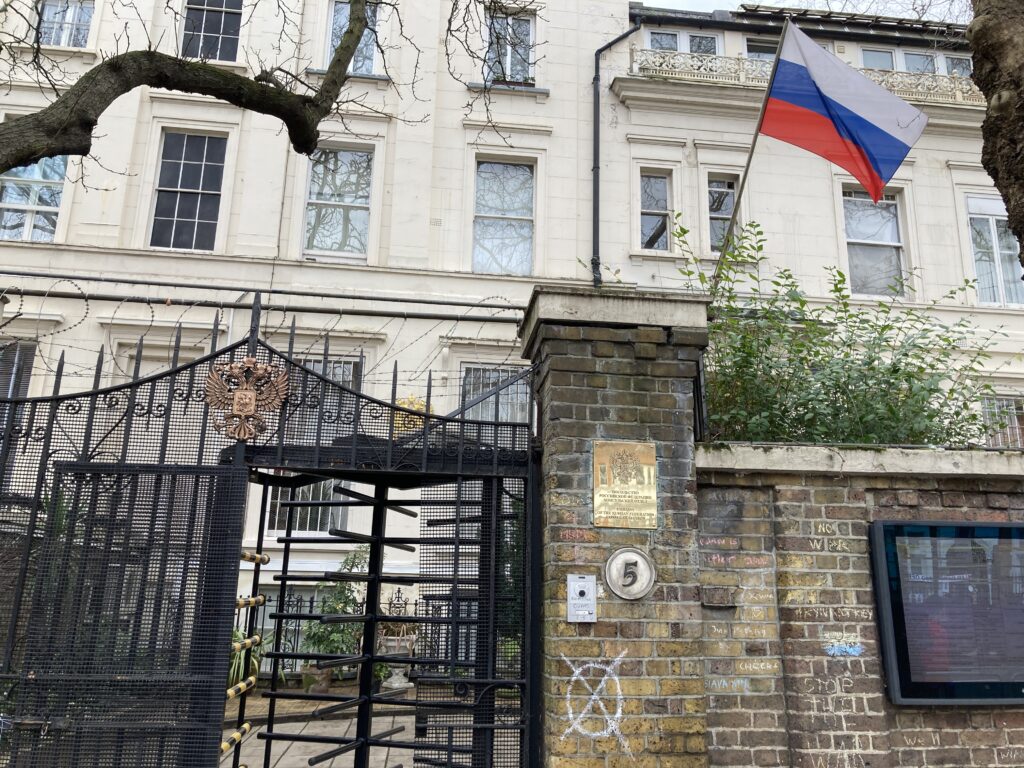
The Russian Embassy in London accused the UK of deliberately escalating the war by supporting Ukraine’s long-range strike campaign, saying Britain was seeking to “contain Russia and inflict maximum damage on it by proxy.” It warned that the deeper Britain becomes involved, “the higher the price it will pay.”
Russia has threatened Britain with “consequences” over reports that Ukrainian forces used drones manufactured by UK companies to carry out strikes inside Russia.
The Russian Embassy in London accused the UK of deliberately escalating the war by supporting Ukraine’s long-range strike campaign, saying Britain was seeking to “contain Russia and inflict maximum damage on it by proxy.” It warned that the deeper Britain becomes involved, “the higher the price it will pay.”
The threat followed news that Ukrainian forces had used two British-built drone systems to strike targets inside Russia for the first time. The Sunday Times, citing Ukrainian military sources, reported that the drones had been used against targets including oil refineries in Volgograd and Yaroslavl over the past six months.
Moscow warns Britain of “consequences”
The Russian Embassy said in a statement that the reported use of British-made drones “confirms that London is deliberately opting for an escalation of the Ukraine crisis.”
It warned that British actions would “inevitably carry consequences for which it will have to answer,” without specifying what form those consequences could take.
The warning comes as Ukraine has significantly expanded its long-range strike campaign against Russian military and energy targets. Kyiv has increasingly used large drone swarms to hit targets deep inside Russia, seeking to disrupt military production, logistics, and energy revenues while forcing Moscow to spread its air defenses across a much larger area.
Burnham says UK will continue backing Ukraine
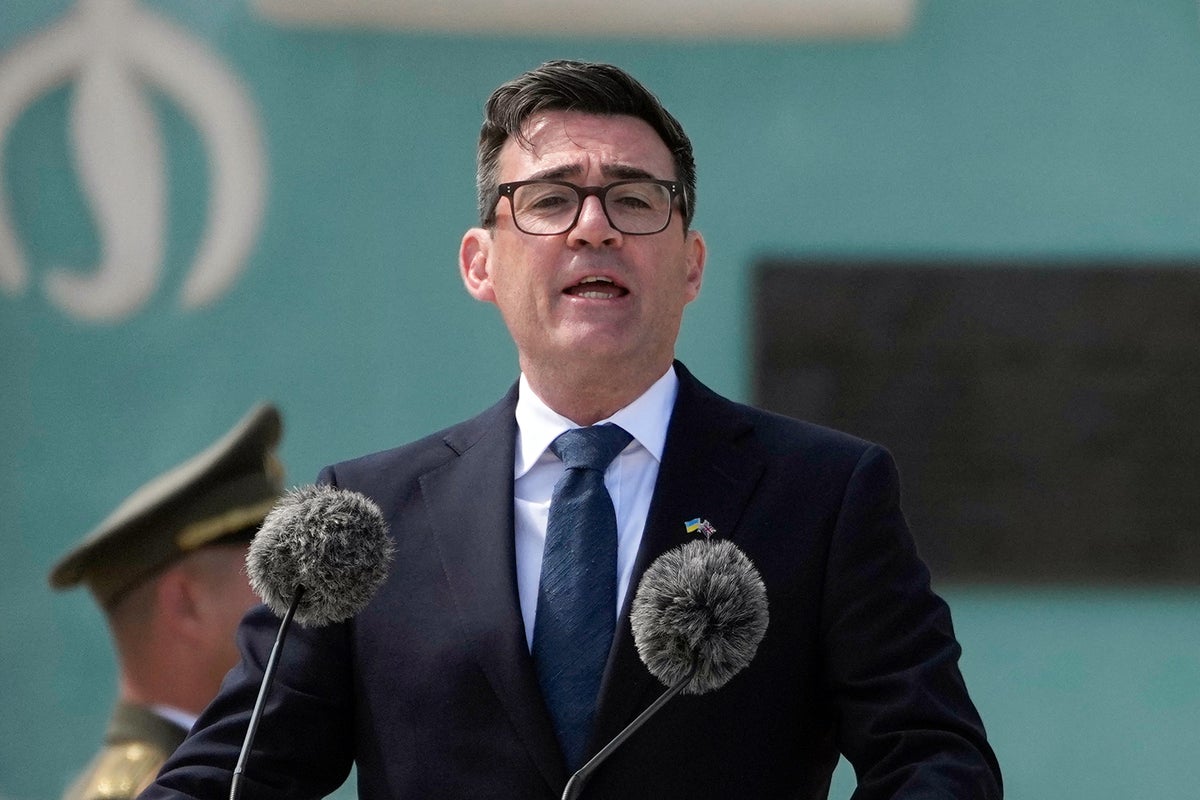
UK Prime Minister Andy Burnham rejected Moscow’s warning, saying Britain would continue supporting Ukraine despite Russian threats, The Independent reported on Tuesday.
“This is the UK doing what it has long said it would do, which is to support Ukraine 100 per cent against this illegal war led by Vladimir Putin,” Burnham said during a visit to Wolverhampton.
“We are providing support so that Ukraine can defend itself,” he said, adding: “We are not fair weather friends. We will be there in Ukraine’s hour of need, and that won’t change.”
UK Work and Pensions Minister Lilian Greenwood similarly said Britain’s resolve to support Ukraine remained “completely steadfast” and that the country would continue providing the military equipment Kyiv needs.
The UK Ministry of Defence also said Russia should have “no doubt” about the government's resolve to oppose Russian aggression in Ukraine and against Britain and its allies.
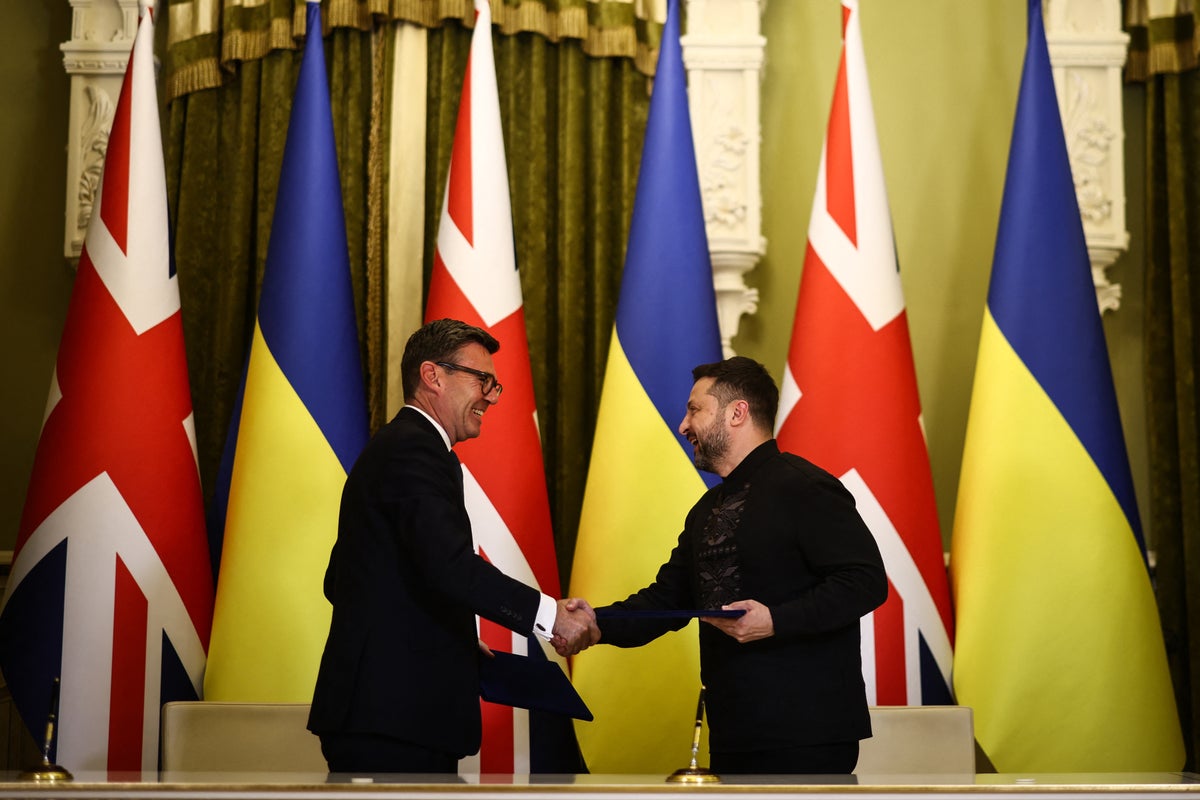
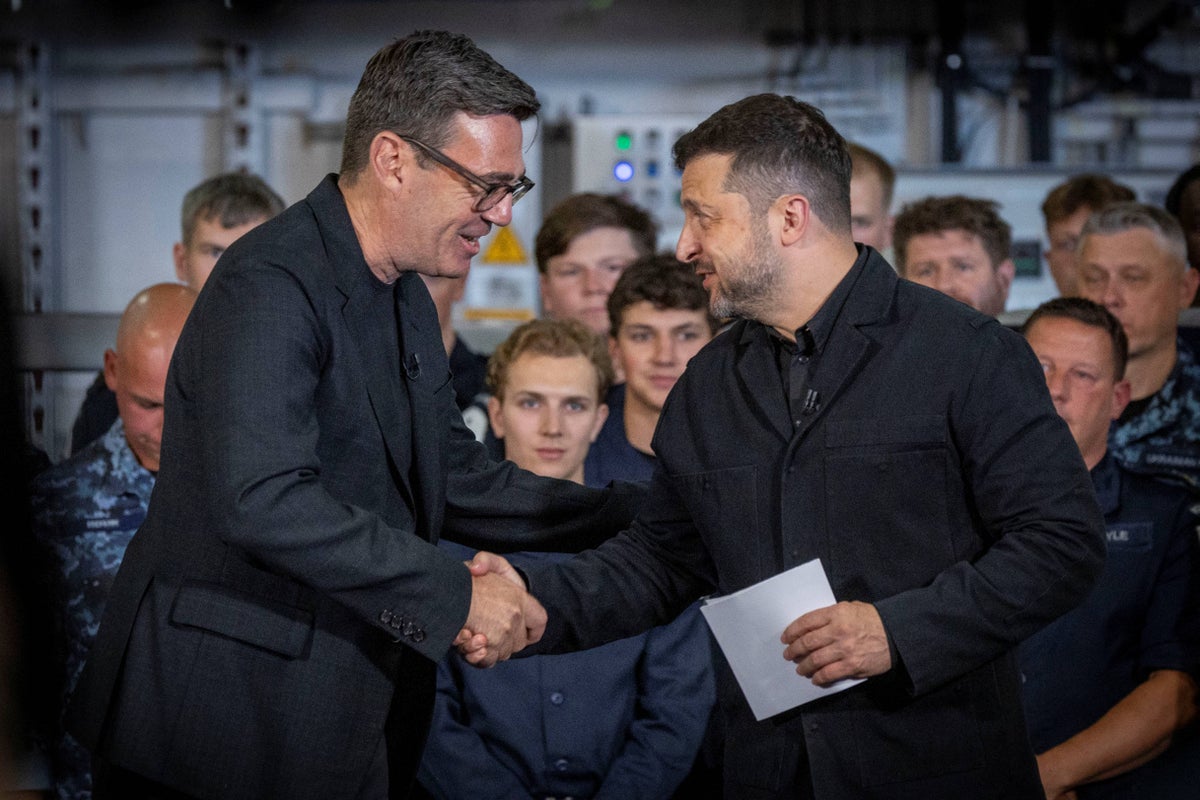
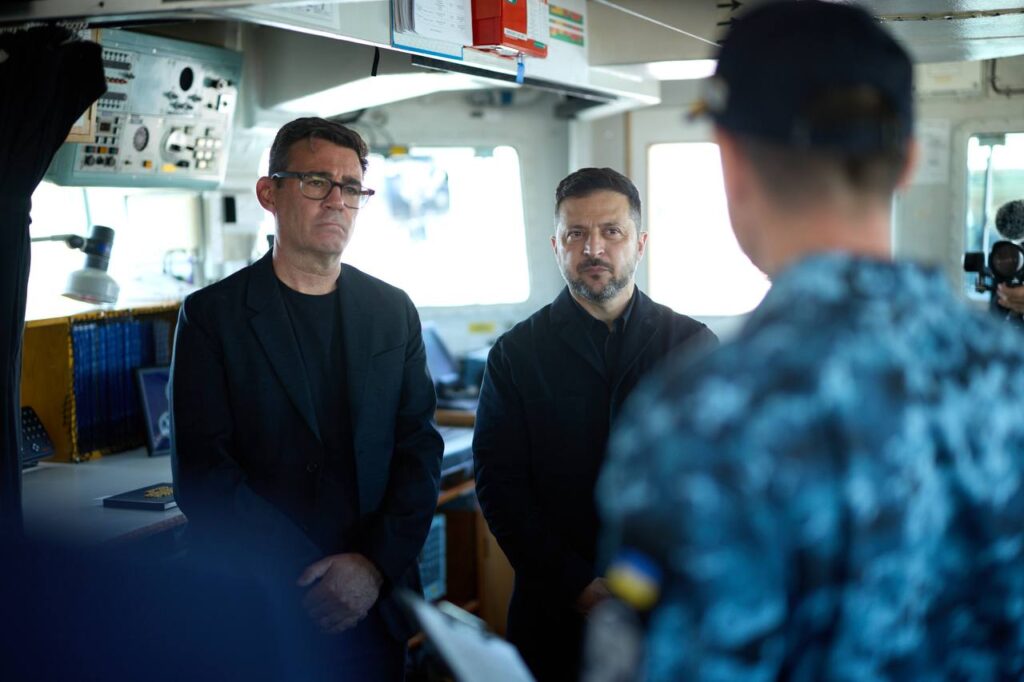
UK Prime Minister Andy Burnham and Ukrainian President Volodymyr Zelenskyy aboard the Ukrainian Navy’s Cherkasy minehunter at Portsmouth Naval Base, UK, 27 July 2026. Photo: Zelenskyy
British drones expand Ukraine’s deep-strike capabilities
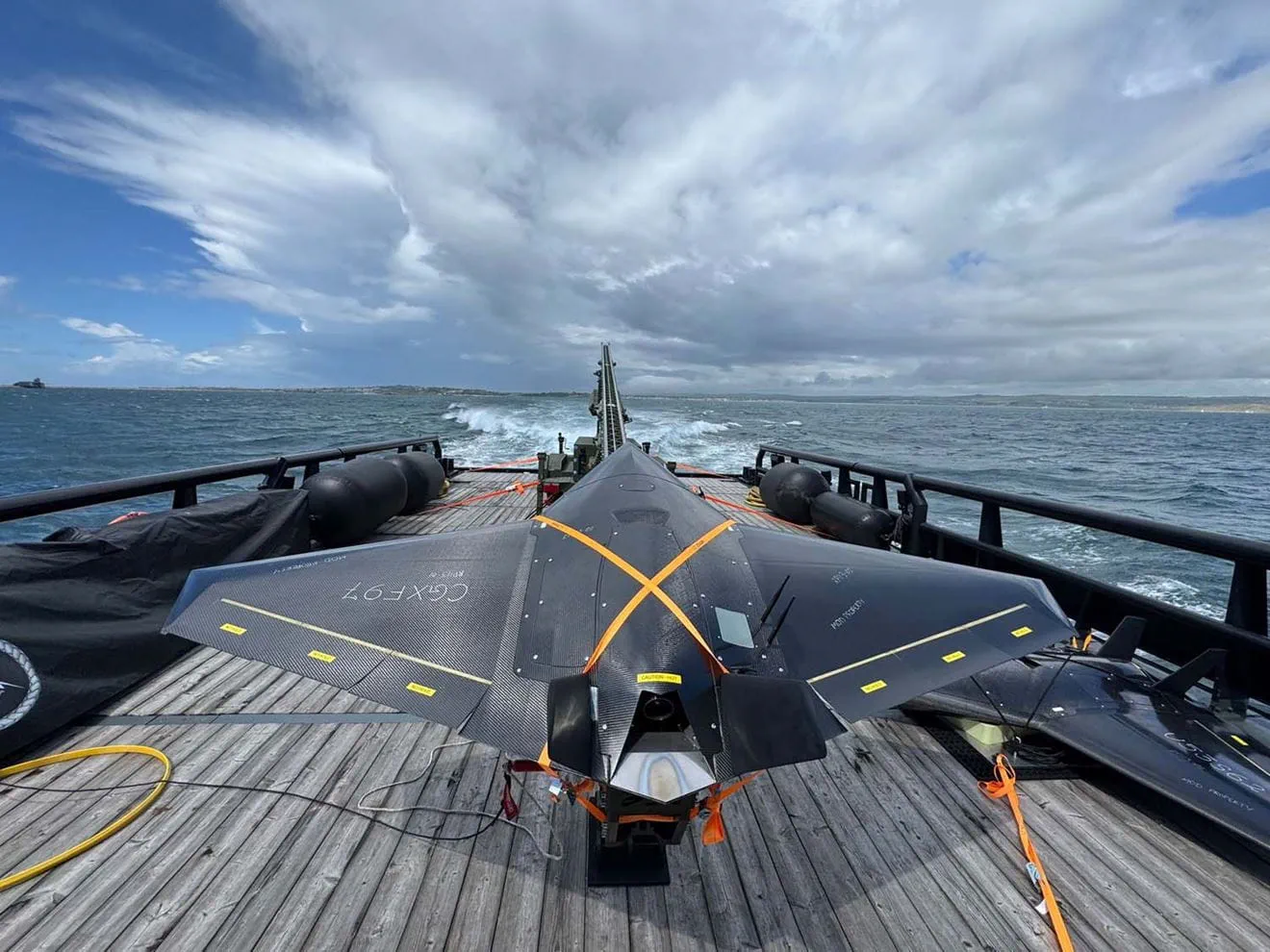
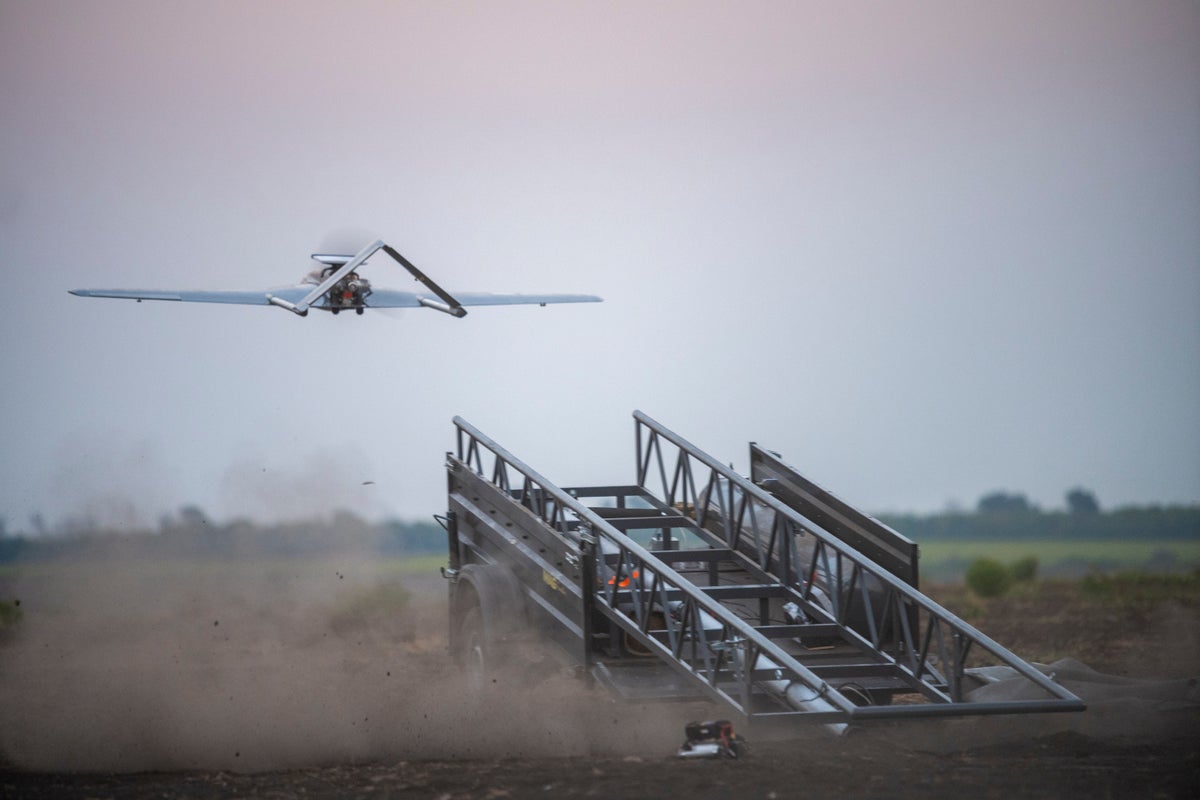
According to The Sunday Times, one of the British systems used by Ukraine is the Nyan, a jet-powered one-way attack drone produced by BAE Systems subsidiary Callen-Lenz, with a reported range of more than 150 miles.
The second system has a reported range exceeding 600 miles, although its manufacturer was not identified for security reasons. The drones provide Ukraine with additional long-range strike capacity that can be produced and deployed in larger numbers than more expensive Western cruise missiles.
Explore further
British drones hit Russia for first time in Ukraine’s deep-strike campaign – The Sunday Times
The reported deployment marks a further expansion of UK military support for Ukraine as Kyiv increasingly takes the fight to Russian military and energy infrastructure inside Russia.
At the G7 summit in Évian-les-Bains, France, in June, the leaders of the world's most powerful states again declared their intent to help Ukraine and to pressure Russia economically: "We commit to increase the pressure on the Russian war economy. In this context, we will strengthen our sanctions." But while G7 governments negotiate another round of political statements, the assembly lines of Russia's military-industrial complex keep turning out missiles and drones—from
At the G7 summit in Évian-les-Bains, France, in June, the leaders of the world's most powerful states again declared their intent to help Ukraine and to pressure Russia economically: "We commit to increase the pressure on the Russian war economy. In this context, we will strengthen our sanctions." But while G7 governments negotiate another round of political statements, the assembly lines of Russia's military-industrial complex keep turning out missiles and drones—from Western components and electronics.
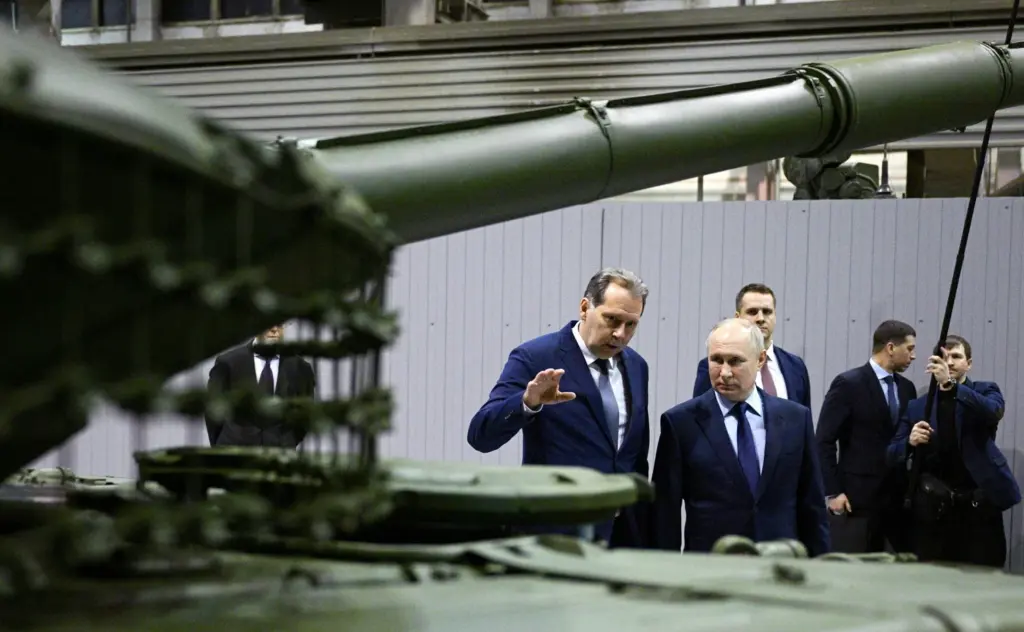
A new analysis of Rostec—the giant of Russia's military-industrial complex—by the Independent Anti-Corruption Commission (NAKO) shows that the strategy of targeted strikes has reached a dead end. To make restrictive measures more effective, allies should consider wider use of export-control mechanisms against structures tied to Russia's defense-industrial complex. In many cases, export control can be a faster and more flexible instrument than full sanctions regimes.
Sanctions against Rostec
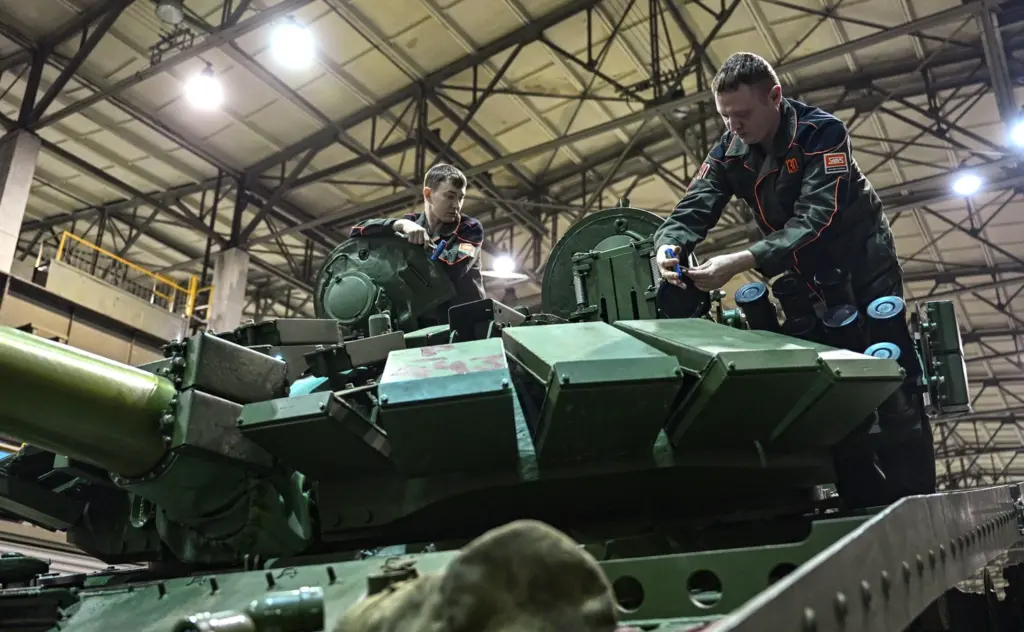
Workers assemble a T-72B3-series tank at Uralvagonzavod in Nizhny Tagil, part of Russia’s state-owned Rostec defense conglomerate, on 15 February 2024. Credit: Ramil Sitdikov/RIA Novosti via Kremlin.ru
What is Rostec?
Russia's largest defense and industrial holding, 100% state-owned
Its enterprises produce 80% of military equipment Russia uses in its war on Ukraine, Russian officials say
Accounts for about half of Russia's defense procurement
Employs 500,000–700,000 people at roughly 700–800 enterprises
Hitting the tip of the iceberg is not enough. Sanctions have been placed on Rostec itself, on its best-known holdings, and on individual plants caught manufacturing weapons. But this giant has many branches, visible and hidden, and the sanctioning process itself takes years. The result is that sanctions policy often looks ineffective—and it is easy to see why.
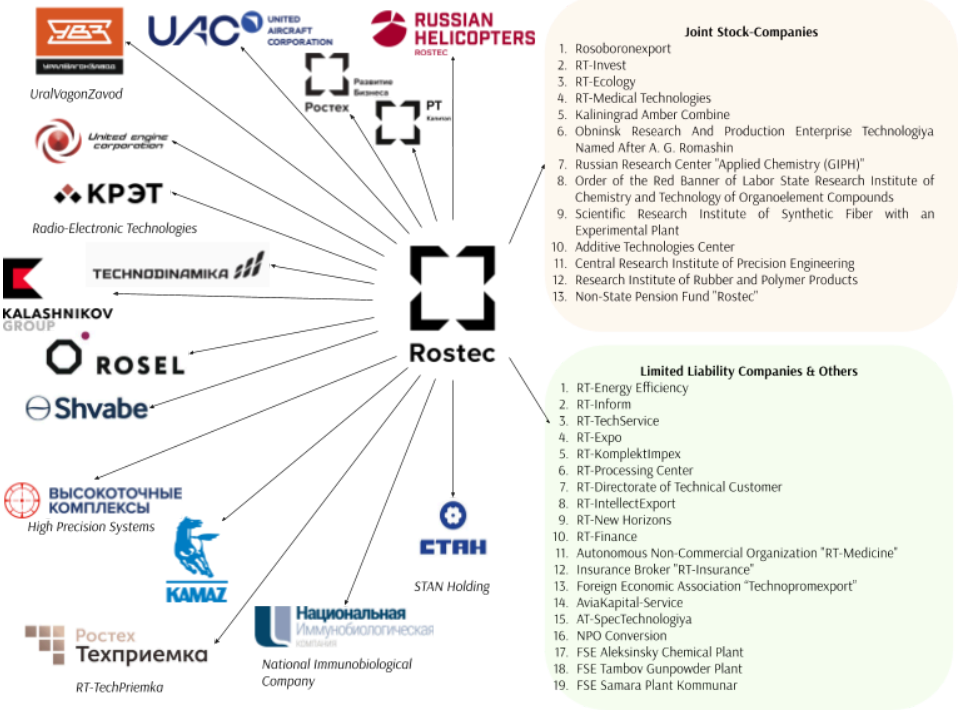
NAKO's analysts traced and identified 482 key legal entities within Rostec's structure. This is the most complete map of the conglomerate that currently exists, and even it covers only part of the concern. A vast network of subsidiaries operates in total secrecy: they hide financial reporting, classify tenders, and mask beneficial owners behind chains of fictitious founders.
Rostec subsidiaries identified by NAKO. Screenshot from NAKO report
And while the West spends months assembling evidence against a single plant, Rostec quickly spins up new "clean" shell firms or brings new enterprises and factories under its control.
Ukraine has imposed sanctions on 72% of the identified Rostec enterprises. The United States covers 45%. And here it gets interesting: the European Union has managed to sanction only 23% of the conglomerate's companies. The United Kingdom takes an even more "selective" approach.
The EU has sanctioned only 23% of Rostec's companies.
The analysis also found a huge asymmetry between jurisdictions. The US, the EU, the UK, Switzerland, and Asian states apply entirely different approaches. What is blocked in the EU can operate freely under British or Japanese law. And while sanctions from even one jurisdiction are a significant red flag for banks, manufacturers, and regulators, the legal gap itself lets Russia keep access to technology.
How Russia gets around the sanctions
This lack of coordination among allies, combined with a complex, multi-layered corporate structure, keeps feeding Russian weapons with Western microelectronics. A vivid example is KRET (Radio-Electronic Technologies Concern), which produces the electronic-warfare systems Russia uses to jam Ukrainian drones at the front. London has sanctioned not a single enterprise in this holding—and there are at least 40 of them.
The result? Legally, these smaller companies fall under restrictions purely by belonging to Rostec. In practice? British manufacturers or distributors are unlikely to spend time tracing the link between Rostec and one of its hundred-odd enterprises buried in corporate layers; seeing no risk, they simply sign the deal with an unremarkable plant.
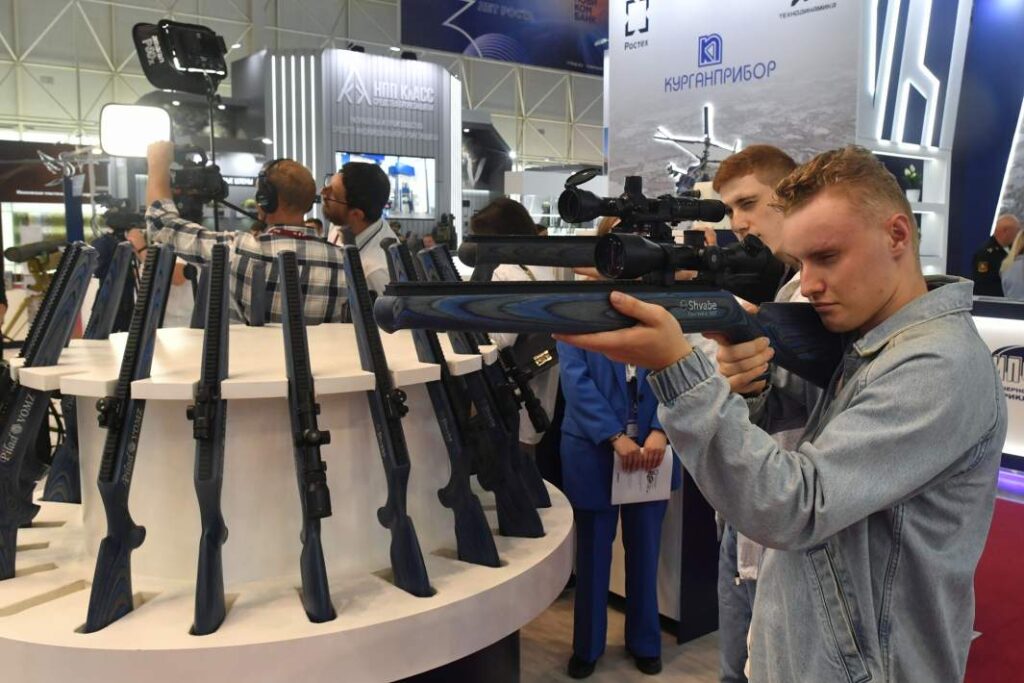
Another example is the Shvabe holding, whose sights and thermal imagers sit on Russian equipment. It ships its products to international exhibitions in the UAE without difficulty.
Small-arms sights on display at the booth of Russia’s Shvabe Holding, part of state-owned Rostec, at the MILEX-2025 arms exhibition in Minsk, Belarus. Credit: Mikhail Voskresensky/RIA Novosti
Other enterprises and whole holdings are frequent guests at exhibitions in China and India—steadily present and visible to a range of countries that could be subject to secondary sanctions. With those same countries Russia signs deals to sell another batch of helicopters, or shows off upgraded drones that have "proven their effectiveness on the battlefield against Ukraine." And it is through such countries that Western components keep reaching Russia.
This matters because Russia's import-substitution program—including in microelectronics—has never worked. Not yet, at least. Ukrainian military institutes examining captured missiles and downed drones report that Russian high-tech electronics simply are not there, sources that study the missiles have told NAKO. What they find are chips from American, European, and Japanese giants.
What is more, even these foreign components are usually nothing remarkable technologically. Yet as of today Russia still cannot produce even these—certainly not at scale—so it works the gaps in sanctions, export control, and "business as usual" with great finesse.
The next step: strengthening export control
The direction is already shifting. On 23 July 2026, the European Union adopted its 21st sanctions package—its largest batch of individual listings in four years. Fifty-six of them target Russia's military-industrial complex, 37 tied directly to long-range drones, and 51 more entities, many in China, Kyrgyzstan, Türkiye, and the United Arab Emirates, were placed under tighter export controls for feeding Russia the microelectronics and CNC machine tools its weapons depend on. It is the right target. The limit is that it still proceeds one entity at a time—and Rostec is built to outrun exactly that.
Banning the supply of certain critical goods to Kyrgyzstan—where such exports suddenly grew by more than 800%—or issuing regular financial warnings to intermediaries in the UAE and China are the right steps, and they force Russia to pay more. More than that: over four years, sanctions policy has repeatedly caused delays in the production and delivery of weapons and military equipment. But it has not stopped that production—as Ukraine keeps seeing with its own eyes during every mass strike.
The main conclusion that follows from our map of 482 key Rostec entities is the need to change the very logic of restrictive measures against Russia's defense-industrial complex.
Sanctions remain an important instrument, but they often prove slow, selective, and politically difficult to implement. A far wider use of export-control mechanisms, by contrast, could cut off access to international technology, equipment, and components faster and more effectively.
There should no longer be any need to prove separately the role of every nominal LLC somewhere near Chelyabinsk in Russian military production.
If an enterprise is part of Rostec's production, procurement, or technological chains—or those of other structures in Russia's defense-industrial complex—it should automatically become a candidate for export-restriction lists.
This approach would make it substantially harder for Russian defense enterprises to reach Western technology and would narrow the room to evade restrictions through subsidiaries, intermediaries, or formally civilian structures. Western banks, exporters, and compliance teams should not have to identify each new shell firm on their own. Instead, they should get a clear signal: involvement in the production or supply chains of Russia's military-industrial complex means elevated regulatory risk and the need to apply restrictive measures.
Economic pressure on Russia's defense sector must stop being fragmentary and reactive. It has to become systematic, predictable, and capable of outpacing the adaptive mechanisms of Russia's war economy.
Viktoriia Vyshnivska is a Senior Researcher at the Independent Anti-Corruption Commission (NAKO). Her work mainly focuses on supply chains delivering critical components to Russia, the use of foreign technologies in weapons production, and the impact of sanctions regimes on the defence capabilities of aggressor states. Her additional focus also includes Ukraine’s state-owned defense industry and democratic resilience.
Kateryna Biesiedina is Communications Manager at the Independent Anti-Corruption Commission (NAKO), specialising in strategic communications and media with a professional background in journalism and television production.
A combat drone exploded near a village on Moldova's border with Ukraine on 9 August, sparking a grass fire but hurting no one, Moldovan police said. Investigators recovered fragments and will examine them to establish the drone's type and origin. It was one of two blasts the war pushed across Europe's borders in two days, with Bulgaria fielding a separate drone explosion and summoning Ukraine's ambassador.
Russia's mass strikes keep driving drones and missiles across Uk
A combat drone exploded near a village on Moldova's border with Ukraine on 9 August, sparking a grass fire but hurting no one, Moldovan police said. Investigators recovered fragments and will examine them to establish the drone's type and origin. It was one of two blasts the war pushed across Europe's borders in two days, with Bulgaria fielding a separate drone explosion and summoning Ukraine's ambassador.
Russia's mass strikes keep driving drones and missiles across Ukraine's borders into EU and NATO states, and Russian jamming can knock Ukraine's own drones off course into the same skies—so every crash starts with one question: whose weapon was it.
A drone down in a Moldovan field
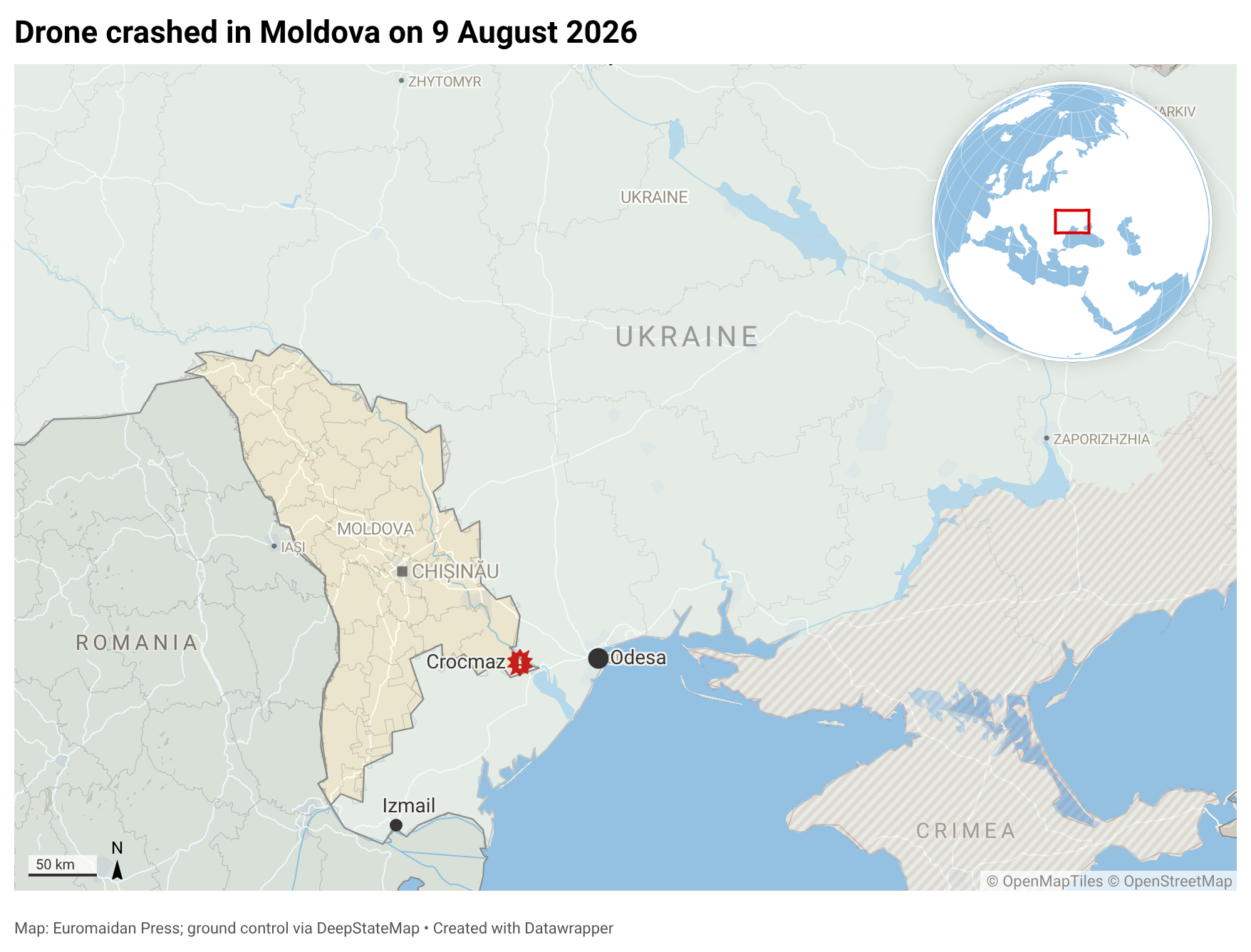
The blast rang out around 13:20 near Crocmaz, in Moldova's Ștefan Vodă district in the southeast, and set dry grass alight, NewsMaker reported. The village lies on the Dniester, upstream of Ukraine's Dniester estuary.
The field near Crocmaz, in Moldova's Ștefan Vodă district, where a drone exploded and set dry grass alight, 9 August 2026. Photo: Consiliul Raional Ștefan Vodă/Facebook
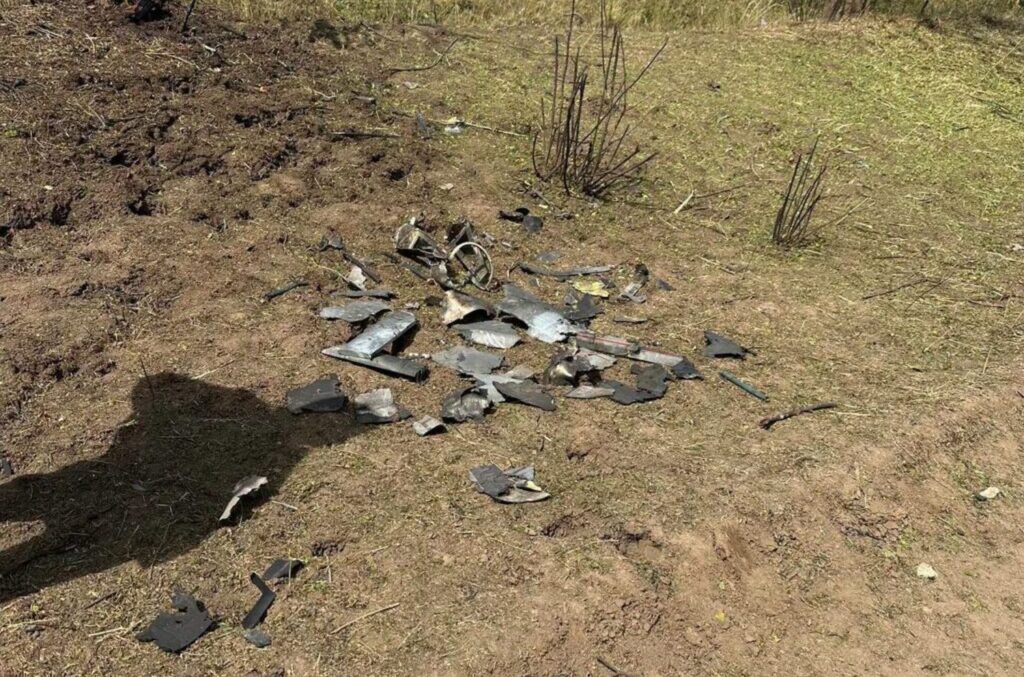
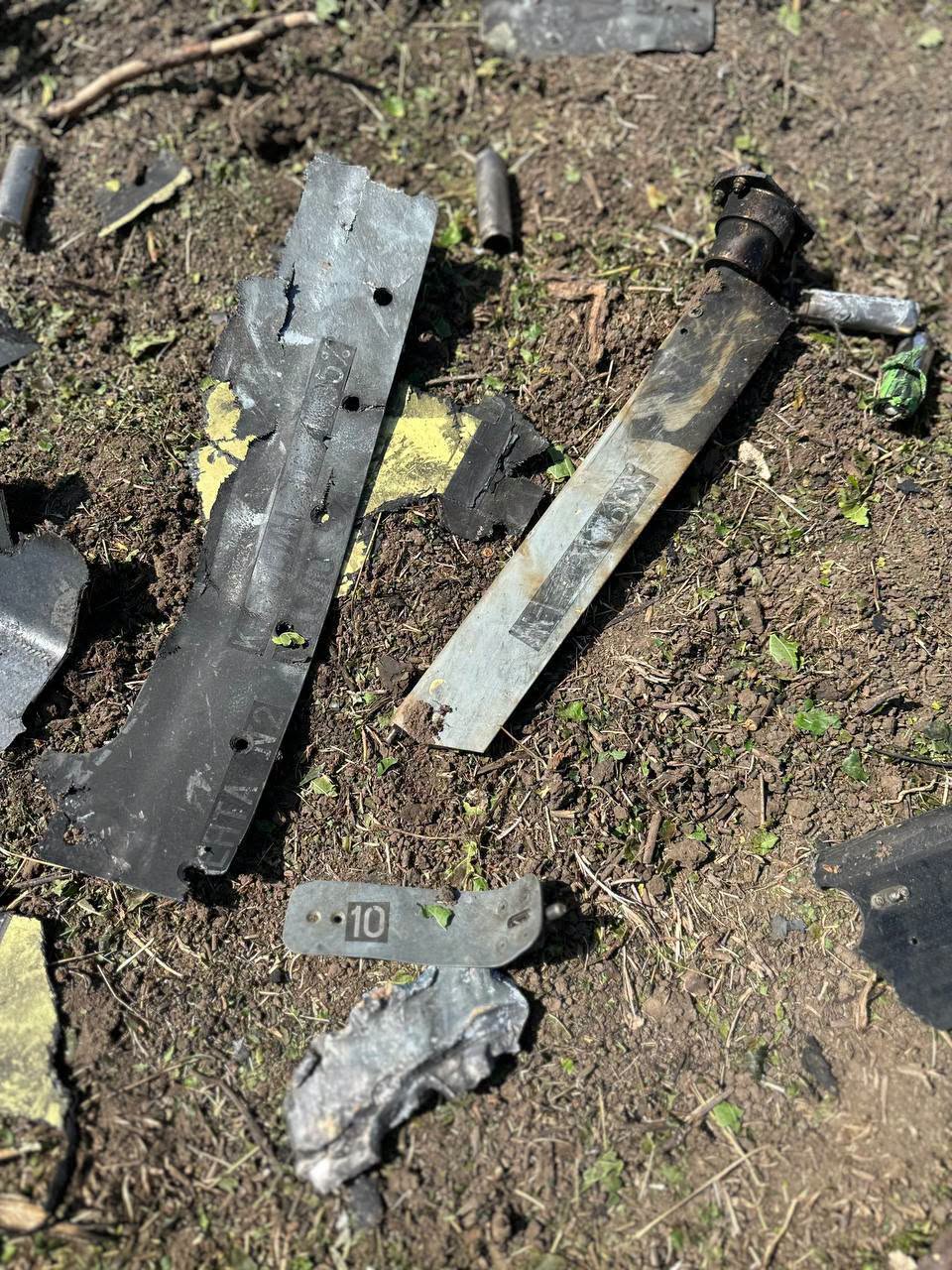
Firefighters and patrols confirmed no civilians were hurt and no homes were damaged. Police found fragments that they preliminarily identified as parts of a combat drone. Those pieces will undergo a ballistic-technical examination to determine the drone's exact type, its affiliation, and how it fell. Crocmaz sits right on the Ukrainian border. The district council posted photos of the object and told residents to avoid the cordoned area and report any fragments to the 112 line.
Debris from a drone that exploded near Crocmaz in Moldova's Ștefan Vodă district, close to the Ukraine border, 9 August 2026. Photo: Consiliul Raional Ștefan Vodă/Facebook
The blast came amid an assault on Odesa
The drone fell hours after Russia hit Odesa with missiles and drones overnight on 9 August. Much of Moldova's eastern border runs along Odesa Oblast, so wreckage from the war often drifts across. Russian drones have crashed on Moldovan soil during such attacks before. Whether this one was Russian or something else is for the examination to show.
A parallel case in Bulgaria
Also today, Bulgaria's Foreign Ministry summoned Ukraine's ambassador, Olesia Ilashchuk, over a drone that exploded on 8 August near the Romanian border, by a Trans-Balkan gas pipeline compressor station, Bulgarian National Television reported. Its defense bloc said the drone was likely a Ukrainian decoy, with no sign it was launched on purpose.
Explore further
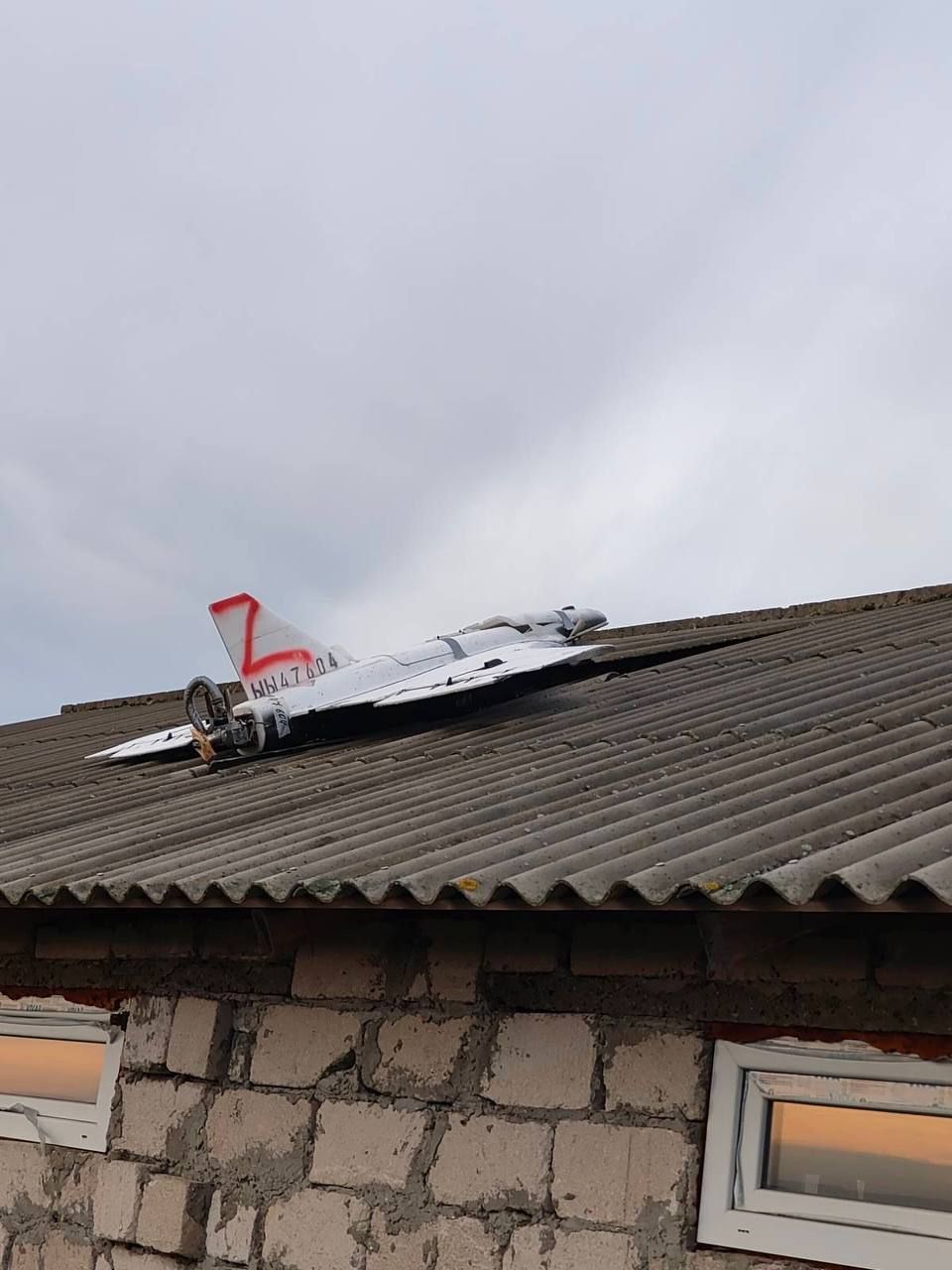
Russia’s drones violated the airspace of Moldova and Romania — one fell straight onto a civilian roof (MAP)
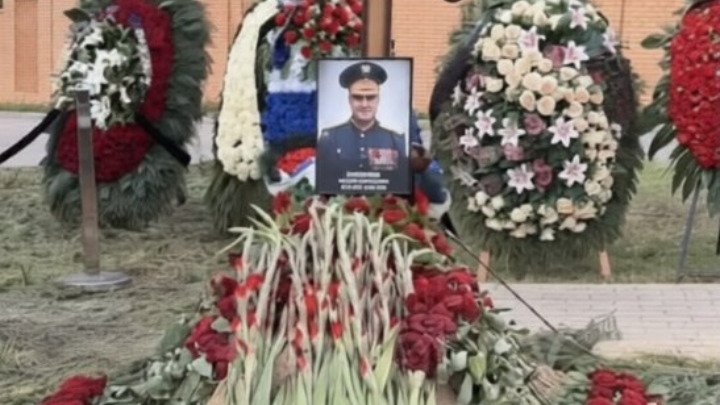
Major General Valery Plokhotnyuk was buried in Moscow on 5 August 2026, four days after he reportedly died in a bombing at an Italian restaurant. Security was heavy at the funeral. The ceremony at Troyekurovskoye Cemetery reportedly took place behind roadblocks, metal detectors, and buses carrying Russian National Guard troops.
If he died in the blast, Plokhotnyuk would be at least the fourth senior Russian general killed near Moscow since December 2024. The earlier tar
Major General Valery Plokhotnyuk was buried in Moscow on 5 August 2026, four days after he reportedly died in a bombing at an Italian restaurant. Security was heavy at the funeral. The ceremony at Troyekurovskoye Cemetery reportedly took place behind roadblocks, metal detectors, and buses carrying Russian National Guard troops.
If he died in the blast, Plokhotnyuk would be at least the fourth senior Russian general killed near Moscow since December 2024. The earlier targets held senior roles in Russia’s war against Ukraine. Moscow has blamed Kyiv for others without presenting public proof. Unlike the three earlier generals, however, independent reporting has not established that Plokhotnyuk himself was the intended target. Responsibility for several of the killings remains disputed or unconfirmed.
The Russian news site Mediazona verified through state registries that Plokhotnyuk died on 1 August 2026, the day of the Moscow bombing. His business partner later confirmed the death after speaking with the general’s father.
Russian officials have not confirmed that Plokhotnyuk died in the blast.
Plokhotnyuk previously commanded Russian troops in Transnistria, a Russian-backed breakaway strip of Moldova. In 2022, he was serving as chief of staff of Russia's 49th Combined Arms Army. Its units attacked southern Ukraine through Kherson and Zaporizhzhia oblasts.
A bomb was brought to the restaurant disguised as a gift
The device that killed Plokhotnyuk exploded at the entrance to Moscow’s Balzi Rossi restaurant on the evening of 1 August. Five people died, and at least 19 suffered injuries.
A woman tried to carry the device inside as a gift but was stopped by a security guard, according to accounts compiled by Sistema, RFE/RL’s Russian investigative unit. The bomb then reportedly detonated remotely.
The woman and the guard both died. Investigators have not said whether she knew that the package contained explosives.
The scene outside Balzi Rossi after the explosion. Source: Baza
Sistema found several signs that the closed restaurant was hosting a belated 55th-birthday celebration for Colonel General Aleksandr Chaiko, appointed head of Russia’s Aerospace Forces in May 2026.
Footage taken before the blast reportedly showed a backdrop reading “Alexander 55.” State registries confirmed that Chaiko’s son-in-law, Daniil Peredriy, died that day. Chaiko’s daughter, Maria, and another relative reportedly suffered injuries.
The presence of several Chaiko relatives indicates that the event was held for him. However, independent reporting has not established whether he was inside when the bomb exploded. Ukraine has not claimed responsibility.
The EU sanctioned Chaiko in March 2026. It identified him as the senior Russian commander on the ground when Russian forces entered Bucha in February 2022. Hundreds of civilians were killed during Russia’s occupation of the Kyiv suburb.
Far from the front, Russia’s generals keep coming under attack
Before Plokhotnyuk’s reported death, bombings had killed at least three senior Russian generals in Moscow and its surrounding region since December 2024.
A bomb hidden in an electric scooter killed chemical warfare commander Igor Kirillov outside his apartment. An SBU source told Reuters that Ukraine organized the operation.
A car bomb later killed General Staff officer Yaroslav Moskalyk near Moscow. Zelenskyy subsequently mentioned an intelligence briefing on the “elimination” of Russian commanders without naming Moskalyk. Kyiv never formally claimed the bombing.
Another vehicle blast killed military planner Fanil Sarvarov in December 2025. Russian investigators considered possible Ukrainian involvement, while Kyiv remained silent.
No public evidence has established who organized the Balzi Rossi bombing.
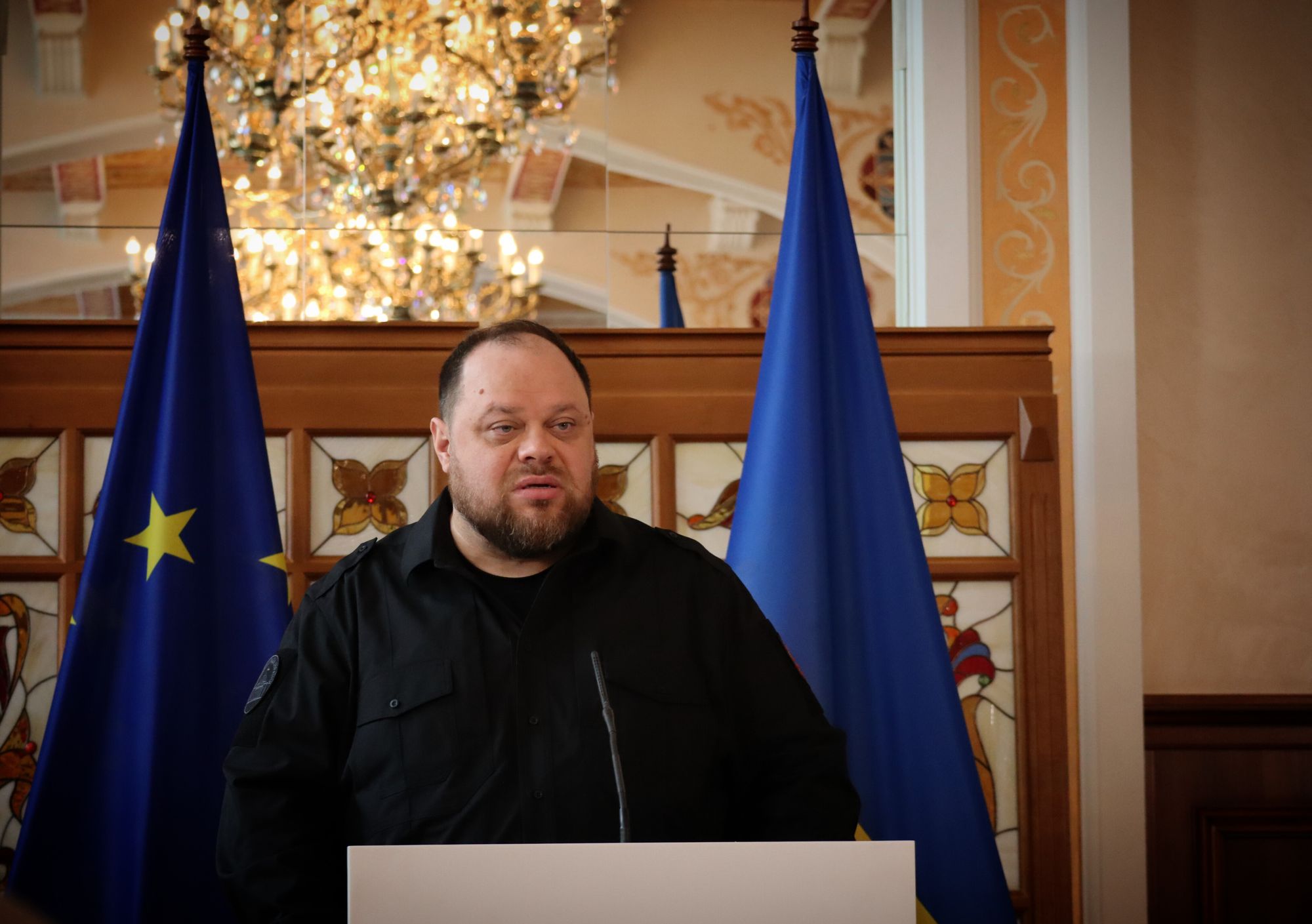
Chairman of the Verkhovna Rada Ruslan Stefanchuk said on June 28 that Ukraine's parliament is preparing a draft bill to hold elections following the end of the martial law period enacted as a result of the war. "We are working on this draft law, because for the next elections, a new special draft law is needed that will regulate the so-called post-war elections," Stefanchuk said on Ukraine's marathon TV broadcast. "We are preparing various basic scenarios so that people can exercise their fundam
Chairman of the Verkhovna Rada Ruslan Stefanchuk said on June 28 that Ukraine's parliament is preparing a draft bill to hold elections following the end of the martial law period enacted as a result of the war.
"We are working on this draft law, because for the next elections, a new special draft law is needed that will regulate the so-called post-war elections," Stefanchuk said on Ukraine's marathon TV broadcast.
"We are preparing various basic scenarios so that people can exercise their fundamental constitutional right to vote. And this must take place in Ukraine. And I believe we will be able to find the right legislative compromise," he added.
The reason for separate legislation on a post-war election, Stefanchuk previously said, was due to the fact that Ukraine's Constitution does not not provide clarity on the details of holding elections following the end of a martial law period.
No details on the bill or timeline for implementation were provided.
Russia's full-scale invasion and the subsequent declaration of martial law in Ukraine meant elections have been impossible to hold, and President Volodymyr Zelensky's term has been extended, something constitutional lawyers say is allowed under Ukrainian law.
Despite criticism, Ukraine's parliament, the Verkhovna Rada, passed a resolution on Feb. 25 to hold elections after "a comprehensive, just, and sustainable peace is secured" in the country.
While polling shows a vast majority of Ukrainian citizens do not support holding elections before a full peace deal, the lack of elections has stirred some controversy with Ukraine's allies.
At the start of his second term in office, U.S. President Donald Trump urged Ukraine to hold elections — something that Ukraine has thus far refused to do citing the difficulties of holding elections amid active warfare, as well as security implications.
Zelensky has previously said he is willing to step down in exchange for a peace agreement.
Russian propaganda has widely used the issue of elections in Ukraine to discredit the Ukrainian leadership. Mocow has repeatedly claimed that Zelensky is no longer a legitimate president, as his first term was originally meant to end on May 20, 2024.

 Connexion