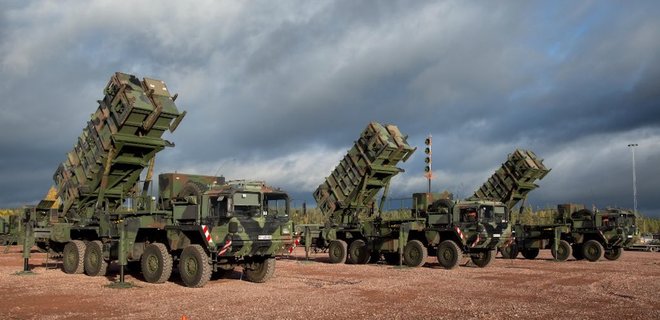
Spain will send Ukraine more Patriot interceptor missiles, Foreign Minister José Manuel Albares confirmed, according to Le Monde.
Patriot interceptors are among the few weapons Ukraine has that can stop Russian ballistic missiles. The specialized rounds are scarce worldwide, and manufacturer Raytheon cannot build them fast enough to meet demand. Each costs $3 million to $4 million.
Spain confirms the flow will grow
Albares spoke at an informal meeting of European
Spain will send Ukraine more Patriot interceptor missiles, Foreign Minister José Manuel Albares confirmed, according to Le Monde.
Patriot interceptors are among the few weapons Ukraine has that can stop Russian ballistic missiles. The specialized rounds are scarce worldwide, and manufacturer Raytheon cannot build them fast enough to meet demand. Each costs $3 million to $4 million.
Spain confirms the flow will grow
Albares spoke at an informal meeting of European Union foreign ministers in Ireland on 2 September. He reaffirmed Madrid's support as Kyiv pressed for more interceptors. "We have been doing this for a long time, and we will continue to do so," he said. He confirmed that Madrid is preparing a new batch. EU foreign policy chief Kaja Kallas said the bloc is also working with non-member states to lift Ukraine's air defenses.
Madrid and Kyiv meet in Wicklow
The confirmation followed talks with Ukrainian Foreign Minister Andrii Sybiha. They met on the sidelines of the same EU gathering, in Wicklow. Sybiha said he pressed Ukraine's urgent need to strengthen its air and ballistic missile defenses. He also thanked Spain for its solidarity. Albares reaffirmed Spain's role as a founding member of the Integrated Anti-Ballistic Missile Coalition, which ten countries launched in Paris on 13 July. The group aims to build a shared anti-ballistic capability, and its declaration calls the coalition purely defensive. Spanish military instructors are training Ukrainian technicians to maintain the systems.
What Spain has promised so far
Spain is not just giving—it is also buying. In December 2025, Madrid signed a $1.7 billion contract with US arms maker Raytheon for four new Patriot systems. It was Spain's largest Patriot order yet. The deal covers radars, launchers, command-and-control stations, and training. Spanish firm Sener builds the control system for the GEM-T interceptor those launchers fire. Spain is one of only a handful of European countries that operate Patriots.
What Spain has already sent
Spain has supplied Ukraine with Patriot missiles before. In March, Madrid pledged five older PAC-2 interceptors from an air-defense artillery regiment at Marines, near Valencia. Madrid has pledged €1 billion ($1.16 billion) in military aid for 2026. Ukraine has spent months urging partners to release interceptors from their stockpiles.
Russia has kept Kyiv and surrounding areas under near-continuous attack for four days, repeatedly sending drones and missiles toward the capital and other Ukrainian regions.
The prolonged attacks have kept air defense crews and emergency workers operating almost constantly, while disrupting civilian life across Kyiv and the surrounding oblast.
Ukrainian President Volodymyr Zelenskyy said on 30 August that Russia had launched nearly 2,000 attack drones, more than 1,60
Russia has kept Kyiv and surrounding areas under near-continuous attack for four days, repeatedly sending drones and missiles toward the capital and other Ukrainian regions.
The prolonged attacks have kept air defense crews and emergency workers operating almost constantly, while disrupting civilian life across Kyiv and the surrounding oblast.
Ukrainian President Volodymyr Zelenskyy said on 30 August that Russia had launched nearly 2,000 attack drones, more than 1,600 guided aerial bombs and 31 missiles of various types against Ukraine over the past week. The missiles included North Korean ballistic weapons.
The current attacks follow months of increasingly heavy Russian aerial strikes against Kyiv and other Ukrainian cities. Russia has ramped up its use of ballistic missiles while also expanding its use of newer jet-powered Geran drones, which have repeatedly targeted the capital and surrounding areas.
Four days of attacks
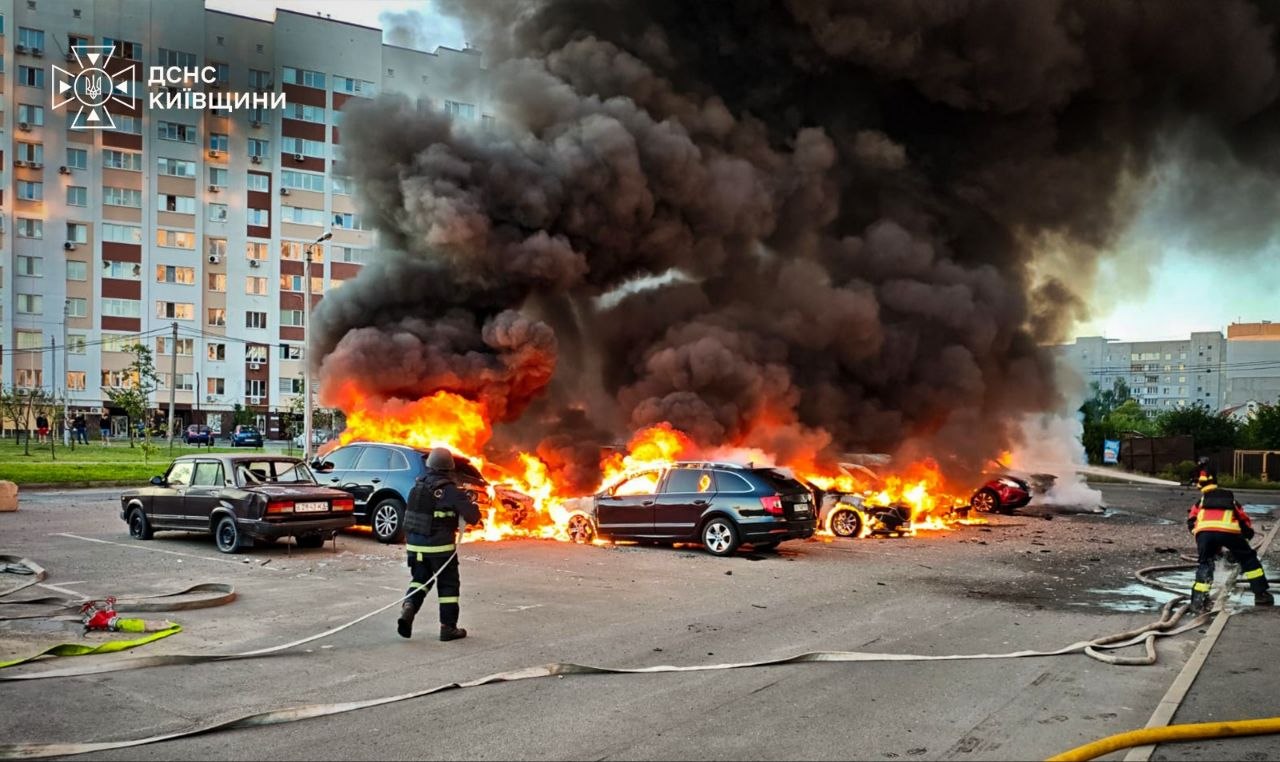
Kyiv and Kyiv Oblast have been under repeated attack since 27 August, with waves of drones arriving throughout the day and night.
The attacks have hit residential buildings, warehouses, businesses and other civilian infrastructure. They have also repeatedly forced firefighters and rescue crews to stop their work and move to safety before returning once the immediate threat passes.
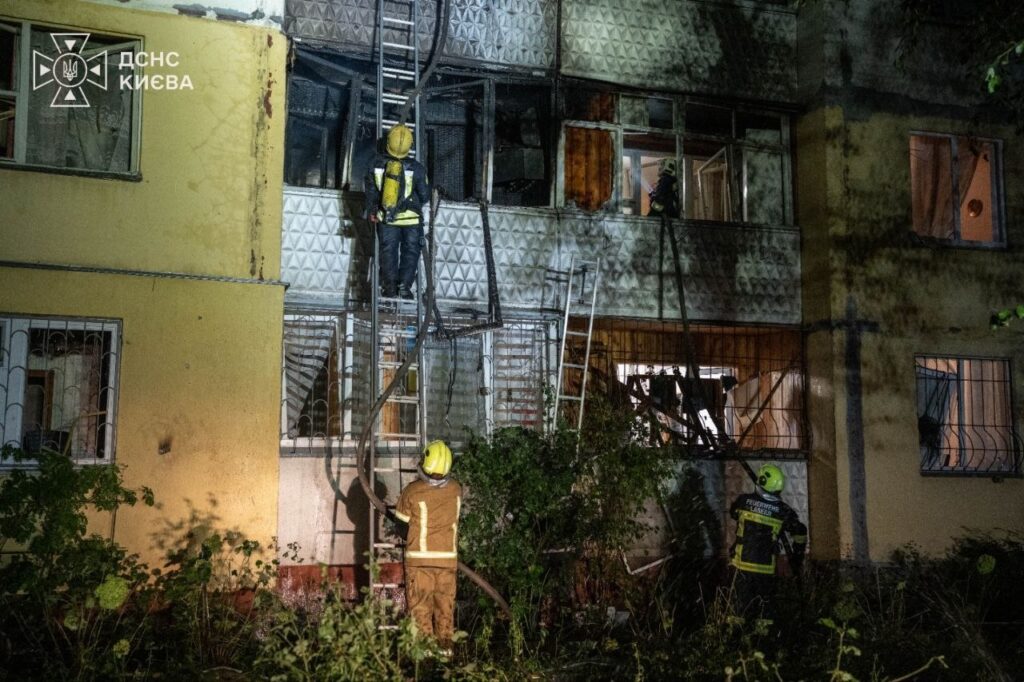
At least three people were injured in a Russian overnight attack on Kyiv, as the capital entered a fourth consecutive day of near-continuous Russian attacks.
In the Obolonskyi district, a strike caused a fire from the second to fifth floors of a 12-story residential building.… pic.twitter.com/rTT5TZvNEA
In Myla, Kyiv Oblast, rescue workers are still clearing the aftermath of the 28 August attack that killed 38 people, injured 20 and left four people missing.
Rescue crews continue working in Myla, Kyiv Oblast, clearing debris, extinguishing fires, and searching for explosive remnants after Russia’s deadly attack on 28 August.
The continuing attacks have also affected movement around the capital. Air raid alerts, damaged infrastructure and the threat of further strikes have disrupted traffic and travel both within Kyiv and on routes connecting the city with the surrounding region.
Explore further
Kyiv has been under attack for 2 days nonstop. Russia is targeting the capital’s civilian supply chains
Air defenses under pressure
The attacks are putting Ukraine's air defense network under some of its heaviest pressure since the full-scale invasion began.
Ukraine has to defend a vast area against increasingly large drone barrages while also dealing with ballistic and other missiles that are more difficult to intercept.
Ukraine relies on US-made Patriot systems to counter ballistic missiles, but limited stocks of Patriot interceptors and insufficient deliveries from partners have left a critical gap in its air defenses, which Russia is now exploiting to cause major damage to civilian infrastructure and greater civilian casualties.
The repeated use of jet-powered drones adds another challenge. Russia has increasingly deployed these faster Geran drones, adapted from the Iranian Shahed design, in attacks on Kyiv and other Ukrainian cities, including against civilian infrastructure.
Zelenskyy said the government’s priority now is to provide greater protection against the Russian attacks.
Attacks continue across Ukraine
The pressure is not limited to Kyiv.
Zelenskyy said Russian forces are carrying out attacks virtually around the clock against frontline and border communities, including Nikopol, Kramatorsk, Kherson and communities in Kharkiv, Zaporizhzhia, Dnipropetrovsk, Donetsk and Sumy oblasts.
Russian forces attacked Donetsk Oblast 30 times on 30 August, damaging residential areas and causing four fires, Ukraine’s State Emergency Service reported.
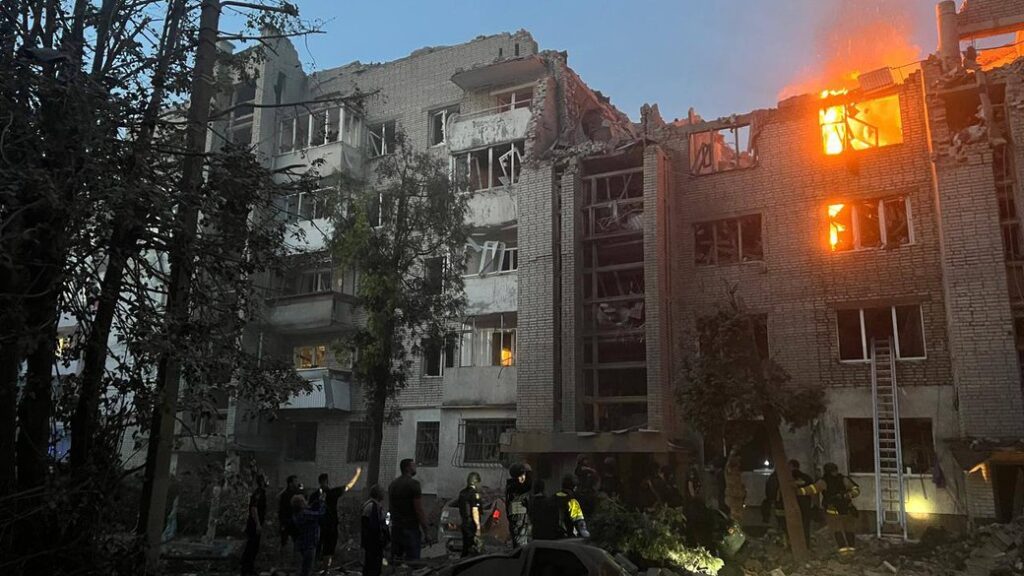
In Sloviansk, Russian shelling set balconies and apartments on fire on the fifth through seventh floors of a nine-story… pic.twitter.com/12GbUDsRpL
Across these areas, the attacks are keeping emergency services active while damaging homes, businesses and civilian infrastructure.
In Kyiv, meanwhile, the fourth day of attacks has left residents dealing with repeated air raid alerts, disrupted movement and the continuing risk of new strikes even as crews are still clearing the damage from previous ones.
Ukraine has drawn up a list of those who build Russia's ballistic missiles and wants all of them sanctioned by its allies. Kyiv is asking partners to impose sanctions on more than 100 Russian ballistics producers, presidential sanctions commissioner Vladyslav Vlasiuk said at a press conference in Kyiv, according to Ukrinform.
The demand rests on physical evidence. An Iskander that Russia fired at Kyiv Oblast on 10 July held more than 140 foreign components, 62 of them A
Ukraine has drawn up a list of those who build Russia's ballistic missiles and wants all of them sanctioned by its allies. Kyiv is asking partners to impose sanctions on more than 100 Russian ballistics producers, presidential sanctions commissioner Vladyslav Vlasiuk said at a press conference in Kyiv, according to Ukrinform.
The demand rests on physical evidence. An Iskander that Russia fired at Kyiv Oblast on 10 July held more than 140 foreign components, 62 of them American, alongside parts from Switzerland, Germany, Taiwan, China, and Japan, Vlasiuk reported in July. Most were made recently, which means the parts are still reaching Russia. Naming the factories is Ukraine's attempt to close the gap at the production end rather than chase each shipment.
The plan runs on synchronization
The commissioner laid out several parts of the plan at the press conference. The first is getting the same producers sanctioned everywhere at once, so a firm blocked in one country cannot operate through another. He said the files were handed to partners a few weeks ago, and Ukrainian specialists expect to identify every producer on allied lists by September or October.
The plan also covers what Vlasiuk called kinetic sanctions, meaning strikes on Russian defense-industry sites. He named the Kamensky Combine, which makes components for rocket fuel, as one such target.
The critical parts are still foreign
Ukraine keeps finding Western microelectronics in identified Russian ballistics, including Iskander-M missiles and those used by the S-400 system, with parts traced to the US, Japan, Germany, Taiwan, France, Britain, and Switzerland. The most sensitive elements are the Kometa satellite navigation system and autonomous inertial guidance units, which run on American, Swiss, and French microelectronics.
Ballistics is the most demanding product for quality and precision, Vlasiuk said, which is why those two systems are the chokepoint.
Ukraine wants smaller packages, sooner
The commissioner asked partners to adopt more stringent export controls, up to licensing or banning the export of sensitive components to third countries that help Russia evade sanctions. Ukraine has also compiled a list of more than 10 critical materials, including ammonium perchlorate, aluminum powder, and tungsten, as well as the numerically controlled machine tools Russia needs to build the missiles.
The EU has already begun work on a large 22nd sanctions package. Ukraine is urging it not to wait, asking instead for an interim ballistics package in September and another in October, moving in small steps as Ukraine, Britain, and Canada already do.
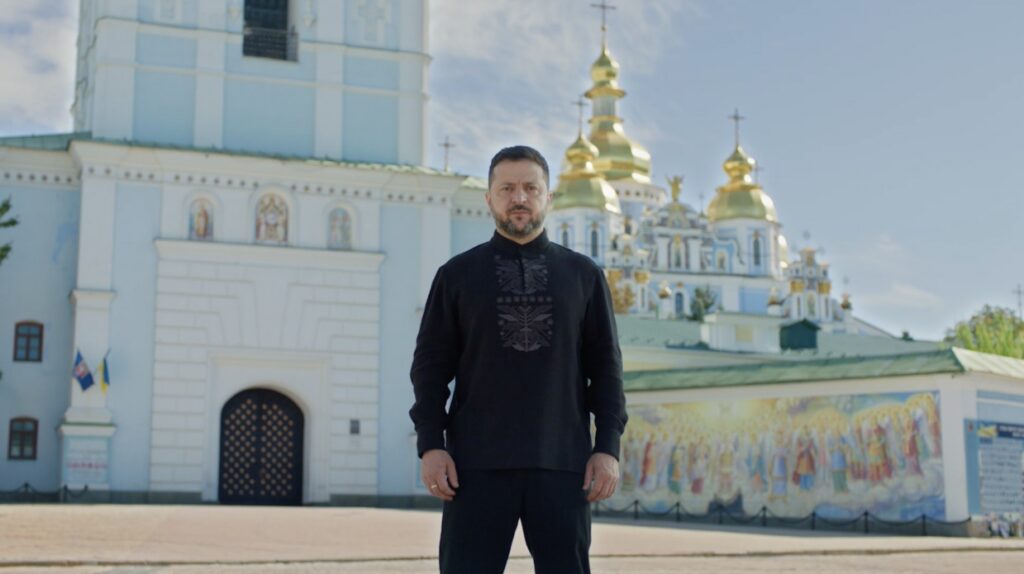
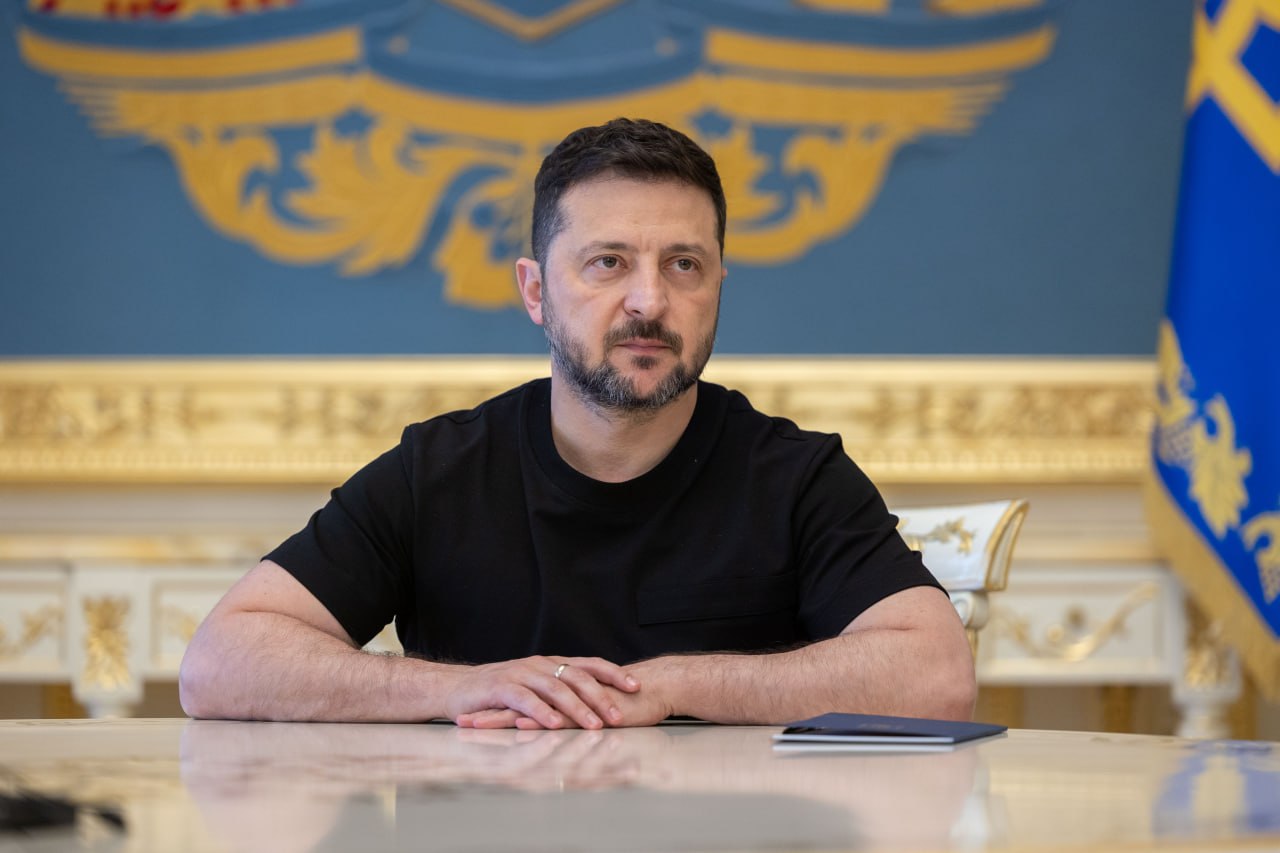
Ukraine celebrated 35 years of independence on 24 August, and Ukrainian President Volodymyr Zelenskyy marked the day with an address listing what the invasion has cost Russia, published by the President's Office. He said Putin is mortal and out of time to understand Ukraine, and said Ukraine will not hand over Donbas or save the Kremlin half a million soldiers. He also asked partners for sanctions and weapons strong enough to force an end to the war.
Russia has been inv
Ukraine celebrated 35 years of independence on 24 August, and Ukrainian President Volodymyr Zelenskyy marked the day with an address listing what the invasion has cost Russia, published by the President's Office. He said Putin is mortal and out of time to understand Ukraine, and said Ukraine will not hand over Donbas or save the Kremlin half a million soldiers. He also asked partners for sanctions and weapons strong enough to force an end to the war.
Russia has been invading Ukraine since 2014 and fighting a full-scale war on it since 2022, and Ukraine now supplies a growing share of the missiles and drones it fights back with, while the air defense shielding its cities still hangs on decisions taken in Washington and European capitals—which is what makes a holiday speech a statement of what Kyiv will not trade and what it needs built or delivered next.
The losses he read back to Moscow
President Zelenskyy turned from his own citizens to Russia partway through the speech.
"You wanted to take all our Ukraine, all our land; instead, you lost your oil refineries, your fleet, your profits, your entire generation that you sent into the meat grinder," he said.
A country that wanted Ukraine erased from the map, he added, is now absent from the international agenda of the future civilization.
For five years now, Russia has tried to exhaust and break Ukrainians — cutting light and heat, destroying homes, Kyiv Mayor Klitschko said on Ukraine's 35th Independence Day
"The aggressor failed to understand one fundamental thing: above all else, Ukrainians love freedom," he… pic.twitter.com/NvVVKSKIK1
He set Moscow's self-image against its filling stations.
"For 27 years, the head of Russia has talked about greatness, while Russia is standing in lines for gasoline," Zelenskyy said.
Moscow and St. Petersburg brought back gasoline rationing this month, and Rosneft capped fills at every station in the country.
On the Russian leader he was blunt.
"Putin hopes that we are tired. But we know that he is mortal," he said, adding that Putin never understood Ukraine and now will not have the time to.
A fifth Independence Day at war
Before the holiday, Russian ballistic missiles hit Kyiv and its main airport hub twice in 24 hours. A solution to Russian ballistic terror must be found, Zelenskyy said, and that gamble must not pay off.
Russia does not want peace, it wants mobilization, the president said. Ukraine will not let Moscow seize the initiative or convince Europe that surrendering Donbas ends the war. Russia keeps pushing back the dates for taking all of Donetsk Oblast and will keep pushing them back, he said.
The president called Ukraine's defense industry a giant that forges independence around the clock, and demanded more from it. Mid-range strikes cut Russian logistics and long-range weapons cut Russian profits, he said, listing Moscow, Tuapse, Tula, Ryazan, Olenya, and Omsk among the places already hit.
Explore further
Ukraine’s drones hit two Russian fighters and a spy drone—and blinded radars from occupied Crimea to Rostov
Ukraine's home-built Flamingo cruise missiles should stop being a rare species and arrive en masse: "They must 'winter' in Russia," Zelenskyy noted.
Previously, Flamingos have hit defense plants more than 1,000 km from the border, though they still appear in strikes in small numbers.
"China should no longer remain silent"
Ukraine is not asking anyone to fight for it, the president said — only for everything needed to stop the war before Putin starts the next one. He wants sanctions that make Russians howl and Moscow at a negotiating table, and said Washington has lost its illusions about Russian intentions. Europe must be Europe, he said: united, ambitious, brave.
"China should no longer remain silent," he added, saying Beijing must cool the ardor of someone who puts on a sailor's uniform and cap and talks about a nuclear strike—a description that fits Putin.
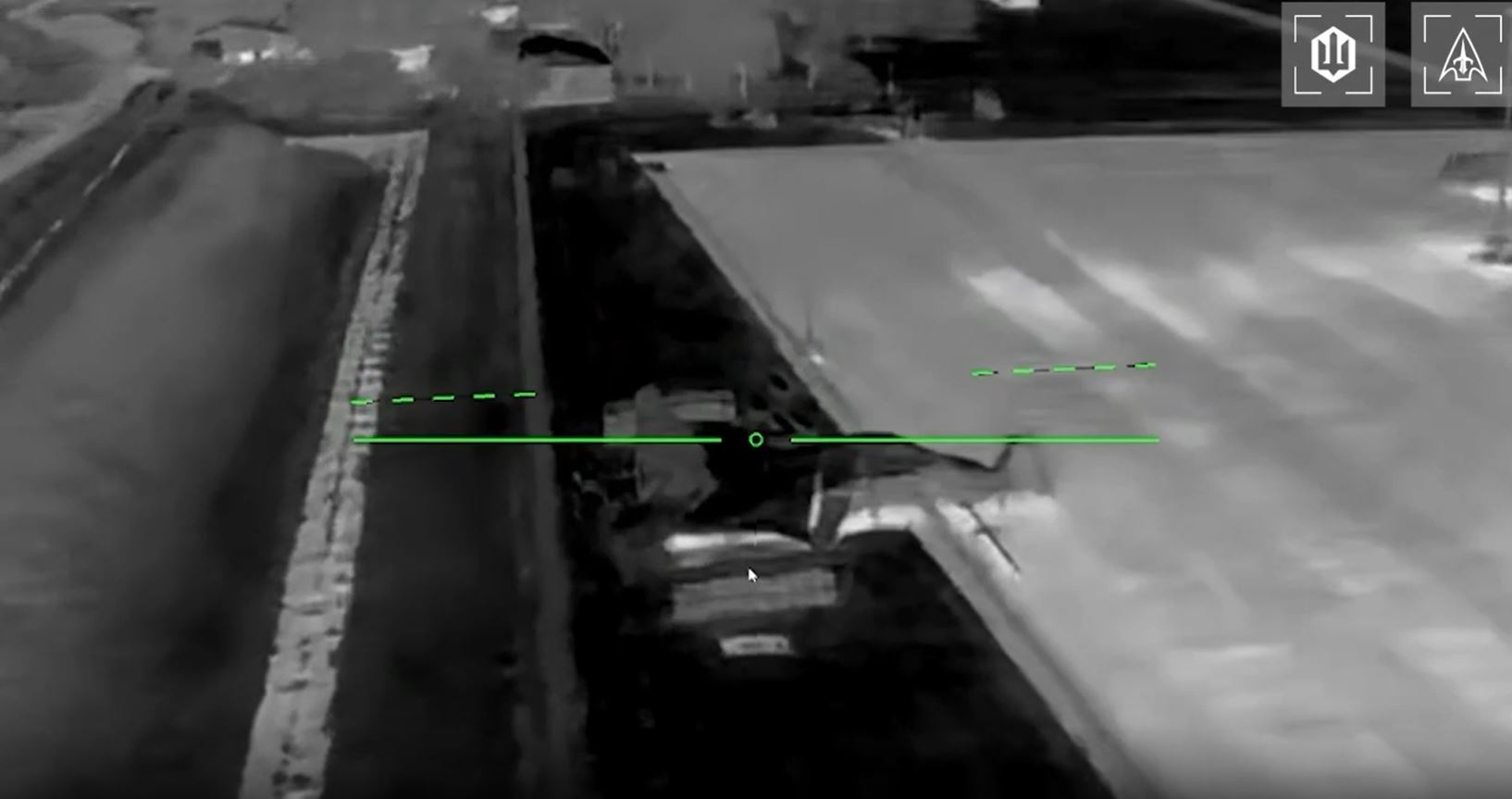
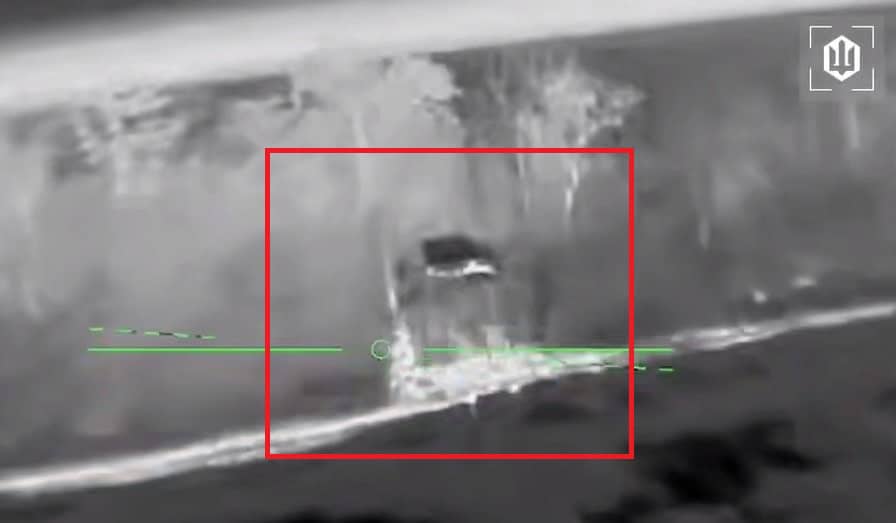
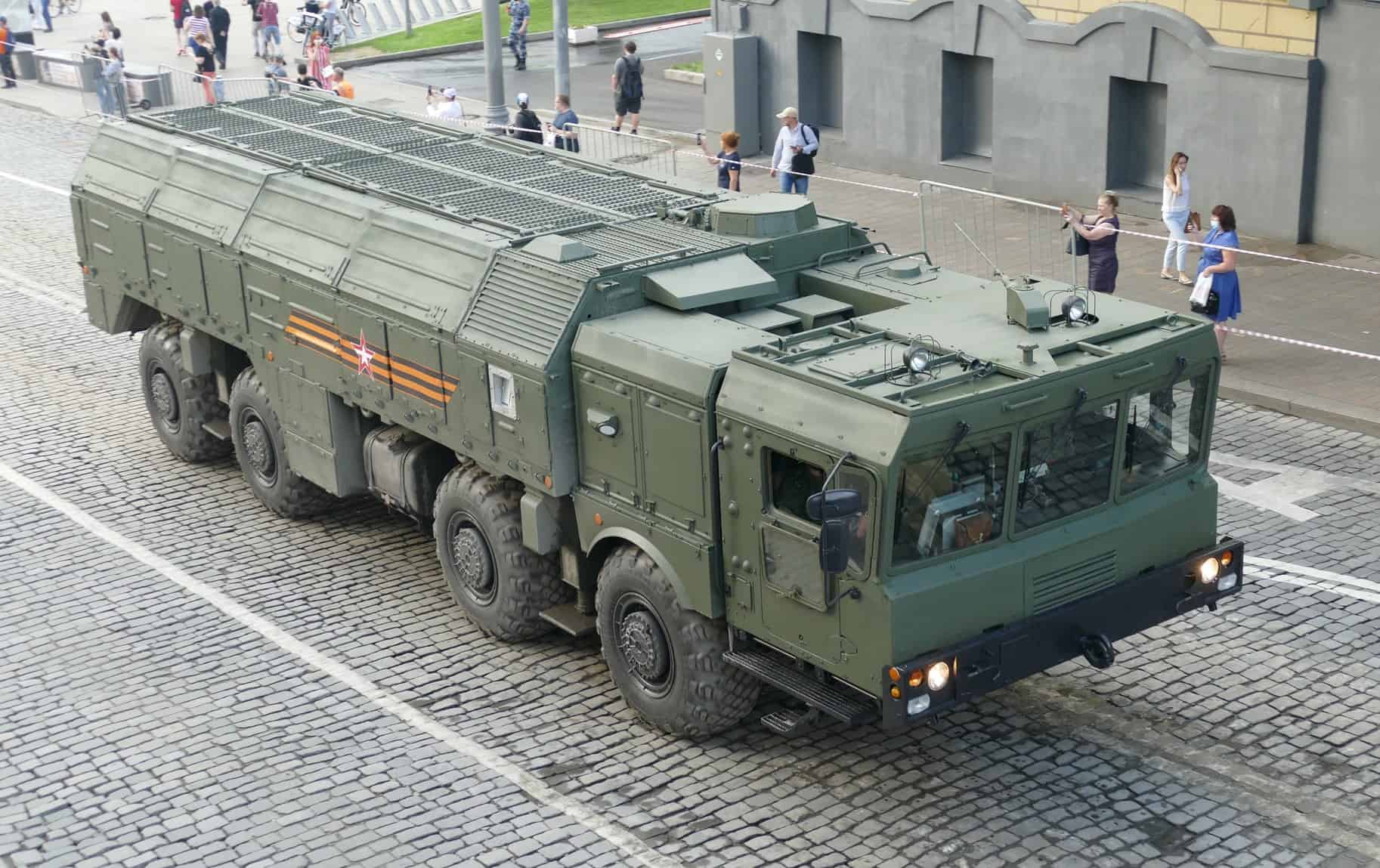
Ukraine has struck a Russian Iskander launcher near its border as part of a dedicated operation against nearby ballistic-missile launch positions, Ukrainian President Volodymyr Zelenskyy told journalists, according to Ukrinform.
Russia continues using ballistic missiles against Ukrainian cities while Ukraine has rationed Patriot interceptors and warned of acute shortages, pushing Kyiv to combine interception with strikes on the systems and positions used to launch thos
Ukraine has struck a Russian Iskander launcher near its border as part of a dedicated operation against nearby ballistic-missile launch positions, Ukrainian President Volodymyr Zelenskyy told journalists, according to Ukrinform.
Russia continues using ballistic missiles against Ukrainian cities while Ukraine has rationed Patriot interceptors and warned of acute shortages, pushing Kyiv to combine interception with strikes on the systems and positions used to launch those missiles.
President says Ukraine hit an Iskander launcher
President Zelenskyy described the strike as a success but said the sensitivity of the operation prevented him from providing many details.
“We struck an Iskander launcher near our borders,” he said. “I am grateful to our warriors who are carrying this out. This is our operation to hunt their systems positioned nearby.”
The president, however, didn't disclose where the launcher was located or what weapon Ukrainian forces used to hit it.
Zelenskyy said strikes on launchers are one way Ukraine is trying to counter Russian ballistic attacks when anti-ballistic interceptor stocks are limited.
“When our anti-ballistic missile stocks are at a minimum, there is another tactic. It is more difficult, and we developed it,” he said. “It is hunting their nearby positions from which ballistic missiles are launched.”
He described the effort as a separate program and operation. Euromaidan Press could not independently verify the reported strike.
Russian Iskander-M missile system, 2020. Illustrative photo. Photo from Russian government sources via Militarnyi
Ukraine has already targeted Russian ballistic missile infrastructure in several operations this year. In April, Ukrainian drone forces reported strikes on two bases linked to Iskander systems in occupied Crimea.
On 30 May, Ukraine’s Unmanned Systems Forces said they destroyed an Iskander system at a launch position near Taganrog in Russia’s Rostov Oblast.
Explore further
5% of US Patriot stocks gets Ukraine through winter, 10% ends the ballistic threat — and Zelenskyy has just 1%, he tells CNN
SpaceX rejected Ukraine’s request to use Starlink inside Russia
The launcher strike comes as Ukraine is also looking for better ways to operate long-range drones against military targets in Russia. Zelenskyy said SpaceX ultimately refused to let Ukraine use Starlink inside Russia because of escalation concerns.
Kyiv had wanted Starlink to work over Russian territory for defense operations, including drone strikes on Russian ballistic-missile launchers near the border. The Defense Ministry asked him in the first half of 2026 to raise the issue with US President Donald Trump, Zelenskyy said. Zelenskyy said Trump relayed that decision to him at a later meeting. Ukraine continues discussing the issue with the US side.
Ukraine and European partners are separately developing the FREYJA anti-ballistic system, with Kyiv seeking a prototype capable of demonstrating practical results by mid-2027. The project is intended to combine Ukrainian missile technology with European radars, sensors, and command systems.
Russia has struck Kyiv and its suburbs with ballistic missiles for a second consecutive day, killing civilians. Meanwhile, Ukraine lacks enough interceptors to stop them because deliveries from the US have halted.
The strikes land at a moment when Ukraine's ability to shoot ballistic missiles down has been cut off at the source. Ukraine intercepts ballistic missiles mainly with US-made Patriot systems. During the recent Oval Office meeting, President Donald Trump declin
Russia has struck Kyiv and its suburbs with ballistic missiles for a second consecutive day, killing civilians. Meanwhile, Ukraine lacks enough interceptors to stop them because deliveries from the US have halted.
The strikes land at a moment when Ukraine's ability to shoot ballistic missiles down has been cut off at the source. Ukraine intercepts ballistic missiles mainly with US-made Patriot systems. During the recent Oval Office meeting, President Donald Trump declined President Volodymyr Zelenskyy's request for hundreds of additional Patriot interceptors, according to the Financial Times.
At the same time, when Ukraine sought to destroy Russia's ballistic launchers on Russian territory, US billionaire Elon Musk did not allow Ukraine to use Starlink to guide strikes on those launchers, The Atlantic reported. Ukraine can neither shoot the missiles down at the rate it needs nor freely strike the launchers that fire them.
A railway worker was killed in Kyiv
The overnight attack hit Ukraine's railway. On the night of 22 August, a Russian ballistic missile struck a railway enterprise in Kyiv's Darnytsia area, killing a Ukrzaliznytsia worker, the railway's board chairman Oleksandr Pertsovskyi said.
He described a strike timed to the threat.
"In Darnytsia, ballistic strikes hit one of the railway enterprises, at the same moment as, or even a second before, the ballistic threat appeared. One of our workers, a foreman, was killed on the spot. The rest we managed to evacuate quickly after the first strike," Pertsovskyi reported.
Russia launched about six ballistic missiles, with launches recorded from three directions, Kursk, Bryansk, and Millerovo, according to monitoring channels.
A morning strike on Boryspil killed two civilians
Russia struck again in daylight. In the morning, six to eight ballistic missiles attacked the Boryspil area in the Kyiv agglomeration, likely with cluster warheads, according to monitoring channels. Boryspil city is home to the Boryspil International Airport, Ukraine’s main and largest international passenger airport.
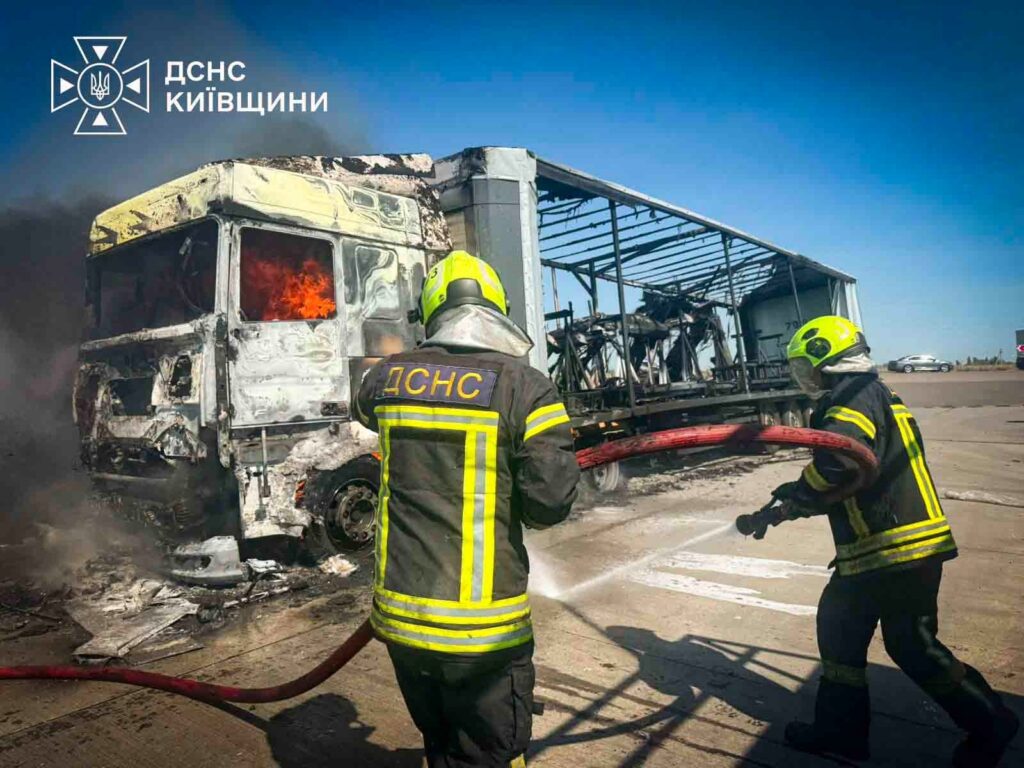
The strike killed civilians and hit infrastructure. Two civilians, a man and a woman, were killed, and the number of wounded rose to eight, including a child, with the daytime strike hitting a truck parking lot along with warehouses, a fuel station, a private household, and vehicles. Two trucks caught fire, and a blaze spread across 700 square meters of open ground, the State Emergency Service (DSNS) said.
The strikes come days before Independence Day
The attacks landed two days before Ukraine marks its Independence Day. The Security Service (SBU) has already urged citizens to be especially vigilant before and during the 24 August holiday because of the threat of attacks, warning that in wartime, Russia may use mass events for strikes, provocations, sabotage, cyberattacks, and other crimes.
The service has also warned against recruitment. It reminded Ukrainians not to publish photos or videos of military objects, critical infrastructure, checkpoints, or air-defense systems, nor to share information on the consequences of strikes or the movement of Ukrainian forces.
Russian special services may try to recruit Ukrainians to prepare attacks and sabotage, the SBU said, urging anyone offered money for arson, property damage, planting unknown objects, or collecting information on military sites to report it immediately.
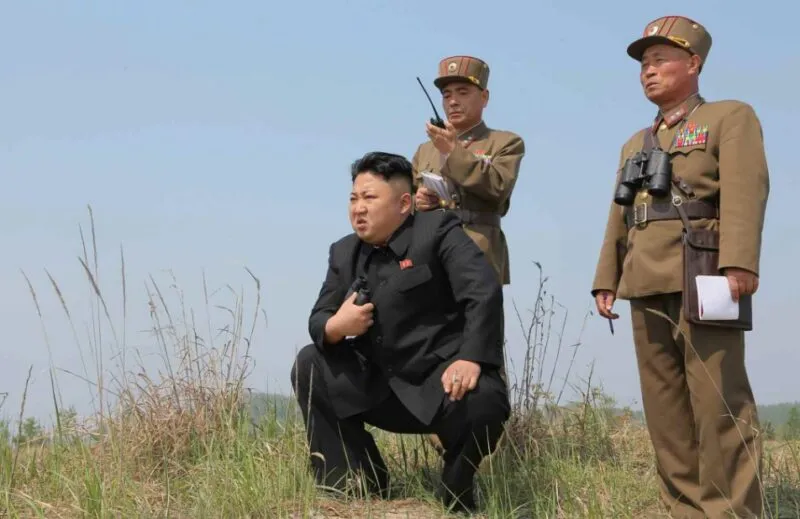
Russia is deploying six launchers for North Korean ballistic missiles in Voronezh Oblast, the Institute for the Study of War (ISW) reported on 20 August. The assessment cited Ukraine’s military intelligence agency (HUR).
Russia has already used North Korean missiles in deadly strikes across Ukraine, and Pyongyang is supplying more of them. From Voronezh Oblast, the weapons could threaten Kyiv and six other regions, adding to the ballistic arsenal Moscow can use in mass
Russia is deploying six launchers for North Korean ballistic missiles in Voronezh Oblast, the Institute for the Study of War (ISW) reported on 20 August. The assessment cited Ukraine’s military intelligence agency (HUR).
Russia has already used North Korean missiles in deadly strikes across Ukraine, and Pyongyang is supplying more of them. From Voronezh Oblast, the weapons could threaten Kyiv and six other regions, adding to the ballistic arsenal Moscow can use in mass attacks intended to overwhelm Ukrainian air defenses.
Six launchers expand Russia’s missile threat
The North Korean missiles could reach Kyiv, Sumy, Kharkiv, Chernihiv, Poltava, Dnipropetrovsk, and Zaporizhzhia oblasts, ISW said.
The unit may eventually field 120 missiles. HUR said North Korea had transferred around 50 KN-23, KN-24, and upgraded KN-30 ballistic missiles to Russia by July.
The KN-30 can carry a 2,500-kilogram warhead, though ISW has seen no evidence of Russia using it against Ukraine. Other North Korean missiles have larger warheads than Russia’s Iskander-M but are less accurate, Ukrainian military expert Anatolii Khrapchynskyi said.
Those missiles could join Russia’s combined attacks. ISW expects Moscow to stockpile ballistic and cruise missiles for several days before launching large barrages intended to overwhelm Ukraine’s air defenses.
ISW pointed to the 19–20 August attack as the latest example of that pattern. The barrage lasted nearly nine hours and killed at least 15 people in Kyiv. Ukraine’s Air Force said it intercepted most drones and cruise missiles, but no longer routinely reports how many ballistic missiles Russia launches or Ukraine intercepts.
North Korean missiles have already killed civilians
Preliminary evidence indicated that Russia used a North Korean ballistic missile in a 30 July strike on Radushne, Dnipropetrovsk Oblast, that killed five members of one family.
On 10 August, a North Korean missile killed seven Zaporizhstal steelworkers and injured 21 others in Zaporizhzhia, Ukrainian officials said. The workers were heading to a shelter when the missile struck.
Ballistic missiles travel at high speed and leave civilians little time to seek cover. They are also harder to intercept than drones or cruise missiles, while Ukraine has limited supplies of the Patriot interceptors used against them.
Ukraine is asking Elon Musk to let it arm deep-strike drones with his Starlink network and turn them on Russian ballistic-missile launchers far inside Russia, the Financial Times reported. The plan needs Musk's approval — and US President Donald Trump was cool to the idea when Ukrainian President Volodymyr Zelenskyy raised it at the White House on 28 July, with people present expecting Musk to refuse.
Kyiv is chasing the workaround because its air defenses are stretched
Ukraine is asking Elon Musk to let it arm deep-strike drones with his Starlink network and turn them on Russian ballistic-missile launchers far inside Russia, the Financial Times reported. The plan needs Musk's approval — and US President Donald Trump was cool to the idea when Ukrainian President Volodymyr Zelenskyy raised it at the White House on 28 July, with people present expecting Musk to refuse.
Kyiv is chasing the workaround because its air defenses are stretched: Russia keeps escalating its missile and drone strikes, and Ukraine is running low on the Patriot interceptors that are its only dependable answer to Russian ballistic missiles. As Russia builds more missiles and drones, Ukraine's interceptor needs run into the hundreds before the year is out.
At the meeting, FT reported, Zelenskyy pressed Trump to lobby Musk for permission to fly Starlink-linked drones across the Russian border. He capped the pitch at 200 km into Russia — far enough to reach launch sites, command posts, and other targets — on the calculation that a shallower limit might make Musk likelier to agree.
Starlink could extend Ukrainian drone strikes
Riding SpaceX's satellites, Starlink drones hold a steadier link to their pilots at long range than ordinary radio allows, and they shrug off the jamming that grounds other drones. The drones have already shown their worth in the fighting at home, and Vienna-based military analyst Franz-Stefan Gady said that across the border they "could be very useful in hunting" Russian launchers, FT wrote.
Kyiv's best channel to Musk has also just closed: Zelenskyy recently fired his defense minister, Mykhailo Fedorov, who had a direct line to the billionaire.
Mykhailo Fedorov during a June interview, a month before his dismissal, in which he described leaks and private-company influence inside the defense ministry. Photo: screenshot from PRESSING / Army-Media of Ukraine's Defense Forces
Speaking to a Ukrainian podcast on 6 August, Fedorov said that even with a channel to Musk still open after his firing, he had made no progress on cross-border Starlink use—"a difficult task right now."
Explore further
The Fedorov protesters lost. But they backed a man for what he built, not what he promised—and that may be new in Ukraine.
Musk’s Starlink decisions have affected both sides in the Russo-Ukrainian war
Musk has backed Ukraine's heavy dependence on Starlink for military command and comms. In 2022, Musk declined to extend Starlink coverage for Ukrainian troops mid-operation near occupied Crimea, citing his fear of triggering a nuclear escalation.
He has also acted against Moscow: in February, at Fedorov's direct request, Musk shut down the Starlink terminals that Russian forces had been operating illicitly against Ukraine.
Now, Musk answered Fedorov's Monday post with a line about "trying to do the right thing" and wanting peace — and said nothing about the Starlink ask.
Ukraine’s failure to anticipate and prepare for Russian threats is a bigger problem than the shortage of air defenses, says Oleksandr Kovalenko of the Information Resistance group. Russia, meanwhile, has demonstrated its ability to develop and execute medium-term plans for terror operations that can take years to prepare, according to Obozrevatel.
Russian forces adapt almost every month to new challenges and opportunities, scaling up their attacks. The use of jet-power
Ukraine’s failure to anticipate and prepare for Russian threats is a bigger problem than the shortage of air defenses, says Oleksandr Kovalenko of the Information Resistance group. Russia, meanwhile, has demonstrated its ability to develop and execute medium-term plans for terror operations that can take years to prepare, according to Obozrevatel.
Russian forces adapt almost every month to new challenges and opportunities, scaling up their attacks. The use of jet-powered Banderol drone missiles is one example.
Russia is now employing a “tactical adaptive distribution” approach, flexibly redirecting missiles and strike drones toward different regions and rear cities depending on Ukrainian air-defense capabilities.
The main difference
The key change in Russia’s 2026 campaign against Ukraine’s rear areas has been the growing use of jet-powered drones based on the Iranian Shahed-238 and Karrar, which Russia has localized as Geran-3/4/5.
Russia first used a jet-powered kamikaze drone against Ukraine in January 2024. These weapons have been continuously upgraded over the past two years.
Ukraine, however, failed to adequately anticipate the threat and now lacks an effective, low-cost way to intercept Geran-3/4/5 drones, Kovalenko says. Russian forces used more than 1,400 jet-powered drones in the first half of 2026 alone, compared with 180 throughout all of 2025.
“It is possible that the facility in Alabuga, Tatarstan, could eventually be fully converted to producing jet-powered kamikaze drones as part of this strategy,” the analyst said.
What comes next: strikes on Kyiv to exert psychological pressure
A significant share of Russia’s new hard-to-intercept weapon variants appears to be concentrated for strikes on Kyiv.
Russian forces are seeking to exploit Ukraine’s acute shortage of Patriot and SAMP/T interceptors, using the opportunity to intensify their campaign of terror. Russia has previously used similar tactics to exert psychological pressure on civilians and disrupt economic activity in regions including Kharkiv and Odesa.
The same approach could increasingly be directed at the capital, particularly ahead of and during Ukraine’s Independence Day.
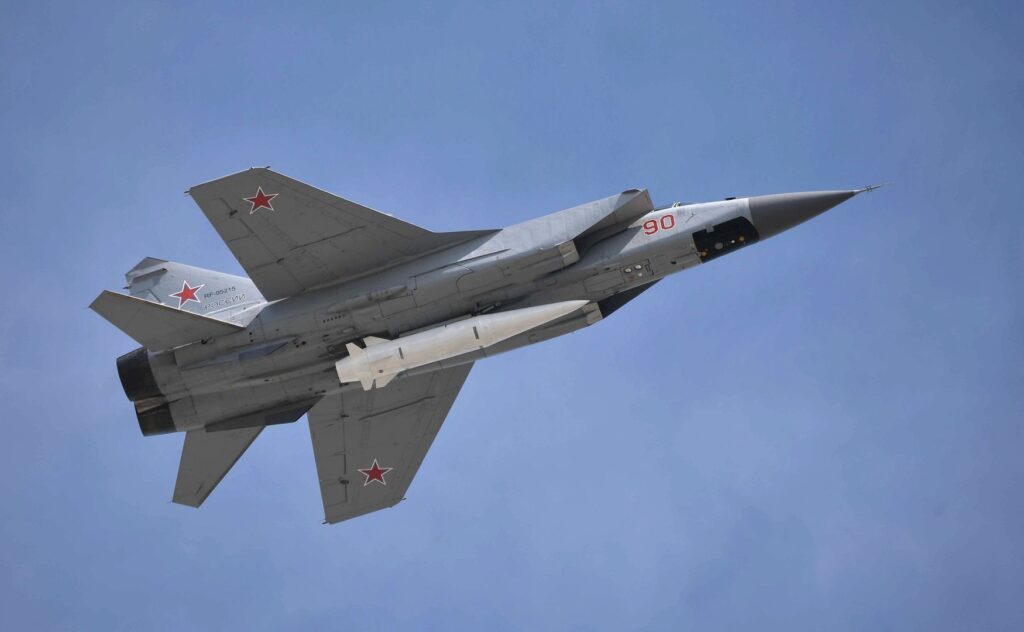
Russia suspended mass production of its Kinzhal air-launched ballistic missiles in April, but still has around 50 in its arsenal, according to Ukraine’s Defense Intelligence Directorate (HUR), Ukrainska Pravda reported.
Russia has repeatedly used Kinzhal air-launched ballistic missiles to strike targets across Ukraine, including during major attacks on Kyiv and other Ukrainian cities. The missile is launched from aircraft and travels at high speed, making it particularl
Russia suspended mass production of its Kinzhal air-launched ballistic missiles in April, but still has around 50 in its arsenal, according to Ukraine’s Defense Intelligence Directorate (HUR), Ukrainska Pravda reported.
Russia has repeatedly used Kinzhal air-launched ballistic missiles to strike targets across Ukraine, including during major attacks on Kyiv and other Ukrainian cities. The missile is launched from aircraft and travels at high speed, making it particularly difficult for Ukraine to defend against.
Ukrainska Pravda reported the figures on 20 August, citing HUR data as of July. The intelligence agency said Russia has suspended mass production of the Kinzhal in part because of accuracy problems with the missile. Moscow is instead redirecting production resources toward other ballistic and cruise missiles that can be produced and used more reliably.
Russia shifts production toward other missiles
According to HUR, Russia has redirected rocket fuel, funding, and components toward producing more accurate ballistic and cruise missiles.
The shift is helping Moscow increase production of missiles for the Iskander-M system, HUR said.
“Redirecting production resources towards missile systems enables Russia to maintain the required production rates and ensure the regular use of missiles against Ukraine,” the agency said, as quoted by Ukrainska Pravda.
The production shift suggests Russia is prioritizing missile types it can produce and use more efficiently, rather than maintaining mass Kinzhal production.
Explore further
Putin’s Mach-10 wonder weapon misses by 30 meters. Russia stopped building it in April.
Russia has sharply increased its use of ballistic missiles against Kyiv and other Ukrainian cities in recent months, adding heavier ballistic barrages to its large-scale drone and cruise missile attacks. The escalation has put greater pressure on Ukraine’s air defenses, particularly because ballistic missiles are harder to intercept and can reach their targets within minutes.
Kinzhal remains in Russian arsenal despite production halt
The suspension of mass production does not mean Russia has stopped using Kinzhal missiles, according to HUR.
HUR said Russia still had around 50 Kinzhals as of July, while also holding around 50 North Korean KN-23-series ballistic missiles, including KN-24 and KN-30 variants.
The intelligence agency also said the Kinzhal is undergoing further development to improve issues with its accuracy.
Russian voenkors publishes satellite images from the Starokostiantyniv area!
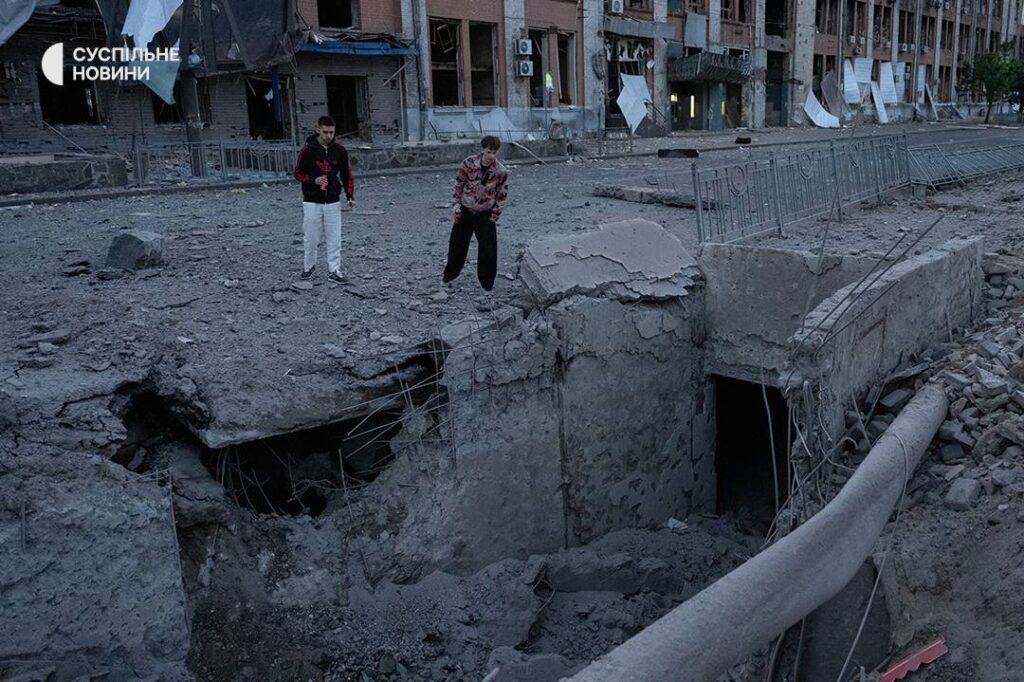
The photo shows craters from missiles that did not reach their targets. In some cases, the Kinzhals' deviation was up to 144 meters. pic.twitter.com/qvameRj5t8
This means that while Russia has paused mass production, it retains a substantial reserve of Kinzhals that can still be used against Ukraine.
HUR's assessment also highlights a key limitation of the Kinzhal: despite being a high-speed air-launched ballistic missile, it has faced accuracy problems. Russia is therefore shifting production capacity toward missile systems it considers more reliable and easier to produce at scale.
Editor's note: This is a developing story.
Russia launched a massive overnight missile and drone attack targeting Kyiv and the surrounding region, killing 14 people and injuring more than 40, Ukrainian authorities said on 20 August.
The attack involved ballistic and cruise missiles alongside hundreds of drones. Ukraine’s Air Force said the main direction of the attack was Kyiv Oblast, with strikes and debris recorded at multiple locations. Several explosions were hea
Russia launched a massive overnight missile and drone attack targeting Kyiv and the surrounding region, killing 14 people and injuring more than 40, Ukrainian authorities said on 20 August.
The attack involved ballistic and cruise missiles alongside hundreds of drones. Ukraine’s Air Force said the main direction of the attack was Kyiv Oblast, with strikes and debris recorded at multiple locations. Several explosions were heard in the capital around midnight on 20 August, according to Euromaidan Press reporters in the city.
Residential building hit in Kyiv
In Kyiv, strikes, damage, and fires were reported in the Sviatoshynskyi, Darnytskyi, and Solomianskyi districts.
In Solomianskyi district, the upper two floors of a nine-story residential building were destroyed, with a fire breaking out across the seventh through ninth floors.
People were trapped in two residential buildings and a school bomb shelter, prompting emergency crews to carry out rescue operations.
Thirteen people have now been confirmed killed in Kyiv, including a woman whose body was discovered by rescuers in Solomianskyi district, Interior Minister Ivan Vyhivskyi said.
Ukrainian President Volodymyr Zelenskyy said a children's hospital and a school were also damaged in the capital.
Kyiv Mayor Vitali Klitschko said the city would observe 21 August as a day of mourning, with entertainment events banned and flags lowered.
Death toll from Russia's missile attack on Kyiv city and Oblast climbs to 14
Ukraine's Interior Minister Ivan Vyhivskyi says another woman's body was found in Solomianskyi. More than 40 were wounded. The strikes damaged about 20 residential buildings, a school, a children's… pic.twitter.com/3wicnc5lni
Around 20 residential buildings in Kyiv were significantly damaged, along with a school, children's hospital, and kindergarten, Vyhivskyi said.
In Sviatoshynskyi district, Russian strikes hit an industrial site and sparked fires at warehouses covering 500 and 1,000 square meters. Another warehouse also caught fire.
In Darnytskyi district, a non-residential site was hit, causing fires across warehouses and vehicles covering about 1,000 square meters. Rescuers saved one person and handed them over to medics.
Other locations saw damage to residential buildings, a medical facility, cars, garages, and stores.
More than 600 rescuers and police officers have been involved in clearing the aftermath since overnight. Emergency crews are currently working at two sites in Kyiv and three more in Boryspil and Brovary districts.
Rescuers are using specialized equipment and robotic systems to clear the rubble and check whether anyone remains trapped.
Police have set up assistance centers at the attack sites to register reports of damaged or destroyed property. More than 200 reports have already been processed in Kyiv, while psychologists are assisting people who lost relatives or their homes.
Russia's overnight missile attack killed at least 12 people in Kyiv and injured 34.
Russia pounded Kyiv and its surrounding region for hours into 20 August with dozens of ballistic missiles, Kalibr cruise missiles, and jet-powered Shahed drones.
The attack also hit Kyiv Oblast. One man was killed in Brovary district and another was injured.
In Boryspil district, six people were injured, four of whom were hospitalized. The attack damaged 14 private homes, four warehouses, a gas station, an apartment building, and eight vehicles.
Vyhivskyi said fires also engulfed warehouses storing household goods in Kyiv Oblast. Firefighters are working to contain the blaze, with aviation also deployed.
Russian attack leaves Kyiv and six oblasts with power outages
Ukrenergo says outages hit Kyiv and Kyiv, Donetsk, Odesa, Zaporizhzhia, Dnipropetrovsk, and Kharkiv oblasts. Ukrainians are asked to limit powerful appliances from 18:00–22:00.
Zelenskyy calls for stronger ballistic missile defenses
Zelenskyy said Russia’s growing investment in ballistic missiles requires a stronger international response and more air defense for Ukraine.
He said Ukraine is working daily on its FREYJA interceptor program, but stressed that Patriot interceptors remain irreplaceable and are needed every day to protect Ukrainian cities from Russian ballistic missile attacks.
“Every additional missile saves the lives of our people,” Zelenskyy said, thanking those working to provide Ukraine with additional air defense capabilities.
Russia spent months preparing its missiles. Zelenskyy says Ukraine still lacks enough interceptors to stop them
Russia combined different ballistic missiles, cruise missiles, and drones in its overnight attack to maximize damage to civilian infrastructure, President Volodymyr… pic.twitter.com/4iaRPs7dLC
Ukraine's Air Force said Russia launched 168 Shahed-type attack drones, Gerbera decoy drones, and other drones, along with 36 Kh-101, Iskander-K, and Kh-59 cruise missiles, eight Kalibr missiles, two Banderyl-type loitering munitions, and ballistic missiles including Oniks, Zircon, Iskander-M, and S-400 missiles.
As of 9:30 a.m., Ukrainian air defenses had shot down or suppressed 31 cruise missiles, all eight Kalibr missiles, both loitering munitions, and 145 drones, according to the Air Force.
The Air Force reported impacts at 28 locations and debris from intercepted targets at two others.
The attack continued into the late morning, with air raid sirens still active and several Russian drones still in Ukrainian airspace.
Ukraine is under a massive Russian attack right now: Russia's Kalibr missiles were launched from the Novorossiysk port
The warhead of the Kalibr family of cruise missiles typically weighs 450 kg Exilenova+ pic.twitter.com/DBgfRX7xhB
Russia hit Kyiv with ballistic and hypersonic missiles overnight, damaging a children’s hospital, with people trapped in a shelter
Rail traffic disrupted
Russia's strikes also disrupted rail traffic around Kyiv after railway infrastructure was damaged. Several suburban and regional trains between Kyiv and Nizhyn were rerouted or canceled.
Strikes reported in other regions
Zelenskyy said the attack also caused damage in Odesa and Chernihiv oblasts.
In Odesa Oblast, Russian drones targeted a border crossing with Moldova, while strikes in Chernihiv Oblast damaged gas infrastructure.
Russia strikes food trucks in Odesa Oblast
The attack ignited two trailers carrying food. Ukrainian firefighters extinguished the blaze, the State Emergency Service reported. No one was killed or injured.
Russia has launched another massed missile attack on Kyiv in the early hours of 20 August. Russian forces struck the capital with ballistic and Zircon hypersonic missiles, with loud explosions heard across the city and region, according to Ukraine's monitoring channel Yeradar.
The strike is the latest in Russia's campaign of massed missile attacks on Kyiv. Russia has repeatedly hit the capital with ballistic and hypersonic weapons that Ukraine struggles to intercept fo
Russia has launched another massed missile attack on Kyiv in the early hours of 20 August. Russian forces struck the capital with ballistic and Zircon hypersonic missiles, with loud explosions heard across the city and region, according to Ukraine's monitoring channel Yeradar.
The strike is the latest in Russia's campaign of massed missile attacks on Kyiv. Russia has repeatedly hit the capital with ballistic and hypersonic weapons that Ukraine struggles to intercept for lack of Patriot missiles, killing civilians in their homes.
As of 1 AM, Russian Kalibr cruise missiles are approaching Ukrainian cities from Novorossiysk.
Ukraine is under a massive Russian attack right now: Russia's Kalibr missiles were launched from the Novorossiysk port
The warhead of the Kalibr family of cruise missiles typically weighs 450 kg Exilenova+ pic.twitter.com/DBgfRX7xhB
Earlier, Ukraine's Defense Ministry said that Russia went back to using imported electronics for its Kalibr cruise missiles’ guidance system after failing to replace them with homemade alternatives.
The ship-launched missile’s homing boards “are made up of more than 80–90% foreign-made components," the Ukrainian authorities reported.
The confirmed toll so far
Casualties were mounting as the attack went on. As of the latest update, one person was killed and three wounded in the attack, the Kyiv City Military Administration said, with information still being clarified.
The strikes hit across several districts. A children's hospital was damaged in the Solomianskyi district, where people were reported to be trapped in a shelter, and a five-story residential building was hit. Warehouses burned in the Sviatoshynskyi district, and non-residential buildings were struck in Darnytskyi, Kyiv Mayor Vitali Klitschko reported.
The attack was still developing
Ukraine's air defenses were engaging an ongoing threat. The Air Force had warned of ballistic weapons approaching from the north and northeast, and monitoring channels reported Russian Tu-95MS strategic bombers taking off, which typically precede cruise-missile launches.
"Explosions in the capital. Kyiv is under ballistic attack. Stay in shelters," Klitschko wrote as the strikes continued.
With the attack unfolding as officials reported it, the full toll and damage were not yet known; the figures provided were preliminary.
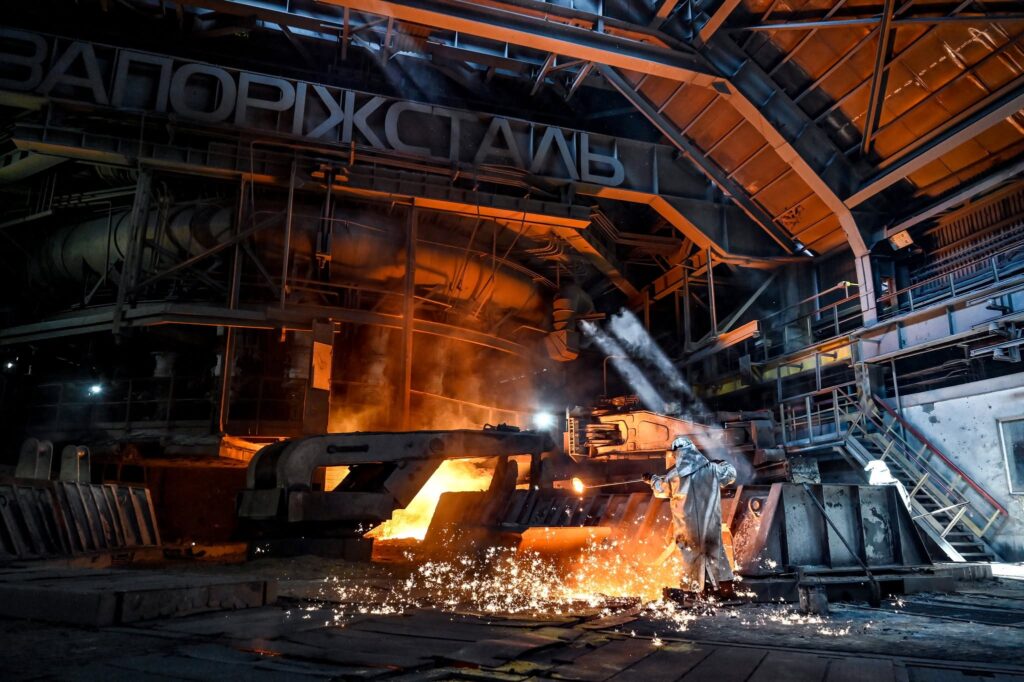
A Russian ballistic strike on Zaporizhzhia, Ukraine, killed seven employees of the Zaporizhstal steel plant and injured 21 others, Ukrainian steelmaker Metinvest, the plant’s majority owner, said on 11 August.
The workers were on their way to a shelter after an air raid alert was announced when the strike hit the industrial site, according to the company.
Metinvest said the attack also damaged energy facilities and infrastructure, as well as the main and auxiliary f
A Russian ballistic strike on Zaporizhzhia, Ukraine, killed seven employees of the Zaporizhstal steel plant and injured 21 others, Ukrainian steelmaker Metinvest, the plant’s majority owner, said on 11 August.
The workers were on their way to a shelter after an air raid alert was announced when the strike hit the industrial site, according to the company.
Metinvest said the attack also damaged energy facilities and infrastructure, as well as the main and auxiliary facilities of the plant’s coke and blast-furnace operations.
Russia’s ballistic missile strikes leave very little time between threat detection and impact for people to react and reach shelter. Several people have been killed from strikes across the country while on their way to bomb shelters.
Zaporizhstal shuts down after strike
Metinvest said Zaporizhstal has been completely shut down following the attack, while its other production sites in the city are operating at reduced capacity.
Company specialists are assessing the damage and determining the scope and timeline of repairs. Emergency and restoration work is already underway, according to the statement.
The company said its Zaporizhzhia facilities are civilian industrial sites that employ tens of thousands of people and produce steelmaking and coke-chemical products.
Metinvest said it is providing medical assistance and support to the 21 injured employees and staying in contact with the families of those killed and wounded.
The company's facilities will fly flags at half-mast on 11 and 12 August in mourning for the seven Zaporizhstal workers killed in the attack.
North Korean missiles used against Zaporizhzhia
Ukrainian President Volodymyr Zelenskyy said Zaporizhzhia was targeted overnight with North Korean ballistic missiles, Russian Zircon missiles and guided aerial bombs.
Zelenskyy said the attack was designed to cause maximum damage to civilian infrastructure.
Ukraine's military intelligence said on 5 August that a North Korean missile unit had begun deploying to western Russia, potentially adding up to 120 ballistic missiles and six launchers to Russia's arsenal.
According to Ukrainian intelligence representative Andrii Cherniak, North Korea has supplied Russia with around 150 KN-23 and KN-24 missiles since late 2023, including a recent batch of 40 missiles.
The missiles have been linked to attacks with high civilian casualties, including a July strike on Radushne in Dnipropetrovsk Oblast that killed an entire family.
Ballistic threat is growing
The strike comes as Russia has increasingly relied on ballistic missiles in attacks on Ukrainian cities. Unlike drones and cruise missiles, ballistic missiles travel at very high speeds and are much harder for Ukraine to intercept, particularly because Kyiv has a limited supply of the advanced air defense interceptors needed to counter them, mainly US-made Patriot systems.
Ukraine has reported that most ballistic missiles launched in recent mass attacks have penetrated its air defenses, contributing to severe destruction and civilian casualties.

 Connexion




 Russian voenkors publishes satellite images from the Starokostiantyniv area!
 The photo shows craters from missiles that did not reach their targets. In some cases, the Kinzhals' deviation was up to 144 meters.
 (@Maks_NAFO_FELLA)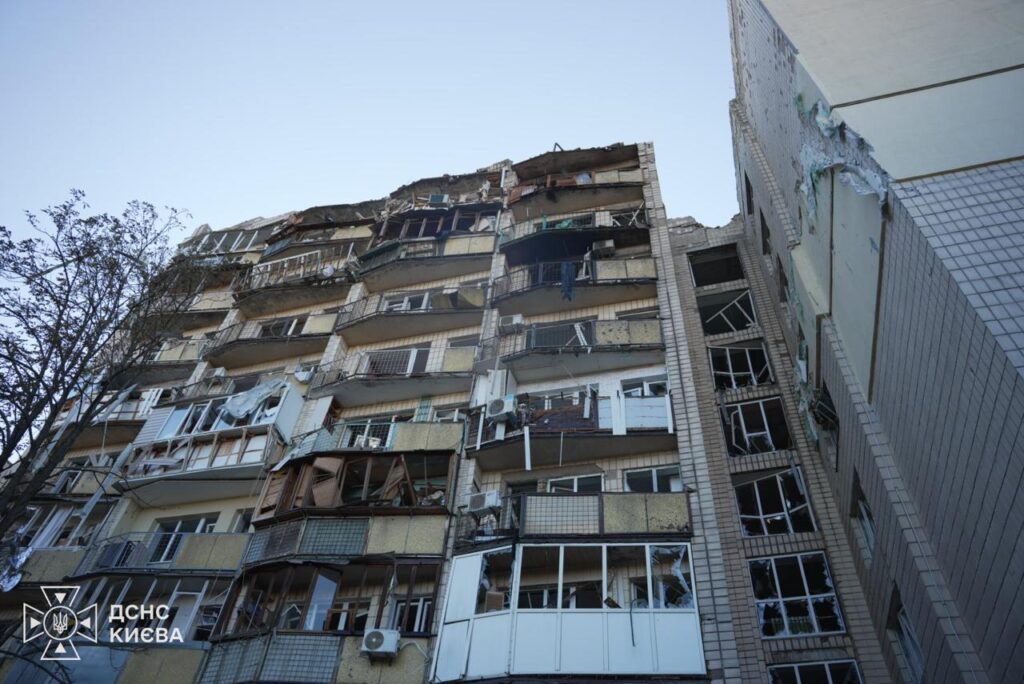
 Exilenova+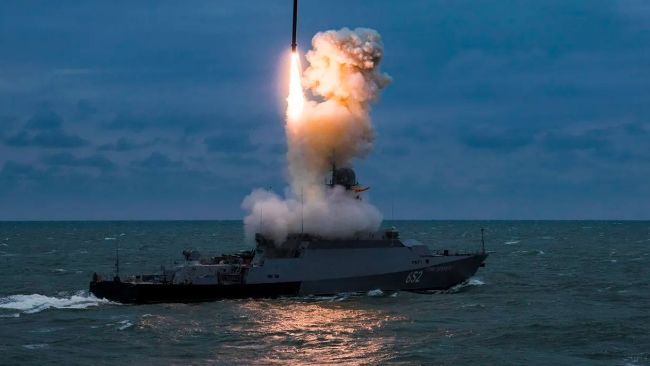
 DSNS
DSNS