Vue normale

Reçu — 27 juillet 2026 Euromaidan Press

Lithuania proposes to implement special test for Russian and Belarusian artists and academics who enter state. Those who don’t pass will be banned
27 juillet 2026 à 17:25

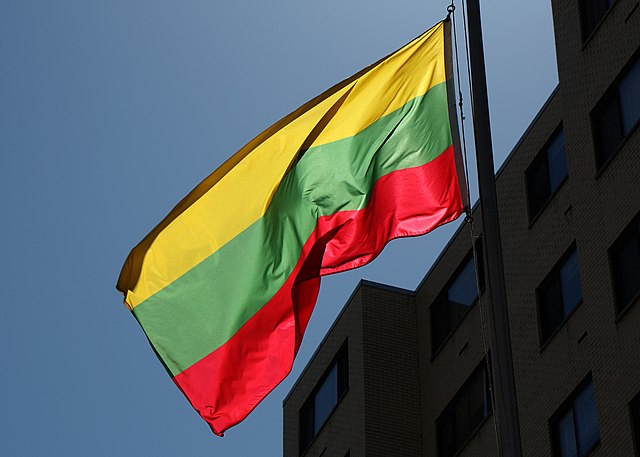
Lithuania Lithuanian flag. Photo via Wikimedia Commons

Lithuania wants Russians who performed in occupied Ukraine to sign a declaration condemning the war or stay out. Lithuania's Foreign Ministry has proposed amending the national sanctions law with new restrictions on Russians and Belarusians who support the war against Ukraine, including barring them from entering the country, the Baltic News Service (BNS) reported.

The proposal targets Russians and Belarusians in culture, science, art, or sport who performed in Russian-occupied Ukrainian territories or directly or indirectly supported the war, who would be denied entry to Lithuania.

To be allowed in for educational or cultural events, citizens of those countries would have to sign and publicly release a declaration condemning Russian aggression and supporting Ukraine's territorial integrity. The refusal to sign would mean an automatic entry ban.

The Foreign Ministry also proposed suspending the right of Russians and Belarusians with residence permits to buy real estate near national security sites and military training grounds.

If the Seimas adopts the amendments, they would take effect on 1 January next year.

"This is part of the state's efforts to strengthen resilience to the influence of hostile regimes and to protect Lithuania's national security interests," the ministry said.

The proposal extends a steady Lithuanian tightening

The measure is the latest in a progression Lithuania has been building for years. In May 2025, Lithuania stripped residence permits from Russians and Belarusians who frequently visited their home countries, a measure affecting more than 14,000 Russian permit holders, and already bans Russians without residence permits from buying Lithuanian real estate.

The new proposal adds a cultural-and-scientific dimension and a novel requirement: a public loyalty declaration as the price of entry for artists and academics.

The real-estate provision fits a separate security logic. Restricting Russian and Belarusian nationals from buying property near military sites addresses sabotage concerns that Baltic states have repeatedly raised, part of hardening NATO's eastern flank against the hostile regimes on Lithuania's borders.
  • ✇Euromaidan Press
  • Romania hits cost trap Ukraine spent years escaping: $400,000 missiles against $20,000 drones
    Romania is learning what an expensive way this is to shoot down a cheap drone. The Romanian military spent approximately €1.5 million downing three drones that violated the country's airspace over three days, the Romanian outlet Digi24 reported. The cost is almost all in the missiles. Most of the spending was on AIM-9X missiles fired from F-16 fighters, which cost about $400,000 each. Three drones were downed with three missiles, for roughly $1.2 million, and adding
     

Romania hits cost trap Ukraine spent years escaping: $400,000 missiles against $20,000 drones

27 juillet 2026 à 17:08

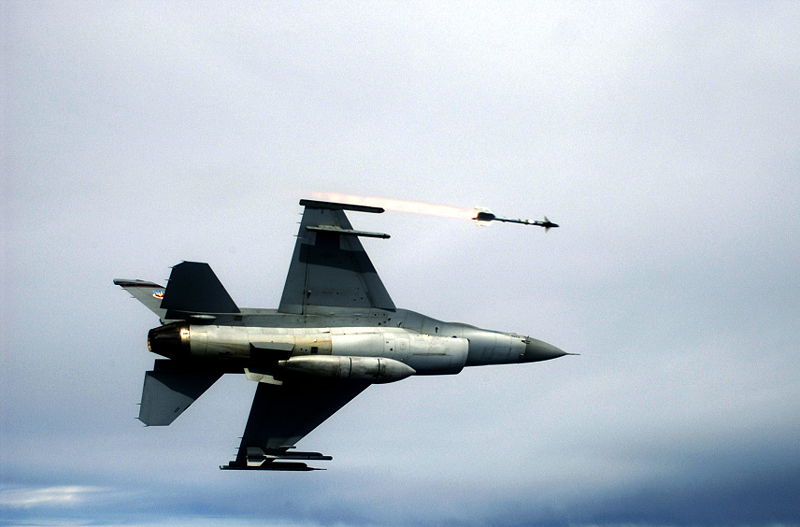
us sends cutting-edge aim-9x air-to-air missiles ukraine's new f-16 fighters fighter aircraft firing aim-9 sidewinder heat-seeking missile illustrative 800px-f-16c_fighting_falcon_fires_an_aim-9_sidewinder

Romania is learning what an expensive way this is to shoot down a cheap drone. The Romanian military spent approximately €1.5 million downing three drones that violated the country's airspace over three days, the Romanian outlet Digi24 reported.

The cost is almost all in the missiles. Most of the spending was on AIM-9X missiles fired from F-16 fighters, which cost about $400,000 each.

Three drones were downed with three missiles, for roughly $1.2 million, and adding the flight hours and aircraft maintenance brings the total for the three operations to about $1.75 million.

Those three shootdowns are the ones Romania carried out on 24, 25, and 26 July, when, for the first time, Romanian jets fired on drones violating its airspace rather than merely escorting them. Romania's Defense Ministry is now searching for more economical solutions.

This is the cost problem Ukraine already solved

Romania is meeting the exact economic trap that has defined air defense in the war next door. A Russian Shahed or Geran drone costs on the order of $10,000 to $50,000. A Western air-to-air missile that downs one costs many times that, and Romania has just spent an F-16 missile worth $400,000 on each of three drones.

Ukraine spent two years fighting its way out of that trap. It drove the cost-per-intercept down by scaling interceptor drones that kill Shaheds for a few thousand dollars each, standing up machine-gun fire groups, and reviving cheap guns, precisely because using a million-dollar missile against a $20,000 drone is a trade that bankrupts the defender long before it bankrupts the attacker.

Digi24 suggested Romania could intercept drones more cheaply with helicopters, using their onboard machine guns instead of missiles, one of the same low-cost methods Ukraine reached for.

The drones keep coming because the war is next door

The three-day run of incursions is not an anomaly but the spillover of Russia's air war on Ukraine. Romania shares a 650-kilometer border with Ukraine, and Russian strike drones aimed at Ukrainian ports on the Danube regularly stray or push into Romanian airspace, having crossed into NATO territory dozens of times during the war.

On 29 May, a Russian Geran-2 hit a residential building in Galați on 29 May, injuring people inside a NATO and EU member state, which is part of why Romania shifted from escorting strays to shooting them down.

  • ✇Euromaidan Press
  • Russo-Ukrainian war, day 1615: Russia’s ship strikes choke Ukraine’s grain corridor
    Exclusives Russia's ship strikes stall Ukraine's grain corridor. The damage is moving inland. Not one ship passed through the corridor on 22 July, at the height of harvest. The choke is now reaching Ukraine's farmers and its railways. Ukraine's strikes left Crimea's prepaid fuel coupons worthless—and the biggest chain won't refund them. It is invoking a 14-day return law, a Russian lawyer says doesn't apply—he calls it unjust enrichment. Military Oil s
     

Russo-Ukrainian war, day 1615: Russia’s ship strikes choke Ukraine’s grain corridor

27 juillet 2026 à 16:41

Russo-Ukrainian war (daily review)

Exclusives

Russia's ship strikes stall Ukraine's grain corridor. The damage is moving inland. Not one ship passed through the corridor on 22 July, at the height of harvest. The choke is now reaching Ukraine's farmers and its railways.
Ukraine's strikes left Crimea's prepaid fuel coupons worthless—and the biggest chain won't refund them. It is invoking a 14-day return law, a Russian lawyer says doesn't apply—he calls it unjust enrichment.

Military

Oil sites 1,300 km east, a port terminal near the front—Russia's deep rear had one loud night. The strikes ran from about 250 kilometers behind the front line to targets some 1,300 kilometers inside Russia, in the Udmurt Republic — one of the country's farthest interior regions.

Russia spent a fortune on this air-defense system—watch a drone undo it in seconds. New footage shows the moment a Ukrainian strike drone reaches a parked S-400 launcher and a radar in occupied Crimea.

Intelligence and technology

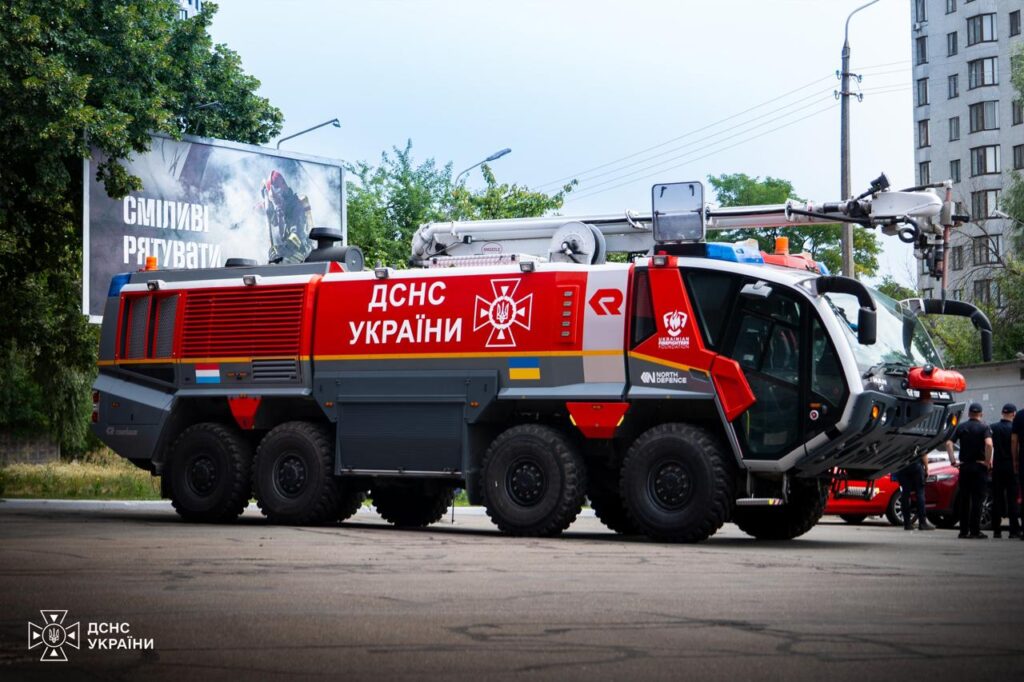
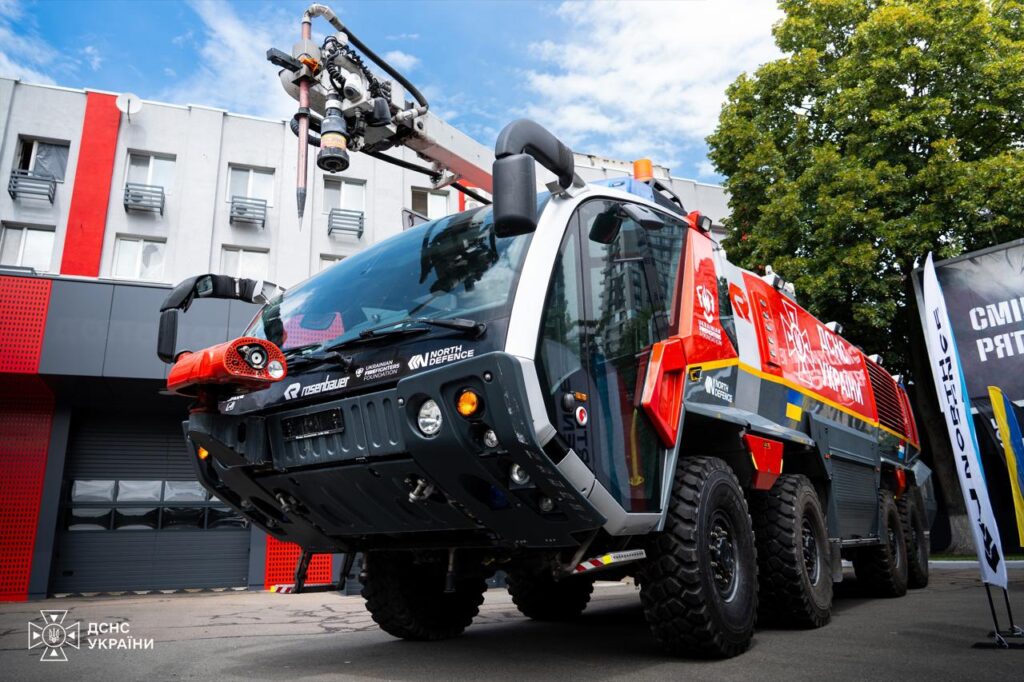
Look at this huge airport fire truck that Ukraine's Emergency Service just received from Luxembourg. Ukraine's State Emergency Service received a Rosenbauer Panther 8×8 airport firefighting vehicle, donated with support from Luxembourg's Defense Ministry and partner organizations.

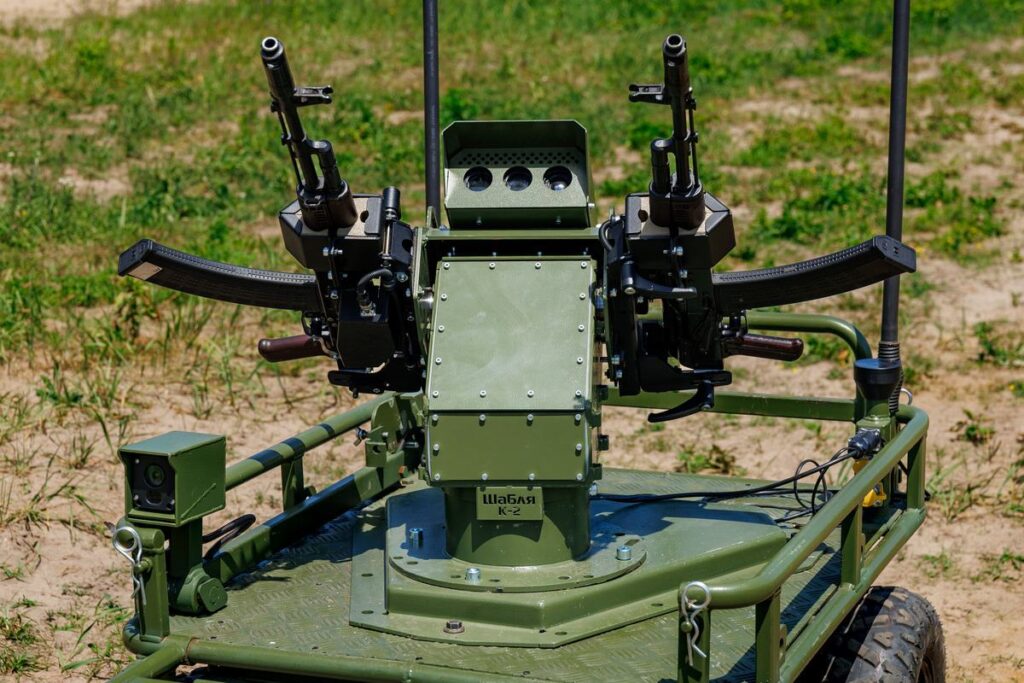
Ukraine's new remote turret trades heavy machine gun for twin AK-74s and relies on Starlink when signal drops. Ukraine's Roboneers codified the "ShaBlya K-2," a remote-controlled turret pairing two AK-74 rifles in one mount to double fire density for covering infantry at close range.

Saving Western aid: Ukraine's new armored recovery tractor can haul 30-ton MRAP off battlefield. Ukraine codified the INGUAR-4, a 6×6 armored recovery vehicle that hauls damaged MRAPs up to 30 tons off the battlefield faster and cheaper than tracked recovery vehicles.

Moscow struggles to stockpile all the missiles it needs—so it fires them straight off the line, Ukraine says. Ukraine's Air Force reads the factory stamps on downed rockets as a sign the Kremlin has lost its cushion of stockpiled firepower.

Political and legal developments

Euractiv: Italy and Greece win a fur pass for Russia inside the EU's newest sanctions round. The two nations buy more Russian sable than anyone else in the bloc, and they lobbied to keep the pelts flowing while finished coats stay off-limits.

Caught before the strike—the student mapping Poltava's grid for Russian missiles. Ukrainian counterintelligence says it exposed her in advance, seizing the devices she used to work for the enemy.

Read our earlier daily review

  • ✇Euromaidan Press
  • Look at this huge airport fire truck that Ukraine’s Emergency Service just received from Luxembourg
    Ukraine's rescuers have a powerful new firefighting truck. The vehicle fleet of Ukraine's State Emergency Service (SES) gained a Rosenbauer Panther 8×8 airport firefighting vehicle, which will soon enter service and help rescuers carry out the most difficult tasks, the SES announced. According to the UN, since the start of Russia's full-scale war, at least 16,141 civilians, including 803 children, have been confirmed killed, while 48,613 people, including 2,960 children
     

Look at this huge airport fire truck that Ukraine’s Emergency Service just received from Luxembourg

27 juillet 2026 à 13:04

A Rosenbauer Panther 8×8 airport firefighting vehicle. Source: The Ukrainian State Emergency Service

Ukraine's rescuers have a powerful new firefighting truck. The vehicle fleet of Ukraine's State Emergency Service (SES) gained a Rosenbauer Panther 8×8 airport firefighting vehicle, which will soon enter service and help rescuers carry out the most difficult tasks, the SES announced.

According to the UN, since the start of Russia's full-scale war, at least 16,141 civilians, including 803 children, have been confirmed killed, while 48,613 people, including 2,960 children, have been injured, UkrInform has reported.

The Rosenbauer Panther is a heavy airport crash-and-rescue vehicle, among the most capable firefighting machines, built to reach large fires quickly and deliver water and foam at high volume.

Donation came from Luxembourg

Its transfer to Ukraine was made possible by the charitable foundation "Ukrainian Firefighters", the company North Defence, and the Ministry of Defense of the Grand Duchy of Luxembourg, which systematically support Ukrainian emergency workers with equipment, gear, and training.

It is one more piece of European backing for the rescuers who work on the aftermath of Russian strikes on Ukrainian cities.

During the handover, Deputy Head of the SES Roman Prymush thanked the partners for their trust and constant, systematic support, saying that this help strengthens the service's ability to save lives every day.

A Rosenbauer Panther 8×8 airport firefighting vehicle. Source: The Ukrainian State Emergency Service
The rescuers who receive it work under fire

The equipment matters because of what Ukraine's emergency service now does. Beyond ordinary fires and accidents, SES crews are the ones who arrive at the sites of Russian missile and drone strikes, pulling people from collapsed buildings and fighting the fires that follow, often under the threat of a second strike aimed at the responders.

A heavy firefighting vehicle built for airport-scale fires adds capacity for exactly the large blazes that strike fuel depots, warehouses, and infrastructure. The Panther joins a steady flow of European donations of vehicles and equipment to Ukraine's rescue services.

Ukraine’s new remote turret trades heavy machine gun for twin AK-74s and relies on Starlink when signal drops

27 juillet 2026 à 12:09

The "ShaBlya K-2" remote-controlled combat module. Source: Roboneers

Ukraine has cleared a remote-controlled turret that fires two Kalashnikovs simultaneously. The Ukrainian company Roboneers completed codification of its "ShaBlya K-2" remote-controlled combat module, meaning the turret is ready for official supply to units of Ukraine's Defense Forces, per Oboronka.

The K-2's design is two AK-74 rifles in one paired mount, which doubles fire density and provides reliable cover for infantry at close range.

The ShaBlya has been one of Ukraine's most effective remote turrets since 2014, letting troops hold defensive lines and engage enemy personnel and light targets from cover

The operator chooses the firing mode based on the tactical situation: the left rifle, the right, or both at once in a volley. It is the newest variant of the ShaBlya, one of Ukraine's oldest and most proven remote turrets, developed by a volunteer group in 2014 and in service since, with the earlier ShaBlya M2 mounting heavy machine guns on the Ironclad combat robot. Codification opens the path to serial supply and scaling onto the Defense Forces' platforms.

Two rifles trade caliber for volume of fire

The twin-AK design is a specific tactical choice. Where the earlier ShaBlya mounts a single 7.62mm or 12.7mm machine gun, the K-2 pairs two 5.45mm AK-74 rifles, trading the heavier round for the ability to put more bullets downrange from a compact, cheap mount.

That suits its stated job, close-range infantry cover. A remote turret firing two rifles can pin an approaching enemy or cover a withdrawal at short distance without any soldier exposing themselves to return fire, and the volley mode doubles the suppressive output at the moment it matters.

The AK-74 is also the rifle Ukraine has in the greatest abundance, making ammunition and spares trivial to supply, unlike the belt-fed machine guns the heavier ShaBlya variants use.

Three cameras and a Starlink link

The K-2 carries the sensors a remote gunner needs to fight without directly seeing the target. It has a three-camera observation system: a wide-angle day camera for reconnaissance and surveying terrain, a narrow-angle day camera for aimed fire, and a thermal camera for working at night and in limited visibility.

Its connectivity is built for flexibility. The turret operates via both a cable and a Starlink satellite link, and Roboneers describes it as a network-independent, self-contained unit that integrates easily onto ground platforms. Its power system includes a built-in backup source and can run from a ground robotic complex or an external battery in the 20-to-60-volt range, letting the module be mounted on different types of platforms.

That connectivity note matters in the context of a known problem. Ukraine's combat robots and remote systems live or die by their control link, and keeping ground platforms connected through terrain, tree lines, and Russian jamming is the hardest part of fielding them. A turret that can fall back from cable to Starlink is built with that fragility in mind.

  • ✇Euromaidan Press
  • Euractiv: Italy and Greece win a fur pass for Russia inside the EU’s newest sanctions round
    Just three months after blocking it, the European Union has cleared raw Russian sable pelts to return to its market, according to Euractiv. The reversal sits inside the sanctions package Brussels adopted last week, after Italy and Greece pushed for the exemption. Coats made from the fur stay barred from the bloc. The EU first hit Moscow with sanctions over its 2014 seizure of Crimea, then rolled out numbered packages every few months after the 2022 full-scale invasion to ch
     

Euractiv: Italy and Greece win a fur pass for Russia inside the EU’s newest sanctions round

27 juillet 2026 à 11:53

euractiv italy greece win fur pass russia inside eu's newest sanctions round · post sable sobol-sable ukraine news ukrainian reports

Just three months after blocking it, the European Union has cleared raw Russian sable pelts to return to its market, according to Euractiv. The reversal sits inside the sanctions package Brussels adopted last week, after Italy and Greece pushed for the exemption. Coats made from the fur stay barred from the bloc.

The EU first hit Moscow with sanctions over its 2014 seizure of Crimea, then rolled out numbered packages every few months after the 2022 full-scale invasion to choke the revenue bankrolling the war, even as analysts keep debating how fast the measures actually bite. Russia uses export revenue to help finance its all-out war against Ukraine.

A reprieve tucked into the toughest package yet

The bloc had caught sable in its sanctions net only in April. Now the exemption rides inside the 21st package of measures Brussels adopted last week, the round it promoted as its heaviest economic hit on Moscow to date. The change appears in the bloc's published sanctions text.

Euractiv says the European Commission defended the carve-out on supply grounds. It argued that Russia dominates the global sable market and that European makers have few alternative suppliers.

"Apparently, it's very difficult to get them anywhere else," a senior EU official told Euractiv. 

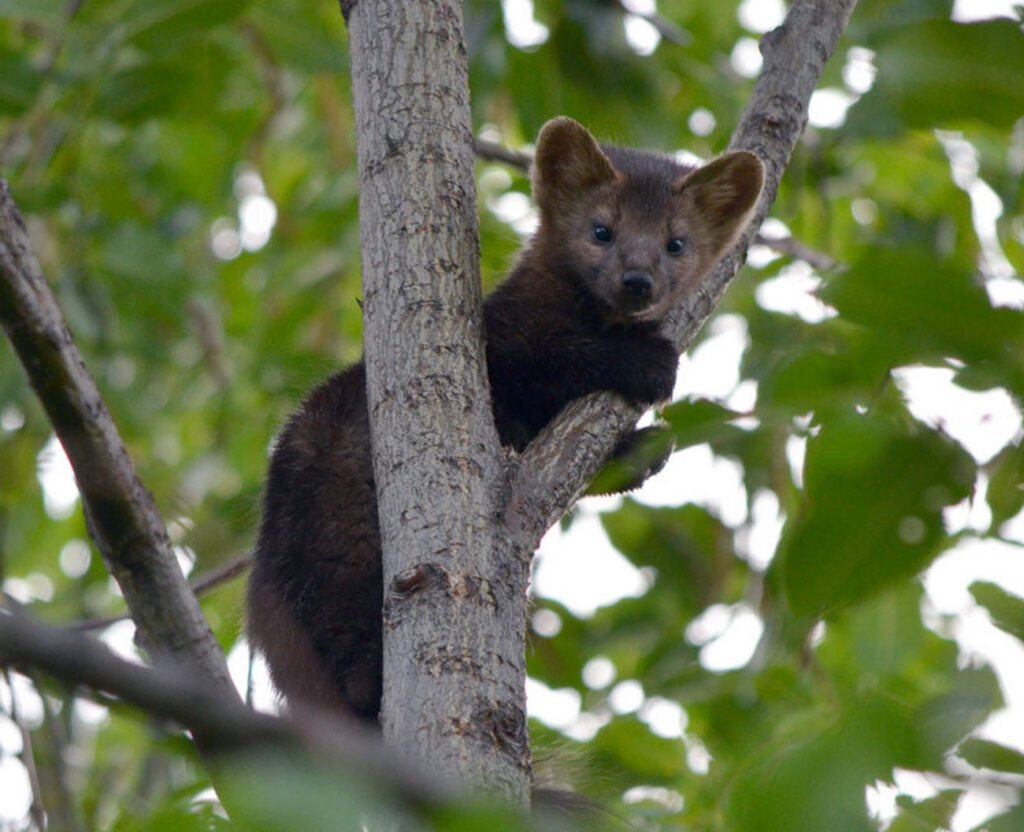
The sable is a small carnivorous animal from the forests of northern Asia, and its pelt is considered exceptionally soft and prized by luxury fashion houses. A single coat can run into the hundreds of thousands of euros. 

An EU diplomat told Euractiv that Italy and Greece drove the lobbying, the two biggest buyers of Russian pelts inside the bloc.

eu adopts largest sanctions package russia 218 names 100+ banks crypto platforms among those list · post flags member states ukraine well flag fly front parliament strasbourg eastnewsua news ukrainian
Explore further

EU adopts largest sanctions package on Russia: 218 names and 100+ banks and crypto platforms among those on the list

Coats stay out as Europe debates its own farms

The sanctions still block finished fur garments in both directions — barred from entering the bloc and from reaching Russian buyers, The EU’s wider luxury-goods restrictions also cover products such as diamonds and caviar. Greece's fur producers, clustered around Kastoria and Siatista, fought those wartime measures in 2022, warning they would kill the industry. 

It lands as Brussels weighs a bloc-wide ban on its own fur farming, after a citizens' initiative demanded an end to the practice. Only a few EU countries, including Spain, Greece, Hungary, Finland, and Poland, still have active fur farms.

  • ✇Euromaidan Press
  • Russia’s ship strikes stall Ukraine’s grain corridor. The damage is moving inland
    Russia’s strikes on civilian cargo ships have brought traffic through Ukraine’s Black Sea grain corridor—the route that carries the overwhelming share of the country’s farm exports—to a near-standstill at the peak of harvest.Traders are buying less grain from farmers, prices are climbing, and Ukraine’s state railway has begun restricting grain shipments to Odesa’s ports. The UN Security Council meets on 27 July at Kyiv’s request. This is not a blanket shutdown. The ord
     

Russia’s ship strikes stall Ukraine’s grain corridor. The damage is moving inland

27 juillet 2026 à 10:56

Russia’s strikes on civilian cargo ships have brought traffic through Ukraine’s Black Sea grain corridor—the route that carries the overwhelming share of the country’s farm exports—to a near-standstill at the peak of harvest.

Traders are buying less grain from farmers, prices are climbing, and Ukraine’s state railway has begun restricting grain shipments to Odesa’s ports. The UN Security Council meets on 27 July at Kyiv’s request.

This is not a blanket shutdown. The orders name specific shipments and destinations, and they hold until further notice.

Russian strikes drive the ships away

The corridor has not been formally closed. Shipowners simply stopped sending vessels in. Agriculture Minister Taras Vysotskyi said four or five ships entered Ukraine’s ports on 21 July and none by 22 July—the owners’ own decision, he stressed, not any Ukrainian restriction on navigation, he told Latifundist.

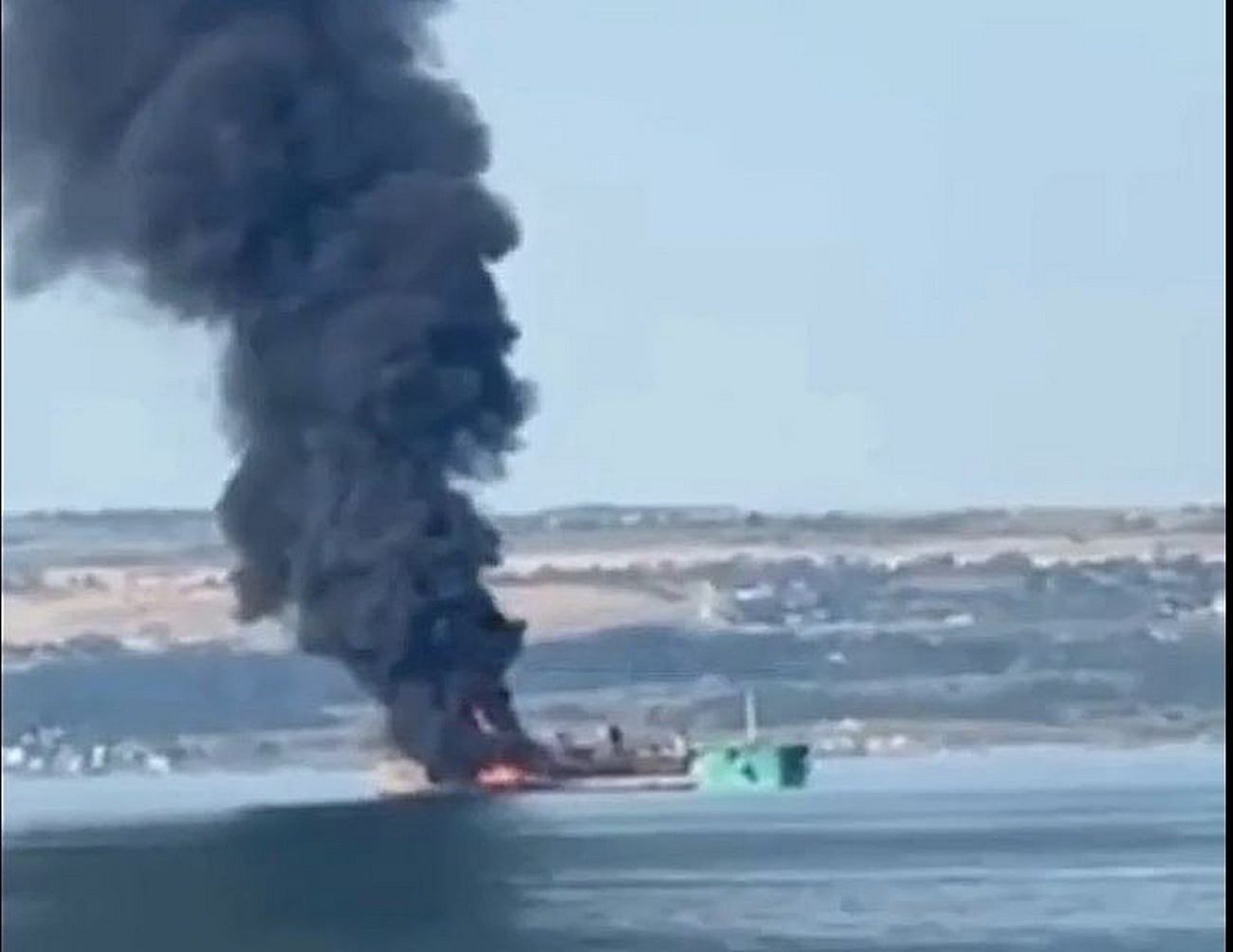
What stopped them was a run of Russian missile and drone strikes on the ships themselves. Foreign Minister Andrii Sybiha said no vessel passed through the corridor on 22 July and that Russia had bombed at least three civilian cargo ships in the preceding days, killing and wounding dozens of crew.

“Russia is holding global food security hostage,” Sybiha wrote, comparing the campaign to Iran’s targeting of energy routes in the Strait of Hormuz.

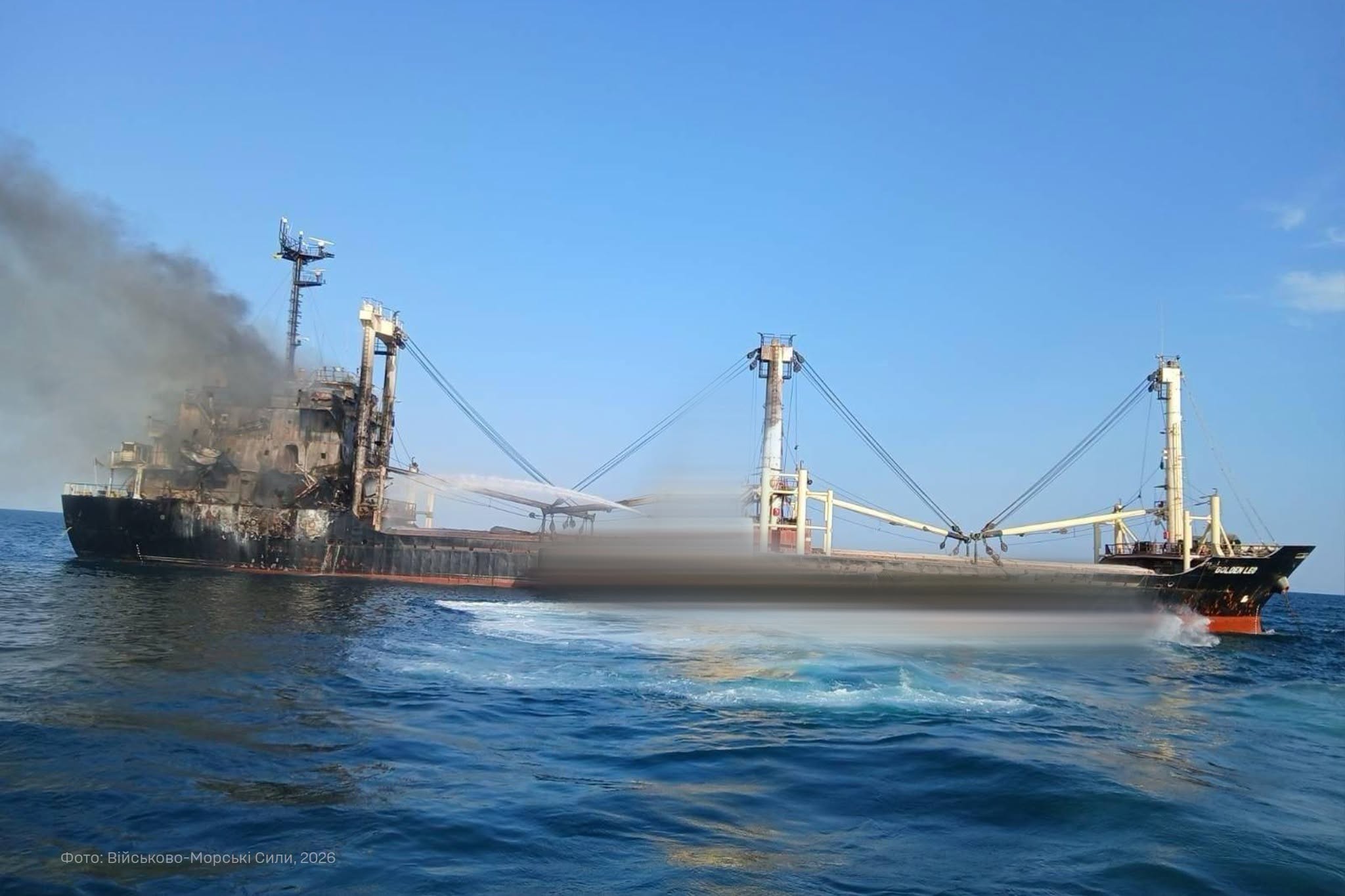
The deadliest single strike came on 19 July, when three cruise missiles hit the Golden Leo, a Turkish-owned bulk carrier, as it left Odesa loaded with grain, killing ten.

ten dead russia strikes turkish-owned bulk carrier off odesa · post civilian golden leo ablaze after russian missiles hit left cargo corn black sea 19 2026 ukraine's navy struck foreign-flagged
Explore further

Ten dead as Russia strikes a Turkish-owned bulk carrier off Odesa

Over the past month, Russian strikes have damaged 28 ships bound to or from Greater Odesa’s ports, about 11–12% of the traffic, killing 21 seafarers and wounding 34, according to Andrii Klymenko’s tally at the Institute of Black Sea Strategic Studies monitoring group.

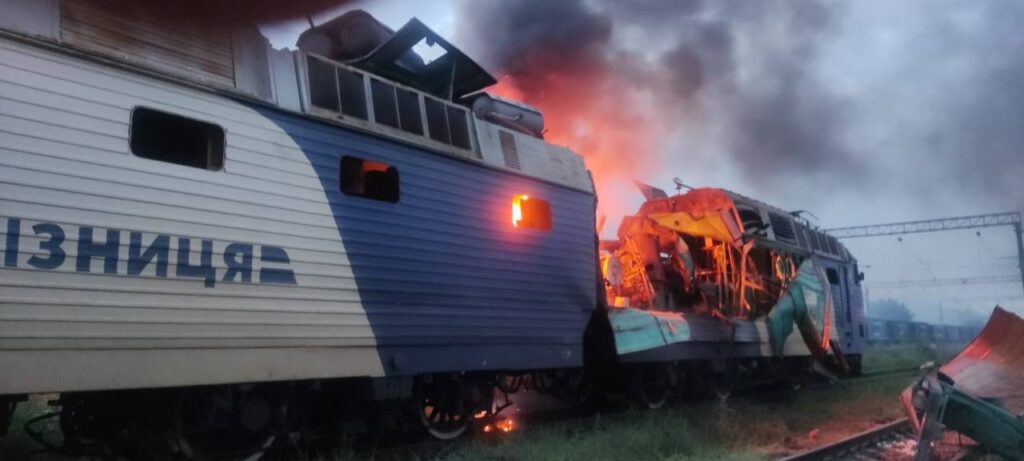
The image shows a train in Ukraine on fire, hit by a Russian drone. Source: Oleksii Kuleba

The disruption reaches Ukraine’s railways

Ukraine’s state railway has restricted grain shipments to Odesa’s ports, its restriction register shows. All freight to the Chornomorska-Export station serving the Odesa Port Plant was halted from 24 July. Barley bound for Louis Dreyfus Commodities Ukraine, one of the country’s three largest grain exporters, was restricted from 25 July, and wheat for the same firm from 26 July.

This is not a blanket shutdown. The orders name specific shipments and destinations, and they hold until further notice. The register gives no reason or volume, and Ukrzaliznytsia has not linked the orders to the shipping stoppage.

The squeeze on farmers predates the rail orders. Ukrainian traders were already cutting purchases from growers by 15 July, S&P Global reported, and one market source put cancellations at 30–40% of the shipowners due to call in late July and early August. “We won’t be trading as vessels cannot arrive at the port,” one Ukrainian seller told S&P Global.

Prices moved. December wheat on the Chicago exchange gained about $17 a metric ton in the week to 17 July, reaching $257, with the Black Sea escalation named as one of the drivers, AHDB reported. Russia and Ukraine together are forecast to supply more than 30% of the world’s wheat exports in 2026/27.

Who pays if the grain stops moving

Prolonged disruption would land hardest far from Ukraine. Egypt bought 2.4 million metric tons of Ukrainian wheat between July 2025 and February 2026; with Algeria and Indonesia, it took 60% of Ukraine’s wheat, while China, Türkiye, Libya, and Saudi Arabia bought 80% of its barley, USDA figures show.

The overland and river routes cannot make up the difference. Low water levels are limiting the Danube, Vysotskyi told Delo, and nothing can replace Ukraine’s deepwater ports in the medium term. If the delays hold, he said, Ukraine may have to store an extra 10 to 12 million metric tons of grain it cannot ship.

  • ✇Euromaidan Press
  • Saving Western aid: Ukraine’s new armored recovery tractor can haul 30-ton MRAP off battlefield
    Ukraine has a new armored tow truck built to drag wrecked MRAPs out of the kill zone. The Defense Ministry has codified the Ukrainian armored recovery tractor INGUAR-4 and cleared it for use in the Defense Forces, the Defense Ministry announced. The INGUAR-4 exists to recover the armored vehicles Ukraine cannot afford to lose. It is designed to quickly evacuate most special armored vehicles of Ukrainian and foreign make from the battlefield, and can pull the Inguar-3, t
     

Saving Western aid: Ukraine’s new armored recovery tractor can haul 30-ton MRAP off battlefield

27 juillet 2026 à 10:32

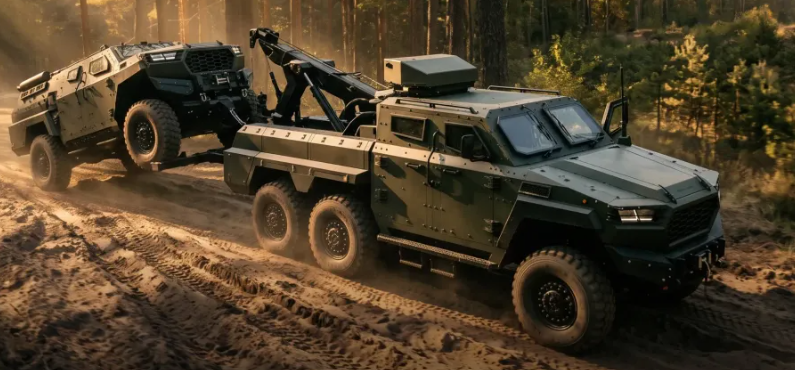
The Ukrainian armored recovery tractor INGUAR-4 Source: The Ukrainian Defense Ministry

Ukraine has a new armored tow truck built to drag wrecked MRAPs out of the kill zone. The Defense Ministry has codified the Ukrainian armored recovery tractor INGUAR-4 and cleared it for use in the Defense Forces, the Defense Ministry announced.

The INGUAR-4 exists to recover the armored vehicles Ukraine cannot afford to lose. It is designed to quickly evacuate most special armored vehicles of Ukrainian and foreign make from the battlefield, and can pull the Inguar-3, the Canadian Roshel Senator, the Turkish Kirpi, the Ukrainian "Kozak," "Novator," and "Gyurza," the American International MaxxPro, and other machines weighing up to 30 tons.

It shares its components with the Inguar-3 MRAP, which has logged years of frontline service after young engineers from the Igor Sikorsky Kyiv Polytechnic Institute developed it and the Azov Brigade tested it in Luhansk Oblast, but adds a reinforced frame, an extra drive axle, a powerful winch, and a hydraulic system for lifting and recovery.

Wheels beat tracks for pulling armor out fast

The INGUAR-4's advantage is that it is wheeled, whereas most recovery vehicles are tracked. During testing, it demonstrated its ability to recover armor under difficult combat conditions and offers advantages over the tracked combat recovery vehicles commonly used in the Defense Forces.

Those advantages are about speed and cost. The INGUAR-4 moves faster on public roads, has a greater range, requires no trailer for transport, costs less to operate and maintain, is quieter, and tires out its crew less over long periods of use, the Defense Ministry says. 

It has a 6×6 wheel formula built for heavy work. Due to its powerful engine and design, the INGUAR-4 achieves higher top speed and mobility than 8×8 wheeled recovery vehicles, including Ukraine's own BREM-3BR and BREM-4M, as well as the Canadian LAV Super Bison.

The armor protects the crew that does the recovering

Recovery crews work under fire, so the INGUAR-4 is built to protect them. The vehicle has multilayer armor of Armox steel and aluminum elements meeting STANAG 4569 Level 3, blast-protected seats, an automatic fire-suppression system, heated armored glass, and non-flammable interior materials.

Nearly 60% of the INGUAR-4's chassis and suspension components are manufactured in Ukraine, and the first vehicles are already performing tasks in the Defense Forces. That domestic content matters for the same reason the whole vehicle does: a war fought on armored vehicles, Ukraine struggles to replace its needs with the means to recover the ones it has, built from parts Ukraine can make itself.

Recovery is the unglamorous half of keeping armor in the fight

The INGUAR-4 joins a fast-expanding family of Ukrainian armored vehicles and the wider push to keep Western and domestic equipment running. Ukraine codified the Gyurza-2 and the drone-proofed MAC OWL "Sova" MRAP in June 2026, and the Inguar line alone now spans the Inguar-3 MRAP, the Inguar-7 infantry fighting vehicle concept, and this recovery variant. 

A damaged armored vehicle recovered is one that is repaired and returned to service rather than written off; in a war of attrition, it is worth nearly as much as a new one. 

  • ✇Euromaidan Press
  • Oil sites 1,300 km east, a port terminal near the front—Russia’s deep rear had one loud night
    Ukrainian long-range drones struck targets across several Russian regions overnight on 27 July, hitting sites from the front line to more than a thousand kilometers inside the country, monitoring channels reported. President Volodymyr Zelenskyy confirmed the attacks and tied them to what he calls Ukraine's plan of long-range sanctions on Moscow's war economy. The targets ran from a sea-port terminal near the war zone to oil infrastructure deep in Russia's rear. Russia built
     

Oil sites 1,300 km east, a port terminal near the front—Russia’s deep rear had one loud night

27 juillet 2026 à 10:04

oil sites 1300 km east port terminal near front—russia's deep rear had one loud night · post smoke rises over rostov-on-don sea after ukrainian drone strike overnight 27 2026 rostov

Ukrainian long-range drones struck targets across several Russian regions overnight on 27 July, hitting sites from the front line to more than a thousand kilometers inside the country, monitoring channels reported. President Volodymyr Zelenskyy confirmed the attacks and tied them to what he calls Ukraine's plan of long-range sanctions on Moscow's war economy. The targets ran from a sea-port terminal near the war zone to oil infrastructure deep in Russia's rear.

Russia built its war economy behind an interior it assumed no weapon could reach, but years of increasingly deep Ukrainian strikes have steadily eroded the protection once afforded by distance.

Belgorod: a strike near the FSB, then a missile system detonated

In Belgorod, drones hit near the Federal Security Service (FSB) compound, Russia's domestic security agency, while more explosions and fires were recorded elsewhere in the city, local outlet Pepel reported. Ukrainian reports also listed Interior Ministry offices among the targets. 

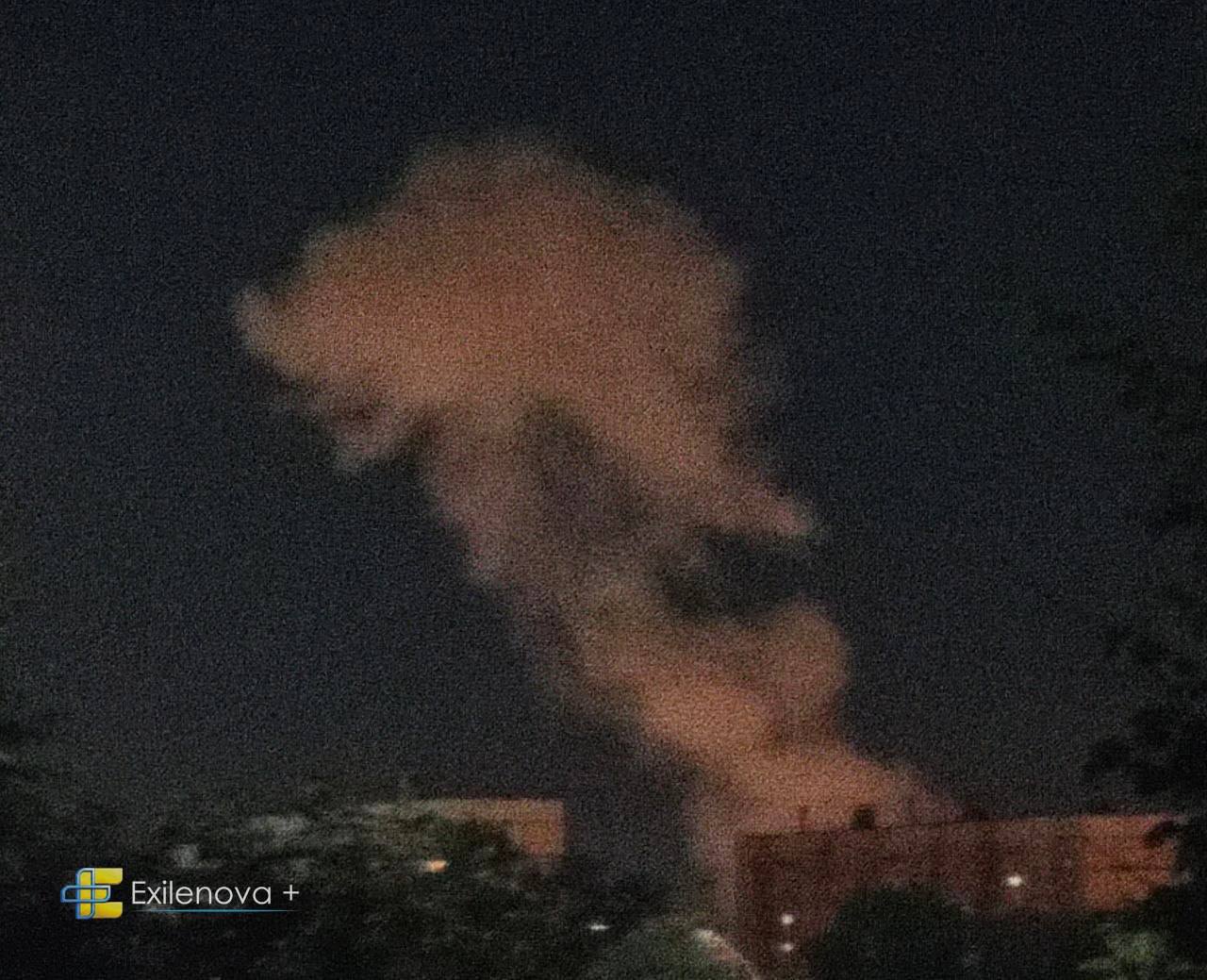
oil sites 1300 km east port terminal near front—russia's deep rear had one loud night · post smoke cloud lit fire rises over belgorod russia after ukrainian drone attack overnight
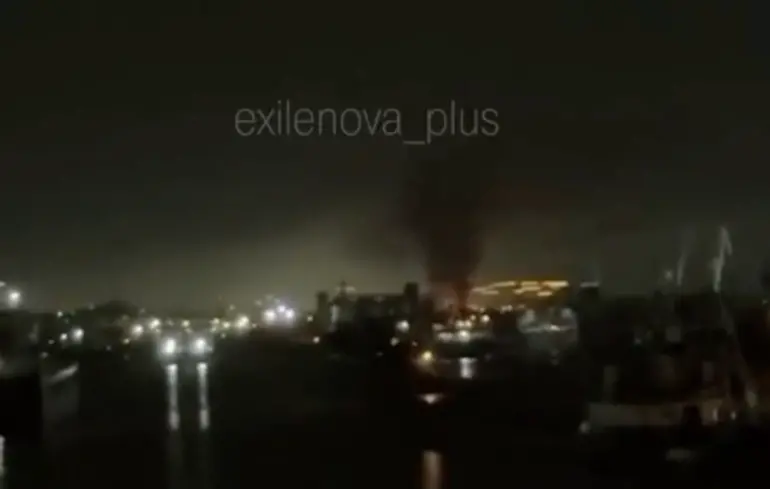
A smoke cloud lit by fire rises over Belgorod, Russia, after a Ukrainian drone attack, overnight on 27 July 2026. Photo: Exilenova+

Ukraine likely struck an air-defense system in the city too. Footage shared by Exilenova+ showed a fixed-wing drone hitting a target in the center, followed by a detonation typical of a solid-fuel missile and a column of black smoke, Militarnyi reported.

More from Belgorod pic.twitter.com/a4Iu6YN2PD

— Exilenova+ (@Exilenova_plus) July 26, 2026

Belgorod's operational headquarters confirmed the attack, claiming several apartments and more than 15 parked cars caught fire. Parts of the city lost power and water, Pepel noted.

Rostov-on-Don: fire at the sea port

At Rostov-on-Don, Astra placed the strike at the sea trade port, with smoke rising over its fourth cargo district by morning. The port sits on the Don River but holds sea-port status in the Azov–Black Sea basin, handling foreign-flagged ships bound for the Black Sea and Mediterranean.

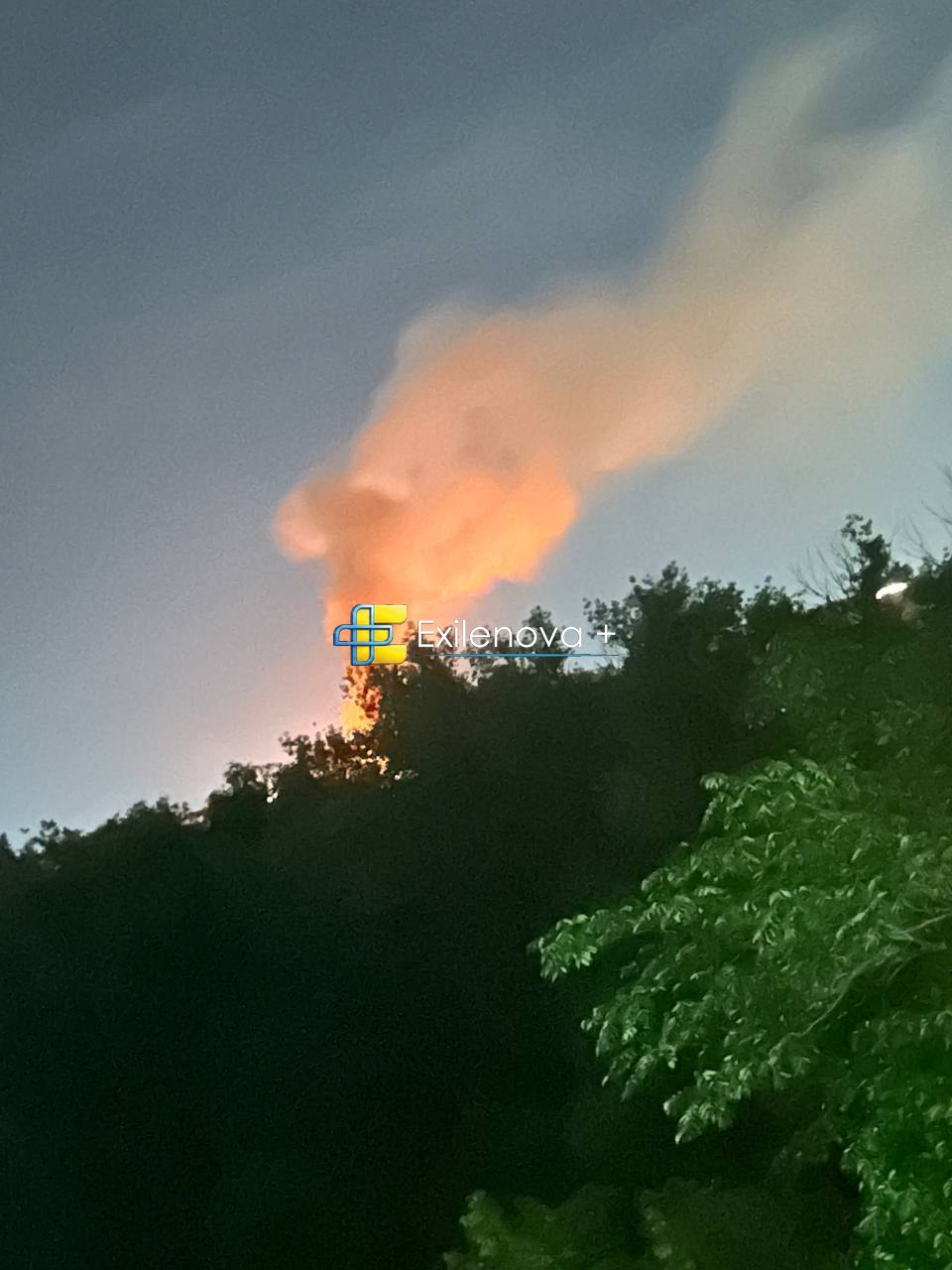
oil sites 1300 km east port terminal near front—russia's deep rear had one loud night · post flames smoke rise after ukrainian drone strike rostov-on-don 27 2026 flame rostov ukraine
Flames and smoke rise after a Ukrainian drone strike in Rostov-on-Don, 27 July 2026. Photo: Exilenova+

At the time of the strike, ship-tracking service MarineTraffic showed five civilian vessels in the Don near the city, Militarnyi reported. Rostov's governor, Yuri Slyusar, claimed fires at a private enterprise and warehouses, though his casualty figures shifted between statements.

The port already runs at minimal capacity amid Operation MoLoChKa—whose stylized name abbreviates “Moscow will fall through Crimea”—Ukraine's campaign against Russian maritime logistics, including the shadow fleet that circumvents sanctions to transport oil. Its drones have struck 200 vessels in the Azov and Black seas, according to the current stats on the drone forces website.

Udmurtia: explosions 1,300 km away

Far to the east, explosions hit the Udmurt Republic near Sarapul, Astra reported, and Exilenova+ noted smoke on the town's outskirts. The head of the republic, Aleksandr Brechalov, claimed air defenses were repelling a large attack and that several drones were shot down. 

oil sites 1300 km east port terminal near front—russia's deep rear had one loud night · post haze fire drifts over river sarapul russia's udmurt republic after ukrainian drone attack
Haze from a fire drifts over the river at Sarapul, in Russia's Udmurt Republic, after a Ukrainian drone attack, 27 July 2026. Photo: Exilenova+

Zelenskyy and the General Staff confirm

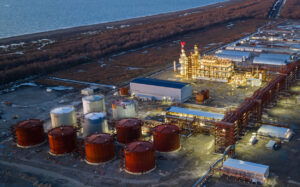
Zelenskyy confirmed drones hit an export terminal in Rostov Oblast, about 250 kilometers from the front line. Deep strikes also hit oil facilities in Yaroslavl Oblast and the Udmurt Republic, roughly 1,300 kilometers from Ukraine's border, he said. 

"This night our long-range sanctions worked in Rostov Oblast," he wrote, saying the strikes reduce Russia's ability to finance the war. 

Ukraine's General Staff said its forces struck the Rostov-on-Don terminal, recording a hit followed by a fire.

Russia's Defense Ministry claimed it downed 276 drones overnight, without saying how many got through. 

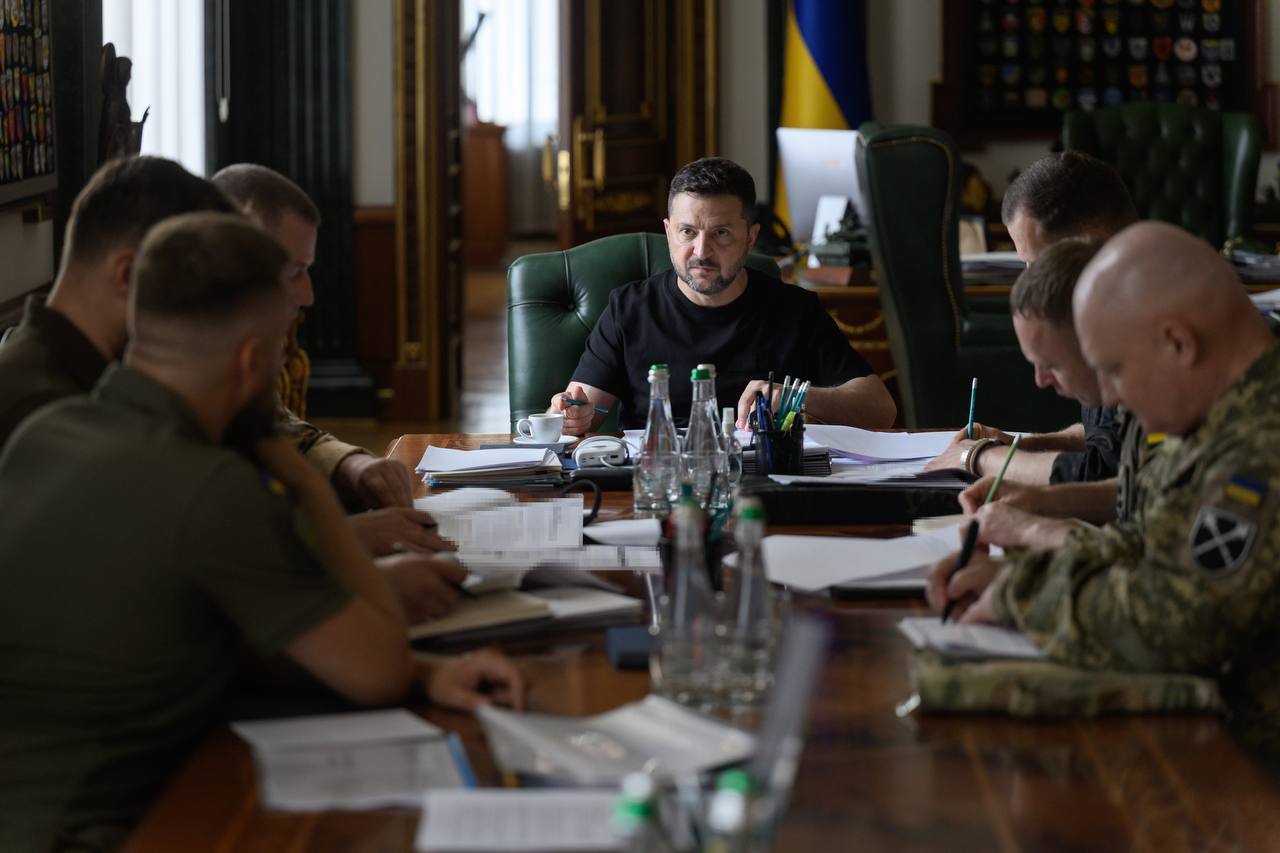
ukraine draws up new target list its long-range drones—and vows keep firing · post president volodymyr zelenskyy chairs meeting military commanders deep strikes russia 26 2026 middle news ukrainian reports
Explore further

Ukraine draws up a new target list for its long-range drones—and vows to keep firing

A week earlier, Ukraine's Security Service said drones damaged the tank farm of the Subkhankulovo oil-pumping station in Bashkortostan, then the agency's farthest strike at 1,350 kilometers.

On 25 June, Ukrainian drones hit the Tyumen oil refinery some 2,000 km out and set fire to a Wildberries warehouse in Yekaterinburg roughly 1,800 km away.

Moscow struggles to stockpile all the missiles it needs—so it fires them straight off the line, Ukraine says

27 juillet 2026 à 08:31

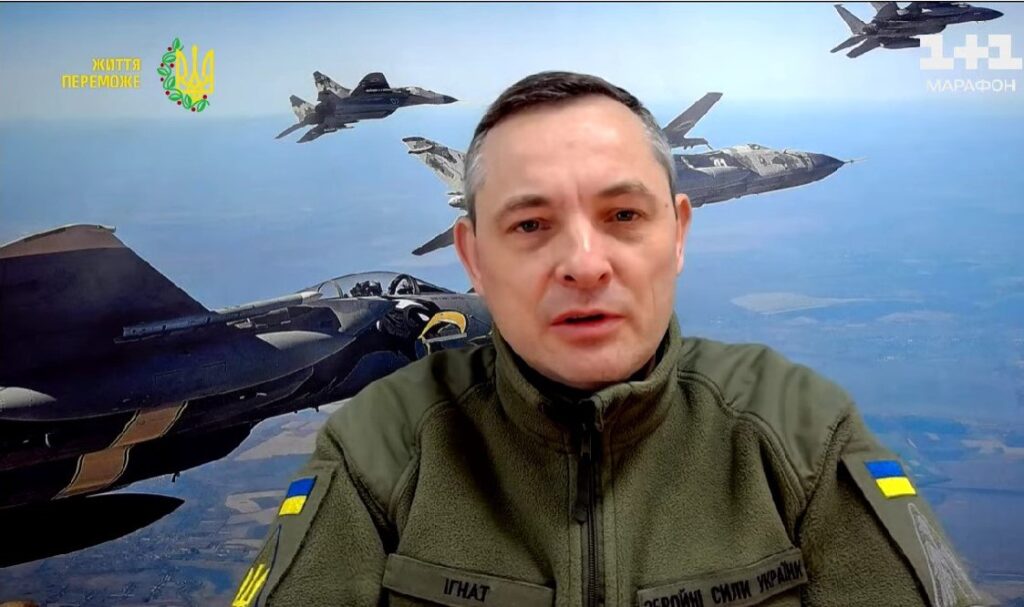
moscow can't hoard its missiles anymore—so fires straight off line ukraine says · post colonel yurii ihnat ukraine's air force communications chief speaks yedyni novyny telethon 16 2026 photo_5318 877840441197343_y

Russia has reshaped its air war on Ukraine, tilting toward ballistic missiles and daytime strikes, Ukraine's Air Force said. Recovered missile debris suggests Moscow is struggling to accumulate all the weaponry its attacks require, even as its daily drone attacks continue unchanged.

Russia's aerial assault on Ukrainian cities has grown heavier through 2026, and ballistic missiles now account for a growing share of the missile threat.

Ballistic missiles crowd out cruise missiles

Air Force spokesman Yurii Ihnat said Russian forces now favor ballistic missiles over cruise missiles, NV reported. Over the past week, Russia launched more than 50 ballistic missiles, he said. Ihnat added that Moscow cannot build up all the weaponry its attacks demand.

"Debris found with markings three weeks, a month, or two months old — that is, missiles that just came off the assembly line — shows that they can't accumulate and scale everything up there, and that they do have a problem with this," Ihnat said.

Ihnat noted that Ukrainian long-range strikes are adding to Russia's difficulties. Ukraine's Defense Forces now hit not only oil refineries but also factories with unique technologies that make missile parts, he said.

Aftermath of a massive Russian ballistic missile attack on Kyiv, 19 July 2026. Photo: Ukraine's State Emergency Service
Explore further

Russia launches record ballistic missile barrage on Kyiv, firing over 40 missiles in under an hour

Strikes move into daylight

"The enemy seeks to achieve the effect of surprise, so that our Defense Forces have less time to prepare. When everyone gets used to ballistics flying at night — from 2:00 to 4:00 — by striking in the morning, the enemy tries to achieve certain goals precisely through surprise," Ihnat said.

The daily drone barrage grinds on

Russia's overall Shahed-drone tactic has not changed, Ihnat said. Its forces keep hitting Ukraine with Shahed drones — the Iranian-designed attack drones Moscow launches in swarms — every day and every night.

Overnight on 27 July, Russia sent 147 strike drones at Ukraine, including Shahed, Gerbera, and Italmas types plus Parodiya decoys. Air-raid alerts sounded across several oblasts. A Russian strike damaged homes and a shop in Dnipro, and an attack on Zaporizhzhia killed one person.

  • ✇Euromaidan Press
  • Ukraine’s strikes left Crimea’s prepaid fuel coupons worthless—and the biggest chain won’t refund them
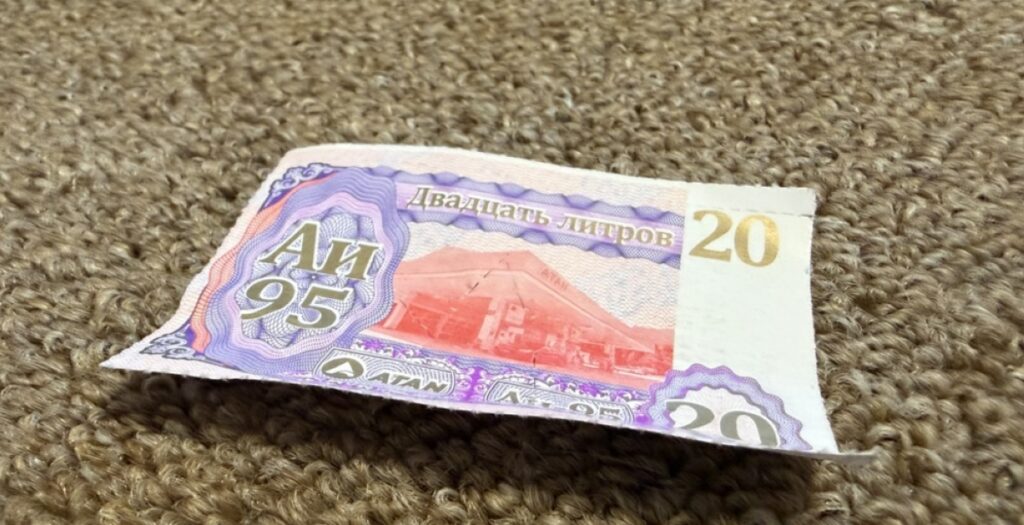
    Drivers in Russian-occupied Crimea who paid in advance for gasoline can’t use their coupons—and at the peninsula’s largest station network, they can’t get their money back either.It is the newest turn in a fuel crisis that Ukrainian strikes on Russian refineries and supply routes have driven since spring: the occupation has gone from rationing fuel to sitting on residents’ prepaid cash, with no date for when the fuel returns or the money is refunded.The two biggest chains,
     

Ukraine’s strikes left Crimea’s prepaid fuel coupons worthless—and the biggest chain won’t refund them

27 juillet 2026 à 06:56

an atan fuel coupon from occupied crimea

Drivers in Russian-occupied Crimea who paid in advance for gasoline can’t use their coupons—and at the peninsula’s largest station network, they can’t get their money back either.

It is the newest turn in a fuel crisis that Ukrainian strikes on Russian refineries and supply routes have driven since spring: the occupation has gone from rationing fuel to sitting on residents’ prepaid cash, with no date for when the fuel returns or the money is refunded.

The two biggest chains, TES and ATAN, stopped fueling ordinary customers on prepaid coupons and cards in late May, serving only emergency and life-support vehicles under an order from Crimea’s Russian-installed leader Sergey Aksyonov, Sevastopol news outlet ForPost reported.

ATAN is at least letting holders swap or reclaim expired coupons. TES, the largest network, is not: it is keeping the cash, citing a law that allows returns only within 14 days of purchase. In Sevastopol, TES coupons can be reclaimed through a feedback form; in Crimea, they cannot.

Ukrainian strikes have driven the occupation from rationing fuel to sitting on residents’ prepaid cash.

Holding the cash has a legal name

A Russian consumer-rights lawyer says that reasoning is wrong. Artur Badalov told the outlet that the 14-day rule covers goods a buyer didn’t like, not fuel that was paid for but never delivered. The provision that applies, Article 487 of Russia’s Civil Code, entitles anyone who prepaid to either the product or a refund. Refusing both, he said, is unjust enrichment.

TES says its coupons are open-ended and that, once the market stabilizes, it will honor them and meet every obligation. It did not say when.

The shortage has run for months, driven by Ukrainian strikes on refineries and on the sea and land routes into Crimea—part of a wider counter-logistics campaign.

isw ukraine has opened new phase crimea's isolation hunting seaborne fuel tankers · post russian tanker burns off sea azov coast after ukrainian drone strike ablaze exilenova+ 1 appears have
Explore further

ISW: Ukraine has opened a new phase of Crimea’s isolation by hunting seaborne fuel tankers

Sevastopol went to QR-code rationing in early June; residents have since driven to the Russian mainland or bought from resellers at a markup, and often from scammers. On 27 July, even as coupon-holders stayed frozen out, the peninsula’s energy ministry advertised fuel back on free sale at 61 stations for premium gasoline and 56 for diesel.

But fuel is not the only strain. Also on 27 July, water was cut across Simferopol, Feodosia, Alushta, and other districts, which authorities blamed on grid failures; Ukraine has hit Crimea’s power system repeatedly.

Vladimir Putin ordered officials on 9 July to arrange fuel subsidies for Crimea and Sevastopol; Aksyonov has floated a subsidy of about 85 rubles ($1.10) a liter.

Not everyone is keeping a straight face. On 26 July, Oleg Tsarev, a former Ukrainian lawmaker turned Russian collaborator, invited Russia’s energy ministry—and the officials responsible for its air defense—to relocate to occupied Crimea. Easier to fix problems, he wrote, when you can look out the window and see them.

  • ✇Euromaidan Press
  • Russia spent a fortune on this air-defense system—watch a drone undo it in seconds
    Ukrainian drone operators hit the S-400 Russian long-range air-defense battery in occupied Crimea overnight, Ukraine's Defense Intelligence (HUR) reported on 27 July. They burned a missile launcher and the radar that lets the system detect incoming aircraft and missiles, then published video of the strikes.  The raid extends a years-long effort to blind and disarm Russia's air cover over the peninsula. Russian radars and launchers have been a standing priority for Ukrai
     

Russia spent a fortune on this air-defense system—watch a drone undo it in seconds

27 juillet 2026 à 06:51

russia spent fortune air-defense system—watch drone undo seconds · post russian s-400 triumf launcher occupied crimea moments before ukrainian strike overnight 25–26 2026 video ukraine's defense intelligence (hur) ukraine news

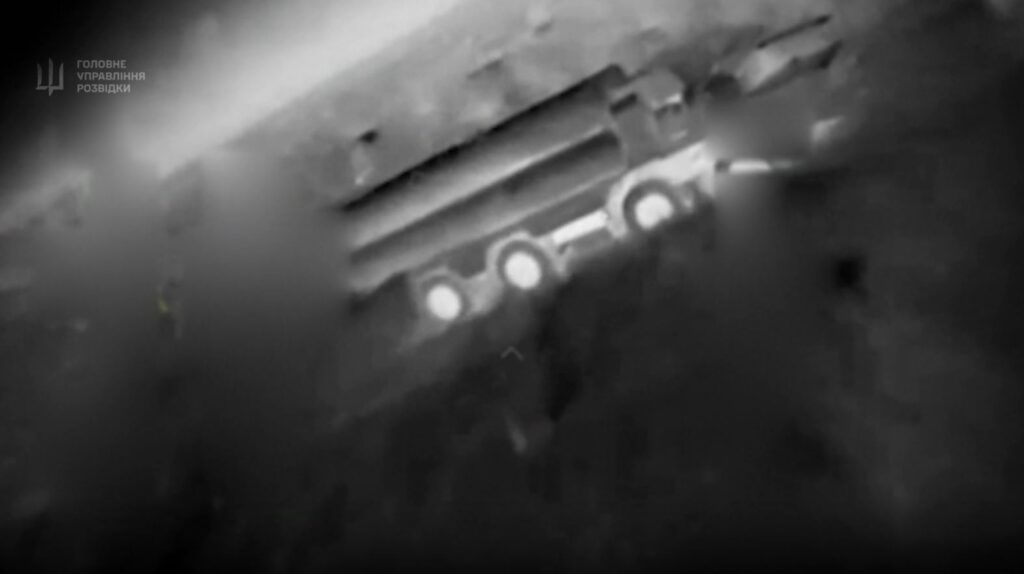
Ukrainian drone operators hit the S-400 Russian long-range air-defense battery in occupied Crimea overnight, Ukraine's Defense Intelligence (HUR) reported on 27 July. They burned a missile launcher and the radar that lets the system detect incoming aircraft and missiles, then published video of the strikes. 

The raid extends a years-long effort to blind and disarm Russia's air cover over the peninsula. Russian radars and launchers have been a standing priority for Ukraine's strike units, because clearing them opens the sky for the drones and missiles that follow. Every system removed is one less set of eyes watching for the next raid.

The strike

Overnight on 25–26 July 2026, operators from HUR's Unmanned Systems Department tracked down a Russian S-400 Triumf system on the occupied peninsula. They set fire to its launcher and to the 96L6 radar that feeds it targeting data, the agency reported while sharing the footage. The S-400 is one of Moscow's high-value air-defense complexes.

The video first follows the point of view of a one-way attack UAV — a cheap drone built to crash into its target — as it approaches the parked launcher, the picture cutting out the instant it hits. A second drone films the blast from a distance. A third then lines up the system's radar.

The drones Russia's S-400 was built to shoot down torched two of its parts

The S-400 SAM system is designed to knock aircraft and missiles out of the sky from up to 400 km away. Overnight on 25–26 July, that didn't save the launcher and radar sitting in occupied Crimea, when… pic.twitter.com/lyPmnWWAMj

— Euromaidan Press (@EuromaidanPress) July 27, 2026

Ukrainian units have torched S-400 radars and launchers on the peninsula before, part of a steady push against Russia's air cover, targeting long-, medium-, and short-range systems, different types of surveillance radar, and even the mobile fire groups — the drone-hunting squads with machine guns.

What the S-400 and its radar do

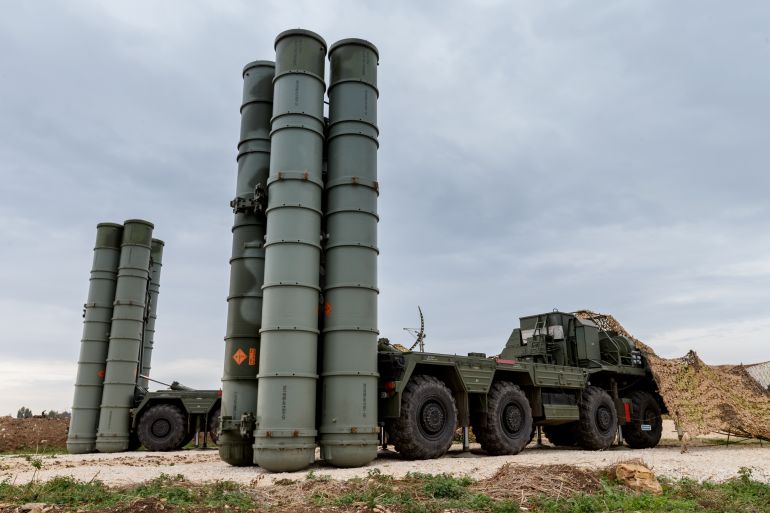
The S-400 Triumf is Russia's long- and medium-range air-defense system, built to shoot down aircraft, cruise missiles, and ballistic missiles. Depending on the missile it carries, it can engage aerodynamic targets up to 400 km away and ballistic targets up to 60 km with its 40N6E and 48N6 interceptors.

erdoğan asks putin take back russian s-400 sam systems move win trump’s favor · post russia's air defense system launchers ministry ap_403380498754 ukraine news ukrainian reports
A Russia's S-400 air defense system launchers. Illustrative photo: Russian Defense Ministry.
The 96L6 is the system's key target-detection radar. It works in the C-band, can track up to 100 objects at once, and spots targets at very low, medium, and high altitudes out to 300 km. Take out such radars and the launchers have nothing to aim by.

The wider squeeze on Crimea

The strike came amid a run of attacks tightening around the occupied peninsula. Overnight on 27 July, explosions were followed by power outages reported in at least Simferopol and Sevastopol. Fire broke out at a main substation in Bakhchysarai and near the Black Sea Fleet's 133rd separate logistics brigade close by.

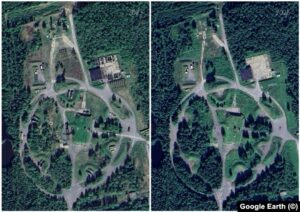
russia's arctic bases sit near-naked air defenses vanish guard moscow refineries burning inland · post defense site near severodvinsk northwestern russia 2023 (left) 2025 (right) its missile systems removed satellite
Explore further

Russia’s Arctic bases sit near-naked as air defenses vanish to guard Moscow and refineries burning inland

A night earlier, Ukraine's Defense Forces struck a Chornomornaftogaz gas facility near Vnukove and a relay station used to guide Russia's Geran and Gerbera long-range attack drones near Chornomorske.

Occupied Yalta stayed without power as of 26 July. In nearby Alushta and its villages, occupation authorities declared a state of emergency on 25 July after more than 48 hours of darkness, opening the door to cash compensation for residents. Yalta's occupiers instead set up so-called assistance centers where people can charge phones, power banks, and flashlights, under restrictions and video surveillance. Some residents complain that poor-quality fuel may be causing their generators to fail.

Ukraine's drone-force commander Robert Brovdi said earlier that the liberation of occupied Crimea is already underway, without a classic ground assault. The main task, he said, is to cut off the Russian grouping on the peninsula from the resources it needs to sustain itself.
  • ✇Euromaidan Press
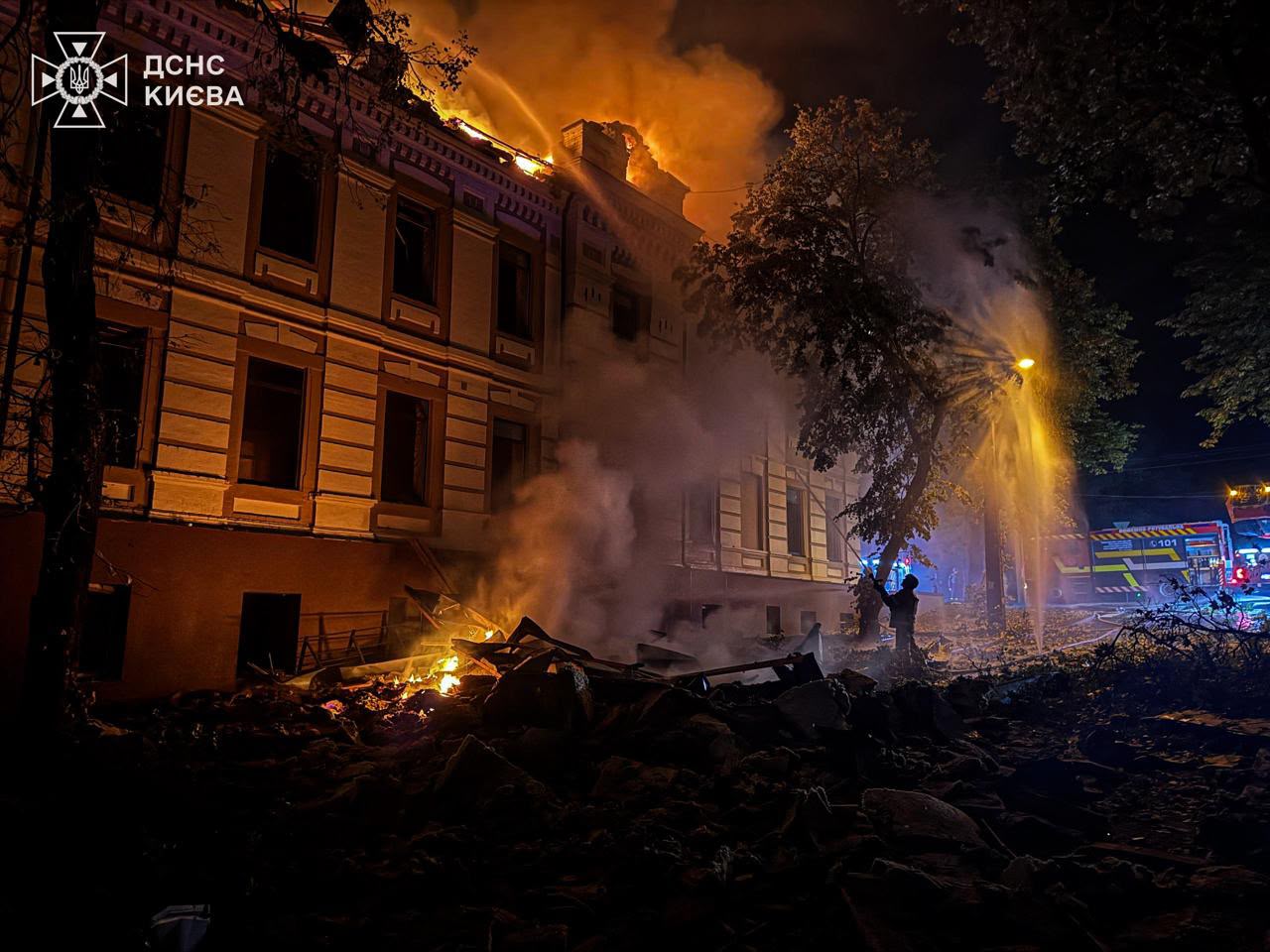
  • Caught before the strike—the student mapping Poltava’s grid for Russian missiles
    Ukraine's counterintelligence of a spy agency has detained a young woman accused of helping Russia prepare an air strike meant to leave Poltava—a city in central Ukraine—without power, the Security Service of Ukraine (SBU) said. Investigators say the student mapped the city's energy sites in Poltava and the surrounding area and filmed Ukrainian air-defense units for Russian handlers before any strike could land. She now sits in custody and faces life imprisonment with c
     

Caught before the strike—the student mapping Poltava’s grid for Russian missiles

27 juillet 2026 à 04:20

caught before strike—the student mapping poltava's grid russian missiles · post sbu officer detains university suspected scouting energy facilities poltava oblast help russia plan air strike 5420258237069597677 ukraine news ukrainian

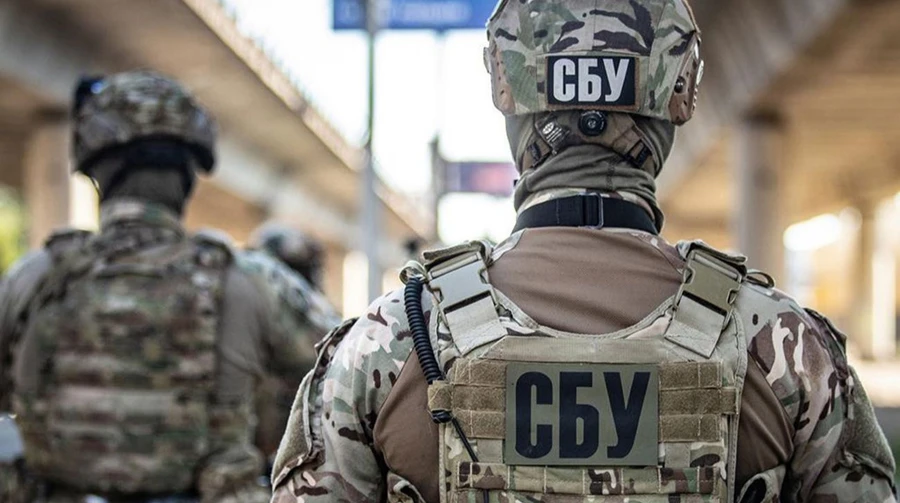
Ukraine's counterintelligence of a spy agency has detained a young woman accused of helping Russia prepare an air strike meant to leave Poltava—a city in central Ukraine—without power, the Security Service of Ukraine (SBU) said. Investigators say the student mapped the city's energy sites in Poltava and the surrounding area and filmed Ukrainian air-defense units for Russian handlers before any strike could land. She now sits in custody and faces life imprisonment with confiscation of property.

As the war drags on, Russia increasingly fishes for hard-up civilians over the internet, recruiting people inside Ukraine to do its scouting and sabotage cheaply and at arm's length.

A student lured by "easy money"

The suspect is a student at a local university in Poltava Oblast, the SBU reported. She came to the attention of Russia's Federal Security Service (FSB) while hunting for easy money in Telegram channels, according to the agency. After recruiting her, her handlers set her to work in her own hometown.

Mapping the grid, filming the defenses

Under the guise of walks, she moved through the city and surrounding area to fix the locations of energy facilities that feed the oblast center and nearby districts. Those were the sites Russia was preparing to hit from the air. She also rode around Poltava Oblast by taxi, taking photos and video of Ukrainian air-defense units. Officers say they exposed her in advance and detained her before any strike. During a search, they seized smartphones and computer equipment holding evidence of her work for the enemy.

Investigators served her a suspicion notice under Part 2 of Article 111 of Ukraine's Criminal Code, which covers high treason committed under martial law. She is being held without the right to bail. She faces life imprisonment with confiscation of property.

bomb-maker working russia's military intelligence zaporizhzhia loses freedom 15 years · post security service ukraine officers during operation sbu news ukrainian reports
Explore further

Bomb-maker working for Russia’s military intelligence in Zaporizhzhia loses his freedom for 15 years

What came before

Russia keeps leaning on Ukrainians recruited online to scout for its strikes, and Ukraine's security service reports such arrests regularly. Days earlier, officers detained another suspect in Kharkiv Oblast, accused of planting hidden cameras to guide Russian attacks. The kind of energy sites she scouted have sat at the center of Russia's long campaign against Ukraine's power grid, which has forced blackouts through successive winters.

Russo-Ukrainian war, day 1615: Ukraine’s top commanders drew up a new target list for long-range drones and vowed to keep striking, after more than 1,000 strikes into Russia this year

27 juillet 2026 à 04:22

russo-ukrainian war day 1615 ukraine's top commanders drew up new target list long-range drones vowed keep striking after more than 1000 strikes russia year · post (daily review) ukraine news

Exclusives

EU sanctions Georgia’s only oil refinery over processing Russian crude. Company says it will switch suppliers. Brussels has imposed sanctions on Georgia's only oil refinery for processing Russian crude, expanding efforts to curb Moscow's energy revenues while giving the company six months before the restrictions take effect.
A Cold War submarine hunter is Ukraine’s newest Shahed killer. Ukraine's tiny interceptor drones need a little help getting into the air. An old naval helicopter is just the thing.

Military

Ukraine draws up a new target list for its long-range drones—and vows to keep firing. The updated priorities came out of a meeting of Kyiv's top commanders, who cleared the way for a campaign that has already run more than a thousand strikes into Russia this year.

Russia is massing for Dobropillia again using quad bikes and motorcycles, Ukraine’s National Guard says. Defenders of Ukraine's Pokrovsk sector report the enemy clearing mines and flying drones to move small storming groups toward the town north of the ruins of Pokrovsk.

As of 27 JUL 2026, the approximate losses of weapons and military equipment of the Russian Armed Forces from the beginning of the invasion to the present day:

  • Personnel: 1440580 (+1590)
  • Tanks: 12225 (+8)
  • APV: 25032 (+13)
  • Artillery systems: 46831 (+37)
  • MLRS: 1969
  • Anti-aircraft systems: 1519
  • Aircraft: 439
  • Helicopters: 354
  • UAV: 429555 (+1269)
  • Cruise missiles : 4950 (+6)
  • Warships/boats: 34
  • Submarines: 2
  • Vehicles and fuel tanks: 126302 (+491)

Intelligence and technology

Russia can’t fill its own ranks—so it asks North Korea for 30,000 more soldiers and new missile launchers, Ukraine says. Ukrainian intelligence points to reception sites readied in Voronezh Oblast since June, President Zelenskyy said.

Russia’s destroyed vehicles are being melted into buggies that save Ukrainian lives under drone fire. Two Ukrainian army corps received 10 new "Predator" evacuation buggies, a volunteer-built vehicle partly made from aluminum salvaged from destroyed Russian equipment.

International

Poland promised a 700-kilometer shield against Russia—two years on, satellites show four short fortified zones. Warsaw has spent since October 2024 on the project, yet only about 10 kilometers of actual linear fortifications have gone up. The situation in the Baltic States is even worse, a French analyst says.

Romania knocks a third Russian drone from its sky in 72 hours. The Sunday intercept happened over the sea near the Danube delta, as Bucharest prepared to lodge a protest with Moscow.

Humanitarian and social impact

Russia kills a 9-year-old girl in a Chernihiv supermarket, bombs Zaporizhzhia. Two people died at the supermarket and a 46-year-old man was killed by guided bombs hundreds of kilometers south, in daytime attacks on two Ukrainian cities.

Russia destroys a Home Depot-style megastore in Kryvyi Rih—the third one it has erased in the same region since 2024. Shahed drones set the Epicenter hypermarket ablaze on 26 July, and firefighters battled a blaze covering more than 16,000 square meters.

Russia hit Palau-flagged grain ship twice as it left port for Greece. Two sailors are missing. Eight crew members were rescued.

New developments

Works Ukraine evacuated for safekeeping are caught not by Russian shelling but by Polish ownership claim in court. Heirs of Polish prince Andrzej Lubomirski are suing to keep two paintings from going home.

Read our earlier daily review here.


❌