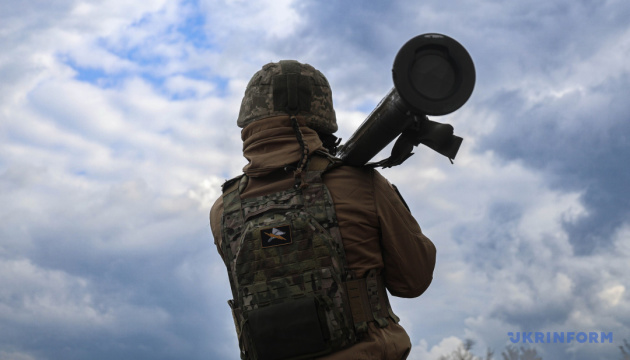
Ukraine’s Defense Forces have narrowed the Russian bridgehead on the western bank of the Oskil River and complicated Russian logistics for its advance toward Kupiansk.
Ukraine’s Defense Forces have narrowed the Russian bridgehead on the western bank of the Oskil River and complicated Russian logistics for its advance toward Kupiansk.
Exclusives
Ukraine spent three years learning to catch Russian drones—so Russia made them fly faster. Russia's jet-powered drones don't beat Ukraine's missile defense. They threaten the cheap layer that keeps it affordable—and they are turning the war into a contest over reaction time.
Russia keeps striking Ukraine’s energy system. Winter resilience plans are less than half complete. Ukraine is racing to shield heat, water, and rail from Russian strikes—but new locomotive
The United States will continue facilitating negotiations between Moscow and Kyiv and is calling for an immediate ceasefire and a diplomatic end to the war.
The United States will continue facilitating negotiations between Moscow and Kyiv and is calling for an immediate ceasefire and a diplomatic end to the war.
North Korea's involvement in Russia's military aggression against Ukraine is a clear violation of international law, and the country must be held accountable along with Moscow's other allies.
North Korea's involvement in Russia's military aggression against Ukraine is a clear violation of international law, and the country must be held accountable along with Moscow's other allies.
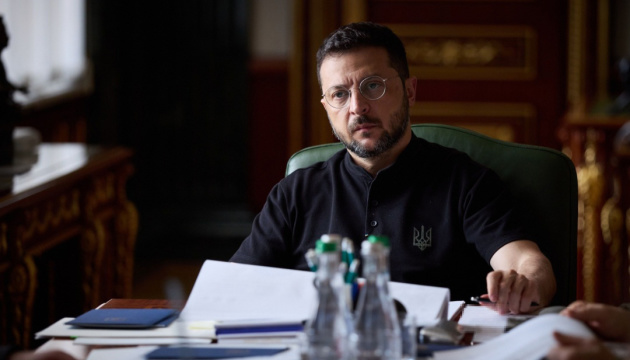
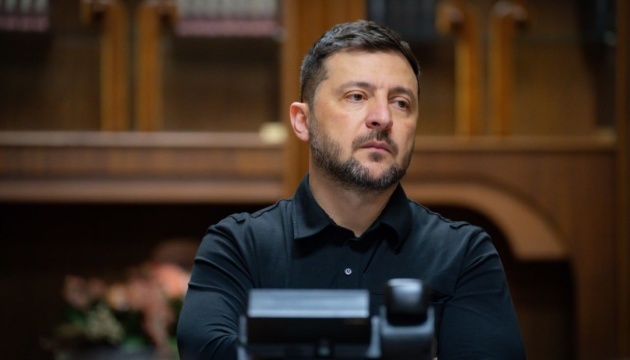
Ukrainian President Volodymyr Zelenskyy warned airlines, insurers, and other aviation stakeholders on 1 September that Russian airspace is becoming increasingly dangerous as Ukrainian drones operate deeper inside the country.
The warning comes as Ukraine has increasingly carried out long-range drone strikes deep inside Russia, targeting military, energy, industrial, and other infrastructure. Russian authorities have repeatedly reported temporary airport closures and fli
Ukrainian President Volodymyr Zelenskyy warned airlines, insurers, and other aviation stakeholders on 1 September that Russian airspace is becoming increasingly dangerous as Ukrainian drones operate deeper inside the country.
The warning comes as Ukraine has increasingly carried out long-range drone strikes deep inside Russia, targeting military, energy, industrial, and other infrastructure. Russian authorities have repeatedly reported temporary airport closures and flight disruptions during drone attacks as part of air defense measures.
“We want to warn every airline that uses Russian airspace, every insurer, and everyone who still uses Russia’s key airports: Russian airspace is becoming completely unsafe,” Zelenskyy said.
“Russian airspace will effectively be closing”
Zelenskyy said Ukraine does not intend to threaten civilian aviation or civilian aircraft, but warned that the growing presence of drones over Russia means airlines must account for the risks.
“We in Ukraine do not want innocent lives to be lost. That is why we are warning our partners: the safe days in Russia’s skies are over,” he said.
Zelenskyy accused Russian authorities of failing to properly inform airlines about the risks, saying they have not adequately communicated the growing danger posed by drones in Russian airspace.
“Although the Russian authorities are not properly informing people about this, Russian airspace will effectively be closing,” Zelenskyy said, arguing that Russia’s war against Ukraine is making its own airspace unsafe.
Zelenskyy warned that the growing scale of Ukrainian drone operations over Russia will have to be factored into aviation risks. “There will simply be drones in Russia’s skies on a scale that has to be taken into account,” he said.
He called on foreign ambassadors in Ukraine and Russia to relay the warning to their governments, and said Ukraine’s Foreign Ministry and other institutions would provide international organizations with information about the risks to Russian airspace.
“Drone-infested skies are no place for civilian aviation,” Zelenskyy said.
Ukraine closed its skies in 2022. Russia has kept flying
The warning highlights a stark difference between the two countries. Ukraine has kept its airspace closed to civilian aviation since Russia launched its full-scale invasion in February 2022.
The risk is familiar to Ukraine. Russian forces have repeatedly attacked Ukrainian airports and aviation infrastructure during the full-scale invasion, making the continued operation of civilian aviation impossible.
Russia is also responsible for the 2014 downing of Malaysia Airlines Flight MH17 over occupied eastern Ukraine, which killed all 298 people aboard, showing the danger Russia’s military activities can pose to civilian aviation.
Russia, meanwhile, has continued operating major airports and regular passenger flights despite Ukrainian drones increasingly reaching deep into its territory. EASA has warned that Russian air defenses responding to Ukrainian drone and missile attacks could pose risks to civilian aircraft, including through misidentification, particularly around major airports.
Russian airports increasingly disrupted by Ukrainian drones
Russian authorities have repeatedly restricted or suspended flights at Moscow and other airports during Ukrainian drone attacks. The disruptions have generally come as Russia activates air defenses against drones targeting military, energy, industrial, and logistics infrastructure.
Russia has also moved toward broader restrictions on civilian aviation. In June, Russia imposed new restrictions on light aircraft around Moscow and neighboring regions, while regular passenger and charter flights remained exempt.
The result is a growing disruption to Russian aviation even as Moscow continues to keep its main passenger airspace open: Ukrainian drones are not being used to target civilian aircraft, but their increasing presence is making normal aviation operations more difficult and forcing Russia to restrict or suspend flights during attacks.
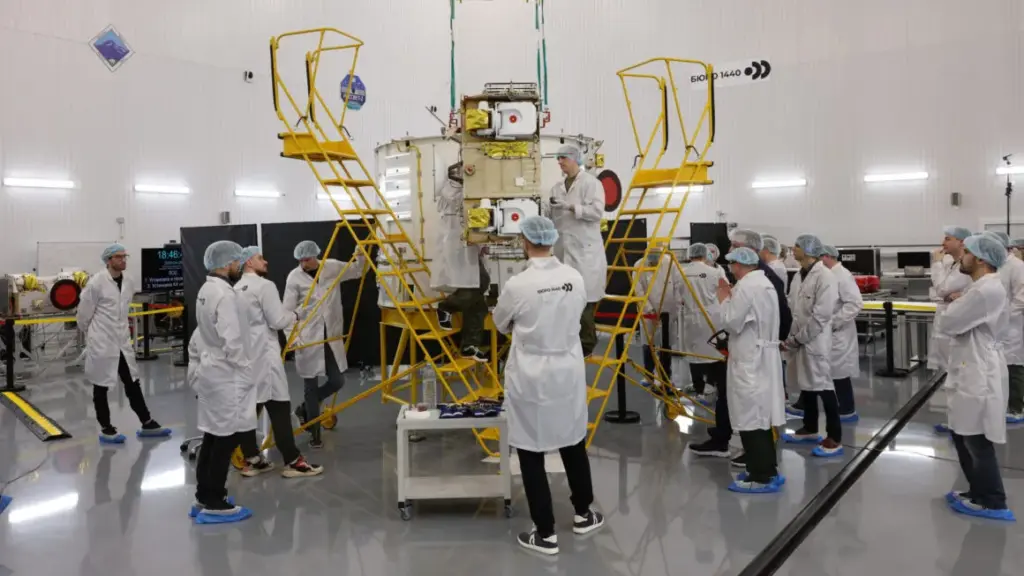
The Rassvet communications satellites Moscow launched in July are likely to have shorter operational lifespans than planned because atmospheric drag increases at their current altitudes, the Institute for the Study of War (ISW) reported.
Moscow accelerated Rassvet’s deployment after its forces lost unauthorized Starlink access in February. A complete network could support battlefield communications and remotely controlled strikes against Ukraine, but existing satellites
The Rassvet communications satellites Moscow launched in July are likely to have shorter operational lifespans than planned because atmospheric drag increases at their current altitudes, the Institute for the Study of War (ISW) reported.
Moscow accelerated Rassvet’s deployment after its forces lost unauthorized Starlink access in February. A complete network could support battlefield communications and remotely controlled strikes against Ukraine, but existing satellites provide only brief connectivity windows. The latest setback will likely delay continuous coverage, ISW assessed.
Russian forces had relied heavily on unauthorized Starlink terminals for frontline communications, drone operations, and command-and-control. Ukraine and SpaceX blocked them on 5 February, disrupting Russian communications and assaults across several sectors. A Russian-controlled network could reduce Moscow’s dependence on SpaceX and illicit supply chains for terminals.
None of the 16 satellites launched on 19 July had reached 550 kilometers as of 31 August, according to N2YO tracking data cited by ISW. Many remained between 300 and 400 kilometers, some were gradually losing altitude, and at least two were reportedly heading toward atmospheric reentry.
ISW identified 550 kilometers as the altitude reached by the successful first-batch satellites, while reporting 870 kilometers as Rassvet’s intended operational altitude. At lower altitudes, satellites must use more fuel to counter greater atmospheric drag, shortening their operating lives.
Of the 32 Rassvet satellites launched in 2026, only 12—all from the first batch launched on 24 March—reached sustainable altitudes. They remained at roughly 550 kilometers and provided two daily connectivity windows over Ukraine totaling up to 90 minutes, ISW reported.
Russia needs at least 200–300 working satellites for stable, round-the-clock coverage, presidential defense-technology adviser Serhii “Flash” Beskrestnov assessed. Bureau 1440 plans “dozens” more launches and “hundreds” more satellites, but Russia depends on the scarce, costly Soyuz-2.1b rocket.
Only six to eight Soyuz-2.1b launches of all types have occurred since 2022, limiting Russia to a maximum of 128 Rassvet satellites over four years at that rate, ISW assessed.
Ukraine struck the Progress Space Rocket Center, which builds Soyuz-type vehicles, on 14–15 August and attempted to strike Plesetsk Cosmodrome on 23 August, ISW noted. Both Rassvet batches launched from Plesetsk, showing Ukraine can threaten the rockets and launch infrastructure required to expand the constellation, the institute assessed.
What is Rassvet?
Rassvet, meaning “Dawn,” is a low-Earth-orbit broadband constellation developed by Bureau 1440 as Russia’s domestic alternative to Starlink. Its 5G-based satellites are intended to provide high-speed, low-latency internet independently of SpaceX.
Although initially designed for civilian communications, a mature network could provide Russian forces with battlefield connectivity, command-and-control links, and connections to long-range drones. Moscow aims to place 292 satellites in orbit by the end of 2027 and 924 by 2035.
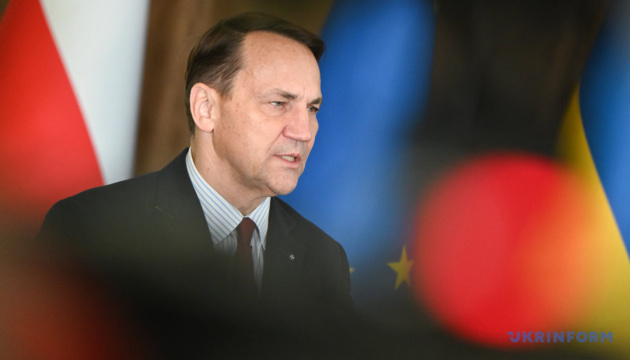
Polish Foreign Minister Radoslaw Sikorski has said that the consequences of Russia's war against Ukraine extend far beyond Europe, while the security situation in the Euro-Atlantic and Indo-Pacific regions is becoming increasingly interconnected.
Polish Foreign Minister Radoslaw Sikorski has said that the consequences of Russia's war against Ukraine extend far beyond Europe, while the security situation in the Euro-Atlantic and Indo-Pacific regions is becoming increasingly interconnected.
Former Ukrainian Defense Minister Mykhailo Fedorov has announced the launch of a new defense technology company, with Palantir CEO Alex Karp set to become its first major investor.
The venture comes after Fedorov’s five months as defense minister ended with his dismissal in July, a decision that triggered weeks of protests demanding his return. He is now taking his focus on drones, AI and other military technologies into the private sector, while partnering with a compa
Former Ukrainian Defense Minister Mykhailo Fedorov has announced the launch of a new defense technology company, with Palantir CEO Alex Karp set to become its first major investor.
The venture comes after Fedorov’s five months as defense minister ended with his dismissal in July, a decision that triggered weeks of protests demanding his return. He is now taking his focus on drones, AI and other military technologies into the private sector, while partnering with a company whose growing role in warfare and government data has also drawn criticism.
Fedorov announced the venture on X on 1 September with little other information, saying more details would be released soon.
In a video released alongside the announcement, Karp said he and Fedorov had worked together for five years and that he was excited to help turn Ukraine’s experience of modern warfare into products for allied countries.
“Our ambitious new project will strengthen Ukraine and help build a safer future for the entire world,” Fedorov wrote.
From digital minister to defense reformer
Fedorov, 35, became one of the most prominent figures in Ukraine’s drive to use technology to transform its military during the full-scale war. Before becoming defense minister, he served as minister of digital transformation, where he helped build Ukraine’s digital government infrastructure and became closely associated with the country’s rapid adoption of drones and other military technologies.
He became defense minister in February 2026 and spent roughly five months in the post before President Volodymyr Zelenskyy dismissed him on 15 July as part of a broader government reshuffle. The dismissal reportedly followed a prolonged conflict between Fedorov and then-Commander-in-Chief Oleksandr Syrskyi over the direction of Ukraine’s military. Zelenskyy later said the relationship between the two had broken down.
Fedorov had pushed for a more technology-driven military, including greater use of drones, robotics, artificial intelligence and data-based decision-making. During his tenure, his team also pursued changes to defense procurement and logistics.
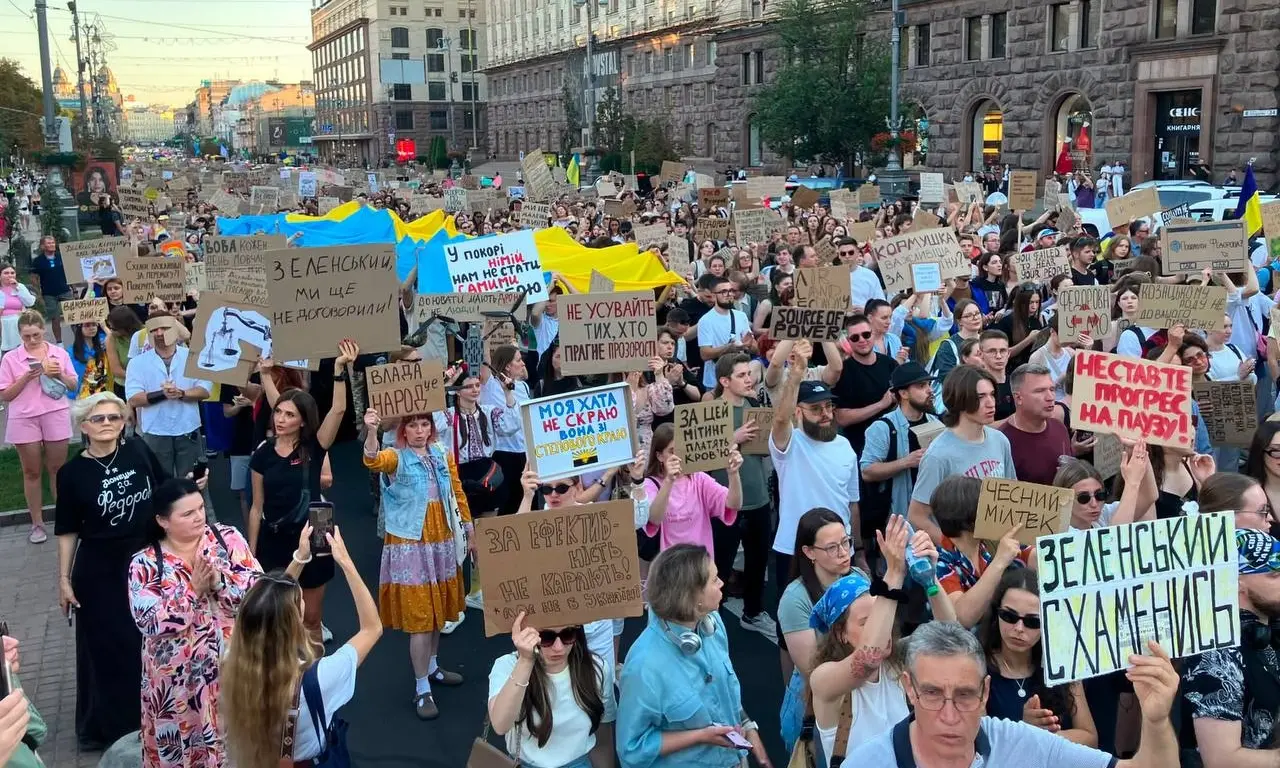
His dismissal triggered rare wartime protests across Ukraine. Demonstrators in Kyiv and several other major cities demanded his reinstatement, arguing that his removal threatened the military-technology reforms they credited with improving Ukraine’s ability to fight Russia.
The protests continued for roughly a month but failed to reverse the decision. Parliament approved Yevhenii Khmara as defense minister on 19 August.
The movement later lost momentum after Fedorov called for wartime elections, a position that protesters rejected amid the ongoing war. The episode nevertheless made his dismissal an unusually public political dispute, with supporters defending his record while Zelenskyy and others pointed to disagreements over military leadership and policy.
Explore further
The Fedorov protesters lost. But they backed a man for what he built, not what he promised—and that may be new in Ukraine.
What Fedorov did after leaving office
Since leaving the Defense Ministry, Fedorov has remained focused on defense technology rather than returning to another Ukrainian government position.
In late August, Italian Defense Minister Guido Crosetto said he had offered Fedorov a position as an adviser on modern warfare and defense innovation. Fedorov agreed to provide advice remotely and on a non-staff basis, while keeping his main work focused on Ukraine’s defense-tech sector.
Fedorov has also been working to establish a defense-tech investment fund and has been seeking US investors for it. During a working trip to Washington in August, he pitched a fund that would not only invest in existing Ukrainian defense-tech companies but also build new ones around technologies he considers critical to the war.
He identified three priorities: battlefield robots that can replace soldiers in the most dangerous positions, jet-powered interceptor drones capable of countering Russia’s faster attack drones, and inexpensive AI-enabled missiles.
Fedorov also proposed helping the United States develop an attack-drone fleet in exchange for additional Patriot interceptor missiles for Ukraine. He described the idea as a potential trade, but it is his own proposal rather than an agreement with the US government, and he no longer holds a government position that would allow him to negotiate such a deal.
In a recent Reuters interview, Fedorov also emerged as a more outspoken critic of Ukraine’s wartime trajectory, saying that “it looks as though we’re gradually, slowly losing.” His comments came after his dismissal and amid his continuing disagreements with the military leadership over the direction of Ukraine’s war effort.
The new company announced on 1 September appears to build on this work, moving from plans to invest in and create defense-tech companies toward establishing a company of Fedorov’s own.
Why Palantir matters
Karp’s involvement connects Fedorov’s new venture to one of the world’s largest defense and intelligence technology companies.
Palantir develops software for large-scale data analysis, artificial intelligence and military and government operations. Its products are used to integrate data from different sources and support operational planning and decision-making. Palantir has also worked with Ukraine during the full-scale war, including on AI and data-analysis initiatives.
The company has become increasingly involved in military technology, while also facing criticism over its work with governments and armed forces. Its ties to Israel and its role in military applications, particularly in relation to the war in Gaza, have generated protests and scrutiny over the use of AI and data technologies in warfare.
Palantir has faced separate concerns in the UK over its access to sensitive government and health data, with critics questioning how effectively safeguards around such information can be independently verified.
For Fedorov, the partnership marks a shift from trying to change Ukraine’s military from inside government to building defense technology outside it. For Karp and Palantir, the investment offers a direct connection to a former Ukrainian defense minister whose team worked on military technologies during a war that has rapidly changed how drones, AI, robotics and data are used on the battlefield.
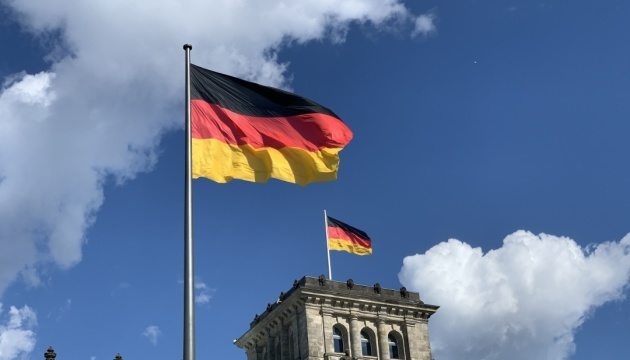
An explosives-laden drone aimed at a Ukrainian cargo aircraft at Leipzig/Halle Airport was part of a Russian state operation, Interior Minister Alexander Dobrindt said on 1 September.
Germany has moved from suspecting foreign sabotage to formally blaming Russia for the Leipzig attack. The finding has prompted diplomatic and security measures against Moscow while the criminal investigation continues.
Police investigations, the attack pattern, and intelligence findings
An explosives-laden drone aimed at a Ukrainian cargo aircraft at Leipzig/Halle Airport was part of a Russian state operation, Interior Minister Alexander Dobrindt said on 1 September.
Germany has moved from suspecting foreign sabotage to formally blaming Russia for the Leipzig attack. The finding has prompted diplomatic and security measures against Moscow while the criminal investigation continues.
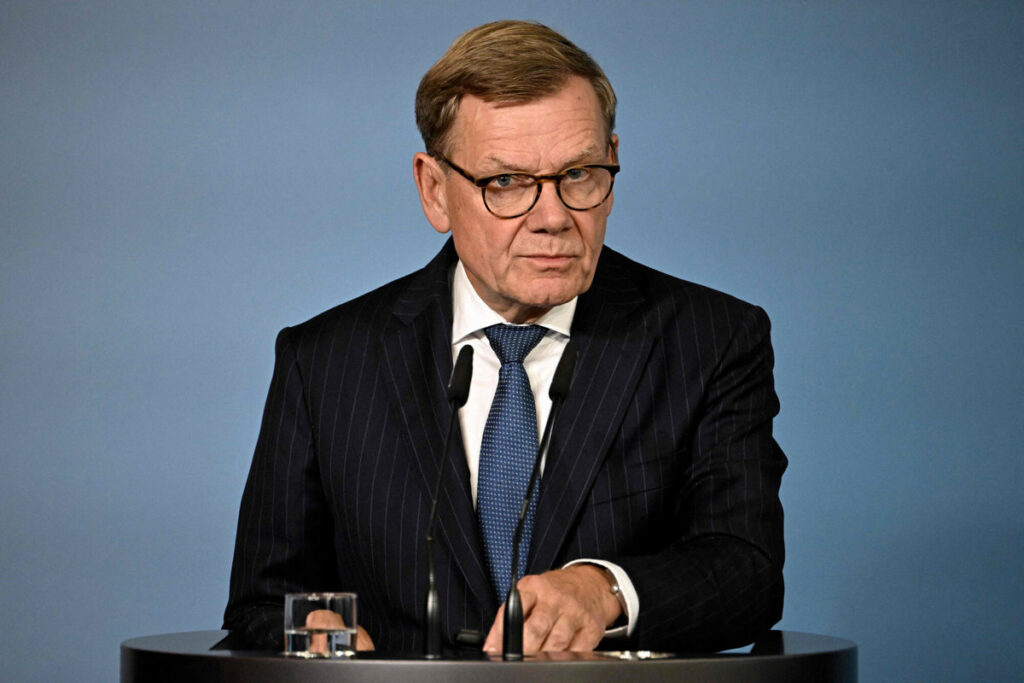
Police investigations, the attack pattern, and intelligence findings established Russian responsibility, Dobrindt said. The drones' configuration, components, explosives, and detonation systems resembled those used in other Russian hybrid operations—covert sabotage and disruption below the threshold of open war—and in Russia's war against Ukraine, Foreign Minister Johann Wadephul said.
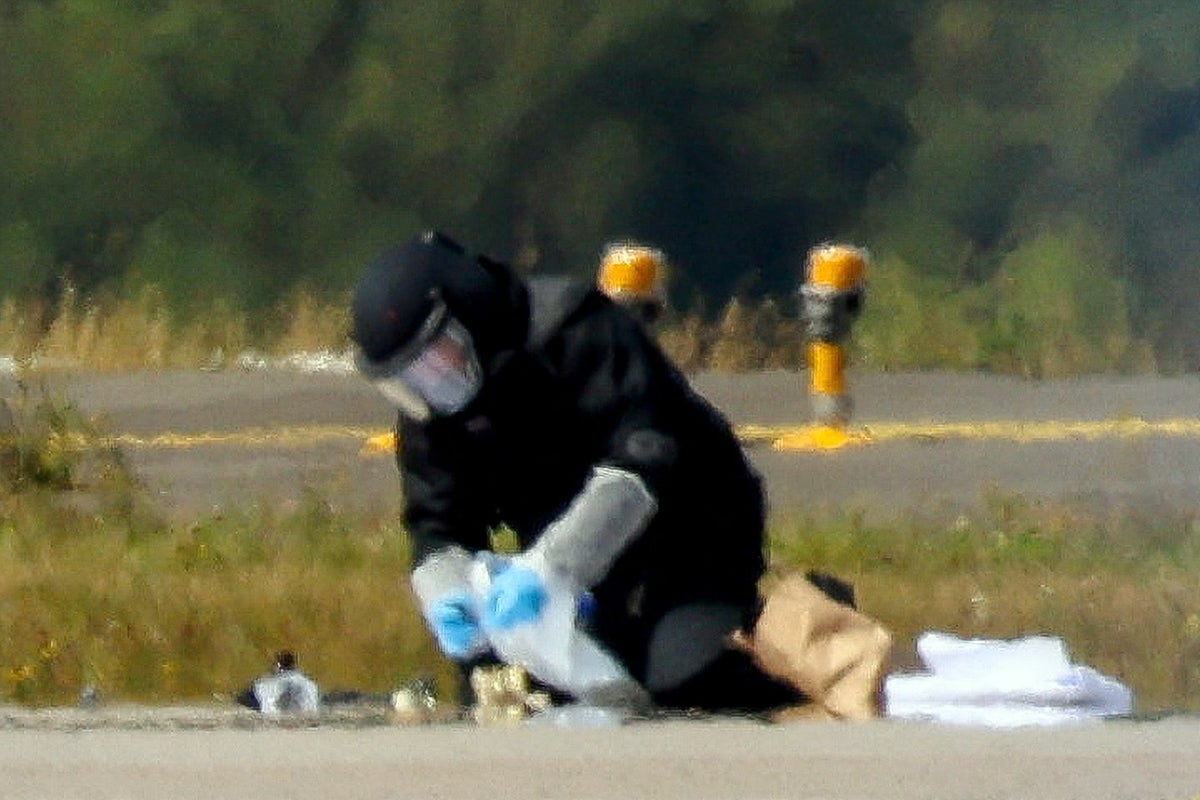
The first drone, carrying explosives, was found near a Ukrainian cargo aircraft on the evening of 4 August and defused. Investigators believe a DHL freighter may have collided with a second drone while aborting its landing after the airport closed; that drone was never recovered. A third drone was found on 14 August in a field at Kabelsketal, where investigators subsequently discovered roughly 50 grams of suspected military explosive.
Leipzig/Halle is an international freight hub used by Ukrainian Antonov aircraft and NATO's strategic airlift program, through which allies charter heavy transport aircraft to move oversized military cargo.
Berlin will close the Bonn consulate on 18 September, end the operating agreement for the Russian House, a Moscow-backed cultural center, tighten entry controls for Russian nationals, seek to add more targets to EU sanctions lists, and pressure Russia's shadow fleet—opaquely owned tankers used to move Russian oil outside Western restrictions. Wadephul also summoned the Russian ambassador. Russia's Berlin embassy will remain open.
Russian Foreign Ministry spokesperson Maria Zakharova told Interfax that Moscow would respond to Germany's “anti-Russian action,” without specifying how.
NATO Secretary General Mark Rutte said the alliance stood in full solidarity with Germany, and European Commission President Ursula von der Leyen described Berlin's measures as a strong response.
Dobrindt said Germany expects further Russian hybrid attacks. The Leipzig incident follows a widening campaign of suspected Russian sabotage across Europe, including a 2024 incendiary-device attack at the same airport that Western security officials suspected Russian intelligence organized.
How the Leipzig attack unfolded
Euromaidan Press reported on 12 August, citing Die Zeit, that footage showed an explosives-laden quadcopter striking the wing of a parked Ukrainian Antonov An-124 before falling without detonating. The article also noted that a US Defense Department official told CNN that Washington assessed the drone belonged to Russian intelligence.
On 25 August, EP reported, citing Tagesschau’s NDR/WDR/SZ investigation, that investigators had expanded the case to three drones and found the third with suspected military explosive nearby in Kabelsketal, 10 days after the original attempt.
Wolfgang Kubicki, chair of Germany’s pro-business liberal Free Democratic Party (FDP), proposed that Berlin summon Russia’s ambassador and use the prospect of Taurus missiles for Ukraine as leverage against further hybrid attacks during an appearance on German broadcaster ntv.
Kubicki’s proposal does not change German policy. The FDP has no seats in the Bundestag, Germany’s federal parliament, while Chancellor Friedrich Merz has ruled out supplying the missiles. However
Wolfgang Kubicki, chair of Germany’s pro-business liberal Free Democratic Party (FDP), proposed that Berlin summon Russia’s ambassador and use the prospect of Taurus missiles for Ukraine as leverage against further hybrid attacks during an appearance on German broadcaster ntv.
Kubicki’s proposal does not change German policy. The FDP has no seats in the Bundestag, Germany’s federal parliament, while Chancellor Friedrich Merz has ruled out supplying the missiles. However, it recasts military aid to Ukraine as a potential cost Moscow would face for hybrid attacks inside Germany. Berlin has since formally blamed Russia for the Leipzig/Halle operation that prompted his remarks.
Kubicki said “a reasonable person” would tell the ambassador that Germany had so far withheld Taurus missiles. If the hybrid threat continued, Berlin should do everything possible to ensure Ukraine received the weapons it needed to defend itself against Russia, he added.
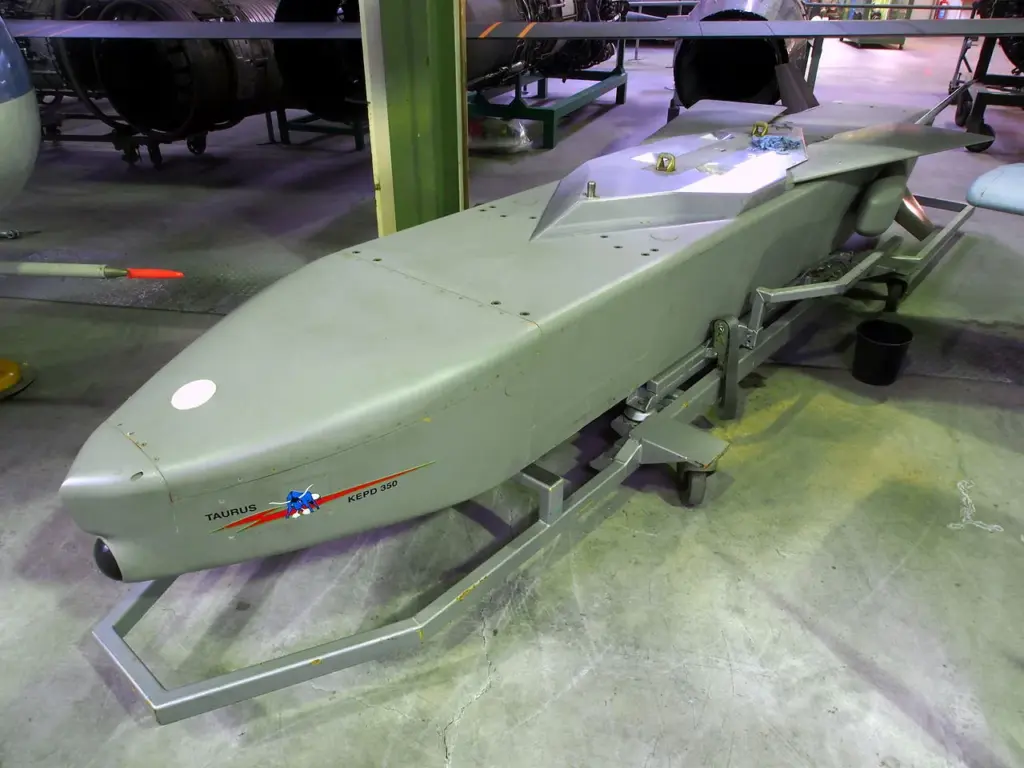
Taurus, the weapon Kubicki spoke about, is a German-Swedish cruise missile launched from military aircraft, with a range exceeding 500 kilometers. Ukraine has sought it for years to strike military targets far behind Russian lines.
Germany refused to supply Taurus missiles in 2025 while funding hundreds of Ukrainian-made long-range systems. Merz again ruled out a transfer in March, arguing that Ukrainian weapons were more effective.
Leipzig sharpens Germany’s hybrid-war debate
Germany formally blamed Russia on 1 September for the attempted drone attack at Leipzig/Halle Airport and said it would close the Russian consulate in Bonn and terminate the agreement under which the Russian House cultural center operates in Berlin, DW reported. Interior Minister Alexander Dobrindt cited evidence from German and allied intelligence services, as well as investigations across Europe. Russia has denied involvement.
The operation that prompted Kubicki’s warning involved an explosives-laden drone that struck the wing of a Ukrainian Antonov An-124 heavy cargo aircraft on the evening of 4 August but failed to detonate, Die Zeit reported. The airport handles civilian freight and NATO logistics, while Ukraine’s Antonov Airlines uses it as a base.
Investigators later found evidence that three drones were involved and discovered about 50 grams of suspected military explosive near the runways.
The Nordic and Baltic states called on Russia to immediately fulfill its obligations under international law and demanded the full and unconditional withdrawal of all Russian troops from Ukrainian territory.
The Nordic and Baltic states called on Russia to immediately fulfill its obligations under international law and demanded the full and unconditional withdrawal of all Russian troops from Ukrainian territory.
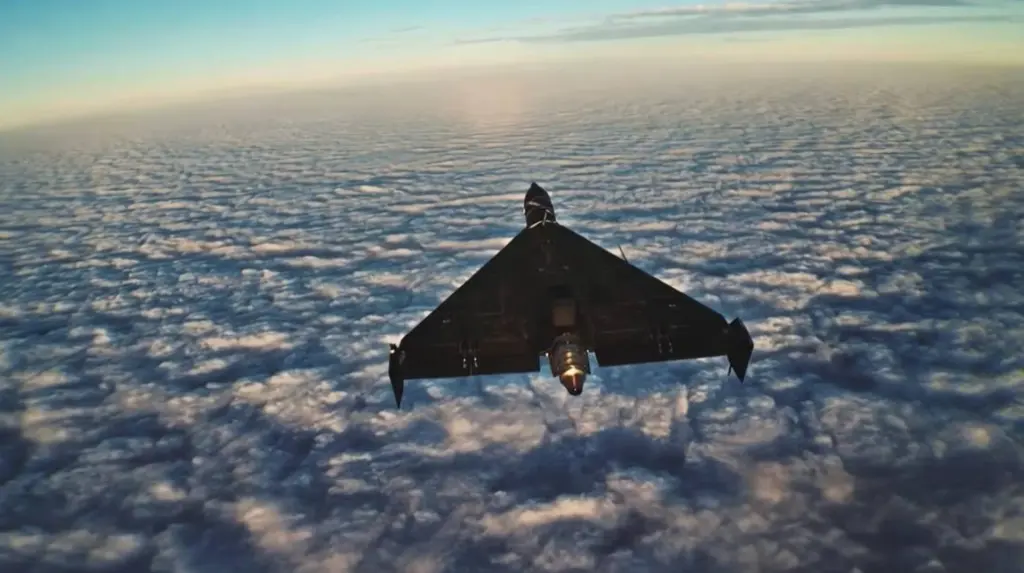
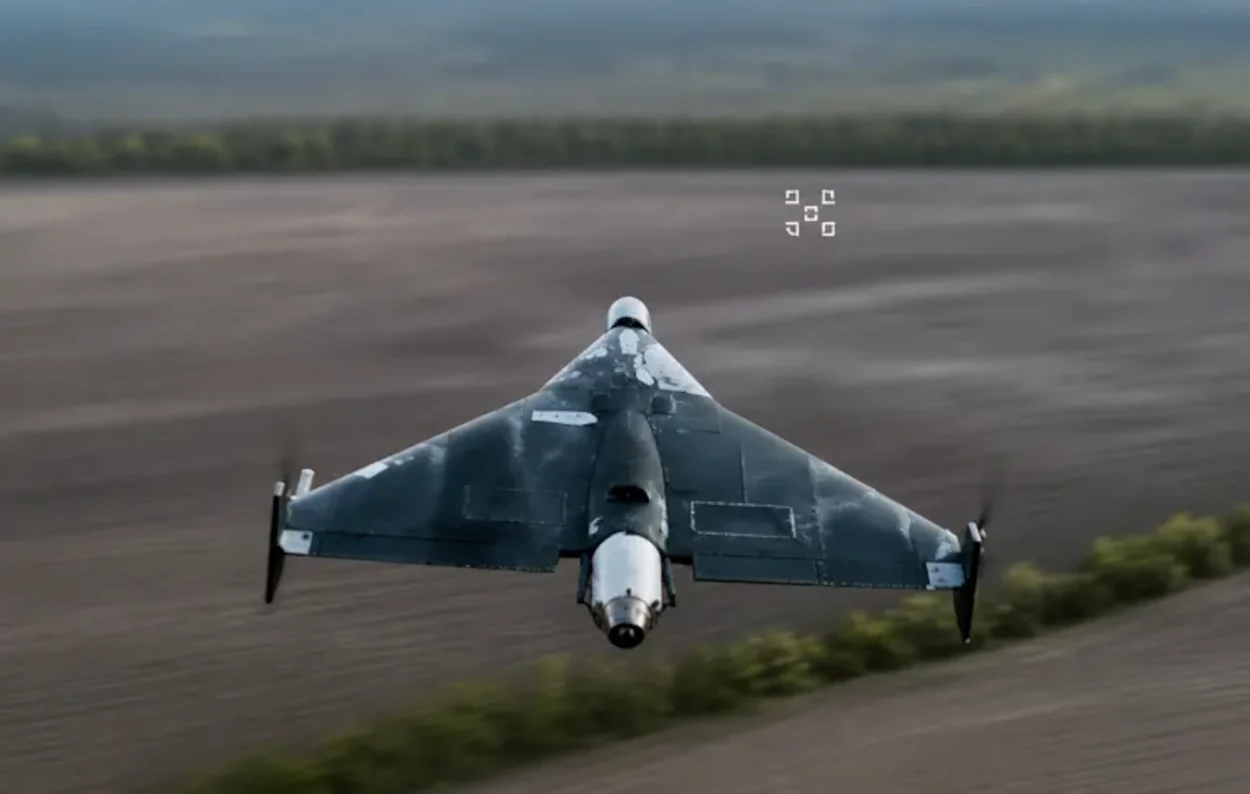
Russia is sending jet-powered drones against Ukrainian cities in growing numbers—no longer only the Iranian Shahed-238 it fields as the Geran-3, but the newer, faster Geran-4 and Geran-5. The fear everyone voices is their speed, but speed breaks the cheap layer, not the missiles.
Ukraine's expensive air-defense missiles already routinely shoot down cruise missiles, and to them, a fast drone is just one more target. The strain falls on the cheap layer instead—the interce
Russia is sending jet-powered drones against Ukrainian cities in growing numbers—no longer only the Iranian Shahed-238 it fields as the Geran-3, but the newer, faster Geran-4 and Geran-5. The fear everyone voices is their speed, but speed breaks the cheap layer, not the missiles.
Ukraine's expensive air-defense missiles already routinely shoot down cruise missiles, and to them, a fast drone is just one more target. The strain falls on the cheap layer instead—the interceptor drones Ukraine built to down thousands of Shaheds a month for a few thousand dollars each, a fraction of a missile's price.
Those were designed to catch slow drones, and against jet speed, they struggle. If that layer breaks, the cost of defending Ukraine's skies climbs—and the Defense Ministry has already started paying to keep it from breaking.
The shift is not marginal, and it continues to accelerate. Russia had sent more than 2,500 jet-powered Shaheds against Ukraine by 30 August, against roughly 1,500 in July, informal presidential adviser Serhii "Flash" Beskrestnov wrote—the drones, he noted, were launched practically straight from the factory. Russia fired roughly 1,400 jet-powered drones since the start of 2026 to June, and air defenses recorded about 180 in all of 2025, Colonel Oleksandr Zaruba of Ukraine's State Research Institute said.
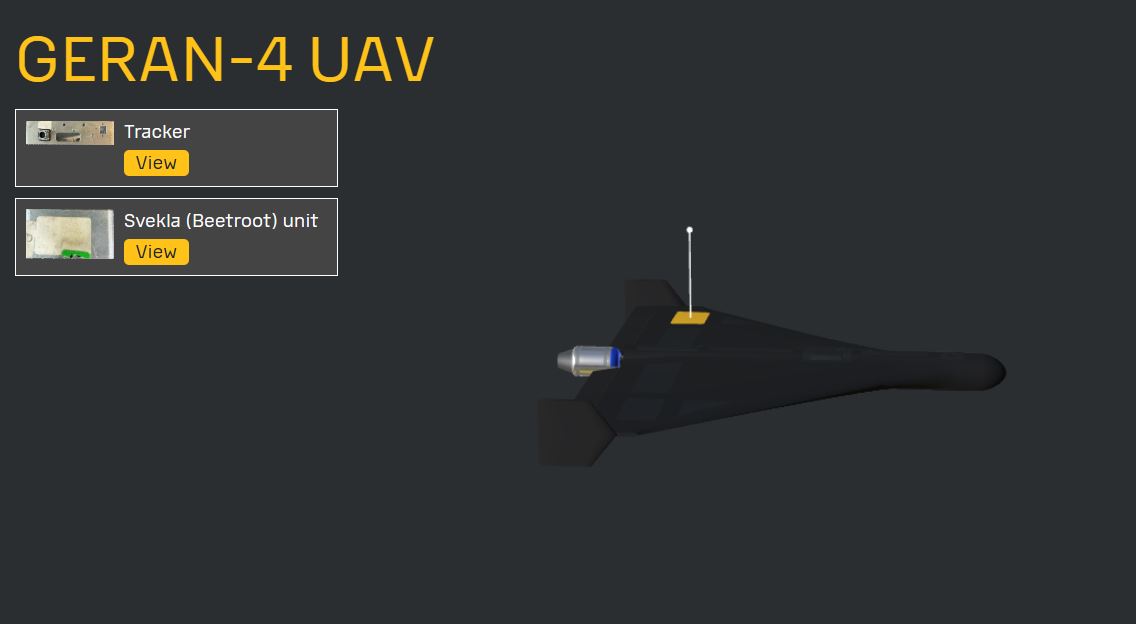
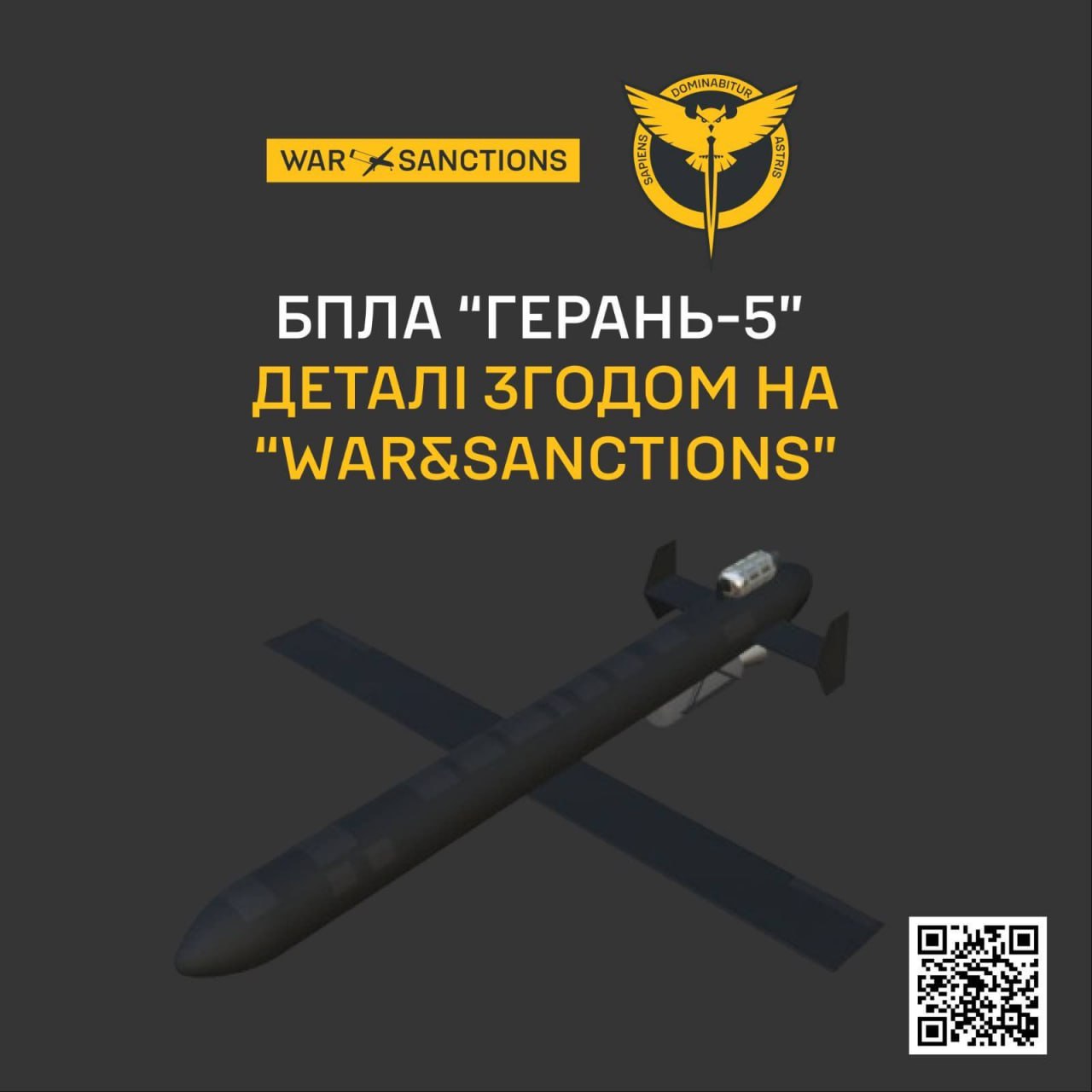
Geran-5 (above) and Geran-4 (below). Image: TurDef
A record month, and the weapon built to beat it
Ukrainian interceptor drones destroyed more than 33,000 Russian drones of all types in March 2026—roughly double the February total and a record for the cheapest layer of Ukraine's air defense, then-Defense Minister Mykhailo Fedorov said.
Russia sent Shaheds—cheap, propeller-driven, long-range, lumbering in at about 185 kilometers per hour (115 mph)—in mass raids meant to swamp Ukraine's defenses. Ukraine adapted, with mobile fire teams, electronic warfare, and layered engagement, then added interceptor drones that destroy incoming drones for a fraction of a surface-to-air missile's cost.
As Ukraine got better at catching propeller drones, Russia reached for speed—jet-powered versions that fly more than three times faster than the Shaheds Ukraine spent three years learning to intercept.
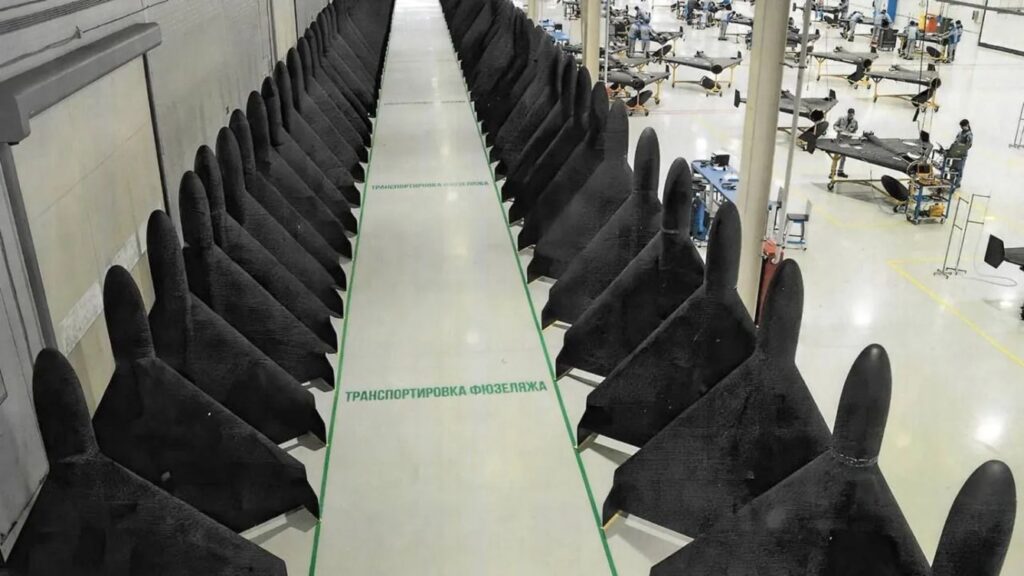
Iranian-designed Shahed-136 drone hulls at a Russian drone factory. Photo via TWZ
By August, Ukraine's military intelligence said Russia had stopped building the Geran-3 and shifted to the newer jets, producing roughly 3,000 of them a month.
Conventional air defense already handles this
The worry centers on velocity: a jet drone flies several times faster than a propeller-driven or electric one, reducing the time defenders have to detect, identify, and hit it. But the fear aims at the wrong place, said Oleksii Kolesnyk, director of the Ukrainian firm Reactive Drones.
"A jet-powered UAV is, in many ways, similar to a cruise missile. For conventional air defense, jet-powered drones are simply another aerial target," he told Euromaidan Press.
Ukraine's surface-to-air systems routinely intercept cruise missiles. A fast drone is standard work for them—though Zelenskyy said in late August that the jets are the hardest to intercept, and that combat aircraft now mainly protect against them.
The strain lands on the interceptor drones
An interceptor drone, unlike a ground-launched missile, has to chase its target down and ram it, which worked against slow Shaheds. Against something near cruise-missile speed, the geometry breaks.
The problem exists almost only for interceptor drones, Kolesnyk said—they were never designed for these speeds. At jet velocities, guidance, target tracking, and the final homing onto the target all hit technical ceilings, and faster interceptors alone will not fix it.
"New technical solutions will be needed," he said.
Interceptor drones are why Ukraine can answer mass raids without firing a missile worth hundreds of thousands of dollars at each incoming drone. Break that math, and the affordability of Ukraine's whole air defense shifts.
The Defense Ministry's answer
Through the defense-tech accelerator Brave1, Ukraine backed 12 technologies under the EU4UA Defence Tech grant program, offering up to €150,000 each for high-speed interceptors capable of reaching 450 kilometers per hour (about 280 mph) or more.
Explore further
Ukraine is testing four new drone interceptors as Russia floods its skies with faster Gerans
That push has since produced candidates. By late August, Ukraine had four interceptor systems built to run down the jets, all already in field testing, Defense Minister Yevhenii Khmara said, and the Alexa Spatium had entered service. Ukraine now wants to bring them up to standard and build them in the thousands.
Not a revolution, but an evolution with a long history
Colonel Oleksandr Saienko, a former Ukrainian brigade commander, rejected the idea that any of this is new.
"This is better described as an evolution of unmanned systems rather than a completely new stage of warfare," he said.
Jet drones long predate this war. "The first jet-powered UAVs appeared back in the 1970s," he said, pointing to Soviet reconnaissance drones beginning with the Tu-143 and continuing with the Tu-141 and Tu-243—platforms Ukraine itself later flew in the Donbas war and the full-scale invasion. What has changed is scale, and the problem the drones now solve: arriving before the defender can react.
Explore further
Ukrainian intelligence: Russia’s new jet-powered Geran-4 attack drone runs on Chinese turbojets
Saienko's warning points past the engine.
"The decisive advantage will not belong to whoever simply has a jet engine. It will belong to whoever integrates these platforms into an effective reconnaissance-strike system, protects them against electronic warfare, manufactures them at scale, and keeps costs manageable," he said.
His frame is the kill chain—detect, identify, decide, engage—and every gain in speed compresses that cycle. "If a target is flying at 500 to 700 kilometers per hour, even a delay of several dozen seconds may make interception impossible," he said, adding: "Radars must see sooner, command systems must classify automatically, and operators get less time—until automation becomes a requirement."
Why hasn't every drone gone jet-powered
Speed solves one problem and creates several. "They are simply another category of strike UAV," Kolesnyk said.
"One solution does not replace another."
Oleksii Kolesnyk, Reactive Drones.
Compact turbojets are expensive and hard to source for smaller drones. Bigger airframes have to be reinforced to take the loads and vibration, which adds weight and cost. Fuel burn climbs far above that of the electric or piston drones built for endurance, and higher speed leaves less room for navigation errors.
So, jet drones fill a niche rather than taking over the whole strike fleet. "They are most effective at ranges of roughly 200 to 600 kilometers," Kolesnyk said—fast strikes on high-value or time-sensitive targets, where getting there quickly matters more than flying cheaply or far.
Explore further
Russia unleashes its Geran-5 air defense killer on Ukraine, equipped with British Raspberry Pi microcomputer tracker
Ukraine didn't drop first-person-view (FPV) drones when fiber-optic ones arrived, and jam-resistant drones didn't replace the rest. Each capability added a layer rather than erasing the previous one. Saienko expects the same. "The emergence of jet aviation did not eliminate piston-engine aircraft. The same principle applies," he said. Cheap propeller drones are ideal for mass attacks, while jet platforms handle speed.
The next fight is over reaction time
Jet drones force defenders to decide faster, and that is the harder demand. A slow propeller drone is a wasteful target for an expensive missile. A cruise missile demands an instant answer. A jet drone sits in between—and an operator has to sort which weapon meets which target in seconds, while holding scarce interceptors back for the worst threats. Every misjudgment costs something.
"The challenge is no longer only interception—it is detecting, identifying, and assigning the target quickly enough," Saienko said.
Both experts reach the same conclusion from opposite ends: Kolesnyk through the technical limits of the interceptor drone, Saienko through the entire defensive network. Both land on automation—AI-driven target recognition, distributed sensors, and fast data sharing to shrink the gap between spotting a target and hitting it. The winner won't necessarily fly the fastest aircraft. It will process information faster than its opponent.
Over four days at the end of August, Russia fired about 800 jet drones at Ukraine, Ukraine's president said—a type most of Ukraine's cheap interceptors still cannot catch. And the problem won't stay Ukraine's alone. Drones from the same broad Shahed family have already strayed into NATO airspace and turned up in other wars. The interception race Ukraine is running now is one everyone will eventually run.
Russia is systematically attacking Ukraine’s agricultural and port infrastructure, civilian vessels and maritime routes to undermine the country’s export capacity.
Russia is systematically attacking Ukraine’s agricultural and port infrastructure, civilian vessels and maritime routes to undermine the country’s export capacity.
Russia has nearly doubled its fleet of tankers transporting liquefied natural gas from the sanctioned Arctic LNG 2 project in less than a year, as Moscow seeks to expand lucrative fuel exports despite Western restrictions.
Russia has nearly doubled its fleet of tankers transporting liquefied natural gas from the sanctioned Arctic LNG 2 project in less than a year, as Moscow seeks to expand lucrative fuel exports despite Western restrictions.
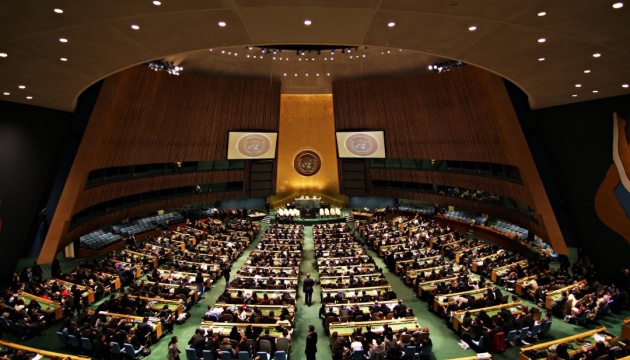
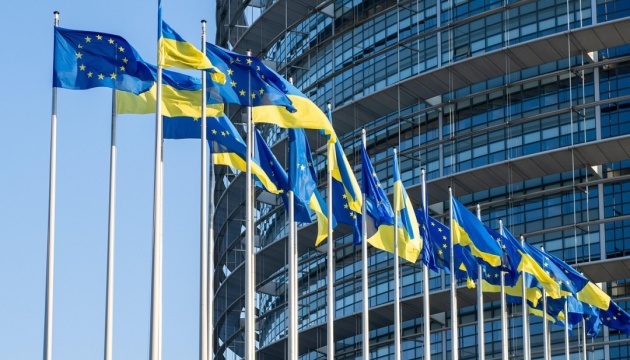
The European Union will never recognize Russia’s attempted annexation of occupied Ukrainian territories and will continue to support Ukraine, an EU representative told the UN General Assembly on Tuesday.
The European Union will never recognize Russia’s attempted annexation of occupied Ukrainian territories and will continue to support Ukraine, an EU representative told the UN General Assembly on Tuesday.
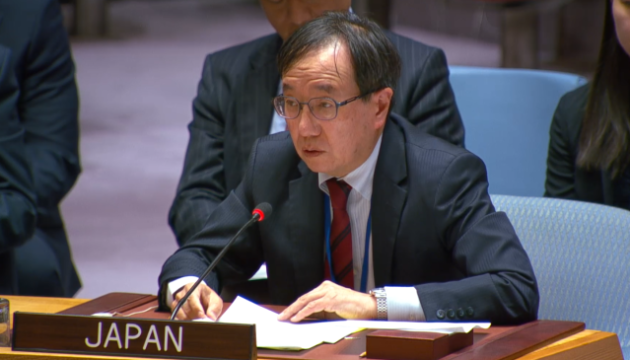
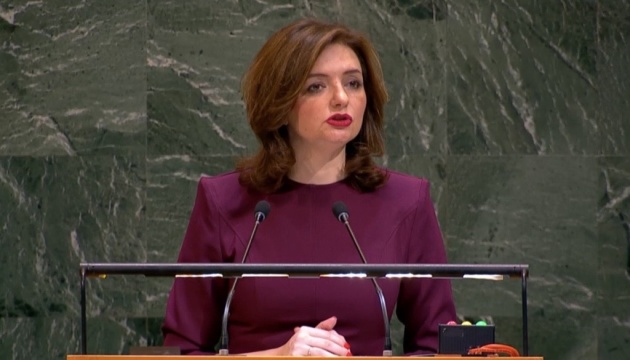
Ukraine does not intend to surrender or retreat in the face of Russian aggression and will continue to defend its land, freedom, sovereignty and territorial integrity, Ukrainian Deputy Foreign Minister Mariana Betsa said.
Ukraine does not intend to surrender or retreat in the face of Russian aggression and will continue to defend its land, freedom, sovereignty and territorial integrity, Ukrainian Deputy Foreign Minister Mariana Betsa said.
President Volodymyr Zelensky has formed a Ukrainian delegation to participate in negotiations with Canada on preparations for concluding a Centennial Partnership Agreement between the two countries.
President Volodymyr Zelensky has formed a Ukrainian delegation to participate in negotiations with Canada on preparations for concluding a Centennial Partnership Agreement between the two countries.
Germany will take a number of measures in response to the sabotage operation at Leipzig Airport, which German politicians and intelligence services believe was orchestrated by Russia.
Germany will take a number of measures in response to the sabotage operation at Leipzig Airport, which German politicians and intelligence services believe was orchestrated by Russia.
The German government and relevant German authorities are convinced that Russian intelligence services were behind an attempted sabotage operation involving drones at Leipzig Airport.
The German government and relevant German authorities are convinced that Russian intelligence services were behind an attempted sabotage operation involving drones at Leipzig Airport.
Ukraine has called on UN member states, international organizations and parliamentary institutions not to recognize the illegal pseudo-elections that Russia plans to hold in Ukraine’s temporarily occupied territories.
Ukraine has called on UN member states, international organizations and parliamentary institutions not to recognize the illegal pseudo-elections that Russia plans to hold in Ukraine’s temporarily occupied territories.
The EU will invest in modernizing military training infrastructure in Ukraine, enhance the EUMAM mission, and encourage member states to bring forward bilateral aid planned for next year in light of Ukraine’s growing defense needs.https://www.ukrinform.ua/rubric-world/4159681-u-niderlandah-zaklikaut-evropu-rozrobiti-vlasni-perehopluvaci-dla-balisticnih-raket.html
The EU will invest in modernizing military training infrastructure in Ukraine, enhance the EUMAM mission, and encourage member states to bring forward bilateral aid planned for next year in light of Ukraine’s growing defense needs.https://www.ukrinform.ua/rubric-world/4159681-u-niderlandah-zaklikaut-evropu-rozrobiti-vlasni-perehopluvaci-dla-balisticnih-raket.html
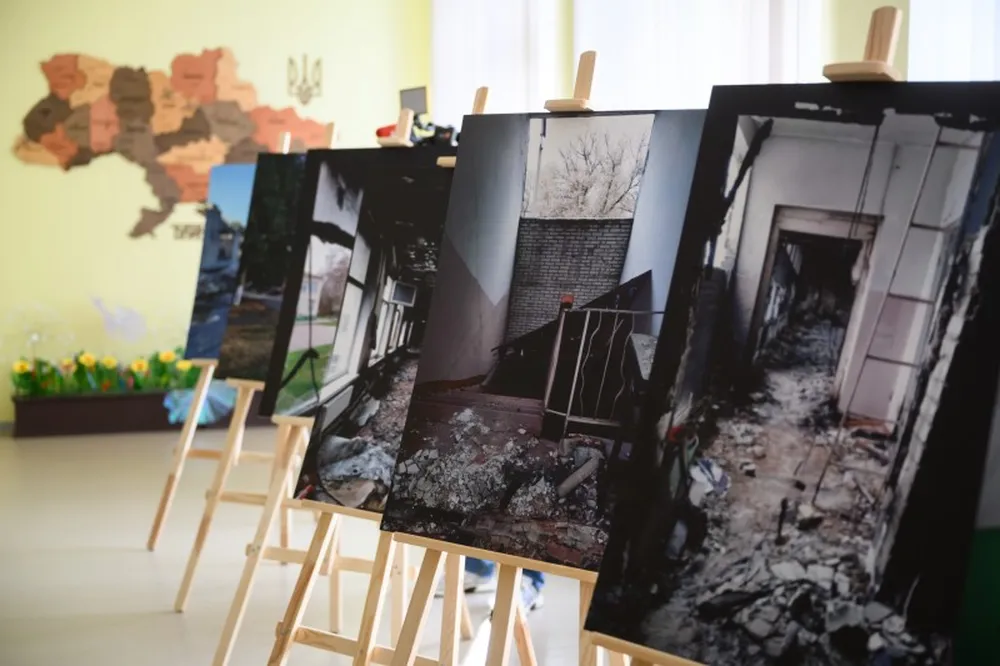
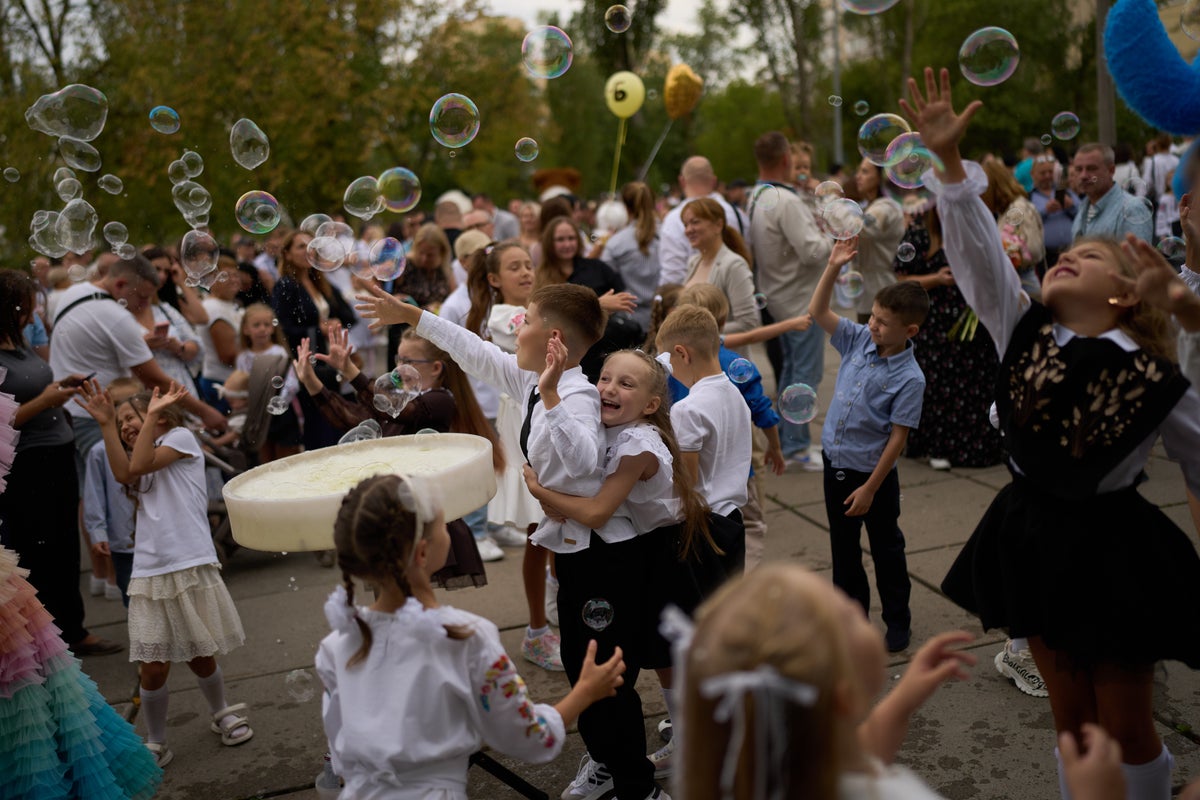
Ukrainian president Volodymyr Zelenskyy marked the start of the academic year with children at a Kyiv Oblast school rebuilt after Russian forces destroyed it in 2022, before an air attack forced their first lessons into the shelter on 1 September 2026, the Kyiv Oblast Military Administration said.
Knowledge Day, Ukraine’s traditional start of the academic year, fell during the full-scale invasion for the fifth time. Russia’s war now determines whether children can learn
Ukrainian president Volodymyr Zelenskyy marked the start of the academic year with children at a Kyiv Oblast school rebuilt after Russian forces destroyed it in 2022, before an air attack forced their first lessons into the shelter on 1 September 2026, the Kyiv Oblast Military Administration said.
Knowledge Day, Ukraine’s traditional start of the academic year, fell during the full-scale invasion for the fifth time. Russia’s war now determines whether children can learn alongside their classmates: local security and shelter access govern classroom returns, while about 200,000 pupils near the front will remain fully remote.
Around three million pupils began the 2026–2027 academic year, including roughly 240,000 first-graders, 10% fewer than a year earlier, Member of Parliament Iryna Borzova of the Verkhovna Rada’s Committee on Youth and Sports told Ukrinform. Most will learn in person or through a blended format, but some 200,000 children near the front will study entirely online, she said.
More than 82% of school pupils and preschoolers can access shelters, Education Minister Andrii Butenko said. The government has allocated UAH 6 billion this year to expand access to shelters and other educational safety infrastructure.
Russian forces destroyed the school Zelenskyy visited in March 2022. It reopened only last autumn with a shelter and backup power, according to the Kyiv Oblast Military Administration.
An exhibition shows damage inflicted when Russian forces destroyed the Kyiv Oblast school in March 2022. The school reopened in autumn 2025. Photo: Office of the President of Ukraine
Zelenskyy said Russia had spent the preceding two weeks attacking infrastructure partly to disrupt the start of the academic year.
Ahead of Knowledge Day, Kyiv Oblast Military Administration head Tymur Tkachenko advised schools in high-risk communities not to hold mass opening ceremonies. Each school was to decide whether to proceed based on the security situation in its community.
“First and foremost, there must be safety,” Tkachenko said. If a ceremony went ahead, he recommended holding it directly in a shelter where possible. For events outside shelters, attendance was not to exceed the capacity of the nearest protective facility, and schools were told to avoid large gatherings of pupils, parents, and staff.
How Russia’s invasion has devastated Ukrainian education
Ukraine’s 2026 Knowledge Day began after six consecutive days of Russian attacks on Kyiv and its surrounding region, culminating overnight in a massed missile and drone strike. Eight people were killed, and seven were injured, including three children, while civilian infrastructure was damaged across five Kyiv districts.
Russia’s invasion has turned school safety and reconstruction into central parts of Ukraine's education policy. By September 2024, more than 3,500 educational institutions had been damaged and nearly 400 destroyed, with the World Bank estimating that almost $14 billion would be needed to rebuild them.
Attacks on Ukraine’s energy system have also left classrooms without heat or electricity, forcing prolonged holidays and renewed distance learning.
Parents and children in Ukraine and Russia gathered on Tuesday for a traditional 'Knowledge Day' celebrations, marking the fifth school year since Russia's invasion, but an air raid alert quickly dispersed the crowd in Kyiv.
Parents and children in Ukraine and Russia gathered on Tuesday for a traditional 'Knowledge Day' celebrations, marking the fifth school year since Russia's invasion, but an air raid alert quickly dispersed the crowd in Kyiv.
Poland and the entire free world must learn the lessons of the outbreak of World War II and ensure that the victim of aggression — Ukraine — is never left alone. Otherwise, the threat could directly affect Poland and other European countries tomorrow.
Poland and the entire free world must learn the lessons of the outbreak of World War II and ensure that the victim of aggression — Ukraine — is never left alone. Otherwise, the threat could directly affect Poland and other European countries tomorrow.
On Monday, the United Kingdom announced tougher measures targeting shadow financial systems that enable Russia to circumvent sanctions, doubling fines for sanctions violations.
On Monday, the United Kingdom announced tougher measures targeting shadow financial systems that enable Russia to circumvent sanctions, doubling fines for sanctions violations.
Career disruption can change priorities faster than a long-term plan can adapt. Redundancy, relocation, caring responsibilities or a move into another sector may interrupt a familiar routine, yet professional development can continue.
When circumstances shift, structured learning can provide direction. Professionals comparing options may review https://ihcl.org.uk/courses while deciding which type of study could help them keep building relevant knowledge through the transition.
Why
Career disruption can change priorities faster than a long-term plan can adapt. Redundancy, relocation, caring responsibilities or a move into another sector may interrupt a familiar routine, yet professional development can continue.
When circumstances shift, structured learning can provide direction. Professionals comparing options may review https://ihcl.org.uk/courses while deciding which type of study could help them keep building relevant knowledge through the transition.
Why does career continuity matter during prolonged uncertainty?
A break in employment does not remove previous experience, but it can make ongoing development more important. Employers may want recent evidence that a candidate has kept their knowledge current.
Career continuity does not mean following the same path at any cost. It means maintaining enough professional activity to keep future options open through study, project work, volunteering or other relevant practice.
During a longer transition, this helps people identify changes in their field. They can return to the market with a clearer view of current requirements instead of relying only on older experience.
Which skills travel well between vountries and industries?
Some abilities remain useful even when a person changes country, sector or employer. For international mobility, the most practical ones are:
negotiation — finding workable agreements when priorities differ;
research — locating reliable sources and turning unfamiliar information into useful context;
professional writing — preparing clear briefs, reports or handover documents;
remote collaboration — working effectively across time zones, platforms or distributed teams;
cultural awareness — recognising different workplace norms and responding appropriately.
These skills are useful in roles where people regularly work across borders or organisational cultures. They also help professionals transfer their experience into a new environment more convincingly.
Which learning format fits a busy schedule?
A career transition rarely produces a predictable timetable. Interviews, temporary work, family duties or relocation tasks may appear with little notice, so rigid study arrangements can become difficult to sustain.
A better fit is a format built around manageable units, visible milestones and materials available outside fixed class times. This gives learners a clear weekly direction while leaving room for changes in availability.
It is also worth checking how assessments are organised. Practical tasks completed in stages are easier to fit around an uneven schedule than several large assignments due at the same time.
What should learners prioritise when choosing a programme?
Start with the outcome rather than the course title. Check if the curriculum supports the roles you are considering, whether assessments produce work you can discuss in interviews and how much guidance is available when plans change.
Recognition, workload and access also deserve attention if you expect to move between countries. The programme should be understandable to future employers and realistic to complete from wherever you may be based.
During a career transition, progress is easier to maintain when the next task is clear and support is close at hand. IHCL brings this together through its ACEL approach, personal mentorship and custom-made LMS, helping learners keep moving even when work, location or long-term plans are changing.
US Treasury Secretary Scott Bessent told Russian Finance Minister Anton Siluanov that “nothing is possible until the war is over” during their 31 August meeting, a source familiar with the exchange told Reuters.
Siluanov’s return marked the first in-person G20 appearance by Russia’s finance minister since 2022, raising European concerns that Moscow was being treated as a normal partner again. Bessent’s response indicated that renewed contact would not bring economic rel
US Treasury Secretary Scott Bessent told Russian Finance Minister Anton Siluanov that “nothing is possible until the war is over” during their 31 August meeting, a source familiar with the exchange told Reuters.
Siluanov’s return marked the first in-person G20 appearance by Russia’s finance minister since 2022, raising European concerns that Moscow was being treated as a normal partner again. Bessent’s response indicated that renewed contact would not bring economic relief while the war continues, although Washington announced no new sanctions or steps to enforce existing ones.
Bessent and Siluanov met on the sidelines of a G20 finance meeting, a forum of major economies, in Asheville, North Carolina. A US official said the talks focused on President Donald Trump’s peace plan for Ukraine. Russia’s Finance Ministry said it discussed Russian-American financial cooperation and work within the G20.
The condition also covered agreements in other areas, Reuters’ source said. Reuters did not specify what form of economic relief Bessent meant. Asked why Washington received Siluanov, White House spokesman Kush Desai said to AFP that the administration was working with Russia to end the bloodshed.
Siluanov last joined a G20 finance meeting virtually in April 2022, prompting Western officials to walk out.
Europe warns against normalization
European officials were preparing further sanctions against Moscow, and German Finance Minister Lars Klingbeil said they wanted Washington’s cooperation. He called Siluanov’s reception a “quite troubling” signal and said relations with Russia could not be normalized while the war continued, Reuters reported.
Klingbeil said European officials agreed that dialogue could help deliver a frank message to Moscow. They nevertheless refused to join the customary group photograph with Siluanov, which organizers ultimately took without him.
US eased Russian oil sanctions during Iran war
Washington sanctioned major Russian oil companies in October 2025. After the US-Israeli war with Iran disrupted supplies through the Strait of Hormuz, however, the Treasury issued temporary licenses allowing Russian oil already at sea to reach buyers.
Bessent defended the relief as a way to prevent a sharper oil price spike, while senators warned that it increased Moscow’s war revenue, Euromaidan Press reported. The waiver briefly lapsed in mid-May before Bessent extended it for another 30 days, despite telling European allies he would not do so, according to Politico.
The licenses were intended to stabilize global supplies but also kept revenue flowing to Moscow. Washington has not announced a new Russia-related enforcement measure or timetable following Bessent’s meeting with Siluanov.
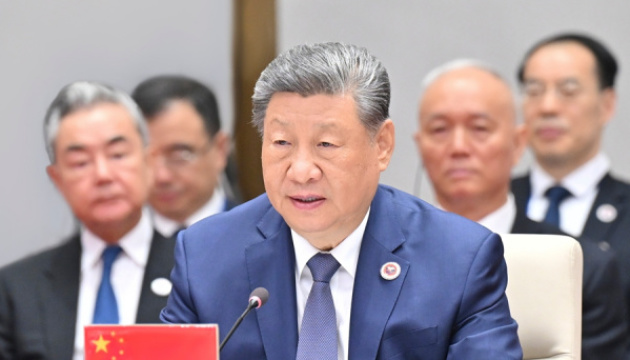
China is ready to strengthen communication and coordination with all parties, as well as to promote a political resolution of issues, including the situation in Ukraine.
China is ready to strengthen communication and coordination with all parties, as well as to promote a political resolution of issues, including the situation in Ukraine.
Ukraine's Armed Forces are forming the 446th Separate Unmanned Systems Brigade, which is recruiting servicemembers while formation continues, MilitaryLand reported. The new unit joins a force that hit 32,485 Russian personnel over the summer alone, the Unmanned Systems Forces (SBS) reported on 1 September.
Ukraine is facing a shortage of military personnel, yet the Armed Forces are forming their second separate unmanned systems brigade this year. The force's command
Ukraine's Armed Forces are forming the 446th Separate Unmanned Systems Brigade, which is recruiting servicemembers while formation continues, MilitaryLand reported. The new unit joins a force that hit 32,485 Russian personnel over the summer alone, the Unmanned Systems Forces (SBS) reported on 1 September.
Ukraine is facing a shortage of military personnel, yet the Armed Forces are forming their second separate unmanned systems brigade this year. The force's commander wants unmanned systems covering the entire front at tactical, operational, and strategic depths.
What is known about the 446th Brigade
Military personnel from other units can apply for a transfer through Army+, according to MilitaryLand.
The first of the two was the 445th Separate Unmanned Systems Brigade Chata, whose formation became known in July. Both units are recruiting for posts running from operators of ground robots, FPV, bomber, and interceptor drones to psychological-support officers, analysts, and accountants, Militarnyi reported.
The deployment of such units is part of the Ukrainian Armed Forces' broader effort to increase the number of unmanned systems in the military. Ukrainian drones accounted for about 96% of Russian casualties in March—33,988 of roughly 35,000 killed or severely wounded—Zelenskyy said in April.
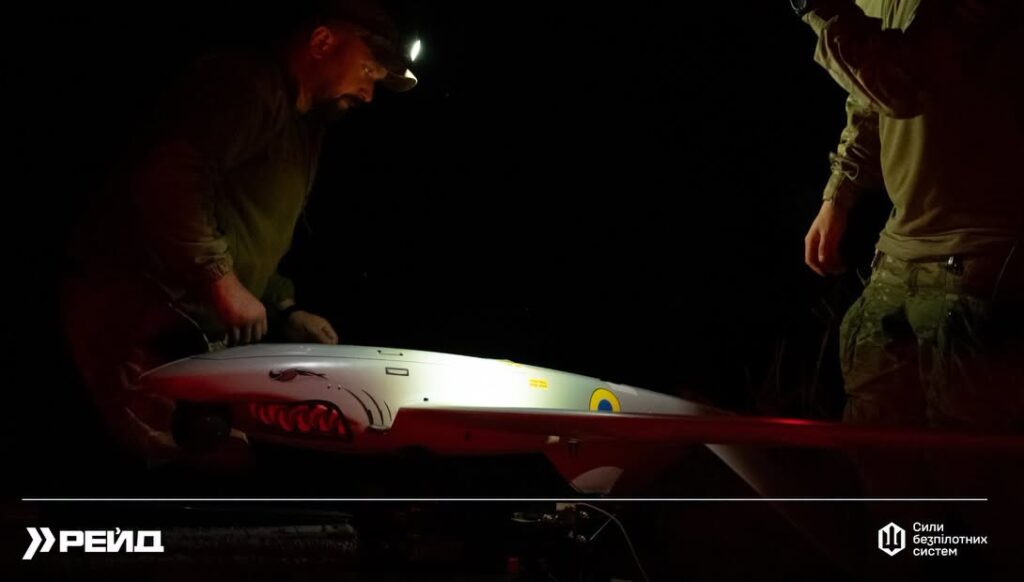
Drone operators of the 413th Separate Unmanned Systems Regiment Reid prepare a Shark reconnaissance drone for a sortie. Illustrative photo: Unmanned Systems Forces of Ukraine / Facebook
Why Ukraine is turning to drones
The expansion of unmanned systems brigades is part of a broader effort initiated by Robert Brovdi, callsign Madyar, to increase the role of the SBS within Ukraine's Defense Forces, Militarnyi notes.
Brovdi told Reuters in June that he wants to raise the drone forces from about 2.5% of Ukraine's armed forces to 5%, a goal he first stated publicly in September 2025. At that share, the drone units accounted for roughly a third of Russian losses over the previous 12 months, according to figures the force gave Reuters, which said it could not verify them independently.
Then Commander-in-Chief of the Armed Forces of Ukraine Oleksandr Syrskyi described unmanned systems as one of the key factors shaping modern warfare. Current Commander-in-Chief of the Armed Forces of Ukraine Mykhailo Drapatyi stated that one of his priorities is the development and scaling of the unmanned component.
Overall, the SBS struck 58,465 targets in August, its own tally for 1–31 August shows.
The Ukrainian military has debunked a Russian false claim about the alleged capture of Mohrytsia in the Sumy region; our soldiers recorded a video showing the Ukrainian flag flying in the village.
The Ukrainian military has debunked a Russian false claim about the alleged capture of Mohrytsia in the Sumy region; our soldiers recorded a video showing the Ukrainian flag flying in the village.
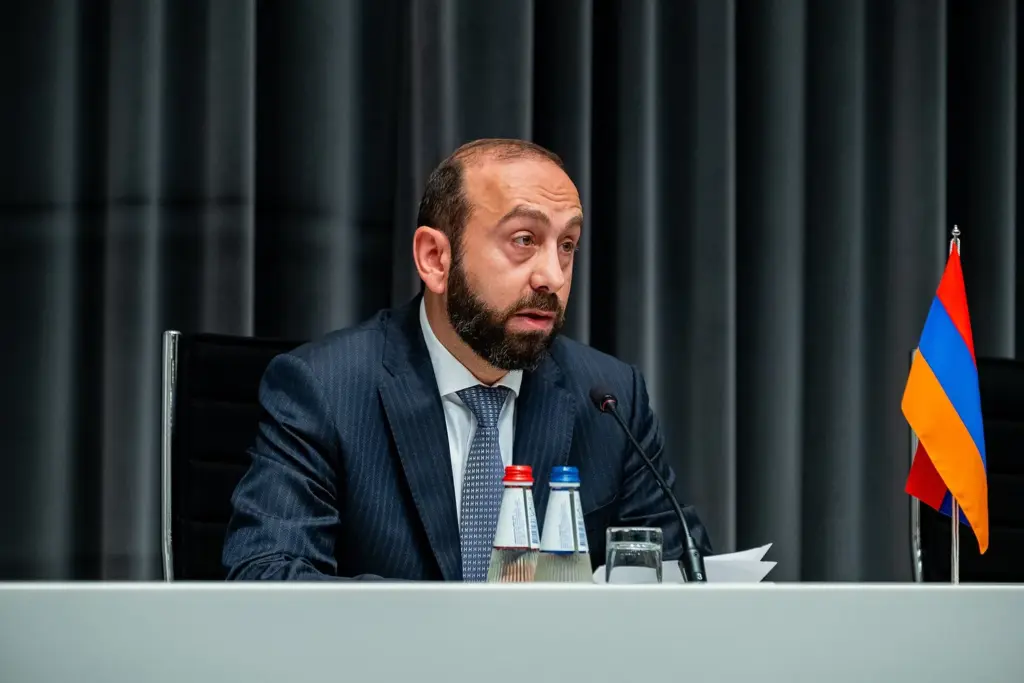
Foreign Minister Ararat Mirzoyan said in an interview aired on 31 August that Russia remains "more than a strategic partner" because existing treaties make the two countries allies, adding that the change in the government program's wording should not be interpreted as an end to that relationship.
Mirzoyan was responding to Armenia's new 2026–2031 government program, which replaces the "strategic ally" and "strategic partnership" language used in the previous five-year
Foreign Minister Ararat Mirzoyansaid in an interview aired on 31 August that Russia remains "more than a strategic partner" because existing treaties make the two countries allies, adding that the change in the government program's wording should not be interpreted as an end to that relationship.
Mirzoyan was responding to Armenia's new 2026–2031 government program, which replaces the "strategic ally" and "strategic partnership" language used in the previous five-year plan with a commitment to "transform and deepen" relations with Russia. The previous program referred to an "Armenian-Russian strategic alliance" and pledged to strengthen "allied relations and strategic partnership" with Moscow.
Prime Minister Nikol Pashinyanexplained on 27 August that keeping the strategic-partnership language would raise questions about why Russia and the Russia-led Collective Security Treaty Organization had failed to fulfill their security obligations to Armenia in 2022.
Armenia has removed the language of alliance from its government program without ending the treaties, CSTO membership, or energy ties that still bind it to Moscow.
Azerbaijan attacked Armenian territory near Jermuk in September 2022, striking positions inside sovereign Armenia rather than the disputed Nagorno-Karabakh region. Yerevan invoked Article 4 of the Collective Security Treaty, the clause treating an attack on one member as an attack on all, and requested assistance. The alliance sent a fact-finding mission but no troops. requested military assistance. Armenia froze its participation in the CSTO at all levels in 2024, stopped financing it, and has boycotted its summits and military exercises.
Why the alliance frayed
Armenian trust in Moscow had deteriorated further by September 2023, when Azerbaijan retook Nagorno-Karabakh after a brief offensive and Russian peacekeepers deployed to the region did not intervene. Armenian officials accused them of failing to protect the enclave's population.
Yerevan has since moved closer to the European Union. In March 2025, Armenia's parliament passed a law to launch the accession process, though Pashinyan has said any actual membership would require a referendum, and Armenia has not applied to join.
What still ties Armenia to Russia
Even so, Armenia remains heavily dependent on Russia for energy. Russia supplied the bulk of Armenia's natural gas in 2021, and Armenia imports all of its nuclear fuel from Russia, leaving it effectively reliant on imported fuel for nearly 70% of its electricity, according to the International Energy Agency. The country remains a member of the Russian-led Eurasian Economic Union.
Mirzoyan acknowledged that strains had emerged in recent years, citing statements by Russian officials, coverage in Russian media, and Moscow's restrictions on imports of Armenian goods. He called for relations to be made "healthier" and returned to a course of "mutual respect," and said Yerevan did not want a "war of words" with Moscow. Pashinyan said on 1 September that he expected to meet Russian President Vladimir Putin later that day in Bishkek.
 Connexion