Connexion
Félix Roussel et Florence Brunelle couronnés champions canadiens sur courte piste
Les deux patineurs ont dominé la compétition à l'aréna Maurice-Richard de Montréal.


Les deux patineurs ont dominé la compétition à l'aréna Maurice-Richard de Montréal.

© Haiyun Jiang/The New York Times

Les vétérans du Tricolore ont terminé le camp de l'équipe sur une bonne note au Centre Bell.

Le Bleu-blanc-noir défait le FC Cincinnati au Stade Saputo et met un terme à une série de cinq revers en MLS.





L’Océanic n’a pas raté sa rentrée devant ses partisans en signant une très convaincante victoire de 13-2 sur les Cataractes de Shawinigan, samedi, en présence de 3 260 spectateurs.
Les treize buts marqués dans un match inaugural local sont le plus haut total dans les 32 saisons de l’Océanic. Ils effacent les neuf qui avaient été inscrits au tableau contre les Tigres de Victoriaville, le 23 septembre 2018, dans un gain de 9-0. En histoire, l’Océanic présente un dossier de 18-14 en partie d’ouverture à la maison.
Le match n’était vieux que de 62 secondes quand le jeune Max Brien a ouvert le pointage avec son premier dans le circuit. Il a récidivé 19 secondes plus tard. Malik Vigneault et Rafaël Cloutier, sur un lancer de punition, ont porté le pointage à 4-0 avant la fin du premier engagement.

« On savait qu’on jouait contre une équipe qui est aussi jeune et qui avait joué hier soir. On voulait profiter de l’énergie d’un match d’ouverture et on a été très opportuniste en partant le match. J’ai adoré la façon dont on a débuté avec la ligne de Turcot, Cloutier et Brien. Ils ont joué du hockey extraordinaire pendant 60 minutes. Ils ont vraiment donné le momentum. Les autres trios ont participé aussi. C’est une très belle victoire d’équipe », a commenté Joël Perrault.
Dans la colonne des points, Rafaël Cloutier (2+3) en a récolté cinq, un de plus que Thomas Belzil (2+2), Max Brien (2+2) et Mathys Dubé (1+3). Benjamin Rioux (0+3), Malik Vigneault (1+2) et Jérémy Turcot (1+2) en ont trois. Les autres marqueurs ont été Zack Arsenault, avec deux, Caiden Pellegrino et Justin Gagnon, avec son premier en carrière devant parents et ami. Dans la colonne des plus et moins, Vigneault affiche un ronflant +7 et Benjamin Rioux +6.

« Brien a 16 ans, mais honnêtement, quand tu le regardes sur la glace, il n’a pas vraiment l’air d’avoir 16 ans. Il n’a peur de rien, a commenté Cloutier qui n’a pas de souvenir précis de son dernier match de cinq points. C’est vraiment le fun de jouer avec lui, tout comme avec Jérémy Turcot. J’ai vraiment aimé notre trio aujourd’hui. On est trois gars qui sommes quand même gros comparés aux autres lignes. » Dans la LHJMQ, il avait eu un match de trois points avec l’Armada.
Pour sa part, Belzil savourait ses quatre points et la belle victoire de son équipe. « Oui, ça fait du bien. On ne pouvait pas demander mieux pour aujourd’hui. Ça fait du bien d’avoir l’appui des fans. Il y avait du monde, la foule était active, c’était super le fun de performer comme ça dans la partie d’ouverture. »
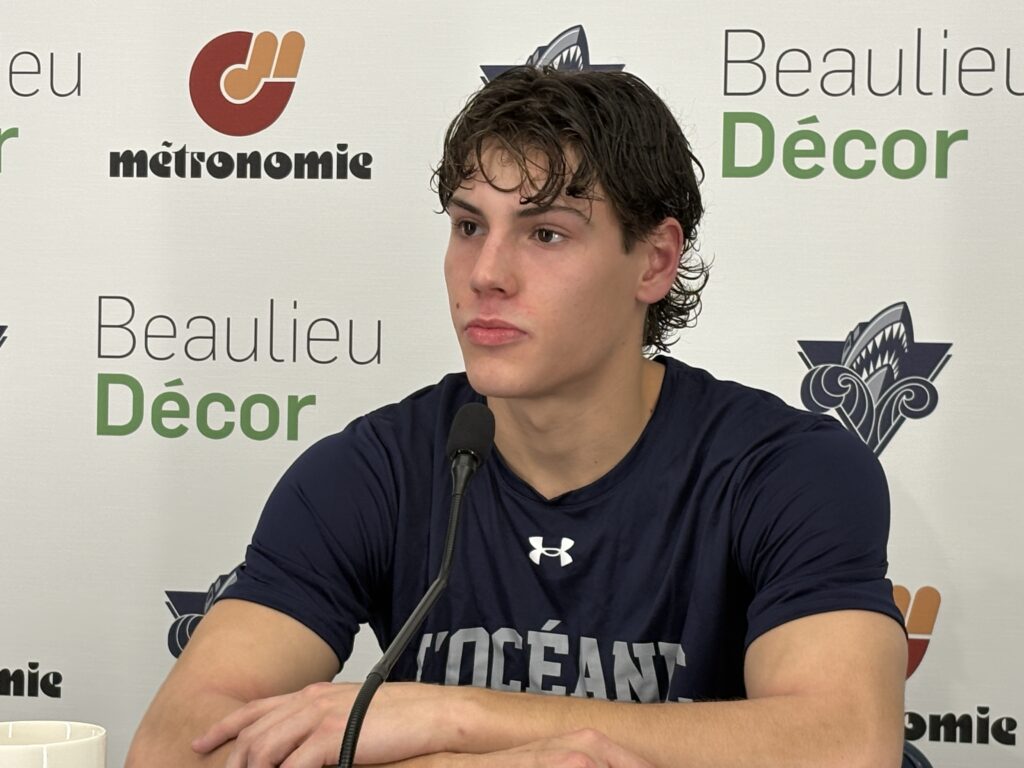
L’Océanic a largement dominé les tirs au but par 55-23. Les deux gardiens des visiteurs, Kamden Jackson et Simon-Olivier Guérard, ne pouvaient rien y faire. La défensive devant eux ne l’a pas eu facile. Il y a eu un nombre incalculable d’attaques en surnombre.
À l’autre bout, Morgan Blackwood a bien travaillé sur les 23 lancers des visiteurs.
Pour Perrault, il s’agissait d’une 100e victoire comme entraineur-chef dans la LHJMQ, toutes avec l’Océanic.
« Ce fut une belle une belle reconnaissance à l’intérieur de la chambre avec Danny (Dupont) qui m’a remis la rondelle. C’est un soir de grandes premières avec des rondelles aussi à joueurs qui ont marqué leur premier but. Le temps passe très vite. Cette 100e victoire, on aurait pu régler ça, l’année passée, après Noël, mais bon. On est content de vivre ces moments-là. C’est important pour notre groupe, mais pour moi aussi, parce que lorsque je suis arrivé ici, il y a trois ans et plus déjà, il y a eu des moments pas faciles pour moi parce que c’était nouveau et j’étais tout seul. Ma famille n’était pas avec moi. Il y a beaucoup des hauts et des bas, beaucoup de bas. Puis, à ma deuxième année, ma famille m’a rejoint et on vit ça ensemble. On est accepté par la communauté. On se plaît beaucoup ici », a-t-il commenté avec émotion.

La recrue de 16 ans, Mayas Cutta, a effectué ses débuts, lui qui avait raté les deux premiers matchs à Baie-Comeau en raison d’une blessure mineure… Edouard Lord, Luca Nappiot (blessé), Teddy Drury, Alexandre Petterson et William Phin Howard n’étaient pas de l’alignement… Très bien, la présentation d’avant-match des joueurs que l’on pouvait suivre, quitter leur place dans le vestiaire pour se présenter sur la patinoire à l’appel de leur nom… L’Océanic (3-0) sera le visiteur à Québec demain (dimanche) à 15 h pour se mesurer aux Remparts (2-1)…

© Eduardo Munoz/Reuters
US president doubles down on criticism of CNN and MS Now as Akayla Gardner questions attempted White House ban
A day after the White House barred CNN from traveling aboard Air Force One to provide pool television coverage of the president’s trip to Tennessee, Donald Trump doubled down on his criticism of that broadcaster and another, MS Now, he has attempted to ban over coverage of him he calls overly negative.
As he left the White House early on Saturday, Trump was asked by MS Now White House correspondent Akayla Gardner: “Do you only want outlets that support you to be a part of the press pool?”
Continue reading...
© Photograph: José Luis Magaña/AP

© Photograph: José Luis Magaña/AP

© Photograph: José Luis Magaña/AP

Deux femmes de 53 et 36 ans ont été arrêtées par la Sûreté du Québec, vendredi (24 septembre), à la suite d’une saisie de stupéfiants effectués dans une résidence et un véhicule à Grande-Rivière, en Gaspésie.
Lors des perquisitions, des policiers ont saisi près de 50 grammes de cocaïne, 20 comprimés de métamphétamines, 0,15 gramme de haschich, un sac de médicaments sous ordonnance, deux balances électroniques, divers sachets de plastique destinés à la vente et un peu plus de 50 dollars en argent canadien.
La SQ a aussi mis la main sur une liste de comptabilité, un bâton télescopique, un poing américain et un téléphone cellulaire.
Ce dossier a mobilisé une dizaine de patrouilleurs et d’enquêteurs. Ils ont profité d’informations reçues du public pour mener à terme cette opération.



La ministre des Affaires étrangères a prononcé un discours lors de l'Assemblée générale des Nations unies.

Des dizaines de millions de personnes se trouvaient sur la trajectoire de cette tempête du nord-est.
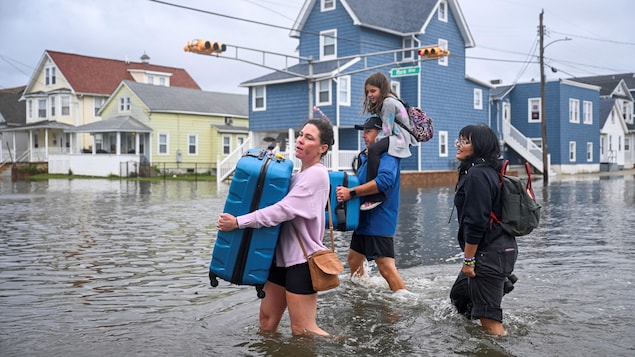
Residents across New Jersey, Massachusetts, Delaware and New York without electricity as storm hits
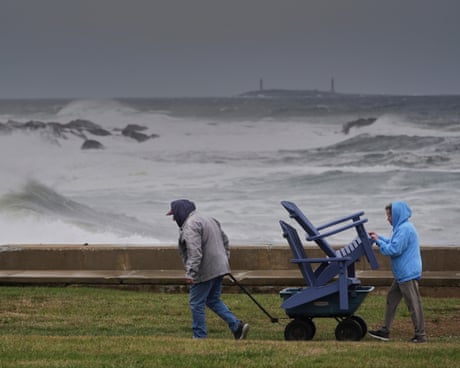
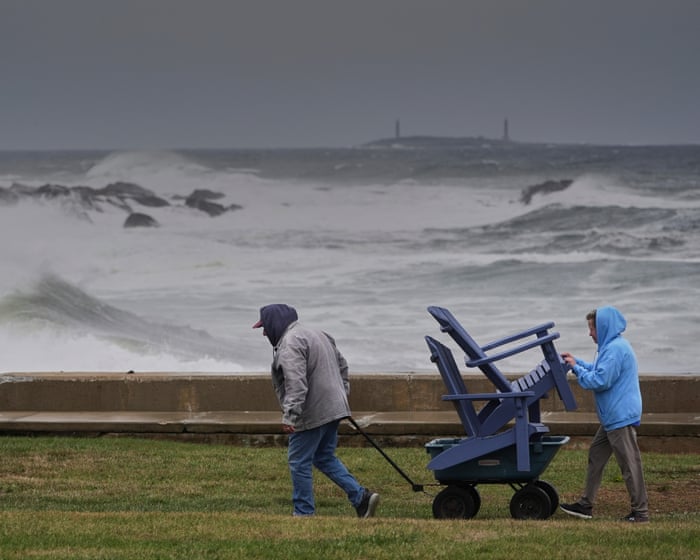
A slow-moving, powerful storm known as a nor’easter crept along the coast of the US north-east on Saturday, producing high winds that knocked out electricity to thousands of people while whipping up big waves and heavy rains that created dangerous conditions in some places.
Tens of millions of people were in the path of the storm, which was forecast to affect the mid-Atlantic area and New England throughout the weekend. About 100,000 customers in the region were without electricity Saturday.
Continue reading...
© Photograph: Robert F Bukaty/AP
© Photograph: Robert F Bukaty/AP
© Photograph: Robert F Bukaty/AP
Eleven players make US debuts in Orlando
Sullivan, 16, starts in youngest US appearance in years
Ellis and Hall score as Pochettino’s new faces impress
Playing in their first match of the 2030 World Cup cycle, the US men’s national team crushed Peru 4-1 in at Orlando’s Inter&Co Stadium on Saturday, riding goals from newcomers Justin Ellis, Zavier Gozo and Justin Hall to victory. The win marked the US debut of 16-year-old Philadelphia Union midfielder Cavan Sullivan, whose appearance in the US starting XI makes him the youngest player to feature for the national team in over two decades.
Sullivan received the lion’s share of the attention in the lead-up to Saturday’s match but it was Orlando City’s Ellis who stole the show early, nodding home a Gio Reyna free kick in the fourth minute to give the US an early lead. Playing in his home stadium, Ellis himself was involved in the build-up that led to the free kick, part of a nifty interchange with midfielder Malik Tillman that ended with Ellis drawing a foul at the near side of the pitch some 25 yards from goal. Reyna’s service was excellent; Ellis’ headed finish was awkward but perfectly-placed at the far post.
Continue reading...
© Photograph: Taylor Banner/USSF/Getty Images

© Photograph: Taylor Banner/USSF/Getty Images

© Photograph: Taylor Banner/USSF/Getty Images
Daughter Genevieve surprises 43-year-old on mound
Three-time Cy Young winner ends 21-season career
Verlander finishes with 3,560 career strikeouts
Justin Verlander got an unexpected hook in his major league finale when his 7-year-old daughter came to the mound with Detroit Tigers manager AJ Hinch in the sixth inning of Saturday’s game against the Pittsburgh Pirates.
After Brandon Lowe hit a foul popup starting the sixth, Hinch walked from the dugout toward the plate and pointed toward the seats. Genevieve Verlander, wearing a Tigers jersey with her dad’s name and number, sprinted to the mound and hugged her father, who reached down to embrace her and started shaking and sobbing.
Continue reading...
© Photograph: Jose Juarez/AP

© Photograph: Jose Juarez/AP

© Photograph: Jose Juarez/AP


© Seal Sitters
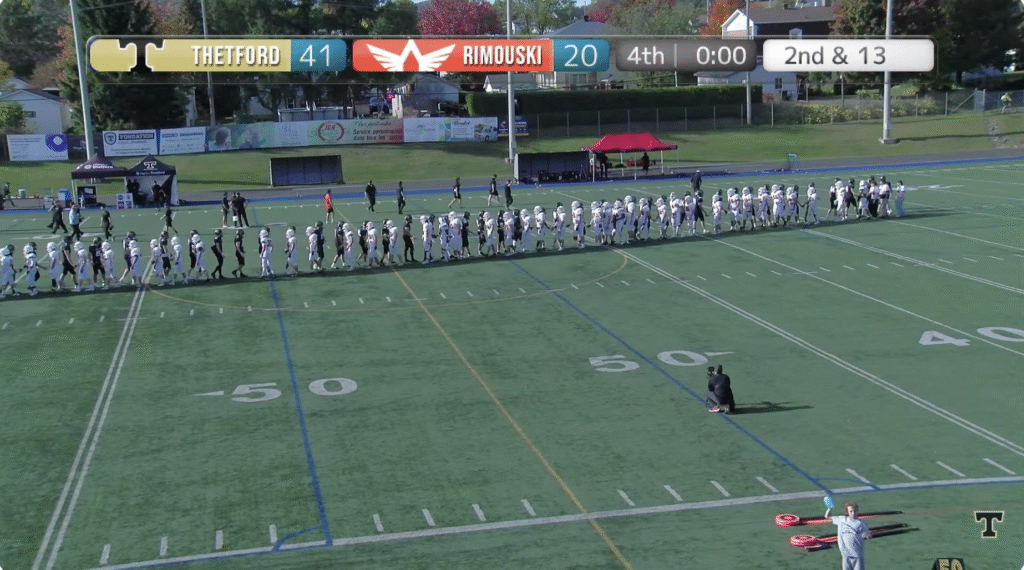
Les Pionniers du Cégep de Rimouski en football avaient un mauvais match dans le système, samedi à Thetford, où les Filons ont remporté une victoire de 41-20.
Il y a très peu de positif à retirer de la performance des Pionniers. Quand Le Soir a suggéré à Louis-David Goulet qu’elle était probablement la pire depuis son entrée en poste, il y a un an, il s’est dit en accord.
« Tu as raison, a-t-il répondu sans hésiter. La défensive a donné beaucoup de verges, mais à leur défense, offensivement, on n’a pas été capable de soutenir des séquences offensives. Ça a été souvent deux, trois ou cinq jeux, et on redonnait le ballon rapidement. »
La première demie a été assez partagée. Une passe de sept verges de Nicolas Rioux à Lucas Côté a donné les devants aux visiteurs par la marque de 10-2. Une interception contre Rioux sur la séquence suivante a résulté en un majeur des Filons, mais Anthony Gagnon, sur une passe et course d’une cinquantaine de verges, a redonné une priorité de dix points (19-9) aux Pionniers. Les deux clubs ont retraité au vestiaire avec une marque de 19-17.

L’offensive des visiteurs a amorcé la deuxième demie de façon plus brouillonne. Roméo Michel s’est ensuite amené en relève à Rioux au poste de quart. Les Filons ont inscrit le seul touché du 3e quart pour prendre les devants 24-20.
« On n’était pas satisfait de notre niveau de jeu, on n’avait pas un très beau ratio de jeux complétés. Ça fait qu’on a décidé de donner la chance à Roméo qui avait eu un très bon match à La Pocatière, mais ça a été difficile dans son cas aussi », explique Goulet.
Les Filons ont ajouté un touché au début du 4e quart pour augmenter leur avance à 31-20. De mauvaises pénalités appelées contre les Pionniers n’ont pas aidé, dont une pour avoir retenu qui a annulé un touché.
La défensive des visiteurs en a eu plein les mains avec l’agile quart-arrière des Filons dont l’offensive a maintenu beaucoup de temps de possession du ballon en deuxième demie. Avec trois minutes à jouer, les Filons ont ajouté un placement, puis un touché sur un retour d’interception pour confirmer leur victoire.
Ailleurs dans le circuit collégial, très grosse surprise alors que les Gaulois de La Pocatière sont allés perdre 28-10 contre le Collège Mérici.
« C’est assez surprenant, mais on voit qu’il y a énormément de parité dans notre division cette année. N’importe qui peut battre n’importe qui. Je pense que c’est la morale de cette histoire-là » fait remarquer l’entraineur-chef des Pionniers.
Son équipe sera de retour devant ses partisans dimanche prochain, 13 h, pour recevoir les Couguars de Chicoutimi.

Welcome back to the Abstract! Here are the studies this week that sailed alien seas, beat the heat, went retro, and got caught in the food web.
First, scientists make the case that Saturn’s moon Enceladus could resolve one of humanity’s greatest questions—are we alone in the universe?—if only we would just send a spacecraft there already. Then: an amoeba in hot water, a backwards-ass planet, and the prandial ouroboros we call life on Earth.
As always, for more of my work, check out my book First Contact: The Story of Our Obsession with Aliens, or subscribe to my personal newsletter the BeX Files.
In a double-whammy pair of studies, scientists have offered more proof that Enceladus—the tiny moon of Saturn—might host alien life, and that it would be relatively easy to find out for sure.
Enceladus is only 300 miles in diameter, but it contains marine multitudes. Underneath its outer ice shell, the moon hosts a subsurface ocean and hydrothermal vents on its seafloor, which are hotspots of life here on Earth.
What’s more, Enceladus squirts out watery plumes from its ocean through geysers on the surface, which can be sampled by passing probes. Indeed, the Cassini spacecraft—which orbited Saturn from 2006 to 2017—ran through this space sprinkler several times, providing our first taste of an extraterrestrial sea. However, that mission was not equipped to detect signs of life, known as biosignatures.
In the first of two new studies, researchers created a simulated version of Enceladus’s “soda ocean” (meaning it is alkaline and carbonate-rich). The team then dropped the heat-loving microbe Methanothermococcus okinawensis to live in this earthly ersatz Enceladus. This species was selected because it lives on deep-sea hydrothermal vents on Earth.

It turned out that M. okinawensis fared even better in this habitat than expected, a discovery that potentially widens “the habitability window of Enceladus’ subsurface soda ocean,” said researchers led by Vanessa Helmbrecht of Ludwig-Maximilians-Universität München.
In the other study, a team revisited Cassini’s observations of ice grains sprayed out into space by Enceladus. They discovered that the ocean droplets freeze slowly in space, causing organic molecules to separate out into concentrations of similar compounds. If these droplets contain biosignatures, they may be conveniently pre-sorted for any instrument that captures them.
“In the plume grains, each separated compound can then be found at strongly elevated concentrations in a relatively small fraction of ice grains,” said researchers co-led by Frank Postberg and Zenghui Zou of Freie Universität Berlin. “This is good news for future plume sampling missions investigating Enceladus’ promising habitability provided that they can sample and analyze ice grains individually.”
For years, mission concepts to Enceladus have been floated but never formally greenlit, including NASA’s Enceladus Life Finder or the European Space Agency’s L4 mission. Hopefully, something gets off the drawing board and into space eventually, because Enceladus is low-hanging fruit, astrobiologically speaking.
In other news…
Speaking of weird heat-loving microbes, meet Incendiamoeba cascadensis, a newly discovered amoeba that has shattered the heat tolerance record for eukaryotic life.
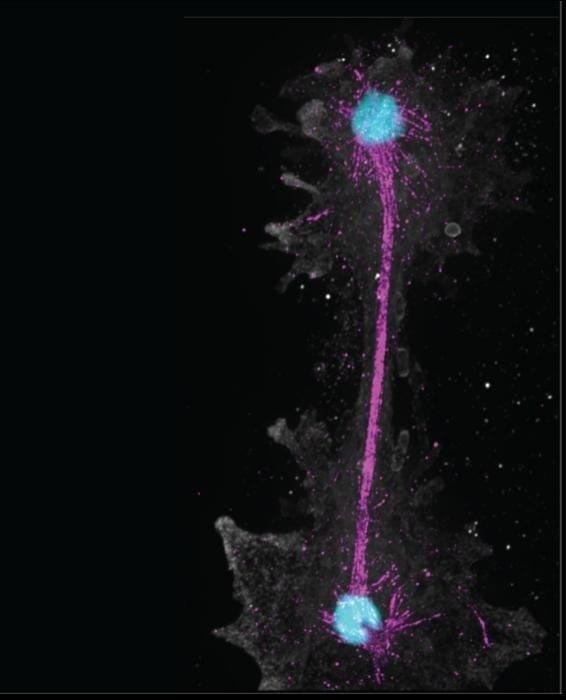
Scientists found this novel species simmering in water temperatures exceeding 64°C (147°F) inside Hot Springs Creek at Lassen Volcanic National Park in California (for reference, the average hot tub is around 100°F). While simple “procaryotic” organisms can survive much hotter water—the microbe Methanopyrus kandleri tops out at a balmy 252°F—the upper thermal limit for more complex “eukaryotic” lifeforms was previously thought to be 60°C (140°F).
“Incendiamoeba cascadensis proliferates at temperatures beyond what was thought possible for any eukaryote,” said researchers led by Beryl Rappaport of Syracuse University. “This discovery raises questions about the true maximum temperature a eukaryotic cell can endure.”
If a human were exposed to these water temperatures, they would suffer third-degree burns in seconds—so let the amoebas have their win and leave the deadly hot springs to them.
If you’ve been feeling like the vibes are off, it’s probably because the planet GJ 3090 b is in retrograde—permanently. This world, which is about 4.5 times as massive as Earth, is the “first planet on a retrograde orbit discovered around an M dwarf,” a type of small star more commonly known as a red dwarf, according to a new study.
In our solar system, the concept of a planet being “in retrograde” refers to the optical illusion of planets appearing to move backwards in their orbits from our perspective on Earth. But GJ 3090 b is actually orbiting in the opposite direction of the rotation of the star, which is located 60 light years away.
Exoplanets with similar retrograde orbits have been observed before, but GJ 3090 b is distinct because there is no massive object (a star or planet) in the system that seems to have set it into reverse. Most retrograde orbits are caused by gravitational disruptions from such colossal companions, but this exoplanet may have just been born this way—meaning that it formed from a disk of material that was out-of-whack from the jump.

“Whereas highly misaligned orbits are commonly attributed to gravitational interactions with a massive companion, the architecture of the GJ 3090 system instead favors a primordial misalignment of the protoplanetary disk,” said researchers led by Yann Carteret of the University of Geneva.
The discovery is a reminder that star systems take on a wild variety of configurations shaped by countless interactions and factors. Contrary to the proverb, there is something new under every sun.
From the simplest microbe to the mighty blue whale, all life on Earth has one thing in common—we gotta eat. But given the dazzling complexity of food webs around the world, it can be tough to track what species end up in what bellies (or belly-equivalent) out in the wild.
That’s a problem that scientists are now inviting the public to help solve with the new online database: Who Eats Whom? In a partnership with the popular platform iNaturalist, the tool has catalogued some 14,000 observations of food-web interactions captured by nearly 2,000 observers from more than 100 countries, according to a new study about its progress.
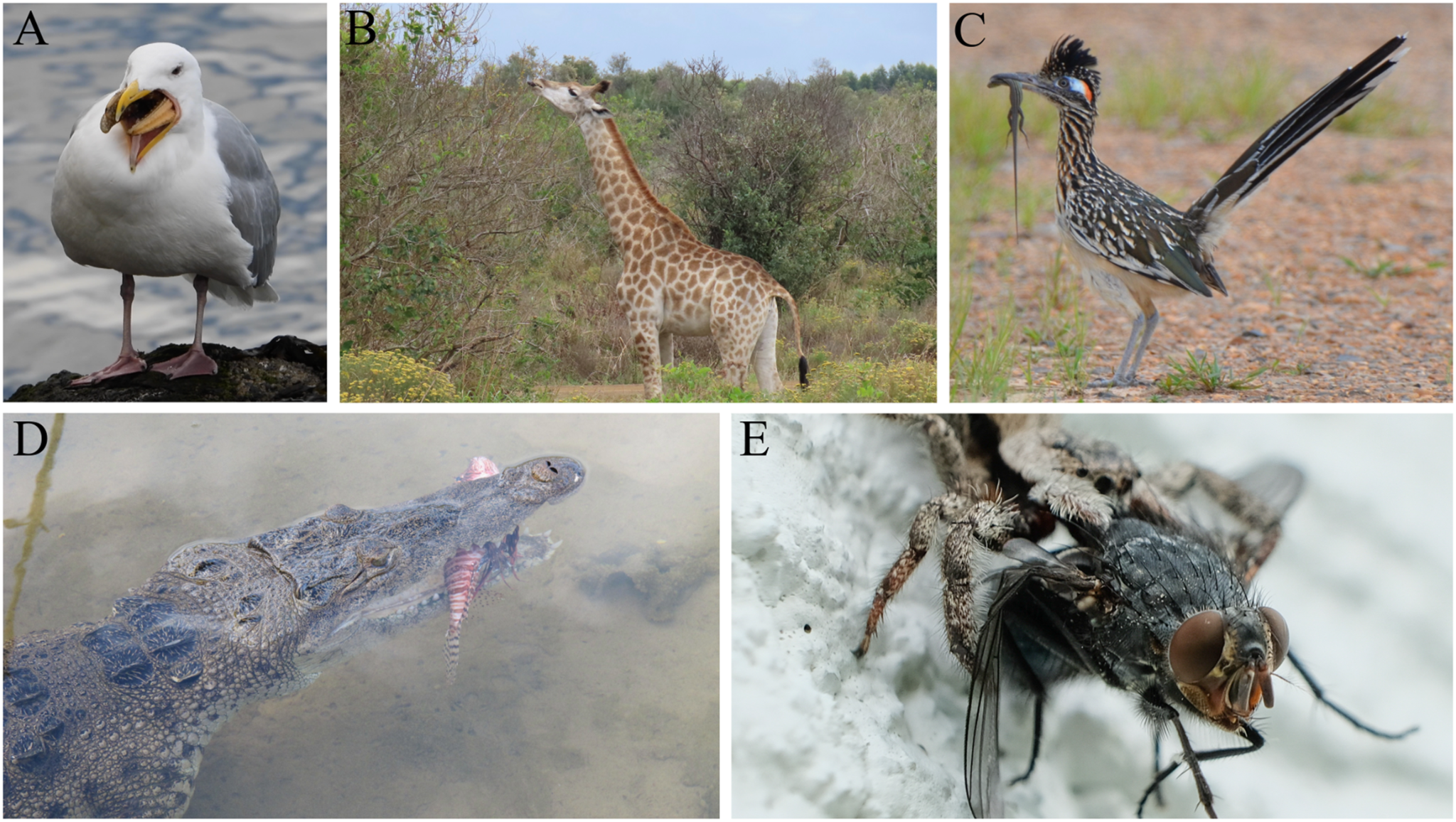
“Who Eats Whom is, to our knowledge, the first attempt to create a global food web derived specifically from verifiable citizen science photographs,” said researchers led by Bradley C. Allf of Colorado State University. “Beyond our scientific goals, we are designing the project as a tool for education and public engagement in science.”
You can search for specific animals in the database (for example, searching for the red fox reveals a brave Australian python-eater, as well as this excruciating picture of the last moments of an Eastern chipmunk in Ontario with the caption: “not a great day”). I was also delighted to learn that coyotes, in addition to chasing down prey, apparently go on persimmon binges that leave behind seed-filled scat.
To get a sense of the bigger picture, you can check out this interactive global food web of species. We are, after all, what we eat—and what we eat eats, and so on forever.
Thanks for reading! See you next week.

Preparation begins for extreme conditions as Nolo bears down on areas still recovering from previous storms
Heavy rain and powerful winds are expected to bring flash floods and extreme surf to the Hawaiian islands over the weekend as Hurricane Nolo bears down on areas still recovering from previous storms.
Nolo was churning slowly south of Hawaii’s Big Island on Saturday with maximum sustained winds of 105mph (165km/h). The storm’s center was about 145 miles (235km) south of Hawaii’s southern-most point and could strengthen into a potentially life-threatening and catastrophic storm through the weekend.
Continue reading...
© Photograph: Eugene García/AP

© Photograph: Eugene García/AP

© Photograph: Eugene García/AP