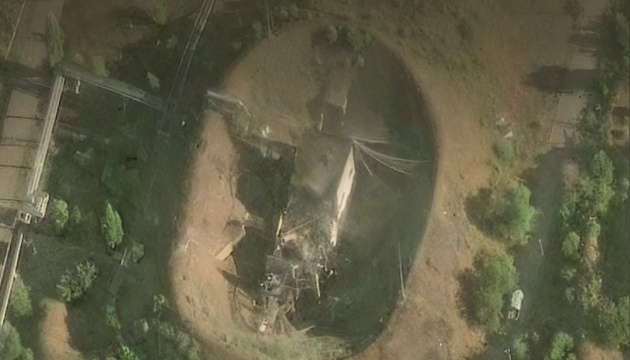
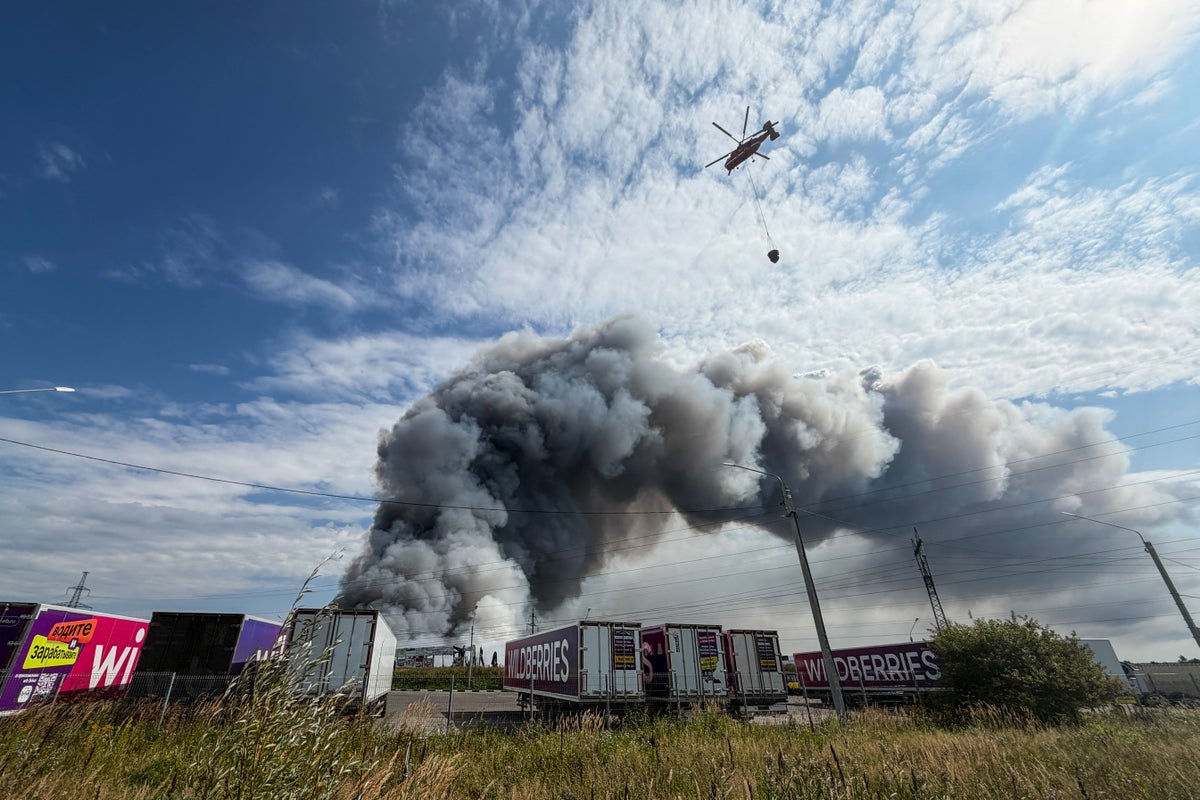
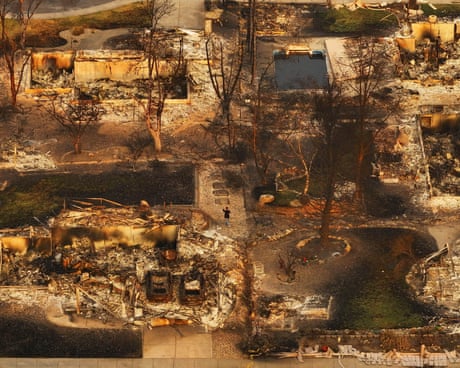
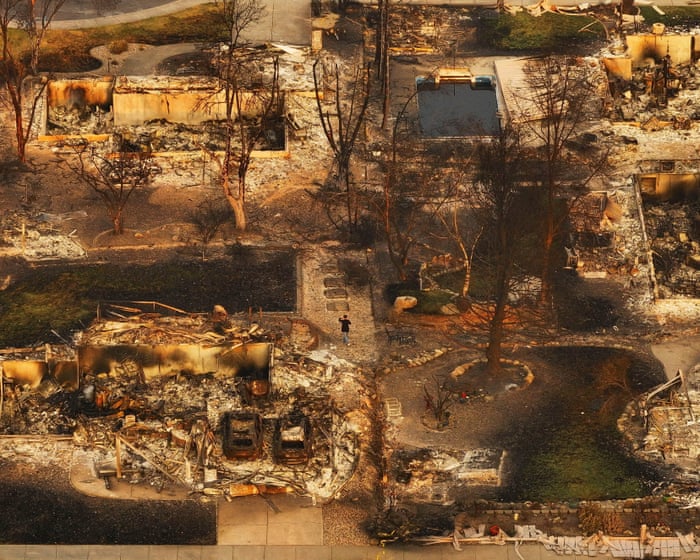
Alors que Sébastien Lecornu rencontre lundi les sapeurs-pompiers du Porge, l'une des communes les plus touchées par les incendies en Gironde, la question de la prévention est à nouveau mise en avant. Ailleurs en Europe, des pares-feux alternatifs et innovants sont utilisés.
L'épidémie d'Ebola qui se propage à une vitesse inédite est devenue lundi la plus meurtrière de l'histoire de la République démocratique du Congo (RDC), dépassant en trois mois les 2.300 morts recensés lors de la flambée de 2018-2020.
Ukrainian naval forces have been raiding Russian outposts on the Kinburn Spit jutting into the western Black Sea
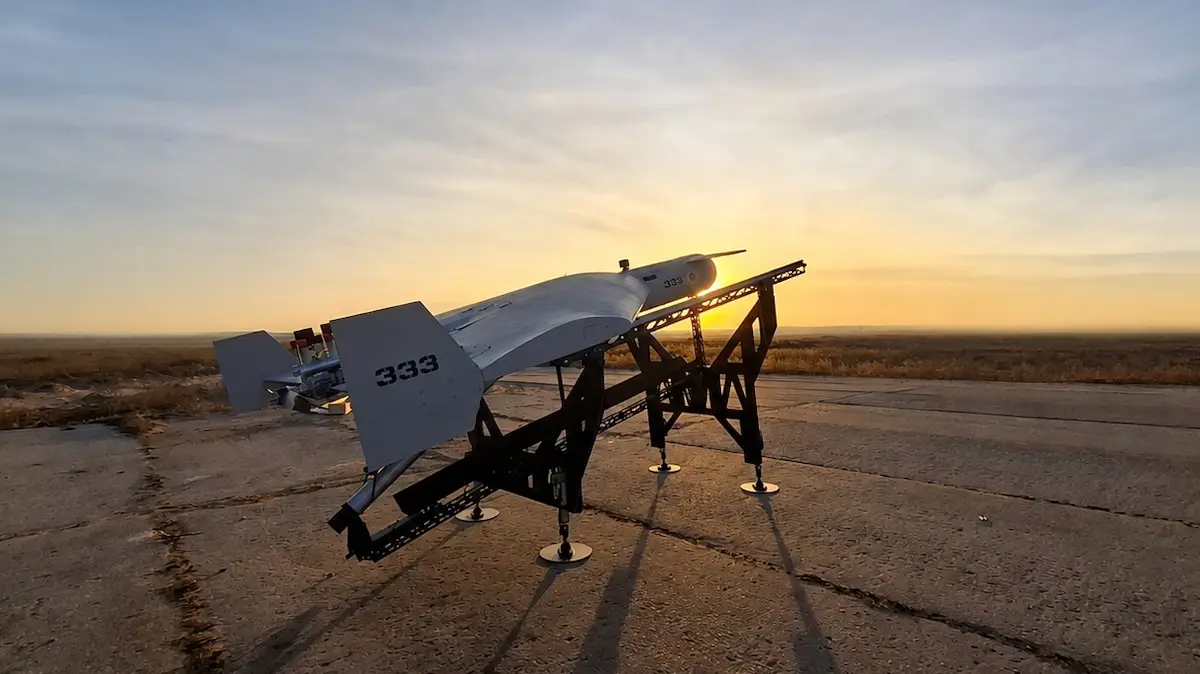
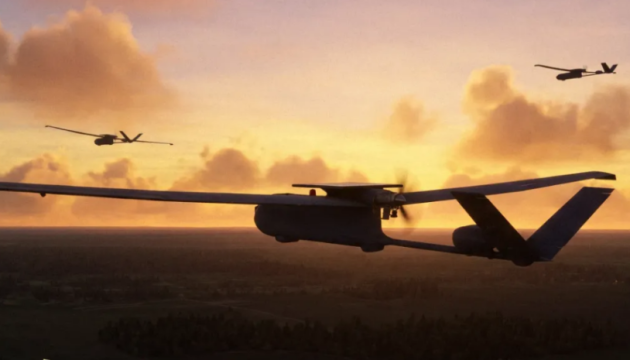
Now Russian forces are fighting back with Geran-4 AI-assisted attack drones
The Russians recently hit two Ukrainian boats, and one may be the first CB-90 ever lost
In July, unmanned boats belonging to the Ukrainian Territorial Defense Forces landed at least one gun-armed unmanned ground vehicle on the Kinburn Spit, the westernmost Russian outpost in occupied Ukraine. As aerial drones watched, the UGV opened fire on a nearby Russian installation. No Ukrainian was anywhere near the beach.
Russia has now answered the raids, and it is aiming at the boats rather than the robots. Twice this month, Russian Geran-4 attack drones—jet-propelled, AI-assisted and fast enough to outrun most of what Ukraine can shoot back with—have hunted down the small craft that carry Ukrainian raiders and their machines to the spit. If the campaign continues, it could close the approach that has made the raids possible at all.
On or around 12 August and again on 15 August, Geran-4s spotted and attacked boats belonging to the Ukrainian navy flotilla operating in the waters around the Kinburn Spit, which juts into the western Black Sea from Russian-occupied Kherson Oblast.
Russian forces on the Kinburn Spit can monitor Ukrainian maritime traffic, making the narrow sandy spit a key outpost in the ongoing battle for the Black Sea's most important sea lanes. Ukrainian forces are determined to dislodge Russian forces from the spit. The Russians are determined to cling to their sandy outpost.
Минобороны России опубликовало видео поражения украинского патрульного катера CB-90 беспилотным летательным аппаратом «Герань-4 сикер» близ Очакова 12 августа 2026 года.
The Geran attacks are helping. The 12 August Geran raid targeted a Ukrainian navy CB-90 patrol boat. The 15 August Geran raid targeted a Ukrainian navy tugboat. It's unclear how much damage the Gerans inflicted, but it's worth noting that the CB-90 is just 15 m long; a tugboat might be slightly longer. A Geran's warhead weighs as much as 90 kg—probably enough to sink such a small vessel or burn it down to the keel.
The Ukrainian navy has only a few large warships, and they're all donated minehunters that have been waiting out the current wider war in the relative safety of European waters. The bulk of the Ukrainian fleet is made up of small patrol boats, auxiliaries such as tugs, and several types of unmanned surface vessels. These vessels defend waterways and ports and, more rarely, support offensive operations.
A Russian Gerbera drone struck a tugboat of the Ukrainian Navy in the Dniprovska Gulf, opposite Russian positions on the Kinburn Spit. pic.twitter.com/Arnwts6BEL
The July robot landing was one episode in a long Ukrainian raiding campaign along the spit—the kind of operation the Geran-4s are now trying to spoil.
Location of Kinburn Spit. Map: Euromaidan Press
The Geran strikes on Ukrainian boats could blunt these raids and help the Russians maintain their tenuous hold on the Kinburn Spit. The Russian strikes are part of a wider maritime campaign. Shortly after Ukrainian drone units began targeting the unregistered cargo ships and tankers belonging to Russia's shadow fleet, Russian drone and missile units retaliated—with devastating attacks on Ukrainian ports and the ships sailing to and from these ports in support of Ukraine's lucrative grain exports.
The Ukrainian attacks on the shadow fleet damaged hundreds of ships and effectively ground Russian Black Sea trade to a halt. But Russian attacks on Ukrainian ports effectively ground Ukrainian Black Sea trade to a halt, too.
Explore further
Ukraine’s new Tu-95 killer is a $48,000 copy of a drone China refused to sell
The new jet-propelled Geran-4s with their AI-assisted targeting were central to the effort. Their 500 km/h top speed makes them hard to shoot down. And the AI makes jamming far less useful than it used to be: the operator locks the drone onto a target, and from there the machine vision flies the attack, holding the lock even if Ukrainian electronic warfare severs the radio link in the final seconds.
The CB-90s in the Ukrainian inventory—more than 38 of them, most donated by Sweden, with others from Norway, the Netherlands and Ukrainian private donors—are valuable targets for the Russians. Armed with guns and armored against enemy small arms fire, the CB-90s can haul as many as 21 infantry at a max speed of around 40 knots. They're perfect for raiding far-flung enemy outposts such as those on the Kinburn Spit. But they're vulnerable to drone attack. If the CB-90 that a Geran struck last week indeed sank, it may have been the Ukrainian navy's first CB-90 loss.
Ukrainian forces aren't powerless to stop the Russians from spoiling Ukrainian raids on the spit. Geran-4s might be too fast for Ukrainian gun teams, armed light aircraft, and cheap interceptor drones, but they're not too fast for supersonic Ukrainian air force MiG-29 fighters.
Several of the MiGs patrol over the western Black Sea. One crashed recently, but others remain.
"Pour cet automne, je propose la liste de sanctions la plus ambitieuse depuis le début de la guerre", a annoncé lundi Kaja Kallas au quotidien allemand "Die Welt".
Ukraine’s Ministry of Defense has codified and approved the domestically produced Dovbush T40 unmanned aerial system for operational use by the Armed Forces of Ukraine.
Prime Minister Andy Burnham of Britain speaking in London this month. An official said Mr. Burnham had exchanged a few messages of no significance with an impersonator.
La décision de Sony d’abandonner progressivement les jeux PlayStation sur disque pourrait avoir des conséquences qui dépassent largement la disparition des boîtes dans les magasins. Aux Pays-Bas, une poursuite collective accuse déjà l’entreprise japonaise d’abuser de sa position dominante dans la vente de jeux numériques. Et l’annonce récente de Sony vient donner un nouvel argument […]
486 Africans recruited into Russia’s armed forces are dead, while Ukraine is holding 35 citizens from 17 African countries as prisoners of war, Ukraine’s Ministry of Foreign Affairs (MFA) told Ukrainian public broadcaster Suspilne in findings published on 16 August 2026. Its overall tally rose only slightly from May, climbing from 2,965 recruits from 36 countries to at least 2,982 from 37.
Russia’s recruitment in Africa is part of a broader effort to enlist foreigners for its war. A joint human-rights investigation found that Russia had recruited at least 27,000 people from more than 130 countries since 2022. The system helps Moscow replenish its forces while shifting battlefield risk onto foreigners, many of whom are drawn in by financial pressure, deception, or coercion.
The largest groups of recruits came from Kenya, Egypt, Cameroon, Ghana, Nigeria, Uganda, Algeria, and Mali, the ministry told Suspilne.
Russia’s wider recruitment pipeline in Africa
Russian security services use a “broad arsenal of manipulative methods,” the Ukrainian MFA said. Recruiters promise civilian jobs, education, high salaries, Russian citizenship, or migration benefits. In many cases, foreigners must sign Russian-language military contracts under threat of deportation or imprisonment.
The FIDH–Truth Hounds–KIBHR report found recruiters using social media and intermediaries to advertise civilian jobs. Of 16 foreign POWs interviewed, 13 said they had been promised they would not fight. Most reached combat positions within weeks.
The human toll on African recruits
Kenyan engineer Francis told journalist Dmytro Karpenko, who interviews prisoners captured while fighting for Russia, that he thought he had accepted a security job. In Russia, he received a military uniform instead. After two weeks of training, he reached the front and was captured.
Ukraine’s response to Russia's recruitment campaign
Ukraine’s diplomatic missions regularly inform African officials about the recruitment of their citizens and run awareness campaigns, according to the ministry.
The MFA and Ukraine’s POW Coordination Headquarters also launched Stop Russian Recruiters, a website that explains recruitment methods, shares victims’ accounts, advises people at risk and their families, and accepts reports about recruiters.
Deux visages de l'opposition au Mali - le chroniqueur Mohamed Youssouf Bathily et l'influenceuse Rokia Doumbia - ont été condamnés à Bamako à 10 ans de prison, dont trois avec sursis. Ils avaient été jugés en 2023 pour "association de malfaiteurs" et "atteinte au crédit de l'État" suite à une émission consacrée aux difficultés économiques de la population.
Le Cameroun décroche sa première CAN féminine ! Les Lionnes indomptables ont dominé le Malawi (3-0) en finale, après avoir été repêchées pour participer au tournoi. Un sacre historique célébré dans le pays.
Germany has placed part of a federal ministry directly next to a Berlin building that France links to Russian intelligence, the newspaper Tagesspiegel reported. The branch office shares a wall with the Russian House, a cultural center long suspected of serving as a Kremlin front. One of its units works on protecting Germany's critical networks from attack.
Russia has answered its war on Ukraine with a shadow campaign across Europe—arson, sabotage, drone incursions, assassination plots, and influence fronts run under diplomatic and cultural cover. Western capitals have spent the past four-plus years learning that Moscow's reach does not stop at the front line.
A shared wall in the heart of Berlin
The Federal Ministry for Digital Affairs opened a branch at Taubenstraße 42/43 on 1 July. It sits wall-to-wall with the Russian House on Friedrichstraße, reporter Claudia von Salzen found. The ministry moved in because its main headquarters nearby had run out of space.
Two of the ministry's six departments now operate there. One covers digital infrastructure, including a unit for the security and resilience of public telecom networks.
The other handles digital identities, trust services, and the cybersecurity industry. Both are fields a hostile intelligence service would want to watch.
Explore further
The throwaway agents Moscow sent after a Bavarian drone boss arming Ukraine—and how Germany stopped them
Why the address raises alarms
The Russian House is officially a science and culture center. It opened on Friedrichstraße in 1984 to promote friendship with the Soviet Union.
Rossotrudnichestvo, a Russian state agency, runs it. The EU sanctioned that agency in July 2022 as the Kremlin's main tool for hybrid influence. In Germany, it allegedly helped organize pro-Russian rallies, and many of its staff abroad are Russian intelligence officers.
A leaked French Interior Ministry letter states the building serves as cover for Russian intelligence. The Russian House rejected that and claimed it is a purely cultural institution.
Other branches of government took the threat seriously
Across town, German lawmakers near the Russian Embassy hardened their offices years ago. They were told to avoid Bluetooth devices and to fit their windows with anti-espionage film.
Berlin is also reviewing whether to close the Russian House over the espionage suspicions, TVP World reported. A senior lawmaker, Roderich Kiesewetter of the CDU, called the ministry's choice a clear failure of risk awareness.
Explore further
Germany declared a break with Russia—then licensed its nuclear giant
The ministry said it picked the site because the building is federally owned and the right size. It did not answer whether the proximity to the Russian House counts as a security risk.
Russia's shadow war has already reached Germany
Germany has become one of the busiest fronts in Russia's campaign of drone incursions, sabotage, and spying. By December, Germany had logged more than 1,000 suspicious drone flights in 2025 alone. The drones have swarmed both civilian airports and military sites, shutting Munich Airport over two days in October 2025 and stranding thousands of travelers. Analysts judge it highly likely that Russia flew some 144 surveillance drones over a dozen NATO countries between August 2024 and February 2026, including near Ramstein Air Base and NATO nuclear sites. In early August 2026, security staff found an explosives-laden drone beside a Ukrainian cargo plane at Leipzig-Halle airport, an incident Western intelligence tied to Moscow.
Explore further
A bomb-laden drone hit a Ukrainian An-124 in Germany, then lay unnoticed for hours
Much of the ground work runs through disposable agents recruited online. In March 2026, authorities arrested operatives who had surveilled the head of a Bavarian drone firm arming Ukraine, a case its domestic service treats as a planned assassination. Prosecutors separately charged three men over a plot to mail exploding parcels from Germany, described as a test run for future arson attacks.
The fifth Corgi Race Vilnius drew dogs and their owners to the Lithuanian capital’s Vingis park on Saturday for what organizers said was the biggest edition yet.
Grant cancellations at leading research institutions appear to target study of impacts of racism on brain health
A new round of scientific grant cancellations has hit brain health and Alzheimer’s disease research at two leading research institutions, Emory University and the University of Pittsburgh.
The latest cancellations are the Trump administration’s most recent effort to remove disfavored topics from the National Institutes of Health (NIH) $47bn scientific portfolio – and appear to target the study of the impacts of racism.
I understand gen Z’s concerns about the cost of romance. But anything can be a date if you want it to be
A couple of months ago, I wrote a column imploring young people to keep trying to find love, to not become cynical about romance and avoid the temptation of the accursed “loneliness influencers” peddling antisocial behavior as some sort of newfangled experiment that no one had thought of before. I stand here today saying, hey, I can’t be right all the time. Maybe it is better to be alone, since it costs a hell of a lot less.
Apparently, young people across the country are forgoing dating because it’s too damn expensive. Or at least, I think they are, based on the multiplenewspaperarticles saying so that came out in the last two weeks. As the New York Times put it, the “prospect of a tab of $150 or more for two entrées, two drinks, an appetizer and tip” is too pricey for many gen Z singles. I say, only $150? Where are you going, Chili’s? I went on a date with (shameful brag incoming) a very famous political figure from the late 90s and spent twice that amount, sending my bank account into cardiac arrest. I practically begged her to get dessert, even though it was clear our decade of age difference and general lack of chemistry meant I was better off going home and journaling about it. I paid for the whole thing, and in return, I got an amazing story to tell at parties.
Hi-tech cameras orbiting Earth and on the ground, along with AI, help firefighters extinguish blazes before they spread
The fires in Spokane, Washington, this summer are the latest reminder that when a wildfire is detected can be just as important as where it starts. A blaze found within minutes can often be contained before it spreads. Wait too long, and a small spark can become a major disaster.
A new effort to shorten that timeline began in July when a SpaceX rocket carried the first three FireSat satellites into orbit. The trio is the first part of a planned network of 50 satellites built solely to spot wildfires while they are still small enough to stop.
Units of the Ukrainian Defense Forces struck a storage, preparation, and launch site for attack drones in the Hvardiyiske area, as well as an “Orion” UAV control station in Novofedorivka in the temporarily occupied Crimea.
Units of the 1st Corps of the Ukrainian National Guard “Azov” destroyed facilities used to store and supply fuel to Russian troops in the temporarily occupied part of Donetsk region over the course of a month.
Les autorités régionales ont annoncé le plus grand déploiement de pompiers de l'histoire de l'Aragon, afin de maîtriser le feu qui s'est déclaré lundi.
Au Québec, on ne peut pas disposer des cendres d’un défunt n’importe où ni n’importe comment. Pourtant, entre les règles à respecter et les dernières volontés d’une personne, certains prennent parfois… quelques libertés.
Opinion de Harold Michaud, journaliste indépendant- Collaboration spéciale
Un jour, un pêcheur de la région taquinait tranquillement le saumon lorsqu’un étrange reflet attira son attention dans une partie peu profonde de la rivière. Un saumon? Un morceau de métal? Un objet perdu par un autre pêcheur?
Pas du tout!
En s’approchant, notre homme constate qu’il s’agit… d’une urne funéraire.
Respectueux — et probablement assez étonné de voir sa journée de pêche prendre une tournure aussi inattendue —, il récupère l’urne et la remet aux autorités compétentes.
Heureusement, le contenant renferme normalement une pièce d’identification. Grâce à celle-ci, on réussit à retracer un membre de la famille de la personne décédée et, du même coup, à comprendre comment cette urne s’était retrouvée au fond de la rivière.
On précise alors délicatement à la famille qu’on ne peut pas simplement se débarrasser d’une urne dans une rivière, même si le geste visait à respecter les dernières volontés du défunt. Et surtout, si l’on souhaite disperser des cendres là où la loi le permet, mieux vaut éviter de lancer le contenant avec!
Bref, si votre dernière volonté est de reposer dans une belle rivière à saumon, renseignez-vous d’abord sur les règles applicables.
Et, de grâce, prévenez vos proches : demandez-leur de disperser vos cendres, pas de vous mettre à l’eau avec l’emballage!
Parce qu’à la pêche au saumon, on s’attend parfois à remettre ses prises à l’eau… mais rarement à y retrouver les restes d’un défunt encore dans leur contenant.
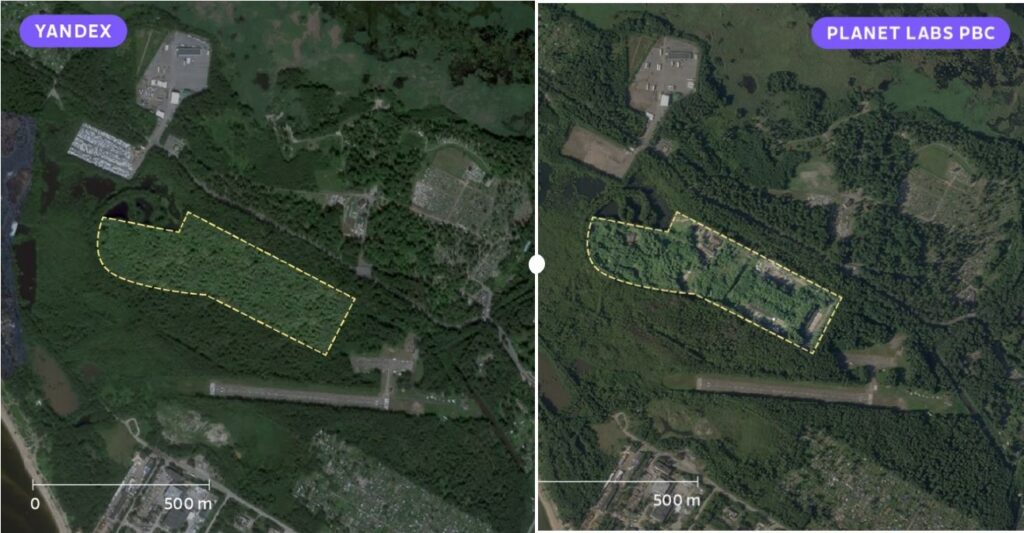
Russia's most-used mapping service has digitally hidden a military missile site near Finland by copying a fake forest over it on satellite imagery, Finnish public broadcaster Yle reported. Western map services still show the same position, and a Finnish military analyst called the concealment careless and self-defeating. The clumsy edit points to Moscow's growing fear of Ukrainian drones.
Ukraine's drones now reach thousands of kilometers into Russia, striking refineries, defense plants, and naval yards once thought safe. That expanding reach has upended Moscow's sense of a protected rear across the war.
What Yandex tried to erase
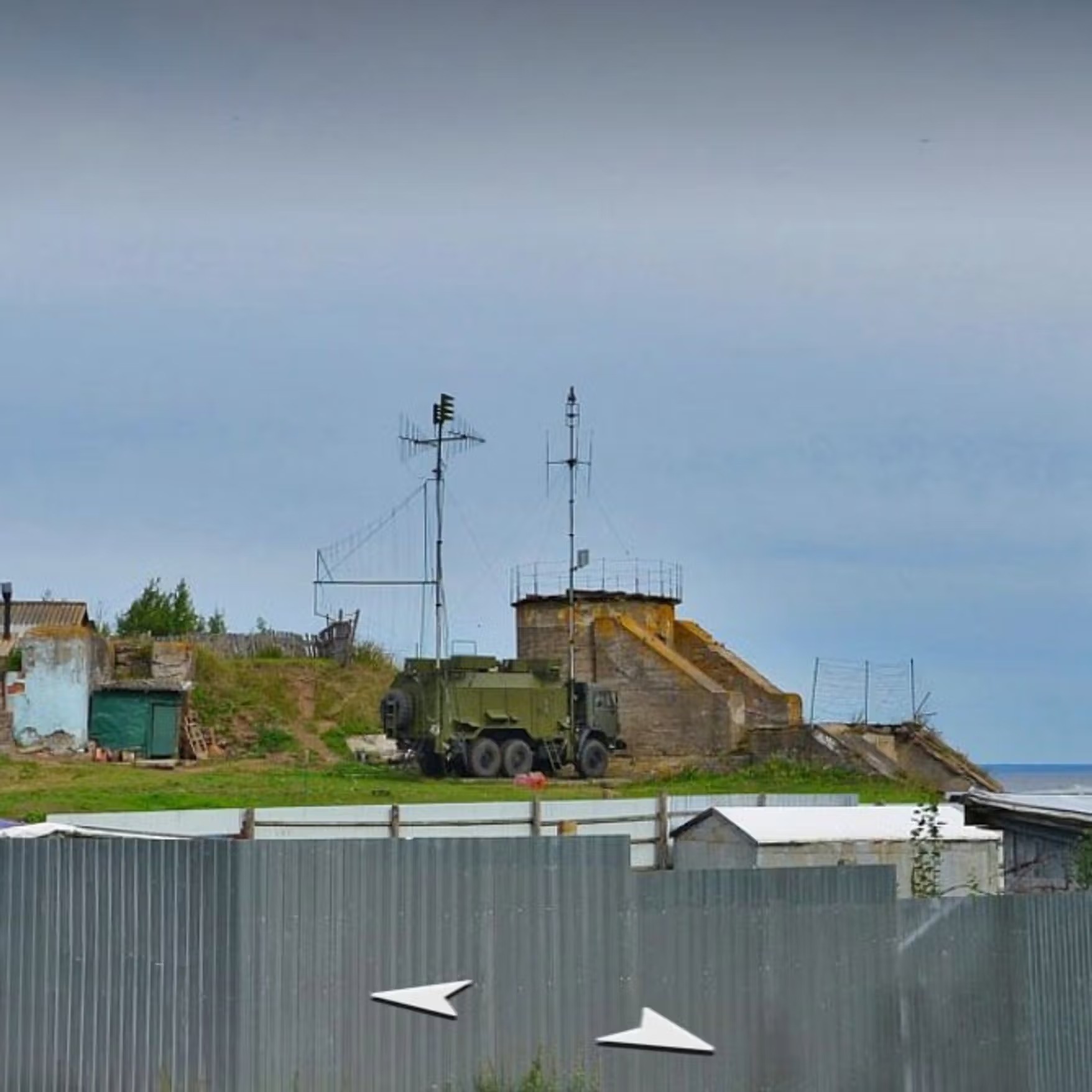
The concealed site sits beside the Kronstadt naval base, on Kotlin Island off St. Petersburg in the Gulf of Finland. Editing software copied trees from another image and laid them over the missile position. Until now, Russia mostly blurred sensitive locations rather than deleting them, but this edit tries to hide the target's existence outright. The same battery still appears on Google, Apple, and Microsoft satellite maps. In the covered zone, Russia has previously kept Bastion anti-ship missiles and their radar and reconnaissance systems.
A screenshot from Yandex's map service showing an electronic warfare base near Kronstadt. Photo: Yandex
A cover-up that gives itself away
Marko Eklund, a military expert and former Finnish intelligence officer, called the secrecy pointless. Western and Ukrainian analysts read their own satellite images, not Yandex, so the edit protects nothing in practice. He believes an administrative order drove it, and that the work was done sloppily. Anyone who knows what to look for can spot the seams and repeating patterns.
Explore further
Kronstadt, Russia’s major naval Base after Black Sea Fleet losses, gets hit by Ukrainian drones (VIDEO)
A pattern set by Ukraine's drones
Russia's map cover-ups have tracked Ukraine's deep strikes. A Moscow court ordered Yandex to mask an oil refinery in Ryazan in 2024 after repeated Ukrainian strikes, and a Nordic-Baltic investigation later counted 119 blurred sites near Russia's northwestern border. Blurring shows up at once, while cloned forest hides the tampering itself.
Kronstadt gives Russia one of its main Baltic Fleet bases, and Ukraine's drones have already reached it. In early June, they set a Russian missile corvette ablaze in dry dock there.
A research lab at Polytechnique Montréal is spearheading efforts to prepare Canada against future pandemics through the federally mandated Ramp Up initiative.
Russia will keep escalating until Europe shows both the political will and the military capability to stop it, argues Hans Petter Midttun—and NATO can no longer supply either. In an interview with the Guildhall news agency, the former defense attaché to Ukraine makes the case for the Ukraine-anchored coalition he has argued for since long before this interview: Northern Europe together with Ukraine, credible from the day it is declared.
This interview was conducted in Russian by the Guildhall news agency and is republished here in an edited English translation. The subheadings are Euromaidan Press's.
Hans Petter Midttun is a non-resident research fellow at the Centre for Defence Strategies and a former defense attaché to Ukraine.
Why NATO no longer deters Russia
NATO Secretary General Mark Rutte addresses foreign ministers at North Atlantic Council meeting Brussels December 2025. Photo: NATO
It seems that despite everything the West has done to deter Russia, the Russian threat to the West—particularly to the Baltic states and NATO members in general—is only increasing. What is your diagnosis? Why has the Western deterrence strategy failed, if you agree that it has?
Yes, I absolutely agree, and I have been saying this for quite some time.
To begin with, it is worth questioning your basic formulation—"the West." I have often used the term myself. Almost every time I write about what is happening, I use it. But recently I have begun to question whether it is still accurate.
If we regard the West as a civilization, as a strategic space, then we understand what we are talking about. Usually that means NATO and the European Union. But if we regard it as a political actor, as an entity responsible for deterrence, the situation becomes much more complicated.
For some time now I have questioned the viability of NATO. I am an officer myself, and I have been oriented toward NATO throughout my career. I have always believed in the Alliance. Almost everything I have done over nearly 40 years has been based on NATO doctrine, strategy, and tactics. But since 2022, I have seriously begun to question it. I have written publicly that I doubt the Alliance can survive in its current form. And I have said very clearly that it no longer deters Russia. I can prove it.
Explore further
I defended NATO’s values. I no longer recognize what NATO defends.
Please do.
There are three reasons I have pointed to repeatedly.
The first and most fundamental: if NATO were genuinely deterring Russia, Russia would never have invaded Ukraine. To most people that probably sounds strange, because under NATO's 2010 Strategic Concept, still in force in 2022, NATO was not obliged to defend Ukraine and had not declared any intention to. There was no commitment to Ukraine as such.
But the Strategic Concept stated clearly, under its second core task—crisis management—that in the event of a conflict threatening the security of the Alliance, NATO would use a combination of political and military instruments to manage and resolve it. What is happening in Ukraine is precisely such a conflict. It threatens the security of the Alliance, and the Alliance recognized this many years ago. So before the invasion, Russia must have looked at NATO and concluded it would not act.
If NATO were genuinely deterring Russia, Russia would have looked at NATO and concluded it should not invade Ukraine.
The second point: if Russia were deterred, it would not be waging a constantly escalating hybrid war on NATO territory. It is already waging one. And, shamefully, NATO has not even acknowledged the fact. It talks in general terms, but it never calls what is happening what it is: a hybrid war, a campaign to undermine the Alliance. We are not acting on the basis of that reality.
The third point: if Russia were deterred, it would not now be preparing for a potential attack on NATO members.
So there are three very clear indicators that, whatever NATO believes about its own deterrence, Russia does not believe it. And that is what determines whether deterrence works. Deterrence is not determined in Washington or Brussels. It is determined in the Kremlin.
Why the answer cannot come from NATO
We still need to deter Russia from expanding its aggression further, including directly against NATO, which the Kremlin clearly regards as one possible scenario. How should the deterrence strategy be adjusted? What mechanisms need to be created?
Let me take one step back first, because I think it matters. I would argue this cannot be achieved through NATO. NATO will never be able to deter Russia. I would go further: NATO is no longer the solution. It has become part of the problem.
There are several reasons. During the Cold War, NATO took the risk of strategic miscalculation extremely seriously. If the Soviet Union provoked us—by sending a combat aircraft, a warship, or moving ground forces in our direction—NATO always responded. This was done to leave no room for miscalculation and no impression of local weaknesses the Soviet Union could exploit.
After the collapse of the Soviet Union, we stopped acting this way—despite the fact that, for roughly 15 years before the full-scale war, Russia was challenging us, testing us, and doing many of the things the Soviet Union once did. We lost our credibility.
On top of that, a transatlantic divide has opened—a rupture between Europe and the United States. We see an America that is no longer a reliable ally but is becoming more of a strategic opponent. America treats the European Union as an opponent, and that creates an entirely different strategic environment. We are talking about a former ally that threatens to seize NATO territory—Greenland—and talks about annexing Canada. All of it opens a window of opportunity for Russia that it could previously only have dreamed of.
Part of the responsibility lies with Europe too, because we did not take security and defense seriously enough. We did not invest. We are now extremely vulnerable, with critical weaknesses that can be exploited. So we are in a moment of weakness, and Russia understands it. Russia also understands that this window is limited in time, and that is precisely what raises the risk of more serious developments.
Explore further
Europe now faces two strategic adversaries: Russia and the United States
The coalition, and which countries would form it
I appreciate the deeper assessment, but that is still diagnosis. What is the treatment? What concrete steps need to be taken, and by whom, to deter Russia again?
I spent so long on the previous question because I wanted to completely destroy the notion that NATO will be the solution. It will not. That means we have to look for something else.
We need some of the qualities NATO had in the 1980s. At the height of the Cold War, the member states—there were 16 then—knew who the adversary was. They all saw it the same way. They understood its strategic goals, its doctrine, its capabilities, its theater of operations. So every state was committed to countering the threat. We invested in defense—Europe spent roughly 3.8 percent of GDP on it—and we had a common strategy. In a sense we were a coalition of the like-minded. That is what I advocate rebuilding.
But it also means that, initially, a significant share of NATO members, and possibly some EU members, would have to remain outside such a structure. If you want a structure built on a common understanding of the threat and unity of purpose, you have to accept that not all states share the same aspirations. That is why I have named a number of countries that should become its founding members, with the ultimate goal of including all of Europe. But we start with a group of the like-minded.
Which countries do you have in mind?
My argument begins here, and it is one of the reasons the coalition is necessary: Ukraine will never become a member of NATO. To be honest, that was already clear five, four, and three years ago. It is a shameful situation. But that is exactly the point. Europe needs strategic autonomy. We have to stand on our own feet and defend Europe ourselves. We can no longer rely on the United States, so we need to build something else.
I believe this coalition should be built around Ukraine and the NB8 countries—the Nordic-Baltic Eight—together with the United Kingdom, France, Germany, Poland, and the Netherlands. Essentially, Northern Europe together with Ukraine. That configuration alone already creates enormous credibility. It would bring together not only Ukraine's battle-hardened armed forces—the Ground Forces, National Guard, Special Operations Forces, air defense, and Unmanned Systems Forces—but also high-tech European air forces, navies, and special operations forces. Almost immediately you have a structure with real credibility, because we share common values and a common understanding of how to fight Russia and how to defeat it. Simply announcing such a coalition would have a deterrent effect.
Explore further
The alliance Russia fears isn’t NATO. It’s a coalition that will actually fight.
What you are saying resonates with me. But the Russian threat exists here and now. Building full European strategic autonomy without the United States would take at least five years. What do we do in the meantime? How do we deter Russia now?
I would challenge that. I have heard the argument many times. We are not talking about forces that exist only on paper. The armed forces of the countries I named already exist today, and they are built on the same standards—NATO standards. We do not need to invent new ones. They share a doctrinal foundation and, in many respects, similar strategic approaches. We can use NATO technologies, standards, documents, doctrines, and research—everything the Alliance has already created is available to us. And Ukraine is already largely NATO-compatible. Will such a coalition be as effective today as it could be in five years? No. But Ukraine itself was not as effective five years ago as it is today.
The nuclear question
What about nuclear weapons? Full deterrence of Russia is hard to imagine without a nuclear component.
I would challenge that too. We have all grown accustomed to relying on the idea of nuclear deterrence. I am not saying it does not matter, and some of the states I named do possess a nuclear capability.
But not comparable to Russia's arsenal.
Yes, but it does not quite work that way, and that is the point. Both Russia and the United States have lost wars without using nuclear weapons. The consequences of using them are so catastrophic that the great powers—including China—regard the threshold as extremely high. You could argue Russia might not have attacked Ukraine if Ukraine had kept nuclear weapons. Possibly. But that is in the past. The war is already under way, and after years of it—after Ukraine has crossed practically every one of Russia's so-called red lines—Russia still has not used nuclear weapons against Ukraine.Russia's red lines go up in smoke one by one. Infographic by Euromaidan Press
So we cannot abandon the idea of a coalition simply because it lacks an arsenal comparable to Russia's. On the contrary: we have to recognize that the threshold for use is so high that the probability of actual use is extremely low. Not zero, but extremely low. And we are no longer talking only about deterring Russia. Russia is already at war with Europe and waging war on Ukraine. We are talking about how to end that war, with the tools we have. We cannot do it through NATO. We cannot rely on the United States to do it for us. So either we build something genuinely credible, or we accept that Russia will keep acting against us.
Explore further
Russia won’t start a nuclear war. It might cause a nuclear disaster.
Why it starts with a declaration
You said the cost of using nuclear weapons must be unacceptable to Russia. The same logic can apply to the conventional threat. What concrete steps can we take now to make the cost of further conventional aggression unacceptable to the Kremlin?
The solution is right in front of us. The starting point is what Ukraine itself has said many times: Russia will escalate for as long as we let it, and it responds to nothing but strength. So until we—the West, or the coalition, whichever term you prefer—stand up and demonstrate both the political will and the military capability to act, Russia will keep escalating.
Explore further
NATO is dead. Meet CALM.
That is why, when you asked about the timeline, I said: if these countries had united yesterday, today, or tomorrow and announced the creation of such a coalition and their intention to fight together, that alone would completely change Russia's strategic assessment.
Today Russia is fighting one country, Ukraine, supported by around 50 partner states. But it is still fighting only one country. If that declaration were made tomorrow, the situation would change radically. Russia already finds it difficult to fight Ukraine; it would face a fundamentally different reality if Ukraine formally joined a coalition with European military powers.
So this is not only about physical capabilities. It is about changing Russia's perception of its strategic environment. And it starts with a declaration.
The next step would be the actual conduct of military operations, if necessary. But it begins with the declaration. That would completely change Russia's strategic calculus.
Hans Petter Midttun, independent analyst on hybrid warfare, Non-Resident Fellow at the Centre for Defense Strategies, board member of the Ukrainian Institute for Security and Law of the Sea, former Defense Attaché of Norway to Ukraine, and officer (R) of the Norwegian Armed Forces.
President said he was ‘not happy’ with plans for large-scale joint exercises he described as ‘inappropriate and hostile’. Plus, how five obscure horses have ended up at the center of a transatlantic betting mystery
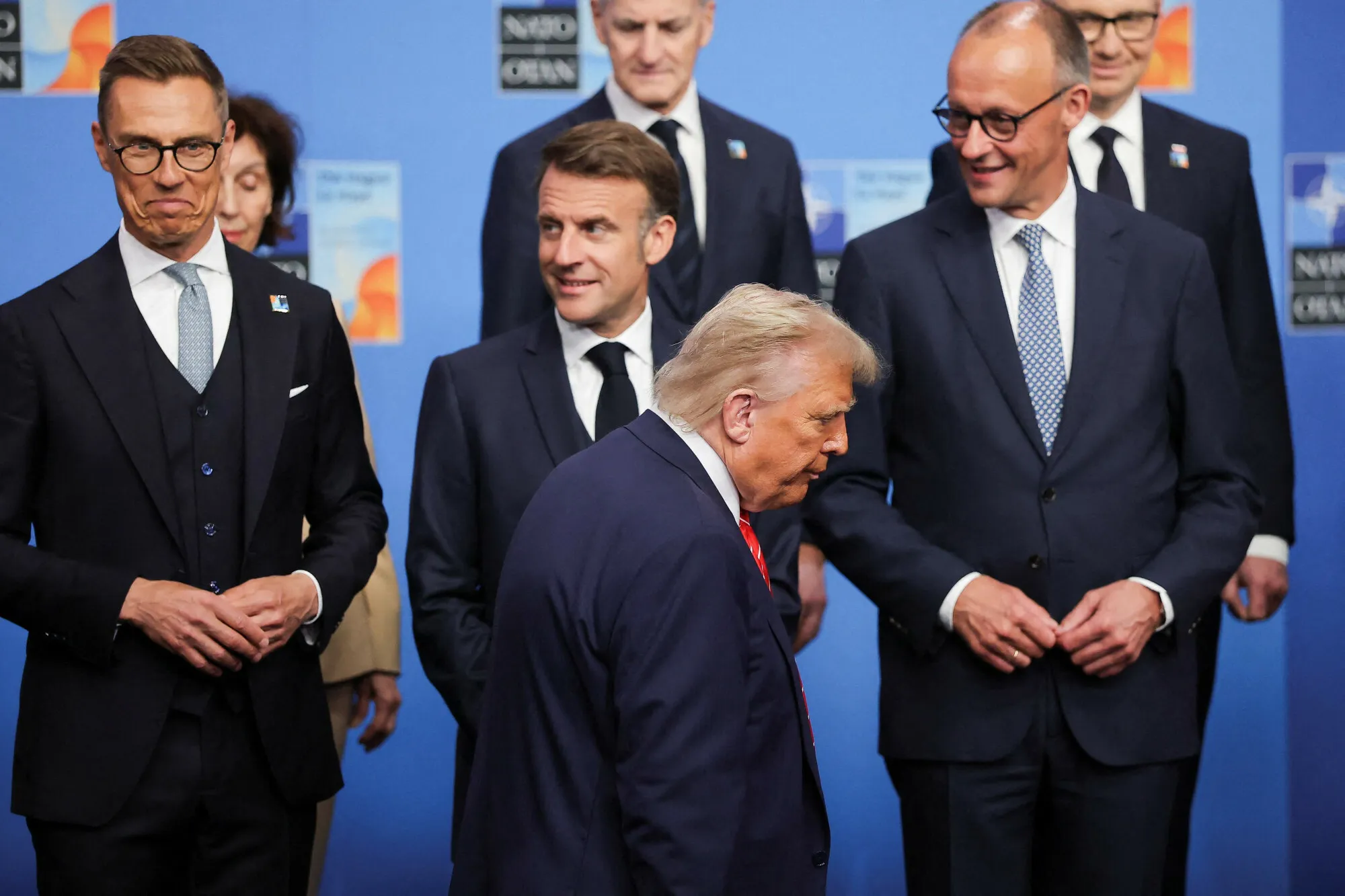
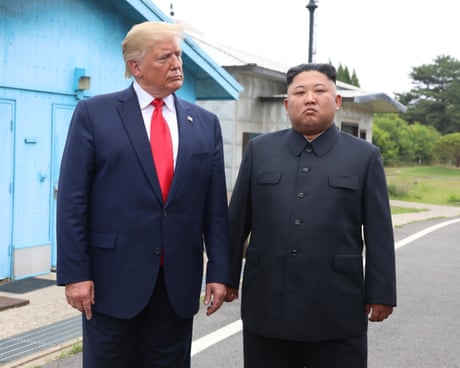
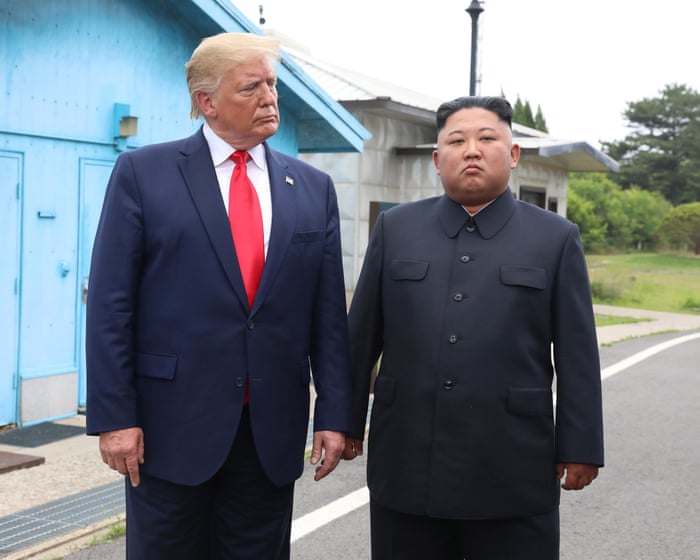
Good morning. Donald Trump has said he is scaling back joint US military drills with South Korea aimed at deterring North Korea, despite military officials from both countries warning that Kim Jong-un’s regime is learning new battlefield tactics from the Ukraine war.
The president said he was “not happy” with US participation “based on my very good relationship with Kim Jong-un”. He added that the drills were costly and “send a signal that is totally inappropriate and hostile, to a country that, as long as Donald J Trump has been president, has been unthreatening and respectful”. Trump added that it was too late to cancel the drills so he had ordered the defense secretary, Pete Hegseth, to “substantially reduce” them.
Why are there continuing concerns about USS Abraham Lincoln? Democrats have intensified their demands for answers from the Trump administration over conditions onboard the USS Abraham Lincoln amid concern over crew morale, mental health and living conditions. Ruben Gallego, a Democratic senator from Arizona, said he blamed the carrier’s prolonged deployment on the unresolved war that Donald Trump started in February with Iran as well as lackluster leadership in general from the Republican president’s administration.
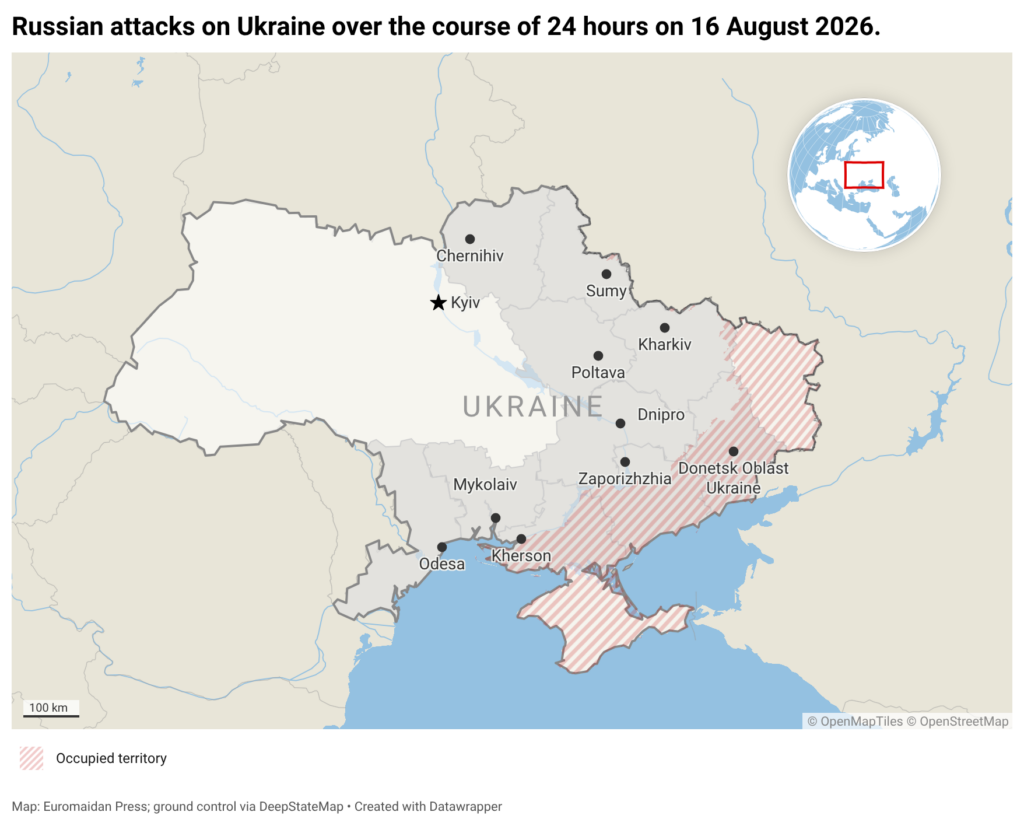
Russian forces shelled and struck front-line and border regions across northern, eastern, and southern Ukraine over the past 24 hours, killing at least eight civilians and wounding more than 40, regional authorities reported on 17 August. Sumy, Donetsk, Kherson, and Zaporizhzhia oblasts reported deaths, while people were wounded in Kharkiv, Kherson, Dnipropetrovsk, Chernihiv, and Odesa Oblasts.
Russia's daily strikes have hit populated areas and civilian infrastructure both near the front line and far behind it. President Volodymyr Zelenskyy said that 13 regions had come under attack over the past week, with more than 1,550 attack drones, nearly 1,560 guided aerial bombs, and 62 missiles, most of them ballistic, launched at Ukraine.
Map: Euromaidan Press
North: FPV drone attacks firefighters’ vehicle
In Sumy Oblast, Russian forces carried out more than 50 strikes on 24 settlements across 11 communities. A drone strike in the Sumy community killed a 75-year-old man and a 72-year-old woman and wounded another civilian, the Sumy military administration said. It also said two more people were wounded in the Seredyna-Buda community. A mass drone attack on Sumy caused large fires and wounded at least one person, Sumy city military administration head Serhii Kryvosheienko said.
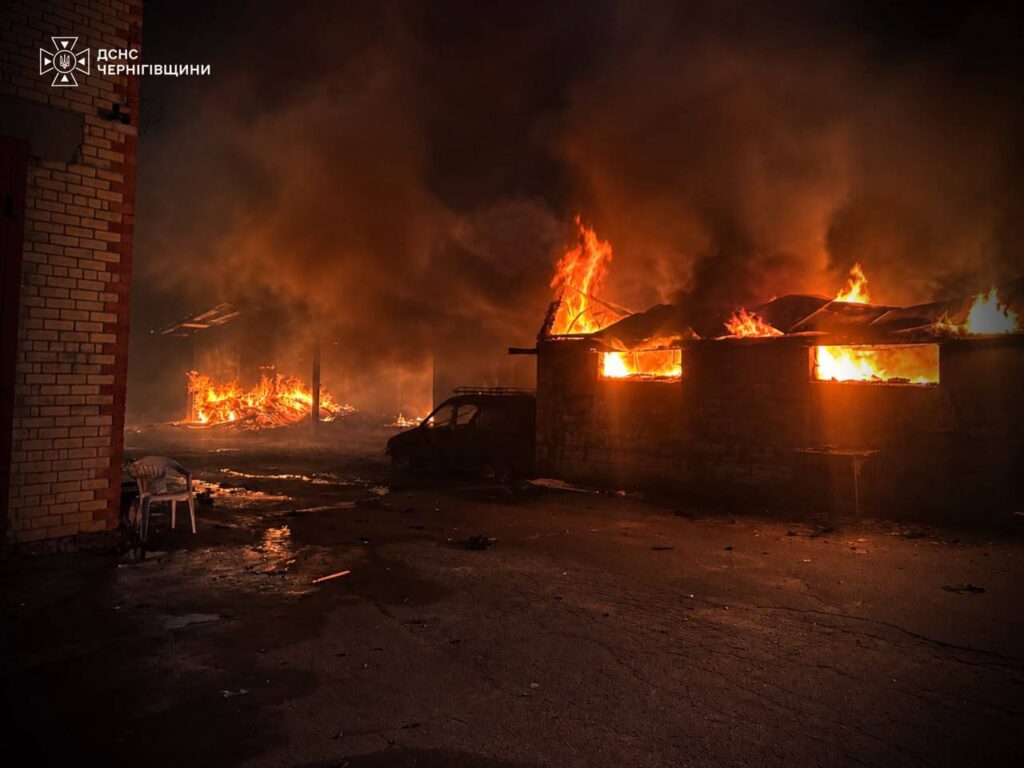
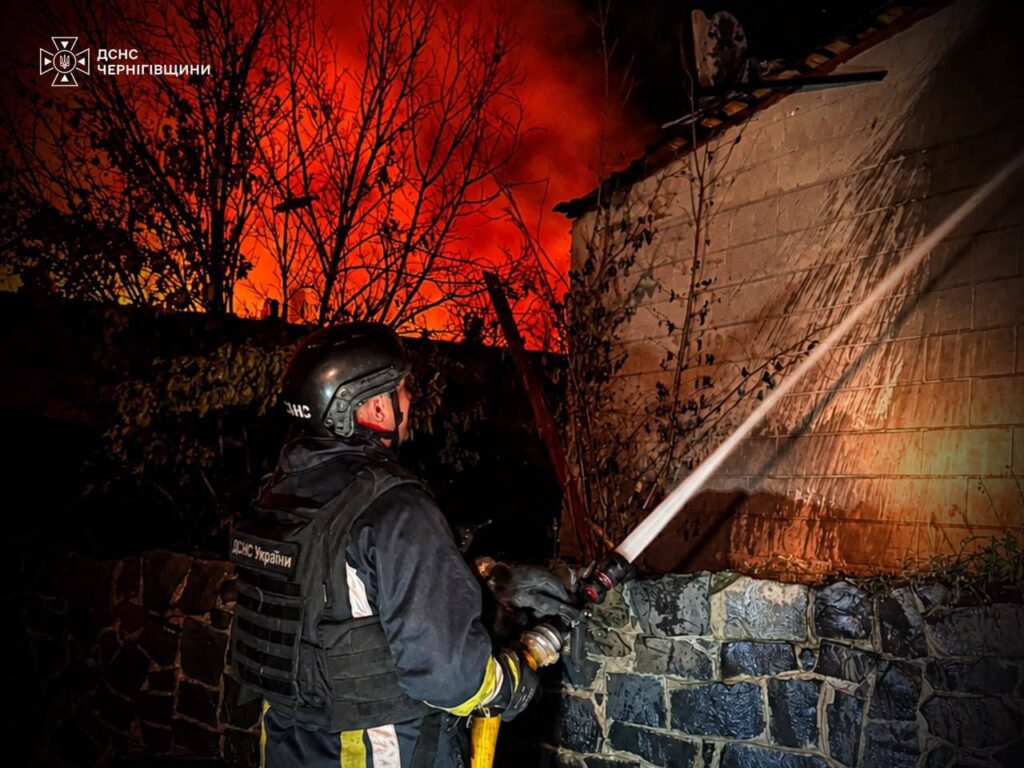
In Chernihiv Oblast, a 41-year-old man was wounded in a Geran drone strike on the Kozelets community, Head of the Regional Military Administration Viacheslav Chaus said. He added that Gerbera drones destroyed a hangar and farm equipment in the Kholmy community. In a border village in the Horodnia community, an FPV drone struck a yard, and a second FPV drone hit a firefighters' vehicle that had arrived at the scene. A house later caught fire. A critical infrastructure facility was also hit.
Firefighters put out a fire in Chernihiv Oblast that broke out as a result of Russian shelling. Approximately, morning of 17 August. Photo: Chernihiv Oblast State Emergency Service
In Kharkiv Oblast, six people were wounded in strikes on Kharkiv and nine other settlements. The heaviest damage was reported in Izium, where 19 houses and four apartment blocks were damaged, head of the Regional Military Administration Oleh Syniehubov said.
East: Russian strikes destroy 30 stalls
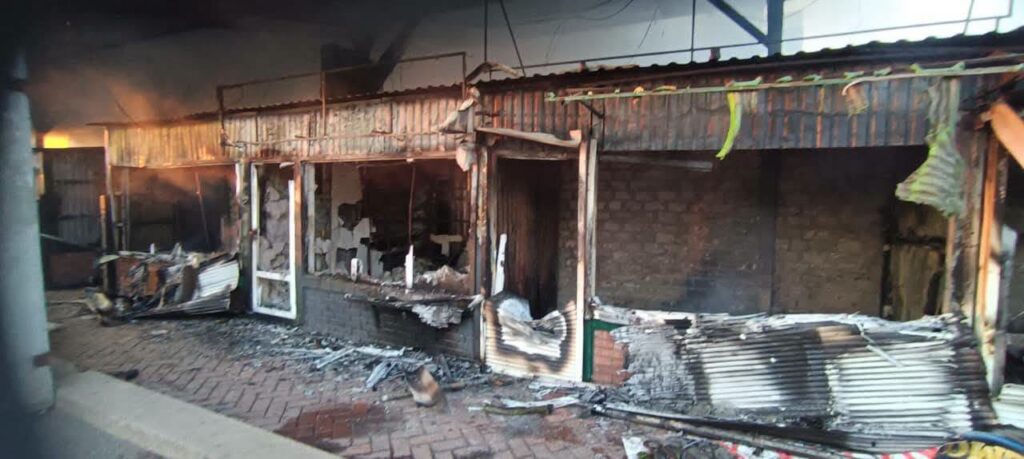
In Donetsk Oblast, Russian forces killed two residents of Kramatorsk and wounded 18 people across the region, Head of the Regional Military Administration Vadym Filashkin said. In Sloviansk, round-the-clock strikes damaged critical infrastructure and destroyed 30 stalls at the Lisnyi market, Sloviansk City Military Administration Head Vadym Liakh said.
Consequences of Russian strikes on Sloviansk on 16 August and overnight into 17 August. Photo: Vadym Liakh
In Poltava Oblast, two industrial facilities were hit, causing fires, and drones also attacked another industrial facility in Myrhorod district, Head of the Regional Military Administration Vitalii Diakivnych said. No casualties were reported.
In Dnipropetrovsk Oblast, Russian forces attacked four districts nearly 20 times from the evening of 16 August, wounding five people, Head of the Regional Military Administration Oleksandr Hanzha said. He added that houses and outbuildings caught fire in Pavlohrad and Nikopol district.
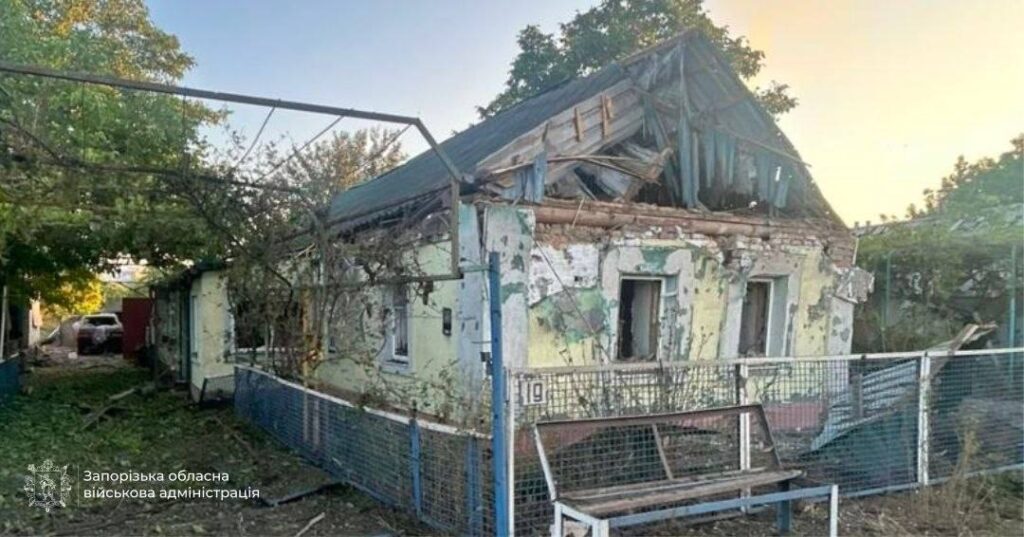
In Zaporizhzhia district, two people were killed and three wounded, Head of the Regional Military Administration Ivan Fedorov said. He also reported 1,217 strikes on 60 settlements across the oblast, including 20 air strikes, about 846 drone attacks, and 350 artillery strikes.
Consequences of Russian strikes on Zaporizhzhia Oblast on 16 August. Photo: Zaporizhzhia Regional Military Administration
South: strike damages civilian vessel flying the flag of Togo
In Odesa Oblast, a night-time strike on port infrastructure damaged a civilian vessel flying the flag of Togo and wounded four people, one of them seriously, Head of the Regional Military Administration Oleh Kiper said.
In Kherson Oblast, in the early morning, Russian forces killed two residents of the village of Novokayiry in the Mylivska community, – Head of the Kherson Regional State Administration Oleksandr Prokhudin said. Also russian forces attacked 52 settlements, including the regional capital. Six people were wounded, while 11 apartment blocks and 15 private houses were damaged, Prokudin said.
In Mykolaiv Oblast, Russia attacked with Shahed and Gerbera drones, but no casualties were reported, acting Head of the Regional Military Administration Heorhii Reshetilov said. He added that the roof of an agricultural enterprise building was damaged in the Horokhivska community.
Did you lose someone in 9/11? What do you want people to remember about them 25 years later?
To mark 25 years since 9/11, we would like to hear from people who lost loved ones in the attacks. What do you want people to remember about them 25 years later?
If you’re having trouble using the form, click here. Read the terms of service here and the privacy policy here.
Exclusive: Raúl Torrez is drafting two bills with state lawmakers to bolster consumer protections and child safety online, building on state’s landmark case against Meta
New Mexico’s attorney general is mounting a full-court press against technology companies to improve their child safety measures, capitalizing on a landmark win in court against Meta earlier this year.
Raúl Torrez is working with state lawmakers to draft two new bills he says will strengthen consumer protections and child safety online. The legislation, expected to be announced in the coming weeks, will build on the state’s case against the parent company of Facebook, WhatsApp and Instagram. A jury found in March that the company misled its users about the safety of its platforms and enabled harm, including child sexual exploitation. The social media giant was fined nearly $1bn as a result of the case.
Clancy’s live-streamed trial has become fodder for amateur sleuths to push viral conspiracy theories that threaten to undermine efforts to de-stigmatize illness, experts say
Meghan Cliffel was riding the subway in New York City in December 2015 when she became convinced the entire city belonged to a cult that was plotting to kill her and her two daughters. When she got back to her Manhattan apartment she believed the talking heads on the television were speaking to her directly, threatening her, and that the refrigerator was emitting poisonous gas. Her husband, she feared, was part of the cult too.
“I punch him in the face trying to get to the kids,” Cliffel recalled, “Then I’m ultimately trying to get to the roof of our building because I believe if I get up there and show I’m willing to jump, that that’ll show my loyalty to the cult and hopefully stop this whole thing.”
Les Sentiers du Mont-Comi obtiennent une aide financière de 240 146 $ de la MRC de La Mitis pour poursuivre le développement du réseau de vélo de montagne et améliorer les installations offertes aux utilisateurs.
La contribution comprend 50 000 $ provenant du Fonds régions et ruralité ainsi que 190 146 $ du Fonds de développement éolien régional. Elle fait suite à l’appel à projets lancé par la MRC au printemps dernier.
L’argent permettra notamment d’aménager de nouveaux sentiers et un parc d’habiletés, en plus d’installer une passerelle, un patio panoramique et une nouvelle signalisation.
Un service de prêt gratuit de vélos doit également être mis sur pied afin de rendre le site accessible à davantage de personnes.
Le financement servira aussi à soutenir la coordination du développement des Sentiers du Mont-Comi, qui souhaitent poursuivre l’amélioration et la sécurisation de leur réseau.
La MRC de La Mitis voit dans ce projet une façon de bonifier l’offre de plein air sur son territoire et d’attirer davantage de visiteurs dans la région, avec des retombées attendues pour l’économie locale.
The General Staff of the Armed Forces of Ukraine has confirmed the destruction of two and the damage to four more explosives production facilities at the “Kamensky Combine” plant in Kamensk-Shakhtinsky, Rostov Oblast, Russian Federation.
Meta travaille depuis plusieurs années à transformer les lunettes intelligentes en véritables assistants visuels. Un brevet récemment mis en lumière par 404 Media montre jusqu’où l’entreprise pourrait aller : reconnaissance faciale, analyse des comportements, sélection automatique des moments importants et création d’un montage vidéo de la soirée. Le brevet, intitulé « Smart cameras enabled by […]
Good morning. We’re mentally preparing for a big week in trade negotiations, but our reporters have entertaining distractions to offer in the meantime. More on tariffs below, along with a new life for IMAX and the secret sauce behind a successful food festival.
Canada-U.S. Trade Minister Dominic LeBlanc and Chief Trade Negotiator Janice Charette speak at a press conference on the roof of the Canadian Embassy in Washington, D.C., on Tuesday, June 2, 2026. THE CANADIAN PRESS/Kelly Geraldine Malone
Une contribution de Jean-Guy Rens Charles Terreault s’est éteint le 3 août 2026 à Saint-Lambert, à 91 ans. Peu de Québécois connaissent son nom. Pourtant, cet ingénieur a orchestré l’une des révolutions technologiques les plus durables de l’histoire canadienne : la numérisation complète du réseau téléphonique, ouvrant la porte à Internet. En septembre 1969, ce […]
Donald Trump annonce une forte réduction de la participation américaine aux exercices militaires avec la Corée du Sud, invoquant leur coût et sa "très bonne relation" avec Kim Jong-un.
President Donald Trump’s son-in-law and envoy first held rare talks with Hamas's new leader in Egypt over the weekend in his effort to advance the stalled 15-point plan.
Officials from the State Tax Service, in collaboration with staff from the Economic Security Bureau, seized more than 1.6 million hryvnias, 138,000 U.S. dollars, and nearly 8,000 euros from illegal circulation at a network of currency exchange offices in Kyiv.
Des travaux entraîneront un ralentissement de la circulation, jusqu’au 28 août, sur le boulevard Saint-Germain, à Rimouski.
Des réparations s’effectueront sur des puits d’accès de TELUS, dès ce lundi 17 août, entre les rues Henri-Jacob et des Braves.
Pendant toute la durée du chantier, la circulation s’effectuera à une voie dans chaque direction dans ce secteur du boulevard Saint-Germain.
Les automobilistes doivent prévoir plus de temps pour leurs déplacements. La Ville de Rimouski recommande également d’emprunter un autre trajet lorsque cela est possible.
On pourrait croire qu’iTunes appartient définitivement au passé. Pourtant, plus de sept ans après avoir retiré son célèbre logiciel de macOS, Apple continue officiellement de le maintenir dans certains contextes, principalement sur Windows et sur les anciens Mac. Apple a commencé à tourner la page d’iTunes en 2019 avec macOS Catalina. Le logiciel, qui réunissait […]
Prime Minister Benjamin Netanyahu of Israel has refused to pull back the country’s military until Hamas fully disarms. But the Trump administration is under pressure to show progress.
Jared Kushner speaking about the Board of Peace, an organization backed by the Trump administration to end the war in Gaza, during the World Economic Forum in Davos, Switzerland, in January.

 Connexion
:quality(50)/2026/08/17/6a82f4430874d762618591.jpg)


 Геопривязка (
 (@AMK_Mapping_)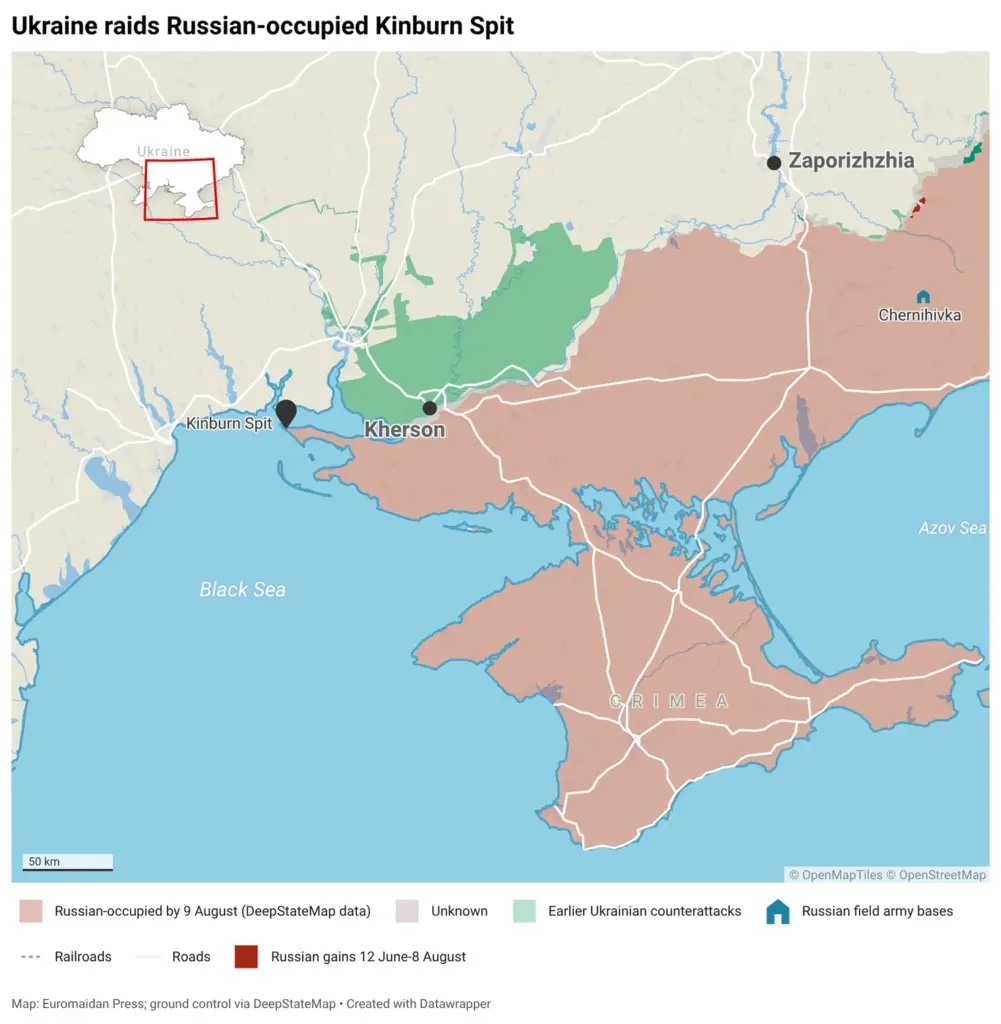
:quality(50)/2026/08/17/6a82f160cdef5255410255.jpg)















:quality(50)/2026/08/17/6a82927694189604362874.jpg)