❌

Vue lecture

Ukraine just caught a Geran-5 at 425 km/h—the jet drone that has often outrun Ukrainian interceptor drones since January

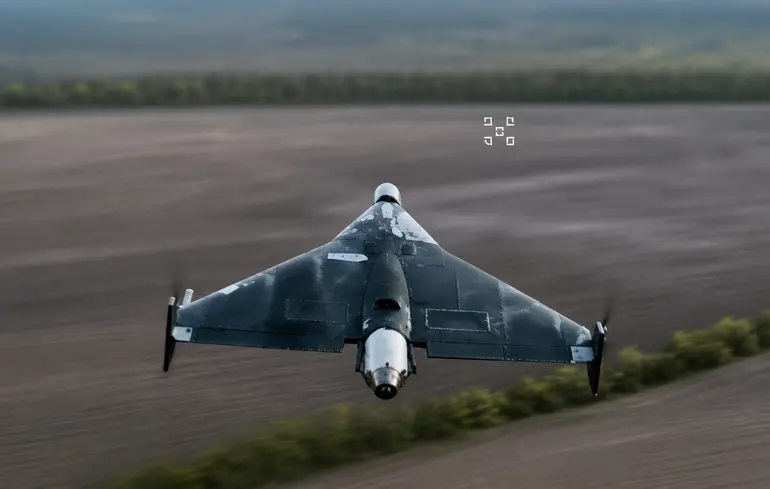
A Ukrainian interceptor drone chases a Russian Geran-5 jet-powered drone. September 2026.

Ukraine's air defenders now have purpose-built interceptors for Russia's jet-powered attack drones—weapons whose speed and altitude make them difficult for conventional defenses to catch, Militarnyi reported. A crew from the 1020th Anti-Aircraft Missile and Artillery Regiment downed a Geran-5 over Chernihiv Oblast with a newly delivered interceptor, according to the Serhiy Prytula Foundation.

Russia's long-range drone and missile attacks have become central to its effort to wear down Ukraine's air defenses and grid before winter, and the war in the sky now turns on which side scales its answer faster.

The Chernihiv intercept

The crew, callsign Yastrub (Hawk), made its first successful engagement with the new interceptor, hitting the jet drone at 425 km/h and above 3 km, the foundation said, releasing footage of the strike. The Prytula Foundation supplied the interceptors and said it has contracted several manufacturers to counter the jet threat.

"Our task is to scale this up and strengthen units," it said.

Why it kept slipping through

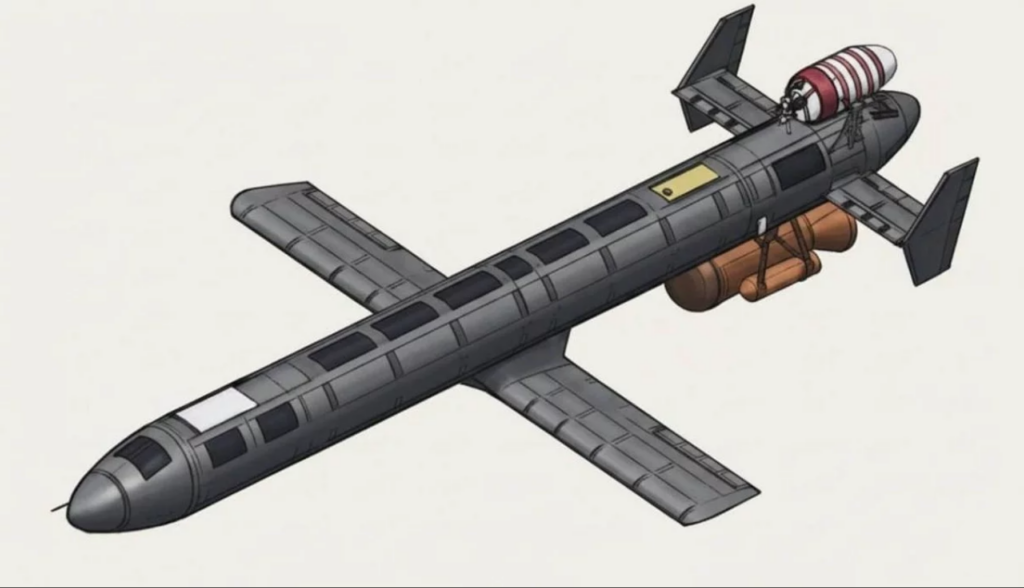
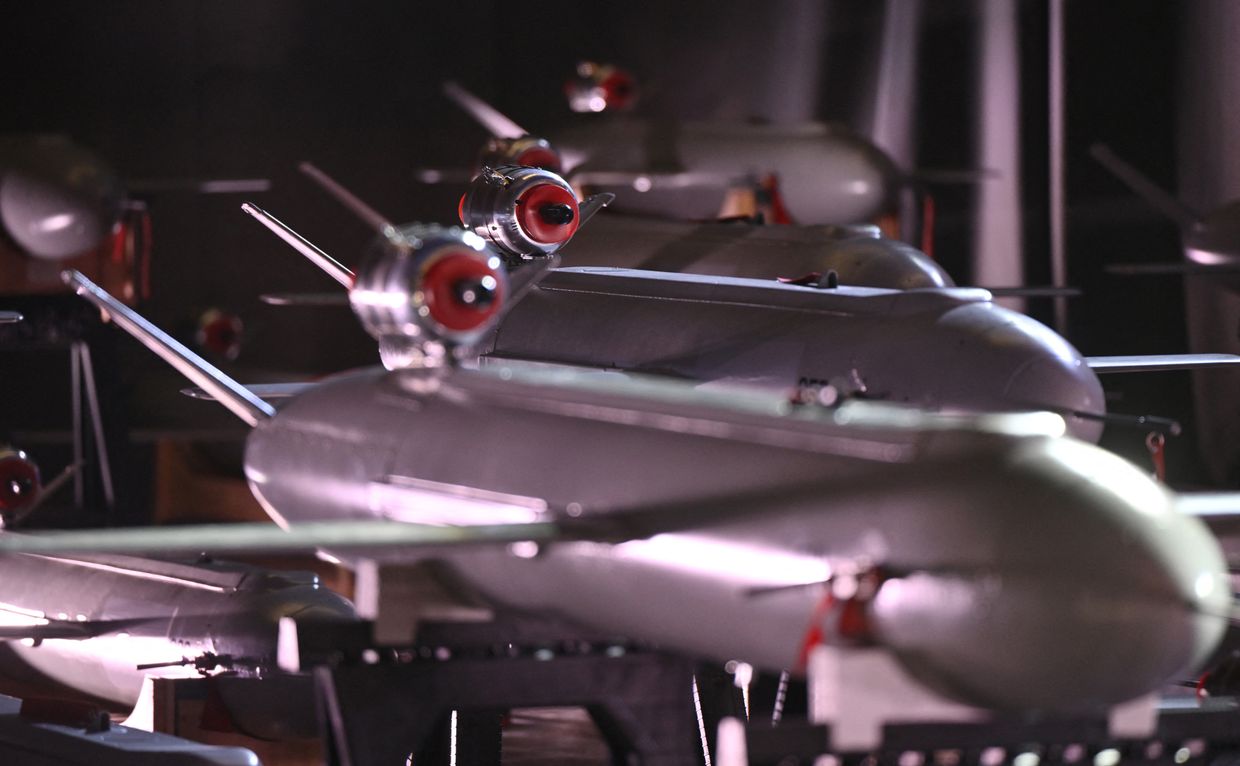
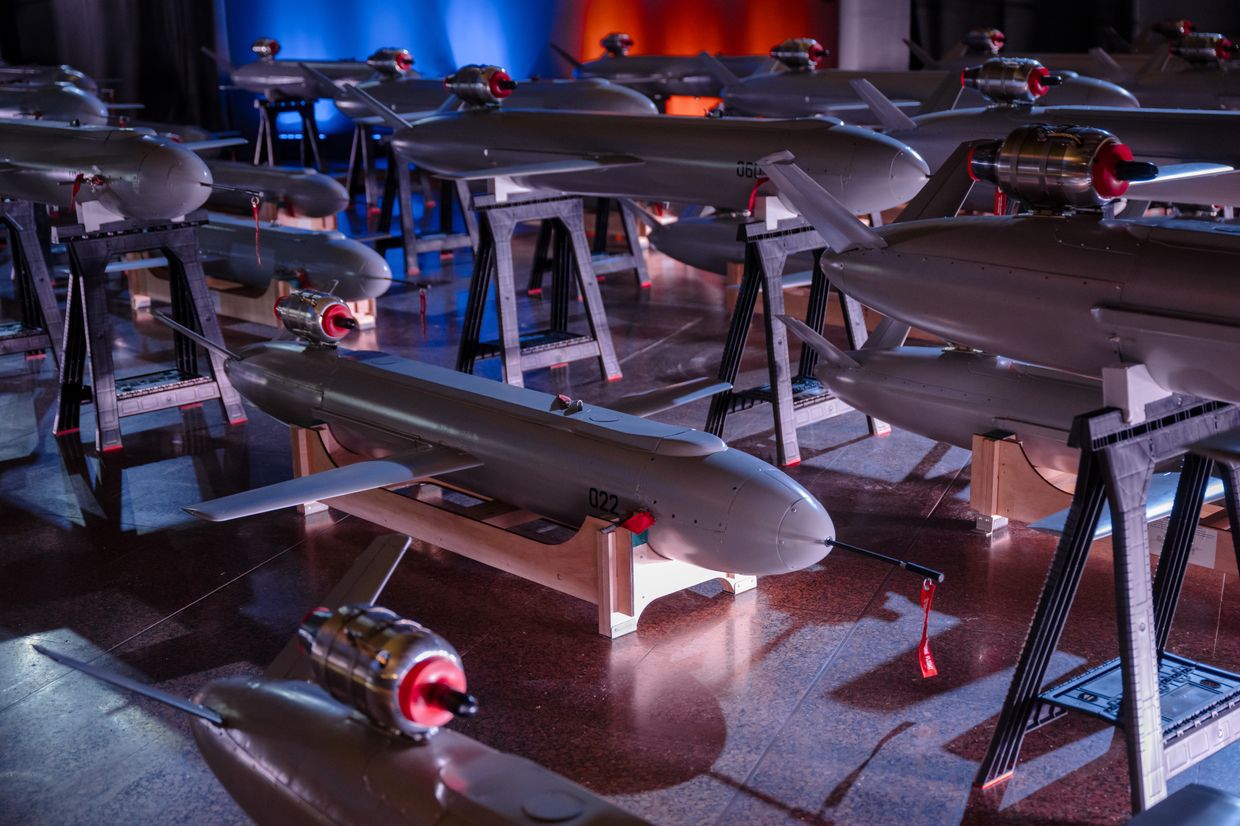
Russia first used the Geran-5 in January 2026. HUR's own specifications put its warhead at 90 kg, cruise speed at 450–600 km/h, and range at 950 km, with a ceiling of 6 km. That mix of jet speed and high altitude kept it clear of machine guns, shoulder-fired missiles, and the cheap interceptors built to swat slower piston-engine Shaheds.

Ukraine's military intelligence estimates Russian plants now turn out around 3,000 jet-powered Geran-4 and Geran-5 drones a month, according to HUR. A monitoring Telegram channel, Polkovnyk HSh, reports a newer variant that steers by ground imagery instead of satellites, which would blunt jamming—though HUR has not confirmed it and lists no such system among the drone's components. Separately, Russia moved the jet engine inside the fuselage, a change aimed at more speed and range.

russia hits kharkiv high-rise overnight injuring 43 people strikes central kyiv dnipro broad daylight · post firefighter tackles blaze two-story house after russian drone attack ukraine 28 2026 zelenskyy news
Explore further

After Russia hits Kyiv’s Academy of Sciences with jet-powered drone, the Kremlin says Ukraine must “pay a price”

Where the fight stands

Ukraine intercepts about 55% of Russia's jet drones, against more than 90% of the older models, President Volodymyr Zelenskyy said on 26 September. Since the start of September, Russia had launched more than 2,730 jet drones, and Ukraine had downed or suppressed more than 1,500, he added. Zelenskyy also said Russia plans to spend $12 billion in 2027 on jet drones and loitering munitions alone. Ukraine already has several interceptor prototypes in combat use, and the 1020th crew's kill is one of several jet Geran intercepts Ukrainian units and drone makers have logged this month.

  •  

Ukraine’s jet-drone kill rate just hit 55%. Russia’s answer: $12 billion to make more of them

ukraine's jet-drone kill rate just hit 55% russia's answer $12 billion make more · post geran-5 small cruise missile sights sting s interceptor drone герань-5 в прицилі дрона-перехоплювача стоп-кадр з

Ukraine's defense forces intercepted 55% of Russia's jet-propelled drones in September—more than 1,500 out of over 2,730 launched—Ukrainian President Volodymyr Zelenskyy said in his 26 September evening address.

Russia's full-scale aerial campaign has shifted from propeller-driven Shaheds Ukraine learned to shoot down at over 90% to jet-propelled models that fly faster, resist jamming, and often slip past existing defenses.

55% and climbing

Zelenskyy said military intelligence had briefed him on Russian weapons production—not just jet Shaheds but other technological systems. The documents detail what Moscow is preparing for next year: the volumes and the financing. "We are preparing our countermeasures, and for every line item there must be a Ukrainian answer," he said.

Several effective interceptor prototypes are already in combat.

"Interceptors have been identified that can become the main tool of our defense. Production, components—all of this we are scaling up. There will be an answer," Zelenskyy said.

The goal is to match the interception rate for regular propeller-driven Shaheds, which exceeds 90%. At 55%, the jet-drone rate is climbing but still leaves nearly half reaching their targets.

$12 billion for one category

Russia plans to spend $12 billion in 2027 on jet drones and loitering munitions alone, Zelenskyy said. "This concerns not only Ukraine and not only us," he added, warning that multiple intelligence agencies have information Russia wants to expand its war to other countries and regions.

He said this is why Ukraine is pushing for stronger sanctions and the Drone Deal format. Ukraine has signed 11 such agreements, the latest with Finland at the UN General Assembly this week, and is preparing a 12th with what Zelenskyy called "a strong country."

The warning came as Russia struck a Kyiv data center twice on the morning of 27 September, injuring three people including two children, Zelenskyy wrote. Overnight strikes killed three people in Zaporizhzhia Oblast and one man in Kyiv.

In total this week, Russia launched more than 2,200 strike drones, roughly 1,650 aerial bombs, and 38 missiles—a significant share of them ballistic—at Ukraine, he said.

russia steers its long-range drones ground towers—kyiv says hit one occupied crimea · post russia’s new “geran-4 seeker” shahed variant uses machine-vision ai targeting geran 4 ukraine news ukrainian reports
Explore further

A $50 computer just flew Russia’s newest jet drone into a Ukrainian grain ship—and jamming couldn’t stop it

Jet drones are now Russia's main aerial weapon

Russia's jet-propelled Geran-4 and Geran-5 drones have become the dominant threat in Russia's aerial campaign against Ukrainian cities. By August, production of jet Geran-4/5 models exceeded that of propeller-driven Geran-2s, according to Ukraine's military intelligence (HUR). Russian factories produce roughly 3,000 jet models per month alongside about 2,800 of the older type. The Geran-5 is technically a drone but functions as a small cruise missile—faster, harder to jam, and increasingly guided by AI and mesh networking that complicate interception.

Ukraine's answer has been interceptor drones—cheap, fast enough to chase a Geran, and guided by machine vision. A Ukrainian interceptor recently scored its first kills against jet Gerans and is heading into mass production, though a presidential adviser warned that speed alone cannot catch them—machine vision and automatic guidance decide the chase.

  •  

Russia’s secret drone math: one Tatarstan plant could yield 28,000 more drone bodies a year

axios cuba has acquired over 300 russian iranian military drones · post russia's drone factory tatarstan shahed_plant alabuga video ukraine news ukrainian reports

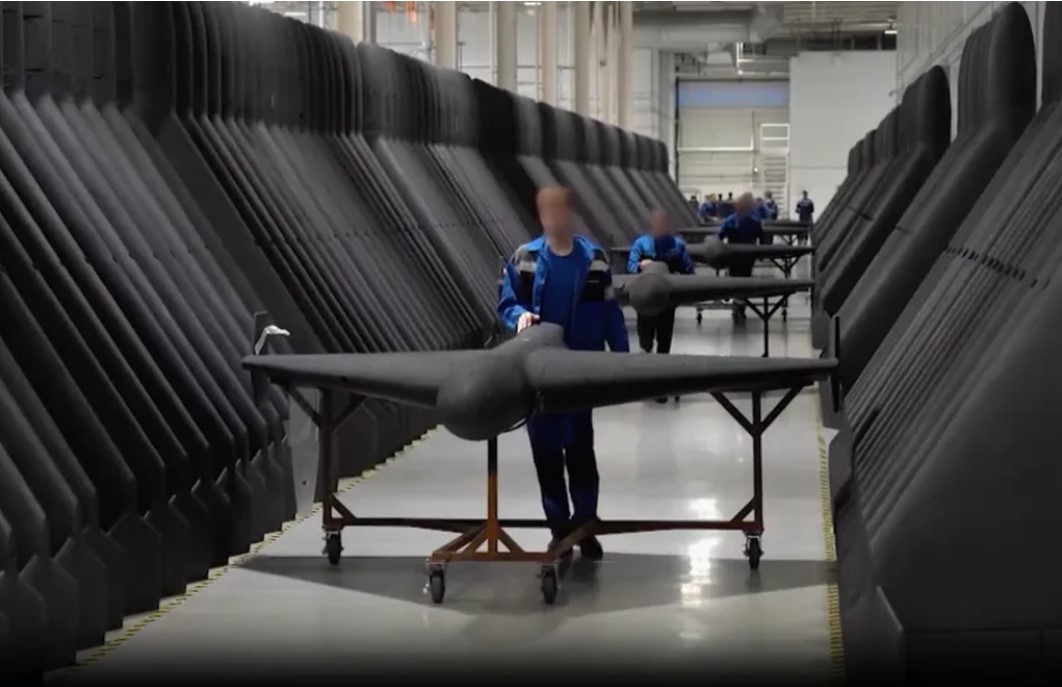
Russia is quietly moving to expand the capacity of the plant behind its long-range attack drones, a step that could sharply raise how many it launches at Ukraine, according to Politico. The plan turns on a single carbon fiber factory in Russia's Tatarstan region and runs to the end of the decade.

These files add something narrower than Russia's known intent to fight on: they identify carbon fiber as a critical material capping how many drones it can build. To break that cap, the Kremlin is funding production lines that will not run until the decade's end—a bet on winning by out-building Ukraine, even as the strikes grind on.

The bottleneck Russia wants to break

Politico obtained internal documents from Russian state nuclear corporation Rosatom showing its Alabuga-Volokno plant would add 500 tons of military-grade aerospace carbon fiber a year by 2029. Rosatom declined to comment. Weapons expert David Albright, who heads the Institute for Science and International Security, estimated that volume could yield airframes for about 28,000 more attack drones a year—a 78% jump.

Ukraine already estimates Russia can build more than 36,000 Shahed/Geran kamikaze drones a year. Carbon fiber is the choke point: it keeps the airframes light and strong, and Russia has no cheap substitute.

"Without the carbon fiber, they can't make the drone. Can't substitute for the carbon fiber in the drone and keep its weight down," Albright said.

Moscow is investing in the raw material, not just more assembly halls—the fiber, not floor space, is what caps output.

Ground already cleared in Tatarstan

Documents gathered by the Ukrainian Security and Cooperation Center describe a new factory on the site designed to produce UMT42S-3K aerospace-grade fiber. Satellite images from May to July show land cleared for construction. Albright's own August imagery shows foundations going in. He said the stated 2027 completion date "requires rapid construction." Russia has spent the past year adding new assembly halls at the same site.

The plant and its parent, Rosatom's Umatex Group, already sit under US, UK, and other Western sanctions. The US House Select Committee on China and the Ukrainian government both verified the documents, officials told Politico.

The push comes as Russia leans harder on jet-powered Shaheds, which Ukraine's Air Force says are hard to down with conventional defenses. Kyiv has fielded its first jet interceptor and tested a new one in September—but the plant is a bid to out-build those defenses faster than Ukraine can scale them.

  •  

Modern war that the US is not ready for: For the price of one American cruise missile, Russia builds 20 “poor-man” drones and missiles

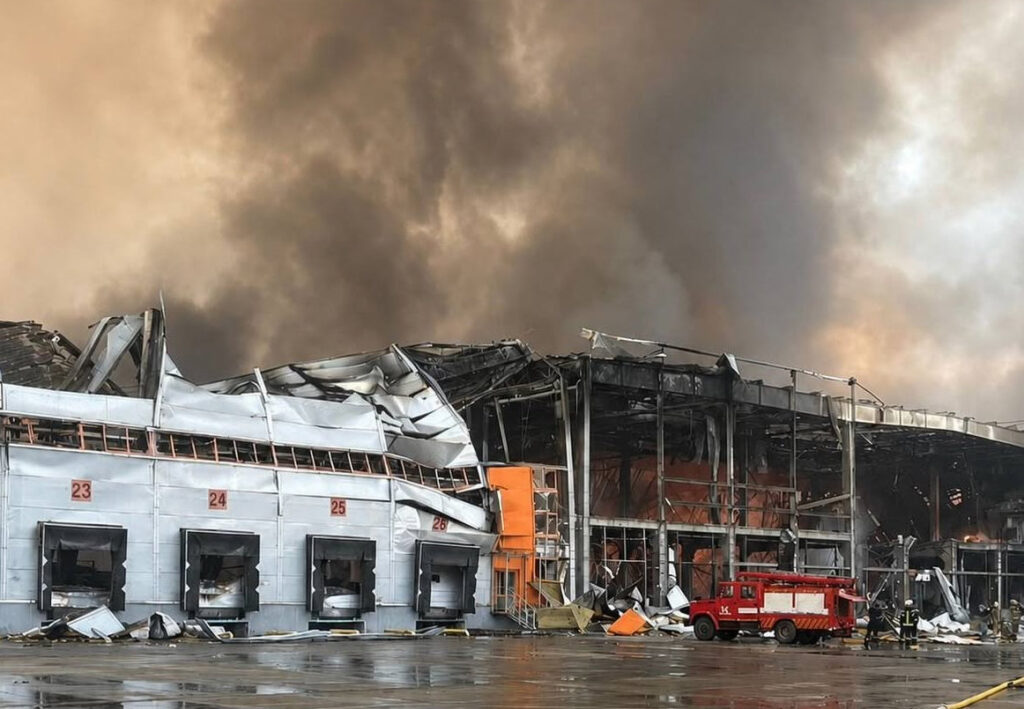
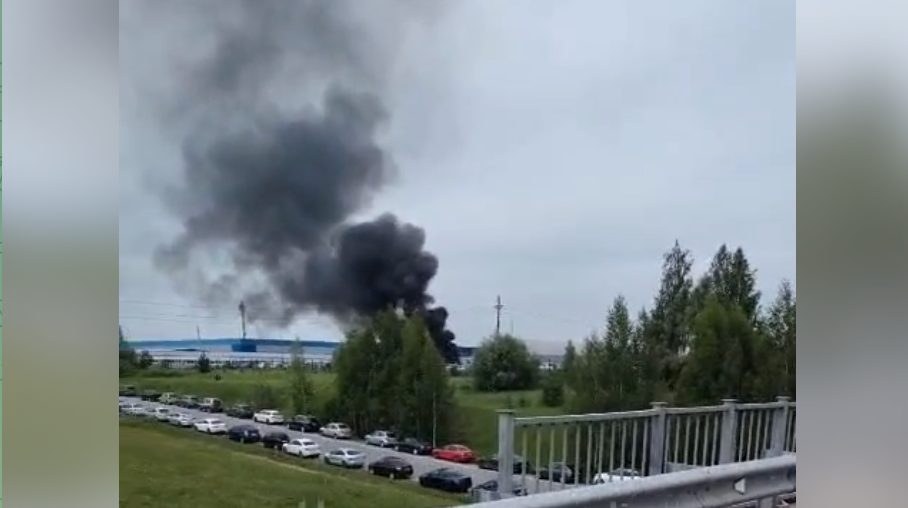
Firefighters beside a heavily damaged warehouse holding Bosch products as smoke rises from its collapsed roof.

Russia has fielded a new generation of cheap, jet-powered drones and cruise missiles faster than Ukraine or the US can build defenses against them, according to The Wall Street Journal. The weapons run on Chinese parts that slip past Western sanctions, and they are already getting through air defenses designed to stop slower drones. Analysts say the West underestimated how fast Moscow could move from an idea to a full assembly line.

Russia now leans on cheap, mass-produced drones to swamp Ukraine's air defenses with sheer numbers night after night, and its factories keep growing to keep the attacks coming. The bigger lesson reaches past this war: in a long fight, cheap weapons in large numbers can beat a small stock of expensive ones.

A cheap weapon that gets past Ukraine's defenses

Ukraine had learned to shoot down the Iran-designed Shahed drones Russia was launching. Then Moscow moved the goalposts. The newest model, the Geran-5, looks more like a missile than a drone—Mike Monnik, head of the drone-threat firm DroneSec, called it "essentially a poor-man's cruise missile," and it forced a rewrite of Ukraine's counter-drone playbook. The Geran-5 and the Banderol cruise missiles are each estimated to cost about $100,000. A US Tomahawk costs more than $2 million.

satellites caught russia expanding its shahed drone plant moscow already holds 6000 drones reserve · post satellite southern part alabuga special economic zone tatarstan newly built production halls published 14
Explore further

Russia built five more halls for the drones it assembles using Chinese parts to hit Ukrainian cities

Built fast, with China's help

Moscow needed only about two years to take each weapon from the drawing board to the battlefield, reworking earlier designs, testing them in combat, and pushing them into serial production. Ukrainian assessments, echoed by the drone-intelligence firm DroneSec, trace the leap to Chinese parts—the turbojet engines, the navigation computers, the radios—most of them off-the-shelf, dual-use gear anyone can buy. The weapons are aimed at Ukrainian cities and infrastructure—a Banderol struck a residential area of Kharkiv in July.

An expensive problem for the West

US forces and NATO have knocked down cheap drones with costly Patriot interceptors and fighter jets, often firing several interceptors at a single weapon. Western firms that built interceptors for slow drones are now scrambling to make faster, jet-powered ones. Kateryna Bondar of the Center for Strategic and International Studies said the West keeps underestimating how fast Russia turns experiments into production, and that Kyiv had years of warning yet was still caught off guard.

"I'm surprised everyone is surprised," she said.

At NATO's July summit in Ankara, members committed more than $40 billion to counter-drone defenses over the coming five years.

  •  

Iran armed Russia with Shaheds. Now it wants the jet-powered Geran-5 remake back to fight Israel and the US

geran-5

Russia has upgraded the Iranian Shahed it fires at Ukraine into jet-powered drones that Iran now wants back, the Financial Times reported. Tehran plans to use them in its own war against Israel and the United States, the paper reported, citing Western intelligence.

Russia now fights with weapons it churns out and revises mid-fight, a homegrown production model fast enough to turn a cheap imported airframe into something its original supplier now wants back.

From a 185 km/h propeller drone to a jet that looks like a missile

Russia started building the Geran, its own version of Iran's Shahed, in 2023. The first Geran-1 flew at up to 185 km/h with a 20-kilogram warhead. The newest Geran-5 flies at up to 600 km/h, carries a 90-kilogram warhead, and has a range of up to 1,000 km. Newer models add thermal cameras, AI-assisted guidance, Russian anti-jamming antennas, and Chinese mesh modems.

Serhii "Flash" Beskrestnov, a non-staff adviser to Ukraine's president on defense technology, has described how such drones work:

"A Russian operator flies at an altitude of 2–5 km, spots the target, locks onto it using the camera, and then the Shahed automatically attacks the target."

Almost all of Russia's jet drones used against Ukraine carry such a camera, he added.

Skipping the testing, straight to combat

Centralized production lets the Kremlin redesign fast and fold in combat lessons.

"The reason Russia was able to create a major new production line from scratch was because it's technologically a lot simpler than making something like tanks, which require enormous, unique and costly machine tools," said Ruslan Pukhov, who heads the Moscow-based Center for Analysis of Strategies and Technologies.

He added that they essentially skipped the long testing period that usually accompanies any military development process, with changes going straight into production and being checked in combat.

  •  

Russia built five more halls for the drones it assembles using Chinese parts to hit Ukrainian cities

satellites caught russia expanding its shahed drone plant moscow already holds 6000 drones reserve · post satellite southern part alabuga special economic zone tatarstan newly built production halls published 14

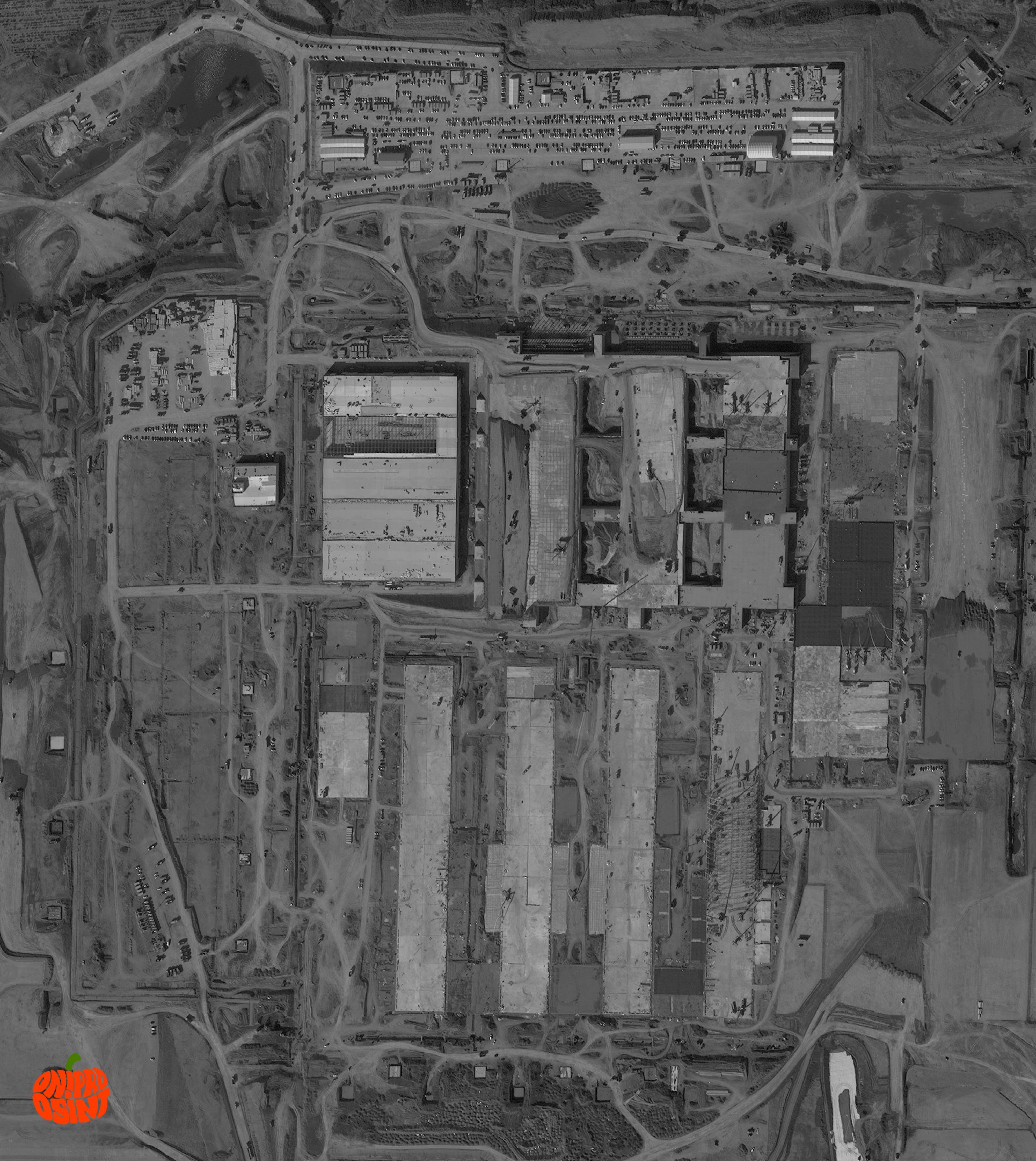
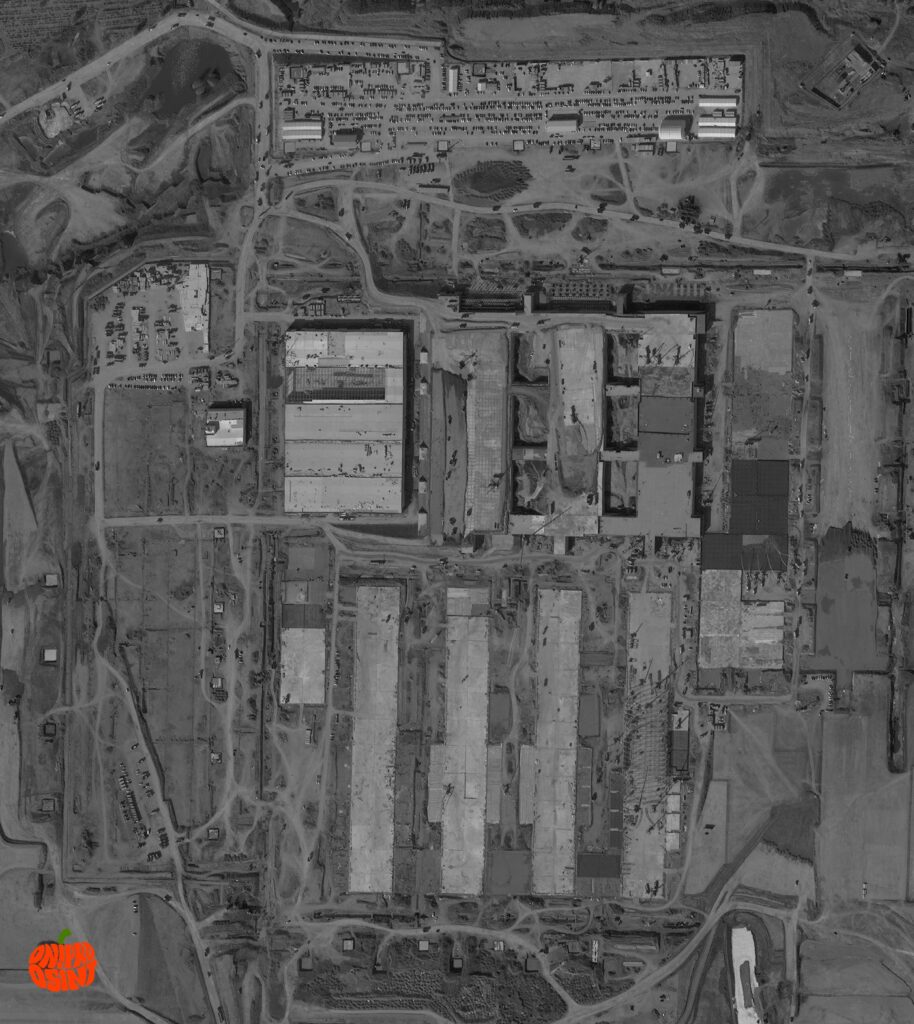
Russia is building large new production halls at the Tatarstan site where it assembles the Shahed/Geran-type attack drones it fires at Ukrainian cities, the Ukrainian geospatial and satellite intelligence analyst Dnipro Osint reported, publishing satellite images of the work. At least five long buildings stand finished in the southern part of the Alabuga special economic zone, with internal roads and access ways laid around them and further construction under way. What the new halls are for is not known yet.

Russia has spent three years enlarging the drone campaign against Ukrainian cities rather than narrowing it, and the cheap Iranian-designed Shahed is the weapon carrying it—fired in nightly waves that now reach the Polish border and paired with the missiles Ukraine intercepts least often. Growth in that campaign starts as floor space in Tatarstan, which makes new assembly halls a forecast of the winter rather than a construction story.

What the images show

Several of the large workshops in the zone's southern section are already complete, and several more sites are in active construction, the analyst said. Laid roadways, and the outlines of additional buildings appear beside the finished rows, and he published the coordinates of the site along with the images.

The plant behind the nightly waves

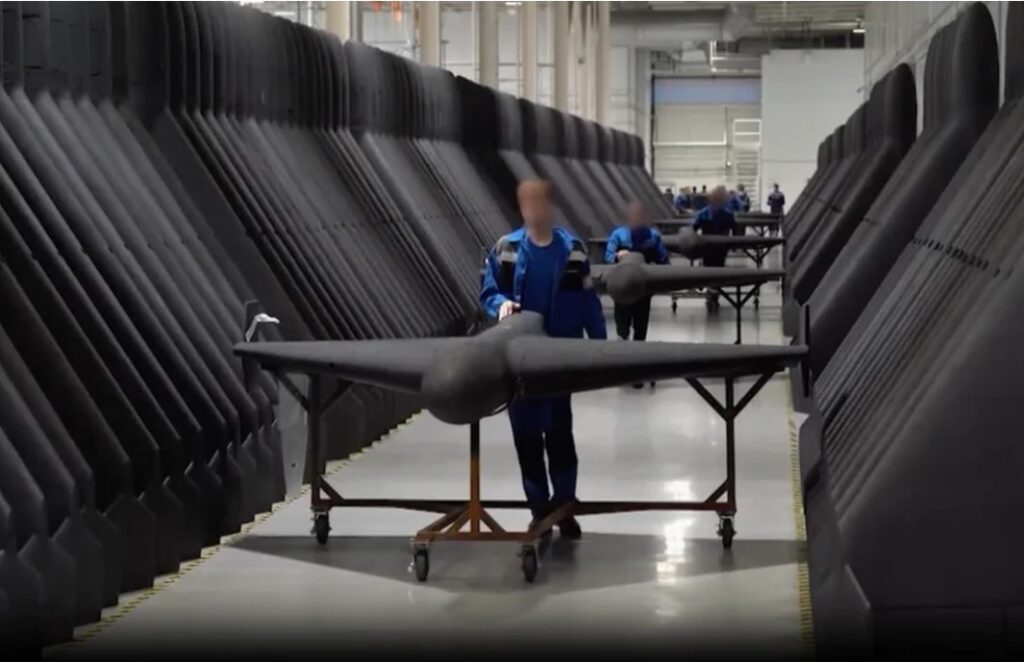
The zone lies near the city of Yelabuga, more than 1,000 kilometers from the Ukrainian border, and has been one of Russia's principal military plants since 2023. It assembles the Shahed-type strike drones Russia calls Gerans, along with the Gerbera decoys flown alongside them, built at a tenth of a Shahed's cost to make Ukrainian air defense spend interceptors on empty airframes.

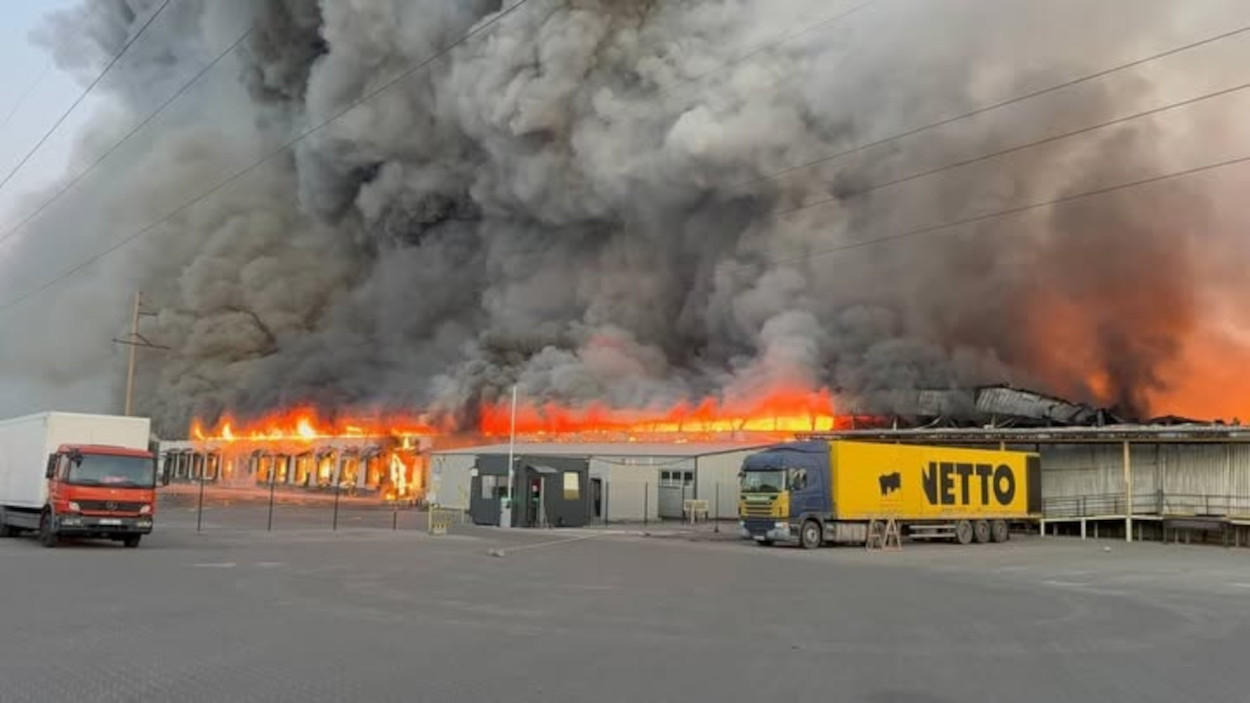
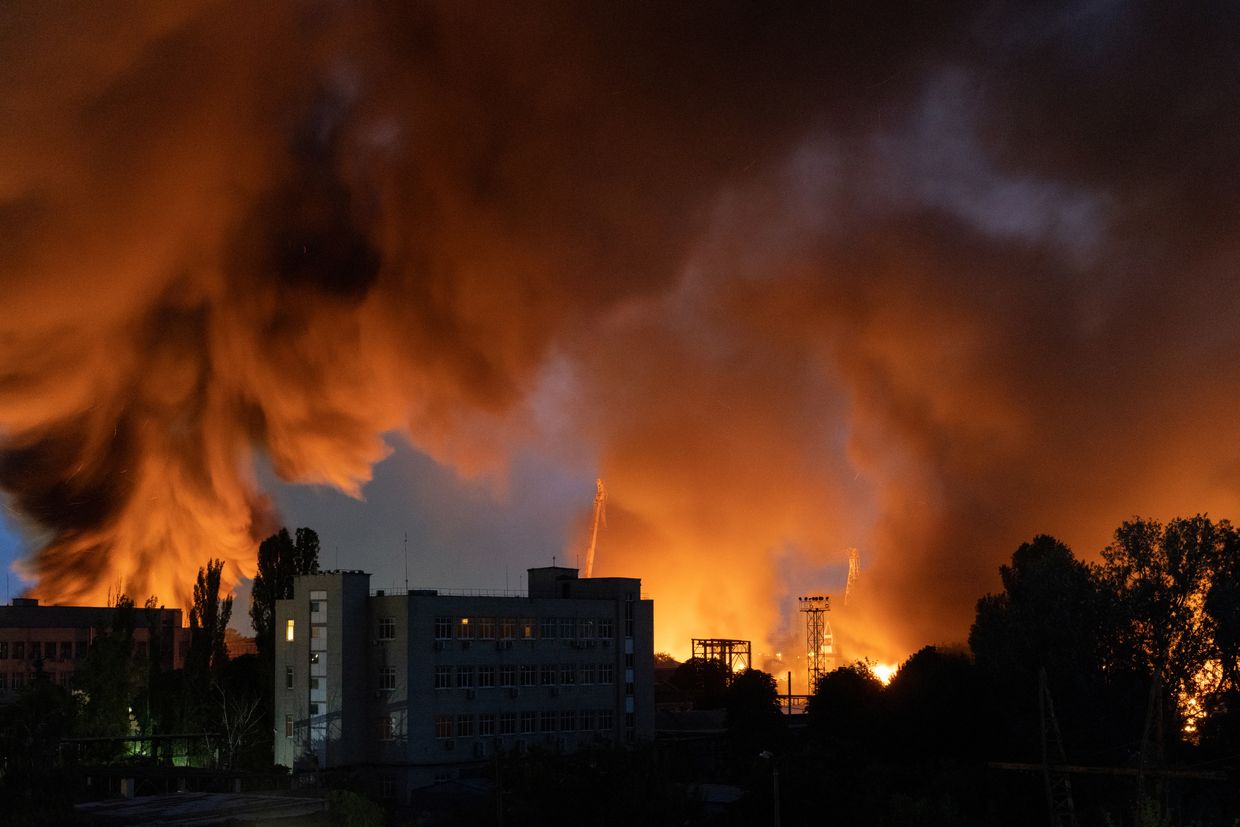
A fire burns at a Nova Poshta fulfillment and sorting center in Sviatopetrivske, Kyiv Oblast, after a Russian drone strike on 28 August 2026. More than 60,000 books were destroyed in the attack. Photo: Readeat
Explore further

800 jet drones in four days: Russia is now firing type Ukraine’s interceptors cannot catch

Output has climbed with the attacks. Russia builds about 3,000 of the jet-powered version a month, by Ukrainian military intelligence's count, and has accumulated a reserve of more than 6,000 Gerans for large-scale attacks. The zone itself expanded by 340 hectares in a year, media reported in May.

axios cuba has acquired over 300 russian iranian military drones · post russia's drone factory tatarstan shahed_plant alabuga video ukraine news ukrainian reports
Russia's drone factory in Tatarstan. Photo: Screenshot from the video

Chinese firms supply the engines, navigation systems, and avionics, with Iran's role reduced to consultations and occasional deliveries, while Moscow claims the drones are fully localized. The workforce includes teenage students from the site's own Alabuga Polytech college and women recruited as labor migrants from African and Central Asian countries, some of whom were later sent to the occupied Zaporizhzhia nuclear plant.

russia steers its long-range drones ground towers—kyiv says hit one occupied crimea · post russia’s new “geran-4 seeker” shahed variant uses machine-vision ai targeting geran 4 ukraine news ukrainian reports
Russia’s new “Geran-4 Seeker” Shahed variant uses machine-vision AI for targeting. Source: Dyki Shershni

Struck repeatedly, expanding anyway

Ukrainian long-range drones have hit the zone's workshops more than once, including a confirmed strike on Shahed storage there. None of them disabled the facility, since Ukrainian long-range drones carry too little explosive to wreck industrial buildings. Russia has also fortified the site, installing more than 20 towers with heavy machine guns on its territory and perimeter.

  •  

Raybird drones to be built in UK in new joint venture with Ukraine

Raybird drones to be built in UK in new joint venture with Ukraine

Skyeton Prevail Solutions, a joint venture between Ukrainian drone manufacturer Skyeton and U.K.-based defense company Prevail Solutions, will manufacture and supply Raybird drones in the U.K., the two companies announced on July 2.

"Skyeton — a Ukrainian unmanned aircraft systems company with 19 years of engineering pedigree, and Prevail Partners — a leading U.K. defense and security company, announced a joint venture to fast-track the volume manufacture, supply, and support for the integration of its best-in-class drone into U.K. military applications," a statement by the two companies said.

Ukraine has developed drones that have proven to be effective amid the onset of Russia's full-scale war against Ukraine in February 2022 and Russia's initial invasion of Ukraine in 2014.

President Volodymyr Zelensky and U.K. Prime Minister Keir Starmer met in London on June 23, where the two leaders agreed to an "industrial military co-production agreement."

"The joint venture will scale the availability of Raybird with new manufacturing in the U.K. for both deployment in Ukraine and provide the necessary integration expertise from Prevail Partners for U.K. and other Western militaries," the statement said.

U.K. lawmaker Iain Duncan Smith described the move as an "important step" for U.K. drone production.

Skyeton says its Raybird drone has over 350,000 flight hours and is responsible for billions of dollars in Russian losses.

Ukraine has relied on drones to meet its own defense needs, as foreign military aid has fallen short in supplying necessary weapons and air defenses.

Ukraine’s new interceptor UAVs are starting to knock Russia’s long-range Shahed drones out of the sky
Russia’s Shahed drone swarms are pummeling Ukraine on a nightly basis, inflicting ever more death and destruction in cities that had managed to carve out some sense of normalcy amid wartime. Civilian alarm has grown. With traditional air defense stockpiles running low, the government is banking on newly created
Raybird drones to be built in UK in new joint venture with UkraineThe Kyiv IndependentKollen Post
Raybird drones to be built in UK in new joint venture with Ukraine
  •  

Ukrainian weapons account for more than 40% of arms used in defense against Russia, Zelensky says

Ukrainian weapons account for more than 40% of arms used in defense against Russia, Zelensky says

Ukraine provides over 40% of the weapons used to defend the nation's independence against Russia's full-scale invasion, President Volodymyr Zelensky said at the State and Business Forum in Kyiv on June 27.

As Ukraine scales up domestic defense production, Zelensky has been lobbying foreign partners to provide funding to help match its manufacturing capacity.

The government and Ukrainian businesses now provide more than 40% of the weapons the country uses in its fight against Russia, Zelensky said. Business-driven innovations in technology have helped Ukraine on the battlefield, particularly in drone development.

"Thanks to Ukrainian entrepreneurship and all the conditions we have created as a state, a new sector of our domestic manufacturing has emerged and immediately become one of the world’s most advanced — the production of drones of various types," Zelensky said.

"Hundreds of companies are now involved in weapons production in one way or another."

Zelensky's comments come a day after Defense Minister Rustem Umerov reported that Ukrainian companies have increased their industrial capacity in order to produce four million drones a year.

At the NATO summit in The Hague on June 24, Zelensky said Ukraine could potentially produce as many as eight million drones per year, but lacks the financial backing to achieve its full capacity. During the summit, Ukraine signed agreements on joint weapons production with the U.K. and Denmark in an effort to bridge the gap between Kyiv's capacity and current funds.

Ukraine has rapidly developed its drone capabilities since 2022, evolving from modifying commercial aircraft to producing military UAVs, attack drones, and reconnaissance systems at scale.

Operation Spiderweb, a mass attack on four key military airfields in Russia, was carried out entirely with Ukrainian drones.

Ukraine war latest: Ukrainian drones reportedly strike 4 fighter jets in Russia
Key developments on June 27: * Ukraine war latest: Ukrainian drones reportedly strike 4 fighter jets in Russia * North Korea deployed 20% of Kim’s elite ‘personal reserve’ to fight against Ukraine in Russia, Umerov says * Pro-Palestinian activists reportedly destroy military equipment intended for Ukraine * Zelensky signs decree to synchronize Russia sanctions
Ukrainian weapons account for more than 40% of arms used in defense against Russia, Zelensky saysThe Kyiv IndependentThe Kyiv Independent news desk
Ukrainian weapons account for more than 40% of arms used in defense against Russia, Zelensky says
  •  

Ukrainian manufacturers able to produce 4 million drones per year, Umerov says

Ukrainian manufacturers able to produce 4 million drones per year, Umerov says

Ukrainian companies have increased their industrial capacity to produce four million drones a year, Defense Minister Rustem Umerov said at a June 26 press briefing.

The statement comes as Ukraine seeks to increase domestic arms production amid uncertainty over further U.S. support and reduced dependence on supplies from European partners.

Ukrainian manufacturers will supply four million drones to the front line this year, while the Ukrainian army has already received up to 1.5 million drones as of the end of June, according to Umerov.

The minister said that brigades made many requests for direct funding last year, with a commitment secured for 2025. The government is currently allocating Hr 2.5 billion ($60 million) per month for direct procurement teams, he added.

In the meantime, Umerov said that not all brigades spend money due to a lack of procurement specialists, so the Defense Procurement Agency (DPA) launched the DOT Chain Defense marketplace for Ukrainian soldiers

"The teams see a 'marketplace' of drones: each team orders what it needs, and the healthcare organization pays for it. This way we significantly reduce all the bureaucracy, and the teams get what they need ten times faster," Umerov said.

Russian drone strikes across Ukraine have been breaking records in recent weeks, with nearly 500 drones and missiles launched overnights.

Since the start of Russia’s full-scale invasion, Ukraine has focused heavily on developing and deploying advanced unmanned systems. As of April 2025, more than 95% of drones used by Ukrainian forces on the front line are domestically produced.

Both Ukraine and Russia have increasingly relied on drone warfare, employing aerial, naval, and ground-based drones for reconnaissance and combat operations – making technological innovation a critical component of the war.

Russia pulls its scientists out of Iranian nuclear plant, as Israeli strikes threaten decades of collaboration
Israel’s strikes on Iranian nuclear facilities have alarmed none more than Russia, the country that first brought nuclear power to Iran in defiance of Western objections. We’re “millimeters from catastrophe,” said Kremlin spokeswoman Maria Zakharova on June 18 in response to a bombing campaign that Israel launched against Iran on June 13. Decades of conflict with the West have united Iran and Russia, despite a cultural gulf between the two nations that dwarfs the Caspian Sea that physically di
Ukrainian manufacturers able to produce 4 million drones per year, Umerov saysThe Kyiv IndependentKollen Post
Ukrainian manufacturers able to produce 4 million drones per year, Umerov says
  •  

'Something unknown' hits key Russian drone facility in Taganrog, Ukrainian official says

'Something unknown' hits key Russian drone facility in Taganrog, Ukrainian official says

A key military-industrial site in the Russian city of Taganrog linked to Moscow's production of combat drones and electronic warfare systems was damaged overnight, a Ukrainian official said on June 25, amid Russian reports of Ukrainian drones targeting the area.

"Something unknown flew into the Atlant-Aero plant in Taganrog," Andrii Kovalenko, head of the counter-disinformation center at Ukraine's National Security and Defense Council  said.

"This is an important node in the Russian military-industrial complex, specializing in components for combat drones and control systems."

Kovalenko said the plant is involved in the production of "Orion" drones, electronic warfare complexes, and digital integration systems for strike FPV (first person view) drones and loitering munitions.

Russian authorities reported a wave of overnight Ukrainian drone attacks across multiple regions, including Rostov, which borders eastern Ukraine. Russia's Defense Ministry said its forces shot down 40 Ukrainian drones over several areas, including the Crimean Peninsula and seven over the Rostov region.

Rostov Governor Yuri Slyusar said on Telegram that while there were no casualties, the strikes allegedly caused a fire at a sports complex and damaged a high school and two residential buildings in Taganrog. In nearby Azov, a grain warehouse and industrial facility were hit, he added, without providing further detail.

The Kyiv Independent could not verify the claims.

Throughout Russia's full-scale invasion, Ukraine and Russia have extensively invested in drone technology, revolutionizing the way wars are fought.

Ukraine has ramped up its domestic drone production and long-range strike capabilities as it seeks to weaken Russian military infrastructure deep behind enemy lines. Earlier in June, Ukrainian drones targeted long-range Russian bombers in an operation dubbed "Spiderweb."

Russia has escalated its missile and drone attacks on Ukrainian cities, launching hundreds of drones during overnight assaults. Since February 2022, Moscow has launched 28,743 Shahed-type drones at Ukraine

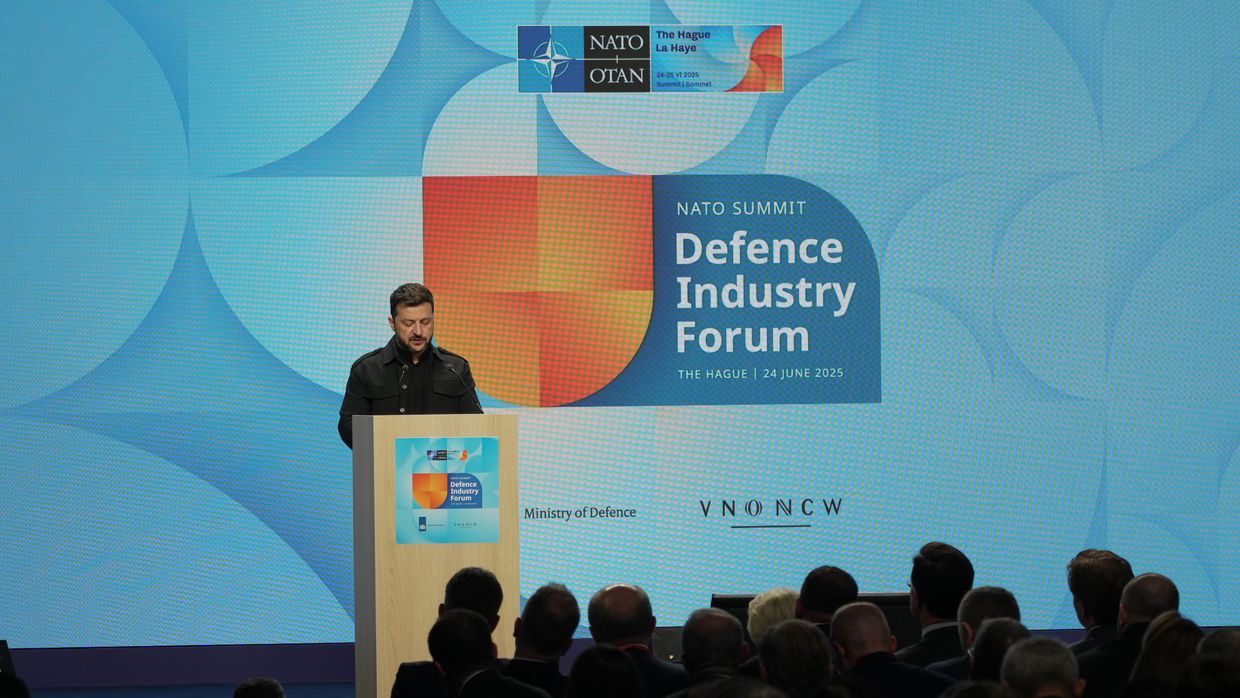
Speaking at the NATO Defense Industry Forum in The Hague on June 24, President Volodymyr Zelensky said Ukraine can produce over 8 million drones of various types each year. He called for an increased investment from the allies to reach that potential.

More empty threats from Washington, more deadly bombs from Russia
The ongoing and escalating slaughter of Ukrainian civilians depends on two preconditions: Moscow’s determination to erase Ukraine, and the tacit permission it receives from America and Europe. On Monday, a Russian missile tore through a residential building in Kyiv, leaving at least six civilians dead and over a dozen
'Something unknown' hits key Russian drone facility in Taganrog, Ukrainian official saysThe Kyiv IndependentAndrew Chakhoyan
'Something unknown' hits key Russian drone facility in Taganrog, Ukrainian official says
  •  

Ukraine can produce 8 million drones annually but needs funding, Zelensky says at NATO summit

Ukraine can produce 8 million drones annually but needs funding, Zelensky says at NATO summit

President Volodymyr Zelensky said during NATO summit on June 24 that Ukraine has the capacity to produce over 8 million drones of various types each year, but lacks the financial backing to reach that potential, a shortfall he said must be urgently addressed to defeat Russia's growing military network.

"Our defense production potential has surpassed $35 billion,” Zelensky said during a speech at the NATO Defense Industry Forum in The Hague. "This includes nearly 1,000 types of products... but around 40% of this potential lacks proper funding. For example, we can produce over 8 million drones of different types each year, but the financing allows for far fewer."

Zelensky urged allies to scale up investments in joint weapons production, including drone technologies, artillery, and interceptors. He argued that Ukraine's defense capabilities are not only key to defending its own territory, but essential to strengthening NATO's long-term security.

"We must lead in the drone race, both in strike drones and interceptors," he said. "Please increase your investments in Ukraine and joint weapons production. All the weapons we produce become part of a new, stronger European defense and security system."

Why can’t the West match Russia’s ammunition production?
Editor’s Note: This article has been updated to reflect new details of BAE Systems’ new chemical process that the company confirmed to the Kyiv Independent after initial publication. The West is failing to catch up to Russia’s production of the most basic unit of war for the past half-millennium — gunpowder.
Ukraine can produce 8 million drones annually but needs funding, Zelensky says at NATO summitThe Kyiv IndependentKollen Post
Ukraine can produce 8 million drones annually but needs funding, Zelensky says at NATO summit

The Ukrainian president emphasized that Russia is not acting alone, but as part of a broader network of state and non-state actors, including North Korea, Iran, and Chinese companies, which support its war effort against Ukraine and pose a long-term threat to Europe.

"The source of this war and the long-term threat to Europe is Russia," Zelensky said. "But in reality, we are not just facing Russia alone. We are facing a network of state and non-state actors."

Zelensky also called on NATO members to increase defense spending to 5% of GDP and to dedicate at least 0.25% of GDP to support Ukraine's military needs directly. He thanked countries such as Germany, Norway, Sweden, and the Netherlands for their elevated commitments, but urged others to follow suit.

Zelensky warned that Russia is planning "new military operations on NATO territory" and that the war in Ukraine must be stopped now to prevent broader European conflict.

"There are no signs that Putin wants to stop this war," Zelensky said. "So long as he kills, he lives. And our intelligence confirms this."

He also appealed for a crackdown on the supply chains that allow Russia to sustain its weapons manufacturing, referring to Western-origin components found in Russian missiles, drones, and armored vehicles.

"It's not just China, also Taiwan. Some of these parts come from European countries and from the United States," Zelensky said. "Every single tool delivered to Russia's defense sector helps prolong the war and is a crime against peace."

Zelensky's speech comes as NATO leaders gather in The Hague for a high-level summit on June 24-25. NATO leaders are expected to discuss raising the alliance's defensespending target to 5% of the GDP, a proposal the U.S. has championed but from which it considers itself exempt.

Zelensky is expected to meet U.S. President Donald Trump during the summit.

Zelensky plans to meet Trump at NATO summit in The Hague
Upon arrival in The Hague on June 24, Andriy Yermak, head of Ukraine’s presidential office, said he held a “substantive” discussion with U.S. Secretary of State Marco Rubio about the upcoming Zelensky-Trump meeting.
Ukraine can produce 8 million drones annually but needs funding, Zelensky says at NATO summitThe Kyiv IndependentAnna Fratsyvir
Ukraine can produce 8 million drones annually but needs funding, Zelensky says at NATO summit

  •  

Ukraine approves Termit ground drone for battlefield deployment

Ukraine approves Termit ground drone for battlefield deployment

Ukraine's Defense Ministry has officially approved the new domestically produced unmanned ground vehicle, known as the Termit, for front-line use, the ministry announced on June 21.

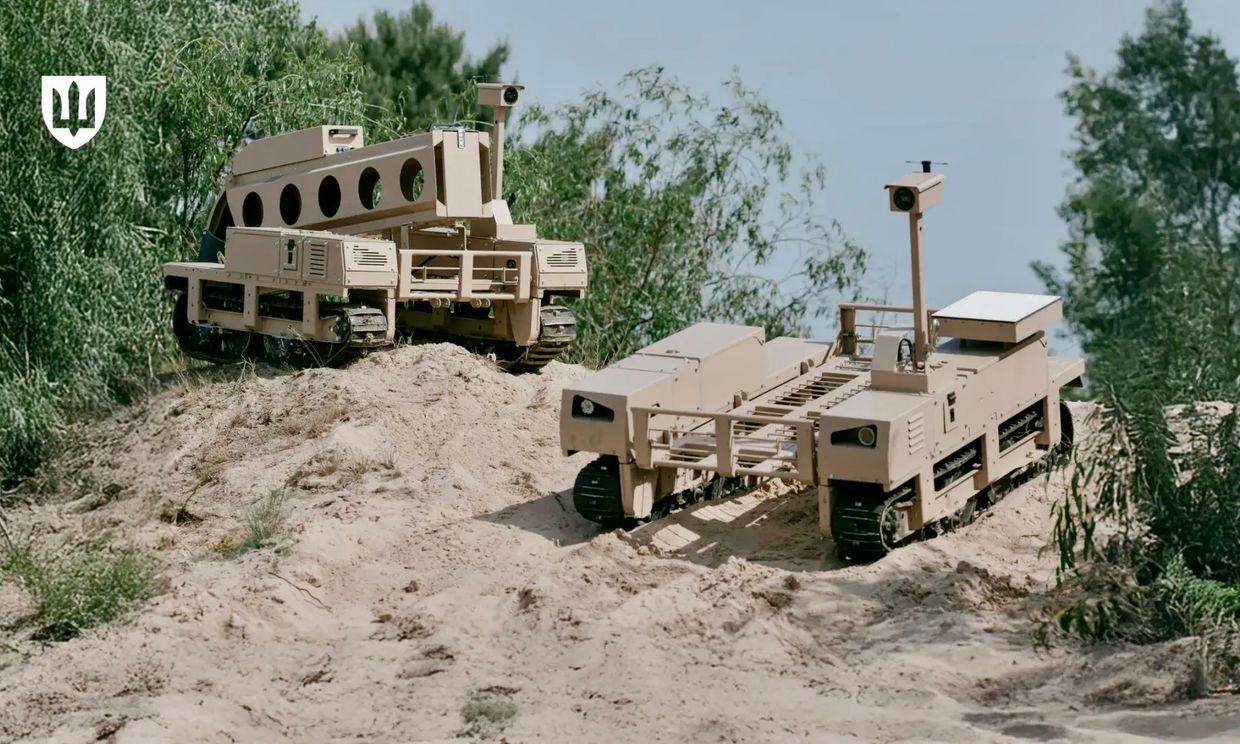
The tracked robot is a next-generation version of Ukraine's existing ground-based unmanned systems already deployed across the front. These systems have supported operations by transporting supplies, conducting reconnaissance, and carrying explosives in contested areas.

Termit, the newest model in the series, features improved mobility and modularity. The drone can carry up to 300 kilograms and operates on various terrains thanks to its low profile, tracked design, and improved weight distribution.

Its traction battery system allows for several hours of continuous movement over dozens of kilometers. According to the Defense Ministry, Termit drones can be equipped with combat modules, used for medical evacuations, or for transporting specialized equipment as needed.

Ground drones such as Termit are being used more frequently to minimize soldier exposure to front-line risks. Since Russia's full-scale invasion in 2022, Kyiv has prioritized the development of unmanned systems across all domains — air, sea, and land.

President Volodymyr Zelensky has called for the production of at least 30,000 long-range drones in 2025, alongside expanded investment in strike-capable hybrids such as the Palianytsia and Peklo missile-drone platforms.

Russia ‘afraid to admit’ scale of losses, trying to hide by dumping soldiers’ bodies on Ukraine, Zelensky says
Ukrainian authorities have confirmed that at least 20 of the bodies Russia returned as Ukrainian were actually Russian soldiers, President Volodymyr Zelensky said.
Ukraine approves Termit ground drone for battlefield deploymentThe Kyiv IndependentTim Zadorozhnyy
Ukraine approves Termit ground drone for battlefield deployment
  •  

Russia reports Ukrainian drone attack on drone factory in Tatarstan

Russia reports Ukrainian drone attack on drone factory in Tatarstan

Editor's Note: June 15: This article has been updated to include confirmation of the attack from Ukrainian authorities.

Ukraine allegedly launched drones at Russia’s Tatarstan region, killing one and injuring 13, regional governor Rustam Minnikhanov reported on June 15.

The Ukrainian drones were reportedly shot down, but the debris fell on a plant in the town of Yelabuga, where Russian Shahed-type attack drones are manufactured, causing a fire.

According to Minnikhanov, it was an automobile plant, but some Telegram channels, including Astra, speculate that the well-known drone factory was the target.

Ukraine's General Staff subsequently confirmed details of the strike, including that it was directed at Shahed-style drone production in Yelabuga.

“Despite the attempt to sow fear and panic, all enterprises and life support facilities in the republic are operating stably. Emergency services are on constant alert,” said Minnikhanov.

A video of the attack was shared on Telegram, showing smoke billowing over the town, which lies some 1,500 kilometers from Kyiv.  There has been no official statement from Kyiv on the alleged strike, and the Kyiv Independent could not independently verify these claims.

The so-called Alabuga Special Economic Zone hosts a factory producing Shahed-type long-range attack drones as well as other reconnaissance drones, and has been repeatedly targeted by Ukrainian forces since its launch in 2022.

The factory aims to produce 6,000 Shahed-type drones a year, with each one estimated to cost as little as $20,000.

Last year, Ukraine confirmed attacking military facilities in Tatarstan at least twice with long-distance drone strikes. Most recently, Ukrainian drones reportedly struck the plant on May 25.

Facing a workforce problem, the factory began recruiting African women under false pretences via a work-study program. As a result, Interpol began an investigation into the company in April for human trafficking.

Russian strike hit Boeing office in Kyiv in deliberate attack on US business, FT reports
“This is not just an attack against Ukraine, but also an attack where American business is being hit,” said Andy Hunder, President of the American Chamber of Commerce in Ukraine.
Russia reports Ukrainian drone attack on drone factory in TatarstanThe Kyiv IndependentDominic Culverwell
Russia reports Ukrainian drone attack on drone factory in Tatarstan
  •  
❌