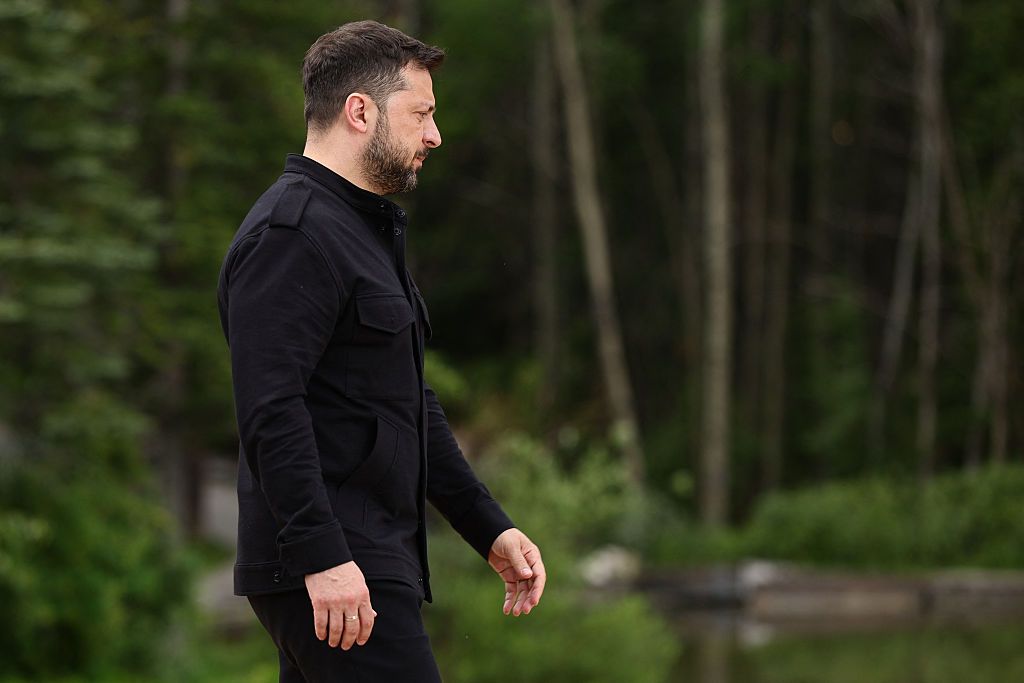
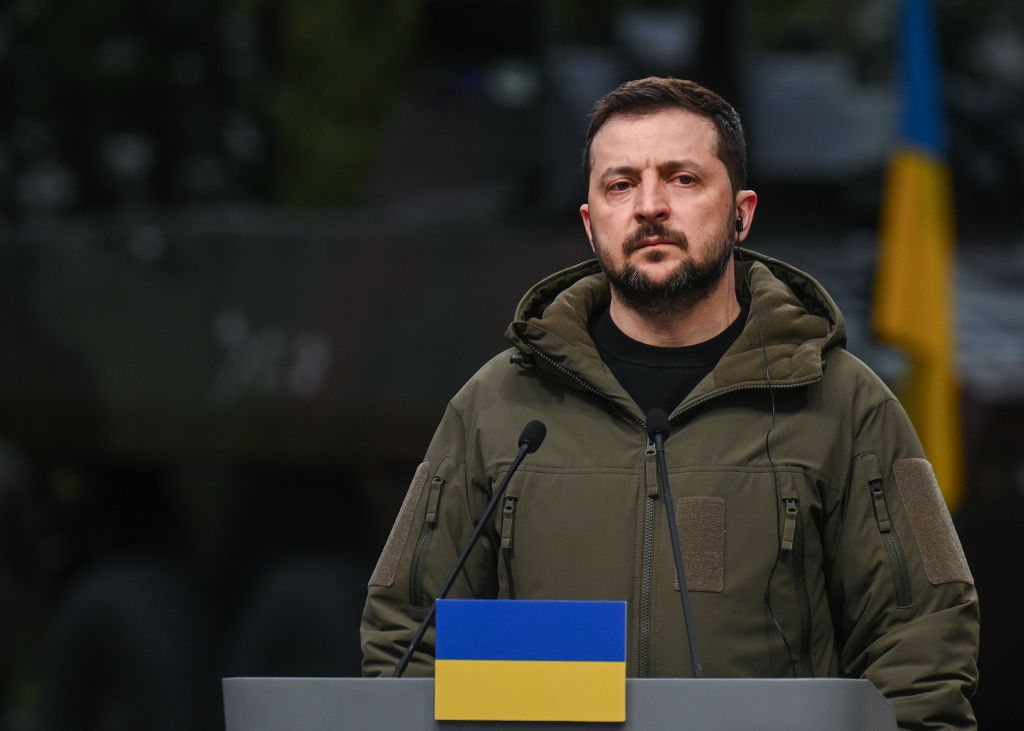
President Volodymyr Zelensky said on June 17 that the G7 summit had produced concrete results for Ukraine, including increased military support, new tranches of aid using frozen Russian assets, and additional sanctions targeting the sources of Russia’s war effort.
"It is important that our partners are ready not only to support our defense now, but also to rebuild Ukraine together after the war ends. I thank everyone who helps us fight Russian aggression and who, together with Ukraine, is building a strong security architecture for the future," he added in a Telegram post.
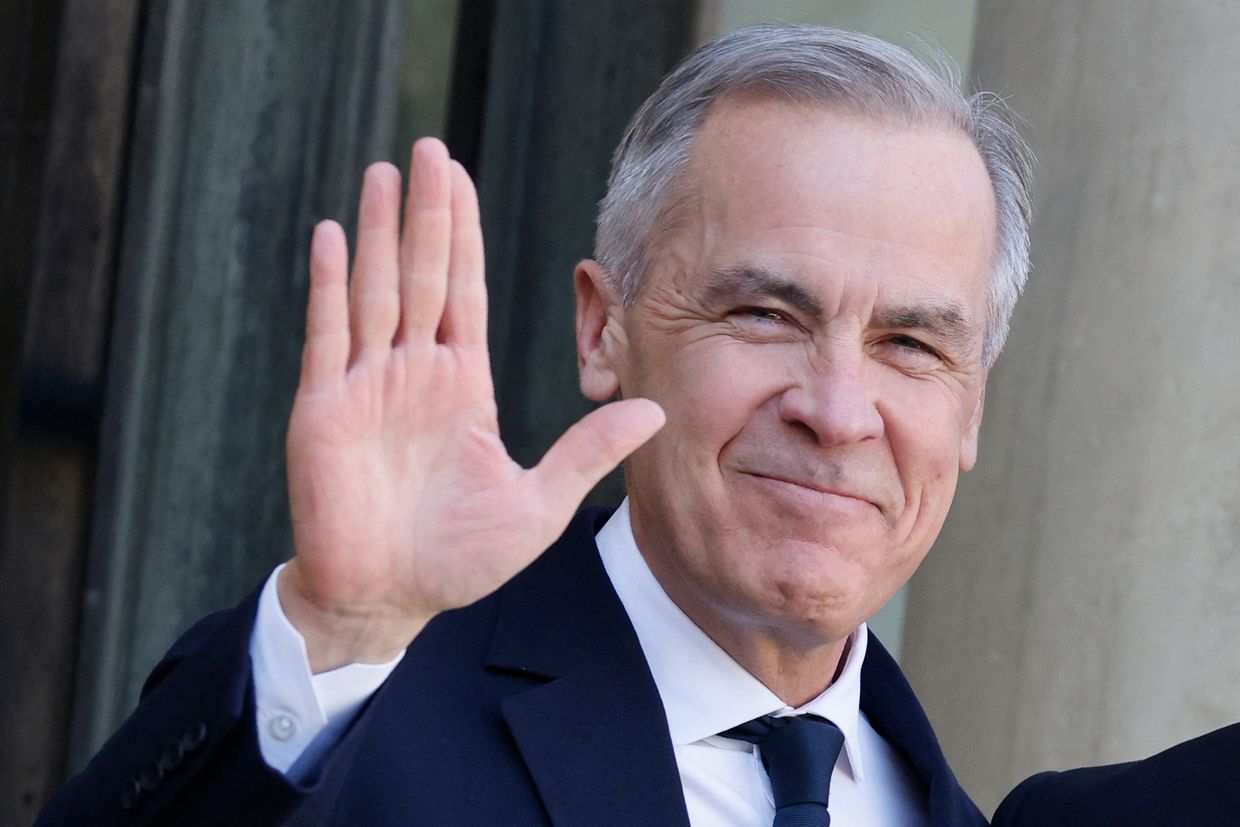
Canadian Prime Minister Mark Carney announced a new support package for Ukraine earlier in the day, including two billion Canadian dollars ($1.5 billion USD) in military aid and over two billion Canadian dollars ($1.6 billion USD) loan for reconstruction. The package also includes funding for drones, ammunition, armoured vehicles, and new sanctions targeting Russia’s energy revenues and sanctions evasion.
U.K. Prime Minister Keir Starmer also announced a set of measures aimed at increasing pressure on Russian President Vladimir Putin, who continues to reject calls for an unconditional ceasefire in Ukraine. "The 30 targets strike across Russia’s financial, military and energy sectors in response to Putin’s continued aggression," reads the U.K. government statement. The new sanctions also "crack down further on Putin’s shadow fleet," targeting 20 of his oil tankers.
Starmer added that he "strongly" supports tightening the price cap on Russian crude oil to further cut into the Kremlin’s energy revenues.
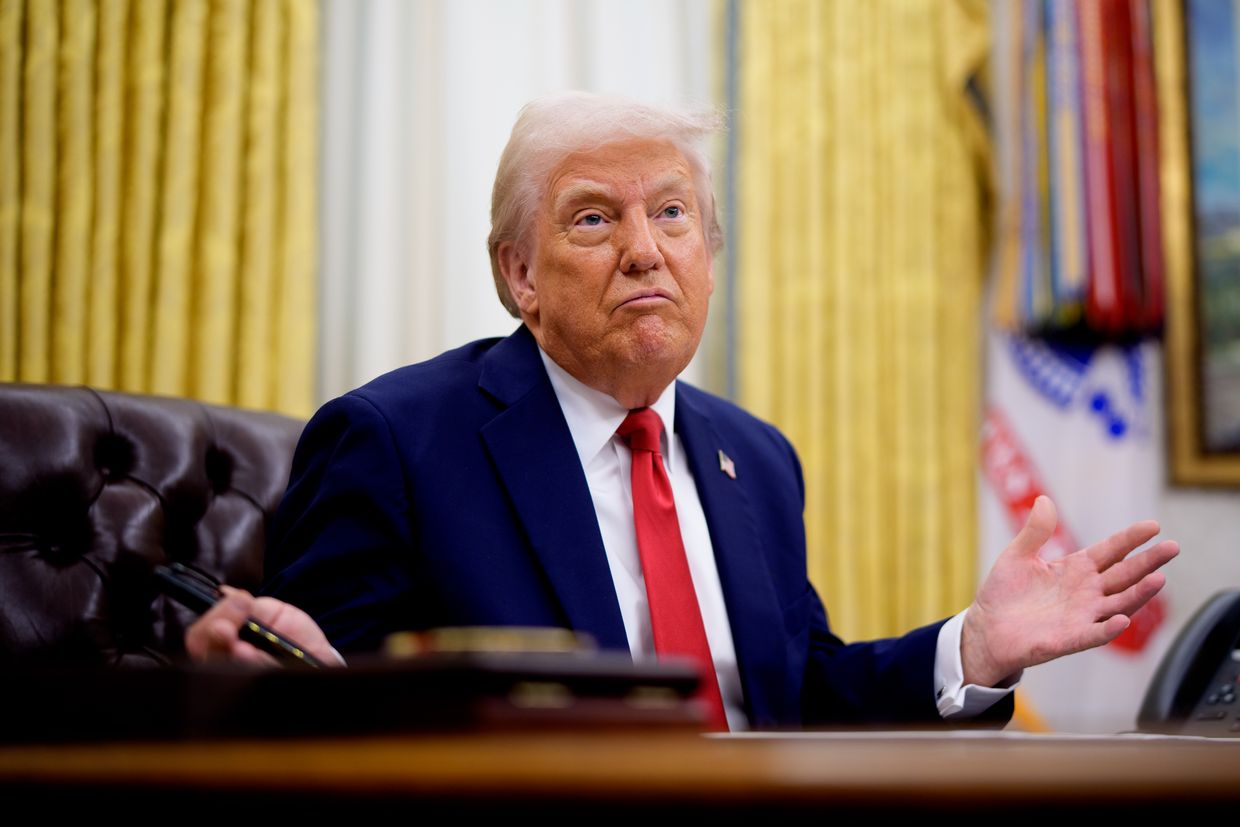
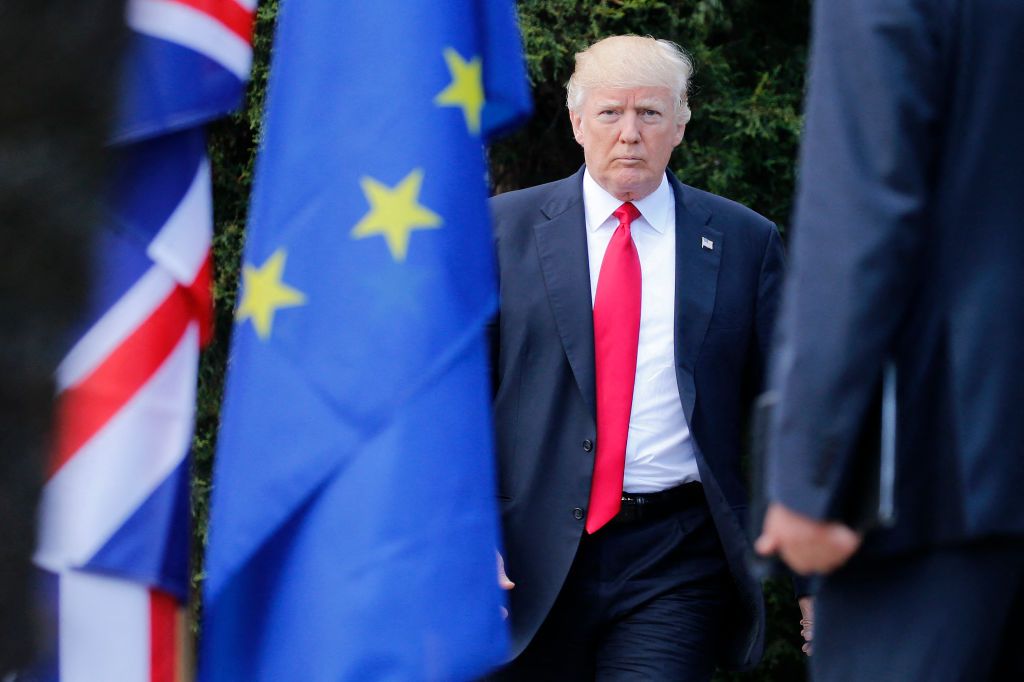
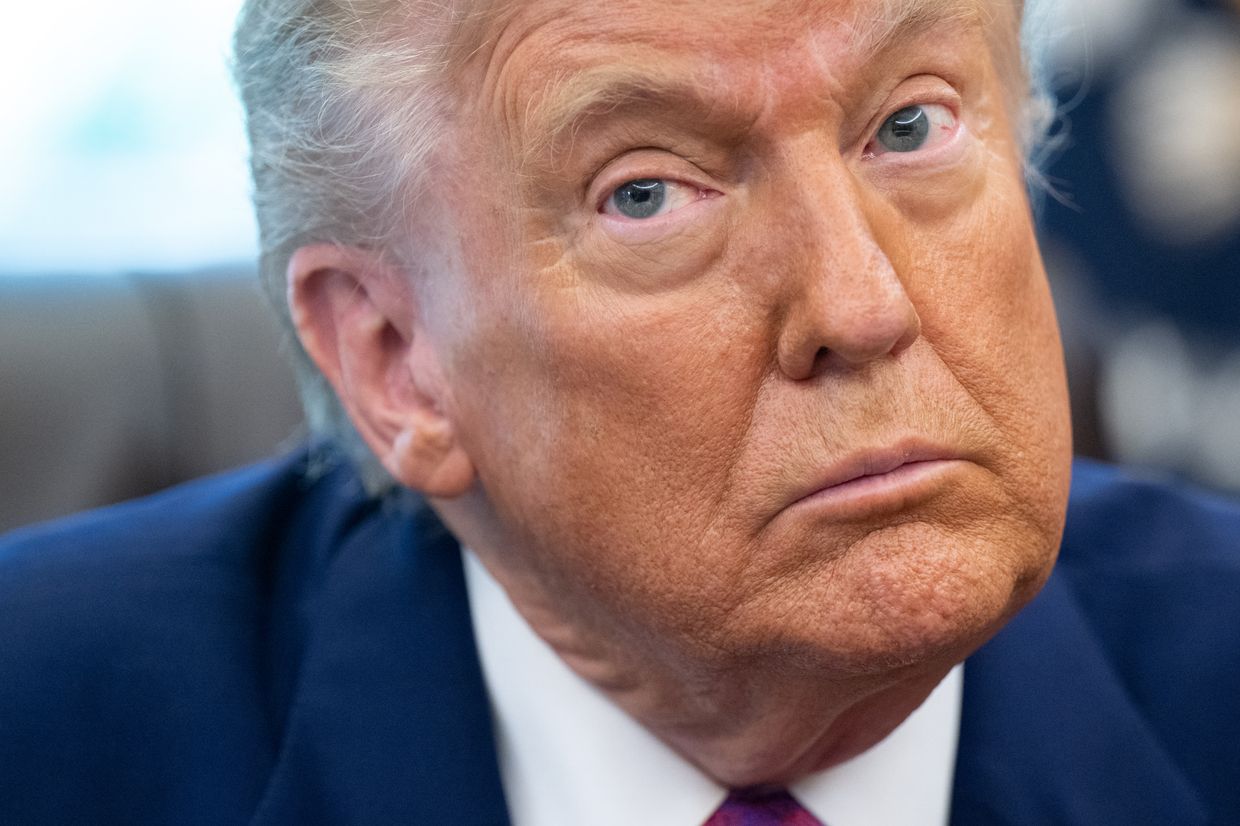
The G7 nations, however, struggled to present a unified stance on the war in Ukraine after U.S. President Donald Trump voiced support for Russian President Vladimir Putin and called for Russia to be readmitted to the group. Russia was expelled from what was then the G8 after its 2014 invasion of Crimea.
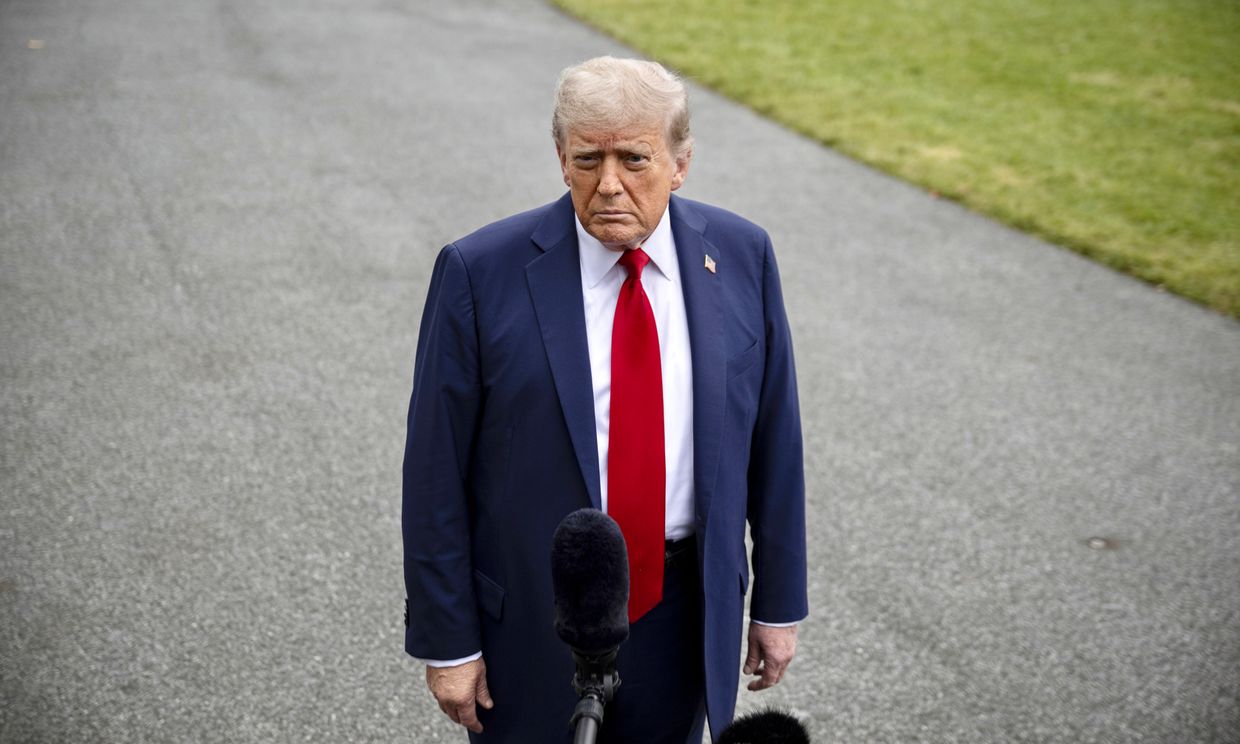
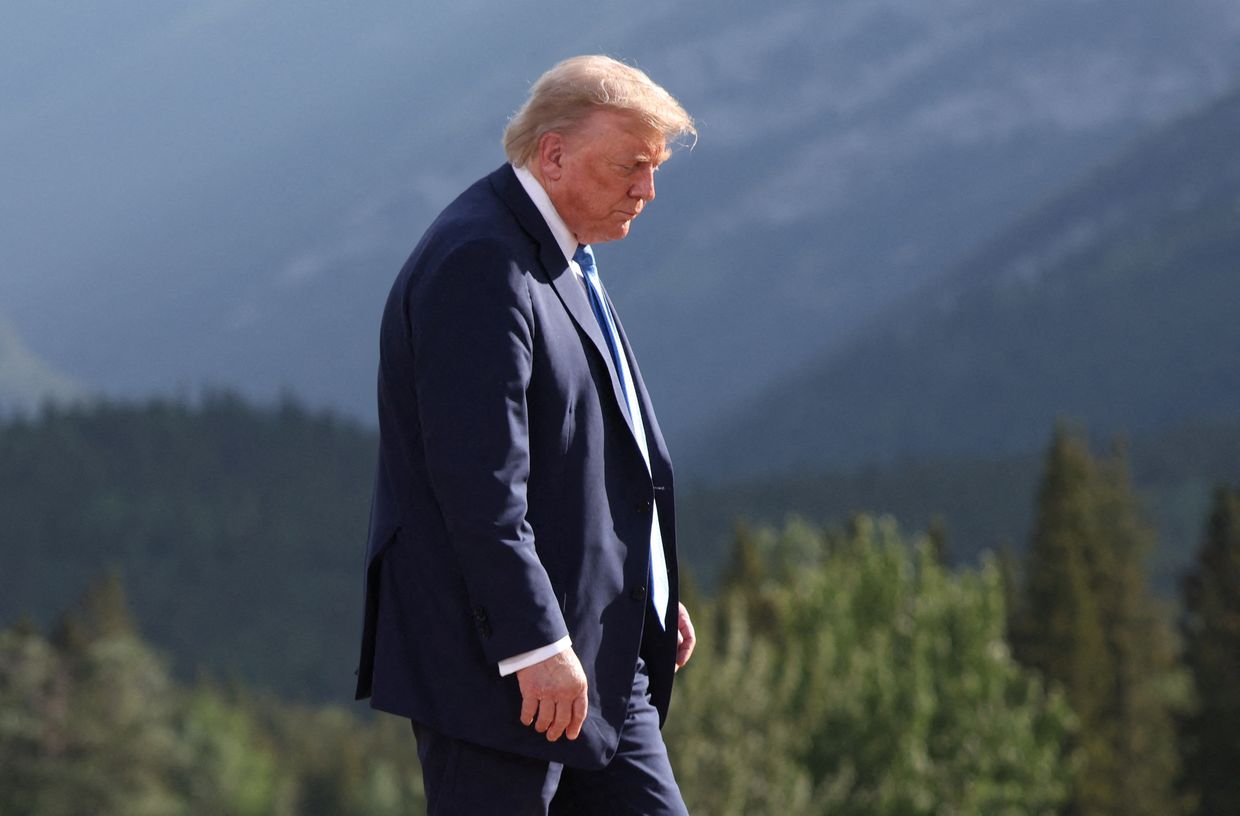
Trump left the summit a day early to address the Israel-Iran conflict from Washington, departing without meeting Zelensky, who had hoped for a one-on-one conversation to press for stronger sanctions against Russia.
Zelensky had already cut his own visit to Canada short on June 17 and was preparing to return to Kyiv while G7 talks were still underway. He had been scheduled to travel to Calgary for events and a press conference with the Ukrainian diaspora, a source told a Kyiv Independent journalist on the ground, but those plans were canceled following a deadly Russian missile strike on Kyiv and changes to the summit agenda.
Zelensky later said he told G7 leaders that "diplomacy is now in a state of crisis" and urged allies to continue pressing Trump "to use his real influence" to help end the war.
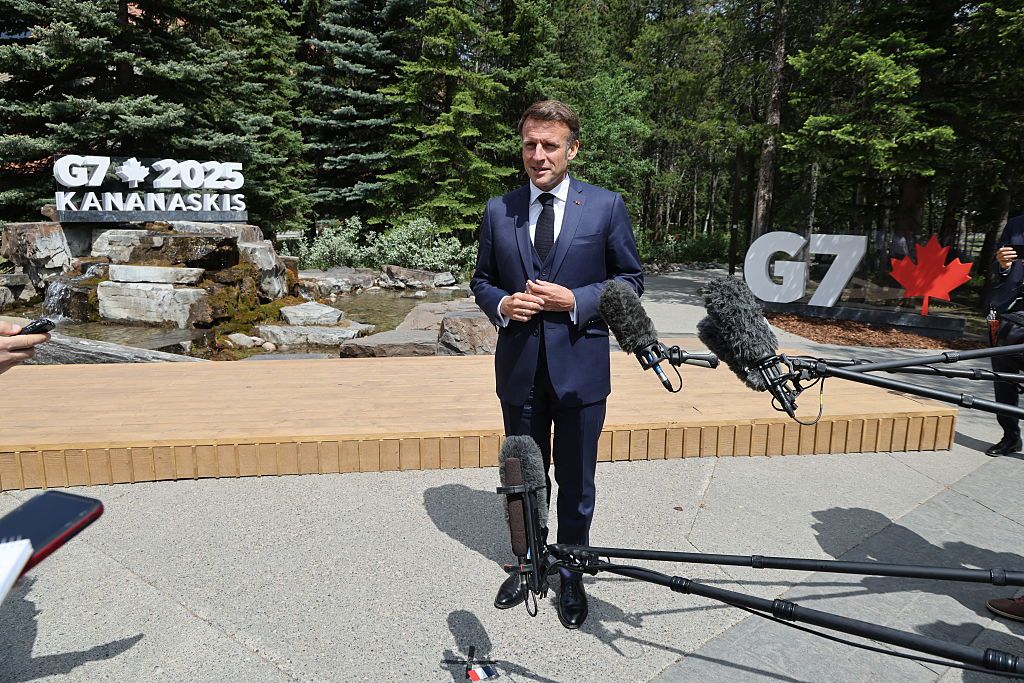
The European Union and its allies are ready to toughen sanctions on Russia, French President Emmanuel Macron said on the sidelines of the Group of Seven (G7) summit on June 17.
"With President (Volodymyr) Zelensky at the G7. We stand in solidarity with the Ukrainian people after last night’s massive Russian strikes," Macron said in a post to social media.
"We are determined to increase pressure on Russia to accept the immediate and unconditional ceasefire that Ukraine is ready for," he added.
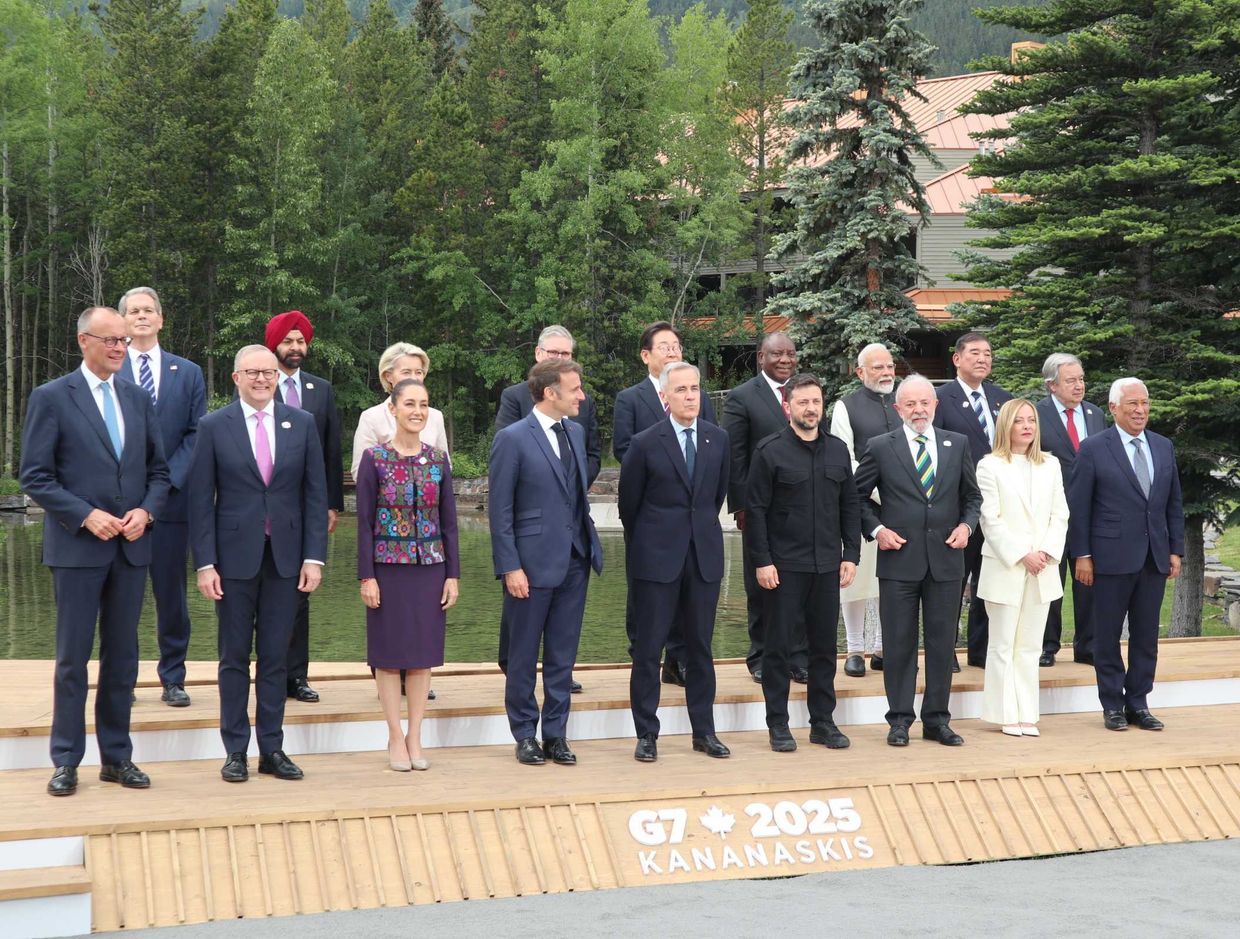
Macron attended the G7 summit in Kananaskis, Canada, from June 15-17. Global leaders discussed a wide range of topics, including Russia's war against Ukraine.
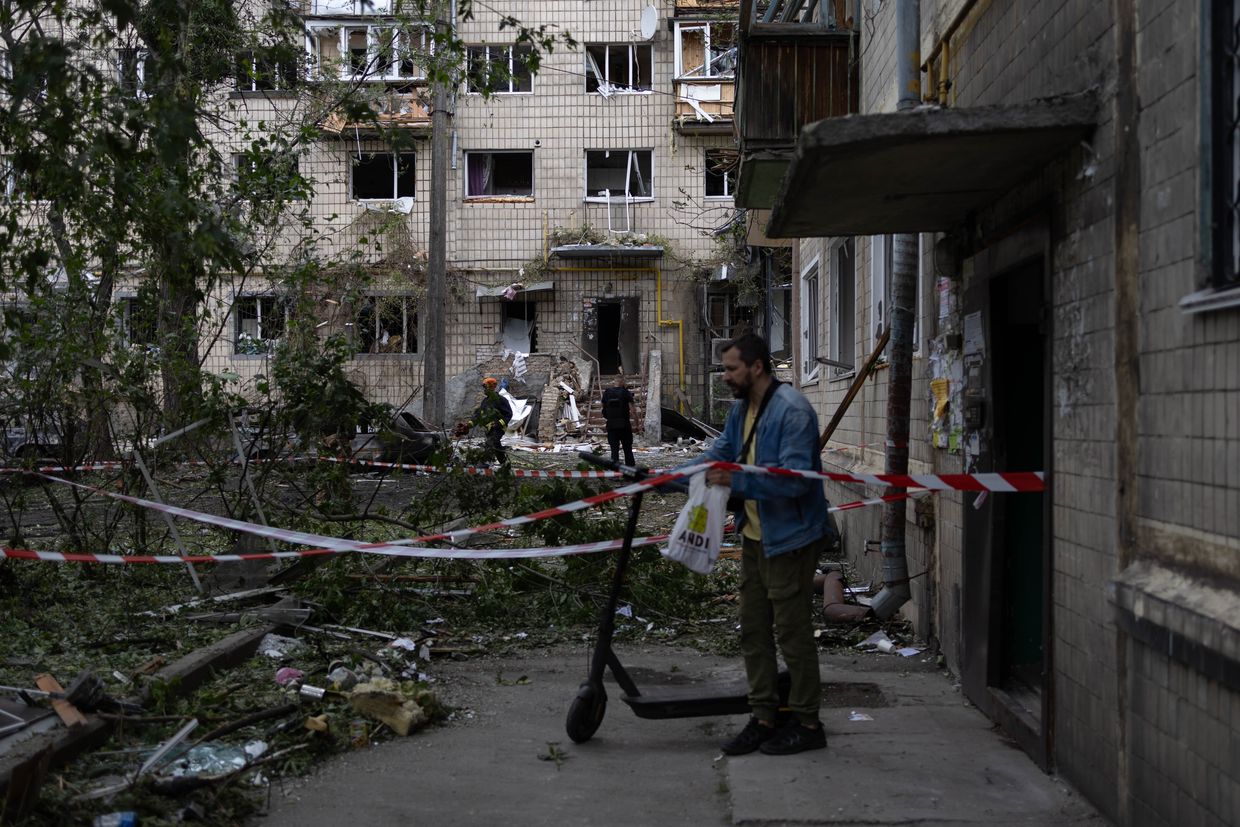
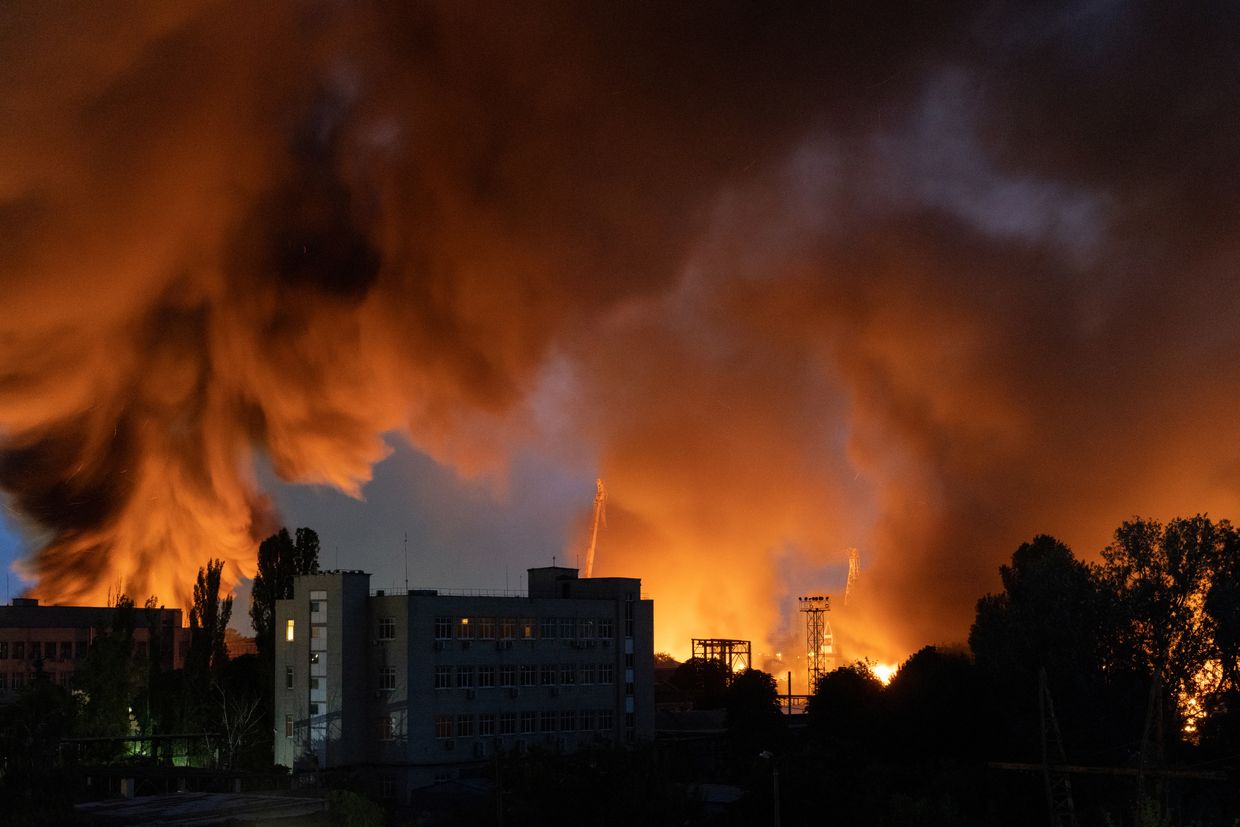
As the G7 leaders met in Canada, Russia launched one of its worst drone and missile attacks on Kyiv since it began its full-scale war against Ukraine in February 2022, killing 16 people and injuring at least 134.
"The common position that is emerging is to say, 'We need to strengthen sanctions,'" CBC News reported, citing Macron.
Europe is proposing much tougher sanctions than the U.S. has imposed on Russia, Macron said, adding that the EU is in "very close co-ordination" with Canada, Japan, and the U.K.
Several countries, including Canada and the U.K., introduced additional sanctions on Russia as the G7 summit was ongoing.
Canada introduced a new military aid package for Ukraine in addition to its sanctions against Russia.
"In our view, this has changed the situation because it will allow us to bring Russia back to the negotiating table, as (U.S.) President (Donald) Trump has been demanding," Macron said, according to CBC News.
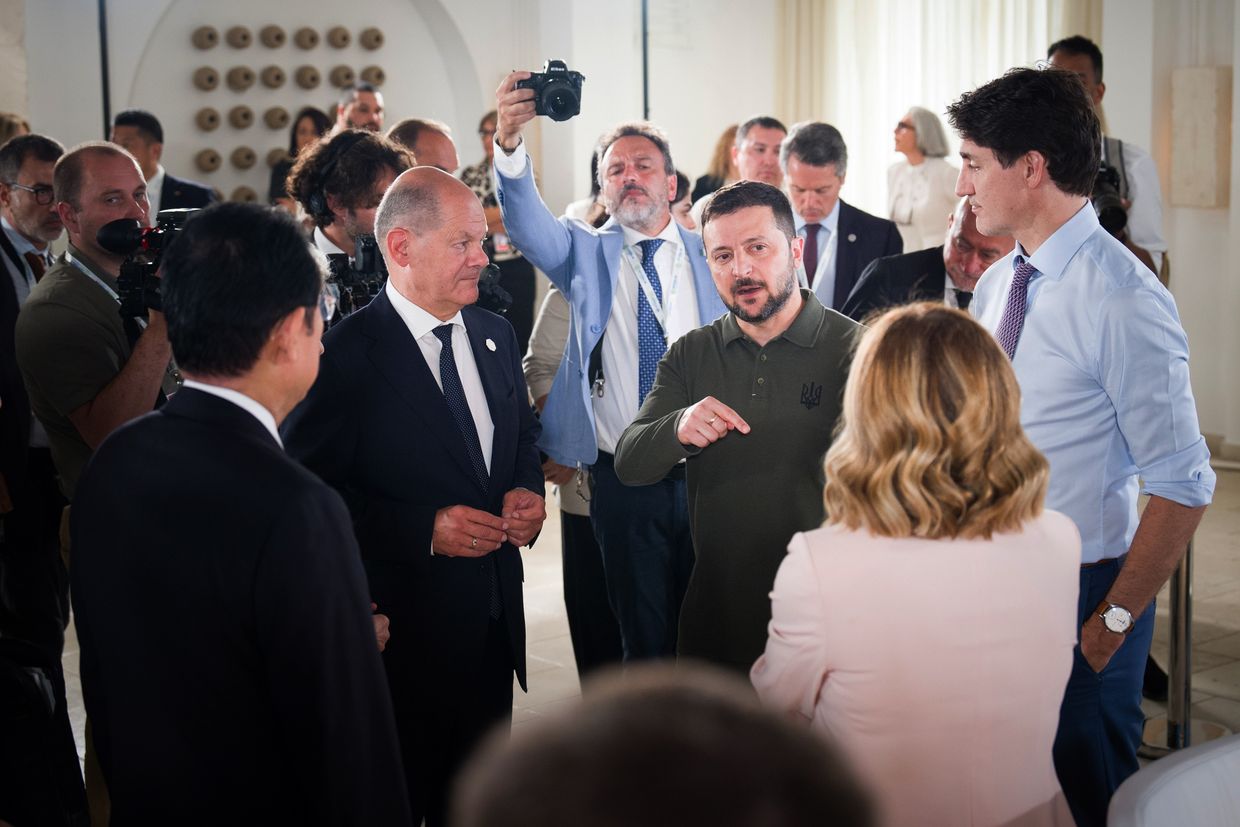
Zelensky attended the summit and met with various leaders, including Macron and Canadian Prime Minister Mark Carney.
Zelensky left the summit early, citing Russia's attack on Kyiv. The nearly nine-hour-long attack saw Moscow's forces launch large numbers of drones and missiles at Ukraine's capital.
Foreign Minister Andrii Sybiha condemned the attack, calling it a "massive and brutal strike" timed deliberately to coincide with the G7 summit.
Zelensky described the drone and missile assault as "one of the most horrifying attacks on Kyiv."
Editor's note: This is a developing story and is being updated.
President Volodymyr Zelensky is cutting his visit to Canada short and will return to Kyiv on June 17, while G7 talks are still ongoing, a source told a Kyiv Independent journalist on the ground.
He had been scheduled to travel to Calgary for additional events and a press conference, but those plans have been cancelled. The change comes in the wake of a deadly Russian missile strike on Kyiv overnight, as well as changes to the G7 agenda.
Zelensky had travelled to the summit hoping to meet one-on-one with U.S. President Donald Trump and to push for stronger sanctions against Russia. However, Trump left the summit early, citing the crisis in the Middle East, and no bilateral meeting or unified G7 statement took place.
Zelensky said he had told the G7 leaders that "diplomacy is now in a state of crisis" and noted the allies need to continue calling on Trump "to use his real influence" to force an end to the war."
"Even if the American President is not putting enough pressure on Russia right now, the truth is that America still has the broadest global interests and the largest number of allies. All of them will need strong protection," he said in a Telegram post.
Meanwhile, Canada dropped plans for the G7 to issue a joint statement on the war in Ukraine after the United States pushed to weaken the language, according to a Canadian official speaking on the sidelines of the summit. The official said Canada felt a watered-down version would not be fair to Ukraine.
"Canada and the rest of the G7 should strengthen their support for Ukraine, particularly by furnishing it with additional military assistance that would include, among other things, increased ammunition," Alexander Lanoszka, an associate professor of international relations in the department of political science at the University of Waterloo, told the Kyiv Independent.
"One hopes that the specter of U.S. disengagement would catalyze increases in assistance. Unfortunately, despite whatever they say, G7 leaders could very well lack the confidence for whatever reason to do much absent strong U.S. leadership," Lanoszka added.
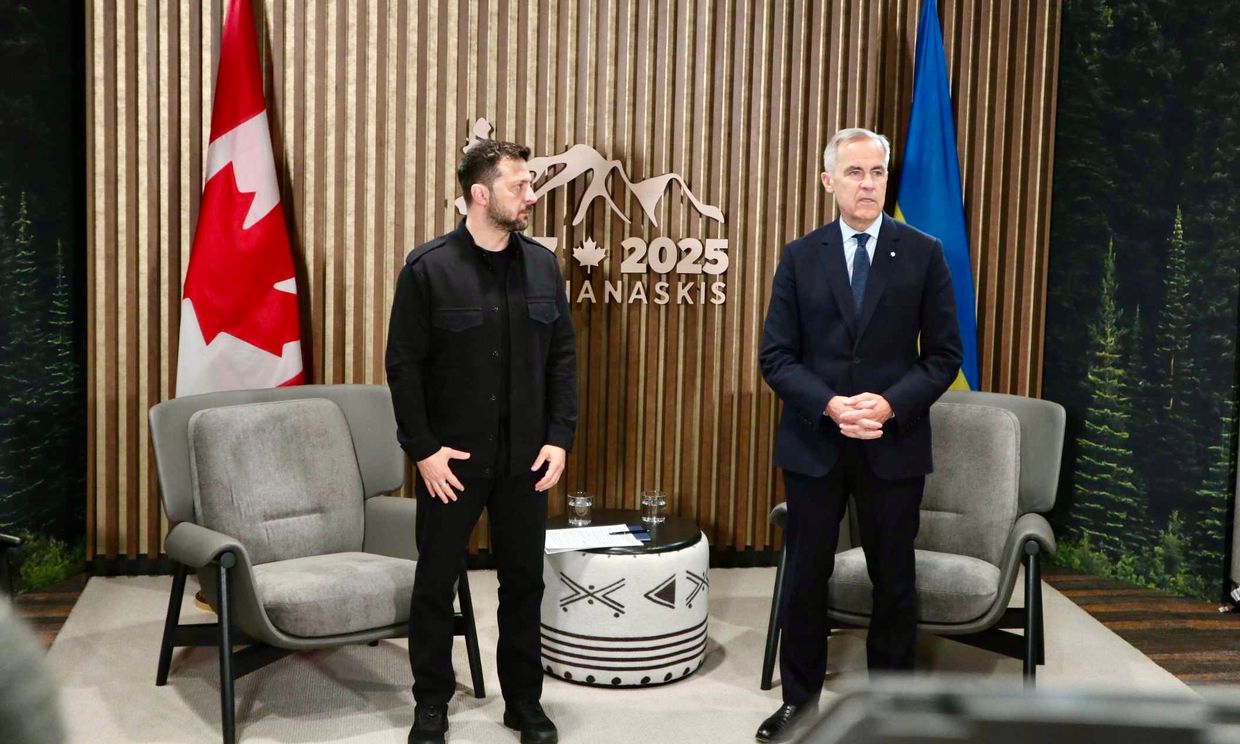
Canada did announce a sweeping new support package for Ukraine on June 17, during a bilateral meeting with Zelensky on the final day of the G7 summit in Kananaskis. The measures include two billion Canadian dollars ($1.5 billion USD) in military funding and new sanctions aimed at restricting Russia’s energy revenues and evasion tactics.
U.K. Prime Minister Keir Starmer also announced a set of measures aimed at increasing pressure on Russian President Vladimir Putin, who continues to reject calls for an unconditional ceasefire in Ukraine. "The 30 targets strike across Russia’s financial, military and energy sectors in response to Putin’s continued aggression," reads the U.K. government statement. The new sanctions also "crack down further on Putin’s shadow fleet," targeting 20 of his oil tankers.
Starmer added that he "strongly" supports tightening the price cap on Russian crude oil to further cut into the Kremlin’s energy revenues.
Zelensky said late on June 17 that the G7 summit still produced concrete results for Ukraine, including increased military support, new tranches of aid using frozen Russian assets, and additional sanctions targeting the sources of Russia’s war effort.
A dinner discussion among Group of Seven leaders on June 16 failed to shift U.S. President Donald Trump’s position on tougher sanctions against Russia, Bloomberg reported, citing sources familiar with the talks.
Trump has continued urging Russian President Vladimir Putin to agree to a ceasefire in Ukraine but has resisted additional sanctions, despite previously threatening to introduce more. At the G7 dinner, he reportedly repeated concerns that sanctions were too costly for the United States.
A chair’s statement expected from Canadian Prime Minister Mark Carney will affirm G7 support for U.S.-led peace efforts, according to Bloomberg. The statement is also set to highlight that Ukraine has demonstrated readiness for a ceasefire, while Russia has not, and emphasize the need for continued pressure on Moscow through sanctions. Carney’s office did not comment on the expected statement.
The European Union introduced its 18th package of sanctions ahead of the summit, while the United Kingdom followed with new restrictions targeting Russia’s energy and financial sectors. Both the EU and the U.K. have pushed to lower the G7 price cap on Russian oil, a move the U.S. has so far opposed.
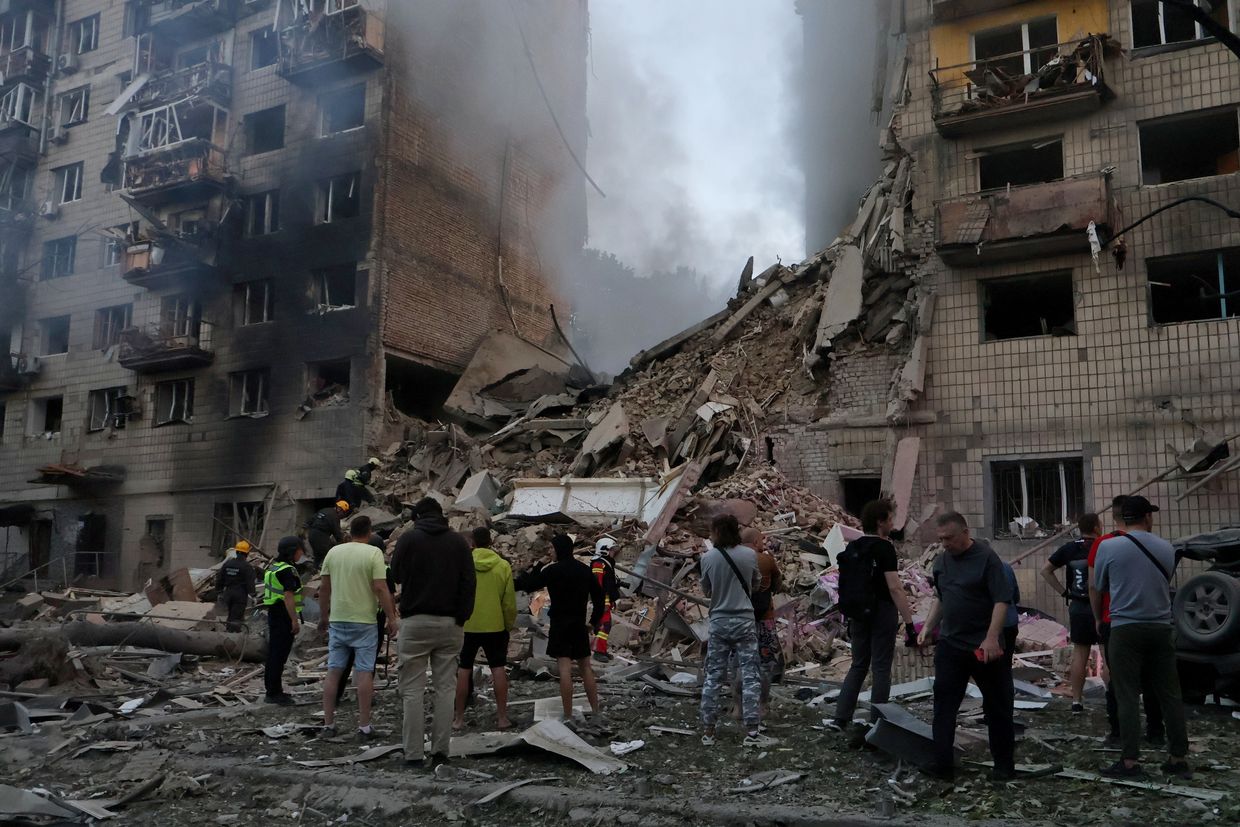
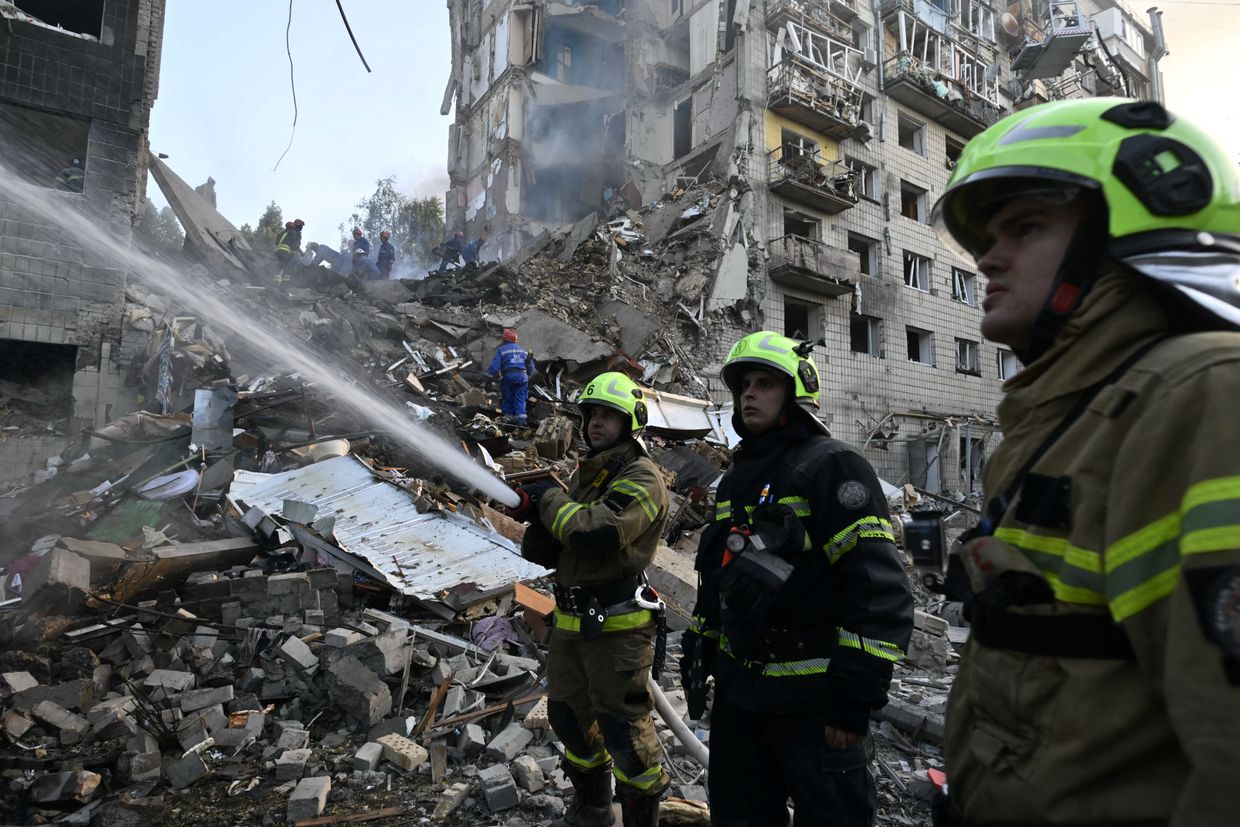
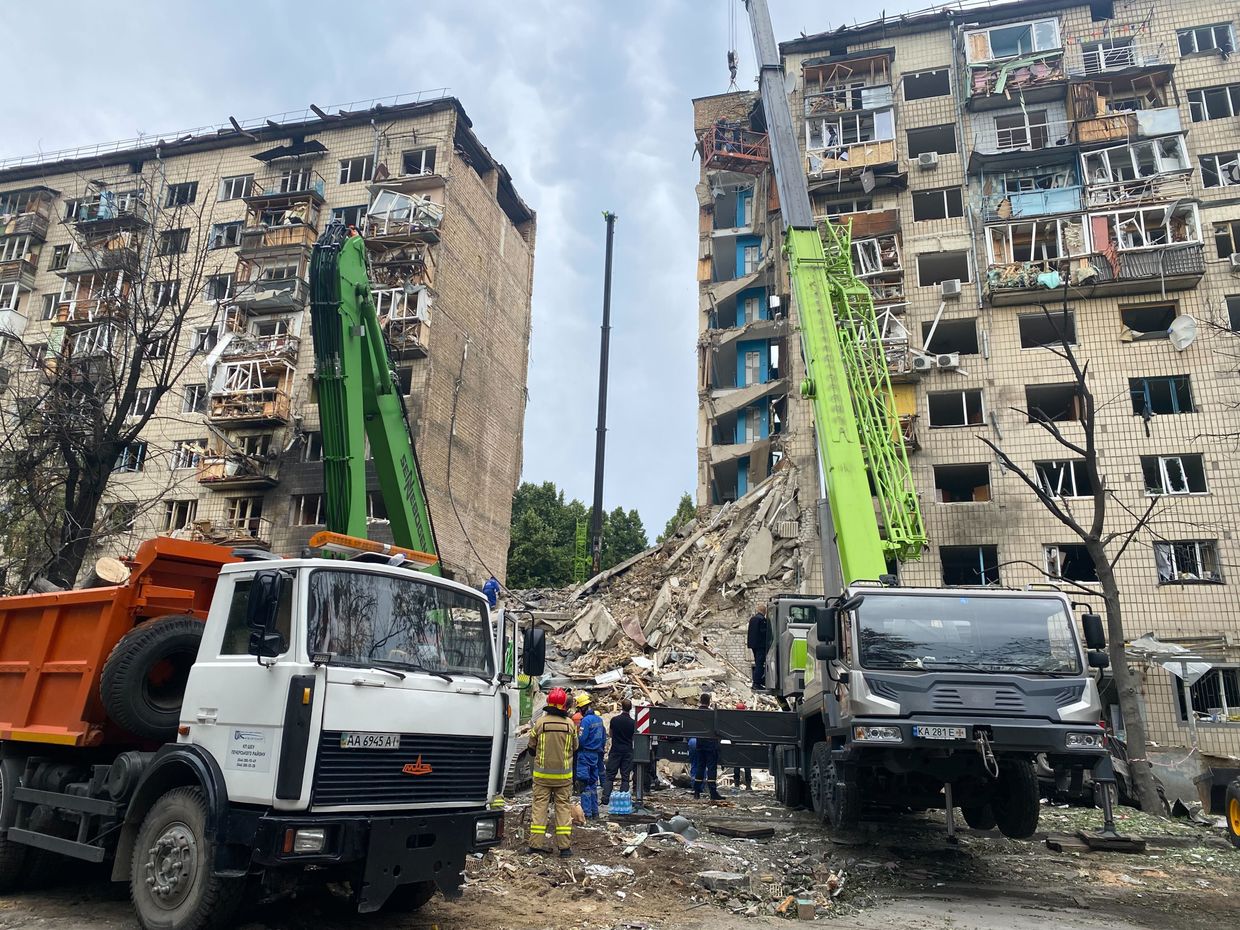
The debate over sanctions comes amid intensified Russian strikes on Ukraine. Overnight, at least 14 people were killed in Kyiv in what President Volodymyr Zelensky described as “one of the most horrific attacks” since the start of the full-scale war. Multiple areas of the capital were hit by drones, missiles, or falling debris, including a direct strike on a nine-story residential building, which caused part of the structure to collapse. Search and rescue operations were ongoing.
“Such attacks are pure terrorism,” Zelensky said in a post on X after arriving in Canada for the G7 meeting. “And the whole world, the United States, and Europe must finally respond as a civilized society responds to terrorists.”
Zelensky had been scheduled to meet with Trump on June 17, but the meeting was canceled after the U.S. president left the summit early, citing the crisis in the Middle East. European officials, according to Bloomberg, are increasingly uncertain about Trump’s reliability and are working to reinforce security cooperation with other allies as U.S. support for Ukraine appears to be wavering.
Ukraine's 59th Brigade of the Unmanned Systems Forces said on June 17 that former fighter Ryan O'Leary no longer has access to current information about the unit's operations and cannot speak on its behalf.
The statement follows public criticism from O'Leary, an American volunteer and former commander of the Chosen Company, who alleged widespread leadership failures within Ukraine's Armed Forces.
On June 14, O'Leary said mismanagement within the military, rather than Russia's action, was responsible for "more deaths," accusing commanders of prioritizing personal power over troop welfare.
"The officer corps behaves like a caste system of untouchables or 'army lords,'" he wrote on X.
Chosen Company, originally formed as the 312 Swedish Volunteer Company at the start of Russia's full-scale invasion in 2022, has drawn members from more than 31 countries.
Its first commander, Swedish veteran Edvard Selander Patrignani, was killed in action in July 2022. O'Leary took command afterward, and the unit was integrated into the 59th Brigade in early 2023.
O'Leary accused the former commander of the 59th Brigade, Lieutenant Colonel Bohdan Shevchuk, of sending intelligence officers into reckless assaults, resulting in avoidable casualties. Shevchuk was recently removed from command after being accused of submitting false reports.
"In the first two months of his command, he sent soldiers into unattainable positions with no hope of reinforcement or survival," O'Leary claimed.
In response, the 59th Brigade, deployed in the Pokrovsk sector in Donetsk Oblast, said O'Leary voluntarily resigned from service on Feb. 8, 2024, and has not taken part in any operations or internal decisions since.
"He does not have up-to-date information on the state of affairs in the unit and cannot comment on it," the brigade said. "The dissemination of unfounded accusations and misinformation undermines morale and negatively affects the unit's combat readiness."
The 59th Brigade emphasized that its soldiers continue to perform combat missions under challenging conditions and "maintain high efficiency and effectiveness."
O'Leary had announced the disbandment of the Chosen Company on May 26, but said he would wait to discuss details until his contract officially ended.
Canadian Prime Minister Mark Carney announced a sweeping new support package for Ukraine on June 17, during a bilateral meeting with President Volodymyr Zelensky on the final day of the G7 summit in Kananaskis, Alberta.
The measures include two billion Canadian dollars ($1.5 billion USD) in military funding and new sanctions aimed at restricting Russia’s energy revenues and evasion tactics.
"To be absolutely clear, this support will be unwavering until we get a just peace for Ukraine and the Ukrainian people," Carney was quoted as saying.
The aid package includes funding for drones, ammunition, and armoured vehicles, as well as a $2.3-billion loan to support the reconstruction of Ukrainian infrastructure damaged by Russian attacks. Zelensky, who was invited to the summit by Carney, thanked the prime minister for his support, noting that Ukraine had just endured one of the largest missile attacks since the start of the full-scale invasion, killing 14 and injuring 117 people in Kyiv.
The new sanctions target 77 individuals and 39 entities, including 15 people involved in Russia’s so-called “shadow fleet,” three financial firms facilitating war-related transactions, and 14 entities tied to the development of quantum technologies with possible military use. Canada also upgraded its sanctions against Russian oil and gas giant Surgutneftegas.
Canada’s announcement came alongside similar measures from the U.K., which sanctioned individuals and entities connected to Russian finance, energy, and military operations, including 20 shadow fleet vessels and two U.K.-based individuals accused of exporting high-tech electronics to Russia.
U.S. President Donald Trump is weighing direct military action against Iran, including potential strikes on its nuclear facilities, Axios reported on June 17, citing unnamed U.S. officials.
Trump demanded Iran's "unconditional surrender" on Truth Social on June 17 and threatened Supreme Leader Ayatollah Ali Khamenei, boasting about U.S. air superiority.
The U.S. president is expected to meet with his national security team later in the day to determine the scope of involvement in the escalating conflict between Israel and Iran, according to Axios.
The meeting comes after his early departure from the G7 Leaders' Summit on June 16, where he had been scheduled to meet with President Volodymyr Zelensky the following day.
"We now have complete and total control of the skies over Iran," Trump wrote on Truth Social.
He added that "we know exactly where the so-called 'Supreme Leader' is hiding."
"He is an easy target, but is safe there - We are not going to take him out (kill!), at least not for now," Trump continued. "But we don't want missiles shot at civilians, or American soldiers. Our patience is wearing thin."
The U.S. president is increasingly leaning toward using military force to target Iran's nuclear facilities, moving away from a diplomatic resolution, CNN reported, citing two unnamed U.S. officials.
Although Trump continues to be receptive to negotiations, CNN sources indicated that any agreement would require significant concessions from Tehran.
German Chancellor Friedrich Merz said on June 17 that U.S. involvement in Israel's military campaign is under serious consideration, and a decision could be "made in the near future," Politico reported.
Merz said the decision depends on whether the Iranian regime "is prepared to return" to the negotiating table.
Israel launched a series of massive air strikes on Iran starting June 13, targeting nuclear facilities and senior military figures. The Israeli government claimed Tehran was nearing nuclear weapons capability.
Iran responded with missile strikes on Tel Aviv and other Israeli cities, which resulted in civilian casualties, including five Ukrainian citizens on June 14.
Iranian officials claimed 224 people have been killed in Israeli attacks so far, most of them civilians. The figures have not been independently verified.
As tensions grow, Trump has floated the idea of Russian President Vladimir Putin serving as a mediator between Israel and Iran. Putin spoke with both Iranian President Masoud Pezeshkian and Israeli Prime Minister Benjamin Netanyahu on June 13, offering mediation and condemning Israeli strikes.
Israel has not publicly responded to Russia's proposal, but Kremlin spokesperson Dmitry Peskov said on June 17 that Tel Aviv appeared unwilling to accept Russian mediation.
French President Emmanuel Macron dismissed the suggestion entirely, saying on June 15 that Moscow, given its war in Ukraine and disregard for the UN Charter, "cannot be a mediator."
Tehran has become one of Russia's closest military partners during its war against Ukraine, supplying thousands of Shahed drones and ballistic missiles used in daily strikes on Ukrainian cities.
Israel, which has historically maintained careful relations with Russia and is home to a substantial Russian-speaking population, has not joined in Western sanctions against Moscow.
On June 13, Kyiv expressed its support for Israel, describing Iran as a "source of instability in the region and beyond," citing Tehran's extensive military cooperation with Russia.
Russian drone attacks injured at least 20 civilians in the Dniprovskyi district of Kherson on June 17, according to local authorities.
"The Russians have changed their tactics for using drones — since early morning, they have been launching massive attacks on the Dniprovskyi district of Kherson," Kherson Oblast Governor Oleksandr Prokudin wrote on Telegram.
The attacks left several people hospitalized with blast trauma and shrapnel wounds.
A 36-year-old man sustained injuries to the head and chest. A 51-year-old woman was treated for a concussion and facial wounds. Four other victims, including two women aged 60 and 67, were hospitalized with injuries to the torso and limbs.
Among those treated on an outpatient basis was a 41-year-old man wounded in the leg and a 58-year old woman who suffered injuries to the torso. Additional outpatient cases include women aged 84, 50, and 62, and a 58-year-old man, who was also admitted for hospital care.
"We are taking all necessary measures to counter enemy drones and adapting to the enemy's new tactics. This takes time," Prokudin said, urging residents to stay indoors unless absolutely necessary.
Kherson, located on the western bank of the Dnipro River in southern Ukraine, has faced relentless Russian attacks since its liberation in November 2022.
Russian forces continue to occupy the eastern bank, from which they launch attacks on civilian targets using artillery, guided bombs, and drones.
President Volodymyr Zelensky arrived at the G7 Leaders' Summit in Canada on June 17 ahead of the final day of the G7 Leaders' summit, according to a Kyiv Independent journalist on the ground.
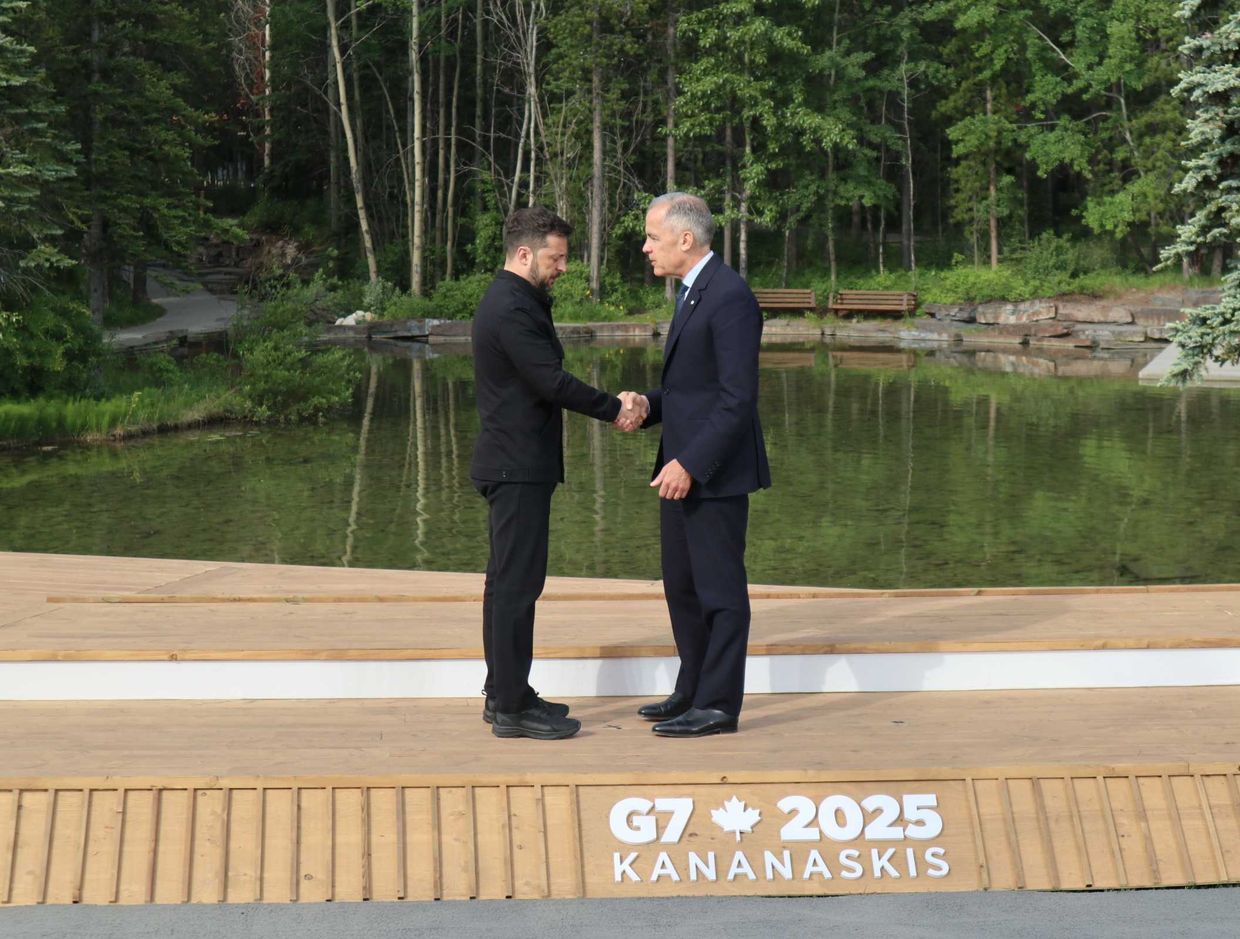
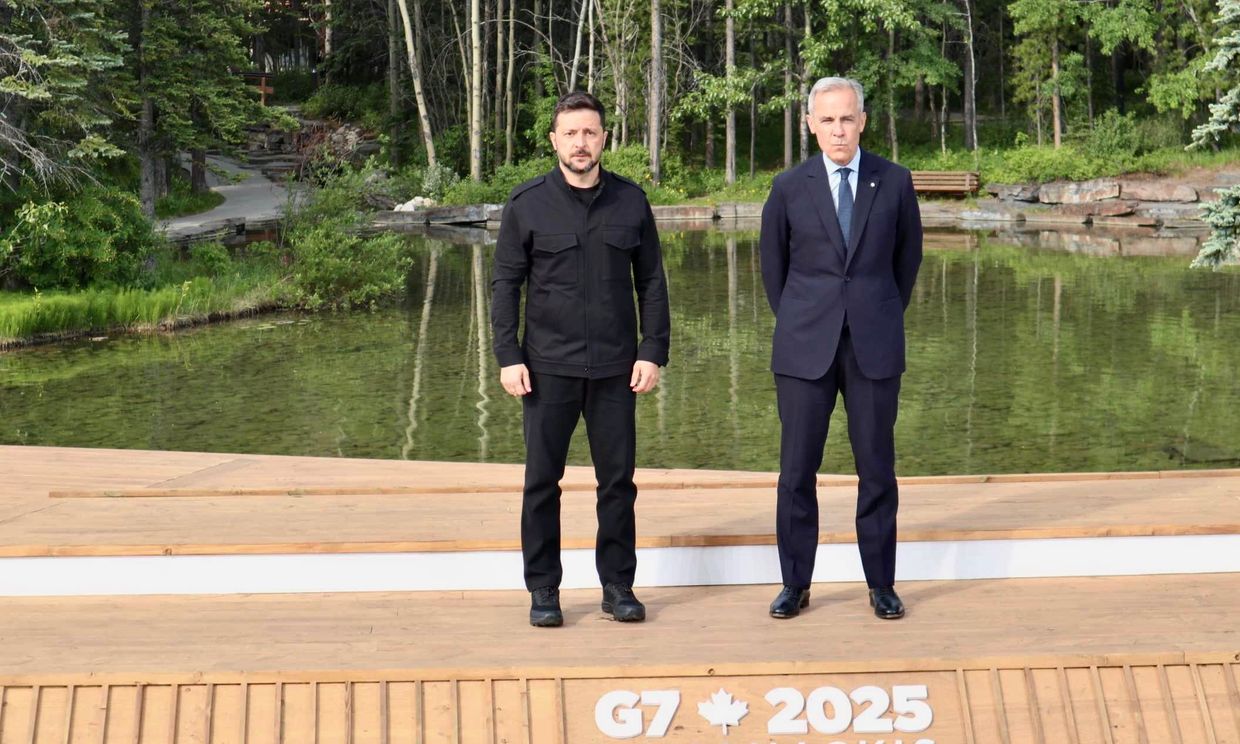
Zelensky was greeted by Canadian Prime Minister Mark Carney in Kananaskis, Alberta, where the summit is being held.
"We need more from our allies... We are ready for peace negotiations... But for this, we need pressure," the Ukrainian president said.
The Ukrainian president was expected to meet U.S. President Donald Trump at the summit. However, it is not clear if the meeting will take place because Trump left the summit early due to escalating tensions in the Middle East.
White House spokesperson Caroline Leavitt confirmed Trump's early departure from the summit, citing the ongoing escalation between Israel and Iran.
The Israeli military launched a large-scale attack on Iran's nuclear and military infrastructure on June 13, which was followed by retaliatory ballistic missile strikes from Tehran. Israel has since struck key defense targets in Tehran, including the headquarters of Iran's Defense Ministry.
Zelensky was to hold his third in-person meeting with Trump, which may signal the future of Trump and Zelensky's relationship, as well as offer insight into the United States' commitment to supporting Ukraine.
In February, Zelensky and Trump held their first meeting, which escalated into a heated argument, with Trump and Vice President JD Vance lambasting the Ukrainian leader over what they described as "a lack of gratitude for U.S. support."
The second meeting between Trump and Zelensky in the Vatican in April led to the U.S. president reiterating calls for a ceasefire in Ukraine and even threatening to impose sanctions on Russia.
In the month since their last in-person meeting, tensions between Trump and Zelensky have risen again. Despite issuing several threats, Trump has not followed through on implementing additional economic pressure on Moscow.
Canadian Prime Minister Mark Carney welcomes President Volodymyr Zelensky during the Group of Seven (G7) Summit in Kananaskis, Alberta, Canada on June 17, 2025. (Dmytro Basmat / The Kyiv Independent)
Canadian Prime Minister Mark Carney welcomes President Volodymyr Zelensky during the Group of Seven (G7) Summit in Kananaskis, Alberta, Canada on June 17, 2025. (Dmytro Basmat / The Kyiv Independent)
Ahead of the summit, European leaders urged G7 nations to impose harsher sanctions on Moscow in order to secure a ceasefire in the war against Ukraine.
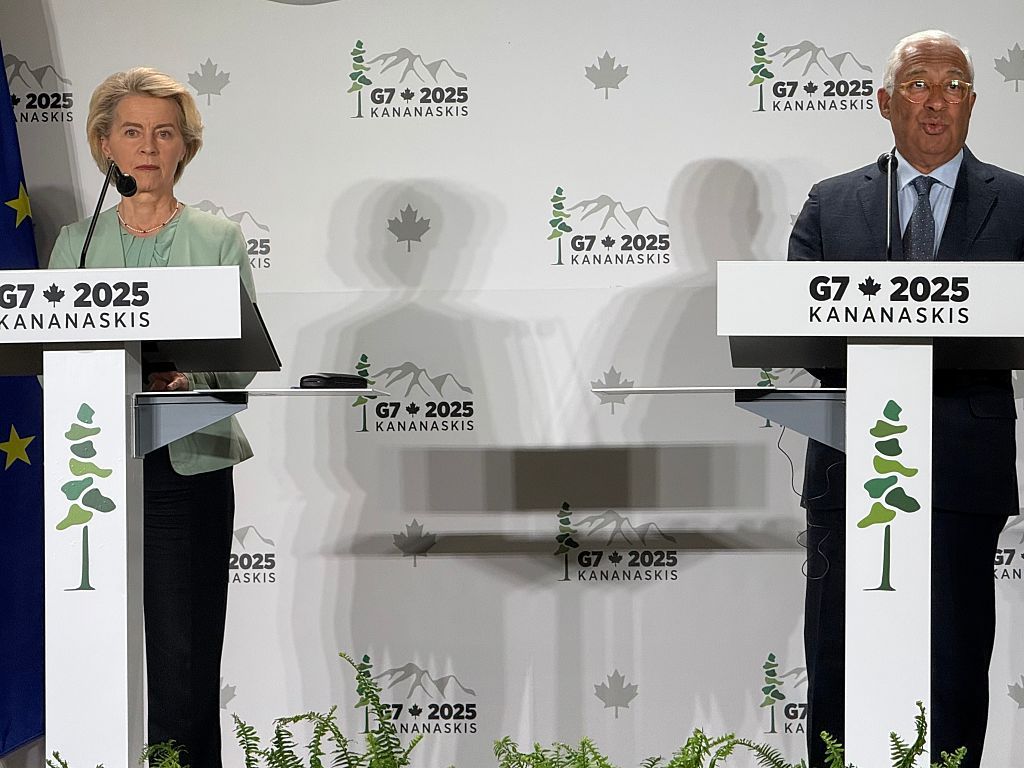
"To achieve peace through strength, we must put more pressure on Russia to secure a real ceasefire, to bring Russia to the negotiating table, and to end this war. Sanctions are critical to that end," European Commission President Ursula von der Leyen said on June 15 at a press briefing attended by a Kyiv Independent journalist.
Zelensky is still expected to attend the scheduled meetings with other G7 leaders.
Zelensky said in a closed-door meeting attended by the Kyiv Independent on June 13 that his priority is to speak with Trump about sanctions against Russia, peace talks, weapons purchases, and U.S.-Ukraine economic cooperation.
"There are steps forward we can take — but we need the political will of the U.S. president, if he wants," Zelensky said on June 13.
Amid increased anxiety around Trump's commitment to ending the war, U.S. Defense Secretary Pete Hegseth recently announced that the Pentagon would reduce funding allocated for military assistance to Ukraine in its 2026 defense budget.
Canada, which holds the G7 presidency in 2025, invited Zelensky to participate in summit, marking the Ukrainian president’s fourth G7 meeting since the outbreak of the full-scale invasion in 2022.
Israel is reluctant to accept Russia's mediation in its war with Iran, Kremlin spokesperson Dmitry Peskov said on June 17, according to the Russian state news agency TASS.
"At the moment, we see reluctance — at least on Israel’s part — to resort to mediation or pursue a peaceful resolution," Peskov claimed.
Since June 13, Israel has repeatedly carried out massive air strikes against Iran, particularly the country's military leadership and nuclear facilities. The Israeli government justified the attacks by saying that Tehran was on the verge of creating a nuclear bomb.
Iran responded by attacking Israeli cities, including Tel Aviv, which resulted in civilian casualties, including five Ukrainian citizens on June 14.
U.S. President Donald Trump on June 15 said he was open to the idea of Russian President Vladimir Putin mediating between Iran and Israel.
"He is ready. He called me about it. We had a long talk about it. We talked about this more than his situation (war against Ukraine)," Trump said, according to ABC reporter Rachel Scott.
The Russian president held separate calls with Iranian President Masoud Pezeshkian and Israeli Prime Minister Benjamin Netanyahu on June 13.
During the call with Iran, Putin offered condolences for what the Kremlin labeled "numerous civilian casualties" and condemned Israel's actions as violations of the UN Charter. He later proposed that Russia could serve as a neutral mediator.
Israel has not commented publicly on the Kremlin's offer, but Peskov's statement implies Tel Aviv's rejection. France has also dismissed the idea, with President Emmanuel Macron saying on June 15 that Moscow "cannot be a mediator."
Russia's ties with Iran have deepened since the start of its full-scale invasion of Ukraine in 2022. Tehran has supplied Moscow with thousands of Shahed attack drones and ballistic missiles used in daily strikes against Ukrainian cities and infrastructure.
Israel, which has historically maintained cautious relations with Russia and is home to a significant Russian-speaking population, has not joined Western sanctions against Moscow.
As of June 16, Iran's Health Ministry claimed 224 people had been killed by Israeli strikes, with Tehran alleging that 90% of the casualties are civilians.
The figures have not been independently verified. Israel has not confirmed casualty numbers but maintains that the strikes were aimed at preventing an existential threat.
On June 13, Kyiv expressed support for Israel, describing Iran as a "source of instability in the region and beyond," citing Tehran's extensive military cooperation with Russia.
Ukraine's Foreign Ministry has urged its citizens to leave Israel and Iran "as soon as possible" due to a serious deterioration in regional security, the ministry said in a statement on June 17.
"In connection with a significant worsening of the security situation in the Middle East, the Ministry of Foreign Affairs strongly recommends that Ukrainian citizens leave the territory of the State of Israel and the Islamic Republic of Iran as soon as possible, until the situation stabilizes," the statement read.
Ukrainians who remain in either country are advised to remain vigilant, monitor updates from local authorities, follow air raid alerts, adhere to safety protocols, and always carry valid identification documents.
The Ukrainian embassies in Israel and Iran are compiling evacuation lists and preparing potential evacuation plans. Information about available evacuation routes is being published on the official Facebook pages of the Ukrainian embassies in Israel and Iran.
The Israeli military launched a large-scale attack on Iran's nuclear and military infrastructure on June 13, which were followed by retaliatory ballistic missile strikes from Tehran. Israel has since struck key defense targets in Tehran, including the headquarters of Iran's Defense Ministry.
U.S. President Donald Trump was unaware of a deadly Russian drone and missile strike on Kyiv that killed at least 15 people and injured over 120, when asked about the attack by reporters on June 17.
On board Air Force One as he flew back from Canada, Trump was questioned about the attack by a reporter. A clock in the plane shows it was shortly after 1:30 a.m. Washington time, 8:30 a.m. Kyiv time, two-and-a-half hours after the nine-hour-long attack ended, and after reports of casualties had been made public.
When asked for his reaction, he responded: "When was that? When?"
The reporter then says the "Russian drone attack on Kyiv" occurred "very recently."
"Just now? You mean as I’m walking back to see you, that’s when it took place? Sounds like it. I’ll have to look at it," Trump replies.
At the time of writing some seven hours later, the White House has still yet to comment on the attack.
The comments came a few hours after Ukraine endured the largest aerial attack on Kyiv in 2025. According to Ukraine's Air Force, Russia launched 472 aerial weapons overnight, including nearly 280 Shahed-type attack drones, 16 Kh-101 cruise missiles, two Kinzhal ballistic missiles, and other guided munitions, primarily targeting the capital.
Air defenses downed 428 of them, including 239 Shaheds and 15 cruise missiles, while at least one Kinzhal was intercepted.
The almost nine-hour assault killed 15 people and injured 124, according to local authorities. A nine-story residential building in the Solomianskyi district was struck and partially collapsed, killing residents.
Kyiv Mayor Vitali Klitschko said cluster munitions were discovered in the city, a type of weapon banned under international conventions due to their indiscriminate nature and long-term threat to civilians. June 18 has been declared an official day of mourning in Kyiv.
President Volodymyr Zelensky called the strike "one of the most horrifying attacks on Kyiv" and urged international partners to respond decisively. Foreign Minister Andrii Sybiha said the timing of the strike, as G7 leaders meet, was a deliberate message from the Kremlin.
Civilian sites hit in the capital include kindergartens, residential areas, a university dormitory, and production facilities. Ukrainian manufacturer Fahrenheit, which produces military and civilian clothing, announced its factory was damaged and all orders suspended indefinitely. Ukrposhta, the national postal service, lost two branches. A Ukrainian Railways train carrying grain was also struck, temporarily halting traffic.
Russia has escalated attacks on Ukrainian cities in recent weeks, including mass strikes on energy infrastructure and residential areas.
A U.S. government working group that formulated strategies for pressuring Russia into peace talks and ending the war in Ukraine has been disbanded by the White House, Reuters reported on June 17.
Officials cited by the news outlet said it was established this spring but became increasingly irrelevant as it became clear U.S. President Donald Trump wasn't willing to apply any concrete pressure on Moscow during peace talks.
"It lost steam toward the end because the president wasn't there. Instead of doing more, maybe he wanted to do less," an anonymous official said.
As Ukraine and the U.S. continue to push for an unconditional ceasefire, Russia has maintained maximalist demands and rejected all such proposals.
At the same time it has escalated attacks on Ukrainian civilians, killing at least 15 people and injuring scores of others in the latest attack on Kyiv overnight on June 17.
Trump has expressed frustration with Moscow's intransigence and growing violence but has yet to impose any new sanctions on Russia.
On June 16 while speaking in Canada ahead of a G7 summit, Trump said barring Russia from the G8 for its invasion of Ukraine in 2017 had been a "mistake."
According to Reuters, the working group, staffed by officials from the National Security Council, State Department, Treasury Department, the Pentagon and intelligence community, was decimated in a purge of personnel around three weeks ago.
Trump pledged to "stop the wars" when he was elected U.S. president for the second time but after just five months in office, the world is a far more violent place.
As well as Russia escalating attacks on Ukraine, Israel and Iran are now locked in a conflict that further threatens stability in the Middle East.
Emergency services in Kyiv have recovered fragments of cluster munitions following the overnight Russian missile and drone attack on June 17, Mayor Vitali Klitschko reported, calling it further evidence of Russia's "genocide" against Ukrainians.
"In the capital's Nyvky neighborhood, emergency workers are now finding these kinds of cluster munition parts," Klitschko said in a statement shared on social media. "Another clear sign of the genocide Russia is committing against Ukrainians."
Cluster munitions are banned under international law by more than 100 countries due to their indiscriminate nature and the long-term threat they pose to civilians, especially when unexploded submunitions remain hidden in residential areas.
While Russia and Ukraine are not signatories to the Convention on Cluster Munitions, international humanitarian organizations have repeatedly condemned the use of such weapons in populated areas. Ukraine uses cluster munitions on the battlefield against Russian forces.
The mayor's comments came hours after one of the largest and deadliest attacks on the Ukrainian capital in months, in which at least 15 people were killed and nearly 100 injured. The Russian strike, which lasted nearly nine hours, included waves of kamikaze drones, ballistic missiles, and what authorities now confirm were banned explosive parts.
President Volodymyr Zelensky called the assault "one of the most horrifying attacks on Kyiv," saying more than 440 drones and 32 missiles were launched across Ukraine overnight.
"Such attacks are pure terrorism," he said in a statement on social media. "And the whole world, the U.S., and Europe must finally respond as civilized societies respond to terrorists."
Zelensky confirmed that damage had been reported in eight districts of Kyiv, with emergency workers still searching for survivors beneath the rubble of a destroyed apartment block.
He added that strikes also hit Odesa, Zaporizhzhia, Chernihiv, Zhytomyr, Kirovohrad, Mykolaiv, and Kyiv regions. "Fifteen people are confirmed dead. My condolences to their families and loved ones," Zelensky said.
Foreign Minister Andrii Sybiha also condemned the attack, calling it a "massive and brutal strike" timed deliberately to coincide with the G7 summit, which is taking place in Canada on June 16-17.
Editor's note: This item has been updated to include additional details.
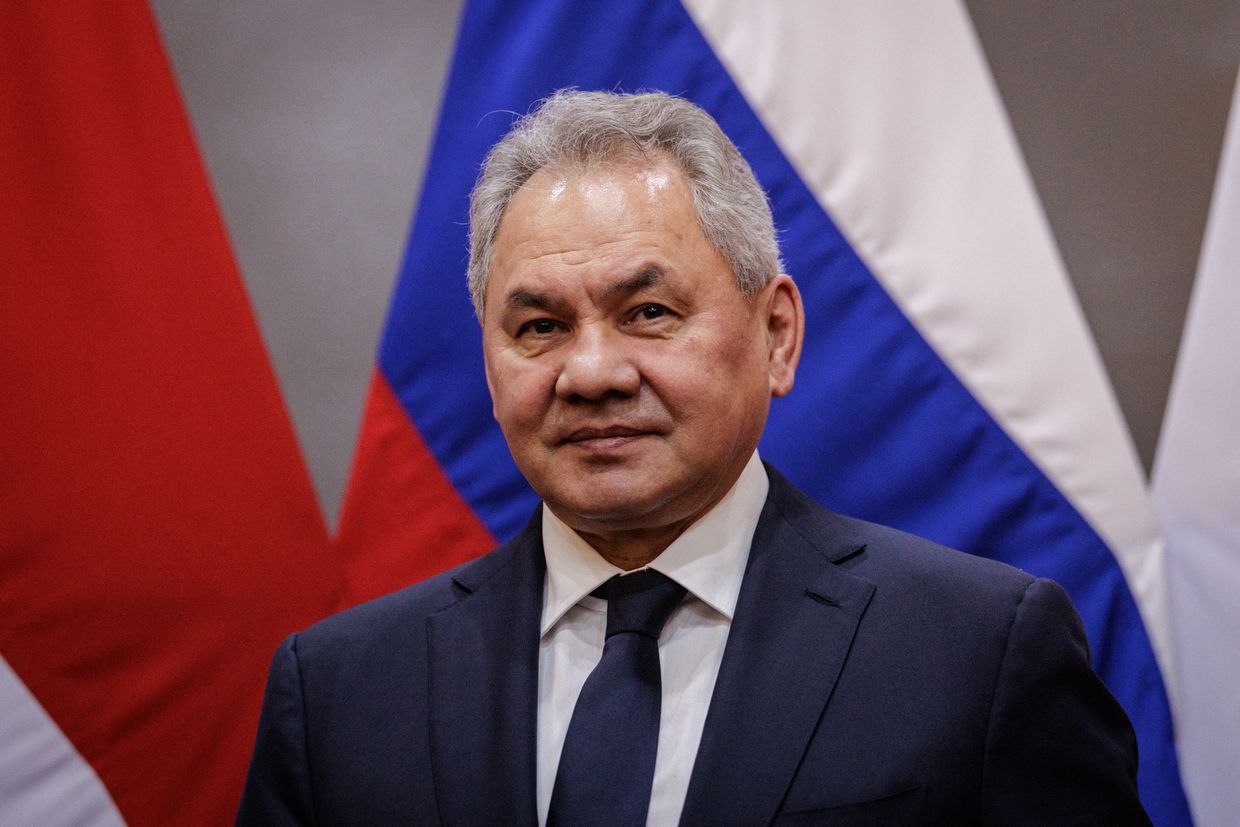
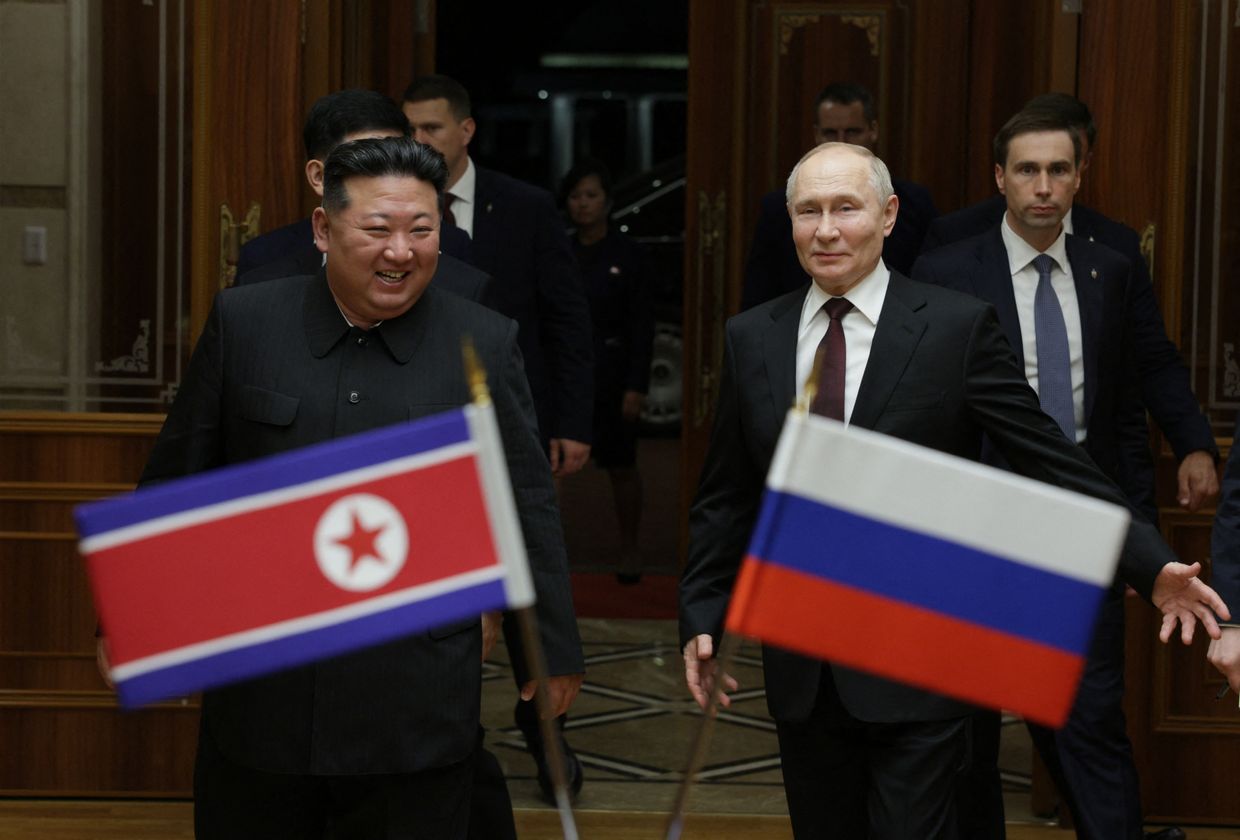
Russian Security Council Secretary Sergei Shoigu arrived in Pyongyang on June 17 on a "special assignment" from President Vladimir Putin, Russian state-controlled news agency TASS reported on June 17.
Shoigu met with North Korean leader Kim Jong Un during the visit, TASS reported, citing a correspondent on the ground. The purpose of the visit has not been officially disclosed, but it occurs amid intensifying military cooperation between the two nations.
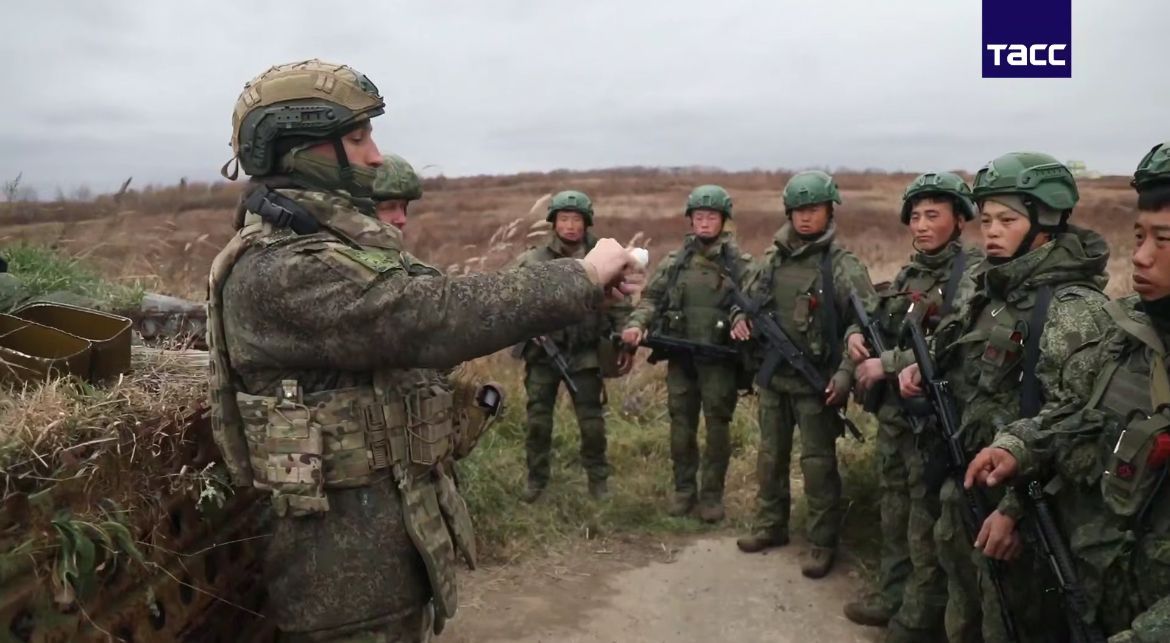
After the meeting with Kim, Shoigu announced that North Korea had decided to send 1,000 sappers and 5,000 military builders to rebuild Russia's Kursk Oblast, according to TASS.
Ukraine initially captured 1,300 square kilometers (500 square miles) of Russian territory during a cross-border operation that began in August 2024. Since then, Ukraine has lost most of the territory after Moscow launched a counteroffensive in March, which was supported by Pyongyang's military.
According to a June 15 report from the United Kingdom's defense intelligence, over 6,000 North Korean soldiers have been killed or wounded during operations in Russia's Kursk Oblast.
According to TASS, Shoigu also discussed in Pyongyang the creation of memorials in Russia and North Korea in memory of Korean soldiers who died fighting in the Kursk Oblast.
North Korea has emerged as one of Russia's closest military partners during its full-scale invasion of Ukraine. Since late 2023, Pyongyang has supplied Moscow with millions of artillery shells, at least 100 ballistic missiles, and reportedly deployed more than 11,000 troops to assist Russian operations in Ukraine’s border regions.
The U.K. said Pyongyang's losses account for more than half of the North Korean contingent deployed to the region in fall 2024. British officials attributed the high casualties to highly attritional ground assaults.
Earlier this year, South Korea's Joint Chiefs of Staff reported that North Korea sent an additional 3,000 soldiers to Russia in January and February to replenish losses.
In June 2024, Russia and North Korea signed a mutual defense pact obligating both countries to provide military assistance in the event of an external attack. Though North Korea only publicly acknowledged its participation in Russia's war against Ukraine in April 2025, open-source reports and intelligence assessments have indicated its involvement since at least the fall of 2024.
The Multilateral Sanctions Monitoring Team (MSMT), a United Nations-affiliated watchdog, reported in May that North Korea and Russia had engaged in "unlawful military cooperation" in violation of multiple UN Security Council resolutions. This included arms transfers, deployment of combat troops, petroleum exports to North Korea exceeding UN caps, and mutual military training.
According to MSMT findings, Russian-flagged vessels delivered up to 9 million rounds of artillery and multiple rocket launcher ammunition from North Korea to southwestern Russia in 2024 alone. These weapons were subsequently used in attacks against Ukrainian infrastructure and civilian targets in cities including Kyiv and Zaporizhzhia.
Russia has also reportedly provided advanced military technology to North Korea, including ballistic missile guidance systems, electronic warfare platforms, and short-range air defense systems. One MSMT participating state confirmed the transfer of at least one Pantsir-class vehicle to Pyongyang.
Kim Jong Un described his country's involvement in Russia's war against Ukraine as a "sacred mission" during a public address in May.
Shoigu's visit to North Korea comes amid intensified Russian aerial attacks across Ukraine, including the use of North Korean-made ballistic missiles containing components sourced from third-party suppliers.
Editor's note: This is a developing story and is being updated.
Russian drone strikes on Odesa early June 17 killed 2 people and injured 17 others, including a pregnant woman and a child, regional authorities said.
The body of a 60-year-old woman was recovered from the rubble of a collapsed building, along with the remains of another woman born in 1947, Odesa Oblast Prosecutor's Office reported.
"My sincere condolences to her family and loved ones," Odesa Oblast Governor Oleh Kiper wrote.
One person remains hospitalized as of 9 a.m., while the rest of the injured are receiving outpatient treatment.
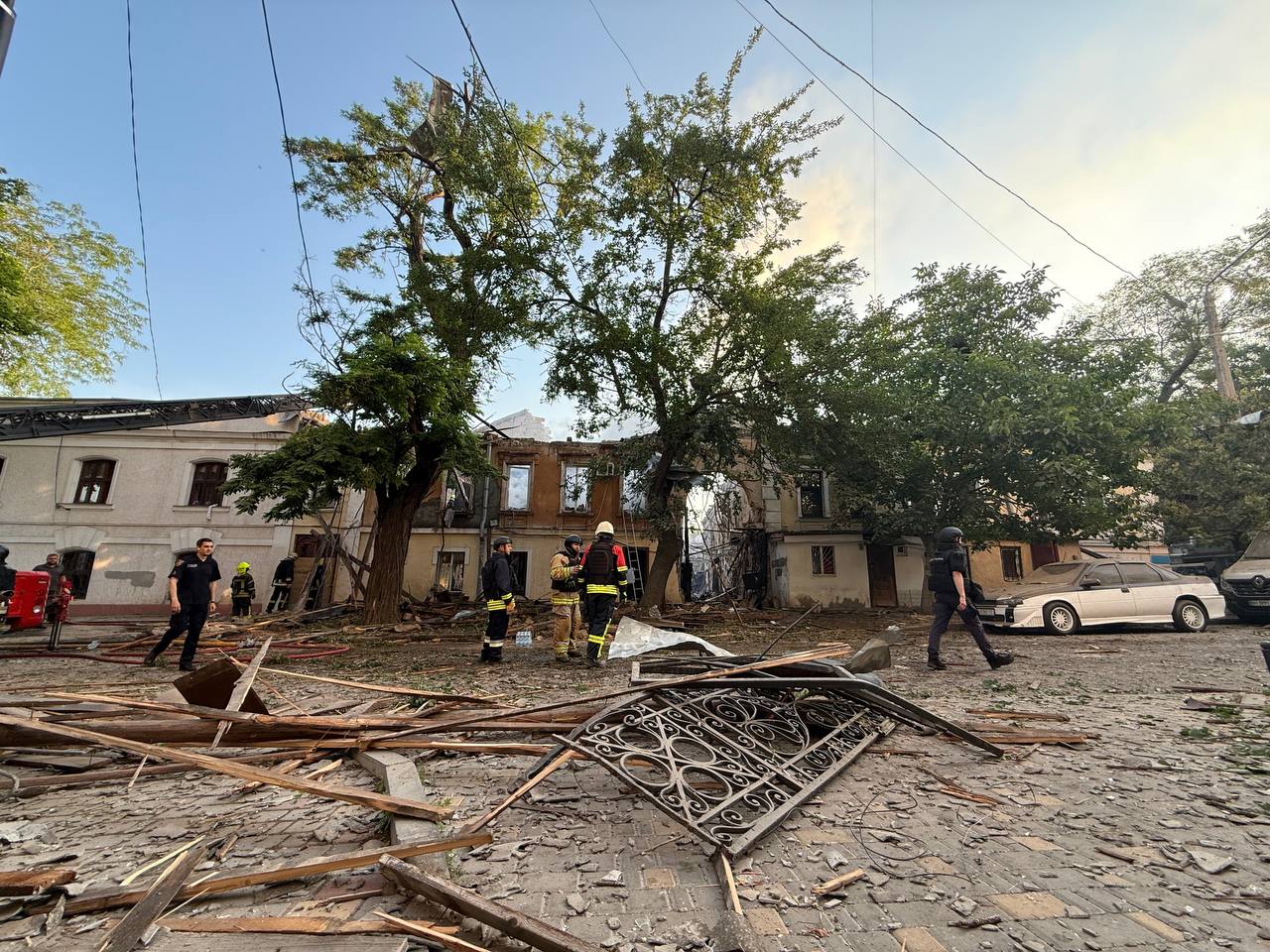
The strike damaged multiple residential buildings in Odesa’s historic city center, as well as a kindergarten and an inclusive support center. Emergency services and volunteers continue clearing debris and responding to the aftermath.
The attack also damaged civilian infrastructure across the city, including residential buildings.
Emergency services and volunteers are working at the scene to clear debris.
Overnight, Russia also launched a mass attack on Kyiv, injuring at least 18 people.
Odesa, a port city on Ukraine’s Black Sea coast with a population of around 1 million, has been a frequent target of Russian attacks throughout the full-scale war.
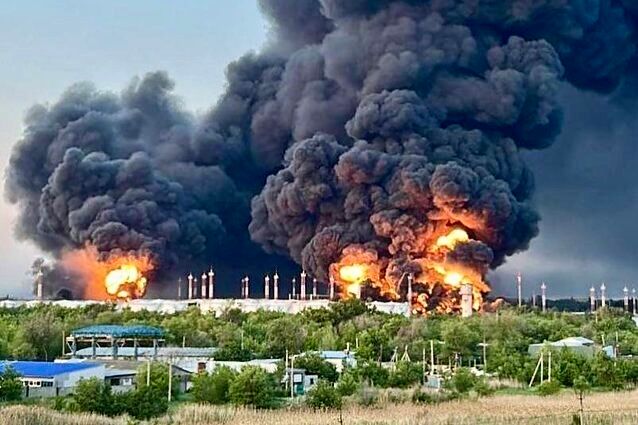
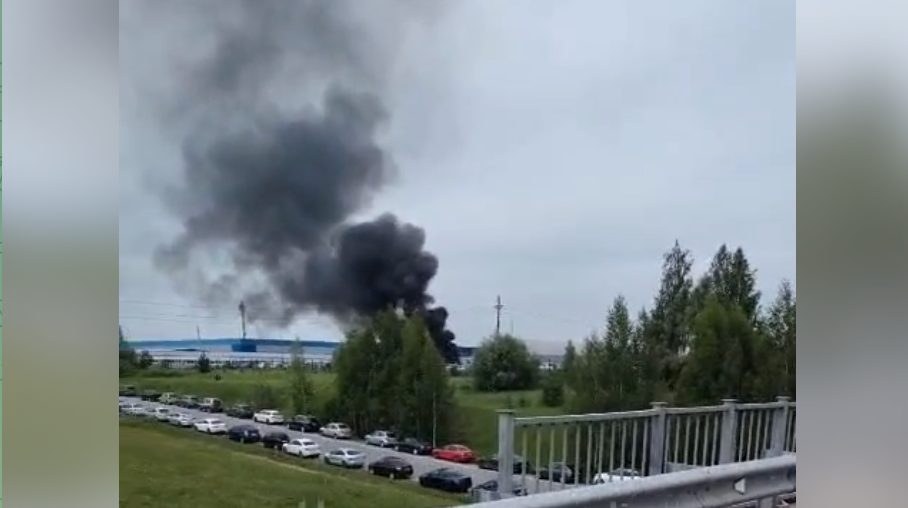
The Nevinnomyssk Azot chemical plant — one of Russia’s largest producers of nitrogen fertilizer and ammonia and a key supplier to the Kremlin's military-industrial complex — has suspended production, Russian independent media outlet Astra reported on June 16.
According to Astra, the chemical plant suspended production as a direct result of Ukrainian drone strikes. The strike — which was confirmed by Ukraine’s General Staff on June 14 — targeted two major military-industrial facilities in Russia, including the Nevinnomyssk Azot plant in Stavropol Krai. The facility reportedly supplied raw materials and components for Russia’s weapons and fuel production.
Nevinnomyssk Azot is among Russia's top producers of ammonia and nitrogen fertilizers and hosts the country’s only production lines for methyl acetate and high-purity acetic acid. It also operates Russia’s first melamine production facility, according to open-source data.
According to Andrii Kovalenko, head of Ukraine's Center for Countering Disinformation at the National Security and Defense Council, the plant produces up to one million tons of ammonia and over one million tons of ammonium nitrate annually, is "a critical element of Russia's military-industrial complex."
Kovalenko noted that ammonium nitrate is a key component for explosives and artillery shells. He added that the plant also synthesizes dual-use chemicals such as melamine, acetic acid, methanol, and potassium nitrate — all frequently used in the production of grenade launchers, mines, and rocket charges.
Since 2024, the plant has also been producing water-soluble fertilizers, which he said have been adapted to serve military chemical needs as part of Russia's war in Ukraine.
The chemical plant is part of the EuroChem Group, owned by Russian billionaire Andrey Melnichenko, who is currently sanctioned by Canada, the European Union, Japan, and the United Kingdom.
Editor's note: This is a breaking story and is being updated.
U.S. President Donald Trump departed the G7 Leaders' Summit late on June 16, ahead of an anticipated high-stakes meeting with President Volodymyr Zelensky on June 17.
White House Press Secretary Karoline Leavitt said that the departure comes as Trump is set to attend to "important matters."
"Because of what’s going on in the Middle East, President Trump will be leaving tonight after dinner with Heads of State," Leavitt wrote on X.
"I have to be back as soon as I can... because of what's going on in the Middle East" Trump told reporters.
"I have to be back early for obvious reasons," Trump said, without further elaborating.
In a post on Truth Social, Trump warned ahead of the departure that "Everyone should immediately evacuate Tehran!"
It was not immediately clear as to whether Trump will return for the final day of the summit on June 17.
Zelensky is expected to participate in previously planned G7 events as scheduled.
Zelensky was expected to meet with Trump on the sidelines of the G7 summit on June 17, marking their third in-person meeting since the American president took office in January. The proposed meeting was set to serve as an inflection point for Zelensky as pressure mounts on Trump from Western allies.
"Both teams are working to ensure we meet," Zelensky said on June 14 during a closed-door briefing attended by the Kyiv Independent.
Editor's note: This is a developing story and is being updated as new details emerge.
At least 14 people have been killed and 117 others injured after a mass Russian missile and drone attack on Kyiv overnight on June 17.
Ukraine's National Police initially reported 15 dead and 124 injured in the attack, but Interior Minister Ihor Klymenko later revised the death toll to 10. The State Emergency Service subsequently updated the figure to 14.
Klymenko said operational data may change, as body parts found during rescue efforts can sometimes be mistakenly counted as multiple victims.
According to the State Emergency Service, one body has been recovered from the rubble of the nine-story building, and rescue operations are still ongoing.
The almost nine-hour-long attack saw Moscow's forces launch large numbers of kamikaze attack drones, as well as cruise and ballistic missiles at Ukraine's capital.
Kyiv Independent journalists on the ground reported the sounds of drones, missiles, and multiple rounds of explosions throughout the night.
The Ukrainian Air Force confirmed that Russia launched 472 aerial weapons overnight, including nearly 280 Shahed-type attack drones and two Kinzhal ballistic missiles. The strike primarily targeted Kyiv.
Ukraine's air defense forces reportedly destroyed 428 air targets, including 239 Shahed drones and 15 Kh-101 cruise missiles. Air defenses also intercepted one Kinzhal missile, while another was reportedly lost from radar tracking.
President Volodymyr Zelensky called the assault "one of the most horrifying attacks on Kyiv," saying more than 440 drones and 32 missiles were launched across Ukraine overnight.
"Such attacks are pure terrorism," he said in a statement on social media. "And the whole world, the U.S., and Europe must finally respond as civilized societies respond to terrorists."
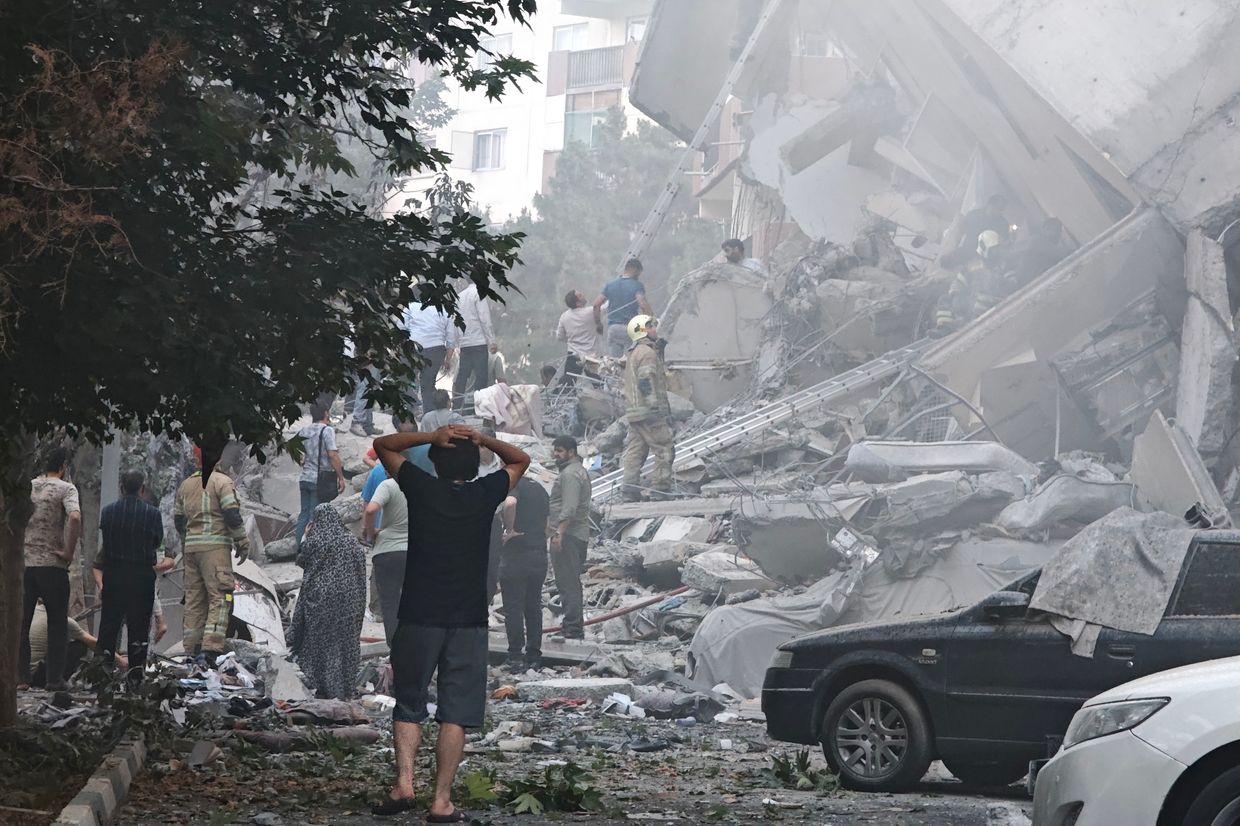
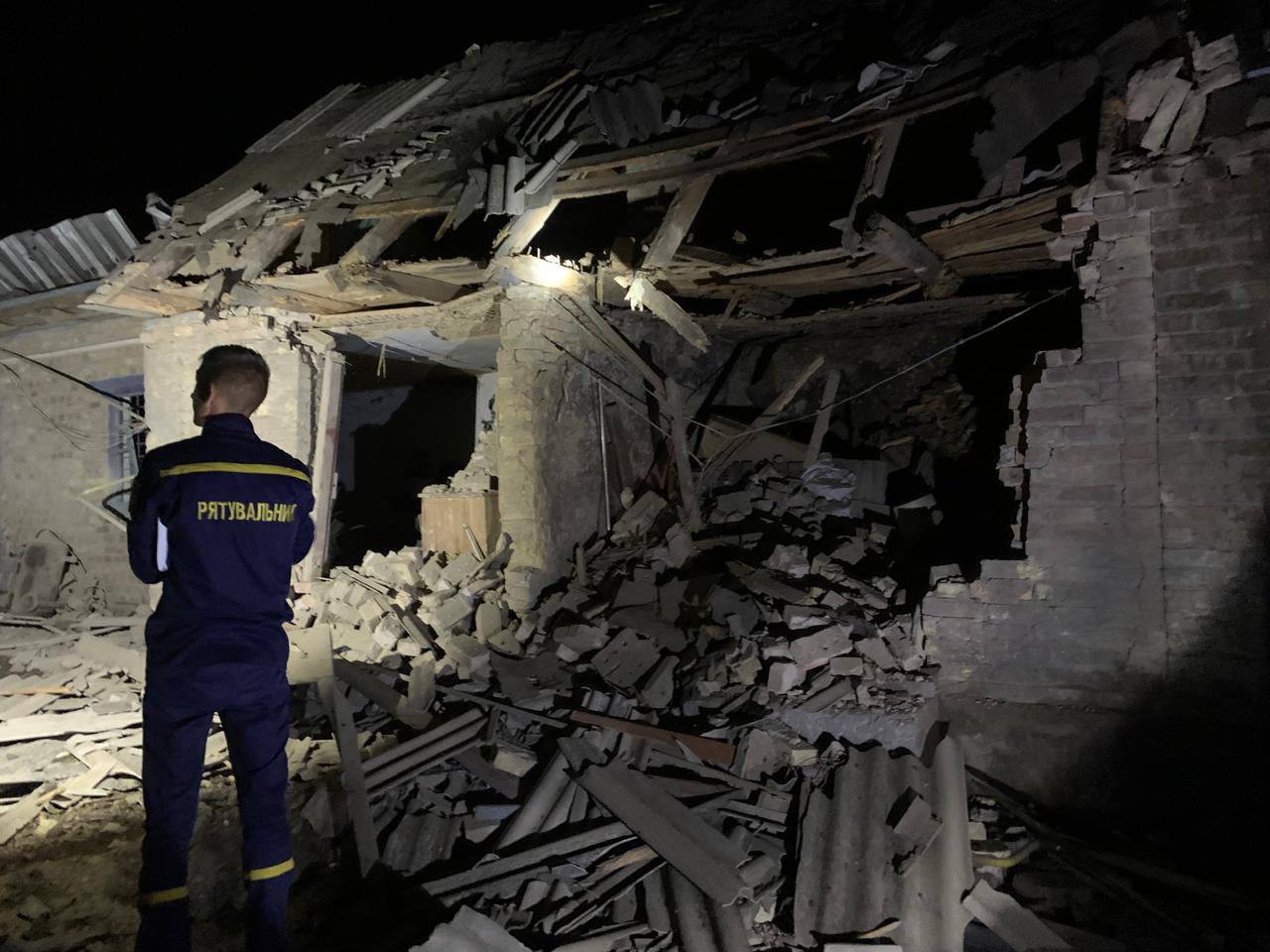
The aftermath of the Russian missile attack on a residential building in Kyiv, Ukraine on June 17, 2025. (Anna Donets / The Kyiv Independent)
Zelensky confirmed that damage had been reported in eight districts of Kyiv, with emergency workers still searching for survivors beneath the rubble of a destroyed apartment block.
In a video posted on Telegram, Kyiv Mayor Vitali Klitschko said cluster munitions had been found in one area of the city. He later added that June 18 would be an official day of mourning in Kyiv.
Many of the deaths and injuries occurred when a Russian missile hit a nine-storey residential building in the Solomianskyi district, "completely destroying" one section, Ukraine's State Emergency Service said.
"I saw the missile because it was low," Olena Kushnirova, a 46-year-old nurse who lives in a neighboring building to the one that was hit, told the Kyiv Independent.
Olena Kushnirova, 46, a nurse who lives in a neighbouring house in Kyiv, Ukraine, on June 17, 2025. (Anna Donets / The Kyiv Independent)
"I grabbed my daughter by the hand and shouted 'run!' It was literally 15 seconds. We ran to the toilet, and then there was a very powerful explosion."
During the attack on the capital, a 62-year-old U.S. citizen died in the Solomianskyi district in a building across from where medics were assisting the injured, Klitschko reported. Medical personnel confirmed biological death.
Foreign Minister Andrii Sybiha also condemned the attack, calling it a "massive and brutal strike" timed deliberately to coincide with the G7 summit.
"Putin does this on purpose... He sends a signal of total disrespect to the United States and other partners who have called for an end to the killing," Sybiha said. "Only strong steps and real pressure on Moscow can prove him wrong."
A partially destroyed residential building after a mass Russian missile and drone attack overnight in Kyiv, Ukraine on June 17, 2025. (Katya Denisova/The Kyiv Independent)Victoria Smirnova, 37, waits for her father to be pulled up from under the rubble of the house that was struck by a Russian missile in Kyiv, Ukraine on June 17, 2025. (Anna Donets / The Kyiv Independent)
A Russian drone also hit a multi-storey building Darnytskyi District.
"At first there was shock," Tatiana Bratus, a 50-year-old resident of the building told the Kyiv Independent.
"People started running outside, shouting, some in panic, because the attack wasn't over yet. They said there were still rockets flying. People ran to the bomb shelter.
A kindergarten in the Darnytskyi district was also damaged, Tymur Tkachenko, the head of the Kyiv City Military Administration said. No casualties were reported at the site.
The upper floors of residential buildings in the Solomianskyi and Shevchenkivskyi districts were also damaged.
A dormitory at the Kyiv Aviation Institute was hit by drones during the attack, the news outlet Suspilne reported. Drones struck the institute's 10th floor and broke windows on three other floors.
Outside the capital, the attacks also caused damage and injured civilians in Kyiv Oblast towns. At least one woman was injured and multiple homes were damaged, according to the regional administration.
The Russian strike damaged the production facility of Fahrenheit, a Ukrainian clothing manufacturer that supplies apparel and undergarments for both civilians and the military. The company announced it was forced to cancel all current orders and suspend new ones indefinitely following the destruction of its Kyiv site.
Russian forces also hit a Ukrainian Railways (Ukrzaliznytsia) freight train carrying grain. Several railcars overturned, temporarily halting operations and spilling grain from the damaged wagons. Ukrzaliznytsia said the damage would be "promptly repaired" and train traffic would not be affected.
Ukrposhta, Ukraine's national postal service, reported the destruction of two of its branches in Kyiv during the attack, according to CEO Ihor Smiliansky. The company's team is working to "quickly restore services," he said.
The attack followed a series of drone strikes overnight on June 16 targeting Kyiv Oblast, including both the capital and surrounding settlements. In the Obukhiv district, a 60-year-old man was injured, according to regional authorities.
Russian attacks against Ukraine have intensified in May and June, with Moscow launching several record-breaking mass strikes against Kyiv and other cities.
Canada's Prime Minister Mark Carney is expected to announce additional support for Ukraine during the G7 summit, CBC News reports on June 16, citing government sources.
Canada, which holds the G7 presidency in 2025, invited President Volodymyr Zelensky to participate in what will be his fourth — and arguably most fragile — G7 Leaders' Summit since the outbreak of the full-scale invasion in 2022. Carney is also expected to hold a one-on-one meeting with the Ukrainian president.
As part of Carney’s pledge to boost defense spending this year, Ottawa has allocated two billion Canadian dollars ($1.46 billion USD) for military aid to Ukraine and the expansion of broader defense partnerships. According to one source, the government is set to disclose on June 20 how much of that funding will be directed specifically to Ukraine and what it will support.
Canada has been a strong ally of Ukraine, providing 19.5 billion Canadian dollars ($13.5 billion) in assistance, including 4.5 billion Canadian dollars ($3.1 billion) in military aid.
Following their bilateral talks, G7 leaders will join outreach countries for discussions on Ukraine’s ongoing fight against Russia.
Meanwhile, European Commission President Ursula von der Leyen and European Council President Antonio Costa urged G7 nations to ramp up pressure on Moscow through tougher sanctions, arguing that it is key to securing a ceasefire in Russia’s war against Ukraine.
"To achieve peaceful strength we must put more pressure on Russia to secure a real ceasefire, to bring Russia to the negotiating table, and to end this war. Sanctions are critical to that end," von der Leyen said at a press briefing on June 15, attended by a Kyiv Independent journalist.
Von der Leyen emphasized that economic sanctions have been effective since the start of Russia’s full-scale invasion. She pointed out that joint G7 and European Union measures have reduced Russian oil and gas revenues by nearly 80% since February 2022.
"(T)he sanctions are working, and we will do more," she said.
More than a month after Ukraine signed a landmark agreement granting the United States a stake in its mineral reserves, Kyiv has approved initial steps to open one of its largest lithium deposits to private investors, the New York Times (NYT) reported, citing two government officials.
On June 16, the Ukrainian government agreed to begin drafting recommendations for a bidding process to develop the Dobra lithium field in central Ukraine. According to the officials, who spoke to NYT on condition of anonymity, this would be the first project advanced under the U.S.-Ukraine minerals deal.
The Dobra lithium ore site is located in the Novoukrainskyi district of Kirovohrad Oblast, rougly 300 kilometers southeast of Kyiv.
The deal, signed by President Volodymyr Zelensky on May 12, is aimed at deepening economic ties, boosting Ukraine's reconstruction, and positioning the country as a supplier of strategic resources to the U.S.
Among the likely bidders for the Dobra field is a consortium including TechMet, an energy investment firm partly owned by the U.S. government, and billionaire Ronald S. Lauder, a close associate of the U.S. President Donald Trump. The group has long expressed interest in the Dobra site and encouraged Zelensky to open it to bids last year.
Under the broader agreement, half of the revenues from mineral extraction would go to a joint U.S.-Ukraine investment fund. While the Ukrainian government would reinvest its share into the domestic economy, the United States would claim a portion of the profits — a structure Mr. Trump has framed as partial repayment for U.S. assistance to Ukraine.
TechMet CEO Brian Menell said investors were pushing for production-sharing agreements, which offer long-term stability and tax incentives. Monday’s step toward opening the Dobra field is based on such an arrangement, according to the outlet.
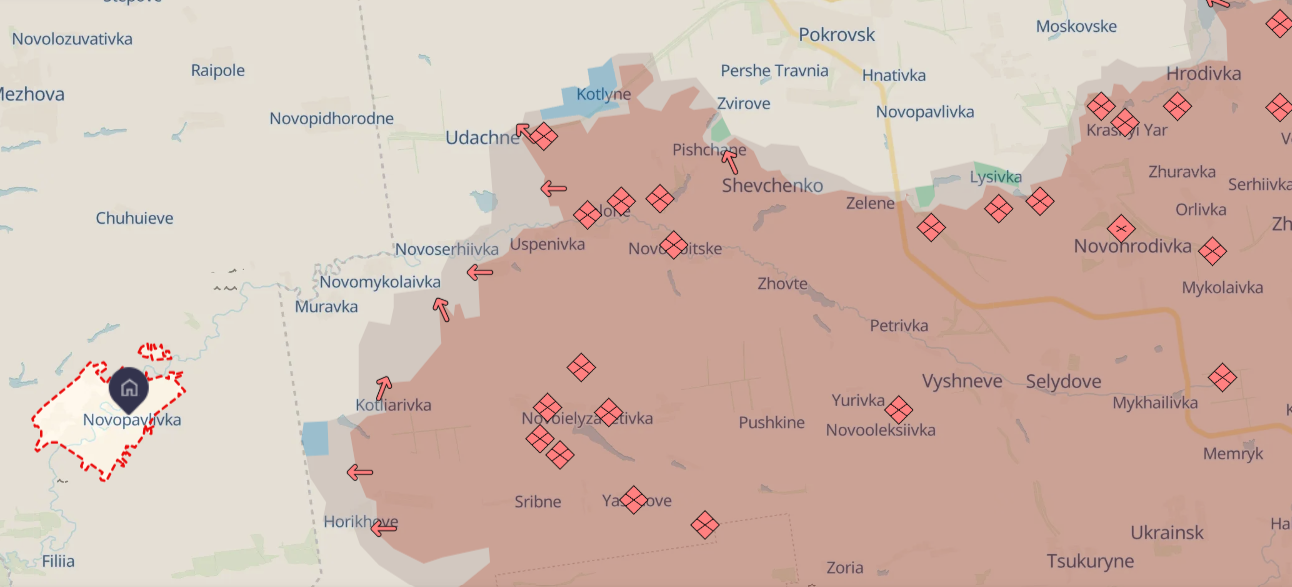
Russian forces have intensified offensive operations across multiple front-line areas, said Victor Tregubov, a spokesperson for Ukraine's Khortytsia group of forces, on June 16.
According to Tregubov, Russian troops have ramped up attacks, particularly in the Novopavlivka and Kharkiv sectors, which is an unusual development for these areas.
Ukraine’s General Staff reported that Russian forces launched attacks in 12 directions, resulting in 99 recorded clashes. Ukrainian soldiers repelled 17 attacks in the Novopavlivka sector alone, according to the latest update.
"This signals that we have the expected summer increase in activity," Tregubov said.
The estimated Russian advance in Donetsk Oblast as of June 15, 2025. (DeepState/OpenStreet Map)
Speaking on national television, he said that the surge in activity near Novopavlivka suggests Russian forces are attempting to push into Dnipropetrovsk Oblast, which neighbors the embattled Donetsk Oblast.
"But they (Russia) have failed to succeed," the spokesperson added.
In Donetsk Oblast, Russia is trying to encircle Kostiantynivka, one of the key Ukrainian logistics hub in the region since the start of the full-scale invasion, by attacking the city from three directions, according to Tregubov.
Last week, on June 13, President Volodymyr Zelensky said that heavy fighting was ongoing along Ukraine's northeastern border.
Russian forces have concentrated around 53,000 troops in the Sumy sector, pushing into multiple settlements. The president confirmed that small Russian reconnaissance groups had briefly crossed into Dnipropetrovsk Oblast — likely for propaganda purposes.
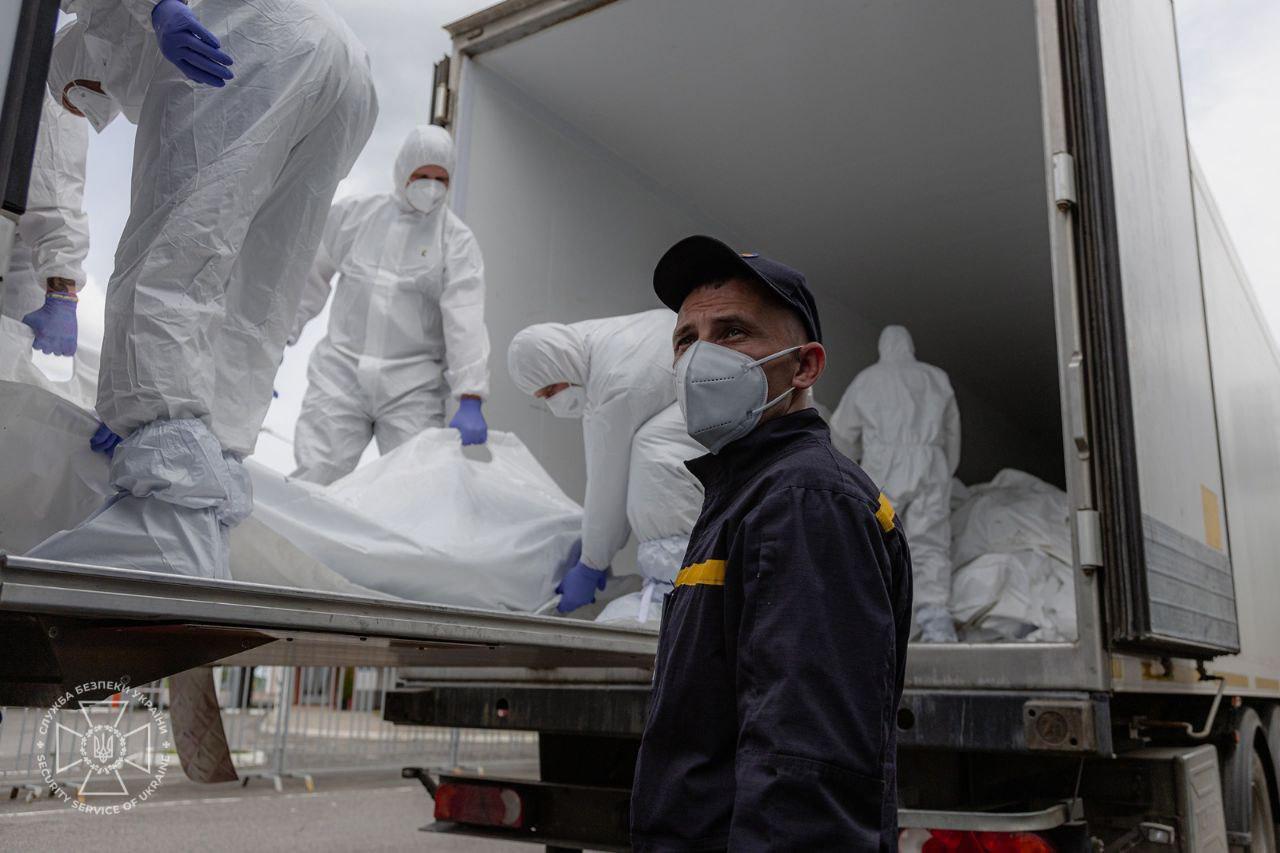
Russia has handed Kyiv the bodies of its own soldiers mixed in with those of Ukrainian soldiers during recent repatriation of the fallen, Interior Minister Ihor Klymenko said on June 16.
Klymenko's statement follows the completion of an exchange between Ukraine and Russia of the remains of soldiers killed in action earlier the same day, under agreements reached during recent peace talks in Istanbul.
Kyiv returned a total of 6,057 bodies. Vladimir Medinsky, an aide to Russian President Vladimir Putin and member of the Russian delegation at the Istanbul talks, claimed that Russia received the bodies of 78 deceased servicemen.
According to Klymenko, the identification process has been significantly complicated by the condition in which Russia returned the bodies.
"Parts of the bodies (of fallen soldiers) are in different bags. There are cases when the remains of one person are returned even during different stages of repatriation," the minister said.
Klymenko said that Russia may have included the bodies of its own soldiers in the transfer to Ukraine either on purpose or by accident.
"This could have been done by the Russians on purpose to increase the number of bodies transferred and to load our (forensic) experts with work, adding to all this cynical information pressure. Or it could be their usual negligent attitude toward their own people. In any case, we also identify these bodies," Klymenko said.
The June 2 negotiations in Istanbul resulted in the most expansive prisoner and body exchange agreement of the full-scale war, although no ceasefire was reached.
The deal followed the largest-ever POW swap in late May, when 1,000 prisoners were exchanged on each side. Additional exchanges last week included severely wounded and sick soldiers.
Russia accused Ukraine on June 7 of rejecting a proposed body return, publishing footage allegedly showing Ukrainian corpses stored in refrigeration units. Kyiv dismissed the claims, saying the footage was filmed inside Russia and not at a designated exchange location.
Ukraine’s Foreign Intelligence Service reported on June 16 that Russia is preparing to escalate a disinformation campaign related to ongoing POW exchanges next week, aiming to provoke public outrage in Ukrainian society.
The U.S. has canceled the next round of talks with Russia on restoring diplomatic relations, Russian Foreign Ministry spokesperson Maria Zakharova claimed on June 16.
Zakharova's statement came days after Russian Ambassador to the U.S. Alexander Darchiev announced that delegations from both countries were expected to meet in Moscow in the near future.
The planned talks were supposed to be part of discussions between the U.S. and Russia that focused on peace efforts in Ukraine and the resumption of bilateral ties.
According to Zakharova, the upcoming round was intended to "eliminate irritants" and help normalize the operations of both nations' diplomatic missions.
"We hope that the pause taken by them (the U.S.) will not become too long," the Russian spokesperson said.
Washington is yet to comment on Zakharova's claims.
The first talks since the start of Russia's full-scale war against Ukraine took place on Feb. 18 in Riyadh, where the two sides discussed bilateral relations, a potential presidential meeting, and ways on ending Russia's war against Ukraine.
Darchiev said that during the recent round of talks on April 10 in Istanbul, the two sides agreed to move future consultations to their respective capitals.
The U.S. State Department described the April 10 talks in Istanbul as having a "constructive approach." The closed-door consultations lasted about six hours and focused on ensuring stable banking services for diplomatic missions. Both delegations exchanged notes on the issue and agreed to continue discussions.
The diplomatic push continues amid efforts by U.S. President Donald Trump to broker a ceasefire and peace agreement in Ukraine. Trump suggested on June 5 that it may be better to let the conflict continue for now, likening the war to a fight between children that should not be interrupted too quickly.
Kyiv and its allies remain skeptical of Trump's approach toward peace efforts.
President Volodymyr Zelensky has repeatedly called for stronger U.S. action and warned that "America’s silence, and the silence of others around the world, only encourages (Russian President Vladimir) Putin."
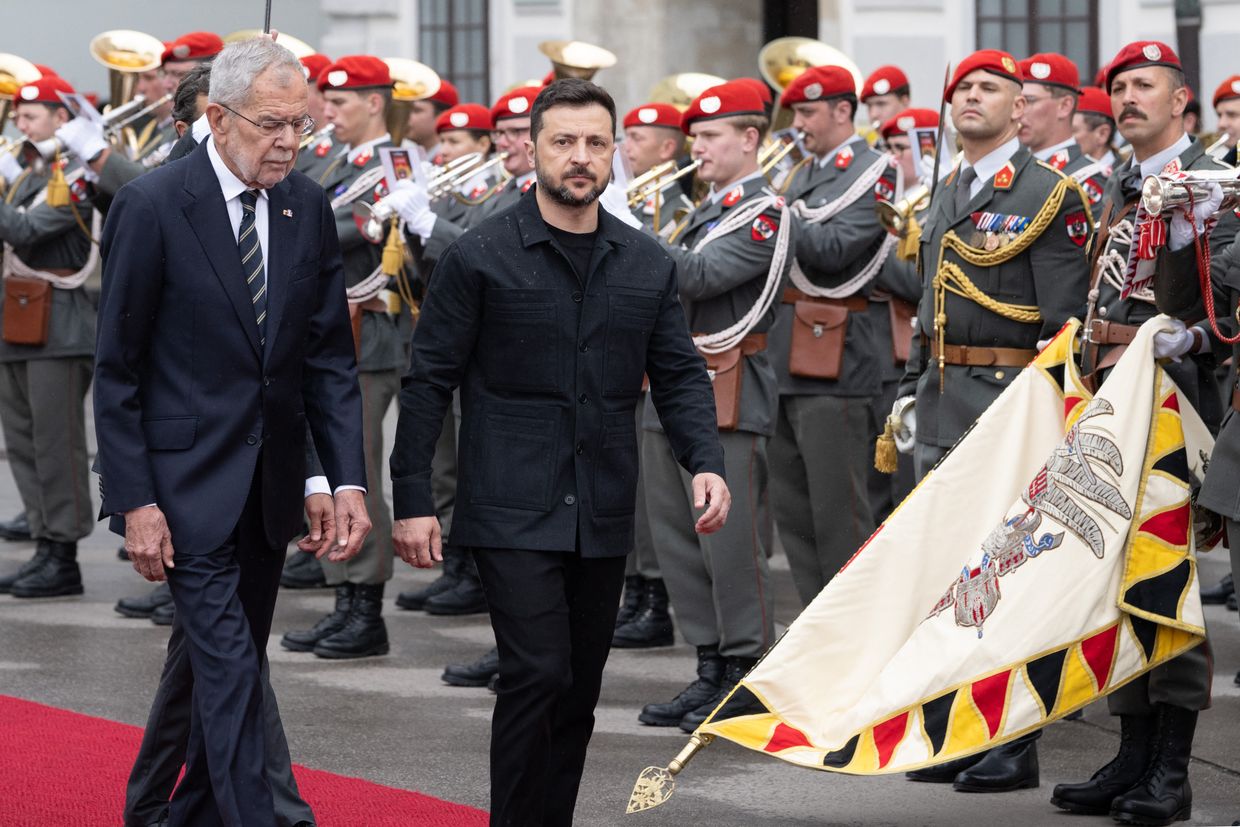
President Volodymyr Zelensky and his Austrian counterpart Alexander Van der Bellen signed documents on bilateral cooperation between the two countries during Zelensky’s visit to Vienna on June 16.
Speaking at a joint press conference, Zelensky said that the agreements cover key areas including agriculture, reconstruction, and return of abducted Ukrainian children from Russia.
Zelensky's visit to Austria comes a day before his scheduled trip to Canada, where he will attend the Group of Seven (G7) summit on June 17.
While at the summit, he is expected to meet with U.S. President Donald Trump to discuss, among other topics, a potential purchase of a U.S. military aid package.
According to Zelensky, discussions at the G7 summit will include the fate of Moscow’s frozen assets and the imposition of further sanctions on Russian energy exports.
Before leaving Vienna, Zelensky is expected to meet with Austrian Chancellor Christian Stocker to push for stronger sanctions against Russia.
"We are counting on Austria’s support, both at the state and societal levels, on a sensitive issue for Ukraine: the presence of former Ukrainian officials and oligarchs who are evading justice by hiding in Europe, including Austria, and concealing stolen assets," Zelensky added.
In 2014, U.S. prosecutors charged Ukrainian oligarch Dmytro Firtash with racketeering and bribery, and he was briefly arrested in Austria before posting bail. The Ukrainian tycoon has so far avoided extradition from Austria's capital, where he resides.
Other wanted Ukrainian top officials in Austria include ex-chairman of Constitutional Court Oleksandr Tupytskyi. He was charged with unlawfully influencing and bribing a witness to induce false testimony, and giving false testimony himself.
Iran's Islamic Revolutionary Guard Corps (IRGC) said it used a new method to breach Israel's air defenses during a missile attack early on June 16, that killed at least eight people, Reuters reports.
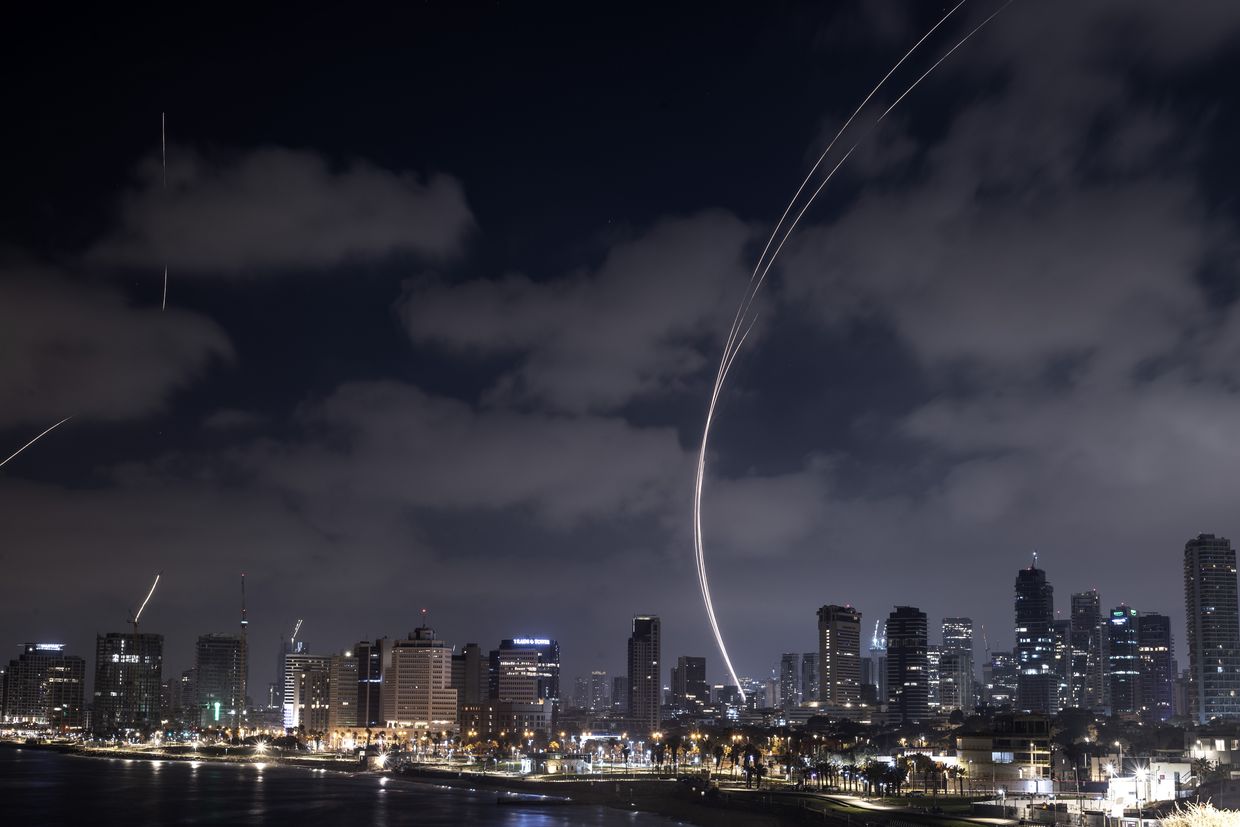
According to the IRGC, Iranian missiles were guided in a way that caused Israeli interceptor missiles to target each other, confusing Israel's integrated defense system, which includes Iron Dome, David's Sling, and Arrow platforms.
It did not provide any further details.
Ballistic missiles are rocket-powered and are launched high into the atmosphere before arcing back down onto their target.
They're only guided during the initial stages of launch, so they can be less accurate than cruise missiles, but have the advantage of reaching incredibly high speeds – sometimes more than 3,200 kilometers per hour – as they approach their targets.
Israel's Defense Forces (IDF) reported for the first time that its systems had an 80-90% success rate intercepting Iran's ballistic missiles, while roughly 5-10% penetrated the shield and struck populated areas, according to the Jerusalem Post.
The strike came three days after Israel launched a sweeping aerial campaign against Iranian nuclear and military facilities, killing several high-ranking officials, including IRGC aerospace commander Amir Ali Hajizadeh.
Kyiv has expressed support for Israel, describing Iran as a "source of instability in the region and beyond," citing Tehran's extensive military cooperation with Russia.
Since 2022, Iran has supplied Moscow with thousands of Shahed kamikaze drones and short-range ballistic missiles for use against Ukraine. Russia, for its part, has condemned the Israeli air strikes on Iran as "unprovoked aggression" and backed calls for restraint.
Israel is home to one of the largest Russian-speaking populations outside the former Soviet Union, with approximately 1 million people — or 15% of the total population — identifying as Russian-speaking. Israel has historically maintained relatively friendly ties with Russia.
U.S. President Donald Trump said on June 15 that he is considering Russian President Vladimir Putin as a possible mediator between Israel and Iran.
As of June 16, Iran's Health Ministry claims 224 people have been killed since the Israeli air campaign began on June 13 — 90% of them civilians, according to Tehran. Israel has not confirmed the civilian casualty figure, and independent verification remains difficult.
Public trust in President Volodymyr Zelensky has dropped by 11 percentage points since May, according to a poll published by the Kyiv International Institute of Sociology (KIIS) on June 16.
The survey found that 65% of Ukrainians currently trust the president, while 30% do not, yielding a trust balance of +35%, the lowest recorded since March.
Zelensky's still rating remains above the February 2025 low of 57%.
Sociologists can't pinpoint a specific cause for the short-term decline but highlight factors such as increasing pressure for a ceasefire and the weakening of the surge of popular support seen earlier this year during tense relations with U.S. President Donald Trump.
Zelensky's approval had spiked briefly in early May to 74% following the signing of a minerals agreement with the U.S., seen as a diplomatic and economic win. That boost proved short-lived.
The poll shows a stark regional divide. Trust is highest in western Ukraine at 73%, while in the country's south and east, areas more frequently targeted by Russian strikes, only 61% express confidence in the president.
The data also shows a sharp contrast in attitudes toward territorial concessions. Among those who trust Zelensky, 55% are strongly opposed to any such compromise. Among those who distrust him, 46% are willing to cede territory, while only 43% are firmly against concessions.
The survey was conducted between May 15 and June 3, using a random sample of 1,011 adult residents across Ukraine, excluding occupied territories. Respondents were interviewed by phone.
Editor's note: This item has been updated to include Defense Minister Rustem Umerov's statement.
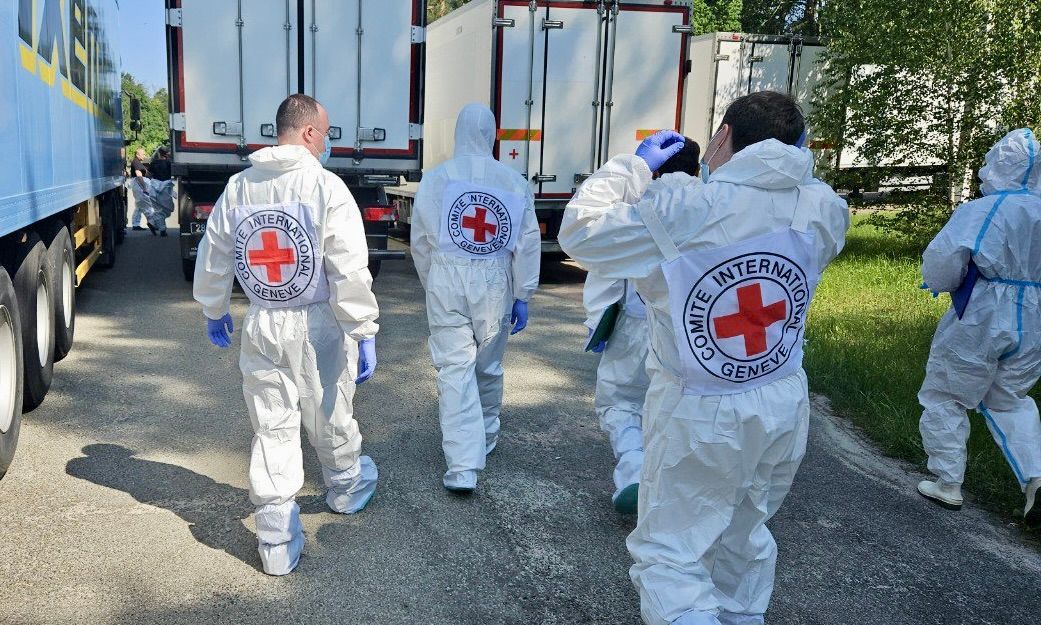
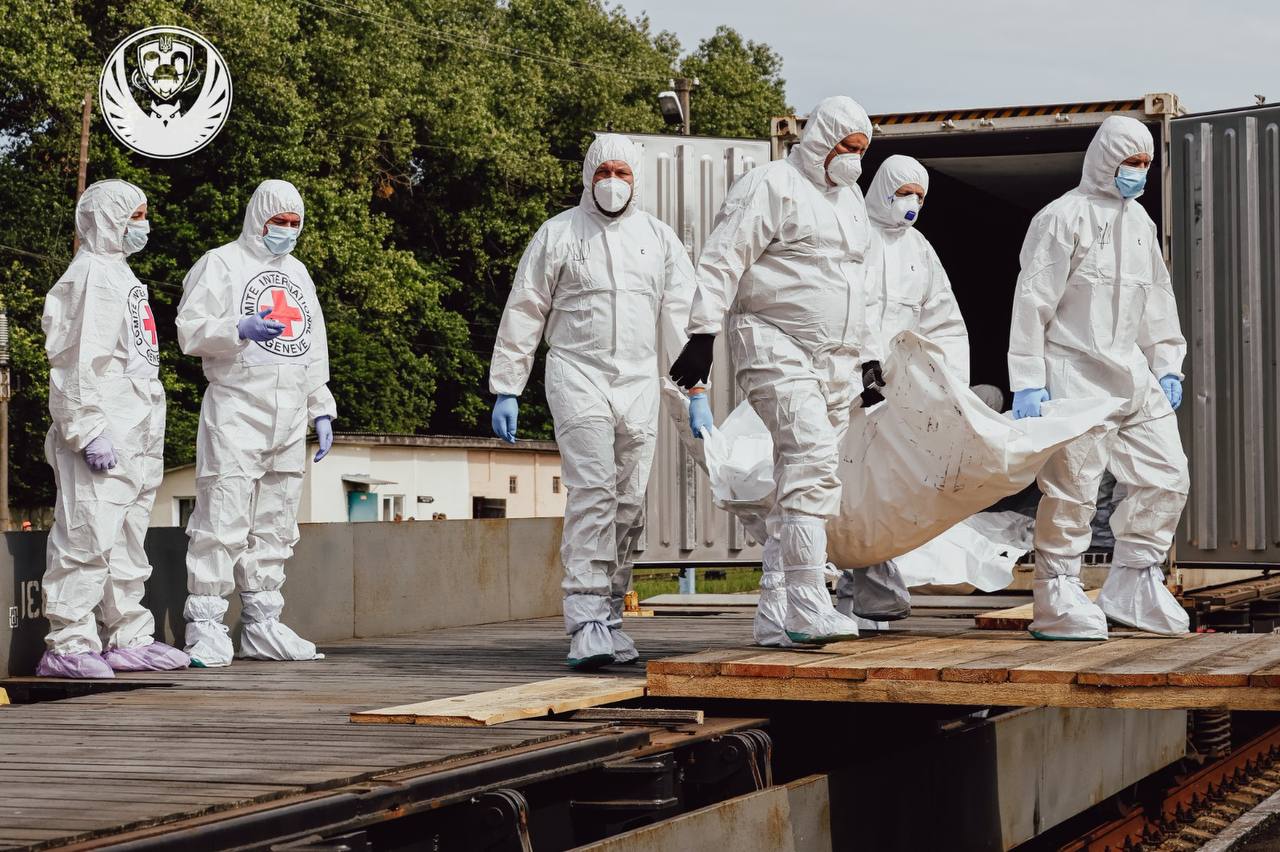
Ukraine has received the bodies of another 1,245 fallen Ukrainian soldiers and citizens under agreements reached during recent peace negotiations in Istanbul, the Coordination Headquarters for the Treatment of Prisoners of War (POWs) announced on June 16.
The latest repatriation marks the final stage of the exchange agreement, bringing the total number of Ukrainian bodies returned under the deal to 6,057.
"Each of them undergoes identification. Because behind every one of them is a name, a life, a family waiting for answers," Defense Minister Rustem Umerov wrote on Facebook.
"We are not stopping. Ahead lies the next stage: we continue the fight to bring back our prisoners of war. We bring them back. We remember…"
The operation was coordinated by Ukraine's Security Service (SBU), the Ombudsman's Office, the military, the Interior Ministry, and other state and defense institutions, with assistance from the International Committee of the Red Cross.
Vladimir Medinsky, an aide to Russian President Vladimir Putin and member of the Russian delegation at the Istanbul talks, claimed that Russia received the bodies of 78 deceased servicemen.
The June 2 negotiations in Istanbul resulted in the most expansive prisoner and body exchange agreement of the full-scale war, although no ceasefire was reached.
The deal followed the largest-ever POW swap in late May, when 1,000 prisoners were exchanged on each side. Additional exchanges last week included severely wounded and sick soldiers.
Russia accused Ukraine on June 7 of rejecting a proposed body return, publishing footage allegedly showing Ukrainian corpses stored in refrigeration units. Kyiv dismissed the claims, saying the footage was filmed inside Russia and not at a designated exchange location.
Andrii Yusov, deputy head of Ukraine's POW Coordination Headquarters, told Ukrainian Pravda that Ukraine is fully abiding by the agreed terms and has made no unilateral rejections.
Kyiv has repeatedly urged Moscow to adopt an "all-for-all" prisoner exchange formula. While over 5,000 Ukrainians have been returned from Russian captivity since March 2022, Russia continues to resist a comprehensive swap.
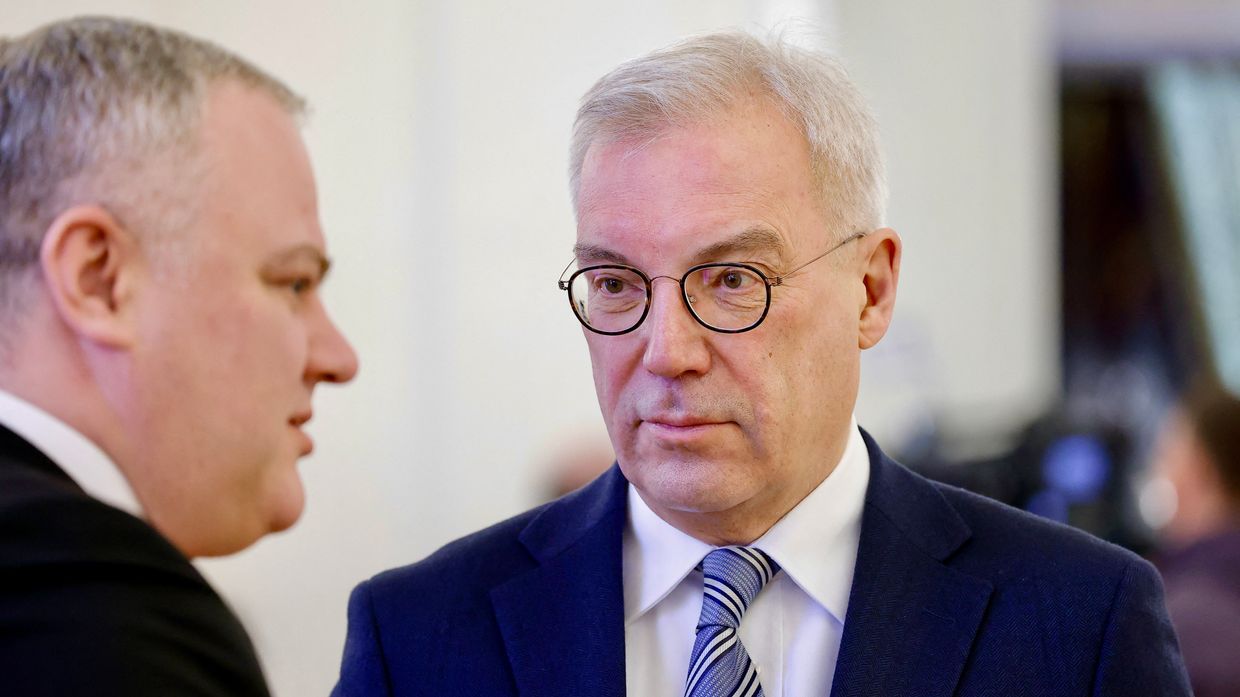
Moscow will insist that Ukraine dismantle and destroy all Western-supplied weapons as part of any ceasefire deal, Russian Deputy Foreign Minister Alexander Grushko said in an interview with the state-run newspaper Izvestia published June 16.
"All these surpluses must be destroyed. All international algorithms are known. They must be reduced, disposed of, and guaranteed," Grushko said, without offering specifics.
The remarks reflect Moscow's growing list of maximalist demands presented in its so-called "peace memorandum" during recent negotiations with Ukraine in Istanbul on June 2.
The document calls for Ukraine to recognize Russia's annexation of Crimea and four partially occupied regions — Kherson, Donetsk, Zaporizhzhia, and Luhansk — and demands full Ukrainian troop withdrawal and demobilization.
Grushko argued that Western weapons aid threatens not only Russia but also Europe, warning that arms could end up on black markets.
"It's crazy how reckless some politicians are, still flooding the market with weapons," he said.
There is no credible evidence that Kyiv has diverted Western weapons or fueled arms trafficking — a narrative promoted by Russian propaganda to undermine support for Kyiv.
Independent oversight by partner states and institutions has consistently found that Ukraine uses Western weapons to defend itself against Russia's full-scale invasion.
Moscow's proposals would further prevent Ukraine from joining NATO or military alliances, prohibit its armed forces' redeployment, and stop all Western military aid and intelligence sharing.
President Volodymyr Zelensky has rejected Moscow's demands, saying the Russian delegation admitted in Istanbul that their "memorandum" is an ultimatum Ukraine cannot accept.
"They even told our delegation: we know that our memorandum is an ultimatum, and you will not accept it," he said in a June 10 interview with Hungarian outlet Valasz Online.
In contrast, Ukraine's proposal focused on humanitarian measures, including a prisoner exchange, the return of abducted children, and securing the right to join the EU and NATO.
Kyiv has also called for using frozen Russian assets to pay for reconstruction and linking any sanctions relief to a verified ceasefire.
Despite two rounds of talks in May and June, no political breakthrough has been reached. Moscow continues to reject calls for an unconditional ceasefire, while Ukraine presses for an end to hostilities.
U.S. President Donald Trump has reportedly shown frustration over Russia's refusal to compromise, yet he has refrained from imposing new sanctions.
At least six civilians were killed and 18 others wounded in Russian attacks across Ukraine over the past 24 hours, regional authorities reported on June 16.
Russia launched 138 drones overnight, including Iranian-designed Shahed-type suicide drones, Ukraine's Air Force said. Air defenses intercepted 125 drones, while another 41 dropped off radars — likely used as decoys to overload Ukrainian systems.
The assault was repelled using aviation, electronic warfare units, mobile fire groups, and anti-aircraft missile systems.
Donetsk Oblast saw the deadliest attacks, with six civilians killed — three in Bagatyr, two in Pokrovsk, and one in Kostyantynivka — and four more injured, Governor Vadym Filashkin said. The region remains one of the most heavily targeted areas amid ongoing Russian offensive operations.
In Kherson Oblast, seven people were injured after Russian forces struck critical infrastructure and residential neighborhoods, damaging eight houses, Governor Oleksandr Prokudin reported.
Three women aged 71, 62, and 27 were wounded in Kupiansk, Kharkiv Oblast, according to Governor Oleh Syniehubov. The oblast has been under intensifying Russian aerial and artillery attacks in recent weeks.
Air defenses were active over Kyiv and surrounding areas, where three people were injured in the capital and region. Authorities said drone fragments fell in residential zones.
In Zaporizhzhia Oblast, a 46-year-old man was injured as Russian troops carried out 426 strikes on 14 settlements, Governor Ivan Fedorov reported.
The latest strikes come as Russia continues to escalate its aerial campaign and reject calls for a ceasefire. Ukrainian officials have repeatedly urged Western partners to bolster air defense capabilities as drone and missile attacks persist.
President Volodymyr Zelensky proposed to the Verkhovna Rada the appointment of Ruslan Kravchenko as Ukraine's next Prosecutor General, Parliament Speaker Ruslan Stefanchuk said on June 16.
Kravchenko, 35, currently heads the State Tax Service and is expected to be formally introduced to lawmakers during a faction meeting of Zelensky's Servant of the People party on June 17. A vote on his confirmation is expected the same day, according to lawmaker Yaroslav Zheleznyak.
The nomination ends a six-month vacancy at the top of Ukraine's prosecution service, following the resignation of Andriy Kostin in October 2024. First Deputy Prosecutor General Oleksiy Khomenko has served in an acting capacity since.
Kostin resigned amid a scandal involving prosecutors illegally obtaining disability status, which was discussed during a National Security and Defense Council meeting chaired by Zelensky.
Kostin later admitted to "many shameful facts of abuse" within the prosecutor's office.
Kravchenko, a native of Sievierodonetsk in Luhansk Oblast, has held several senior roles in law enforcement and regional government. He previously served as head of the Kyiv Regional Military Administration and led the Bucha District Prosecutor's Office.
He is best known for serving as the lead prosecutor in the treason case against exiled pro-Kremlin former President Viktor Yanukovych, who was convicted of aiding and abetting Russia's war against Ukraine.
If confirmed, Kravchenko will take over an office tasked with overseeing wartime prosecutions, including war crimes investigations and anti-corruption efforts linked to Ukraine's ongoing reforms.
Satellite images reveal that Russia has expanded and modernized at least five nuclear-related facilities near European borders in recent years, Swedish broadcaster SVT reported on June 16, citing new imagery obtained from Planet Labs.
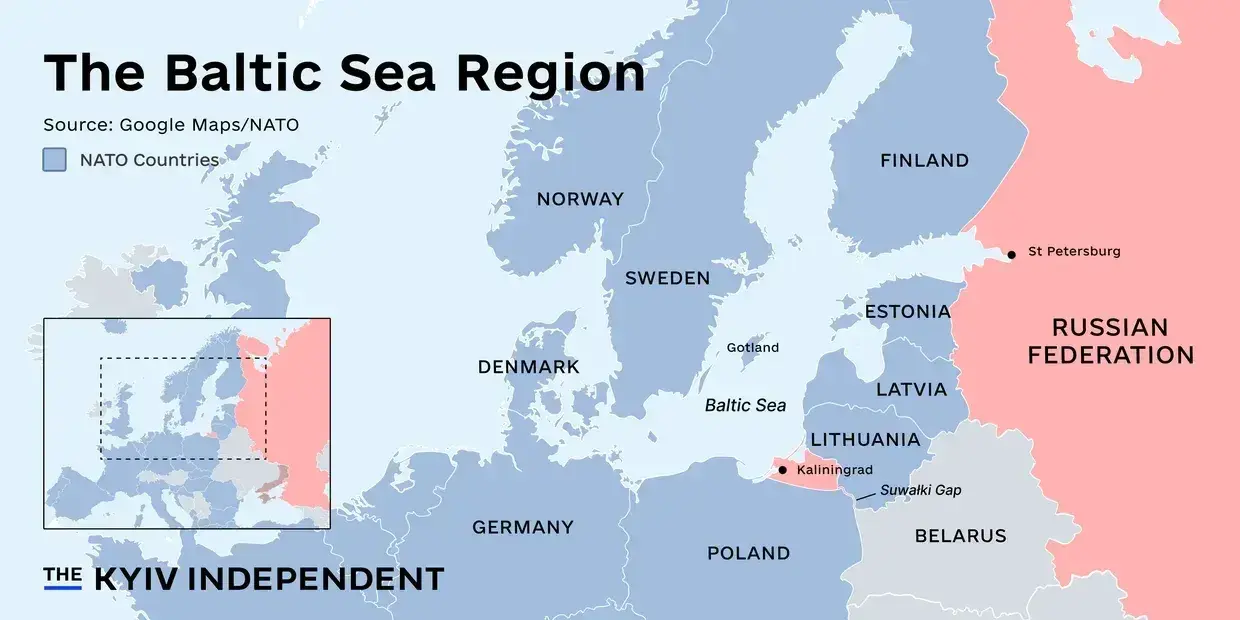
One of the most notable developments is in Kaliningrad, where the suspected nuclear weapons storage site has undergone significant reconstruction.
Images taken in May 2025 show the addition of triple-layered fencing, new buildings, and advanced communications equipment. Polish Foreign Minister Radoslaw Sikorski previously said that up to 100 tactical nuclear warheads might be stored at the site.
Kaliningrad, a militarized Russian exclave between Poland and Lithuania, is a key concern for NATO because of its advanced missile systems and expanding nuclear infrastructure.
A map of the Baltic Sea Region. (Lisa Kukharska / The Kyiv Independent)
The Osipovichi base in Belarus, a former Soviet nuclear storage facility, is also being renovated. Satellite imagery shows new air defense installations and a modernized loading platform for rail-based logistics.
In Novaya Zemlya, a remote Arctic archipelago long linked to Soviet-era nuclear testing, several new buildings have appeared, reinforcing its role as a potential site for future test activities.
On the Kola Peninsula, near the borders with Finland and Norway, Russia has built about 50 storage bunkers for submarine-launched ballistic missiles and constructed a specialized pier for loading those missiles onto submarines, according to the imagery.
Swedish Defense Minister Pal Jonson responded to the findings, saying Stockholm is "closely monitoring" Russian nuclear capabilities. Sweden officially joined NATO in March 2024 after years of non-alignment, citing escalating Russian threats as a primary reason.
The Kremlin has repeatedly used nuclear threats to pressure Ukraine and Western countries since the start of its full-scale invasion in February 2022.
Ukraine has accused Russia of "lying about everything" after yet another drone attack on Kyiv injured two people overnight on June 16, saying the strike once again rubbished Kremlin claims that only military objects are being targeted.
The strike hit Rusanivka Gardens, a private neighborhood in the capital’s Dniprovskyi District, creating a crater near civilian homes, and injuring a 20-year-old man and a woman, Tymur Tkachenko, head of the Kyiv City Military Administration, said.
"The Russians lie about everything. When they claim to have hit military targets, they are actually targeting our homes and our people," he wrote on Telegram.
"This is a deliberate tactic of terror."
The injured man was hospitalized in serious condition, while the woman is being treated on an outpatient basis, Mayor Vitali Klitschko said.
"Miraculously, significant damage and casualties were avoided," Tkachenko said.
Despite Moscow's denials, Russia has repeatedly hit civilian areas throughout its full-scale war. On July 8, 2024, one of the deadliest strikes on Kyiv killed 33 people and wounded 121 others, including patients at Ohmatdyt, Ukraine's largest children's hospital.
The Russian Defense Ministry continues to insist it targets only military infrastructure, dismissing reports of civilian casualties as "absolutely untrue." The pattern of destruction across cities like Kharkiv and Kherson shows civilians are often the primary targets.
Moscow launched 138 drones at Ukraine overnight, including Iranian-designed Shahed-type drones. Ukraine's Air Force reported that air defenses intercepted 125 of them, while another 41 went off radars — likely used as decoys to overwhelm air defense systems.
The strike comes as Russia intensifies its air campaign against Ukraine and continues to reject Western-backed proposals for a ceasefire. Kyiv, located along the Dnipro River in the country's north-center, remains one of the most heavily targeted cities in the war.
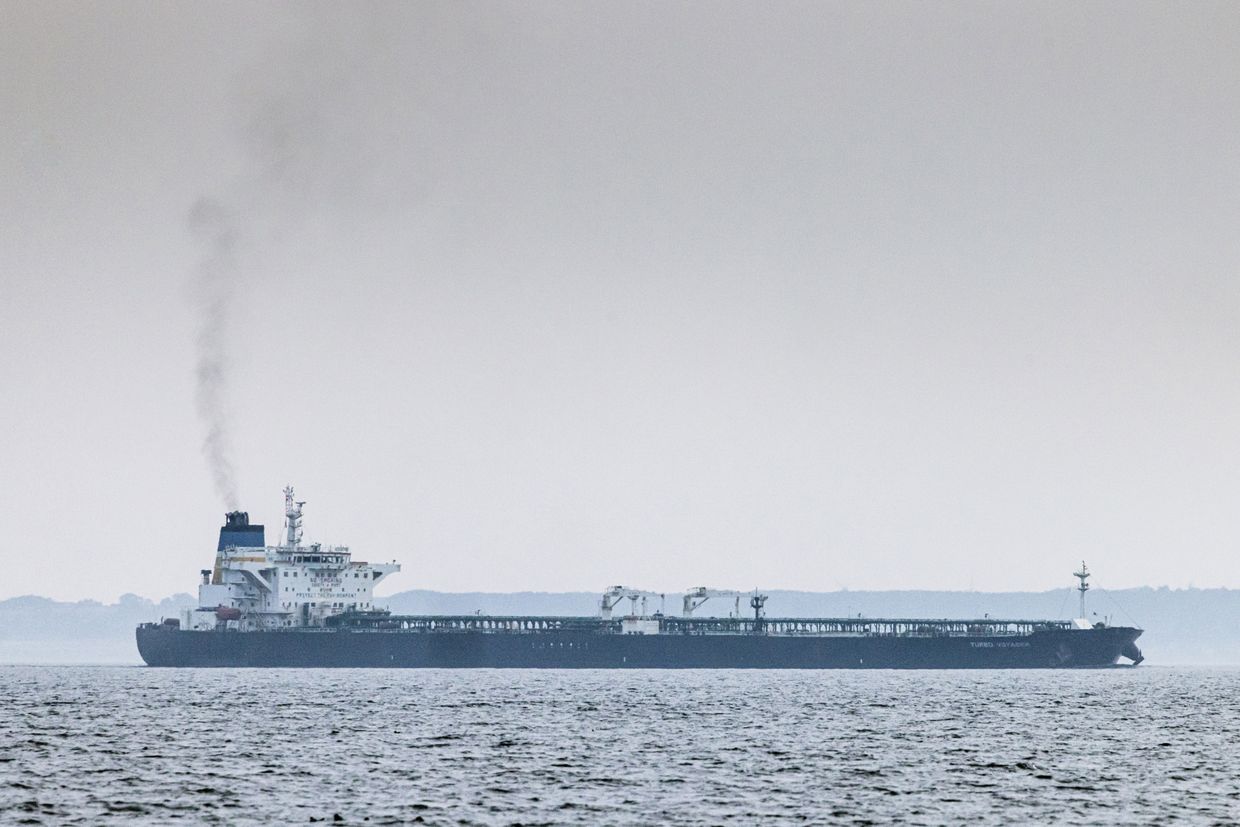
An uninsured Russian Aframax-class tanker has been illegally conducting ship-to-ship oil transfers in international waters near Greece and Cyprus since July 2024, Ukraine's military intelligence (HUR) reported on June 16.
According to the agency, the vessel, operating without Western insurance, is part of Russia's expanding shadow fleet used to bypass G7 and EU sanctions on Russian oil exports.
HUR said such transfers "pose an environmental threat, allow the aggressor to conceal the origin of oil, evade international control, and ensure its supply to third countries in circumvention of sanctions."
Ukraine has identified the tanker as IMO 9247443 and listed it on the War&Sanctions platform, along with 159 other tankers allegedly belonging to Russia's shadow fleet and 55 captains involved in sanction-busting operations.
Despite price caps and Western restrictions, Russia continues to profit from oil and gas exports, which remain a vital revenue source. According to HUR estimates, roughly one-third of those profits are expected to fund Russia's war against Ukraine in 2025.
In May, the EU approved its 17th sanctions package, targeting nearly 200 shadow fleet vessels. The U.S. Treasury had earlier sanctioned over 180 tankers, which together accounted for nearly half of Russia's offshore oil shipments.
While the Biden administration ramped up pressure on Russia's oil trade early in 2024, U.S. President Donald Trump has since declined to impose new sanctions, despite Moscow's continued refusal to agree to a ceasefire.
Russia has lost 1,005,060 troops in Ukraine since the beginning of its full-scale invasion on Feb. 24, 2022, the General Staff of Ukraine's Armed Forces reported on June 16.
The number includes 1,200 casualties that Russian forces suffered just over the past day.
According to the report, Russia has also lost 10,939 tanks, 22,811 armored fighting vehicles, 52,096 vehicles and fuel tanks, 29,208 artillery systems, 1,418 multiple launch rocket systems, 1,187 air defense systems, 416 airplanes, 337 helicopters, 40,804 drones, 3,337 cruise missiles, 28 ships and boats, and one submarine.
The Group of Seven (G7) nations need to impose harsher sanctions on Moscow in order to secure a ceasefire in the war against Ukraine, European Commission President Ursula von der Leyen and European Council President Antonio Costa said at the start of the G7 summit in Canada.
The G7 Leaders Summit kicked off on June 15 in Kananaskis, Canada, with official talks held June 16-17. While Ukraine hopes to win economic support and unified pressure against Russia, the rapidly escalating conflict between Israel and Iran may dominate this year's conference.
"To achieve peaceful strength we must put more pressure on Russia to secure a real ceasefire, to bring Russia to the negotiating table, and to end this war. Sanctions are critical to that end," von der Leyen said at a press briefing on June 15 attended by a Kyiv Independent journalist.
Economic sanctions have been an effective intervention since the start of Russia's full-scale invasion, von der Leyen said. She noted that combined G7 and European Union sanctions have decreased Russian oil and gas revenues by nearly 80% since February 2022.
"(T)he sanctions are working, and we will do more," she said.
Von der Leyen urged the G7 to adapt the economic restrictions proposed in the EU's 18th sanctions package, announced on June 10. The new measures target Russia's energy and banking sectors and propose a further reduction in the oil price cap, bringing the cap down from $60 to $45 per barrel.
"I will invite all G7 partners to join us in this endeavor," she said.
Costa echoed the call for sanctions and the necessity of economic pressure in order to achieve a ceasefire. Europe is committed to "increasing additional sanctions to cripple (Russia's) ability to wage war and pressing for an unconditional ceasefire," he said.
Europe's call for unity may meet with resistance from the United States, which has assumed a dramatically different posture towards Ukraine and Russia since President Donald Trump took office in January. Trump has not imposed any new sanctions against Russia, even Moscow blatantly obstructs peace efforts and escalates mass strikes against Ukrainian cities.
The U.S. also reportedly opposes lowering the G7 oil price cap — a measure first introduced in December 2022 that prohibits Western companies from shipping, insuring, or otherwise servicing Russian oil sold above $60 per barrel.
The price cap debate has become more urgent as oil prices, which had fallen below the $60 cap in recent months, surged following Israel's recent strikes against Iran.
Despite U.S. resistance, the EU and the United Kingdom — backed by other European G7 countries and Canada — have said they are prepared to move forward with the proposal, even without Washington's endorsement.
President Volodymyr Zelensky, on the other hand, has said the EU sanctions and proposed price cap drop don't go far enough. Zelensky on June 11 said the EU's 18th round of sanctions "could be stronger" and proposed further slashing the oil price cap to $30 per barrel.
"A ceiling of $45 per barrel of oil is better than $60, that's clear, that's true. But real peace will come with a ceiling of $30," he said. "That's the level that will really change the mindset in Moscow."
Zelensky and Trump are expected to meet on the sidelines of the G7 summit on June 17. The meeting will mark their third in-person encounter since Trump took office.
U.S. President Donald Trump arrived in Canada for the Group of Seven (G7) Leaders' Summit late on June 15, according to a Kyiv Independent journalist on the ground.
Trump's arrival comes ahead of his expected high-stakes meeting with President Volodymyr Zelensky on June 17 in Kananaskis, Alberta.
Canada, which holds the G7 presidency in 2025, invited Zelensky to participate in the 3-day summit, which will mark Zelensky's fourth G7 Leaders' Summit since the outbreak of the full-scale invasion in 2022.
After a disastrous first in-person meeting between the two leaders in the Oval Office in February — during which Trump and Vice President JD Vance lambasted Zelensky over what they described as "a lack of gratitude for U.S. support" — a second meeting in the Vaticanled to Trump reiterating calls for a Russian ceasefire and even threatening to impose sanctions on Russia.
In the month since their last in-person meeting, tensions between Trump and Zelensky have risen again. Despite issuing several threats, Trump has not followed through on implementing additional economic pressure on Moscow.
Zelensky said in a closed-door meeting attended by the Kyiv Independent on June 13 that his priority is to speak with Trump about sanctions against Russia, peace talks, weapons purchases, and U.S.-Ukraine economic cooperation.
The anticipated third meeting could signal the future of Trump and Zelensky's relationship, as well as offer insight into the United States' commitment to supporting Ukraine.
Amid increased anxiety around Trump's commitment to ending the war, U.S. Defense Secretary Pete Hegseth recently announced that the Pentagon will reduce funding allocated for military assistance to Ukraine in its 2026 defense budget.
On June 12, Zelensky decried Washington's lack of urgency around sanctions, suggesting that Russia is "lying to Trump." He said that Russian President Vladimir Putin's strategy is to maintain the illusion of dialogue without ever committing to a ceasefire.
"There are steps forward we can take — but we need the political will of the U.S. president, if he wants," Zelensky said on June 13.
President Volodymyr Zelensky on June 15 condemned Russia's latest mass attack against Ukraine, calling the strikes on energy infrastructure "a spit in the face of everything the international community is trying to do to stop this war."
Earlier in the day, Russia targeted the city of Kremenchuk in Poltava Oblast with a combined missile and drone attack, damaging energy and agricultural facilities. The strike involved nearly 200 drones and missiles, including both cruise and ballistic missiles. The attack came shortly after a phone call between U.S. President Donald Trump and Russian President Vladimir Putin.
In his nightly address, Zelensky said the attack on Kremenchuk was "deliberately and treacherously planned to target our civilian infrastructure" and that Russia intended to damage energy facilities.
"This is Russia's spit in the face of everything the international community is trying to do to stop this war," Zelensky said in his nightly address.
"It happened right after Putin's conversation with Trump. After the Americans asked us not to strike Russian energy facilities. At the same time as Putin tries to portray himself as a mediator for the Middle East ... The level of cynicism is staggering."
Following his call with Putin, Trump claimed he would be "open" to the Russian president acting as a mediator in the rapidly escalating conflict between Israel and Iran. Zelensky rejected the idea of Putin — who has waged war against Ukraine for over 10 years and has taken no steps towards a lasting ceasefire — playing the role of peacemaker.
Putin "is war itself," Zelensky said, urging the international community not to fall for "Russian manipulation and lies."
Zelensky also warned that Russia may be planning additional attacks on Ukraine's energy sector, including nuclear power infrastructure. According to the president, Ukrainian intelligence agencies have obtained evidence of Russia's threat and shared the information with the International Atomic Energy Agency (IAEA) and the Trump administration.
"Russia is planning further attacks on our energy sector — attacks that may be less visible to the world right now because all eyes are on the situation in the Middle East," he said.
Throughout the full-scale war, Russia has attempted to disrupt Ukraine's power grid through targeted attacks on energy infrastructure. After rejecting a U.S. proposal for a 30-day unconditional ceasefire in March, Moscow instead agreed to a month-long ceasefire on energy attacks.
Russia subsequently violated the partial ceasefire, which ended in in April. The Kremlin continues to refuse calls for an unconditional truce.
Editor's note: This is a developing story and is being updated as new details emerge.
Russia launched a series of drone attacks on Kyiv Oblast overnight on June 15-16, targeting both the capital city and regional settlements, according to government officials.
In the Obukhiv district of Kyiv Oblast, a 60-year-old man was injured as a result of Russia's drone strike, reported regional governer Mykola Kalashnyk at 1:37 a.m. local time.
The injured man received medical assistance, Kalashnyk confirmed.
Civilian targets, including a private home, were also damaged in the attack. Emergency services are currently working at the scene.
Earlier in the night, explosions were also heard in Kyiv.
Kyiv Mayor Vitali Klitschko confirmed that the city's air defenses were operating and that drones were entering the city late on Sunday night, at about 11:29 p.m. local time.
North Korea has suffered more than 6,000 casualties during offensive operations in Russia’s Kursk Oblast, according to a June 15 report from the United Kingdom’s defense intelligence.
According to the report, North Korea's losses account for more than half of the approximately 11,000 troops initially deployed to Kursk in fall 2024.
U.K. intelligence attributed the high casualty rate to large, highly attritional dismounted assaults.
Open source intelligence reports have also suggested that small numbers of additional North Korea troops have been deployed to make up for the losses.
Earlier this year, South Korea's Joint Chiefs of Staff reported that North Korea transferred approximately 3,000 additional soldiers to Russia in January and February.
North Korea has emerged as a key military ally of Russia through its invasion of Ukraine, supplying Moscow with artillery shells, missiles, and even soldiers in exchange for oil products and advanced military technology, such as ballistic missile upgrades.
In April 2025, Russia confirmed for the first time that North Korean forces were fighting alongside Russian troops in Kursk, although North Korean troops have been reportedly involved since fall 2024.
Ukraine launched a cross-border incursion into Kursk Oblast in August 2024, marking the first large-scale invasion of Russian territory by foreign forces since World War II. The operation aimed to disrupt a planned Russian offensive on the neighboring Sumy Oblast and draw Russian forces away from the embattled Donbas region.
Russia launched a push to recapture the region in early March 2025, with Ukraine being forced to pull back from much of the initially taken territory.
Editor's Note: June 15: This article has been updated to include confirmation of the attack from Ukrainian authorities.
Ukraine allegedly launched drones at Russia’s Tatarstan region, killing one and injuring 13, regional governor Rustam Minnikhanov reported on June 15.
The Ukrainian drones were reportedly shot down, but the debris fell on a plant in the town of Yelabuga, where Russian Shahed-type attack drones are manufactured, causing a fire.
According to Minnikhanov, it was an automobile plant, but some Telegram channels, including Astra, speculate that the well-known drone factory was the target.
Ukraine's General Staff subsequently confirmed details of the strike, including that it was directed at Shahed-style drone production in Yelabuga.
“Despite the attempt to sow fear and panic, all enterprises and life support facilities in the republic are operating stably. Emergency services are on constant alert,” said Minnikhanov.
A video of the attack was shared on Telegram, showing smoke billowing over the town, which lies some 1,500 kilometers from Kyiv. There has been no official statement from Kyiv on the alleged strike, and the Kyiv Independent could not independently verify these claims.
The so-called Alabuga Special Economic Zone hosts a factory producing Shahed-type long-range attack drones as well as other reconnaissance drones, and has been repeatedly targeted by Ukrainian forces since its launch in 2022.
The factory aims to produce 6,000 Shahed-type drones a year, with each one estimated to cost as little as $20,000.
Last year, Ukraine confirmed attacking military facilities in Tatarstan at least twice with long-distance drone strikes. Most recently, Ukrainian drones reportedly struck the plant on May 25.
Facing a workforce problem, the factory began recruiting African women under false pretences via a work-study program. As a result, Interpol began an investigation into the company in April for human trafficking.
Ukrainian actor Yuriy Felipenko, who worked with Kyiv Independent reporters, was killed at the frontline, his wife Kateryna Motrych wrote on social media on June 15.
Felipenko was well known for his role in the 2024 television series “A Promise to God” before joining the Achilles Strike Drone Battalion, then part of Ukraine’s 92nd Assault Brigade, in April 2024.
Having since been upgraded to a separate regiment and one of the founding units of the Line of Drones initiative, Achilles is one of the most effective drone units in the country.
“Yura was killed. Yura was, without exaggeration, my world, my soul, my light. It is impossible to convey this loss. I feel like I have been destroyed,” Motrych wrote on her Instagram page, accompanied by a photo of Felipenko.
Soldiers of the Achilles Strike Drone Battalion including Ukrainian actor Yurii Felipenko (R) in a dugout near Kupiansk, Kharkiv Oblast, on Dec. 8, 2025. (Aria Shahrokhshahi/The Kyiv Independent)
Felipenko's drone team was featured in a report by the Kyiv Independent on Ukraine's use of first-person view (FPV) drones against Russian infantry assaults in December 2024 as they defended the area around Kupiansk in Kharkiv Oblast.
Details of Felipenko’s funeral will be announced later, Motrych said.
Russia has killed numerous actors, artists, and writers since the start of the full-scale invasion. Many have fallen on the battlefield while others were killed during attacks on civilian areas.
Russia deliberately targeted a building used by the U.S. aerospace and defense giant Boeing in a recent attack on Kyiv, the Financial Times reported on June 15.
Overnight on June 9-10, Russian forces launched hundreds of drones and seven missiles in one of the biggest attacks on Ukraine, damaging buildings across the capital. One of the targets included Boeing’s office, according to two Boeing employees, three Ukrainian officials, and the head of the American Chamber of Commerce (ACC) in Ukraine, whom the FT spoke with.
"This is not just an attack against Ukraine, but also an attack where American business is being hit," Andy Hunder, President of the ACC in Ukraine, which represents nearly 700 U.S. and international investors and corporate members, told the Kyiv Independent.
"This is a war against a world where American businesses are making money and thriving," he added.
The strikes on Kyiv came after Ukraine surprised Russia with Operation Spiderweb that saw hundreds of drones target four airbases in Russia and damage 41 war planes. Moscow promised to retaliate in response.
Boeing, one of the largest American companies operating in Ukraine, cooperates with the Ukrainian aerospace and defense company Antonov, with the two companies exploring several joint ventures and opportunities, including in defense.
Boeing told the FT that none of its employees were injured in the attack and that it continues to operate in Ukraine, where it employs some 1,000 people.
Antonov has also suffered from Russian strikes, as have other defense production sites. As Ukraine pushes for domestic defense production instead of relying on foreign imports, Ukrainian officials say that Moscow is attempting to hinder Ukraine’s efforts to manufacture arms.
German defense company Rheinmetall opened up a factory in Ukraine last October to produce a batch of Lynx infantry fighting vehicles. Moscow threatened the company, saying it was a legitimate target, although Rheinmetall said its facilities are well protected.
Russia has repeatedly targeted other Western businesses. Nearly half of the ACC’s members have had facilities damaged or destroyed, but 90% still continue to operate in Ukraine, Hunder said.
"The American business community is here, it continues to operate, and it's united," he added.
Ukraine recovered another 1,200 bodies following the latest round of repatriation efforts, following agreements with Russia in Istanbul, the Coordination Headquarters for the Treatment of Prisoners of War said on June 15.
The last repatriation took place on June 14 when the bodies of 1,200 fallen Ukrainians were given back. Before that, 2,412 bodies were returned on June 13 and June 11 respectively, following the talks in Istanbul on June 2.
Law enforcement investigations and institutions from Ukraine’s Interior Ministry will examine and identify the bodies in the near future, the coordination headquarters said. The bodies reportedly include military personnel.
The repatriation operation was coordinated by the Coordination Headquarters for the Treatment of Prisoners of War alongside the Security Service of Ukraine (SBU), the Ombudsman’s Office, the Armed Forces, the Interior Ministry, and other government and defense bodies. The International Committee of the Red Cross also provided assistance during the process.
While the Istanbul talks failed to foster a ceasefire, both sides agreed to new POW exchanges. Ukraine has long pushed for an "all-for-all"prisoner exchange to bring home all Ukrainian captives, but Moscow has resisted such a comprehensive deal.
After the talks, Russia said it would transfer 6,000 bodies to Ukraine, including soldiers and officers. Ukrainian President Volodymyr Zelensky said Ukraine would need to check the bodies that Russia is willing to return, as only 15% of the 6,000 have been identified.
"We had instances when they returned bodies that later were identified as their own," Zelensky said on June 2.
Ukraine’s Security Service (SBU) caught a Russian agent red-handed as he was filming a military airfield in preparation for a Russian strike, the agency reported on June 15.
According to the SBU, the Russian Federal Security Service (FSB) recruited the unemployed 24-year-old via the Telegram messaging app to collect coordinates for air attacks on airfields and logistic depots.
The FSB had allegedly instructed him to find military facilities and carry out reconnaissance on the ground in exchange for “easy money.”
The man was detained outside an airfield in Rivne Oblast while filming its outer perimeter with a hidden camera in his car. The SBU seized a phone and the camera on the scene, while other evidence was taken from the agent’s apartment.
If found guilty, he faces life imprisonment for high treason.
The SBU regularly announces it has foiled Russian agents and terrorist plots against military and civilian targets. The FSB usually targets unemployed people, those with criminal records, or addicts, according to the SBU's data.
In April, the SBU detained an instructor at a training center in Lviv Oblast who was planning to assassinate the base's commanders. That same month, the SBU detained nine FSB agents, including five minors, for plotting terrorist attacks in central and eastern Ukraine.
More than a fifth of FSB recruits in Ukraine are minors.
Ukraine’s military intelligence (HUR) ignited an electrical substation during a sabotage operation in the Russian city of Kaliningrad, causing $5 million in damage and cutting electricity to a military production site, a source in HUR told the Kyiv Independent.
In the early hours of June 14, Ukrainian agents drained the coolant from the substation’s power transformer before setting the facility on fire. The inferno inflicted major damage on the facility and caused a power cut, impacting nearby Russian military sites.
"We once again remind you that Russia no longer has a rear either in the east, in the west, or anywhere else on the planet. Everything Russian involved in the war against Ukraine will burn, sink, and be destroyed regardless of its level of protection or location," the source said.
0:00
/
Ukrainian agents sabotage an electrical substation in Kaliningrad, Russia. June 14, 2025. (HUR)
The attacks involve HUR, Ukraine’s Security Service (SBU) as well as partisan and sabotage groups.
HUR was behind explosions near Desantnaya Bay in Russia's far eastern Vladivostok on May 30, which reportedly damaged military personnel and equipment. The operations took place approximately 6,800 kilometres from the Ukrainian border, making it Ukraine's furthest incursion into Russian territory, if confirmed.
Editor's note: This story has been updated to reflect the most recent casualty numbers.
Russia attacked Ukraine with nearly 200 missiles and drones and shelled residents in Kherson and Donetsk oblasts, killing one and injuring three, Ukrainian authorities reported on June 15.
Russian forces unleashed drones, artillery, and airstrikes on Kherson Oblast and the city over the last day, killing one person and injuring seven, the oblast administration reported. Russian attacks damaged apartments, homes, and gas pipelines, as well as other infrastructure.
In Donetsk Oblast, Russian attacks injured two people in Pokrovsk and Myrnohrad, regional governor Vadym Filashkin reported.
Russia’s combined mass missile and drone strikes largely targeted Kremenchuk in Poltava Oblast. No one was injured or killed, but the attacks hit energy and agricultural facilities, said Poltava governor Volodymyr Kohut.
Of 183 drones Russia launched, Ukrainian air defense neutralized 159, the Air Force said in their morning update. Ukraine also shot down 2 Kinzhal air-launched ballistic missiles and six out of eight cruise missiles.
Drones were also spotted flying through Kyiv and Kyiv Oblast, Chernihiv, Sumy, Dnipropetrovsk, Kirovohrad, Mykolaiv, Zaporizhzhia, and Donetsk oblasts.
Despite talks of peace negotiations, Russia has amped up its drone attacks on Ukraine over the last month. On May 26, Russia launched 355 drones at Ukraine, a record that was broken on June 1 with 472 drones, and on June 9, when Russia fired 479 drones and 20 missiles against Ukrainian cities.
Russia has lost 1,003,860 troops in Ukraine since the beginning of its full-scale invasion on Feb. 24, 2022, the General Staff of Ukraine's Armed Forces reported on June 15.
The number includes 1,170 casualties that Russian forces suffered just over the past day.
According to the report, Russia has also lost 10,937 tanks, 22,804 armored fighting vehicles, 52,017 vehicles and fuel tanks, 29,190 artillery systems, 1,418 multiple launch rocket systems, 1,186 air defense systems, 416 airplanes, 337 helicopters, 40,709 drones, 3,337 cruise missiles, 28 ships and boats, and one submarine.
Iran has partially suspended production at the South Pars gas field — the world’s largest — after an Israeli airstrike triggered a fire at the site, the semi-official Tasnim news agency reported on June 14, according to Reuters. If confirmed, it would mark the first Israeli strike targeting Iran’s vital oil and gas infrastructure.
The South Pars field, located offshore in southern Bushehr province, is responsible for the bulk of Iran’s gas output. Tehran shares the field with Qatar, which refers to its portion as the North Field. A strike on South Pars represents a significant escalation, coming after oil prices surged 9% on June 13 following Israel’s initial wave of attacks, which had not targeted energy infrastructure, Reuters reports.
Israel launched its air offensive against Iran on June 13, killing commanders and scientists and bombing nuclear sites, in what it described as an effort to prevent Tehran from developing nuclear weapons.
The Iranian oil ministry said the fire caused by the strike has been extinguished. According to Tasnim, the fire broke out in one of four units of Phase 14 at South Pars, halting the production of 12 million cubic meters of gas.
Iran, the world’s third-largest gas producer after the United States and Russia, produces around 275 billion cubic meters of gas per year, about 6.5% of global output.
Due to international sanctions, the country consumes most of this domestically. Qatar, which operates the majority of the shared field with support from global firms such as Exxon and Shell, produces 77 million tonnes of liquefied natural gas annually, supplying both European and Asian markets.
Germany aims to prioritize defense spending in the next EU budget while firmly opposing any increase in national contributions, according to a position paper obtained by the Financial Times (FT).
As the bloc’s largest economy and top net contributor, Berlin wants EU funds to support joint arms procurement and help expand production capacity among European weapons manufacturers.
The paper reportedly reflects Germany’s broader shift toward higher domestic military spending in response to Russia’s ongoing threat and amid calls by U.S. President Donald Trump for Europe to shoulder more of its own defense.
Berlin argues the EU budget should also fund dual-use technologies, military transport corridors, and other security-related initiatives despite current treaty restrictions on defence spending from the common budget, according to FT.
To free up funds for these priorities, Germany proposes cutting administrative costs and simplifying the EU budget structure. The government supports reducing the number of programes, granting the European Commission more flexibility to shift funds, and focusing spending on strategic areas such as cross-border infrastructure, energy security, digitalisation, and innovation.
Germany also opposes any extension of the EU’s post-Covid joint borrowing programme, stressing that repayments for the 800 billion euro fund must begin in 2028 as scheduled. While Berlin is open to discussing new EU-level revenue sources such as a carbon border levy or minimum corporate tax, it continues to reject an increase in direct national contributions to the budget, which currently total about 1% of EU GDP.

 Connexion
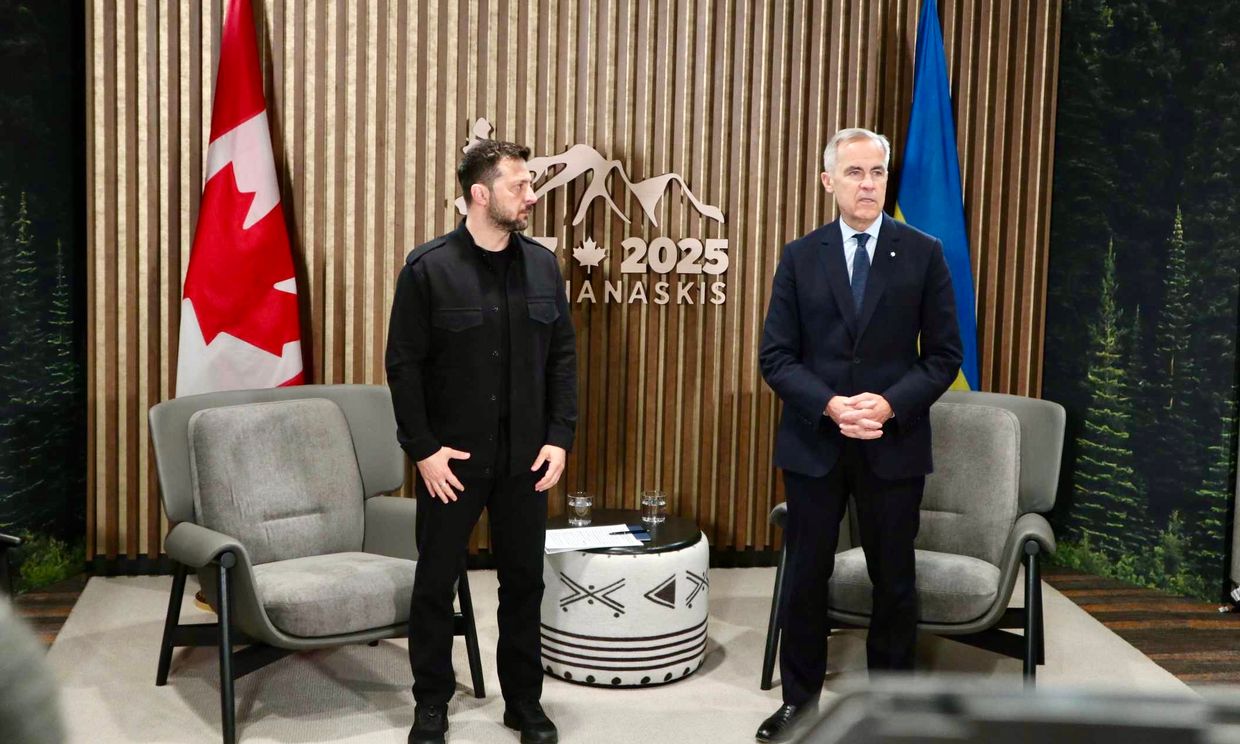
 The Kyiv IndependentKateryna Hodunova