Vue lecture

Hungary swapped its pro-Russian prime minister. Yet it is still slowing Ukraine’s path to the EU.

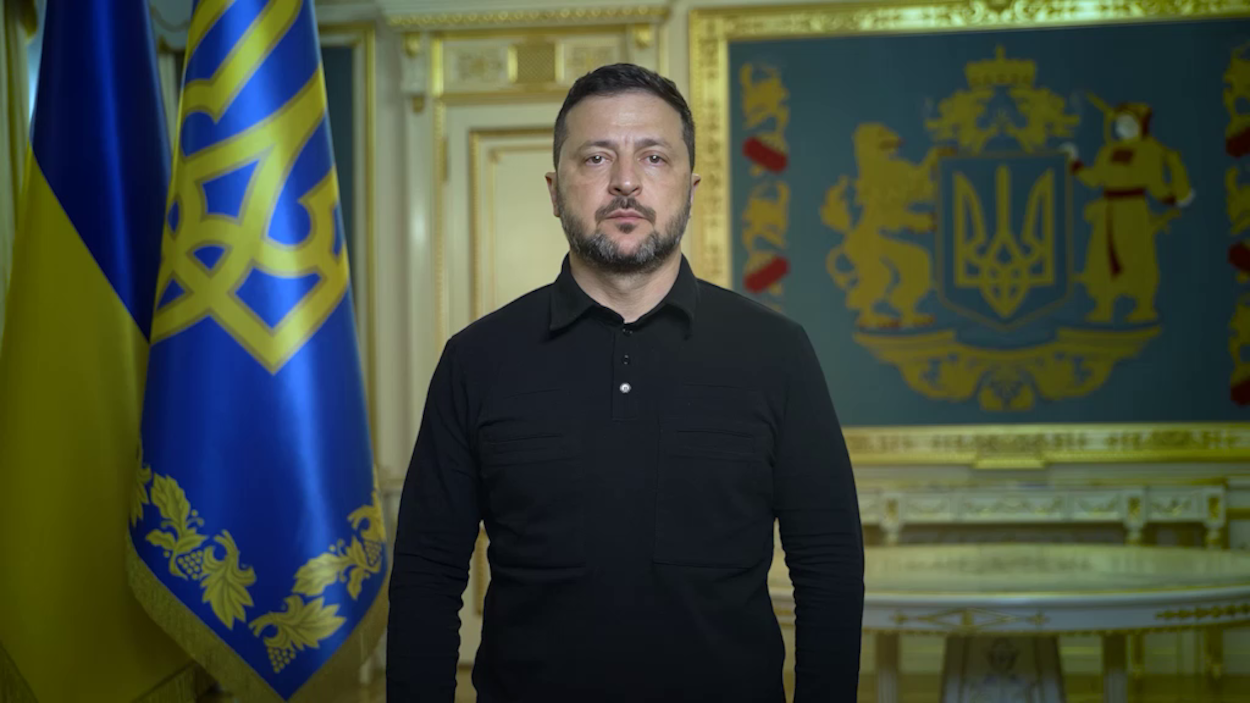
Zelenskyy, Magyar, Tusk, and Costa confer around a table during an EU meeting, with one official in black standing at the center.

For four hours on 18 June, Péter Magyar, Hungary’s new prime minister, sat with EU leaders and refused to budge. They wanted to advance Ukraine’s membership talks. Magyar held out until they struck that language from the summit text. He got what he came for.

EU accession is a prize Ukraine has pursued since the 2013–14 Euromaidan, when Ukrainians bled for the right to choose Europe: a say in the continent’s decisions, access to EU markets and funds, and a European path away from Russia. 

Yet any member state can stall that process. Viktor Orbán, Hungary’s pro-Russian former prime minister, repeatedly did—and Magyar’s government is still holding up Ukraine’s accession. 

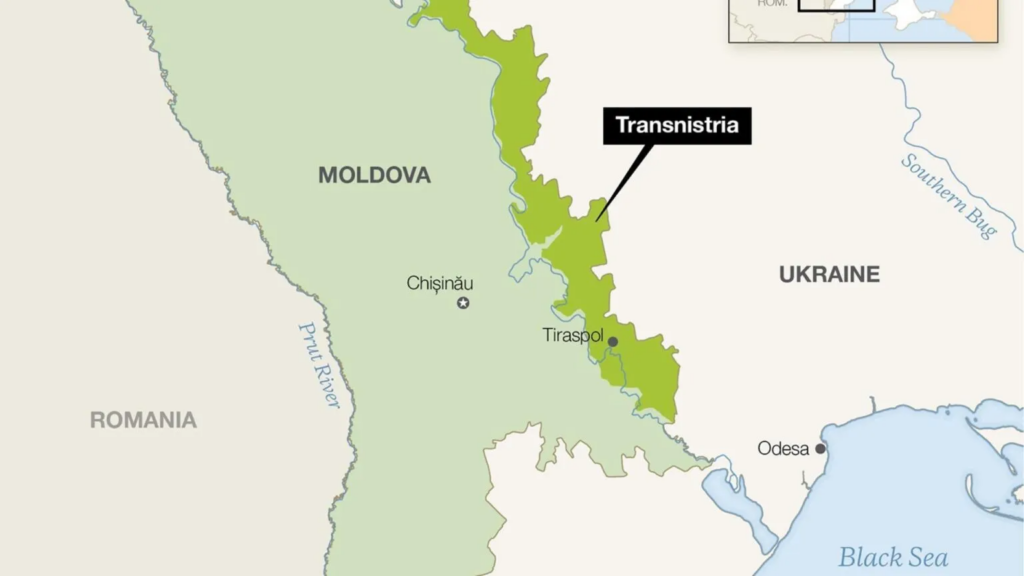
Magyar is not Orbán. After Russia struck Zakarpattia Oblast—Ukraine’s westernmost Oblast, home to many ethnic Hungarians—Magyar condemned the attack. His pro-Western foreign minister, Anita Orbán (no relation), summoned Moscow’s ambassador and asked when Russia would end the war. 

For Magyar, however, helping Kyiv could cost votes: more than half of Hungarians oppose restarting talks, and even supporters of Magyar’s own Tisza party—which ended 16 years of pro-Russian Fidesz rule—are split down the middle. 

What Orbán left behind also influences Hungary’s hesitation: a Fidesz propaganda apparatus that has shrunk but whose narratives endure, a minority issue opponents can still weaponize against Magyar, and an energy system tied to Moscow.

Magyar’s caution may be less about what he believes than what Hungarian politics rewards: helping Kyiv still carries more risk than reward at home.

Hungary is not alone: an EU-wide poll found that 41% were opposed to Ukraine joining the EU, even if it met all accession conditions. 

The 18 June confrontation came three days after a brief breakthrough. On 15 June, Hungary helped Ukraine open the first of six negotiating clusters—parts of the EU rulebook Kyiv must work through before joining. Each requires unanimous approval from the EU’s 27 governments. 

On 23 June, Budapest blocked the other five from opening. Hungary later cleared Cluster 6, covering foreign policy. The EU and Ukraine formally opened Cluster 6 on 14 July, leaving four clusters unopened. 

What Hungary is actually blocking

Magyar has repeatedly argued that accelerating Ukraine’s EU talks would be unfair to Western Balkan countries that have waited years to join.

In a recent Substack analysis, Dániel Hegedűs, deputy director of the Institute for European Politics, rejects Magyar's suggestion that opening several clusters quickly would give Ukraine special treatment. 

Other candidate countries have advanced at a similar pace, he said, making Ukraine's request unusual mainly because of the war, not because it breaks EU precedent: Albania opened all six clusters in just over a year, between October 2024 and late 2025. 

For Kyiv, Magyar is harder to read than Orbán. With the latter, Ukraine knew it would not get anywhere with EU accession, as the Fidesz leader would veto every attempt.

As Vitalii Diachuk, an analyst at Ukraine’s Institute for Central European Strategy, stated, Orbán’s veto was “predictable and targeted.” Brussels could counter it with diplomatic pressure, blocking funds, and isolating Hungary’s vote. 

Péter Magyar, leader of Hungary’s Tisza Party, waves a Hungarian national flag at a victory rally in Budapest, Hungary, April 12, 2026. Photo: David Balogh/Xinhua via East News

Unlike Orbán, Magyar did not come to office with a long record of hostility toward Ukraine. But with little track record on Ukraine—Tisza’s manifesto offered few details beyond opposing accelerated accession—his future course is harder to predict.

Soon after taking office, he said Hungary would hold a referendum on Ukraine’s eventual EU membership. Diachuk warned that this would leave Kyiv dependent on Hungarian politics and public opinion years from now: 

“It is unclear what the Hungarian government will look like, how public opinion will be shaped, or whether the referendum will be genuinely democratic rather than another Orbán-style ‘national consultation’ [government mail-in questionnaires criticized for their leading language].” —Vitalii Diachuk

Speaking with Euromaidan Press, Hegedűs argued that Magyar’s Ukraine policy will remain subordinate to domestic political calculations. 

“He will pursue closer rapprochement with Kyiv only if it either brings him a tangible political benefit or does not expose him to vulnerabilities in the domestic political arena,” Hegedűs noted.

Not just a Hungary issue: Europe’s wider doubts on Ukraine’s accession

Hungary is the most visible obstacle to faster talks, but Magyar is not alone: most EU governments also oppose speeding up Ukraine’s accession.

Few want to reject Ukraine outright, Hegedűs said. Yet EU member states favor moving negotiations forward under existing rules while keeping pressure on Kyiv to complete difficult legal, democratic, and economic reforms.

France and Germany have resisted shortening the process, while only the Nordic and Baltic states have pushed to open all six negotiating clusters quickly. Most member states support continued negotiations but do not waive accession requirements or promise membership before Ukraine has met them.

Beyond the halls of power, many EU citizens remain wary of Ukraine’s accession, largely over economic concerns. French farmers pressed Paris to curb Ukrainian food imports, while France’s agricultural minister warned that market disruption could erode public support for Kyiv.

Farther east, a June poll found nearly six in ten Poles opposed Ukraine joining the EU. From 2023 to 2025, Polish farmers repeatedly blocked crossings with Ukraine, claiming that Ukrainian grain meant for global markets was depressing local prices.

Polish farmers’ fears were disproportionate to the broader trade picture: the EU matters far more to Ukraine than Ukraine does to the EU. Still, Brussels struck a temporary compromise, leaving unresolved how accession would reshape farm subsidies and competition.

Same trade flow, opposite weight: what’s central for Ukraine’s economy is marginal for the EU’s. Chart: European Commission / Euromaidan Press.

Concern extends beyond agriculture. András Simonyi—the former Hungarian ambassador to NATO and the US—noted some Europeans fear a war-hardened Ukraine whose defense firms are already “way ahead” in some technologies. Their cheaper, combat-tested systems could undercut established manufacturers and win export contracts.

Le Monde reported unease among French manufacturers, while French experts warned that Ukrainian drone makers could become “formidable competitors.” Simonyi argued that Europe should treat that competition as a catalyst, not a threat.

Janitorial duties: Fidesz’s shadow over Magyar

Domestic priorities have dominated Magyar’s first months in office as his government has focused on restoring the rule of law and securing the release of billions of euros in EU funds frozen under Orbán.

Hegedűs said the “absolute primacy” of domestic affairs would keep the government focused on constitutional reform, removing Fidesz loyalists from state institutions, and pursuing accountability for corruption. 

Simonyi put it more simply:

“Magyar’s focus for now is cleaning up after Orbán.” —András Simonyi

As part of his domestic agenda, Magyar has begun dismantling Fidesz’s propaganda apparatus. After his April victory, he appeared on M1, the state-funded broadcaster aligned with Viktor Orbán, and vowed to shut down its “factory of lies.”  

M1 had echoed Kremlin claims that Russia was defending “the Russian-majority population in Donetsk and Luhansk Oblasts” from “Ukrainian fascism” and that Ukraine persecuted minorities. On 7 July, it suspended news broadcasts for an overhaul intended to restore public-media independence. 

That overhaul could weaken one major source of anti-Ukrainian messaging. But analysts warned that Orbán’s defeat had not erased the wider media ecosystem—or the audience it cultivated. 

“The government’s production line of content and narratives has currently stalled, but public demand and the opposition’s infrastructure remain on standby.” —Vitalii Diachuk

Polling backs Diachuk up. In a post-election ECFR survey, Tisza voters split almost evenly on restarting Ukraine's accession talks—41% for, 43% against. 

On arming Ukraine, though, they were not torn: just 12%—one in eight—backed it. Nationally the mood was colder still—54% opposed reopening the talks at all, and majorities rejected sending Kyiv either money or weapons.

A woman walks past a pro-government billboard featuring a portrait of Ukrainian President Volodymyr Zelensky, with the text reading “Let’s not let Zelensky have the last laugh,” in Budapest on 3 March 2026. Source: Attila KISBENEDEK / AFP via East News

Magyar might therefore be trying not to hand Fidesz political ammunition. As Hegedűs noted, a too-visible rapprochement with Kyiv could expose Tisza to attack and alienate voters beyond its base. 

Magyar’s hesitation may reflect electoral caution more than distrust of Ukraine. The danger is that a temporary tactic becomes lasting policy whenever supporting Kyiv carries a domestic cost. 

The threat of Russian influence also lingers. The Carnegie Center notes that Fidesz remains embedded in transnational illiberal networks that carried Kremlin talking points and could survive Orbán’s loss of power. 

“He cannot appear less sensitive than Orbán”: The minority question

The Hungarian minority in Zakarpattia remains a potential flashpoint for bilateral relations—and Ukraine’s EU bid. Ukraine’s westernmost region is home to roughly 150,000 ethnic Hungarians, before war and emigration substantially reduced the community. Under Orbán, Budapest deployed intelligence agents there, stoked interethnic tensions, and amplified claims of persecution through state media. 

Magyar has taken a different approach. Within three weeks of taking office, his government struck a deal to restore Hungarian-language schools and expand language rights in education and public services. Ukraine also agreed to write those commitments into law and its EU-required minority-rights action plan. 

Diachuk said the contrast between Magyar and Orbán was night-and-day: 

“Orbán and Szijjártó [Orbán’s foreign minister] used demands [connected to the Hungarian minority] to block Ukraine’s EU path, regardless of Kyiv’s progress, because an agreement would have cost them leverage. Péter Magyar, by contrast, sought and reached an agreement.” —Vitalii Diachuk

There is a catch. Magyar has prioritized disputes he can resolve quickly and present to voters as proof he can fix what Orbán left behind, as Hegedűs noted

Future disputes over the Hungarian minority in Zakarpattia Oblast could still become politically combustible. Diachuk noted that “demand for narratives about protecting Zakarpattia's Hungarians is genuine and exists independently of Fidesz narratives.”

Recent events show why Hungarian politicians continue to treat the issue so carefully. Magyar framed the June agreement as restoring “fundamental rights” to 100,000 Hungarians. 

His deeper concern is domestic: Magyar wants to avoid criticism from Fidesz and the far-right Mi Hazánk party for looking “too soft on Ukraine,” Hegedűs told Euronews. 

New disputes could therefore become a test of whether Magyar is defending ethnic Hungarians abroad—and hand his opponents an opening to accuse him of yielding to Kyiv. 

“Magyar cannot appear to be less sensitive to the minority question than Orbán. But he can take the initiative, get it out of the way and not allow others to hide behind Hungary,” Simonyi noted.

The harder break with Moscow lies in energy

In the April election, VSquare reported that Russian operatives campaigned hard for Orbán and cast Magyar as a Brussels puppet. It failed, and "Russians go home" became a prominent slogan of the opposition. 

“Russia failed in Hungary. Hungarians, and especially the Magyar government, will be vigilant and unmask any Russian effort to interfere in Hungarian politics.” —András Simonyi

Magyar’s subsequent actions support that assessment. On 4 May, his government expelled SVR agent Artur Sushkov, whom Orbán had shielded months earlier. In June, Budapest dismissed every Orbán-era intelligence chief and appointed Péter Buda—a critic of Orbán’s pro-Russian course—to overhaul the security services.

Nevertheless, Russia’s presence remains pronounced in Hungary’s energy sector. Russian crude accounted for 93% of Hungary’s oil imports in 2025, while Magyar has pledged to end dependence on Russian energy only by 2035—eight years after the EU’s planned phaseout. 

Warsaw, 25 May 2022. Greenpeace protest in front of the Hungarian Embassy. Source: Pawel Wodzynski/East News

Diachuk noted Magyar inherited an energy system deeply tied to Russia—long-term contracts, infrastructure built around Russian fuel, the Russian-built Paks II project—dependencies no single decision can undo.

The difference is visible in how each leader uses the same vulnerability. Orbán held up a €90 billion EU loan for Ukraine until Russian oil resumed through the Druzhba pipeline; Magyar has instead sought French nuclear cooperation to diversify Hungary’s supply. 

“Magyar treats energy dependence not as leverage over Brussels, but as a problem Hungary must gradually resolve,” Diachuk said.

That difference matters, but it does not settle how Magyar will act when supporting Ukraine becomes costly at home. 

Diachuk said the coming weeks would determine whether the opening becomes durable. “This is a real window of opportunity, but it’s quite small.”

This material was produced as part of a project by the Institute of Mass Information with the support of the Ministry of Foreign Affairs of the Netherlands. The content of this publication does not reflect the official position of the IMI or the Kingdom of the Netherlands.

  •  

The US Army’s former commander in Europe is “withholding applause” for Trump’s Patriot pledge—and expects no interceptors before winter.

A US Patriot air-defense launcher fires an interceptor beside an inset portrait of retired US Lieutenant General Ben Hodges.

On 8 July, US President Donald Trump promised at NATO's summit in Ankara to let Ukraine build Patriot interceptors. 

He left out one detail: whether Ukraine would produce any by winter—before renewed Russian attacks on Ukraine’s power grid leave civilians without heat.

Ukraine has no reliable answer to Russia's ballistic-missile attacks, and Trump's pledge will not provide one this winter. During Russia’s 6 July barrage on Kyiv, Ukraine intercepted none of 29 ballistic and hypersonic missiles. The attack killed at least 28—four days after another strike killed at least 30.  

On 7 July, Ukraine’s Defense Ministry said Ukraine had effectively run out of Patriot interceptors. 

Trump’s Patriot promise remains just words. He had not even consulted Lockheed Martin or RTX—which build the interceptors—before making the pledge. 

Speaking to Euromaidan Press, Ben Hodges—former US Army Europe commander and NATO senior logistics mentor—said Ukraine would not build any interceptors soon: “I am pretty certain it will not produce anything in the next three to six months.”

Outside estimates run longer: two expert groups advising the UK Defense Ministry judged production unlikely within a year, while other experts put the first interceptor about two years away.

Ukrainian President Volodymyr Zelenskyy (left) meets US President Donald Trump (right) on the sidelines of the NATO summit in Ankara on 8 July 2026. Source: SAUL LOEB / AFP via East News

Hodges thinks Ukraine could beat that two-year timeline. Russia’s invasion, he said, has forced Ukraine’s defense industry and workforce to innovate faster than peacetime timelines assume.

Until allied supplies or Ukrainian production catch up, Hodges said, Kyiv’s best defense may be to strike Russia’s missile factories—to "kill the archer" rather than stop every arrow.

Hodges' hope does not extend to Trump’s administration. He is “withholding applause” until he sees “concrete actions," citing the administration’s refusal to recognize Russia as the aggressor and Vice President JD Vance’s description of halting US aid as “one of his proudest achievements.”

That record, Hodges noted, makes it “hard to be confident” that Trump’s approach has changed.

Interview edited for length and clarity.

What Trump’s Patriot pledge would actually require 

Daniel Thomas: When Trump said Ukraine could produce Patriot interceptors under license, what did he actually commit the United States to—and was it real policy or mainly a political announcement?

Lieutenant General Ben Hodges: I was pleased that Trump made the pledge, but I remain very skeptical until I start seeing actual movement.

For now, it is a pledge, and he has made many pledges about Russia and Ukraine that he has not followed through on. So I am cautiously optimistic, but it is not yet a certainty.

If the plan moves forward, Lockheed Martin—the main contractor for the PAC-3, the Patriot interceptor Ukraine relies on to stop ballistic missiles—would have to be involved. Commercial arrangements would have to protect its technology and intellectual property, with the US government likely providing some form of support or guarantees.

Trump said the company did not know about it. I doubt that.

Why Trump cannot start Patriot production on his own

Thomas: Once political approval is given, what must happen before Ukraine can actually begin producing Patriot interceptors? 

Hodges: Lockheed would have something to say. We are not in a system where the government owns the company and can simply direct it to begin production. This is a commercial enterprise with a board and shareholders, so the relevant laws and agreements would have to be sorted out.

The Departments of Commerce, Defense, State, and Treasury would all have a say, and Congress would probably need to be notified. If this is a genuine policy decision with a disciplined process behind it, much of that coordination should already have begun. And if those authorities have already been lined up, that part could move quickly.

Trump's administration is not famous for that, but I hope they already have the ball rolling.

Then come the harder, practical challenges. Patriot systems are sophisticated weapons, not hammers and nails. Ukraine would need trained workers and the right tools. Components would have to come together through a complex supply chain. And Russia would try to strike the facility before it became operational, making its location and protection critical.

What can Ukraine build on its own—and what does it still need from elsewhere?

Thomas: What would Patriot production in Ukraine initially involve: building complete interceptors, assembling imported components, or making selected parts? And could that shift toward full interceptor production over time?

Hodges: One possibility is that subassemblies would be sent to Ukraine, given the supply chain's complexity. Components come from different places before being assembled into a PAC-3 interceptor capable of countering ballistic missiles. But I do not know whether that model has been selected.

Whatever Ukrainian company took part would have to work with Lockheed, and its personnel would need training. They might go to the United States, where the interceptors are made, or a team might come over to train them. All of this is doable.

I have also seen people speculating that Ukraine will work it out with Poland or Germany, or somewhere else, to actually do this. That could be the case.

Has Trump’s Ukraine policy actually changed?

Thomas: Does Trump’s Patriot pledge signal a real shift in his Ukraine policy, or is it too early to tell?

Hodges: I am withholding applause until I see concrete actions showing that the president has directed this to happen.

I hope it does. But his approach has been to push Russian talking points and pressure Ukraine to give up land for the sake of stopping the fighting. The administration has shown little concern about the origin of the war and has struggled even to identify Russia as the aggressor.

The aftermath of the Russian attack on Kyiv on 2 July 2026. Credit: DSNS

Remember, Vice President Vance said one of his proudest accomplishments was stopping the flow of aid to Ukraine. What the hell is that? 

It is therefore hard to be confident that the Trump White House’s overall view has changed. Washington treats this as a transaction: Germany or other countries can buy American equipment and give it to Ukraine, rather than the United States providing direct aid because it wants Ukraine to win. 

I take the president at his word that he wants the killing to stop. These ballistic missiles are blowing up apartment buildings. But I have not seen him put meaningful pressure on Russia.

How quickly could Ukraine build Patriots? 

Thomas: Even if everyone moved quickly, how soon could Ukraine produce usable Patriot interceptors—and could they affect this war immediately, or would they mainly be a longer-term investment?

Hodges: Maybe a little bit of both. I have heard estimates of about two years before the first Patriot interceptor could be produced, although people may all be repeating the same initial report.*

That sounds like a normal timetable. Ukraine works at a different speed because it is fighting for survival and has a technologically capable, educated workforce. I would not automatically apply the same timeline used for other countries. 

Freya system missile. Fire Point art.

It might not necessarily take Ukraine two years once the process starts, but I am pretty certain it will not produce anything in the next three to six months.

Ukraine may also learn things that help it improve or develop other systems. It does not have to be a Patriot interceptor; it needs a weapon capable of intercepting a ballistic missile moving at tremendous speed and altitude. Ukraine is trying with Freya but we will see what happens.**

* Japan took about two years to establish licensed Patriot production but still imports key US components. Ukrainian experts estimate that Ukraine’s first PAC-3 missile could emerge no earlier than 2029.

**Freya is Fire Point's ballistic interceptor, which Ukraine hopes to build within the next 12 months.

What Patriot production would not fix

Thomas: In military terms, how much could Ukrainian Patriot production shift the strategic balance—or would it mainly ease a critical shortage?

Hodges: It would fill a gap. Ukraine has changed the momentum of the war in several areas. It has had significant success in the Black Sea, stopped Russia from making meaningful progress on the ground, and developed long-range precision-strike capabilities against Russian oil and gas infrastructure.

The one thing Ukraine has not been able to stop consistently is Russia's ballistic-missile attacks against its cities. So this effort is primarily about protecting Ukrainian civilians from those missiles.

Thomas: But Ukrainian-produced interceptors will not be available for this winter. How do you assess that immediate gap?

Hodges: It will be a rough winter. But the resilience of Ukrainian society is something we will marvel at for decades. That does not make it any easier, but what Ukrainians have withstood is incredible.

I imagine—and certainly hope—that Ukraine is finding ways to disrupt Russia’s ballistic-missile production. Its long-range weapons can now reach almost any relevant factory, and it recently struck a plant that produced components for those missiles.

"It is better to kill the archer than to try to intercept all the arrows."

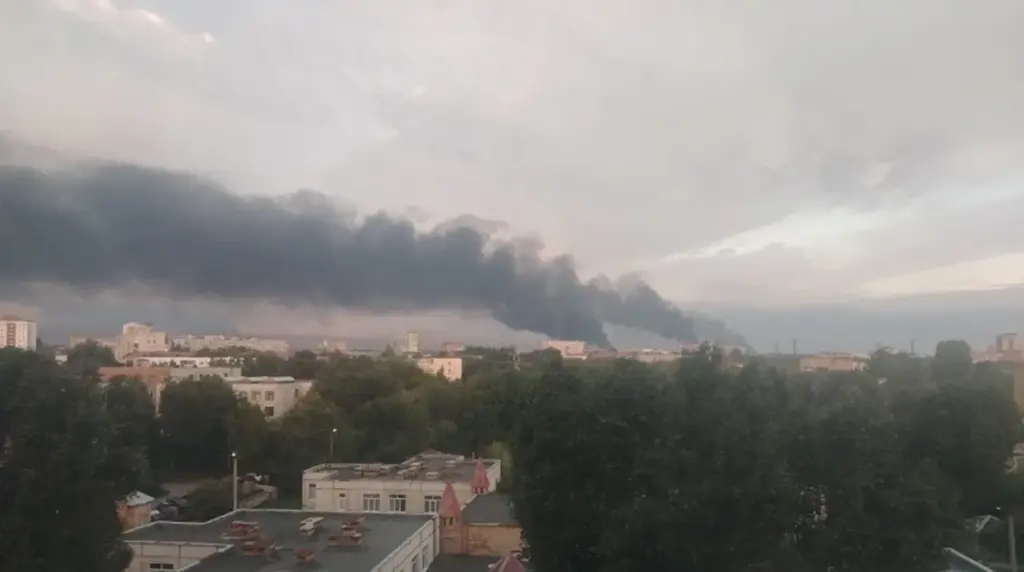
Black smoke rises over Voronezh, Russia, after a reported Ukrainian missile strike on the VZPP-S semiconductor plant, 22 June 2026. Photo: Exilenova+

Thomas: Can Patriot ever "close the skies" over Ukraine? What scale of deployment would that take?

Hodges: What Ukraine needs is integrated air and missile defense.***

Russia is launching hundreds of drones, a couple dozen ballistic missiles, and other weapons in these attacks. Its aim is to overwhelm Ukrainian defenses. Ukraine may shoot down 90% or 95%, but that still leaves dozens of drones and missiles getting through.

***This could entail cheap interceptors for the drones, medium-range systems for cruise missiles, Patriot for the ballistics, all fed by a shared radar network.

“We are absolutely not prepared”: NATO could not stop the kind of attack Kyiv faces nightly 

Thomas: Ankara did not address European air defense for Ukraine. Setting Ukraine aside, could Europe defend itself against the kind of attack Kyiv faces on an ordinary night?

Hodges: My biggest concern for years has been the lack of adequate air and missile defense for Europe.

If the sort of attack that happens against Kyiv on a typical night were to happen against Bremerhaven, or Gdansk, or some of Europe’s other major seaports or airports, we would not be able to stop it. We are absolutely not prepared.

Graph showing the increase in Russian hybrid warfare attacks on Europe since the start of Russia's full-scale invasion in 2022. Note the spike in hybrid warfare attacks since September 2025. Source: Armed Conflict Location and Event Data via the Munich Security Report 2026

It is a combination of capabilities, but it is also that we have not done the exercises. We have not done large-scale, multinational, joint exercises, going against an attack like the ones Ukrainians deal with, in a heavily contested electronic warfare environment. We have not practiced that to scale.

So people know there is a requirement. But it is also a requirement you have to exercise. You have to practice in the most rigorous conditions to sort out who shoots at what, where the sensors are, what the priorities are for what gets protected.

You can never, ever protect everything. There is always a prioritization made by commanders and by civil authorities.

Not everybody is going to be under some famous shield. It does not exist.

This material was produced as part of a project by the Institute of Mass Information with the support of the Ministry of Foreign Affairs of the Netherlands. The content of this publication does not reflect the official position of the IMI or the Kingdom of the Netherlands.

  •  

Hungary votes to remove Orbán-loyal president as Magyar dismantles Fidesz system 

Hungarian Prime Minister Péter Magyar speaks with Ukrainian President Volodymyr Zelenskyy before an EU leaders’ meeting in Brussels.

Hungary’s parliament voted on 13 July to remove President Tamás Sulyok. Elected president in 2024, Sulyok held a largely ceremonial office but could sign legislation. 

Sulyok’s removal forms part of the sweeping 17th amendment to Hungary’s constitution, Politico reported.

Lawmakers approved the constitutional amendment by 139 votes to six, while Fidesz boycotted the session. The package also introduces a 12-year limit for lawmakers.

Sulyok's removal is not yet final. He has five days to sign the constitutional amendment, and Tisza lawmakers have vowed to launch impeachment proceedings if he refuses.

Prime Minister Péter Magyar accused him of consistently siding with his former political patrons.

“Whenever he has had to choose between constitutional principles and the interests of Fidesz, Tamás Sulyok has time and again chosen the interests of Fidesz, and continues to do so to this day,” Magyar said according to Politico.

The vote marks another step in Magyar’s effort to dismantle the political system built during Viktor Orbán’s 16 years in power. Magyar won April’s election after promising to restore the rule of law, curb corruption and end Hungary’s role as Russia's closest partner inside the EU.

What Magyar has changed for Ukraine—and what he has not

For Kyiv, Magyar’s record is an improvement over Orbán’s, but not a clean break.

His government ended Hungary’s two-year veto on EU reimbursements for weapons sent to Ukraine, releasing €6.6 billion and clearing a path for more than €40 billion in delayed claims.

But Magyar has also predicted that Europe will return to buying Russian gas after the war, all while hesitating to commit to a complete decoupling of Hungary from Russian energy.

Still, Magyar’s government also dismissed every Orbán-era intelligence chief and placed Russia hybrid-warfare expert Péter Buda in strategic oversight, seeking to remove pro-Russian influence from services that Hungary’s allies had come to distrust

Hungary still slows Ukraine’s EU accession

Magyar has not fully ended Budapest’s obstruction of Ukraine’s membership bid. In June, Hungary blocked a joint EU letter needed to advance accession talks, threatening Kyiv’s goal of opening all six negotiating clusters by mid-July.

Budapest later dropped its veto on Cluster 6, covering external relations and security policy, which the EU opened on 14 July. By then, however, only two of the six clusters had opened—indicating that Magyar has eased Orbán-era obstruction without entirely abandoning Hungary’s cautious stance on Ukraine's membership.

  •  

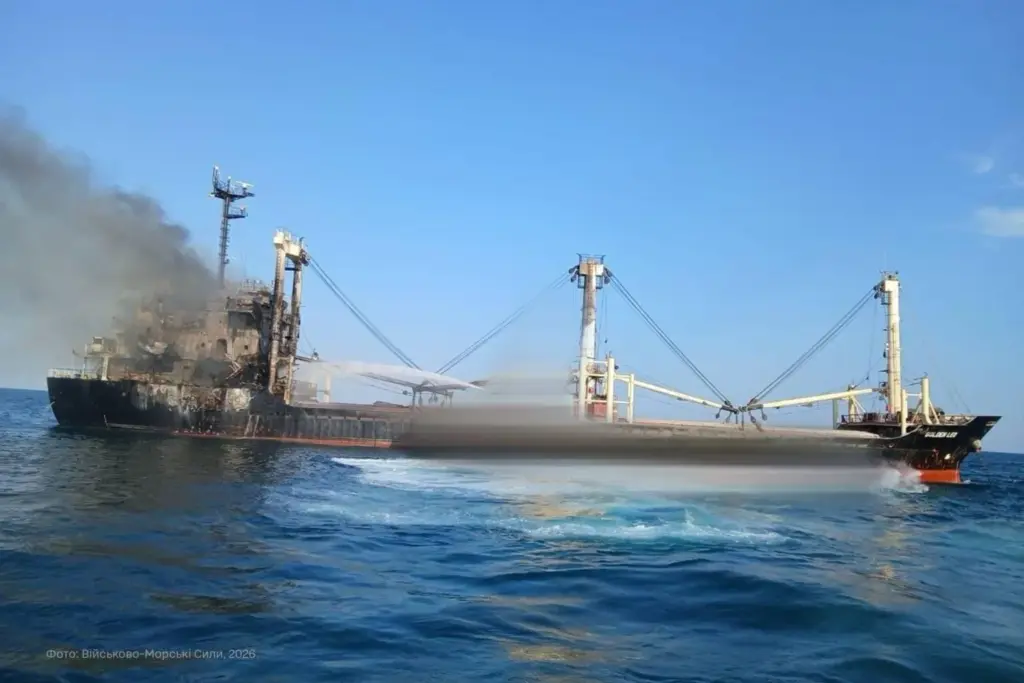
Ukraine hits 15 Russian vessels as drone blockade of Crimea spreads across Azov Sea

Russian ships burning after successful Ukrainian strikes on 12-13 July 2026.

Ukraine's drone blockade of Crimea widened across the Sea of Azov overnight on 12–13 July. The Unmanned Systems Forces said they struck 15 Russian vessels, nine energy nodes, and four air-defense assets.

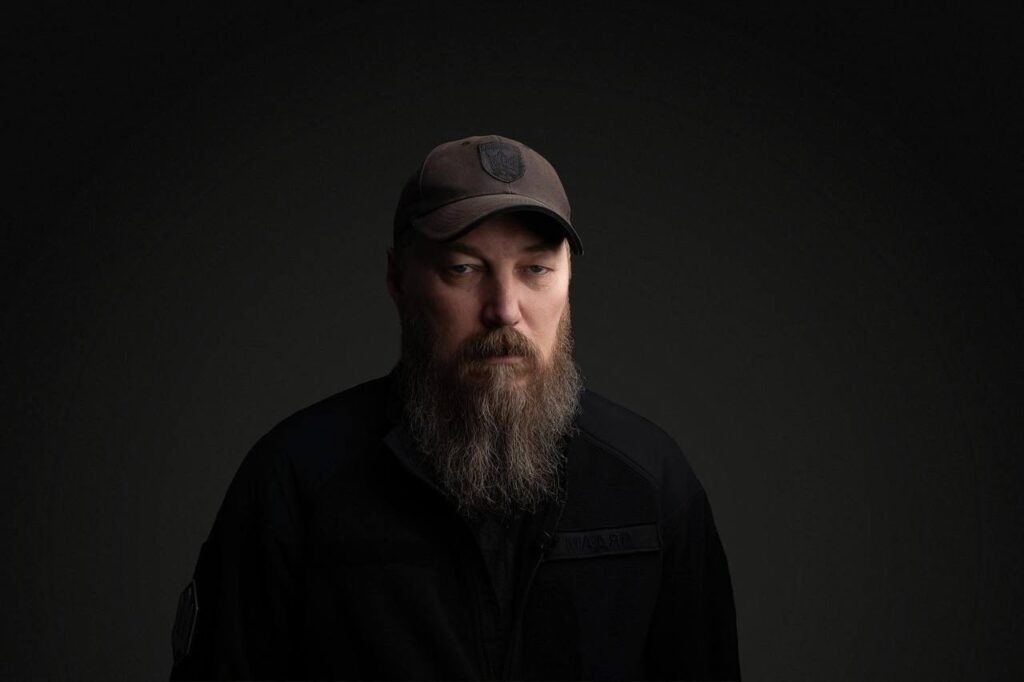
Commander Robert “Madyar” Brovdi said the maritime targets included seven tankers, five dry-cargo ships, one ferry, and two tugs. Censor reported that the same operation hit the “Crimea” electricity-transfer point on the Kuban-Crimea energy bridge for the second time in 48 hours. Brovdi also claimed the destruction of an S-400 launcher, a Tor system, and two radar complexes. The damage could not be independently confirmed.

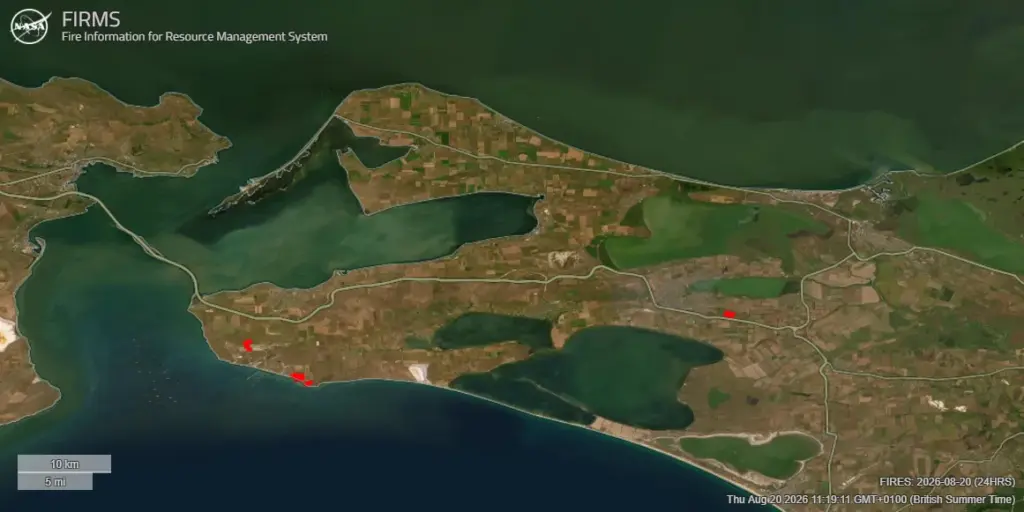
NASA FIRMS registered thermal anomalies across the Sea of Azov, including south of occupied Mariupol and around Kerch. Credit: NASA FIRMS.

RBC-Ukraine reported that NASA FIRMS satellite data showed thermal anomalies in the Sea of Azov and at the Port Kavkaz railway station, a transport hub serving routes to Crimea.

A wider FIRMS screenshot also showed a hotspot south of the occupied city of Mariupol. NASA FIRMS detects heat signatures but cannot determine their cause.

Thermal anomalies appeared north and south of Kerch following Ukraine’s overnight drone operation. Credit: NASA FIRMS.

The strikes targeted several parts of the network linking occupied Crimea to Russia. By hitting shipping, power infrastructure, and air defenses together, Ukraine is tightening the noose around occupied Crimea's supply lines. Each strike makes the remaining links harder to use.

Crimea.Realities reported that Russian authorities kept the Kerch Bridge closed for more than 11 hours, from 9:51 p.m. on 12 July until 9:06 a.m. the next morning. Local residents reported drones, air-defense fire, and explosions around Kerch throughout the closure

Citing the Crimean Wind monitoring channel, Ukrinform reported that fires broke out near Cape Fonar, where Russian air defense units are deployed.

How Ukraine tightened the ring around Crimea

The operation followed a week of strikes on the same routes. On 10 July, Ukrainian forces hit vessels, both Azov loading ports, five oil depots, and Crimea’s power grid.

Russia then halted traffic through the Don-Azov shipping channel and stopped accepting requests for passage through the Kerch Strait. By 12 July, the Unmanned Systems Forces said they had struck 90 vessels in seven days. Brovdi put the total for 6–13 July at 105 successful strikes on vessels.

  •  

New York Times: Russian spies used Japan to source technology for war

Aeroflot Airbus A330 at Narita Airport, illustrating the airline’s reported role as cover for Russian industrial espionage in Japan.

Russia has turned Japan into a key base for obtaining high-tech equipment to sustain its war against Ukraine. A New York Times investigation reveals how GRU military intelligence operatives work under cover in Tokyo to acquire banned components for Russian weapons.

The investigation found that officers from Russia’s GRU military intelligence service operated in Japan under diplomatic and commercial cover. GRU officers sought to acquire electronics, machine tools and other technology for routing to Russia and use in weapons production.

At the center of the operation is the GRU’s little-known 20th Directorate, according to current and former Western intelligence officials interviewed by the Times.

One of its key figures is Maksim Vladimirovich Filchenkov, a 49-year-old GRU veteran who arrived in Tokyo in February 2024. He officially works for Russia’s state airline, Aeroflot.

Western officials told the Times that Filchenkov oversees the directorate’s work from an Aeroflot office about a 10-minute walk from Japan’s National Police Agency.

Russian and Soviet intelligence officers have used Aeroflot positions as cover for industrial espionage since the Soviet era.

The network reportedly relies on relationships with shipping and logistics companies. Russian agents send sensitive goods first to countries where Aeroflot still operates, then route them to Russia through intermediaries and misleading paperwork.

According to the Times, Filchenkov developed ties with Tokyo logistics company Proco Air. Proco Air denied knowingly transporting prohibited goods and has not faced charges of wrongdoing.

Japanese components continue to reach Russian weapons

Japan is especially valuable to Russia because of its large high-tech industry and comparatively weak espionage laws.

Ukraine has repeatedly warned Tokyo that Japanese-made components are reaching Russian weapons. Vladyslav Vlasiuk, Ukraine's presidential sanctions commissioner, said Japanese parts appear in around 90% of Russian cruise missiles, ballistic missiles and drones. Vlasiuk made the remarks to Kyodo News, as reported by 47News.

He also named 13 Japanese companies whose products had been found in Russian weapons. Kyiv is now pressing Tokyo to tighten export controls on civilian dual-use goods rerouted through third countries.

There is no evidence that Japanese manufacturers knowingly supplied Russia’s military. Components can pass through several distributors and countries before reaching Russian weapons producers.

  •  

Washington said Ukraine’s Patriot shortage was solved. Lockheed and RTX hadn’t been told.

A US Patriot missile launches, beside Zelenskyy and Trump meeting at the Ankara NATO summit, July 2026.

Donald Trump made it sound as though he had just solved Ukraine’s Patriot shortage.

At the NATO summit in Ankara on 8 July 2026, he told Ukrainian President Volodymyr Zelenskyy that the United States would grant Kyiv something it had sought for months.

“We’re going to give a license to you to make Patriots,” Trump told Zelenskyy. “This way, you can’t complain that we’re not giving ’em enough.”

But Trump did not actually grant the license in Ankara. CBS News reported that Lockheed Martin and RTX—which help produce the Patriot missile—had not been informed. Defense News said key terms, including which interceptor Ukraine could build, still had to be negotiated with the contractors. 

Zelenskyy left with a promise, not the right to begin producing Patriot missiles.

Even a finalized license would not deliver a single interceptor soon, two defense specialists told Euromaidan Press. 

The Patriot is the Western system that most reliably stops Russia's ballistic missiles, and Ukraine depends on the US almost exclusively for it. Russia, meanwhile, wages its most intense aerial campaign of the war. In the strikes on 6 July, Ukrainian air defenses downed none of nearly 30 ballistic missiles fired at Ukraine, according to the Ukrainian Air Force.

A Ukrainian production line could be up and running by the end of next year at the earliest. Kyiv needs Patriots today.

An American Patriot air defense system. Credit: MJaegerT via X

Worse, the specialists warned Euromaidan Press, Washington could use the license as an excuse to stop or delay deliveries. The summit also offered no strategy to defend Ukraine’s skies until production begins, let alone help Kyiv break the battlefield deadlock.

What Ankara delivered

Beyond the Patriot license, the summit’s headline item was money. Allies committed roughly €140 billion ($160 billion) in military aid to Ukraine across 2026 and 2027. Zelenskyy worked the room in an advocacy blitz and met Trump one-on-one. 

The Ankara summit’s communiqué restated the alliance’s support for Ukraine but set no path to NATO membership and named no strategy for the war.

Ukraine's President Volodymyr Zelensky (L) meets with US President Donald Trump on the sidelines of the NATO Summit at Bestepe Presidential Compound in Ankara, on July 8, 2026. The summit comes at a fraught time for the 77-year-old transatlantic alliance, with the US President demanding members make good on a pledge to ramp up defense spending as Washington takes a step back from Europe. Source: SAUL LOEB / AFP via East News

Ukraine's ambassador to NATO, Alyona Getmanchuk, struck a more upbeat note, welcoming what allies brought to Ankara. She pointed to the two-year aid commitment, the Patriot license, and fresh funding for the Czech ammunition initiative, long-range weapons, and Ukrainian drone and missile production.

On much of the summit's ledger, she has a case. But not one item on it closes the gap the specialists keep returning to—interceptors for the Russian ballistic missiles that Ukraine can no longer reliably stop, especially because the Iran War has drained the supply.

The license might be an alibi, not a fix

Zelenskyy has pushed for a Patriot license for months. In late May he wrote to the White House and Congress asking for both more Patriots and a license to build them, and pressed the same case at the G7 in June. His letter was blunt about the dependence underneath it: on stopping ballistic missiles, "we rely almost exclusively on the United States."

Marc DeVore, a defense-industry scholar at the University of St Andrews, believes Trump’s promised license will matter—eventually. His worry is what it buys Washington now.

"The Americans can check off a box and say, 'We've solved the problem.' They may be willing to do a victory lap without actually having resolved the problem."—DeVore

UK General Richard Shirreff, NATO's former deputy supreme allied commander Europe, now chief foreign military adviser to Ukraine's commander-in-chief, echoed DeVore, saying that the Patriot pledge "lets America off the hook concerning all the complaints about not supporting Ukraine."

Shirreff sees a second motive that runs counter to the pure-alibi reading: Washington may simply not have the interceptors to hand over. 

After the US-Israeli war on Iran drained much of the world's stockpile, Shirreff said, America "doesn't have the means to provide Ukraine with Patriot now"—so the license defers deliveries partly because it can't do otherwise.

Other analysts echo DeVore and Shirreff’s assessment. 

Strategic-studies professor Phillips O'Brien argues that the license substitutes for the deliveries Ukraine needs now, and could hand Trump a reason to withhold Patriots until a Ukrainian line exists—late 2027 or 2028 at the earliest. 

General Shirreff, who serves as Chief Advisor to Ukraine’s Commander-in-Chief Oleksandr Syrskyi and heads Ukraine’s ARES (Allied Reform and Expert Support) Military Expert Council, during a meeting with Syrskyi on 22 April 2026. Photo: Syrskyi’s FB

DeVore shares the concern, though he stops short of calling Trump's move deliberate—a calculated deferral or just an announcement to look responsive—the result for Ukraine's skies may be the same: fewer interceptors at the most critical moment.

Why a Ukrainian Patriot is years away

But even a signed, finalized license would run into a harder limit. The Patriot is a punishingly complex machine to build, and Ukraine would start close to scratch.

Speaking to Euromaidan Press, DeVore pointed to hold-ups that are physical, not bureaucratic:

"The two big challenges in producing missiles are the engines and the guidance systems."—DeVore

The guidance is a closely-held secret, DeVore said. Even long-licensed foreign producers still rely on US subcontractors for it, so a license can leave dependence on American manufacturing intact. 

Fabian Hoffmann of the Norwegian Institute for Defence Studies made the same point to the Irish Times: final assembly of the Patriot is not the bottleneck. Rather, localizing the missile’s supply chain is.

Engines are an even harder obstacle, DeVore said, and Ukraine starts at a serious disadvantage. Russia struck key parts of Ukraine’s missile industry early in the war, he noted, and engine shortages have since constrained efforts to scale Ukrainian missiles such as the Neptune to mass production. Kyiv could convert an existing engine line to Patriot production, in his reading, but only by creating a shortfall in the deep-strike weapons now hitting Russian refineries and Crimea. 

In early July, DeVore asked two outside expert groups he chairs, both of which advise the UK Defence Ministry, whether Ukraine could realistically begin producing Patriots within a year. They reached the same conclusion he had: probably not. 

A year is the optimistic floor, not a timetable anyone should count on.

No strategy and a proposal that went nowhere

The €140 billion in military aid pledged to Ukraine for 2026 and 2027, meanwhile, came without a clear strategy for what it would buy or how it would help Ukraine survive the war.

While speaking with Euromaidan Press, Shirreff noted some gains in Ankara, including the renewed Article 5 pledge and the Patriot license—though the latter would take time Ukraine may not have and would do nothing to strengthen its offensive capabilities.

Yet he was more blunt about what the summit amounted to:

“It was an exercise in papering over the cracks in the increasing chasm between Europe and the United States.”—General Shirreff

The summit, Shirreff said, preserved the appearance of transatlantic unity without resolving Washington’s unreliability or Europe’s failure to develop its own strategy for defeating Russia. The failure, in his telling, is one of political will, not military capability. NATO’s leaders would rather keep Trump on side than tell him plainly what Ukraine needs.

Shirreff has long championed a concrete proposal to ease the interceptor shortage: Sky Shield. Under the plan, European NATO aircraft would patrol western and central Ukraine and shoot down Russian drones and cruise missiles where possible.

DeVore further noted that every target destroyed by a European jet is one fewer threat for Ukraine’s limited air defense systems to intercept. That would allow Kyiv to concentrate more of its scarce Patriot batteries around the capital and closer to the front, while reserving their interceptors for the ballistic missiles they are uniquely equipped to stop.

A Royal Air Force Eurofighter Typhoon; such an aircraft would patrol Ukraine as part of Sky Shield. Source: Wikimedia

Shirreff presents Sky Shield as one defensive component of a broader strategy, not a war-winner on its own. However, Ankara, he said, did nothing to advance it. “I just don’t think it’s changed the dial whatsoever.”

The problem the summit didn't touch

Strip away the public announcement, and the missile-interception arithmetic is unforgiving for Ukraine. Only five or six countries can build interceptors capable of stopping ballistic missiles, and all of them are running short. Ukraine’s best salvation might lie in the Freya missile system it is co-developing with Germany—but even that system is not guaranteed to deliver.

Difference between Freya and the Patriot's capabilities. Image: Euromaidan Press

Patriots are ordered years in advance. Meanwhile Russia builds ballistic missiles faster than America builds the interceptors to stop them—roughly 800 a year against about 600—and a single Iskander can take two or three Patriot interceptors to bring down.

As Trump spoke in Ankara, another overnight barrage hit Kyiv, and Ukraine again downed none of its five ballistic missiles.

DeVore's answer is broader than ballistics. Since no defense stops every missile, part of the fix is getting more interceptors and part is making Ukraine need fewer of them—and survive the ones that land.

More interceptors could mean moving Ukraine ahead in the US delivery queue, or buying Japanese, South Korean, or European alternatives. European jets patrolling Western Ukraine could take the drones and cruise missiles off Kyiv's plate. Strikes on Russian missile plants could reduce what Ukraine has to stop at all. A hardened electrical grid survives what gets through anyway.

"A good strategy would have to rely on combinations of all of them," DeVore said.

The fastest option is already underway. Ukraine has asked nearly 40 partner countries to loan interceptors from their stockpiles now, in exchange for missiles already scheduled for Ukraine later. Those borrowed interceptors could arrive long before Ukraine begins producing Patriots itself.

This material was produced as part of a project by the Institute of Mass Information with the support of the Ministry of Foreign Affairs of the Netherlands. The content of this publication does not reflect the official position of the IMI or the Kingdom of the Netherlands.

  •  

Russia banned her for studying the famine it denies. She put it online for the whole world anyway. 

Marta Baziuk, executive director of HREC and lead scholar behind the Holodomor genocide course on Coursera

Russia's answer to scholars who document the Holodomor—Soviet Moscow's starvation of the Ukrainian people—is simple: ban them. In January 2026, it barred Marta Baziuk, one of 16 Canadian scholars sanctioned for studying the Holodomor.

That did not stop her. Seventy-seven days later, Baziuk helped put online a course she had spent three years building—free, worldwide, on a famine Russia dismisses as "western propaganda."

The Holodomor killed at least 3.5 million Ukrainians in 1932–33,  most scholars estimate, due to a famine Stalin's policies manufactured. The present-day Kremlin still calls it a hoax. 

Russia’s actions today echo the Soviet actions at the time of the Holodomor. Ninety years on, Russia is reviving them in occupied Ukraine: in Oleshky, across the Dnipro from Kherson, UN monitors say civilians have been cut off from food.

The pattern is not lost on Ukraine's leaders. "If he could arrange another Holodomor for Ukraine, he would do it," Volodymyr Zelenskyy said of Vladimir Putin in 2023, hours after a Russian drone barrage on Holodomor Remembrance Day.

Baziuk, the Executive Director at the Holodomor Research and Education Consortium (HREC) at the University of Alberta, spoke to Euromaidan Press about building a permanent record of a famine Russia is still trying to erase—and why it could only be done now.  

The course Baziuk helped design, Famine as Genocide: The Holodomor in Ukraine, went live on Coursera on 23 March 2026.

Unsealing the archives

Daniel Thomas: In a review of this course from a key scholar of the Holodomor, he said it would have been impossible to make ten years ago. Did Russia’s war put Ukraine and its history on people's minds? Or did research on the Holodomor reach a critical mass?

Marta Baziuk: I don't think we hit a critical point of research because of the war. Interest in the course is tied to the war; the research is its own, slower story.

It might have been a good course, but it would have sat quietly, with less interest. 

"The war has made Ukrainian history matter to many people." 

We could not have made this course 12 years ago. Now, due to all the research and scholars working on it, “Holodomor Studies” exists.

It goes back to the archives. They were sealed for so long that you simply couldn't do the necessary research. Most histories, such as Robert Conquest's The Harvest of Sorrow, relied primarily on survivors’ testimony and the reports filed by foreign diplomats. 

Bodies of starved peasants on a street in Kharkiv, 1933; the Austrian engineer Alexander Wienerberger took this photo. Source: Wikimedia

You couldn't get into the Soviet archives and read the correspondence between Stalin and local officials who told him the quotas were too high, and people were starving.

"Until the Soviet Union collapsed and the archives opened, you couldn't prove Moscow’s narrative false." 

Then came an explosion of research. Andriy Kohut, who now heads Ukraine's former KGB archives, treats his job as opening them rather than guarding them. He recently gave a talk charting, year over year, the spike in arrests of Ukrainians in education and culture at the very moment of the famine.

"It wasn't only the peasants starving—Ukraine's cultural, political, and religious elites were being attacked at the same time." 

Books were pulled from libraries. Writers and scholars were expelled from institutions. Some were executed. The destruction was public and deliberate.

Building the course

Thomas: Thirteen modules is quite a lot of material. Was anything cut, given how large the course is?

Baziuk: It's quite a lot, but the subject deserves it. We commissioned Olga Andriewsky, a Soviet history professor at Trent University in Ontario, to design the structure, then matched each chapter to a writer.

Two modules on "dying" and "living" during the Holodomor are built entirely from survivor video interviews and letters. One module also traces what the Comintern—a Soviet organization that coordinated communist parties worldwide —told foreign papers to say about the famine. A lot was known to foreigners. 

Ukrainians in Poland made enormous efforts to force the famine onto the world's attention. And when the International Red Cross offered aid, the Soviet Union refused it: “What famine? We don't need aid!”

We built a whole module on genocide because it's the question that comes up most often.

Soviet starvation was not confined to Ukraine. The course also looks at how collectivization caused famines all across the USSR, including the Kazakh famine, which killed 1.5 million people—roughly one-third of Kazakhstan’s population. That famine deserves its own reckoning. But the pattern is clear: Soviet terror didn’t stop at Ukraine’s borders. 

 There's more to be said about the Mennonite and German settlements and how they suffered. Brethren in Need—a German relief committee led by the Mennonite community — sent food and funds to ethnic Germans starving in Soviet Ukraine. 

The research isn't yet deep enough to say as much as we'd like, but I hope we'll see many more works by local historians.

The genocide question

Daniel Thomas: Does the debate on whether the Holodomor was a genocide sometimes go too far? Do people get lost in the weeds on the question of intent, to the point where they lose sight of the bigger picture? 

Baziuk: It's a legal definition, and I'm not a lawyer, and you're not a lawyer — but everyone thinks they're an expert on genocide.

You can agree on the facts of what happened and still disagree on whether to call it genocide. That doesn't change the facts. I can see someone in good faith arguing that it's not a genocide. I would disagree.

For a while I wondered whether the label even mattered. 

"What changed my mind is that people don't take crimes against humanity seriously unless the genocide question is being asked. It's what gets the crime into the public conversation at all."

The most common-sense fact is that the Soviet Union took all the grain:

"We can now prove they knew people were starving, and they were selling grain on the international market as people starved."

"If that's not intent, I don't know what is."

The pictures that almost didn’t exist

Thomas: What about the visual element, the course’s photos?

Baziuk: The visuals were what we most wished we could have had. There are many places where we wanted photos that simply don't exist — no one was allowed to document the famine.

Even the most famous photographs, by an Austrian engineer in Kharkiv, are mostly city scenes: rural people who had reached the city to beg, dying in its streets. As terrible as those are, it was worse in the villages the camera never reached.

Mykola Bokan's family at lunch in Baturyn, Chernihiv Oblast, 2 April 1933. Bokan inscribed the print himself: "300 days (three hundred!) without a piece of bread to add to the meager lunch." From left: daughter Anna, wife Vassa, and sons Oleksandr, Kostiantyn, and Lev, with Mykola Bokan on the right. Source: Mykola Bokan / TsDKFFA Ukraine, via the National Museum of the Holodomor-Genocide.

In the 1930s, Soviet authorities barred entry to all foreigners, so there are very few genuine images. That gap is what the deniers used. For years, anyone reaching for a photo of the Holodomor would pull one from the earlier famine of the 1920s, when the Soviets let foreign aid workers in to document the hunger. 

"So the Soviet official line became: you're using pictures from the 1920s, so you're making it up! That's part of why we built the photo directory, to provide a visual record of what happened in 1932-33."

And then there are Mykola Bokan’s photos. You'd assume everything about the Holodomor that could be known is known by now. Yet his photos only surfaced in 2007, when researchers went to Chernihiv for a Holodomor exhibition and were told of a case file no one had tied to the famine. The file contained pictures from a local photographer of supposedly "counter-revolutionary activities." 

Mykola Bokan with three of his surviving sons at a family remembrance for his son Kostiantyn, who had died of starvation that spring. The framed portrait at the center of the table is of Kostiantyn. Bokan inscribed the photograph "Remembrance for Kostia, who died of starvation. 10 July 1933." Baturyn, Chernihiv oblast. Photo: Mykola Bokan / TsDKFFA Ukraine, via the National Museum of the Holodomor-Genocide.

Bokan had documented his own family starving, writing a caption on each image. The photographs survived because the state entered them as evidence against him. He died in the camps. Getting hold of them ran, again, through Andriy Kohut and those same archives.

The Ukrainian artists who died alongside the peasants

Thomas: The course also covers the Executed Renaissance—Ukrainian writers and intellectuals murdered under Stalin. Many were national communists — followers of Soviet ideals who still championed Ukrainian culture. Who were they, and why does modern Ukraine still revere them?

Baziuk: Many were young, idealistic Ukrainians — a lot of them rural boys getting an education in the cities — who were inspired by the slogans and ideology of the communist revolution. Under Ukrainianization — the short-lived Soviet state policy of supporting Ukrainian culture — Ukrainian figures thrived in film, design, theater, and literature. They thought they had more freedom than they had. Even then, state repression ran alongside the cultural renaissance. 

Members of the literary group Lanka in 1924. The three on the right, Hryhorii Kosynka, Yevhen Pluzhnyk, and Valerian Pidmohylny, would be executed by the Soviet regime. Source: Wikimedia

The moment they pushed too far, stressing Ukraine's links to Europe or a Ukrainian road to socialism leading away from Moscow, the Kremlin said stop. Their books came off the shelves, they were expelled, and some were shot. It was public and deliberate, a signal about what promoting Ukrainian identity would cost. 

"Many of the people killed were committed Communists themselves… Even if you played ball, you still ended up being crushed."

The harder question is how much credit you give the true believers, when the system was built to crush anyone regardless. If you weren't a kulak, you were a spy or a fascist — the charge changed, the outcome didn't. Many of the people killed were committed communists themselves. 

Perhaps Ukrainians today feel some compassion for the position these people were in.

Why the war makes the Holodomor more relevant

Thomas: Going back a little, Brethren in Need’s activities reminded me of Ukrainian diaspora organizations mobilizing after 2022. You see the same instinct to help ninety years apart. What are some other parallels that come to mind between the Holodomor and Russia’s current war against Ukraine? 

Baziuk: I'm careful not to overstate the parallels. The war is its own horror, and the perpetrator in the 1930s was the Soviet Union, not Russia. 

At the same time, there is a similar determination that Ukraine can exist only insofar as it fits the plans, ideology, and mold of what Stalin wanted then, or what Putin thinks Ukraine should be now — an appendage, something like Belarus. 

"There is no room for Ukrainian autonomy or Ukrainian self-determination in Russia’s approach to Ukraine today, just as there was no room for it in the Soviet Union."

That determination to crush Ukrainian self-determination is a common thread. 

"The more people look back at the Holodomor, the more convinced they are that it was genocidal in the context of [Russia’s] war today."

Another common thread is the power of disinformation. During the Holodomor, there was a confluence of outright agents with a motivation to hide the truth, Western interests in countering the rise of Nazism, and the Soviet Union actively denying the famine. A lot of things came together to suppress wider belief in the Holodomor.

Members of Russia's occupation administration in Kherson Oblast dismantle a Holodomor memorial in November 2023. Source: Most

Today, you see similar things on social media—claims that if there is really a war, there should be more pictures, or that the evidence is fake. Some people will persist in that kind of denial. 

Why did it take three years to make the course bulletproof

Thomas: Three years is a long time to prepare a course. Why so long?

Baziuk: Because we knew it would be attacked. We took such pains to make it bulletproof — accurate to the highest standard we could manage.

"Any mistakes we made could be amplified and used against us."

The criticism comes from two directions. 

On one side is a loose-knit left that dismisses the subject as Ukrainian nationalist propaganda. They invoke Stepan Bandera — a World War II-era Ukrainian nationalist leader. Russian propaganda has turned his last name into a catch-all slur for anything Ukrainian or anything it wants to discredit. 

On the other hand, right-wing Ukrainians ask why the death toll is not put at 10 million, or why the course mentions anyone besides ethnic Ukrainians. 

We produced something at the highest scholarly level that the evidence allows.

Marta Baziuk is the executive director of the Holodomor Research and Education Consortium at the University of Alberta. Famine as Genocide: The Holodomor in Ukraine is free on Coursera.

This material was produced as part of a project by the Institute of Mass Information with the support of the Ministry of Foreign Affairs of the Netherlands. The content of this publication does not reflect the official position of the IMI or the Kingdom of the Netherlands.

  •  

France pivots on visas for Russians, shutting application shortcuts as EU crackdown spreads

Russians demonstrating in the Immortal Regiment march in Paris, with banners unfurled, 9 May 2025

Starting 15 July, Russians applying for a French Schengen visa will no longer be able to have their paperwork submitted by a third party, according to The Moscow Times.

Under the new rules, applications at France’s visa center in Russia must be filed either by the applicant personally, by a parent or guardian acting for a child under 18, or by a spouse, child, or parent who can present original proof of the family relationship. 

VFS Global, the company that operates France’s visa centers in Russia, announced the change on 30 June, The Moscow Times reported. Applicants over 12 must still appear in person to provide biometric data. 

France is now the fourth EU country to tighten its Russian visa regime in a matter of weeks.

Eleven Schengen nations wrote to the European Commission on 4 June calling for a full ban on Russian tourist entries, The Moscow Times reported.

 EU Commission spokesperson Marcus Lammert has indicated Brussels is considering formal tightening as early as 2027.

The record France is walking back

The Élysée’s new restriction marks a shift from France’s previously permissive approach to Russian visa applicants. Earlier in 2026, France issued 23% more Schengen visas to Russian nationals than the year before, the steepest rise in the EU, even as Brussels was calling for tighter controls.

European diplomats told Euractiv that Paris was politically resistant to publishing those numbers. 

France, Spain, and Italy together accounted for nearly three-quarters of the more than 620,000 Schengen visas EU governments issued to Russian citizens in 2025, up more than 10% from 2024. 

Paris led in both volume and growth, even as the European Commission ended multiple-entry Schengen visas for Russians in November 2025, citing growing security risks.

The third-party ban does not cap France's total visa issuance. Rather, it removes workarounds in the visa process, as many Russian applicants had relied on third-party visa services and travel agencies to handle their submissions. 

Paris’ hardening line on Russia

France’s tightening of visa policy comes as it increasingly treats Russia as a direct security threat. 

Paris has stepped up enforcement against Russia’s sanctions-evasion network, seizing suspected “shadow fleet” tankers used to keep Russian oil moving despite Western restrictions. 

The French government’s latest strategic review, released in 2025, identifies Russia as France’s main security threat, citing its sabotage, espionage, cyberattacks, information operations, and nuclear intimidation as a long-term concern for the country and Europe at large

  •  

Defense expert: Ukraine’s interceptor shortage has no quick fix

A Patriot air-defense system launches an interceptor, with an inset portrait of defense scholar Marc DeVore — illustrating Ukraine's interceptor shortage.

Russia's escalating missile campaign has exposed one of Ukraine's most dangerous shortages. Russian attacks killed at least 274 Ukrainian civilians in May, the UN says — the deadliest month since Moscow's full-scale invasion — and have damaged all 15 of Ukraine's thermal power plants. The weapon that most reliably stops Russia's ballistic missiles, the US Patriot, is scarce, and Ukraine's interceptor shortage has no quick fix.

That was the problem hanging over the 18 June 2026 Ramstein-format meeting in Brussels, where Ukraine's partners pledged $4 billion and signed a deal with Germany to build Freya, a Ukrainian ballistic-missile interceptor.

But neither the money nor Freya can fix the shortage soon, says Marc DeVore, a senior lecturer at the University of St Andrews who has advised the UK government on Russia's war against Ukraine.

The bottleneck is global, he says. Only five or six countries can build interceptors capable of stopping ballistic missiles, and Patriot is ordered years in advance: the US makes about 600 a year, while Russia builds around 70 ballistic missiles a month, each requiring two or three interceptors to stop.

With another hard winter approaching, Ukrainian Energy Minister Denys Shmyhal warns that the 2026–2027 heating season could be as punishing as the last.

DeVore spoke to Euromaidan Press about why ballistic missiles are so hard to stop, why Freya won't reach the battlefield this winter, and why Ukraine's next interceptors may come from outside the usual Western supply chain — through sanctions, long-range strikes, and suppliers like Japan and South Korea.

This interview has been condensed and edited for clarity.


The global anti-ballistic shortage and what it portends for Ukraine

Daniel Thomas: Does anything that came out of Brussels actually fix Ukraine's supply problem? 

Marc DeVore: The Freya initiative is good, and I hope it works. But there's a significant challenge here if we think globally.

There are only about five or six producers in the world of air-defense missiles with some degree of ballistic-missile interception capability: the United States and Japan, which both build the Patriot; South Korea, with the M-SAM and L-SAM; Russia, with the S-300 and S-400; China; the Franco-Italian Aster behind the SAMP/T; and the US-Israeli Arrow.

Freya system missile. Fire Point art.

These interceptors are expensive, [with a single Patriot PAC-3 interceptor running about $4 million], take years to develop, and are hard to build well, so there are significant shortages right now. 

Take Patriot, the most important system for Ukraine. US production runs about 600–650 missiles a year. So far, roughly 1,600 Patriots have gone to Ukraine and another 1,900 or so to the Middle East: about 3,500 in recent wars, almost six years of production.

The big problem is that Patriots are forward-ordered by years. Even before the Iran war, the wait was about five years.

"If you had put in a commercial order for Patriots in January 2026, you would probably receive them in 2031." 

So even if Europe funds a lot of Patriots, when Ukraine gets them, it depends on politics. The Trump administration may prioritize rebuilding its own stocks for a possible war with China, reassuring Gulf allies after the Iran war, or arming Taiwan.  My priority would be Ukraine, but with the shortfalls and Lockheed Martin's years-long PAC-3 backlog, the US gets to choose who's first in line. 

The French push SAMP/T as a viable European alternative, but it's made at maybe 100 a year, and tested far less than Patriot. Even a Franco-Italian "tiger team" aims to make just 300 a year by 2028, under half US Patriot output. The same Aster missile is in demand for European naval air defense, too, so I don't know how many reach Ukraine.

Those are the only commercially produced missiles on the table for Ukraine. As a Ukrainian or European diplomat, I'd reach out to the Japanese about buying Patriots from their line, though they make only several dozen a year, and to the South Koreans about their [home-built] interceptors, the M-SAM and longer-range L-SAM. 

Ukraine has about seven Patriot batteries operational and would need around 14 to cover its territory, so even with more missiles, it's short on the radars and launchers themselves.

In that context, the Freya initiative is good, but I don't see it as a short-term fix. In Ukraine's shoes, I'd focus more on disrupting Russian missile production and launches.


Why ballistic missiles pose a harder problem than drones

Thomas: Is intercepting ballistic missiles a different order of challenge from drone production, where Ukraine has made much progress? And how realistic would it be to release Freya by this winter, a timeline that has been floating around?

DeVore: I would not bet on producing it by this winter.

Ukraine has achieved things that, before the war, any defense-industrial expert would have called impossible. What it's done with Hornets, Fire Points, Flamingos, and its cruise-missile programs has been remarkable. But the challenges of ballistic-missile interception are much, much greater.

It means building an interceptor capable of high-G maneuvers involving tight turning and integrating it with radars and guidance that can steer it to the target, historically very hard. In the first Gulf War, in 1991, the US had about a 2% success rate: probably one of the roughly 70 Patriots fired hit a Scud. It's improved a lot since then, but intercepting a ballistic missile is still very challenging.

How the two interception methods differ: PAC-3 class interceptors like the Patriot destroy a target by direct impact — hit-to-kill — while blast-fragmentation interceptors, the category Freya falls into, detonate near it. Chart: Euromaidan Press

I'd be very happy if Freya were a truly operational system by December 2027; I'm fairly doubtful it'll be by December 2026.

That doesn't mean I wouldn't go forward with [Freya]. Given how critical ballistic missiles are to Russia's campaign, and the global interceptor shortage, Ukraine and its allies have to find ways past the production bottlenecks. Systems like Patriot and SAMP/T are simply too exquisite for money alone to provide enough.

But there's no silver bullet. If I were Ukraine, I'd pursue programs like Freya, push diplomatically for as many Patriots as possible—along with alternatives like the L-SAM, M-SAM, or Japanese-produced Patriots—and analyze Russia's missile production and launch ecosystem to see whether I could go after it. None of those three is a perfect solution.

Daniel Thomas: So, is making up the shortage the Iran war created within six to 12 months a tall order?

DeVore: On the positive side, Russia has the same problem producing ballistic missiles that the US has producing Patriots. Russia’s ballistic missiles still depend on fairly exquisite components and almost hand assembly. So they haven’t been able to scale up ballistic-missile production the way they’ve scaled up drones.


Sanctions, logistical strikes, and interceptors must work in tandem

Thomas: Tell me more about the other side of the coin — Russia’s own bottlenecks. Beyond exquisite, hard-to-assemble parts, what holds its missile production back?

DeVore: NAKO, a Ukrainian anti-corruption watchdog, has done a good job publicizing data on Russian missile components, especially in the Iskander and Kinzhal.

Many of the guidance components are Western-made, especially American, and are subject to dual-use sanctions. 

Russia has built fairly sophisticated smuggling operations to import the chips and equipment in the quantities it needs.

A more vigilant, joined-up sanctions effort could disrupt that, but it would mean holding the original producers accountable when their parts end up in Russian hands.

This means holding a Texas Instruments, or whatever other US producer, responsible when it sells chips to an unvetted Hong Kong shell company set up months earlier to dodge sanctions.

“It doesn't help that the EU, the US, and the UK haven't harmonized their lists of prohibited dual-use components, leaving gaps the Russians can exploit.”  

Russian missiles also tend to require skilled labor; Russian drones don't. The drone factory in Tatarstan is very basic, staffed largely by South Asian laborers with relatively few skills, and Shaheds are mostly built on fiberglass frames, basically the same way you'd make a surfboard. It's very low-tech.

Missiles require qualified craftspeople, so striking factories, destroying jigs, and wounding or discouraging workers from showing up could have a greater impact on missile production.


What Ukraine and its partners need to do

Thomas: To keep Russian ballistic missiles off Ukrainian cities, where should the main effort go: building more interceptors, or disrupting Russia's production chain through sanctions and deep strikes inside Russia? 

DeVore: I'd ask whether I'm speaking for Ukraine or for the broader European coalition behind it. Taking the two together, I'd rank four things in order of priority.

First, go after production. The area where Ukraine can do the most good is to destroy the missiles at their source: map the defense-industrial supply chains, find the factories, and hit them as hard as possible. For something like the Kinzhal, which needs an exquisite launcher like the MiG-31, go after the launchers too. The goal is for Russia to fire fewer missiles.

Black smoke rises over Voronezh, Russia, after a reported Ukrainian missile strike on the VZPP-S semiconductor plant, 22 June 2026. The factory supplied transistors used in Russian Iskander missiles and other advanced weapons. Photo: Exilenova+

Second, extend an air-defense zone into western Ukraine — for the broader Western coalition. Russian drones have for years transited Polish and Romanian airspace to hit Ukraine from other directions, a violation of NATO airspace. The Biden administration chose to accept this out of paranoia about escalation.

The simplest move would be for NATO to intercept any drone or missile heading toward NATO airspace with its own assets. Since no NATO country wants the debris crashing on its own territory, it makes sense to push that zone into western Ukraine, possibly as far as Odesa. If Poland and Romania, backed by Britain, France, and Germany, did that, Ukraine could pull its Patriots eastward to concentrate on protecting Kyiv and the east.

Third, concentrate diplomacy on South Korea and Japan, the two countries that could sell interceptors in the short term: Patriots from Japan's line, M-SAMs from South Korea. I'd also do everything I could to butter up the Trump administration, without putting much stock in my success there.

Fourth, make more initiatives like Freya — domestic products and innovations that can shoot down ballistic missiles. But that's the longest-term option, the slowest to bear fruit.


Why the next interceptors may come from Tokyo and Seoul

Thomas: December 2027 sounds optimistic and more feasible than December this year. Regarding South Korea and Japan, is that trend tied to Europe's broader push to decouple from the US after the war in Iran? 

DeVore: Even if you didn't want to decouple from the US, you really can't buy more interceptors than the Americans have to offer at the moment.

South Korea and Japan are the two places with substantial numbers of ballistic-missile interceptors to spare, partly because neither is in the habit of selling such systems abroad. Japan's Patriot line was built for sovereign supply, not export, and any sale would still need American permission.

A Patriot air defense missile launcher. Source: South Korean Ministry of Defense

Japan only recently amended its constitution to allow defense exports at all, so exporting Patriots in large numbers would be novel. But it has been supportive of Ukraine's war effort, and I don't see why it wouldn't.

And the first buyer of Japanese Patriots could well be Ukraine. Japan is reluctant to get involved in the Middle East, which it sees not as a clean war of good guys and bad guys but as a complicated mess. So Ukraine, funded by Europe, has a far better shot than, say, Qatar or Saudi Arabia.

South Korea is similar: it has kept M-SAM a purely domestic program, but vigorous diplomacy might change that.

Marc DeVore is a senior lecturer at the University of St Andrews' School of International Relations, specializing in military innovation and defense-industrial matters. He has advised the UK's Foreign Office on Russia’s war against Ukraine.

This material was produced as part of a project by the Institute of Mass Information with the support of the Ministry of Foreign Affairs of the Netherlands. The content of this publication does not reflect the official position of the IMI or the Kingdom of the Netherlands.

  •  

Towards Clearer Skies? What Ukraine gets out of the most recent Ramstein meeting—and what it doesn’t

A Patriot air-defense system firing an interceptor, beside Ukrainian and German defense ministers signing an anti-ballistic missile agreement in Brussels.

May 2026 was the deadliest month for Ukrainian civilians since 2022, with at least 274 killed and 1,763 wounded, according to the UN's monitoring mission — a 93% jump from a year earlier. Long-range missiles and drones striking cities far from the front were the single biggest cause.

The toll keeps climbing because of a gap in Ukraine’s sky. In May, Ukraine shot down about 92% of Russian drones, but only around half of the cruise and ballistic missiles Russia fired, according to Ukrainian Air Force data. Ballistic missiles are the hardest to stop, and those that get through cause much of the killing. 

Left to right: Ukrainian Defense Minister Mykhailo Fedorov, Ukrainian President Volodymyr Zelenskyy, NATO Secretary-General Mark Rutte, German Defense Minister Boris Pistorius, UK Defense Minister Dan Jarvis, at the Ukraine Defense Contact Group (Ramstein format) in Brussels, 18 June 2026. Photo: UK Ministry of Defense on X

That gap is why President Zelenskyy spent the spring pressing allies for more Patriots and urging Europe to build an anti-ballistic shield of its own.

What was decided in Ramstein

On 18 June 2026, Ukraine found partial relief in Brussels. The biggest contribution of the Ramstein group's 35th meeting is a set of record air-defense pledges: $4 billion in military aid, including roughly $1 billion for Patriot interceptors. That money will ease Ukraine's immediate shortage. 

Addressing the meeting, Zelenskyy named the problem the spending is meant to answer. "Russian ballistic missiles remain a problem, and we need an answer to that problem," he said.

Ukraine and Germany also signed an agreement to jointly develop Freya, Ukraine's bid to build its own ballistic-missile interceptor. German Defense Minister Boris Pistorius said seven German companies are interested in the project. But the new air-defense money flows to the American Patriot system, not to Freya—the very system Ukraine is trying to rely on less.

The meeting was far from a panacea for Ukraine's air-defense woes. Its relief is narrower: faster Western interceptors now, and a German partnership that moves Freya forward, but not money for Freya itself, as several experts noted in response to Euromaidan Press.

Freya remains the longer bet—a domestic interceptor that, if it works, would cost roughly $700,000 per round, a fraction of the $3.8 million Patriot missile it is meant to supplement.

Freya system missile. Fire Point art.

Fire Point aims to start serial production as early as August 2026—building airframes and storing them until German infrared seekers arrive—with a first ballistic intercept targeted for the end of 2027. 

What are Ramstein-format meetings, and what do they do for Ukraine?

The Ramstein format—named after Ramstein Air Base in Germany, where the US hosted the first meeting in April 2022—is a catch-all term for the Ukraine Defense Contact Group (UDCG), one of the main fora through which Ukraine's partners coordinate military aid. Membership is relatively informal, as any participating country is considered a member.

Bringing together 57 countries that meet roughly once a month, UDCG coordinates weapons, training, and funding for areas like air defense and drones. Over four years, the loosely knit group's members have committed more than $150 billion in military aid.

The US led it at the start, although the UK and Germany have taken the lead since US President Donald Trump took office in 2025. 

Image: Euromaidan Press

Why the pledge matters, even if it isn’t enough 

In the short term, the Brussels pledge could help Kyiv by “[moving] Ukraine up the queue for Patriot interceptors,” says Anton Zemlianyi, a Senior Research Fellow at the Ukrainian Security and Cooperation Center.

The $4 billion, Zemlianyi told Euromaidan Press, could allow the Pentagon to redirect interceptors promised to other buyers, compensate buyers for the wait, or draw from existing Western stockpiles. Moving existing interceptors to Ukraine more quickly would provide air-defense support “here and now,” but it would leave Kyiv dependent on Western stockpiles and Western political decisions.

These interceptors are expensive, take years to develop, and are hard to build well, thus causing recurring shortages right now.

Indeed, the world’s supply of anti-ballistic interceptors is concentrated in very few hands. Marc DeVore, a Senior Lecturer in international relations at the University of St Andrews and an expert on arms production, noted that there are only “five or six producers in the world” capable of making such systems. As of now, the US remains Ukraine’s primary supplier.

A Patriot air defense missile launcher. South Korean defense ministry photo.

Europe’s only serious alternative, the Franco-Italian SAMP/T, is unlikely to fill Ukraine’s air-defense gaps anytime soon. Production is limited to around 100 missiles a year. As DeVore notes, even if output rises to the planned 300 annually by 2028, that would still be less than half of current US Patriot production — and those missiles would also have to compete with European naval demand. Hence, Ukraine may need to look beyond Europe and the US. 

DeVore posits that Japan and South Korea could be future sources of interceptors for Ukraine.

That is why Bohdan Popov, an expert at United Ukraine, cautions that money is not a quick fix.

The pledge, Popov says, addresses only “10 percent” of Ukraine’s problems: it cannot immediately create enough Patriot launchers or PAC-3 interceptors to close the country’s air-defense gap.

The pledge’s longer-term value lies in what it could help Ukraine build. Popov argues that Kyiv needs either its own anti-ballistic interceptors or a PAC-3 production license from Washington. “Both of these cases can make the situation much better,” he says. But either path requires engineers, foreign investment, and research. If Ukraine is to move from dependence to production, Popov adds, “money is king.”

Freya: Ukraine's bid to break Europe's anti-ballistic bottleneck 

Beyond money, the other important outcome of the Brussels meeting, Freya, might prove to be a boon for Ukraine’s air defense. The Freya project represents the “first concrete step toward overcoming Ukrainian and European dependence” on American interceptor technology, particularly on the Patriot, as Zemlianyi noted.

More primitive in its mechanics than the Patriot, the Freya system is a “Frankenstein” project, as Zemlianyi characterizes it, melding the Ukrainian Fire Point FP-7X interceptor missiles with off-the-shelf electronic components from various EU countries. 

Such a combination plays to the Freya project’s advantage, as Ukraine can provide a missile that has already been field-tested and that is both cheaper and easier to mass-produce. 

Rather than affordability, the main obstacle facing Freya was European partners' reluctance to help. Fire Point's chief executive Iryna Terekh told journalists in Paris that Ukrainian arms makers are "significantly less afraid of the Russians than of European bureaucracy."

"We are significantly less afraid of the Russians than of European bureaucracy." — Iryna Terekh, Fire Point CEO

However, according to Zemlianyi, the agreement Ukraine and Germany signed in Brussels suggests that reluctance is easing, and that Freya should roll into operation within the "next 6–12 months, or perhaps sooner."

Where Freya falls short  

Despite the optimism surrounding the project, Freya should not be mistaken for a one-to-one equivalent to the Patriot system. Zemlianyi qualified his own timeline, stating that developing a domestic analog to the Patriot in a short time is a “pipe dream.” Instead, Freya should be seen as a stopgap to stem the loss of Patriots.

John Ridge, an open-source analyst and expert on missile defense, noted that even if Ukraine succeeds in building its own anti-ballistic interceptor, it will fall somewhat short of Patriot's capabilities.

"I'd expect Ukraine should be able to field something in the ballpark of PAC-2's level of capability but not PAC-3 or PAC-3 MSE," Ridge wrote to Euromaidan Press.

The difference between those two classes is how each missile stops its target. PAC-2 interceptors, including the GEM-T variant designed for tactical ballistic missiles, explode near the incoming missile and hit it with fragments. That can knock a warhead off course, but may not destroy it outright. 

PAC-3 missiles do the harder job: they hit the incoming threat directly, making them more reliable against fast ballistic missiles such as Iskanders. A Freya system in the PAC-2 class could still engage ballistic missiles, but less reliably than the hit-to-kill Patriots it is meant to supplement. 

Beyond combat efficacy, technological challenges might dampen Freya’s rapid deployment. When asked about Freya’s deployment timeline, DeVore provided a blunt response: “I'd be very happy if Freya were a truly operational system by December 2027; I'm fairly doubtful it'll be by December 2026.” 

DeVore noted that ballistic-missile interception is far harder than other challenges Ukraine has faced and mastered, such as drone production. Any anti-ballistic interceptor would need to perform very high-G maneuvers and be integrated with radar and guidance systems capable of steering it onto the target — capabilities that require extensive research, field testing, and fine-tuning.

What needs to accompany the $4 billion and Freya

The sheer number of missiles Russia launches at Ukraine means that no interceptor program can knock out every single Kremlin missile.

 “The goal is fewer missiles for Russia to fire,” averred DeVore.

Thus, DeVore argues, the Brussels pledges and Freya have to be paired with efforts to stifle Russian ballistic missile production at the source. 

Russian Iskanders, for instance, still rely on Western dual-use components that Russia cannot easily replace. These components could be targeted by tighter, better-coordinated secondary sanctions. Amplifying Ukraine’s long-range strikes on the factories and launch sites would further reduce the threat. 

“Ballistic missiles require qualified craftspeople, so striking factories, destroying jigs, and wounding or discouraging workers from showing up could have a greater impact on missile production,” noted DeVore.

In that light, the $4 billion and Freya are not a cure but a wager to buy Ukraine more time in the sky while reducing Russian missile production on the ground. Defending Ukraine's skies, in DeVore's view, means working both ends of the problem at once—fielding more interceptors while shrinking the arsenal they are built to stop.

This material was produced as part of a project by the Institute of Mass Information with the support of the Ministry of Foreign Affairs of the Netherlands. The content of this publication does not reflect the official position of the IMI or the Kingdom of the Netherlands.

  •  

Poland stripped Zelenskyy’s White Eagle over a UPA decree—but kept Mussolini’s

Volodymyr Zelenskyy holds the Order of the White Eagle in its case as Polish President Andrzej Duda applauds at the Presidential Palace in Warsaw, April 2023

President Volodymyr Zelenskyy has returned Poland’s highest honor to Warsaw, with the office of Polish President Karol Nawrocki confirming that the Order of the White Eagle arrived on 22 June. It will now be placed in a sealed archive, preserved but never awarded again.

The handover turns what began as a one-sided snub into a mutual rupture between two wartime allies, and a lasting one. Poland remains Ukraine’s lifeline: Rzeszów is still the main hub for Western arms deliveries, and Warsaw helps shape Kyiv’s path toward the EU. A rift between the two serves only Moscow. Euromaidan Press traced the broader trend of anti-Ukrainian sentiment in Poland.

A Ukrainian was among the White Eagle's first recipients

The move is striking partly because Poland rarely revokes the Order of the White Eagle. Nawrocki’s chancellery acknowledged that the Order of the White Eagle still appears in state records alongside the names of Catherine II, who helped wipe Poland off the map in the 18th-century partitions; Benito Mussolini; and former German Chancellor Gerhard Schröder. Warsaw left the honor untouched in all three cases. Zelenskyy is the exception Nawrocki chose to make.

History adds its own irony. Among the order’s first recipients after its founding in 1705 was the Ukrainian hetman Ivan Mazepa — a detail Radio Svoboda revisited under a headline joking that history keeps laughing at Nawrocki. It wondered whether Mazepa himself might refuse the decoration today, in solidarity with the presidents now handing theirs back.

What Warsaw will do with the medal

Nawrocki’s spokesman, Rafał Leśkiewicz, said on Polsat News that the insignia and annulled certificate will be placed in the orders bureau’s deposit for permanent storage, with the dignity befitting Poland’s highest distinction. The medal itself will never be awarded to anyone else: a single retired piece, not one passed on.

The act is not yet final. The formal order still needs the countersignature of Prime Minister Donald Tusk, whose government supports Ukraine’s EU accession. Leśkiewicz played down talk of escalation, pointing to Nawrocki’s line that the move targets a cult of history, not Ukrainians, and that Russia remains the enemy of both Ukraine and a free Europe.

Ukraine's leaders give back their Polish honors

The return of awards has gone both ways. On 20 June, Ukraine’s second, third, and fifth presidents, Leonid Kuchma, Viktor Yushchenko, and Petro Poroshenko, renounced their own White Eagles. Within days, the wave had reached serving officials: Foreign Minister Andrii Sybiha, Presidential Office chief Kyrylo Budanov, his deputy Ihor Zhovkva, Ukraine’s ambassador to Warsaw Vasyl Bodnar, and former Prime Minister Volodymyr Groysman.

The sharpest response came from Sybiha. He warned that Kyiv would “mirror all steps, especially if those steps are unfriendly and disrespectful towards our country,” called Nawrocki a destroyer of recent progress, and said it was no coincidence that he had drawn “applause from Moscow.” Even so, Sybiha stressed that Ukraine still valued the partnership and remained open to dialogue.

Zelenskyy invokes Orbán — Nawrocki denies it

Zelenskyy argued that Nawrocki was doing what Viktor Orbán has done — stoking the memory conflict as election-season theater — and warned it would end badly.

Nawrocki rejects the reading. His office says the decision had nothing to do with Poland's internal contest, and answered Zelenskyy's 26 May decree naming a special-forces unit for the Heroes of the UPA — the insurgent army Warsaw blames for killing up to 100,000 Poles in Volhynia and Eastern Galicia between 1943 and 1945, killings its parliament has declared a genocide.

Protesters hold a sign saying "eternal shame to the Ukrainian murderers" and with a crossed-out emblem of the Ukrainian Insurgent Army (UPA) and its leader Stepan Bandera during the unveiling of the Monument to the Victims of the Wolyn Massacre in Domostawa, Subcarpathia. Photo: Dawid Wolski/East News, Domostawa, 14.07.2024.

What the rupture costs both sides

The medals are symbolic; the dependencies underneath them are not. Tusk warned the standoff was "a strategic mistake that will cost both sides: in business, geopolitically, and reputationally," and said he was working with European partners to lower the temperature.

Ukraine's western border is its lifeline for aid and trade, and Polish farmers have blocked it before, blockading the crossings for months and holding up even humanitarian convoys. Alienating Warsaw puts that artery — and the EU path that runs through it — back at risk.

Poland carries its own exposure. Warsaw has made Ukraine's reconstruction a national economic strategy, and analysts warn the feud risks turning it from a decision-maker into a petitioner, sidelined from the rebuild it has bet on and from the forums shaping Europe's security.

The row lands days before Poland hosts the Ukraine Recovery Conference in Gdańsk on 25–26 June — an event Nawrocki will not attend.

For now, the lifelines hold. Rzeszów stays open, the trains still run, and Polish and Ukrainian forensic teams continue working together on the Volhynia graves. What is left undone is the smallest thing of all — a single decree, still waiting on the countersignature of a prime minister who would rather see Kyiv reach Brussels.

  •  

Poland and Ukraine’s memory war has spilled into the streets. Its consequences might be disastrous.

Far-right marchers in Warsaw carry an anti-Ukrainian banner reading UKRO POLIN STOP over merged Polish and Ukrainian flags

The Polish-Ukrainian memory war is no longer in the past. In 2026, it has spilled into the streets of Poland and its chambers of power.

Four years ago, Poland and Ukraine’s relationship looked nothing like this. In February 2022, Poles met Ukrainian refugees at the border with food, beds, and other vital supplies; within months, Poland had taken in 1.6 million refugees, provided 318 tanks to Kyiv, and supplied Western military aid to Ukraine’s defense.

 In a March 2022 poll, 94% of Poles backed taking in Ukrainian refugees; by early 2026, the figure had fallen to 48%, with 46% opposed.

The opinion reversal has turned violent. On a Warsaw bridge in May 2026, a 16-year-old Ukrainian refugee named Artem had his skull fractured. He had fled Russian missiles in Zaporizhzhia, only to be assaulted abroad.

Weeks later, Lublin's city hall took the Ukrainian flag down. In Kielce, a Law and Justice (PiS)-dominated council canceled a bus donation to its Ukrainian sister city over a street named after Ukrainian nationalist Stepan Bandera. Pro-Ukrainian Polish activists raised the funds anyway.

These incidents come as relations strain over the Zelenskyy administration's decision to commemorate the Ukrainian Insurgent Army (UPA), an armed group that fought Nazi Germany and the Soviet Union. Poland holds the UPA responsible for killing up to 100,000 ethnic Poles in Volhynia and Eastern Galicia between 1943 and 1945, killings that its parliament has declared genocide.

In Ukraine, the UPA is revered for resisting Soviet occupation into the 1950s; in Poland, the same fighters are remembered for massacring Poles.

On 26 May 2026, Volodymyr Zelenskyy signed Decree 440/2026 granting a special forces unit the honorary title "Heroes of the UPA." On 19 June, Polish President Karol Nawrocki responded by stripping Zelenskyy of the Order of the White Eagle, Poland's highest state honor. The next day, Zelenskyy returned it by post, and three former Ukrainian presidents renounced their own White Eagles in protest.

The recent memory conflict is not an aberration, nor proof of some ancient hostility between Poles and Ukrainians. It is a postponed reckoning breaking open when Kyiv and Warsaw can least afford to reopen the bloodiest parts of their shared past, even as nationalist politicians on both sides use it to their advantage.

The history behind the Polish-Ukrainian memory war

Central Galicia, as divided by the Curzon Line (red) into Polish and Ukrainian sections since 1944. Green areas were populated predominantly by Ukrainians, while orange areas by Poles. Colorful dots show the percentage of Poles in particular districts (povits). Data from the official census of Polish Republic in 1931. Source of Image: Wikipedia

The conflict stems from a confluence of historical trends. For generations, Polish nobles ruled Galicia and Volhynia (today’s Western Ukraine and Southeastern Poland). Most Ukrainians worked the land as peasants. 

As rival nationalisms sharpened through the 19th and early 20th centuries, that hierarchy turned into open antagonism. In 1930, after rising attacks from Ukrainian nationalist groups, Warsaw launched the Pacification of Galicia—collective reprisals, mass arrests, and the closure of Ukrainian organizations. Polish nationalist narratives often elide this state repression.

World War II turned rising antagonisms into mass killing. Between 1943 and 1945, the UPA killed and expelled those it saw as standing in the way of an independent, ethnically homogeneous Ukrainian state. The victims were mostly Poles, but also Jews, Czechs, and Ukrainians who sheltered them.

A UPA recruitment poster. Translation of the text: "The USSR is the prison of nations. Freedom to the people! Freedom to the individual!" By Nil Khasevych. 1948. Source: Opir.We Are Ukraine

 In reprisal, members of the Polish Home Army — which made up the majority of Polish resistance fighters to the Nazis — killed Ukrainians, with hundreds dying at Sahryń in March 1944.

Ukrainian scholar Tamara Zlobina did not minimize the massacres, calling the UPA's killing of tens of thousands of Polish civilians "a crime and a tragedy, regardless of what the figures are." Her objection was the hypocrisy: Poland commemorates Polish resistance fighters who killed Ukrainian civilians as freedom fighters, while treating their Ukrainian counterparts as something morally reprehensible.

The USSR's grip cooled the dispute for decades, with elites in both nations finding themselves on the same side of the Cold War. 

After communism fell, the wounds reopened. In 2016, the Polish parliament declared Volhynia a genocide, and Kyiv answered with a moratorium on exhuming Polish remains. 

A thaw came only in late 2024, when a deal lifted the ban. 

Why the dispute now draws blood

The question, then, is not simply why Ukraine honors the UPA. It is why this dispute now draws blood. Part of the answer is that the reckoning was deferred rather than resolved. For years, Polish journalist Piotr Malinowski told Euromaidan Press, Warsaw's instinct was to avoid the hardest parts of the shared past and wait for the war to end. "However, what is repressed eventually returns," he said. 

Smaller grievances piled up and gave nationalists on both sides, but particularly in Poland, useful material. In Malinowski's reading, Nawrocki "is not a reason; he's a result," while Zelenskyy's decree became the decision that "sparked the present wave of hysteria."

Memorial erected in 2008 to Ukrainians killed in Sahryn, in the village of Sahryn, Poland. Source: Zbruc.eu

Polish society's reaction to the UPA decree

The uniformly negative reaction of Poland’s political class showed how deep a nerve the decree struck. Prime Minister Donald Tusk called it "disturbing," saying the move "delights Putin and shocks our allies." Bartosz Cichocki, Poland's wartime ambassador to Kyiv, returned his Ukrainian Order of Merit, and Solidarity icon Lech Wałęsa removed the Ukrainian flag pin from his lapel—the escalation that ended, on 19 June, in the revoked White Eagle.

The force of the elite backlash is striking because better-educated Poles have usually viewed Ukrainians more favorably, noted Malinowski

The Mieroszewski Center's 2025 poll of Poles’ attitudes toward Ukraine bears this out: 49% of Poles with higher education viewed Ukrainians positively, against 30% of those with primary or vocational education.

Poles' views of Ukraine based on education level. Source: Mieroszewski Centre's 2025 poll

How the war rewired Ukrainian memory

Russia's initial invasion of Ukraine in 2014 flipped Ukrainian opinion on the UPA. In 2013, 22% of Ukrainians viewed the UPA positively, against 42% negatively; by September 2022, the numbers had reversed to 43% favorable, 8% unfavorable, according to a Kyiv International Institute of Sociology (KIIS) poll

The UPA, long "the most controversial and divisive issue within Ukrainian national memory," Ukrainian historian Yaroslav Hrytsak told the Spectator, became after 2022 "a symbol of anti-Russian resistance."

American historian Timothy Snyder, in a recent interview with Newsweek Poland, called Zelenskyy’s decree a mistake but warned that Poland's fixation on grievance only benefits Moscow if it causes Warsaw and Kyiv to stop viewing Russia as the two capitals’ main strategic threat.

Results of the KIIS poll. The question: How do you, in general, assess the activities of the Organization of Ukrainian Nationalists - Ukrainian Insurgent Army (OUN-UPA) during the Second World War? Source: KIIS

From open arms to closed borders

In the first months of Russia’s full-scale invasion, solidarity, not grievance, defined Poland’s attitude toward Ukraine. Seeing itself as a potential frontline state, Poland understood Ukraine’s defense as tied to its own survival.

Nevertheless, the first serious rupture soon appeared. On 15 November 2022, a Ukrainian missile, fired against a Russian airstrike, veered across the border and killed two men at a grain facility in the village of Przewodów. Zelenskyy disputed it—"I have no doubt that it was not our missile", even as Biden, NATO, and a later Polish investigation concluded it was Ukrainian. Kyiv never acknowledged the deaths or apologized. 

Cracks deepened the next spring. In April 2023, Polish farmers began blocking the border after duty-free Ukrainian grain depressed prices; by November, over 1,000 trucks were stuck at the frontier, according to a CSIS analysis

Ukrainian truckers protesting against a Polish border blockade. Krakivets, Ukraine, 20 February 2024. Photo: Suspilne

Polish nationalists began using past grievances to garner votes: in its 2023 platform, the far-right Konfederacja placed historical policy at the center of relations with Kyiv, calling a Polish-Ukrainian alliance a "pipe dream."

But by 2026, politicians who peddle historical grievance are no longer confined to the margins. Before becoming president, Nawrocki led Poland's state memory body, the Institute of National Remembrance (IPN), from 2021 to 2025, a period in which critics accused him of advancing nationalist narratives.

The IPN investigates historical crimes committed against Poles from 1917 through the communist period. However, the organization also serves as Poland's main institutional vehicle for its memory politics. 

After Poland's parliament declared Volhynia a genocide in 2016, the IPN amended its mandate in 2018 to require documenting crimes committed by “Ukrainian nationalists.”

When talking to Euromaidan Press, Polish journalist Jerzy Wójcik, co-founder of the Polish-Ukrainian magazine Sestry.eu and a former Gazeta Wyborcza deputy editor-in-chief, said the IPN now acts less as an investigator of history than "a mouthpiece for the far right." 

Nawrocki ran on cutting social support for refugees. After he vetoed a broader extension that September, a compromise law tied benefits to employment. By early 2026, Polish opposition to accepting Ukrainian refugees had reached its highest level since the invasion began: 48% in favor, 46% opposed.

The violent results of the Polish-Ukrainian memory conflict

For Polish supporters of Ukraine, the biggest danger is not the argument over history itself. It is what happens when rhetoric about Bandera, Volhynia, and the UPA spills into daily life and turns ordinary Ukrainians in Poland into targets. Wójcik told Euromaidan Press that the danger is structural.

"The risk starts when 'Banderite' stops describing a man who died in 1959, and starts describing a random nineteen-year-old." — Wójcik

The evidence accumulates. Polish branches of the Drunken Cherry, a Ukrainian bar chain, have been tagged with signage branding them "zones infected with Banderism." In September 2025, Polish teenagers lured a 23-year-old Ukrainian man in Wrocław to a fake date, beat him, shaved his head, and painted Nazi symbols on his face, according to a Warsaw-based outlet. 

The perpetrators of Artem's beating on the Świętokrzyski Bridge in Warsaw. Source: Warsaw police via RMF24

In May 2026, the attack on Artem on Warsaw's Świętokrzyski Bridge followed the same pattern; police detained five Polish suspects aged 15 to 18, and Warsaw's mayor publicly blamed right-wing rhetoric. Poland’s former prime minister Mateusz Morawiecki has floated deporting people for displaying "Banderite symbols." Wójcik’s fear is that, as the line between honoring Ukrainian nationalist figures and simply being Ukrainian collapses, old historical grievances will become a license to demonize Ukrainians in Poland. 

What is the memory conflict's potential strategic cost for Ukraine?

By Kyiv’s own accounting, Poland ranks among Ukraine’s top backers. Rzeszów Airport in southeastern Poland remains a primary hub for Western military aid. For now, Polish lifelines remain irreplaceable. 

The crisis also shadows Ukraine’s EU accession, though Nawrocki’s threats extend beyond his formal powers.

Karol Nawrocki said Poland would bar membership for anyone refusing to renounce the “cult of totalitarianism and violence.” 

However, the Polish president cannot block accession alone; that is the government's call, and Polish Prime Minister Tusk backs Kyiv's path. What Nawrocki does control is real: he opposes Ukraine's NATO bid and, as head of state, sets a national narrative that has turned actively hostile.

Then there are the 1.5 million Ukrainians in Poland, one of the EU’s largest Ukrainian diasporas. If they become unsafe, the Polish-Ukrainian front against Russia weakens. Wójcik offered a cautious note of realism, arguing the two nations are too intertwined to sever ties over “one decree.”

Why goodwill alone won't fix this

The work at Puźniki offers rare good news from one of the darkest chapters of the shared past. By September 2025, joint Ukrainian and Polish forensic teams had exhumed and reburied 42 Volhynia victims there, in the first such dig in a decade. 

"Forensic specialists from Ukraine and Poland work in the same pit. There are no incidents. They are reconciling faster than the politicians." — Wójcik

But goodwill alone will not fix the crisis, Wójcik argues. The Volhynia massacres have become too useful to Polish nationalists, especially for Nawrocki's PiS supporters, to look past. 

Therefore, Wójcik says, history needs to be separate from political bargaining. Polish and Ukrainian historians and exhumation teams should continue working beyond politicians' reach, and Ukraine's future in the EU should not be held hostage to a memory dispute.

The remains of Polish victims being reburied in Puźniki, Ternopil Oblast, Ukraine. Credit: Ukrinform

Some of those in power agree. Former Ukrainian president Petro Poroshenko, renouncing his own White Eagle, warned that history should not define relations, lest a Russian conquest of both countries leave Poles and Ukrainians with “a mutual textbook from Moscow.” 

Whether that separation holds depends on two things: whether Ukrainian politicians address the issue plainly, and whether Polish far-right rhetoric returns to the margins or keeps affecting Ukrainian teenagers on Warsaw bridges. 

The Volhynia massacres happened over 80 years ago. Artem, beaten on that bridge, is 16. He inherited this quarrel; he didn't make it.

This material was produced as part of a project by the Institute of Mass Information with the support of the Ministry of Foreign Affairs of the Netherlands. The content of this publication does not reflect the official position of the IMI or the Kingdom of the Netherlands.

  •  

“Poland and Ukraine need each other more than their leaders admit”— a Polish advocate for Ukraine on why the memory feud helps Moscow

Polish-Ukrainian Memory Conflict Protests

On 26 May, Volodymyr Zelenskyy signed a decree honoring a special forces unit as "Heroes of the UPA" — the Ukrainian Insurgent Army, which fought both Nazi Germany and the Soviet Union in WWII. In Ukraine, the UPA is often seen as an anti-Soviet resistance movement. In Poland, it is remembered for the 1943-1945 Volhynia massacres, in which the UPA killed up to 100,000 ethnic Poles.

Within two weeks, the decree handed Poland's nationalist right a lever it had sought for years. The timing could hardly be worse. Poland is the land corridor for Western weapons, the host of some 1.5 million Ukrainian refugees, and one of the votes Kyiv needs to enter the EU. The quarrel over the decree now strains all three at once: weapons to Kyiv, Ukrainian refugees in Poland, and Ukraine's EU ambitions.

The damage is already visible where you would least expect it. Polish and Ukrainian forensic teams exhuming the Volhynia dead now keep cameras away from the graves, fearing images of the remains will be fed into Russian propaganda or AI deepfakes.

Citing Zelenskyy's decree naming a special operations unit for the "Heroes of the UPA," Polish President Karol Nawrocki announced on 29 May that he would seek to strip Zelenskyy of the Order of the White Eagle, Poland's highest state distinction, and put the question to the Order's Chapter. It took up the request on 8 June but broke up without deciding, leaving the dispute open.

The far-right Confederation party's Krzysztof Bosak called for blocking Ukraine's EU accession outright. Even Lech Wałęsa, the former Solidarity leader, publicly removed his Ukrainian flag pin, saying he would keep helping the Ukrainian people but would no longer support Zelenskyy.

Polish polls show strong support for President Nawrocki. Anti-Ukrainian graffiti has appeared on the walls of Drunken Cherry bars in Poland, calling them "zones infected with Banderism." The graffiti refers to Stepan Bandera, a Ukrainian nationalist whose name many Poles associate with wartime massacres. Attacks on Ukrainian youth are also rising: in May, five Polish teenagers were detained over a brutal Warsaw assault, which the city's mayor blamed on right-wing rhetoric.

On 3 June, Ukrainian Foreign Minister Andrii Sybiha urged restraint, asking Ukrainians and Poles not to "spin the flywheel of hatred."

Euromaidan Press spoke with Jerzy Wójcik, a Polish journalist and Ukraine advocate who co-founded Sestry.eu, a Polish-Ukrainian media platform for Ukrainian women, and co-organized Warmth from Poland for Kyiv, a winter 2025-2026 campaign that raised more than $2.8 million for generators after Russian strikes on Ukraine's power grid.

Wójcik discussed the shift in Polish opinion, Warsaw's pressure on Kyiv, and why joint work to identify and rebury Volhynia victims may still offer a way out, even as political pressure complicates it.

    Interview edited for length and clarity.

    Jerzy Wójcik, Polish journalist, Ukraine advocate, co-founder of Sestry.eu, and co-organizer of Warmth from Poland for Kyiv. Source: Journalist's personal archives

    "I don't want to let this happen: a repeat of what happened in Germany before the Second World War."

    — Jerzy Wójcik

    "I feel like I woke up in another country": how Polish public opinion flipped overnight

    Daniel Thomas: The Polish Institute of National Remembrance, which Nawrocki led, called the killing of Belarusian civilians genocidal in 2005 but walked back that characterization in 2019. Does that flip prove your hypocrisy charge against Nawrocki and other Polish right-wing nationalists, or does it just prove that every memory institution, Ukraine's included, bends history to current politics?

    Jerzy Wójcik: I think there is something wrong with all these kinds of institutions, because they cannot be completely independent from current politics. There is no such thing as neutral history.

    With the Polish IPN, it's a tragedy from the beginning, because they use the institution and history itself to win political battles.

    I don't like Nawrocki. I think he is a cynical guy. Still, most Polish voters chose him, so I have no choice. But I remain very critical.

    I got the results of the public opinion poll yesterday, and there is such a mental rush in the internet polls: 75% or something like that support Nawrocki's decision to strip Zelenskyy of the Order of the White Eagle [the Wprost / SW Research poll showed 52.3% support; the Res Futura social media analysis showed 97.4%].

    I feel like I woke up in another country. It's scary. This could have a real impact on the lives of real people.

    I mean Ukrainians in Poland. There have already been so many attacks on Ukrainian boys, beaten almost to death [during this war]. And now there's Nawrocki's statement, plus the right-wing supporters of [Grzegorz] Braun and Confederation.

    It could have a tangible negative impact in the real world. Nobody normal-headed in Poland wakes up thinking about Bandera.

    [The Ukrainian nationalist massacres were] 80 years ago. Who cares? It shouldn't be a concern.

    So I think it's a very dangerous game, not in symbolic terms, but in real-life aggression. I feel like anything could go wrong at any hour.

    Can you imagine a Russian operation, a false flag provocation on Polish ground, pretending they are Ukrainian or some Bandera boys? It's easy to implement now because the social and mental priming is in place.

    *Confederation is a far-right Polish alliance with anti-Ukrainian currents. Braun, a far-right MEP who leads the breakaway Confederation of the Polish Crown, is known for Ukrainophobic, antisemitic, and pro-Russian rhetoric.

    Demonstrators hold placards reading, from left, “No social benefits for Ukrainians,” “Ukrainian youth, go to the front!” and “We remember Volhynia,” a reference to the World War II-era Volhynia massacre, during a rally against the Polish government’s policy toward Ukraine outside the Sejm, Poland’s parliament, in Warsaw on December 19, 2025. During a visit to Poland, Ukrainian President Volodymyr Zelensky urged unity between Ukraine and Warsaw and warned that Moscow would attack Poland if Russia’s invasion was not stopped. (Photo by Sergei Gapon / AFP)

    "There is no such thing as neutral history."

    — Wójcik

    "Reality will win": why Poland and Ukraine need each other more than either side admits

    Thomas: You say Poland won't drop Dmowski [an interwar Polish nationalist leader] or the Holy Cross Brigade [a Polish WWII partisan unit accused of Nazi collaboration] as heroes under outside pressure. So, on what grounds can Warsaw demand Kyiv drop Bandera?

    Wójcik: Reality will win. As a society and as political entities, Poland and Ukraine need each other much more than both of these guys [Zelenskyy and Nawrocki] pretend. It's all theater now.

    It's in Poland's interest to help Ukraine win the war, to protect Poland. Zelenskyy and the Ukrainian politicians could underestimate this. They have other potential partners: Germany, Scandinavia, New Zealand, and Australia. But Poland is the closest neighbor. You cannot send military tools via Romania or Slovakia at the same scale.

    Ukraine has its citizens living in Poland. We cannot allow relations between our countries to fracture over one symbol, one word: “Bandera.” The two governments have to find a solution.

    Bartosz Cichocki, Poland’s wartime ambassador to Ukraine; Cichocki returned the Order of Merit awarded to him by Zelenskyy on 1 June 2026. Source: Vikna Novyny

    "Behaving like smugglers": How political weaponization affects Polish-Ukrainian archaeologists exhuming Volhynia massacre victims

    Thomas: Could the symbolic fight endanger practical cooperation on exhumations and identification work?

    Wójcik: This is the part that should worry everyone, because the symbolism and the work are moving in opposite directions. The work is quietly winning. Look at what's already happened.

    Puźniki, spring last year. At least forty-two people were exhumed and reburied at the Puźniki cemetery in September. Last autumn, Ukraine granted further exhumation permits.

    Forensic specialists from Ukraine and Poland work in the same pit, and yet there are no incidents. They are reconciling faster than the politicians.

    The danger isn't that the digging stops; it's that every reburial gets dragged in front of a microphone and turned into a demand, while the families want one thing: a name on the stone before they die themselves.

    You can see it best in a single detail. The archaeologist running the Puźniki dig kept the press away from the site because she feared provocations. They had to hide the most healing thing happening between our two countries so nobody could turn it into a weapon.

    And that's exactly where the symbolic fight does its damage: it doesn't stop the work; it forces the people doing it to behave like smugglers.

    "Forensic specialists from Ukraine and Poland work in the same pit, and yet there are no incidents. They are reconciling faster than the politicians."

    — Wójcik

    Why linking Polish support for Ukraine to Kyiv’s rejection of Bandera risks turning into “blackmail”

    Thomas: If Poland should support Ukraine for hard-security reasons regardless of history, should Kyiv avoid symbols that complicate support for Ukraine abroad?

    Wójcik: I won't tell President Zelenskyy what to do, and still less the citizens of Ukraine. They're free people, in the middle of a war for their own existence, and the choice of whom they honor belongs to them. What I can do is describe the mechanics, because they work whether or not anyone likes them.

    Symbols aren't decoration; they're strategy. Every hero a state puts on a pedestal is a sentence in a story other people read: a voter in Berlin, a congressman in Washington, a Pole deciding whether the man at the next desk is a guest or a threat.

    Bandera on a street sign reads differently in those capitals than it reads in Kyiv. That's a fact about the world, not a verdict on Ukraine. Moscow sees it and uses it; that's simply how it is.

    But elsewhere, Warsaw gets it wrong, and here I'm entirely sure which side I'm on: you cannot demand that a nation renounce its founding myths while it's bleeding, on someone else's schedule, as the price of help. The moment memory becomes a precondition, it stops being an argument and becomes blackmail. Any country with a shred of honor will dig in.

    I am not telling Kyiv what to strike from its own memory. I am telling Warsaw what not to put a price on. Once you make someone else’s identity a condition, you do not weaken it. You harden it.

    The monument to murdered Polish civilians in Huta Peniatska in Ukraine’s Lviv Oblast was restored in 2017. Photo: NV

    How the memory conflict could endanger Poland's 1.5 million Ukrainians

    Thomas: Where does elite rhetoric become a real risk for Ukrainians living in Poland?

    Wójcik: The moment it stops being about 1943 and starts being about the woman cleaning an office tonight. Historians arguing over the UPA? Fine, that's their job; let them fight.

    The risk starts where "Banderite" stops, describing a man who died in 1959, and starts describing the nineteen-year-old in the back row. [Mateusz] Morawiecki floated the idea of deporting people for displaying Bandera symbols.

    Think about how that lands on a teenager who fled a missile. She can't always tell you where the symbol ends and where she begins, and neither can the official ruling on her case.

    So the line is simple: the risk appears where memory politics turns a million guests into a million suspects.

    You don't even need a law for it. It's enough for the word "Ukrainian" to quietly start doing the work the word "Banderite" used to do.

    "Few Ukrainians want to be told to rethink [their nation's history] while their country is under attack."

    — Wójcik

    Ukrainian refugees near the Polish border, 7 March 2022. Source: EC Commission / BARTOSZ SIEDLIK

    Separating hands from mouths: what a realistic off-ramp looks like

    Thomas: Is there a realistic off-ramp from this dispute, or is it now built into both countries' domestic politics?

    Wójcik: The off-ramp exists — it's happening right now in the forensic teams' tents — but it's blocked, because both sides have found the quarrel too useful to give up.

    For Nawrocki, Volhynia is both national identity and electoral politics. For some in Kyiv, the heroic story of Ukrainian nationalism has become part of wartime morale, and few Ukrainians want to be told to rethink that story while their country is under attack.

    That is why goodwill alone will not solve the dispute. Neither government has much political space to back down.

    The more realistic answer is to separate the issues. Let historians and forensic teams continue exhumations and reburials without political interference, and do not make Ukraine’s EU path depend on a dispute over 1943 that no summit can resolve.

    The off-ramp isn't reconciliation. That word is too big and too soon. The off-ramp, for now, is separating what can be done with hands from what we quarrel over with mouths.

    And further out, over a generation, the real prize: a shared founding story for a new Central Europe, where Poland and Ukraine are co-authors rather than prosecutor and defendant. Except that only becomes possible the day we stop letting the worst chapter of the shared past [Volhynia] write the next one [Polish-Ukrainian relations going forward]. Why do we let the worst chapter of [Ukraine and Poland's] shared past write the next one?

    •  

    Russia plans to open eight new cultural centers in Africa to court a loyal generation, HUR says

    Beige two-story building with arched arcades and a blue "Maison Russe au Tchad" banner; the flags of Chad and Russia fly from the balcony as guests gather in the paved courtyard for the opening.

    Russia plans to add eight countries to its network of Russian Houses in Africa, Ukraine's military intelligence agency, HUR, said this week. The goal, the agency says, is to win over the young. New centers would open in Nigeria, Senegal, Liberia, Sierra Leone, Togo, Mali, Mozambique, and São Tomé and Príncipe.

    The plan adds a cultural layer to a push built on arms deals, mercenaries, and a fast-growing diplomatic footprint. Euromaidan Press has reported that Moscow keeps about 40 embassies and 350 Orthodox parishes across 34 African states. Meanwhile, the independent Moscow Times found Russian Houses in Africa already operating or opening in at least 22 countries.

    The HUR calls these centers a pipeline that funnels young Africans into fighting in Russia's war on Ukraine.

    Russian Houses in Africa target the young

    HUR calls the network part of "a war for the minds of Africans," aimed above all at the young. Inside, the centers would screen Soviet and Russian films and hand out ideologically vetted literature. They would also teach the Russian language and coach young people to move to Russia as students or workers.

    Organizers sell them an image of a "happy Russia"—but in practice, the agency says, that promise often curdles. Some recruits sign contracts with Russian occupation forces and die in assault units at the front.

    The rollout has a clear chain of command. A body called the Center for People's Diplomacy runs it, HUR said. Moscow set up that body in 2024. It then put Dmitry Savelyev, a State Duma deputy from the ruling United Russia party, in charge.

    The Center for People's Diplomacy works hand in hand with Rossotrudnichestvo, the Kremlin's agency for cultural outreach abroad. Such centers stage cultural programming, including a Pushkin Day in Bangui and a poetry evening in Bamako, according to the Africa Report.

    From the Coup Belt to the Gold Coast

    The expansion tracks Russia's wider advance across the continent. After a wave of coups swept the Sahel, the juntas of Mali, Burkina Faso, and Niger turned from Paris to Moscow. They expelled French troops and welcomed Russian forces.

    Russian Houses opened in Bamako, Niamey, and Ouagadougou soon after those takeovers, EUvsDisinfo has documented. Togo, one of the eight countries on HUR's list, then signed a military-cooperation deal with Russia in 2025.

    For Kyiv, the soft power masks a harder aim. HUR says Moscow really wants Africa's natural resources. As proof, it points to Sudan, where it claims Kremlin-linked groups poisoned the water with mercury through unregulated gold mining. The agency cast the contamination as a slow-acting weapon, the kind of damage Sudan will spend years undoing.

    HUR cast the contamination as a slow-acting weapon, the kind of damage Sudan will spend years undoing.

    Ultimately, the stakes reach the battlefield. Euromaidan Press has reported that Ukraine now trails Russia and China in terms of influence across the continent. Kyiv counts more than 1,780 Africans from 36 countries fighting for Moscow. HUR says the new Russian Houses in Africa will widen exactly that pipeline.

    •  

    Russia banned the scholars documenting Stalin’s starvation of Ukraine. They put their course out anyway—as Moscow repeats the famine.

    On the left, the Bokan sitting around the dinner table during the Holodomor, as they starve; on the right, Ukrainian civilians in Oleshky waiting in line for food distribution.

      For months, Russian forces have cordoned off the occupied town of Oleshky. They have blocked roads and emptied pharmacies, all while mining the area. In June, a food truck ran over a landmine at the edge of town, killing a man bringing in aid. Up to 6,000 Ukrainians are still trapped in Oleshky and neighboring villages, more than 180 of them children. The last grocery store shut in January, and for stretches this spring no food reached the town at all. 

      Ukraine has seen this before. In its siege of Oleshky, Russia is reviving methods Stalin’s regime used against Ukrainian villages in 1932 and 1933: branding villages "hostile," cutting them off from supplies, barring the starving from leaving, and letting hunger kill the population. That famine—the Holodomor—killed millions. 

      People in Oleshky wait for food supplies. Photo: BBC

      Yet as it besieges Oleshky, Russia says the Holodomor never happened. Moscow has dismissed the Holodomor as Western propaganda, rewritten its schoolbooks to blame the famine on the weather, and in occupied Ukraine has torn down the memorials to its dead.

      Russia rewrites history in another way too: banning scholars. On 5 January 2026, it barred 28 Canadians from the country. Among them were 16 scholars of the Holodomor Research and Education Consortium (HREC) of the Canadian Institute of Ukrainian Studies at the University of Alberta. At the time, they were working on a course about the famine Russia denies.

      They released it anyway. Seventy-seven days after the ban, Famine as Genocide: The Holodomor in Ukraine went live on Coursera—13 free modules, built by HREC at the University of Alberta.


      What was the Holodomor?

      The Holodomor—"murder by starvation"—was a man-made famine that struck Soviet Ukraine between 1932 and 1933. Scholars generally put the death toll at around 3.5 million; some figures go up to 7 million. Most died in the winter of 1932 and the spring and summer of 1933, as Soviet collectivization emptied whole villages.

      The 1932 harvest was poor, but Soviet policy turned shortage into catastrophe. Stalin's government set grain quotas the farmers could not meet. Brigades entered the villages and seized what was left, killing those who resisted. Authorities blacklisted villages that fell short, sealing them off from the outside world. When peasants tried to flee to less famine-stricken parts of the USSR, a draconian passport system trapped them inside Ukraine.

      One Ukrainian photographer left the famine its starkest visual record. In the spring of 1933, Mykola Bokan shot a near-daily record of the Holodomor from inside his own home in the Chernihiv Oblast. One photograph shows his family at the dining-room table, beneath his caption: "300 days without a single piece of bread to have with our meager lunch!"

      The Bokan family at their dinner table, Soviet Ukraine, 1933, beneath an inscription reading "300 days without bread."
      Mykola Bokan's family at lunch in Baturyn, Chernihiv Oblast, 2 April 1933. Bokan inscribed the print himself: "300 days (three hundred!) without a piece of bread to add to the meager lunch." From left: daughter Anna, wife Vassa, and sons Oleksandr, Kostiantyn, and Lev, with Mykola Bokan on the right. Source: Mykola Bokan / TsDKFFA Ukraine, via the National Museum of the Holodomor-Genocide.

      Three months later, his son Kostiantyn, one of the gaunt figures in the image, was dead. On 10 July 1933, Bokan gathered his surviving children around a smaller table, a framed portrait of Kostiantyn between them. The caption reads: "Remembrance for Kostia, who died of starvation."

      Bokan was arrested for "counter-revolutionary activities." The photographs were among the evidence. He died in the Soviet camp system. His pictures sat in a secret police archive until researchers found them in 2007. They are now part of Famine as Genocide’s evidence. 

      Mykola Bokan with three of his surviving sons at a family remembrance for his son Kostiantyn, who had died of starvation that spring. The framed portrait at the center of the table is of Kostiantyn. Bokan inscribed the photograph "Remembrance for Kostia, who died of starvation. 10 July 1933." Baturyn, Chernihiv oblast. Photo: Mykola Bokan / TsDKFFA Ukraine, via the National Museum of the Holodomor-Genocide.

      Ukraine commemorates the Holodomor each year on the fourth Saturday of November, with a national minute of silence at four o’clock in the afternoon. 


      The permanent damage the deniers have to explain away

      Russia’s denial now has to contend with a growing body of evidence—including the famine's mark on the bodies of people born long after it ended. 

      For decades, the Holodomor was usually told as a story of starvation. The Soviet archives remained locked until the early 1990s, preventing people from obtaining an accurate picture of the Soviet famine. Before that, scholars studying the Holodomor worked from the memories of émigré survivors and the cables foreign diplomats sent to their home countries in 1932-33.

      That picture has changed. “Thanks to the amount of research done over the past twelve years, there is now a field called Holodomor studies,” Marta Baziuk, The Holodomor Research and Education Consortium’s (HREC) executive director and one of the course’s builders, told Euromaidan Press. 

      HREC’s course broadens that view by tracing the famine’s epigenetic legacy — its lingering physical and psychological effects — among survivors and their descendants.

      Bodies of starved peasants on a street in Kharkiv, 1933; the Austrian engineer Alexander Wienerberger took this photo. Source: Wikimedia

      Research into other man-made famines, especially the Dutch Hunger Winter during World War II, informs this part. In the winter of 1944, German forces blockaded the western Netherlands and cut food supplies to civilians. A 2026 study groups Holodomor descendants with Dutch Hunger Winter and Holocaust survivors, pointing to shared histories of famine, mass deprivation, and inherited trauma. 

      Children conceived during the famine showed lasting epigenetic changes. Over sixty years later, the generation affected by famines showed accelerated biological aging and elevated risk of diabetes and heart disease compared to other generations.

      Researchers studying three generations of Holodomor survivor families have found stress, mistrust, and food hoarding in grandchildren who never went hungry themselves. They describe it as “living in survival mode.” 

      "Russia’s war has made Ukrainian history important to a lot of people. This course might’ve been good before the war, but it would have sat quietly, with less interest." — Baziuk

      The targeting of Ukrainians shows up in Soviet death records, Baziuk told Euromaidan Press. Even outside the Ukrainian Soviet republic, and even in mixed villages, ethnic Ukrainians died at noticeably higher rates than their neighbors.


      The Executed Renaissance

      HREC’s course does not treat the Holodomor in isolation. It situates the famine within a broader Soviet pattern of repression against non-Russian groups, in which physical destruction and material deprivation went hand in hand with the stifling of all culture hostile to Stalinism. 

      Raphael Lemkin, who coined the term "genocide," called the Holodomor the classic example of “Soviet genocide” in 1953. To him, the famine was one prong of a wider assault on Ukraine’s cultural figures, clergy, the peasantry, and Ukrainian national identity through resettlement with non-Ukrainians.

      Over the course of the 1930s, Soviet security services arrested, deported, or executed roughly 30,000 Ukrainian writers, scholars, and clergy.

      Ukrainian cultural figures flourished in the 1920s, as the Ukrainian language was more widely promoted, only for Soviet authorities to murder them in the 1930s. Today, Ukrainians remember that generation as the “Executed Renaissance.” 

      Many of those killed were themselves committed Communists. In the 1920s, the Bolsheviks had little organic support in Ukraine. They had recruited young, idealistic Ukrainians by promising room for a Ukrainian version of socialism.

      Korenizatsia, the Soviet promotion of non-Russian nationalities, had once promised room for Ukrainian culture. Stalin’s Great Turn — the Soviet regime’s late-1920s drive toward forced collectivization and rapid industrialization — crushed that opening. Ukrainian national communists became, at best, relics of a discarded future, and at worst marked for death.

      Sandarmokh, a forest site in Karelia where the NKVD, the USSR’s secret police, executed thousands of victims, including many Ukrainian intellectuals of the “Executed Renaissance.” Source: Razom for Ukraine.

      Russia’s present war follows a similar logic. Ukrainian writers are again being killed, as they were in the 1930s. In 2022, Russian forces seized the children’s author Volodymyr Vakulenko near Izium. He is among the more than 100 cultural figures killed by Russia, according to PEN Ukraine. 

      In Russian-occupied territory, churches not part of the Moscow Patriarchate have been closed, seized, or destroyed. Tens of thousands of Ukrainian children have also been forcibly transferred to Russia, where they are to be brought up as Russians. Moscow’s abduction of children has formed the basis for the ICC arrest warrants for Vladimir Putin and his children’s rights commissioner, Maria Lvova-Belova. 


      Forget what you’ve seen: Soviet-era denial of the Holodomor

      Soviet denial began while Ukrainians were still dying. When the International Red Cross offered famine aid, Moscow refused, denying that mass starvation was taking place. Even as Ukraine’s villages became open-air morgues, Soviet ships carried Ukrainian grain out of Odesa for sale on foreign markets.

      In March 1933, a young Welsh journalist named Gareth Jones went from village to village in Soviet Ukraine, recounting what he saw:

      "There is hunger almost everywhere. Millions die from it. I travelled for several days in Ukraine, and there was no bread. The children had stomachaches, all the horses and cows were dying, and the people were also dying of hunger. The terror was on an unheard-of scale." — Gareth Jones in a letter to his parents, March 1933

      For his trouble, Jones was mocked by name in The New York Times. NYT’s Moscow correspondent, Walter Duranty, responded to Jones in print, denying that any famine existed.

      A picture of Gareth Jones, the first reporter to break news of the Holodomor to the wider world. Source: Wikimedia

      Duranty received more acclaim than Gareth Jones in his lifetime, receiving a Pulitzer Prize in 1932. The Times has since disavowed his coverage, calling his Soviet dispatches "some of the worst reporting to appear in this newspaper." Nevertheless, NYT has yet to return the award.

      Jones was banned from the USSR and shot dead two years later in Inner Mongolia, in northern China. He did not live to see his findings vindicated.

      Russia’s denial today

      Following in Soviet footsteps, Russia continues to whitewash or deny the Holodomor. In 2014, Kremlin-backed outlets called it a “hoax invented by the West’s propaganda machine.” Since 2023, Russian school textbooks have blamed the famine on poor harvests and local mismanagement rather than the Stalinist policies. 

      Asked about intent, Baziuk did not treat it as a difficult question. The archives, she says, show Soviet officials knew people were starving and kept selling Ukrainian grain abroad as they died. 

      Beyond intimidating scholars, Russia's denial extends to physical destruction. On 19 October 2022, occupation forces in Mariupol dismantled the monument to victims of the Holodomor and political repression near the destroyed Drama Theatre, where up to 600 Ukrainian civilians were killed by a Russian airstrike. The granite, officials said, would be turned into construction materials.

      Occupation authorities dismantle a Holodomor memorial in Nova Kakhovka. Source: Holodomor Museum

      In November 2023, Russian-installed administrators in occupied Kherson Oblast began demolishing Holodomor memorials in Nova Kakhovka and the Oleshky community. They called the memorials "a tool for manipulating history," artificially created to incite hatred toward the Russian Federation.

      Echoes of the Past: Russia’s Starvation of Oleshky in 2026

      Location of Oleshky, Kherson region

      Russia’s destruction has not stopped at memorials. 

      In a 25 June report, UN monitors who interviewed residents recorded at least 29 civilians killed this year in Oleshky and neighboring villages, most by FPV drones. No food had reached Oleshky since 26 May. A few of Oleshky’s trapped residents escaped through ad-hoc volunteer runs, including 32 people during a three-day lull in the shelling. Others could not be moved at all. 

      One woman’s husband stayed behind with his 84-year-old father, who could not walk the ten kilometers to the meeting point. 

      Russian forces imposing these conditions, the monitors noted, are legally bound to feed the town they occupy. 

      The Soviet state followed the same logic, cutting off villages that missed grain quotas and barring peasants from leaving Soviet Ukraine in search of food. 

      A car bombed by a Russian FPV drone while attempting to deliver food to occupied Oleshky. Photo: Kherson Nonfake

      Ninety years on, Russia is doing it again in Oleshky. Parliament Commissioner Dmytro Lubinets calls Russia's siege deliberate terrorism

      Oleshky’s exiled administration describes what that means in practice: the dead buried in plastic bags, sometimes marked only with a name and two dates. One man who died in December lay unburied for nearly two months. 

      Concerning Oleshky, Oleksandr Prokudin, head of Kherson Regional Military Administration, told Censor.NET that Russian forces have “created a situation there akin to the Holodomor." The historical parallels are not lost on Ukrainians.


      This material was produced as part of a project by the Institute of Mass Information with the support of the Ministry of Foreign Affairs of the Netherlands. The content of this publication does not reflect the official position of the IMI or the Kingdom of the Netherlands.

      •  
      ❌