7 Takeaways From the Second Georgia Senate Debate

© Miguel Martinez/Atlanta Journal-Constitution, via Associated Press


© Miguel Martinez/Atlanta Journal-Constitution, via Associated Press

Hassan Jihad Ibn Kariem was a father of 10-year-old daughter, and overcame two bouts of cancer, his family says
Police on Tuesday identified the victim of the fatal accident at Six Flags Over Georgia as 42-year-old Hassan Jihad Ibn Kariem of Atlanta.
Kariem fell to his death after being ejected from his seat and several others were injured in an incident involving a rollercoaster at the theme park.
Continue reading...
© Photograph: Christopher Oquendo/ZUMA Press Wire/Shutterstock

© Photograph: Christopher Oquendo/ZUMA Press Wire/Shutterstock

© Photograph: Christopher Oquendo/ZUMA Press Wire/Shutterstock


© Kenny Holston/The New York Times


© Genya Savilov/Agence France-Presse — Getty Images

Former QB fought with 69-year-old last October
Fox Sports parted ways with Sanchez over incident
Sanchez was charged over Indianapolis confrontation
Former NFL quarterback and Fox Sports analyst Mark Sanchez has reached an agreement in principle with the truck driver who stabbed him during an altercation last October, according to the Athletic.
Sanchez was stabbed and pepper sprayed by Perry Tole, who was 69 at the time, during the incident in Indianapolis, where the former New York Jets star was due to cover an NFL game between the Colts and Las Vegas Raiders. Prosecutors said Tole used pepper spray and a knife to defend himself after Sanchez attempted to enter his truck during an argument over a parking spot.
Continue reading...
© Photograph: Brooke Sutton/Getty Images

© Photograph: Brooke Sutton/Getty Images

© Photograph: Brooke Sutton/Getty Images

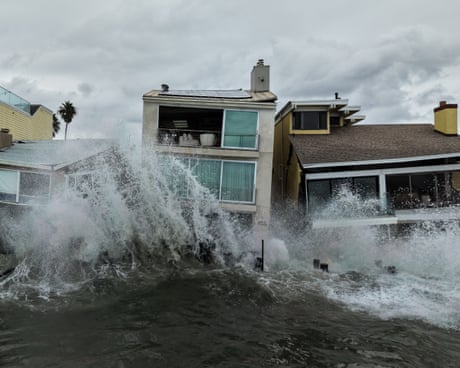
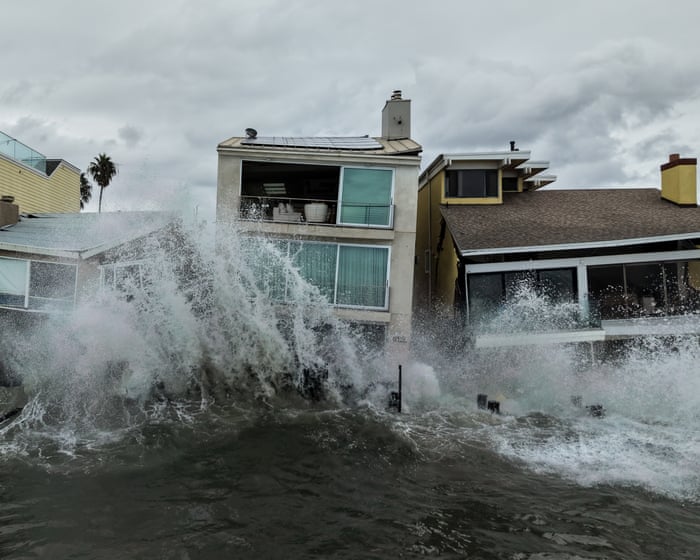
Boardwalk destroyed in Long Beach and homes damaged, while Baja California in Mexico and Las Vegas also affected
Southern California coastal communities are picking up the pieces after a weekend of extreme weather brought flooding that overtook city streets and intense waves battered beachside homes.
The remnants of Tropical Storm Rachel hit Mexico’s Baja California over the weekend as well as southern California and Las Vegas. While meteorologists noted that Rachel weakened into a post-tropical cyclone as it approached California, it still left a trail of destruction.
Continue reading...
© Photograph: Jae C Hong/AP

© Photograph: Jae C Hong/AP

© Photograph: Jae C Hong/AP


© Gavriil Grigorov/Sputnik, via Reuters


Ukraine wants the EU to force Moscow into a ceasefire with frozen Russian assets, trade and transit embargoes, maritime bans, and entry bans, Ukrainian Foreign Minister Andrii Sybiha wrote on X after the EU Foreign Affairs Council in Luxembourg on 12 October 2026. He also welcomed new EU sanctions listings adopted that day and progress in Ukraine’s EU accession talks.
Kyiv has spent this month laying out truce formats it would accept while awaiting Russia’s position on talks, and the levers it is pressing the EU to use include frozen Russian assets that EU leaders failed to agree on tapping last December.
Sybiha called it “devastating pressure.” He also wants Russian combatants and their families barred from the EU, maximum visa restrictions, and Russia’s isolation in culture and sports.
I was pleased to attend the EU Foreign Affairs Council today.
— Andrii Sybiha
It is time for Europe to define its strong role. Our future and our security are in our hands.
Now is the time for real European pressure on Moscow. Not half-measures, but devastating pressure: frozen assets, trade… pic.twitter.com/AnI8h6HXbs(@andrii_sybiha) October 12, 2026
His post named three types of ceasefire—energy, food security, and a full ceasefire—without saying whether Kyiv would accept them separately. Earlier this month, he told journalists Ukraine was ready for an energy and Black Sea ceasefire “but only in such a combination.”
The minister welcomed the EU’s 12 October adoption of new sanctions listings against Russia—the largest single expansion of the bloc’s blacklist. EU ambassadors agreed on the 1,646 names on 7 October. They include 1,569 tied to Russia’s military industry and 77 to its so-called State Duma elections. The listings are separate from the EU’s 22nd sanctions package, which the EU has yet to adopt.
He also welcomed the EU’s “green light” for opening two more clusters in Ukraine’s EU accession talks: Internal Market, and Competitiveness and Inclusive Growth. The formal opening was scheduled for an intergovernmental conference on 13 October.
Sybiha said he briefed European colleagues on the front-line situation, Russia’s plans, and ways to deprive it of its advantages, and that he passed partners specific requests for aid. He reaffirmed Ukraine’s commitment to reforms.

Russian meddling probably didn’t affect the referendum result – but the Kremlin’s motives for wanting to undermine the EU still matter
Russian territorial aggression against Ukraine didn’t feature much in the Brexit referendum campaign. It made headlines briefly when Boris Johnson blamed Moscow’s 2014 annexation of Crimea on the European Union.
According to the Vote Leave frontman, Vladimir Putin’s land grab was a consequence of Brussels making foreign policy “on the hoof” and having “pretensions to running a defence policy”.
Rafael Behr is a Guardian columnist
Continue reading...
© Composite: Guardian Design/Getty Images/Reuters/EPA

© Composite: Guardian Design/Getty Images/Reuters/EPA

© Composite: Guardian Design/Getty Images/Reuters/EPA


© Igor Ivanko/Agence France-Presse — Getty Images


© Mohammed Huwais/Agence France-Presse — Getty Images


Ukrainian forces hit 12 large Russian refineries in September, Ukraine’s Ministry of Defense said, according to ArmyInform on 12 October. The farthest on the ministry’s list, Lukoil’s refinery in Perm, lies about 1,500 kilometers from Ukraine’s border. Since Trump's 11 October announcement, Euromaidan Press has found no reports of new Ukrainian refinery strikes in the official and unofficial Ukrainian and Russian sources it monitors.
A refinery-for-refinery pause would limit Ukraine’s ability to disrupt Russia’s oil industry while leaving Moscow free to keep attacking Ukraine’s energy system, giving Russia an advantage in a war where both sides use energy infrastructure as a target. The issue has become urgent since Trump announced an “energy ceasefire” on 11 October, after which Ukraine reported holding off strikes on Russian energy facilities while Zelenskyy said Russia attacked several Ukrainian energy sites.
The campaign continued into October. Ukraine’s General Staff said Ukrainian forces struck the Samara oil pumping station overnight into 10 October, the third attack on the station that month, according to Radio Svoboda.
Zelenskyy said Ukraine had refrained from striking Russian energy facilities overnight on 11–12 October following Trump's announcement. Monitoring channels and official Russian sources did not report any new refinery strikes on 13 October.
“Last night, we did not attack any energy facilities on the territory of Russia because President Trump said that there would be an energy ceasefire,” Ukrainian President Volodymyr Zelenskyy said.
He added that Ukraine does not announce its next operational steps. Zelenskyy said Russia attacked six Ukrainian energy facilities on 12 October alone, according to Radio Svoboda.
A White House official told Axios that the proposal would begin with both sides halting attacks on oil refineries, with a possible agreement covering power plants to follow. Axios reported that Russia had not accepted a ceasefire.
The Institute for the Study of War (ISW) said the proposal, as described, would give Russia a major concession without offering Ukraine anything in return: Russia has scores of operating refineries, while Ukraine has one. ISW also said the proposal would allow Russia to continue its winter strikes on Ukrainian power stations.

Latest fatality is unvaccinated woman, 39, with ‘underlying conditions’ but CDC still lists only two deaths nationwide
A sixth death has been announced in Pennsylvania’s measles outbreak, as new figures show cases in the state have risen above 1,100.
The most recent fatality was reported in Franklin county on Monday in a statement posted to Facebook by its coroner. The victim was identified as a 39-year-old female who “had several underlying conditions, including a past diagnosis of measles with treatment”.
Continue reading...
© Photograph: The Washington Post/Getty Images

© Photograph: The Washington Post/Getty Images

© Photograph: The Washington Post/Getty Images


© Mauricio Lima for The New York Times


© Pool photo by Jonathan Brady

Amid worries about children’s relationship to tech, the solution is often spending more time talking openly with each other
We have become obsessed with the idea that screens are destroying human connection.
The evidence seems to be everywhere. Each week headlines warn of teenagers addicted to phones, a loneliness epidemic and the dangers of AI. The release of The Social Reckoning leads us to ask, “How bad were those guys at Meta?” and then ultimately wonder, “How bad am I if I still use Instagram?” In our day-to-day, we observe workers eating lunch alone while scrolling and friends choosing online games over offline gatherings.
Continue reading...
© Photograph: Grant Rooney/Alamy

© Photograph: Grant Rooney/Alamy

© Photograph: Grant Rooney/Alamy


Ukrainian drones have helped push Russia into its worst fuel crisis since the Soviet Union fell, The Washington Post (WaPo) reported on 11 October.
Diesel is where this war reaches American drivers. US President Donald Trump blames rising diesel prices mostly on Russia’s war in Ukraine, while experts blame mainly the US war with Iran. Some of his allies now accuse Kyiv of trying to sway the US midterms.
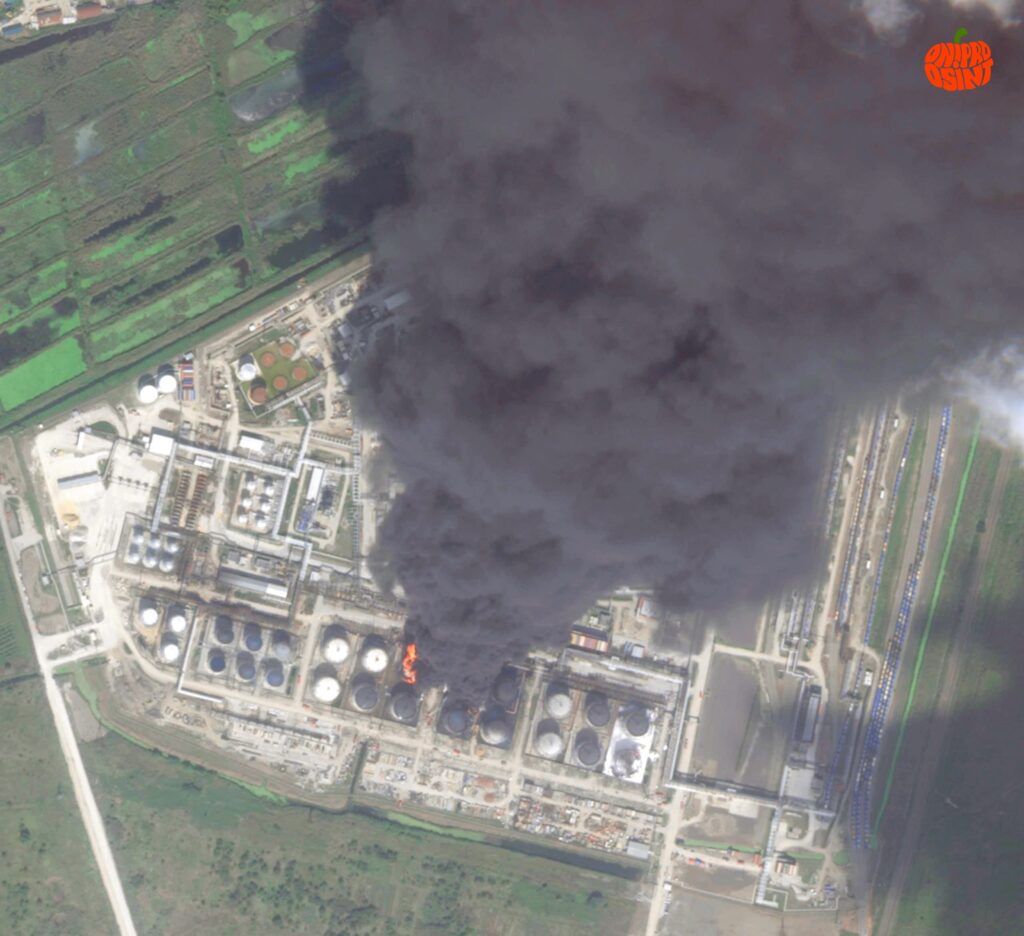
The Washington Post looked at dozens of strikes between 1 April and 31 August. Three refinery experts then examined satellite images of 54 strikes with visible damage. In over half, the damage seems to be to the desalting and distillation units, known by the Russian acronym ELOU-AVT. These units clean the crude of water and salt, then split it into separate compounds, the first steps toward gasoline and diesel. More than a third appear to have hit secondary units, which turn those compounds into jet fuel, gasoline, and liquefied petroleum gas.
From April through August, drones struck two-thirds or more of the 36 big Russian refineries that S&P Global Energy tracks, a strike every third day. Some took as many as five hits. On 16 June, drones set the Moscow refinery’s distillation towers on fire. That strike and a second one days later kept the plant offline into September, WaPo reported, citing data firm Kpler. Ukraine targeted the refinery again on 20 September.
“We don’t need to hit the entire plant,” a Ukrainian drone battalion commander with the call sign Tango told The Washington Post. Ukraine knows where to strike so that a refinery stops and stays down, he said. His unit, Ukraine’s 1st Separate Center of Unmanned Systems, runs long-range strikes deep inside Russia.
The EU banned exports of oil-refining equipment to Russia the day after the 2022 invasion, and the US followed days later. WaPo reported that the bans cover the distillation and secondary processing units Ukraine keeps hitting. The bans make spare parts hard to get, Alexander Kolyandr of Eurasia Group told the paper, and the strikes come faster than repairs.
Since last year, Ukraine has doubled the size of each wave, decoys included, a person involved in the strike campaign told WaPo. The decoys are unarmed and draw Russian fire, wasting air-defense ammunition, WaPo explained. Without them, the person said, Ukraine would simply lose expensive systems. András Rácz of the German Council on Foreign Relations told WaPo that even if only 2–3% of drones get through, the damage is significant.


© Alex Kent/The New York Times


© Agence France-Presse — Getty Images