Dutchman under siege before pulling clear in the final lapCharles Leclerc and Lewis Hamilton again clash on trackFor a race still in its infancy, this year’s Las Vegas Grand Prix provided a spectacle for the ages. The victory for Max Verstappen once more exemplified why he must be acknowledged as one of the greats of Formula One after a compelling race-long battle where the lead changed 34 times but on every occasion, and most important on the last lap, it was the Red Bull driver who had his nos
Dutchman under siege before pulling clear in the final lap
Charles Leclerc and Lewis Hamilton again clash on track
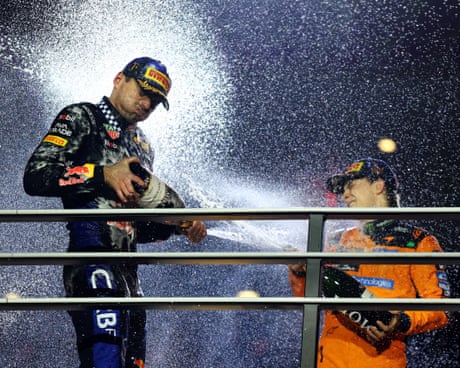
For a race still in its infancy, this year’s Las Vegas Grand Prix provided a spectacle for the ages. The victory for Max Verstappen once more exemplified why he must be acknowledged as one of the greats of Formula One after a compelling race-long battle where the lead changed 34 times but on every occasion, and most important on the last lap, it was the Red Bull driver who had his nose in front.
This was a race unique to this season and not seen in the sport for a long time, an old-school duel of slipstreaming and the sort of over-the-top extravaganza perfect for Las Vegas, Cirque du Soleil fashioned from carbon fibre and noise.
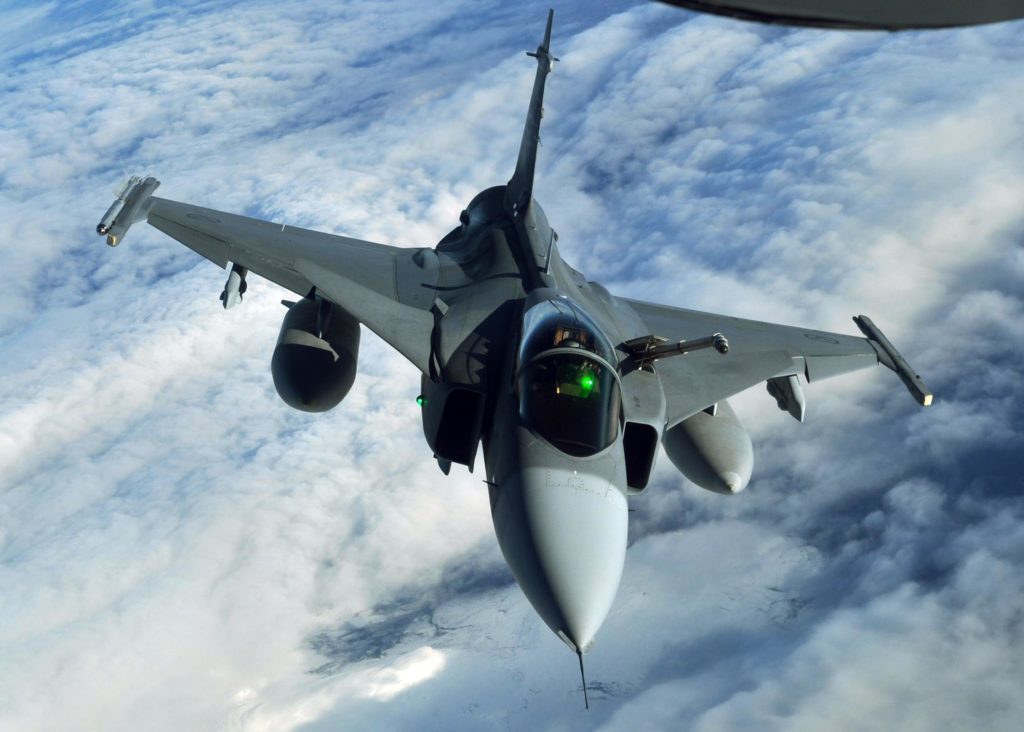
A Swedish fighter pilot had NATO’s permission to shoot a Russian cruise missile out of Poland’s sky. He never pulled the trigger. Weather too thick to identify the Kh-101 stopped the Gripen pilot during Russia’s 20 November barrage, Lieutenant General Ireneusz Nowak, commander of Poland’s Operational Command, told Rzeczpospolita.
On 1 October, Poland introduced procedures that allowed it to shoot down Russian targets without waiting for visual confirmation. However, the country has like
A Swedish fighter pilot had NATO’s permission to shoot a Russian cruise missile out of Poland’s sky. He never pulled the trigger. Weather too thick to identify the Kh-101 stopped the Gripen pilot during Russia’s 20 November barrage, Lieutenant General Ireneusz Nowak, commander of Poland’s Operational Command, told Rzeczpospolita.
On 1 October, Poland introduced procedures that allowed it to shoot down Russian targets without waiting for visual confirmation. However, the country has likely now returned to peacetime protocols, said military expert Serhii Zhurets. He added that the situation has become a serious challenge to Poland's security and demonstrated the need to maintain a high level of air defense effectiveness, Espreso reports.
The incident occurred during the Coalition of the Willing drills on Polish territory, which includes countries united to coordinate security guarantees, military and financial aid, and post-war stabilization plans for Ukraine, under the leadership of the UK and France.
The green light that went unused
The Swedish Gripen pair flew under NATO’s Combined Air Operations Center in Uedem, Germany, which issued a condition-based order, an authorization letting the pilots decide for themselves to fire once set conditions were met.
One pilot moved on an object his systems flagged as a probable Kh-101 but could not confirm it, by eye or through the jet’s optoelectronic sensors. The obstacle was “extremely difficult weather conditions” in the interception area, Nowak explained, and the pilot held fire despite the NATO clearance.
Eleven objects, three across the border
Poland tracked 11 objects that could threaten its airspace simultaneously. Three crossed the border, and none caused deaths or injuries, Nowak said.
To guard the sky, Poland put up two F-16s from Łask and the two Swedish Gripens, backed by a Saab 340 early-warning plane, a Dutch MRTT tanker, and ground-based air defenses.
A “yellow” alert declared at 1:40 a.m. gave way to the top “red” level at 5:49 a.m. and held until noon. After 7 a.m., as Russian bombers loosed fresh cruise missiles on their way home, more F-16s went up from Krzesiny, and territorial-defense teams fanned out to find where the objects fell.
Drones first, then the missiles
The attack unfolded in two phases: Russian forces sent drones, including fast jet-powered ones, then followed with Kalibr and Kh-101 cruise missiles. Poland knew the launch sites, the numbers, and the flight paths, helped by data Ukraine passed through its Wiraż air-situation system.
The Ukrainian air force needs more F-16 and Mirage 2000 fighters, President Volodymyr Zelenskyy said
There are stocks of both types across Europe and the United States, but few if any willing donors
The best bet is a few Mirages from France
The Ukrainian air force needs additional jet fighters, and fast. That was the urgent plea President Volodymyr Zelenskyy made, by video link, to the Ukraine Defense Contact Group, which met at NATO headquarters on 17 November.
But there a
The Ukrainian air force needs more F-16 and Mirage 2000 fighters, President Volodymyr Zelenskyy said
There are stocks of both types across Europe and the United States, but few if any willing donors
The best bet is a few Mirages from France
The Ukrainian air force needs additional jet fighters, and fast. That was the urgent plea President Volodymyr Zelenskyy made, by video link, to the Ukraine Defense Contact Group, which met at NATO headquarters on 17 November.
But there are only a few small pools of surplus fighters that Ukraine's allies could dip into to quickly meet Ukraine's air defense needs. There are virtually no Soviet-style Sukhois and MiGs left in Europe. There are a few dozen Dassault Mirage 2000-5Fs and Lockheed Martin F-16s. But most of the current owners of those warplanes are reluctant to let go of them.
And that means Ukraine's war-weary fighter brigades and wings might have to wait.
The F-16s we have now – the ones shooting down Russian “shaheds” and missiles – spend a lot of time being repaired instead of flying. So we need more fighter jets. More F-16s. Let’s work together to make this happen. I’m grateful to every country in our Air Force Coalition. A lot… pic.twitter.com/0xGXCGbcbx
— Volodymyr Zelenskyy / Володимир Зеленський (@ZelenskyyUa) November 17, 2026
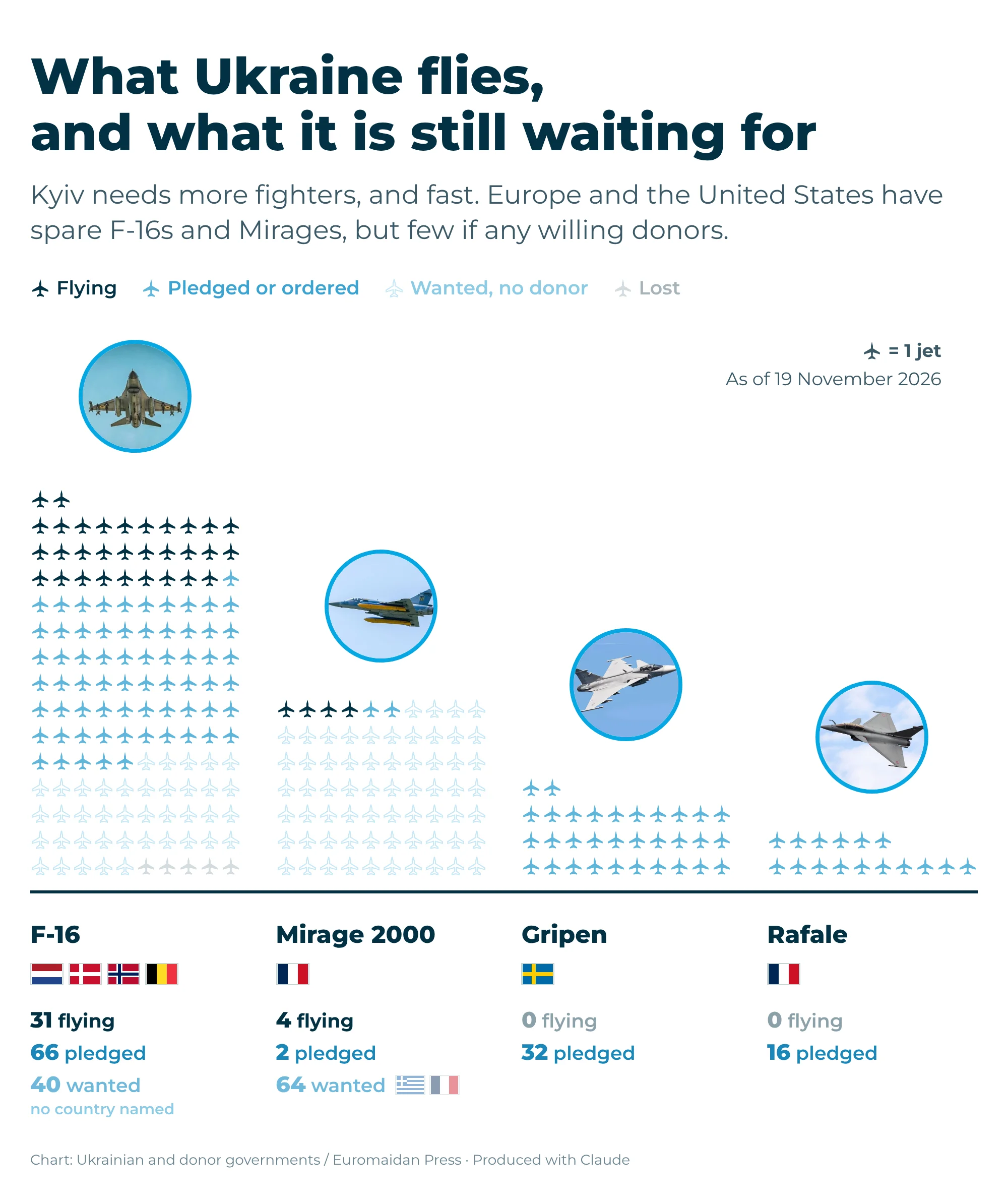
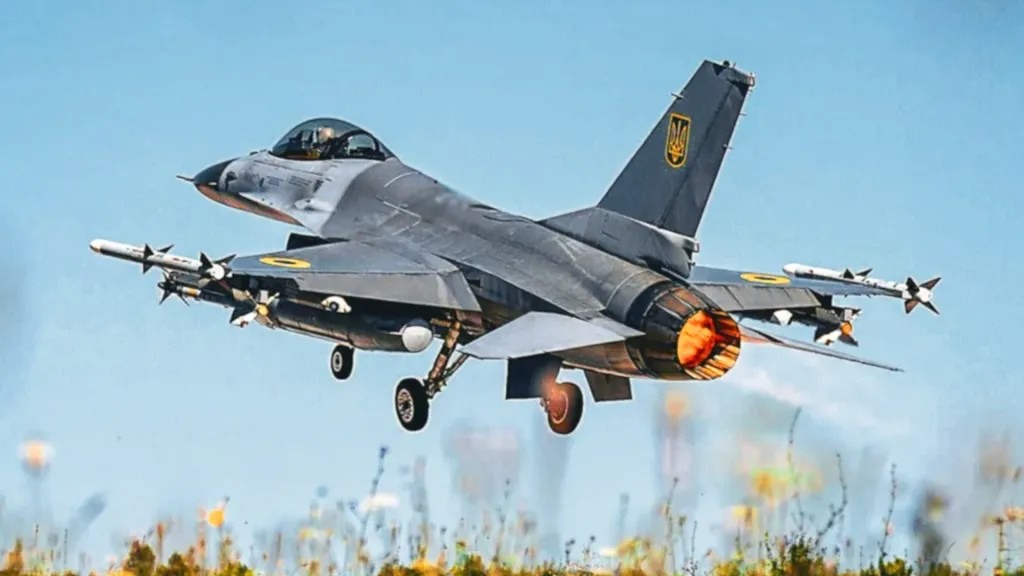
At present, Ukraine operates around 31 F-16s out of 36 it got secondhand from the Netherlands and Denmark. Five have crashed or been shot down. Norway is sending six F-16s once the 1980s-vintage planes can be overhauled. Denmark has promised seven more. Belgium has pledged 53, including 10 this year.
That's potentially 102 F-16s, or 97 after subtracting the losses. But the last of the Belgian jets might not reach Ukraine until the Belgians have enough new Lockheed Martin F-35s to replace their F-16s: possibly as late as 2029. For the next few months at least, the Ukrainian air force's 107th Fighter Wing—its sole unit for Western fighter types—may have fewer than 50 F-16s, around half of which are unavailable on any given day as they undergo maintenance.
"The F-16s we have now—the ones shooting down Russian Shaheds and missiles—spend a lot of time being repaired instead of flying," Zelenskyy said. "So we need more fighter jets. More F-16s."
Specifically, Ukraine needs 40 additional F-16s in the near term, Zelenskyy said. That would grow the pool of ready jets as the Ukrainian air force awaits other F-16s that have already been pledged as well as 16 surplus Saab Gripen C/Ds it expects to get from Sweden early next year. Ukraine has also ordered 16 newly built Gripen Es and 16 new Dassault Rafales, but no one expects those planes to arrive before 2028 or 2029.
Chart: Euromaidan Press
Jet
How many
Where things stand
Flying now
F-16 (Netherlands, Denmark)
31
36 delivered, 5 lost; about half in repair on any given day
Mirage 2000 (France)
About 4
After one loss in a crash
Pledged or ordered
F-16 (Belgium)
53
10 this year, the rest as late as 2029
F-16 (Denmark)
7
Not yet delivered
F-16 (Norway)
6
Still being overhauled
Mirage 2000 (France)
2
Coming soon
Gripen C/D (Sweden)
16
Expected early 2027
Rafale (France)
16 ordered
2028 or 2029 at the earliest
Gripen E (Sweden)
16 ordered
2028 or 2029 at the earliest
No donor yet
F-16
40 more
Ukraine asked on 17 November
Mirage 2000 (Greece)
More than 40
Athens has not agreed
Mirage 2000 (France)
About 24
Still in French service, no transfer announced
F-16 (United States)
Largest surplus stock
No new US aid in sight
As of 19 November 2026.
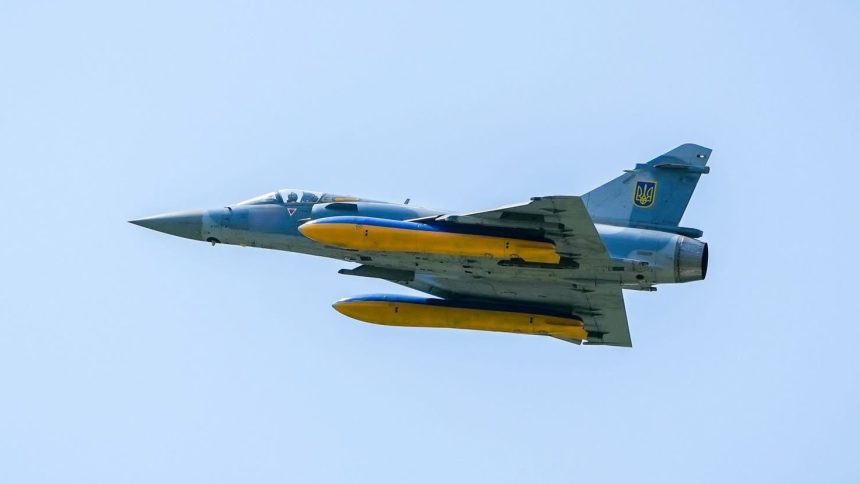
A Ukrainian Mirage 2000. Ukrainian air force photo.
French hand-me-downs
In addition to F-16s, the 107th Wing flies around four Mirage 2000s after losing one in a crash. France is sending two more Mirages soon, but the Ukrainians want many more. "Europe has more Mirage jets," Zelenskyy said. "Getting Rafales ready takes time—training, preparation, all of that. But Mirage jets can be put to work right now."
As it happens, plenty of Mirages are available—or should be soon. The French air force still flies around two dozen link) Mirage 2000-5s, and its chief told lawmakers in October that it will withdraw them from service next year.
Explore further
Belgium’s 10 F-16s bring Ukraine’s promised fleet to about 100 jets. Fewer than 40 are flying, as Russia’s jet drones run them ragged
Also: Greece has more than 40 Mirage 2000s that it has either already retired or expects to retire soon. Those would blend seamlessly with the ex-French Mirage 2000s in the 107th Fighter Wing, but Greece has never been a leading donor to Ukraine's war effort. Every proposal Kyiv has floated to get those Greek Mirages on the donation list has been met with a proverbial shrug in Athens.
Extra F-16s are harder to find. Greece, Poland, Portugal, Romania, and Türkiye fly older F-16s but aren't planning on replacing them any time soon.
Sadly for Ukraine, those 40 extra F-16s on its wish list are equally unlikely to come from the biggest holder of surplus F-16s, the United States, unless the newly Democratic majority in the US Congress—which takes control in January—can get substantial new aid legislation past US President Donald Trump's veto pen.
So the need is great but options are few. The best Ukraine can probably hope for right now is to get a few more Mirage 2000s from France. After that, it may have to wait.
Jet
How many
Where things stand
Flying now
F-16 (Netherlands, Denmark)
31
36 delivered, 5 lost; about half in repair on any given day
Ukraine, Sweden, and Britain signed a letter of intent on 17 November to arm Ukraine's incoming Gripen fighters, with long-range air-to-air Meteor missiles as Kyiv's first priority, Ukraine's Defense Ministry reported. The three defense ministers sealed it in Brussels on the margins of the Ramstein-format meeting of Ukraine's allies, where Ukraine and Finland also agreed to jointly produce Ukrainian weapons in Finland. Kyiv wants the Meteors to go after Russian aircraft, above all those th
Ukraine, Sweden, and Britain signed a letter of intent on 17 November to arm Ukraine's incoming Gripen fighters, with long-range air-to-air Meteor missiles as Kyiv's first priority, Ukraine's Defense Ministry reported. The three defense ministers sealed it in Brussels on the margins of the Ramstein-format meeting of Ukraine's allies, where Ukraine and Finland also agreed to jointly produce Ukrainian weapons in Finland. Kyiv wants the Meteors to go after Russian aircraft, above all those that drop glide bombs. Separately, Britain has promised Kyiv over 1,000 air-defense missiles for the winter, Ukraine's ambassador in London, Valerii Zaluzhnyi, said.
Russia's glide bombs keep pounding Ukrainian frontline towns and positions, and the jets that drop them are the main target Kyiv has picked for the Meteor missiles it wants on its Gripens. A fighter without weapons can't change that, so the letter aims to have weapons, equipment, and spare parts reach Ukraine together with the jets, starting with the 16 Gripens Sweden is donating, which are due early next year.
Meteors first, for Russia's bomb carriers
The jets should come with all the weapons they need to fight, Ukrainian Defense Minister Yevhenii Khmara said. "It is important for us to receive the full set of weapons we need together with the aircraft, so that we can start using them in combat as soon as possible. The key priority is Meteor missiles. With them, Gripens will be able to destroy enemy carriers of guided bombs and protect frontline cities and troops' positions," he said.
Meteor pairs an active radar seeker with a ramjet engine that keeps it fast throughout its flight, letting it hit aerial targets at long range, Ukraine's Defense Ministry explained in May. Armed with it, Gripens could help drive Russian aviation farther from the front and cut its ability to launch glide bombs en masse, the ministry said.
Explore further
Ukrainian pilots have started training on Swedish Gripens — jets that may carry long-range Meteor missile
Kyiv wants to put the jets into combat quickly, and it is working with partners so that the weapons arrive in step with the planes, Khmara said.
What the letter covers
Sweden, Ukraine, and Britain intend to work together to supply Ukraine's Gripens with weapons packages alongside the jet deliveries and keep the fleet capable over time, Sweden's Defense Ministry said. The cooperation covers buying, delivering, training on, and integrating the weapons. The letter applies to the Gripens Sweden donates, those Ukraine is buying now, and any it may buy later.
Ukraine is buying 16 Gripen E/F jets, and Sweden is donating 16 Gripen C/D jets with a weapons package, according to Sweden's Defense Ministry. The E/F is the newer version of the jet. "This Letter of Intent is a basis for the fighter jets to be operational over time and to support Ukraine in its ambition to become and remain a long-term Gripen partner," Swedish Defense Minister Pål Jonson said.
Swedish Defense Minister Pål Jonson and Ukrainian Defense Minister Yevhenii Khmara at the signing of the Gripen letter of intent, Brussels, 17 November 2026. Photo: Ukraine’s Defense Ministry
UK Defense Secretary Wes Streeting signed for Britain, which already helps fund Ukraine's Gripens. In July, London committed €300 million toward a squadron of 16 Gripen E fighters for Ukraine by 2029. Last week, President Volodymyr Zelenskyy told journalists in Copenhagen that the Swedish Gripens should arrive in January or February, possibly in February, European Pravda reported on 11 November.
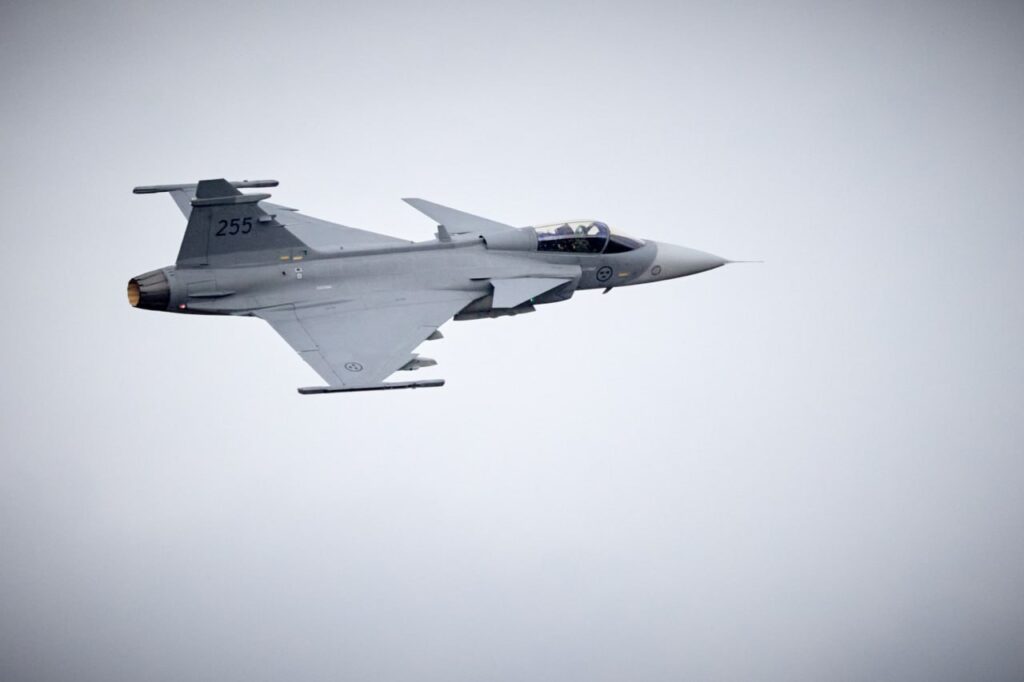
A JAS 39 Gripen fighter jet, 22 October 2025. Photo: Zelenskyy’s Telegram channel
Sweden adds funds for US weapons and Czech ammunition
On 17 November, Stockholm also pledged about SEK 720 million more for multilateral funds and initiatives, mainly to bolster Ukraine's air defense and its long-range capability. Of that, about SEK 200 million goes to the Prioritized Ukraine Requirements List (PURL), the mechanism through which allies buy US weapons for Ukraine. This is Sweden's sixth contribution to PURL, bringing its total to $572 million. Around SEK 180 million goes to the Czech initiative that buys ammunition on the global market.
"Sweden will support Ukraine for as long as it takes," Jonson said.
One is a left-wing student leader, the other a young far-right activist. Together, Soumaya Sarré and Louise Montangon reflect the polarization of France, where more protests and strikes took place on Tuesday.
One is a left-wing student leader, the other a young far-right activist. Together, Soumaya Sarré and Louise Montangon reflect the polarization of France, where more protests and strikes took place on Tuesday.
Over more than a quarter-century, I’ve watched Europe’s politics become more like Italy’s, with all the resulting instability, as the far right came in from the cold.
Over more than a quarter-century, I’ve watched Europe’s politics become more like Italy’s, with all the resulting instability, as the far right came in from the cold.
Supporters of Giorgia Meloni’s Brothers of Italy party at a rally in Rome before general elections in 2023. Her victory was the first for a party with post-fascist roots since Mussolini.
Centrists want alternatives to a matchup between the far right and far left in the 2027 presidential race. Enter Christine Lagarde, a former central banker — and Teddy Riner, a judo star.
Centrists want alternatives to a matchup between the far right and far left in the 2027 presidential race. Enter Christine Lagarde, a former central banker — and Teddy Riner, a judo star.
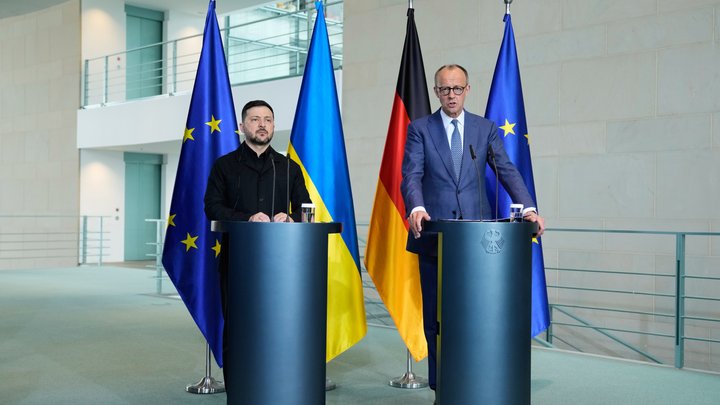
Germany is threatening to block the EU’s next long-term budget unless every member state helps pay for Ukraine. In a letter to European Council President António Costa, Chancellor Friedrich Merz made his support for the 2028-2034 budget conditional on all 27 countries committing to cover Ukraine’s financing, which faces a €70 billion gap next year, the Financial Times reported.
This way, Germany, the EU’s biggest net contributor, leverages pressure over a handful of governments that hav
Germany is threatening to block the EU’s next long-term budget unless every member state helps pay for Ukraine. In a letter to European Council President António Costa, Chancellor Friedrich Merz made his support for the 2028-2034 budget conditional on all 27 countries committing to cover Ukraine’s financing, which faces a €70 billion gap next year, the Financial Times reported.
This way, Germany, the EU’s biggest net contributor, leverages pressure over a handful of governments that have refused to pay for Ukraine’s defense, despite previous warnings from multiple intelligence agencies and NATO that Russia might have planned to expand its aggression on European countries.
The report came days before EU leaders meet in Dublin on 12-13 November, where closing Kyiv’s shortfall is already on the agenda, and as elections across Europe threaten to make unanimous support harder to hold.
The 70-billion-euro gap
Last December, EU leaders agreed a €90 billion loan for Ukraine, but Kyiv says it needs €70 billion more next year to keep fighting, a figure its allies accept.
The bloc has pledged to cover about two-thirds, roughly €45 billion, and the European Commission is weighing options including fresh joint borrowing, hoping for a deal by year’s end.
Closing the gap is “an essential prerequisite for resolving this issue and for discussing any further matters, particularly those with financial implications,” Merz wrote in the letter, tying it directly to the budget.
The holdouts
Four countries, Hungary, Slovakia, Bulgaria, and the Czech Republic, have signaled they will not contribute to further aid for Kyiv. Three of them already won an opt-out last year from the interest payments on the €90 billion loan. All four are net beneficiaries of the EU budget, while Germany is its largest net contributor, the leverage Merz is now pressing.
Berlin also wants future funding for Ukraine to require only a qualified majority rather than unanimity, to head off vetoes.
A narrowing window
Merz insists the EU “must then find a solution supported by all Member States that ensures a sound and multiannual financing perspective for Ukraine from 2028 onwards.” The politics are tightening: Marine Le Pen, leading the polls before France’s April presidential election, has said that if she wins, she would end support for Kyiv beyond some operational help and training. Votes in Italy and Poland could further erode consensus.
After its sometime allies were ousted in elections in Hungary and Serbia, Moscow has seized on Poland’s constitutional standoff in its effort to weaken Europe’s support for Ukraine.
After its sometime allies were ousted in elections in Hungary and Serbia, Moscow has seized on Poland’s constitutional standoff in its effort to weaken Europe’s support for Ukraine.
Édouard Philippe, the leading centrist candidate in France’s presidential race, has struggled in the polls since widespread protests broke out across the country last month.
Ukraine is remaking its air force on NATO’s model, down to the way its squadrons are organized and the aircraft they fly. The reforms are planned to be completed by 2035 and include modernizing its F-16s while pursuing the Swedish Gripen jets, Air Force Spokesperson Yurii Ihnat says, per Tse Baza.
Ukraine’s fighters are working hard against Russia’s air war, and in the previous month alone the Air Force faced around 3,500 jet-powered targets, with F-16s heavily used to intercept Russian
Ukraine is remaking its air force on NATO’s model, down to the way its squadrons are organized and the aircraft they fly. The reforms are planned to be completed by 2035 and include modernizing its F-16s while pursuing the Swedish Gripen jets, Air Force Spokesperson Yurii Ihnat says, per Tse Baza.
Ukraine’s fighters are working hard against Russia’s air war, and in the previous month alone the Air Force faced around 3,500 jet-powered targets, with F-16s heavily used to intercept Russian drones. The new reform is meant to build an air force that can be sustained over the long term and can contest Russian jets and glide bombs, not only survive the next wave.
Wings and universal air bases
The central change, Ihnat said, is a move to the “wing” units that NATO air forces use. The first steps have already been taken: Ukraine has set up the 107th F-16 wing, which now has its own Facebook page and may publish material about its work.
Ukraine also plans to build universal air bases on the operational airfields it has used through the full-scale war. In the future, Ihnat says, those bases should be able to receive and service different models of combat aircraft, as NATO does.
A worn fleet, and the jets Ukraine wants next
Currently, the F-16s Ukraine flies are older Block 15 jets, used by other countries before they arrived, and intensive combat has left them in need of repairs, service life restoration, and upgrades.
Ukrainian officials discussed modernization with the American manufacturer Lockheed Martin, while Kyiv would prefer the newer Block 70/72 version, which Ihnat says would let its pilots stand up more confidently to Russia’s Su-35 fighters.
Keeping the current fleet flying has been hard: fewer than half of Ukraine’s F-16s may be operational, held back by slow maintenance abroad.
At the same time, Lockheed Martin and Kyiv are discussing a special F-16 variant for Ukraine, with a modern AESA radar, longer range, and a wider choice of weapons, though no firm deal exists yet.
Ukraine is also counting on Swedish Gripen fighters. Ihnat says Ukrainian pilots are drawn to them for their lower operating costs and simpler maintenance, with the country likely to receive older C/D models first, before the newer Gripen E that Saab is developing.
Ukrainian pilots have already begun their training on the Gripen, a jet seen as a counter to the Russian aircraft dropping guided glide bombs on the front, though delivery timing depends on further agreements.

 Connexion