Japan Meets With Trump, Hoping to Get His Help on China

© Haiyun Jiang/The New York Times


© Haiyun Jiang/The New York Times


© Kenny Holston/The New York Times


© Chang W. Lee/The New York Times


© Sarah Silbiger for The New York Times


© KNN


© US Southern Command


© Luke Piotrowski/The New York Times


© Tingshu Wang/Reuters


© Tingshu Wang/Reuters


© Kenny Holston/The New York Times


© AFPTV, via Agence France-Presse – Getty Images


© Tingshu Wang/Reuters


© Stephanie Strasburg for The New York Times


© Andrew Testa for The New York Times


© Kenny Holston/The New York Times


© Kenny Holston/The New York Times


© Alyssa Schukar for The New York Times


© Jakara Movement


© Samar Hazboun for The New York Times


© Universal Images Group, via Getty Images


© Jeff Chiu/Associated Press


Ukrainian engineers near the front rewrite their drones' software every couple of days. A NATO army needs about six months to push the same update. That gap in speed is the central challenge for the Western trainers working with Ukrainian troops in Poland, who say Ukraine's wartime tempo is exposing how slowly the West moves in peacetime, the Business Insider reports.
Russia's war forces the Ukrainian Army to buy, train, and adapt at a pace peacetime armies are not built for, and its experience is pushing NATO to confront how much its own bureaucracy slows it down.
The alliance has studied that experience without yet fully absorbing it: in an Estonian war game last winter, a ten-person Ukrainian drone team wiped out two NATO battalions in a day.
Now NATO Secretary General Mark Rutte is calling for a large-scale transformation of the West's defense industry so its armies can react faster.
Two speeds meet in Poland
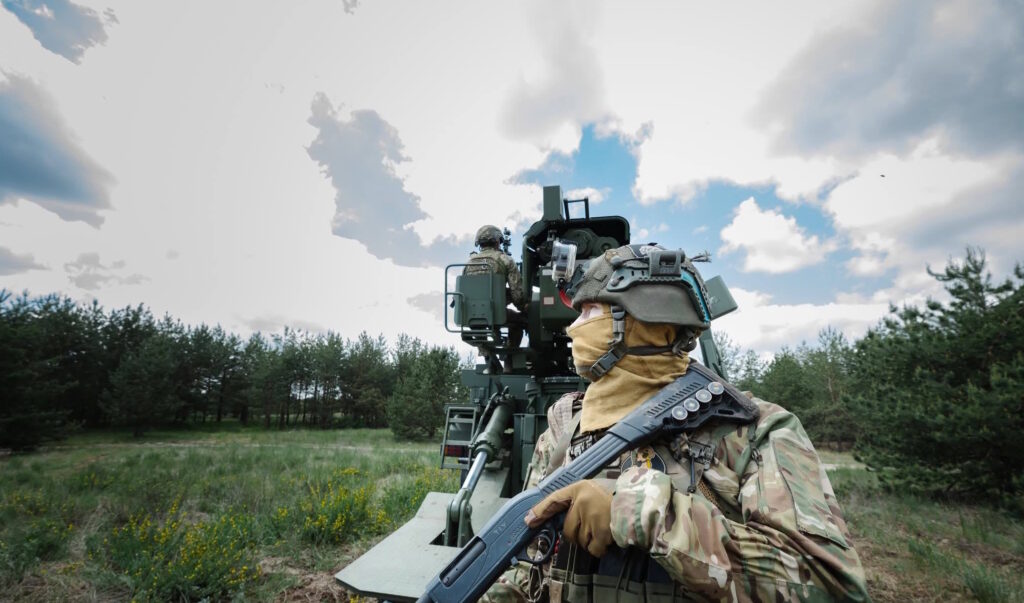
The place where those speeds collided was Camp Jomsborg, a base Norway built in an eastern Polish forest in a matter of months. There, under an operation called Legio, trainers from across northern Europe drill Ukrainian soldiers while the Ukrainians hand their front-line lessons back to NATO.
The camp sits, as its operations officer, a major identified only as John, put it, at "the mental and geographical middle point between war in the east and peacetime mechanism in the West."
A drone update tells the story
Brigadier General Atle Molde, who commands the task force, put the gap in numbers. If a Western drone needs new software, he said, "you have to send it to a Western country or a company, and an update takes six months."
In Ukraine, "they have the engineers sitting close to the front updating every two days, every two weeks, developing software, adapting it to genuine situations."
Molde said he wants to see greater initiative in innovation within Western armies, but to achieve that, "it has to be some major changes that have to be done on all levels when it comes to legislation."


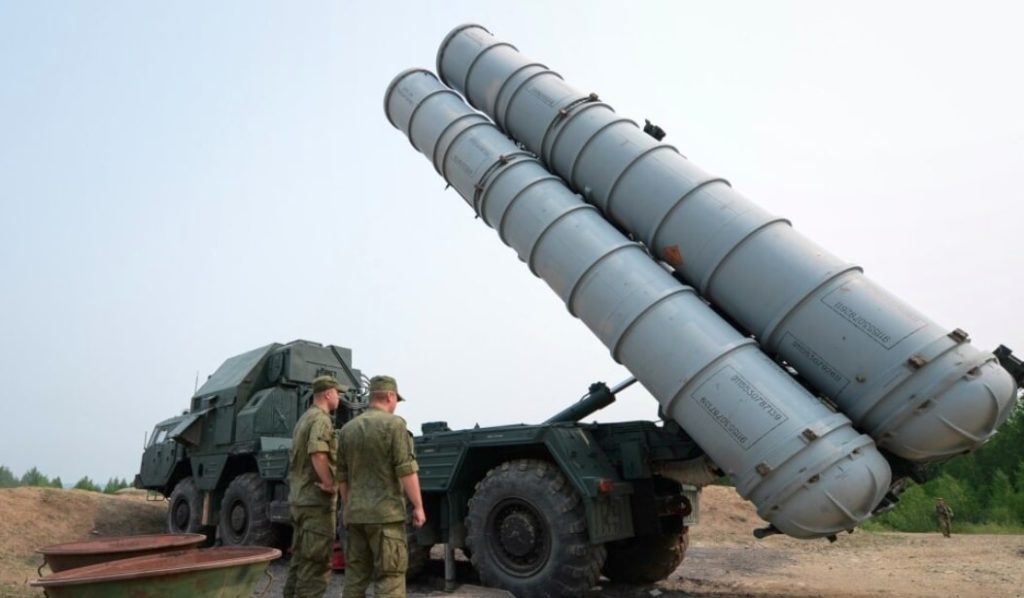
The US is preparing to sell Ukraine something unusual: American-made missiles for its Soviet S-300 air-defense systems. The missiles, labeled "S-300 Clone" in the paperwork, are part of a $2.68 billion package that the State Department approved on 18 September, financed by European partners and unused US military aid, Defense Express reports.
Ukraine has plenty of Soviet-era S-300 launchers but not the missiles to feed them. Russia will not sell more, and an earlier Ukrainian attempt to build its own went nowhere, according to Defense Mirror.
Not a Soviet 5V55 replica
At the same time, the missile itself is not actually a "clone" or replica of the Soviet 5V55. According to Defense Express's own information, this is a new development with enhanced characteristics and a different, more modern targeting guidance principle.
At the same time, the American side did not disclose the index, characteristics, or manufacturer of the missiles mentioned in the State Department's statement.
In September 2024, then-US Defense Secretary Lloyd Austin announced at the Ramstein contact group that Washington, in partnership with several European companies, was working with Ukraine to "design and build a substitute" for the Soviet S-300 and the R-27 air-to-air missile used by fighter jets, Newsweek reports. He never spelled out what that substitute would be.
Anti-radar missile project from the 1950s
The package will also include GAM-67. As for the GAM-67, despite the existence of an unrealized American anti-radar missile project from the 1950s, this is also a new development. It is intended for medium-range systems, both existing ones, including Soviet ones, and future ones.
The package also provides for modernization and maintenance: spare parts, consumables, and accessories, support during repair and return, software, transportation support, engineering, technical, and logistical services from the US government and contractors, and other related elements of logistical and program support.


© Shelby Tauber for The New York Times


© Jacques Boissinot/The Canadian Press


© Sue Ogrocki/Associated Press


© Uma Bista for The New York Times


© Arash Khamooshi/Polaris for The New York Times


© Erin Schaff/The New York Times


© Erin Schaff/The New York Times


© Haiyun Jiang/The New York Times


© Muhammed Nura/Associated Press


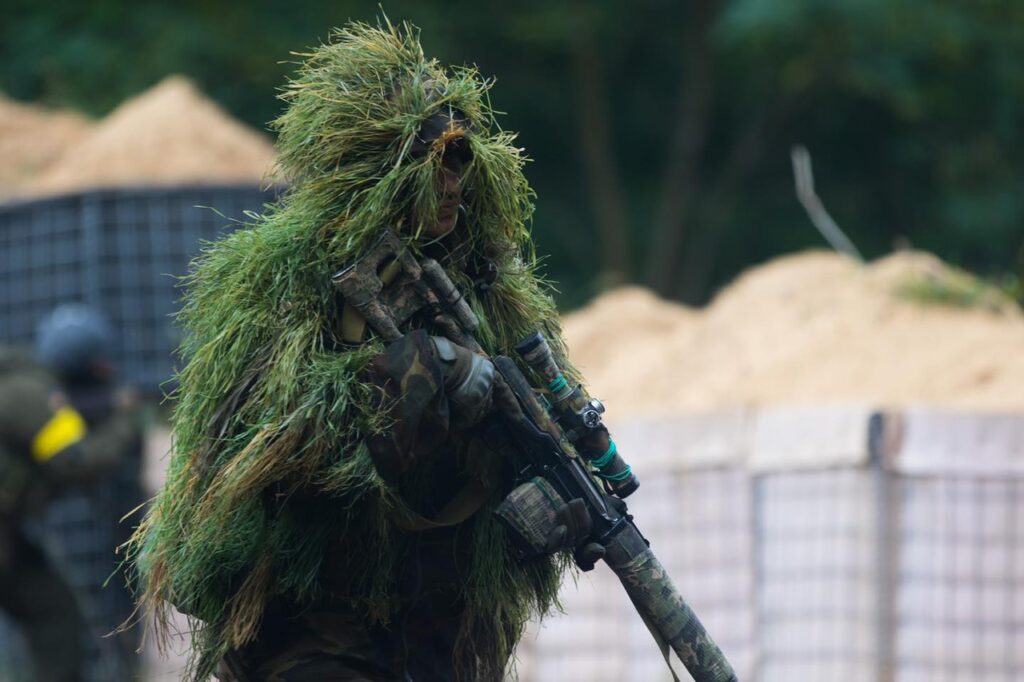
Drones get most of the attention in this war, and deservedly so—but the snipers are still out there, two Ukrainian marksmen told Army Inform, and the same drones have made their work far harder to survive. It now turns on watching, not shooting: long stretches at a hidden position, a thermal scope always running, and a constant fight to stay unseen.
Across the drone-saturated front, cheap cameras overhead have rewritten nearly every job—infantry, logistics crews, and now marksmen—so that surviving depends less on firepower than on never being seen.
The men—a squad leader in a special-purpose sniper company, callsign Efiop, and his partner Maister—serve in the National Guard of Ukraine's 3rd Operational Purpose Brigade Spartan. Maister worked a factory milling machine before joining in 2022. He saw what Russian troops were doing, he said, and Ukrainian children started dying: he went to fight for the children, and he has a daughter of his own. A team takes a sector and holds it around the clock through a thermal scope.
"We can sit 40 days and never fire a shot. Or we go in, and in a single day we take down a lot of them," Efiop said.
His longest stint at one spot ran 48 days, and the greatest distance he has worked was 2,540 meters—more than a mile and a half.
Reaching a position is often the hardest part. A sniper carries a vest, helmet, an assault rifle and the sniper rifle, and what supplies will fit—60 to 70 kilograms, or 132 to 154 pounds. They stay more than a month, and a month's worth will not go on one back. That load sometimes crosses more than 20 kilometers, over 12 miles, of open ground with no tree line to hide behind.
"You don't walk, you run," Maister said.
Lately it has eased a little: food can be dropped in by a heavy Vampire bomber drone.
The biggest shift came from the sky. Russian drones with thermal cameras can see a bullet in flight because it is warm, Efiop said, and then burn out the position.
"They caught us like that once. We took out three, they saw where we fired from and burned the spot. We moved right away, and everyone lived," Efiop noted.
Now the snipers watch remotely from a safer place instead of lying behind the scope for hours. Once, that safer setup saved a life outright: a mortar round came in and pierced only the rifle scope.


© Mohd Rasfan/Agence France-Presse — Getty Images


© Lam Yik Fei for The New York Times


© Lillian Suwanrumpha/Agence France-Presse — Getty Images


© Ronaldo Bolanos/Los Angeles Times, via Getty Images


© David J. Phillip/Associated Press


© Dave Sanders for The New York Times


ZVS Holding evacuated its ammunition factory in Snina, a town in eastern Slovakia, on 16 September after a fire broke out on the roof of a production building. Work stopped temporarily in the affected section, but nobody was injured, Militarnyi reported.
The Snina plant has an annual capacity of roughly 100,000 shells and plans to triple it, Noviny reported. The blaze briefly disrupted part of a facility under expansion for Europe’s ammunition buildup, although co-owner CSG expects no impact on customer deliveries. Authorities across Europe are investigating suspected Russian sabotage against defense companies, but no evidence links the Snina fire to that campaign.
ZVS Holding is owned equally by the Slovak state and the Czech defense conglomerate Czechoslovak Group (CSG). It makes 155 mm artillery shells, 120 mm tank rounds, and 30/35 mm cannon ammunition.
In December 2025, ZVS signed a seven-year framework agreement with Slovakia’s Defense Ministry to supply EU states. Purchases under the agreement may be financed through the bloc’s SAFE defense-loan program. Its Euro 58 billion ceiling represents the maximum possible value of future orders, not guaranteed purchases.
Firefighters brought the blaze under control during the afternoon. As thick black smoke rose over Snina, town officials advised nearby residents to limit time outdoors, close windows and doors, and switch off ventilation systems drawing in outside air.
Slovak Defense Minister Robert Kaliňák said the fire had not reached the plant’s production equipment and that the affected part of the building was not being used for manufacturing at the time. That section makes metal projectiles, he said.
Kaliňák said welding during the renovation may have sparked the fire, but stressed that investigators had not established the cause.
CSG said the fire started during roof repairs conducted by an external contractor. The company said the damage and cause still had to be assessed, but it did not expect the incident to affect customer deliveries, STVR reported.
The Snina blaze was at least the fourth fire or explosion at a European ammunition facility since 10 August, after two fires struck a Bulgarian company and an explosion hit an Italian factory. No common cause has been established.
Preliminary findings pointed away from outside interference in the first Bulgarian fire. No evidence of sabotage, however, was reported after the Italian blast, and only the second Bulgarian fire remains under investigation for possible sabotage.
Czech authorities are examining a possible Russian trail behind an arson attack on a factory making drones and thermal optics for Ukraine.
Estonia has also probed suspected arson at a military-robot maker after courts documented earlier attacks directed by Russian military intelligence.


Ukraine's arms industry wants the government to scrap a steep fee on weapons exports, warning it undercuts their prices just as Europe's defense market opens, RBC-Ukraine reported. The same fee has opened a second fight in Kyiv, where parliament this week declined to turn its revenue into money for the army.
Russia's war on Ukraine has pushed Europe into rearming, and Ukraine's battle-tested arms makers are among the few that can deliver at scale right now—an opening that domestic red tape could blunt, handing the advantage to competitors just as the market grows.
The push comes as Europe opens a major market for Ukrainian weapons. The EU's €90 billion Ukraine Support Loan for 2026-2027 reserves €60 billion for defense purchases, and partners increasingly want weapons built on their own soil. International partners report more than 200 cooperation approaches to Ukrainian firms still without a decision, according to the industry's press release. Producers link the fee fix to Build with Ukraine, a co-production push they consider strategically significant.
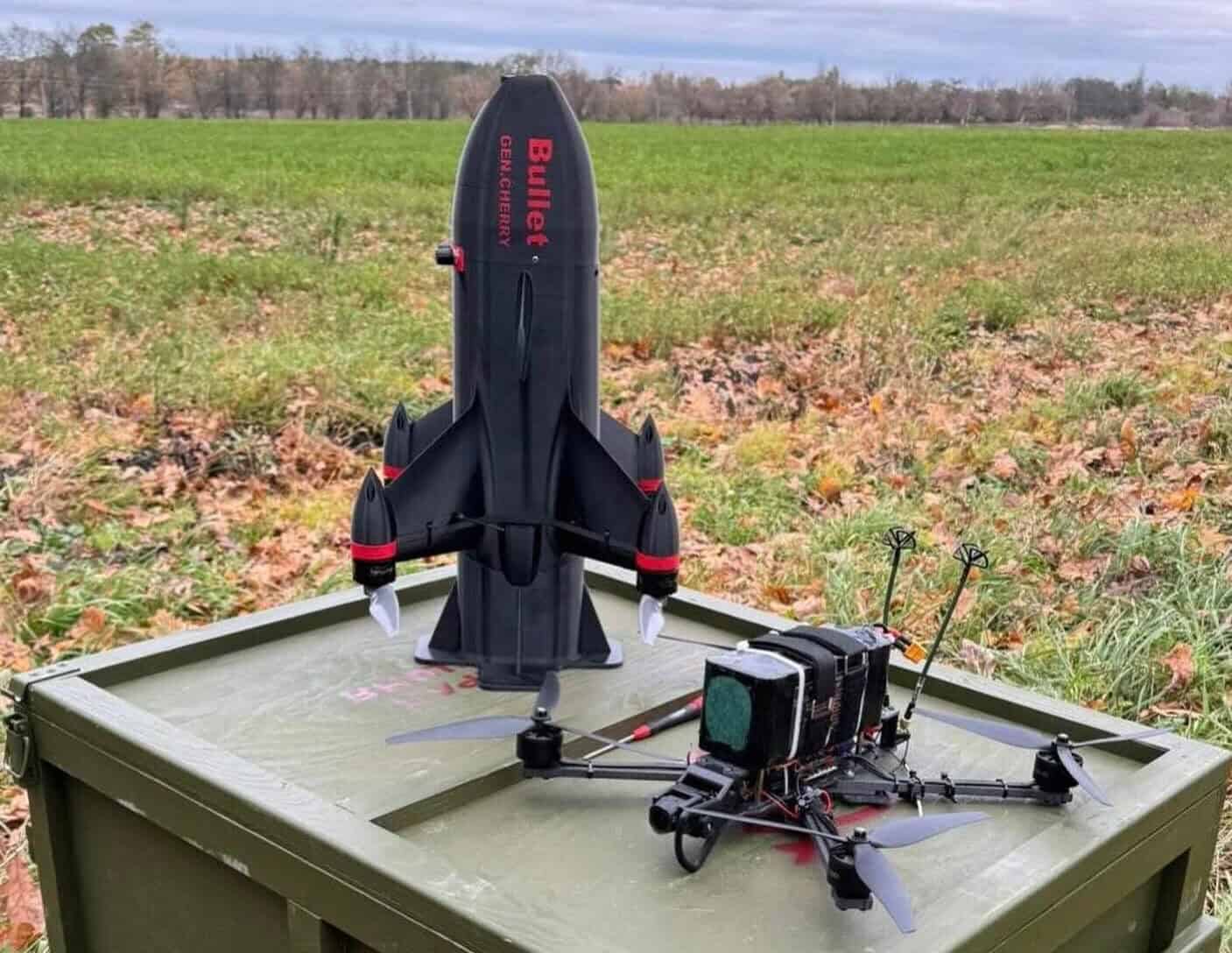
On 15 September, the Verkhovna Rada—Ukraine's parliament—rejected a bill in first reading that would have sent fee revenue collected from 1 August 2026 into a special budget fund for the Defense Ministry, half for buying, modernizing, and repairing weapons, half for soldiers' pay. The vote left the fee itself untouched, since it rests on the Cabinet resolution, and settled only that its revenue will not be earmarked for the army.
The Ukrainian Council of Arms Manufacturers, joined by other defense and employer groups, prepared proposals to rework the July government resolution, No. 875. They want the fee—20% on finished goods and technologies, 30% on parts—cut to zero, or capped at 5%. Firms must also pay upfront, before any foreign payment lands, with no refund guaranteed if a deal collapses. A UAH 15 million (about $337,000) threshold shuts out the small test shipments new clients often begin with.
The fee has drawn complaints since the resolution took effect in early July. Ihor Fedirko, the council's executive director, earlier said the 30-day review window was welcome but warned it could clog into a bureaucratic queue as staff leave the agencies running it. One of the associations behind the submission calls the 30% rate on parts prohibitive, since Europe is where Ukrainian firms would undercut Chinese suppliers on price.
Ukraine has swung from banning weapons sales abroad to courting foreign buyers, and its defense sector now ranks among the country's fastest-growing industries. Wartime certification to NATO standards is turning that output into something European militaries can actually buy.


© Alex Kent/The New York Times


© Magdalena Chodownik/Anadolu, via Getty Images


© Kim Won Jin/Agence France-Presse — Getty Images


© Kim Won Jin/Agence France-Presse — Getty Images


© Atul Loke for The New York Times


© Desiree Rios for The New York Times


© Merriam-Webster, via Associated Press