After reviewing the agency’s final plan to comply with President Trump’s demands, a federal judge barred the Postal Service from imposing new restrictions on mail-in voting.
After reviewing the agency’s final plan to comply with President Trump’s demands, a federal judge barred the Postal Service from imposing new restrictions on mail-in voting.
In a filing on Thursday, the Postal Service denied that its proposal left any room for it to second-guess states on which voters were eligible to cast a ballot.
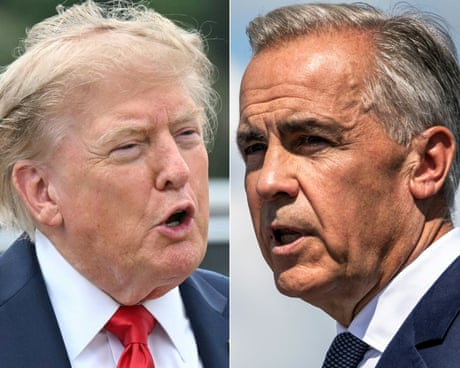
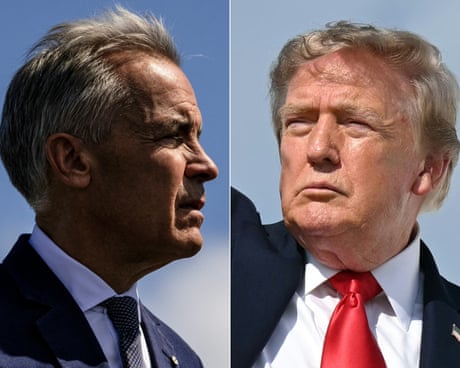
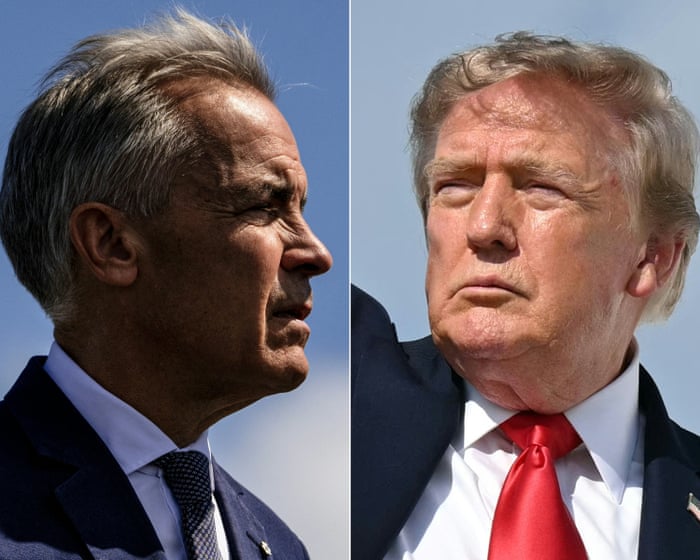
Mark Carney avait expliqué la semaine dernière que plusieurs raisons l’avaient poussé à suspendre les négociations commerciales avec les États-Unis.
Parmi ces raisons, Carney a cité la volonté de Washington d’exempter les entreprises américaines des règles sur l’étiquetage bilingue et l’affichage en français.
Donald Trump et plusieurs membres de son gouvernement ont soutenu depuis qu’ils n’avaient jamais fait une telle demande.
Howard Lutnick, ministre américain du commerce, a mê
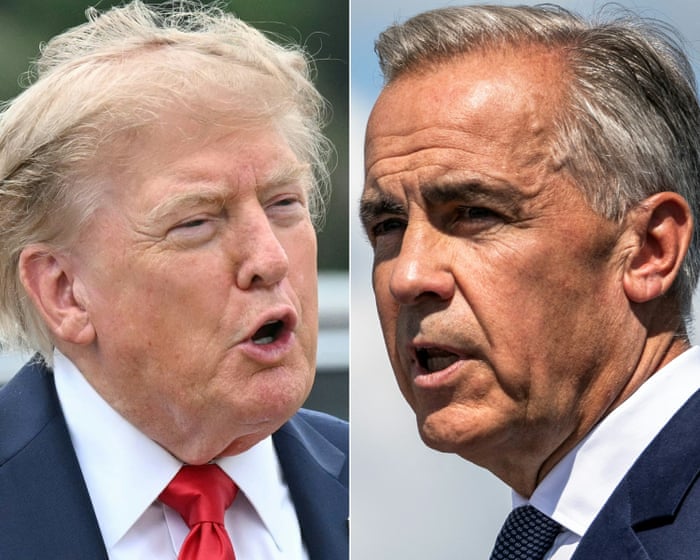
Mark Carney avait expliqué la semaine dernière que plusieurs raisons l’avaient poussé à suspendre les négociations commerciales avec les États-Unis.
Parmi ces raisons, Carney a cité la volonté de Washington d’exempter les entreprises américaines des règles sur l’étiquetage bilingue et l’affichage en français.
Donald Trump et plusieurs membres de son gouvernement ont soutenu depuis qu’ils n’avaient jamais fait une telle demande.
Howard Lutnick, ministre américain du commerce, a même laissé entendre hier que le gouvernement canadien aurait suspendu les négociations pour nuire au Parti québécois et à son projet d’indépendance, à l’approche des élections québécoises.
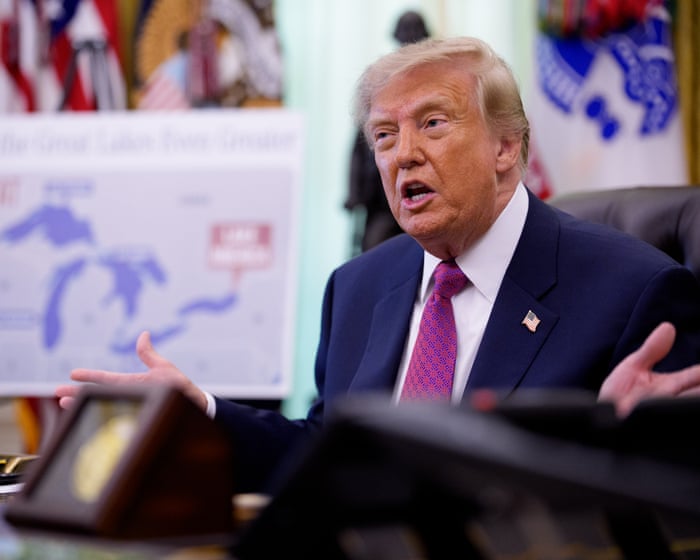
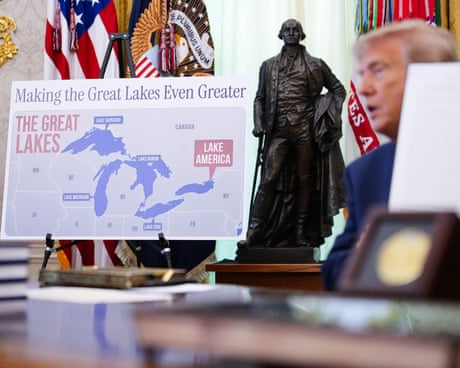
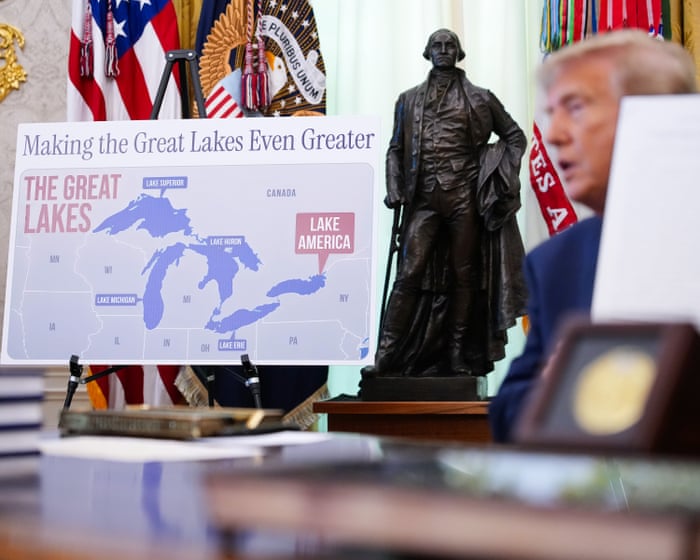
Le président américain a signé hier un décret pour le renommer «lac d’Amérique», en représailles à l’annonce récente de contre-tarifs douaniers par le Canada.
Mais ce changement ne s’appliquerait qu’aux documents et aux services fédéraux américains.
Lorsque Trump avait renommé l’an dernier le golfe du Mexique en «golfe de l’Amérique», certains services de cartographie avaient adopté ce changement.
Le lac Ontario est l’un des cinq Grands Lacs situés entre le Canada et les États-Un
Le président américain a signé hier un décret pour le renommer «lac d’Amérique», en représailles à l’annonce récente de contre-tarifs douaniers par le Canada.
Mais ce changement ne s’appliquerait qu’aux documents et aux services fédéraux américains.
Lorsque Trump avait renommé l’an dernier le golfe du Mexique en «golfe de l’Amérique», certains services de cartographie avaient adopté ce changement.
Le lac Ontario est l’un des cinq Grands Lacs situés entre le Canada et les États-Unis.
Ses rives bordent l’Ontario et l’État de New York.
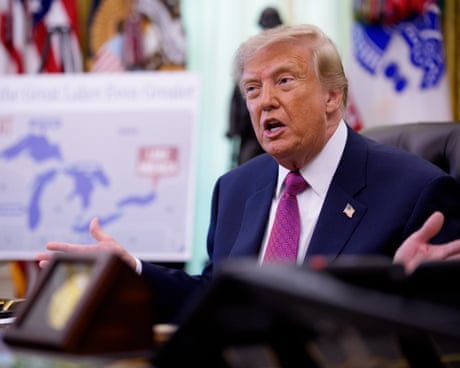
There is a U.S.-led war in the Middle East and the midterm elections on the horizon, but President Trump’s latest priority seems to be “Making The Great Lakes Even Greater.”
There is a U.S.-led war in the Middle East and the midterm elections on the horizon, but President Trump’s latest priority seems to be “Making The Great Lakes Even Greater.”
President Trump originally intended to commemorate the 25th anniversary of Sept. 11 with remarks at ground zero, but the memorial’s organizers do not allow speeches. Mr. Trump changed his plans.
President Trump originally intended to commemorate the 25th anniversary of Sept. 11 with remarks at ground zero, but the memorial’s organizers do not allow speeches. Mr. Trump changed his plans.
A controller let a jet take off after missing warnings that Marine One was about to fly through the area, according to the National Transportation Safety Board.
A controller let a jet take off after missing warnings that Marine One was about to fly through the area, according to the National Transportation Safety Board.
A passenger jet came within a mile of Marine One in early August, after an air traffic controller at Ronald Reagan National Airport appeared to have missed multiple warnings.
The relative indifference to the news that the U.S. government now owes $40 trillion demonstrates how drastically the politics of deficit spending has changed.
The relative indifference to the news that the U.S. government now owes $40 trillion demonstrates how drastically the politics of deficit spending has changed.
Congressman Jamie Raskin asks president’s son to detail firm’s recent success after he joined 1789 Capital as partnerDemocrats on a powerful US congressional committee have launched an investigation into a venture capital firm which has thrived since recruiting Donald Trump’s son.Donald Trump Jr joined 1789 Capital as a partner just days after his father won a second term in office in November 2024. Congressman Jamie Raskin, ranking member of the US House of Representatives judiciary committee,
Congressman Jamie Raskin asks president’s son to detail firm’s recent success after he joined 1789 Capital as partner
Democrats on a powerful US congressional committee have launched an investigation into a venture capital firm which has thrived since recruiting Donald Trump’s son.
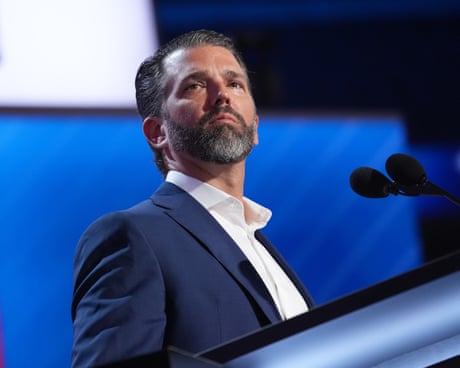
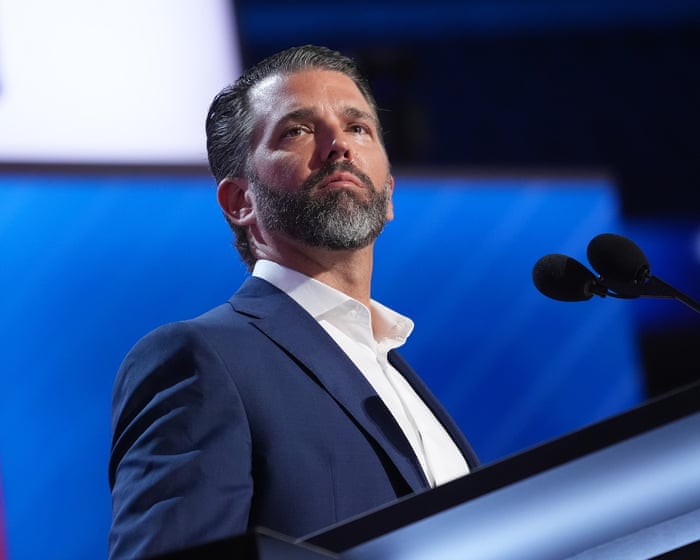
Donald Trump Jr joined 1789 Capital as a partner just days after his father won a second term in office in November 2024. Congressman Jamie Raskin, ranking member of the US House of Representatives judiciary committee, has asked the president’s son to detail the firm’s recent success.
The US president signed order on Thursday amid growing trade war with Canada after the US enacted tariffs against its northern neighbor Continue reading...
Mark Carney rejects attempt to rename lake as did several US governors, with Tony Evers mocking the moveUS politics live – latest updatesDonald Trump signed an executive order on Thursday directing the federal government to rename Lake Ontario, making it Lake America, amid his escalating trade war with Canada.The order directs federal agencies to adopt the name-change on US maps, documents and databases. But Trump has no authority to rename Canada’s portion of the lake, nor to compel Canada, int
Donald Trump signed an executive order on Thursday directing the federal government to rename Lake Ontario, making it Lake America, amid his escalating trade war with Canada.
The order directs federal agencies to adopt the name-change on US maps, documents and databases. But Trump has no authority to rename Canada’s portion of the lake, nor to compel Canada, international legal bodies, international mapmakers, or the rest of the world to adopt a new name.
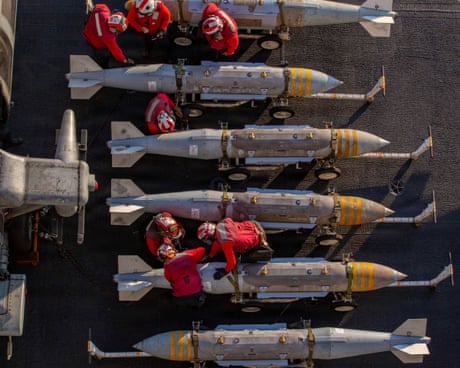
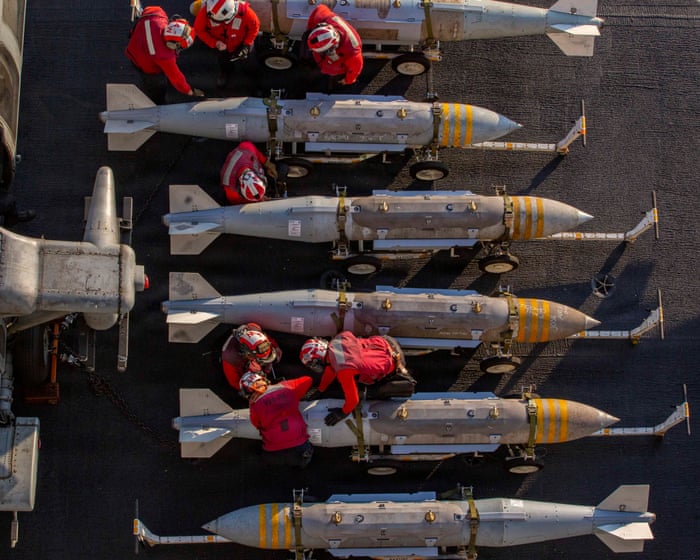
Exclusive: Experts and former officials say accounts are running dry, and funding a war with no clear endgame is the main challengeDonald Trump’s war on Iran has driven the US military into a severe financial crisis, with the US navy forced to transfer money from its payroll and other sources to cover the costs of combat, according to documents seen by the Guardian, and interviews with navy officials, contractors and defense analysts.The US-Israeli operation, which has depleted US munitions stoc
Exclusive: Experts and former officials say accounts are running dry, and funding a war with no clear endgame is the main challenge
Donald Trump’s war on Iran has driven the US military into a severe financial crisis, with the US navy forced to transfer money from its payroll and other sources to cover the costs of combat, according to documents seen by the Guardian, and interviews with navy officials, contractors and defense analysts.
The US-Israeli operation, which has depleted US munitions stockpiles and prompted retaliatory Iranian strikes that have wrecked strategic bases across the Middle East, is piling pressure on budgets across the military.
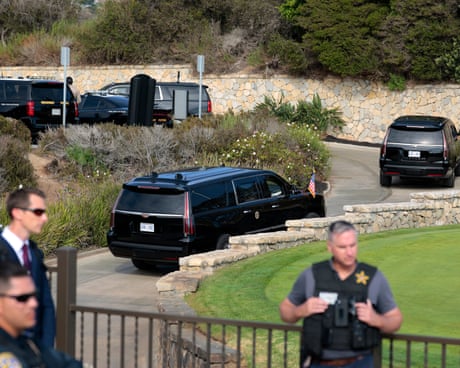
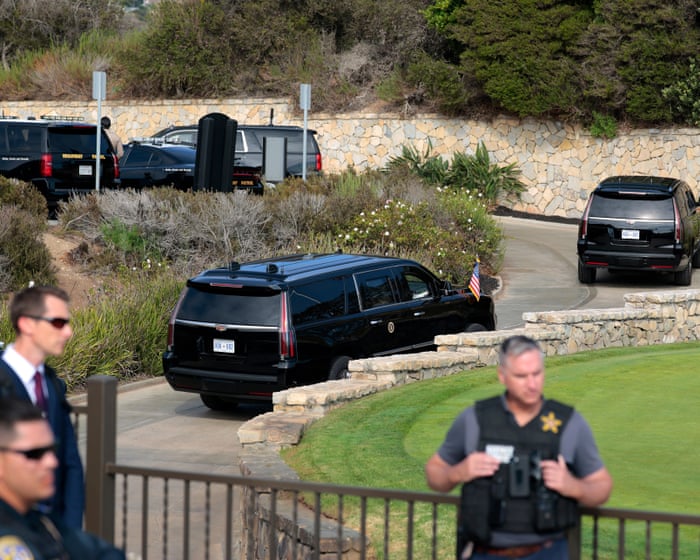
Judge ruled Jeanine John Taele, discovered with firearm days before Trump visit, was unfit to face felony chargeA judge in California has suspended criminal proceedings against a man found with a loaded gun near Donald Trump’s golf course in Los Angeles, and instead ordered him to undergo a mental health evaluation.Jeanine John Taele, 38, of Downey, California, was arrested for weapons violations days before the president spoke at a 5 August Republican fundraiser at the Trump National Golf Club
Judge ruled Jeanine John Taele, discovered with firearm days before Trump visit, was unfit to face felony charge
A judge in California has suspended criminal proceedings against a man found with a loaded gun near Donald Trump’s golf course in Los Angeles, and instead ordered him to undergo a mental health evaluation.
Jeanine John Taele, 38, of Downey, California, was arrested for weapons violations days before the president spoke at a 5 August Republican fundraiser at the Trump National Golf Club in Rancho Palos Verdes.
Canada’s minister in charge of trade with the U.S. was responding to comments by Jamieson Greer, the U.S. trade representative. But that was before any mention of Lake Ontario.
Canada’s minister in charge of trade with the U.S. was responding to comments by Jamieson Greer, the U.S. trade representative. But that was before any mention of Lake Ontario.
Flights to the Caribbean nation will increase from once a month to once a week now that the Supreme Court allowed President Trump to cancel a humanitarian program.
Flights to the Caribbean nation will increase from once a month to once a week now that the Supreme Court allowed President Trump to cancel a humanitarian program.
Many Republicans are hoping for financial support from President Trump, whose fund-raising power in the party remains unmatched despite his low poll numbers.
Many Republicans are hoping for financial support from President Trump, whose fund-raising power in the party remains unmatched despite his low poll numbers.
A cutout of President Trump in Cypress, Texas, during the Republican primary runoff for Senate between Attorney General Ken Paxton and Senator John Cornyn in May.
Nigerian soldiers took part in a search-and-rescue exercise at the Maiduguri Air Force Base earlier this month. Nigerian forces worked with the American military to kill one of the Islamic State’s highest-ranking leaders.
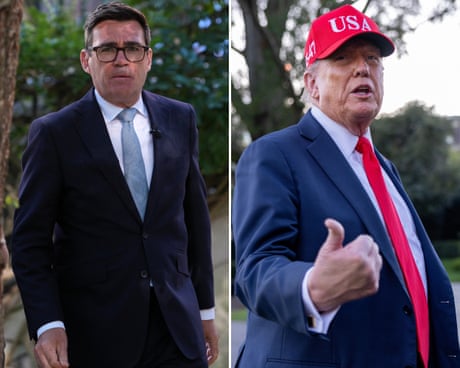
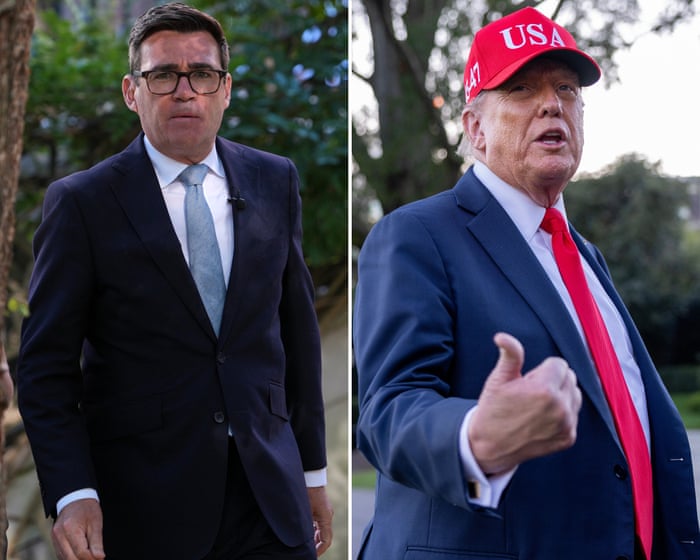
Burnham has nothing to hide as he prepares to meet president he once called poisonous. It may actually win him more respectIt makes a pleasant change. Not so long ago, Keir Starmer was falling over himself in his efforts to keep things sweet with Donald Trump. Offering the US president a second state visit within minutes of meeting him. Everyone knows you should never put out on the first date: it only makes the other person think you’re a pushover. Sure enough, The Donald banked the marching ba
Burnham has nothing to hide as he prepares to meet president he once called poisonous. It may actually win him more respect
It makes a pleasant change. Not so long ago, Keir Starmer was falling over himself in his efforts to keep things sweet with Donald Trump. Offering the US president a second state visit within minutes of meeting him. Everyone knows you should never put out on the first date: it only makes the other person think you’re a pushover. Sure enough, The Donald banked the marching bands and the Windsor silver service, made polite conversation for three days and then went back to trash-talking him.
Yet still, Starmer just sat there and took it. As if one word of criticism would be too much. Wittering on about the “special relationship” as if Trump gave a moment’s thought to the UK before he did anything. The rest of us wouldn’t have put money on the US president even being able to locate Britain on a map. It was only latterly, when The Donald chose to bomb Iran, that the penny finally dropped for Keir. And even then he looked pained by the apparent betrayal, as he resisted the calls of Kemi Badenoch and Nigel Farage to join in the war.
As the US president struggles to end his Iran war, and approval ratings hit new lows, he leans on a familiar gambitDonald Trump knows the power of an image – of himself, with everyone from Vladimir Putin and Kim Jong-un to Kim Kardashian. How about George Washington?As the US president struggles to end his war with Iran, and with his approval ratings hitting the lowest levels of his second term, he has in recent weeks posted a series of AI-generated images of himself alongside key historical Ame
As the US president struggles to end his war with Iran, and with his approval ratings hitting the lowest levels of his second term, he has in recent weeks posted a series of AI-generated images of himself alongside key historical American figures.
The senator’s remarks reflect a turning point in Democrats’ attacks on the president. What should we make of them?Apparently, he likes to say her name with a French accent. “Na-tah-lee!” the president cries out, in that affected tone of faux-formality that one might use with a person they love but do not quite respect, and she comes running, her thin legs teetering on her heels.Natalie Harp, Trump’s 35-year-old “executive assistant”, was an odd recurring character in the latest blockbuster Trump
The senator’s remarks reflect a turning point in Democrats’ attacks on the president. What should we make of them?
Apparently, he likes to say her name with a French accent. “Na-tah-lee!” the president cries out, in that affected tone of faux-formality that one might use with a person they love but do not quite respect, and she comes running, her thin legs teetering on her heels.
Natalie Harp, Trump’s 35-year-old “executive assistant”, was an odd recurring character in the latest blockbuster Trump administration book, Regime Change, by the New York Times’ Maggie Haberman and Jonathan Swan. In the book, Harp features like a silent sentinel, ever present but eerily quiet as Trump rants and raves. It’s not exactly clear what the scope of her responsibilities is; though, as Jamelle Bouie points out, the fact that she evidently helps run the president’s social media accounts, which can sway markets and influence his foreign counterparts, makes her one of the most powerful people in the federal government.
Senator Chris Van Hollen of Maryland is leading a group of Democrats seeking answers about violence against Palestinians in the Israeli-occupied West Bank.
Senator Chris Van Hollen of Maryland is leading a group of Democrats seeking answers about violence against Palestinians in the Israeli-occupied West Bank.
A handcuffed Palestinian man being detained by Israeli border police officers during an army operation in the Qalandiya refugee camp in the West Bank on Tuesday.
A year into a government review of the purchase of as many as 88 F-35s, one premier says buying American warplanes makes no sense in the face of President Trump’s latest tariffs.
A year into a government review of the purchase of as many as 88 F-35s, one premier says buying American warplanes makes no sense in the face of President Trump’s latest tariffs.
The F-35 Lightning, made by American defense contractor Lockheed-Martin, costs between $82.5 million and $109 million per plane, depending on the variant.
The success of progressive candidates in the United States is inspiring leftists abroad struggling under pressure from the Trump administration and its allies.
The success of progressive candidates in the United States is inspiring leftists abroad struggling under pressure from the Trump administration and its allies.
The president’s pull with the party base has been clear and his resources are vast. But his low approval ratings make him a liability with swing voters.
The president’s pull with the party base has been clear and his resources are vast. But his low approval ratings make him a liability with swing voters.
President Trump campaigning with Representative Mike Lawler of New York in May. Republicans have to weigh Mr. Trump’s approval ratings against his popularity among his base.
Mark Paoletta, also a close associate of Justice Clarence Thomas’s, has been named by President Trump to lead the National Capital Planning Commission.
Mark Paoletta, also a close associate of Justice Clarence Thomas’s, has been named by President Trump to lead the National Capital Planning Commission.
As the chairman of the National Capital Planning Commission, Mark Paoletta will be tasked with vetting President Trump’s planned arch and other construction projects.
Cadets walking near Pershing Barracks at the U.S. Military Academy at West Point in 2014. A West Point climate professor says he was fired for refusing to “defy science.”
Will Scharf has proved his loyalty to President Trump, even filming a TV ad in which he blows away documents from the president’s legal cases. His new role will be to provide in-house legal advice.
Will Scharf has proved his loyalty to President Trump, even filming a TV ad in which he blows away documents from the president’s legal cases. His new role will be to provide in-house legal advice.
The agency’s top spokesman is among those on leave, according to two Trump administration officials. The agency said three people faced a misconduct investigation.
The agency’s top spokesman is among those on leave, according to two Trump administration officials. The agency said three people faced a misconduct investigation.
A California judge suspended criminal proceedings against the man, a former Marine, who had been arrested days before the president was set to visit for a fund-raiser.
A California judge suspended criminal proceedings against the man, a former Marine, who had been arrested days before the president was set to visit for a fund-raiser.
A judge found that Democratic lawmakers had not followed proper procedures in passing a redistricting amendment, but the state Supreme Court will have the final say.
A judge found that Democratic lawmakers had not followed proper procedures in passing a redistricting amendment, but the state Supreme Court will have the final say.
Senator Darline Graham has spoken far more about her desire to support President Trump’s agenda than she has talked about her brother’s political goals — or her own.
Senator Darline Graham has spoken far more about her desire to support President Trump’s agenda than she has talked about her brother’s political goals — or her own.
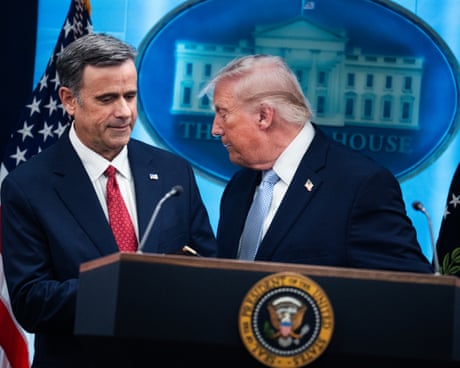
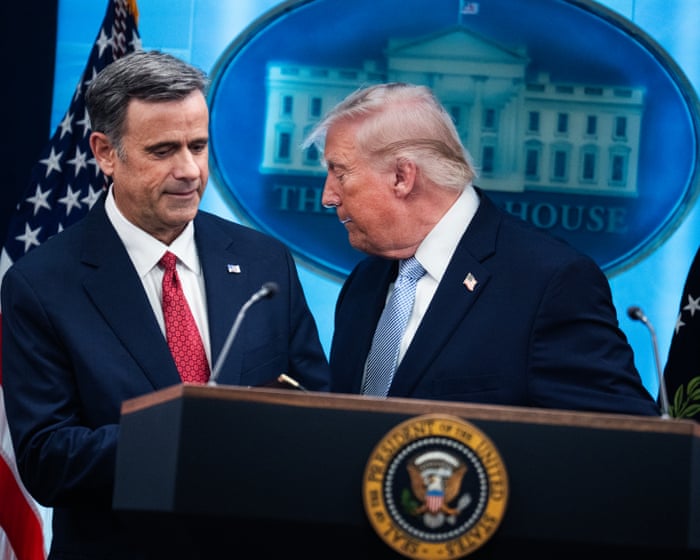
President denies visit was to gain support for Iran sanctions or due to fears that Putin plans to ‘test Nato resolve’US politics live – latest updatesDonald Trump has downplayed a visit to Moscow by the CIA director, John Ratcliffe, as “semi-routine” after he turned up in the Russian capital unannounced, triggering a wave of speculation about the reasons for his trip.Ratcliffe was reported to have flown to Moscow on a government transport plane on Tuesday in a rare visit after taking off from th
Donald Trump has downplayed a visit to Moscow by the CIA director, John Ratcliffe, as “semi-routine” after he turned up in the Russian capital unannounced, triggering a wave of speculation about the reasons for his trip.
Ratcliffe was reported to have flown to Moscow on a government transport plane on Tuesday in a rare visit after taking off from the Andrews air force base in Maryland.
The US president expected Ottawa to bow to tariff demands, but Canada is striking back – and it could cost AmericansThis was originally published in This Week in Trumpland. Sign up to receive it in your inbox every WednesdayEarlier this year, a survey found that Canada, along with Switzerland, was the best-liked country in the world. We all know this kind of polling is about as scientific as a high school popularity contest, but at least anecdotally, Canadians have a reputation for being friendl
Earlier this year, a survey found that Canada, along with Switzerland, was the best-liked country in the world. We all know this kind of polling is about as scientific as a high school popularity contest, but at least anecdotally, Canadians have a reputation for being friendly and welcoming, respectful and polite. Many people would find it difficult to dislike Canadians.
But not Donald Trump, who in a “hold my beer” moment this week demonstrated that he, at least, finds it easy to resent Canadians. The US president called the country “difficult and unreasonable”, and in a particularly hysterical moment, threatened to rename a lake, after trade talks collapsed.
The order came amid a spate of legal challenges, including one by Democratic state attorneys general, that could still result in the rules being blocked.
The order came amid a spate of legal challenges, including one by Democratic state attorneys general, that could still result in the rules being blocked.
Under its new plan, the Postal Service would not deliver mail ballots in states that do not share voter data with the agency and would deliver only ballots that meet certain criteria.
Dean Roy, 15, will appear on the ballot in November as a third-party candidate. He said his generation’s concerns, like affordability and climate change, have been ignored for too long.
Dean Roy, 15, will appear on the ballot in November as a third-party candidate. He said his generation’s concerns, like affordability and climate change, have been ignored for too long.
In this episode of Guardian Australia’s US politics podcast Decoding America, co-hosts Jonathan Yerushalmy and Reged Ahmad explore why datacentres in the US have provoked such anger – and whether that could harm Republicans in the midterms given Donald Trump is such a supporter of the growing industry.They also look at why the US and Canada are fighting over tariffs. The Canadian prime minister, Mark Carney, is pushing back and both countries could be on the cusp of a full-blown trade war.Finall
In this episode of Guardian Australia’s US politics podcast Decoding America, co-hosts Jonathan Yerushalmy and Reged Ahmad explore why datacentres in the US have provoked such anger – and whether that could harm Republicans in the midterms given Donald Trump is such a supporter of the growing industry.
They also look at why the US and Canada are fighting over tariffs. The Canadian prime minister, Mark Carney, is pushing back and both countries could be on the cusp of a full-blown trade war.
Finally: why does the Trump administration’s secretary of transportation, Sean Duffy, have his very own YouTube show – and is he the only one?
Nickolay Mladenov, the Board of Peace’s high representative for Gaza, criticized Israel for its ongoing strikes on what it says are Hamas targets, after it rejected a plan to disarm the group.
Nickolay Mladenov, the Board of Peace’s high representative for Gaza, criticized Israel for its ongoing strikes on what it says are Hamas targets, after it rejected a plan to disarm the group.
They should ask the question Reagan asked at the end of his debate against Jimmy Carter: ‘Are you better off now than you were before this presidency?’The midterm elections are already upon us, and every Democrat and independent running against a Republican should ask voters the question Ronald Reagan asked on 28 October 1980, at the end of his televised debate against Jimmy Carter: “Are you better off now than you were before this presidency?”Unless you’re very, very rich, the answer is obvious
They should ask the question Reagan asked at the end of his debate against Jimmy Carter: ‘Are you better off now than you were before this presidency?’
The midterm elections are already upon us, and every Democrat and independent running against a Republican should ask voters the question Ronald Reagan asked on 28 October 1980, at the end of his televised debate against Jimmy Carter: “Are you better off now than you were before this presidency?”
Unless you’re very, very rich, the answer is obviously: “No, I’m worse off.”
Energy bills have increased three times faster than the rate of inflation while Trump has been president. The national average monthly utility bill reached $280 in early 2026, a 12% increase since the end of 2024, just before the second Trump administration took office.
The Syrian Democratic Forces, a Kurdish-led armed group that has lost territory and authority in recent months, will integrate with the country’s military.
The Syrian Democratic Forces, a Kurdish-led armed group that has lost territory and authority in recent months, will integrate with the country’s military.
Members of the Syrian Democratic Forces, a Kurdish-led militia that was long seen as a key American ally in Syria in the fight against the Islamic State.
Administration moved away from high-profile raids that defined immigration enforcement approach last year but still deported record number of peopleThe Trump administration arrested and deported a record number of immigrants in July, according to newly released government data – apprehending an average of 1,500 people and removing 1,100 people daily.This latest data confirms what attorneys and immigrant advocates have been seeing across the US – although the administration has moved away from th
Administration moved away from high-profile raids that defined immigration enforcement approach last year but still deported record number of people
The Trump administration arrested and deported a record number of immigrants in July, according to newly released government data – apprehending an average of 1,500 people and removing 1,100 people daily.
This latest data confirms what attorneys and immigrant advocates have been seeing across the US – although the administration has moved away from the high-profile, militarized raids that came to define its immigration enforcement approach last year, it is quietly ramping up its operations.
The quiet-spoken Canadian prime minister has spoken unutterable truthsIs it perhaps a sign of the times that Mark Carney, the prime minister of Canada, has become a thrilling orator? A sober banker, he speaks calmly, without many vocal inflections. We expect Canadians to be somewhat flat; even a little boring, and yet Carney has already delivered two remarkable speeches in 2026, and the year is far from over.The first, at Davos, described a “rupture in the world order”, and “the end of a pleasan
The quiet-spoken Canadian prime minister has spoken unutterable truths
Is it perhaps a sign of the times that Mark Carney, the prime minister of Canada, has become a thrilling orator? A sober banker, he speaks calmly, without many vocal inflections. We expect Canadians to be somewhat flat; even a little boring, and yet Carney has already delivered two remarkable speeches in 2026, and the year is far from over.
The first, at Davos, described a “rupture in the world order”, and “the end of a pleasant fiction”. By that, he meant that the world could no longer depend on the United States to lead the Pax Americana that has largely kept the peace since the end of the second world war.
Paper products among hardest-hit sectors after trade negotiations broke down, with 25-50% tariffs estimatedAre you a Canadian boycotting US products? We’d like to hear from youUsing the bathroom or having a cry is about to become more expensive for North Americans as the US and Canada enter a full-fledged trade war that threatens to flush away decades of peaceful trading between the two nations.After trade negotiations broke down between the two countries last weekend, Mark Carney, the Canadian
Using the bathroom or having a cry is about to become more expensive for North Americans as the US and Canada enter a full-fledged trade war that threatens to flush away decades of peaceful trading between the two nations.
After trade negotiations broke down between the two countries last weekend, Mark Carney, the Canadian prime minister, vowed to match US tariffs “dollar for dollar” and unveiled a list of nearly 900 American goods that will face 25% to 50% tariffs starting on 8 September.
After facing low approval ratings and endorsement setbacks, the president made a show of force in lifting Darline Graham to the Republican nomination for Senate in South Carolina.
After facing low approval ratings and endorsement setbacks, the president made a show of force in lifting Darline Graham to the Republican nomination for Senate in South Carolina.
Business owners are preparing for financial pain after the latest U.S.-Canada trade talks collapsed. But many Canadians are embracing a show of resistance.
Business owners are preparing for financial pain after the latest U.S.-Canada trade talks collapsed. But many Canadians are embracing a show of resistance.
Everyone can see that the Iran war has been a strategic disaster for the US, while a failing president pretends he is winningNow is the twilight of Donald Trump’s supremacy. The US is still the richest and most heavily armed nation on Earth. That status is secure. The current president, contemptuous of law and indulged in lawlessness by a supine Congress, enjoys even greater power than the constitution allows.With those advantages it takes a special talent for incompetence to look as thwarted an
Everyone can see that the Iran war has been a strategic disaster for the US, while a failing president pretends he is winning
Now is the twilight of Donald Trump’s supremacy. The US is still the richest and most heavily armed nation on Earth. That status is secure. The current president, contemptuous of law and indulged in lawlessness by a supine Congress, enjoys even greater power than the constitution allows.
With those advantages it takes a special talent for incompetence to look as thwarted and impotent as Trump does with more than two years of his second term still to run.

 Connexion