Mark Paoletta, also a close associate of Justice Clarence Thomas’s, has been named by President Trump to lead the National Capital Planning Commission.
Mark Paoletta, also a close associate of Justice Clarence Thomas’s, has been named by President Trump to lead the National Capital Planning Commission.
As the chairman of the National Capital Planning Commission, Mark Paoletta will be tasked with vetting President Trump’s planned arch and other construction projects.
Cadets walking near Pershing Barracks at the U.S. Military Academy at West Point in 2014. A West Point climate professor says he was fired for refusing to “defy science.”
Will Scharf has proved his loyalty to President Trump, even filming a TV ad in which he blows away documents from the president’s legal cases. His new role will be to provide in-house legal advice.
Will Scharf has proved his loyalty to President Trump, even filming a TV ad in which he blows away documents from the president’s legal cases. His new role will be to provide in-house legal advice.
The agency’s top spokesman is among those on leave, according to two Trump administration officials. The agency said three people faced a misconduct investigation.
The agency’s top spokesman is among those on leave, according to two Trump administration officials. The agency said three people faced a misconduct investigation.
A California judge suspended criminal proceedings against the man, a former Marine, who had been arrested days before the president was set to visit for a fund-raiser.
A California judge suspended criminal proceedings against the man, a former Marine, who had been arrested days before the president was set to visit for a fund-raiser.
A judge found that Democratic lawmakers had not followed proper procedures in passing a redistricting amendment, but the state Supreme Court will have the final say.
A judge found that Democratic lawmakers had not followed proper procedures in passing a redistricting amendment, but the state Supreme Court will have the final say.
Senator Darline Graham has spoken far more about her desire to support President Trump’s agenda than she has talked about her brother’s political goals — or her own.
Senator Darline Graham has spoken far more about her desire to support President Trump’s agenda than she has talked about her brother’s political goals — or her own.
President denies visit was to gain support for Iran sanctions or due to fears that Putin plans to ‘test Nato resolve’US politics live – latest updatesDonald Trump has downplayed a visit to Moscow by the CIA director, John Ratcliffe, as “semi-routine” after he turned up in the Russian capital unannounced, triggering a wave of speculation about the reasons for his trip.Ratcliffe was reported to have flown to Moscow on a government transport plane on Tuesday in a rare visit after taking off from th
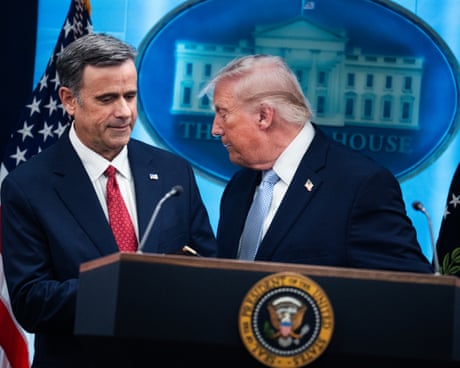
Donald Trump has downplayed a visit to Moscow by the CIA director, John Ratcliffe, as “semi-routine” after he turned up in the Russian capital unannounced, triggering a wave of speculation about the reasons for his trip.
Ratcliffe was reported to have flown to Moscow on a government transport plane on Tuesday in a rare visit after taking off from the Andrews air force base in Maryland.
The US president expected Ottawa to bow to tariff demands, but Canada is striking back – and it could cost AmericansThis was originally published in This Week in Trumpland. Sign up to receive it in your inbox every WednesdayEarlier this year, a survey found that Canada, along with Switzerland, was the best-liked country in the world. We all know this kind of polling is about as scientific as a high school popularity contest, but at least anecdotally, Canadians have a reputation for being friendl
Earlier this year, a survey found that Canada, along with Switzerland, was the best-liked country in the world. We all know this kind of polling is about as scientific as a high school popularity contest, but at least anecdotally, Canadians have a reputation for being friendly and welcoming, respectful and polite. Many people would find it difficult to dislike Canadians.
But not Donald Trump, who in a “hold my beer” moment this week demonstrated that he, at least, finds it easy to resent Canadians. The US president called the country “difficult and unreasonable”, and in a particularly hysterical moment, threatened to rename a lake, after trade talks collapsed.
The order came amid a spate of legal challenges, including one by Democratic state attorneys general, that could still result in the rules being blocked.
The order came amid a spate of legal challenges, including one by Democratic state attorneys general, that could still result in the rules being blocked.
Under its new plan, the Postal Service would not deliver mail ballots in states that do not share voter data with the agency and would deliver only ballots that meet certain criteria.
Dean Roy, 15, will appear on the ballot in November as a third-party candidate. He said his generation’s concerns, like affordability and climate change, have been ignored for too long.
Dean Roy, 15, will appear on the ballot in November as a third-party candidate. He said his generation’s concerns, like affordability and climate change, have been ignored for too long.
In this episode of Guardian Australia’s US politics podcast Decoding America, co-hosts Jonathan Yerushalmy and Reged Ahmad explore why datacentres in the US have provoked such anger – and whether that could harm Republicans in the midterms given Donald Trump is such a supporter of the growing industry.They also look at why the US and Canada are fighting over tariffs. The Canadian prime minister, Mark Carney, is pushing back and both countries could be on the cusp of a full-blown trade war.Finall
In this episode of Guardian Australia’s US politics podcast Decoding America, co-hosts Jonathan Yerushalmy and Reged Ahmad explore why datacentres in the US have provoked such anger – and whether that could harm Republicans in the midterms given Donald Trump is such a supporter of the growing industry.
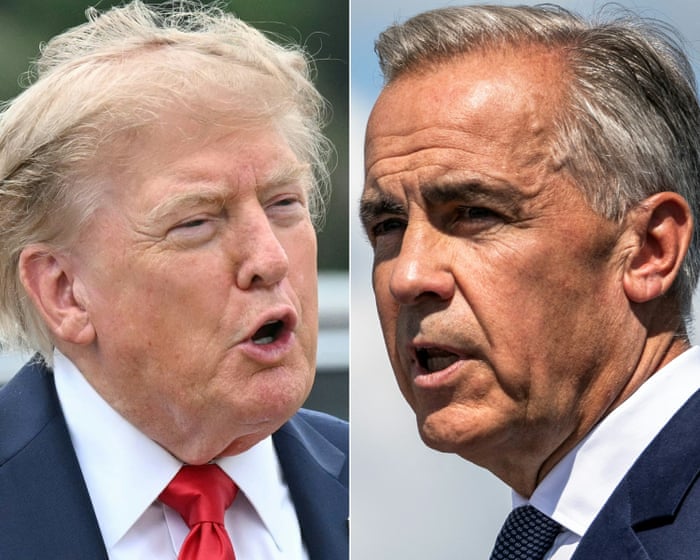
They also look at why the US and Canada are fighting over tariffs. The Canadian prime minister, Mark Carney, is pushing back and both countries could be on the cusp of a full-blown trade war.
Finally: why does the Trump administration’s secretary of transportation, Sean Duffy, have his very own YouTube show – and is he the only one?
Nickolay Mladenov, the Board of Peace’s high representative for Gaza, criticized Israel for its ongoing strikes on what it says are Hamas targets, after it rejected a plan to disarm the group.
Nickolay Mladenov, the Board of Peace’s high representative for Gaza, criticized Israel for its ongoing strikes on what it says are Hamas targets, after it rejected a plan to disarm the group.
They should ask the question Reagan asked at the end of his debate against Jimmy Carter: ‘Are you better off now than you were before this presidency?’The midterm elections are already upon us, and every Democrat and independent running against a Republican should ask voters the question Ronald Reagan asked on 28 October 1980, at the end of his televised debate against Jimmy Carter: “Are you better off now than you were before this presidency?”Unless you’re very, very rich, the answer is obvious
They should ask the question Reagan asked at the end of his debate against Jimmy Carter: ‘Are you better off now than you were before this presidency?’
The midterm elections are already upon us, and every Democrat and independent running against a Republican should ask voters the question Ronald Reagan asked on 28 October 1980, at the end of his televised debate against Jimmy Carter: “Are you better off now than you were before this presidency?”
Unless you’re very, very rich, the answer is obviously: “No, I’m worse off.”
Energy bills have increased three times faster than the rate of inflation while Trump has been president. The national average monthly utility bill reached $280 in early 2026, a 12% increase since the end of 2024, just before the second Trump administration took office.
The Syrian Democratic Forces, a Kurdish-led armed group that has lost territory and authority in recent months, will integrate with the country’s military.
The Syrian Democratic Forces, a Kurdish-led armed group that has lost territory and authority in recent months, will integrate with the country’s military.
Members of the Syrian Democratic Forces, a Kurdish-led militia that was long seen as a key American ally in Syria in the fight against the Islamic State.
Administration moved away from high-profile raids that defined immigration enforcement approach last year but still deported record number of peopleThe Trump administration arrested and deported a record number of immigrants in July, according to newly released government data – apprehending an average of 1,500 people and removing 1,100 people daily.This latest data confirms what attorneys and immigrant advocates have been seeing across the US – although the administration has moved away from th
Administration moved away from high-profile raids that defined immigration enforcement approach last year but still deported record number of people
The Trump administration arrested and deported a record number of immigrants in July, according to newly released government data – apprehending an average of 1,500 people and removing 1,100 people daily.
This latest data confirms what attorneys and immigrant advocates have been seeing across the US – although the administration has moved away from the high-profile, militarized raids that came to define its immigration enforcement approach last year, it is quietly ramping up its operations.
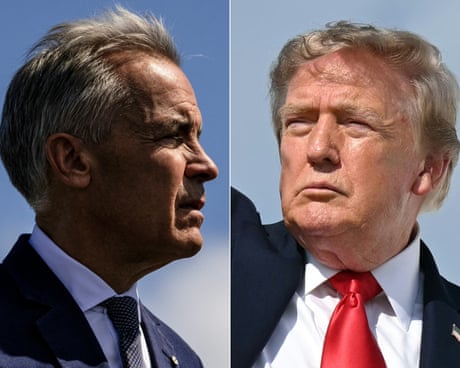
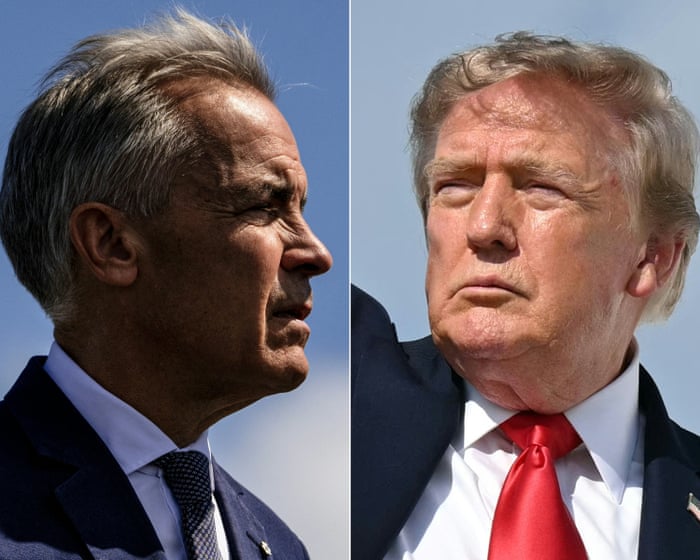
The quiet-spoken Canadian prime minister has spoken unutterable truthsIs it perhaps a sign of the times that Mark Carney, the prime minister of Canada, has become a thrilling orator? A sober banker, he speaks calmly, without many vocal inflections. We expect Canadians to be somewhat flat; even a little boring, and yet Carney has already delivered two remarkable speeches in 2026, and the year is far from over.The first, at Davos, described a “rupture in the world order”, and “the end of a pleasan
The quiet-spoken Canadian prime minister has spoken unutterable truths
Is it perhaps a sign of the times that Mark Carney, the prime minister of Canada, has become a thrilling orator? A sober banker, he speaks calmly, without many vocal inflections. We expect Canadians to be somewhat flat; even a little boring, and yet Carney has already delivered two remarkable speeches in 2026, and the year is far from over.
The first, at Davos, described a “rupture in the world order”, and “the end of a pleasant fiction”. By that, he meant that the world could no longer depend on the United States to lead the Pax Americana that has largely kept the peace since the end of the second world war.
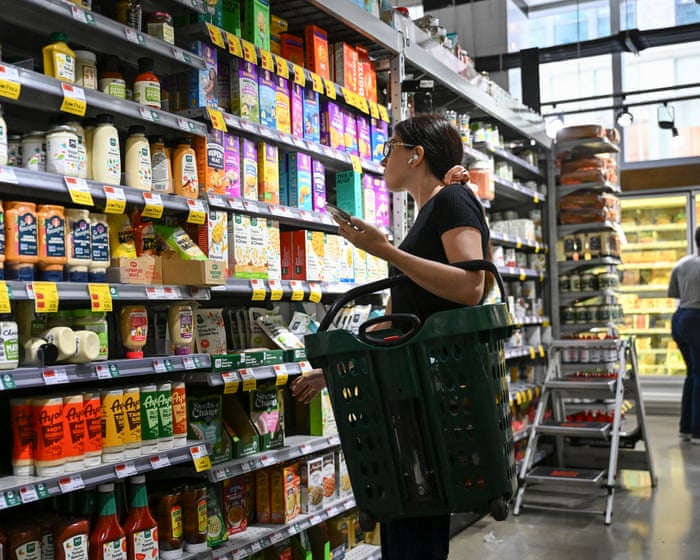
Paper products among hardest-hit sectors after trade negotiations broke down, with 25-50% tariffs estimatedAre you a Canadian boycotting US products? We’d like to hear from youUsing the bathroom or having a cry is about to become more expensive for North Americans as the US and Canada enter a full-fledged trade war that threatens to flush away decades of peaceful trading between the two nations.After trade negotiations broke down between the two countries last weekend, Mark Carney, the Canadian
Using the bathroom or having a cry is about to become more expensive for North Americans as the US and Canada enter a full-fledged trade war that threatens to flush away decades of peaceful trading between the two nations.
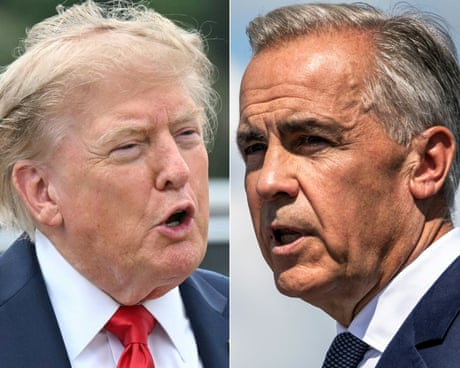
After trade negotiations broke down between the two countries last weekend, Mark Carney, the Canadian prime minister, vowed to match US tariffs “dollar for dollar” and unveiled a list of nearly 900 American goods that will face 25% to 50% tariffs starting on 8 September.
After facing low approval ratings and endorsement setbacks, the president made a show of force in lifting Darline Graham to the Republican nomination for Senate in South Carolina.
After facing low approval ratings and endorsement setbacks, the president made a show of force in lifting Darline Graham to the Republican nomination for Senate in South Carolina.
Business owners are preparing for financial pain after the latest U.S.-Canada trade talks collapsed. But many Canadians are embracing a show of resistance.
Business owners are preparing for financial pain after the latest U.S.-Canada trade talks collapsed. But many Canadians are embracing a show of resistance.
Everyone can see that the Iran war has been a strategic disaster for the US, while a failing president pretends he is winningNow is the twilight of Donald Trump’s supremacy. The US is still the richest and most heavily armed nation on Earth. That status is secure. The current president, contemptuous of law and indulged in lawlessness by a supine Congress, enjoys even greater power than the constitution allows.With those advantages it takes a special talent for incompetence to look as thwarted an
Everyone can see that the Iran war has been a strategic disaster for the US, while a failing president pretends he is winning
Now is the twilight of Donald Trump’s supremacy. The US is still the richest and most heavily armed nation on Earth. That status is secure. The current president, contemptuous of law and indulged in lawlessness by a supine Congress, enjoys even greater power than the constitution allows.
With those advantages it takes a special talent for incompetence to look as thwarted and impotent as Trump does with more than two years of his second term still to run.
Mike Mazzei, a former state senator who lent more than $11 million of his own money to his campaign, narrowly defeated the state’s attorney general, Gentner Drummond.
Mike Mazzei, a former state senator who lent more than $11 million of his own money to his campaign, narrowly defeated the state’s attorney general, Gentner Drummond.
President Trump went all in for Senator Darline Graham in a primary runoff on Tuesday. It worked, preserving his undefeated streak in Republican Senate primaries this year.
President Trump went all in for Senator Darline Graham in a primary runoff on Tuesday. It worked, preserving his undefeated streak in Republican Senate primaries this year.
Senator Darline Graham’s victory on Tuesday showed President Trump’s continued ability to move Republican primary voters, especially when he goes all in on a race.
The prospect that the kingdom could enrich uranium has drawn opposition from Democrats and revived concerns about nuclear proliferation in the Middle East.
The prospect that the kingdom could enrich uranium has drawn opposition from Democrats and revived concerns about nuclear proliferation in the Middle East.
Energy Secretary Chris Wright and Prince Abdulaziz bin Salman, the Saudi energy minister, in Saudi Arabia last year. The two signed an agreement last month as part of a broader package of cooperation on civilian nuclear power.
Ms. Graham, who is temporarily filling the seat long held by her late brother, Senator Lindsey Graham, prevailed in a runoff and will be heavily favored in November.
Ms. Graham, who is temporarily filling the seat long held by her late brother, Senator Lindsey Graham, prevailed in a runoff and will be heavily favored in November.
Mr. Drummond, the state attorney general, faces an opponent backed by President Trump and Gov. Kevin Stitt. The campaign has highlighted his independent streak.
Mr. Drummond, the state attorney general, faces an opponent backed by President Trump and Gov. Kevin Stitt. The campaign has highlighted his independent streak.
Le gouvernement fédéral a présenté des mesures en représailles aux droits de douane américains entrés en vigueur samedi dernier.
À compter du 8 septembre, le Canada imposera des taxes à l’importation de 15%, 25% ou 50% sur environ 700 produits américains.
Secteurs les plus touchés
acier
produits laitiers
électroménagers
matériel agricole
pâtes et papiers
électronique
Ces contres-tarifs ne visent que des produits frappés par des tarifs américains.
Ils s’ap
Le gouvernement fédéral a présenté des mesures en représailles aux droits de douane américains entrés en vigueur samedi dernier.
À compter du 8 septembre, le Canada imposera des taxes à l’importation de 15%, 25% ou 50% sur environ 700 produits américains.
Secteurs les plus touchés
acier
produits laitiers
électroménagers
matériel agricole
pâtes et papiers
électronique
Ces contres-tarifs ne visent que des produits frappés par des tarifs américains.
Ils s’appliqueront à presque 28 milliards $ d’exportations annuelles des États-Unis vers le Canada.
C’est un montant équivalent à celui des exportations canadiennes vers les États-Unis visées par les nouveaux tarifs américains.
Réponse américaine à la riposte canadienne
Donald Trump avait dès lundi, avant qu’on connaisse le détail des contre-tarifs, menacé de porter à 50% en janvier prochain les tarifs américains sur les voitures, les camions, les pièces automobiles et l’acier canadiens.
A preliminary Supreme Court ruling could leave voters confused about casting ballots by mail, even as President Trump’s executive order is being litigated in the lower courts, experts said.
A preliminary Supreme Court ruling could leave voters confused about casting ballots by mail, even as President Trump’s executive order is being litigated in the lower courts, experts said.
The United States threatened sanctions for any country or entity that engages with Iran’s gold, digital assets, aviation, shipping and tech industries. Here’s why that matters.
The United States threatened sanctions for any country or entity that engages with Iran’s gold, digital assets, aviation, shipping and tech industries. Here’s why that matters.
While the president remains the most dominant figure in the world, other leaders and institutions are pushing back more vigorously than at the beginning of his second term.
While the president remains the most dominant figure in the world, other leaders and institutions are pushing back more vigorously than at the beginning of his second term.
A Log Cabin Republicans table at the 2025 Conservative Political Action Conference in Oxon Hill, Md. The organization had embraced trans rights issues in 2015 before its reversal.
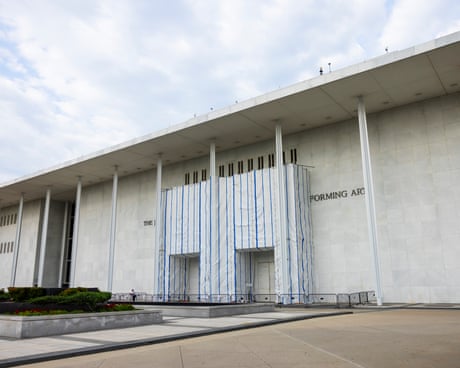
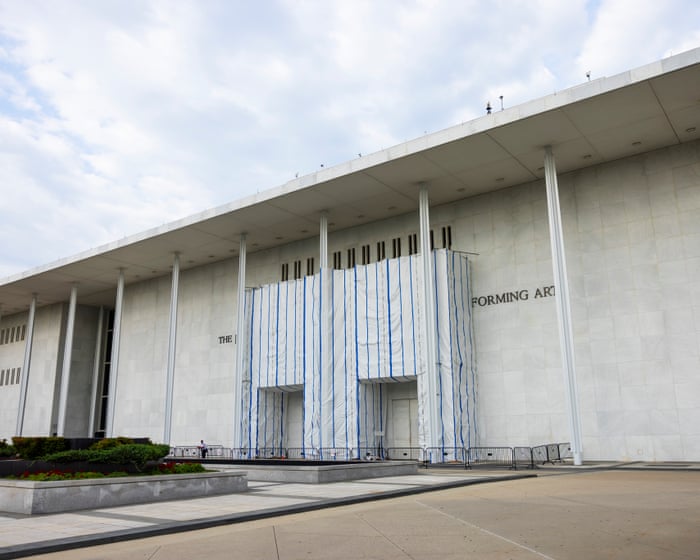
US president’s lawyers in court filing say Washington arts complex must undergo repairs or risk demolitionThe John F Kennedy Center for the Performing Arts could be demolished if repairs are not carried out, the Trump administration warned in a court filing on Monday.Lawyers for the US president said the national arts complex in Washington DC must undergo a $250m renovation or risk facing the wrecking ball. Continue reading...
The Supreme Court on Monday allowed the Trump administration to continue with plans to curtail mail-in voting, but the fast-moving, high-stakes legal fight continues.
The Supreme Court on Monday allowed the Trump administration to continue with plans to curtail mail-in voting, but the fast-moving, high-stakes legal fight continues.
President Trump has long made unfounded claims that mail voting is fraudulent and corrupt, even as he has cast his own ballots by mail in multiple elections.
Cristy Maryori Villafranca-Trejo, deported to Honduras, is latest military spouse to face removal amid Trump 2.0The wife of an active-duty US soldier was deported on Monday to her native Honduras, according to her family and the federal Department of Homeland Security (DHS).Cristy Maryori Villafranca-Trejo is at least the seventh spouse or parent of an active-duty US soldier to be deported under the immigration crackdown during Donald Trump’s second presidency. Continue reading...
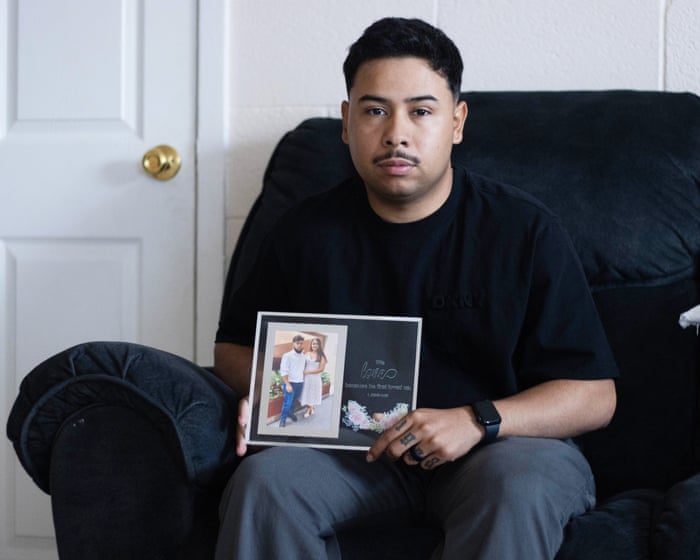
Cristy Maryori Villafranca-Trejo, deported to Honduras, is latest military spouse to face removal amid Trump 2.0
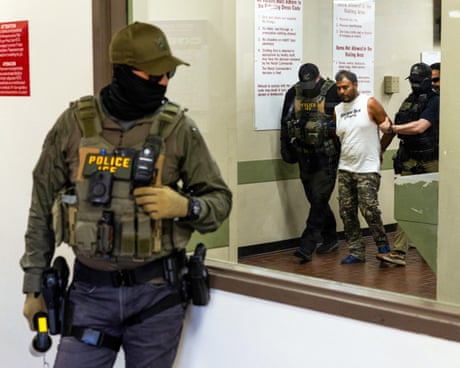
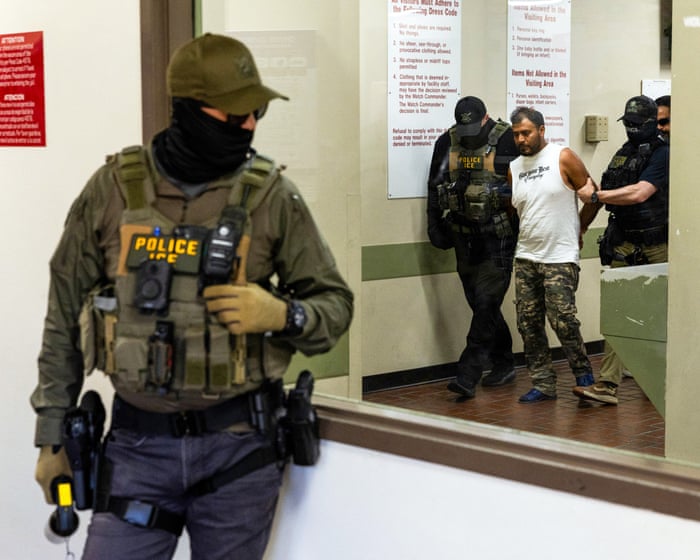
The wife of an active-duty US soldier was deported on Monday to her native Honduras, according to her family and the federal Department of Homeland Security (DHS).
Cristy Maryori Villafranca-Trejo is at least the seventh spouse or parent of an active-duty US soldier to be deported under the immigration crackdown during Donald Trump’s second presidency.
President Trump’s “Economic D-Day” is intended to break the stalemate with Iran. But decades of sanctions have done little to change the country’s behavior.
President Trump’s “Economic D-Day” is intended to break the stalemate with Iran. But decades of sanctions have done little to change the country’s behavior.
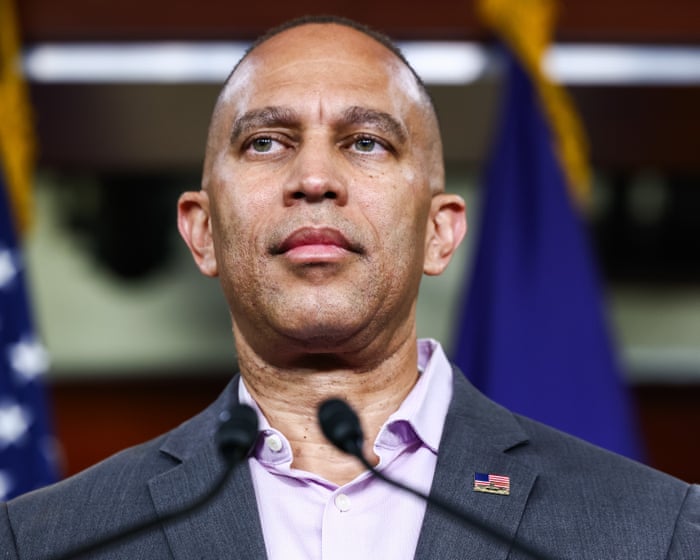
House minority leader is under attack from his own party for ‘affordability crisis’ meeting with president’s son-in-lawDemocrats incredulous over Hakeem Jeffries and Jared Kushner meetingUS politics live – latest updatesHakeem Jeffries, the Democratic minority leader in the US House of Representatives, has defended his meeting with Jared Kushner and claimed it was arranged at the request of Donald Trump’s son-in-law.Jeffries, who has come under attack from Democrats since the New York Times repo
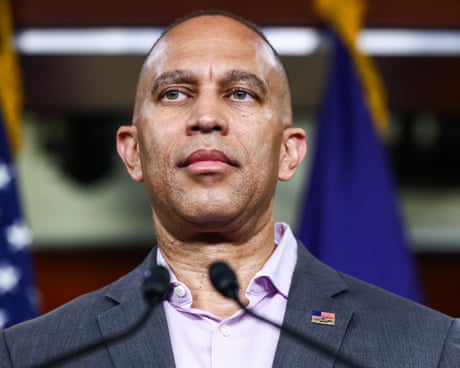
Hakeem Jeffries, the Democratic minority leader in the US House of Representatives, has defended his meeting with Jared Kushner and claimed it was arranged at the request of Donald Trump’s son-in-law.
Jeffries, who has come under attack from Democrats since the New York Times reported on Sunday that the two met privately to discuss common ground on issues like housing, immigration and the high cost of living, said he agreed to the meeting “to discuss the affordability crisis” in the US.
Runoffs in the state are typically sleepy, but the Republican Senate contest between Darline Graham and Ralph Norman seemed to be drawing relatively high turnout.
Runoffs in the state are typically sleepy, but the Republican Senate contest between Darline Graham and Ralph Norman seemed to be drawing relatively high turnout.
Tariffs on Canada, threats against Iran’s partners and bond market intervention show a president weaponising US power while making Americans poorer at homeThree moves in the last week have exposed the limits of Donald Trump’s economic bullying. The US slapped 50% tariffs on another $20bn of Canadian goods – then threatened the same rate on the cars, trucks, parts and steel that America Inc depends on. On Monday, the Treasury secretary, Scott Bessent, menaced Iran’s trading partners with exclusio
Tariffs on Canada, threats against Iran’s partners and bond market intervention show a president weaponising US power while making Americans poorer at home
Three moves in the last week have exposed the limits of Donald Trump’s economic bullying. The US slapped 50% tariffs on another $20bn of Canadian goods – then threatened the same rate on the cars, trucks, parts and steel that America Inc depends on. On Monday, the Treasury secretary, Scott Bessent, menaced Iran’s trading partners with exclusion from the US financial network, hoping that coercion can deliver what months of war have not. And as the costs of war, tariffs and pro-billionaire tax cuts helped send US bond yields higher, the Treasury stepped in to tame long-term rates. These are not contradictory policies but a gamble: that US economic power can be repeatedly weaponised without reducing others’ willingness to depend on it.
The Trump administration’s “D-day” sanctions are potentially the most consequential because they expose the scaffolding of American financial power. While markets shrugged off the immediate threat, that calculation might change were the US to target a major Chinese refinery or bank. Such an escalation could spark a trade war with Beijing. The US has leverage. But China has pressure points – especially farmers in Republican states – that make using it costly. In the long run, there is a price to pay. Nations hold one another’s currencies partly because they trust the political relationship. Mr Trump is testing what happens when they don’t.
The justices are still struggling with whether and when to explain themselves to the public when the court issues temporary, but consequential, orders.
The justices are still struggling with whether and when to explain themselves to the public when the court issues temporary, but consequential, orders.
In 19 months, the president has already asked the justices to intervene far more times than George W. Bush and Barack Obama did during their 16 years in office combined.
Republicans who have mostly refrained from criticizing the president’s actions have been vocal in opposition to the move, which they say will harm their constituents.
Republicans who have mostly refrained from criticizing the president’s actions have been vocal in opposition to the move, which they say will harm their constituents.
Cattle grazing on a ranch in Gillette, Wyo. “Americans want U.S. beef on the table — not foreign imports,” said Senator John Barrasso of Wyoming, the No. 2 Republican.

 Connexion