The Trump administration delayed a rule last year that could have sped up the effort to pinpoint the source of the contamination. Critics charge that food safety oversight has eroded overall.
The Trump administration delayed a rule last year that could have sped up the effort to pinpoint the source of the contamination. Critics charge that food safety oversight has eroded overall.
Last year the Food and Drug Administration cut a program that tracked cyclospora outbreaks and delayed a rule that would have required companies to swiftly provide supply chain records in investigations of foodborne disease outbreaks.
Azad, a popular online debate program, has tackled topics that push the limits of Iran’s authoritarian system. Some question how it has remained on air.
Azad, a popular online debate program, has tackled topics that push the limits of Iran’s authoritarian system. Some question how it has remained on air.
Defense Minister Katz called for the military to turn over to the police the responsibility for protecting Palestinians after two West Bank families were besieged by violent settlers.
Defense Minister Katz called for the military to turn over to the police the responsibility for protecting Palestinians after two West Bank families were besieged by violent settlers.
Andrés Manuel López Beltrán, a former president’s son, lashed out at the Trump administration after he said it canceled his visa, another flashpoint in the tense U.S.-Mexico relationship.
Andrés Manuel López Beltrán, a former president’s son, lashed out at the Trump administration after he said it canceled his visa, another flashpoint in the tense U.S.-Mexico relationship.
Andrés Manuel López Beltrán is the son of Mexico’s former president Andrés Manuel López Obrador, who is still a key leader of Morena, Mexico’s dominant political party.
Nigel Farage, the Reform U.K. leader who resigned from Parliament and won back his seat on Thursday, stays on the offensive and says voters don’t care about allegations of financial impropriety.
Nigel Farage, the Reform U.K. leader who resigned from Parliament and won back his seat on Thursday, stays on the offensive and says voters don’t care about allegations of financial impropriety.
France’s Constitutional Council said that the ban was too wide-ranging, and did not take into account the age, maturity or family situation of children.
In Moldova, Moscow paid Orthodox priests, conducted a vote-buying scheme and set up training camps on election interference — all in an effort to derail the Western-leaning government.
In Moldova, Moscow paid Orthodox priests, conducted a vote-buying scheme and set up training camps on election interference — all in an effort to derail the Western-leaning government.
Police officers in Chisinau, the Moldovan capital, watching protesters gather outside the electoral commission after the polls closed for parliamentary elections in 2025.
Nigel Farage, the leader of Reform U.K., won the Clacton by-election with 63 percent. Count Binface, a novelty candidate, came second with 27 percent, a personal best.
Nigel Farage, the leader of Reform U.K., won the Clacton by-election with 63 percent. Count Binface, a novelty candidate, came second with 27 percent, a personal best.
A U.S. oil company says it could be on the verge of a major discovery in Greenland. The proposal comes at a tricky time for the Arctic island, and locals are lining up against it.
A U.S. oil company says it could be on the verge of a major discovery in Greenland. The proposal comes at a tricky time for the Arctic island, and locals are lining up against it.
Tributes to the former premier recalled his spirited style and his efforts to integrate China into global commerce, in contrast with the rigidity of the Xi era.
Tributes to the former premier recalled his spirited style and his efforts to integrate China into global commerce, in contrast with the rigidity of the Xi era.
Nigel Farage, the right-wing populist leader, won a by-election for his parliamentary seat in Clacton, which he initiated after coming under pressure over his financial declarations.
Nigel Farage, the right-wing populist leader, won a by-election for his parliamentary seat in Clacton, which he initiated after coming under pressure over his financial declarations.
Two families have been trapped by settlers for days, casting a spotlight on the army’s struggle to curtail settler violence and protect Palestinians living in the occupied West Bank.
Two families have been trapped by settlers for days, casting a spotlight on the army’s struggle to curtail settler violence and protect Palestinians living in the occupied West Bank.
President Trump’s Air Force One subterfuge pales in comparison to the secrecy surrounding Russia’s president, whose fixation on security has reached new heights in recent years.
President Trump’s Air Force One subterfuge pales in comparison to the secrecy surrounding Russia’s president, whose fixation on security has reached new heights in recent years.
A Russian state media photo of President Vladimir Putin in his office in the Kremlin last month. The secrecy around Mr. Putin’s movements means journalists have resorted to tracking his activity by assessing the wilting of the plants in his office.
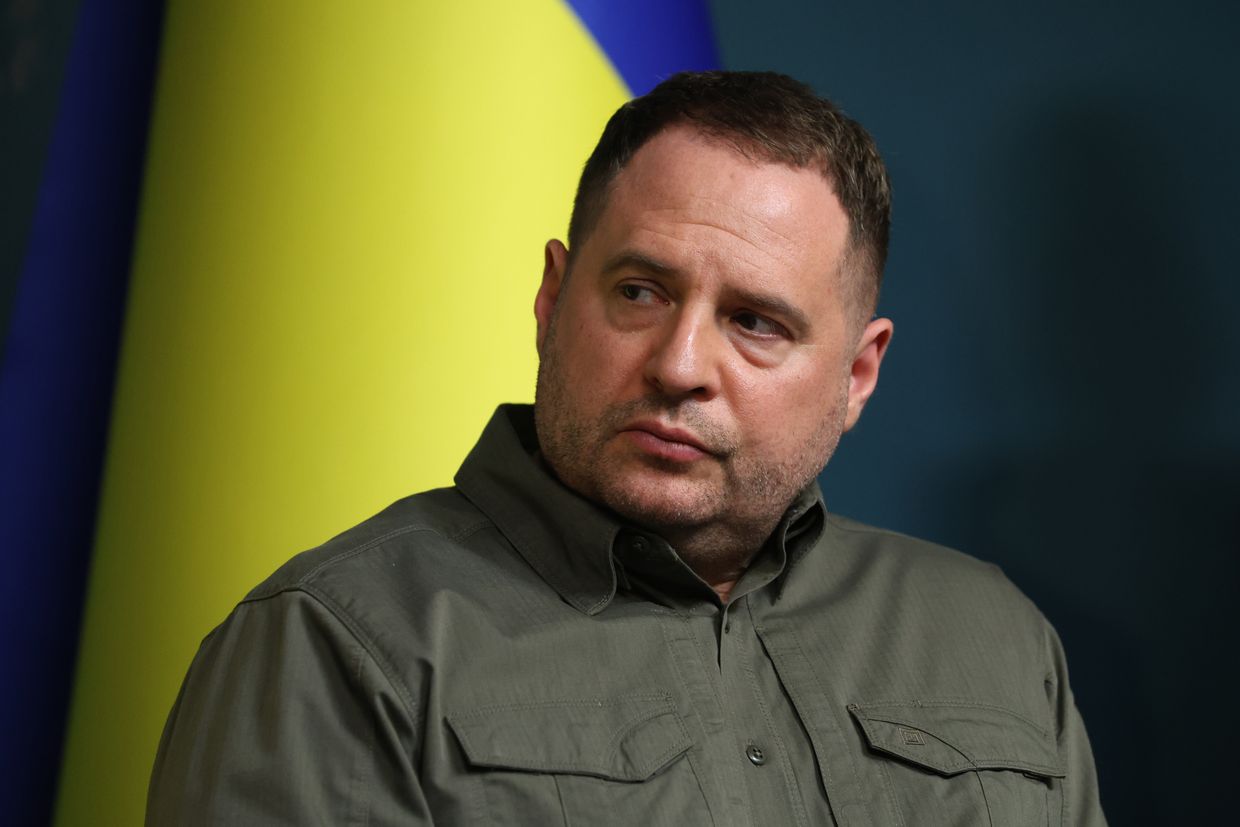
Andriy Yermak, head of Ukraine's Presidential Office, has been leading campaigns to supplant three top officials in the Ukrainian government, the Economist reported on July 6, citing multiple anonymous officials. The story follows a corruption probe into Deputy Prime Minister Oleksii Chernyshov, the highest-ranking official in Ukrainian history to face such charges while still in office. According to the Economist's sources, Yermak was a driving force behind the investigation.Yermak, President V
Andriy Yermak, head of Ukraine's Presidential Office, has been leading campaigns to supplant three top officials in the Ukrainian government, the Economist reported on July 6, citing multiple anonymous officials.
The story follows a corruption probe into Deputy Prime Minister Oleksii Chernyshov, the highest-ranking official in Ukrainian history to face such charges while still in office. According to the Economist's sources, Yermak was a driving force behind the investigation.
Yermak, President Volodymyr Zelensky's close friend and chief adviser, spurred on the Chernyshov probe while also renewing attempts to replace Kyrylo Budanov, head of Ukraine's military intelligence agency (HUR) , and Prime Ministery Denys Shmyhal, three unnamed officials told the Economist.
There is no evidence that Yermak ordered an investigation into Chernyshov, the Economist reports, but officials told the outlet that he influenced the case by allowing it to progress while freezing other investigations.
Chernyshov ran afoul of Yermak by offering himself as an alternative liaison to Washington, the officials claimed. His removal would also reportedly clear the way for Deputy Prime Minister Yuliia Svyrydenko, a Yermak protege, to assume the role of Prime Minister in the event of Shmyhal's dismissal.
Rumors of a government reshuffle unseating Shmyhal have circulated for months. Ukrainian media reported last summer that Zelensky was considering replacing the prime minister with Svyrydenko. While several key officials were replaced in a reshuffle in September 2024, Shmyhal kept his post.
Chernyshov, too, has said he will not step down from his role as deputy prime minister despite the ongoing corruption probe.
Reports of imminent dismissal have also periodically surrounded Budanov, Ukraine's spy chief. Budanov has rejected such rumors as "Russian propaganda" in the past.
Sources told the Economist that Yermak was leading another effort to oust Budanov in June 2025. According to the outlet, warnings from the White House not to fire Budanov may have helped secure his position.
Politico reported in June that U.S. officials, particularly those working in the Trump administration, found Yermak's diplomatic style abrasive and off-putting, potentially risking U.S.-Ukrainian relations at a critical time.
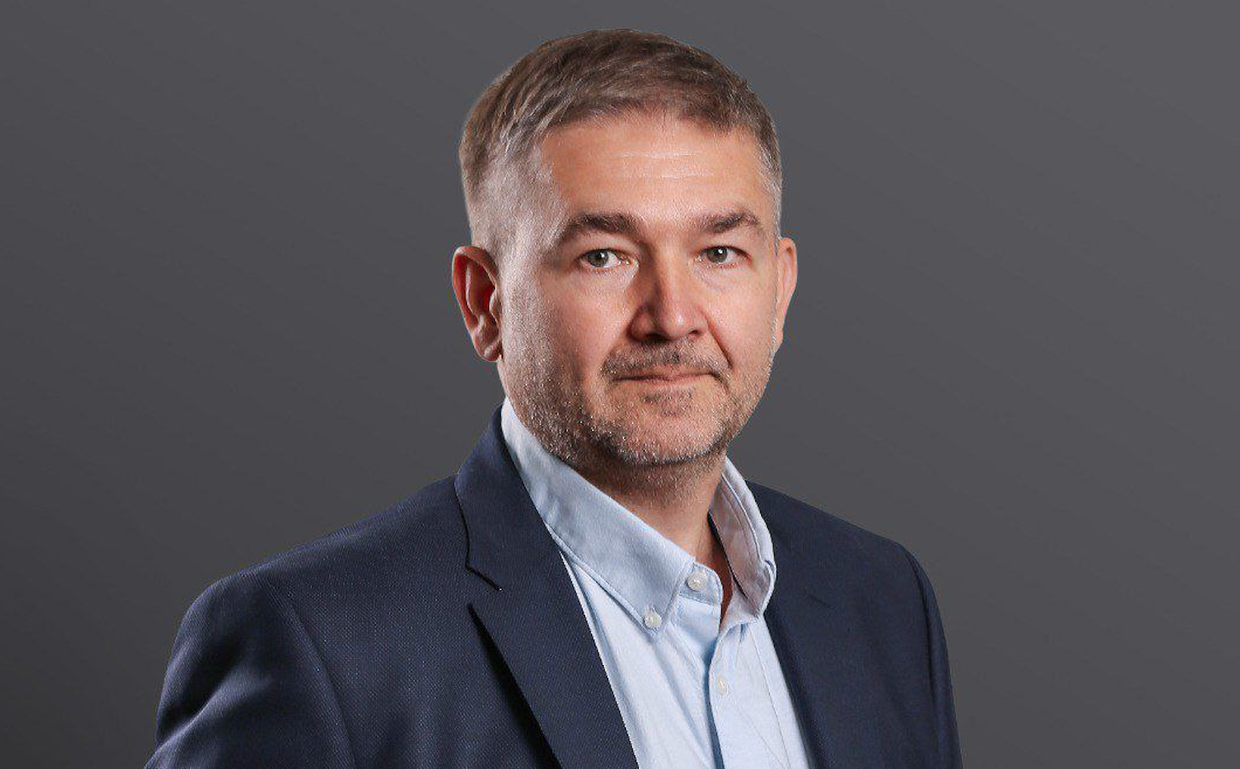
Ukrainian state grid operator Ukrenergo's supervisory board has appointed Vitaliy Zaichenko, the company's current chief dispatcher, as its new head, Ukrainian media reported on June 23. The appointment comes after ten months of interim leadership following the controversial dismissal of former CEO Volodymyr Kudrytskyi in September 2024.The company has been under temporary management of Oleksiy Brekht while the supervisory board struggled with prolonged disputes over the selection process.Ukrene
Ukrainian state grid operator Ukrenergo's supervisory board has appointed Vitaliy Zaichenko, the company's current chief dispatcher, as its new head, Ukrainian media reported on June 23.
The company has been under temporary management of Oleksiy Brekht while the supervisory board struggled with prolonged disputes over the selection process.
Ukrenergo, which operates Ukraine's electricity transmission system and is a member of the European electricity grid network (ENTSO-E), plays a critical role in the country's energy security, especially during wartime when Russian attacks have repeatedly targeted energy infrastructure.
Zaichenko beat out two other finalists: Oleksiy Brekht, the interim head of Ukrenergo, and Ivan Yuryk, former acting head of Ukrainian Railways.
The supervisory board's June 4 attempt to elect a new CEO failed amid conflict with the Energy Ministry, which changed appointment rules without consulting the Energy Community Secretariat, drawing criticism from European partners.
The new rules complicated the selection process by requiring five out of seven supervisory board votes instead of the previous four needed to elect a chairman.
According to Ukrainian MP Max Khlapuk, the European Bank for Reconstruction and Development (EBRD) threatened to block 141 million euros ($152 million) in funding and demand early repayment of 533 million euros ($574 million) already received over the rule changes.
Former Ukrenergo CEO Volodymyr Kudrytskyi was dismissed on Sept.2, 2024, after President Volodymyr Zelensky called for his resignation over alleged failures to protect substations from Russian missiles and drones.
Kudrytskyi disputed this account, saying he initiated the supervisory board meeting himself, though he did not reveal the reasons for his dismissal.
Following Kudrytskyi's dismissal, supervisory board chairman Daniel Dobbeni and member Peder Andersen resigned early, citing political pressure in personnel decisions.
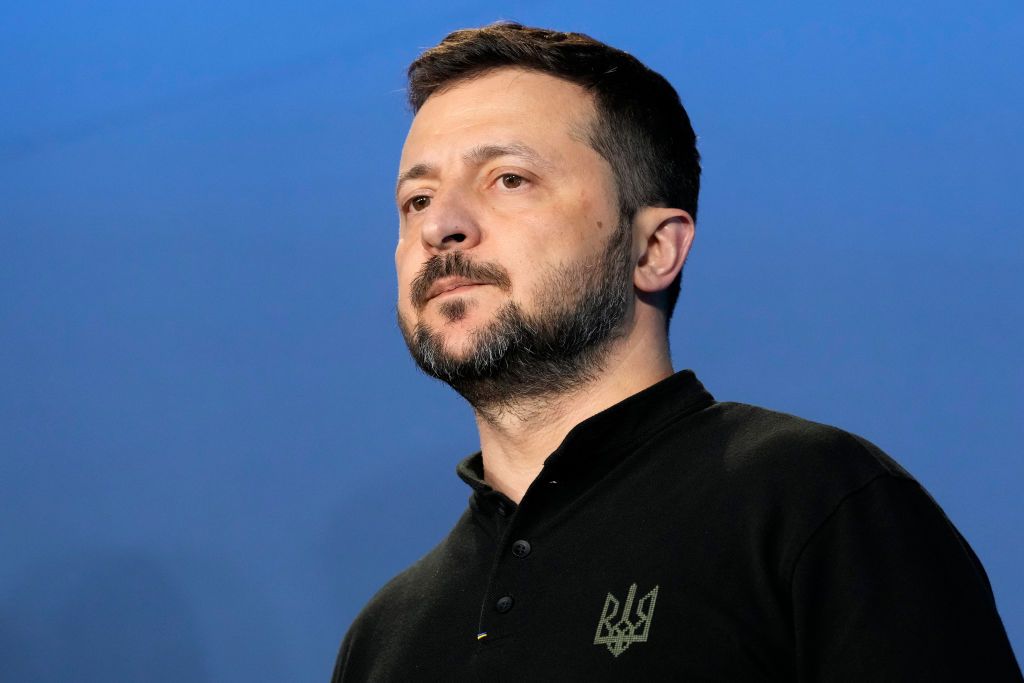
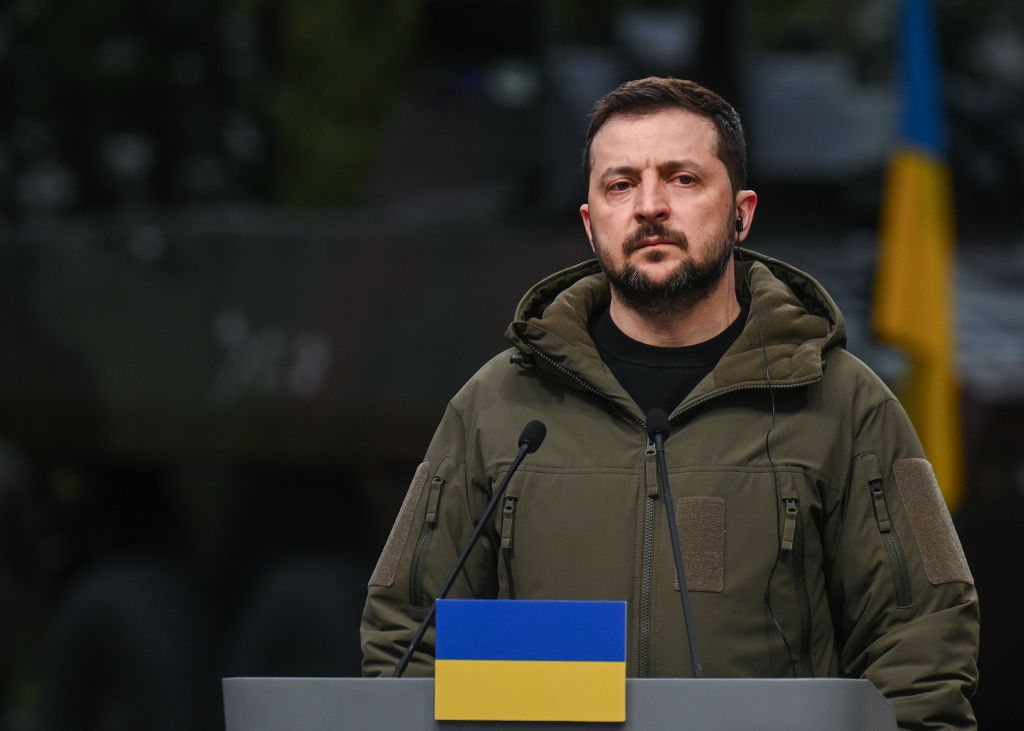
Public trust in President Volodymyr Zelensky has dropped by 11 percentage points since May, according to a poll published by the Kyiv International Institute of Sociology (KIIS) on June 16.The survey found that 65% of Ukrainians currently trust the president, while 30% do not, yielding a trust balance of +35%, the lowest recorded since March. Zelensky's still rating remains above the February 2025 low of 57%. Sociologists can't pinpoint a specific cause for the short-term decline but highlight
Public trust in President Volodymyr Zelensky has dropped by 11 percentage points since May, according to a poll published by the Kyiv International Institute of Sociology (KIIS) on June 16.
The survey found that 65% of Ukrainians currently trust the president, while 30% do not, yielding a trust balance of +35%, the lowest recorded since March.
Zelensky's still rating remains above the February 2025 low of 57%.
Sociologists can't pinpoint a specific cause for the short-term decline but highlight factors such as increasing pressure for a ceasefire and the weakening of the surge of popular support seen earlier this year during tense relations with U.S. President Donald Trump.
Zelensky's approval had spiked briefly in early May to 74% following the signing of a minerals agreement with the U.S., seen as a diplomatic and economic win. That boost proved short-lived.
The poll shows a stark regional divide. Trust is highest in western Ukraine at 73%, while in the country's south and east, areas more frequently targeted by Russian strikes, only 61% express confidence in the president.
The data also shows a sharp contrast in attitudes toward territorial concessions. Among those who trust Zelensky, 55% are strongly opposed to any such compromise. Among those who distrust him, 46% are willing to cede territory, while only 43% are firmly against concessions.
The survey was conducted between May 15 and June 3, using a random sample of 1,011 adult residents across Ukraine, excluding occupied territories. Respondents were interviewed by phone.

 Connexion