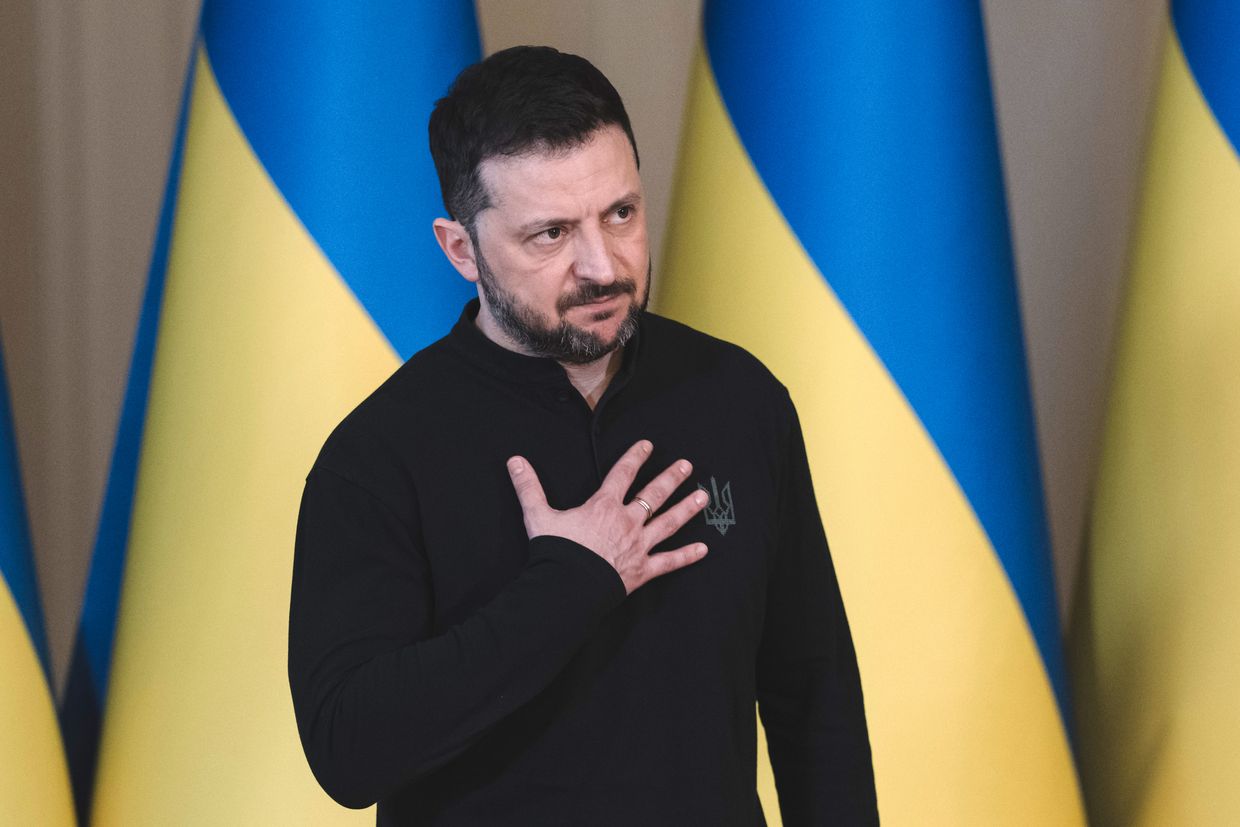
Ukraine and the Council of Europe signed a historic agreement on June 25 to establish a Special Tribunal for the Crime of Aggression, marking a major step toward holding Russia's leadership accountable for launching the full-scale invasion in 2022.The agreement was signed by President Volodymyr Zelensky and Council of Europe Secretary General Alain Berset during a ceremony in Strasbourg, France – following more than three years of diplomatic efforts and deliberation.Speaking at the Parliamentary
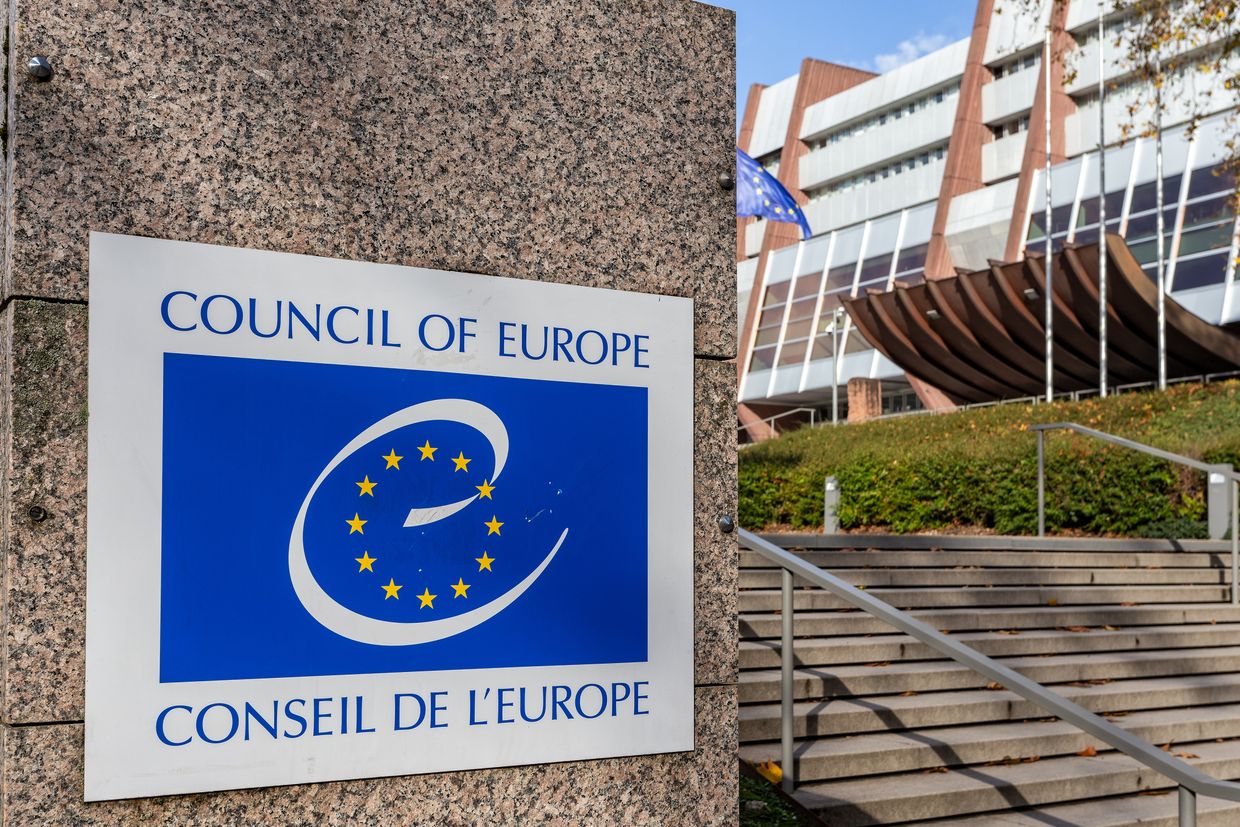
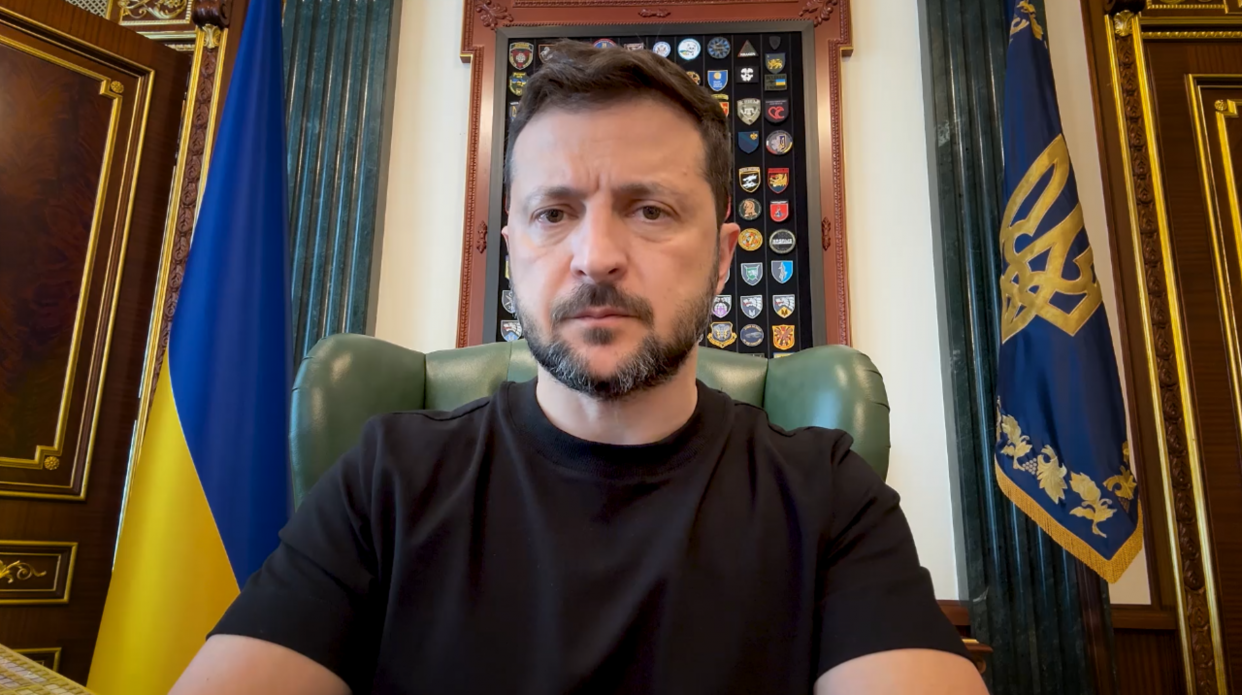
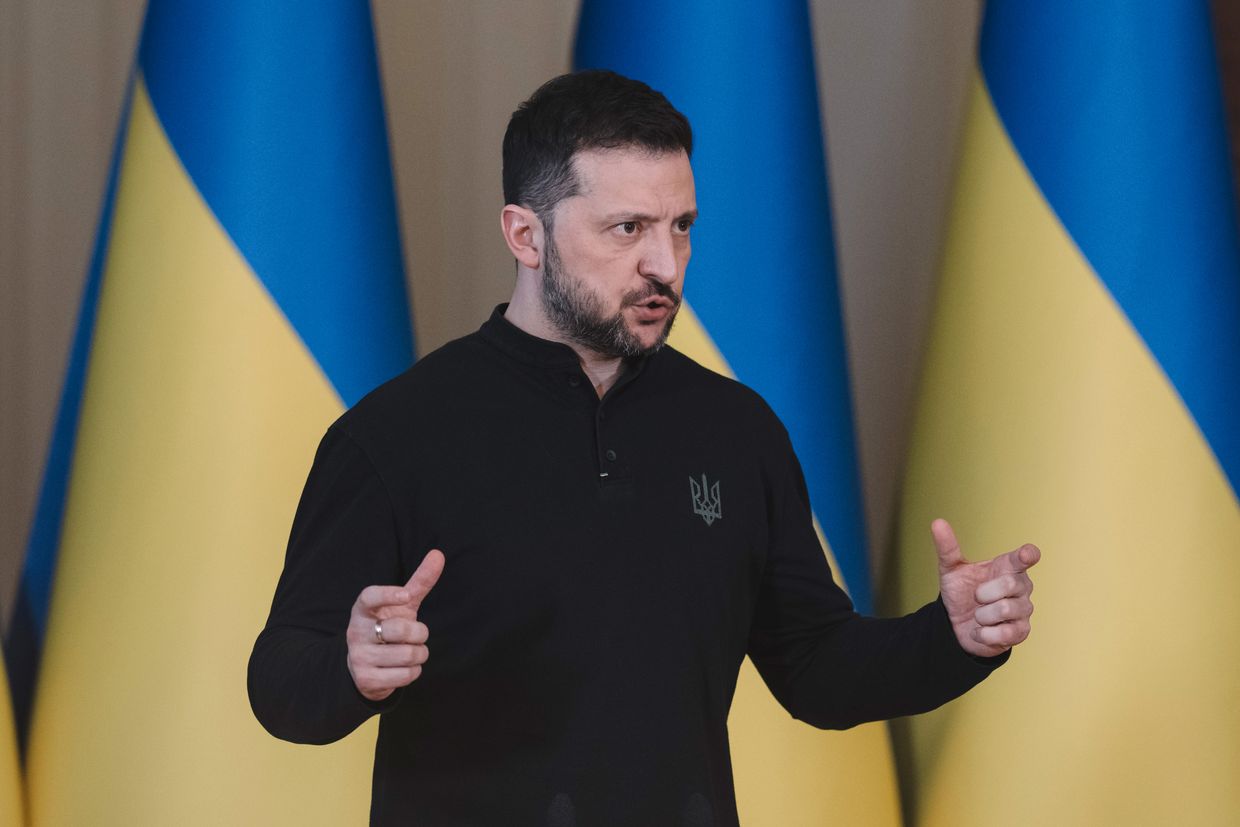
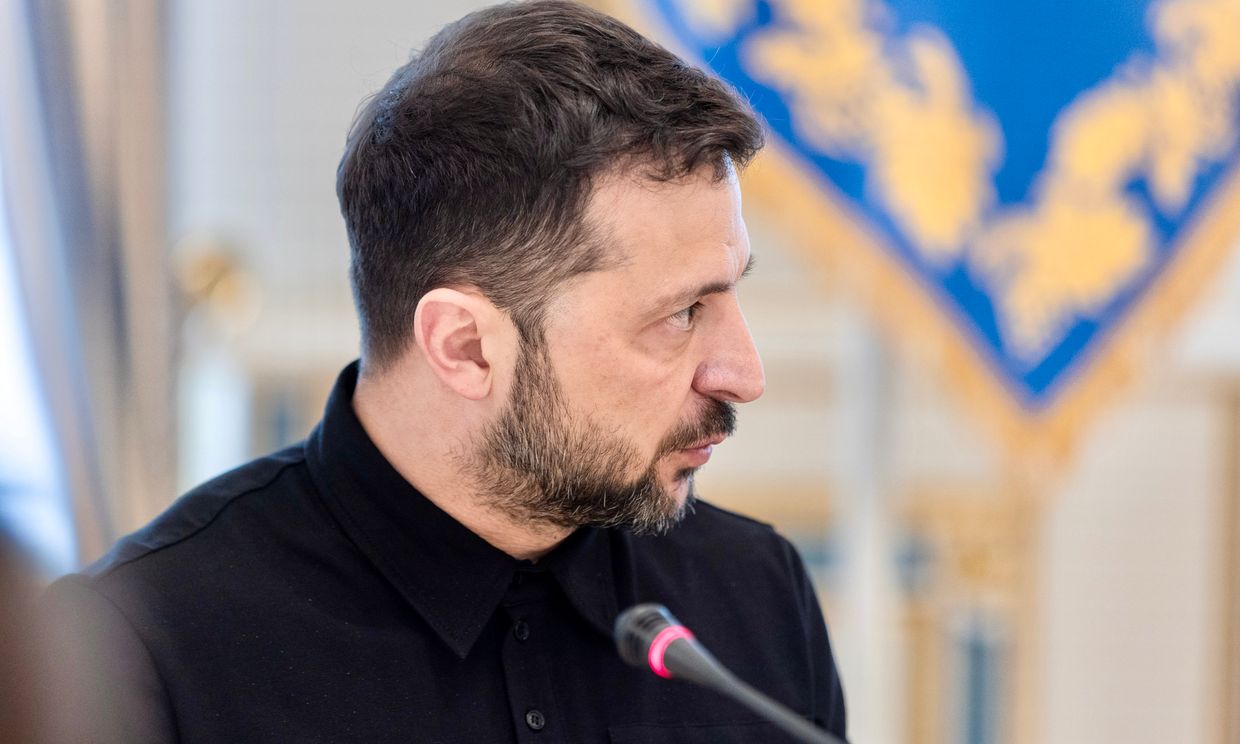
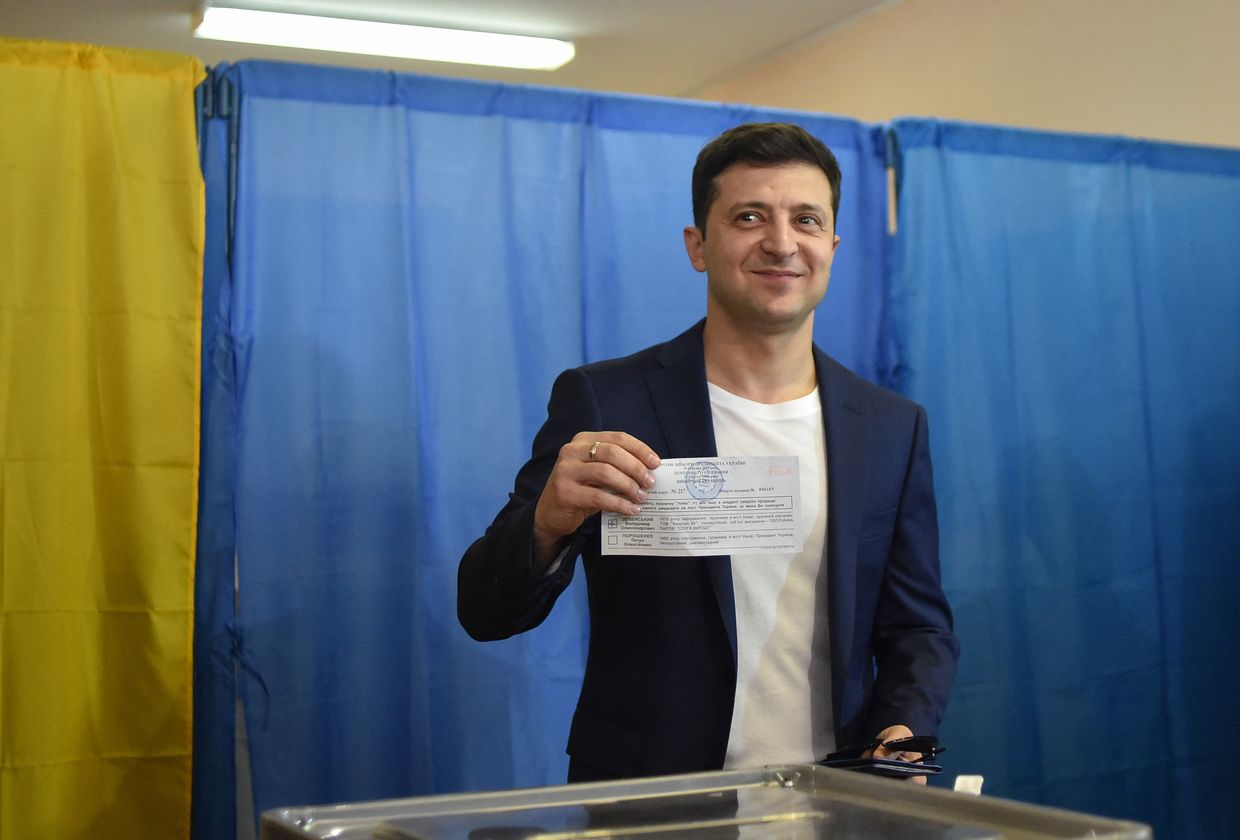
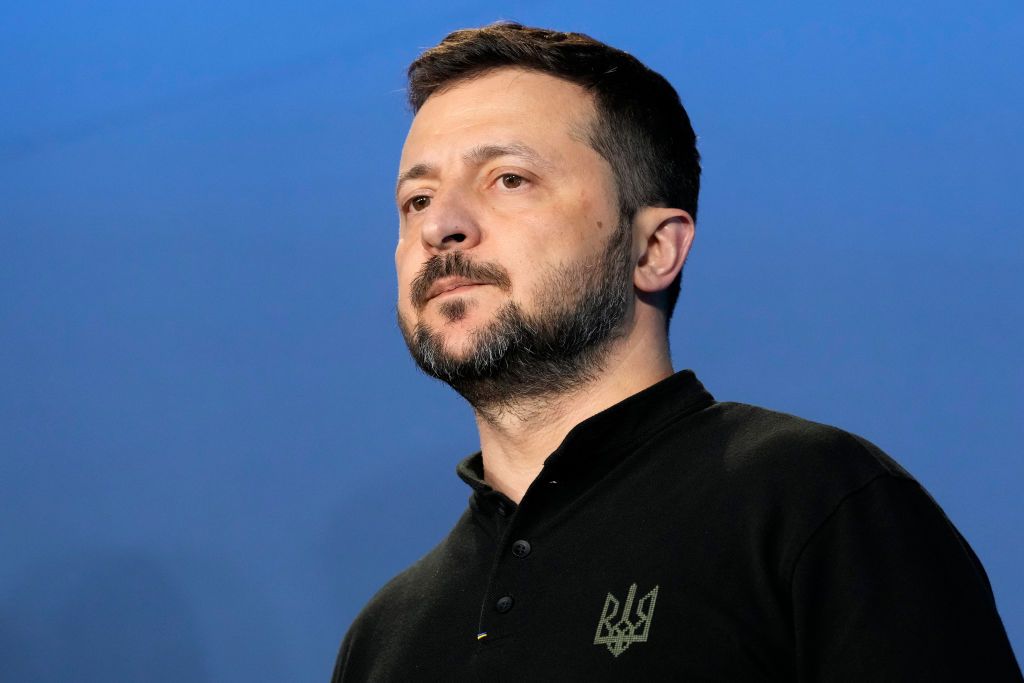
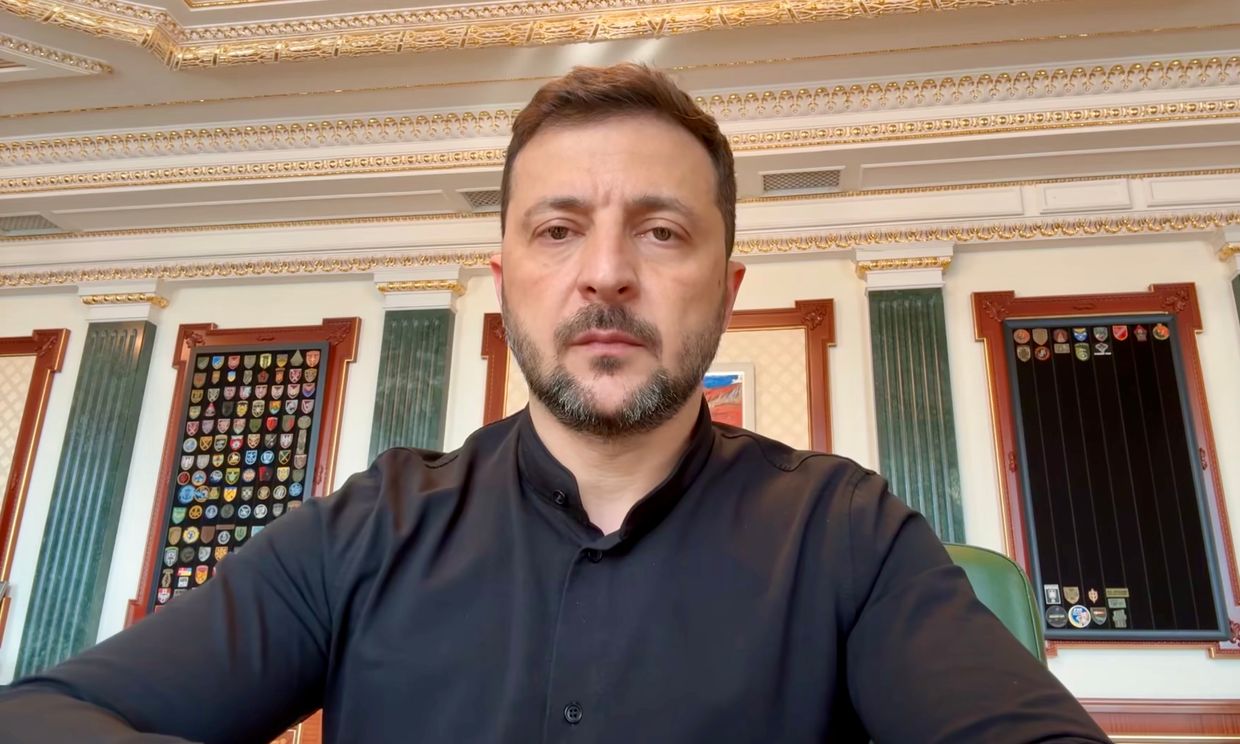
Ukraine and the Council of Europe signed a historic agreement on June 25 to establish a Special Tribunal for the Crime of Aggression, marking a major step toward holding Russia's leadership accountable for launching the full-scale invasion in 2022.
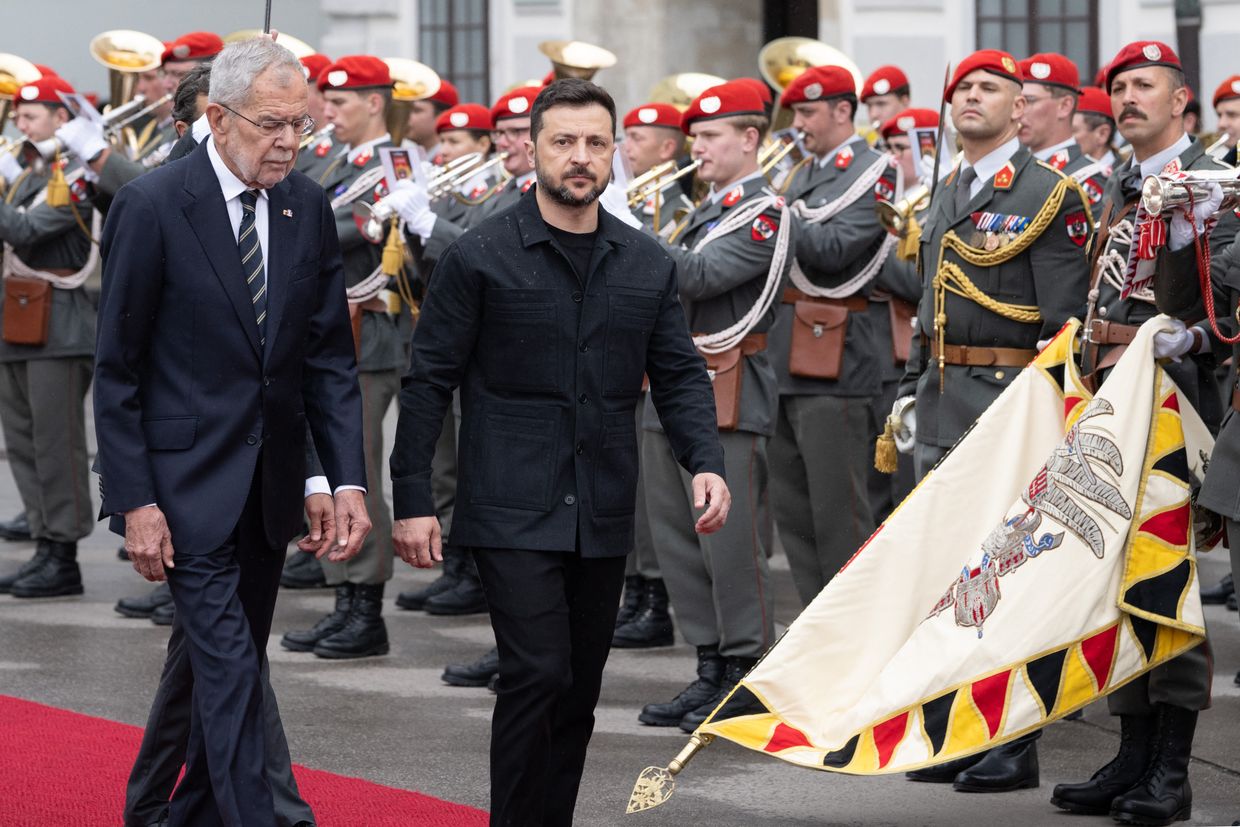
The agreement was signed by President Volodymyr Zelensky and Council of Europe Secretary General Alain Berset during a ceremony in Strasbourg, France – following more than three years of diplomatic efforts and deliberation.
Speaking at the Parliamentary Assembly of the Council of Europe (PACE), Zelensky thanked the assembly and underscored the importance of justice.
"Everyone responsible for this war must be held to account," he said. "Every war criminal must face justice – including Putin... the crime of aggression must be recorded, judged, and punished."
Zelensky also praised PACE for its "real leadership" in taking a stand against Russia and developing the tribunal.
"It was here in this assembly, that the first call for such a tribunal was made," Zelensky said. "The idea was born here – and now it’s gaining real support from partner countries in Europe and beyond."
The Special Tribunal will be established within the framework of the Council of Europe and will have the mandate to prosecute senior Russian leaders for the crime of aggression – defined as the decision to use armed force against another state, in violation of the United Nations Charter.
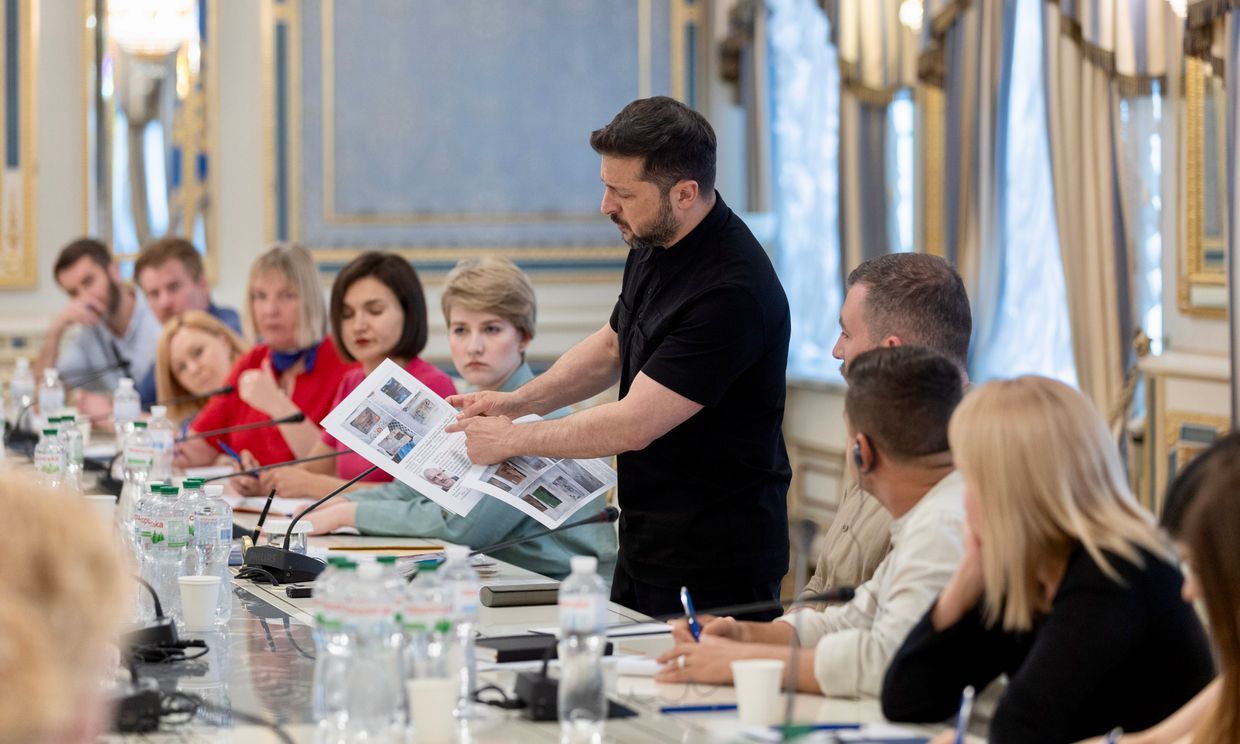
President Zelensky has long advocated for the creation of the tribunal, emphasizing the need to bring Russian President Vladimir Putin and other senior officials to justice. Ukrainian prosecutors have documented thousands of war crimes committed by Russian forces, including attacks on civilians, cultural landmarks, medical facilities, and reports of torture and forced deportations.
The tribunal is intended to close a key legal gap in existing international accountability mechanisms.
While the International Criminal Court (ICC) has jurisdiction to investigate war crimes, crimes against humanity, and genocide in Ukraine – and has already issued arrest warrants for Putin and Maria Lvova-Belova, the Russian official overseeing the forced deportation of Ukrainian children to Russia – it cannot examine the crime of aggression due to jurisdictional constraints.
The new tribunal will complement the ICC's efforts by specifically targeting high-level officials responsible for starting the war – such as Putin and his inner circle.
In addition to the special tribunal, the Council of Europe’s Ukraine-related work includes the Register of Damage – an initiative that has already received more than 34,000 claims detailing losses and harms resulting from Russia's full-scale invasion.
The establishment of the register, and now the special tribunal, are important steps to ensure justice for Ukraine and its people.
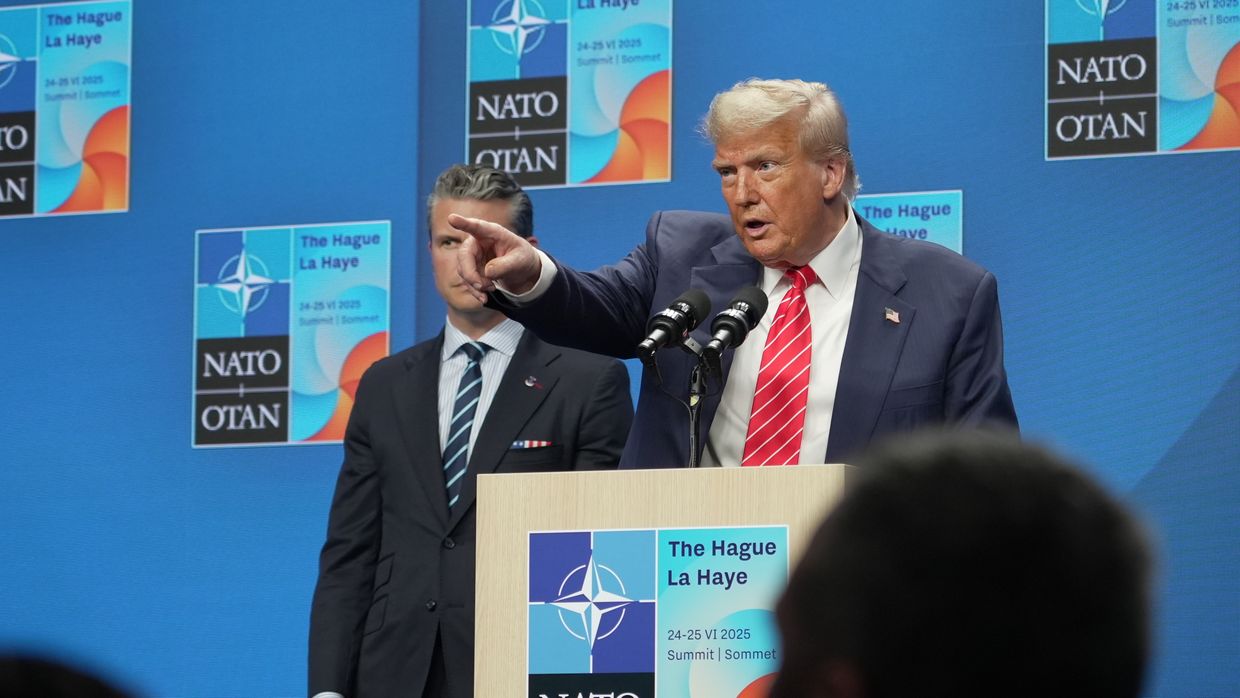
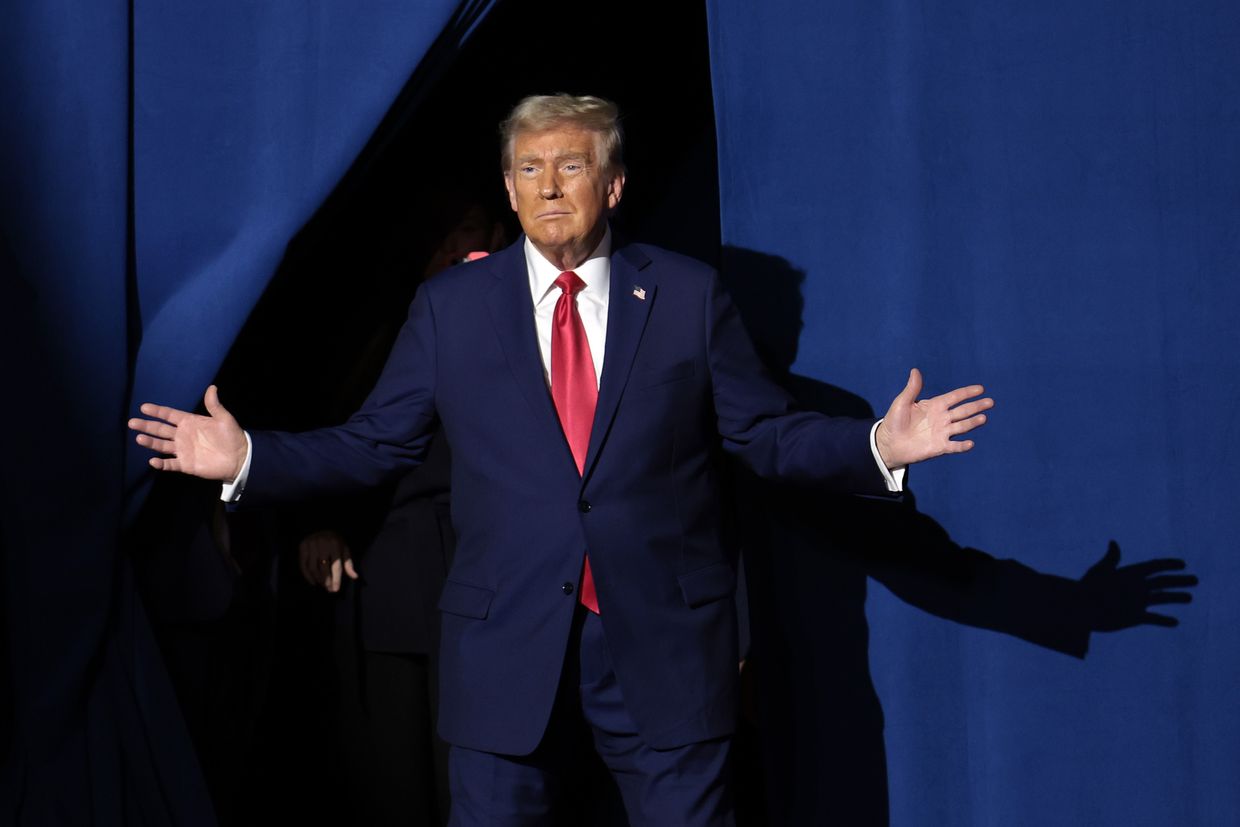
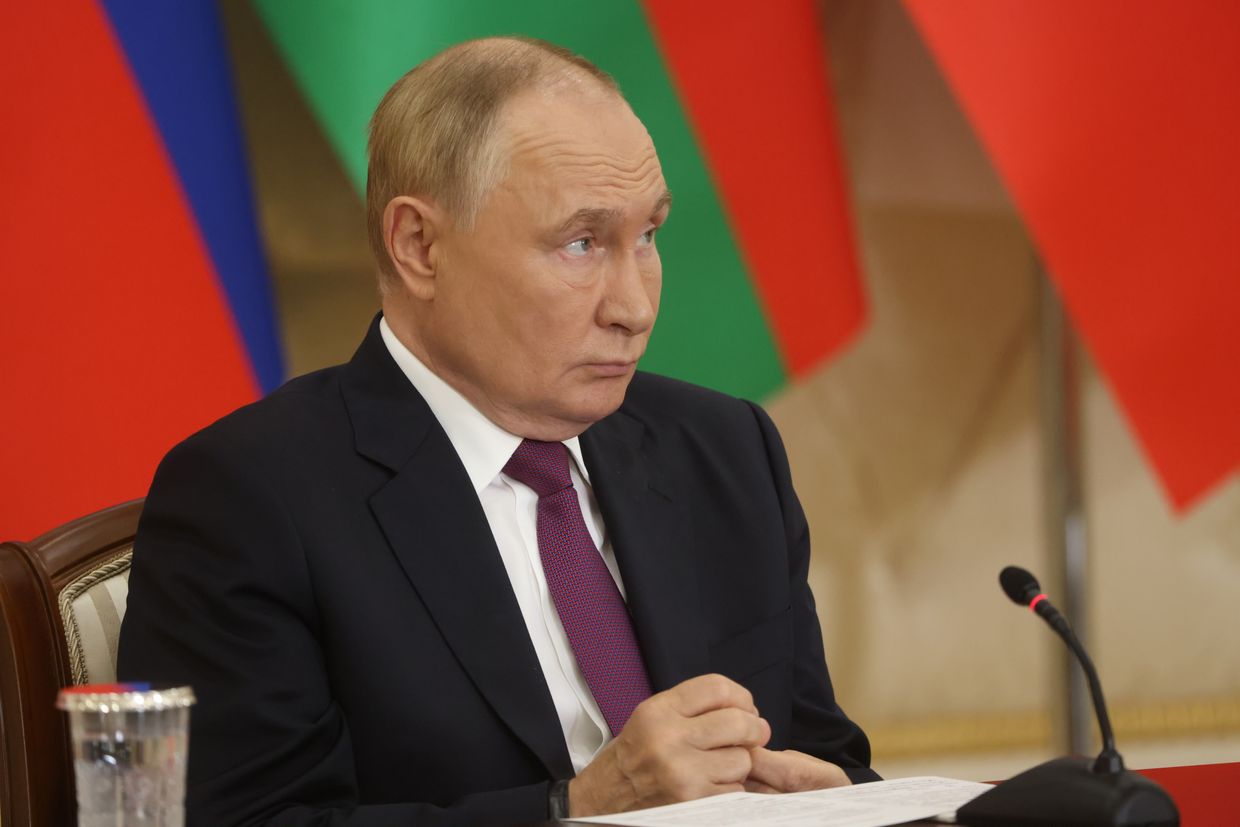
Speaking at a NATO press conference in The Hague on June 25, U.S. President Donald Trump said it was possible Russia could target other countries beside Ukraine.When asked whether Russian President Vladimir Putin has territorial ambitions beyond Ukraine, Trump replied, "it's possible.""I know one thing: He (Putin) would like to settle (the war). He'd like to get out of this thing. It's a mess for him," he added.Foreign officials and EU diplomats have increasingly called for the preparation for a
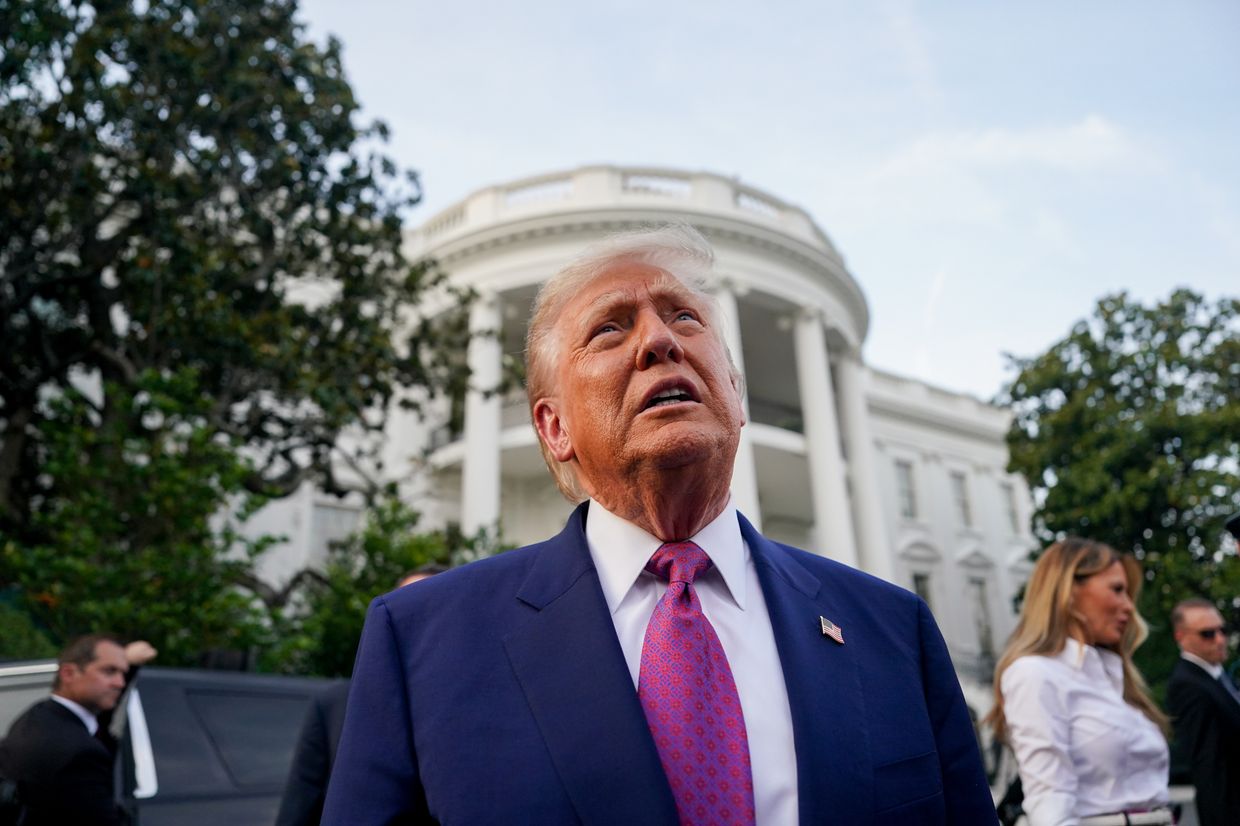
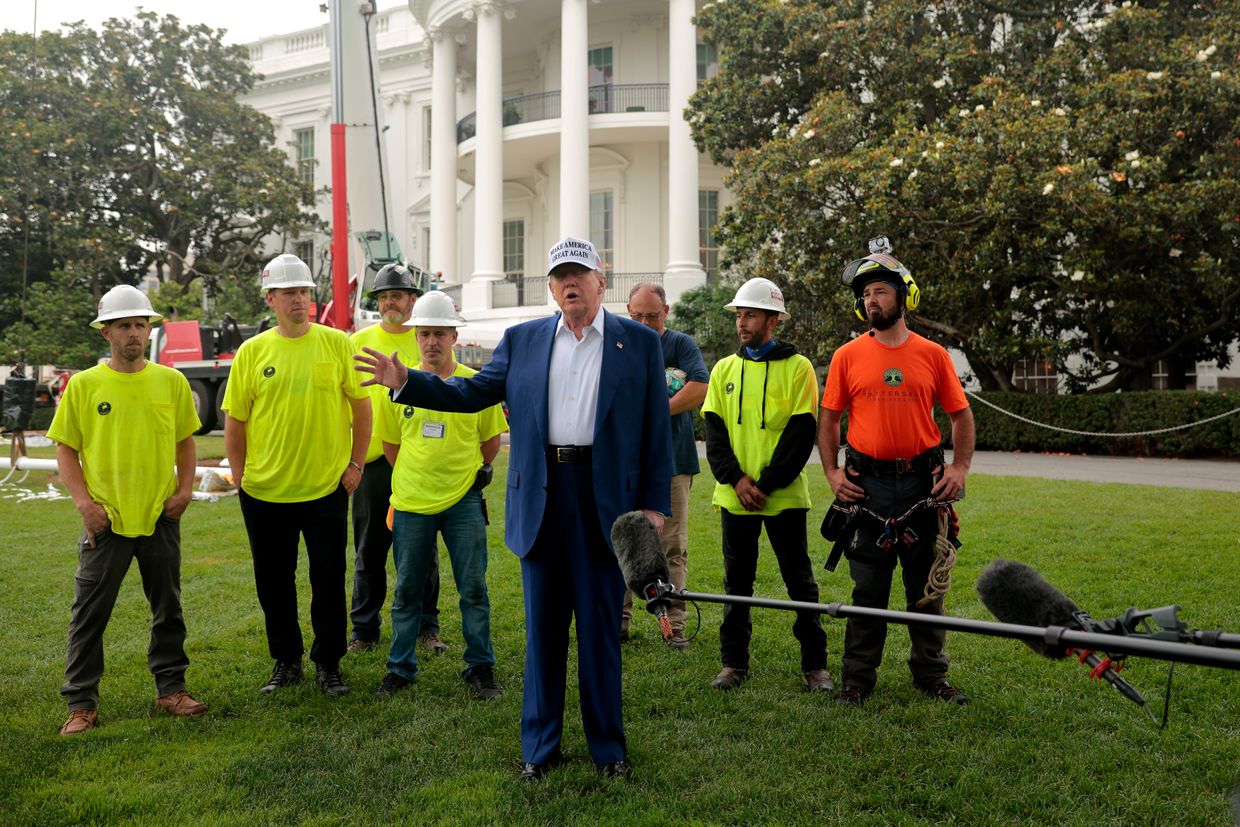
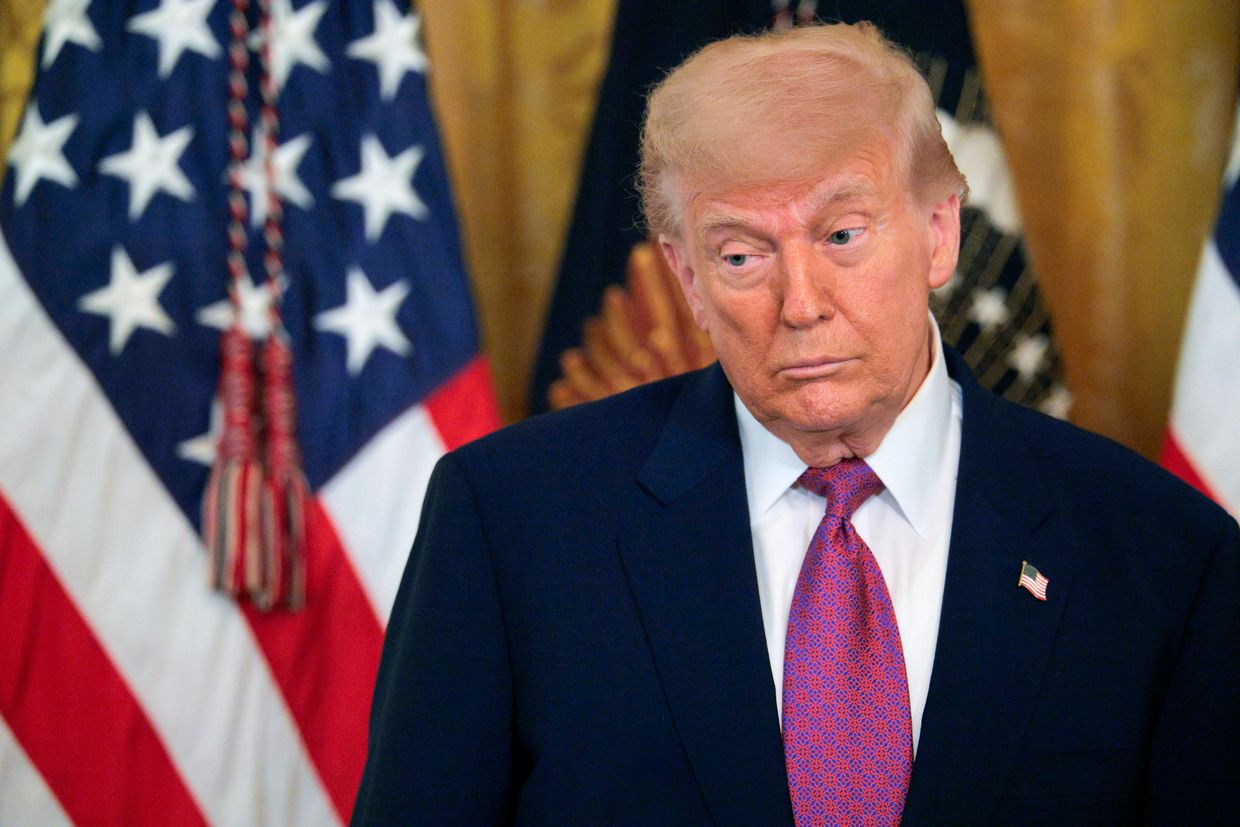
Speaking at a NATO press conference in The Hague on June 25, U.S. President Donald Trump said it was possible Russia could target other countries beside Ukraine.
When asked whether Russian President Vladimir Putin has territorial ambitions beyond Ukraine, Trump replied, "it's possible."
"I know one thing: He (Putin) would like to settle (the war). He'd like to get out of this thing. It's a mess for him," he added.
Trump's remarks came days after President Volodymyr Zelensky said that Ukraine's intelligence has proof that Russia is preparing new military operations in Europe and just a week after Putin declared "all of Ukraine is ours."
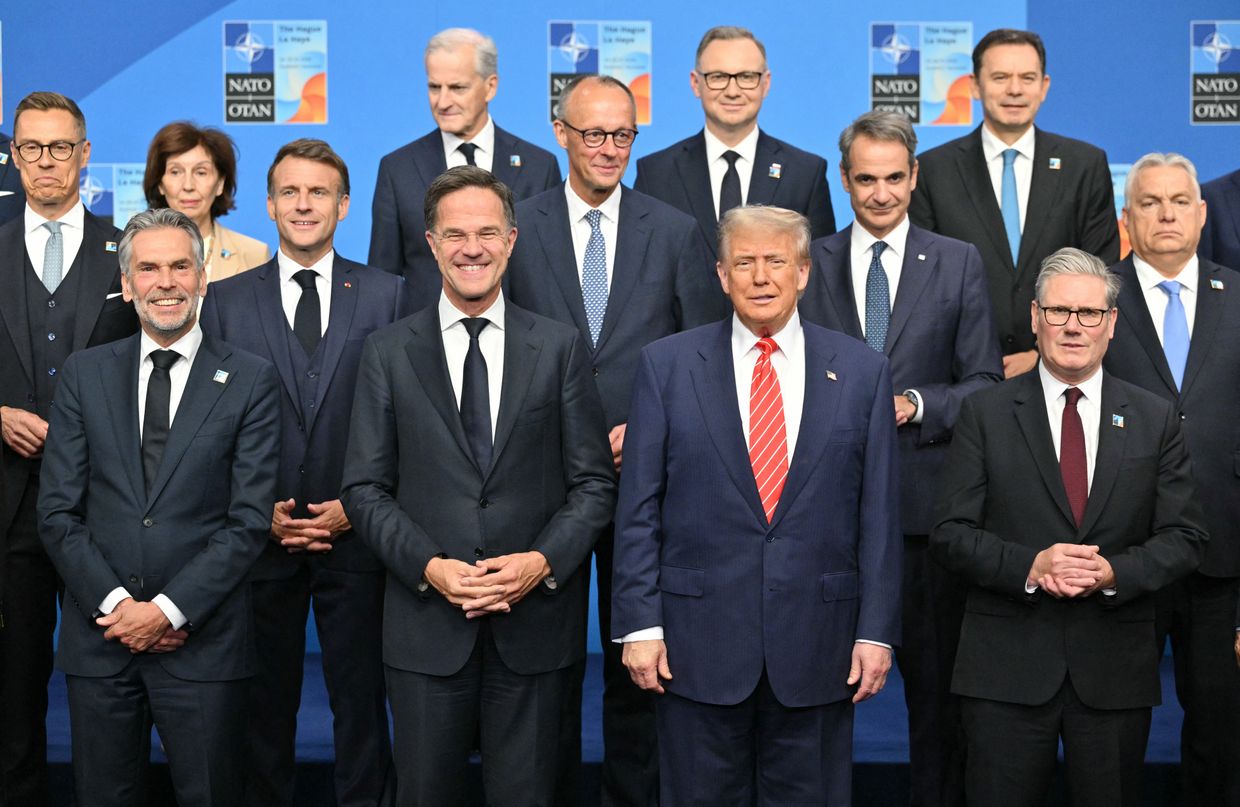
During The Hague summit, NATO Secretary General Mark Rutte called on alliance members to be realistic about the threats posed by Russia and China.
While Trump appeared to downplay concerns about Putin’s threat, he later said that the Russian leader "really has to end that war" against Ukraine. During his speech, he also referred to Russia’s all-out war as a "crisis," a term used by some Russian allies but criticized by Kyiv.
"I consider him (Putin) a person I think is misguided," Trump said.
The U.S. leader said his June 25 meeting with Zelensky, which preceded the briefing, "couldn’t have been nicer."
"I think it’s a great time to end it (war). I’m going to speak to Vladimir Putin, see if we can get it ended," Trump said. "He (Zelensky) is fighting a brave battle, it's a tough battle."
Separately, Trump acknowledged that Ukraine wants to receive Patriot missiles, saying that the U.S. is going to see "if we can make some available."
In recent weeks, Russia has intensified drone and missile attacks on Kyiv and other Ukrainian cities, killing and injuring hundreds of civilians.
Despite Kyiv's appeals, Trump has dismissed the request, accusing Zelensky of "always looking to purchase missiles" and falsely blaming Ukraine for provoking the war.
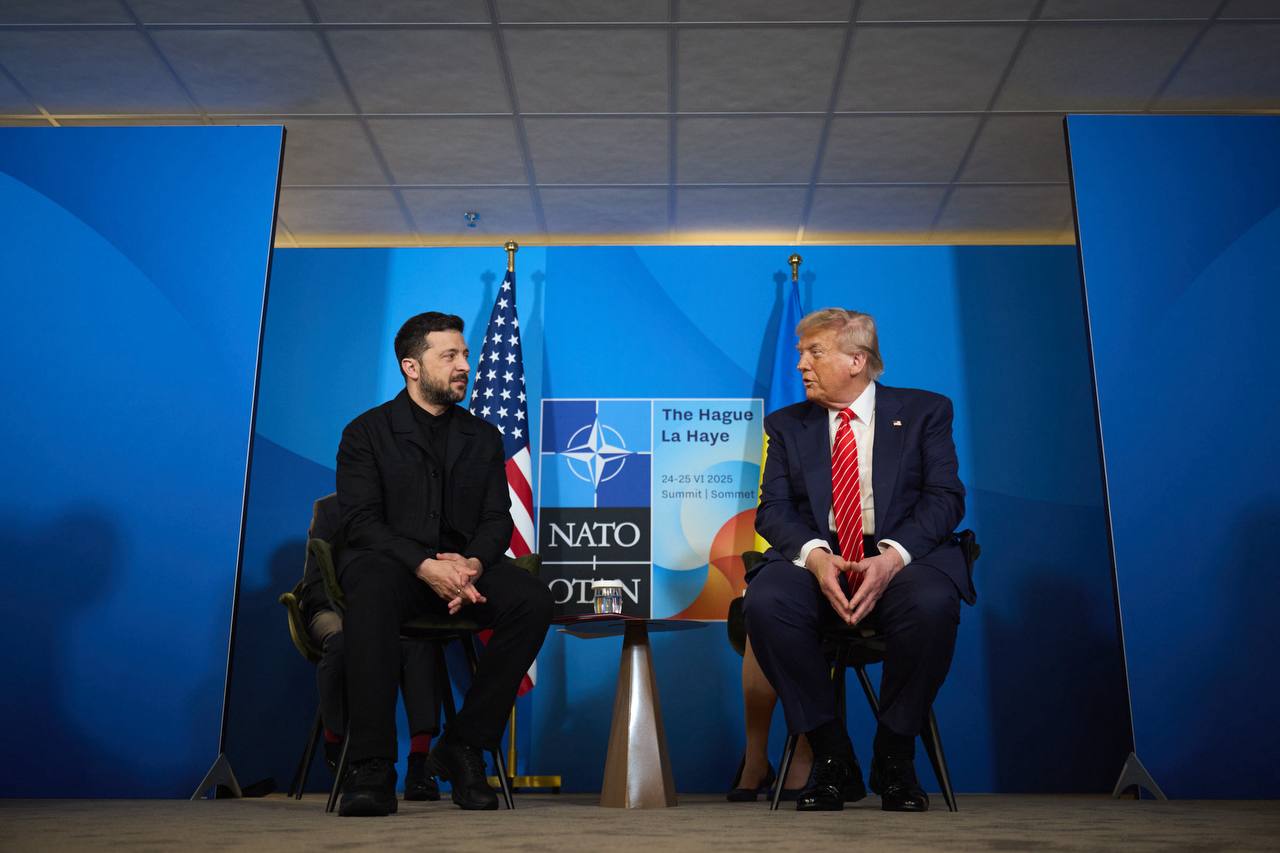
President Volodymyr Zelensky met with U.S. President Donald Trump at the NATO summit in The Hague on June 25.The meeting lasted approximately 50 minutes, according to Suspilne. In a post on X, Zelensky described the conversation as "long and substantive.""We covered all the truly important issues," he wrote. "We discussed how to achieve a ceasefire and a real peace. We spoke about how to protect our people. We appreciate the attention and the readiness to help bring peace closer."Zelensky said t
President Volodymyr Zelensky met with U.S. President Donald Trump at the NATO summit in The Hague on June 25.
The meeting lasted approximately 50 minutes, according to Suspilne. In a post on X, Zelensky described the conversation as "long and substantive."
"We covered all the truly important issues," he wrote. "We discussed how to achieve a ceasefire and a real peace. We spoke about how to protect our people. We appreciate the attention and the readiness to help bring peace closer."
Zelensky said that he briefed Trump about the situation on the battlefield.
"Putin is definitely not winning," Ukraine's president said.
The two leaders also discussed the purchase of American air defense systems as well as the potential for co-production of drones.
"Ukraine is ready to buy this equipment and support American weapons manufacturers," Zelensky added.
Speaking at a briefing, Trump was asked what he would be discussing during the meeting with Zelensky.
"Obviously we'll be discussing his difficulties, he's got a little difficulty," the U.S. president replied without elaborating on what he meant.
Andriy Yermak, Zelensky's chief of staff, said that the presidents discussed the future of global security, ways to end Russia's all-out war, and defense cooperation between Kyiv and Washington.
Speaking at a press conference following the meeting, Trump said that it "couldn’t have been nicer."
"I think it’s a great time to end it (war). I’m going to speak to Vladimir Putin, see if we can get it ended," Trump said. "He (Zelensky) is fighting a brave battle, it's a tough battle."
This is the first meeting between the two leaders since April, when they spoke briefly on the sidelines of Pope Francis' funeral in Rome.
A planned discussion at the G7 summit earlier this month fell through after both leaders left the event early, Trump due to escalating tensions in the Middle East, and Zelensky in response to drone and missile attack on Kyiv.
Upon arriving in The Hague, Andriy Yermak, head of the Ukrainian presidential office, said on June 24 that he had held "substantive" talks with U.S. Secretary of State Marco Rubio to prepare for the Zelensky-Trump meeting, including its structure and key topics.
Zelensky is also scheduled to meet with NATO Secretary-General Mark Rutte and European Commission President Ursula von der Leyen during the summit.
In a recent interview with Sky News, Zelensky expressed uncertainty about Trump's ties to Putin but said he believes Trump understands that Ukraine is a U.S. ally and that "the real existential enemy of America is Russia."
U.S. President Donald Trump has said President Volodymyr Zelensky is a "nice guy" ahead of a meeting at NATO summit in The Hague on June 25, saying they will be "discussing his difficulties."The White House confirmed the meeting on June 24 but did not release further details. According to a diplomatic source cited by AFP, the talks between Zelensky and Trump were scheduled for early afternoon, with both sides finalizing the agenda.The two leaders are expected to discuss Ukraine's planned purchas
U.S. President Donald Trump has said President Volodymyr Zelensky is a "nice guy" ahead of a meeting at NATO summit in The Hague on June 25, saying they will be "discussing his difficulties."
The White House confirmed the meeting on June 24 but did not release further details. According to a diplomatic source cited by AFP, the talks between Zelensky and Trump were scheduled for early afternoon, with both sides finalizing the agenda.
The two leaders are expected to discuss Ukraine's planned purchase of a new defense package, including air defense systems, as well as additional sanctions on Russia and an international price cap on Russian oil.
Speaking at a press briefing at The Hague on June 25, Trump was asked by a reporter what he would be discussing during the meeting with Zelensky.
"Obviously we'll be discussing his difficulties, he's got a little difficulty," Trump replied.
"Zelensky is a nice guy, I'm going to meet him today. I don't know, I assume we're going to be discussing Ukraine. It seems the most likely," he added.
Trump did not elaborate on what he meant by "difficulties" but the NATO summit comes at a time when U.S. support for Kyiv is waning, and just a week after Russian President Vladimir Putin declared "all of Ukraine is ours."
This will be the first meeting between Zelensky and Trump since April, when they spoke briefly on the sidelines of Pope Francis' funeral in Rome.
A planned discussion at the G7 summit earlier this month fell through after both leaders left the event early, Trump due to escalating tensions in the Middle East, and Zelensky in response to drone and missile attack on Kyiv.
Upon arriving in The Hague on Monday, Andriy Yermak, head of the Ukrainian presidential office, said he held "substantive" talks with U.S. Secretary of State Marco Rubio to prepare for the Zelensky-Trump meeting, including its structure and key topics.
Zelensky is also scheduled to meet with NATO Secretary-General Mark Rutte and European Commission President Ursula von der Leyen during the summit.
In a recent interview with Sky News, Zelensky expressed uncertainty about Trump's ties to Putin but said he believes Trump understands that Ukraine is a U.S. ally and that "the real existential enemy of America is Russia."
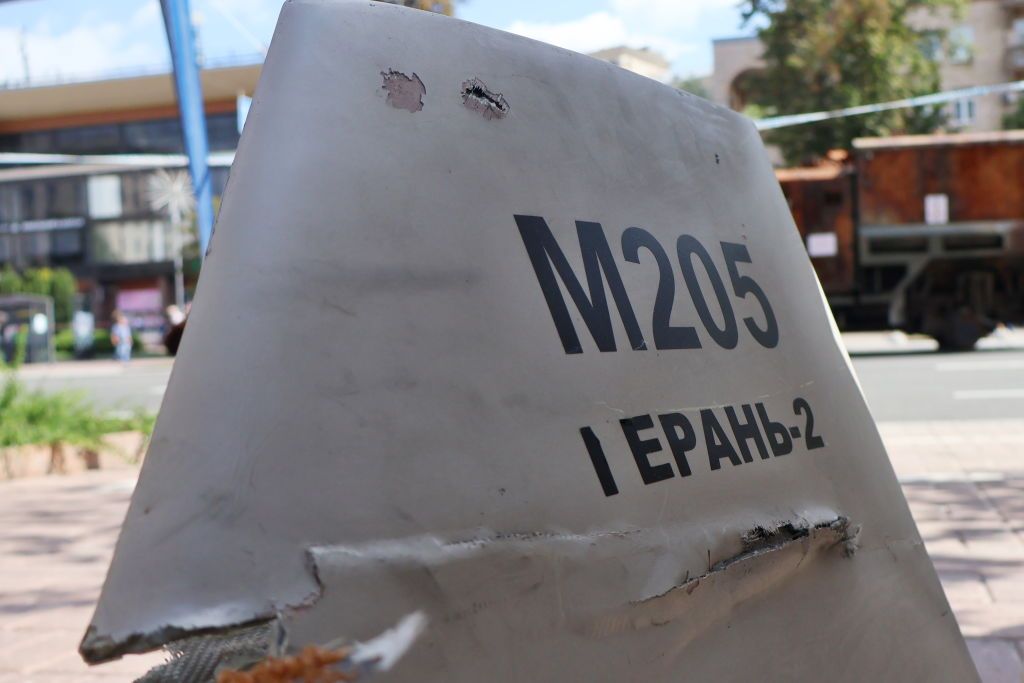
Since the start of Russia’s full-scale invasion, Moscow has launched 28,743 Shahed-type drones at Ukraine — with 2,736, or roughly 9.5%, fired in June 2025 alone, President Volodymyr Zelensky said during a speech to the Dutch Parliament in The Hague.Speaking on June 24, he stressed that Russia would never have been able to carry out such drone attacks without support from Iran, and Ukraine, in turn, could not have intercepted most of the drones without the help of its international partners.Zel
Since the start of Russia’s full-scale invasion, Moscow has launched 28,743 Shahed-type drones at Ukraine — with 2,736, or roughly 9.5%, fired in June 2025 alone, President Volodymyr Zelensky said during a speech to the Dutch Parliament in The Hague.
Speaking on June 24, he stressed that Russia would never have been able to carry out such drone attacks without support from Iran, and Ukraine, in turn, could not have intercepted most of the drones without the help of its international partners.
Zelensky called for accountability and emphasized that rules must apply to all — including the Kremlin: "Putin pretends not to understand the rules that shape the modern world. And here, in The Hague, I want to say this very clearly to him: There is a rule — do not kill. There is a rule — do not treat people like beasts. There is a rule — do not destroy cities and villages. There is a rule — do not sponsor terror. There is a rule — do not steal children. And if you break these rules, you will be held accountable."
According to Zelensky, these principles — though difficult for Russia to grasp — form the foundation of international norms, from the UN Charter to Europe’s shared vision of life.
To achieve lasting peace, Zelensky outlined two key strategic priorities. First, he called for maximum isolation of Russia which includes full political isolation, comprehensive sanctions, and the termination of any cooperation that allows Russia to survive and continue waging war.
"Every loophole that allows them to keep going must be closed. We need a strong 18th EU sanctions package. We need tough, painful sanctions on Russian oil. Every reduction in Russia’s oil revenue helps bring peace closer," he said.
Zelensky argued that the most effective step would be imposing a $30-per-barrel price cap on Russian oil exports.
“The world must reach this threshold — not just to help stop Russia’s war against us, but to prevent any future military operations that Russia might launch against Europe and the Alliance,” he said. “Military plans must become prohibitively expensive for Russia. We must fully block their tanker fleet and cut them off from international banking. That’s what works.”
Second priority, according to Zelensky, is the need for stability in defense support. "Russia must see that Ukraine will not be left alone, and that Europe will not back down."
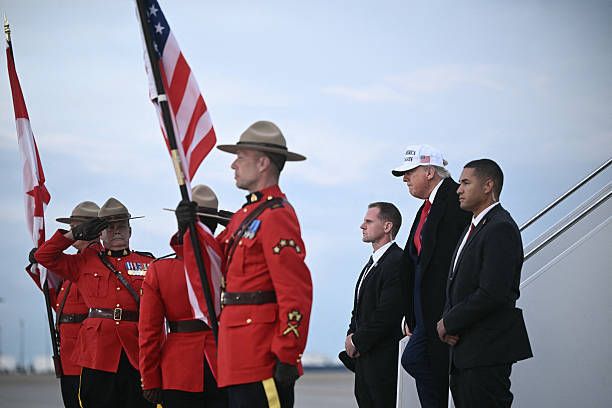
President Donald Trump refused to give a clear commitment to NATO’s Article 5 — the alliance’s collective defense clause — as he departed for a pivotal summit in The Hague, raising fresh concerns about his stance on one of NATO’s core principles.When pressed by reporters aboard Air Force One on whether he would uphold the mutual defense obligation, Trump replied, “It depends on your definition of Article 5,” adding, "There’s numerous definitions of Article 5. You know that, right? But I’m commit
President Donald Trump refused to give a clear commitment to NATO’s Article 5 — the alliance’s collective defense clause — as he departed for a pivotal summit in The Hague, raising fresh concerns about his stance on one of NATO’s core principles.
When pressed by reporters aboard Air Force One on whether he would uphold the mutual defense obligation, Trump replied, “It depends on your definition of Article 5,” adding, "There’s numerous definitions of Article 5. You know that, right? But I’m committed to being their friends, you know, I’ve become friends with many of those leaders, and I’m committed to helping them."
Although Article 5 is central to NATO’s security framework, Trump has previously expressed skepticism about honoring it, often criticizing member states for not contributing enough to shared defense efforts.
Asked to elaborate, he said, "I’m committed to saving lives. I care about life and safety." He added that he would explain his position in full once at the summit: "I’ll give you an exact definition when I get there — I just don’t want to do it from the back of a plane."
Trump’s remarks come as NATO faces what its leadership describes as its most significant threat in decades.
At a press briefing on June 23, NATO Secretary General Mark Rutte said Russia remains the primary danger to the alliance, citing its growing alignment with China, North Korea, Iran, and Belarus.
"Moscow continues to wage war against Ukraine, with support of North Korea, Iran, and China, as well as Belarus," Rutte said.
He added that NATO leaders plan to adopt a "historic" defense investment plan at the June 24–25 summit in The Hague, including a new 5% of GDP benchmark for defense spending and stronger backing for Ukraine.
"All leaders will take bold decisions to strengthen our collective defense, making NATO a stronger, fairer, and more lethal alliance," Rutte said. “This is a leap that is ambitious, historic, and fundamental to securing our future.”
Their last meeting was in April at Pope Francis' funeral, amid concerns over the U.S. role in peace talks between Kyiv and Moscow. Details of the June 25 meeting are still being finalized, but the talks are expected in the "early afternoon," a source told AFP.
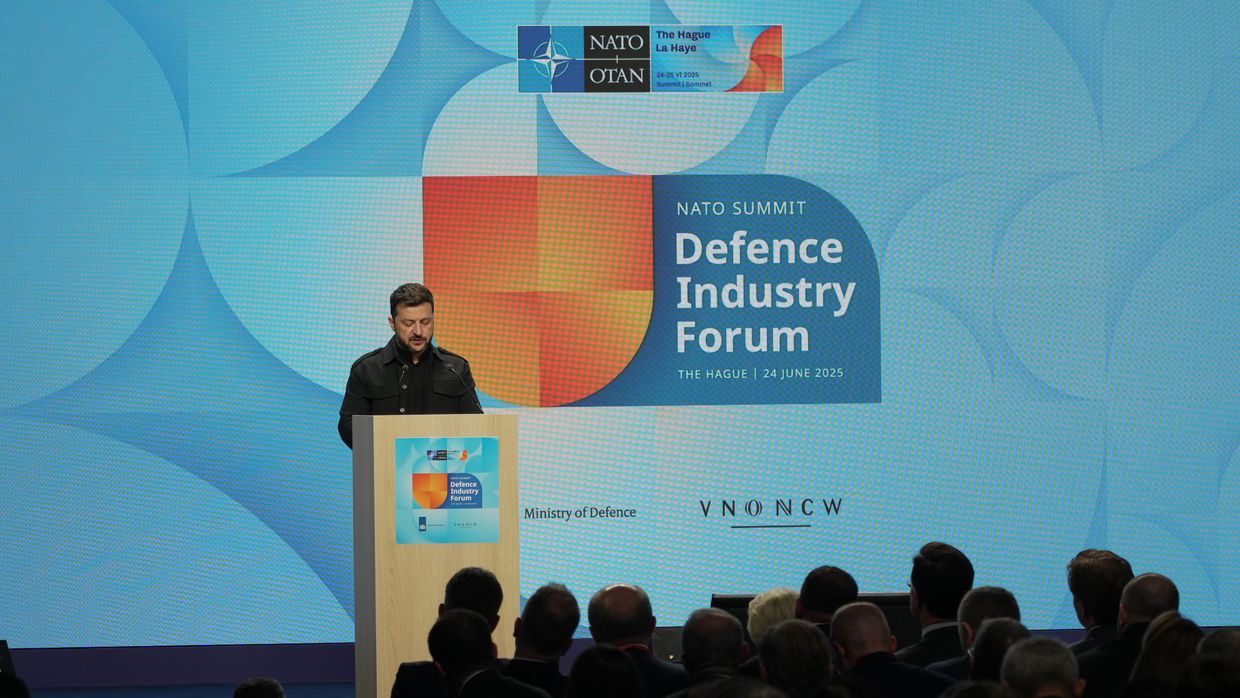
President Volodymyr Zelensky said during NATO summit on June 24 that Ukraine has the capacity to produce over 8 million drones of various types each year, but lacks the financial backing to reach that potential, a shortfall he said must be urgently addressed to defeat Russia's growing military network."Our defense production potential has surpassed $35 billion,” Zelensky said during a speech at the NATO Defense Industry Forum in The Hague. "This includes nearly 1,000 types of products... but aro
President Volodymyr Zelensky said during NATO summit on June 24 that Ukraine has the capacity to produce over 8 million drones of various types each year, but lacks the financial backing to reach that potential, a shortfall he said must be urgently addressed to defeat Russia's growing military network.
"Our defense production potential has surpassed $35 billion,” Zelensky said during a speech at the NATO Defense Industry Forum in The Hague. "This includes nearly 1,000 types of products... but around 40% of this potential lacks proper funding. For example, we can produce over 8 million drones of different types each year, but the financing allows for far fewer."
Zelensky urged allies to scale up investments in joint weapons production, including drone technologies, artillery, and interceptors. He argued that Ukraine's defense capabilities are not only key to defending its own territory, but essential to strengthening NATO's long-term security.
"We must lead in the drone race, both in strike drones and interceptors," he said. "Please increase your investments in Ukraine and joint weapons production. All the weapons we produce become part of a new, stronger European defense and security system."
The Ukrainian president emphasized that Russia is not acting alone, but as part of a broader network of state and non-state actors, including North Korea, Iran, and Chinese companies, which support its war effort against Ukraine and pose a long-term threat to Europe.
"The source of this war and the long-term threat to Europe is Russia," Zelensky said. "But in reality, we are not just facing Russia alone. We are facing a network of state and non-state actors."
Zelensky also called on NATO members to increase defense spending to 5% of GDP and to dedicate at least 0.25% of GDP to support Ukraine's military needs directly. He thanked countries such as Germany, Norway, Sweden, and the Netherlands for their elevated commitments, but urged others to follow suit.
Zelensky warned that Russia is planning "new military operations on NATO territory" and that the war in Ukraine must be stopped now to prevent broader European conflict.
"There are no signs that Putin wants to stop this war," Zelensky said. "So long as he kills, he lives. And our intelligence confirms this."
He also appealed for a crackdown on the supply chains that allow Russia to sustain its weapons manufacturing, referring to Western-origin components found in Russian missiles, drones, and armored vehicles.
"It's not just China, also Taiwan. Some of these parts come from European countries and from the United States," Zelensky said. "Every single tool delivered to Russia's defense sector helps prolong the war and is a crime against peace."
Zelensky's speech comes as NATO leaders gather in The Hague for a high-level summit on June 24-25. NATO leaders are expected to discuss raising the alliance's defensespending target to 5% of the GDP, a proposal the U.S. has championed but from which it considers itself exempt.
President Volodymyr Zelensky met outgoing Dutch Prime Minister Dick Schoof on June 24 in The Hagueon the first day of the NATO summit.Welcoming Zelensky at the Catshuis official residence, Schoof presented a new military aid package for Ukraine, including 100 drone radar systems, front-line vehicles for evacuating the wounded, and 80 million euros (over $90 million) for the drone initiative. The Netherlands will also start producing drones for Ukraine, according to Ukrainian specifications.Zelen
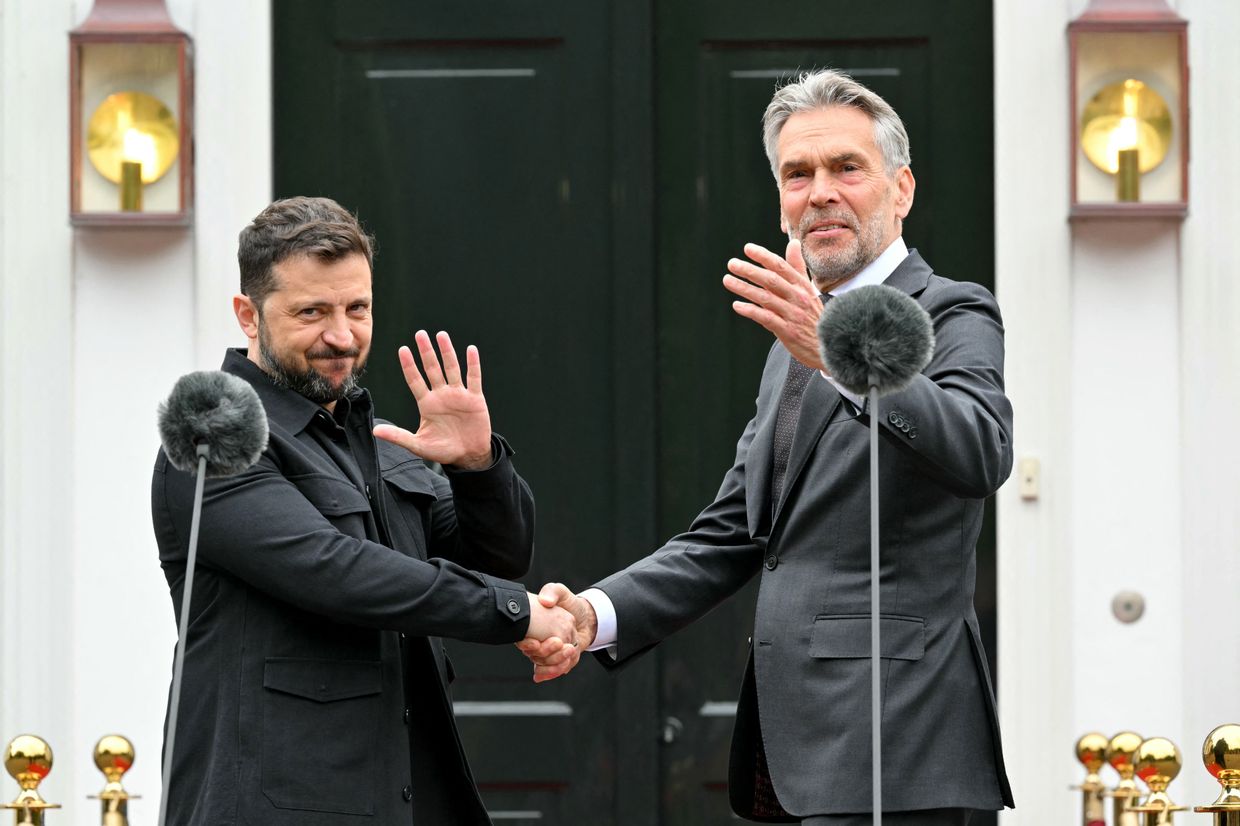
President Volodymyr Zelensky met outgoing Dutch Prime Minister Dick Schoof on June 24 in The Hagueon the first day of the NATO summit.
Welcoming Zelensky at the Catshuis official residence, Schoof presented a new military aid package for Ukraine, including 100 drone radar systems, front-line vehicles for evacuating the wounded, and 80 million euros (over $90 million) for the drone initiative. The Netherlands will also start producing drones for Ukraine, according to Ukrainian specifications.
Zelensky arrived in the Netherlands on the evening of June 23, planning to meet allied leaders – including U.S. President Donald Trump – to discuss NATO's response to Russia's war against Ukraine during the annual summit.
"Let me be clear: Ukraine is part of the family that we call the Euro-Atlantic family," Schoof told Zelensky in front of reporters.
The new aid package is valued at 175 million euros ($200 million) and comes after a 500 million euros ($580 million) agreement to produce 600,000 drones with the Ukrainian defense industry, Dutch Defense Minister Ruben Brekelmans said separately at the summit.
"We have these technologies, we want to share them with our partners. In The Hague, we begin to work with some countries on co-production," Zelensky said when talking about Ukraine's drone manufacturing capabilities.
Calling The Hague the "city of justice," Zelensky also said he counts on allied support in "holding Russia accountable for its crimes" and named the Netherlands among Ukraine's leading European supporters.
Zelensky's arrival was preceded by rumors that he might skip the event if Trump does not attend either. Nevertheless, the Ukrainian president later confirmed he plans to meet the U.S. leader on June 25, potentially marking their third meeting since Trump took office after the expected talks at the G7 summit in Canada fell through.
This year's NATO summit is taking place as Russia continues to launch large-scale deadly attacks on Ukrainian cities, disregarding calls by Kyiv and its Western partners for a ceasefire.
Allied leaders also face growing uncertainty about the Trump administration's commitment to both Ukraine and NATO's collective security as new conflicts emerge in the Middle East.
Editor's note: The story was updated after the White House confirmed the meeting between Ukraine's President Volodymyr Zelensky and his American counterpart Donald Trump.U.S. President Donald Trump will meet his Ukrainian counterpart Volodymyr Zelensky during a NATO summit in The Hague, the White House confirmed on June 24.The last time Zelensky and Trump met was in April on the sidelines of Pope Francis' funeral amid concerns that Washington would withdraw from mediating peace talks between Kyi
Editor's note: The story was updated after the White House confirmed the meeting between Ukraine's President Volodymyr Zelensky and his American counterpart Donald Trump.
U.S. President Donald Trump will meet his Ukrainian counterpart Volodymyr Zelensky during a NATO summit in The Hague, the White House confirmed on June 24.
The last time Zelensky and Trump met was in April on the sidelines of Pope Francis' funeral amid concerns that Washington would withdraw from mediating peace talks between Kyiv and Moscow.
The White House did not provide any further details about the meeting between the two leaders.
The talks between Zelensky and Trump were scheduled for the "early afternoon" on June 25, the source told AFP, adding that "the teams are finalizing the details" of the meeting.
Trump and Zelensky are expected to discuss Ukraine's "purchase of a defense package, a large part of which consists of air defense systems," according to the source.
The discussion will also focus on "sanctions against Russia, and a price cap on oil," the source added.
Earlier, Trump said that he "would probably meet" Zelensky in The Hague after the two presidents did not manage to talk during the G7 summit in Canada earlier in June, AFP reported on June 24.
When asked what he would say to Zelensky, Trump replied: "I'll say: 'How are you?' He's (Zelensky) in a tough spot, he shouldn't have been there at all".
Zelensky also said in an interview with Sky News that he planned to meet Trump in The Hague. Asked whether the meeting would be a formal discussion or an informal encounter, Zelensky said it was a matter of scheduling: "They are talking about timing. It's timing."
Zelensky's participation in the summit was confirmed by the European Council on June 20, following reports that he was reconsidering the visit due to uncertainties surrounding Trump's participation.
Upon arrival in The Hague on June 24, Andriy Yermak, head of Ukraine's presidential office, said he held a "substantive" discussion with U.S. Secretary of State Marco Rubio about the upcoming Zelensky-Trump meeting. Yermak said the two discussed the structure, agenda, and key topics for the meeting.
Zelensky is also scheduled to meet European Commission President Ursula von der Leyen and NATO Secretary-General Mark Rutte during the summit.
In the interview, Zelensky also addressed concerns about Trump's perceived closeness to Russian President Vladimir Putin.
"It is a complicated question because I truly do not know what relationship Trump has with Putin," Zelensky said. "I think what I know, you know, and the media knows. There are various signals about that."
He added that he believes Trump understands Ukraine is a U.S. ally and that "the real existential enemy of America is Russia."
"They will never be friends. They may be short-term partners, but they will never be friends," Zelensky said.
Zelensky expressed hope that Trump's approach to Russia is tactical, intended to pressure Putin into peace negotiations. "I would like this approach to be only a way to force Putin to the negotiating table and to end the war. And let us hope so," he said.
Zelensky was scheduled to meet Trump at the Group of Seven (G7) summit, held June 15-17. However, the U.S. president left the multilateral event early due to the renewed conflict between Israel and Iran.
Ukrainian President Volodymyr Zelensky met with U.K. Prime Minister Keir Starmer at Downing Street on June 23, ahead of the NATO summit in The Hague.Zelensky had earlier paid a visit to King Charles III at Windsor Castle before joining Starmer to discuss continued British support for Ukraine’s defense.During a joint visit to a U.K. military training site for Ukrainian personnel, Starmer said he and Zelensky held "an excellent bilateral meeting" and had agreed to an "industrial military co-produc
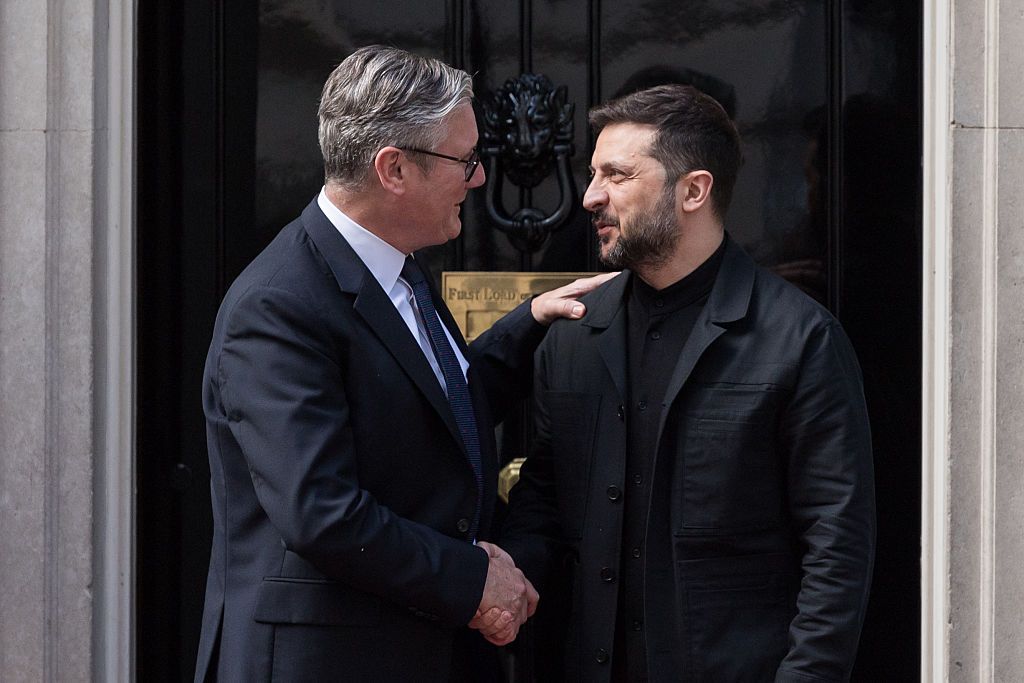
Ukrainian President Volodymyr Zelensky met with U.K. Prime Minister Keir Starmer at Downing Street on June 23, ahead of the NATO summit in The Hague.
Zelensky had earlier paid a visit to King Charles III at Windsor Castle before joining Starmer to discuss continued British support for Ukraine’s defense.
During a joint visit to a U.K. military training site for Ukrainian personnel, Starmer said he and Zelensky held "an excellent bilateral meeting" and had agreed to an "industrial military co-production agreement." He described the deal as "a massive step forward in the contribution that we can continue to make." Zelensky added the agreement "will be very strong and will transform both nations," though specific details were not disclosed.
Addressing Ukrainian troops, Starmer said it was "really humbling" to witness their "level of professionalism, commitment and bravery." Around 58,000 Ukrainian service members have been trained under the international program based in the U.K.
Zelensky thanked the U.K for its consistent backing since the start of Russia’s full-scale invasion in 2022. “We are very thankful to the UK... for such big support of Ukraine from the very beginning of this war,” he said. He noted that the UK-based training initiative has “strengthened our army” and enabled Ukraine to “survive and fight.”
The visit precedes the NATO summit in The Hague, where allies are set to unveil new defense spending targets. NATO Secretary General Mark Rutte said member states will aim to spend five percent of GDP on defense — a move he called “a quantum leap that is ambitious, historic and fundamental to securing our future.”
Under a compromise deal, members will commit to allocating at least 3.5 percent of GDP to core military expenditures and 1.5 percent to broader security areas such as cybersecurity and infrastructure.
President Volodymyr Zelensky arrived in the U.K. on June 23 to conduct several meetings with "a primary goal" of deepening defense cooperation, presidential spokesperson Serhii Nykyforov said in comments reported by Ukrinform.Zelensky's visit comes just a few hours after yet another Russian attack on Kyiv, which killed at least seven and injured almost 30 people. A residential buliding was partially destroyed in a direct ballistic missile hit.In the U.K., Zelensky is to meet with King Charles II
President Volodymyr Zelensky arrived in the U.K. on June 23 to conduct several meetings with "a primary goal" of deepening defense cooperation, presidential spokesperson Serhii Nykyforov said in comments reported by Ukrinform.
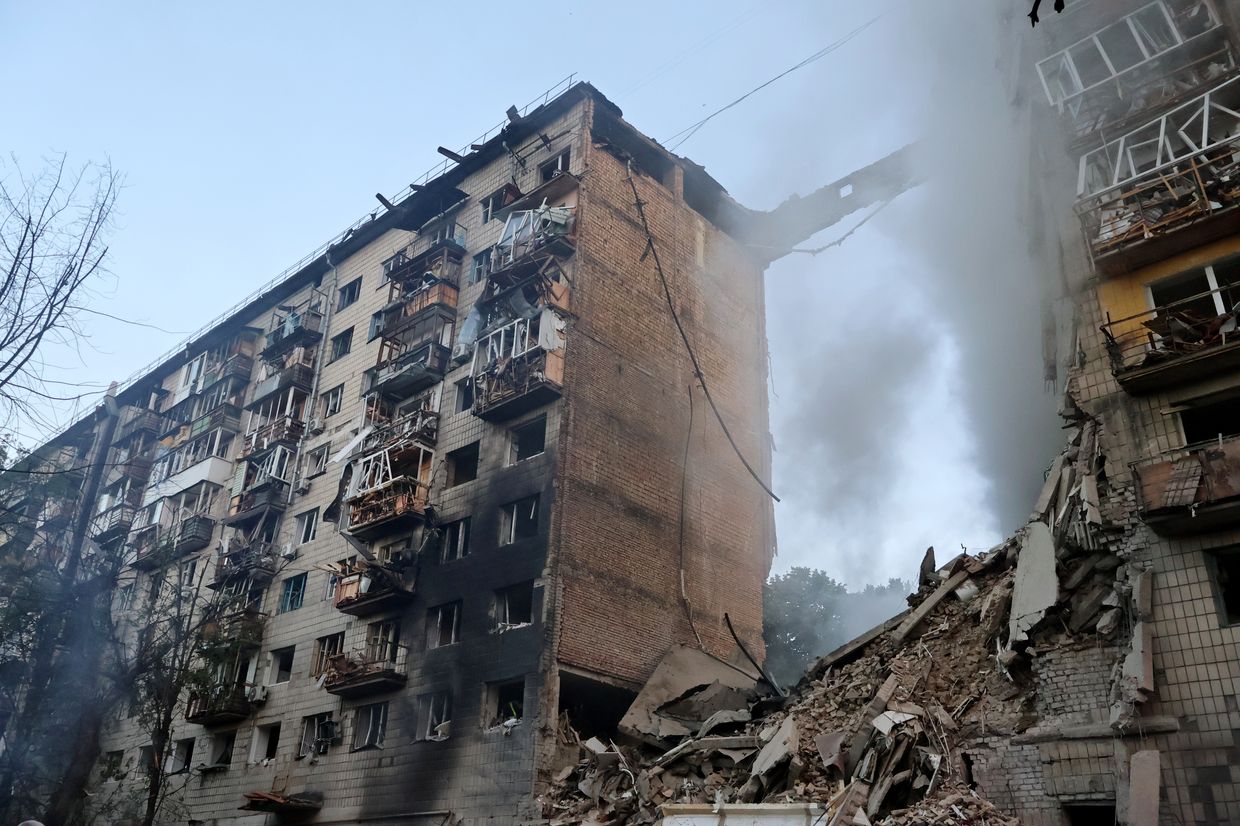
Zelensky's visit comes just a few hours after yet another Russian attack on Kyiv, which killed at least seven and injured almost 30 people. A residential buliding was partially destroyed in a direct ballistic missile hit.
In the U.K., Zelensky is to meet with King Charles III, British Prime Minister Keir Starmer, as well as with the speakers of both houses of parliament, Lindsay Hoyle and John McFall, according to Nykyforov.
Zelensky is also scheduled to meet with Ukrainian military personnel undergoing training in the U.K. and representatives of think tanks.
This year, the U.K. has allocated 4.5 billion pounds ($5.8 billion) for military assistance to Ukraine, marking its largest annual commitment so far.
London remains one of Kyiv's most steadfast military partners, providing long-range missiles, armored vehicles, training, and political support against Russian aggression.
President Volodymyr Zelensky on June 23 highlighted Russia's hypocrisy for describing U.S. strikes on Iran as "grossly violating international law" just hours before launching yet another deadly mass missile and drone strike on Ukraine."After the strikes on Iran's nuclear facilities, there was an uproar from Moscow," Zelensky said. "The Russian leadership demonstratively condemned the 'missile and bomb' actions. Today, Moscow is silent — after its own army launched a cynical attack using Russian
President Volodymyr Zelensky on June 23 highlighted Russia's hypocrisy for describing U.S. strikes on Iran as "grossly violating international law" just hours before launching yet another deadly mass missile and drone strike on Ukraine.
"After the strikes on Iran's nuclear facilities, there was an uproar from Moscow," Zelensky said.
"The Russian leadership demonstratively condemned the 'missile and bomb' actions. Today, Moscow is silent — after its own army launched a cynical attack using Russian-Iranian 'Shaheds' and missiles on civilian infrastructure in Kyiv and other cities."
Moscow on June 22 condemned the recent U.S. strikes against Iranian nuclear facilities.
"The irresponsible decision to subject the territory of a sovereign state to missile and bomb strikes, no matter what arguments are used, is grossly violating international law, the U.N. Charter, and the resolutions of the U.N. Security Council," the Russian Foreign Ministry said in a statement.
Overnight on June 23 a devastating Russian missile and drone strike on Kyiv killed at least 7 people and injured dozens more, including children.
The attack was one of the largest air assaults on the capital this year, with 368 aerial weapons launched, including 159 Iranian-made Shahed drones and 16 missiles, according to Ukraine's Air Force.
After the strikes on Iran's nuclear program facilities, there was a lot of uproar from Moscow — the Russian leadership performatively condemned the “missile-and-bomb” actions. Today, Moscow is silent after the Russian army carried out a completely cynical strike using… pic.twitter.com/xq6TUsfWM2
— Volodymyr Zelenskyy / Володимир Зеленський (@ZelenskyyUa) June 23, 2025
Air defenses intercepted most, but not all. The attack hit six locations directly, causing destruction in 25 separate sites across Kyiv and the wider region.
Governor of Kyiv Oblast Tymur Tkachenko reported 6 people were killed, with 25 other injured in Kyiv alone, including four children.
In his remarks, Zelensky also warned of a growing alliance between Russia, Iran, and North Korea — a "coalition of killers," he said, and urged countries near these regimes to consider whether they can defend themselves if such a bloc continues to spread terror.
"Each country neighboring Russia, Iran, and North Korea should ask whether their own defenses are enough if this axis of evil preserves and remains unchecked," he said.
Zelensky, speaking ahead of meetings with British officials during his visit to the U.K., said he would push for stronger collective air defense and tougher sanctions on Russia.
Zelensky's comments came just a day after Ukraine's Foreign Ministry called for the dismantling of Iran's nuclear program following U.S. air strikes on Iranian nuclear sites.
"Iran is complicit in the crime of aggression against Ukraine," the ministry said in a June 22 statement. "The Iranian regime is providing military assistance to Russia, including the supply of UAVs and technologies that Russia consistently uses to kill people and destroy critical infrastructure."
The statement followed U.S. President Donald Trump's announcement of successful air strikes on three nuclear facilities in Iran, Fordow, Natanz, and Esfahan, conducted in coordination with Israel.
Moscow, which condemned the U.S. and Israeli strikes on Iran, has long cooperated with Tehran on nuclear and military matters. Russia supplied Iran with its first nuclear power plant and has relied on Iranian drones throughout its invasion of Ukraine.
President Volodymyr Zelensky is expected to attend the summer plenary session of the Parliamentary Assembly of the Council of Europe (PACE), scheduled for June 23-27 in Strasbourg, France.According to the draft agenda, Zelensky is slated to address the assembly on June 26, though his attendance has not yet been confirmed.While the content of Zelenky's speech has not been disclosed, the PACE summer session is expected to focus on women's rights in Europe as well as the war in Gaza.Legal and human
President Volodymyr Zelensky is expected to attend the summer plenary session of the Parliamentary Assembly of the Council of Europe (PACE), scheduled for June 23-27 in Strasbourg, France.
According to the draft agenda, Zelensky is slated to address the assembly on June 26, though his attendance has not yet been confirmed.
While the content of Zelenky's speech has not been disclosed, the PACE summer session is expected to focus on women's rights in Europe as well as the war in Gaza.
Legal and human rights issues related to Russia’s ongoing war against Ukraine, and a corresponding resolution, are also listed on the agenda.
The spring session, which took place in April 2025, focused predominantly on Georgia, Turkey, and Ukraine.
Ahead of the PACE session, Zelensky is also set to attend next week's NATO summit in The Hague on June 24. He is expected to meet with European Commission President Ursula von der Leyen and NATO Secretary-General Mark Rutte.
PACE is the parliamentary arm of the Council of Europe, an international organization of 46 countries, including Ukraine, that promotes democratic values and human rights. Russia was expelled from the body in early 2022 in response to its invasion of Ukraine.
Since the start of the full-scale invasion in 2022, the assembly has issued a number of resolutions regarding Russia, calling for the establishment of an international special tribunal to hold Russia accountable for war crimes and recognizing Putin as an illegitimate dictator.
Most recently, PACE adopted a resolution addressing the ongoing Russian war of aggression against Ukraine, stressing the urgent need to ensure accountability and avoid impunity for the serious breaches of international law committed.
President Volodymyr Zelensky signed an order on June 22 to impose sanctions on individuals and legal entities doing business in the Russian-occupied territories of Ukraine, including Crimea.According to Zelensky, the sanctions are targeting "those who cooperate with the (Russian) occupier on our land," as they "help justify the aggression, consider it normal to make money in the occupation, and pay taxes" to Russia.The order, which follows a decision of Ukraine's National Security and Defense Co
President Volodymyr Zelensky signed an order on June 22 to impose sanctions on individuals and legal entities doing business in the Russian-occupied territories of Ukraine, including Crimea.
According to Zelensky, the sanctions are targeting "those who cooperate with the (Russian) occupier on our land," as they "help justify the aggression, consider it normal to make money in the occupation, and pay taxes" to Russia.
The order, which follows a decision of Ukraine's National Security and Defense Council, was published on the Presidential Office's website together with the lists of sanctioned individuals and companies.
The order is only the beginning of a larger plan for sanctions against such individuals, with more steps coming soon, Zelensky wrote.
According to Zelensky, Ukrainian authorities are also working to fully synchronize Ukrainian sanctions with the steps by foreign partners.
"Justice must prevail in all jurisdictions and truly restrict all those who choose Russia and war," he added.
The lists of sanctioned individuals and companies published on the Presidential Office's website did not clarify the nature of their business activities or collaboration with the Russian occupation authorities and state.
The list includes lawmaker Artem Dmytriuk, who fled Ukraine in August 2024 and is suspected of assaulting a police officer and a military service member.
Fugitive ex-lawmaker Oleksandr Onyshchenko, who was sentenced in absentia to 15 years in prison for large-scale fraud in the gas sector between 2013 and 2016, is also among the newly sanctioned individuals.
Arricano Real Estate PLC, which owns several large shopping malls in Kyiv and other Ukrainian cities, was also sanctioned together with its former majority auctioneer, Estonian businessman Hillar Teder. Until 2024, Arricano's shareholders included Dragon Capital, Ukraine's largest investment company owned by Czech businessman Tomas Fiala.
Ukrainian laws on collaboration had long raised discussions among members of the public, academics, and practitioners.
According to an article from 2024 by the Zmina Human Rights Center, Ukraine's law recognizes doing business in occupied territories as a crime of collaboration. Human rights defenders have conducted research that has highlighted the law's flaws and problems with its application.
A 2023 report by the Ukrainian Helsinki Human Rights Union said that enacting legal consequences for collaboration according to the law could breach the International Human Rights Conventions in some cases.
"The law does not take into account cases when a person conducts economic activities to cover the basic needs of his or her family or when such activities support the livelihood of the population under occupation," the Zmina Human Rights Center wrote.
President Volodymyr Zelensky on June 21 responded to Russian President Vladimir Putin's recent statements on Ukraine, saying that Ukraine intends to defend itself and that the government had made several decisions to bolster security in light of the Kremlin's threats.Putin said "all of Ukraine" belongs to Russia in a speech on June 20 at the St. Petersburg International Economic Forum, pointing to Moscow's maximalist territorial ambitions in Ukraine. "Wherever the foot of a Russian soldier steps
President Volodymyr Zelensky on June 21 responded to Russian President Vladimir Putin's recent statements on Ukraine, saying that Ukraine intends to defend itself and that the government had made several decisions to bolster security in light of the Kremlin's threats.
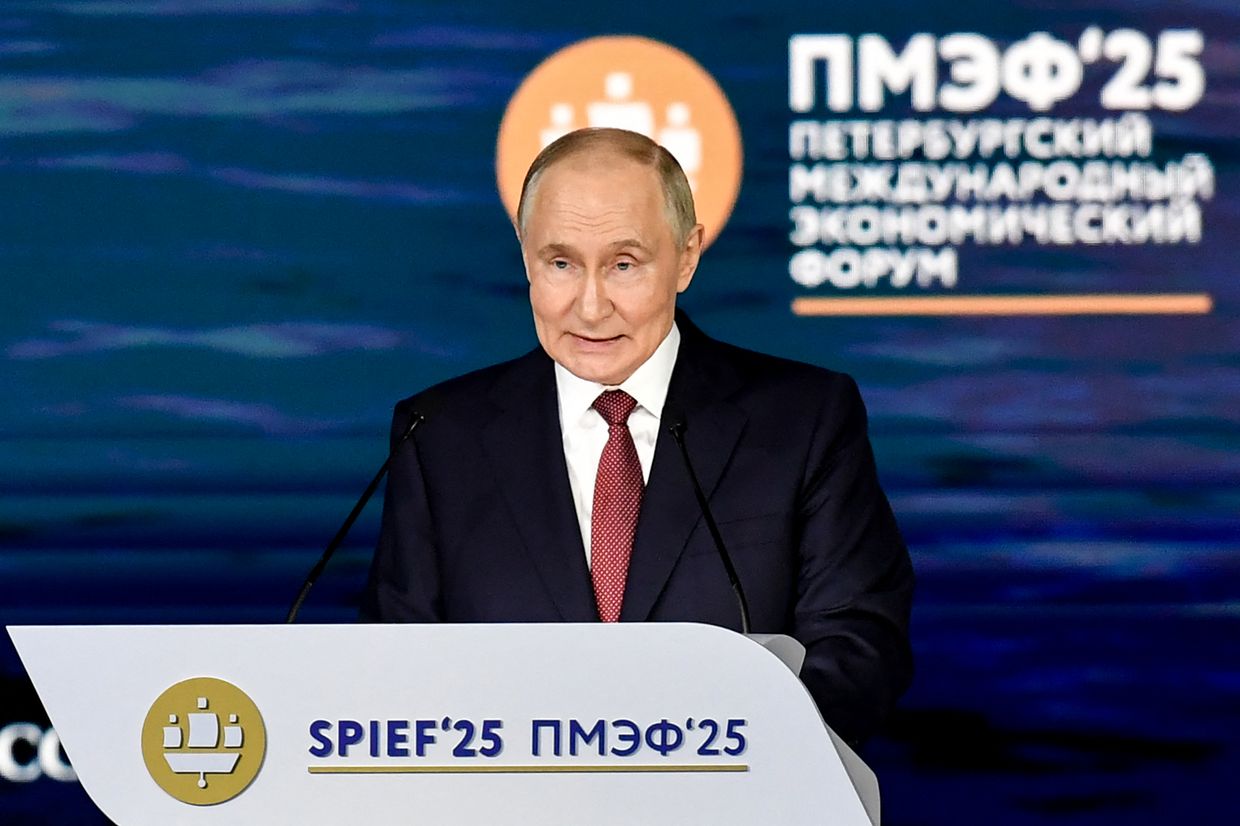
Putin said "all of Ukraine" belongs to Russia in a speech on June 20 at the St. Petersburg International Economic Forum, pointing to Moscow's maximalist territorial ambitions in Ukraine.
"Wherever the foot of a Russian soldier steps is Russian land," he said.
In his evening address on June 21, Zelensky described Putin's speech as a "performance" but said Ukraine was taking the threats seriously.
"But when a murderer says he wants to kill, we take it seriously and will respond together with our partners," Zelensky said.
"I hope with all our partners," he added, likely referring to the United States' diminishing support for Ukraine under U.S. President Donald Trump.
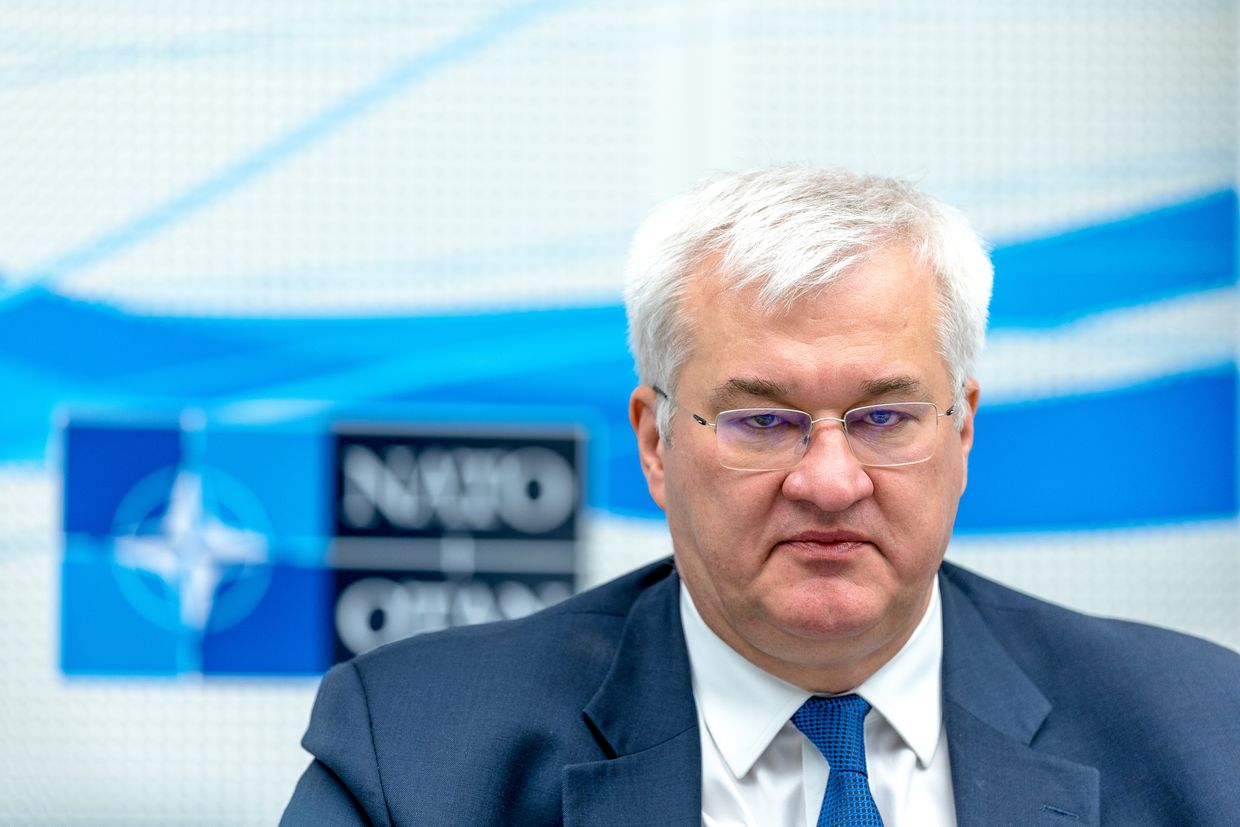
Zelensky said he held meetings with Vasyl Maliuk, head of the Security Service of Ukraine (SBU), Commander-in-chief Oleksandr Syrskyi, and Foreign Minister Andrii Sybiha about how to bolster Ukraine's defense and international support.
"Of course, we will find Ukrainian drones for the foot of every Russian soldier," he said. "Of course, Ukraine will defend itself."
The Ukrainian government has made several decisions in light of Russia's overt threats, Zelensky said. These include a complete diplomatic overhaul and transformation of Ukraine's Foreign Ministry, intensified efforts to coordinate international sanctions, and more funding for drone development.
Kyiv's instructions for the SBU remain confidential, Zelensky said.
Kyiv is preparing to overhaul its Foreign Ministry and diplomatic corps in order to strengthen international support for Ukraine as the all-out war with Russia enters its fourth year, President Volodymyr Zelensky and Foreign Minister Andrii Sybiha said on June 21. The announcement is part of "a number of new decisions" Ukraine has made in response to Russia's stated aim to conquer all of Ukraine, Zelensky said in his evening address."(W)e will make changes to certain staff positions, including w
Kyiv is preparing to overhaul its Foreign Ministry and diplomatic corps in order to strengthen international support for Ukraine as the all-out war with Russia enters its fourth year, President Volodymyr Zelensky and Foreign Minister Andrii Sybiha said on June 21.
The announcement is part of "a number of new decisions" Ukraine has made in response to Russia's stated aim to conquer all of Ukraine, Zelensky said in his evening address.
"(W)e will make changes to certain staff positions, including within the Ukrainian diplomatic corps and institutional management, to increase Ukraine's potential both in relations with partners and in internal Ukrainian resilience," Zelensky said.
The president said that all of Ukraine's ambassadors will hold a meeting and that results of the diplomatic transformation should be apparent in a month.
Ukraine's Foreign Minister, Andrii Sybiha, confirmed that the president had already made decisions regarding some diplomatic personnel and that the ambassadors' meeting was scheduled for July.
"The geopolitical situation requires the diplomatic service to find new arguments and approaches adapted to realities," Sybiha said in a television broadcast on June 21.
"Therefore, the president has already made certain personnel decisions regarding the heads of some foreign institutions, because the criterion is very simple: results."
According to Sybiha, expected results include military aid packages, humanitarian and financial assistance, and support for Ukrainians living abroad.
Sybiha described the coming month as a "month of full diplomatic mobilization to bring about a just and sustainable peace for Ukraine."
The announcement comes after the disappointing outcome of the Group of Seven (G7) Leaders' Summit in Canada and before the June 24-25 NATO summit in The Hague, where Zelensky will once again advocate for international support for Ukraine.
At the G7 summit, Zelensky hoped to reset relations with Washington during a face-to-face meeting with U.S. President Donald Trump and potentially win an agreement to purchase weapons from the United States.
Trump's abrupt departure from the summit quashed those hopes, and Zelensky himself left the conference early. The G7 summit produced no unified statement on Ukraine and Trump reportedly objected to other leaders' call for stronger sanctions against Russia.
Zelensky told G7 leaders that "diplomacy is now in a state of crisis."
Ukraine is asking partner countries to allocate 0.25% of their GDP to boosting Kyiv's defense production, President Volodymyr Zelensky said on June 20 at a press briefing attended by the Kyiv Independent. The president's comments come less than a week before the NATO summit in The Hague, where Zelensky will have another opportunity to discuss Ukraine's security needs with world leaders. "Ukraine is part of Europe's security, and we want 0.25% of the GDP of a particular partner country to be allo
Ukraine is asking partner countries to allocate 0.25% of their GDP to boosting Kyiv's defense production, President Volodymyr Zelensky said on June 20 at a press briefing attended by the Kyiv Independent.
The president's comments come less than a week before the NATO summit in The Hague, where Zelensky will have another opportunity to discuss Ukraine's security needs with world leaders.
"Ukraine is part of Europe's security, and we want 0.25% of the GDP of a particular partner country to be allocated to our defense industry and domestic production," Zelensky said at the briefing.
Ukraine is currently in talks with Denmark, Norway, Germany, the United Kingdom, and Lithuania on weapons development partnerships, Zelensky said.
The proposed spending target comes as Ukraine faces intensified aerial bombardments, dwindling U.S. support, and new Russian offensives. Moscow has doubled down on its maximalist ambitions in Ukraine, with Russian President Vladimir Putin insisting "all of Ukraine is ours" in remarks on June 20.
At the same time, Ukraine has demonstrated its ability to strike back at the aggressor state using its own domestically produced weapons. Operation Spiderweb, a mass attack on four key military airfields in Russia, was carried out entirely with Ukrainian drones.
Ukraine has been ramping up its defense production since the full-scale invasion in 2022. Support from Western allies has been critical to that effort, as Kyiv's defense budget does not match the capacities of domestic weapons production.
Denmark pioneered a new model of defense support when it became the first country to offer donate arms to Ukraine via direct purchases from the Ukrainian defense industry. Zelensky has said he wants other NATO members to purchase weapons from Ukraine under the Danish model.
Increased defense spending is the main item on the agenda at the upcoming NATO summit. The United States has backed a proposal to raise the spending target from the current 2% to 5% GDP.
While thus far only Spain has rejected the proposal outright, most NATO members have remained noncommittal. Poland, the Netherlands, and Sweden have expressed willingness to consider the 5% target.
President Volodymyr Zelensky on June 20 called on U.S. President Donald Trump to "make the right choice for history" by standing with Ukraine against Russian aggression.Zelensky said Moscow is attempting to influence the U.S. president amid the escalating conflict between Israel and Iran."(Russian President Vladimir) Putin really wants us to be without America," Zelensky said during a briefing attended by the Kyiv Independent. "For President Trump right now, the Israel-Iran issue is definitely a
President Volodymyr Zelensky on June 20 called on U.S. President Donald Trump to "make the right choice for history" by standing with Ukraine against Russian aggression.
Zelensky said Moscow is attempting to influence the U.S. president amid the escalating conflict between Israel and Iran.
"(Russian President Vladimir) Putin really wants us to be without America," Zelensky said during a briefing attended by the Kyiv Independent. "For President Trump right now, the Israel-Iran issue is definitely a higher priority."
The Ukrainian president cautioned that Moscow lacks the capability to meaningfully support Iran but will "pretend" otherwise to gain influence with Washington.
"I think this is also a sign to President Trump. And I really don't want him (Trump) to make a deal with the Russians that is not in our favor," he said.
Zelensky said that U.S. support remains essential for Ukraine's defense and long-term security. While some European countries have committed to backing Ukraine, he said, the loss of American support would be the most difficult scenario.
"So that President Trump makes the right choice for history," Zelensky said. "Because it's the right thing to be with us. Because Putin is the aggressor. And in any case, the aggressor loses."
He added that the Ukrainian delegation is actively working with U.S. officials, including a recent conversation between Economy Minister Yulia Svyrydenko and U.S. Treasury Secretary Scott Bessent regarding the minerals agreement and securing new military assistance.
"We handed over a specific weapons package we need, including Patriot systems, and we are awaiting feedback," Zelensky added. "We are ready to find the money for this entire package."
The president said these items — military aid, sanctions, and coordinated diplomatic pressure on the Kremlin — would be key topics in a potential meeting with Trump.
"We need greater certainty and greater pressure from the world on Putin — this is necessary for diplomacy," he said. "And I would like to discuss these formats with him."
Putin offered to mediate between Israel and Iran after speaking with both Israeli Prime Minister Benjamin Netanyahu and Iranian President Masoud Pezeshkian on June 13.
Russia condemned Israel's strikes, which targeted Iran's nuclear and military infrastructure using 200 aircraft and 330 munitions. Iran retaliated with missile strikes on Tel Aviv and other cities, killing five Ukrainian citizens on June 14.
Zelensky traveled to the G7 Leaders' Summit in Canada on June 17, hoping for a one-on-one meeting with Trump. The U.S. president left the summit early, citing the escalating Israel-Iran crisis.
Despite rejecting Putin's offer to mediate in the Middle East conflict, Trump has not imposed any new sanctions on Russia, even as the Kremlin continues to reject ceasefire proposals in its war against Ukraine.
Russia is using the return of war dead as a tool for manipulation to obscure the scale of its military losses from the public, President Volodymyr Zelensky said during a briefing on June 20 attended by the Kyiv Independent.According to Zelensky, Ukrainian authorities have confirmed that at least 20 of the bodies Russia returned as Ukrainian were actually Russian soldiers."Sometimes these bodies even have Russian passports," Zelensky said. He also cited the case of a deceased Israeli citizen figh
Russia is using the return of war dead as a tool for manipulation to obscure the scale of its military losses from the public, President Volodymyr Zelensky said during a briefing on June 20 attended by the Kyiv Independent.
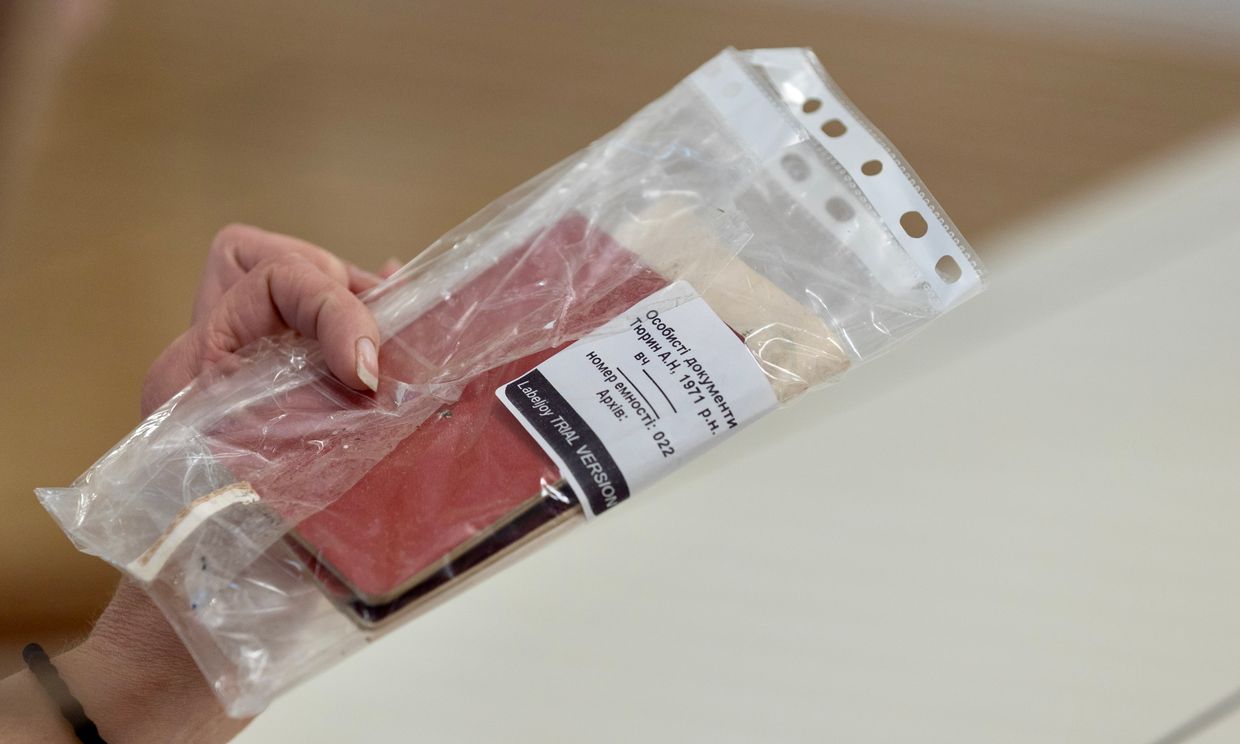
According to Zelensky, Ukrainian authorities have confirmed that at least 20 of the bodies Russia returned as Ukrainian were actually Russian soldiers.
"Sometimes these bodies even have Russian passports," Zelensky said. He also cited the case of a deceased Israeli citizen fighting on Russia's side, whom Moscow had passed off as a Ukrainian soldier.
"Putin is afraid to admit how many people have died. Because if the moment comes when he needs to mobilize, his society will be afraid," he said.
Zelensky's remarks follow the June 2 prisoner and body exchange agreement in Istanbul, the most extensive of the full-scale war. Under that deal, Ukraine recovered 6,057 bodies of its fallen soldiers. Russia, according to Kremlin aide Vladimir Medinsky, took back only 78.
Explaining the difference between the two numbers, Zelensky said that the bodies of the vast majority of Russian soldiers currently killed on the battlefield remain in Russian hands.
"They were advancing, and their dead remained in the territory where they were," he said.
According to the president, exchanges of bodies and even severely wounded soldiers have taken place on the battlefield, but such exchanges are typically not publicized.
President Volodymyr Zelensky presents evidence to the media in Kyiv on June 21, 2025, showing that Russia handed over the bodies of its own soldiers during exchanges. (Presidential Office)
President Volodymyr Zelensky presents evidence to the media in Kyiv on June 21, 2025, showing that Russia handed over the bodies of its own soldiers during exchanges. (Presidential Office)
Interior Minister Ihor Klymenko earlier confirmed a case in which the remains of Alexander Viktorovich Bugaev, a Russian soldier from the 39th Separate Guards Motorized Rifle Brigade, were returned to Ukraine disguised as a Ukrainian casualty.
"This shows how little human life means to Russia. Or maybe it's just a way to avoid paying compensation to the families. But they will have to pay anyway: we are returning these bodies," Klymenko said on June 19.
Ukraine's General Staff said on June 21 that Russian forces have sustained over 1,010,000 casualties — killed and wounded — since launching the full-scale invasion in February 2022.
Independent Russian outlet Mediazona, along with the BBC Russian Service, has verified the identities of 111,387 Russian soldiers killed, emphasizing that the actual number is likely much higher.
Russia has continued to deny the scale of its losses, often inflating Ukrainian casualties and spreading false narratives. Zelensky warned that this is part of a broader propaganda effort to "break the reality in which we live," in which Russian forces are suffering far greater losses.
The June 2 negotiations in Istanbul led to the most extensive prisoner and body exchange agreement of the full-scale war, although no ceasefire was achieved.
On June 7, Russia accused Kyiv of rejecting a proposed body return, releasing footage that allegedly showed Ukrainian corpses stored in refrigeration units. Ukraine dismissed these claims, saying that the footage was shot on Russian territory, not at a designated handover site.
Kyiv has consistently called for an "all-for-all" exchange of prisoners of war, but Moscow has so far refused to agree to a comprehensive swap.
President Volodymyr Zelensky is set to attend a NATO summit in The Hague next week, the European Council confirmed on June 20.European Commission President Ursula von der Leyen and NATO Secretary-General Mark Rutte are set to meet Zelensky on June 24.Zelensky was reportedly reconsidering attending the NATO summit, as questions remain over U.S. President Donald Trump's participation, the Guardian reported on June 17, citing unnamed Ukrainian officials.A schedule released by the European Council o
President Volodymyr Zelensky is set to attend a NATO summit in The Hague next week, the European Council confirmed on June 20.
European Commission President Ursula von der Leyen and NATO Secretary-General Mark Rutte are set to meet Zelensky on June 24.
Zelensky was reportedly reconsidering attending the NATO summit, as questions remain over U.S. President Donald Trump's participation, the Guardian reported on June 17, citing unnamed Ukrainian officials.
A schedule released by the European Council on June 20 confirms Zelensky's planned participation at the event.
A Ukrainian official told the Guardian that Kyiv is in a "permanent hazard" of becoming a victim of "Trump's short attention span," adding that Russia has exploited this uncertainty with fresh aerial attacks.
There were "all sorts of promises for this summit," including U.S. arms, the source said.
Zelensky was scheduled to meet U.S. President Donald Trump at the Group of Seven (G7) Summit, held June 15-17.
Trump left the multilateral event early due to the renewed conflict between Israel and Iran.
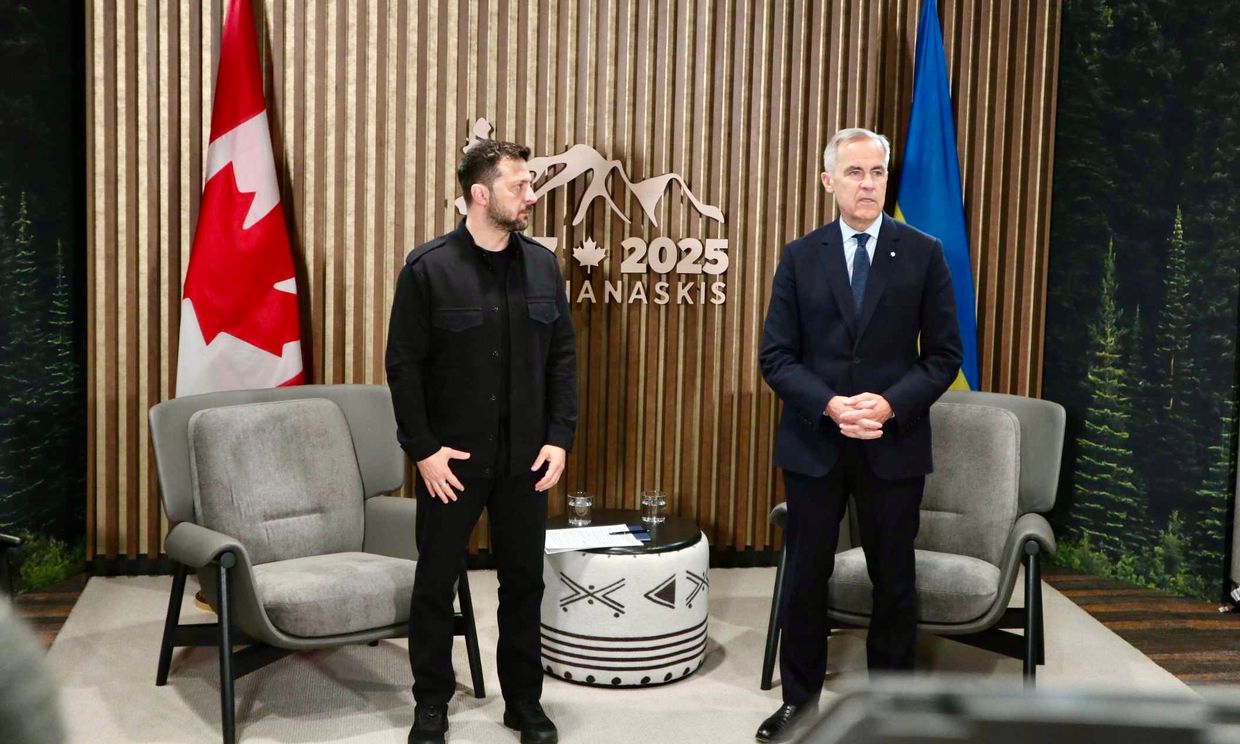
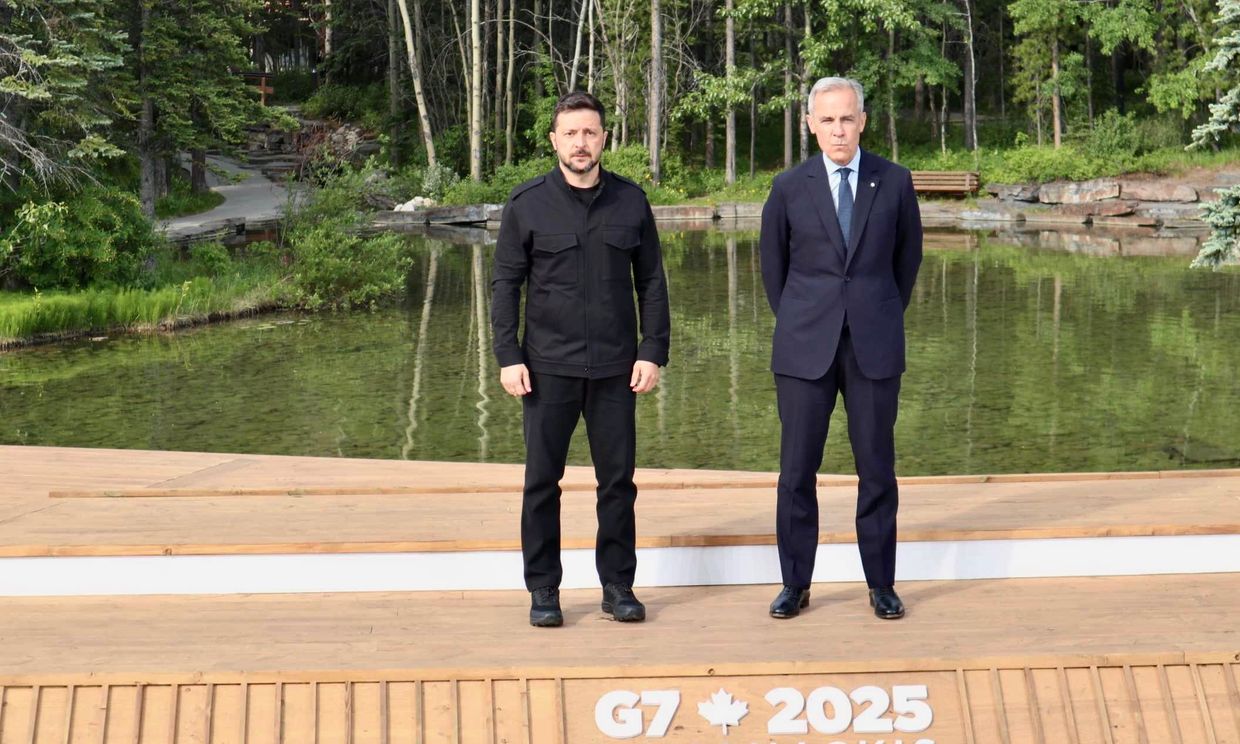
Zelensky met with various leaders, including French President Emmanuel Macron and Canadian Prime Minister Mark Carney.
Zelensky left the summit early, citing Russia's mass drone and missile attack on Kyiv.
On June 17, a Russian drone and missile attack on Kyiv killed 30 people and injured another 172. The nearly nine-hour-long strike saw Moscow's forces launch large numbers of drones and missiles at Ukraine's capital.
Foreign Minister Andrii Sybiha condemned the attack, describing it as a "massive and brutal strike" timed deliberately to coincide with the G7 summit.
President Volodymyr Zelensky on June 20 condemned Russia's attempts to advance in Sumy Oblast, as Moscow intensifies its rhetoric of maximalist demands toward Ukraine."The Russians had various plans and intentions there — absolutely insane, as usual. We are holding them back and eliminating these killers, defending our Sumy Oblast," Zelensky said in his evening address.Russian President Vladimir Putin, earlier on June 20, claimed that "all of Ukraine" belonged to Russia, citing the Kremlin's pro
President Volodymyr Zelensky on June 20 condemned Russia's attempts to advance in Sumy Oblast, as Moscow intensifies its rhetoric of maximalist demands toward Ukraine.
"The Russians had various plans and intentions there — absolutely insane, as usual. We are holding them back and eliminating these killers, defending our Sumy Oblast," Zelensky said in his evening address.
Russian President Vladimir Putin, earlier on June 20, claimed that "all of Ukraine" belonged to Russia, citing the Kremlin's propaganda talking points. Moscow regularly claims that Russians and Ukrainians are "one people."
Putin singled out Sumy, saying that "the city of Sumy is next, the regional center. We don't have a task to take Sumy, but I don't rule it out."
Ukraine's northeastern Sumy Oblast borders Russia and regularly faces Russian shelling as well as drone and missile attacks.
"There was a meeting of the Staff — a very detailed report on the frontline. Particular attention was paid to the Sumy Oblast, to operations in the border areas. I am grateful to our units for their resilience," Zelensky said.
Ukraine continues efforts to work with its allies to increase investment in defense production, he said.
"The volume of support this year is the largest since the start of the full-scale war," Zelensky noted.
Ukraine and Russia held direct peace talks in Turkey on May 16 and June 2. The efforts were largely inconclusive, with Moscow reiterating maximalist demands towards Ukraine.
The two sides were able to agree on large-scale prisoner exchanges. Despite the efforts, Russia has intensified drone and missile attacks on Ukraine.
On June 17, a Russian drone and missile attack on Kyiv killed 30 people and injured another 172. The nearly nine-hour-long strike saw Moscow's forces launch large numbers of drones and missiles at Ukraine's capital.
Ukraine should continue to inflict "entirely justified" losses on Russia in the face of escalating aggression, President Volodymyr Zelensky said in his evening address on June 19. His remarks come two days after Russia launched one of its deadliest assaults on Kyiv, attacking the capital with ballistic missiles and hundreds of drones on June 17 in a nine-hour attack that killed 30 people and injured 172 others. "There was no military sense in this strike; it added absolutely nothing to Russia in
Ukraine should continue to inflict "entirely justified" losses on Russia in the face of escalating aggression, President Volodymyr Zelensky said in his evening address on June 19.
His remarks come two days after Russia launched one of its deadliest assaults on Kyiv, attacking the capital with ballistic missiles and hundreds of drones on June 17 in a nine-hour attack that killed 30 people and injured 172 others.
"There was no military sense in this strike; it added absolutely nothing to Russia in military terms," Zelensky said, refuting Moscow's claims that the attack targeted Ukraine's "military-industrial complex."
The president described Russia's attack — which struck residential buildings, student dorms, and a kindergarten — as "deliberate terror."
Zelensky urged Western partners to mount economic pressure on Russia and said he was working on new proposals for coordinated sanctions. He also said he held meetings with the Security Service of Ukraine (SBU) to discuss deep strikes in Russia.
"Russia must continue to suffer entirely justified losses due to its aggression," he said.
While Russia has intensified its campaign of aerial terror against Ukrainian cities, Kyiv has stepped up its efforts to reduce Russia's military capabilities, launching successful strikes on airfields, weapons factories, and oil refineries.
The most audacious of these attacks was the large-scale Operation Spiderweb, a coordinated drone strike on four key Russian military airfields on June 1. According to the SBU, the operation damaged 41 Russian warplanes, including heavy bombers and rare A-50 spy planes.
Since March, Ukraine has repeatedly offered to declare an unconditional ceasefire if Russia agrees to the same terms. The Kremlin has resisted at every turn. U.S. President Donald Trump's attempts to broker a peace deal have led to continued escalation and more civilian deaths.
With Western support eroding and no ceasefire in sight, Ukraine continues grasping for leverage against Moscow — including by developing its own long-range weapons. Kyiv has developed several weapons capable of deep strikes in Russian territory, such as the Palianytsiaand Peklo(Hell) missile-drone hybrids.
Ukraine has proven its ability to strike targets far from the border. A June 15 attack reportedly hit a drone factory in Russia's Tatarstan, around 1,000 kilometers (620 miles) from Ukraine.
Russia also continues to suffer staggering troop losses on the front lines. Earlier on June 19, Russian Ambassador to the U.K. Andrey Kelin accidentally admitted that Moscow is rapidly losing personnel in Ukraine during an interview with CNN.
According to figures from Kyiv, Russia has suffered more than 1 million dead, wounded, and missing soldiers since the start of its full-scale invasion.
Officials in Washington are frustrated with the diplomatic efforts of Andriy Yermak, head of Ukraine's Presidential Office, and believe he may be undermining Ukraine's efforts to win favor with U.S. President Donald Trump, Politico reported on June 19. Yermak, President Volodymyr Zelensky's close friend and chief adviser, has represented Ukraine's interests in Washington since Russia's full-scale invasion in 2022. According to 14 people who spoke to Politico, including U.S. and Ukrainian officia
Officials in Washington are frustrated with the diplomatic efforts of Andriy Yermak, head of Ukraine's Presidential Office, and believe he may be undermining Ukraine's efforts to win favor with U.S. President Donald Trump, Politico reported on June 19.
Yermak, President Volodymyr Zelensky's close friend and chief adviser, has represented Ukraine's interests in Washington since Russia's full-scale invasion in 2022.
According to 14 people who spoke to Politico, including U.S. and Ukrainian officials, many people in Washington find Yermak abrasive and uninformed, and fear that he is inaccurately conveying U.S. positions to Zelensky. While the Biden administration was willing to cooperate with Yermak, the Trump team is less accommodating — and more likely to rescind support for Ukraine.
"All the people (in the U.S.) who want to withdraw and abandon Ukraine are thrilled to have Yermak around," one person told Politico.
One person familiar with the situation described Yermak as a "bipartisan irritator" who also frustrated officials under U.S. President Joe Biden. The former administration, however, did not find Yermak's personality a valid reason to withdraw military and humanitarian aid from a key ally defending itself from an all-out war.
Trump's stance on Ukraine has been less supportive from the beginning. Since his inauguration in January, he has refused to approve new military aid packages for Kyiv or impose additional sanctions against Moscow. He has pursued warmer ties with Russia and criticized Zelensky more frequently and harshly than Russian President Vladimir Putin.
Any hopes Ukraine has of winning over Trump may be jeopardized by the administrations tense relationship with Yermak, Politico's sources suggested.
During Yermak's most recent visit to Washington, a last-minute trip in early June, he reportedly struggled to land meetings with Trump officials. One person familiar with the visit described Yermak as an "existential liability for Ukraine."
Sources described Yermak as overly demanding and ignorant of U.S. politics and processes. One person accused Yermak of acting as if Ukraine was the "center of the world" and said his attitude "has already affected the relationship (with Trump)."
In a statement to Politico, Yermak said he was doing everything in his power to protect and support Ukraine.
"If that means being considered 'challenging' by others — so be it," he said.
"I will wait many more hours outside any door if that helps my country and my president's mission. I have no ambition to fully grasp how American politics works — I come to speak about the country I know best: Ukraine."
President Volodymyr Zelensky on June 19 appointed Brigadier General Hennadii Shapovalov as the new commander of Ukraine's Ground Forces, following the resignation of Mykhailo Drapatyi earlier this month. Drapatyi stepped down on June 1 after a Russian missile strike killed at least 12 Ukrainian soldiers at a training ground in Dnipropetrovsk Oblast. He described the casualties as young recruits who "should have learned, lived, and fought — not died." Zelensky accepted Drapatyi's resignation and
President Volodymyr Zelensky on June 19 appointed Brigadier General Hennadii Shapovalov as the new commander of Ukraine's Ground Forces, following the resignation of Mykhailo Drapatyi earlier this month.
Drapatyi stepped down on June 1 after a Russian missile strike killed at least 12 Ukrainian soldiers at a training ground in Dnipropetrovsk Oblast. He described the casualties as young recruits who "should have learned, lived, and fought — not died."
Zelensky accepted Drapatyi's resignation and appointed him Commander of the Joint Forces on June 3. An investigation into the incident is ongoing, with the Ground Forces promising accountability if misconduct or negligence is confirmed.
Shapovalov, born in 1978 in Kirovohrad Oblast, is a career officer who graduated from the Military Institute of Tank Troops in Kharkiv and later studied at the National Defense University of Ukraine. He also received training at the U.S. Army War College.
Shapovalov previously led Ukraine's South Operational Command in 2024 and was appointed in February 2025 as Ukraine's representative to the NATO Security Assistance and Training for Ukraine (NSATU) mission in Germany.
Drapatyi, in his final remarks as Ground Forces chief on June 11, said he had overhauled more than half of the command's senior leadership, launched a revamp of recruitment centers, and pushed through reforms focused on decentralization, accountability, and modernization.
Zelensky said Drapatyi's new role would allow him to focus "exclusively on combat issues" as Ukraine faces intensifying Russian attacks across several fronts.
Russia wants to end the war in Ukraine "as soon as possible," preferably through peaceful means, and is ready to continue negotiations — provided that Kyiv and its Western allies are willing to engage, President Vladimir Putin said.Speaking during a roundtable with top editors of major international news agencies late on June 18, Putin added that he is ready to meet with President Volodymyr Zelensky and "Russia does not care who represents Ukraine in negotiations, but insists that any final agre
Russia wants to end the war in Ukraine "as soon as possible," preferably through peaceful means, and is ready to continue negotiations — provided that Kyiv and its Western allies are willing to engage, President Vladimir Putin said.
Speaking during a roundtable with top editors of major international news agencies late on June 18, Putin added that he is ready to meet with President Volodymyr Zelensky and "Russia does not care who represents Ukraine in negotiations, but insists that any final agreement must bear the signature of legitimate authorities."
The Kremlin has long sought to portray Zelensky as "illegitimate" in an attempt to discredit Kyiv. Kremlin spokesperson Dmitry Peskov said on Feb. 18 that Putin, who has ruled Russia for over 20 years, is ready for talks with Zelensky, but "legal aspects related to his legitimacy" must be considered.
Ukraine's allies had generally ignored this propaganda narrative until U.S. President Donald Trump appeared to echo the Kremlin's lines claiming that Zelensky was a "modestly successful comedian" turned "dictator" who "refused to have elections."
Ukraine has not held elections during Russia’s full-scale invasion because they are legally prohibited under martial law, which was declared on Feb. 24, 2022, just hours after the war began. Ukrainian law also mandates that elections must be safe, equal, and uninterrupted—conditions that are impossible to meet amid ongoing Russian attacks on civilians and critical infrastructure.
Putin also told U.S. President Donald Trump on June 14 that Moscow is ready to hold a new round of peace talks with Kyiv after June 22, following the completion of prisoner and fallen soldier exchanges.
Asked if he would be willing to speak with Germany’s Chancellor Friedrich Merz, Putin said that “if the Federal Chancellor wants to call and talk, I have already said this many times — we do not refuse any contacts."
"And we are always open to this… They stopped, let them resume. We are open to them,” Putin said, adding that he, however, questions Germany’s role as a mediator in the Russia-Ukraine war: "I do doubt if Germany can contribute more than the United States as a mediator in our negotiations with Ukraine. A mediator must be neutral. And when we see German tanks and Leopard battle tanks on the battlefield… and now the Federal Republic is considering supplying Taurus missiles for attacks on Russian territory… — here, of course, big questions arise."
President Volodymyr Zelensky may reconsider attending the NATO summit in The Hague, as questions remain over U.S. President Donald Trump's participation, the Guardian reported on June 17, citing unnamed Ukrainian officials.According to the Guardian, some in Kyiv are unsure if Zelensky's presence at the June 24-25 summit would be worthwhile without a confirmed meeting with Trump, whom they had hoped to engage directly in efforts to pressure Russian President Vladimir Putin into accepting a ceasef
President Volodymyr Zelensky may reconsider attending the NATO summit in The Hague, as questions remain over U.S. President Donald Trump's participation, the Guardian reported on June 17, citing unnamed Ukrainian officials.
According to the Guardian, some in Kyiv are unsure if Zelensky's presence at the June 24-25 summit would be worthwhile without a confirmed meeting with Trump, whom they had hoped to engage directly in efforts to pressure Russian President Vladimir Putin into accepting a ceasefire.
Earlier, Zelensky had traveled to the G7 summit in Canada, hoping to meet one-on-one with Trump and push for stronger sanctions against Russia. Trump left the summit early, citing the crisis in the Middle East, and no bilateral meeting or joint G7 statement took place.
One official told the Guardian that Ukraine is in a "permanent hazard" of becoming a victim of "Trump's short attention span," adding that Russia has exploited this uncertainty by fresh aerial attacks. The source added that there had been "all sorts of promises for this summit," including U.S. arms.
The Russian attack on Ukraine that occurred during the G7 summit killed at least 24 civilians and injured 134 in Kyiv. Trump has not responded to the attack as of the day after.
German Chancellor Friedrich Merz has reportedly said Trump had previously promised to attend the NATO gathering, though no official confirmation has been issued from Washington.
Despite the setback, Zelensky said the G7 meeting had concrete results for Ukraine. In a Telegram post on June 17, he thanked partners for increased military aid, new sanctions on Russia, and the decision to allocate frozen Russian assets for Ukraine’s reconstruction.
"It is important that our partners are ready not only to support our defense now, but also to rebuild Ukraine together after the war ends," he said.
Canadian Prime Minister Mark Carney announced a support package that includes 2 billion Canadian dollars ($1.5 billion) in military assistance and another $1.6 billion in reconstruction loans. The aid includes drones, armored vehicles, ammunition, and sanctions to disrupt Russia's energy revenues.
U.K. Prime Minister Keir Starmer also unveiled new sanctions targeting Russia's military-industrial complex and 20 oil tankers from Russia's "shadow fleet."
Zelensky later told G7 leaders that "diplomacy is now in a state of crisis" and called on allies to press Trump to "use his real influence" to help end the war.
Ukraine has been invited to the NATO summit, and Zelensky previously called the invitation "important" during a June 2 press briefing. At the time, he did not confirm whether he would attend in person.
President Volodymyr Zelensky said on June 17 that the G7 summit had produced concrete results for Ukraine, including increased military support, new tranches of aid using frozen Russian assets, and additional sanctions targeting the sources of Russia’s war effort."It is important that our partners are ready not only to support our defense now, but also to rebuild Ukraine together after the war ends. I thank everyone who helps us fight Russian aggression and who, together with Ukraine, is buildin
President Volodymyr Zelensky said on June 17 that the G7 summit had produced concrete results for Ukraine, including increased military support, new tranches of aid using frozen Russian assets, and additional sanctions targeting the sources of Russia’s war effort.
"It is important that our partners are ready not only to support our defense now, but also to rebuild Ukraine together after the war ends. I thank everyone who helps us fight Russian aggression and who, together with Ukraine, is building a strong security architecture for the future," he added in a Telegram post.
Canadian Prime Minister Mark Carney announced a new support package for Ukraine earlier in the day, including two billion Canadian dollars ($1.5 billion USD) in military aid and over two billion Canadian dollars ($1.6 billion USD) loan for reconstruction. The package also includes funding for drones, ammunition, armoured vehicles, and new sanctions targeting Russia’s energy revenues and sanctions evasion.
U.K. Prime Minister Keir Starmer also announced a set of measures aimed at increasing pressure on Russian President Vladimir Putin, who continues to reject calls for an unconditional ceasefire in Ukraine. "The 30 targets strike across Russia’s financial, military and energy sectors in response to Putin’s continued aggression," reads the U.K. government statement. The new sanctions also "crack down further on Putin’s shadow fleet," targeting 20 of his oil tankers.
Starmer added that he "strongly" supports tightening the price cap on Russian crude oil to further cut into the Kremlin’s energy revenues.
The G7 nations, however, struggled to present a unified stance on the war in Ukraine after U.S. President Donald Trump voiced support for Russian President Vladimir Putin and called for Russia to be readmitted to the group. Russia was expelled from what was then the G8 after its 2014 invasion of Crimea.
Trump left the summit a day early to address the Israel-Iran conflict from Washington, departing without meeting Zelensky, who had hoped for a one-on-one conversation to press for stronger sanctions against Russia.
Zelensky had already cut his own visit to Canada short on June 17 and was preparing to return to Kyiv while G7 talks were still underway. He had been scheduled to travel to Calgary for events and a press conference with the Ukrainian diaspora, a source told a Kyiv Independent journalist on the ground, but those plans were canceled following a deadly Russian missile strike on Kyiv and changes to the summit agenda.
Zelensky later said he told G7 leaders that "diplomacy is now in a state of crisis" and urged allies to continue pressing Trump "to use his real influence" to help end the war.
Editor's note: This is a developing story and is being updated. President Volodymyr Zelensky is cutting his visit to Canada short and will return to Kyiv on June 17, while G7 talks are still ongoing, a source told a Kyiv Independent journalist on the ground.He had been scheduled to travel to Calgary for additional events and a press conference, but those plans have been cancelled. The change comes in the wake of a deadly Russian missile strike on Kyiv overnight, as well as changes to the G7 agen
Editor's note: This is a developing story and is being updated.
President Volodymyr Zelensky is cutting his visit to Canada short and will return to Kyiv on June 17, while G7 talks are still ongoing, a source told a Kyiv Independent journalist on the ground.
He had been scheduled to travel to Calgary for additional events and a press conference, but those plans have been cancelled. The change comes in the wake of a deadly Russian missile strike on Kyiv overnight, as well as changes to the G7 agenda.
Zelensky had travelled to the summit hoping to meet one-on-one with U.S. President Donald Trump and to push for stronger sanctions against Russia. However, Trump left the summit early, citing the crisis in the Middle East, and no bilateral meeting or unified G7 statement took place.
Zelensky said he had told the G7 leaders that "diplomacy is now in a state of crisis" and noted the allies need to continue calling on Trump "to use his real influence" to force an end to the war."
"Even if the American President is not putting enough pressure on Russia right now, the truth is that America still has the broadest global interests and the largest number of allies. All of them will need strong protection," he said in a Telegram post.
Meanwhile, Canada dropped plans for the G7 to issue a joint statement on the war in Ukraine after the United States pushed to weaken the language, according to a Canadian official speaking on the sidelines of the summit. The official said Canada felt a watered-down version would not be fair to Ukraine.
"Canada and the rest of the G7 should strengthen their support for Ukraine, particularly by furnishing it with additional military assistance that would include, among other things, increased ammunition," Alexander Lanoszka, an associate professor of international relations in the department of political science at the University of Waterloo, told the Kyiv Independent.
"One hopes that the specter of U.S. disengagement would catalyze increases in assistance. Unfortunately, despite whatever they say, G7 leaders could very well lack the confidence for whatever reason to do much absent strong U.S. leadership," Lanoszka added.
Canada did announce a sweeping new support package for Ukraine on June 17, during a bilateral meeting with Zelensky on the final day of the G7 summit in Kananaskis. The measures include two billion Canadian dollars ($1.5 billion USD) in military funding and new sanctions aimed at restricting Russia’s energy revenues and evasion tactics.
U.K. Prime Minister Keir Starmer also announced a set of measures aimed at increasing pressure on Russian President Vladimir Putin, who continues to reject calls for an unconditional ceasefire in Ukraine. "The 30 targets strike across Russia’s financial, military and energy sectors in response to Putin’s continued aggression," reads the U.K. government statement. The new sanctions also "crack down further on Putin’s shadow fleet," targeting 20 of his oil tankers.
Starmer added that he "strongly" supports tightening the price cap on Russian crude oil to further cut into the Kremlin’s energy revenues.
Zelensky said late on June 17 that the G7 summit still produced concrete results for Ukraine, including increased military support, new tranches of aid using frozen Russian assets, and additional sanctions targeting the sources of Russia’s war effort.
President Volodymyr Zelensky arrived at the G7 Leaders' Summit in Canada on June 17 ahead of the final day of the G7 Leaders' summit, according to a Kyiv Independent journalist on the ground.Zelensky was greeted by Canadian Prime Minister Mark Carney in Kananaskis, Alberta, where the summit is being held. "We need more from our allies... We are ready for peace negotiations... But for this, we need pressure," the Ukrainian president said. The Ukrainian president was expected to meet U.S. Presiden
President Volodymyr Zelensky arrived at the G7 Leaders' Summit in Canada on June 17 ahead of the final day of the G7 Leaders' summit, according to a Kyiv Independent journalist on the ground.
Zelensky was greeted by Canadian Prime Minister Mark Carney in Kananaskis, Alberta, where the summit is being held.
"We need more from our allies... We are ready for peace negotiations... But for this, we need pressure," the Ukrainian president said.
The Ukrainian president was expected to meet U.S. President Donald Trump at the summit. However, it is not clear if the meeting will take place because Trump left the summit early due to escalating tensions in the Middle East.
White House spokesperson Caroline Leavitt confirmed Trump's early departure from the summit, citing the ongoing escalation between Israel and Iran.
The Israeli military launched a large-scale attack on Iran's nuclear and military infrastructure on June 13, which was followed by retaliatory ballistic missile strikes from Tehran. Israel has since struck key defense targets in Tehran, including the headquarters of Iran's Defense Ministry.
Zelensky was to hold his third in-person meeting with Trump, which may signal the future of Trump and Zelensky's relationship, as well as offer insight into the United States' commitment to supporting Ukraine.
In February, Zelensky and Trump held their first meeting, which escalated into a heated argument, with Trump and Vice President JD Vance lambasting the Ukrainian leader over what they described as "a lack of gratitude for U.S. support."
The second meeting between Trump and Zelensky in the Vatican in April led to the U.S. president reiterating calls for a ceasefire in Ukraine and even threatening to impose sanctions on Russia.
In the month since their last in-person meeting, tensions between Trump and Zelensky have risen again. Despite issuing several threats, Trump has not followed through on implementing additional economic pressure on Moscow.
Canadian Prime Minister Mark Carney welcomes President Volodymyr Zelensky during the Group of Seven (G7) Summit in Kananaskis, Alberta, Canada on June 17, 2025. (Dmytro Basmat / The Kyiv Independent)
Canadian Prime Minister Mark Carney welcomes President Volodymyr Zelensky during the Group of Seven (G7) Summit in Kananaskis, Alberta, Canada on June 17, 2025. (Dmytro Basmat / The Kyiv Independent)
Ahead of the summit, European leaders urged G7 nations to impose harsher sanctions on Moscow in order to secure a ceasefire in the war against Ukraine.
"To achieve peace through strength, we must put more pressure on Russia to secure a real ceasefire, to bring Russia to the negotiating table, and to end this war. Sanctions are critical to that end," European Commission President Ursula von der Leyen said on June 15 at a press briefing attended by a Kyiv Independent journalist.
Zelensky is still expected to attend the scheduled meetings with other G7 leaders.
Zelensky said in a closed-door meeting attended by the Kyiv Independent on June 13 that his priority is to speak with Trump about sanctions against Russia, peace talks, weapons purchases, and U.S.-Ukraine economic cooperation.
"There are steps forward we can take — but we need the political will of the U.S. president, if he wants," Zelensky said on June 13.
Amid increased anxiety around Trump's commitment to ending the war, U.S. Defense Secretary Pete Hegseth recently announced that the Pentagon would reduce funding allocated for military assistance to Ukraine in its 2026 defense budget.
Canada, which holds the G7 presidency in 2025, invited Zelensky to participate in summit, marking the Ukrainian president’s fourth G7 meeting since the outbreak of the full-scale invasion in 2022.
Editor's note: This is a breaking story and is being updated.U.S. President Donald Trump departed the G7 Leaders' Summit late on June 16, ahead of an anticipated high-stakes meeting with President Volodymyr Zelensky on June 17. White House Press Secretary Karoline Leavitt said that the departure comes as Trump is set to attend to "important matters.""Because of what’s going on in the Middle East, President Trump will be leaving tonight after dinner with Heads of State," Leavitt wrote on X."I hav
Editor's note: This is a breaking story and is being updated.
U.S. President Donald Trump departed the G7 Leaders' Summit late on June 16, ahead of an anticipated high-stakes meeting with President Volodymyr Zelensky on June 17.
White House Press Secretary Karoline Leavitt said that the departure comes as Trump is set to attend to "important matters."
"Because of what’s going on in the Middle East, President Trump will be leaving tonight after dinner with Heads of State," Leavitt wrote on X.
"I have to be back as soon as I can... because of what's going on in the Middle East" Trump told reporters.
"I have to be back early for obvious reasons," Trump said, without further elaborating.
In a post on Truth Social, Trump warned ahead of the departure that "Everyone should immediately evacuate Tehran!"
It was not immediately clear as to whether Trump will return for the final day of the summit on June 17.
Zelensky is expected to participate in previously planned G7 events as scheduled.
Zelensky was expected to meet with Trump on the sidelines of the G7 summit on June 17, marking their third in-person meeting since the American president took office in January. The proposed meeting was set to serve as an inflection point for Zelensky as pressure mounts on Trump from Western allies.
"Both teams are working to ensure we meet," Zelensky said on June 14 during a closed-door briefing attended by the Kyiv Independent.
Canada's Prime Minister Mark Carney is expected to announce additional support for Ukraine during the G7 summit, CBC News reports on June 16, citing government sources.Canada, which holds the G7 presidency in 2025, invited President Volodymyr Zelensky to participate in what will be his fourth — and arguably most fragile — G7 Leaders' Summit since the outbreak of the full-scale invasion in 2022. Carney is also expected to hold a one-on-one meeting with the Ukrainian president.As part of Carney’s
Canada's Prime Minister Mark Carney is expected to announce additional support for Ukraine during the G7 summit, CBC News reports on June 16, citing government sources.
Canada, which holds the G7 presidency in 2025, invited President Volodymyr Zelensky to participate in what will be his fourth — and arguably most fragile — G7 Leaders' Summit since the outbreak of the full-scale invasion in 2022. Carney is also expected to hold a one-on-one meeting with the Ukrainian president.
As part of Carney’s pledge to boost defense spending this year, Ottawa has allocated two billion Canadian dollars ($1.46 billion USD) for military aid to Ukraine and the expansion of broader defense partnerships. According to one source, the government is set to disclose on June 20 how much of that funding will be directed specifically to Ukraine and what it will support.
Canada has been a strong ally of Ukraine, providing 19.5 billion Canadian dollars ($13.5 billion) in assistance, including 4.5 billion Canadian dollars ($3.1 billion) in military aid.
Following their bilateral talks, G7 leaders will join outreach countries for discussions on Ukraine’s ongoing fight against Russia.
Meanwhile, European Commission President Ursula von der Leyen and European Council President Antonio Costa urged G7 nations to ramp up pressure on Moscow through tougher sanctions, arguing that it is key to securing a ceasefire in Russia’s war against Ukraine.
"To achieve peaceful strength we must put more pressure on Russia to secure a real ceasefire, to bring Russia to the negotiating table, and to end this war. Sanctions are critical to that end," von der Leyen said at a press briefing on June 15, attended by a Kyiv Independent journalist.
Von der Leyen emphasized that economic sanctions have been effective since the start of Russia’s full-scale invasion. She pointed out that joint G7 and European Union measures have reduced Russian oil and gas revenues by nearly 80% since February 2022.
"(T)he sanctions are working, and we will do more," she said.
More than a month after Ukraine signed a landmark agreement granting the United States a stake in its mineral reserves, Kyiv has approved initial steps to open one of its largest lithium deposits to private investors, the New York Times (NYT) reported, citing two government officials.On June 16, the Ukrainian government agreed to begin drafting recommendations for a bidding process to develop the Dobra lithium field in central Ukraine. According to the officials, who spoke to NYT on condition of
More than a month after Ukraine signed a landmark agreement granting the United States a stake in its mineral reserves, Kyiv has approved initial steps to open one of its largest lithium deposits to private investors, the New York Times (NYT) reported, citing two government officials.
On June 16, the Ukrainian government agreed to begin drafting recommendations for a bidding process to develop the Dobra lithium field in central Ukraine. According to the officials, who spoke to NYT on condition of anonymity, this would be the first project advanced under the U.S.-Ukraine minerals deal.
The Dobra lithium ore site is located in the Novoukrainskyi district of Kirovohrad Oblast, rougly 300 kilometers southeast of Kyiv.
The deal, signed by President Volodymyr Zelensky on May 12, is aimed at deepening economic ties, boosting Ukraine's reconstruction, and positioning the country as a supplier of strategic resources to the U.S.
Among the likely bidders for the Dobra field is a consortium including TechMet, an energy investment firm partly owned by the U.S. government, and billionaire Ronald S. Lauder, a close associate of the U.S. President Donald Trump. The group has long expressed interest in the Dobra site and encouraged Zelensky to open it to bids last year.
Under the broader agreement, half of the revenues from mineral extraction would go to a joint U.S.-Ukraine investment fund. While the Ukrainian government would reinvest its share into the domestic economy, the United States would claim a portion of the profits — a structure Mr. Trump has framed as partial repayment for U.S. assistance to Ukraine.
TechMet CEO Brian Menell said investors were pushing for production-sharing agreements, which offer long-term stability and tax incentives. Monday’s step toward opening the Dobra field is based on such an arrangement, according to the outlet.
President Volodymyr Zelensky and his Austrian counterpart Alexander Van der Bellen signed documents on bilateral cooperation between the two countries during Zelensky’s visit to Vienna on June 16.Speaking at a joint press conference, Zelensky said that the agreements cover key areas including agriculture, reconstruction, and return of abducted Ukrainian children from Russia.Zelensky's visit to Austria comes a day before his scheduled trip to Canada, where he will attend the Group of Seven (G7) s
President Volodymyr Zelensky and his Austrian counterpart Alexander Van der Bellen signed documents on bilateral cooperation between the two countries during Zelensky’s visit to Vienna on June 16.
Speaking at a joint press conference, Zelensky said that the agreements cover key areas including agriculture, reconstruction, and return of abducted Ukrainian children from Russia.
Zelensky's visit to Austria comes a day before his scheduled trip to Canada, where he will attend the Group of Seven (G7) summit on June 17.
While at the summit, he is expected to meet with U.S. President Donald Trump to discuss, among other topics, a potential purchase of a U.S. military aid package.
According to Zelensky, discussions at the G7 summit will include the fate of Moscow’s frozen assets and the imposition of further sanctions on Russian energy exports.
Before leaving Vienna, Zelensky is expected to meet with Austrian Chancellor Christian Stocker to push for stronger sanctions against Russia.
"We are counting on Austria’s support, both at the state and societal levels, on a sensitive issue for Ukraine: the presence of former Ukrainian officials and oligarchs who are evading justice by hiding in Europe, including Austria, and concealing stolen assets," Zelensky added.
In 2014, U.S. prosecutors charged Ukrainian oligarch Dmytro Firtash with racketeering and bribery, and he was briefly arrested in Austria before posting bail. The Ukrainian tycoon has so far avoided extradition from Austria's capital, where he resides.
Other wanted Ukrainian top officials in Austria include ex-chairman of Constitutional Court Oleksandr Tupytskyi. He was charged with unlawfully influencing and bribing a witness to induce false testimony, and giving false testimony himself.
Public trust in President Volodymyr Zelensky has dropped by 11 percentage points since May, according to a poll published by the Kyiv International Institute of Sociology (KIIS) on June 16.The survey found that 65% of Ukrainians currently trust the president, while 30% do not, yielding a trust balance of +35%, the lowest recorded since March. Zelensky's still rating remains above the February 2025 low of 57%. Sociologists can't pinpoint a specific cause for the short-term decline but highlight
Public trust in President Volodymyr Zelensky has dropped by 11 percentage points since May, according to a poll published by the Kyiv International Institute of Sociology (KIIS) on June 16.
The survey found that 65% of Ukrainians currently trust the president, while 30% do not, yielding a trust balance of +35%, the lowest recorded since March.
Zelensky's still rating remains above the February 2025 low of 57%.
Sociologists can't pinpoint a specific cause for the short-term decline but highlight factors such as increasing pressure for a ceasefire and the weakening of the surge of popular support seen earlier this year during tense relations with U.S. President Donald Trump.
Zelensky's approval had spiked briefly in early May to 74% following the signing of a minerals agreement with the U.S., seen as a diplomatic and economic win. That boost proved short-lived.
The poll shows a stark regional divide. Trust is highest in western Ukraine at 73%, while in the country's south and east, areas more frequently targeted by Russian strikes, only 61% express confidence in the president.
The data also shows a sharp contrast in attitudes toward territorial concessions. Among those who trust Zelensky, 55% are strongly opposed to any such compromise. Among those who distrust him, 46% are willing to cede territory, while only 43% are firmly against concessions.
The survey was conducted between May 15 and June 3, using a random sample of 1,011 adult residents across Ukraine, excluding occupied territories. Respondents were interviewed by phone.
President Volodymyr Zelensky proposed to the Verkhovna Rada the appointment of Ruslan Kravchenko as Ukraine's next Prosecutor General, Parliament Speaker Ruslan Stefanchuk said on June 16. Kravchenko, 35, currently heads the State Tax Service and is expected to be formally introduced to lawmakers during a faction meeting of Zelensky's Servant of the People party on June 17. A vote on his confirmation is expected the same day, according to lawmaker Yaroslav Zheleznyak.The nomination ends a six-mo
President Volodymyr Zelensky proposed to the Verkhovna Rada the appointment of Ruslan Kravchenko as Ukraine's next Prosecutor General, Parliament Speaker Ruslan Stefanchuk said on June 16.
Kravchenko, 35, currently heads the State Tax Service and is expected to be formally introduced to lawmakers during a faction meeting of Zelensky's Servant of the People party on June 17. A vote on his confirmation is expected the same day, according to lawmaker Yaroslav Zheleznyak.
The nomination ends a six-month vacancy at the top of Ukraine's prosecution service, following the resignation of Andriy Kostin in October 2024. First Deputy Prosecutor General Oleksiy Khomenko has served in an acting capacity since.
Kostin resigned amid a scandal involving prosecutors illegally obtaining disability status, which was discussed during a National Security and Defense Council meeting chaired by Zelensky.
Kostin later admitted to "many shameful facts of abuse" within the prosecutor's office.
Kravchenko, a native of Sievierodonetsk in Luhansk Oblast, has held several senior roles in law enforcement and regional government. He previously served as head of the Kyiv Regional Military Administration and led the Bucha District Prosecutor's Office.
He is best known for serving as the lead prosecutor in the treason case against exiled pro-Kremlin former President Viktor Yanukovych, who was convicted of aiding and abetting Russia's war against Ukraine.
If confirmed, Kravchenko will take over an office tasked with overseeing wartime prosecutions, including war crimes investigations and anti-corruption efforts linked to Ukraine's ongoing reforms.
U.S. President Donald Trump arrived in Canada for the Group of Seven (G7) Leaders' Summit late on June 15, according to a Kyiv Independent journalist on the ground. Trump's arrival comes ahead of his expected high-stakes meeting with President Volodymyr Zelensky on June 17 in Kananaskis, Alberta.Canada, which holds the G7 presidency in 2025, invited Zelensky to participate in the 3-day summit, which will mark Zelensky's fourth G7 Leaders' Summit since the outbreak of the full-scale invasion in 2
U.S. President Donald Trump arrived in Canada for the Group of Seven (G7) Leaders' Summit late on June 15, according to a Kyiv Independent journalist on the ground.
Trump's arrival comes ahead of his expected high-stakes meeting with President Volodymyr Zelensky on June 17 in Kananaskis, Alberta.
Canada, which holds the G7 presidency in 2025, invited Zelensky to participate in the 3-day summit, which will mark Zelensky's fourth G7 Leaders' Summit since the outbreak of the full-scale invasion in 2022.
After a disastrous first in-person meeting between the two leaders in the Oval Office in February — during which Trump and Vice President JD Vance lambasted Zelensky over what they described as "a lack of gratitude for U.S. support" — a second meeting in the Vaticanled to Trump reiterating calls for a Russian ceasefire and even threatening to impose sanctions on Russia.
In the month since their last in-person meeting, tensions between Trump and Zelensky have risen again. Despite issuing several threats, Trump has not followed through on implementing additional economic pressure on Moscow.
Zelensky said in a closed-door meeting attended by the Kyiv Independent on June 13 that his priority is to speak with Trump about sanctions against Russia, peace talks, weapons purchases, and U.S.-Ukraine economic cooperation.
The anticipated third meeting could signal the future of Trump and Zelensky's relationship, as well as offer insight into the United States' commitment to supporting Ukraine.
Amid increased anxiety around Trump's commitment to ending the war, U.S. Defense Secretary Pete Hegseth recently announced that the Pentagon will reduce funding allocated for military assistance to Ukraine in its 2026 defense budget.
On June 12, Zelensky decried Washington's lack of urgency around sanctions, suggesting that Russia is "lying to Trump." He said that Russian President Vladimir Putin's strategy is to maintain the illusion of dialogue without ever committing to a ceasefire.
"There are steps forward we can take — but we need the political will of the U.S. president, if he wants," Zelensky said on June 13.
President Volodymyr Zelensky on June 15 condemned Russia's latest mass attack against Ukraine, calling the strikes on energy infrastructure "a spit in the face of everything the international community is trying to do to stop this war."Earlier in the day, Russia targeted the city of Kremenchuk in Poltava Oblast with a combined missile and drone attack, damaging energy and agricultural facilities. The strike involved nearly 200 drones and missiles, including both cruise and ballistic missiles. Th
President Volodymyr Zelensky on June 15 condemned Russia's latest mass attack against Ukraine, calling the strikes on energy infrastructure "a spit in the face of everything the international community is trying to do to stop this war."
Earlier in the day, Russia targeted the city of Kremenchuk in Poltava Oblast with a combined missile and drone attack, damaging energy and agricultural facilities. The strike involved nearly 200 drones and missiles, including both cruise and ballistic missiles. The attack came shortly after a phone call between U.S. President Donald Trump and Russian President Vladimir Putin.
In his nightly address, Zelensky said the attack on Kremenchuk was "deliberately and treacherously planned to target our civilian infrastructure" and that Russia intended to damage energy facilities.
"This is Russia's spit in the face of everything the international community is trying to do to stop this war," Zelensky said in his nightly address.
"It happened right after Putin's conversation with Trump. After the Americans asked us not to strike Russian energy facilities. At the same time as Putin tries to portray himself as a mediator for the Middle East ... The level of cynicism is staggering."
Following his call with Putin, Trump claimed he would be "open" to the Russian president acting as a mediator in the rapidly escalating conflict between Israel and Iran. Zelensky rejected the idea of Putin — who has waged war against Ukraine for over 10 years and has taken no steps towards a lasting ceasefire — playing the role of peacemaker.
Putin "is war itself," Zelensky said, urging the international community not to fall for "Russian manipulation and lies."
Zelensky also warned that Russia may be planning additional attacks on Ukraine's energy sector, including nuclear power infrastructure. According to the president, Ukrainian intelligence agencies have obtained evidence of Russia's threat and shared the information with the International Atomic Energy Agency (IAEA) and the Trump administration.
"Russia is planning further attacks on our energy sector — attacks that may be less visible to the world right now because all eyes are on the situation in the Middle East," he said.
Throughout the full-scale war, Russia has attempted to disrupt Ukraine's power grid through targeted attacks on energy infrastructure. After rejecting a U.S. proposal for a 30-day unconditional ceasefire in March, Moscow instead agreed to a month-long ceasefire on energy attacks.
Russia subsequently violated the partial ceasefire, which ended in in April. The Kremlin continues to refuse calls for an unconditional truce.
President Volodymyr Zelensky's office has confirmed plans for a high-stakes meeting with U.S. President Donald Trump at the upcoming G7 summit on June 17, according to the Kyiv Independent journalist who attended a closed-door briefing with Zelensky on June 13. "Both teams are working to ensure we meet," Zelensky said. The meeting would mark the third in-person encounter between the two leaders during Trump's second term in the White House. Their most recent meeting took place on April 26 at St
President Volodymyr Zelensky's office has confirmed plans for a high-stakes meeting with U.S. President Donald Trump at the upcoming G7 summit on June 17, according to the Kyiv Independent journalist who attended a closed-door briefing with Zelensky on June 13.
"Both teams are working to ensure we meet," Zelensky said.
The meeting would mark the third in-person encounter between the two leaders during Trump's second term in the White House. Their most recent meeting took place on April 26 at St. Peter's Basilica in the Vatican, where they spoke privately on the sidelines of Pope Francis' funeral. Both sides described the meeting as productive and constructive, though details remained sparse.
Earlier in February, Zelensky met Trump and Vice President JD Vance in the White House when the infamous tense Oval Office exchange erupted, with Trump criticizing Kyiv's perceived lack of gratitude for U.S. support
Zelensky said his priority is to discuss with Trump sanctions against Russia, peace talks, weapons purchase, and U.S.-Ukraine economic cooperation.
"The United States communicates with the EU on sanctions at the level of senators and congressmen. But I want to raise this issue personally with President Trump," Zelensky said.
"There are steps forward we can take — but we need the political will of the U.S. president, if he wants."
He added that Ukraine has long prepared a "strong" weapons package to purchase from Washington. "Only at the presidential level can we finalize it," Zelensky said ahead of the G7 summit.
Russian offensives in Sumy, Dnipropetrovsk oblasts
Zelensky said that heavy fighting is ongoing along Ukraine's northeastern border. Russian forces have concentrated around 53,000 troops in the Sumy sector, pushing into multiple settlements such as Andriivka, Kindrativka, and Oleksiivka.
According to the open-source monitoring group DeepState, Russian troops have been advancing along the border in Sumy Oblast, with the current front line lying just about 20 kilometers away from the regional capital of Sumy.
According to media reports, Russia exploited a thinning of Ukraine's front-line forces, which were later replaced by newer, under-equipped formations.
Zelensky said that Russia only pushed seven kilometers deep into Sumy, adding that the Russian army "has been stopped there."
Zelensky added that Ukrainian forces had successfully struck Russian positions in the neighboring Russian Kursk Oblast, near Tyotkino, to stall Russian momentum and split their offensive groups.
In Dnipropetrovsk Oblast, Zelensky confirmed that small Russian reconnaissance groups had briefly crossed into Ukrainian territory — likely for propaganda purposes. One six-man unit was reportedly eliminated one kilometer from the administrative border.
"For them (Russia), it's an important story, to take a photo, video," Zelensky said. "That's why they are launching small working groups to do just that."
Earlier, the Kremlin has claimed the operations in Dnipropetrovsk are part of an effort to create a so-called "buffer zone." Ukrainian officials have rejected these claims as disinformation.
When speaking about the recent escalation between Israel and Iran in the Middle East, Zelensky said that the subsequent regional tension had driven up oil prices, enhancing Russia's war financing through energy exports.
"This factor clearly doesn't help us," he said, adding that Ukraine will urge Washington to implement stricter price caps on Russian oil at the G7.
He further revealed that U.S. weapons previously allocated to Ukraine, including 20,000 air-defense interceptors used to counter Iranian-designed Shahed drones, were redirected to support Israel ahead of its recent strikes on Iran.
"That was a serious blow... We were counting on these missiles," Zelensky said.
Zelensky warned that Ukraine must not become "a bargaining chip" in larger geopolitical negotiations involving the U.S., Russia, and the Middle East. Russia and Iran have deepened their cooperation since 2022, with Iran supplying weapons and technology to boost Moscow's war machine.
"I was constantly afraid that we could become a bargaining chip, just one factor in the negotiations between the United States and the Russians. So, along with the situation with Iran, the situation with Ukraine was also a factor. They are really dependent on each other," he said.
Zelensky voiced concerns about a slowdown in Western diplomatic momentum, particularly around the "coalition of the willing" initiative led by France and the UK.
Earlier, media reported that the "coalition of the willing," aimed at offering post-ceasefire security guarantees to Ukraine, has faced delays due to the absence of U.S. commitment.
"Europe hasn't yet decided what to do if America steps back," he said. "Their energy depended on U.S. resolve. Without it, things slow down."
Still, Zelensky made clear that Ukraine would not accept any ultimatums from Moscow amid the uncertainty of Western support. He described the latest Russian ceasefire proposals as capitulation.
"They pretend to be ready for talks, but all they offer is an ultimatum," Zelensky said. "We won't go along with that. Not now, not ever."
Zelesnky also expressed optimism that the European Union's 18th sanctions package would pass later this month and said he would personally push for closer U.S.-EU coordination at the G7.
Zelensky confirmed that prisoner exchanges with Russia are continuing and that another round of direct peace talks with Moscow may take place soon after.
"We expect that they (prisoner swaps) can be completed on the 20th or 21st (of June)," he said.
Over the week, Ukraine and Russia held a series of exchanges under an agreement reached during peace talks in Istanbul. Most recently, on June 12, Ukraine brought home another group of severely wounded and seriously ill service members.
The June 12 operation followed a similar swap two days earlier, both conducted without immediate disclosure of the number of released prisoners.
The June exchanges are part of a phased prisoner swap arrangement agreed during the second round of direct talks between Ukrainian and Russian delegations in Istanbul on June 2. While no political breakthroughs emerged from the discussions, both sides agreed to continue exchanging POWs and repatriating the remains of fallen soldiers.
Three Ukrainian nationals were killed in a bus accident in France on June 13, President Volodymyr Zelensky confirmed in a statement on Telegram."Terrible news about the tragic bus accident in France," Zelensky wrote.The accident occurred in the morning of June 13, near the Sarthe department of France. The bus was reportedly carrying Ukrainian nationals, including adults and children, who were returning from an educational exchange.While en route to Paris, the bus lost control and flipped into a
Three Ukrainian nationals were killed in a bus accident in France on June 13, President Volodymyr Zelensky confirmed in a statement on Telegram.
"Terrible news about the tragic bus accident in France," Zelensky wrote.
The accident occurred in the morning of June 13, near the Sarthe department of France. The bus was reportedly carrying Ukrainian nationals, including adults and children, who were returning from an educational exchange.
While en route to Paris, the bus lost control and flipped into a ditch.
Four adults were killed in total – three of whom were Ukrainian nationals. French media reported that nine people sustained serious injuries, while an additional 18 suffered minor injuries.
Zelensky added that Ukraine's Foreign Ministry promptly sent a team of diplomats and consuls, led by the ambassador to France, to assist survivors and support the victims’ families. The team is coordinating with French authorities and emergency services at the scene.
Foreign Minister Andrii Sybiha and Interior Minister Ihor Klymenko are providing regular updates on the victims' conditions and emerging details regarding the accident.
Zelensky thanked the French authorities, noting that "more than 50 emergency teams were deployed" in what he called "a true expression of French solidarity."
He also expressed his "condolences to all the families of the victims" and wished for a "speedy recovery of the injured children."
President Volodymyr Zelensky on June 13 appointed Aliona Hetmanchuk as the head of Ukraine's mission to NATO, replacing Nataliia Halibarenko.The appointment came "at a critical time for the future of Ukraine, for the future of NATO itself, and, of course, for Ukraine's future in NATO. I realize the responsibility," Hetmanchuk said on her Facebook page on June 13."As for this moment, we will be fully immersed in preparations for the summit in The Hague," she added, referring to the upcoming NATO
President Volodymyr Zelensky on June 13 appointed Aliona Hetmanchuk as the head of Ukraine's mission to NATO, replacing Nataliia Halibarenko.
The appointment came "at a critical time for the future of Ukraine, for the future of NATO itself, and, of course, for Ukraine's future in NATO. I realize the responsibility," Hetmanchuk said on her Facebook page on June 13.
"As for this moment, we will be fully immersed in preparations for the summit in The Hague," she added, referring to the upcoming NATO summit that will take place in the Netherlands on June 24 and 25, with Ukraine participating.
Hetmanchuk is a leading Ukrainian foreign policy expert with a background in journalism. She is the founder and director of the New Europe Center and a nonresident senior fellow at the Atlantic Council's Eurasia Center.
Previously, Hetmanchuk co-founded and directed the Institute of World Policy and has advised the Presidential Consultation Committee between Ukraine and Poland since 2016.
Ukraine applied for alliance membership in September 2022, several months after Russia launched its full-scale invasion. While NATO has repeatedly affirmed that Kyiv will eventually join, it has yet to extend a formal invitation.
NATO Secretary General Mark Rutte said on June 9 that the political commitment to Ukraine's future membership in NATO remains unchanged, even if it is not explicitly mentioned in the final communique of the upcoming summit in The Hague.
"The irreversible path of Ukraine into NATO is there, and it is my assumption that it is still there after the summit," Rutte said at Chatham House in London.
Rutte's comments follow reporting that this year's summit communique, set for release after the June 24–25 meeting, may exclude references to Ukraine. This would mark a notable departure from previous gatherings, where Kyiv's future in NATO took center stage.
Ukrainian forces are gradually driving Russian troops back from parts of Sumy Oblast, President Volodymyr Zelensky said on June 12, amid escalating cross-border assaults in the region. "Today, there was a report from Commander-in-Chief (Oleksandr) Syrskyi — the front and, above all, the Pokrovsk direction, the Kursk operation, the border area of Sumy Oblast," Zelensky said in a video address. "Our units in Sumy Oblast are gradually pushing back the occupiers. Thank you to each of our soldiers, s
Ukrainian forces are gradually driving Russian troops back from parts of Sumy Oblast, President Volodymyr Zelensky said on June 12, amid escalating cross-border assaults in the region.
"Today, there was a report from Commander-in-Chief (Oleksandr) Syrskyi — the front and, above all, the Pokrovsk direction, the Kursk operation, the border area of Sumy Oblast," Zelensky said in a video address.
"Our units in Sumy Oblast are gradually pushing back the occupiers. Thank you to each of our soldiers, sergeants, and officers for this result."
The statement follows weeks of intensified Russian offensives along the northeastern border. Russian troops have advanced into Sumy Oblast since Ukraine's withdrawal from most of its positions in Russia's Kursk Oblast in March.
Since March, Russia has reportedly taken control of about 200 square kilometers (80 square miles) in northern Sumy Oblast, including roughly a dozen small villages. As of May 31, mandatory evacuations were ordered for 213 settlements.
In May, Russian President Vladimir Putin ordered his military to create a so-called "security buffer zone" along the border with Ukraine, while Zelensky said on May 28 that Moscow had massed 50,000 troops near Sumy.
In a separate interview with Bild on June 12, Zelensky dismissed Moscow's claims of significant territorial gains as "a Russian narrative" aimed at shaping global perceptions. He stressed that Ukrainian forces have managed to hold off a renewed offensive for nearly three weeks.
Sumy Oblast, which shares a long border with Russia, has been under near-constant attack since the start of the full-scale invasion in 2022.
On June 3, Russian strikes on the city of Sumy killed six people and injured 28 others, including children.
Editor's note: This story has been updated to include Germany's announcement to supply Ukraine with $2.2 billion in additional military aid.Germany will deliver new IRIS-T air defense systems to Ukraine under a three-year supply plan, President Volodymyr Zelensky said during a joint press conference with German Defense Minister Boris Pistorius, who added Berlin has no plans to provide Taurus long-range missiles.The announcement comes amid escalating Russian aerial assaults, including a June 10 m
Editor's note: This story has been updated to include Germany's announcement to supply Ukraine with $2.2 billion in additional military aid.
Germany will deliver new IRIS-T air defense systems to Ukraine under a three-year supply plan, President Volodymyr Zelensky said during a joint press conference with German Defense Minister Boris Pistorius, who added Berlin has no plans to provide Taurus long-range missiles.
The announcement comes amid escalating Russian aerial assaults, including a June 10 missile and drone strike on Kyiv, one of the largest since the start of the full-scale invasion.
"We are grateful for the supply of IRIS-T air defense systems," Zelensky said on June 12. "We understand that deliveries are currently being planned... for the next three years. This is very important assistance."
The IRIS-T is a German-made medium-range surface-to-air missile system capable of intercepting drones, aircraft, and cruise missiles.
Pistorius confirmed the delivery timeline but firmly ruled out the possibility of sending Taurus missiles — weapons Kyiv has repeatedly requested to strike deep into Russian territory.
"You asked me whether we are considering this, and my answer is no," Pistorius said.
Before taking office, German Chancellor Friedrich Merz signaled openness to lifting former Chancellor Olaf Scholz's ban on the missiles. That stance has not yet resulted in a policy shift.
Ukraine has already received long-range missiles — including ATACMS from the U.S. and Storm Shadow and SCALP from the U.K. and France. Initially restricted to use within Ukrainian territory, Western allies only began easing those limitations in late 2024.
Germany is Ukraine's largest military donor in Europe. Pistorius said that Berlin will provide 9 billion euros ($10.4 billion) in aid this year, with investments in defense production being considered. The total includes an additional commitment in military aid worth 1.9 billion euros ($2.2 billion).
"Today, we discussed that this aid will continue," he said. "We agreed on additional investments in production... both in Ukraine and in Germany."
Zelensky visited Berlin on May 28 for talks with Merz, part of an ongoing effort to bolster Ukraine's defense industry amid uncertainty over U.S. support under President Donald Trump.

 Connexion
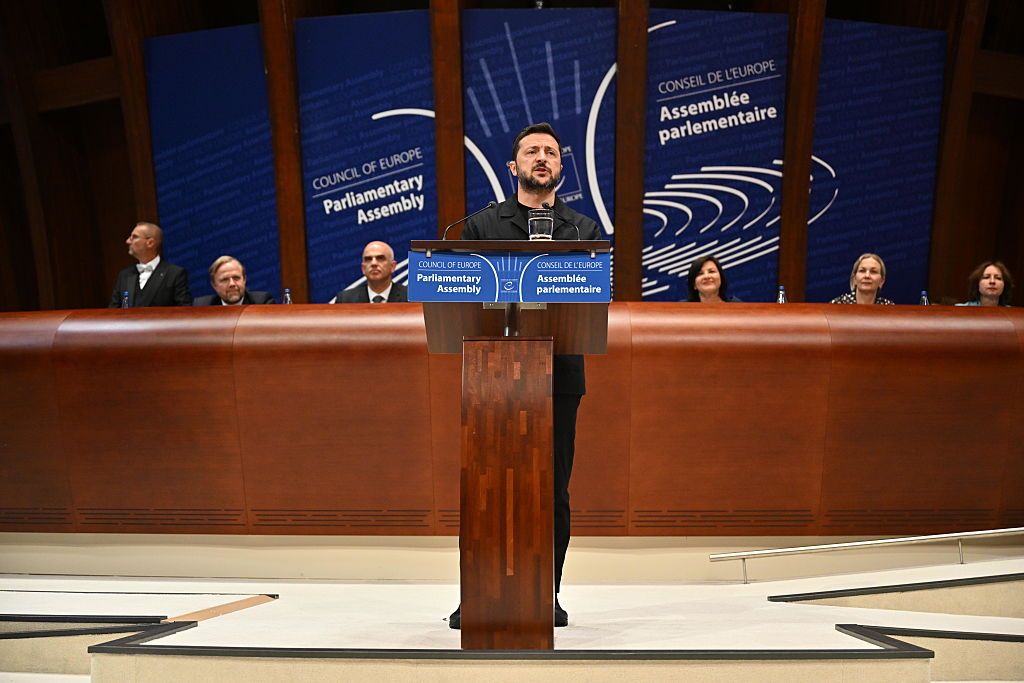
 The Kyiv IndependentKateryna Denisova