Lithuania wants Russians who performed in occupied Ukraine to sign a declaration condemning the war or stay out. Lithuania's Foreign Ministry has proposed amending the national sanctions law with new restrictions on Russians and Belarusians who support the war against Ukraine, including barring them from entering the country, the Baltic News Service (BNS) reported.
The proposal targets Russians and Belarusians in culture, science, art, or sport who performed in Russian-
Lithuania wants Russians who performed in occupied Ukraine to sign a declaration condemning the war or stay out. Lithuania's Foreign Ministry has proposed amending the national sanctions law with new restrictions on Russians and Belarusians who support the war against Ukraine, including barring them from entering the country, the Baltic News Service (BNS) reported.
The proposal targets Russians and Belarusians in culture, science, art, or sport who performed in Russian-occupied Ukrainian territories or directly or indirectly supported the war, who would be denied entry to Lithuania.
To be allowed in for educational or cultural events, citizens of those countries would have to sign and publicly release a declaration condemning Russian aggression and supporting Ukraine's territorial integrity. The refusal to sign would mean an automatic entry ban.
The Foreign Ministry also proposed suspending the right of Russians and Belarusians with residence permits to buy real estate near national security sites and military training grounds.
If the Seimas adopts the amendments, they would take effect on 1 January next year.
"This is part of the state's efforts to strengthen resilience to the influence of hostile regimes and to protect Lithuania's national security interests," the ministry said.
The proposal extends a steady Lithuanian tightening
The measure is the latest in a progression Lithuania has been building for years. In May 2025, Lithuania stripped residence permits from Russians and Belarusians who frequently visited their home countries, a measure affecting more than 14,000 Russian permit holders, and already bans Russians without residence permits from buying Lithuanian real estate.
The new proposal adds a cultural-and-scientific dimension and a novel requirement: a public loyalty declaration as the price of entry for artists and academics.
The real-estate provision fits a separate security logic. Restricting Russian and Belarusian nationals from buying property near military sites addresses sabotage concerns that Baltic states have repeatedly raised, part of hardening NATO's eastern flank against the hostile regimes on Lithuania's borders.
Russia struck two Ukrainian cities hundreds of kilometers apart in daytime attacks on 26 July, hitting a supermarket and residential areas and killing civilians including a child, according to President Volodymyr Zelenskyy and local officials in Chernihiv and Zaporizhzhia. The local authorities reported deaths and more than a dozen wounded. Zelenskyy called the strikes deliberate terror with no military purpose and renewed his push for tougher sanctions on Moscow.
Russi
Russia struck two Ukrainian cities hundreds of kilometers apart in daytime attacks on 26 July, hitting a supermarket and residential areas and killing civilians including a child, according to President Volodymyr Zelenskyy and local officials in Chernihiv and Zaporizhzhia. The local authorities reported deaths and more than a dozen wounded. Zelenskyy called the strikes deliberate terror with no military purpose and renewed his push for tougher sanctions on Moscow.
Russian missiles, attack drones, and glide bombs strike Ukrainian cities away from the front, while Russian attacks of several kinds continue every day. The small drones have become the weapons that kill the most Ukrainian civilians than any other weapon, according to UN monitors.
Zelenskyy wrote on Telegram that Russian forces keep "defeating" ordinary civilian objects, calling the Chernihiv strike an absolutely cynical drone attack on an ordinary supermarket. Meanwhile, Zaporizhzhia was struck by aerial bombs.
"They hit people directly, with no military sense at all," he said. "This is deliberate Russian terror that has no military justification whatsoever."
Russia struck a supermarket full of shoppers and killed a 9-year-old girl
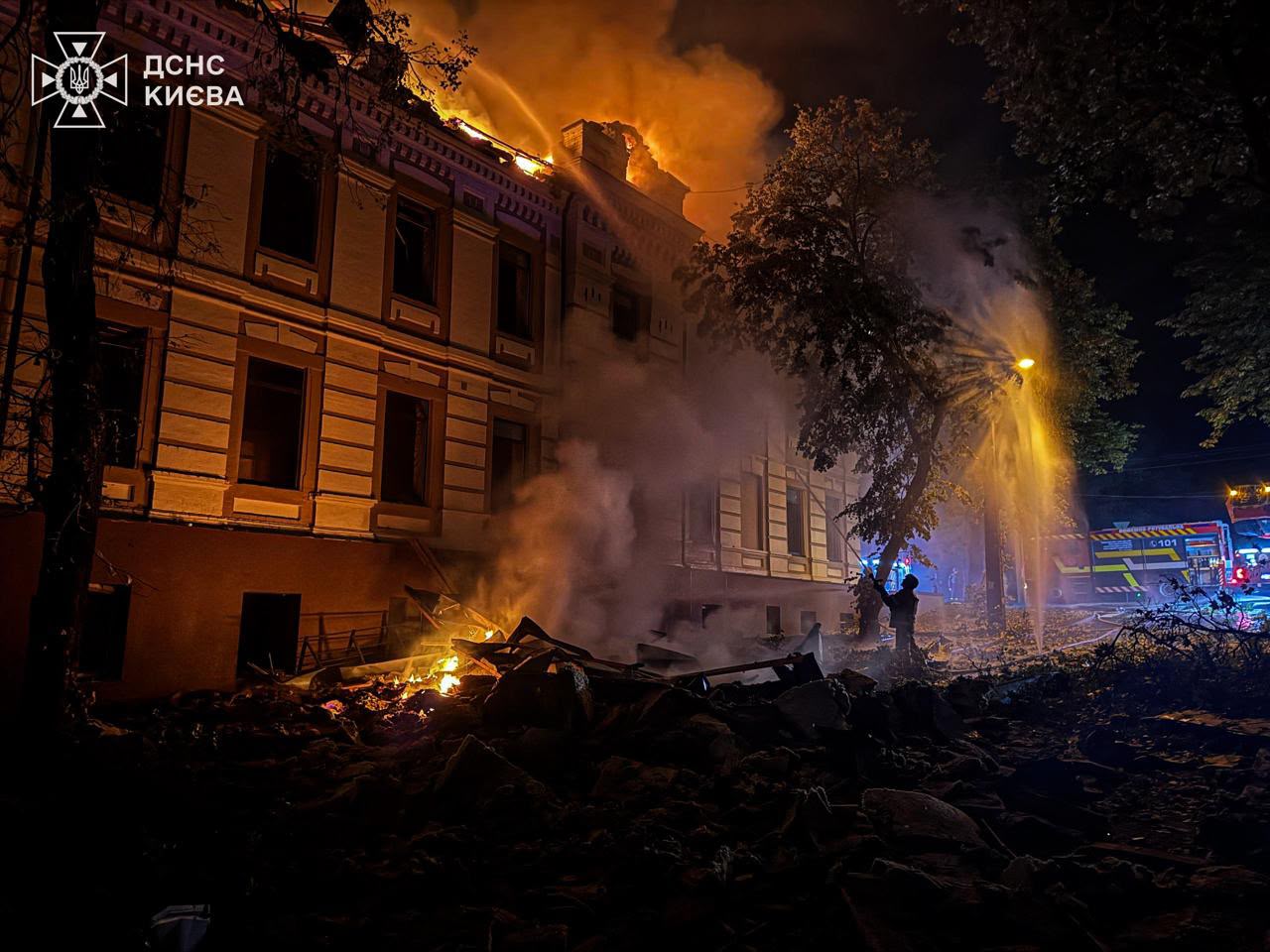
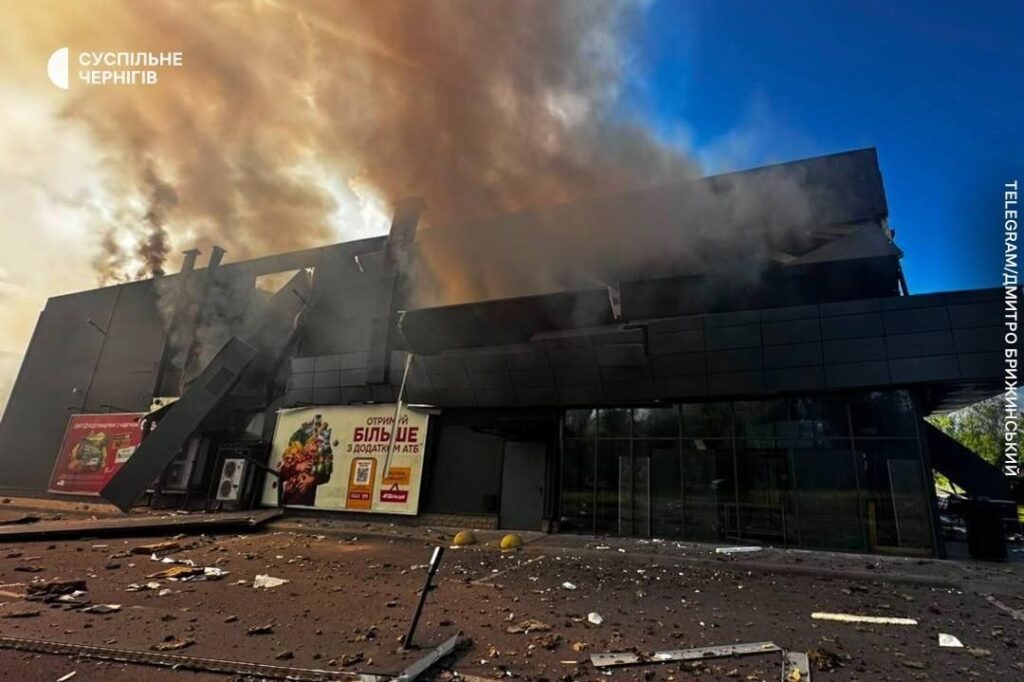
A Russian drone tore into an ATB grocery store in Chernihiv on 26 July while people shopped inside, setting the building on fire. The strike killed two people, one of them the young girl, and wounded… pic.twitter.com/8AguDH4gP8
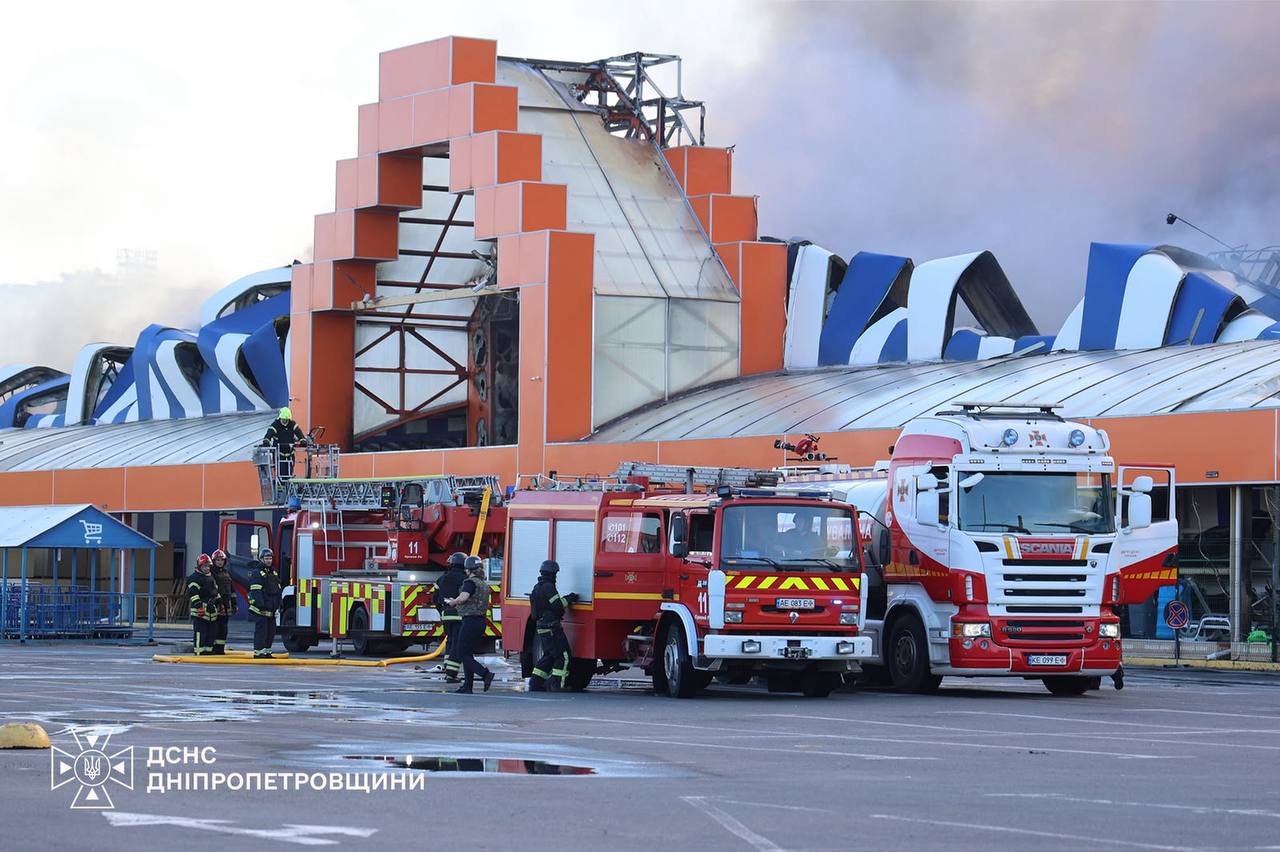
In the northern city of Chernihiv, a Russian drone struck an ATB supermarket, part of Ukraine’s largest no-frills grocery network, around the middle of the day. City military administration head Dmytro Bryzhynskyi first reported two people killed and three wounded. He later noted that a child was among the dead. As rescuers worked, he reported one victim in serious condition, then said the number of wounded had climbed to seven.
Later that afternoon, he updated the toll to 13 injured — four men and nine women — with three hospitalized in moderate condition. In a subsequent update, he said 20 people had sought medical care and three were hospitalized.
Russia struck a supermarket in Chernihiv, killing two people, including a 9-year-old girl
Thirteen others were wounded in the attack, including a 10-year-old boy. Officials continue clarifying the full extent of the damage State Emergency Service of Ukraine pic.twitter.com/l3mMxKmQKM
Chernihiv Oblast administration head Viacheslav Chaus identified the dead child as a 9-year-old girl. He said a 10-year-old boy was among the wounded and that three people were in intensive care. Other strikes in the city damaged cars and vehicle service stations, Chaus added.
Guided bombs killed a man in Zaporizhzhia
Far to the south, Russian guided aerial bombs hit the city of Zaporizhzhia. Regional administration head Ivan Fedorov reported that the bombs damaged residential and non-residential buildings and an educational institution. One person was killed and six were wounded, according to Fedorov and the regional prosecutor’s office. The man who died was 46. The regional prosecutor's office said a gas station was also damaged.
Explore further
Russia destroys a Home Depot-style megastore in Kryvyi Rih—the third one it has erased in the same region since 2024
Hours earlier, Russian drones burned down a home-improvement megastore in Kryvyi Rih, the third such store wrecked in that southern region since 2024.
Poland and the three Baltic states have not built a continuous, defense-in-depth line of fortifications along their borders with Russia and Belarus, according to open-source intelligence (OSINT) analyst Clément Molin. He assessed Poland and the three Baltic states, while the Polish account Służby i Obywatel separately examined one fortification section near Poland’s border with Russia. The works mentioned in Molin’s review remain patchy and shallow, and he called Lithua
Poland and the three Baltic states have not built a continuous, defense-in-depth line of fortifications along their borders with Russia and Belarus, according to open-source intelligence (OSINT) analyst Clément Molin. He assessed Poland and the three Baltic states, while the Polish account Służby i Obywatel separately examined one fortification section near Poland’s border with Russia. The works mentioned in Molin’s review remain patchy and shallow, and he called Lithuania both the country most at risk and the least fortified.
Since the beginning of Russia's ongoing full-scale invasion of Ukraine in 2022, European capitals have raced to announce bigger defense budgets and hardened frontiers, but Molin’s imagery review found that visible fortification work in Poland and the Baltic states remains fragmented and lacks depth.
What the satellites actually show
Molin wrote on X about Poland and the Baltic states, while the Polish account Służby i Obywatel argued separately about the placement of one Polish fortification section visible on Google Maps.
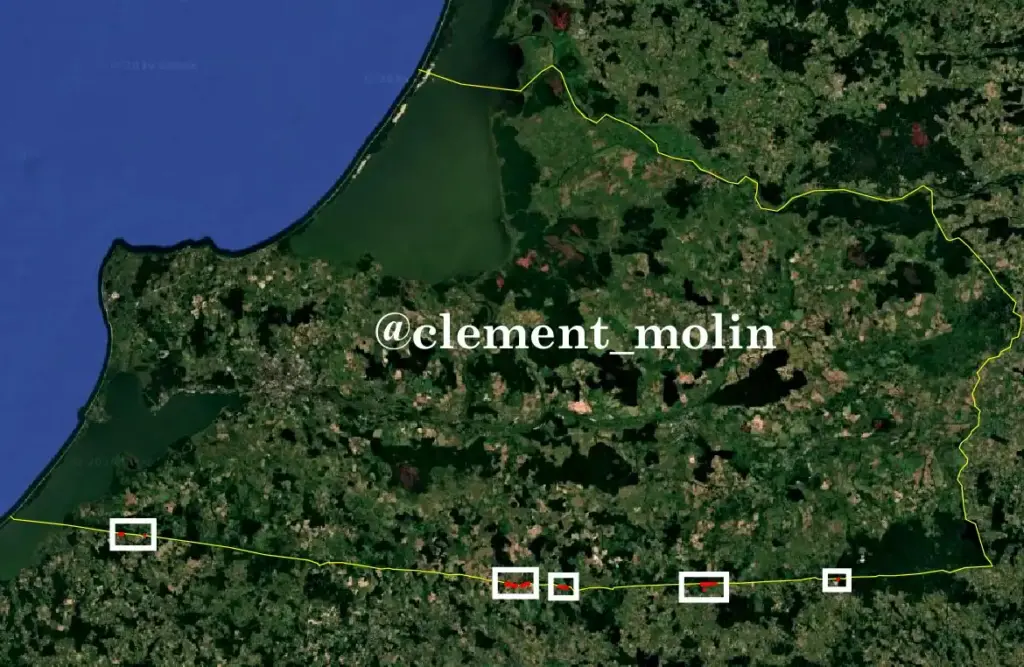
On Poland's 210-kilometer border with Kaliningrad, Russia'sheavily militarized exclave, defenses appear in only four zones, according to Molin. The longest runs about two kilometers. The visible fortifications include a discontinuous anti-tank ditch and one or two rows of dragon's teeth — concrete anti-tank blocks. Neither forms a continuous line.
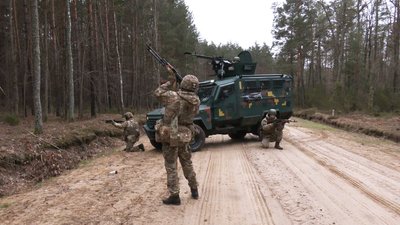
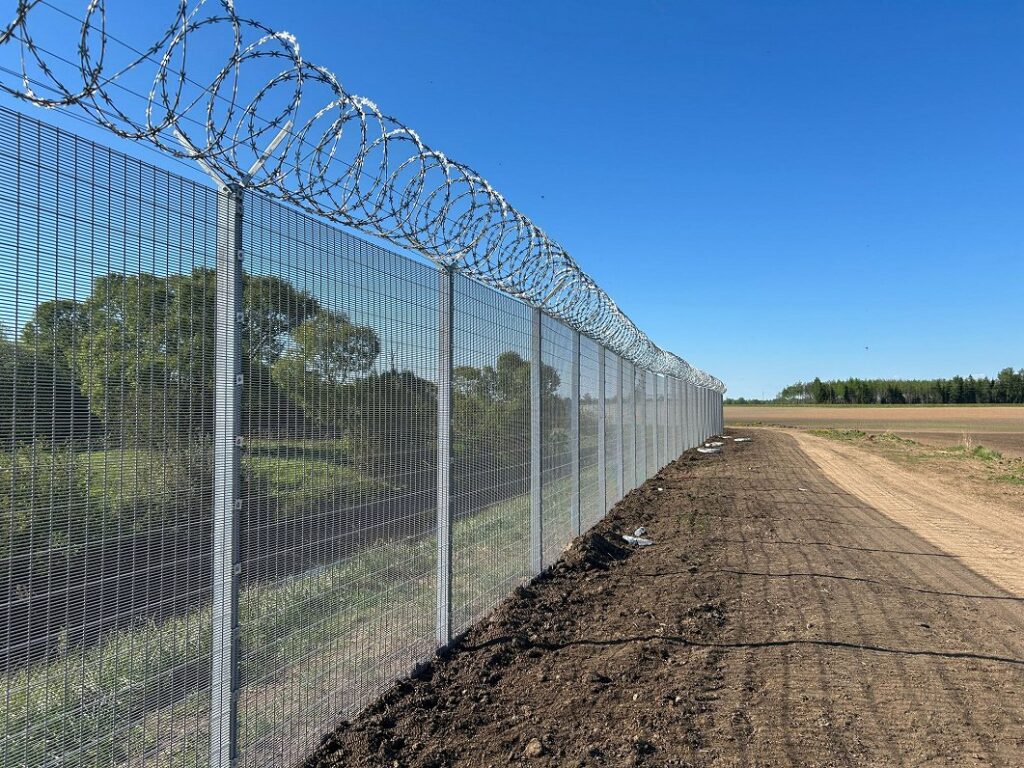
The ditches break off wherever they reach a forest line. Molin wrote that bunkers and trenches sit in open fields, most key roads stay unprepared, and little barbed wire is visible. The researcher said he could see only anti-migrant barriers in open areas along the Belarusian border, with little additional reinforcement underway.
Molin's sweep also rated Finland's groundwork as strong despite its recent entry into NATO, while Norway, he wrote, offered "nothing particular to see."
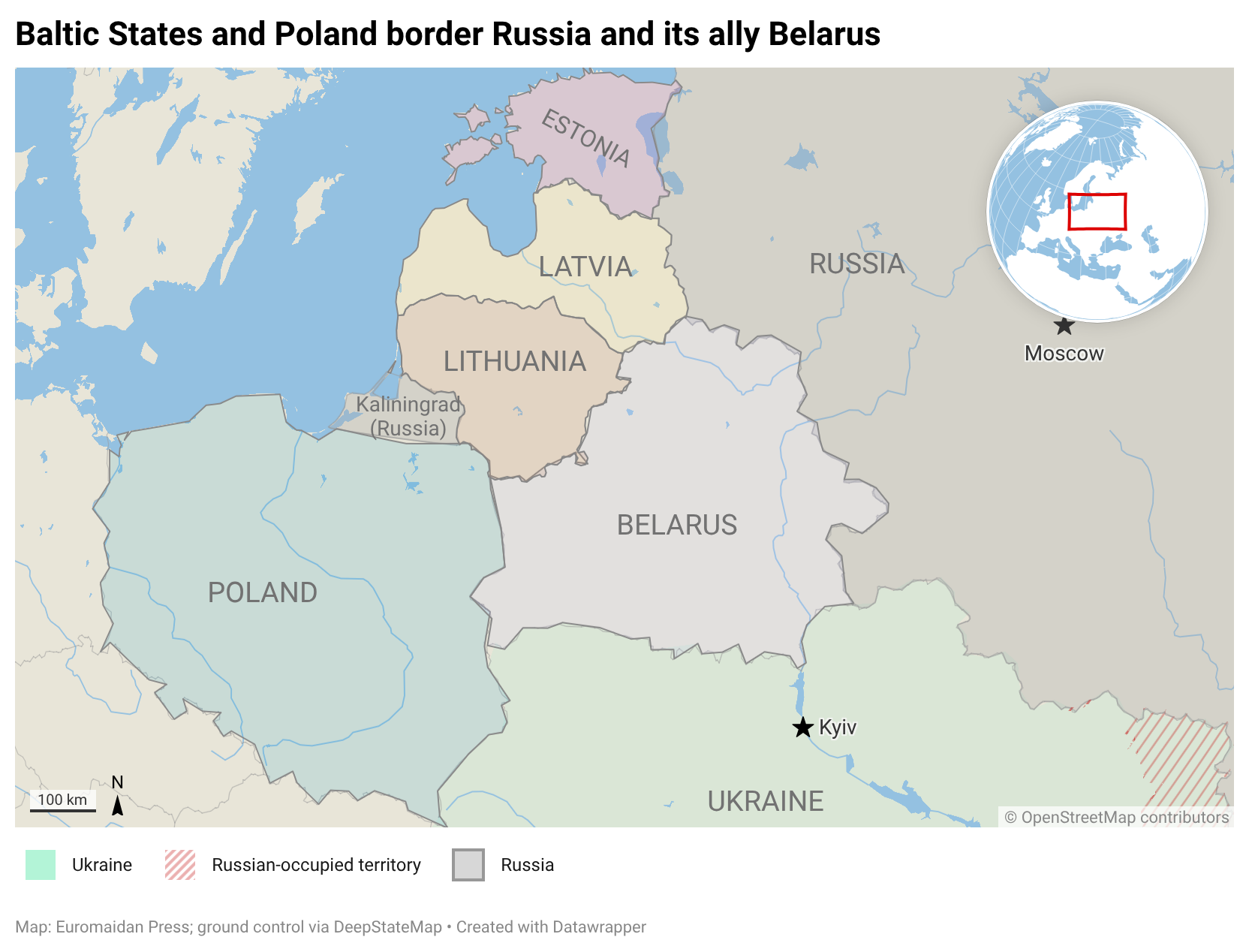
The Baltic region. Map: Euromaidan Press
Trenches at the fence line
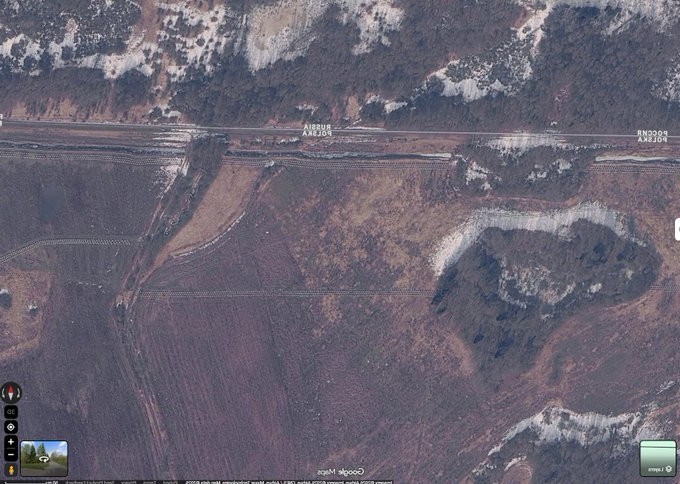
Near the Polish village of Rutka, trenches were dug just 300 meters from the border fence. Militarnyi wrote that positions this close would remain under observation and drone control, while Służby i Obywatel said a defending unit would face concentrated fire at the outset of fighting.
Google Maps satellite view of Poland's border fortifications near the village of Rutka, on the frontier with Russia's Kaliningrad Oblast. Photo: Służby i Obywatel
Służby i Obywatel compared the works to the historical Mława Position, built five to 15 kilometers back from the frontier, which gave troops time to occupy defenses once an invasion started. They also noted that such border barriers can be bypassed or flanked, while Militarnyi wrote that their placement does not always channel enemy movement. Służby i Obywatel questioned whether building so tight to the fence makes sense, arguing that positions a few kilometers back on better terrain would make Russia deploy its forces and reveal its intent before attacking.
The Baltic states
The Suwałki Gap is a 65-km strip along the Poland–Lithuania border between Kaliningrad and Belarus—NATO's only land link to the Baltic states, whose loss would cut them off by land, leaving only sea and air routes exposed to Russian missiles.
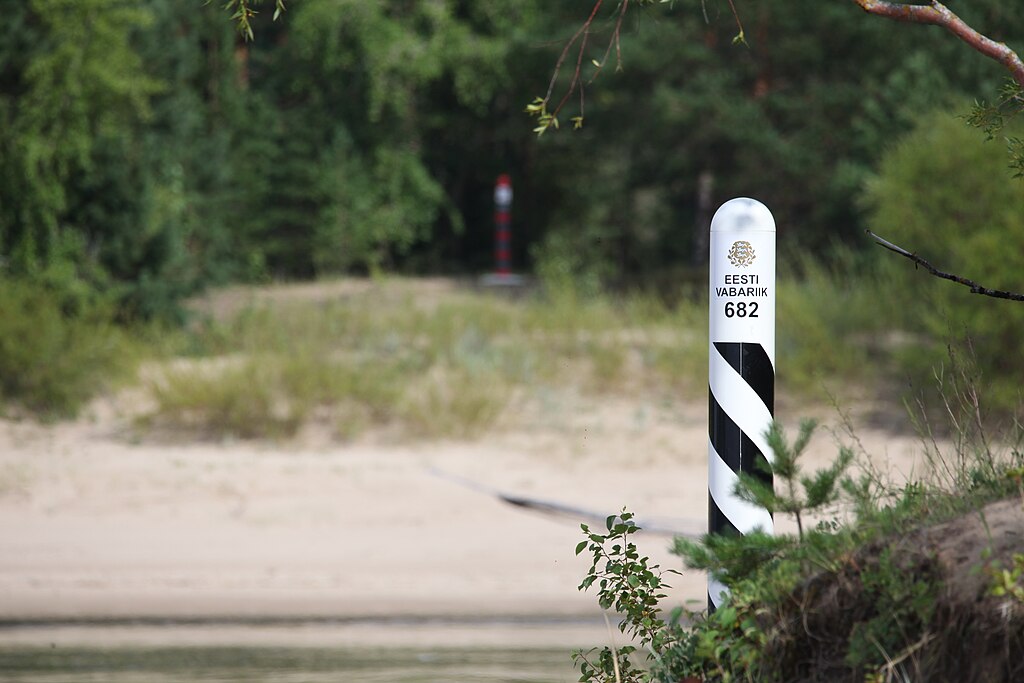
Molin called Lithuania the country most at risk because it borders Kaliningrad and Belarus and sits beside the Suwałki Gap. It has fortified the least. Despite an official roadmap, Molin said he found no prepared defenses and no coverage of key roads on the imagery. The country is, however, building road infrastructure to reach remote areas along its eastern border.
Explore further
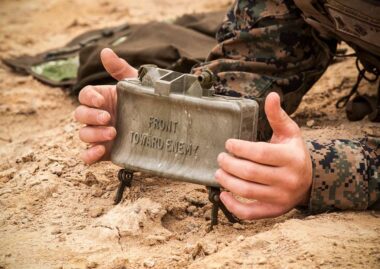
Lithuania and Finland to start domestic landmine production for themselves and Ukraine amid Russian threat
Estonia’s current fortification level as very low and pointed to the persistent threat around Narva, according to Molin. Direct construction work has not begun.
Latvia is further along than either neighbor. Crews have started installing dragon's teeth and clearing a strip to create a defensive line, helped by extensive border forests and greater strategic depth, though the works there remain fragmentary too.
Explore further
Estonia switches on first border sensors to detect drones as Baltic incursions mount
The "Eastern Shield"
Poland began building its Eastern Shield fortification system on the borders with Russia and Belarus in October 2024. The system is meant to cover nearly 700 kilometers, with 400 to 500 kilometers protected by various fortification types and the rest by natural barriers. The plan calls for a coherent network of engineering obstacles and storage sites on designated land. The government intends to invest about €2.3 billion, with completion set for 2028.
From October 2024 to mid-July 2026, Poland reportedly built 61 kilometers of defensive lines under the program. Of that, linear fortifications account for only about 10 kilometers.
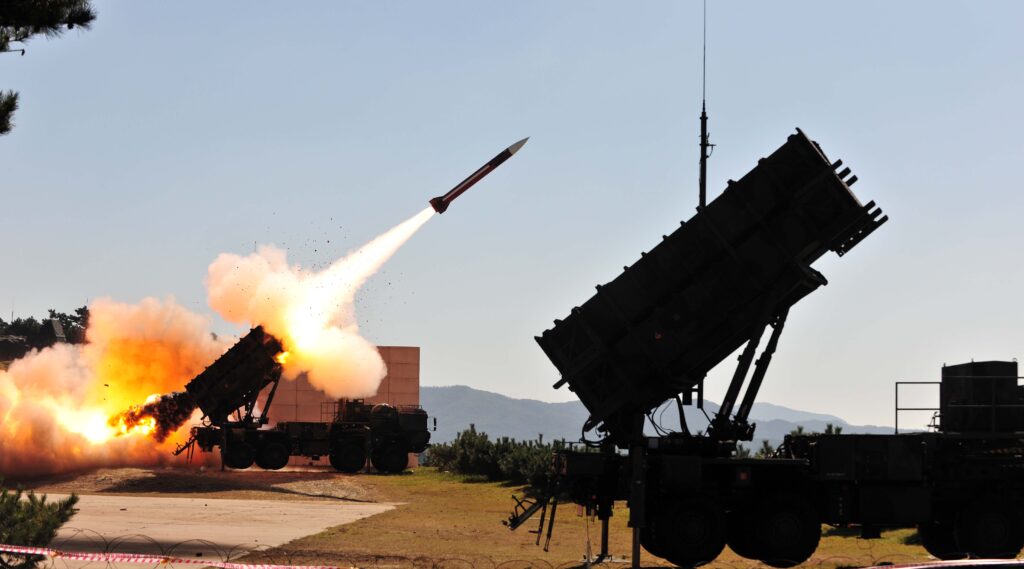
Poland has proposed a three-way defense industry partnership with the United States and Ukraine to produce missiles for Patriot air defense systems, Polish Deputy Defense Minister Magdalena Sobkowiak-Czarnecka said during talks in Washington, according to Polish state news agency PAP.
The proposal comes as Ukraine faces a growing threat from Russian ballistic missile attacks, while supplies of interceptors for the few systems capable of stopping them remain limited. Pat
Poland has proposed a three-way defense industry partnership with the United States and Ukraine to produce missiles for Patriot air defense systems, Polish Deputy Defense Minister Magdalena Sobkowiak-Czarnecka said during talks in Washington, according to Polish state news agency PAP.
The proposal comes as Ukraine faces a growing threat from Russian ballistic missile attacks, while supplies of interceptors for the few systems capable of stopping them remain limited. Patriot is currently Ukraine’s main defense against these weapons, making expanded production a key priority for Kyiv.
The proposal would involve cooperation between Poland, Ukraine, and the US, with production located in a secure location. Sobkowiak-Czarnecka said the offer was aimed at addressing concerns over where such manufacturing could take place, as Ukraine remains under Russian missile and drone attacks.
Proposal follows discussions on Patriot production in Ukraine
According to PAP, Sobkowiak-Czarnecka said her talks with officials from the Pentagon and the US State Department included potential Patriot missile production, defense cooperation, US military presence in Poland, and the SAFE financing mechanism.
She said discussions also covered remarks by US President Donald Trump at a NATO summit in Ankara about the possibility of establishing a Patriot production facility in Ukraine.
“The idea is for this production to be connected with Ukraine,” Sobkowiak-Czarnecka said, according to PAP.
The Polish deputy minister proposed expanding the arrangement into a trilateral partnership involving the US, Ukraine, and Poland, arguing that Poland could help provide a safer environment for production.
Explore further
Zelenskyy meets team from Raytheon, US company that builds Patriots, and says Ukraine is now negotiating joint interceptor production
Poland seeks role in Patriot maintenance and broader defense cooperation
Sobkowiak-Czarnecka also presented arguments for establishing a Patriot maintenance center in Poland, citing the country’s growing defense industry and strategic location on NATO’s eastern flank.
The talks in Washington also covered additional US military presence in Poland. Sobkowiak-Czarnecka said both countries have established teams working on preparations for a potential US base, though final decisions on troop deployments would depend on President Trump.
She also said discussions continued on a possible $4 billion US Foreign Military Financing loan for Poland to purchase American military equipment, with hopes that an agreement could be signed within weeks.
Ukraine seeks expanded air defense production amid Russian attacks
Patriot systems have become among Ukraine’s most important air defense assets, particularly against Russian ballistic missile attacks that are difficult to intercept with many other systems.
Ukraine has repeatedly called for greater air defense support as Russia continues large-scale missile and drone attacks against Ukrainian cities and infrastructure. Expanding production capacity for Patriot-related systems has become part of wider efforts by Kyiv and its partners to strengthen long-term defense capabilities.
Explore further
Russia launches record ballistic missile barrage on Kyiv, firing over 40 missiles in under an hour
The European Union has adopted its largest sanctions package against Russia in four years, targeting the banks, oil refineries, and drone-manufacturing networks that fund Moscow's war in Ukraine. The Council of the EU approved the measures on 23 July.
The EU has sanctioned Russia its 2014 seizure of Crimearolling out numbered packages every few months since the 2022 full-scale invasion, even as member states repeatedly clash over how far each package should reach. Becau
The European Union has adopted its largest sanctions package against Russia in four years, targeting the banks, oil refineries, and drone-manufacturing networks that fund Moscow's war in Ukraine. The Council of the EU approved the measures on 23 July.
The EU has sanctioned Russia its 2014 seizure of Crimearolling out numbered packages every few months since the 2022 full-scale invasion, even as member states repeatedly clash over how far each package should reach. Because sanctions take months to negotiate and adopt, Russia has repeatedly adapted and evaded many restrictions using various evasion schemes.
What the package includes
The 21st round adds 218 new designations, 48 individuals and 170 entities, the biggest batch of listings in four years. The Council said the package aims to further weaken Russia's economy and war machine, in response to Russia's recent strikes on civilian energy, water, and health infrastructure.
EU foreign policy chief Kaja Kallas said the bloc is hitting over a hundred banks and crypto operators, more than 40 shadow fleet vessels, and several oil refineries in Russia and Belarus, plus more than 50 military-industrial entities tied to Russia's long-range drones.
Explore further
Italy joins Bulgaria in resisting EU sanctions on Patriarch Kirill
The 21st package covers several sectors. It includes:
Banks and finance: asset freezes on 94 banks and financial institutions, a transaction ban extended to 33 more Russian credit institutions, a Kyrgyz bank linked to Russia, and three other non-Russian banks accused of helping Moscow evade sanctions.
Crypto: 14 platforms in Georgia, Panama, the UAE, the Marshall Islands, Kyrgyzstan, and Belarus added to the transaction ban, plus a first-time option for a full EU ban on crypto providers in an entire third country.
Oil price cap: automatic adjustments paused until 15 July 2027 amid market disruption from the Strait of Hormuz closure.
Shadow fleet: rules widened to cover fuel and support providers, with 41 tankers added to a blacklist already covering 632 ships.
Oil sector: 18 entities and one individual designated, including three Russian refineries and a major Belarusian one, plus a new tool to ban third-country refineries processing Russian crude, applied to one in Kulevi, Georgia, effective in six months.
Drone supply chains: 56 listings tied to Russia's military-industrial complex, 37 linked to long-range drones, and 51 more entities facing tighter dual-use export curbs, including firms in China, India, Kazakhstan, Kyrgyzstan, Türkiye, and the UAE.
Visa ban: legal basis laid for a future EU-wide ban on current and former Russian military personnel, with no effective date set. A European Commission official told Suspilne details could take until October, with Italy and France objecting over scope.
Propaganda and war crimes: eight individuals sanctioned for spreading Russian war propaganda, and a Russian major general designated over the torture, execution, and desecration of Ukrainian prisoners of war, building on human rights sanctions from 13 July.
President Volodymyr Zelenskyy thanked EU member states, calling the package a set of strong steps to limit Russian revenue. Acting Foreign Minister Andrii Sybiha welcomed the measures too, singling out the visa-ban groundwork as a step to keep who fight for, aid, or profit from the war out of the EU.
Russia is now tearing apart brand-new planes to keep older ones in the air. The country's civil aviation continues to deteriorate under international sanctions, forcing it to dismantle even new, fully equipped aircraft to obtain spare parts, Ukraine's Defense Intelligence (HUR) reports.
About 95% of all passenger traffic in Russia operates on Western-built aircraft, mostly Airbus and Boeing, according to HUR, a figure consistent with the roughly 90% EP has reported in e
Russia is now tearing apart brand-new planes to keep older ones in the air. The country's civil aviation continues to deteriorate under international sanctions, forcing it to dismantle even new, fully equipped aircraft to obtain spare parts, Ukraine's Defense Intelligence (HUR) reports.
About 95% of all passenger traffic in Russia operates on Western-built aircraft, mostly Airbus and Boeing, according to HUR, a figure consistent with the roughly 90% EP has reported in earlier Ukrainian intelligence assessments.
Much of that fleet has flown past its guaranteed service life and would long since have been retired under international norms, but cut off from certified maintenance, Russia keeps flying it against the rules.
Repairs are carried out without proper certification, parts are often handmade from unsuitable materials, and what cannot be made is imported through third countries.
The usable fleet is shrinking toward a hard floor
The risk of seizure abroad has boxed Russia's usable fleet into a narrow set of planes. Because of the danger of arrest in foreign jurisdictions, Russia can relatively safely operate only about 400 foreign aircraft and fewer than 150 Soviet and Russian-built machines, according to HUR.
The 400-aircraft figure tracks the roughly 400 Western jets Russia appropriated from foreign leasing companies after the 2022 full-scale war, planes it re-registered domestically and cannot fly to most of the world without risking impoundment. Ukraine's Foreign Intelligence Service reported in October 2025 that Russian carriers could shed hundreds of planes by 2030 as sanctions block imports of aircraft, parts, and maintenance, with more than a third of the civil fleet already cannibalized for parts.
The homegrown replacement program is failing on the specifics
Russia's plan to replace Western aircraft with its own is ambitious on paper and stalling in practice. The state has a program running to 2030, worth about $12 billion, to build 994 civilian aircraft and 765 helicopters, according to HUR, but an industry cut off from Western technology cannot make components of adequate quality.
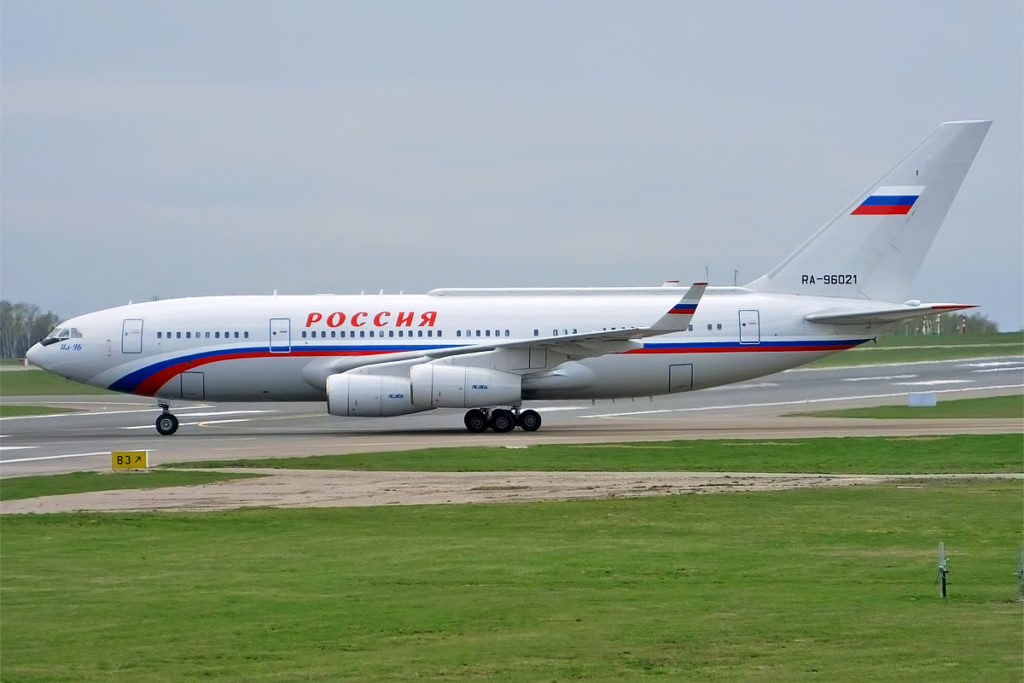
The failures are specific and checkable. The MC-21, meant to replace the Airbus A320 and Boeing 737, had to have its capacity cut from 210 to 163 seats because of problems with its domestic PD-14 engines. The Superjet has hit similar engine trouble, and Russia has abandoned new modifications of the Il-96 entirely.
Regional aviation is no better. The LMS-901 "Baikal," meant to replace the Ukrainian-designed An-2, cannot do what its predecessor could: take off and land on unprepared dirt strips. The Il-114-300, meant to replace the An-24 and An-26, can operate only from paved airfields, and the use of unsuitable propeller materials carries a risk that the propellers could fail.
UNESCO has officially recognized that Russia is destroying Crimea's only World Heritage site. The UN body added "the Ancient City of Tauric Chersonese and its Chora" to its List of World Heritage in Danger, Ukrainian Foreign Minister Andrii Sybiha announced on X. The decision was taken at the 48th session of the World Heritage Committee.
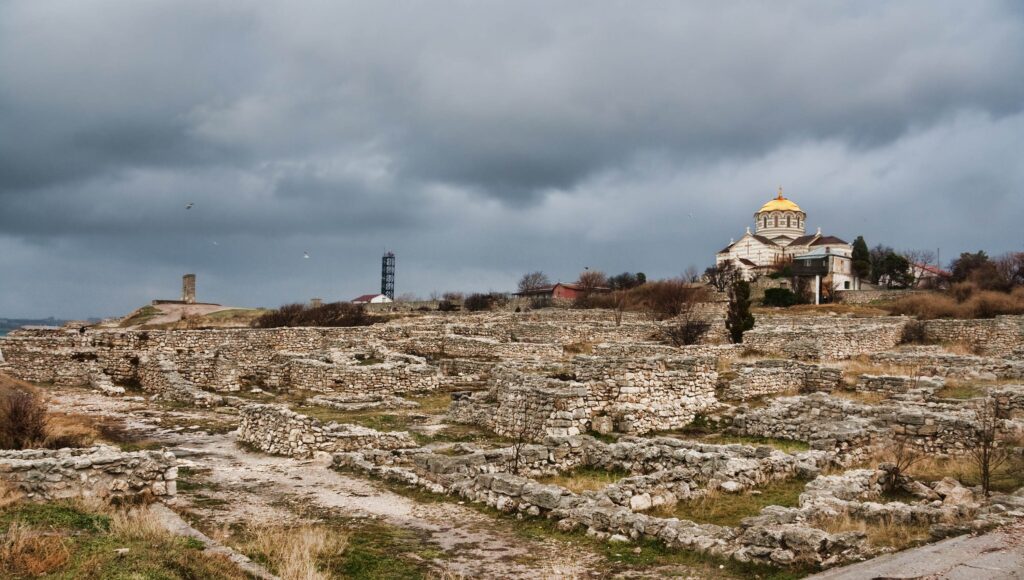
Chersonesus Taurica is an ancient Greek city founded by colonists in the 6th century BCE on the territory of modern Sevastopol, inscribed
UNESCO has officially recognized that Russia is destroying Crimea's only World Heritage site. The UN body added "the Ancient City of Tauric Chersonese and its Chora" to its List of World Heritage in Danger, Ukrainian Foreign Minister Andrii Sybiha announced on X. The decision was taken at the 48th session of the World Heritage Committee.
Chersonesus Taurica is an ancient Greek city founded by colonists in the 6th century BCE on the territory of modern Sevastopol, inscribed on the UNESCO World Heritage List in 2013, and the only site of world significance in Crimea, per Suspilne.
Since occupying Crimea in 2014, Russia has stripped the site of its contents. Ukraine's Defense Intelligence has documented Russia appropriating cultural artifacts from Chersonesus and other Crimean sites through unauthorized digs, with 178 items tracked in the "Stolen Heritage" section of the War & Sanctions portal by late 2025.
The frescoes, pottery, household objects, and icons taken from Chersonesus went to museums in Russia. Russian construction on the site, backed by illegal excavations, has unlocked access to up to 500,000 artifacts.
Site is target because of what it means
Chersonesus is where, by tradition, the medieval Kyivan prince Volodymyr was baptized in 988. This is the event Russian state ideology claims as the origin point of Russian Orthodoxy and, by extension, of a shared "all-Russian" history that absorbs Ukraine.
Russia has built its occupation narrative on that claim, making the Ukrainian site tell a Russian story, which is why Russian President Vladimir Putin personally backed turning it into the centerpiece of one of Russia's most ambitious propaganda projects.
That project is the "New Chersonesus" museum-and-park complex, opened in July 2024 on the grounds of the ancient site. Russian authorities built a sprawling development that includes museums, a Christian-themed park, an open-air theater, and reconstructed quarters, marketing it as a showcase of Orthodox and Russian civilization.
To raise it, Russian archaeologists and developers dug through the untouched layers of the ancient city, and the complex drew 700,000 visitors by October 2024, its foot traffic accelerating the destruction of the fragile archaeology beneath it. The result is a Russian-built theme park standing on, and made from the ruins of, a Ukrainian World Heritage site.
Russia built theater on necropolis
In 2024, Russian archaeologists and developers completely destroyedthe authentic monument, building a new open-air theater on the site of the excavations, said Evelina Kravchenko, senior researcher at the Institute of Archaeology of Ukraine's National Academy of Sciences, per Ukrainska Pravda.
Russia substitutes new construction for original monuments, destroying their authenticity, Kravchenko said at the Crimea Platform expert network forum.
"Negative processes are now happening with the only monument of world significance that we managed to nominate and inscribe on the list of monuments in Crimea, with Chersonesus Taurica," she claimed.
What Russia presents as heritage preservation, Ukrainian experts describe as the erasure of the original under a replica.
Listing rests on documented violations
The basis for the UNESCO decision was Russia's documented conduct on the peninsula: illegal archaeological excavations, large-scale construction on the monument's territory and its protective zones, destruction of the archaeological context, and the illegal movement of cultural property, the President's Representative Office in Crimea explained.
The decision also called on the international community to strengthen cooperation to prevent the illegal circulation of cultural property originating from occupied Crimea. During the discussion, representatives of Poland, the Czech Republic, and Switzerland openly supported Ukraine.
One site in vast toll
Chersonesus is a single entry in a campaign against Ukrainian heritage that spans the whole war. Russia has damaged or destroyed nearly 2,000 Ukrainian cultural heritage sites since 2022, and looted over 7.8 million artifacts from museums in occupied territory since 2014, Ukraine's prosecutor general reportedin June 2026.
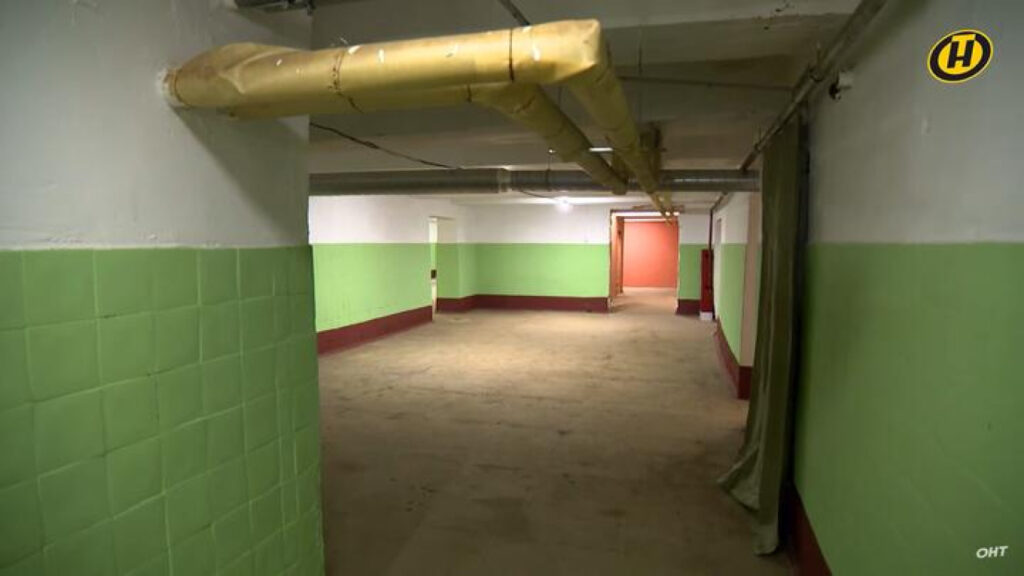
Belarus has spent 2026 repairing and upgrading its civil-defense shelters nationwide, the Belarusian opposition project Belpol reported. The investigators frame the drive as another stage of the regime's militarization, tied to its alignment with Russia. They caution, though, that shelter work alone is no proof of preparing for war.
The drive lands as Russia presses Belarus to enter its war on Ukraine, as Russian President Vladimir Putin wants Belarusian territory for drone
Belarus has spent 2026 repairing and upgrading its civil-defense shelters nationwide, the Belarusian opposition project Belpol reported. The investigators frame the drive as another stage of the regime's militarization, tied to its alignment with Russia. They caution, though, that shelter work alone is no proof of preparing for war.
The drive lands as Russia presses Belarus to enter its war on Ukraine, as Russian President Vladimir Putin wants Belarusian territory for drone strikes on Ukraine and a new front, and has threatened to cut funding if Minsk refuses. Kyiv has repeatedly warned that Moscow is trying to pull Belarus deeper into the war. Rebuilding civil defense is one more sign of a state raising its readiness — even as Belpol stresses the shelters alone prove nothing.
Inspections, fines, and a jump in "unfit" shelters
Belpol shared scans of the underlying documents. For example, Mahilyow Oblast had 276 civil-defense structures as of 2 June. Officials deemed 204 ready, 72 unsatisfactory, and earmarked 38 for restoration and 34 for write-off.
February–April checks produced 66 orders to fix violations and held 11 officials liable. Belpol says the rise in shelters marked unfit most likely reflects a more thorough audit, not shelters decaying in a few months.
Explore further
Kyiv gave Belarus ruler week to pull Russia’s drone relays. They went silent in three days, Zelenskyy says
The work spans the whole country
The regional report is only part of the picture. Belpol points to state procurement orders for the same work across Belarus. The state telecom Beltelecom ordered design work to modernize a civil-defense space in Minsk. The National Bank of Belarus is reconstructing protective rooms in its headquarters on Independence Avenue. Brest is upgrading a bomb shelter inside a wastewater treatment complex, while Mahilyow repairs a shelter at the Strommashina plant and inspects others, including the Stroygaz enterprise. The tenders reach government offices, telecoms, industry, utilities, and banks — a centralized program, Belpol says, not scattered repairs.
Explore further
“If he doesn’t, Ukraine will”: Zelenskyy just gave Lukashenka one week to strip Russian repeaters off Belarus’s border towers
Why this fits a pattern
Belpol is careful: modernizing shelters is not by itself evidence of war planning, and many states do it for resilience. Yet since 2022, Minsk has deepened military ties with Russia, hosted joint exercises, militarized its economy, expanded territorial-defense units, and tightened its mobilization system.
Previously, France's Emmanuel Macron warned Alyaksandr Lukashenka against being dragged into the war in a May call, and Volodymyr Zelenskyy has demanded that Minsk dismantle the Russian relay stations on its soil used to guide attack drones.
Latvia's frontier with Belarus has not gone a single day without an attempted illegal crossing since late March, according to Radio Svaboda, RFE/RL's Belarusian service. The country's border service ties the sustained pressure to a state-run hybrid campaign, and its chief has named Latvia's support for Ukraine among the reasons the country has become the primary target.
Russia and its closest ally, Belarus, probe the EU's eastern edge with tools short of open war — migrants
Latvia's frontier with Belarus has not gone a single day without an attempted illegal crossing since late March, according to Radio Svaboda, RFE/RL's Belarusian service. The country's border service ties the sustained pressure to a state-run hybrid campaign, and its chief has named Latvia's support for Ukraine among the reasons the country has become the primary target.
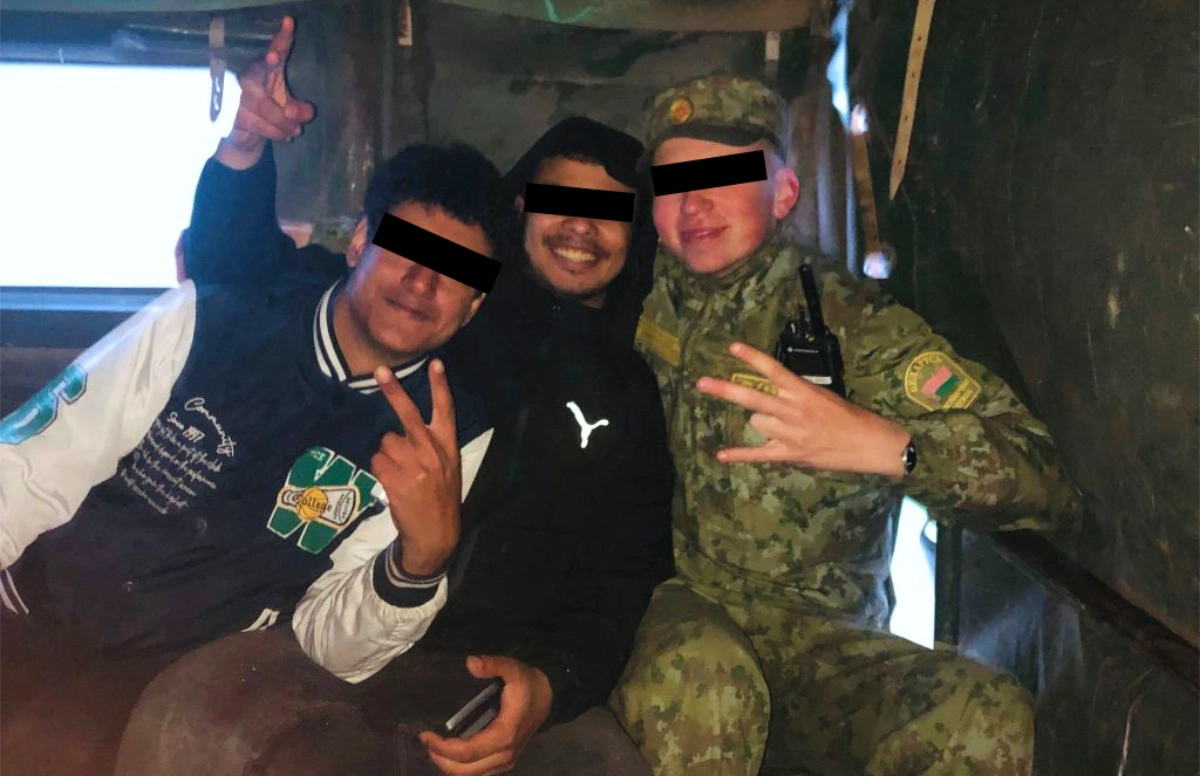
Russia and its closest ally, Belarus, probe the EU's eastern edge with tools short of open war — migrants funneled to the fence, balloons drifting into airspace, prompting border closures. The campaign forces the targeted state to spend heavily on fences, troops, and border surveillance.
An unbroken run since March
Latvia's State Border Guard has logged migrant crossing attempts from Belarus for 111 consecutive days, a Pozirk analysis of the agency's operational data found. Radio Svaboda reported the tally on 15 July.
Between 25 March and 13 July, officers recorded 7,791 attempts — an average of 70 a day. In winter the traffic was a fraction of that. From 1 January to 24 March, a span of 83 days, the agency counted just 141 attempts, or 1.7 a day. Pozirk calculated a year-to-date total of 7,932, or about 41 daily, while Latvia's State Border Guard listed 7,933.
On 13 July, the entire EU-Belarus frontier saw 42 attempts, 41 of them on the Latvian line and one on the Polish. The day before brought 41, then 87 on 11 July and 103 on 10 July, with Latvia taking the bulk each time. Lithuania has seen no crossing activity for five days.
Across the bloc's Belarus border, neighboring states logged 9,116 attempts since January. Latvia absorbed 87% of them. Lithuania took 9.9%, or 904, and Poland 3.1%, or 280.
Explore further
Latvia exposes Belarusian military’s direct role in weaponizing migration
Riga's border chief points to its stance on Ukraine
Latvia is the number-one target in a hybrid war unleashed by the Belarusian authorities, State Border Guard head Guntis Pujāts told Delfi. The situation at the border, he said, presents serious challenges.
Pujāts said the migrant smugglers have grown more aggressive, pushing officers toward harsher detention methods and a need for wider support from the National Armed Forces. Border guards stopped roughly 7,600 people from crossing illegally this year, far more than in the same period of 2025.He said one of the causes of such pressure is Latvia's consistent support for Ukraine and its condemnation of Russian aggression.
A campaign running since 2021
Neighboring EU states treat the flow as a hybrid attack organized by the regimes in Minsk and Moscow. Lukashenka has repeatedly said Belarusian guards will not stop migrants heading for the bloc through his country.
The crisis began in 2021, when thousands of people from Asian and African countries started crossing from Belarus into Latvia, Lithuania, and Poland in an organized way. It has continued at varying intensity since, and dozens of migrants have died along these borders.
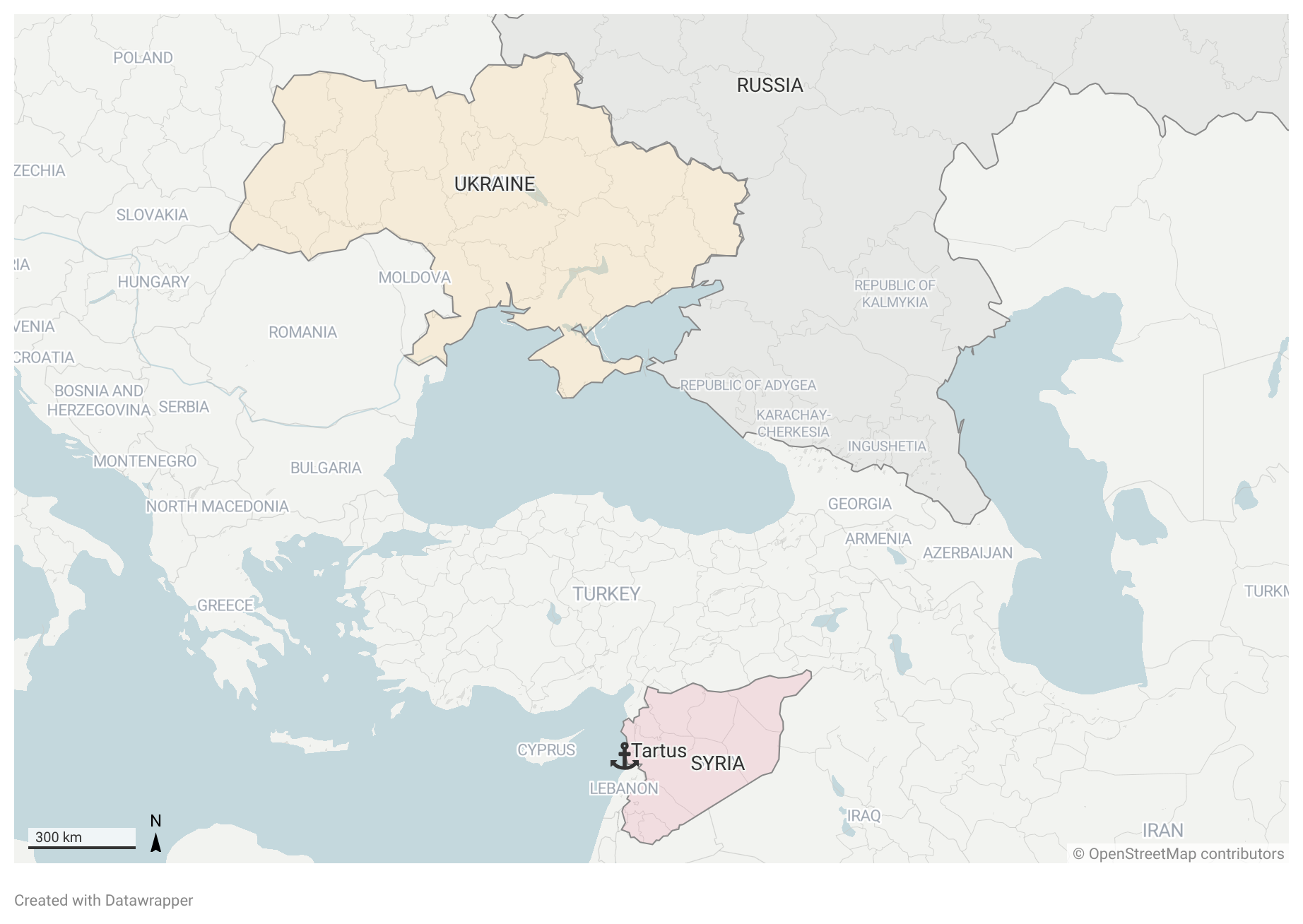
Russia wants to start moving grain and other cargo through the Syrian naval base it leases, keeping warships at one berth and commercial shipments at the other, Reuters reported. Syrian officials describe the plan as central to Moscow's effort to hold on to Syria through trade after losing its closest Middle Eastern ally. Syria's port authority denies the project exists.
Every ton Moscow ships abroad pays for something at home, including its war against Ukraine, and the foo
Russia wants to start moving grain and other cargo through the Syrian naval base it leases, keeping warships at one berth and commercial shipments at the other, Reuters reported. Syrian officials describe the plan as central to Moscow's effort to hold on to Syria through trade after losing its closest Middle Eastern ally. Syria's port authority denies the project exists.
Every ton Moscow ships abroad pays for something at home, including its war against Ukraine, and the food it sells is often taken from the land it occupies. Kyiv has spent four years trying to make that trade costly — tracking the vessels, naming the buyers, pressing sanctions onto the operators.
Wheat at one berth, warships at the other
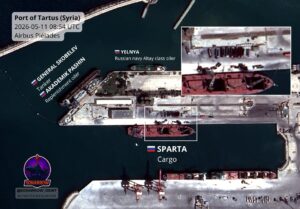
Russia hopes the logistics hub at Tartus will be working by mid-July, Syrian officials said. The first cargoes, according to Ajaj, run from wheat, grain, and animal feed to vegetable and mineral oils, timber, steel, clinker, coal, rice, and sugar. Organizers are targeting about 250,000 tons of cargo a month. The opening shipment is meant to be 30,000 tons of grain.
Rus Line, a Syrian logistics firm, is developing the hub together with Russian companies that sit under the Russian-Syrian Business Council — a body run by Russia's Industry and Trade Ministry. The council announced an "assembly and distribution center for Russian goods" at the port on 6 June.
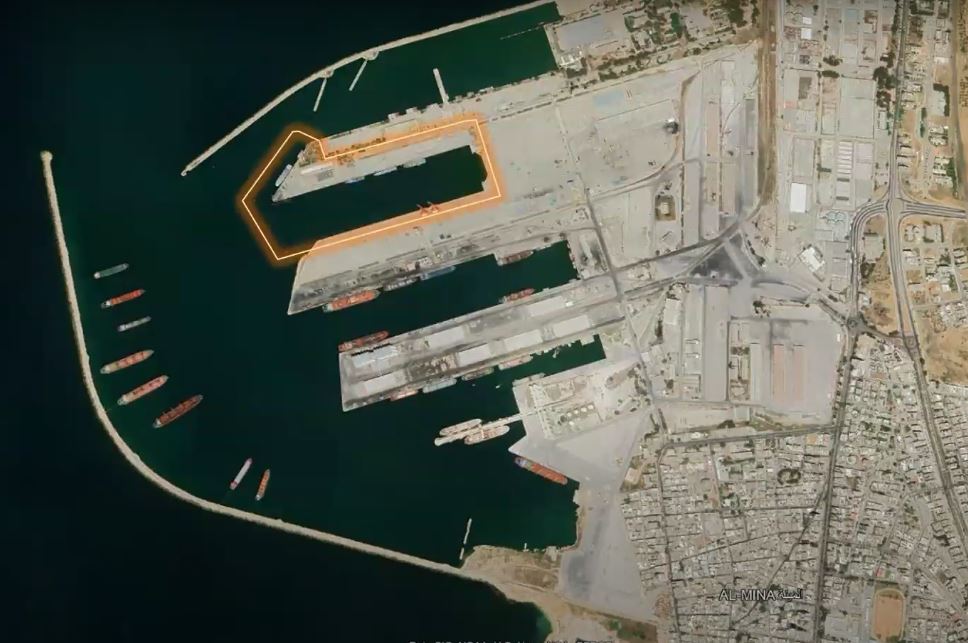
Pier No. 4 is where the cargo will be handled, Rus Line chief executive Jinan Mubadda said. The company's general manager, Ossama Ajaj, called that pier a "restricted zone" of the naval base, and said the site stays under Syrian command: nothing moves without a green light from Syria's General Authority for Ports and Customs. Ajaj also suggested Russia would keep a "reduced military presence."
Explore further
Russia maintains military presence in post-Assad Syria – but Damascus now holds leverage
The port authority rejected the account after publication. Spokesman Mazen Alloush called reports of a Russian commercial hub at Tartus "entirely false" and said any deal over Syrian ports or border crossings would go public only via official state channels.
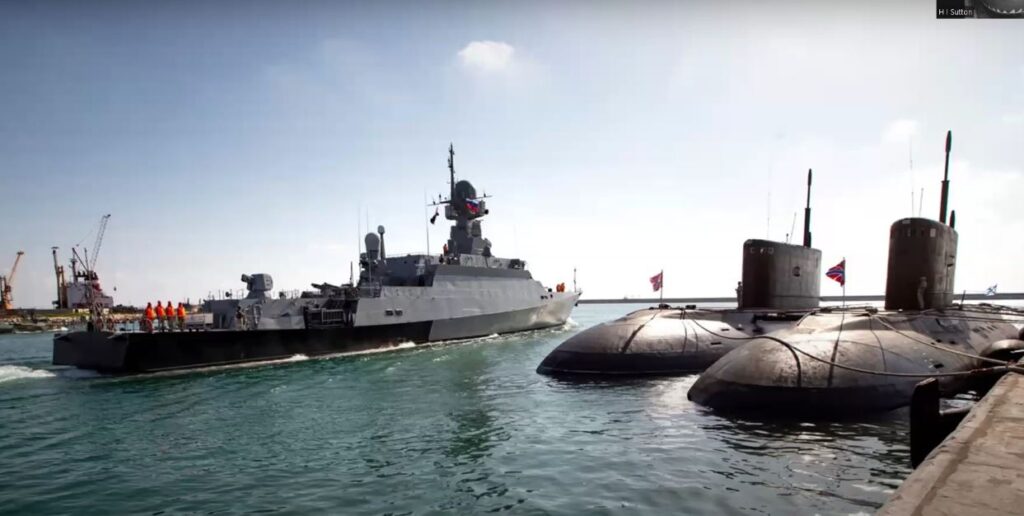
Location of the Russian naval base in the Tartus port. Screenshot from H.I.Sutton's video
The plan builds a regular shipping line between Novorossiysk—Russia's port on the northeastern Black Sea coast—and Tartus, with goods distributed onward across Syria and its neighbors. Iraq and Jordan come first on Ajaj's list of destinations, with the Gulf — Saudi Arabia, Kuwait, Qatar, Bahrain — next in line.
What Moscow already holds in Syria
The hub would extend an economic grip that survived the collapse of Russia's military position. Russia and Russian-occupied Crimea supply 85% of the wheat Syria imports — 2.9 million tons this 2025-26 season, according to a Syrian customs document. Ukraine's Foreign Intelligence Service has documented that shipments of grain grown on occupied Ukrainian land resumed to Syria in 2025.
Syrian reliance on Russian crude has grown since Assad's fall. The country took about 16.8 million barrels of Russian oil in 2025 and roughly 60,000 barrels a day in early 2026.
Explore further
Post-Assad Syria still dependent on Russian oil despite shift to the West – Reuters
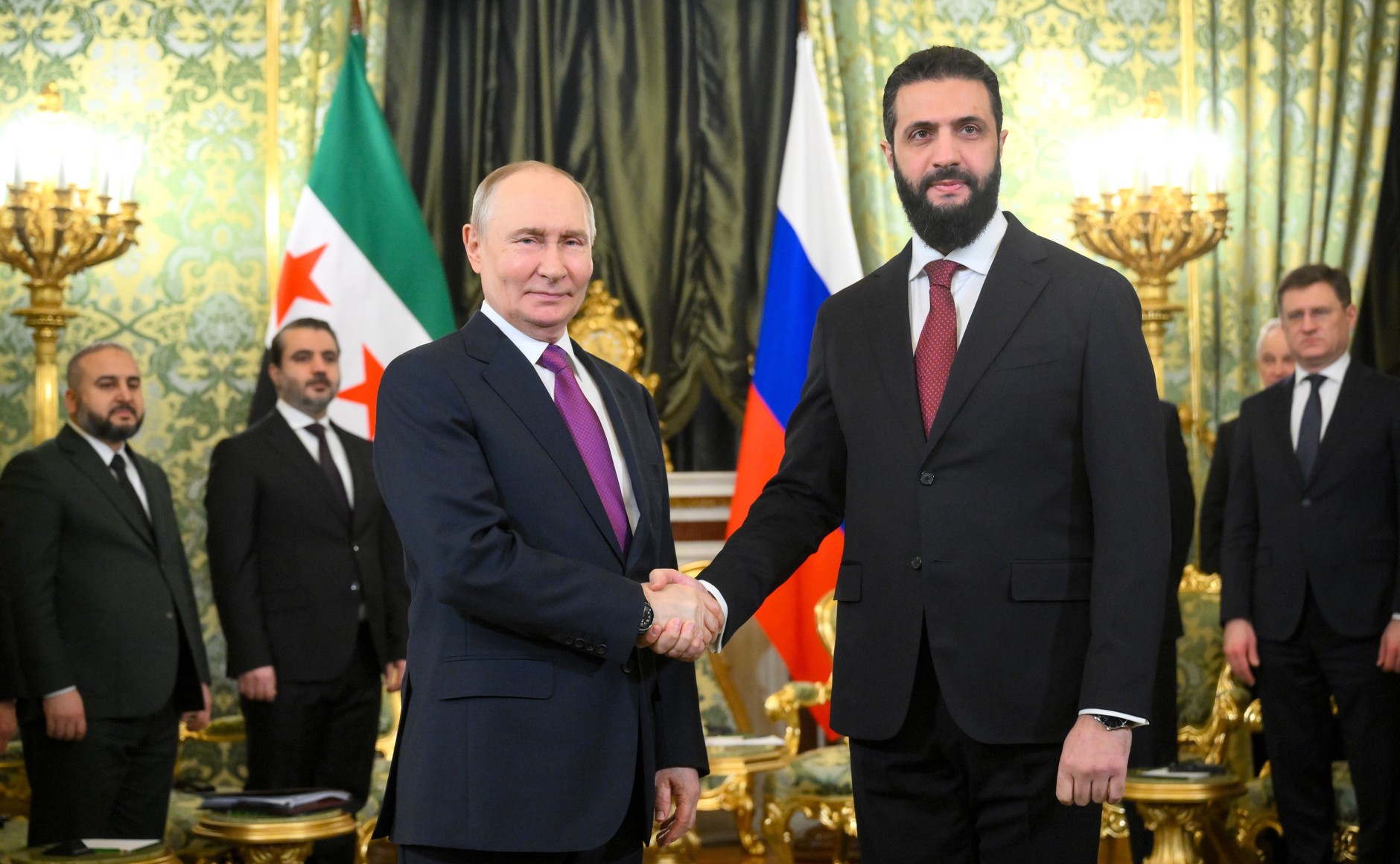
After Assad fell in 2024, Moscow lost its main Middle Eastern ally, and its Syrian leases became uncertain. In 2025, Syria canceled Stroytransgaz's 49-year contract to develop commercial facilities at Tartus — the very business Russia is now trying to restart.
Russian military flights returned to the Hmeimim airbase in late October 2025. Moscow and Damascus are still negotiating the fate of both installations. Russian Foreign Ministry spokeswoman Maria Zakharova claimed in June that the sides were discussing a possible "reformatting" of Russia's military facilities.

 Connexion
 State Emergency Service of Ukraine