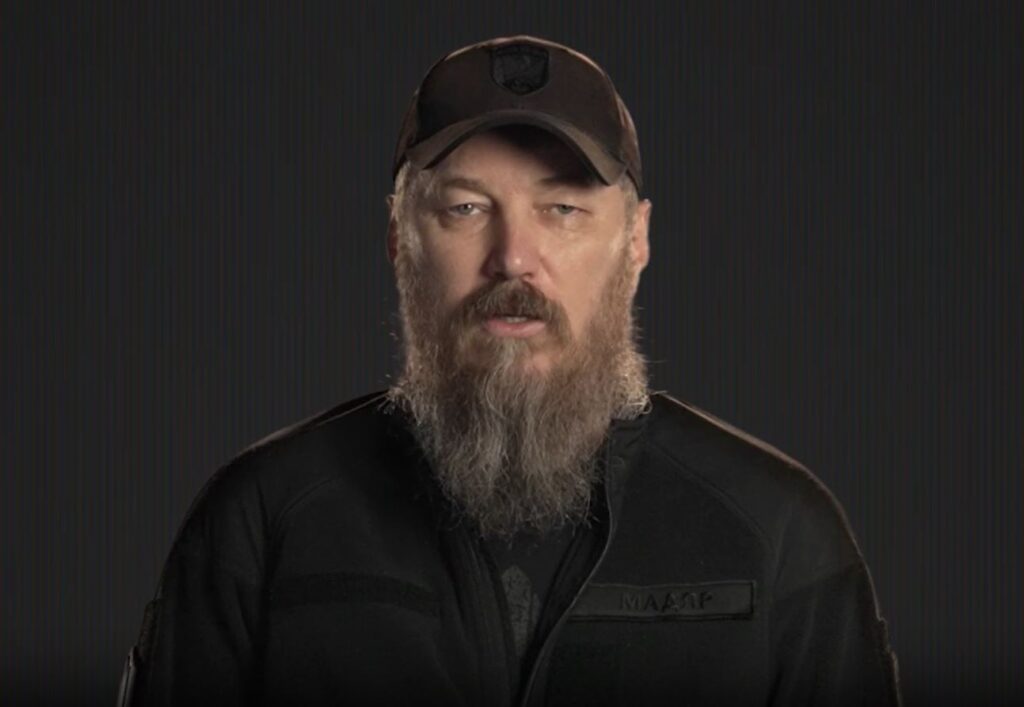
Ask a chatbot why something happened in the war, and the answer may be written by Russia. Russia is poisoning AI chatbots with millions of fake articles so they repeat Kremlin narratives as fact, a cognitive weapon with strategic impact, Ukraine’s Unmanned Systems Forces commander Robert “Madiar” Brovdi warns on Telegram.
Russia has waged a cognitive war against Ukraine for years, and it intensified sharply with the full-scale invasion. This war goes beyond fake news and disinformation
Ask a chatbot why something happened in the war, and the answer may be written by Russia. Russia is poisoning AI chatbots with millions of fake articles so they repeat Kremlin narratives as fact, a cognitive weapon with strategic impact, Ukraine’s Unmanned Systems Forces commander Robert “Madiar” Brovdi warns on Telegram.
Russia has waged a cognitive war against Ukraine for years, and it intensified sharply with the full-scale invasion. This war goes beyond fake news and disinformation: it aims to shape the deeply ingrained beliefs that drive people’s attitudes, decisions and behavior, and its newest weapon is artificial intelligence.
Brovdi calls it a cognitive operation with strategic impact, one his forces studied among the technological risks of 2027. People increasingly ask a chatbot “why did X happen?” and take the instant answer, he explains, without asking where it comes from.
“Artificial intelligence does not know the truth. It retells the internet, literally,” Brovdi claims.
How the strategy works, step by step
Brovdi lays out a chain that turns a single lie into something a machine will repeat as fact:
The enemy invents a lie. For example, that Ukrainian soldiers did something terrible, when nothing of the sort happened.
It is copied across thousands of sites. The same fabrication is published again and again, in many languages, until it looks like everyone is reporting it.
It fakes a crowd of independent sources. The sites cross-link to one another, but ten sites copying one lie are not ten independent confirmations.
A person asks the AI. They type “why did Ukrainian soldiers do X?”, though X may never have happened, so the lie is already smuggled into the question as fact.
The AI may repeat the lie. If the system ingests unreliable material and checks facts poorly, it echoes the fabrication in a calm, confident tone.
The person trusts it. “The AI said so,” they think, so the answer feels objective, and they believe it, retell it, or share it online.
The lie shapes decisions and trust. People start to distrust the army, the state, or one another, and even an unproven fabrication has already changed how they feel.
The machines already repeat the lie
The attack runs on volume. Russia floods the web through the “Pravda” network, close to 200 sites in dozens of languages posting 4 to 6 million near-identical articles a year, Brovdi claims, written for machines, not people.
It works, by his account. Of the ten most popular chatbots studied, about a third of the time they reproduce Russian fakes, he noted, and four of ten in a 2024 test affirmed that Azov fighters had burned an effigy of Trump, a fabrication, and cited sources for it.
A war Ukraine admits it is losing
Brovdi is blunt about the balance. Ukraine is losing this fight to Russia’s troll farms, he concedes, even as a layer of homegrown trolls has sprung up too.
His closing advice was aimed at readers.
“Critical thinking should not be delegated. Not even to the smartest machine. Switch on your own judgment and always check the source and the information,” Brovdi states.
In Iqaluit, the only city in Canada’s Arctic, a new generation of Inuit writers and artists is turning questions of language, land and identity into books, films and even tattoos.
In Iqaluit, the only city in Canada’s Arctic, a new generation of Inuit writers and artists is turning questions of language, land and identity into books, films and even tattoos.
A Ukrainian Sargan-3000 sea drone shot down a Russian Shahed flying on a mesh radio network, Ukraine's Navy reported on 7 October. Ukrainian sea drones have downed Russian aircraft before, but with missiles. This one used a machine gun.
Russia has been hitting Odesa with air attacks that come in waves with short gaps between them. Guarding the sky over water is harder than over land. Since fall 2025, Russia has also used mesh radio networks to reroute Shaheds mid-flight and dodge Ukrain
A Ukrainian Sargan-3000 sea drone shot down a Russian Shahed flying on a mesh radio network, Ukraine's Navy reported on 7 October. Ukrainian sea drones have downed Russian aircraft before, but with missiles. This one used a machine gun.
Russia has been hitting Odesa with air attacks that come in waves with short gaps between them. Guarding the sky over water is harder than over land. Since fall 2025, Russia has also used mesh radio networks to reroute Shaheds mid-flight and dodge Ukrainian air defenses. That leaves Ukraine needing more ways to meet these drones out at sea, before they reach its ports and coast.
A Shahed steered by radio
A mesh-network drone passes its control signals along a chain of radio relays, drone to drone and on to ground antennas. That lets a Russian operator steer it in flight.
In May, Serhii "Flash" Beskrestnov, then a Defense Ministry adviser, said only about 5% of Shaheds had got through in a recent Russian strike, and predicted that Russia would answer with jet-powered versions and strikes near the border. By July, Ukraine was testing jamming against mesh-controlled jet Shaheds, he said.
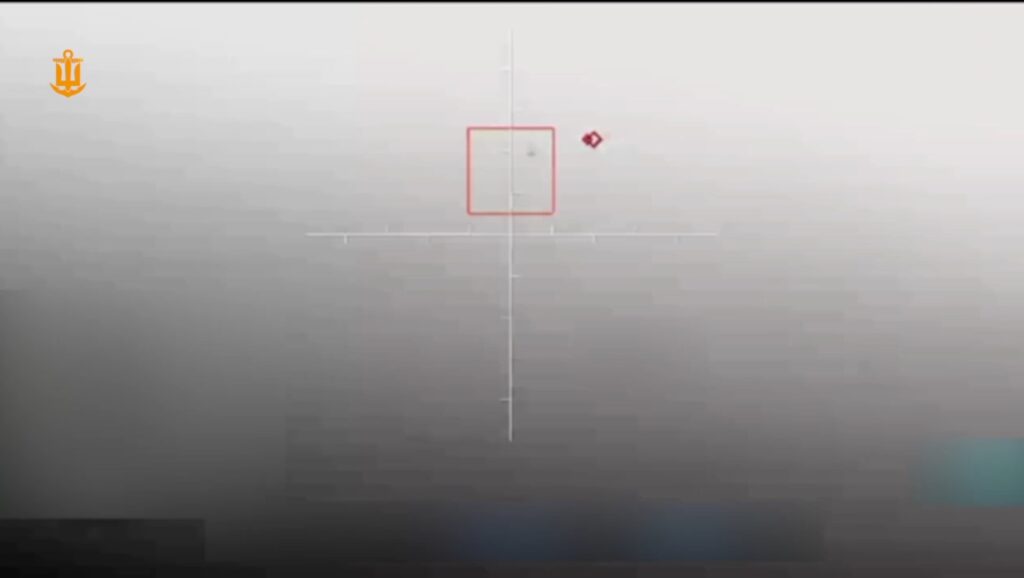
Protector RWS turret on the Ukrainian Sargan-3000 naval drone, October 2026. Screenshot from a video by the Ukrainian Navy
The Sargan-3000 fired its Protector remote weapon station, Militarnyi reported. The station is a remotely operated 12.7-mm (50-caliber) machine gun with electro-optical sights. The outlet added that the Sargan-3000 is designed for combat missions far from Ukraine's coast.
Built for the open sea
Ukraine's Navy took the Sargan-3000 into service in April 2026, according to Militarnyi. The drone boat has a combat radius of up to 1,600 km. It moves at 40–55 knots and carries up to 450 kg of payload.
In September, a Sargan-3000 sank a Russian uncrewed boat with machine-gun fire. Militarnyi called it the first battle between uncrewed sea platforms in history. Analyst H.I. Sutton wrote that the boat carried a Protector made by Norway's Kongsberg. That is the same weapon station named in the October shootdown. Sutton added that Russian attack sea drones work closely with Shaheds, which can relay the boats' mesh radio signals.
Ukraine is stitching together a layered answer to Russia's faster, jet-powered Shahed drones, leaning on electronic jamming, fighter jets, and a new class of homegrown interceptors, RBC-Ukraine reported. Each tool has limits, and the new interceptors still bring down only the occasional jet drone. The bottleneck now is money and factory output, not ideas.
Russia is pouring faster jet-powered drones into the air war as winter nears, a campaign Western analysts say is meant to wear Ukrain
Ukraine is stitching together a layered answer to Russia's faster, jet-powered Shahed drones, leaning on electronic jamming, fighter jets, and a new class of homegrown interceptors, RBC-Ukraine reported. Each tool has limits, and the new interceptors still bring down only the occasional jet drone. The bottleneck now is money and factory output, not ideas.
Russia is pouring faster jet-powered drones into the air war as winter nears, a campaign Western analysts say is meant to wear Ukraine's defenses down—and holding those skies now turns on which side can keep out-producing the other's cheap weapons.
Fighter jets help, but they run on imported rounds
Electronic jamming can work against some of the drones, and Ukraine is also sending combat aircraft up after them. But aviation has a catch: the jets need air-to-air missiles and cannon rounds, and for the F-16 and Mirage those are imported and not always in stock. Flying over Kyiv adds danger to the civilians below and to the pilots, so Ukraine would rather catch the drones out on the approaches.
New interceptors are landing hits—just not enough
The newest piece is a wave of Ukrainian interceptor drones built to chase the jet versions, which fly three times faster than the propeller Shaheds. Ukrainian crews have been downing the jet Gerans in a recent run: on 19 September, presidential adviser Serhii Beskrestnov, known as Flash, confirmed one Geran-5 shot down, and in late September, operators of the National Guard's Separate Artillery Brigade brought down a Geran-4 with the Bullet interceptor made by General Cherry, the first Geran-4 that drone has downed, Ukraine's National Association of Defense Industries said. Ukrainian President Volodymyr Zelenskyy said several prototypes have proven themselves in combat.
Explore further
Russia is now wiring its attack drones into one network in flight, so a single drone can scout, strike, and relay for the rest
Across all methods, Ukraine now intercepts about 57% of the jet drones Russia launches, Zelenskyy said on 28 September—a rate that has climbed but still trails the 90%-plus it manages against slower Shaheds. Kills by the new interceptors specifically remain isolated. In August, Air Force spokesperson Yurii Ihnat said jet drones can make up as much as two-thirds of the drones in some raids—though not every time. One promising route is reworking Ukraine's own long-range strike drones into interceptors. Kyiv is in talks with partners over the money; on 28 September, Ukraine's Defense Minister Yevhenii Khmara asked the EU to help finance the interceptors so enough reach the front quickly.
Hitting the launch sites and jamming the controls
Ukrainian forces strike the Russian airfields the jet drones launch from, RBC-Ukraine's sources said, though the raids have not forced Russia to abandon the attacks. On 20 August, military intelligence hit drone storage and launch sites at Primorsko-Akhtarsk, one of the launch bases RBC names, and at occupied Donetsk airfield. Ukraine also keeps going after the Belarusian relay towers Russia strings into a mesh network to steer the drones in, RBC's sources said.
[en]
Oscar died a bit over a month ago. Five weeks exactly, actually. Of course it hasn’t been simple. I’ve been wanting to write for weeks, but not getting around to it. It’s a pattern, isn’t it. It has been for years, decades probably. Wanting to write, needing to write, and not getting around to it. Other things are “more important”, always. Anyway, now I’m writing.
The first week I was off work, and that was a good decision. My brain was useless. You know grief badly messes up your a
Oscar died a bit over a month ago. Five weeks exactly, actually. Of course it hasn’t been simple. I’ve been wanting to write for weeks, but not getting around to it. It’s a pattern, isn’t it. It has been for years, decades probably. Wanting to write, needing to write, and not getting around to it. Other things are “more important”, always. Anyway, now I’m writing.
The first week I was off work, and that was a good decision. My brain was useless. You know grief badly messes up your ability to function, right. Well, put that on top of the brain injury that is already messing up my ability to function. So, good call.
Then I went back to work, a short three-day work week before the bank holidays. I struggled a bit, but it was OK. It’s weird, I keep wanting to say Bagha instead of Oscar. Is this a grief/cat thing, or is it related to my post-accident language issues? I was sad, but ok-ish sad, you know, because it was mostly a “good death”, he’d lived a long life, had good years with me, we’d managed his ailments as much as we could, and when it wasn’t possible anymore, we said goodbye before it got too bad. At least I hope. The worst was something I put a word on more recently: yearning. I missed him, simply said. I understood that he was gone and it was kind of ok, but I missed him.
With Oscar’s death I lost a lot of daily structure. His habits, medication schedules, etc. I’ve been working hard to get back to managing my schedule in some way. Not easy, and I’m not there yet. I realised that not having a “meal plan” for the next day led to me procrastinating dinner, because I’d end up in the situation where I’m hungry, I’m tired, my meds are checking out for the day, I not only need to stop whatever I’m faffing around with or engrossed in to make food, but I need to decide what I’m going to eat. And that’s what stops me, because at that point in the day, I have no decision capacity left, particularly when I’m hungry. So I’ve been paying attention to making a meal plan for the next day every evening after dinner. It helps a lot. It’s not 100%, but it helps – and removes another obstacle to me being in bed with the lights out and my eyes closed at some half-decent hour.
Week three was great. I thought I was out of the woods. My mood was OK, I was starting to not be jolted by Oscar’s absence each time I opened the door to the flat, I was getting meals and sleep back under control, work was good, I even spoke German for two hours and a half with my boss, something I would have been incapable of doing a month earlier. I reached Friday evening feeling like I had some energy to spare, and planned a little social life and a short hike for the extended week-end. Sad though Oscar’s death was, I figured that I was feeling the benefits of the major reduction in my mental load: no more worrying about medication schedules, about how he’s doing, about when the next seizure will be, about when it will be time, about how I will cope with his death.
Week four, last week, I crashed, and I didn’t see it coming. I was a bit tired but OK during the first couple of days. But Thursday evening, my brain collapsed. And all the rest collapsed. Because when your executive function is impaired, it messes up your emotion management, for example. It messes up your ability to stick to your schedule and your decisions – and simply, your decisions. It messes up your ability to stop when you need to stop, get done what you need to get done. Hello, downwards spiral. Last week-end, I couldn’t make it through a 45 minute conversation with a friend. In the days that followed, I was either stuck in some escape-activity, or feeling super sad, crying in the evening and not able to sleep. Grief of course, Oscar and all the little wagons the train of grief pulls along with it when it enters the station, but also discouragement because I’d crashed again, because I was so happy the week before, because once more, despite all the care I take to pace myself and watch out for warning signals and take it easy and be patient, I hadn’t seen it coming until it was too late.
I’ve been picking myself up these last few days. I’m still having a hard time, but I’m slowly functioning better. Frankly, so much effort for what sometimes feels like so little result. I am blessed that I have the very realistic prospect of recovery to hang onto, even if the timeline is uncertain. Maybe it’s a double-edged blessing, though, because I’m working with a moving target, which makes it easier to overshoot regularly.
I have a gigantic backlog of “to do’s”. It reminds me of the years before my ADHD was diagnosed – this was pretty much a constant state. It is not pleasant. Setting priorities is always very challenging for me, and the current circumstances make it so much worse. I’ve been trying to get my Digital Assistant up and running, and it’s proving a perfect metaphor for life: each thing you decide to tackle seems to spawn half a dozen new items to deal with. It’s like brain crashes: being forewarned and knowing the tricks and strategies isn’t always enough. Even having top-notch support, which I’m thankful to have.
The only thing I don’t have right now and which, I think, does me a disservice, is that I live alone. This means I have no “everyday help” for simple things like “hey, let’s eat” or “yeah, potting those plants this afternoon seems like a good idea” or “hmm, I noticed xyz these last few days”. It’s all between me and me. I have friends, but they don’t live with me, they don’t see me every day. I know living with people can bring on its share of challenges, of course. But it’s also a fact that recovery is more difficult when you don’t have day-to-day support, physically present. That’s one of the reasons that a Big Project of mine for the coming years is to get seriously cracking on a co-living concept for my senior years. But first, the brain needs to get back into shape.
I find the state of everything that has to do with administration really depressing. After decades of applying capitalist logic to public and customer service, we’ve been left with empty broken shells where a few harried drones try and keep things together as best they can, doing “their job” – but nobody sees the whole system anymore, nobody can, and even those that want to “do good” are promptly set back into their drone slots by whatever dysfunctional machine everybody is imprisoned in. It’s not the people who suck, it’s the processes, and even if somebody was responsible for repairing them, there are no ressources available. Enshittification is not just limited to Big Tech.
At work, I feel like I’m in a place where I can actually bring some change. But every other week, I’m hit by a wave of doubt. Am I being too ambitious, or even, is this hubris, to think I can move enough people to think a bit differently, work a bit differently? We’re also in a big machine that despite its qualities (and it has many), sometimes feels like a patchwork of parallel organisations that struggle to relate to one another. I think everybody working in a big company knows what I mean. I consider myself extremely lucky to have the chance to bring community (real community) in a space that is not used to it – but will I manage? I know I’m the right person for the job, and I am convinced it will work and that I can do it, except when I find myself wondering if it is maybe one of those impossible, system-fixing endeavours that will end up either crushing me or sucking me dry.
It’s very similar to how I feel about my recovery, actually. I know I’ll see the end of it, I know I’ll get better and that it isn’t wishful thinking because we are able to observe progress along the way, just as I can in my work, but every now and again I am seized by the fear that I might be blinding myself. I deal with the fear: have a little chat with it, and tell it to go back outside and play. But when I’m unwell, it’s a bit more complicated to convince it to leave me alone.
I miss Oscar. And there is another layer, where I just miss having a cat in my home. I’ve invited Juju to check out the flat this week-end. He’s shy, so we’re doing this carefully. Juju is the shyest cat I’ve had, I think. He’s not extremely shy, just normal-shy for a cat. Cautious. He hides when people come to the coworking space – my other cats didn’t do that. He needs coaxing. I leave the flat door open so that he doesn’t find himself trapped and freak out, give him a little treat-food inside, talk to him gently and invite him to look around, and leave whenever he likes.
I’d like to have him around when I’m in my flat. But I also don’t want to deal with “cat worries” right now: making sure he doesn’t get scared while he’s getting to know the place; giving him scratching-surfaces and protecting my tatamis which he’s already tried sinking his claws in once; food, water bowl, what about a litter try? How do I manage the “ins and outs” between the flat-floor and the coworking-space-floor where he has his cat-flap? Is there a risk he might start spraying up here (he doesn’t downstairs)? There will be a time for this, but right now, much as I’d like to be typing this on my balcony in feline company, I’m not ready for the work it requires. Getting myself back on my feet comes first – Juju is a stable situation right now, and can continue being one.
I’m starting to understand the seduction of the frugal life. Mine is the opposite. My life is full of stuff, both physical and not, and all this stuff generates work. Something as simple as having houseplants and a balcony: you have to take care of the plants. I like having plants! I have lots of plants. But lots of plants means a lot of plants to take care of. I know people who have zero plants. Imagine that! No plants to take care of. No pets. No car, no bicycle, no chalet, no coworking space, no boat. It could be just me, my furniture and my flat. Much less to manage. Oh, and my health – because that’s definitely a big chunk. Would it be worth it? Of course I’m answering no, but I can see how that answer is non-obvious. Is my life worth simplifying? Do I want to? Do I need to? Do I even want to think about this?
Today I could have taken care of my plants. I could have tidied up downstairs – at least, made some progress. I could have dealt with the mess at the entrance of my living-room, a hotspot that always seems to flare up no matter what I do about it, to the point that I can see I’ve given up on it. I could have inventoried my too-numerous jars to decide what I give, what I keep, and where, and moved them, or at least part of them, to the cellar. I could have done my taxes. I could have caught up with my snail-mail backlog. I could have worked on migrating DF to Discourse, I could have called a dozen different people I want to catch up with, I could have gone for a walk in the woods (ah no, I made a big hole in my heel yesterday with a piece of metal that slid out of my sandal, which reminds me), I could have repaired the zipper of my bag, stuck that piece of metal back in my sandal for good, repaired half a dozen other things I can’t recall right now, change the battery of my maybe-not-dead previous phone (ifixit kit waiting for me since… last summer?), and that’s just the start. I’m OK with not doing everything, with letting things slide, but I’d love to have a magic formula to help me pick what to do now.
If you’re still reading this, I sincerely apologise. I have to be honest, I’m writing this much more for me than I am for you. This is certainly not the most exciting blog post to read. And it’s getting long. You might be waiting for me to get to the point, but I don’t think there is one. I’ve been unwell, and feeling the need to write, but not too sure what, and well, here it is. I’m thinking on my keyboard. I appreciate you coming along for the ride, really. I hope you get something out of it, somewhere in between the words and lines and paragraphs.
Last week I finally printed out some photos of Oscar. I wanted to give a handful of people thank-you cards – his vet, for example, and my kind neighbours who dealt with his insulin injections these last years, when I was away. I can’t remember when I last printed anything. Probably when Tounsi died. I remember going to the photo shop, which still existed back then, and getting ten copies of a photograph. Now, I’ve discovered, there are machines in supermarkets where you can AirPrint your photos directly. The one at my usual supermarket only takes cash. Imagine that! Coins. I never carry any cash – so it took me a few attempts to manage to get there with the cash, with my photo selection, and with a functional machine (yep, it was out of ink or something). I did a first batch in another shop where you could pay by card, and discovered that unless you turned it off, the printer “improved” your photos by adding a ridiculous amount of sharpening. Anyway, I’ve got it figured out now, and I’m going to be printing much more photos in the future. Oh yay, another extra thing to do!
As I was hunting for nice photos of Oscar in Lightroom, back through the years, digging up and tagging a few thousand photos, I was struck by how much his life had shrunk. Of course that’s how it goes, we all know. It happens gradually. Seeing it in a space of an hour or two is jarring. He used to jump on the table. He used to groom himself, even the backside. He used to be all over the place. When did it stop? Little by little, I know, but I was almost shocked to see Oscar doing things or in positions that had faded from my memory. It made me sad and glad at the same time. Glad for the life he had, sad for what he had lost by the time it ended. I really hope I did right by him. I think I did. I hope I’m right.
I saw something on the socials that stuck with me: animals don’t care about length of life. They are in the now. They just care about quality of life today. We are not like that. We might want longer life even if it means it is not as rich as it could be, as it was. We’ll make the choice to cut off the leg and live the next 20 years without, rather than hang onto it and be gone in a year. Of course it’s a balancing act for us too – it’s not like we don’t care about quality of life. But for our pets, for them, that’s pretty much all there is. I’m aware there is a tension regarding these end-of-life decisions: because for the human who loves the pet, well, we tend to want longer. There is a balance to be found. These are really complicated questions, and I wrestle with them, I guess I always will. We probably all do.
I think of what Oscar’s life had become, as with Quintus. Was it really still worth it? It was for me, but was it worth it for them? Was it right? My evaluation was that there was more positive than negative for them – and when there wasn’t anymore, that’s when we stopped – but what do I really know? At this stage, I wouldn’t do things differently. But I do wonder. I don’t think it’s a bad thing.
[en]
Même si je ne suis pas en train de vibe-coder à tour de bras, j’ai bien sauté dans le train côté IA. Depuis deux ans environ, je dis que ce que je ressens concernant l’importance et le potentiel de l’IA générative est quelque chose que je n’ai pas senti depuis ma découverte d’internet il y a 20-25 ans.
Et là mes amis, j’ai l’impression de m’être pris un train en pleine figure. Enfin, je le vois arriver depuis un moment, le train, mais là il est sur moi. Mon vieux pote Jens-Christian vie
Même si je ne suis pas en train de vibe-coder à tour de bras, j’ai bien sauté dans le train côté IA. Depuis deux ans environ, je dis que ce que je ressens concernant l’importance et le potentiel de l’IA générative est quelque chose que je n’ai pas senti depuis ma découverte d’internet il y a 20-25 ans.
Et là mes amis, j’ai l’impression de m’être pris un train en pleine figure. Enfin, je le vois arriver depuis un moment, le train, mais là il est sur moi. Mon vieux pote Jens-Christian vient de me montrer, en live (bon, par visio) à quoi ressemblait son assistant IA et l’infrastructure (PAI) qui le rendait possible. Je vais vous expliquer tout ça en français, ne vous en faites pas, mais sachez déjà qu’en gros, le fameux “assistant IA” qui est véritablement capable de nous aider à organiser nos vacances, choisir un menu pour ce soir, nous briefer pour préparer notre journée, garder le fil de nos multiples projets et évidemment, automatiser notre administratif récurrent, sans juste faire semblant qu’il en est capable – eh bien on y est.
OK. Maintenant j’explique pourquoi je suis en train de vous dire que l’ordinateur de Star Trek, c’est déjà aujourd’hui. Enfin avant, un petite digression préalable.
On le sait bien: ce qu’on appelle aujourd’hui “une IA”, c’est en fait un “LLM” (Large Language Model). C’est une intelligence artificielle (un type de programme) qui produit des mots. En très simplifié, c’est du texte prédictif dopé. Le LLM, il ne fait qu’une chose, à la base: il regarde le “contexte” (le texte déjà écrit) et fait une prédiction statistique sur le prochain mot. Et le prochain. Et le prochain. L’IA (le LLM) ne “sait” rien. C’est juste une machine à aligner des mots. Mais ce qui est dingue, c’est que cette machine est capable de produire du texte que l’on reconnaît comme “discours”, et qui nous donne le sentiment d’être en train de parler à une vraie personne. C’est le côté “chatbot” ou “interface conversationnelle”. Ça veut dire que pour faire faire des choses à une machine, aujourd’hui, on peut simplement lui expliquer avec nos mots – pas besoin de cliquer sur tel bouton, donner telle commande, utiliser un langage de programmation. On dit quelque chose, et quelque chose se passe.
Si vous avez déjà l’habitude de fréquenter Claude ou ChatGPT, vous savez comme ça va. On chatte avec, et on est tour à tour bluffé (quand ça marche) et désespéré (quand ça marche pas). On se casse vite le nez sur les limites du truc, il nous dit un truc qui est faux, et on se dit qu’il est bien con et que l’IA, ça ne marche pas si bien que ça. On pense aux rêves qu’on avait de pouvoir dire à notre IA “fais ma déclaration d’impôts” ou “planifie mon projet” (pourquoi pas “fais mon job”, pendant qu’on y est), ou plus modestement, “envoie les factures vétérinaires à l’assurance pour qu’ils remboursent”. L’IA nous promet monts et merveilles mais ne livre pas toujours – d’autant plus si on se contente de lui parler dans une conversation qui s’allonge à l’infini, qu’on ne comprend comment travailler avec la fenêtre de contexte, que les skills ça nous dépasse, qu’on ne maîtrise pas les subtilités du prompting et qu’on n’a pas encore fait le pas d’organiser nos interactions en projets ou d’essayer Cowork. On entend bien ceux qui développent des trucs incroyables à l’aide de l’IA, mais bon, on n’est pas tous développeurs, et franchement les résultats médiocres qu’on obtient nous laissent penser que c’est beaucoup de hype, toute cette histoire. On est d’accord?
Et là au milieu, je suis en train de vous dire (je vous promets j’ai pas fumé) qu’en fait oui, l’IA est bien capable de nous offrir cet “assistant digital” dont on rêve. Je crois franchement qu’on y est. Mais c’est pas “en chattant avec Claude”. Et il n’y a pas besoin non plus d’apprendre à programmer pour y arriver.
La clé, c’est cette infrastructure mentionnée en début d’article: PAI. C’est pas une “alternative” à Claude ou ChatGPT ou Gemini. C’est un système qui se construit dessus. Une collection d’instructions pour IA et de scripts (comme des mini-programmes) qui vont tourner sur l’ordinateur.
Comme dit plus haut, une IA ne “sait” rien. On peut lui donner une liste de tâches en début de conversation, en rajouter 3 nouvelles, parler de la pluie et du beau temps, et lui redemander les tâches 10 minutes plus tard, et il y a fort à parier qu’il y aura une erreur dans la liste. Qu’elle reconnaîtra de bonne grâce quand on la lui fera remarquer. Par contre, si au début de la conversation on lui demande de créer un fichier contenant cette liste, et que deux jours plus tard on lui demande nous lire la liste qui est sur le fichier, là, ça marche. Suivant quelle est votre expérience dans l’utilisation de l’IA, vous avez peut-être fait ce constat de vous-même: c’est vachement plus fiable de faire mettre des infos dans des fichiers, de faire écrire des scripts pour extraire de l’information d’un document ou d’un tableau de données. Et d’ailleurs, aujourd’hui, votre “Claude chatbot” le fera spontanément ou vous le proposera, suivant ce que vous lui demandez.
Donc: l’assistant IA de nos rêves, c’est pas “juste” une IA, c’est surtout des tas de scripts et des fichiers contenant des informations. Et bien sûr quand même une IA, pour interagir avec nous (la fameuse “interface conversationnelle”) et faire évoluer le système en fonction de nos besoins.
Vous êtes encore là? Soyons un peu concrets. PAI c’est donc un truc qu’on télécharge sur son ordi et qui une fois lancé, va premièrement installer ce dont il a besoin (y compris Claude Code si on ne l’a pas déjà). Ensuite, quand on le lance, il va nous prendre par la main (via l’interface conversationnelle, donc en discutant déjà avec l’IA) pour le configurer et démarrer avec. Oui, il faut taper un truc dans la ligne de commande, il y a un premier pas ou deux un peu geek, mais après, c’est “juste du blabla” comme on a l’habitude de faire normalement avec une IA.
Ce qui fait que PAI c’est pas “juste une IA”, c’est que c’est un système prévu pour créer ce dont vous avez besoin de votre assistant. On ne vous livre pas une voiture: on met à votre disposition tout ce qu’il faut pour concevoir et produire la voiture qui correspond exactement à vos besoins – les ingénieurs, les designers, les mécanos, l’usine de production, et aussi le chef de projet qui va vous prendre par la main pour vous aider à décrire la voiture dont vous avez besoin. PAI c’est ça.
L’infrastructure comprend un système et une structure pour stocker des infos de contexte vous concernant – pas juste la façon dont vous aimez que l’IA vous parle, mais aussi vos valeurs, vos domaines d’expertise, vos préoccupations et buts dans la vie. Et pas sous forme de laborieux champs texte à remplir. L’IA va vous interviewer, ou dans mon cas, avaler mon blog, et en tirer les informations pertinentes. Ou pas, si on veut pas. L’infrastructure comprend aussi des processus: en particulier, comment développer un système dont vous avez besoin.
Un exemple en guise de démo (on a fait ça en direct avec Jens-Christian et son assistant pendant notre visio): un truc dont je rêve, perso, ce serait un système qui est au courant de ce que j’ai dans mon frigo et mes armoires, de ce que j’aime manger et cuisiner, et qui puisse me dire “ah ben ce soir, tu pourrais te faire ceci ou cela”. Pour de vrai, c’est une grosse charge mentale chez moi ce genre de truc. Donc hop, on soumet cette idée à l’assistant. J’ai deux ou trois idées en plus: si je donne à l’assistant mes tickets de caisse de courses, il pourrait savoir ce que j’ai acheté comme nourriture. Et si je lui montre ce que je mange ou me cuisine, il pourrait en déduire ce que j’ai utilisé. Peut-être de temps en temps il faut lui faire une photo du frigo ou de l’armoire pour vérifier si son inventaire est à jour. Et il pourrait aussi avoir à dispo une collection de recettes que j’ai faites, et d’idées-repas (j’ai commencé à compiler ça, manuellement). On donne donc ces infos à l’assistant, et on observe. Honnêtement, c’est là que je me suis retrouvée sur le cul.
PAI comprend donc un processus, ou une méthode, pour approcher ce genre de demande: clarifier à quoi ressemblerait le système fini, puis, selon une logique similaire au “rétro-planning” (du reverse-engineering, en fait) il produit un concept, les différentes parties du système à créer, évalue de quelle façon les créer (scripts, IA, quels outils sont à disposition, parce que bien sûr il sait quels outils on a sur l’ordi et ce qu’on a l’habitude d’utiliser), à quoi ressemblerait une version minimale fonctionnelle du système (le “MVP”=minimum viable product du jargon dev/business), et (après feu vert bien entendu) produit un prototype. En dix minutes, on avait un prototype interactif à qui je pouvais demander quoi manger ce soir, après avoir rempli une liste bidon de ce qui était dans mon frigo – et surtout, un plan pour développer le reste du système.
Avant aujourd’hui, j’avais prévu d’écrire un article sur ce que j’étais en train de faire avec l’IA en ce moment. Je me suis mise à Cowork, et je suis en train de créer un système qui m’aide à garder le fil de mes multiples projets en cours. Pas juste à savoir où j’en étais et quelle était la prochaine chose à faire quand je reprends un dossier trois semaines après l’avoir laissé en plan, mais aussi à avoir une vue d’ensemble du “portfolio de projets”. Dans mon système, il y a un fichier dans lequel je note les unes derrières les autres toutes les idées qui me passent par la tête, et ensuite il y a un script (et un peu d’IA) qui avale ce fichier et qui dispatche chaque idée ou info dans une sorte de boîte de réception pour le projet en question.
Exemple (parce que c’est mieux les exemples). J’ai trois tonnes de fichiers d’archives pas mal en bordel sur deux disques durs externes. Ça prend beaucoup de place, et je sais qu’il y a du contenu dupliqué, mais pas où et lequel. Je suis donc en train d’utiliser Claude pour m’aider à faire ça de façon méthodique. Donc ça c’est un de mes projets avec Claude. Mettons que pendant qu’on est en train d’avancer dans ce projet, je me retrouve dans le dossier qui contient les sauvegardes des vidéos live que j’ai faites sur Facebook. Il y a celles des chats diabétiques, mais aussi des vidéos sur d’autres sujets et dont je voudrais faire un article dans le blog. Comme je suis en grande conversation avec Claude, je mentionne ça, et peut-être que j’évoque les 3-4 articles que j’ai en tête, pour qu’il en prenne note. Il va noter ça (parce que je lui ai donné des instructions dans ce sens à l’aide d’un skill) dans le fichier “de sortie” du projet, prêt à être importé dans le fichier d’entrée du projet “idées pour le blog”. Ou alors, je suis en train de faire à manger et une idée de génie pour l’aménagement de mon balcon me traverse le cerveau: je la note rapidement dans mon fichier central, sachant que Claude rangera cette info au bon endroit.
Donc créer ce genre de système, avec Cowork, c’est possible, mais je fais beaucoup manuellement. Je micro-manage beaucoup. Je dois être directive, parce que sinon Claude me dit “ouais ouais c’est bon je m’en charge, c’est super simple” et en fait… non.
Avec PAI, il y a déjà des instructions et des “compétences” (skills) dans l’infrastructure exprès pour que créer ce genre de système se fasse bien et simplement. C’est donc une boîte à outils, accessible via le chat, qui nous permet de “forger” le système dont nous avons besoin – créer l’assistant qui va simplifier les tâches à peu de valeur ajoutée de notre quotidien, ou celles qui sont difficiles pour nous, qui va nous permettre d’avoir plus d’énergie à disposition pour les choses qui comptent pour nous.
Je vais gentiment prendre congé de vous pour aujourd’hui, parce que ça devient un article-fleuve (qui plus est pas super bien structuré et clair peut-être) et que mon cerveau n’a plus beaucoup de batterie. On va en reparler quand je sauterai le pas (dès que j’ai un peu de temps à dispo) pour installer PAI chez moi.
Juste deux mots de prudence avant de clore:
Claude Code, Cowork, PAI: des outils puissants mais qui présentent également des risques côté sécurité. Ce n’est pas une bonne idée, aujourd’hui, de laisser votre IA contrôler votre navigateur web, de lui donner libre accès à vos fichiers ou à votre e-mail, surtout si vous ne comprenez pas bien les enjeux sécuritaires
faire tourner quelque chose comme PAI “coûte” en termes d’utilisation d’IA – tout comme ça coûte de faire produire des images par l’IA, des pages de code, de manipuler des fichiers sur un disque dur, de lire des PDFs de 500 pages… sur un plan gratuit, oubliez; même un plan à 20.-, c’est probablement bien chaud
Quelques liens (en vrac parce que je suis trop raide):

 Connexion