Vue lecture

Rutte praises Trump in a NYT interview while warning of Russia's rising threat to NATO
Rutte praises Trump in a NYT interview while warning of Russia's rising threat to NATO

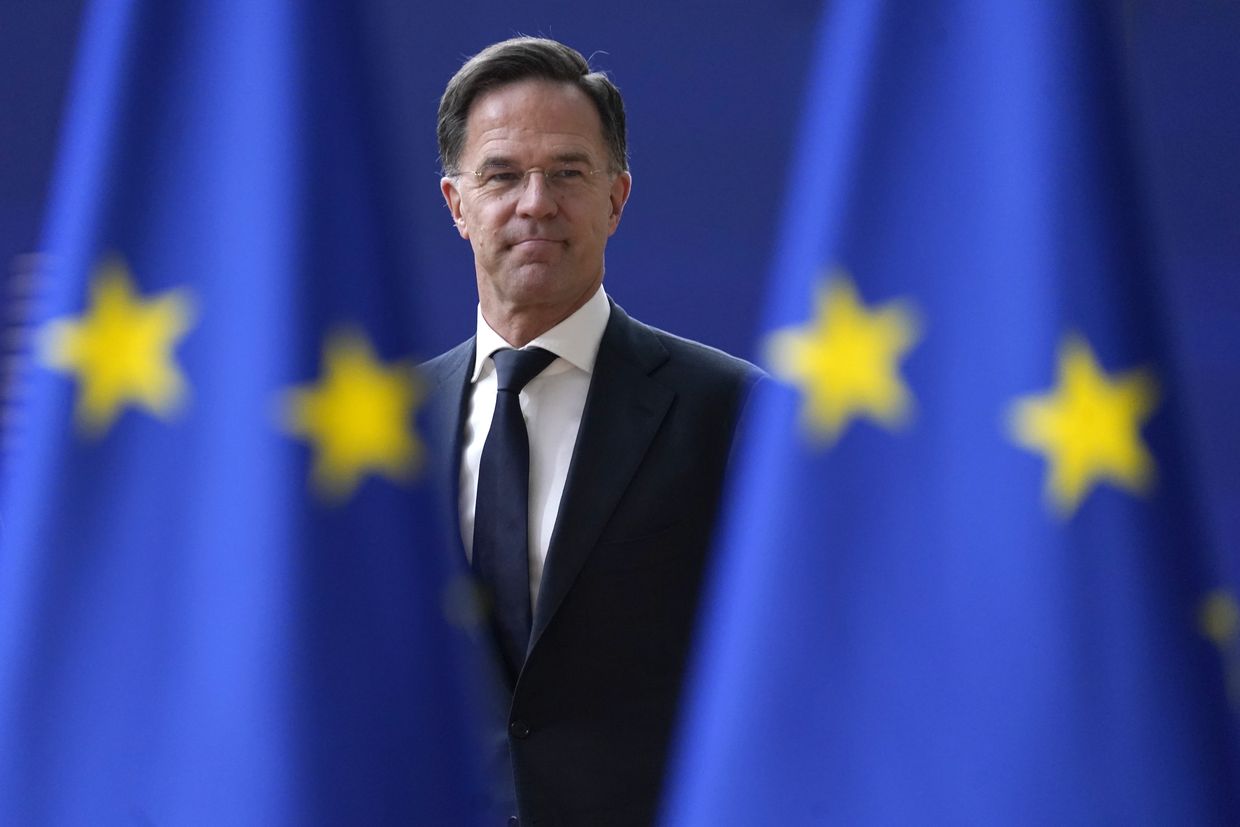
Europe must dramatically ramp up its defenses against a resurgent Russia, NATO Secretary General Mark Rutte said in an interview with the New York Times published on July 5, crediting U.S. President Donald Trump for driving the alliance to unprecedented levels of commitment.

Rutte, who assumed his role late last year after 14 years as Prime Minister of the Netherlands, has been navigating NATO through a period marked by Russia's expansionist ambitions and questions about the reliability of the United States as an ally.

"Russia is reconstituting itself at a pace and a speed which is unparalleled in recent history," he told the outlet, adding that "...they are now producing three times as much ammunition in three months as the whole of NATO is doing in a year. This is unsustainable, but the Russians are working together with the North Koreans, with the Chinese and Iranians, the mullahs, in fighting this unprovoked war of aggression against Ukraine."

He emphasized the interconnectedness of security across different regions, noting that a secure Arctic is vital due to increased Chinese and Russian activity, and a secure Atlantic is "crucial" for the U.S. "If the Arctic, if the Atlantic Ocean, if Europe is not secure, the U.S. has a big problem," Rutte said, arguing that Russia is ultimately aiming to attack the U.S.

The Secretary General strongly dismissed Russian Foreign Minister Sergey Lavrov's comments that NATO's new defense spending targets would "bankrupt" members.

"I know Sergey Lavrov very well. He has been foreign minister of Russia since the birth of Jesus Christ, and I’ve never taken him seriously. When you talk about fake news, listen to Sergey Lavrov," Rutte told the NYT. He believes Lavrov's comments are "clearly evidence that the deterrence is working."

Rutte acknowledged concerns about the defense industrial output across the alliance, adding that, "we simply lack the defense industrial base to produce the weapons we need to make sure that we can deter the Russians or the North Koreans or whoever to attack us." He underscored the importance of not just financial investment, but also having sufficient personnel and industrial capacity to effectively utilize weaponry.

On the subject of Ukraine, Rutte confirmed that European allies have significantly increased their financial commitment. "The Europeans have now cobbled together $35 billion in military aid this year to deliver to Ukraine, which is more than last year," he said. He viewed this as a logical and fair shift, with the U.S. expecting Europeans to "take more of the burden when it comes to the concrete support to Ukraine."

While acknowledging the complex discussions surrounding peace talks, Rutte recognized President Donald Trump's role in initiating dialogue with Russian President Vladimir Putin.

"He is the one who broke the deadlock with Putin. When he became president in January, he started these discussions with Putin, and he was the only one who was able to do this. This had to happen. A direct dialogue between the American president and the president of the Russian Federation."

However, Rutte admitted that subsequent peace talks in Istanbul involved Russia sending a less serious delegation, leading to the conclusion that "we are not there yet, and that means that in the meantime you have to make sure that Ukraine has what it needs to stay in the fight."

Despite some perceived divergences in approach between NATO and the U.S. regarding peace talks, Rutte insisted on the American administration's commitment to the conflict's importance.

"The American administration completely takes the view and shares it with the Europeans that this war in Ukraine is crucial for the defense of NATO territory going forward and that we have to make sure that Ukraine is in the strongest possible position to stop the Russians from taking more territory, and that when it comes to a cease-fire or, even better, a peace deal, that Ukraine with some help will be able to prevent Putin from ever attacking Ukraine again in the future."

Trump says Putin ‘wants to keep killing people,’ signals US may send Patriots to Ukraine
“It just seems like he wants to go all the way and just keep killing people. It’s not good,” U.S. President Donald Trump said.
Rutte praises Trump in a NYT interview while warning of Russia's rising threat to NATOThe Kyiv IndependentTim Zadorozhnyy
Rutte praises Trump in a NYT interview while warning of Russia's rising threat to NATO
  •  

Kremlin's war economy shows cracks as military spending boom fades

Kremlin's war economy shows cracks as military spending boom fades

Russia's economy, which defied initial sanctions and saw growth propelled by massive military spending and robust oil exports, is now showing significant signs of a downturn.

Recent economic indicators are flashing red, with manufacturing activity declining, consumer spending tightening, and inflation remaining stubbornly high, straining the national budget, the Wall Street Journal (WSJ) reported on July 4.

Russian officials are openly acknowledging the risks of a recession. Economy Minister Maxim Reshetnikov warned last month that Russia was on the "verge of a recession," while Finance Minister Anton Siluanov described the situation as a "perfect storm." Companies, from agricultural machinery producers to furniture makers, are reducing output. The central bank announced on July 3 it would debate cutting its benchmark interest rate later this month, following a reduction in June.

While analysts suggest this economic sputtering is unlikely to immediately alter President Vladimir Putin’s war objectives—as his focus on "neutering Ukraine" overrides broader economic concerns—it exposes the limits of his war economy.

The slowdown indicates that Western sanctions, though not a knockout blow, are increasingly taking a toll. If sanctions intensify further or global oil prices fall, Russia’s economy could face more severe instability. This downturn undermines Putin's strategic bet that Russia can financially outlast Ukraine and its Western allies, suggesting Moscow may struggle to finance the war indefinitely.

Death of top Russian oil executive fuels fresh scrutiny of elite’s ‘window falls’
The unexplained death of a top Russian oil executive on July 4 is fueling renewed scrutiny over the rising number of high-profile Russian officials and businessmen who have died under mysterious circumstances, specifically, have fallen out of windows. Andrei Badalov, vice president of Transneft, Russia’s largest state-controlled pipeline transport company,
Kremlin's war economy shows cracks as military spending boom fadesThe Kyiv IndependentTim Zadorozhnyy
Kremlin's war economy shows cracks as military spending boom fades

Experts warn that Russia's economic growth model, overly reliant on military spending, is unsustainable and necessitates a contraction of civilian economic capacities to free up workers for the war machine, which is not a viable long-term strategy. Putin recently dismissed suggestions that the war is stifling the economy, echoing Mark Twain by stating reports of its death "are greatly exaggerated." However, he also cautioned that a recession or stagflation "should not be allowed under any circumstances."

After a brief recession in 2022, military spending, which accounts for over 6% of gross domestic product this year (the highest since Soviet times) and approximately 40% of total government spending, had propped up Russia’s economy and blunted the impact of Western sanctions. Russia’s ability to reroute oil exports to China and Beijing’s support with electronics and machinery provided additional economic stimulus. This created an economic paradox: the most sanctioned major economy was, for a period, growing faster than many advanced economies.

However, this military spending "sugar rush" fueled runaway inflation, compelling the central bank to raise interest rates to a record 21% to try and tame it. Higher interest rates increased borrowing costs for businesses, curbing investment, expansion plans, and squeezing profits. The economic comedown has already begun.

Official data shows Russian GDP growth slowed to 1.4% in the first quarter compared to a year earlier, down significantly from 4.5% in the fourth quarter of 2024. S&P Global’s purchasing managers’ index indicated Russia’s manufacturing sector contracted at its sharpest rate in over three years in June, and new car sales dropped nearly 30% year-over-year in June.

Businesses across Russia are feeling the effects, according to the WSJ. Rostselmash, the country’s largest producer of agricultural machinery, announced in May it would cut production and investment, and pull forward mandatory annual leave for its 15,000 employees due to a lack of demand. In Siberia, electricity grid operator Rosseti Sibir stated it was on the verge of bankruptcy due to high debt, halting investments and proposing tariff hikes for industrial users.

While some analysts argue the Russian banking system remains stable, others warn of increasing instability. A recent report by the Washington, D.C.-based Center for Strategic and International Studies (CSIS) highlighted risks from a government decision to control war-related lending at major Russian banks. The state could direct banks to offer preferential loans, potentially forcing the government to absorb losses if high interest rates prevent companies from meeting obligations.

The Moscow-based Center for Macroeconomic Analysis and Short-Term Forecasting also assessed in May that the risk of a protracted systemic banking crisis in 2026 was "moderate" and growing.

These economic challenges intensify pressure on the Kremlin by reducing its financial capacity to fund its war in Ukraine. The government has operated with a budget deficit throughout the war and projects this will continue for at least two more years. This fiscal strain could provide an opening for Western nations to implement more powerful sanctions.

Falling oil prices present another significant risk for Russia, as energy sales account for about a third of its budget revenues. The price of Russian crude has consistently remained below the level assumed in this year’s budget, and Russia’s oil-and-gas revenue in June fell to its lowest level since January 2023, according to Finance Ministry data.

Trump says Putin ‘wants to keep killing people,’ signals US may send Patriots to Ukraine
“It just seems like he wants to go all the way and just keep killing people. It’s not good,” U.S. President Donald Trump said.
Kremlin's war economy shows cracks as military spending boom fadesThe Kyiv IndependentTim Zadorozhnyy

Kremlin's war economy shows cracks as military spending boom fades
  •  

Zelensky describes phone call with Trump as 'best conversation in all this time'

Zelensky describes phone call with Trump as 'best conversation in all this time'

President Volodymyr Zelensky described his recent phone call with U.S. President Donald Trump as "the best conversation in all this time" in an evening address on July 5.

"Patriot (missiles) are key to protection from ballistic (missiles). We discussed several other important issues that our teams will work out in detail at meetings in the near future," Zelensky said.

The two leaders spoke on July 4, agreeing to strengthen Ukraine's air defenses amid intensified Russian strikes, Zelensky said earlier.

A day prior to speaking with Zelensky, Trump held a phone call with Russian President Vladimir Putin in an effort to discuss ending Russia's war against Ukraine.

"This was probably the best conversation in all this time, it was maximally productive. We discussed the topic of air defenses. I am grateful for the readiness to help," Zelensky said, describing his phone call with Trump.

Relations between Ukraine and the U.S. have previously been strained as the White House pushed Kyiv to sign a lucrative bilateral minerals deal and tried to broker a peace deal with Moscow that did not rule out major concessions for Ukraine.

Zelensky's phone call with the U.S. leader followed media reports and announcements from Washington of a pause in military assistance to Ukraine. Trump, on July 3, denied that Washington has stopped supplying weapons to Kyiv.

Trump described his July 3 conversation with Putin as disappointing, saying that the call "didn't make any progress" in stopping Russia's war against Ukraine.

"I'm very disappointed with the conversation I had today with President Putin," Trump told journalists. "Because I don't think he's there. And I'm very disappointed.  I don't think he's looking to stop this fighting."

Russia launches another horrific attack on Kyiv hours after Trump-Putin call
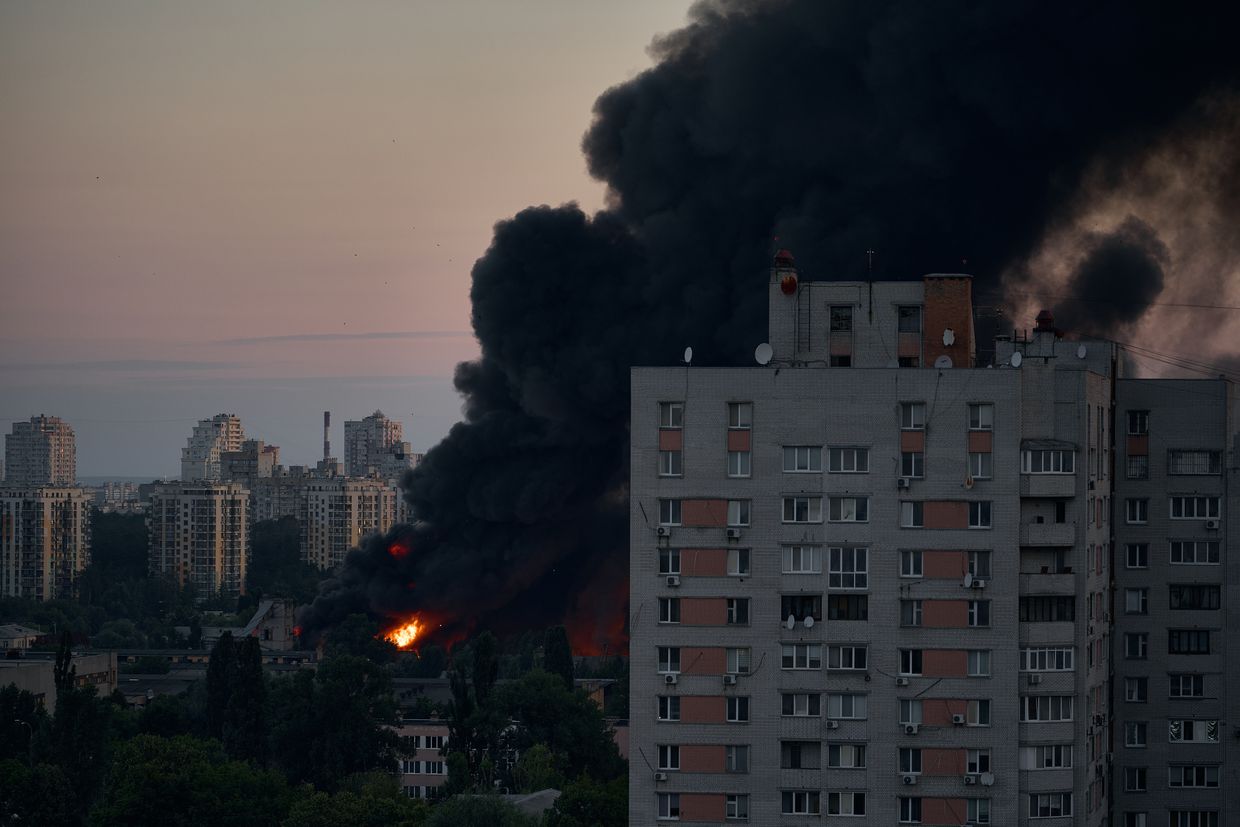
Ripe cherries and apricots fill the stalls of fruit vendors, while people bustle about on a scorching July Friday. Yet just a five-minute walk from the stand, the scene shifts dramatically: a gaping hole mars the five-story residential building where the stairwell once stood. Rescuers tirelessly sift through the
Zelensky describes phone call with Trump as 'best conversation in all this time'The Kyiv IndependentKateryna Hodunova
Zelensky describes phone call with Trump as 'best conversation in all this time'
  •  

Pipelines supplying Russian military explode in Russia's Far East, HUR source says

Pipelines supplying Russian military explode in Russia's Far East, HUR source says

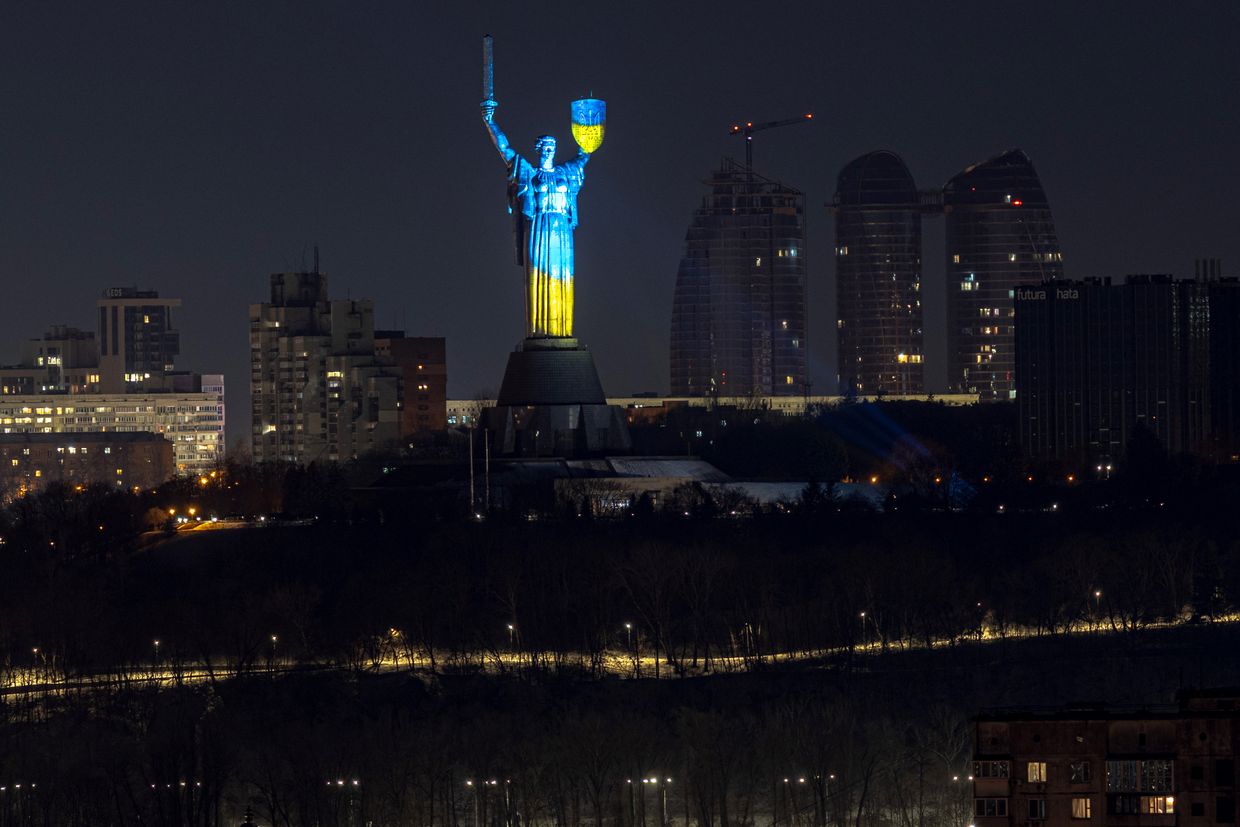
Explosions in Russia's Vladivostok damaged a gas pipeline and destroyed a water pipeline that supplied military facilities in the area, a source in Ukraine's military intelligence (HUR) told the Kyiv Independent on July 5.

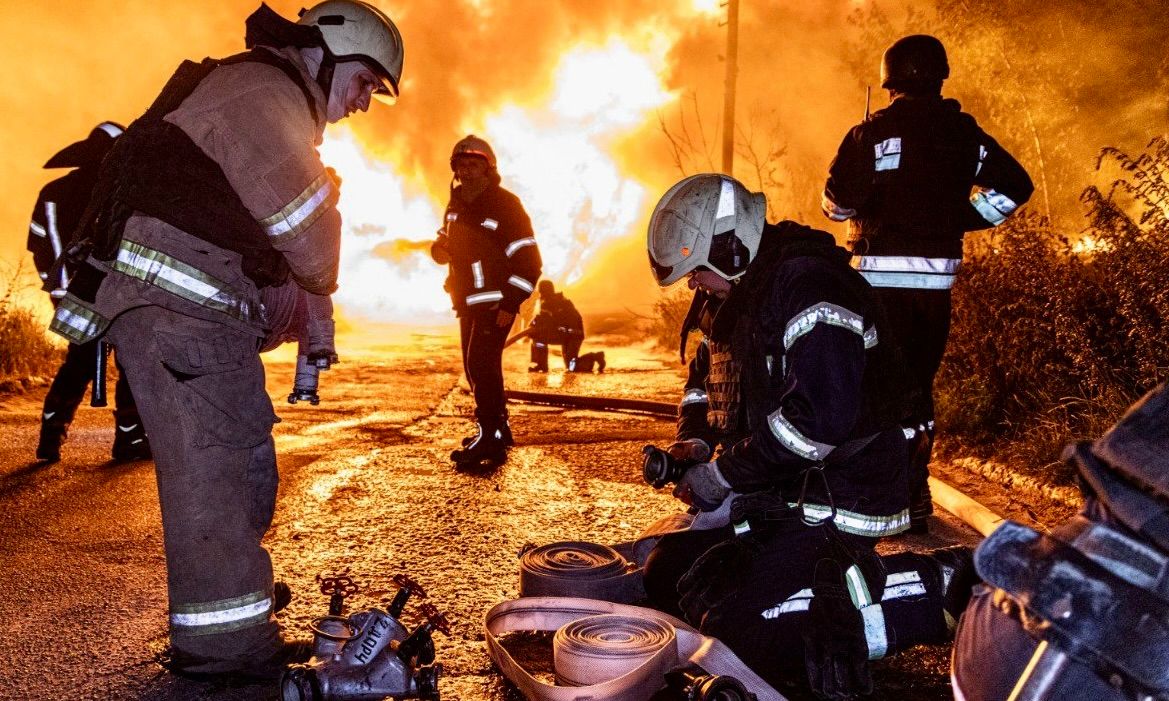
A fire followed the explosions and destroyed sections of the Vladivostok gas pipeline along the Sea of Japan, the source said.

The blasts occurred early on July 5, between 1-2 a.m., with Russian special services and repair teams arriving shortly after.

The damaged pipeline provides gas to several Russian military facilities on the coast of the Sea of Japan, including the 155th Marine Brigade of the Pacific Fleet of the Russian Armed Forces, the source told the Kyiv Independent.

The water pipeline destroyed in the explosion provided drinking water to military garrisons in the area.

"In order to hide information from the local population... local special services turned off mobile Internet and communications in the area," the source added

The Kyiv Independent could not independently verify the claims.

Ukraine regularly strikes military targets deep within Russian territory in an effort to diminish Moscow's fighting power.

Ukraine struck the Borisoglebsk airfield in Russia's Voronezh Oblast overnight on July 5, damaging a warehouse containing guided bombs, aircraft, and other military assets, Ukraine's General Staff reported.

The attack on the airfield was part of a larger overnight drone assault across Russia, with explosions and fires reported in at least six regions.

Death of top Russian oil executive fuels fresh scrutiny of elite’s ‘window falls’
The unexplained death of a top Russian oil executive on July 4 is fueling renewed scrutiny over the rising number of high-profile Russian officials and businessmen who have died under mysterious circumstances, specifically, have fallen out of windows. Andrei Badalov, vice president of Transneft, Russia’s largest state-controlled pipeline transport company,
Pipelines supplying Russian military explode in Russia's Far East, HUR source saysThe Kyiv IndependentTim Zadorozhnyy
Pipelines supplying Russian military explode in Russia's Far East, HUR source says
  •  

BlackRock halted Ukraine recovery fund following Trump victory, France working on replacement, Bloomberg reports

BlackRock halted Ukraine recovery fund following Trump victory, France working on replacement, Bloomberg reports

BlackRock, a U.S. investment firm, suspended work on a multibillion-dollar Ukraine recovery fund following U.S. President Donald Trump's election victory, prompting France to work on a replacement, Bloomberg reported on July 5.

The plan nearly secured the initial support of institutions backed by the governments of Germany, Italy, and Poland, people familiar with the matter told Bloomberg.

Kyiv has sought to secure investment in Ukraine's reconstruction as Russia's war continues to destroy infrastructure across the country.

BlackRock halted its search for institutional investors in January, causing the planned funding that sought to secure $500 million from governments, development grants, and investment banks, and another $2 billion from private investors, to fall through.

The investment firm halted talks with institutional investors in January due to a lack of interest amid perceived uncertainty in Ukraine.

The fund was set to be unveiled by BlackRock at the upcoming Ukraine Recovery Conference on July 10-11 in Rome, Bloomberg reported.

A spokesperson for BlackRock said the investment firm completed advisory work for the recovery fund pro bono in 2024 and no longer has "any active mandate."

France is working on a proposal to replace the recovery fund led by BlackRock, people familiar with the matter told Bloomberg, adding that it remains uncertain how effective the plan will be without Washington's backing.

President Volodymyr Zelensky and Italian Prime Minister Giorgia Meloni are expected to attend the Ukraine Recovery Conference next week.

Despite a partial rebound from a 30% economic slump in 2022, foreign investment in Ukraine remains underwhelming.

As US aid to Ukraine dries up, new platform connects Americans investors with Ukrainian startups
Ukraine’s startup ecosystem has tripled in five years, even during Russia’s full-scale invasion, to become the second most valuable in Central and Eastern Europe at $28 billion.
BlackRock halted Ukraine recovery fund following Trump victory, France working on replacement, Bloomberg reportsThe Kyiv IndependentDominic Culverwell
BlackRock halted Ukraine recovery fund following Trump victory, France working on replacement, Bloomberg reports
  •  

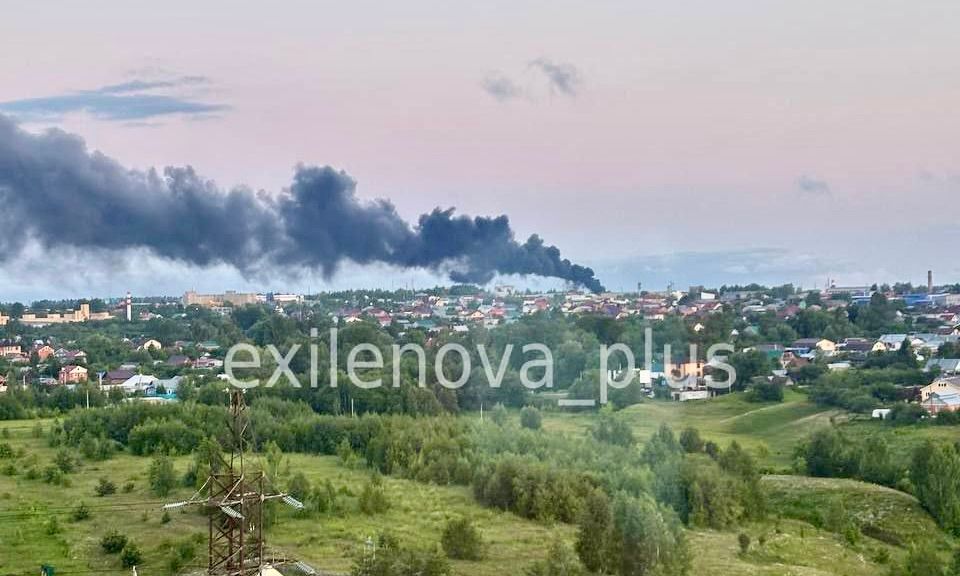
Ukraine hits Russian electronic warfare facility making Shahed, Iskander components, General Staff says

Ukraine hits Russian electronic warfare facility making Shahed, Iskander components, General Staff says

Ukraine struck a critical Russian military-industrial site overnight on July 5 that produces components for high-precision weapons used by Moscow to attack Ukraine, the General Staff of Ukraine's Armed Forces reported.

The site in question is JSC VNIIR-Progress, a Russian state institute that specializes in developing electronic warfare (EW) systems, including the Kometa antenna arrays, used to jam satellite, radio, and radar signals.

The institute is located in Cheboksary, Chuvash Republic, about 1,200 kilometers (745 miles) away from the Ukrainian border.

The Kometa antenna is used in Shahed-type drones, Iskander-K cruise missiles, and guided aerial bomb modules — all high-precision weapons used by Russia to strike civilian and military targets across Ukraine.

The General Staff confirmed that Ukrainian weapons reached the target area but said final damage assessments were still underway.

The VNIIR-Progress institute has been sanctioned by both the United States and the European Union for its role in supporting Russia's war effort.

The Iskander-K is a precision-guided cruise missile with a range of up to 500 kilometers (311 miles), frequently used by Russia to target civilian areas. Shahed drones have become a central part of Moscow's airstrike tactics since late 2022 due to their low cost and high payload.

Located on the Volga River, Cheboksary is the capital of the Chuvash Republic and lies deep inside Russian territory. Russian independent media outlet Astra and local Telegram channels earlier reported explosions in the city overnight.

Russia's Defense Ministry claimed to have shot down two drones over the region.

This marks the second known Ukrainian drone strike on VNIIR-Progress. On June 9, explosions and fires were also reported at the facility following another drone attack.

  •  

Russia captures 2 villages near Dnipropetrovsk Oblast border, monitoring group says

Russia captures 2 villages near Dnipropetrovsk Oblast border, monitoring group says

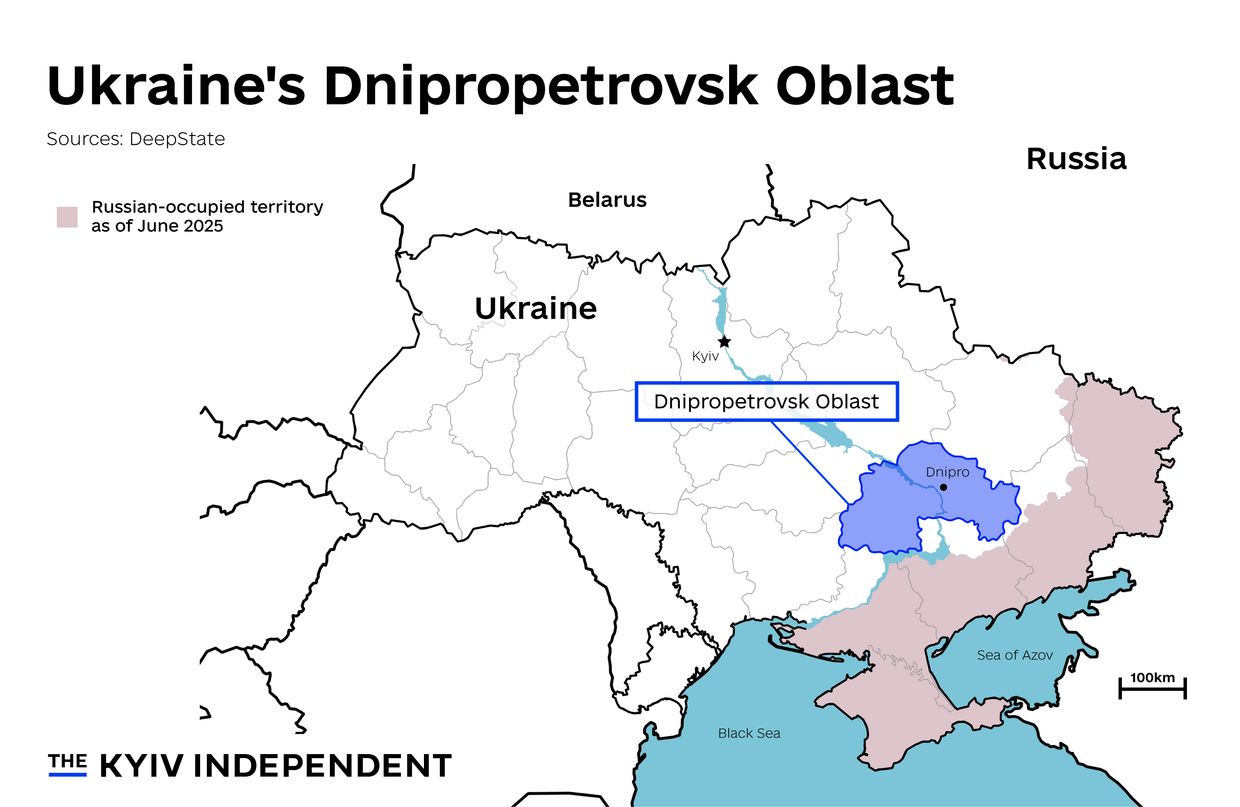
Russian forces have occupied the villages of Zelenyi Kut and Novoukrainka in Donetsk Oblast, located near the administrative border with Dnipropetrovsk Oblast, the battlefield monitoring platform DeepState reported on July 5.

Russian forces are attempting to push further west, according to DeepState.

Donetsk Oblast has been a central battlefield since the start of Russia's full-scale invasion in February 2022 in Ukraine. While Dnipropetrovsk Oblast lies further west and has not seen significant Russian incursions, it is frequently targeted with missile, drone, and aerial bomb strikes.

Russian troops have been escalating their assaults in the area and are attempting to breach into Dnipropetrovsk Oblast.

"The situation around Dachne is pretty intense," DeepState wrote on Telegram, referring to the nearby front-line settlement in Dnipropetrovsk Oblast.

Ukrainian forces have deployed reinforcements, but Russian units, relying on numerical advantage and constant infantry assaults, have breached some defenses in the area, DeepState said.

Ukraine's military has not officially confirmed the loss of the settlements.

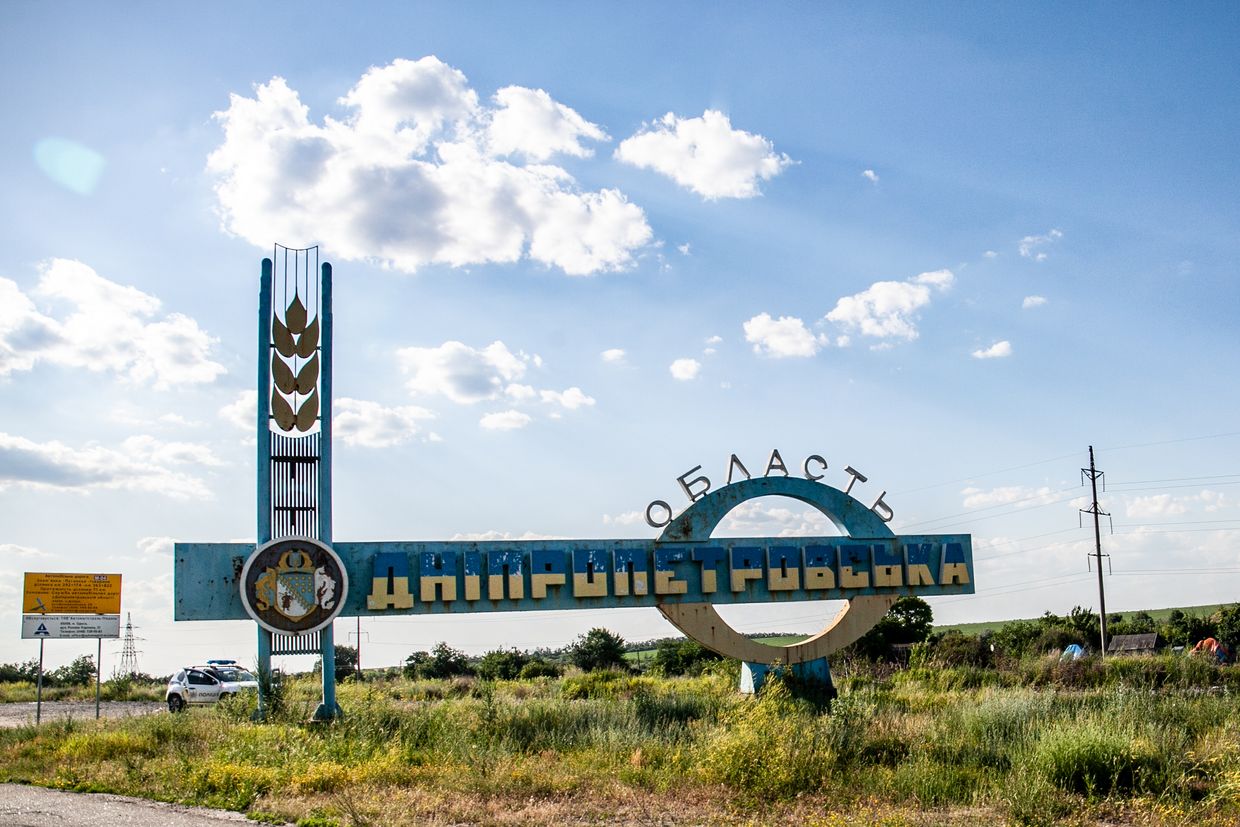
Russia captures 2 villages near Dnipropetrovsk Oblast border, monitoring group says
Ukraine's Dnipropetrovsk Oblast (Nizar al-Rifai/The Kyiv Independent)

Russia's Defense Ministry claimed Novoukrainka was captured as early as June 29, though that assertion was not independently confirmed at the time.

On July 2, Ukraine dismissed Russian claims of advancing into Dnipropetrovsk Oblast, calling them disinformation. It said that a small Russian reconnaissance unit briefly entered the village of Dachne, took photos with a Russian flag, and was then "eliminated."

Ukrainian military spokesperson Viktor Trehubov said in mid-June that Russia was escalating attacks in the Novopavlivka sector — in the western part of Donetsk Oblast — and trying to breach into Dnipropetrovsk Oblast.

DeepState analysts suggest Moscow views an incursion into Dnipropetrovsk Oblast as symbolically significant and a propaganda opportunity, while for Ukraine, holding the administrative line is a strategic priority.

  •  

Ukraine's army chief warns of new Russian offensives in northeast as he visits Kharkiv Oblast front

Ukraine's army chief warns of new Russian offensives in northeast as he visits Kharkiv Oblast front

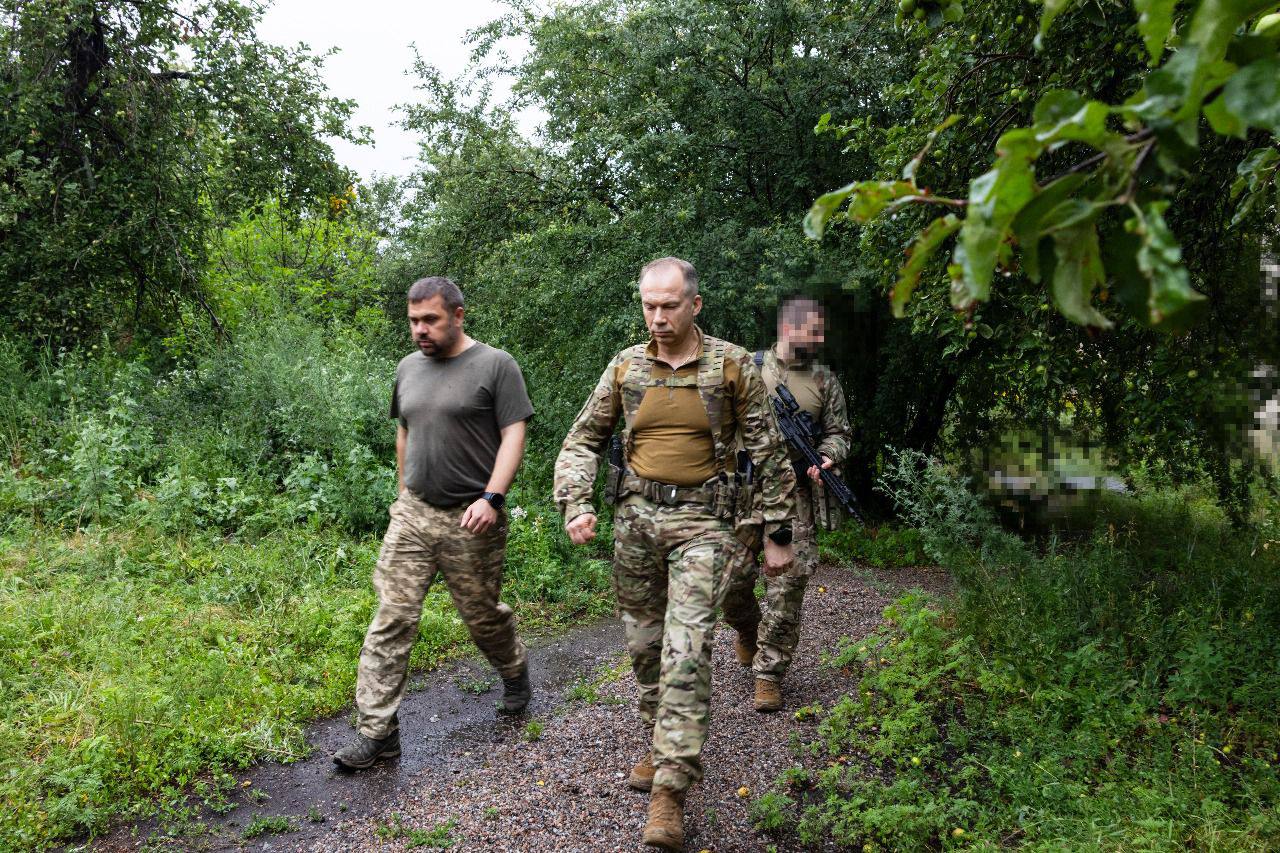
Oleksandr Syrskyi, commander-in-chief of Ukraine's Armed Forces, said on July 5 that he had visited the front line in Kharkiv Oblast, warning of a growing threat of renewed Russian offensives in northeastern Ukraine.

According to Syrskyi, Russian troops are ramping up attacks in the sector using large numbers of troops. Over the past week, Ukrainian troops have repelled more than 60 Russian assaults in the area, with "about a dozen battles continuing to rage every day," Syrskyi said.

"Russian forces are trying to overwhelm us with quantity, but we must be vigilant and apply effective tactical and technological solutions to prevent the invaders from advancing," he said in a Telegram post.

Syrskyi said he had reviewed battlefield situation in the area, identifying unit needs, and issuing updated tactical orders.

Syrskyi said he was coordinating closely with Joint Forces Commander Major General Mykhailo Drapatyi.

Kharkiv Oblast, located in northeastern Ukraine, borders Russia and includes the country's second-largest city. It has been a frequent target of Russian assaults and missile attacks since the full-scale invasion began in February 2022.

Since Ukraine's successful counteroffensive in the northeast in the fall of 2022, Russia has occupied less than 5% of Kharkiv Oblast, along the region's eastern edge.

In spring 2024, Russian forces opened a new front in the north of Kharkiv Oblast, near the town of Vovchansk, but were pushed back by Ukrainian troops.

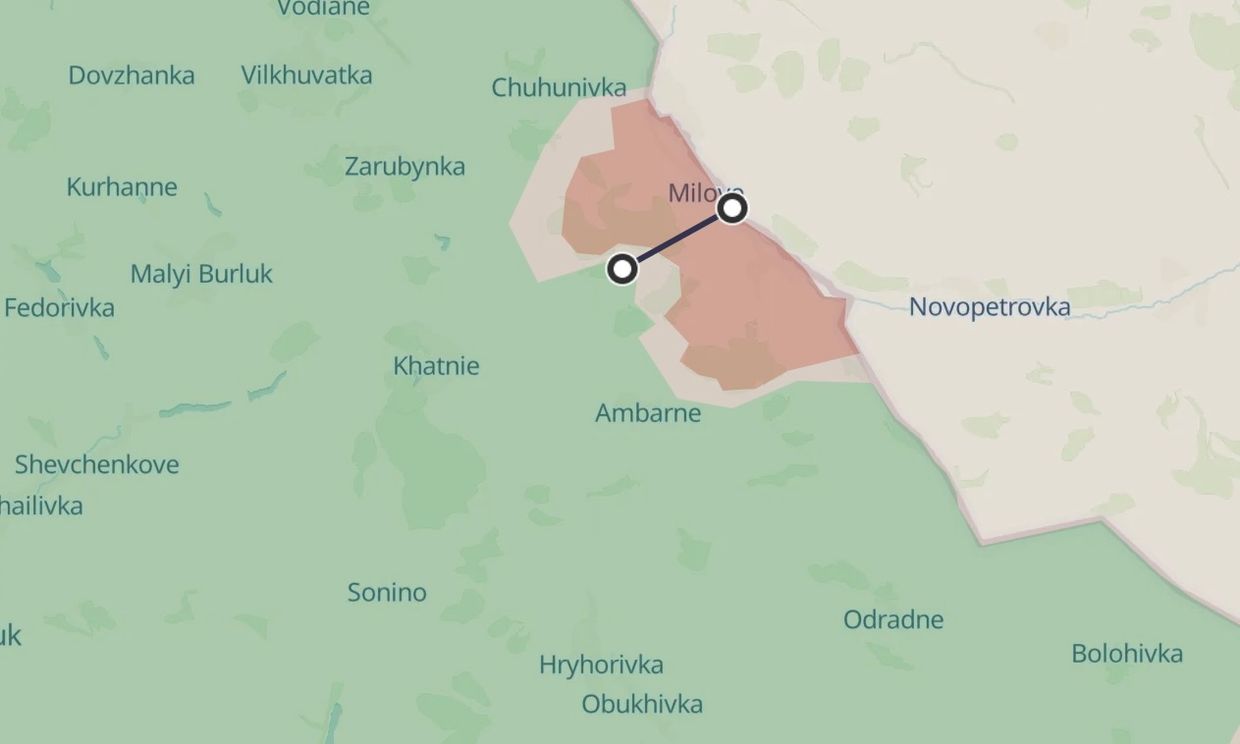
The Ukrainian battlefield monitoring platform DeepState reported on July 4 that Russian forces had advanced up to 3 kilometers (1.86 miles) into Kharkiv Oblast near the border village of Milove, opening yet another front in the northeast.

Ukraine's army chief warns of new Russian offensives in northeast as he visits Kharkiv Oblast front
The estimated Russian advance in Kharkiv Oblast, Ukraine, as of July 5, 2025. (DeepState / OpenStreetMaps)

On July 4, Pavlo Shamshyn, spokesperson for Ukraine's operational-tactical group "Kharkiv," said that the number of Russian assault operations in the sector had sharply increased.

Fighting remains intense near the town of Vovchansk and surrounding villages. Shamshin said Russian troops are advancing in small groups of three to 10 soldiers, relying on drone support.

Andrii Pomahaibus, chief of staff of Ukraine's 13th National Guard Khartiia Brigade, said in May that Russia had been massing forces near the border, possibly preparing for a new offensive in the sector.

Despite repeated calls from Ukraine, the U.S., and European leaders for an unconditional ceasefire, Russia has continued ground attacks along the front and long-range missile and drone strikes targeting Ukrainian cities and infrastructure.

  •  

EU to help Moldova fight hybrid attacks from 'agents of autocracy,' von der Leyen says ahead of September election

EU to help Moldova fight hybrid attacks from 'agents of autocracy,' von der Leyen says ahead of September election

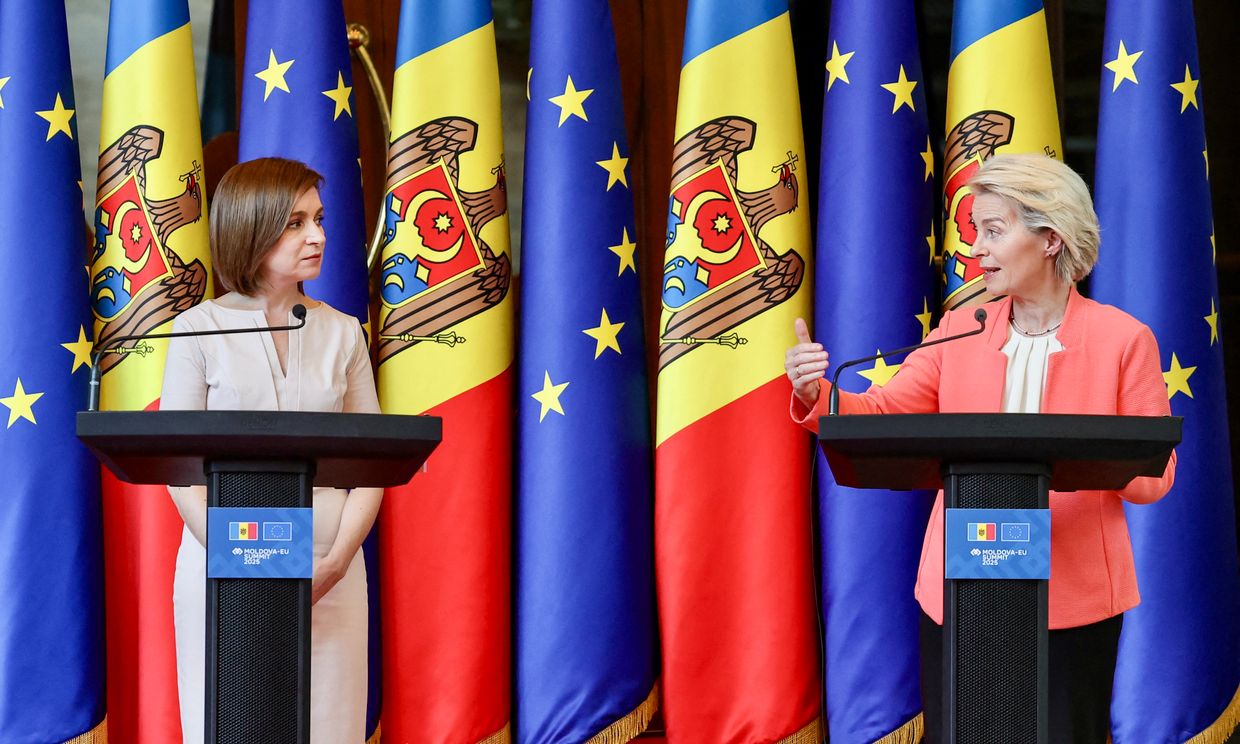
European Commission President Ursula von der Leyen pledged on July 4 that the European Union will help Moldova defend itself against hybrid threats by "agents of autocracy."

"We are committed to protecting you against the hybrid attacks and the energy shocks that your country has been a victim of," von der Leyen said following the EU-Moldova summit in Chisinau.

"Who is behind those attacks is clear to all of us here. These are the same agents of autocracy trying to undermine our democracies everywhere in Europe."

Von der Leyen praised Moldova's support for Ukraine and the EU, noting its acceptance of hundreds of thousands of Ukrainian refugees and its assistance with European wildfire response efforts.

The visit was made in show of solidarity with Moldova, one of Europe's poorest countries, as it prepares for high-stakes parliamentary elections on Sept. 28.

The pro-European government of President Maia Sandu faces a challenge from the pro-Russian Socialist Party, amid growing fears of destabilization ahead of the vote.

Sandu has accused Russia of using its military presence in Moldova's Russian-occupied Transnistria region to stir unrest and derail the country's EU aspirations. On June 12, she warned that Moscow could provoke a crisis in Transnistria to influence the election outcome.

Transnistria has been under Russian-backed separatist control since the early 1990s, with approximately 1,000 to 1,500 Russian troops still stationed in the region.

On June 11, Transnistrian authorities declared a 30-day state of emergency after a sharp drop in natural gas supplies. The unrecognized region has faced mounting energy shortages since January, when Russian energy giant Gazprom halted deliveries in what many see as an attempt to destabilize the situation in Moldova.

Moldova was granted EU candidate status in 2022. Sandu's ruling Party of Action and Solidarity aims to maintain its parliamentary majority and move the country closer to full membership by 2030.

Moldovan Prime Minister Dorin Recean earlier told the Financial Times that Russia plans to send 10,000 troops to Transnistria and establish a pro-Kremlin government in Moldova.

Death of top Russian oil executive fuels fresh scrutiny of elite’s ‘window falls’
The unexplained death of a top Russian oil executive on July 4 is fueling renewed scrutiny over the rising number of high-profile Russian officials and businessmen who have died under mysterious circumstances, specifically, have fallen out of windows. Andrei Badalov, vice president of Transneft, Russia’s largest state-controlled pipeline transport company,
EU to help Moldova fight hybrid attacks from 'agents of autocracy,' von der Leyen says ahead of September electionThe Kyiv IndependentTim Zadorozhnyy
EU to help Moldova fight hybrid attacks from 'agents of autocracy,' von der Leyen says ahead of September election
  •  

Drone threat reportedly causes mass flight delays in Russia's Moscow, St. Petersburg airports

Drone threat reportedly causes mass flight delays in Russia's Moscow, St. Petersburg airports

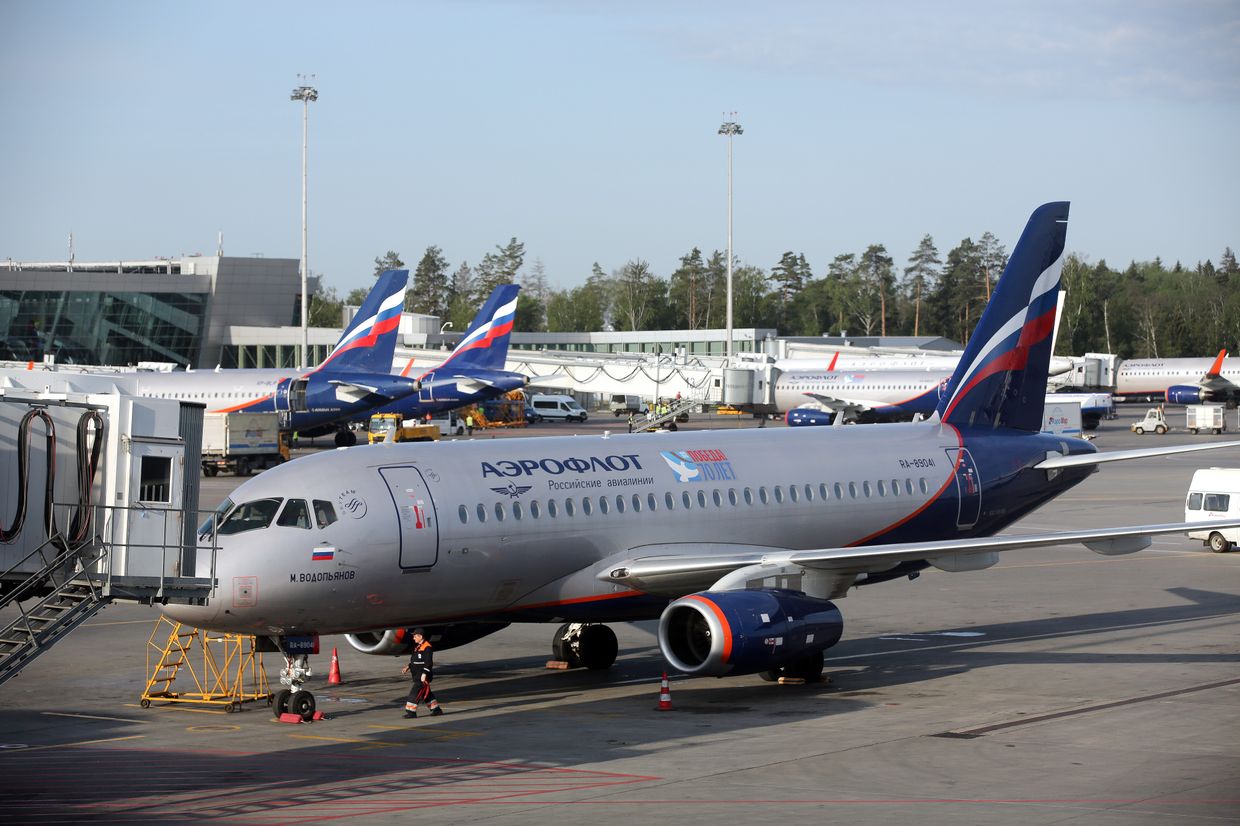
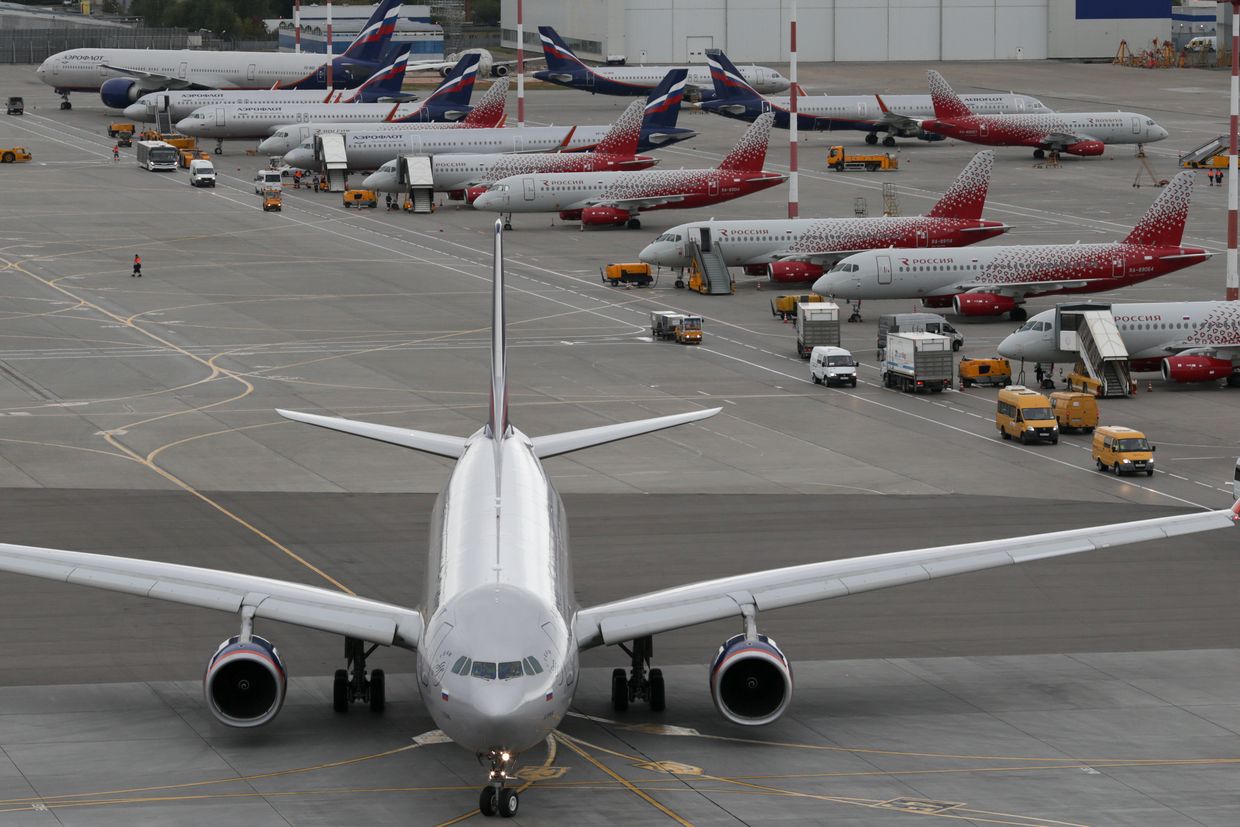
Russia's largest airports experienced hours-long flight delays and cancellations on July 5, as authorities imposed temporary restrictions due to a reported threat of Ukrainian drone attacks, the pro-Kremlin Telegram channel Shot reported.

Ukraine hasn't commented on the report. Kyiv's drone campaign, which has increasingly disrupted civilian air travel in Russia, is part of Ukraine's broader strategy to undermine Russia's logistics far beyond the front line.

Some passengers in Russia reported waiting more than 10 hours on July 5 as their flights were being delayed, according to Shot.

Departures at Moscow's Sheremetyevo Airport were halted for several hours, delaying over 20 flights. At St. Petersburg's Pulkovo Airport, roughly 50 flights were delayed and more than 20 canceled.

Leningrad Oblast Governor Alexander Drozdenko said that two drones were shot down south of St. Petersburg, prompting a temporary suspension of operations at Pulkovo Airport.

The disruptions followed a wave of Ukrainian drone attacks overnight, which targeted military and industrial infrastructure in at least six Russian regions.

The Russian Defense Ministry said it intercepted 42 drones within three hours, mainly over the Belgorod, Bryansk, and Kursk oblasts near the Ukrainian border.

Novaya Gazeta Europe reported in May that at least 217 temporary airport closures have occurred across Russia since Jan. 1 due to drone threats, more than in 2023 and 2024 combined.

A similar wave of strikes ahead of Russia's Victory Day in May led to massive delays, affecting an estimated 60,000 travelers.

Ukraine’s new drone strategy — cripple Moscow’s airports, make Russian population ‘pay’
Hundreds of Ukrainian kamikaze drones have flown towards Moscow in recent weeks. None appear to have even reached the Russian capital, yet the effect on the city — and the wider country — has been hugely significant. Ukrainian drones have forced at least 217 temporary airport closures across Russia since Jan. 1,
Drone threat reportedly causes mass flight delays in Russia's Moscow, St. Petersburg airportsThe Kyiv IndependentTim Zadorozhnyy
Drone threat reportedly causes mass flight delays in Russia's Moscow, St. Petersburg airports
  •  

Russia seeks to involve Laos in war against Ukraine, military intelligence claims

Russia seeks to involve Laos in war against Ukraine, military intelligence claims

Russia is seeking to involve Laos in its war against Ukraine under the pretense of humanitarian cooperation, Ukraine's military intelligence (HUR) claimed on July 5.

According to the agency, Moscow is organizing the deployment of a combined unit of military engineers from the Lao People's Armed Forces to Russia's Kursk Oblast, allegedly to help with demining operations.

Ukraine initially captured 1,300 square kilometers (500 square miles) of Russian territory during a cross-border offensive to Kursk Oblast but lost most of it during a Russian counteroffensive this year, which was supported by North Korean troops.

Laotian authorities have reportedly agreed to send up to 50 engineers to support Russian efforts. In addition, Laos is said to be offering free rehabilitation services to wounded Russian soldiers.

"Russia, under the guise of humanitarian rhetoric, is trying to legalize the presence of foreign military contingents on its territory, effectively using them to wage war against Ukraine," HUR said.

This comes amid broader efforts by the Kremlin to recruit foreign personnel. Russia has drawn heavily on fighters from Asia and Africa, as well as North Korea.

Ukraine has captured multiple foreigners fighting for Russian forces. an April investigation by Russian independent outlet Important Stories identified more than 1,500 foreign fighters from 48 countries who had joined Russia's war.

Laos, a landlocked Southeast Asian country bordering China, Vietnam, and Thailand, has not commented on HUR's claim. The country maintains close ties with both Moscow and its ally Beijing.

  •  

4 killed, 37 injured in Russian attacks on Ukraine over past day

4 killed, 37 injured in Russian attacks on Ukraine over past day

At least four civilians were killed and 37 others injured in Russian attacks across Ukraine over the past 24 hours, regional authorities reported on July 5.

Russia launched 322 drones overnight, including Iranian-designed Shahed-type attack drones, according to Ukraine's Air Force. Air defenses intercepted 292 drones, while another 135 dropped off radars, likely used as decoys to overwhelm Ukrainian systems.

The attack was repelled using aviation, electronic warfare, mobile fire teams, and air defense systems.

In Donetsk Oblast, Russian strikes killed two civilians and injured four more, Governor Vadym Filashkin said. In Kharkiv Oblast, one person was killed and 15 injured, including two children, according to Governor Oleh Syniehubov.

In Kherson Oblast, 11 civilians were injured as Russian forces targeted residential areas and other civilian infrastructure, Governor Oleksandr Prokudin reported.

A 49-year-old postal worker was injured in Chernihiv Oblast by a first-person-view (FPV) drone, Governor Viacheslav Chaus said. The man sustained shrapnel wounds while delivering mail.

In Dnipropetrovsk Oblast, four civilians, two men and two women, were injured in Russian strikes, Governor Serhii Lysak reported.

In Zaporizhzhia Oblast, an 84-year-old man was killed, and two others — a 54-year-old man and a 10-year-old boy — were injured, Governor Ivan Fedorov said.

The latest strikes come as Russia continues to escalate its aerial campaign and reject calls for a ceasefire. Ukrainian officials have repeatedly urged Western partners to bolster Ukraine's air defense capabilities amid persistent drone and missile strikes.

Trump says Putin ‘wants to keep killing people,’ signals US may send Patriots to Ukraine
“It just seems like he wants to go all the way and just keep killing people. It’s not good,” U.S. President Donald Trump said.
4 killed, 37 injured in Russian attacks on Ukraine over past dayThe Kyiv IndependentTim Zadorozhnyy
4 killed, 37 injured in Russian attacks on Ukraine over past day
  •  

Trump says Putin 'wants to keep killing people,' signals US may send Patriots to Ukraine

Trump says Putin 'wants to keep killing people,' signals US may send Patriots to Ukraine

Editor's note: This story has been updated with additional comments by U.S. President Donald Trump.

U.S. President Donald Trump said on July 5 that Russian President Vladimir Putin does not appear interested in ending the war in Ukraine, according to a comment made onboard Air Force One.

Trump reiterated that he was "very unhappy" with the July 3 phone call between the two leaders.

"It just seems like he wants to go all the way and just keep killing people. It's not good. I wasn't happy with it," Trump told reporters.

The call, which lasted about an hour, was confirmed by the Kremlin to have focused on Ukraine. Putin reportedly told Trump that Russia would continue pursuing its "goals" in the war.

Trump's remarks follow a sharp escalation in Russian missile and drone attacks across Ukraine that have killed and injured hundreds of civilians in recent weeks.

The strikes have hit multiple regions, destroying civilian infrastructure amid persistent calls from Ukraine, the U.S., and Europe for an unconditional ceasefire.

When asked if he can end Russia's war against Ukraine, Trump said, "I don’t know. I can’t tell you whether or not that’s going to happen."

Trump agreed when asked if ending the war is a priority, saying, "Yes. I’d like to see it happen."

The day after his call with Putin, the U.S. president spoke by phone with President Volodymyr Zelensky and said the two had a "very strategic" conversation.

"We talked about different things... I think it was a very, very strategic call," Trump said. When asked about supplying Patriot air defense systems to Ukraine, he replied, "Yeah, we might."

"They're going to need something because they're being hit pretty hard," Trump added.

The statement comes as the U.S. Defense Department has paused deliveries of several key weapons systems, including Patriot missiles and precision-guided munitions, prompting concern in Kyiv.

While Trump has said he wants to help Ukraine, his administration has not imposed new sanctions on Russia since taking office and has not approved additional aid packages.

The U.S. president has instead directed strikes against Iran, targeting three nuclear facilities in June in response to regional escalations, a move critics say contrasts with his cautious approach toward Moscow.

When asked why he appears tougher on Tehran than Moscow, Trump told reporters, "No, I think I'm tougher on Russia than I am on Iran."

Despite two rounds of face-to-face talks between Moscow and Kyiv in May and June in Istanbul, no agreement on a ceasefire has been reached. The negotiations have only resulted in prisoner exchanges, as Moscow continues to push for maximalist demands in peace talks.

  •  

General Staff: Russia has lost 1,025,260 troops in Ukraine since Feb. 24, 2022

General Staff: Russia has lost 1,025,260 troops in Ukraine since Feb. 24, 2022

Russia has lost 1,025,260 troops in Ukraine since the beginning of its full-scale invasion on Feb. 24, 2022, the General Staff of Ukraine's Armed Forces reported on July 5.

The number includes 1,050 casualties that Russian forces suffered over the past day.

According to the report, Russia has also lost 10,990 tanks, 22,953 armored fighting vehicles, 54,148 vehicles and fuel tanks, 29,921 artillery systems, 1,428 multiple launch rocket systems, 1,191 air defense systems, 420 airplanes, 340 helicopters, 43,609 drones, 28 ships and boats, and one submarine.

Ukraine strikes deep into Russia with drones, targets airfields after record Kyiv barrage
The Russian Defense Ministry reported a total of 42 drones destroyed, with 37 of them intercepted in three regions bordering Ukraine: Belgorod, Bryansk, and Kursk.
General Staff: Russia has lost 1,025,260 troops in Ukraine since Feb. 24, 2022The Kyiv IndependentOlena Goncharova
General Staff: Russia has lost 1,025,260 troops in Ukraine since Feb. 24, 2022
  •  

New NATO commander takes helm as alliance lauds outgoing chief for modernizing defense

New NATO commander takes helm as alliance lauds outgoing chief for modernizing defense

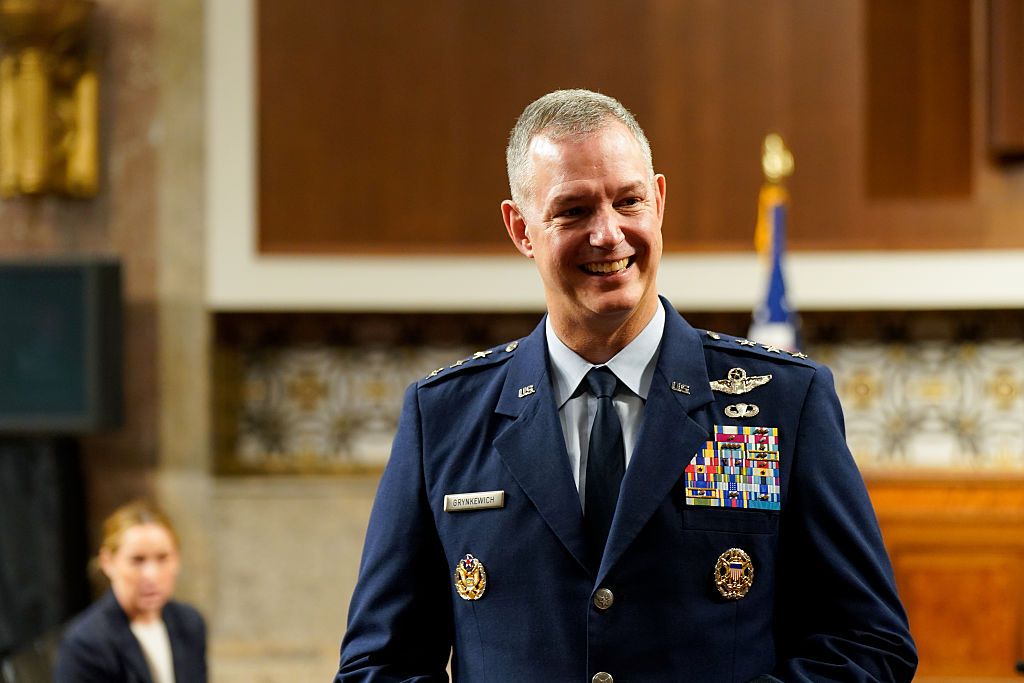
U.S. Air Force General Alexus G. Grynkewich assumed command as the 21st Supreme Allied Commander Europe (SACEUR) on July 4 during a ceremony at Supreme Headquarters Allied Powers Europe.

NATO Secretary General Mark Rutte presided over the handover, commending outgoing U.S. Army General Christopher G. Cavoli for his contributions to modernizing NATO's collective defense and bolstering support for Ukraine.

Rutte highlighted Cavoli's efforts to strengthen NATO’s presence in the Baltic Sea in response to threats to critical undersea infrastructure and credited him with conceiving and establishing NATO’s new command in Germany to enhance assistance to Ukraine. He also noted Cavoli's role in refocusing the Alliance on collective defense following the 2022 Madrid Summit, where NATO adopted a new Strategic Concept in response to Russia’s full-scale invasion of Ukraine.

Cavoli played a central role in developing and securing approval for NATO’s regional defense plans at the 2023 Vilnius Summit—a significant overhaul of the Alliance’s military posture since the Cold War.

His tenure also included the integration of Finland and Sweden into NATO’s military structures, expanding the Alliance’s strategic reach. In 2024, Cavoli oversaw "Steadfast Defender," NATO’s largest military exercise since the Cold War, involving approximately 90,000 troops practicing large-scale reinforcement across the eastern flank and validating a new high-readiness force model.

Rutte specifically acknowledged Cavoli's leadership in rapidly reinforcing NATO's Baltic Sea presence during threats to underwater infrastructure and for establishing the NATO Security Assistance and Training for Ukraine (NSATU), which continues to support Ukraine.

The secretary general welcomed General Grynkewich, noting that, as a former fighter pilot, he brings "a deep understanding of the threats we face from the skies, and across other domains." Rutte added that Grynkewich’s recent role as Director of Operations of the Joint Staff provides him with broad experience in advancing military and security priorities amid global challenges.

Allied Command Operations—responsible for planning and executing all NATO operations—now falls under General Grynkewich's command, a position first held by General Dwight D. Eisenhower.

Russia launches another horrific attack on Kyiv hours after Trump-Putin call
Ripe cherries and apricots fill the stalls of fruit vendors, while people bustle about on a scorching July Friday. Yet just a five-minute walk from the stand, the scene shifts dramatically: a gaping hole mars the five-story residential building where the stairwell once stood. Rescuers tirelessly sift through the
New NATO commander takes helm as alliance lauds outgoing chief for modernizing defenseThe Kyiv IndependentKateryna Hodunova
New NATO commander takes helm as alliance lauds outgoing chief for modernizing defense
  •  

Ukrainian drone strike on Russian airfield hits bomb depot, aircraft

Ukrainian drone strike on Russian airfield hits bomb depot, aircraft

Ukraine targeted the Borisoglebsk airfield in Russia's Voronezh Oblast overnight on July 5, damaging a warehouse with guided bombs, aircraft, and other military assets, Ukraine's General Staff reported.

The airfield hosts Su-34, Su-35S, and Su-30SM jets thatRussia regularly uses in air strikes against Ukraine, according to the military. The strike may have destroyed a training and combat aircraft, with further assessments underway.

The NASA Fire Information for Resource Management System (FIRMS) detected a fire near the Borisoglebsk military airfield shortly after the strike. Residents in the area reported 8–10 powerful explosions around 2 a.m. local time, according to Russian independent outlet Astra.

The strike was part of a broader overnight drone campaign across Russia, with explosions and fires reported in at least six regions.

The Russian Defense Ministry said 42 drones were intercepted within a three-hour period, most of them over Belgorod, Bryansk, and Kursk oblasts, which border Ukraine.

Leningrad Oblast Governor Alexander Drozdenko said two drones were downed south of St. Petersburg, prompting a temporary suspension of flights at Pulkovo airport. No casualties or damage were reported.

The governor of the Smolensk Oblast in western Russia said anti-aircraft units downed three drones without casualties or damage. The governor of the Voronezh Oblast, bordering Ukraine, also confirmed the destruction of several drones.

Explosions were also heard overnight in Cheboksary, the capital of the Chuvash Republic, where video footage shared online showed a fire reportedly at a local industrial site.

Additionally, explosions were heard during the night in Engels, Saratov Oblast, with some Telegram channels suggesting a military airfield was likely targeted.

The attacks come as Russia escalates aerial assaults on Ukraine, prompting Kyiv to increase long-range drone strikes on Russian military targets.

Ukrainian officials say these drone operations aim to undermine Russia's strike capabilities and bring the war closer to those enabling the Kremlin's campaign.

  •  
❌