❌

Vue lecture

25-year-old Natalia, born in Russia, served in the Israeli army, returned to Ukraine during the full-scale invasion, and join the Armed Forces of Ukraine
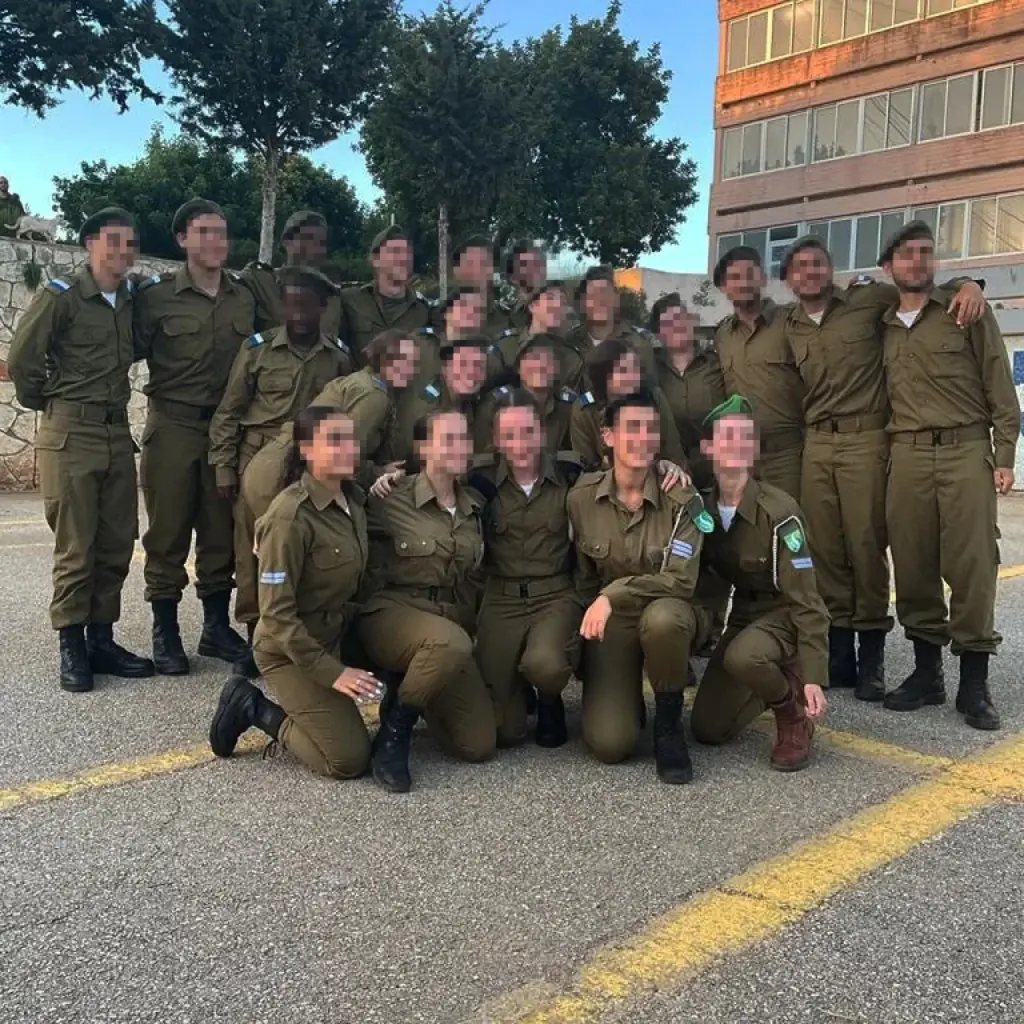
25-year-old natalia born russia served israeli army returned ukraine during full-scale invasion join armed forces · post fellow soldiers service courtesy natalia/nv nataliia_israel_army news ukrainian reports

Natalia is 25 years old and from Odesa. She has served in two armies—the Israeli and Ukrainian militaries. In the Armed Forces of Ukraine, she has, among other things, carried out missions as part of a UAV, FPV drone, and strike-wing crew on the Zaporizhzhia and Kupiansk fronts, NV reported on 5 October.

During the Russo-Ukrainian war, women in Ukraine have the right to voluntarily enlist in the military. As of March, more than 75,000 women were serving in the armed forces, more than 55,000 of them as service members, the commander-in-chief said, and their number has been growing every year. Recently, discussion around the mandatory mobilization of women has intensified. Keith Kellogg, former US Special Presidential Envoy for Ukraine under President Donald Trump, said that he considered mobilizing women in Ukraine appropriate. In response, Iryna Vereshchuk, Deputy Head of the Office of the President of Ukraine, said she would rather see more missiles and more will from the United States than advice to mobilize women.

In Israel, Natalia served in a search-and-rescue brigade as a rescue soldier and in the engineering corps during a deployment along the northern border.

Natalia was born in Russia’s Saint Petersburg but does not remember her life there

The young woman was born in St. Petersburg, where her family lived at the time. When she was a year and a half old, her mother returned to Odesa with her and her older son. Natalia says she remembers her life exclusively in Ukraine.

She spent the first nearly two years studying at Lviv University, but later decided to leave the university and look for other educational opportunities. Natalia studied, among other places, in Denmark through a scholarship program. After completing it, she planned to enroll at a European university to study sound engineering, but the coronavirus pandemic began at that time.

She moved to Israel under a program for Jewish youth at the end of 2020. After the program ended, due to quarantine restrictions and closed airports, Natalia faced a choice: obtain a work visa or acquire citizenship under the Law of Return. She chose the latter—and with it, she also became obligated to perform military service.

In May 2022, Natalia joined the Israeli military and chose a combat unit.

“When the war started in Israel itself, I still had six months of mandatory service left. I was discharged and immediately transferred to reserve service. Once I managed to resolve all the bureaucratic issues so that this would not be considered desertion, I returned to Ukraine,” the young woman says.

Natalia returned to Ukraine in March 2025, and in August signed a contract with the Armed Forces of Ukraine.

Natalia (right) and her fellow servicewoman. Photo courtesy of Natalia/NV

“The army—both Israeli and Ukrainian—gives you a deeper understanding of what society is made of”

Among the advantages of the Ukrainian army, she highlights its ability to quickly adapt to circumstances. In particular, she mentions the use of drones, OSINT, and solving complex technological tasks with minimal resources.

“The West could learn from this situational agility. They often spend huge budgets on developments that should be cheap and mass-produced,” the veteran says.

However, such Ukrainian ingenuity is largely a consequence of a lack of funding, Natalia notes.

In the Israeli military, Natalia highlights society’s readiness for the constant threat of war and more systematic planning of military service.

“There, preparation for and perception of the army begin at school: by the age of 14–15, teenagers already understand where they want to go, what skills they need, and undergo selection for special or intelligence units,” the young woman says.

She then gives the opposite example of the situation in Ukraine.

A Ukrainian female soldier with a call sign "Tsyhancha" went from FPV operator to piloting the Heavy Shot bomber. Image: The 125th Separate Heavy Mechanized Brigade
Explore further

This Ukrainian female soldier flies one of war’s heaviest drones. She turns down promotion twice to keep doing it

“In Ukraine, with very rare exceptions, people hide until they are mobilized, and suddenly face the reality of conscription without having any understanding of the system,” the veteran says.

Asked how adapted the Ukrainian army is to women, she answered: “In no way,” adding that the Israeli army is “also largely not fully adapted.”

In Ukraine, this is reflected, in particular, in the provision of clothing and equipment that often does not correspond to women’s sizes and physiology. She says she had to purchase her own anatomically fitted body armor. She cited the example of veteran Natalia Lishchyshyna, who had her breasts amputated due to prolonged wearing of body armor that was not adapted to the female anatomy.

In Israel, by contrast, there is a practice of reimbursing expenses for equipment that service members purchase at their own expense.

Serving in the military in both countries provides an opportunity to better understand what society is actually made of, the young woman says.

“The army—both Israeli and Ukrainian—gives you a deeper understanding of what society is made of. You encounter people you would never have crossed paths with in your civilian bubble because of differences in views or socioeconomic circumstances,” Natalia says.

She believes this makes it easier to accept mistakes, difficulties, and new challenges.

The Ukrainian army is not adapted to women in any way, Natalia says

In Natalia’s view, the problem is not only the living and working conditions but, above all, the lack of mechanisms necessary for the systematic mandatory mobilization of women. At the same time, she believes voluntary recruitment should be encouraged and expanded.

One of the problems is the lack of a legal procedure for temporary childcare in cases when both parents are simultaneously carrying out combat missions, Natalia says, stressing that she means the period of their service, rather than situations involving the death of one of the parents.

Another shortcoming is insufficient protection against sexual violence and harassment in the Ukrainian military.

“Here, any complaint goes through the direct chain of command. If the commander is not interested in resolving the problem or is involved in it themselves, the woman is left defenseless,” the veteran says.

In Israel, by contrast, there is a separate hotline and mechanisms for documenting such cases without directly approaching a commander.
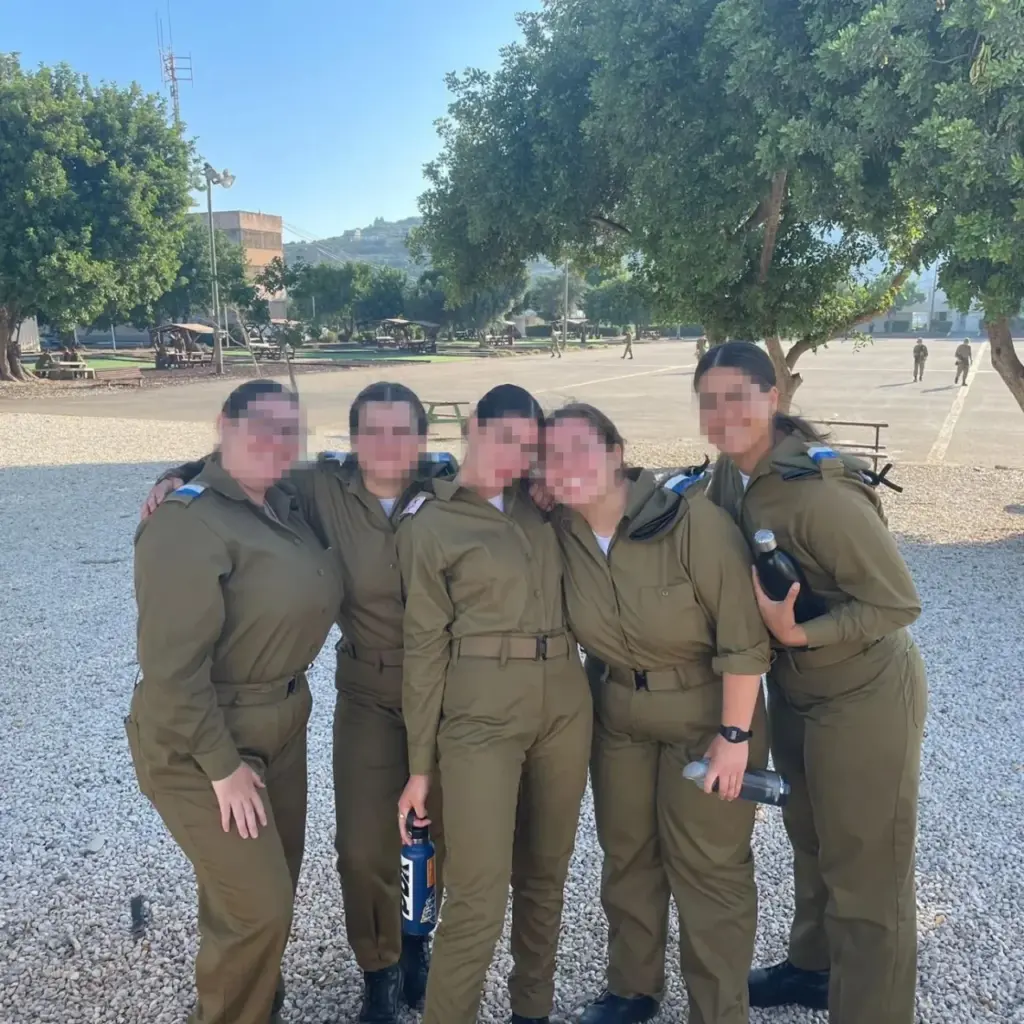
Natalia (second from left) during her service in the Israeli army. Photo courtesy of Natalia/NV

Women in combat positions can also still be taken insufficiently seriously, denied participation in combat missions, or transferred to staff positions without their consent.

Natalia also emphasizes the lack of systematic military training for civilian women “at any level” and gives school education as an example.

“Even with the weak level of the school curriculum for the subject ‘Defense of Ukraine,’ boys had at least some basic knowledge. Girls were not involved in it at all,” the veteran says.

For now, Natalia believes that women’s military service should remain voluntary, as society as a whole is still not ready to fully accept women in the military.

  •  

For Twin Brothers Abducted in the Oct. 7 Attacks, Adjusting to Freedom Is a New Challenge

Gali and Ziv Berman were taken hostage when their kibbutz was attacked on Oct. 7, 2023. They were freed a year ago but are still adjusting to freedom and trying to rebuild their lives.

The twin brothers Gali and Ziv Berman were abducted by gunmen in the Oct. 7, 2023, attacks.
  •  

For Twin Brothers Abducted in the Oct. 7 Attacks, Adjusting to Freedom Is a New Challenge

Gali and Ziv Berman were taken hostage when their kibbutz was attacked on Oct. 7, 2023. They were freed a year ago but are still adjusting to freedom and trying to rebuild their lives.

The twin brothers Gali and Ziv Berman were abducted by gunmen in the Oct. 7, 2023, attacks.
  •  

UK Security Adviser Jonathan Powell Traveled to Israel Ahead of Consulate Closure

Jonathan Powell, Britain’s national security adviser, visited Israel last week to try to negotiate over the looming closure of his country’s consulate in Jerusalem, according to three officials.

© Niklas Halle'N/Agence France-Presse — Getty Images

Jonathan Powell, Britain’s national security adviser, on Downing Street last year.
  •  

US, Israeli and European far-right figures to gather for conference in Israel

Trump’s counter-terrorism ‘czar’, Sebastian Gorka, was scheduled to speak at conference but White House says he will no longer attend

A National Conservatism (NatCon) conference beginning today in Jerusalem advertises a talk from the Trump administration’s anti-terrorism czar alongside speeches from far-right Israeli politicians, European figures who have faced disciplinary action over alleged antisemitism, and Christian nationalist and far-right figures from the United States.

The Jerusalem event is perhaps the most significant recent gathering to feature large contingents of Israeli nationalists alongside Christian nationalists and far-right European nationalists from a milieu sometimes shadowed by accusations of antisemitism.

Continue reading...

© Photograph: Simon Wohlfahrt/AFP/Getty Images

© Photograph: Simon Wohlfahrt/AFP/Getty Images

© Photograph: Simon Wohlfahrt/AFP/Getty Images

  •  

Israeli Authorities Trade Blame for Failure to Flag FlyDubai Co-Pilot

The Omani co-pilot who officials said tried to crash the plane was said to have embraced extremist Islamist views.

© Ammar Awad/Reuters

A replacement FlyDubai plane, carrying passengers who were on an aircraft from Dubai to Tel Aviv that made an emergency landing in Saudi Arabia, arrives at Ben Gurion International Airport in Israel, last week.
  •  

Who Were the Pilots on the FlyDubai Flight?

The co-pilot’s embrace of extreme Islamist views prompted Omani officials to scrutinize him, according to two people briefed on the investigation.

© Ariel Schalit/Associated Press

Officials are working to uncover the motives of a pilot who attacked his colleague during a flight to Tel Aviv.
  •  

Omani Co-Pilot on FlyDubai Flight Is Said to Have Extremist Views

It was unclear what background checks had been carried out before he was allowed to fly to Israel.

© Jack Guez/Agence France-Presse — Getty Images

A FlyDubai aircraft that returned passengers who had been aboard Flight 1073, at Ben Gurion Airport in Tel Aviv on Wednesday.
  •  

FlyDubai Co-Pilot Used Crash Ax in ‘Terrorist’ Cockpit Attack, Emirates Says

The violent midair assault on a FlyDubai flight to Tel Aviv has deepened concerns about the safety of Israelis traveling abroad.

© Ammar Awad/Reuters

A FlyDubai plane carrying passengers from an earlier flight that had been forced to divert after a cockpit attack, arriving near Tel Aviv on Wednesday.
  •  

How FlyDubai Passengers and Crew Averted Disaster After Pilot Was Stabbed During Flight

A badly wounded Indian pilot managed to unlock the cockpit door. Four Israeli men teamed up to overwhelm an attacker and avert disaster.

© Ohad Zwigenberg/Associated Press

A FlyDubai plane carrying Israeli passengers who had earlier been aboard another FlyDubai aircraft that made an emergency landing in Saudi Arabia approaches Ben Gurion International Airport near Tel Aviv on Wednesday.
  •  

Airlines Set to Bring Israelis Back From U.A.E. After FlyDubai Cockpit Attack

The attack, on a flight from Dubai to Tel Aviv, halted the only direct service between the two cities since the war in Iran disrupted air traffic.

© Yiannis Kourtoglou/Reuters

Israeli carriers in Cyprus in 2025. Two Israeli airlines, Israir and Arkia, said Friday that they had obtained “the required permissions” to land at Dubai’s airport.
  •  

AI weapons systems are already here. Algorithms must not decide who lives and dies | Kenneth Roth

Israel’s conduct in Gaza shows the danger of using AI in warfare. Humans must remain at the center of wartime decisions

As tech leaders warn about the threats of artificial intelligence, most conjure up images of AI agents running amok, such as hacking systems used to run our critical infrastructure, banks or even militaries. Yet one serious danger is mentioned less frequently – the threat posed by AI–empowered lethal weapons. Fully autonomous versions of these weapons are colloquially known as killer robots.

Israel’s conduct in Gaza shows that, in an important respect, such AI weapon systems are already here. An algorithm has been deciding who lives and who dies.

Continue reading...

© Photograph: Alaa Badarneh/EPA

© Photograph: Alaa Badarneh/EPA

© Photograph: Alaa Badarneh/EPA

  •  

Abdul El-Sayed, a Senate candidate in Michigan, Is Still Trying to Unite the Democratic Base

The progressive Senate candidate is offering olive branches to Jewish voters and campaigning with Kamala Harris to attract Black voters. Polling shows it may be working.

© Nick Hagen for The New York Times

Dr. Abdul El-Sayed narrowly won a bruising primary, but along the way, he alienated Jewish voters with his criticism of Israel and Black and independent voters with his left-wing policies.
  •  

Investigators Seek Motive for FlyDubai Cockpit Attack

Prime Minister Benjamin Netanyahu of Israel said the co-pilot who set upon the pilot had undergone “Islamist radical indoctrination” but did not elaborate.

© Ammar Awad/Reuters

A FlyDubai plane carrying Israeli passengers who had earlier been aboard another FlyDubai aircraft forced to make an emergency landing after a cockpit attack.
  •  

‘Ready to Blow His Stack’: How Biden Nearly Cut Off Netanyahu Over Gaza

Brett McGurk, who was the top Middle East adviser to President Joseph R. Biden Jr., offered the first inside-the-room account of American efforts to manage the Gaza war.

© Tierney L. Cross for The New York Times

President Joseph R. Biden Jr. at the White House in May 2024. He spoke with Prime Minister Benjamin Netanyahu of Israel only twice in the first three months of that year.
  •  

FlyDubai Under Scrutiny After Cockpit Attack

The United Arab Emirates has said it is leading the investigation into the episode, and FlyDubai’s service between Dubai and Tel Aviv has been suspended.

© Erik Marmor/Getty Images

A passenger raises his arms in relief as he walks through the domestic arrivals doors with his dog and luggage at Ben Gurion Airport near Tel Aviv on Wednesday.
  •  

Israelis Take Pride in Bravery of Passengers Who Saved FlyDubai Flight

The events evoked days decades ago when Israel was widely admired for its plucky survival against the odds and for taking on hijackers.

© Ohad Zwigenberg/Associated Press

Passengers at the arrivals terminal after landing at Ben Gurion Airport near Tel Aviv on Wednesday.
  •  

Who Is Captain Smit Machchhar, the Pilot Hailed as a Hero After FlyDubai Cockpit Stabbing?

Capt. Smit Machchhar suffered stab wounds while fending off an attack from his co-pilot, saving the lives of around 170 people on board, officials said.

© Israel Foreign Ministry, via Reuters

A photograph provided by the Israeli government shows Smit Machchhar, an Indian pilot, in an undated handout image released on Wednesday.
  •  

A Bloody Attack on a FlyDubai Plane Headed to Israel, and a Terrifying Plunge

“I don’t deserve to die like this,” said one passenger on Flight 1073 from Dubai to Tel Aviv. The motive of the cockpit stabbing remains unknown, officials said.

© Jack Guez/Agence France-Presse — Getty Images

  •  

Panic and Heroics on FlyDubai Flight: ‘We Felt That This Was It’

A routine flight turned terrifying when a violent altercation broke out inside the cockpit and the aircraft dropped 17,000 feet in two minutes. Passengers subdued a knife-wielding attacker.

© vie Agence France-Presse

Passengers from FlyDubai Flight 1073 at the Prince Sultan bin Abdulaziz Airport in Tabuk, Saudi Arabia, on Wednesday.
  •  

FlyDubai Flight Where One Pilot Stabbed Another: What to Know

Prime Minister Benjamin Netanyahu of Israel has said the attack might have been an attempt to crash the flight from Dubai to Tel Aviv.

© Ohad Zwigenberg/Associated Press

Passengers of a FlyDubai aircraft that made an emergency landing in Saudi Arabia were welcomed at Ben-Gurion International Airport in Israel on Wednesday.
  •  

FlyDubai Provides Key Link for Israeli Air Travelers

The low-cost carrier operates up to 10 daily flights between Dubai and Tel Aviv.

© Emil Salman/Pool, via Associated Press

The first FlyDubai commercial flight from Dubai arrives at Ben Gurion Airport in Israel on Nov. 26, 2020.
  •  

Passenger Describes Chaos Aboard FlyDubai Flight

The passenger, Miriam Ohayon, said people on board felt the jet lose control and heard screams. “When they opened the cockpit, there was a lot of blood,” she told Israeli television.

© Agence France-Presse — Getty Images

Security vehicles outside Prince Sultan bin Abdulaziz Airport in Tabuk, Saudi Arabia, on Wednesday.
  •  

FlyDubai Flight to Tel Aviv Issues Distress Signal Before Landing in Saudi Arabia

The plane was traveling from Dubai to Israel when the pilot and co-pilot appear to have gotten into a fight, Israeli officials said.

© Giuseppe Cacace/Agence France-Presse — Getty Images

A Flydubai Boeing 737 MAX 8 over Dubai last year.
  •  

Israeli Settlers Stop Soldiers From Returning Palestinians to Their Home

The Supreme Court had ordered the military to ensure a West Bank family that fled violence could go back. But settlers blocked the effort, with the authorities accused of not doing enough to confront them.

© Ammar Awad/Reuters

Mahmoud Toubassi with his wife, Aedah, in the village of Jalud in the Israeli-occupied West Bank, on Tuesday.
  •  

Netanyahu Visits Emirati Leader After Reports on Warning About Hamas Attack

Official statements said bilateral relations were discussed. But the question of who bears responsibility for failing to prevent the Oct. 7 attack is a major election issue in Israel.

© Dave Sanders for The New York Times

Prime Minister Benjamin Netanyahu of Israel at the United Nations General Assembly in New York on Thursday.
  •  

Heroine or Public Enemy? The Israeli Blocking Much of Netanyahu’s Agenda.

Gali Baharav-Miara, Israel’s first female attorney general, has stopped many of the government’s efforts to remove constraints on its power.

© Pool photo by Gil Cohen-Magen

Gali Baharav-Miara, Israel’s attorney general, at a cabinet meeting in Jerusalem. As the country heads into elections next month, she is bracing for what could be her biggest battle yet.
  •  

Netanyahu Said to Have Been Warned by Emirati Leader About Hamas Attack Before Oct. 7

The warning from the leader of the United Arab Emirates, which lacked specific details about the nature of an attack, never reached the chiefs of Israel’s security establishment, Israeli officials said.

© Ariel Schalit/Associated Press

Prime Minister Benjamin Netanyahu of Israel in Tel Aviv this month.
  •  

Netanyahu, Addressing U.N., Denounces Israel’s Critics as ‘Moral Cowards’

Prime Minister Benjamin Netanyahu also reserved some of his ire for the mayor of the city hosting him, Zohran Mamdani.

© Dave Sanders for The New York Times

“Shame on you!” Prime Minister Benjamin Netanyahu said to Israel’s critics as he addressed the General Assembly on Thursday.
  •  

Israël envisage de déplacer les Palestiniens hors de la bande de Gaza

Donald Trump avait proposé l’an dernier de transférer les Palestiniens qui se trouvent dans le territoire vers des pays voisins, dont la Jordanie et l’Égypte.

Israël Katz, ministre israélien de la défense, a affirmé hier que le président américain n’avait pas renoncé à cette idée.

Il a indiqué qu’Israël était prêt à déplacer les Palestiniens «par la mer et par les airs» s’il recevait le feu vert de Washington. 

Katz soutient qu’il n’y a pas d’autre solution pour les Gazaouis.

[L'article Israël envisage de déplacer les Palestiniens hors de la bande de Gaza a d'abord été publié dans InfoBref.]

  •  

Québec solidaire a présenté ses engagements pour ses 100 premiers jours de mandat

Un gouvernement solidaire adopterait immédiatement 6 mesures: 

  • hausser le salaire minimum à 20 $;
  • plafonner les hausses de loyer aux taux d’inflation;
  • annuler la politique de retour au bureau visant les fonctionnaires;
  • créer un ministère des femmes et de l’égalité des genres;
  • fermer le bureau du Québec à Tel-Aviv;
  • bloquer les projets de pipelines et gazoducs sur le territoire québécois.

QS lancerait 3 grands chantiers, pour être réalisés au cours d’un premier mandat: 

  • mettre en place une assemblée constituante élaborée avec les Premières Nations;
  • instaurer un réseau commun public/privé en éducation;
  • réformer le mode de scrutin.

[L'article Québec solidaire a présenté ses engagements pour ses 100 premiers jours de mandat a d'abord été publié dans InfoBref.]

  •  

Israël refuse les conditions du plan de paix américain pour Gaza

La dernière version du plan de paix américain prévoyait de façon progressive deux mouvements en parallèle:

  • le désarmement du Hamas 
  • le retrait des forces israéliennes de la bande de Gaza

Le Hamas avait accepté ce plan. 

Benyamin Nétanyahou, premier ministre israélien, a lui affirmé hier que l’armée israélienne ne commencerait pas à se retirer du territoire palestinien tant que le Hamas n’aurait pas été «véritablement désarmé».

  • Le gouvernement israélien redoute un désarmement fictif.

[L'article Israël refuse les conditions du plan de paix américain pour Gaza a d'abord été publié dans InfoBref.]

  •  

Le Hamas aurait accepté de rendre les armes 

Donald Trump a annoncé hier qu’un accord avait été conclu sur le désarmement complet du mouvement palestinien Hamas et de tous les autres groupes armés dans la bande de Gaza. 

  • C’était l’un des points qui bloquaient la mise en œuvre de la deuxième phase du plan de paix américain pour Gaza.

Le président américain a précisé que l’armée israélienne quittera le territoire palestinien lorsque le Hamas sera désarmé. 

Le Hamas n’avait pas encore confirmé publiquement l’accord hier soir.

[L'article Le Hamas aurait accepté de rendre les armes  a d'abord été publié dans InfoBref.]

  •  

The strike, the illusion of regime change, and what comes next

Par : Jim Muir

That Iran's Supreme Leader, Ayatollah Ali Khamenei, should disappear, or be disappeared, from the scene was not a novel notion. 

Throughout my nearly five years in Tehran at the turn of this century, speculation about his health and longevity was a near-constant background hum. He was reported, or rumoured, to be mortally stricken by prostate cancer, his constitution already weakened by an assassination attempt in 1981 that left his right arm largely useless. Who would succeed him was far from clear, and the object of further speculation. 

As he lived on into more recent times, reaching the same age of 86 attained by his predecessor – the Islamic Republic's founding father Ayatollah Ruhollah Khomeini – the prospect of his demise became a more immediate issue, though the question of succession remained equally shrouded in uncertainty. As Supreme Leader, Ayatollah Khamenei was the commanding voice behind the ruthless crackdown that took the lives of tens of thousands of citizens early this year in the latest and greatest of many escalating protests, at which the slogan "Marg Bar Diktator!" — Death to the Dictator! — became an increasingly prominent slogan. 

Their wish was confirmed to be true at 5 a.m. local time on Sunday morning by Iranian broadcasters. The previous morning, Khamenei’s compound in Tehran was demolished as the Israeli-American onslaught got under way while the Ayatollah was heading a meeting of the Defence Council. That ensured that top military figures were also killed, including the commander of the Revolutionary Guards, Mohammad Pakpour, the Army Chief of Staff Abdolrahim Musavi, and Khamenei's top military adviser, Ali Shamkhani, who had been wounded but survived the attack in June last year. 

The Iranian leadership appears to have been caught by surprise, as it was last year when the opening Israeli strike, which culled many top military leaders as well as nuclear scientists, was launched between two rounds of indirect negotiations between Iran and the U.S. Oman, which was mediating the talks, was furious then, denouncing Israel as the real destabilising factor in the region. 

Perhaps the Iranian leaders — and the Omani mediators — thought that such a dirty trick could only be pulled once. But it has happened again, with no evidence that the talks in Geneva had broken down. The chief Omani negotiator, Badr Albusaidi, was livid. Only hours before the strike, he was in Washington for meetings “to explain that a peace agreement between the U.S. and Iran is now within reach. No nuclear weapons. Not ever. Zero stockpiling. Comprehensive verification. Peacefully and permanently. Let’s support the negotiators in closing the deal.”

After learning of the attack, he expressed his outrage in another tweet: “I am dismayed. Active and serious negotiations have yet again been undermined. Neither the interests of the United States nor the cause of global peace are well served by this. And I pray for the innocents who will suffer. I urge the United States not to get sucked in further. This is not your war.”

But Donald Trump and the U.S. were already thoroughly sucked in, and it was indeed their war, or at least his. According to the Israelis, the date had been decided jointly weeks before, after months of planning. Which meant that the Geneva negotiations, focused on the nuclear issue, were simply deceptive camouflage designed to give time for the U.S. to complete the marshalling of its biggest naval and air buildup in the region since the 2003 invasion of Iraq. 

Trump and the Israeli prime minister Benjamin Netanyahu soon made it clear that the campaign now had little to do with the niceties of Iran's nuclear programme: the agenda was regime change in Tehran, and a surprise attack to decapitate the regime was an essential element. 

With Iran's air defences largely taken out in last year's 12 days of war, it was like shooting fish in a barrel. Hundreds of air, missile and drone strikes were carried out on missile launchers, military bases and other targets around the country, with inevitable "collateral damage", including a girl's primary school in the southern town of Minab where scores of children were reported killed.

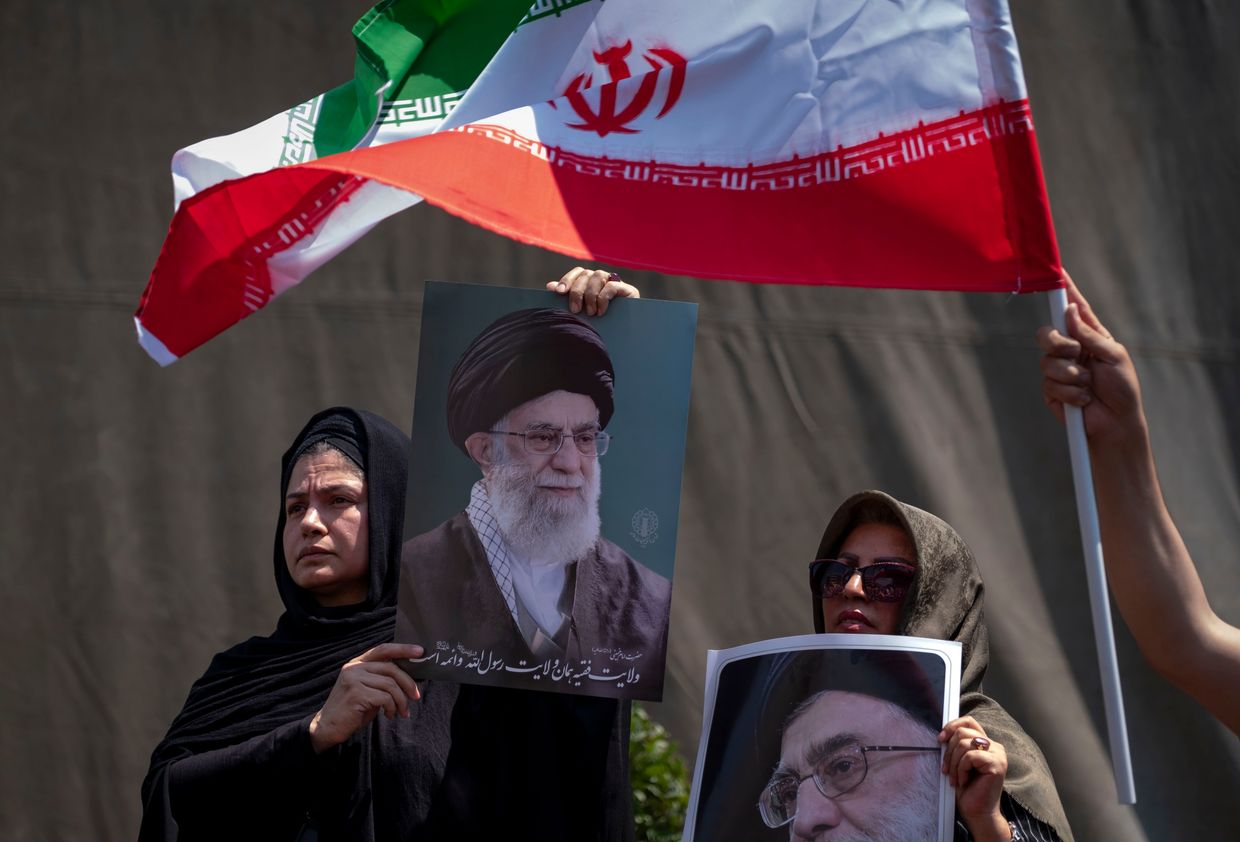
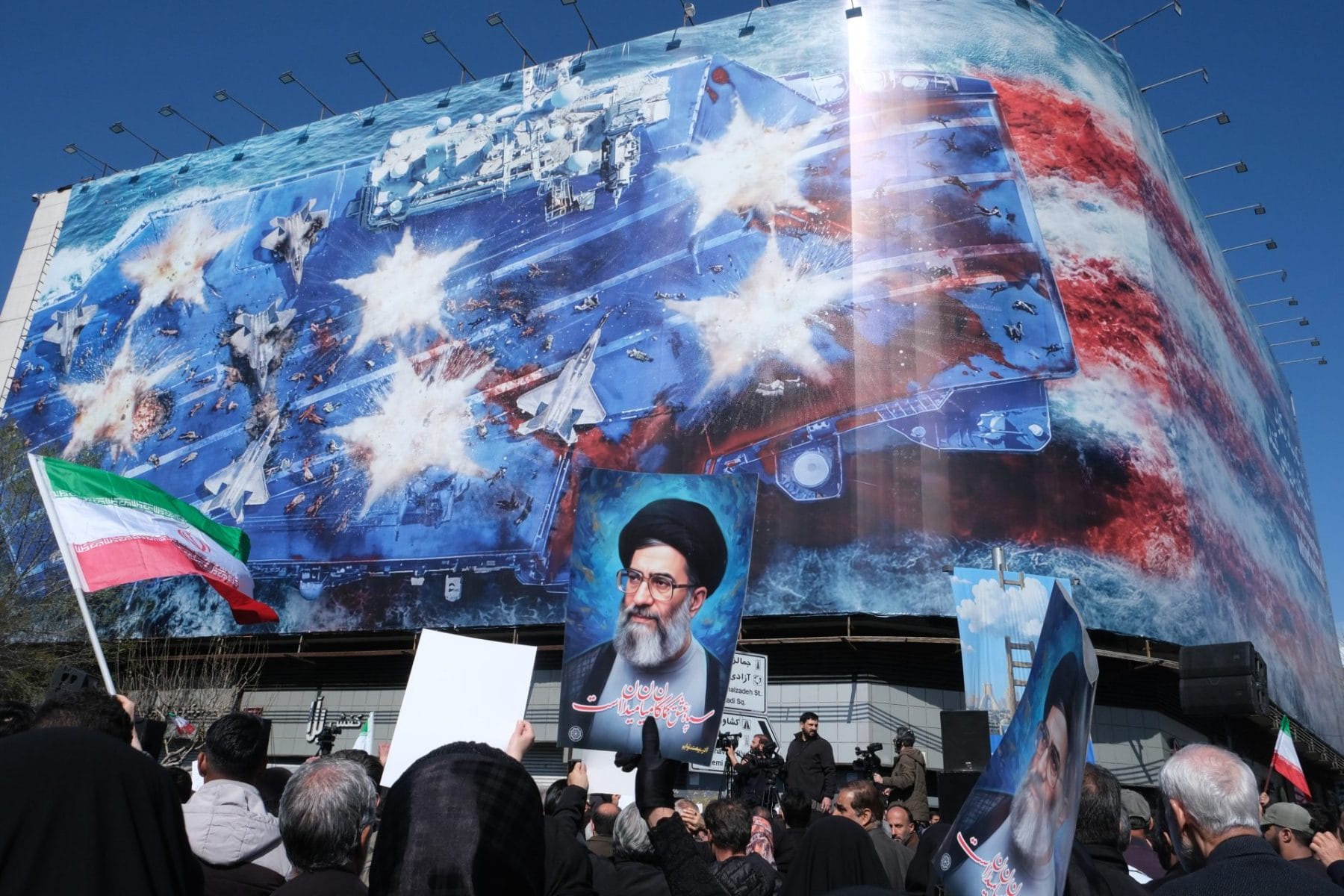
People gathered in Tehran's Revolution Square to mourn the assassination of Iran's Supreme Leader Ayatollah Ali Khamenei on March 1, 2026.

The Iranians did their best to live up to their dire warnings of deadly reprisals against Israel, and against American bases and allies on the Arab side of the Gulf and elsewhere. Missiles hailed down on airports and other installations in Kuwait, Bahrain, the UAE, Saudi Arabia and even Oman, despite its active mediation. While some U.S. bases may have been hit, so too were many civilian sites such as Dubai's iconic Burj al Arab hotel. Explosions too are being heard in Beirut, after Hezbollah fired rockets and drones at northern Israel to "avenge" Khamenei's death and the Israel Defense Forces struck back.

Air traffic was halted throughout a region rich in international hubs, sowing chaos worldwide. Iran's declaration that the strategic Strait of Hormuz was closed to shipping forced cargo shippers to suspend the voyages that transport some 20% of the world's oil and a lot of liquid gas, causing tremors through international markets. Once again, a decision taken by a tiny circle of men in Washington, Jerusalem and Tehran instantly rewired daily life, reminding us who actually gets to pull the global emergency brake.

What all this would do to Iran's relations with the Arab side of the Gulf was one of many open questions. While Oman was actively mediating, the other Arab oil states had been pressing the Americans not to allow a campaign that would predictably destabilise the region, and declaring their airspace not available for any hostilities. But any sympathy for Tehran quickly evaporated when the missiles started flying in: the Gulf Arab states closed ranks.

Trump and the Israelis made it clear that this was not one quick spectacular strike, but an ongoing campaign that would last days, perhaps even weeks. Presumably at the end, Iran would find its missile capabilities "obliterated," in Trump's favourite term, along with any nuclear activities. 

Once the bombs stop falling, Trump and Netanyahu urged, the Iranians should come out of their basements and take over a government that would be theirs for the taking. A historic opportunity that would likely not recur for generations, Iranians were told. 

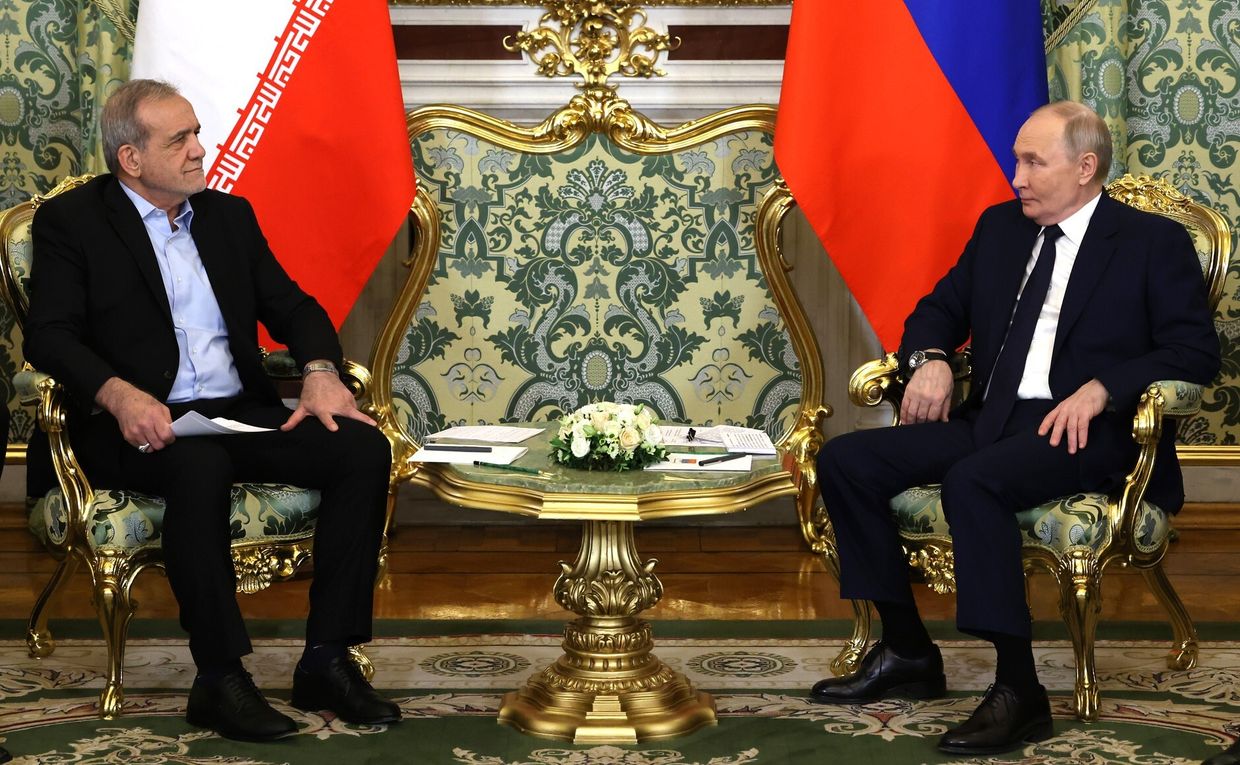
But it is hard to imagine such regime change being wrought remotely from the skies. The regime lost little time in filling the leadership vacuum, setting up a three-man ruling council in line with the constitution, composed of the President, Masood Pezeshkian, the head of the Judiciary, Gholamhossein Mohseni-Ejei, and Ayatollah Alireza Arafi from the Council of Guardians. All regime loyalists, and the latter two noted hard-liners. So business as usual as far as they are concerned. But the fact is that the assassination of the Supreme Leader and the attendant bludgeoning of the regime's capabilities will inevitably usher in a new and unpredictable phase in Iran's turbulent history.

On the streets, reactions were fractured: jubilation in areas that had long chanted “Death to the dictator”, state-promote mourning in others, but also fear and a grim resignation, an understanding that power vacuums are often filled with fresh repression or civil war.

A smooth transition to a peaceful democracy is about the least likely scenario among the many possibilities. So too is an imminent return of the monarchy, with a comeback by Israeli-backed Reza Pahlavi, son of the Shah ousted by the 1979 revolution. So far there has been no sign visible to the outside world of a split in the ranks of the defenses built up by the Islamic Republic, which still has regular military forces numbering around 400,000, Revolutionary Guards of up to 190,000, and its auxiliary militia enforcers, the Basij, who may be able to mobilise around a million at street level. 

There must be much anger among regime loyalists, which may fall on the heads of any opposition protestors who imagine they can move in and take over the reins of government from the bombed-out wreckage of the Islamic Republic. The U.S. military is not likely to be able to remain engaged in the detail of defanging the regime once the main thrust of the campaign is done. But Israel likely will. Its equivalent of the CIA, the Mossad, has spent years building up formidable intelligence at street level, and will be doing its utmost to continue hamstringing the regime from within and fomenting opposition.Among the many unanswerable questions is whether all this will lead simply to chaos and fragmentation, which is probably Israel's preferred outcome, or to a more compliant regime willing to compromise with the U.S. in order to get crippling economic sanctions lifted. As Trump concedes the war might last weeks, who knows what Iran will eventually emerge from the smoke and the rubble?

The post The strike, the illusion of regime change, and what comes next appeared first on Coda Story.
  •  

The phoney war: Will the U.S. strike a decisive blow against Iran?

Par : Jim Muir

Will he or won't he? The Middle East is on tenterhooks as the U.S. continues to build up a massive and menacing military posture around Iran, threatening an attack that could trigger a conflagration whose tremors would be felt throughout the region. 

If anybody hoped that the man on whose word it all hangs, President Donald Trump, might clarify his intentions in his State of the Union address on Tuesday night, they were disappointed. 

Speaking 36 hours before a third round of indirect and ultimately inconclusive talks with the Iranians in Geneva on Thursday, he said, "My preference is to stop this problem through diplomacy but one thing is for certain, I will never allow the world's number one sponsor of terror, which they are by far, to have a nuclear weapon...they want to make a deal, but we haven't heard those secret (sic) words, 'We will never have a nuclear weapon.’”

In the run-up to the Geneva talks, led on the U.S. side by real estate moguls Steve Witkoff and Trump son-in-law Jared Kushner, Iranian officials voiced optimism that a deal could be struck and insisted they would be flexible on the nuclear issue. Various formulas were being bandied around, such as Iran sending abroad half of its estimated 300kg of highly enriched uranium and diluting the rest under supervision, participating in a regional consortium for peaceful enrichment and so on. 

In theory, for Iran to say "We will never have a nuclear weapon" should not be an issue — it has said all along that it is not pursuing that goal, which is banned by a fatwa. Iranian foreign minister Abbas Araghchi posted on X this week that Tehran “will under no circumstances ever develop a nuclear weapon.” Which begs the question as to why it has enriched uranium to 60% — short of weapons grade but well beyond the levels needed for peaceful civilian purposes.  

Witkoff and Kushner will be vigilant for signs of Iranian duplicity and foot-dragging. But with another set of talks ending with no deal apart from promises of more talks, both sides might simply be playing for time, Iran to delay the feared blow, and the U.S. to finish assembling the assault force, its biggest mobilization of naval and air power in the region since the 2003 invasion of Iraq.

There is strong apprehension in the region that the huge and costly U.S. buildup must mean business. American bombs and missiles would hit Iran. The Iranians would make good on their threat to make it a regional war, not a symbolic retaliation as happened in the 12-day war in June last year after American bunker-buster bombs hit Iran's nuclear facilities in Isfahan, Natanz and Fordow. This time Iranian missiles would target U.S. military assets, bases on the Arab side of the Gulf and elsewhere, and perhaps oil installations. And Israel. The Israelis would hit back hard. Hezbollah in Lebanon would do its best to join in, prompting a further massive Israeli response. 

There were ominous straws in the wind. The U.S. withdrew non-essential personnel from bases in the Gulf, and from its embassy in Beirut. The Israelis reportedly warned Lebanon that if Hezbollah joined in, they would hit back at government targets, including Beirut airport, which were unscathed throughout the earlier hostilities. They stepped up their daily attacks on suspected Hezbollah targets, including a big missile attack on February  20 on the eastern Beqaa valley which left 12 dead, including eight Hezbollahis. Since the November 2024 ceasefire, Hezbollah has not fired so much as a peashooter at Israel while well over 400 of their people have been killed in Israeli attacks on Lebanon.

Does all this mean the doomsday scenario is inexorable? Are the Americans set on a clear game plan, with identified objectives and the means to attain them?

Apparently not. Trump is reportedly receiving divided counsel from his advisers, military and political, some more hawkish and others more cautious than others. Above all, he has an eye on the looming mid-term elections in November. He was elected on a platform of ending the "forever" wars in the Middle East, yet could be on the brink of starting another one, which would not go down well with part of his MAGA base or the public in general. 

The signs are that he was hoping the swashbuckling display of power would intimidate the Iranians into buckling. Witkoff admitted Trump was puzzled that Iran had not capitulated. “Why, under this pressure, with the amount of sea power and naval power over there, why haven’t they come to us and said, ‘We profess we don’t want a weapon, so here’s what we’re prepared to do?’ And, yet, it’s sort of hard to get them to that place,” he told Fox News. Iran's Foreign Minister Abbas Araqchi explained: "It's because we're Iranian."

Trump's adrenalin was clearly set pumping by the adventure in Venezuela, where a similar military buildup culminated in the operation to abduct President Nicolas Maduro. But Iran is not Venezuela. It is a highly militarized regime which has spent 47 years preparing its internal and external defences, and which has different power bases that make it hard simply to decapitate. There is no magic bullet that might not set the region on fire. 

Taking out the Supreme Leader, Ayatollah Ali Khamene'i (who is also a religious leader, and this is Ramadan) would not be likely to bring about a change in regime behavior as in Venezuela. Bringing the regime down altogether would require a prolonged and detailed campaign that the U.S. military machine might not be able to sustain. 

That's where Israel comes in. Some White House advisers reportedly believe it would play better politically for Israel to strike first rather than the U.S., and thus force Iran to retaliate. Like Trump, Israel’s Prime Minister Benjamin Netanyahu is a man with an eye on impending elections (October at the latest) is Prime Minister Benjamin Netanyahu, who makes no secret of his ambition to see the Iranian regime brought down. Netanyahu — backed by almost the entire Israeli political spectrum — is clearly champing at the bit, but aware of the danger of being seen to drag the U.S. into a potentially messy embroilment. One reason perhaps for the unusually discreet nature of Netanyahu's sixth visit to the White House on  February 11 — in through the back door, no lovefest press appearances. 

Which may also actually have been a sign that the two allies might not be on the same strategic page. Plunging Iran into fragmentation and chaos would absolutely fit Israel's playbook, but not necessarily America's. The two are working at cross-purposes in Syria, where the Israelis are pushing against a strong central government which the U.S. is supporting, even against its erstwhile Kurdish allies in the north-east. 

If there are two constants in the current equation, they are that the Iranian people’s disillusionment and rage against the regime will not go away, and neither will Israel's desire to overthrow it. But if Trump does not share that goal, he will have to find a face-saving way to wriggle off the hook he has created with his ostentatious military buildup. 

A version of this story was published in this week’s Coda Currents newsletter.Sign up here.

The post The phoney war: Will the U.S. strike a decisive blow against Iran? appeared first on Coda Story.

  •  

Iran summons Ukraine's envoy, warns of 'consequences' over comments on Israeli, US strikes

Iran summons Ukraine's envoy, warns of 'consequences' over comments on Israeli, US strikes

The Iranian Foreign Ministry has summoned the Ukrainian charge d'affaires to protest "inappropriate remarks" by Kyiv regarding recent Israeli and U.S. strikes on Iran, the ministry said on July 1.

Tehran threatened Ukraine with unspecified "consequences" should such statements be repeated.

The diplomatic spat follows a wave of Israeli and U.S. air strikes targeting Iran's nuclear program, with Iranian forces attacking Israel and a U.S. base in Qatar in response.

Highlighting Iran's military support for Russian aggression against Ukraine, Kyiv responded by calling for the dismantling of the Iranian nuclear program to prevent it from threatening the Middle East or the wider world.

In response, Shahram Farsaei, head of the Iranian Foreign Ministry's Eurasian affairs department, relayed a protest note to Ukraine via the Ukrainian envoy in Iran, Kyrylo Pozdniakov. The ministry did not specify what exact comments prompted the reaction from the Iranian side.

Tehran also said that Ukrainian officials have "disregarded Ukraine's international legal obligations concerning respect for the principles and purposes of the U.N. Charter as well as the four Geneva Conventions."

Iran has provided ballistic missiles and thousands of Shahed drones to Russia, directly backing its armed aggression in Ukraine, itself launched in violation of international law and the U.N. Charter.

Moscow has backed Iran diplomatically after U.S. and Israeli attacks, urging a response from the U.N. Security Council and calling the attacks an "unprovoked aggression."

Russia-Iran alliance wavers as Tehran suffers major blows
Tehran, Russia’s main ally in the Middle East, has been dealt a heavy blow as Israel dismantled its network of proxies and then struck targets in Iran. The recent Iranian-Israeli war, which ended with a ceasefire on June 24, showed that the regional balance of power has shifted in Israel’s favor. This could have a major impact on Russian-Iranian relations as Moscow will have to recalibrate its approach to the region. Russian-Iranian cooperation is likely to continue but Iran’s ability to help
Iran summons Ukraine's envoy, warns of 'consequences' over comments on Israeli, US strikesThe Kyiv IndependentOleg Sukhov
Iran summons Ukraine's envoy, warns of 'consequences' over comments on Israeli, US strikes
  •  

Pro-Palestinian activists reportedly destroy military equipment intended for Ukraine

Pro-Palestinian activists reportedly destroy military equipment intended for Ukraine

Around 150 pro-Palestinian activists have broken into a storage facility and damaged military equipment intended for Ukraine, the Belgian news outlet 7sur7 reported on June 26.

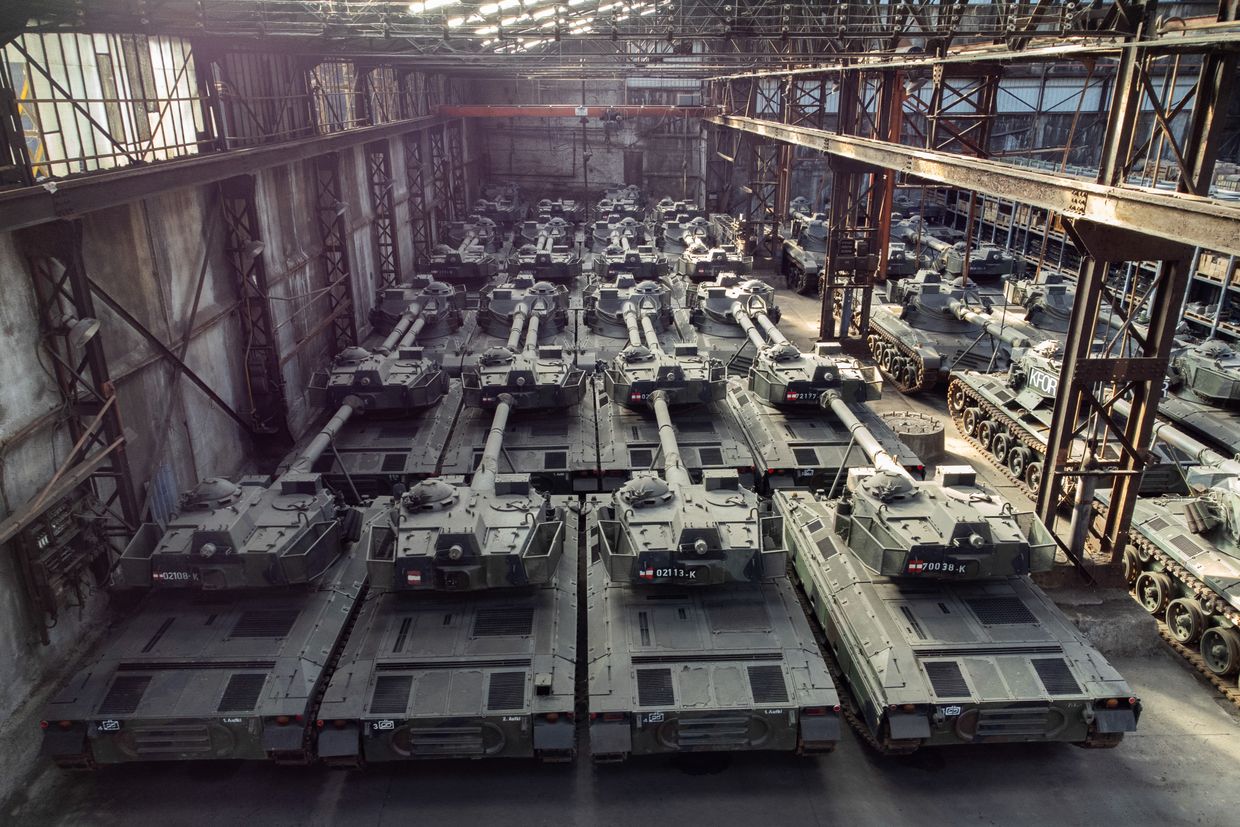
The facility belongs to OIP Land Systems, a company that produces military equipment for Ukraine. The activists reportedly thought the equipment would be supplied to Israel.

The activists, who were wearing white overalls and masks, took part in the Stop Arming Israel campaign. The protests seek to pressure Belgian authorities to maintain the military embargo against Israel and impose sanctions on it.

The protesters, armed with hammers and grinders, first entered the company's offices, where they smashed computers, and then broke into the hangars, where they severely damaged some vehicles, Freddy Versluys, CEO of OIP Land Systems, said.

Since the beginning of the Russian invasion, the company has supplied the Ukrainian army with about 260 armored vehicles. The damage caused by the activists' actions is estimated at $1.1 million, according to 7sur7.

"A further delivery has now been delayed by at least a month. That's all these Hamas sympathizers will have achieved with their action," Versluys said.

The company was reportedly targeted by pro-Palestinian protesters because Elbit Systems, an Israeli defense company, owns it.

Protesters believe that Elbit supplies 85% of the drones and most of the ground military equipment used by the Israel Defense Forces, 7sur7 reported.

Yet, the OIP Land Systems CEO claimed that his company has not produced defense systems for Israel for over 20 years.

OIP Land Systems has provided defense products to Ukraine on several occasions, including Leopard 1 tanks, which are manufactured at the Tournai plant.

With no new US aid packages on the horizon, can Ukraine continue to fight Russia?
The U.S. has not announced any military aid packages for Ukraine in almost five months, pushing Kyiv to seek new alternatives. But time is running out quickly as Russian troops slowly advance on the eastern front line and gear up for a new summer offensive. “While Ukraine’s dependence on
Pro-Palestinian activists reportedly destroy military equipment intended for UkraineThe Kyiv IndependentKateryna Hodunova
Pro-Palestinian activists reportedly destroy military equipment intended for Ukraine
  •  

'Treasonous' — Trump, Witkoff slam intel leak undermining US strikes on Iran, insist nuclear targets 'obliterated'

'Treasonous' — Trump, Witkoff slam intel leak undermining US strikes on Iran, insist nuclear targets 'obliterated'

U.S. Special Envoy to the Middle East Steve Witkoff condemned on June 24 the leak of an intelligence assessment that undercuts U.S. President Donald Trump's claims of having "obliterated" Iran's nuclear program.

His remarks follow a leaked U.S. Defense Intelligence Agency (DIA) assessment, reported by CNN, which found that strikes on three major Iranian nuclear sites, Fordow, Natanz, and Isfahan, did not destroy the core of Tehran's nuclear program. Instead, the intelligence suggests the attacks likely delayed Iran's progress by "a few months."

"It goes without saying that leaking that type of information, whatever the information, whatever side it comes out on, is outrageous. It's treasonous," Witkoff said during an appearance on Fox News. "It ought to be investigated, and whoever is responsible should be held accountable."

Witkoff, who served as Assistant to the U.S. president and led peace mission efforts during the recent conflict between Israel and Iran, defended Trump's portrayal of the U.S.-led strikes as a decisive success.

"The objective was to eliminate enrichment in Iran… and he achieved that objective," Witkoff said, adding that he personally reviewed damage assessments and saw "no doubt" that key nuclear infrastructure was destroyed.

The report leaked in media contradicts public statements from Trump and Defense Secretary Pete Hegseth, who had described the operation as delivering "total obliteration." Trump, for his part, stood by the claim on June 24. "Those targets were obliterated," he said. "That place is demolished."

According to the DIA assessment, though the strikes damaged above-ground infrastructure, most of the centrifuges and the enriched uranium stockpile reportedly remain intact. The assessment also noted that underground sections of the sites, where Iran's most sensitive work is done, were largely unaffected. Two officials told CNN that Iran likely retains operational nuclear facilities that were not targeted.

Witkoff dismissed the report as "preposterous," insisting that the Isfahan conversion facility, critical to Iran's ability to weaponize enriched uranium, was "completely destroyed" by a 30,000-pound bunker buster bomb.

"Without conversion, you can't begin or end enrichment," he said. "They cannot weaponize, even if they've enriched to 90%."

Witkoff also claimed successful targeting of Fordow and Natanz, saying the U.S. dropped more than a dozen bunker busters on the sites that made the facilities inoperable.

The White House acknowledged the assessment’s existence but strongly dismissed it. "This alleged assessment is flat-out wrong and was classified as ‘top secret’ but was still leaked to CNN by an anonymous, low-level loser in the intelligence community," press secretary Karoline Leavitt said.

"The leaking of this alleged assessment is a clear attempt to demean President Trump, and discredit the brave fighter pilots who conducted a perfectly executed mission to obliterate Iran’s nuclear program. Everyone knows what happens when you drop fourteen 30,000 pound bombs perfectly on their targets: total obliteration."

Trump, for his part, stood by his assessment of the mission's success. "I think it’s been completely demolished," he said on June 24. "Those pilots hit their targets. Those targets were obliterated, and the pilots should be given credit.” Asked if Iran could rebuild, Trump responded: "That place is under rock. That place is demolished."

While both Trump and Hegseth praised the strikes as decisive, others expressed caution. Chairman of the Joint Chiefs of Staff Dan Caine said it was "way too early" to determine whether Iran retained nuclear capabilities.

Trump says Putin called him to offer help with Iran
“He (Vladimir Putin) said, can I help you with Iran? I said, ‘no, I don’t need help with Iran. I need help with you,’” Donald Trump said.
'Treasonous' — Trump, Witkoff slam intel leak undermining US strikes on Iran, insist nuclear targets 'obliterated'The Kyiv IndependentKateryna Hodunova
'Treasonous' — Trump, Witkoff slam intel leak undermining US strikes on Iran, insist nuclear targets 'obliterated'
  •  

Ukraine evacuates 31 citizens, including 14 children, from Iran

Ukraine evacuates 31 citizens, including 14 children, from Iran

Ukraine's military intelligence agency (HUR) and the Foreign Ministry have evacuated 31 Ukrainian citizens from Iran on the instructions of President Volodymyr Zelensky, the agency said on June 24.

The news follows a war between Iran and Israel that began on June 13. The countries reached a ceasefire deal on June 24.

Israel and Iran attacked each other hours after the ceasefire was announced. Despite the initial violations, the agreement appears to be holding now.

Ukraine evacuated 14 children, 12 women, and five men, according to HUR.

The evacuation was carried out through Azerbaijan and Moldova to Kyiv, the statement read.

"We felt completely unprotected all the time in Tehran because there were no air raid alerts. In addition, the Internet was down, and we had no idea what was happening," Varvara from Kyiv Oblast, who was evacuated from Iran, told HUR's press service.

Earlier, Ukraine evacuated 176 people from Israel, including 133 Ukrainian citizens. The evacuation from Iran is the final stage of a joint operation by HUR and the Foreign Ministry to rescue Ukrainian citizens from high-risk areas, according to the agency's statement.

Tensions between Iran and Israel had already been rising after Iran launched missile strikes on Tel Aviv and other Israeli cities on June 13, killing multiple civilians, including five Ukrainian nationals. The attack came in retaliation for Israeli military action.

On June 24, Trump announced that a ceasefire between Iran and Israel had come into effect, following the U.S. strikes on Iranian nuclear facilities and a retaliatory Iranian attack on a U.S. military base in Qatar.

Investigation: How Russia prepares its strategic missile plant for ‘eternal war’
Key findings: * Despite international sanctions, Russia’s strategic missile plant was able to import complex machinery to dramatically increase missile production. * The Kyiv Independent has identified the equipment supplied to the plant, as well as the supply chains, mostly from China. * We located the plant’s new premises, built to house the
Ukraine evacuates 31 citizens, including 14 children, from IranThe Kyiv IndependentAlisa Yurchenko
Ukraine evacuates 31 citizens, including 14 children, from Iran
  •  

Trump says Putin called him to offer help with Iran

Trump says Putin called him to offer help with Iran

U.S. President Donald Trump said on June 24 that his Russian counterpart Vladimir Putin had called him and offered to help resolve the conflict between Iran and Israel, Fox News reported.

"As you know, Vladimir called me up. He said, can I help you with Iran? I said, 'no, I don't need help with Iran. I need help with you.' And I hope we're going to be getting a deal done with Russia, which is a shame. Six thousand soldiers died last week," Trump told journalists while heading to a NATO summit.

Trump's remarks come as The Hague hosts the NATO summit on June 24-25, at which the American leader is expected to meet Ukraine's President Volodymyr Zelensky.

Trump added he would like "to see a deal with Russia," which recently launched a new summer offensive against Ukraine, disregarding calls by Kyiv and its Western partners for an unconditional ceasefire.

The U.S. president did not provide further details on a potential deal with Russia.

Russia has deepened military and political ties with Tehran during the full-scale invasion of Ukraine.

Iran has supplied Moscow with thousands of Shahed attack drones used in routine strikes on Ukrainian cities.

Russia and Iran have cooperated to develop their own nuclear programs as both countries face Western sanctions. Russia supplied Iran with the Middle East's first nuclear power plant despite objections from the West.

Tensions between Iran and Israel had already been rising after Iran launched missile strikes on Tel Aviv and other Israeli cities on June 13, killing multiple civilians, including five Ukrainian nationals. The attack came in retaliation for Israeli military action.

Following several days of escalating conflict, Trump announced a ceasefire between Israel and Iran, but it was violated within hours of the American president's statement.

‘Dead and wounded everywhere’ — at least 160 casualties as Russia strikes Dnipro with ballistic missiles, hits civilian train
Russia launched a deadly missile attack on the Ukrainian city of Dnipro on June 24, striking civilian infrastructure and a passenger train, local officials reported.
Trump says Putin called him to offer help with IranThe Kyiv IndependentAnna Fratsyvir
Trump says Putin called him to offer help with Iran
  •  

Israel reportedly strikes Iran despite Trump's call for calm after announced ceasefire

Israel reportedly strikes Iran despite Trump's call for calm after announced ceasefire

Editor's note: This is a developing story and is being updated.

Israel launched airstrikes on Iranian territory on June 24, defying U.S. President Donald Trump's call for calm just few hours after he announced a ceasefire between the two countries, according to the Times of Israel.

The attack comes less than an hour after Trump told reporters that "Israel needs to calm down" as he criticized both countries for undermining the ceasefire he says he brokered.

"We basically have two countries that have been fighting so long and so hard that they don't know what the f*ck they're doing," Trump said on June 24.

Hours after Trump said the ceasefire came into effect, Israel accused Tehran of launching missiles toward its territory — an allegation Iran denied.

Following Iran's alleged missile strike, Trump and Israeli Prime Minister Benjamin Netanyahu reportedly spoke on the phone and agreed that Israel would carry out a limited response. The air force strike targeted a single "symbolic" radar installation.

Ahead of Israel's strike, Trump wrote on Truth Social that all of the Israeli planes "turn around and head home, while doing a friendly 'Plane Wave" to Iran."

According to the Times of Israel, Israeli officials said Trump was still sending messages promising that Israel would not attack Iran "after he knew we would attack," a senior official told the Kan public broadcaster.

Why can’t the West match Russia’s ammunition production?
Editor’s Note: This article has been updated to reflect new details of BAE Systems’ new chemical process that the company confirmed to the Kyiv Independent after initial publication. The West is failing to catch up to Russia’s production of the most basic unit of war for the past half-millennium — gunpowder.
Israel reportedly strikes Iran despite Trump's call for calm after announced ceasefireThe Kyiv IndependentKollen Post
Israel reportedly strikes Iran despite Trump's call for calm after announced ceasefire
  •  

Israel accuses Iran of violating ceasefire hours after Trump announcement

Israel accuses Iran of violating ceasefire hours after Trump announcement

Editor's note: This story was updated to include comments made by U.S. President Donald Trump.

Iran launched missiles toward Israel on June 24, just hours after U.S. President Donald Trump announced a ceasefire between the two countries had come into effect, the Israeli military said. Iran denied the accusation.

"A short while ago, sirens sounded in northern Israel following the identification of missiles launched from Iran toward the State of Israel," the Israel Defense Forces (IDF) said in a statement.

"At this time, the IAF (Israeli Air Force) is operating to intercept and strike where necessary to eliminate the threat," the statement read.

Israeli Defense Minister Israel Katz instructed the army to respond forcefully to Iran's ceasefire violation, Reuters reported. Katz said that Israel will continue to strike Iran after the "utter violation" of the ceasefire.

Shortly after Israel's statement, Iranian state media reported that Tehran denied firing missiles at Israel after the ceasefire began.

A senior security official in Iran told CNN that “no missiles have been fired at the enemy" after the ceasefire.

The reports come after days of escalating hostilities in the Middle East. Early on June 24, Trump declared in a Truth Social post that a ceasefire had begun, writing, "The ceasefire is now in effect. Please do not violate it!"

Israeli Prime Minister Benjamin Netanyahu said on June 24 Israel had agreed to Trump's ceasefire proposal, claiming that Israel had "achieved its goal of removing the Iranian nuclear and ballistic missile threat," according to Reuters.

Trump said later on June 24 that Israel needs to "calm down" after what he described as violations of the ceasefire by both sides.

"I gotta get Israel to calm down now," Trump said as he left the White House. "Israel, as soon as we made the deal, they came out and they dropped a load of bombs, the likes of which I've never seen before, the biggest load that we've seen."

He added: "We basically have two countries that have been fighting so long and so hard that they don't know what the f*ck they're doing."

Trump also wrote on Truth Social that "Israel is not going to attack Iran."

"Nobody is going to be hurt. The Ceasefire in in the effect," U.S. president wrote,  

Previously, the U.S. launched airstrikes on Iran's nuclear facilities in Fordow, Natanz, and Esfahan on June 21. In response, Iran fired missiles at U.S. military bases in the region, including at least 10 targeting Al Udeid Air Base in Qatar and one aimed at a base in Iraq.

The Pentagon confirmed that Iran launched several short- and medium-range missiles at Al Udeid but reported no U.S. casualties. Trump dismissed the attacks as "limited and largely ineffective."

Iran is a key arms supplier to Russia, providing Shahed drones used in attacks on Ukrainian cities and pledging to send ballistic missiles. Israel, while home to a significant Russian-speaking population, has not joined Western sanctions against Moscow.

Ceasefire between Iran and Israel now in effect, Trump says
“The ceasefire is now in effect. Please do not violate it!” U.S. President Donald Trump said in a post on Truth Social on June 24.
Israel accuses Iran of violating ceasefire hours after Trump announcementThe Kyiv IndependentAnna Fratsyvir
Israel accuses Iran of violating ceasefire hours after Trump announcement

  •  

Ceasefire between Iran and Israel now in effect, Trump says

Ceasefire between Iran and Israel now in effect, Trump says

U.S. President Donald Trump announced on June 24 that a ceasefire between Iran and Israel had come into effect, following the U.S. strikes on Iranian nuclear facilities and retaliatory attack on U.S. military base in Qatar.

"The ceasefire is now in effect. Please do not violate it!" Trump said in a post on Truth Social on June 24.

The announcement follows days of intensifying conflict after the U.S. conducted airstrikes on Iranian nuclear facilities on June 21, targeting sites in Fordow, Natanz, and Esfahan.

In response, Iran launched multiple missiles at U.S. military bases in the region, including at least 10 toward the Al Udeid Air Base in Qatar and at least one toward a base in Iraq, Axios reported, citing an Israeli source.

The Pentagon confirmed that Iran fired several short- and medium-range missiles at Al Udeid, but said no American personnel were harmed. Trump downplayed the attack, calling it "limited and largely ineffective."

Israeli Prime Minister Benjamin Netanyahu said on June 24 that Israel has agreed to a U.S.-brokered ceasefire with Iran, thanking Trump for his support in defending Israel and "removing the Iranian nuclear threat," according to Reuters.

"Israel has achieved its goal of removing the Iranian nuclear and ballistic missile threat," Netanyahu said in a statement. "Israel thanks President Trump for his support and participation in removing the Iranian nuclear threat."

Iran is a key arms supplier to Russia, providing Shahed drones used in attacks on Ukrainian cities and pledging to send ballistic missiles. Israel, while home to a significant Russian-speaking population, has not joined Western sanctions against Moscow.

Tensions between Iran and Israel had already been rising after Iran launched missile strikes on Tel Aviv and other Israeli cities on June 13, killing multiple civilians, including five Ukrainian nationals. The attack came in retaliation for Israeli military action.

Trump, who has long styled himself as a dealmaker and peacemaker, has come under criticism for his failure to deliver on promises to reach a ceasefire between Russia and Ukraine. During his electoral campaign, he pledged to end the war between Russia and Ukraine within 24 hours of taking office. More than 100 days after Ukraine accepted a U.S.-backed proposal for a ceasefire, no progress has been made.

"It has been exactly 100 days since Ukraine unconditionally accepted the U.S. peace proposal to completely cease fire, put an end to the killing, and move forward with a genuine peace process," Ukrainian Foreign Minister Andrii Sybiha said on June 19. "Russia continues to choose war."

Ukraine backed the proposal during talks in Jeddah on March 11, agreeing to a 30-day unconditional ceasefire. Russia has rejected the offer, continuing its assault on Ukrainian cities and pushing for maximalist demands.

"It is time to act now and force Russia to peace," Sybiha said. "Peace through strength, increased sanctions, and enhanced capabilities for Ukraine."

After 40 months of waging full-scale war on Ukraine, Putin condemns ‘unprovoked aggression against Iran’
Since Russia launched its full-scale invasion of Ukraine, Moscow has killed tens of thousands of Ukrainian civilians, and the true extent of the death toll is simply not known.
Ceasefire between Iran and Israel now in effect, Trump saysThe Kyiv IndependentThe Kyiv Independent news desk
Ceasefire between Iran and Israel now in effect, Trump says
  •  
❌