The summer exit confirmed what had been apparent for weeks: that Republicans lacked the votes to pass the voting restrictions the president has made a top priority.
Senate Majority Leader John Thune has repeatedly pointed out the lack of Republican support to push through the strict voter identification legislation.
The Iran war has depleted U.S. weapons stockpiles, resulting in a significant erosion of firepower. A more drawn-out Iran conflict benefits Moscow and Beijing, some analysts say.
Buildings targeted by airstrikes in Tehran in April. Bombing Iran burned through thousands of multimillion-dollar missiles that contain precision parts from a global web of suppliers and can take years to produce.
Republican attacks have focused on terrorism and illegal immigration, while Democrats have sought to capitalize on the unpopularity of President Trump’s cuts to Medicaid.
At a unity rally on Friday night in Detroit, Dr. Abdul El-Sayed, the new Democratic nominee for Senate in Michigan, was joined by other prominent Democrats in the state.
In a phone call this week, the Democratic leader told the new Michigan Senate nominee who had opposed him to just win, working to foster unity ahead of a difficult race.
Senator Chuck Schumer’s stewardship of Senate Democrats has stirred some grumbling from more progressive senators who resented his jumping into the primaries.
Mayor Zohran Mamdani of New York said that Dr. Abdul El-Sayed’s close victory in the Michigan Senate primary put “working-class Americans back at the heart of our politics.”
Mayor Zohran Mamdani of New York last month at Gracie Mansion in Manhattan. Mr. Mamdani was asked on Wednesday about similarities between him and Dr. Abdul El-Sayed, who won Michigan’s Democratic Senate primary.
The pro-Israel organization spent $32 million in an unsuccessful effort to defeat Abdul El-Sayed in Michigan’s Democratic Senate primary. It might try again in the general election.
Tim Balk joins Natalie Kitroeff on “The Call” from Michigan, where he attended the election night watch party of the Democratic Senate primary candidate Abdul El-Sayed. Mr. Balk spoke to supporters of the progressive Democrat as they waited for results in a closer-than-expected race.
Abdul El-Sayed’s Senate candidacy poses a critical challenge for Democrats’ ascendant progressive wing: Can an insurgent candidate, with unabashedly liberal positions, win a general election in a moderate state?
Dr. Abdul El-Sayed narrowly prevailed over Representative Haley Stevens in the Democratic primary for Senate in Michigan, setting up a nervy race to November for the party.
Dr. El-Sayed, a progressive former public health official, narrowly defeated Representative Haley Stevens, a moderate, in a bitter primary dominated by the politics of Israel.
Dr. Abdul El-Sayed pushed Israel to the center of the Democratic Senate primary in Michigan, criticizing the country’s actions in Gaza and promising to pull back American military support.
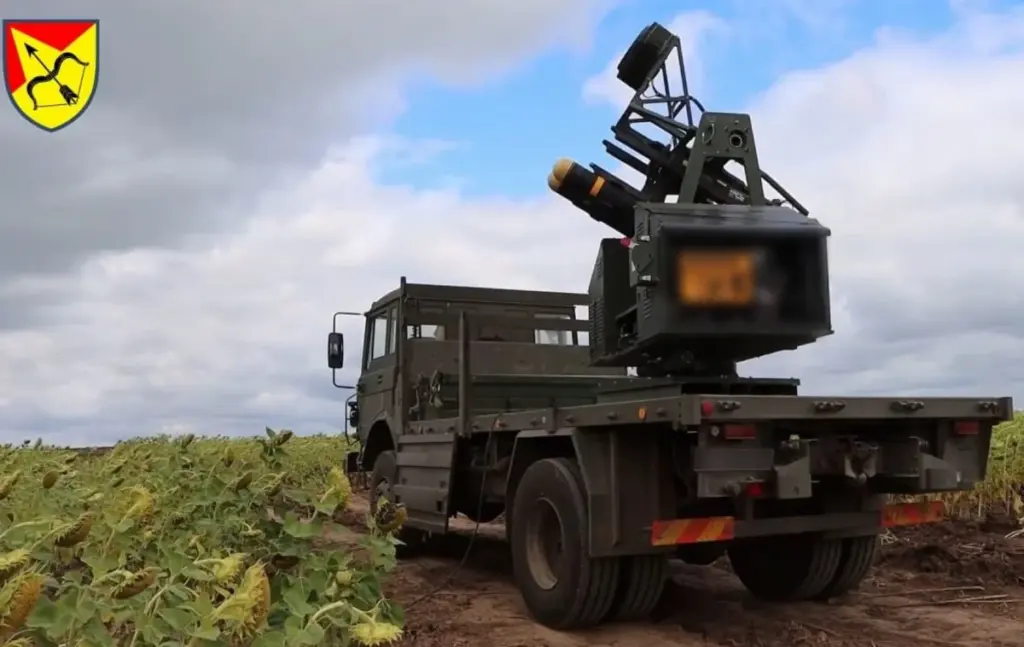
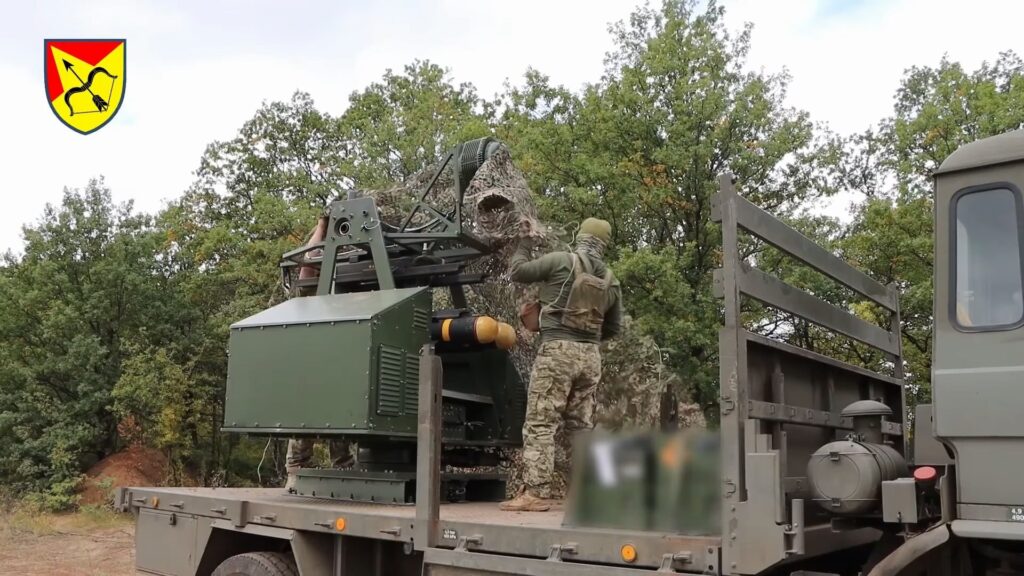
Ukraine has publicly shown off a homemade air-defense weapon that turns American anti-tank missiles into a drone-killer, The Defence Blog reported. The launcher stacks spare parts from three countries onto an ordinary military truck. It hands Ukraine a cheaper way to knock down the Russian attack drones that hit its cities.
Ukraine has become a proving ground for cheap air defense, forced there by a Russian bombing campaign that leans on mass and low cost. Then what works over Ukrainian cities is increasingly getting copied abroad.
Three countries' parts, one Ukrainian drone-killer
Ukraine's 302nd Anti-Aircraft Missile Brigade released an official video of the weapon, called STASH. Clips had leaked online for months, but this is the first time the military has shown it openly.
High-quality images of another variant of Ukraine's STASH short-range air defense system, this time mounted on a DAF YA 4442 truck and operated by the 302nd Anti-Aircraft Missile Brigade.
The STASH system can carry up to four AGM-114L Longbow Hellfire missiles for engaging UAVs.… pic.twitter.com/ewCiLHoJlj
The build is a patchwork. The missile is American. The radar comes from RADA, an Israeli maker of defense electronics. The truck is a Dutch DAF, a type that the Netherlands has long supplied to Ukraine. Crews bolted them together into a single launcher.
Why a tank missile now hunts drones
The missile at the core is the Hellfire, built to punch through tanks and armored vehicles when fired from helicopters. Ukraine repurposed it to shoot things out of the sky instead.
Explore further
Ukraine’s private air defense has quadrupled since spring: businesses are now shooting down Shaheds over their own sites
Not just any Hellfire, though. This is the radar-guided Longbow version (AGM-114L), not the common laser-guided one. After launch, the missile picks out its target and stays on it without further help from the crew. The crew does not have to keep pointing anything at the drone. They can fire without staying locked in place to guide the missile. The Israeli radar spots small, low-flying drones that slip past standard air-defense sets.
What it can and can't do
The weapon reaches about 10 kilometers (6.2 miles). That makes it a short-range system, built to guard one specific site rather than cover wide stretches of sky the way Patriot batteries do.
The STASH air defense system mounted on a truck chassis. Ukraine, August 2026. Screenshot from a video by the 302nd Anti-Aircraft Missile Brigade.
It is built to stop Russia's Shahed and Geran attack drones—including the newer jet-powered versions that now fly too fast for Ukraine's cheap interceptor drones to chase down. What it cannot reach are Russia's cruise and ballistic missiles, which travel much faster still.
The cost math behind the welding
A single Patriot interceptor runs into the millions of dollars. A Shahed-type drone sets Russia back just a few tens of thousands of dollars, and it launches them in swarms of hundreds during a single night. Trading costly missiles for cheap drones is a losing exchange, and it drains Ukraine's limited stock of interceptors.
STASH is how Ukraine tries to rebalance those numbers. It leans on anti-tank missiles that are cheaper and more available than purpose-built interceptors, carried on plain trucks rather than the permanent emplacements a full battery demands. Ukraine has been chasing cheaper ways to stop drones for a while now.
Explore further
EU releases another €3.47 billion for Ukraine’s “urgent needs” – drones, missiles, air defense, and Gripen jets
Not the first improvisation
STASH is not brand-new. It draws its missile and radar from a prior system, Tempest, built by the American contractor V2X and reportedly already flying with Ukraine's Air Force. Footage of Tempest downing drones at night surfaced in January 2026. STASH appears to strip that idea down, swapping the buggy-style chassis for a simpler truck or trailer launcher—less mobile, but cheaper to run and better for guarding fixed sites.
Ukraine has welded mismatched gear together like this before, pairing donated missiles with whatever launchers and trucks it can find.
Minister says PM has agreed to meet victims of sex offender – and is mulling separate inquiry into Mohamed Al Fayed
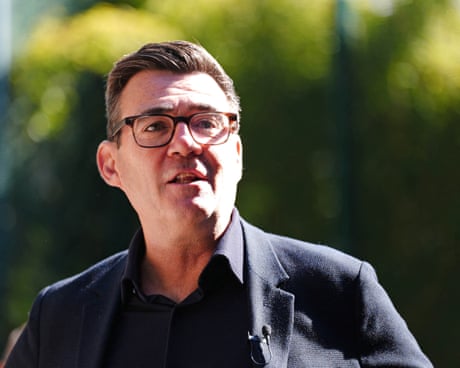
Andy Burnham is considering launching a public inquiry into the UK activities of the convicted sex offender Jeffrey Epstein, a minister has said.
The victims’ minister, Alex Davies-Jones, said the prime minister had agreed to meet Epstein’s victims, was “looking into” an inquiry and was “taking this very seriously”. A separate inquiry into the alleged actions of the former Harrods owner Mohamed Al Fayed is also being considered.
The progressive Democrat has consistently had large leads over Representative Haley Stevens, despite debates about which candidate will be more electable in November.
Representative Haley Stevens has been backed by tens of millions of dollars, much of it from pro-Israel groups and hidden donors. Her rival, Dr. Abdul El-Sayed, has tried to make that support a liability.
Representative Haley Stevens, the moderate candidate in the Democratic primary for Senate in Michigan, benefited from about $62 million in advertising from half a dozen outside groups.
A changing climate is helping to fuel the growth of a gigantic blob of foul-smelling seaweed that has washed up in some coastal communities. Mexico is fighting back.
Mourners gathered at Azadi Square in Tehran last month, holding flags during the funeral procession for Ayatollah Ali Khamenei, the supreme leader killed by an airstrike at the beginning of the U.S.-Iran war in February.
The deal would address President Trump’s most urgent political problem by allowing ships to move again. But it would give Iran strategic leverage it did not have before the war.
Ships in the Strait of Hormuz seen from Musandam, Oman, in June. An emerging deal, if it happens, would reopen shipping traffic in the strait, according to Iranian and U.S. officials.
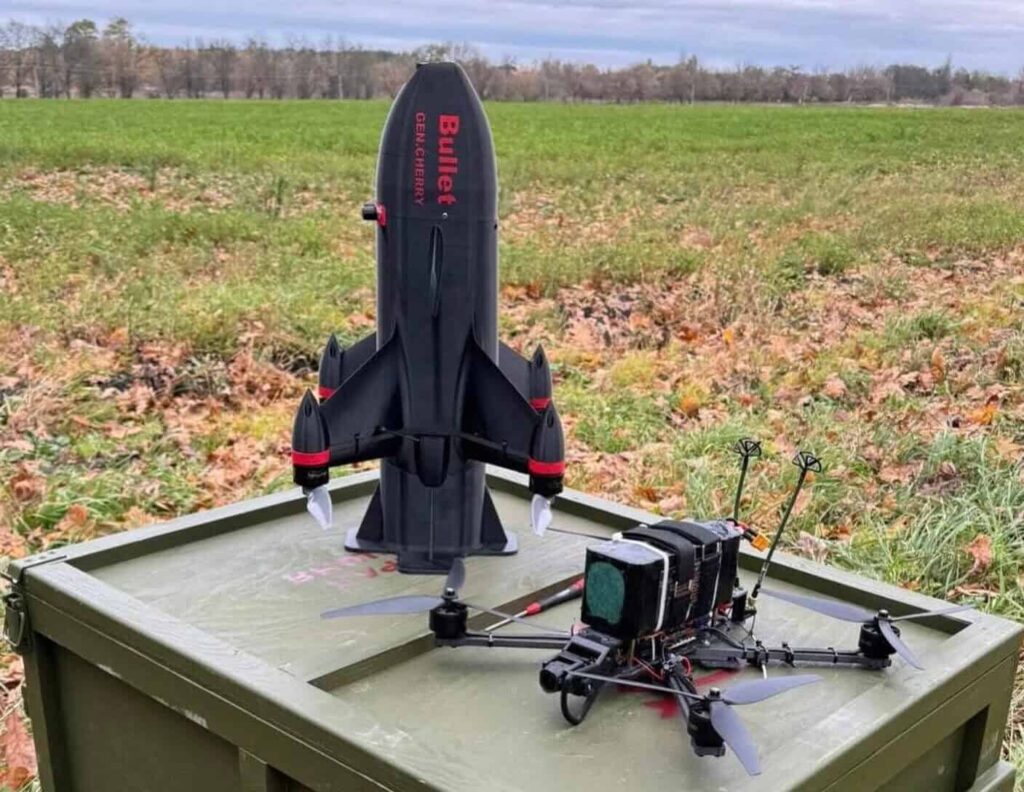
Ukraine is teaching its Shahed-hunting drone to see its target with French artificial intelligence. The Ukrainian interceptor group "General Cherry" and French firm Alta Ares have signed a memorandum to integrate AI guidance into the BULLET anti-Shahed interceptor, General Cherry announced.
The partnership pairs a combat-proven Ukrainian interceptor with Western AI. General Cherry recently received a US invitation to the Drone Dominance Program, a $1.1 billion effort to select unmanned-systems suppliers for testing and contracts to meet US defense needs, per the War Department.
The AI keeps the target locked without GPS
The collaboration integrates two Alta Ares systems into the front-line interceptor. Pixel Lock guides the drone onto the target in the terminal phase, and Cyclop C2 guides it along the flight route, and both hold the target using computer vision and fused data from several sensors, even without a GPS signal.
That matters against Russia's jamming. An interceptor that tracks its target by vision rather than radio or satellite signal cannot be defeated by the electronic warfare Russia uses to break the control links of guided drones, which is the core problem in shooting down fast, evasive Shaheds.
Alta Ares brings NATO backing and fresh funding
The French firm arrives with a track record against exactly these threats. Alta Ares develops AI systems for the defense sector and autonomous air-intercept tools. It also won a NATO tender in spring 2025 for solutions to counter glide and guided aerial bombs, and opened an office in Ukraine that summer to work with Ukrainian developers, according to Militarnyi.
The deal runs Ukrainian combat experience into global defense
General Cherry has framed the partnership as a step toward joint work on a global security architecture informed by Ukrainian combat experience.
It is the same logic drawing US and NATO programs to Ukrainian drone-makers, the combat record that no peacetime range can produce.
A tentative deal was reached early Monday morning after 4,400 flight attendants walked off the job a day earlier, forcing the cancellation of hundreds of flights.
Progressives hope momentum by Dr. Abdul El-Sayed will give them a signature victory. Centrists warn that picking him will backfire in November. Acrimony is everywhere.
Analysts and lawmakers are trying to divine whether Mr. Trump’s latest announcement means negotiations with Iran will truly get underway Monday or if the president is just working through unappealing options.
President Donald Trump aboard Air Force One on Sunday. He said that talks with Iran would begin on Monday and that there could be a deal to reopen the Strait of Hormuz.
Senator Bernie Moreno, Republican of Ohio, broke his silence about allegations of domestic abuse his daughter has made against Representative Max Miller.
Representative Max Miller of Ohio categorically denied the accusations against him in a roughly 20-minute livestream that he had previewed as a “special announcement.”
Divisions over Israel and high-profile endorsements have shaped the closely-watched race between a progressive former public health official and a more moderate member of Congress.
Labor talks resumed on Sunday between the airline and union representing 4,400 flight attendants, who want improved wages and compensation for unpaid work.
Barely a third of Americans approve of Mr. Trump’s handling of the job, putting him at historic depths for a second-term president at this stage of his tenure.
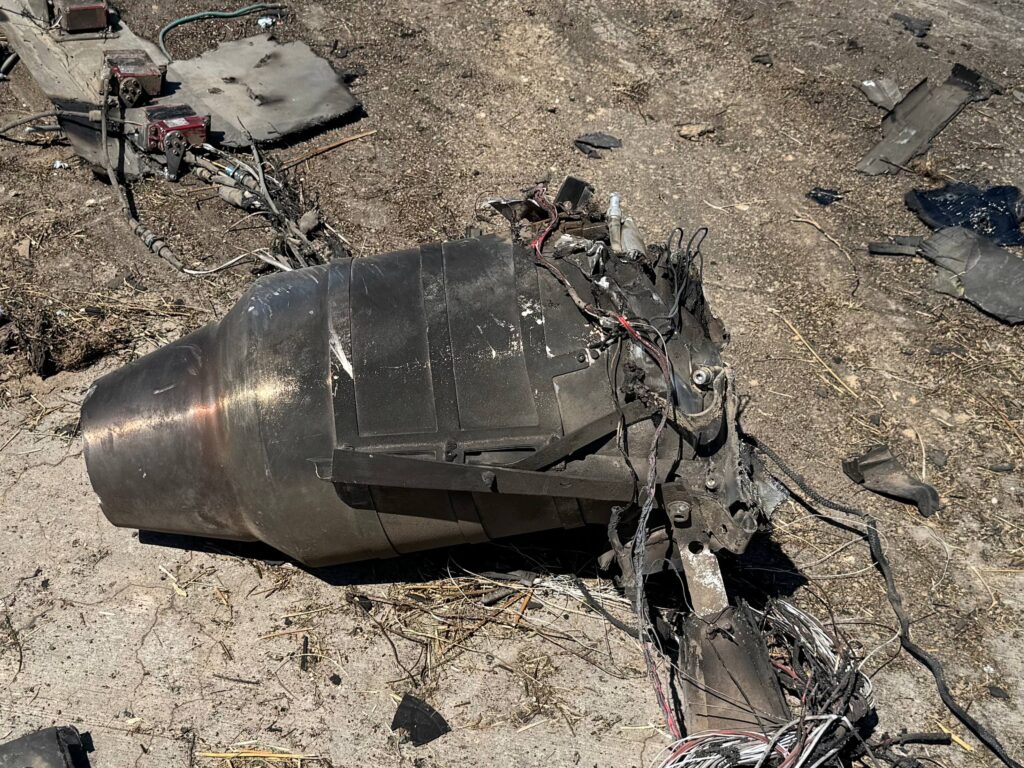
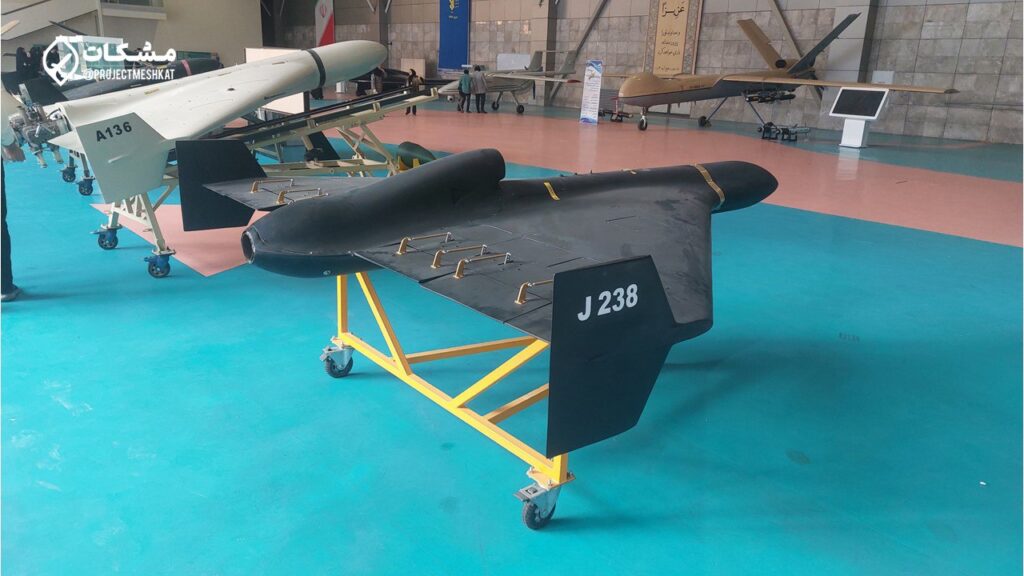
Russia killed a warehouse worker at Ukraine's largest online retailer with a guided jet-powered drone. On the morning of 1 August, Russia struck a Rozetka building where 270 people were working at the time with a jet-powered Shahed, targeting company employee Volodymyr Melnychenko and hospitalizing seven others, co-owner Iryna Chechotkina said.
Hitting Rozetka extends a Russian pattern of striking the retail and delivery infrastructure that Ukrainians depend on. Russia has repeatedly struck the sorting centers of Nova Poshta and Ukrposhta, and now the warehouses of Ukraine's largest online store.
The operator aimed at the parking lot
The strike was guided and deliberate, not a stray. Presidential adviser Serhii "Flash" Beskrestnov said the target was minibusses parked at the warehouse, which were hit by a jet-powered Geran-4 drone whose operator clearly saw where he was aiming, so there was no error in the strike.
Beskrestnov says the warehouse itself was not the point
The warehouse held nothing worth a missile, and Russia knew it, Beskrestnov stated. The expert, who has tracked Russia's drone tactics throughout, said large warehouses hold no goods, that Russian agents watching the sites know this, and that the decision to launch jet-Shahed strikes is made at a lower level than the choice of targets for ballistic missiles.
Wider perspective
Earlier this month, Ukraine expanded its deep-strike campaign from primarily targeting oil refineries and fuel depots in Russia to also targeting Wildberries' warehouses, Russia's largest e-marketplace. The campaign aims at undermining Russia's wartime economy that sustains the ongoing invasion of Ukraine.
Ukrainian drones have already destroyed eight warehouses of Wildberries in July, about 15.4% of its storage, according to Euromaidan Press reporting. That campaign was itself Ukraine's answer to years of Russian strikes on Nova Poshta and Ukrposhta depots. The Center for Countering Disinformation said on 27 July that the marketplace was selling goods for the Russian military.
A previously undisclosed subpoena, involving reporting on a failed SEAL Team 6 mission in North Korea, reflects the government’s expanding campaign to investigate leaks of secrets.
The Iranian army said it had targeted U.S. assets at a Kuwaiti air base. There were no immediate reports of any attacks from Kuwait or from the U.S. military.
The seaweed — a stinky, brown algae known as sargassum — has plagued Mexico and the broader region for more than a decade, but this year’s forecast is setting records.
“I am your voice,” said Representative Haley Stevens, a four-term congresswoman who is running for Senate in Michigan, after her accent was mocked online.
Russia cannot yet use guided kamikaze drones against the regions in the west of Ukraine because of technical limits on its remote-control system. But activating relays in Belarus could change that and put Lviv, Volyn, and other oblasts at risk, presidential adviser Serhii "Flash" Beskrestnov said on the national telethon, Telegraf reports.
Russia's online control system currently works only within a limited range of the border, and the front line, Beskrestnov said, so the "red zone" where drones can be steered in real time does not yet reach the west. If relays in Belarus come online, that zone would expand toward the Belarusian border and cover them.
The warning is concrete because Russia has done exactly this before: it built a network of signal repeaters on Belarusian towers and rooftops that boosted Shahed control signals to reach Kyiv, Rivne, and Volyn oblasts, until Ukraine dismantled it in February 2026.
The Belarus threat is a switch Russia can flip back on
The relay question is not hypothetical. Repeaters in Belarus let Shaheds flying the northern route hit targets across Kyiv, Rivne, and Volyn that Russia struggles to reach from its own soil, and President Volodymyr Zelenskyy has said some strikes on Ukrainian energy and railway sites would not have been possible without that help.
Ukraine has fought to keep it off. After Ukraine tore down the network in February, Kyiv gave Belarusian ruler Alyaksandr Lukashenka a week to pull Russia's drone relays in June, and they went silent in three days. ISW has assessed that operating Shaheds and cheaper Molniyas from Belarusian territory would put the highway and rail line carrying Polish supplies from the border within precision range, and allow Russian operators to hit moving convoys and trains.
The camera-lock tactic is how a guided Shahed hits a moving train
The reason online control matters so much is a new tactic Russia uses to defeat Ukrainian electronic warfare. Russian guided drones now carry powerful cameras with target-capture capability, Beskrestnov said, allowing them to hit specific moving targets rather than fixed coordinates.
He described how it works. From three kilometers out, the pilot sees a locomotive with his own eyes through the drone's camera, switches on a capture box around it, and a Shahed then automatically controls its own flight and attacks the locomotive, Beskrestnov said. Locking onto the target visually and letting the drone fly itself in for the final approach means the operator no longer needs a continuous control link at the moment of impact, which is part of how the drone gets past jamming. Russia understands that mass attacks are ineffective, Beskrestnov said, and is trying to strike important targets with this new tactic.
In some cases, no direct line can be drawn from the president’s domestic nuclear agenda to his family or close allies. But they have overlapping business ties that could position them for gains.
Russia hit a civilian grain ship, waited, and hit it again. A Russian Shahed drone struck a Palau-flagged vessel carrying corn twice as it left a port in Odesa Oblast, setting it on fire, Ukraine's Minister for Restoration, Infrastructure and Transport Mykola Kalashnyk said. Two sailors are missing, and seven crew members and a Ukrainian pilot were rescued.
The double strike on a grain carrier is the maritime edge of Russia's campaign against Ukraine's food exports. The ship was carrying almost 2,800 tons of corn when it was hit as it left the port, and after the strikes, a fire broke out on board.
The State Border Guard Service, which carried out the rescue, reported that the vessel was leaving the mouth of the Danube bound from a Ukrainian port to Greece with nine crew and a pilot aboard when the Shahed hit it, then struck again, the second blast causing a large fire.
This is a deliberate attack on the civilian shipping that carries Ukrainian grain to world markets, and it fits a Russian campaign that has made ports and merchant ships a target through July.
"Russia continues deliberate attacks on civilian shipping and Ukraine's port infrastructure," Kalashnyk said.
The rescue pulled eight from a burning ship
The border guards' maritime security units rescued eight people after the double drone strike, the State Border Guard Service said. The sailors reacted quickly to the distress signal and evacuated eight from the burning vessel, all delivered to safety, with medics monitoring their condition.
The search continues for two crew members who went into the water after the first blast. The two accounts differ slightly on the totals, as they do in the first hours after any strike: Kalashnyk cited seven crew plus a Ukrainian pilot rescued, while the border guards counted eight evacuated. Both agree that two sailors are missing and a search-and-rescue operation is underway. What is confirmed is that a civilian grain ship was struck twice, caught fire, and lost two of its crew to the sea.
The strike is the maritime front of the grain war
The attack extends a campaign that has hammered Ukraine's grain export capacity through July.
From 11 to 15 July, Russian strikes hit three Greater Odesa ports and the merchant ships anchored there, cutting the region's grain-export capacity by roughly a third, according to Reuters. Odesa's ports carry more than 90% of Ukraine's agricultural exports.

 Connexion