❌

Vue lecture

Hours after Ukraine dropped Kerch bridge span, Pentagon called deep strikes “spectacle,” but Berlin and London pushed back

US Under Secretary of War for Policy Elbridge Colby speaks at the Ukraine Defense Contact Group meeting

Ukraine’s strikes deep into Russia have not helped end the war or slow Russia’s advance, US Under Secretary of War for Policy Elbridge Colby told the Ukraine Defense Contact Group at NATO headquarters, according to remarks the Department of War published on 17 November. The meeting’s British and German co-chairs disagreed at a joint press conference that evening, which NATO streamed.

The split came hours after Ukraine brought down the road span of Russia’s Kerch bridge. It also came two days before US President Donald Trump, Russian President Vladimir Putin, and Chinese President Xi Jinping meet in Shenzhen, a summit China’s Foreign Ministry announced for 19 November. Washington has already pressed Kyiv over refinery strikes this fall. This time, Colby argued for restraint in the same speech in which he said Europe had taken “primary responsibility for Ukraine’s defense.”

The Pentagon wants support aimed at the front line

Colby also called Ukrainian strikes on the objects inside Russia “the spectacle of deep strikes designed to incur pain on the Russian population,” and added that “in our assessment is that such strikes have not been effective in driving an end to the war.” Hits on targets like the retailer Wildberries have probably “hardened the Russian public’s resolve,” in his view, and Moscow may hold the advantage in a long-range duel.

The Pentagon instead wants allied support focused on the front line and mid-range strikes. At the same time, the under secretary said Ukraine should not be made to fight “with its hands tied behind its back,” and that “strikes that target Russia’s warmaking machinery can also help contribute to slowing Russia’s advance on the front lines.”

Streeting and Khmara: Kyiv decides how to fight

Asked by the BBC about Colby’s criticism, UK Defense Secretary Wes Streeting said that “it’s not for us to tell Ukraine how to fight their war.” Deep strikes, he added, have “helped to degrade Putin’s war machine, buying time and saving lives.”

Ukrainian Defense Minister Evgeniy Khmara said Ukraine has “the right to retaliate.” Russia has struck Ukraine’s bridges across the Dnipro 12 times since 1 October, he said, while Ukraine planned one strike on the Kerch bridge. “For each strike they’re hitting our territory we’ll retaliate twofold, tenfold,” he said, adding that Kyiv plans to scale up its deep-strike capacity threefold next year.

Rutte sidesteps Colby, Pistorius calls the criticism stupid

Before the meeting opened, NATO Secretary General Mark Rutte was asked about the Kerch bridge strike. He told reporters that Ukraine’s defense “means also hitting out at logistical nodes, that’s unavoidable.” He said it remained to be seen what exactly happened, but that judging by the media footage, “it seems that they were successful.”

At the press conference, Reuters asked whether he shared Colby’s position. Rutte did not name Colby, but he said allies agree that disabling “Russia’s war machine” is “necessary,” NATO’s transcript shows.

German Defense Minister Boris Pistorius then said he agreed with Rutte, Khmara, and Streeting. Criticizing strikes on “strategic military and military-use targets” in Russia is “quite a stupid thing,” he said. Allies should instead talk about Russia’s “terroristic strikes every night and every day” on Ukraine’s energy, water, and heat.

  •  

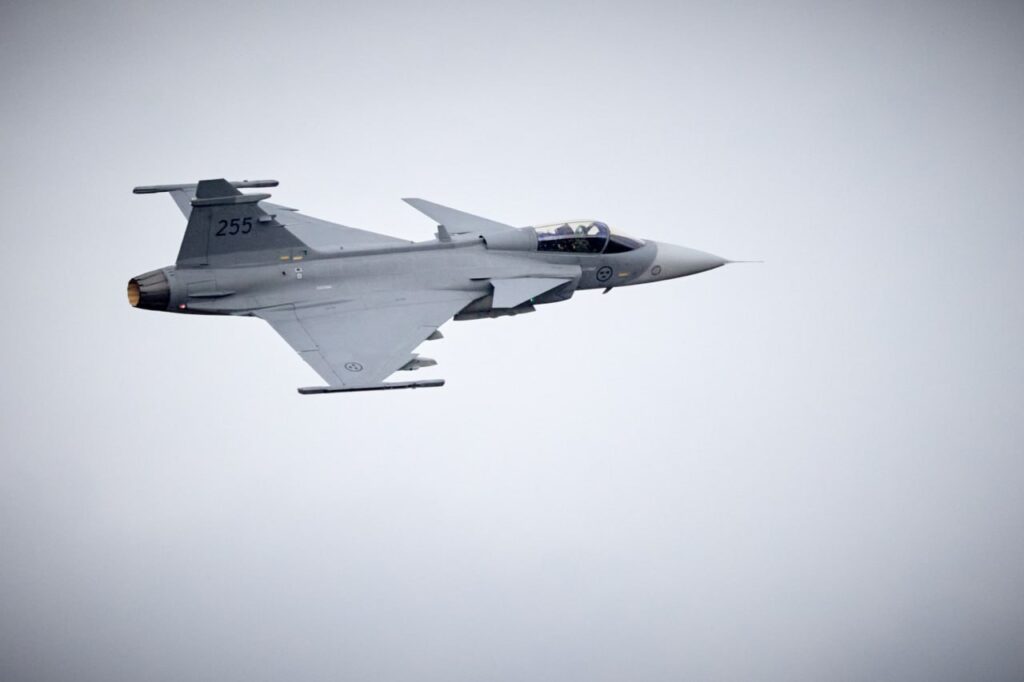
Not just jets but missiles: Ukraine’s Gripen deal now takes aim at Russia’s bomb carriers

Defense Ministers Wes Streeting of the UK, Pål Jonson of Sweden, and Yevhenii Khmara of Ukraine after signing a letter of intent on Gripen weapons in Brussels, 17 November 2026

Ukraine, Sweden, and Britain signed a letter of intent on 17 November to arm Ukraine's incoming Gripen fighters, with long-range air-to-air Meteor missiles as Kyiv's first priority, Ukraine's Defense Ministry reported. The three defense ministers sealed it in Brussels on the margins of the Ramstein-format meeting of Ukraine's allies, where Ukraine and Finland also agreed to jointly produce Ukrainian weapons in Finland. Kyiv wants the Meteors to go after Russian aircraft, above all those that drop glide bombs. Separately, Britain has promised Kyiv over 1,000 air-defense missiles for the winter, Ukraine's ambassador in London, Valerii Zaluzhnyi, said.

Russia's glide bombs keep pounding Ukrainian frontline towns and positions, and the jets that drop them are the main target Kyiv has picked for the Meteor missiles it wants on its Gripens. A fighter without weapons can't change that, so the letter aims to have weapons, equipment, and spare parts reach Ukraine together with the jets, starting with the 16 Gripens Sweden is donating, which are due early next year.

Meteors first, for Russia's bomb carriers

The jets should come with all the weapons they need to fight, Ukrainian Defense Minister Yevhenii Khmara said. "It is important for us to receive the full set of weapons we need together with the aircraft, so that we can start using them in combat as soon as possible. The key priority is Meteor missiles. With them, Gripens will be able to destroy enemy carriers of guided bombs and protect frontline cities and troops' positions," he said.

Meteor pairs an active radar seeker with a ramjet engine that keeps it fast throughout its flight, letting it hit aerial targets at long range, Ukraine's Defense Ministry explained in May. Armed with it, Gripens could help drive Russian aviation farther from the front and cut its ability to launch glide bombs en masse, the ministry said.

The Saab Gripen can take off and land on ordinary roads. Photo: Peter Felstead
Explore further

Ukrainian pilots have started training on Swedish Gripens — jets that may carry long-range Meteor missile

Kyiv wants to put the jets into combat quickly, and it is working with partners so that the weapons arrive in step with the planes, Khmara said.

What the letter covers

Sweden, Ukraine, and Britain intend to work together to supply Ukraine's Gripens with weapons packages alongside the jet deliveries and keep the fleet capable over time, Sweden's Defense Ministry said. The cooperation covers buying, delivering, training on, and integrating the weapons. The letter applies to the Gripens Sweden donates, those Ukraine is buying now, and any it may buy later.

Ukraine is buying 16 Gripen E/F jets, and Sweden is donating 16 Gripen C/D jets with a weapons package, according to Sweden's Defense Ministry. The E/F is the newer version of the jet. "This Letter of Intent is a basis for the fighter jets to be operational over time and to support Ukraine in its ambition to become and remain a long-term Gripen partner," Swedish Defense Minister Pål Jonson said.

Swedish Defense Minister Pål Jonson and Ukrainian Defense Minister Yevhenii Khmara at the signing of the Gripen letter of intent, Brussels, 17 November 2026
Swedish Defense Minister Pål Jonson and Ukrainian Defense Minister Yevhenii Khmara at the signing of the Gripen letter of intent, Brussels, 17 November 2026. Photo: Ukraine’s Defense Ministry

UK Defense Secretary Wes Streeting signed for Britain, which already helps fund Ukraine's Gripens. In July, London committed €300 million toward a squadron of 16 Gripen E fighters for Ukraine by 2029. Last week, President Volodymyr Zelenskyy told journalists in Copenhagen that the Swedish Gripens should arrive in January or February, possibly in February, European Pravda reported on 11 November.

A JAS 39 Gripen fighter jet, 22 October 2025
A JAS 39 Gripen fighter jet, 22 October 2025. Photo: Zelenskyy’s Telegram channel

Sweden adds funds for US weapons and Czech ammunition

On 17 November, Stockholm also pledged about SEK 720 million more for multilateral funds and initiatives, mainly to bolster Ukraine's air defense and its long-range capability. Of that, about SEK 200 million goes to the Prioritized Ukraine Requirements List (PURL), the mechanism through which allies buy US weapons for Ukraine. This is Sweden's sixth contribution to PURL, bringing its total to $572 million. Around SEK 180 million goes to the Czech initiative that buys ammunition on the global market.

"Sweden will support Ukraine for as long as it takes," Jonson said.

  •  

UK defense secretary calls strike on Crimean Bridge another sign of Kyiv’s resolve and pledges to stand with it

The satellite image of the Crimean Bridge following a Ukrainian strike on 16 November. The bridge's arch is damaged and deformed. Source: Exilenova+

Ukraine’s strike that folded the Crimean Bridge is proof of its ingenuity, Britain’s defense chief says. Speaking in Brussels before the Ramstein-format Ukraine Defense Contact Group on 17 November, UK Defense Secretary Wes Streeting praised the operation and cast the past year as disastrous for Russian leader Vladimir Putin, Ukrinform reported.

Streeting called the attack another display of Ukrainian resolve to defend against Russian aggression, and pledged Britain’s backing. He said in 2026 Moscow’s casualties were unacceptably high and the economic toll on the state and its people catastrophic, all for almost no territorial gain.

A bridge strike that shows Ukrainian ingenuity

Streeting welcomed the Ukrainian Defense Forces’ operation against the Crimean Bridge, calling it a fresh example of the absolute determination with which Ukraine defends itself, and adding that Britain stands with Kyiv.

His statements came as Ukraine’s General Staff confirmed that the bridge’s arch and a road span had collapsed overnight, as the result of its latest blow in a campaign that has repeatedly battered the crossing and the air defenses guarding it.

The weapons used for the missions were Dovbush, Vendetta, Da Vinci, Sichen, MICH 2000, Ruta, Palianytsia, An-197, FP-1, FP-5 Flamingo, and R-360 Neptune.

No deal over Ukraine’s or Europe’s head

On the prospect of peace talks, Streeting insisted any settlement to end the war must be acceptable to Ukraine, and that there can be no decisions about Ukraine without Ukraine, nor about Europe without Europe. Britain and its allies will back Kyiv with all their strength, he said, and Europe must help shape the continent’s future security by raising defense spending and deepening military and economic cooperation.

He also welcomed the EU's more active role in supporting Ukraine and called the bloc a key partner for Britain.

Earlier, the reports said that Russia wanted Britain to stop extending its nuclear protection to the rest of Europe for ending the war in Ukraine.

  •  

Ukraine signs pact to build its weapons in Finland and thanks Helsinki for 20-mm rounds before a hard winter

Defense Minister Yevhenii Khmara and his Finnish counterpart Antti Häkkänen on 17 November 2026 in Brussels. Source: The Ukrainian Defense Ministry

Ukraine’s battle-tested weapons are set to roll off Finnish production lines. Kyiv and Helsinki signed a memorandum in Brussels on 17 November to jointly produce Ukrainian defense systems in Finland, with most of the output destined for Ukraine’s own forces for the duration of the war, the Ukrainian Defense Ministry reports.

Ukrainian Defense Minister Yevhenii Khmara and his Finnish counterpart Antti Häkkänen sealed the deal on the sidelines of the Ramstein meeting, opening the way for technology transfer, joint research, and a shared steering council to launch new projects. It is the latest step in Ukraine’s drive to build its weapons in partner countries beyond the reach of Russian strikes, trading combat experience for Europe’s industrial base.

Ukrainian systems, built on Finnish lines

The memorandum lays the groundwork for manufacturing Ukrainian defense systems in Finland, transferring the technology behind them, and developing joint defense solutions, the ministry noted.

It also deepens cooperation between the two countries’ defense industries and opens the door to joint research, the development of new systems, and investment in each other’s defense enterprises, with the Finnish side helping companies connect and clearing the permits required for joint production.

During active fighting, most of what the partnership produces will go first to Ukraine’s defense. Ukraine brings the technology and combat experience, and Finland brings a strong industrial base.

“We are combining our advantages to get more quality weapons faster for Ukrainian soldiers, while strengthening the defense capabilities of our countries,” Khmara said.

A joint council will pick the projects

To steer the work, the two sides plan to establish a joint governing council that will set priorities, evaluate new projects, and drive technology transfer and the launch of shared production, according to the ministry.

The arrangement follows a pattern Kyiv has built across Europe, since days earlier Khmara agreed joint defense projects and ventures with Estonia, part of a wider move to produce Ukrainian weapons on allied soil and shield output from Russian long-range strikes on home factories.

Air defense before a hard winter

The ministers also focused on Ukraine’s air defenses as winter is closing in. Khmara thanked Finland for the 20-mm ammunition it handed over last month and discussed further deliveries of air-defense equipment with Häkkänen, the ministry adds.

  •  

Canada will raise US limits on Ukraine’s Starshield access with Trump, its defense minister says, citing shared NORAD defenses

canada sanctions eight russians over deported ukrainian children only about 2000 more than 19000 have come home · post canadian flags chamberca ukraine news reports

The US limits on Ukraine’s Starshield satellites are a problem for the whole continent, not just Ukraine, Canada’s defense minister says. David McGuinty told the Ukraine Defense Contact Group in Brussels on 17 November that Canada and the US share integrated air and missile defense through NORAD, and he expects Canada’s prime minister to raise the restrictions directly with the US president, Ukrinform reports.

Starshield is the military version of SpaceX’s Starlink network that Ukrainian units use for secure communications and to run their drones and air defense, and a reinstated speed cap has throttled it across the front. Meanwhile, SpaceX CEO Elon Musk points at the US President Donald Trump administration, not his own company, in capping the speed, and calls Starshield US-government-controlled, while Trump denies knowing who imposed the cap.

Pay for more American weapons before winter

McGuinty also urged allies to put more money into PURL, the program that channels European and Canadian funds into US arms for Ukraine, and to keep working with the 57 countries of the Ukraine Defense Contact Group.

More contributions toward packages of American weapons under PURL are needed, he argued, and will matter all the more with a difficult winter ahead under Russian bombardment.

The appeal comes as the US stockpile of Patriot interceptors against Russia’s ballistic missiles runs low, and Russia pounds Ukraine’s grid and Kyiv's successful operations, such as the strike of the Crimean Bridge ahead of the meeting in the Ramstein format.

What Canada is building and giving

Ottawa remains an unwavering backer and will announce fresh aid later the same day in Brussels, he noted. Canada has already pledged more than $1 billion for Ukraine’s air defense and to join the FREYJA anti-ballistic project, agreed to a drone deal to build Ukrainian-designed drones in Canada for the front, and said it would ban Russian and Belarusian athletes from participating in championships under the auspices of the International Ice Hockey Federation (IIHF) in 2027, Intefax reported.

Canada’s read on the talks

Additionally, McGuinty called the US-Russia contacts aimed at ending the war a positive step, but was unconvinced by Moscow’s stance, which he found entirely predictable based on the reports he had seen. He did not consider the Russian position serious, he added, and dismissed it as no way to conduct good-faith negotiations.

  •  

Ukraine is hitting Russian oil, petrochemicals, and strike bases, likely to make up for scarce interceptors, ISW says

Black smoke and flames rise over an industrial skyline of chimneys and flare stacks under a cloudy morning sky in Nizhnekamsk, Russia.

Ukrainian forces struck the Nizhnekamskneftekhim petrochemical complex and the TAIF-NK refinery in Tatarstan, the Monolit aircraft plant in Trubchevsk, Bryansk Oblast, the Akhtubinsk airfield in Astrakhan Oblast, and a drone launch site near Tsymbulova in Oryol Oblast overnight on 15 November, Ukraine’s General Staff said in two statements.

The US think tank Institute for the Study of War assessed that the strikes advanced three goals at once: cutting Russia’s oil income, its army’s fuel and petrochemical supplies, and its aviation and launch capacity. The campaign is likely meant to offset Ukraine’s limited air defenses, as interceptor stocks dwindle amid a global shortage. That evening, Ukrainian President Volodymyr Zelenskyy said intelligence showed Russia was preparing new strikes, and that partners should focus on missiles for Patriot and NASAMS systems.

Synthetic rubber, a crude unit, and a glide-bomber base

At TAIF-NK, the strike hit the plant’s only primary crude unit, the General Staff said. Six people were injured in Nizhnekamsk, the city’s mayor said. Nizhnekamskneftekhim makes synthetic rubber used in military tires, and certain types of it serve as a binding base for solid rocket fuel, including for Iskander ballistic missiles, according to the General Staff. Monolit builds aircraft, including helicopters, it added.

Map of western Russia and Ukraine. Red arrows run from Ukraine to Nizhnekamsk in Tatarstan, labeled 1,130 km, and to Akhtubinsk in Astrakhan Oblast, labeled 610 km. Fire icons mark Trubchevsk, Nizhnekamsk, and Azov, and a red dot marks Tsymbulova near Oryol. Struck regions are shaded, and Russian-occupied Ukraine is hatched.
Sites in five of the Russian regions where Ukraine reported strikes on 15–16 November, from Bryansk Oblast to Tatarstan. Map: Euromaidan Press/Datawrapper

Akhtubinsk, about 610 km from the front line, hosts Su-34 jets that drop glide bombs on Ukrainian cities. The General Staff reported a powerful secondary detonation at a depot holding kits for guided aircraft missiles.

Four ways to count Russia’s refining losses

In the same address, Zelenskyy said Ukraine had “disabled more than 55% of Russia’s oil refining capacity,” citing a report from Commander-in-Chief Mykhailo Drapatyi. He did not say how the figure was calculated.

Other estimates measure different things. Strikes since late October had cut Russia’s refining capacity by about 30%, Reuters reported on 10 November, citing two industry sources. Russian refineries processed about 700,000 tons of crude a day at the end of October, and the actual cut in processing could reach 200,000 tons a day.

In July, analytics firm Kpler put refinery downtime and attacked capacity at about 58% of Russia’s total, but estimated that only 1.5 to 2 million barrels a day was effectively offline. Ukraine’s military intelligence said that by late September, refining at the 27 plants it counted as halted or cut back had fallen 55.4% from the start of the year.

Meanwhile, the General Staff said Ukrainian forces had hit the port of Ust-Luga on 11 November, and the Volgograd refinery and the Samara oil pumping station on 13 November. On 16 November, it added the Ilsky refinery in Krasnodar Krai and an oil depot in Azov to the list.

Russia targets one Ukrainian region at a time

Russia, in turn, keeps hitting Ukraine’s grid. Zelenskyy said Russia picks one region and strikes its networks and substations for days. Since early September, Dnipropetrovsk Oblast has taken 131 hits, Kyiv Oblast 125, and Zhytomyr and Sumy oblasts more than 100.

On 11 October, after US President Donald Trump announced an energy ceasefire, Zelenskyy said Ukraine was ready not to strike Russian energy facilities and expected the same from Russia. The ceasefire did not take hold, Reuters reported, and Ukraine resumed refinery strikes on 30 October. Zelenskyy now calls them “our justified response to Russia’s refusal to de-escalate.”

  •  

Russia abducts Ukrainian children, and the Netherlands now funds UN search for them as part of new €1.2 billion aid package

netherlands joined it coalition

Ahead of a harsh winter, the Netherlands is giving Ukraine €1.2 billion to keep the lights and water on under Russian strikes. Dutch Minister for Foreign Trade and Development Cooperation Sjoerd Sjoerdsma announced the aid during a visit to Kyiv on 28 October.

The package comes as Russia targets Ukraine’s energy system every winter. Last winter’s strikes damaged or destroyed roughly 80% of the grid, and Moscow’s next target is Ukraine’s water supply.

“Ukraine is under heavy fire and faces a very harsh winter,” Sjoerdsma said.

That, he stated, is why the government is taking additional steps now. The funds will be distributed over the next three years.

Earlier, Ukrainian President Zelenskyy said Kyiv needed $8-10 billion to get through winter, TSN reported.

The Netherlands shores up Ukraine’s power and water

Also, the Netherlands is fast-tracking €40 million this year to Ukraine’s Energy Support Fund for urgent repairs to power and water facilities, which are increasingly targeted by Russian strikes.

Another €55 million goes to in-kind support: energy equipment supplied by Dutch companies to Ukrainian partners through the Netherlands Enterprise Agency.

The money will also help build emergency reserves and train staff in the energy and water sectors.

Dutch business steps into Ukraine’s reconstruction

Most of the rest goes to business. Some €136 million will go to the Partnership Facility with Ukraine and other programs, and a further €19.5 million is added to export credit insurance, on top of an existing €60 million line, to lower the risk for Dutch companies entering the Ukrainian market.

Separately, the Netherlands signed a letter of intent to contribute €10 million to President Volodymyr Zelenskyy’s “Industrial Ramstein” initiative, which aims to restore and modernize the production capacity of Ukrainian companies. Sjoerdsma traveled to Kyiv with Koen van Oostrom, chair of the business association VNO-NCW.

The support also covers the search for Ukrainian children abducted by Russia, through the UN, as well as housing, humanitarian aid, healthcare, demining, and the restoration of cultural heritage.

In all, the Netherlands is confirming the previously promised €878 million in non-military aid and an additional €327 million, much of it delivered through the EBRD, the World Bank, and the European Investment Bank.

The same day, President Zelenskyy said he had arrived in the Netherlands on an official visit. The two sides plan to discuss defense and economic cooperation, strengthening Ukraine’s air defenses, and further support for Ukraine. Zelenskyy is also set to have an audience with King Willem-Alexander of the Netherlands.

  •  
❌