Vue normale

  • ✇Euromaidan Press
  • Finland backs €28.5 million power plant project as Ukraine braces for Russia’s next winter energy assault
    Finland will provide €28.5 million ($33.2 million) to support new power generation in Ukraine, with Finnish company Wärtsilä selected to supply the equipment, Finland’s Ministry of Foreign Affairs said on 13 August. Ukraine’s power system has been repeatedly damaged by Russian attacks, leaving the country facing each winter with reduced generation capacity and a heightened risk of electricity and heating disruptions. Strengthening distributed generation is therefore a k
     

Finland backs €28.5 million power plant project as Ukraine braces for Russia’s next winter energy assault

13 août 2026 à 14:04

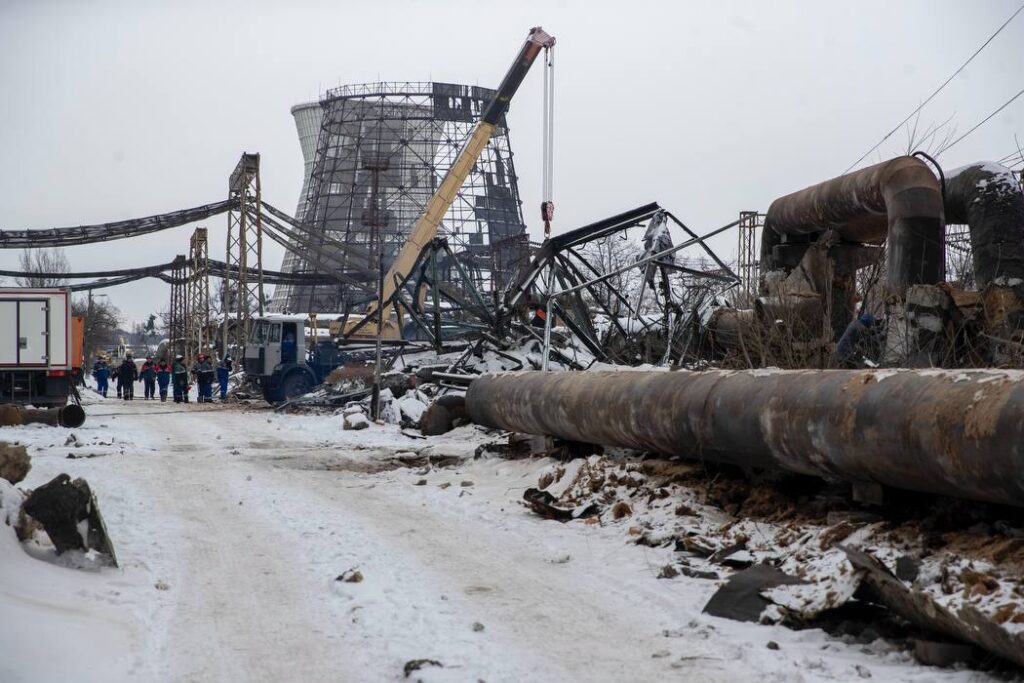
The Darnytska Combined Heat and Power Plant in Kyiv sustained critical damage from a Russian strike on 3 February 2026. Photo: Vitali Klitschko

Finland will provide €28.5 million ($33.2 million) to support new power generation in Ukraine, with Finnish company Wärtsilä selected to supply the equipment, Finland’s Ministry of Foreign Affairs said on 13 August.

Ukraine’s power system has been repeatedly damaged by Russian attacks, leaving the country facing each winter with reduced generation capacity and a heightened risk of electricity and heating disruptions. Strengthening distributed generation is therefore a key part of keeping essential services running when further strikes hit the energy grid, as they are expected to do ahead of the 2026-27 winter season.

The total value of the power plant technology is €46.5 million, with Ukraine covering the remaining cost. The plants will be manufactured in Vaasa, Finland, with the Ministry saying it will support Finnish jobs and exports while adding generation capacity to Ukraine’s war-damaged energy system.

Power generation for Ukraine’s winter

Ukraine’s state energy company Ukrnafta is purchasing the power plants to strengthen electricity production, with the need particularly acute ahead of another winter under Russian attacks.

“Reliable energy production is vital, particularly in winter months, when Russian strikes on energy infrastructure have made day-to-day life in Ukraine difficult,” Finland’s Ministry of Foreign Affairs said.

Russia has repeatedly targeted Ukraine’s electricity generation, transmission, gas, and heating infrastructure since the full-scale invasion. The attacks have caused widespread blackouts and damaged or destroyed large parts of Ukraine’s generation capacity.

Previous winters have shown the consequences. Russian strikes have repeatedly caused rolling blackouts, while damage to heating infrastructure has threatened access to heat and water during freezing weather.
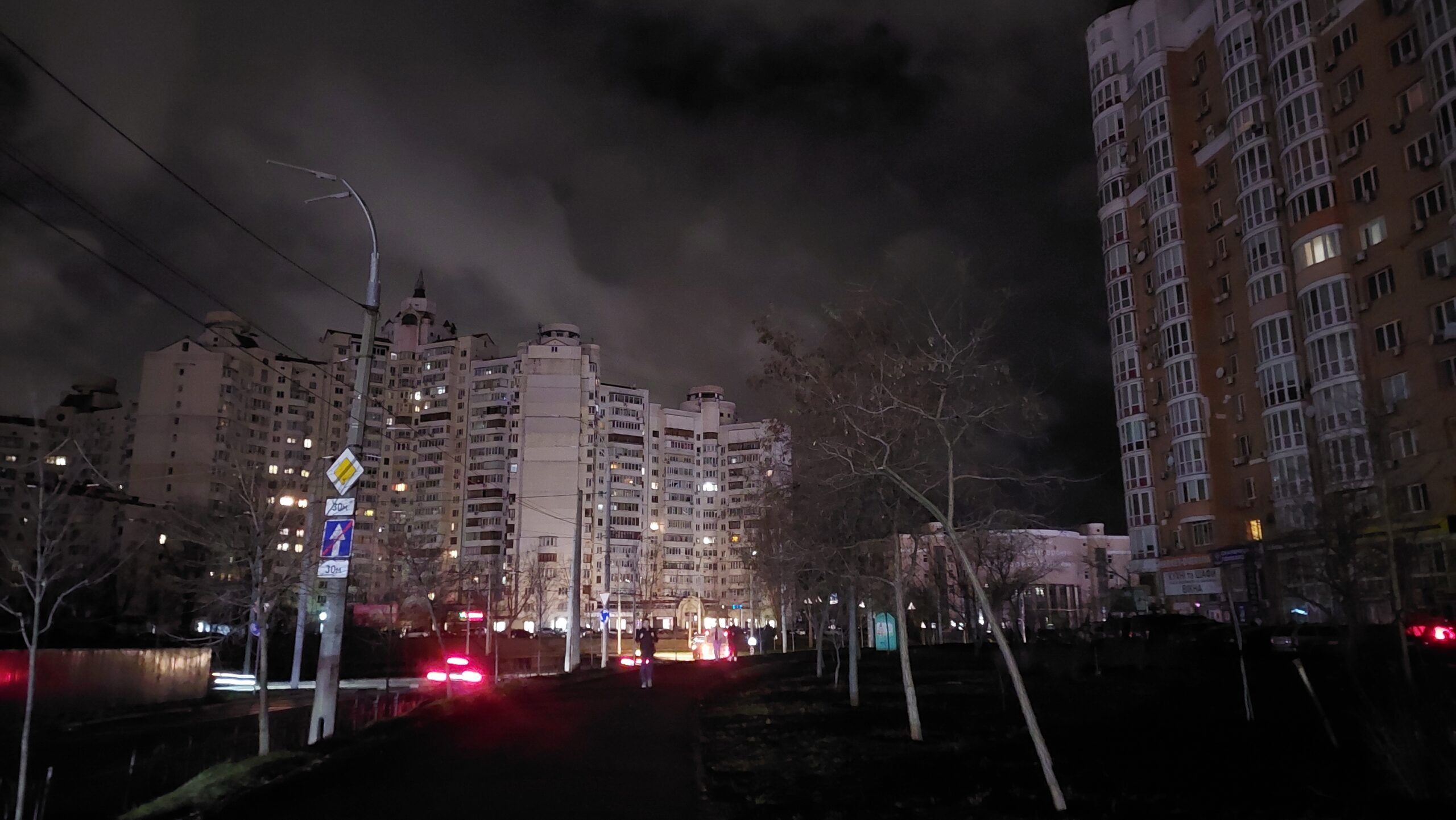
During blackouts, apartment blocks in Kyiv are mostly dark, with scattered lights from apartments with battery-powered sources. Generators power businesses on the ground floor. Street lights are largely off.
Explore further

Behind the black windows: How Kyiv survives a winter in the dark

Ukrainian officials have warned that the coming winter could be more difficult than previous ones, as Russia is expected to again target Ukraine’s energy, heating, and water infrastructure. Russia has already intensified attacks on Ukrainian civilians and civilian infrastructure this summer, raising concerns that the campaign against essential services could escalate further during the winter months.

Finnish technology heads to Ukraine

Wärtsilä Finland Oy will manufacture the power plants in Vaasa.

Finnish Foreign Trade and Development Minister Ville Tavio said the project combines support for Ukraine with Finland’s energy-sector expertise.

“Finland has world class energy sector expertise that can benefit Ukraine’s reconstruction efforts,” Tavio said. “I am pleased that Finnish technology and Finnish workers are playing a part in strengthening the security of Ukraine’s energy supply.”

How Finland is financing the project

The €28.5 million Finnish contribution comes through the Finland–Ukraine Investment Facility, which supports public investments in Ukraine using Finnish technology, expertise, and services.

Finland’s funding will cover the interest costs and capital of the investment loan Ukraine will take out for the project. Finnish export credit agency Finnvera is providing a 100% export guarantee for the loan.

The project combines immediate energy support for Ukraine with Finnish financing, technology, and manufacturing capacity.

Ukraine asks the EU for €220 million to unlock €4 billion in farm loans as Russia’s port strikes choke exports

13 août 2026 à 12:10

A green combine harvester cuts wheat beneath a blue, partly cloudy sky.

Ukraine and international partners agreed to work urgently on a mechanism for up to €4 billion ($4.6 billion) in farm loans, Ukrinform reported on 13 August. The plan would use a proposed €220 million ($253 million) EU grant, the Agriculture Ministry said.

Ukraine rebuilt its maritime trade after pushing Russia’s fleet away from its coast. By 2025, its Black Sea route carried about 92% of the country’s grain and oilseed exports. Russia is now striking the Odesa ports sustaining that recovery. The ministry says the attacks have closed three deep-water ports. Ukraine planned to export 64.4 million tons of agricultural products in 2026/27, but now says shipments may reach only 29.6 million tons. The proposed loan mechanism is meant to cover that cash shortfall before next year’s sowing.

EU and Norwegian diplomats joined the meeting with representatives of the World Bank and the UN Food and Agriculture Organization.

The participants agreed to develop the plan through the Ukraine Facility and EU guarantee institutions. They aim to do so in the coming weeks, before fall storage use peaks. The grant has not yet been approved.

Odesa attacks send Kyiv toward Baltic ports

The loan plan comes as Russia’s attacks force Ukraine to seek new export routes.

Russia initially blockaded Ukraine’s ports after launching its full-scale invasion. Ukraine later restored a sea corridor after forcing much of Russia’s Black Sea Fleet away. Moscow then shifted pressure to missiles and drones, hitting Ukrainian ports 90 times in 2025 and intensifying attacks this summer.

A Russian strike killed 10 people aboard the grain-carrying Golden Leo on 19 July. Three days later, no ship passed through the corridor.

Kyiv is now considering the Polish Baltic ports of Gdańsk, Gdynia, Szczecin, and Świnoujście. Yet the ministry estimates that all alternative routes may eventually carry only 2.9 million tons a month. Ukraine’s monthly target was 5.4 million tons.

Farm loans target next year’s sowing

The €220 million would not go directly to growers. It would subsidize interest and partly cover banks’ lending risks, including by expanding Ukraine’s “5-7-9%” affordable-loan program.

The ministry wants the support to generate €4 billion in farm loans at annual rates no higher than 10%. It calculates that every euro of grant money could mobilize more than €18 in lending.

Ukraine has also temporarily adjusted minimum export price coefficients to offset higher logistics costs, meeting participants noted. Without grain sales, farmers struggle to pay wages and land rents or buy fuel and fertilizer. By November, Ukraine's storage shortfall could reach 11 million tons of crops, with more than €10.8 billion ($12.4 billion) tied up in unsold stocks.

  • ✇Euromaidan Press
  • Poland and the Baltics risk Russian sabotage for backing Ukraine, Bloomberg says
    Russia may expand hybrid attacks against Poland and the Baltic states, including infrastructure sabotage or false-flag attacks, Bloomberg reported on 12 August, citing an unnamed European intelligence official.  The warnings come amid concern that Moscow wants to intimidate Ukraine’s supporters. The CIA warning follows Russian threats, incursions, alleged sabotage plots, and disinformation against Poland and the Baltic states. Most Western military aid reaches Ukraine t
     

Poland and the Baltics risk Russian sabotage for backing Ukraine, Bloomberg says

13 août 2026 à 09:29

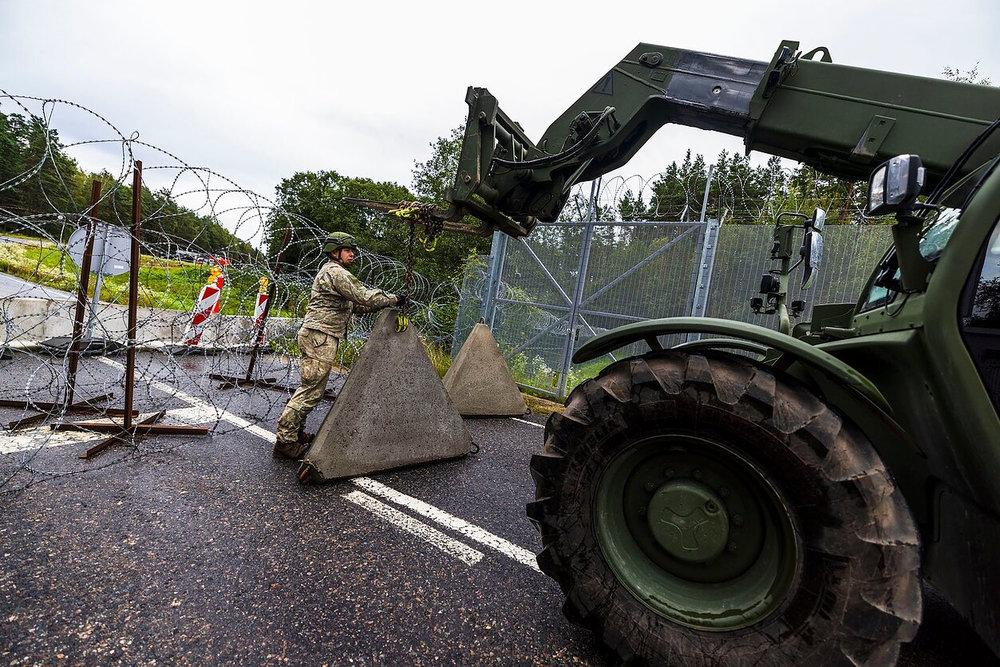
Lithuanian soldier installs concrete barriers and razor wire across a road during a civil defense exercise.

Russia may expand hybrid attacks against Poland and the Baltic states, including infrastructure sabotage or false-flag attacks, Bloomberg reported on 12 August, citing an unnamed European intelligence official. 

The warnings come amid concern that Moscow wants to intimidate Ukraine’s supporters. The CIA warning follows Russian threats, incursions, alleged sabotage plots, and disinformation against Poland and the Baltic states. Most Western military aid reaches Ukraine through Poland, while the Baltic states rank among Kyiv’s strongest supporters. Sabotage of transport, energy, or communications can slow aid delivery and test NATO while hiding Russia’s role.

Separately, a European government official told Bloomberg that the CIA had warned countries in the region of a possible future Russian attack. The CIA declined to comment.

The same official said Russia might instead be creating the impression of an impending attack to sow fear as part of an information operation. The official saw no signs that Moscow was preparing a conventional attack or invasion.

Moscow tests NATO’s eastern flank

Poland and Lithuania had already raised similar concerns. In July, Poland said it had credible intelligence that Russia was planning new provocations. Lithuania later warned that Moscow might rebuild captured Ukrainian drones for false-flag strikes on critical infrastructure.

In September 2025, between 19 and 23 Russian drones entered Polish airspace, shutting down airports and damaging buildings. Poland closed four airports as NATO aircraft responded.

Meanwhile, five people are on trial in Lithuania over attacks allegedly organized for Russian military intelligence in 2024, Bloomberg reported. Lithuania has reinforced infrastructure sites and deployed troops since June.

These warnings and incidents place the CIA alert within a wider pattern of pressure on NATO’s eastern flank and Ukraine’s supporters. 

How Russia strikes without starting a war

Bloomberg cited several recent unexplained drone incidents in Germany alongside the CIA warning. Citing Die Zeit, Euromaidan Press reported that an explosive-laden drone struck the wing of a parked Ukrainian An-124 at Leipzig-Halle airport and failed to detonate. A US Defense Department official in Europe told CNN that Washington assessed the drone belonged to Russian intelligence. 

Bloomberg also reported that a cargo plane hit an unidentified object and that drones appeared over a military base the following day. It did not connect either incident to Russia.

More broadly, Russian hybrid operations have grown sharply since the full-scale invasion. CSIS found that attacks in Europe tripled from 2023 to 2024, after quadrupling the previous year. Separately, the US Helsinki Commission mapped nearly 150 operations in NATO territory attributed to or suspected of Russia between February 2022 and November 2024.

Retired Lt. Gen. Ben Hodges told Euromaidan Press in February that attacks on ports, railways, and cables can probe routes needed for NATO reinforcements. Their deniability raises the political cost of responding.

By hiding its role, Moscow can disrupt support for Ukraine and test NATO without openly starting a war. 

  • ✇Euromaidan Press
  • Ukraine brings home 261 bodies in latest repatriation, as Russia claims the dead are Ukrainian soldiers
    The Coordination Headquarters for the Treatment of Prisoners of War said the remains arrived on 13 August, and that investigators will now work to establish the identities. Ukraine recovered the 261 bodies as part of repatriation measures carried out with Russia, the Coordination Headquarters reported. Russia claims the dead are Ukrainian servicemen, but law enforcement investigators and forensic experts will conduct the identification before any confirmation. The re
     

Ukraine brings home 261 bodies in latest repatriation, as Russia claims the dead are Ukrainian soldiers

13 août 2026 à 06:49

Repatriation of the bodies of fallen Ukrainians

The Coordination Headquarters for the Treatment of Prisoners of War said the remains arrived on 13 August, and that investigators will now work to establish the identities.

Ukraine recovered the 261 bodies as part of repatriation measures carried out with Russia, the Coordination Headquarters reported. Russia claims the dead are Ukrainian servicemen, but law enforcement investigators and forensic experts will conduct the identification before any confirmation.

The return of the dead remains one of the few channels that still functions between Kyiv and Moscow during Russia's war against Ukraine. Each handover lets families of the missing bury their relatives, and it again relied on the International Committee of the Red Cross, which helped coordinate the exchange.

Ukraine's Interior Ministry, the Security Service of Ukraine, the Armed Forces, the Office of the Parliament Commissioner for Human Rights, the State Emergency Service, and the Secretariat of the Commissioner for Missing Persons under Special Circumstances all took part, the Coordination Headquarters said. Units of the Armed Forces transported the remains and passed them to police and to medical examiners under the Health Ministry for identification.

Previous exchanges

The handover is the latest in a long series of transfers Russia has carried out during its war against Ukraine, and in each case it has claimed the dead were Ukrainian servicemen or citizens, an account Ukrainian forensic experts verify independently. The exchanges have followed the Istanbul agreements that Kyiv and Moscow reached on 2 June 2025. Over the course of that June, Russia returned 6,057 bodies, and on 17 July 2025 it handed over another 1,000. Further transfers of 1,000 followed on 19 August, 18 September, 23 October, and 20 November 2025, before Russia returned 1,003 bodies on 19 December. The exchanges continued into 2026 with 1,000 bodies on 26 February and another 1,000 on 9 April, after which the totals fell to 522 on 18 June and 501 on 16 July, ahead of the 261 returned on 13 August.

Taken together, the transfers have returned thousands of the dead since mid 2025, which makes the repatriation of remains one of the most consistent forms of contact that still survives between Kyiv and Moscow.

Poland would rather the next Russian missile be downed over Ukraine than over its soil. It may send Kyiv more Patriots

13 août 2026 à 06:18

poland patriot

Poland will decide within days whether to send Ukraine another batch of Patriot interceptor missiles, Deputy Defense Minister Magdalena Sobkowiak-Czarnecka said in a radio interview RMF24. Any transfer, she said, has to be judged first against Poland's own security.

A Russian strike on NATO soil is now moving Warsaw where months of Ukrainian appeals had not. Sobkowiak-Czarnecka said Defense Minister Władysław Kosiniak-Kamysz leans toward sending more interceptors after a Russian missile crashed inside Poland on 30 July, and that he would rather one be shot down over Ukraine than reach Polish soil.

Tusk had signaled at the end of July that Warsaw would soon weigh sending more Patriots. Sobkowiak-Czarnecka's remarks are the first to put a timeline on that decision.

Warsaw had been split for weeks over whether giving up the missiles was the right call. She set that argument aside, saying only that a decision is a matter of the coming days.

A second handover from a thin stock

This would not be the first transfer. In the spring, Poland quietly gave Ukraine five PAC-3 MSE interceptors — the missiles a Patriot battery uses to stop ballistic threats — a move confirmed only in July, when the defense ministry declassified its aid records and Prime Minister Donald Tusk put the number at five.

The disclosure drew sharp criticism at home. Opposition figures noted that the PAC-3 is the only interceptor Poland holds capable of downing Russia's Iskander ballistic missiles — the same class of weapon now crossing into Polish airspace.

Why the interceptors are so scarce

PAC-3 interceptors are among the hardest munitions in NATO to spare. The United States builds them at a rate that does not cover its own needs, and only a handful of alliance members operate them at all.

Ukraine has been pressing for them for months. In early July, after one of the largest air attacks of the war, Kyiv appealed to nearly 40 countries to release Patriot missiles from existing stocks, warning that its air defenses cannot stop Russia's ballistic missiles without them.

Poland holds roughly 200 of the interceptors, by Ukrainian estimates — its own shield against the missiles now reaching its border. Kosiniak-Kamysz's reasoning turns that overlap into the case for giving some away: better the interceptor meets the missile over Ukraine than over Poland.

The transfer would come with Polish-Ukrainian relations at their lowest point in years. In May, Volodymyr Zelenskyy granted a special forces unit the honorary title "Heroes of the UPA" — the wartime insurgent army Poland blames for the Volhynia massacres of the 1940s, which Warsaw recognizes as genocide. Polish President Karol Nawrocki responded in June by stripping Zelenskyy of the Order of the White Eagle, the country's highest honor; three former Ukrainian presidents returned their own in solidarity, and Nawrocki has since tied Ukraine's path into the EU to the unresolved history. Yet the friction runs mostly at the presidential level. The aid decisions sit with the Tusk government, and it has kept the weapons — and now, in all likelihood, the interceptors — moving to Kyiv regardless.

Russia pulled its fleet back to Novorossiysk to keep it safe. Ukraine hit it there with 15 kinds of weapons at once

13 août 2026 à 06:06

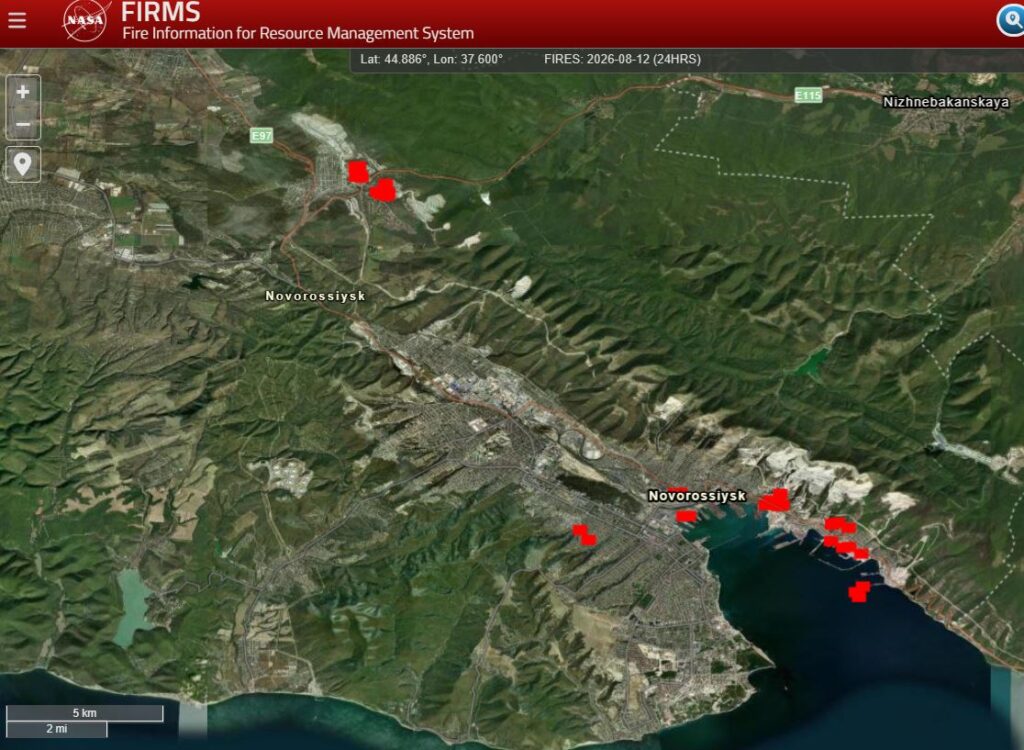
sea drones jet neptune missiles hit one russian port single night · post nasa firms shows fires detected around novorossiysk 12 2026 ukraine news ukrainian reports

Ukraine struck the Novorossiysk naval base in Russia's Krasnodar Krai overnight on 12 August, and for the first time coordinated more than 15 different strike systems in a single operation, President Volodymyr Zelenskyy said. The package combined Palianytsia jet drones, Neptune anti-ship missiles and naval drones, hitting warships, air defenses and oil infrastructure at the Black Sea Fleet's main base.

Novorossiysk is the refuge Russia's fleet fled to after Ukrainian drones and missiles pushed it out of occupied Crimea. Reaching its warships there with a mixed salvo — and getting through air defenses that bystander footage showed firing heavily — is the operational read the strike carries, more than any single ship damaged.

The systems and the targets

Zelenskyy named more than a dozen systems that worked together for the first time, from the Palianytsia and Peklo drones to the long-range Neptune and a set of naval drones. He thanked weapons developers for the added reach, framing the coordination itself as the milestone rather than the results.

The Security Service of Ukraine (SBU) confirmed hits on two Kalibr-carrying frigates, the Admiral Essen and Admiral Makarov, and the patrol ship Vasily Bykov. The same strike hit an S-300 radar, a firing position on one of the port's piers, the Sheskharis oil terminal and three of the harbor's berths — a target list wider than the ships alone.

How many ships

The three Ukrainian accounts agree on the two frigates but not on the full tally. The General Staff counted four warships, adding a Buyan-M missile ship to the SBU's three. Zelenskyy separately cited a large landing ship and a corvette among the vessels hit.

Independent analysts who reviewed satellite imagery told The Maritime Executive the damage did not appear catastrophic, with no ships visibly burning or sinking. Ukraine's General Staff said the assessment is still under way.

The fleet's shrinking refuge

The strike extends a campaign that has driven Russia's fleet eastward without Ukraine fielding a navy of its own. Having lost safe basing in Sevastopol, Russia moved its ships more than 300 kilometers from the front — far from Ukraine, but no longer out of reach.

The operation's footprint reached past the base. Russian authorities in Novorossiysk declared a state of emergency and cut water to the port city, and the strike on the Sheskharis oil terminal hit infrastructure that helps fund the war. Zelenskyy said Ukraine would keep striking such targets, and that Russia alone can end the war it started.

5% of US Patriot stocks gets Ukraine through winter, 10% ends the ballistic threat — and Zelenskyy has just 1%, he tells CNN

13 août 2026 à 05:37

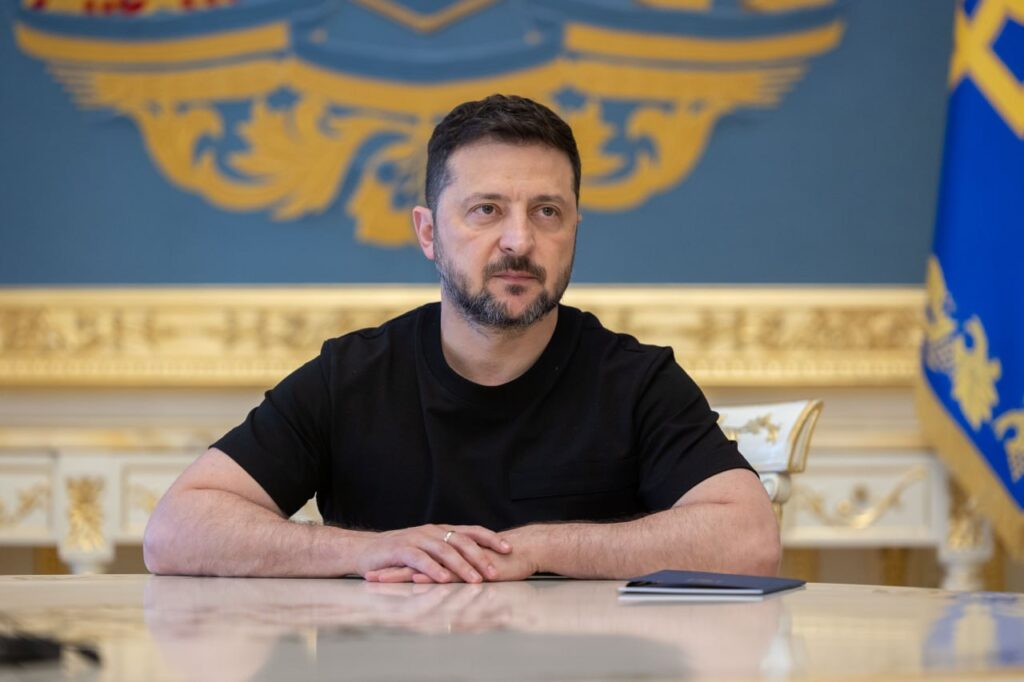
Ukrainian President Volodymyr Zelenskyy, 7 July 2026. Photo: Zelenskyy / Telegram

Ukraine holds only about a tenth of the Patriot interceptor missiles it needs from the United States to stop Russia's surging ballistic strikes, President Volodymyr Zelenskyy told CNN. Selling Kyiv 5% of the current US stockpile would carry the country through winter, he said, and 10% would let it "destroy all the Russians' ballistic missiles" — but he holds 1%.

The plea puts a number on a shortage that has run through Ukraine's diplomacy all summer and left its cities increasingly exposed. It is the concrete cost of near-empty interceptor stocks: on 5 August, Russia fired 28 ballistic and anti-ship missiles at Kyiv and Ukraine intercepted none of them, killing 17 people, and four days earlier launched 27 ballistic missiles with only one stopped. July was the deadliest month for Ukrainian civilians since April 2022, according to the UN.

The arithmetic of a losing race

"This year we have two and a half times less interceptors than we had in 2025," Zelenskyy said, while "Russia has two times more ballistic missiles per month than they had before."

The interceptor that most reliably stops those missiles, the US-made Patriot's PAC-3, is scarce worldwide: the war between the United States and Iran drained stocks as American and Gulf forces spent dozens against Iranian missiles and drones, and the shortage has fallen hardest on Ukraine.

The bottleneck is structural, not budgetary. Only five or six countries build interceptors capable of stopping ballistic missiles, the US makes around 600 Patriots a year, and orders are placed years in advance — so money alone cannot close the gap before winter, defense expert Marc DeVore told Euromaidan Press in June.

A home-built Patriot, still uncertain

Zelenskyy said doubts remain over whether US President Donald Trump's apparent offer to let Ukraine manufacture its own Patriot interceptors will materialize. At the NATO summit in Ankara, Trump said he would license Ukraine to build the missiles, then days later said he was unsure; the Patriot makers have since sent officials to Kyiv, without result so far. "I hope that I will get it," Zelenskyy said, calling it "one of the biggest [challenges] I had from the very beginning of this war."

He described daily, largely private deal-making to close the gap: "million phone calls ... I try to exchange something to missiles ... I do some things which I can't even share. It doesn't mean that it's outside of the law. But I can't speak about it."

Putin, the Donbas, and the next war

On the stalled peace process, Zelenskyy said Kyiv had put new proposals to the Trump administration and needed "more involvement of the American side," adding that Vladimir Putin "doesn't want to stop this war now and (there's) not enough pressure on him now." He rejected ceding the rest of the Donbas that Putin seeks, arguing security guarantees matter more: "Why he will not come again ... to occupy us?"

He confirmed a recent call with Vice President JD Vance but declined to say whether Vance had asked Ukraine to halt strikes on a Russian Black Sea oil port that were hurting US firms and threatening a spike in global energy prices, as the Financial Times reported. Zelenskyy also endorsed Western assessments that Putin could widen the war toward a smaller NATO state, likely in the Baltics: "He wants quick victory ... occupy or destroy or control."

  • ✇Euromaidan Press
  • Ukrainian drones black out occupied Sevastopol and hit the Balaklava power plant
    A large-scale Ukrainian drone attack cut electricity across occupied Sevastopol overnight on 13 August, with power later restored on a temporary scheme after strikes damaged the city's energy infrastructure, the Russian-installed head of the city wrote on his Telegram channel. The blackout is the latest blow in Ukraine's months-long campaign to isolate occupied Crimea by degrading the fuel, power, and transport networks Russia relies on to hold the peninsula. Sevastopol
     

Ukrainian drones black out occupied Sevastopol and hit the Balaklava power plant

13 août 2026 à 05:20

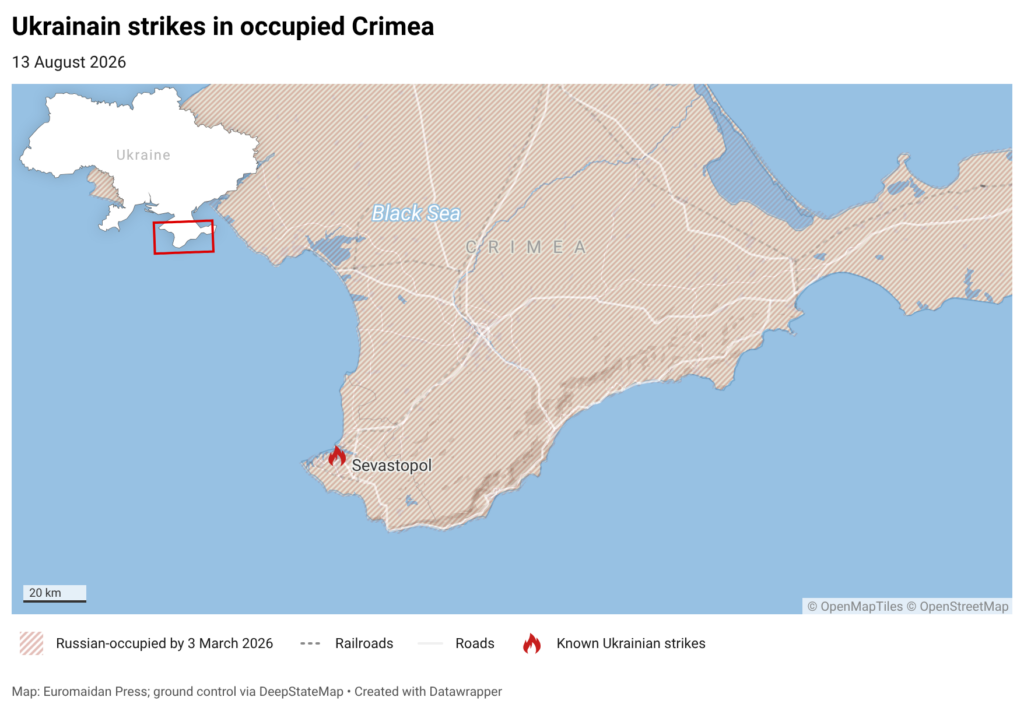
A large-scale Ukrainian drone attack cut electricity across occupied Sevastopol overnight on 13 August, with power later restored on a temporary scheme after strikes damaged the city's energy infrastructure, the Russian-installed head of the city wrote on his Telegram channel.

The blackout is the latest blow in Ukraine's months-long campaign to isolate occupied Crimea by degrading the fuel, power, and transport networks Russia relies on to hold the peninsula. Sevastopol — the former main base of Russia's Black Sea Fleet — has lost power repeatedly since early June, when Ukraine sharply escalated strikes on Crimean energy sites.

What was hit

Drones headed toward the Balaklava thermal power plant, one of the peninsula's two main power stations, while mobile fire groups worked over Sevastopol, the monitoring channel Crimean Wind reported. Witnesses described an explosion and the loss of electricity across the city.

A fire also broke out at a large water-supply facility near the village of Shturmove, south of Sevastopol, around the time of the strike on Balaklava, the same channel said. The cause has not been established. The site houses the city's No. 3 hydro unit, which supplies Sevastopol's water.

Elsewhere on the peninsula, gunfire was reported near the Tavriiska thermal power plant, and Russian air defense operated near the Gvardiiske airfield.

A grid already rationing power

Russia closed the Crimean Bridge to road traffic during the attack, the crossing's occupation-run information channel reported.

The outage lands on a grid already under strain. Sevastopol last went fully dark on 27 July, and in July the occupation authorities imposed a rolling blackout schedule that left residents with about six hours of electricity a day. Since early June, Ukrainian strikes have repeatedly cut power across Crimea, with some districts dark for a week or more, alongside disruptions to water and mobile coverage.

The isolation campaign

Ukrainian officials have described the strikes as stages of a plan to cut occupied Crimea off from mainland Russia. Beyond power plants, Ukraine has hit the fuel tankers supplying the peninsula, the bridges and rail links feeding it, and Russian vessels — leaving Crimea rationing petrol and, at times, short of food.

Ukraine's military had not publicly claimed the 13 August strike as of publication.

  • ✇Euromaidan Press
  • Two railway workers killed: a Russian jet drone hit their train’s locomotive in Odesa Oblast
    A Russian jet-powered Shahed drone struck the locomotive of a passenger train in Odesa Oblast on the morning of 13 August, killing the driver and his assistant, Ukraine's national rail operator Ukrzaliznytsia reported. The train was carrying 340 passengers on the Odesa–Dnipro route. Russia has spent 2026 methodically dismantling the network that keeps Ukraine supplied, destroying or damaging more than 200 locomotives in the first half of the year alone, as Euromaidan Pr
     

Two railway workers killed: a Russian jet drone hit their train’s locomotive in Odesa Oblast

13 août 2026 à 03:54

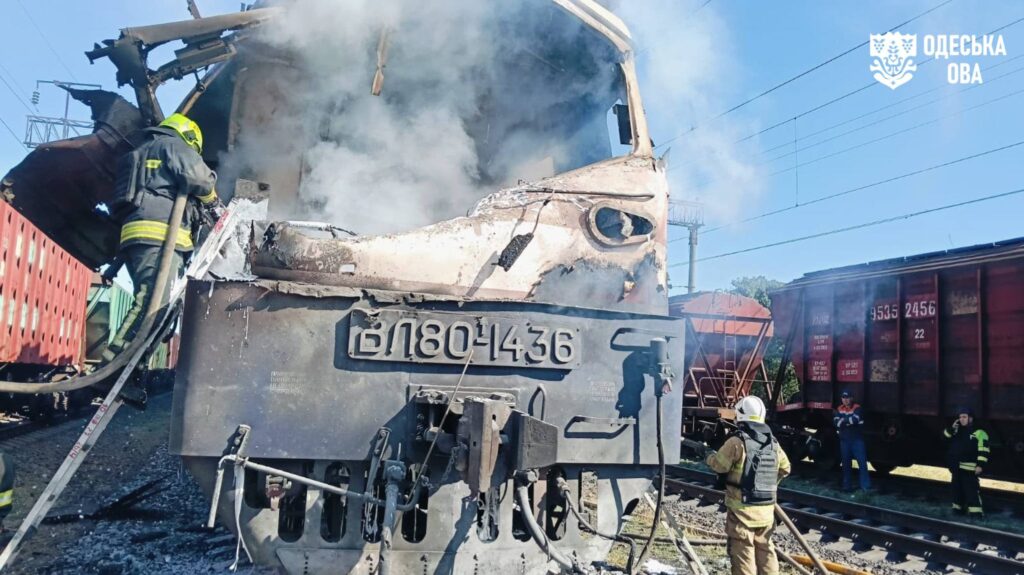
locomotive, Odesa Oblast

A Russian jet-powered Shahed drone struck the locomotive of a passenger train in Odesa Oblast on the morning of 13 August, killing the driver and his assistant, Ukraine's national rail operator Ukrzaliznytsia reported. The train was carrying 340 passengers on the Odesa–Dnipro route.

Russia has spent 2026 methodically dismantling the network that keeps Ukraine supplied, destroying or damaging more than 200 locomotives in the first half of the year alone, as Euromaidan Press documented. The crew kept the train moving toward a station so passengers could get out; all 340 evacuated without injury, and were driven on to Odesa by bus.

Overnight drone barrage

Ukraine's Air Force shot down 111 of the 133 Shahed drones Russia launched overnight, it said. Part of Izmail lost power after the attack, and a strike set port infrastructure alight in Odesa Oblast.

A drone damaged a civilian vessel at a Mykolaiv Oblast port. In Chernihiv Oblast, Russia hit two raions, damaging homes and knocking out a filling station; a child was treated for shock.

Kherson and Kharkiv

Two men were killed and a three-year-old injured in a strike on Kherson's Korabelnyi district, according to reports. A separate airstrike on the city's central district injured a 63-year-old man, local officials reported.

In Kharkiv Oblast, a Russian strike killed a 36-year-old woman in Tsyrkuny. Three more people were wounded when Russia hit the center of a village elsewhere in the oblast.

Zaporizhzhia and the northeast

Over the previous day, Russia killed one person and injured three in Zaporizhzhia Oblast, striking 52 settlements 962 times with airstrikes, drones, and artillery, regional head Ivan Fedorov said. Seven people were injured across Sumy Oblast, where Russia shelled 19 settlements, the regional administration reported.

Russian Blockade of Major Ukrainian Ports Threatens Global Grain Supplies

13 août 2026 à 06:22
The deadly strikes are part of a long-running maritime battle with Ukraine and echo battles over other key shipping routes around the world.

© Reuters

A vessel struck off the coast of Odesa, Ukraine, last month. The Russian campaign has halted nearly all shipping in and out of the port.
❌