Connexion
Lloyd Robertson, former CTV News chief anchor, dies at 92
4 août 2026 à 23:00



Michel Leblanc se présentera pour le Parti libéral du Québec dans la circonscription de Marguerite-Bourgeoys, à Montréal, lors des élections générales d’octobre.
L’annonce, confirmée par plusieurs médias, doit avoir lieu aujourd’hui.
Leblanc avait quitté au printemps son poste de PDG après 16 ans à la tête de la Chambre de commerce du Montréal métropolitain.
[L'article L’ancien PDG de la Chambre de commerce du Montréal métropolitain se lance en politique a d'abord été publié dans InfoBref.]

© Nathan Howard for The New York Times
Le gouvernement fédéral a annoncé hier l’entrée en vigueur d’un nouveau registre visant à rendre publiques les activités d’influence menées au Canada pour le compte d’intérêts étrangers.
Toute personne ou entité qui conclut une entente avec un acteur étranger en vue d’influencer un processus politique ou gouvernemental au Canada est désormais tenue d’y enregistrer cette entente dans un délai de 14 jours.
Les contrevenants s’exposent à une amende pouvant atteindre 1 million $.
Le registre sera administré par un commissaire indépendant.
[L'article Lancement du registre des activités d’influence étrangère a d'abord été publié dans InfoBref.]

L’entreprise de biotechnologies américaine Moderna va entamer un essai clinique de phase I pour évaluer son vaccin contre la souche du virus à l’origine de l’éclosion qui a fait, depuis mi-mai, plus de 1000 morts en République démocratique du Congo.
La phase I d’un essai vise à évaluer:
Moderna devra ensuite mener d’autres essais avant de soumettre son vaccin à Santé Canada en vue d’une homologation.
[L'article Santé Canada autorise Moderna à tester un vaccin contre la maladie Ebola a d'abord été publié dans InfoBref.]
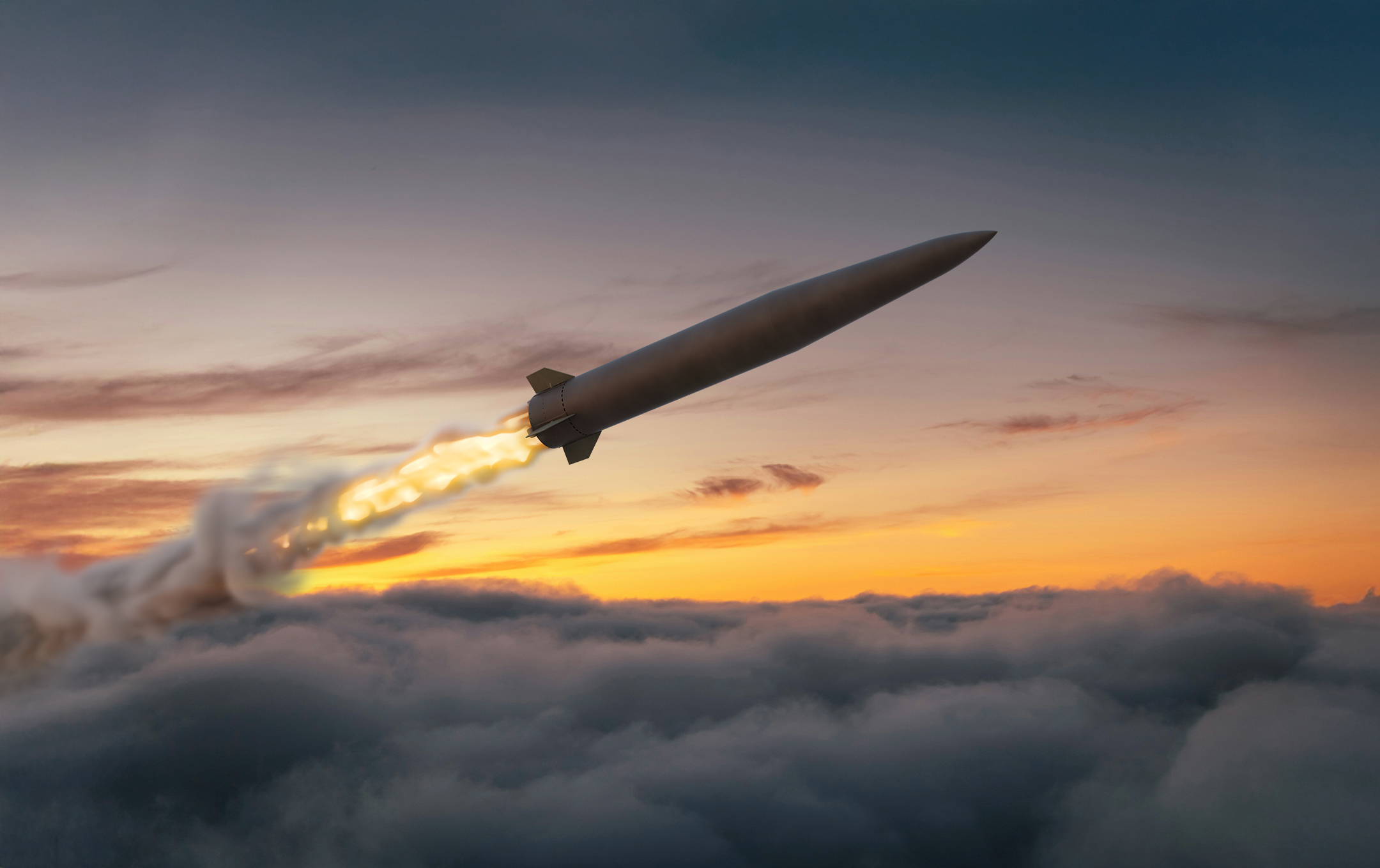
It's possible Ukrainian forces launched a new type of ballistic missile at Moscow on 1 July. The apparent Ukrainian missile, which air defenses reportedly shot down over the Russian capital, is a harbinger of things to come.
Ukraine is developing several new ballistic missiles with the range to reach Moscow, 500 km from the border with Ukraine. If and when they begin raining down on Russian cities, gas facilities, factories and refineries, Russia may have to change the way it fights.
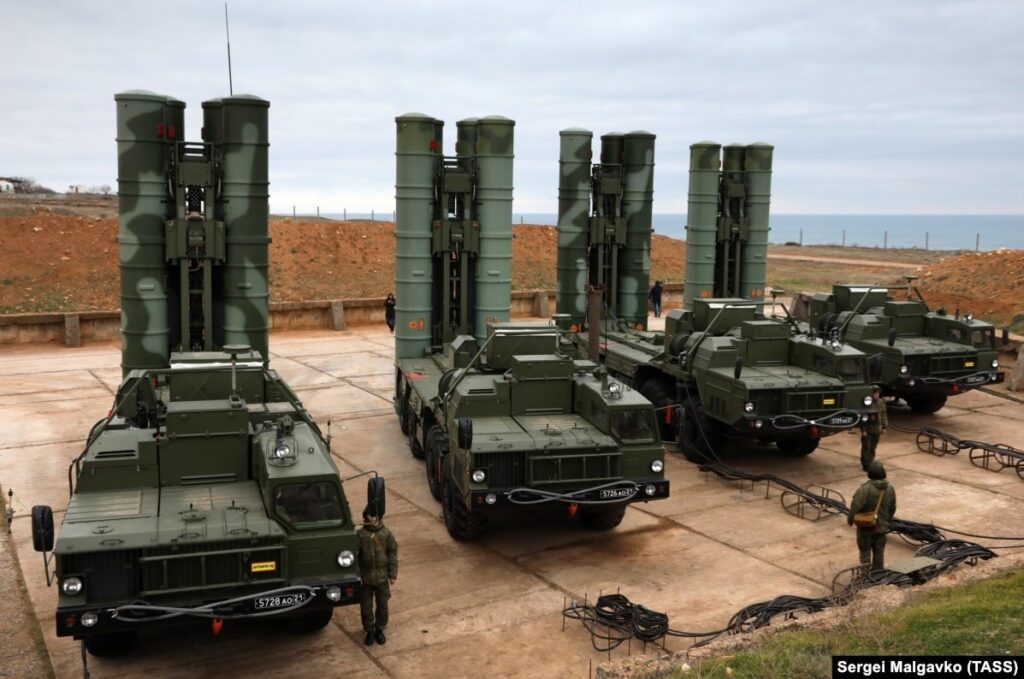
The Russians might have to aim their best S-400 air defense batteries into the sky, instead of aiming them at the ground. For Ukraine, that could mean some respite from relentless Russian missile strikes. After all, S-400s doubling as surface-to-surface munitions are in the mix most nights when Russia bombards Ukraine.
"Ballistic missiles force a different problem on Russia," wrote Michael Bohnert, an analyst for California think tank RAND.
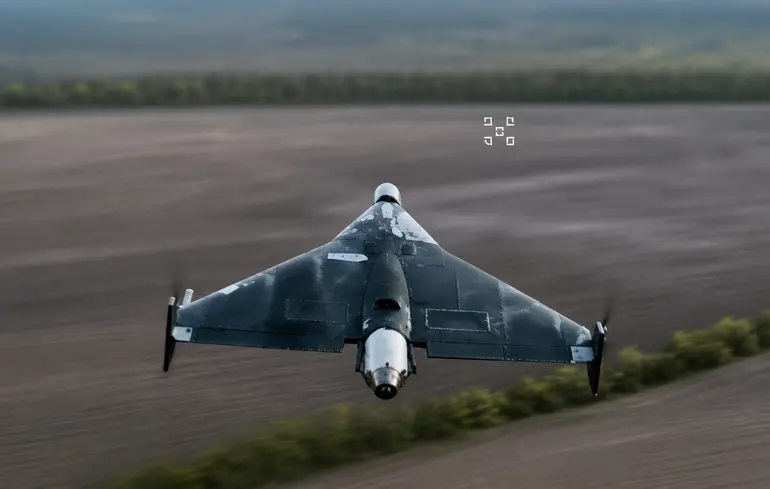
The coming shift comes down to speed. Where one-way attack drones and many cruise missiles are slow—often motoring along at just a few hundred kilometers an hour—and are thus fairly easy to shoot down, ballistic missiles are fast.
They're all supersonic, traveling at least the speed of sound. Heavier ballistic missiles may even be hypersonic. That is, capable of reaching five times the speed of sound.
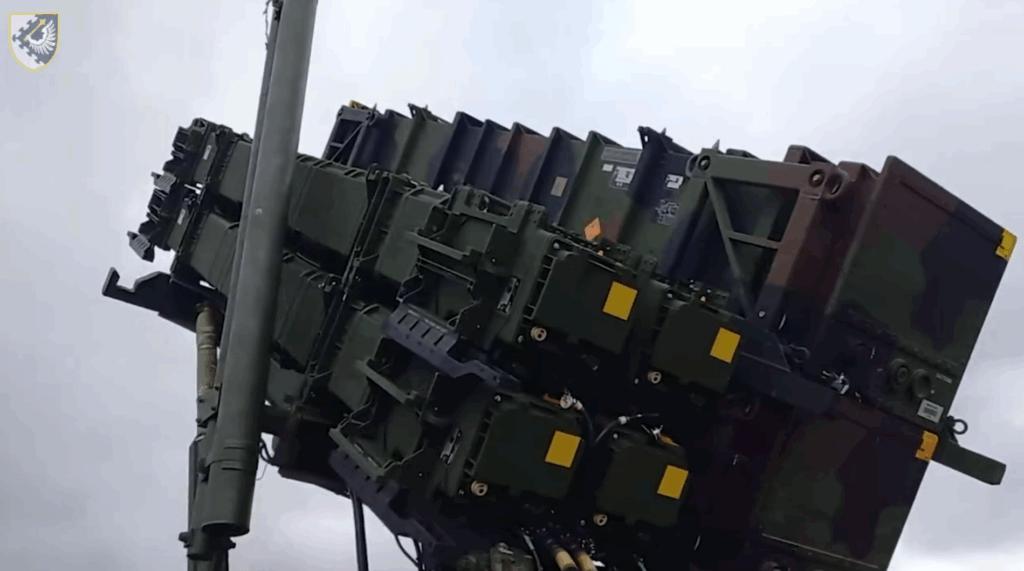
The same air defenses that swat down incoming drones can't stop ballistic missiles. Only the best air defenses stand any chance of hitting an incoming ballistic missile. Ukraine's main defense against Russian ballistic missiles is its six or so US-made Patriot batteries; for Russia, the main defense against the coming Ukrainian ballistics will be the roughly 50 S-400 batteries.
Keenly aware of the deep strike dynamics, the Russians are pivoting away from easy-to-kill drones toward hard-to-kill ballistics. This is a serious problem for Ukrainian air defenses, which are desperately short of missiles for their Patriot batteries owing to the Americans' reluctance to sell or donate missiles. US forces are struggling with their own air defense shortfalls resulting from the on-again, off-again war with Iran.
In one wave of Russian attacks on 6 July, Ukrainian air defenses shot down 326 out of 351 incoming Geran drones and 37 of 39 incoming subsonic cruise missiles. But the Russians also launched six supersonic anti-ship missiles and 23 ballistic missiles. Every single one got through, wreaking havoc across Kyiv. At least 22 people died in the capital and the surrounding oblast, and 90 more were injured.
At present, Ukraine can't match these strikes. Yes, the Ukrainians can launch lots of one-way attack drones. In fact, far more drones than Russia can launch. And the Ukrainians also have a reliable subsonic cruise missile in the form of the Fire Point FP-5. But Ukraine doesn't yet have a fully operational ballistic missile in the class of the Russian Iskander or S-400 (in its surface strike mode).
That's about to change, of course. The apparent 1 July ballistic missile strike targeting Moscow was just a preview of a wider Ukrainian campaign. Fire Point co-founder and chief engineer Denys Shtilierman has circulated what he claimed was test footage of a new ballistic missile, possibly the 855-km FP-9, and hinted that strikes on Russian soil could begin soon.
Soon has a season attached to it now. Fire Point CEO Iryna Terekh told The War Zone the company is casting the FP-9's solid-fuel engine—4.6 tons of propellant, more than four times what the smaller FP-7 carries—and that everything else on the missile is finished. "It's the last touch on the engine, and we are ready to start," she said, putting the first test launch in the autumn. Shtilierman told interviewer Dmytro Gordon on 27 July that strikes on Russia could begin as early as this autumn, too.
If FP-9s begin bombarding Moscow, Russian commanders might not have the luxury of using many, or any, of their S-400s for surface strikes.
Every month, Russian industry produces approximately 40 missiles for S-400s batteries. If Ukraine can fling a few dozen FP-9s or similar missiles at Russian targets every month, Russia would have to devote its entire S-400 capability to air defense just to blunt the bombardment. After all, it usually takes several missiles in the class of a Patriot or S-400 to hit one incoming ballistic missile.
"Russia would have to choose," Bohnert wrote. Either "keep using the S-400 as a strike weapon and accept that hardened targets get hit, or return the system to its designed air-defense role."
If the Russians choose protection, they'll have somewhat fewer ballistic missiles to fling at Kyiv and other Ukrainian cities. That should take some pressure off Ukraine's own overstretched air defenses.

Une alerte a été émise auprès de la municipalité de Saint-Mathieu-de-Rioux concernant les résultats de tests effectués par échantillonnage le lundi 3 août par le responsable des prélèvements d’échantillons d’eau de surface sur le lac Saint-Mathieu, qui démontrent que l’eau est polluée.
Ces tests mesurent la qualité de l’eau du lac Saint-Mathieu. La source de la contamination n’a pas été établie pour le moment.
« Depuis la réception de ces premiers résultats de tests, l’équipe de la MRC des Basques, en collaboration étroite avec la municipalité de Saint-Mathieu-de-Rioux, met tout en œuvre pour réguler la situation et pour identifier la source du problème », assure la MRC des Basques, dans un communiqué de presse.
« Les plus récentes analyses de la qualité de l’eau, effectuées le 3 août 2026, indiquent que la qualité de l’eau est actuellement polluée. Les analyses de l’eau sont réalisées chaque lundi et les résultats sont transmis à la Municipalité chaque mardi. Un nouveau prélèvement sera effectué afin de suivre l’évolution de la situation et nous vous tiendrons informés dès la réception des prochains résultats », mentionne la Municipalité de Saint-Mathieu-de-Rioux sur sa page Facebook.
Toutes les décisions concernant une fermeture de la plage municipale, une interdiction de baignade ou un avis d’ébullition de l’eau sont sous l’autorité des municipalités.
Avec les résultats actuels, Saint-Mathieu-de-Rioux a pris la décision de fermer la plage municipale. Elle avisera ses citoyens via ses outils de communication habituels tout au long du processus.
« Par mesure préventive et afin d’assurer la sécurité des usagers, la baignade est interdite jusqu’à nouvel ordre », précisent les autorités municipales.

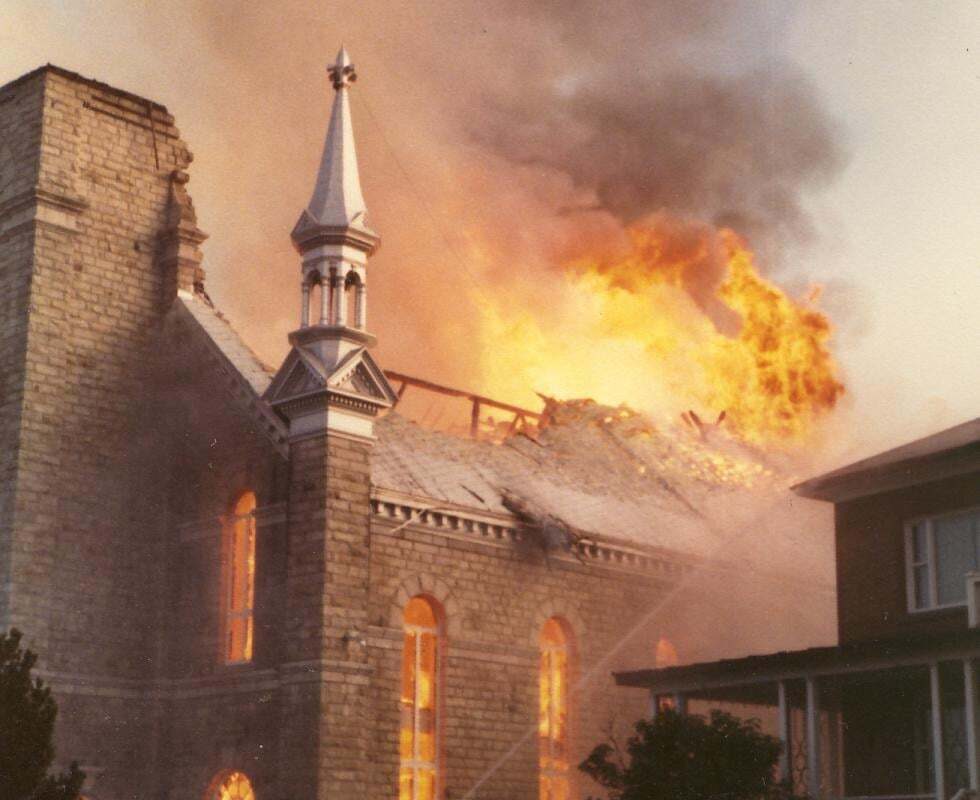
2026 marque les 40 ans de l’église d’Amqui, reconstruite en 1986, après avoir été détruite lors d’un incendie majeur, le 4 août 1984.
Par Véronique Bossé- Initiative de journalisme local- L’Avant-Poste
Joël Michaud, un résident d’Amqui, a accepté de partager des photos appartenant à sa famille, qui illustre cet incendie. Enfant de chœur pendant longtemps, il s’implique encore de nos jours auprès du conseil de la Fabrique d’Amqui.
Comme bien des gens, il a un vif souvenir de ce matin-là. Il faisait partie des nombreuses personnes à s’être rendu sur les lieux.
« C’était assez particulier comme journée. Il y a des gens, plus âgés que moi, qui ont vu le feu dès qu’il a commencé. Je suis arrivée à l’église alors qu’il devait être 7 h 30 ou 8 h. Tout était déjà tombé par terre », se souvient monsieur Michaud.
Il ajoute qu’une messe, organisée en soirée à l’Aréna d’Amqui, avait fait salle comble.
« C’était vraiment plus important que ça ne l’est aujourd’hui. Si l’église brûlait à nouveau, je suis à peu près certain qu’elle ne serait pas reconstruite. Les circonstances ne sont pas les mêmes. »
La reconstruction de 1986 avait été rendue possible, grâce à une campagne de souscription. Malgré tout, l’église actuelle est bien plus petite que celle qui siégeait à l’angle de la rue Dupont et de la rue Desbiens, de 1917 à 1984.
« Aujourd’hui, il doit y avoir environ 800 places assises, alors qu’avant, il y en avait 1800. »
Les coûts de reconstruction devaient prendre en considération la capacité de payer des citoyens de la Vallée.
« La population a été extrêmement généreuse. J’ai un vidéo de l’époque où le curé en parle : il raconte que des gens, qui n’avaient pas les moyens de donner, l’ont fait quand même. »
L’appui de généreux donateurs aura aussi permis d’embellir l’église.
« À l’origine, il ne devait même pas y avoir de vitraux et d’orgue, en raison d’un manque d’argent, mais comme un monastère fermait ses portes, un résident d’Amqui, qui avait de l’argent, avait payé pour que les vitraux du monastère soient transportés et installés dans la nouvelle église. »
La même histoire s’est produite avec les cloches.
« Ce qu’il devait y avoir au départ ressemblait plus à un grelot qu’autre chose. J’avais entendu mon père en parler. Il était membre du conseil de fabrique et ce qui devait remplacer le clocher précédent était minime. »
Des cloches dignes de ce nom avaient pu être acquises grâce à un homme très riche. « De généreux donateurs dans ce genre, il n’en existe plus », soutient monsieur Michaud.
Qu’est-ce qui a provoqué le brasier? Possiblement un pigeon.
« L’église a été construite dans les années 1900. Il y avait énormément de perte de chaleur. C’était isolé au bran de scie et il y avait énormément de bois. Plusieurs pigeons avaient élu domicile dans le clocher. On n’a jamais su avec certitude ce qui avait causé le feu, mais un pigeon aurait facilement pu ramasser un mégot. »
Il s’agit toutefois d’une hypothèse personnelle. Celui qui était encore adolescent au moment des faits ne saurait affirmer avec certitude la raison de l’incendie.
Comme mentionné précédemment, la société entretenait un lien bien différent avec la religion, au moment de l’incendie.

Monsieur Michaud se rappelle d’ailleurs que son grand-père avait la volonté de vivre assez longtemps pour que ses funérailles puissent avoir lieu dans la nouvelle église et non dans un autre endroit, comme la Polyvalente d’Amqui.
« Aujourd’hui, les gens voient l’église et ils accordent de l’importance au clocher, mais ce n’est plus pareil. Pourtant, quand la tragédie d’Amqui est survenue en 2023, tout le monde s’est rassemblé à l’église. C’est probablement la dernière fois qu’elle a été aussi remplie. »
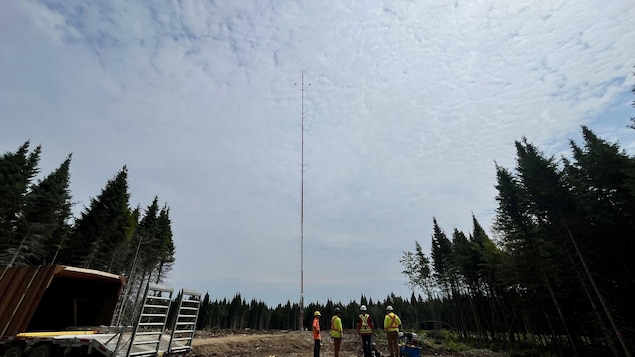
Le développement éolien de la zone Wocawson se met en branle au sud-ouest du Bas-Saint-Laurent, près de deux ans après son annonce par Hydro-Québec et l’Alliance de l’énergie de l’Est. Sept mâts pour mesurer la force et la température des vents sont en installation afin de planifier ce qui pourrait devenir le plus grand parc éolien dans l’Est-du-Québec, d’une capacité de 1000 MW. Julie Tremblay est allée sur place.
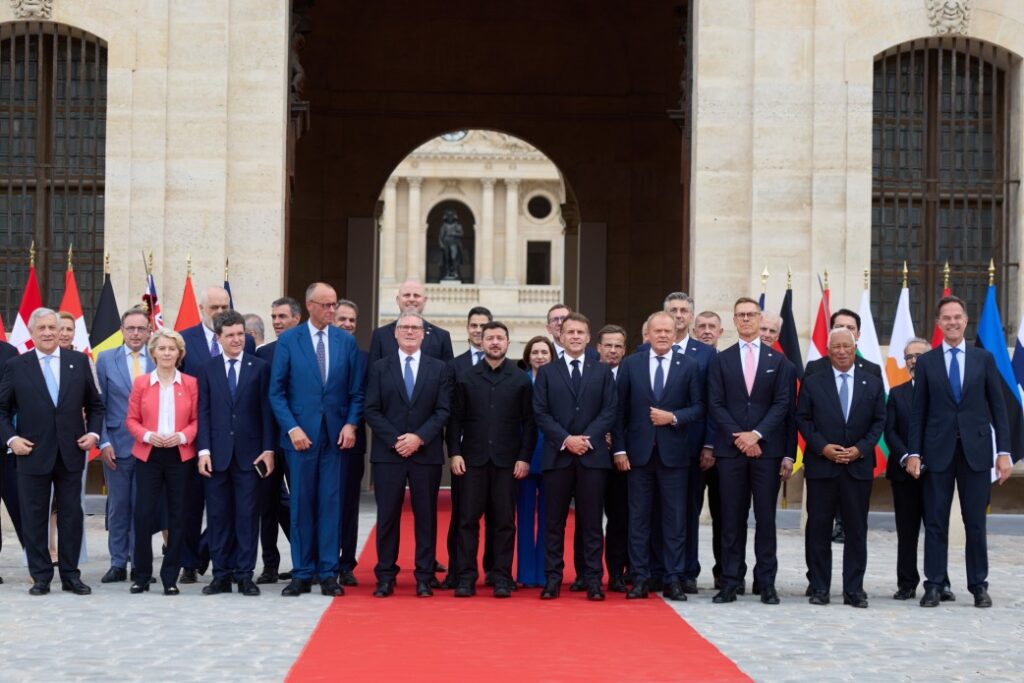
Andy Burnham's first move on Ukraine as British prime minister was to promise that none of Britain's commitments would lapse. Hosting President Volodymyr Zelenskyy at Portsmouth Naval Base on 27 July, a week into the job, he handed Kyiv the intellectual property behind Britain's Stone Cloak drone jammers and pledged to honor "every commitment this country has made to Ukraine in full."
What London, Paris, and the roughly 40 other members have not settled is what the force those commitments promise would be armed with.
A French and British contingent of up to 10,000 troops in Ukraine would be a useful demonstration of solidarity, but not very effective unless they, and the Ukrainian soldiers alongside them, are extremely well equipped with weapons that would deter Russia from another invasion.
Those weapons are the part of the plan that does not yet exist—and the only deep-strike production line scheduled to open before the guarantee could be called on runs through Ukrainian factories.

Neither leader said anything new at Portsmouth about the troops themselves, and the Presidential Office recorded only that Burnham would continue co-chairing the coalition. French President Emmanuel Macron and then-Prime Minister Keir Starmer launched it in London in March 2025 to unite countries dedicated to Ukrainian peace.
Its political leaders have been putting diplomatic and economic pressure on Russia while military commanders continue to put together plans to secure Ukraine in the event that Russia agrees to a ceasefire and peace negotiations.
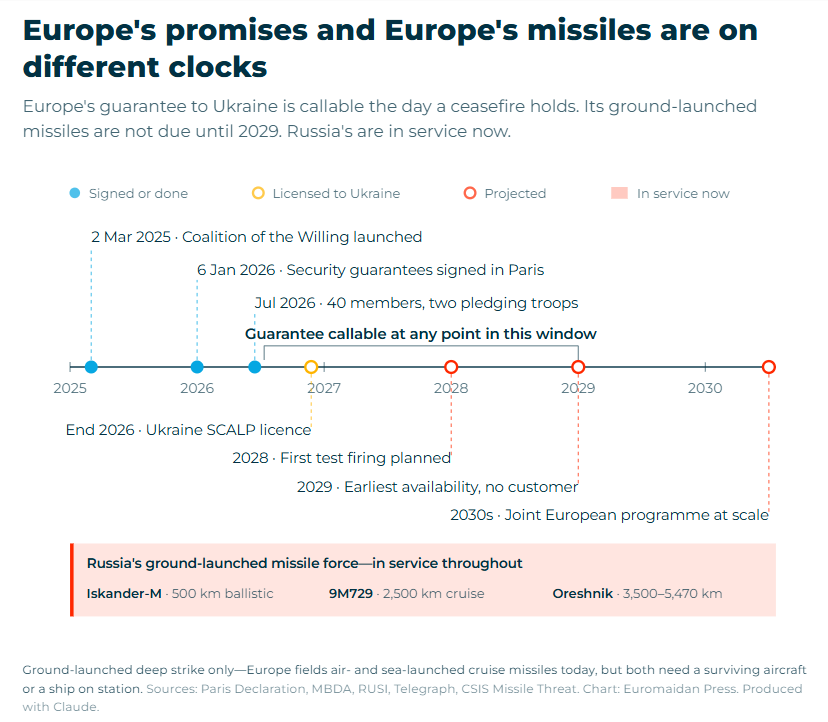
Those plans became clearer on 6 January 2026, when Coalition members signed security guarantees including US-led truce monitoring and a multinational troop presence in Ukraine if a ceasefire is reached, to be activated at Ukraine's request once a credible cessation of hostilities takes place. Poland, which borders Ukraine, agreed to provide logistical support only, with Prime Minister Donald Tusk stating at the time that Polish troops would not be deployed "under any scenario."
The Coalition has grown well beyond its founding pair. Around 40 countries were represented at the Paris summit on 13 July, where Moldova and North Macedonia joined; Bulgaria's government announced its exit the following day. France and the UK remain the only two to have pledged ground troops, which is why Zelenskyy has called their presence "mandatory" for the guarantees to mean anything.
The two will put 1,500 troops through the Coalition's first joint exercise in Poland in September, which Warsaw describes as logistics and transport maneuvers rather than combat ones.

Long-range deep precision strike (DPS) missiles and one-way effectors (OWE), aka kamikaze drones, are in demand following their demonstrated strategic use in the Middle East and in Russia's war on Ukraine. Ifri argued the main lesson from Ukraine is that effective deep-strike posture emerges from a layered mix of capabilities rather than from any single weapon system.
The layers do different jobs.
Getting through the door is not the same as destroying what Moscow values on the other side, and it is the heavy-payload end of the spectrum where Europe has bought least.
That gap matters because deterrence here is deterrence by counter-strike. European countries are pursuing high-value DPS systems because the alliance seeks to make its enemies fear that the use of their own deep-strike weaponry will be met with powerful retaliation.
Ground-launched systems carry that threat more credibly than air- or sea-launched ones, and Europe has been short of the class since the Intermediate-Range Nuclear Forces Treaty collapsed in 2019.
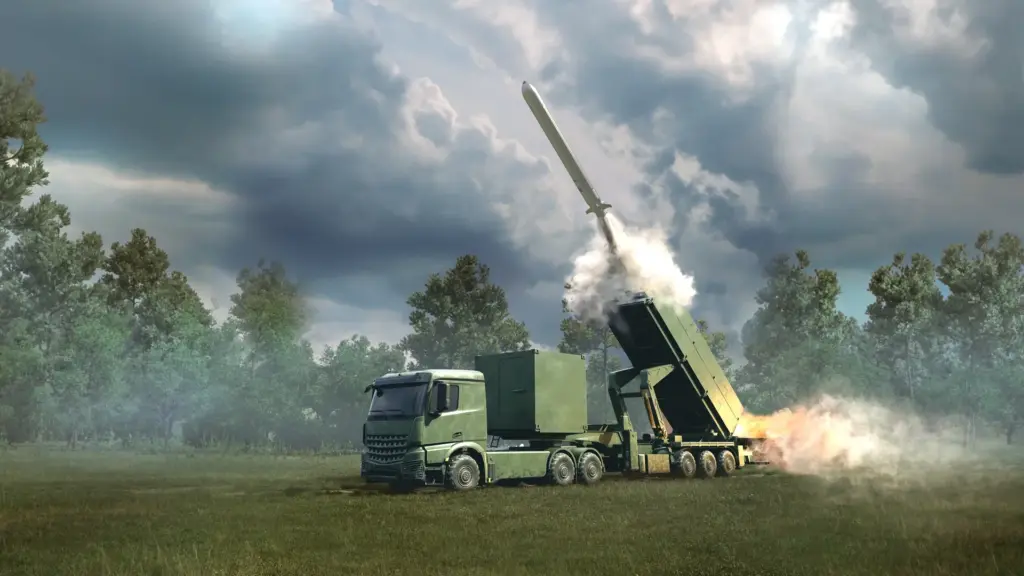
Same missile, different launcher. MBDA's land system is its naval cruise missile on a truck rather than a warship, and the American system Europe has been eyeing fires the same Tomahawks a destroyer does.
What changes is whether the launcher survives to fire a second time:
Europe starts near zero because it was once forbidden to start. The INF treaty removed the entire class from the continent for three decades, and Europe—the theater, never a party to the agreement—complied. Russia did not.
Seven years after the treaty lapsed, European militaries still lack a category of weapon they were once forbidden to field and their adversary was already building.
Despite years at war, Russia retains a substantial stock of long-range missiles, including the Oreshnik ballistic missile, the Novator 9M729 cruise missile, and its Shahed/Geran-2 attack drones. It is not holding them back.
Russia fired 126 ballistic missiles at Ukraine in July alone, the most in any month this year, from road-mobile ground launchers—the class of weapon Europe is still three years from fielding at deep-strike range.
If a ceasefire is declared and a small contingent of European troops is deployed, a significant arsenal of ground-launched DPS weapons might be the only thing standing between that contingent and a repeat.
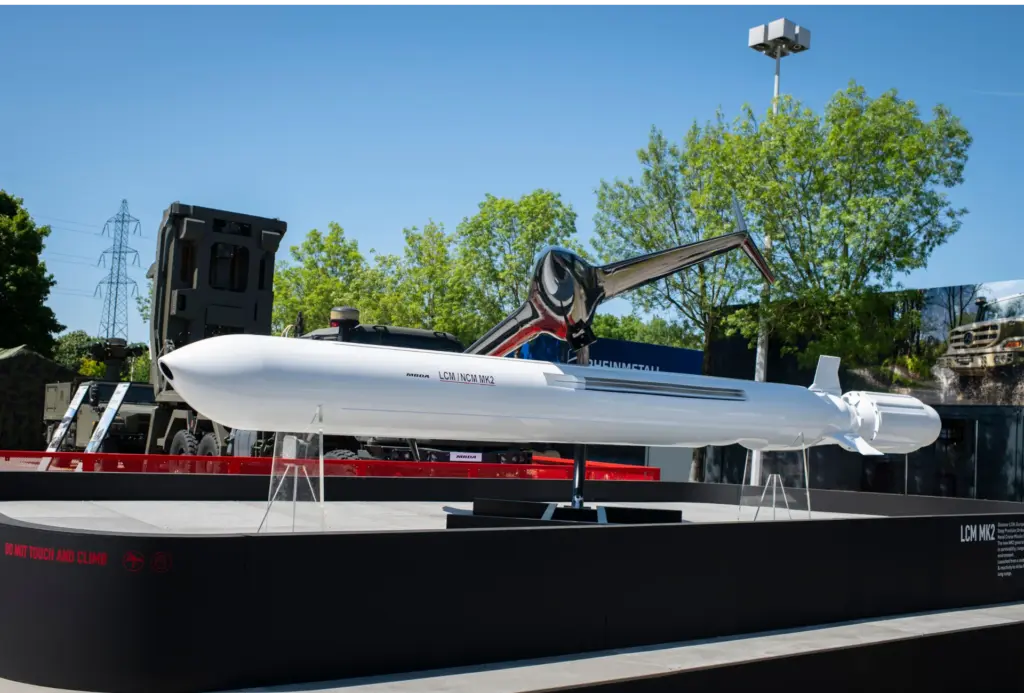
France's MBDA unveiled a complete version of its "European Tomahawk," the Land Cruise Missile (LCM Mk2), at the Eurosatory show in June—the ground-launched version of its battle-proven MdCN, with a first launcher firing planned for 2028 and availability from 2029.
The naval variant is in contract negotiations with France's armaments agency, the DGA. No order has been confirmed for the land-launched version, though Poland remains interested in collaborating through the European Long-Range Strike Approach (ELSA).
ELSA itself shows where European money is going. When France, Germany, Italy, Poland, Sweden, and the UK signed a letter of intent under the program on 12 February, it covered collaborative development of low-cost effectors with ranges above 500 kilometers—the saturation layer, not the heavy one.
The six did agree in June to split ELSA into eight implementation groups, three of them covering ground-launched strike by range band. None of those lines is expected to field before the 2030s.
The American shelf is no fuller. Ukraine unsuccessfully requested Tomahawks from Washington, even though they would have come with authorization-to-use requirements. That option looks increasingly off the table after America's sustained use of Tomahawks under Operation Epic Fury—more than 1,000 missiles fired over the campaign's 39 days, according to CSIS—a burn rate that will take years to replace at current production rates, with Washington's own orders taking priority.
US forces also ran their Precision Strike Missile (PrSM) inventory down hard: CSIS estimates 40 to 70 fired from a prewar stock of about 90, and quotes one Army official who says the entire inventory went. Either figure casts doubt on Poland's plans to buy the American system.
The Coalition's planned "reassurance force" is being designed against that background.
As Armida van Rij, senior research fellow at the Centre for European Reform, put it in mid-July, it would likely be "a small force, light footprint, very defensive posture, quite far away from the front line," which raises the question of "how useful actually is that as a deterrent to Russia." She added that there remains "a bigger issue around the credibility of such a force and the credibility of a European deterrent without a US backstop."
Zelenskyy has made the same objection about placement, telling partners that 10,000 troops stationed in Lviv would not stop anything.
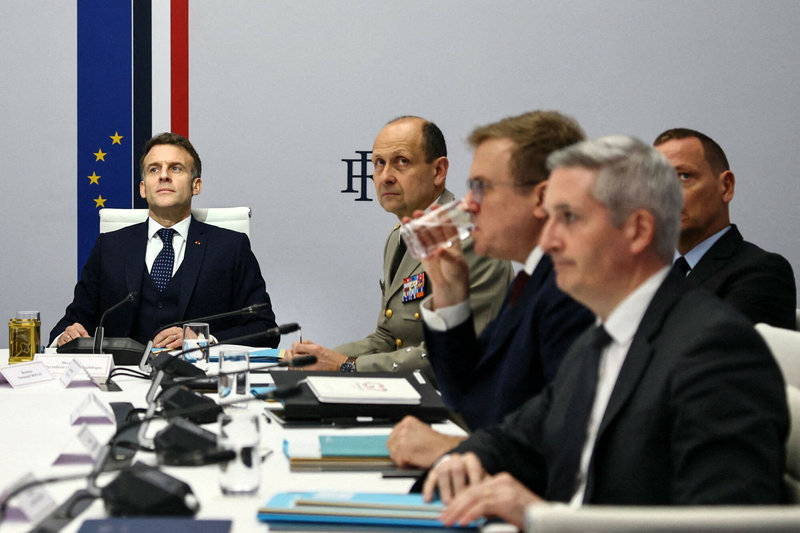
The two countries pledging troops are also the two whose military leadership says it is not ready. General Fabien Mandon, chief of staff of the French armed forces, warned that France was not prepared for high-intensity conflict, citing an "insufficient number of ships and armaments" and a particular need for "more missiles with greater range and lethality."
In the UK, General Sir Roly Walker, chief of the general staff, said British land forces must act "with the urgency of wartime," warning that Russia "will only take us seriously ... when they see our factories producing at wartime production rates."
The money has since moved.
An additional 36 billion euros for France's 2024–2030 Military Programming Law was definitively adopted by Parliament on 1 July, bringing total planned defense investment to 436 billion euros—nearly $500 billion—by 2030.
Britain's Defence Investment Plan was published on 30 June, a year overdue, setting out £298 billion, about $400 billion, of investment over four years. Industry welcomed the clarity.
How quickly either plan converts into contracts, and contracts into missiles, is the question the 2029 date already answers.
Ukraine had to increase domestic defense production quickly, initially with drones and OWEs, then heavier systems like Fire Point's Flamingo cruise missile, shown internationally for the first time at Eurosatory in June.
Its combat record has improved: a 27 June strike on the Titan-Barrikady arms plant in Volgograd was among its most damaging yet, and Germany's Diehl Defence is now in talks to co-produce it, as Berlin looks for alternatives after Washington shelved plans to station Tomahawks there.
For deep-strike missions Ukraine has also relied on UK and French Storm Shadow/SCALP missiles, and on 13 July France went further, licensing Ukraine to manufacture SCALP missiles, AASM bombs, and Aster interceptors on its own soil.
The bilateral roadmap authorizes SCALP and AASM production "before the end of 2026 and starting as soon as possible," the Telegraph reported, though it attaches no date to the first missiles and notes that the factories will more plausibly run after a settlement than before one.
It is the only European deep-strike production line in the plan with a 2026 authorization attached at all—and it runs through Ukrainian factories, not European ones.
The Paris declaration commits the Coalition to activate its guarantees the moment a ceasefire enters into force, at Ukraine's request. No European ground-launched deep-strike missile is scheduled to be available before 2029, and the one closest to ready has no customer.

Editor's note. The opinions expressed in our Opinion section belong to their authors. Euromaidan Press' editorial team may or may not share them.
Submit an opinion to Euromaidan Press

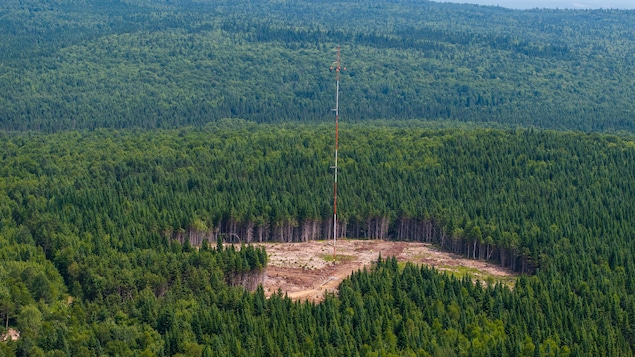
Hydro-Québec a commencé la prospection dans la zone Wocawson, dans le Kamouraska, au Bas-Saint-Laurent, pour ce qui pourrait devenir le plus grand parc éolien du Québec. On fait le point.

Des fouilles ont révélé un plancher d'époque, des clous carrés et du silex d'Europe.

© Jean Chung for The New York Times

© Lucas Foglia for The New York Times
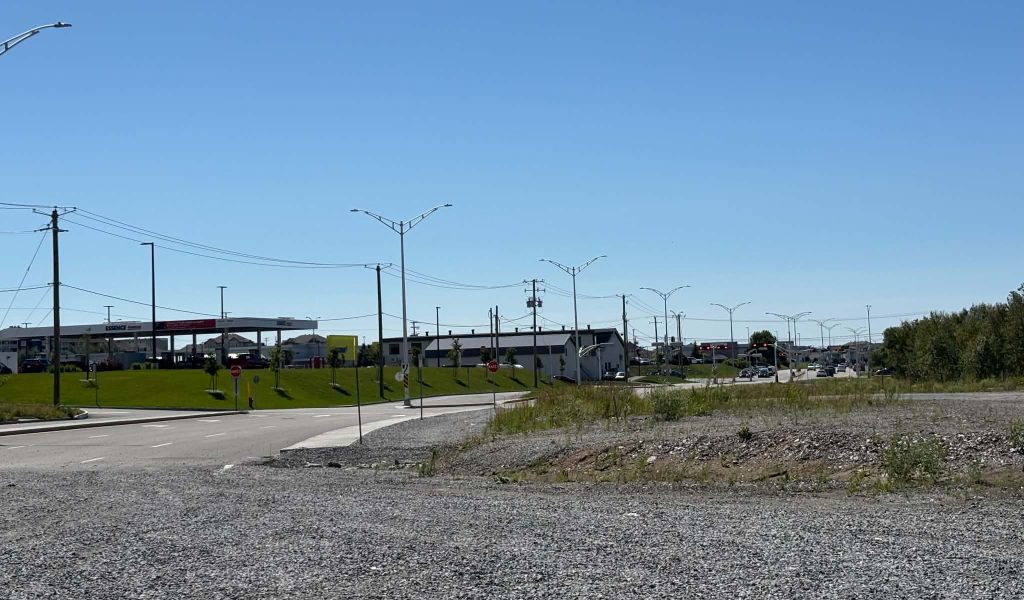
Un an après l’ouverture du magasin entrepôt Costco à Rimouski, la Ville de Rimouski poursuit l’élaboration d’une stratégie de développement industriel et commercial qui touche notamment les terrains situés à proximité du Costco, dans la Cité des achats, dont certains appartiennent à la Ville.
« Il y a des terrains industriels et commerciaux qui sont disponibles autour. Comme nous l’avons mentionné au printemps, nous sommes en train de travailler sur une stratégie de développement industriel globale à l’intérieur de laquelle on se penche sur la valorisation de nos terrains industriels et commerciaux », commente la directrice du service de développement économique et touristique de la Ville de Rimouski, Marina Soubirou.
Contrairement à plusieurs villes, Rimouski a la chance d’avoir encore des terrains à valoriser et ses dirigeants veulent s’assurer de le faire de la meilleure manière possible.
« On doit gérer ses terrains pour essayer d’en retirer le plus de retombées possibles. C’est pourquoi on a besoin d’une stratégie. On travaille ses terrains qui sont en vente pour leur valorisation. On ne veut pas que ce soit n’importe quoi qui s’installe dessus. On veut que les acteurs qui viendront dessus renforcent la mixité commerciale, que ce soit en adéquation avec ce que nous avons et que ça vienne renforcer l’offre », explique madame Soubirou.
« La Ville a fait le choix d’avoir une action stratégique. Nous avons confié un mandat à une firme au printemps pour nous donner plus d’informations sur les secteurs à attirer dans notre pôle industriel. Au-delà de cela, on retravaille toute notre stratégie. Il y aura des annonces à ce sujet dans les prochains mois », précise la directrice.
Marina Soubirou explique que les choses sont un peu différentes à Rimouski en raison de son rôle de capitale régionale.

« Costco s’est implanté dans certains endroits où il n’y avait pas de grandes surfaces et où le bassin de population locale était plus petit. Les effets sur le développement de ces villes ont été plus visibles. Rimouski était déjà un pôle de services. Les gens des Maritimes et de la Gaspésie viennent à Rimouski pas uniquement parce qu’il y a un Costco. Ils viennent se soigner à Rimouski. Ils viennent y étudier ».
Parce que ce qui est des craintes concernant le centre-ville, madame Soubirou indique que les gens savent où ils veulent aller avant même de partir.
« 60% des gens utilisent l’intelligence artificielle pour faire leur itinéraire. Nous avons beaucoup investi pour la visibilité de notre ville et nous finalisons une stratégie de développement touristique avec nos entreprises touristiques. Les entreprises soignent le suivi de leurs avis en ligne. Elles sont plus présentes sur les réseaux sociaux ».

 |
Reconstruction holds Ukraine’s economy above water as service sector cracks. The sector rebuilding what Russia destroys is now the war economy’s most confident, while service firms slip into pessimism, and the overall mood stops improving. |
 |
Ukraine’s ousted defense minister took drone contracts away from the generals. Now they may take them back. The suppliers who thrived under the old system are already pushing to bring it back. |
 |
Can Ukrainian forces save Sloviansk and Kramatorsk?. Sloviansk and Kramatorsk are the last big free cities in Donetsk Oblast. Can Ukrainian forces save them from a creeping Russian advance? |
Over 100 strategic targets struck in Ukraine's 40-day campaign against Russia's war machine. Ukraine's Security Service says the operation combined deep strikes on air bases, oil facilities, air defenses, and shadow fleet vessels with battlefield attacks on more than 21,000 Russian military targets.
Two Russian missiles landed 5 and 150 meters from Lithuania's embassy in Kyiv. Its FM says strike could have been deliberate. Lithuania's foreign minister said Russia may have deliberately targeted diplomatic missions in Kyiv, noting no military sites stand near its damaged embassy.
Ukraine has intercepted 445,000 Russian aerial targets since 2022, but cracks in the shield are starting to widen. Ukraine says its air defenses have shot down hundreds of Russian missiles and tens of thousands of attack drones since 2022, as Russia increasingly shifts toward harder-to-intercept ballistic attacks.
Take Lyman, then Sloviansk, then Kramatorsk: Russia's plan is still stuck on step one, the Ukrainian military says. Russian commanders treat the town as the necessary launchpad, yet their infantry cannot hold ground inside it, according to the report.
ISW: First Pokrovsk, then Huliaipole, now Russia points its logistics-killing air campaign at the Fortress Belt. The 2025 version took months to set up advances, and this one is expected to move just as slowly.
No siren sounded before drone hit crowded Russian beach near missile maker's resort, killing six. OSINT analysts say Russian air defense likely brought it down.
Mystery drone resembling America's F-117 stealth jet filmed over a Russian refinery. The unidentified aircraft appeared during a strike near Ufa, and Ukraine's military has said nothing about what it is.
This Russian refinery makes the jet fuel for Moscow's warplanes, and Ukraine keeps setting it on fire. Syzran supplies airfields and units of two Russian military districts, and it sits over 800 km from Ukraine. Also, Wildberries confirmed a fire at the Krasny Bor complex, the third of its Leningrad Oblast hubs struck in under two weeks.
Russia wanted Novorossiysk to be its main export gateway, Ukraine turned it into a chokepoint. The port handled every fifth ton of Russia's seaborne exports, but a grain-exporters' union now warns the Black Sea corridors could be blocked entirely.
Russia's largest retailer is taking cameras away from its own workers, month after eight of its warehouses burned. Russia's Wildberries now lets warehouse staff bring only button phones without cameras, after employees filmed Ukrainian drone strikes on its facilities and shared the footage.
Russia uses old KGB trick to get rid of Ukrainian soldiers not on battlefield. It's already tried more than 50 times this year. Russia is using "honey traps," fake dating profiles and staged dates, to lure Ukrainian soldiers to their deaths, the SBU says.
US begins handing Ukraine military aid mission to European allies as Pentagon reorganizes command. The Security Assistance Group-Ukraine has coordinated billions of dollars in military aid since 2022. The Pentagon says the transition reflects Europe's growing role in supporting Kyiv's defense.
Lithuania moves to produce Ukrainian drones locally under bilateral defense pact. The project will manufacture Ukrainian-designed drones in Lithuania using transferred technology, expanding Ukraine's production capacity abroad while strengthening Europe's defense industry.
Syria agrees to cut Russian oil imports as US pushes to curb Moscow's influence, Reuters. Russian crude shipments to Syria have risen sharply this year, making Moscow the country's dominant supplier, but Damascus is now reportedly seeking alternative sources as it pursues closer relations with Washington.
Russia is now Belgium's only LNG supplier, after Iran War disrupts imports, Bloomberg. Belgium's LNG intake plunged, yet every cargo it received in July came from Russia while European purchases from Moscow continued rising.
Georgia's sanctioned Kulevi refinery says switch to non-Russian crude is under way. Black Sea Petroleum says Kazakhstan's crude has already entered production and the first shipment from Libya is due later this month as the company seeks to meet EU requirements for ending its reliance on Russian oil.
Iran was prepared to strike three Ukrainian sites over sunken ship but paused after Kyiv's explanation, Tehran claims. A senior adviser to Iran's supreme leader said Tehran still intends to make Ukraine "pay" for the attack despite suspending its immediate response. Ukraine has maintained the vessel was carrying Iranian drone and missile components for Russia.
Russia has destroyed 80% of Ukraine's power capacity. Its next target makes blackout survivable for only three days. Russia's aim this winter is to destroy Ukraine's water supplies, First Deputy PM and Energy Minister Denys Shmyhal says.
Crimea mass shooting: Russian soldier reportedly kills three civilians and one fellow soldier. The detained serviceman reportedly opened fire on fellow soldiers before attacking residents outside Sevastopol. His identity and motive remain undisclosed.
Putin gave this brigade honorary title weeks after war crimes in Bucha. It's now hiding its own dead as "missing". The 64th Brigade, a main suspect in the Bucha atrocities, is intimidating wives of missing soldiers and relabeling its dead as "missing" to hide losses, the ATESH partisan movement says.
70 Ukrainian firefighters help tackle one of France's largest wildfires in the past 20 years. Ukrainian rescuers were assigned to the most challenging section, where they received their first tasks today.
Russia keeps hitting warehouses that keep Ukraine fed. This time, it was food storage outside Dnipro. A Russian drone strike ignited a large fire at food warehouses in a suburb of Dnipro, the regional administration says, with casualty information still being clarified.
Ukraine's former commander-in-chief just said what officials won't: NATO membership will never happen for Kyiv. Kyiv should tie its security to a future European military bloc.
Zelenskyy names one of the worst consequences of Russia's war. This threat is about to grow everywhere in the world. Ukraine needs 100 systems under its FREYJA anti-ballistic project to close its skies, President Zelenskyy says, pitching it as a future shared shield for Europe.
Read our previous daily review here.
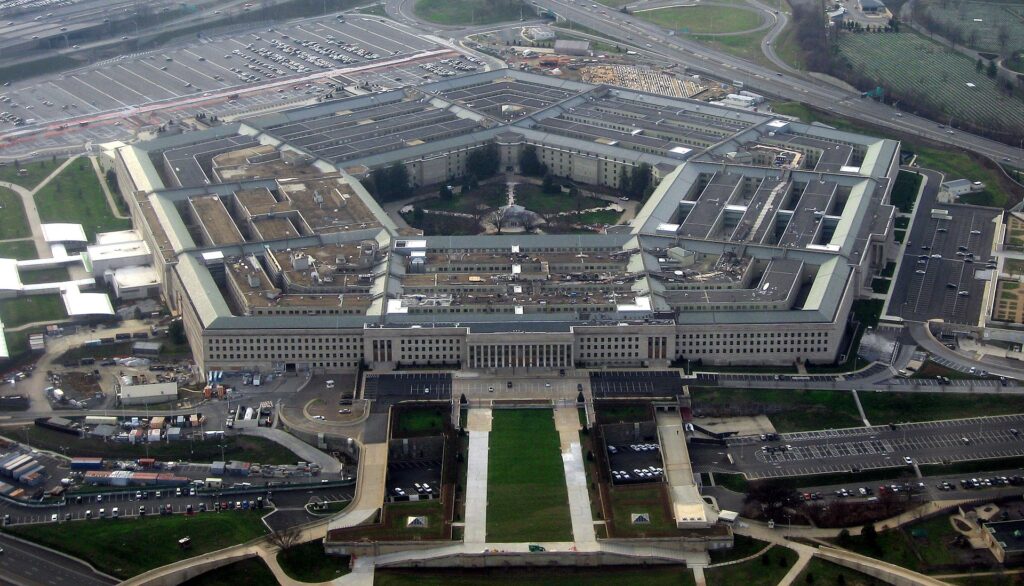
The United States is reorganizing its Security Assistance Group-Ukraine (SAG-U), shifting greater responsibility for coordinating military assistance to European allies while maintaining support for Kyiv, US European Command (USEUCOM) announced on 3 August.
The changes affect the division of responsibilities between SAG-U, US military components, and NATO Security Assistance and Training for Ukraine (NSATU). According to USEUCOM, the reorganization is intended to improve the efficiency of military assistance while transferring leadership of key elements of the mission to allied countries.
Established in November 2022 following Russia's full-scale invasion, the headquarters oversees long-term security assistance for Ukraine, including coordinating equipment deliveries, training Ukrainian forces, and sharing battlefield lessons learned with US and NATO militaries.
USEUCOM said the reorganization "will not impact US support for Ukraine" and would free US resources for other global priorities while recognizing Europe's growing role in supporting Ukraine's defense.
"Allies have shown that they can take the lead in support of Ukraine's defense," USEUCOM commander Gen. Alexus G. Grynkewich said.
"SAG-U was always meant to be a temporary command. Its transition builds on the progress that we have already seen, helping to set conditions for lasting peace in Ukraine."
US Army Europe and Africa spokesperson Col. Michael Weisman similarly said the reorganization "does not diminish our support or commitment to Ukraine" and that Washington would continue coordinating assistance through USEUCOM and NSATU in line with US policy.
The announcement follows reports that the Pentagon plans to hand leadership of SAG-U to another NATO member over the coming year while retaining a US deputy commander, a move reported by Politico.
According to the outlet, the transition forms part of a broader effort by the Trump administration to shift more responsibility for European security onto NATO allies. The administration has previously reduced US leadership roles within NATO's command structure and has repeatedly called on European countries to assume a greater share of the burden for Ukraine's defense and the alliance's collective security.
USEUCOM likewise said the realignment reflects Europe's leading role in supporting Ukraine over the past year.
USEUCOM said SAG-U has distributed more than $2 billion in security assistance over the past three and a half years while coordinating military aid from allied and partner nations.
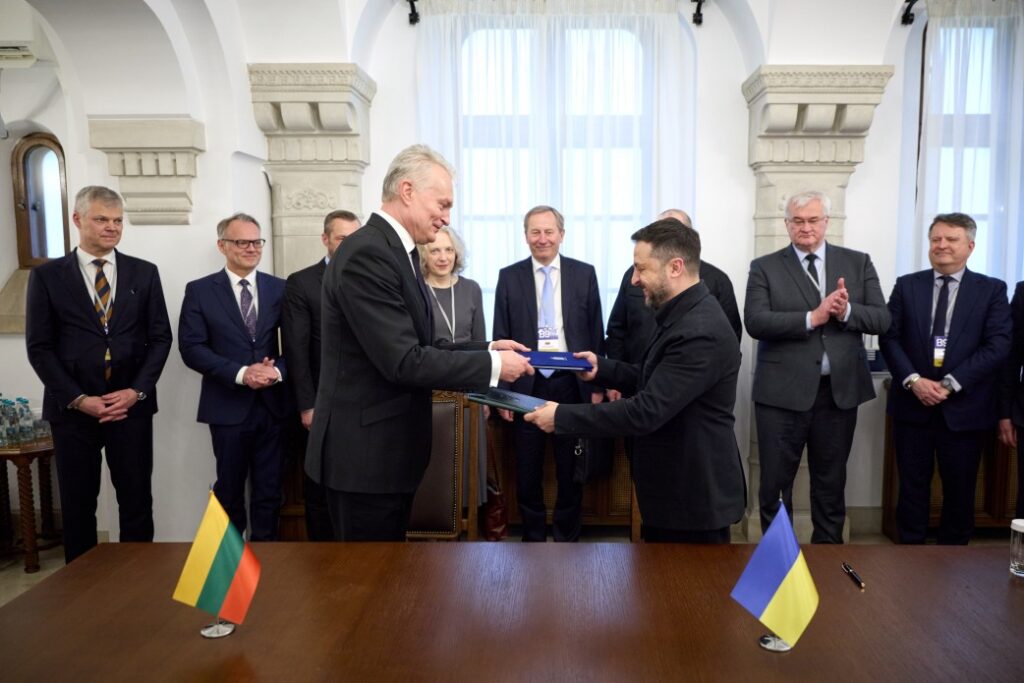
Lithuania plans to establish production of Ukrainian-designed drones on its territory under a bilateral defense industry agreement, expanding Ukraine's manufacturing capacity abroad while strengthening Europe's defense industrial base, according to Lithuanian public broadcaster LRT.
Ukraine has increasingly pursued joint weapons production with allied countries as it seeks to scale up output, attract foreign investment, and build manufacturing capacity beyond the reach of Russian missile and drone attacks.
Lithuanian Defense Minister Robertas Kaunas said the project will be carried out through joint investments under a defense industry cooperation agreement signed by Lithuania and Ukraine in May.
Speaking to the business daily Verslo žinios, Kaunas said his ministry was reorganizing its team to begin implementing what he described as the two countries' "drone deal."
"We have an agreement with Ukraine known as the drone deal. Changes are currently being made within the ministry's team to bring in key personnel who will begin translating that agreement into practical solutions on the ground, so that we can localize Ukrainian drone production in Lithuania," Kaunas said, according to LRT.
He said the drones would be manufactured in Lithuania using Ukrainian technology.
The agreement, signed by Presidents Volodymyr Zelenskyy and Gitanas Nausėda in May, provides for the joint production of four classes of Ukrainian drones – long-range strike drones, naval drones, interceptor drones, and bomber drones – as well as technology transfer and broader cooperation in air defense, missile defense, and unmanned systems.
Kaunas said the initiative would benefit both countries by expanding Ukraine's production capacity while helping Lithuania develop its own defense industry through new manufacturing capabilities, technological advances, and cooperation between Lithuanian and Ukrainian engineers.
For Kyiv, producing weapons abroad has become an increasingly important part of its defense strategy. Manufacturing in partner countries allows Ukrainian companies to expand output, access investment and industrial capacity, build more resilient supply chains, and reduce the risk of disruption from Russian long-range strikes while giving allies access to battlefield-tested Ukrainian technology.
Lithuania was among the first countries to back the initiative, having previously agreed to finance Ukrainian long-range drone production before formalizing the broader partnership this year.
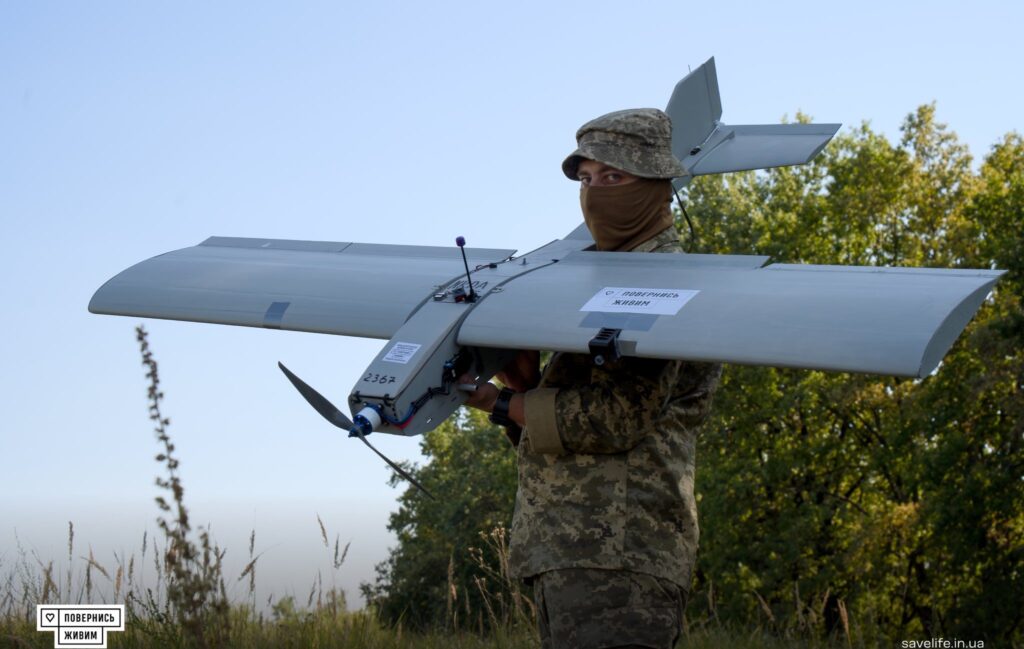
LRT reported that several Ukrainian defense companies have already received approval from Lithuania's national security commission to establish operations in the country, according to Invest Lithuania CEO Elijus Čivilis.
In June, Kaunas also invited Luxembourg-based drone manufacturer Luxuav, founded by Ukrainians, to conduct testing in Lithuania, underscoring the country's growing role as a base for Ukrainian defense technology and manufacturing in Europe.


© Fernando Llano/Associated Press

La plus récente analyse révèle que l'eau du lac présente une trop forte concentration de la bactérie E. coli.


À un mois du coup d’envoi de sa 40e présentation, le Festi Jazz international de Rimouski continue de bonifier sa programmation. L’organisation a dévoilé une nouvelle série d’activités et de spectacles qui s’ajouteront à l’événement, présenté du 3 au 6 septembre dans le cadre de cette édition anniversaire.
Le festival renforcera également sa collaboration avec le Cégep de Rimouski. En plus d’un spectacle de la Ligue d’improvisation présenté le jeudi soir sous le chapiteau, le programme Jazz-Pop du cégep offrira un concert le dimanche matin, mettant en valeur la relève artistique de la région.
Le Grand Prix de la relève Festi Jazz — KSA, Avocats & Notaires réunira, le dimanche, quatre projets émergents. Les festivaliers pourront découvrir Le Buzz, Maude Fortier, Matys Colpron ainsi que Sapa, un projet dirigé par la flûtiste Adèle Levayer.
Le week-end se conclura par deux rendez-vous. D’abord, un 5 à 7 au Brise-Lames mettra en vedette le duo canadien Electrojaziness, qui marie jazz, musique électronique et improvisation.
Le groupe animera également la Place Festi Jazz Vidéotron les vendredi et samedi avec des performances interactives. Les célébrations prendront ensuite fin avec le traditionnel jam musical présenté à la brasserie Le Bien, le Malt.
Parmi les nouveautés de cette 40e édition, l’Académie des arts du feu de Montréal offrira plusieurs prestations spectaculaires sur le site du festival.
Le contrebassiste grec Petros Klampanis sera également de retour dans le cadre des Escales avec un concert intimiste en duo présenté chez Audition Musik.
La série Escales s’enrichira cette année d’une collaboration avec le Festibus, une scène mobile qui accueillera le projet Jazz en balade. L’artiste Isabelle Charlot et ses six musiciens offriront trois représentations à Saint-Valérien, Saint-Marcellin et Saint-Fabien.
Différents commerces et lieux de Rimouski et de La Mitis accueilleront d’autres prestations, notamment au Club Saint-Louis, au Marché public de Rimouski, aux Halles Saint-Germain, à Sainte-Luce et aux Jardins de Métis.
À l’occasion de son 40e anniversaire, le site de la place des Anciens-Combattants profitera d’un aménagement renouvelé. Le site comprendra notamment des espaces de détente, une zone bistro, une aire familiale et plusieurs camions de cuisine de rue.

Les festivaliers pourront également découvrir les bières de la microbrasserie L’Octant, les cocktails de la Distillerie Mitis ainsi qu’une offre alimentaire diversifiée.
En plus des concerts, la programmation comprendra plusieurs activités gratuites destinées aux familles. Maquillage pour enfants, jeux gonflables, ateliers de salsa, séances de yoga en plein air et retour du parcours Cyclomini figurent notamment au programme des matinées du samedi et du dimanche.
Le site accueillera aussi une nouvelle sélection de kiosques d’artisans et d’entreprises locales, en plus de la présence d’organismes communautaires comme le CALACS et L’Arrimage.
Pour souligner cet anniversaire, le Festi Jazz présentera une exposition au Musée régional de Rimouski retraçant quatre décennies d’histoire à l’aide de photographies et d’affiches marquantes. L’exposition sera inaugurée lors d’un 5 à 7 réunissant les bénévoles d’hier et d’aujourd’hui.
Le 40e Festi Jazz international de Rimouski se tiendra du 3 au 6 septembre. Pour l’occasion, une quarantaine d’activités sont prévues dans la programmation qui se veut festive et accessible.
Les festivités s’amorceront officiellement le jeudi 3 septembre, dès 17 h, avec la traditionnelle remise du Héron d’Or. La programmation complète sera accessible sur l’application FEST, en complément du dépliant officiel.

© European Space Agency


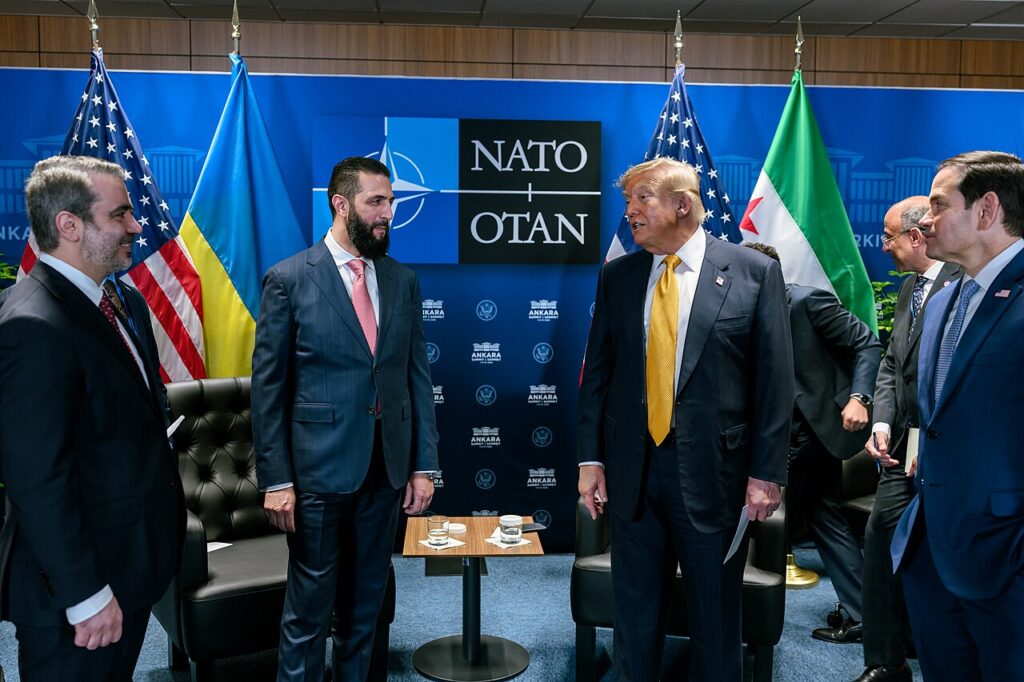
Syria has told the United States it is willing to drastically reduce imports of Russian crude oil as part of discussions over lifting Washington's remaining terrorism-related sanctions on the country, according to three sources familiar with the talks cited by Reuters.
The reported commitment would mark a significant shift for Damascus, which has remained heavily dependent on Russian oil since the fall of Bashar al-Assad despite pursuing closer ties with Western governments.
According to Reuters, senior Syrian officials told US counterparts they were prepared to reduce Russian oil imports during negotiations over removing Syria from the US list of State Sponsors of Terrorism (SST), one of the last major sanctions designations still applied to the country.
US President Donald Trump announced in July that he intends to rescind Syria's designation, which has been in place since 1979, but the move remains subject to a congressional review period before taking effect.
Three sources told Reuters that the United States requested such a reduction and Damascus agreed, although they said Washington did not formally make it a precondition for lifting the designation.
A US State Department official told Reuters that Washington is encouraging Syria to work with "trusted corporate partners," particularly US companies, during the country's reconstruction and expects Damascus to comply with sanctions targeting Russia.
A White House official, meanwhile, said there was no formal link between removing Syria from the terrorism list and reducing Russian oil imports.
Removing the designation would eliminate one of the biggest remaining barriers to Syria's economic reintegration. While many US sanctions have already been lifted, the terrorism designation continues to restrict access to US assistance and complicate foreign investment, banking, and broader commercial ties, making its removal a key priority for Damascus.
Despite improving relations with the West, Syria remains heavily reliant on Russian energy supplies. Reuters reported that Russian crude shipments to Syria have risen by 75% this year to around 60,000 barrels per day, making Moscow the country's dominant oil supplier.
One Syrian source told Reuters that Syrian officials have argued they currently rely on Russian oil out of necessity rather than preference, saying the removal of the terrorism designation would allow Damascus to diversify its energy imports.
A Syrian energy official also told Reuters the government is already searching for alternative suppliers and expects a "radical change" in the country's energy sourcing.
Analysts told Reuters that replacing Russian crude quickly could prove difficult without creating fuel shortages or increasing import costs.
The reported discussions reflect a broader US effort to weaken Russia's remaining economic and strategic influence in Syria following Assad's removal from power.
Reuters noted that Washington has recently placed greater emphasis on reducing Moscow's role in the country, while Congress has directed the Pentagon to examine options for limiting Russia's military presence, including at its naval facility in Tartus and the Hmeimim air base.
The move also mirrors broader efforts to curb demand for Russian energy beyond the European Union. Last month, Georgia's sanctioned Kulevi oil refinery announced it had begun replacing Russian crude with supplies from Kazakhstan and Libya after the EU imposed sanctions over its processing of Russian oil, giving the company six months to complete the transition.