 Connexion
Une cinquième défaite de suite en MLS pour le CF Montréal
19 septembre 2026 à 22:26
Les joueurs de Philippe Eullafroy perdent 2-0 contre le Crew de Columbus au Stade Saputo.



Les joueurs de Philippe Eullafroy perdent 2-0 contre le Crew de Columbus au Stade Saputo.

Le CH a gagné deux matchs en un soir contre les Maple Leafs, dont un gain de 4-3 en prolongation à Montréal.

Elles obtiennent leur billet avant de faire match nul 2-2 contre le FC Rise de Vancouver.

Des centaines de manifestants à Montréal ont exigé que la lutte contre les féminicides soit un enjeu électoral

La Municipalité de Notre-Dame-des-Neiges procédera au dévoilement du monument en hommage à Victor-Lévy Beaulieu, auteur, dramaturge et éditeur résident de Notre-Dame-des-Neiges, le samedi 26 septembre à 14 h devant La Riveraine, au 10, rue de l’Église à Notre-Dame-des-Neiges.
Le monument de bronze et de granit, travail remarquable du sculpteur Jules Lasalle des Ateliers Attitude, sera présenté afin de marquer l’oeuvre et la vie de cet artiste au talent et à l’influence majeure pour la littérature québécoise.
C’est dans le cadre de la Journée de la culture qu’il a été décidé de procéder à son dévoilement. Quelques allocutions sont attendues pour l’occasion.
Considéré comme l’un des plus grands écrivains de l’histoire du Québec, monsieur Beaulieu a amorcé sa carrière littéraire en 1967 en remportant le prix Larousse-Hachette pour un essai sur Victor Hugo.
Depuis « Mémoires d’outre-tonneau » en 1969, il compte 30 romans, une vingtaine d’essais littéraires et 13 pièces de théâtre à son actif.
Victor-Lévy Beaulieu a marqué le milieu de la télévision grâce à ses téléromans Race de monde, L’Héritage, Montréal P.Q et Bouscotte, tous diffusés à Radio-Canada.
Grand défenseur de l’indépendance du Québec, il a aussi fondé les Éditions VLB et les Éditions Trois-Pistoles, où ses œuvres ont remporté une multitude de prix.


La Municipalité de Les Hauteurs travaille depuis quelques années pour le développement de ses infrastructures de loisirs afin de permettre le développement de son tissu social.
« Dans les dernières années, nous avons notamment construit un parcours d’hébertisme, un terrain de volleyball de plage, un terrain de soccer, une patinoire, une piste à rouleaux et aménagé une scène extérieure. Une scène intérieure était donc la suite logique », indique le directeur-général adjoint et greffier de la Municipalité, Charles Gasse-Gagné.
Rappelons que la MRC de La Mitis a récemment confirmé une aide financière de 33 424 $ permettra à la municipalité de Les Hauteurs d’acquérir une scène intérieure modulable, des chaises et de l’équipements de rangement afin de bonifier l’offre d’activités communautaires, culturelles et intergénérationnelle.
« Nous avons un enjeu lié à l’espace puisque notre salle municipale est aussi le gymnase de l’école. La scène modulaire est donc une alternative idéale dans notre situation. Nous prévoyons réaliser le projet durant l’automne. Cette réalisation s’inscrit dans une volonté de développer notre municipalité via entre autres des infrastructures de loisirs », précise monsieur Gasse-Gagné.
Les Hauteurs souhaite que la scène facilitera la présence d’événements organisés soit par la municipalité, l’école, ou les nombreux organismes du village.
« Il y a tellement de divisions et de tensions partout dans le monde qu’on pense qu’il est important de se donner les moyens de se rencontrer, de se parler, de festoyer et de créer du commun », précise Charles monsieur Gasse-Gagné.
L’aide financière provient du Fonds région et ruralité volet 3 pour faire l’acquisition d’une scène intérieure modulable de 24 pieds sur 12 pieds, de 200 chaises pliantes ainsi que d’équipements de rangement.
Le projet est porté par la Municipalité de Les Hauteurs, en collaboration avec le Comité des loisirs, qui est à l’origine de l’idée.



Health authorities work to notify people who were exposed to person who traveled through at least six counties
California public health officials are warning of a possible measles exposure spanning multiple counties after an infected and unvaccinated passenger traveled through the state via Amtrak trains and thruway buses.
The warning comes as the US faces its largest measles resurgence in more than three decades, fueled largely by growing vaccine hesitancy.
Continue reading...
© Photograph: efired/Getty Images

© Photograph: efired/Getty Images

© Photograph: efired/Getty Images
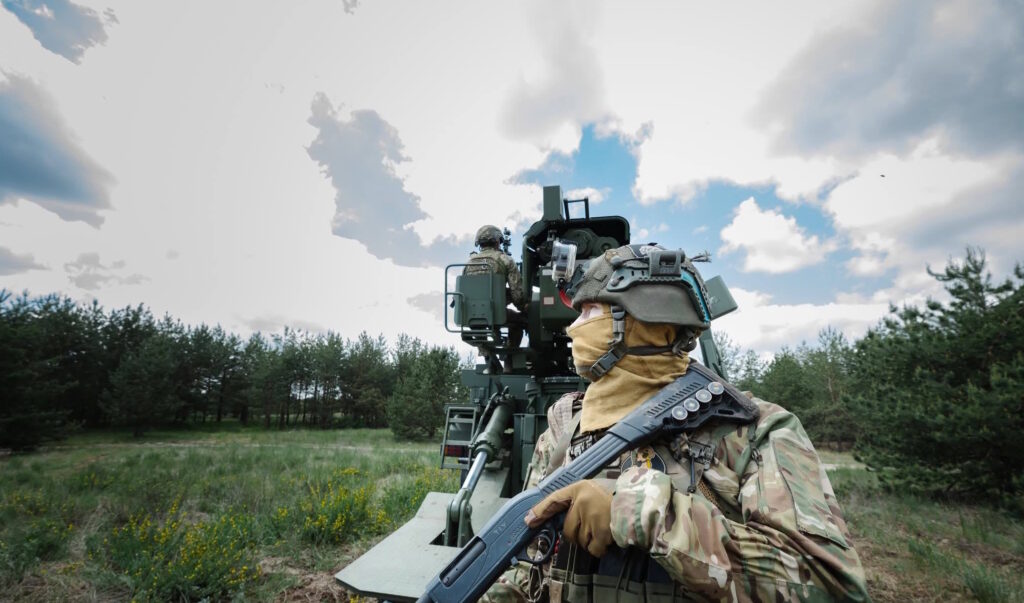
Ukrainian engineers near the front rewrite their drones' software every couple of days. A NATO army needs about six months to push the same update. That gap in speed is the central challenge for the Western trainers working with Ukrainian troops in Poland, who say Ukraine's wartime tempo is exposing how slowly the West moves in peacetime, the Business Insider reports.
Russia's war forces the Ukrainian Army to buy, train, and adapt at a pace peacetime armies are not built for, and its experience is pushing NATO to confront how much its own bureaucracy slows it down.
The alliance has studied that experience without yet fully absorbing it: in an Estonian war game last winter, a ten-person Ukrainian drone team wiped out two NATO battalions in a day.
Now NATO Secretary General Mark Rutte is calling for a large-scale transformation of the West's defense industry so its armies can react faster.
Two speeds meet in Poland
The place where those speeds collided was Camp Jomsborg, a base Norway built in an eastern Polish forest in a matter of months. There, under an operation called Legio, trainers from across northern Europe drill Ukrainian soldiers while the Ukrainians hand their front-line lessons back to NATO.
The camp sits, as its operations officer, a major identified only as John, put it, at "the mental and geographical middle point between war in the east and peacetime mechanism in the West."
A drone update tells the story
Brigadier General Atle Molde, who commands the task force, put the gap in numbers. If a Western drone needs new software, he said, "you have to send it to a Western country or a company, and an update takes six months."
In Ukraine, "they have the engineers sitting close to the front updating every two days, every two weeks, developing software, adapting it to genuine situations."
Molde said he wants to see greater initiative in innovation within Western armies, but to achieve that, "it has to be some major changes that have to be done on all levels when it comes to legislation."
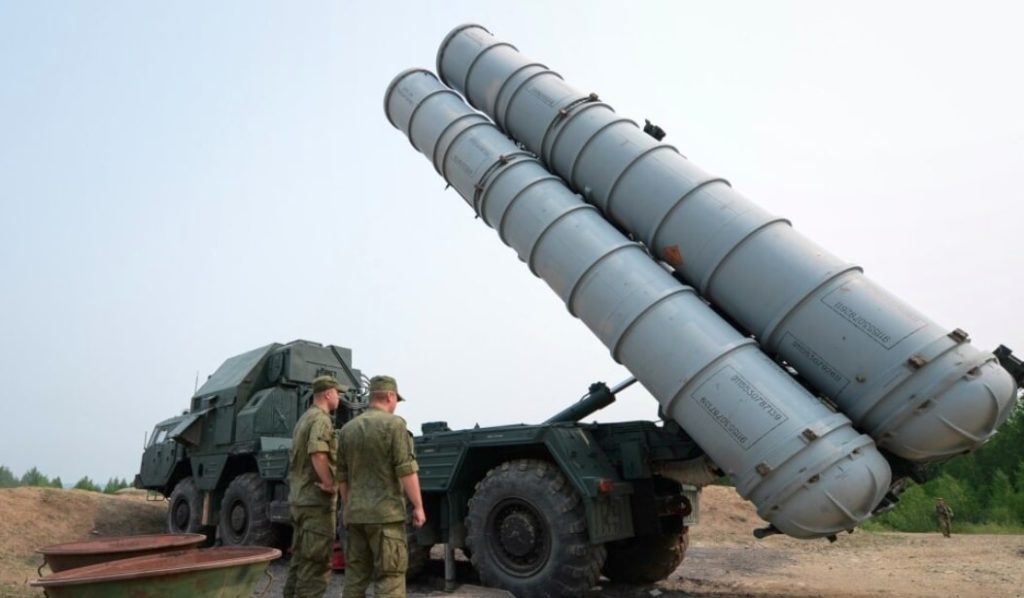
The US is preparing to sell Ukraine something unusual: American-made missiles for its Soviet S-300 air-defense systems. The missiles, labeled "S-300 Clone" in the paperwork, are part of a $2.68 billion package that the State Department approved on 18 September, financed by European partners and unused US military aid, Defense Express reports.
Ukraine has plenty of Soviet-era S-300 launchers but not the missiles to feed them. Russia will not sell more, and an earlier Ukrainian attempt to build its own went nowhere, according to Defense Mirror.
Not a Soviet 5V55 replica
At the same time, the missile itself is not actually a "clone" or replica of the Soviet 5V55. According to Defense Express's own information, this is a new development with enhanced characteristics and a different, more modern targeting guidance principle.
At the same time, the American side did not disclose the index, characteristics, or manufacturer of the missiles mentioned in the State Department's statement.
In September 2024, then-US Defense Secretary Lloyd Austin announced at the Ramstein contact group that Washington, in partnership with several European companies, was working with Ukraine to "design and build a substitute" for the Soviet S-300 and the R-27 air-to-air missile used by fighter jets, Newsweek reports. He never spelled out what that substitute would be.
Anti-radar missile project from the 1950s
The package will also include GAM-67. As for the GAM-67, despite the existence of an unrealized American anti-radar missile project from the 1950s, this is also a new development. It is intended for medium-range systems, both existing ones, including Soviet ones, and future ones.
The package also provides for modernization and maintenance: spare parts, consumables, and accessories, support during repair and return, software, transportation support, engineering, technical, and logistical services from the US government and contractors, and other related elements of logistical and program support.


Centraide Bas-Saint-Laurent a donné le coup d’envoi de sa campagne annuelle 2026, ce vendredi, au parc de la Gare à Rimouski. Pour l’occasion, partenaires, organismes communautaires et membres de la communauté ont été invités à vivre une expérience mettant en lumière une réalité simple : nous ne partons pas tous du même point dans la vie.
Santé, logement, revenus, famille, réseau de soutien : une partie du parcours de la population est influencée par des circonstances qu’ils ne choisissent pas.
L’an dernier, Centraide Bas-Saint-Laurent a établi un record de 1 392 984$ pour sa campagne de souscriptions annuelle au profit de ses 50 organismes partenaires dans la région.
À travers un jeu de société créé spécialement pour l’occasion, les personnes participantes ont été confrontées à des situations inspirées de réalités vécues dans la région. Certaines facilitaient leur parcours.
D’autres les plaçaient devant un imprévu, un obstacle ou une situation sur laquelle elles avaient bien peu de contrôle.
« Nous aimons penser que notre parcours dépend de nos choix et de nos efforts. Ils comptent, bien sûr. Mais nous n’avons pas tous les mêmes possibilités au départ et personne n’est à l’abri d’un imprévu. C’est là que l’entraide prend tout son sens : elle permet de ne pas avoir à traverser seul les moments plus difficiles », explique Akotchayé Lawin-Ore, directeur régional et développement philanthropique.

Des représentantes et représentants d’organismes soutenus par Centraide étaient également présents aux différentes tables pour mettre en perspective les situations rencontrées pendant le jeu et témoigner des réalités qu’ils côtoient chaque jour dans le Bas-Saint-Laurent.

A soldier of Artan, a special unit of Ukraine's Defense Intelligence, known by the callsign Derun, described the fighting during important Ukraine's Operation Vivaldi, according to Novyny.Live. He says the hardest part of Ukraine's counteroffensive in the northern part of Donetsk Oblast is prying Russian troops out of positions they have fortified so well that they see every approach coming.
Vivaldi is bigger than any one assault. It is the counteroffensive that the Third Army Corps is running near Lyman. The Institute for the Study of War says it has disrupted Russia's plan to encircle the fortified "Fortress Belt" of Donetsk cities, as the corps says its first phase cleared 75 square kilometers of Russian infiltrators and de-occupied another 10.
Dug-in Russians see every approach
The problem is Russia's preparation, when "the enemy has made his positions very well fortified," Derun said.
"The hardest is to knock him out of there, because when a position is competently prepared, they see everything," he explained.
A well-sited position lets the defenders watch the open ground an assault group has to cross, spot the attackers early, and fight them at a distance, which is the worst way for the attacker to come.
A lapse opens the way in
When Russian troops stop watching the approaches to their position, the assault group can close the gap unseen, Derun said.
"When Russian troops are distracted, it can play into our hands: we can approach under cover, when he does not see us, and work him from close range," he added.
Once the attackers are in close, he added, the defenders can start to panic and make mistakes.
Vivaldi runs to four seasons
Artan fought as part of a larger force. Alongside the Third Army Corps' own brigades, the operation drew in Ukraine's Special Operations Forces, the border guard, and the military-intelligence unit, all under a single tactical command, and it ran for months under an information blackout before the corps disclosed it.
The corps commander, Andrii Biletskyi, said the phase revealed so far is only the first of four, naming the operation for Vivaldi's Four Seasons.
"This is only the first," he said, promising more.


The report highlights deep divides between low- and middle- income, a disparity that dates back decades
A new report from the Centers for Disease Control and Prevention (CDC) reaffirms that adults are more likely to eat fresh fruits and vegetables as their income increases.
The data brief comes as Republican cuts to food assistance programs, colloquially called “food stamps”, have led enrollment to “plummet”. Changes to US dietary guidelines, led by health secretary Robert F Kennedy Jr, have also made a government-recommended diet more expensive. A new “food pyramid” released in January emphasized animal protein, fresh fruit and vegetables, all of which cost more, according to studies.
Continue reading...
© Photograph: StockSeller_ukr/Getty Images

© Photograph: StockSeller_ukr/Getty Images

© Photograph: StockSeller_ukr/Getty Images

© Mads Claus Rasmussen/Ritzau Scanpix, via Associated Press

Officials lack data on miscarriages after October 2025. Detained women aren’t getting the prenatal healthcare they need
Maga men have babies on the brain. They may not all be interested in changing diapers or hands-on parenting, but they’re very keen on population growth. “[W]e want more babies, to put it very nicely,” Donald Trump said last year.
Trump, who has called himself the “father of IVF” and joked that he will be known as the “fertilization president”, surrounds himself with people who profess a similar fondness for children. Only a few days after being sworn in as vice-president, JD Vance declared he wanted “more babies in the United States of America” and went on to make pronatalist policies a theme of his time in office.
Arwa Mahdawi is a Guardian columnist
Continue reading...
© Photograph: Alamy

© Photograph: Alamy

© Photograph: Alamy

© Sigga Ella for The New York Times

Welcome back to the Abstract! These are the studies this week that ate well, moved mountains, grew brains, and saved medieval texts.
First, scientists set out to understand why Venus doesn’t have a moon and discover even more unnerving stuff about this delightfully nightmarish planet. Then: a hidden range of primordial supermountains, a literal brain-space, and evidence of Tudor-era subterfuge.
As always, for more of my work, check out my book First Contact: The Story of Our Obsession with Aliens, or subscribe to my personal newsletter the BeX Files.
Venus is a bizarro world with a year that is shorter than its day, a surface shaped by diabolical heat and pressure, and skies soaked in sulfuric acid. Frankly, this planet is metal enough as it is, but scientists have now suggested that Venus is also a moon-eater.
For years, researchers have pondered why Venus lacks a moon, in contrast to all other planets except Mercury. One possibility is that Venus was once orbited by a primordial satellite that it ultimately tore apart and swallowed, according to a new study. And honestly, that sounds like something Venus would do. It’s in character.

To reach this conclusion, scientists ran simulations of Venusian moons ranging from half to ten times as massive as Earth’s Moon. Because Venus has a very slow rotation rate equal to 243 Earth days, most of the modeled satellites were drawn inward, ultimately crashing into Venus. Earth’s fast rotation rate, in contrast, has pushed the Moon to recede farther from our world, at a rate of about 1.5 inches each year.
“The absence of a Venusian satellite can be understood as a natural consequence of tidal evolution alone,” said researchers led by Stephen Kane of the University of California, Riverside. The researchers added that the obliteration of a past moon around Venus may offer one reason why the planet became so aggressively inhospitable, while Earth evolved into a comfy haven for life.
“The fate of a Venus moon carries direct implications for early Venus habitability,” the team said. “The eventual destruction of the moon…would deliver a massive energy pulse to the Venusian surface and atmosphere, with potential implications for the loss of surface water and the onset of a runaway greenhouse state.”
It’s possible that NASA’s DAVINCI orbiter, which is due for launch to Venus in 2029, could search for the chemical signatures of an ancient obliterated moon, according to the study. In the meantime, my takeaway is that Majora’s Mask is based on a true Venusian story.
In other news…
Shout out to my fellow Gondwana-heads! Just a week after a study came out minting Gondwana as a bonafide “supercontinent,” another work has probedthe remnants of Himalaya-scale “Gondwana supermountains” buried deep under Antarctica’s ice sheet.
Both studies argue that the geological upheaval associated with Gondwana’s formation directly led to the Cambrian “explosion” of complex life that began about 538 million years ago. But the new study focuses on the role of Gondwana’s colossal mountain range and the massive submarine “fan” system underneath it.

“It is unlikely to be a coincidence that Earth’s most dramatic period of evolution correlates with the planet’s most important period of mountain building: the formation and erosion of the Gondwana Supermountains,” said authors Bei Chen and Ian H. Campbell of the Australian National University.
By studying 1,700 zircons—hardy minerals that can be used to reconstruct continental timelines—the researchers found a disproportionate spike in Antarctic zircons dating from 650 and 450 million years ago, consistent with the formation of Gondwana. The supermountains and their underlying fan systems provided the necessary nutrients for the meteoric rise of animals and other complex life in the Cambrian period, according to the study.
“Analyses of detrital zircons from Antarctica show that its tectonics were dominated by Himalayan-style mountains, the roots of which now underlie the ice sheet,” the team concluded.
Gondwana broke apart during the age of dinosaurs, but as these studies show, its body parts live on, scattered under ice and dispersed across new continents. This has been Gondwana News.
Konstantin Kaganovsky, Kevin W. Kelley, Tilo Gschwind, Paul M. Harary et al.
“Developmental xenocortication using human-derived organoids in mice.” Nature.
It is notoriously challenging to study human brain tissue in vivo on both practical and ethical levels. It’s not as if you can just cut open someone’s noggin and rummage around in there like you’re Victor Frankenstein.
But scientists have now discovered a promising workaround by transplanting human brain “organoids”—lab-grown structures based on human stem cells—into the heads of mice that have been engineered to have open space in their brains instead of a cortex. Scientists who developed this new experimental technique of “xenocortication” report that the human organoids grew to occupy the cavities in the rodents’ heads, and showed analogous development to real brain tissues.
The xenocortical (abbreviated XCX, no relation to Charli) mice seemed to behave more or less normally, despite having millions of human-derived neurons in their heads.

“We envision that xenocortication will be useful for obtaining circuit- and behaviour-level readouts using human neurons to study neurodevelopment, model disease and develop therapeutics,” said researchers co-led by Konstantin Kaganovsky, Kevin W. Kelley, Tilo Gschwind, and Paul M. Harary of Stanford University.
“Generating XCX mice with more mature and canonical cortical organization will require early and proactive engagement to establish ethical guidance,” the team emphasized.
Talk about living rent-free in someone else’s head.
King Henry VIII, the English monarch notorious for disposing of wives and Catholic hegemony, relied on the courtier Sir John Gage to dissolve and plunder monasteries during his consequential reign.
But the discovery of long-lost pages that were once possessed by Gage reveals that this royal ally may have saved an outlawed manuscript from destruction, hinting at a dangerous act of subterfuge.

Katie Walter of the University of Sussex and James Wade of Girton College, Cambridge identified a six-page fragment of a popular medieval text that had been misplaced within Gage’s belongings. The fragment came from Nicholas Love’s Mirror of the Blessed Life of Jesus Christ, which was popular in the 15th century, but had fallen out of favor by Henry VIII’s reign. It seems that Gage nonetheless saved a copy, despite orders to destroy such texts.
“One consequence of this puzzle is that the fragment, hereafter referred to as The Keep fragment, has gone undescribed,” said Walter and Wade in their new study. “John Gage possibly acquired the book at the time of the dissolution of the monasteries” and it later became “hidden in plain sight” in his belongings.
And Gage would have gotten away with it too, if it weren’t for those meddling historians!
Thanks for reading! See you next week.

© Jacques Boissinot/The Canadian Press

© Luis Antonio Rojas for The New York Times


© Sydney O'Meara/Evening Standard, via Hulton Archive, via Getty Images

La Sherbrookoise de 25 ans est devenue la première Canadienne sacrée championne du monde l'an passé, à Kigali.
/2026/09/18/6aad3beebf64f229669512.jpg)

Demonstrators gather after president spotted holding placard that read: ‘Kennedy Center DEMOLIS ...’
On Friday evening thousands of protesters gathered outside the Kennedy Center in view of the marble facade that remained concealed by scaffolding and tarpaulins, to protest Donald Trump’s plans for the facility and express alarm that he might make good on his threat to tear down the institution.
Crowding streets in the Foggy Bottom area of Washington and locking down traffic as they walked, many carried signs, as they joined in the “Hands Around the Kennedy Center” protest. Some wore costumes and booed when the president was mentioned during the program.
Continue reading...
© Photograph: Zoraida Diaz/ZUMA Press Wire/Shutterstock

© Photograph: Zoraida Diaz/ZUMA Press Wire/Shutterstock

© Photograph: Zoraida Diaz/ZUMA Press Wire/Shutterstock

Le Belge tentera dimanche d’écrire l’histoire en remportant un quatrième titre de suite au contre-la-montre.

The FBI says Daejon Love and his alleged accomplice, Taylor Chan, defrauded women they met on dating apps out of $1.3m
At least 35 additional women have come forward with fraud allegations against Daejon Love, the man accused last month of masquerading as a San Francisco 49ers player and wealthy investor, the FBI announced on Friday. Federal authorities had previously said Love conned more than two dozen women, many of whom he met on dating apps, out of $1.3m.
Love, 35, and alleged accomplice Taylor Chan, 18, who posed as his financial adviser, were arrested in August and have been charged with wire fraud.
Continue reading...
© Photograph: ZUMA Press, Inc./Alamy Stock Photo/Alamy Live News.

© Photograph: ZUMA Press, Inc./Alamy Stock Photo/Alamy Live News.

© Photograph: ZUMA Press, Inc./Alamy Stock Photo/Alamy Live News.



The agreement would allow the US to expand its military presence, while Denmark and Greenland say it preserves their sovereignty and right to self-determination
Donald Trump announced on Friday that the US had struck an Arctic security pact with the leaders of Denmark and Greenland, after threatening for much of his second term to annex the semi-autonomous Danish territory by force.
The full scope of the deal Trump described as “very important, historic, and special” was not immediately clear. But soon after his announcement in a post on Truth Social, the leaders of Denmark and Greenland issued statements indicating the deal would be signed by the three governments on the sidelines of the United Nations general assembly in New York City next week.
Continue reading...
© Photograph: Joe Raedle/Getty Images

© Photograph: Joe Raedle/Getty Images

© Photograph: Joe Raedle/Getty Images

© Matthew Jacobs/Agence France-Presse — Getty Images


© Haiyun Jiang/The New York Times

Il y a eu plusieurs chicanes dans l’histoire de Trois-Pistoles, mais la plus célèbre et la plus significative, selon Rino Bélanger, président de la Société d’histoire et généalogie de Trois-Pistoles, est celle des églises.


 |
“A warning to companies that remain”: Russia takes control of Nestlé and Auchan’s assets – companies that stayed in Russia following the full-scale invasion of Ukraine. The companies had been warned that remaining in Russia could expose their investments to seizure as the Kremlin increasingly uses foreign-owned businesses as leverage. B4Ukraine says companies should leave while they still can. |
 |
“I can travel back to Finland and be safe. That is a luxury”: Sanna Marin on the Russian strike that stopped her train from Kyiv. The former Finnish prime minister has visited Ukraine around ten times since the full-scale invasion. This trip, she says, had more air-raid alarms than any of them, and a Russian drone hit the train travelling beside hers to the Polish border. |
Russia is using inaccurate missiles that can miss by hundreds of meters to attack Ukrainian cities — and plans to scale them up. Russia is increasingly using RM48U missiles originally designed as air-defense training targets to attack Ukraine. Their large margin of error makes them especially dangerous when fired at Ukrainian cities, where they can strike civilian areas far from any intended targets.
One machine handles 52% of a Russian oil plant—Ukrainian drones just hit it. Satellite images show Ukrainian FP-1 drones hit the crude unit that handles 52% of Russia's TANECO refinery, 1,200 km from Ukraine.
Drones hit Rostov-on-Don for the second straight night—OSINT monitors say the military airbase was likely the target again. The local authorities confirmed more than 50 drones downed overnight but said nothing about the airfield where Ukraine reportedly destroyed three aircraft and three helicopters the previous night.
Ukraine's snipers didn't vanish in the drone war—their job changed beyond recognition. Up to 154 pounds on their backs, weeks at one position, a thermal scope always running—modern sniping is far more watching than shooting.
Russia was sure the terrain made this village impossible to take—Ukraine walked in anyway. Days of reconnaissance, drone strikes, and artillery went into the 66th Brigade's push on Serednie. When the village fell, Russian channels called the liberation footage an AI fake.
Russian e-commerce will lose $4.8 billion to the drone campaign against its warehouses, analysts estimate. Analysts cut a whole year's growth forecast for Russian online retail by a fifth, and blamed the strikes alone.
Russia kills captain of Tanzanian-flagged ship in latest attack on civilian shipping in Black Sea. Russia has repeatedly attacked civilian shipping around Ukraine's Black Sea ports, putting international crews and maritime trade at risk.
No missiles intercepted again: Russia strikes Kyiv water infrastructure amid warnings of harsher winter attacks. Russia also struck residential areas in Odesa and Zaporizhzhia, injuring civilians and damaging homes and other civilian infrastructure.
Ukraine strikes two Russian S-400 launchers in Bryansk. The same systems were used to attack Kyiv overnight. Ukraine is increasingly targeting systems Russia uses to launch missiles at its cities as Kyiv faces shortages of high-end interceptors.
A fifth of Russian refining sits idle, and the sector's earnings still grew. The money is being made on prices and state compensation rather than on the volumes the front line actually needs.
One pincer stalled a year ago, the other has just been broken near Kostiantynivka—Russia's ring will not close, Ukrainian commander says. Frontal assaults on fortified cities cost far more men and time than closing a ring behind them would have.
Russia paid a recruit to vandalize London mosques and make it look like a homegrown hate crime. A Ukrainian man has pleaded guilty to the attacks. Direct Action UK, a fake British far-right group, then circulated images of the graffiti.
Stop arming Ukraine or we shut down your defense firms, pro-Kremlin group tells Latvia, Poland, and Portugal. Latvia's security service has opened a terrorism case and jailed one suspect, with the group's deadline set for 7 October.
Ukraine kept this strike drone secret for two years—its maker says it has destroyed more than 350 Russian systems. Ukraine's RAM-2X had been hunting Russian air defense systems and ballistic missile launchers, and the silence ended only when wrecked drones reached Russian hands.
Russia plans "accidental" drone strikes on NATO countries, Tusk says. Tusk said the tactic could be used to test whether NATO would act if an attack on one of its members could be presented as a mistake.
EU pledges €3.3 billion for Ukraine, von der Leyen says "more is coming" as Russia's escalating air war makes life in Ukrainian cities increasingly difficult. The new funding comes as Ukraine appeals for more air defense to counter increasingly complex Russian attacks, including advanced missile and drone strikes on Kyiv.
Belarus holds military drills around the Suwalki Gap, NATO's only land link to the Baltics. Minsk says troops are guarding infrastructure, manning checkpoints, and practicing against saboteurs and drones. It has not disclosed the total number of personnel involved.
Poland to provide Ukraine with scarce F-16 missiles to shoot down jet-powered drones — "What Ukraine needs right now." The aid package will also include aviation equipment, Poland's deputy defense minister says.
Fire temporarily shuts part of Slovak ammunition plant amid plans to triple capacity. The company operating the factory plans to triple its annual capacity of roughly 100,000 shell bodies and holds a seven-year agreement to supply EU states.
The EU has billions in unspent defense funds. It wants to use them for projects with Ukraine. The plan could bring more Ukrainian defense companies into Europe's growing defense industry.
Thousands are starving in occupied Oleshky. People have no food, no way out, and Russian forces bomb incoming aid. More than 6,000 people, including around 200 children, may remain trapped in the Russian-occupied city, where civilians lack food, water and medicine and some are risking mined fields to escape.
Russia's war has devastated Donetsk Oblast, with losses already exceeding $26 billion. The preliminary estimate covers destroyed industry, energy infrastructure, agriculture, transport, and other sectors, while much of the damage remains impossible to assess.
Ukraine receives 252 bodies as repatriation remains one of the few functioning channels with Russia. The repatriation of bodies gives families of missing Ukrainians a chance to identify their loved ones and finally bury them.
From the frontline to a rehab center: a rescued dog from Pokrovsk now helps wounded Ukrainians on the other side of the country. A rescued puppy from Pokrovsk now has an unusual volunteer role: visiting wounded Ukrainians at a rehabilitation center in Lviv.
Kyiv's arms industry wants to kill the export fee. Parliament just refused to route that money to the army. Ukraine's arms makers want the 20-30% export fee scrapped as Europe's defense market opens—while parliament won't route the cash to the army.
The US House just passed the first major Russia oil sanctions in two years—one signature stands between them and law. Named for the late Senator Lindsey Graham, it clears the way for tariffs of up to 100% on China, India, and the other top buyers of Russian energy.
Read our previous daily review here.


Un documentaire coréalisé avec Kim O’Bomsawin célèbre la mémoire innue et la guérison par la nature.
