Vue normale

  • ✇Euromaidan Press
  • Ukrainian combat divers destroyed Russian bomber at Crimea’s Saky airbase as it prepared to strike
    Ukrainian special forces from the National Guard's "Omega" Center destroyed a Russian Su-24M frontline bomber in occupied Crimea, the National Guard announced on 17 July. The unit said the aircraft was preparing for a combat mission against Ukrainian territory when its drones struck. The first drone hit the Su-24M's nose section, the second struck the fuel tanks, destroying the aircraft, according to the Omega unit's account. There was no independent confirmation of the str
     

Ukrainian combat divers destroyed Russian bomber at Crimea’s Saky airbase as it prepared to strike
17 juillet 2026 à 09:23

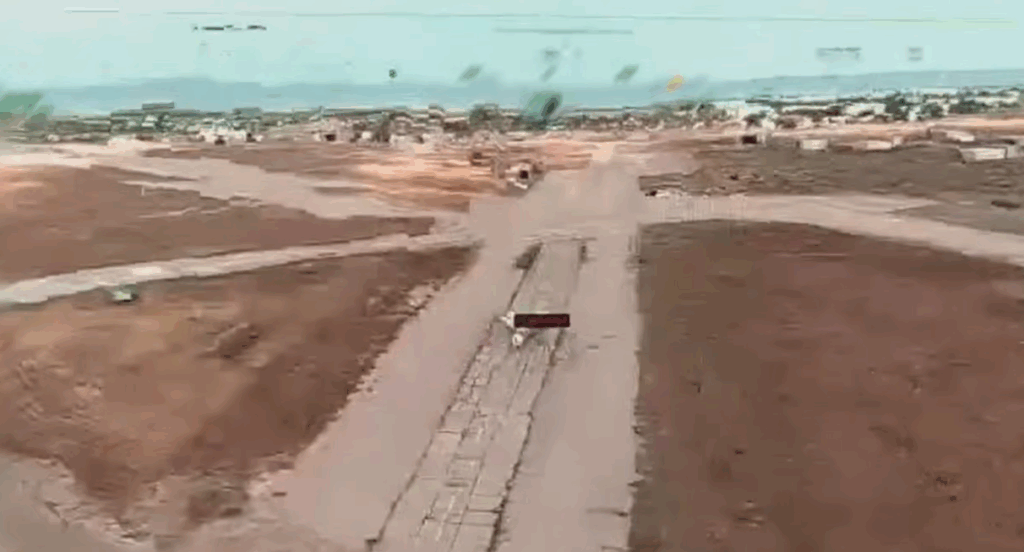
Strike on a Su-24M in occupied Crimea. Video frame

Ukrainian special forces from the National Guard's "Omega" Center destroyed a Russian Su-24M frontline bomber in occupied Crimea, the National Guard announced on 17 July. The unit said the aircraft was preparing for a combat mission against Ukrainian territory when its drones struck.

The first drone hit the Su-24M's nose section, the second struck the fuel tanks, destroying the aircraft, according to the Omega unit's account. There was no independent confirmation of the strike, and Russian officials had not commented on damage at Saky by the time the unit posted its claim.

The claimed strike fits a broader Ukrainian effort to make Russian air operations from occupied Crimea increasingly costly. Repeated drone attacks on Saky have forced Moscow to defend rear airbases once considered beyond Ukraine's reach while risking aircraft used in strikes on southern Ukraine.

Combat divers, now flying drones 200 kilometers deep

The detail that distinguishes the operation is the unit behind it. Omega is the National Guard's special-purpose center, and the strike was carried out by its combat divers—naval special operators—using strike drones against a target deep in occupied territory.

Наші спецпризначенці ЦСП «Омега» знищили російський бомбардувальник Су-24М на військовому аеродромі «Саки» у тимчасово окупованому Криму. pic.twitter.com/qDqYUgLw9z

— Олександр Півненко (@Pivnenko_NGU) July 17, 2026

Ukraine's National Guard has increasingly fielded long-range strike drones through its assault corps, including the "Azov" and "Khartiia" Corps, which the command says now operate at ranges exceeding 100 kilometers against Russian logistics, ammunition depots, command posts, air defenses, and aircrafts

Saky's month under fire

The strike is the latest in a sustained campaign against Saky, one of Russia's main aviation hubs in occupied Crimea, from which aircraft launch missile and guided-bomb attacks on southern Ukraine. Ukraine's Security Service struck the airfield on 24 June, again on 3 July, when it reported at least seven aircraft destroyed or damaged. Saky hosts Su-24 tactical bombers and Su-30SM fighters and lies roughly 200 kilometers from the nearest Ukrainian-controlled territory.

Each Su-24M strike removes an aircraft Russia uses to bomb southern Ukraine—and forces Moscow to divert more resources to defending its rear airbases against a threat that now comes from multiple Ukrainian services, using cheap drones, at growing depth.

  • ✇Euromaidan Press
  • Baltic nation boosts security at dam, gas storage facility due to Russian threat
    Latvia has hardened security at key energy and water sites after intelligence flagged a Russian threat, Reuters reported. Its prime minister has asked NATO for more troops and air defense, warned of election meddling, and rebuked the European governments still shielding Russian gas. Away from the front line in Ukraine, the Baltic states bordering Russia have spent the war bracing against a gray-zone campaign of sabotage, arson, and drone incursions aimed at the infrastructu
     

Baltic nation boosts security at dam, gas storage facility due to Russian threat

17 juillet 2026 à 04:18

baltic nation boosts security dam gas storage facility due russian threat · post andris kulbergs 2023 ukraine news ukrainian reports

Latvia has hardened security at key energy and water sites after intelligence flagged a Russian threat, Reuters reported. Its prime minister has asked NATO for more troops and air defense, warned of election meddling, and rebuked the European governments still shielding Russian gas.

Away from the front line in Ukraine, the Baltic states bordering Russia have spent the war bracing against a gray-zone campaign of sabotage, arson, and drone incursions aimed at the infrastructure and politics of NATO's eastern edge.

Guarding the dam and the gas

Prime Minister Andris Kulbergs told Reuters that the country had raised its guard. He named a hydroelectric station above the capital and a large underground gas store. Asked to be specific, he pointed to the Incukalns gas facility, the wider energy sector and its companies, and the dam.

Leaders in Latvia, Lithuania, and Poland have sounded the same alarm. Western intelligence agencies, they say, see Moscow readying provocations and strikes on regional infrastructure.

Undersea cables in the Baltic have already been damaged in suspected sabotage around the New Year. Russia recently closed seven rail crossings on its NATO borders without explanation. The Kremlin has brushed the warnings aside, calling them "scare stories."

Kulbergs cast the danger as growing. With Russia stalled in Ukraine, he said, its leaders want "a quick win, so the potential hybrid threat is larger than before." He added: 

"Anything is possible."

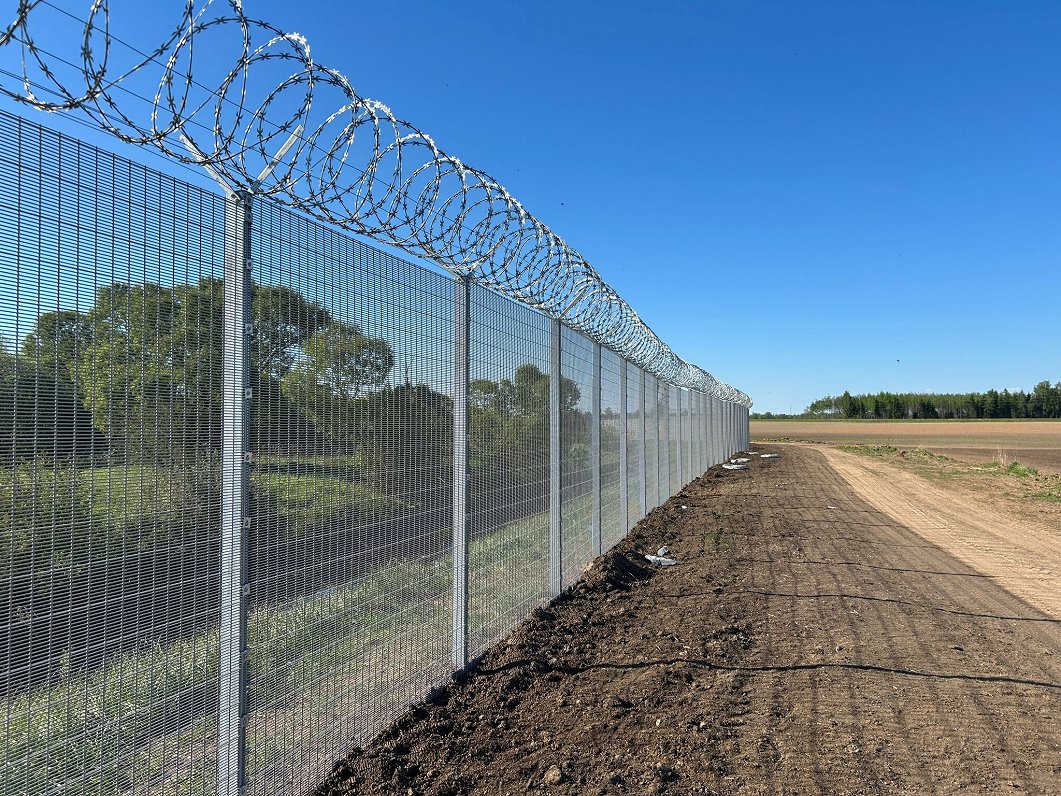
latvia logs 111 straight days migrants pushed across belarus—and blames its support ukraine · post fence along latvia's border belarus vnī lsm žogs uz latvijas robežas news ukrainian reports
Explore further

Latvia logs 111 straight days of migrants pushed across from Belarus—and blames its support for Ukraine

An election under threat

Latvia, a NATO and EU member that borders Russia, ranks among Kyiv's firmest backers and Moscow's sharpest critics. That standing places it among Moscow's likeliest targets before an October national election.

His government is bracing for possible Russian meddling in the vote. Moscow denies the election-interference charges that Western capitals level at it. It has separately accused Latvia of opening air corridors for Ukrainian drones, showing no evidence.

Kulbergs turned his fire on the EU governments blocking the bloc's 21st sanctions package, singling out Bulgaria. One holdout is enough to keep the whole package stalled. The measures would sanction 250 people and entities and tighten the screws on Russian LNG.

Vetoing parts of it, he argued, carries a share of the blame for dead Ukrainian soldiers and civilians. Failing to move on Moscow's shadow fleet and its LNG sales, he said, keeps feeding the "Russian war machine."

  • ✇Euromaidan Press
  • Ukraine’s spy service and navy team up to strike two Russian crude tankers in the Black Sea
    Ukraine's Security Service (SBU) struck two sanctioned Russian oil tankers with naval drones in the Black Sea, the SBU said. The vessels belong to the shadow fleet Moscow uses to sell crude around Western sanctions, and Russian aircraft tried and failed to stop the attack. Oil exports remain the biggest source of cash for Russia's war, and Ukraine has spent 2026 attacking that revenue, where Western measures have left the money moving. Ukraine keeps targeting Russian oil re
     

Ukraine’s spy service and navy team up to strike two Russian crude tankers in the Black Sea

16 juillet 2026 à 08:37

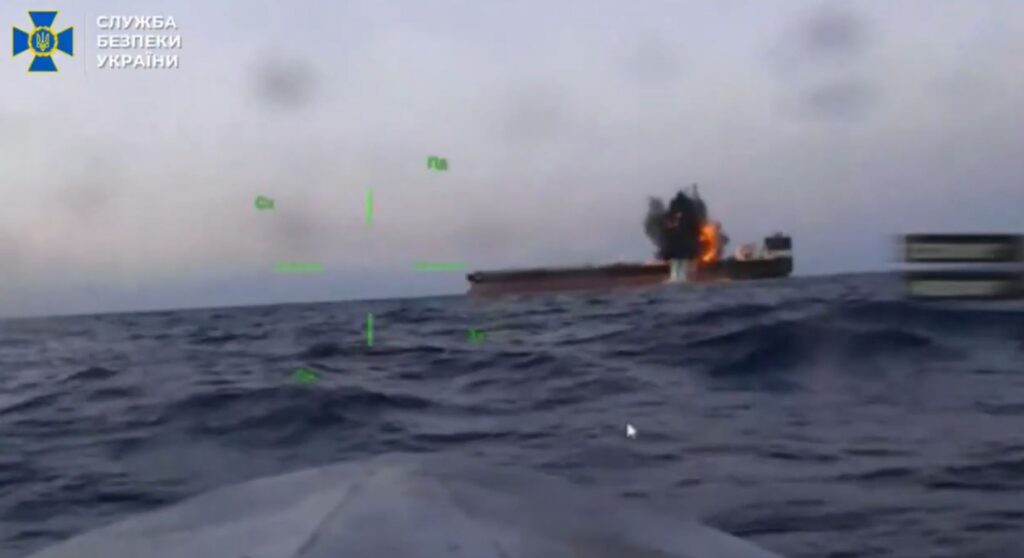
ukraine's spy service navy team up strike two russian crude tankers black sea · post shadow-fleet tanker banda burns after sbu naval-drone 16 2026 video exploding ukraine news ukrainian reports

Ukraine's Security Service (SBU) struck two sanctioned Russian oil tankers with naval drones in the Black Sea, the SBU said. The vessels belong to the shadow fleet Moscow uses to sell crude around Western sanctions, and Russian aircraft tried and failed to stop the attack.

Oil exports remain the biggest source of cash for Russia's war, and Ukraine has spent 2026 attacking that revenue, where Western measures have left the money moving. Ukraine keeps targeting Russian oil refineries, oil pipelines, depots, export terminals, and tankers. Forcing Moscow to defend its own oil exports at sea makes every shipment slower and costlier, compounding a fuel crisis already reshaping daily life inside Russia.

Two tankers, one sanctions-busting job

The SBU, working with the Navy, hit the ocean-going tankers Louise 1 and Banda — both under Ukrainian sanctions — with Mamai naval drones. 

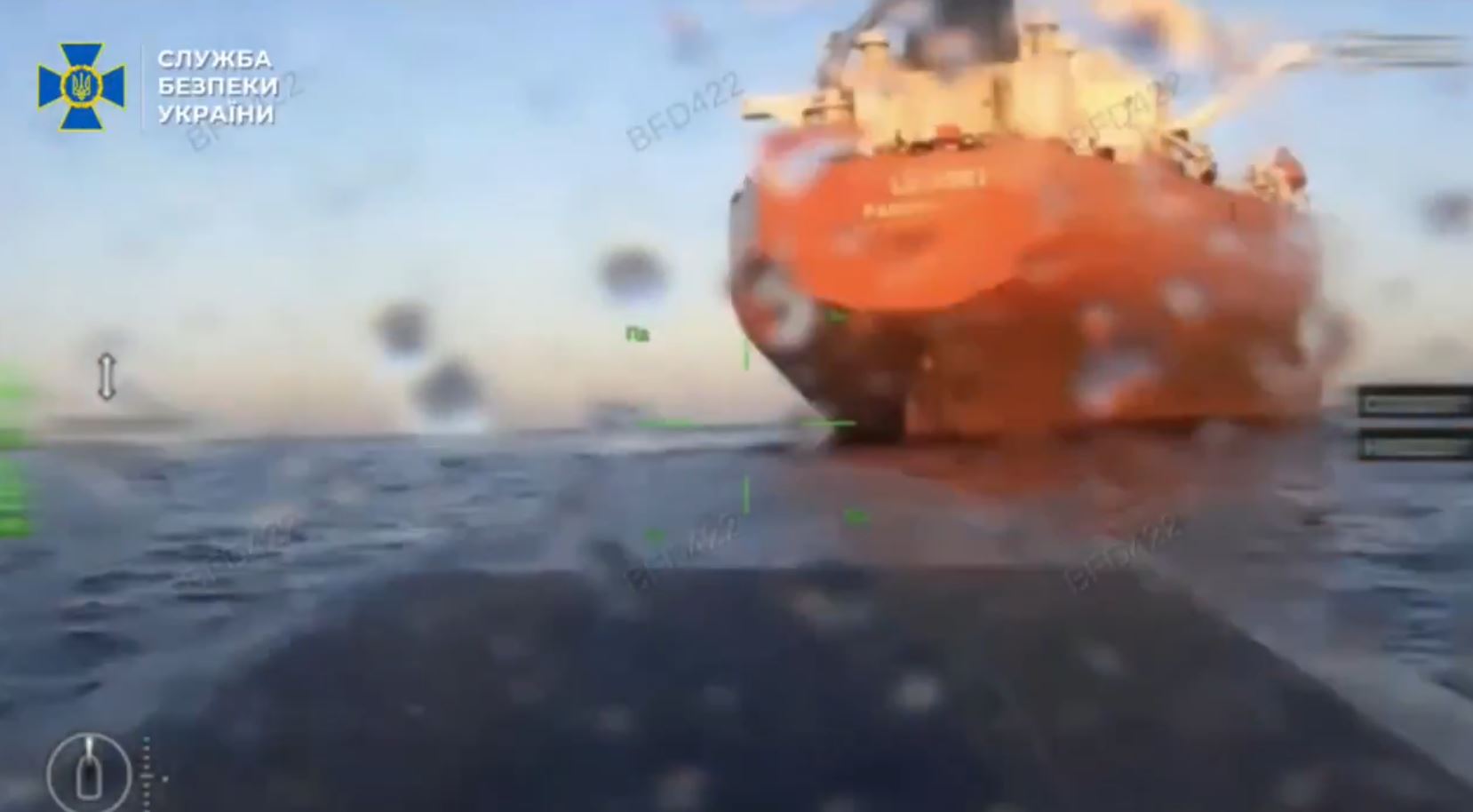
ukraine's spy service navy team up strike two russian crude tankers black sea · post sbu naval drone closes stern shadow-fleet tanker louise 1 16 2026 video drones nears shadow
An SBU naval drone closes on the stern of the Russian shadow-fleet tanker Louise 1 in the Black Sea, 16 July 2026. Screenshot from SBU video

Louise 1 had moved Russian crude through the G7 and EU embargo, loading at Baltic and Black Sea ports with its transponder switched off. In 2026 alone, it carried nearly 3 million tons of Russian Urals crude, the SBU said.

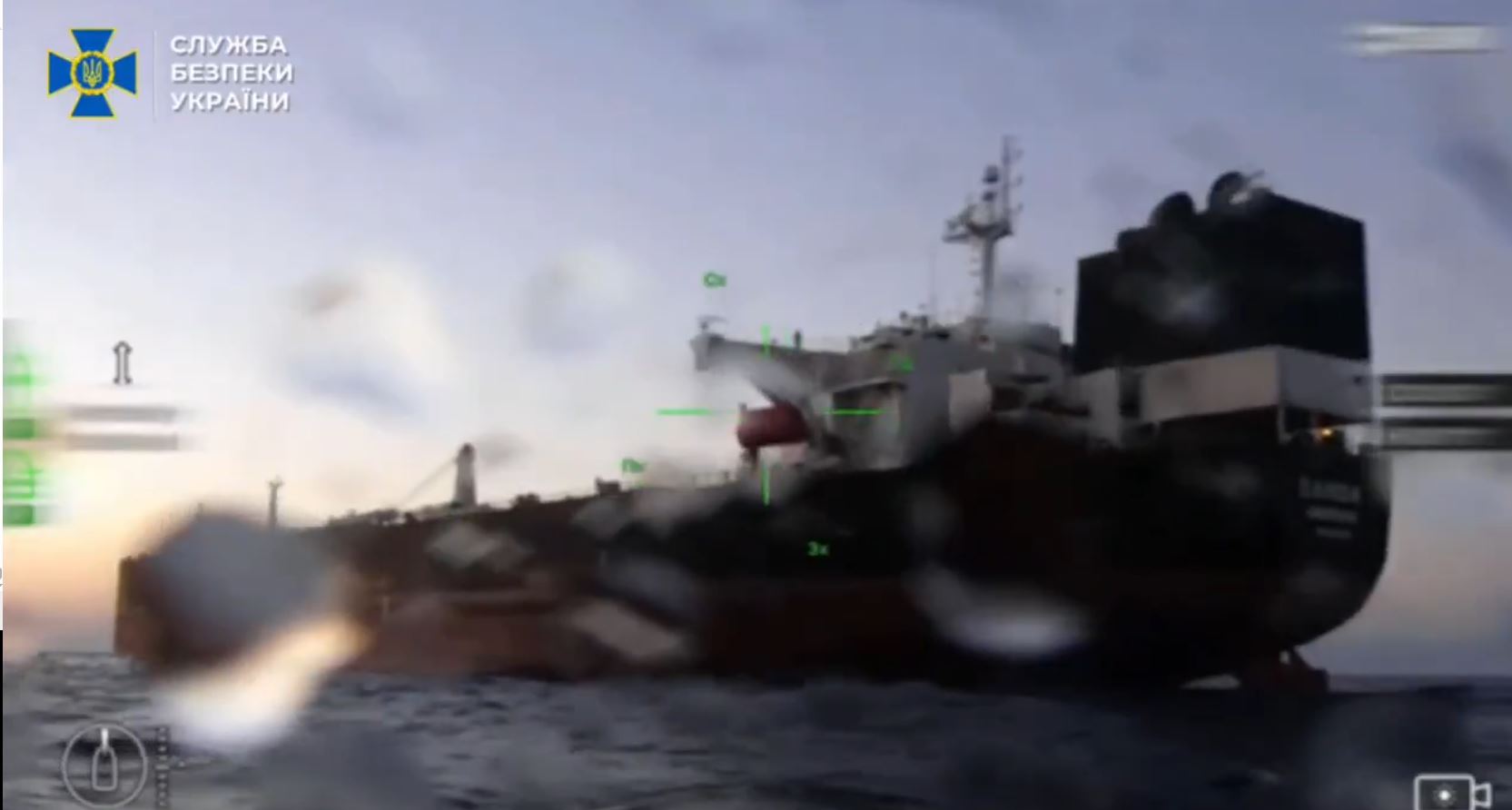
ukraine's spy service navy team up strike two russian crude tankers black sea · post sanctioned tanker banda sight sbu naval drone before 16 2026 video ukraine news ukrainian reports
The sanctioned Russian tanker Banda in the sight of an SBU naval drone before the strike in the Black Sea, 16 July 2026. Screenshot from SBU video

Banda had run Russian crude out of four ports: Ust-Luga, Kerch, Novorossiysk, and Nakhodka.

Ukraine's SBU hits two shadow-fleet tankers in the Black Sea

The Security Service of Ukraine and Navy struck the sanctioned tankers Louise 1 and Banda with Mamai sea drones, the SBU said. The Louise 1 alone moved nearly 3 mn tons of Russian crude in 2026.

📹SBU pic.twitter.com/wrWwpLGntC

— Euromaidan Press (@EuromaidanPress) July 16, 2026

As the drones closed in, Russian aircraft fired machine guns and dropped bombs at them, without success, the SBU said. 

The Russian shadow fleet's Louise 1 flies the Panama flag, the Banda sails under Liberia's.

The service calls each shadow-fleet tanker a legitimate target and a working part of Russia's war machine. Every strike, it says, cuts the oil money paying for the invasion.

A week earlier, the SBU's Sea Baby drone hit the sanctioned tanker Blue in Ukraine's waters off occupied Yalta. Ukraine has spent 2026 turning cheap drones into kinetic sanctions on Russia's tanker fleet. Sea Baby drones have wrecked shadow-fleet tankers across the Black Sea since late 2025.

The air campaign running alongside it

The naval strikes run in parallel with an aerial-drone campaign by the Unmanned Systems Forces (SBS). On 16 July, SBS operators struck 11 more shadow-fleet vessels — five oil tankers, a gas carrier, three dry-cargo ships, and two tugs.

Ukraine's drones hit 11 more shadow-fleet ships in a single day, pushing the 10-day total to 147

Ukraine's Unmanned Systems Forces (SBS) struck 11 vessels of Russia's sanctions-dodging shadow fleet on 16 July, commander Robert "Madyar" Brovdi said. The day's haul, in the Black… pic.twitter.com/4iZPIjoT2B

— Euromaidan Press (@EuromaidanPress) July 16, 2026

That brought the 6–16 July total to 147 vessels: 117 in the Sea of Azov and 30 in the Black Sea.

"The goal: paralysis of the logistics of oil, fuel, and cargo that bypasses sanctions," commander Robert "Madyar" Brovdi wrote. 

  • ✇Euromaidan Press
  • A month’s worth of Russia’s oil exports is stuck at sea—135 million barrels loaded but not delivered
    Ukraine's strikes on Russian refineries are pushing Moscow to export crude it can no longer process at home, Bloomberg reported. Buyers are not taking it fast enough, so Russian oil is piling up on tankers at sea. The value of those exports keeps sliding, and tanker loadings dipped in the week to 12 July. Sanctions were supposed to choke the money, yet Russia keeps its crude moving on a sprawling fleet of tankers bound for Asia — the very chain Kyiv now works to break. The
     

A month’s worth of Russia’s oil exports is stuck at sea—135 million barrels loaded but not delivered

15 juillet 2026 à 09:10

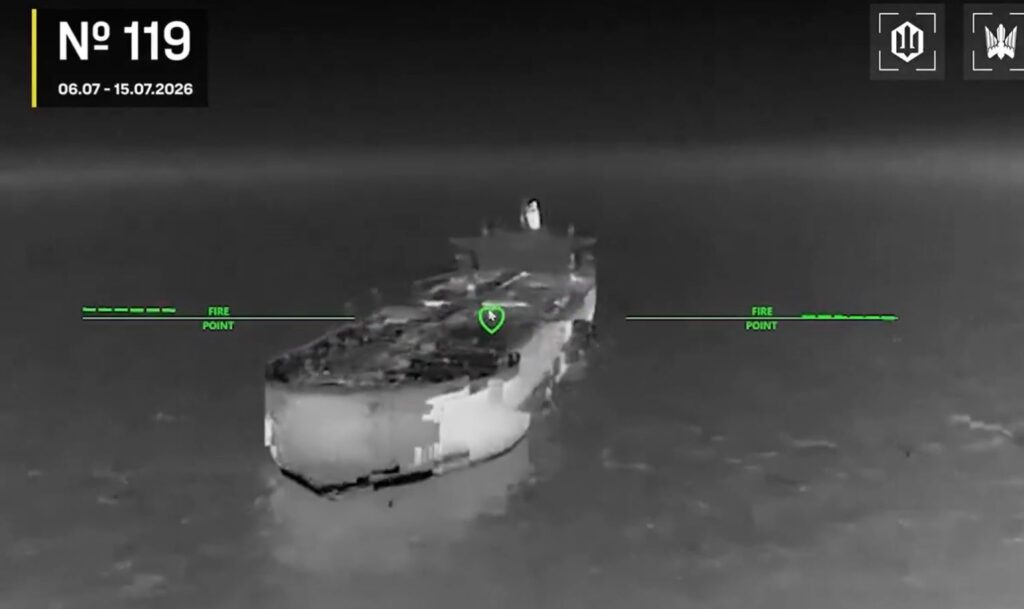
azov sea wasn't enough—ukraine's drones followed russia's oil fleet black · post russian tanker thermal sight ukrainian naval drone during strikes marked 119th vessel hit 6–15 2026 operation sbs video

Ukraine's strikes on Russian refineries are pushing Moscow to export crude it can no longer process at home, Bloomberg reported. Buyers are not taking it fast enough, so Russian oil is piling up on tankers at sea. The value of those exports keeps sliding, and tanker loadings dipped in the week to 12 July.

Sanctions were supposed to choke the money, yet Russia keeps its crude moving on a sprawling fleet of tankers bound for Asia — the very chain Kyiv now works to break. The near-term damage is to price, not volume, but cheaper barrels, slower sales, and a fresh US sanctions push could deepen the squeeze on the revenue that pays for the war.

Ukraine's refinery strikes are forcing crude onto the water

Ukraine has stepped up its strikes on Russia's refineries. Yesterday, it hit the Gazprom Neftekhim Salavat plant far inside Russia, and the Afipsky facility near the Black Sea. The wave of attacks has driven Russian refining runs to their lowest in more than 21 years this month. That deepens a domestic fuel crunch and squeezes the global market. With less crude to process at home, Moscow is likely diverting more into exports as its own production falls. Russia pumped 8.93 million barrels a day in June — about 830,000 below the level it promised the OPEC+ producer group.

The Azov Sea wasn’t enough—Ukraine’s drones followed Russia’s oil fleet into the Black Sea

The oil is piling up faster than buyers take it

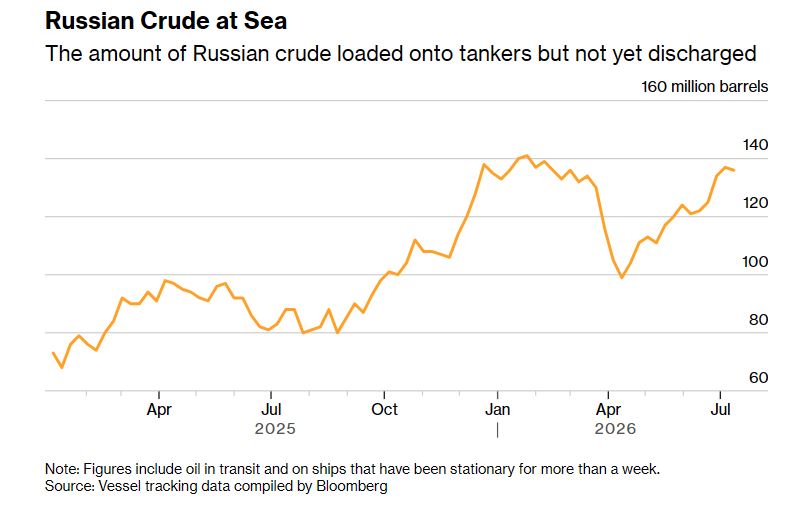
Soaring exports are not being matched by deliveries. So Russian crude is stacking up on tankers, loaded but not yet discharged, Bloomberg wrote. The total has climbed back near its start-of-2026 highs — about 135 million barrels by Sunday.

month's worth russia's oil exports stuck sea—135 million barrels loaded delivered · post russian crude onto tankers yet discharged 2025–2026 sea ukraine news ukrainian reports
Russian crude loaded onto tankers but not yet discharged, 2025–2026. Chart: Bloomberg vessel-tracking data

Cargoes are building up near Egypt in the Mediterranean and east of Singapore. Five Urals tankers are anchored off Egypt, and another five have halted near Singapore, a gathering point for shadow-fleet ships hauling sanctioned oil. A growing share of the oil at sea is on vessels that seem to be sitting idle rather than sailing.

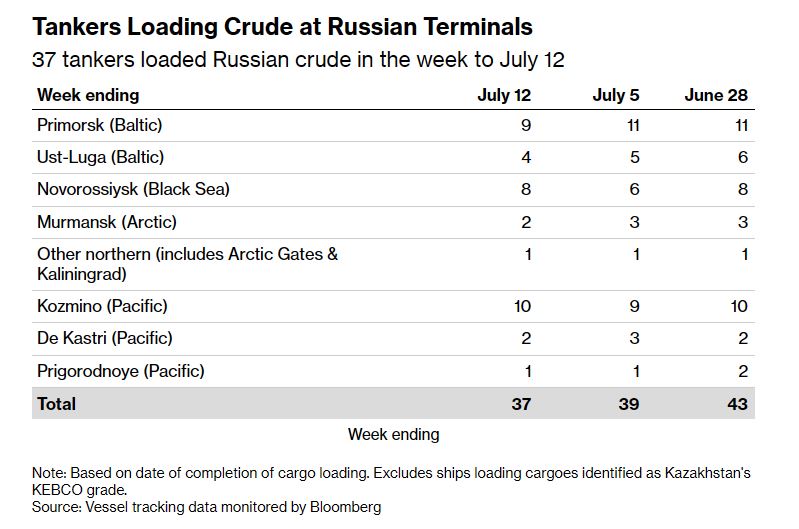
month's worth russia's oil exports stuck sea—135 million barrels loaded delivered · post tankers loading crude russian terminals port weeks ending 12 5 28 2026 ukraine news ukrainian reports
Tankers loading crude at Russian terminals by port, for the weeks ending 12 July, 5 July, and 28 June 2026. Chart: Bloomberg vessel-tracking data

Fewer tankers, and less money for the same oil

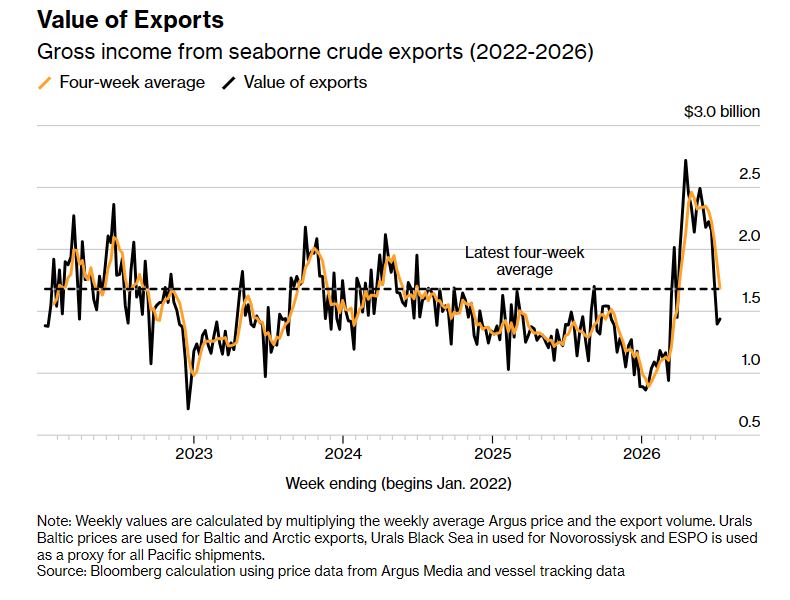
Russia shipped 3.98 million barrels of crude a day in the week to 12 July, down from 4.08 million. Year-to-date volumes remain above every annual average since 2022, yet the four-week export value fell $200 million to $1.68 billion a week. Urals prices have nearly halved since mid-April.

month's worth russia's oil exports stuck sea—135 million barrels loaded delivered · post gross weekly income seaborne crude 2022–2026 latest four-week average value ukraine news ukrainian reports
Gross weekly income from Russia's seaborne crude exports, 2022–2026, with the latest four-week average. Chart: Bloomberg calculation using Argus Media price data and vessel-tracking data

Russia sent 4 million barrels of oil a day toward Asia. Only about half was openly bound for India and China, while 1.9 million barrels a day remained undeclared, likely until tankers crossed the Arabian Sea. Türkiye took 160,000 barrels a day, and Syria 40,000.

Ukraine says Russia’s Alabuga workers, including minors, are now inside Zaporizhzhia’s reactor complex, turned into military base

13 juillet 2026 à 15:34

add new post russian troops ukraine's zaporizhzhia nuclear power plant illustrative image/ telegram channel tsaplienko occupiers prepping hold hostage znpp's personnel

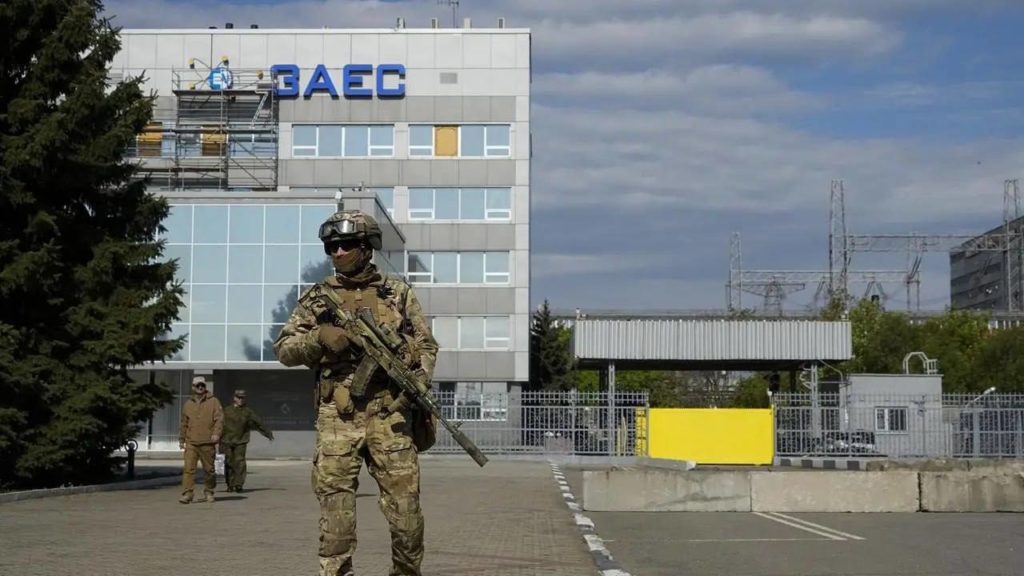
Russia is operating Shahed drone control points inside Europe's largest nuclear plant. Ukraine's Defense Intelligence says Russian forces have deployed control points for Gerbera-Seeker and Geran-Seeker kamikaze drones at the occupied Zaporizhzhia Nuclear Power Plant (ZNPP), staffed with workers brought in from the Alabuga special economic zone, including underage students. 

Alabuga is Russia's main Shahed factory in Tatarstan, and it has a documented record of recruiting minors and foreign women onto its production lines. Ukrainian intelligence now reports that Alabuga personnel are inside the reactor complex of a six-reactor nuclear station.

All six ZNPP reactors are in cold shutdown. Russian occupying forces have parked military equipment directly in the turbine halls of reactor units 1, 2, 5, and 6, turned basements and bomb shelters into weapons depots, and installed machine-gun nests and missile systems on the roofs of the reactor buildings, per Ukrainian intelligence.

IAEA experts denied access to reactor halls

Ammunition and equipment are stored beneath the technical passages and overpasses that connect the reactor units to other buildings.

Some technical facilities near the shoreline of the former Kakhovka reservoir have been mined. A Rosgvardia contingent of 1,500 troops guards the plant.

IAEA experts do not have full access to the reactor units or the special technical facilities. Inspections are conducted along pre-agreed plans and routes, which Ukrainian intelligence says makes an objective assessment of the situation difficult or impossible. Russia has restricted IAEA access to reactor halls since at least 2024.

Plant has one power line left and 21 blackouts behind it

ZNPP had 10 external power lines before the occupation. One works now. The plant suffered another blackout on 3 July 2026 — the 21st since the full-scale war, per Ukrainian intelligence.

A nuclear plant in cold shutdown still needs electricity. Cooling systems for the reactors and the spent fuel storage run on it, and when off-site power fails, the plant falls back on diesel generators trucked in through a war zone. Europe's largest nuclear facility has been living on that margin since 2022.

The 17th blackout came in June 2026, the fifth of that year alone, and more than 500 missiles and drones were recorded inside the 30-km surveillance zones of Ukrainian nuclear plants during 2025

Cooling pond is two meters below its minimum

Russian occupiers are not maintaining the required water level in the cooling pond. As of July 2026, it stands at 12.86 meters, compared with a minimum of 15 meters.

Russia destroyed the Kakhovka Dam on 6 June 2023, which severed the plant's original water supply.

Rosatom is forcing staff onto its contracts

ZNPP employed roughly 11,000 people before the full-scale war. About 7,500 remain, including 500 workers from an outsourcing company that holds no license to work at the station.

All staff are being forced to sign contracts with Rosatom under threat of dismissal, according to the Ukrainian intelligence. Personnel brought in from Russia lack the qualifications to service the plant, because ZNPP differs substantially from Russian nuclear facilities.

Ukraine has proposed amending the IAEA statute to disqualify states that deliberately undermine nuclear safety from the agency's governing bodies. Russia sits on the IAEA Board of Governors.

'Alarms went off everywhere' — Explosions reported in Moscow, Russia claims 50 Ukrainian drones downed across country

25 juin 2025 à 20:54
'Alarms went off everywhere' — Explosions reported in Moscow, Russia claims 50 Ukrainian drones downed across country

Editor's note: This is a developing story and is being updated.

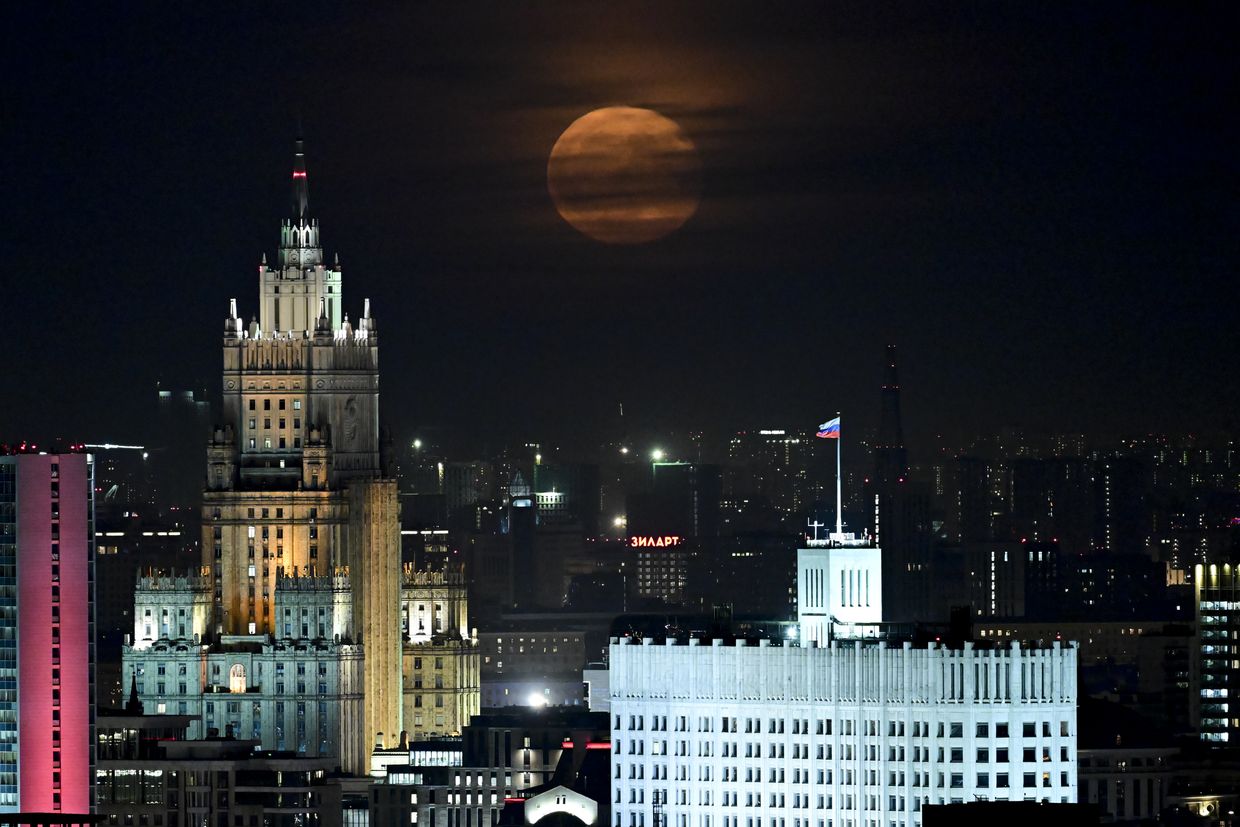
Explosions were reported in Moscow overnight on June 26, prompting airport closures, with Russia's Defense Ministry claiming 50 Ukrainian drones were downed across the country.

Moscow Mayor Sergey Sobyanin said emergency services were at the sites where two drones were downed.

According to the Shot Telegram channel, which appears to be close to Russian security forces, debris from a downed drone struck a residential building.

"Alarms went off everywhere," a local resident told the channel.

Ukraine's military regularly strikes military targets deep within Russia in an attempt to diminish Moscow's fighting power as it continues its war against Ukraine.

Russia's Defense Ministry later claimed 50 Ukrainian drones had been downed across the country, two of which were "flying towards Moscow."

The Kyiv Independent could not independently verify these claims.

Kaluga airport and Moscow's Vnukovo airport had flight restrictions imposed amid the drone attack, Artyom Korenyako, a spokesperson for Russia's state aviation agency Rosaviatsia, said early on June 26.

"The airport is temporarily not accepting or sending flights. Aircraft crews, air traffic controllers, and airport services must take all necessary measures to ensure flight safety," he said.

The restrictions were later lifted.

Putin insists the Russian economy is fine, but Kremlin officials say otherwise
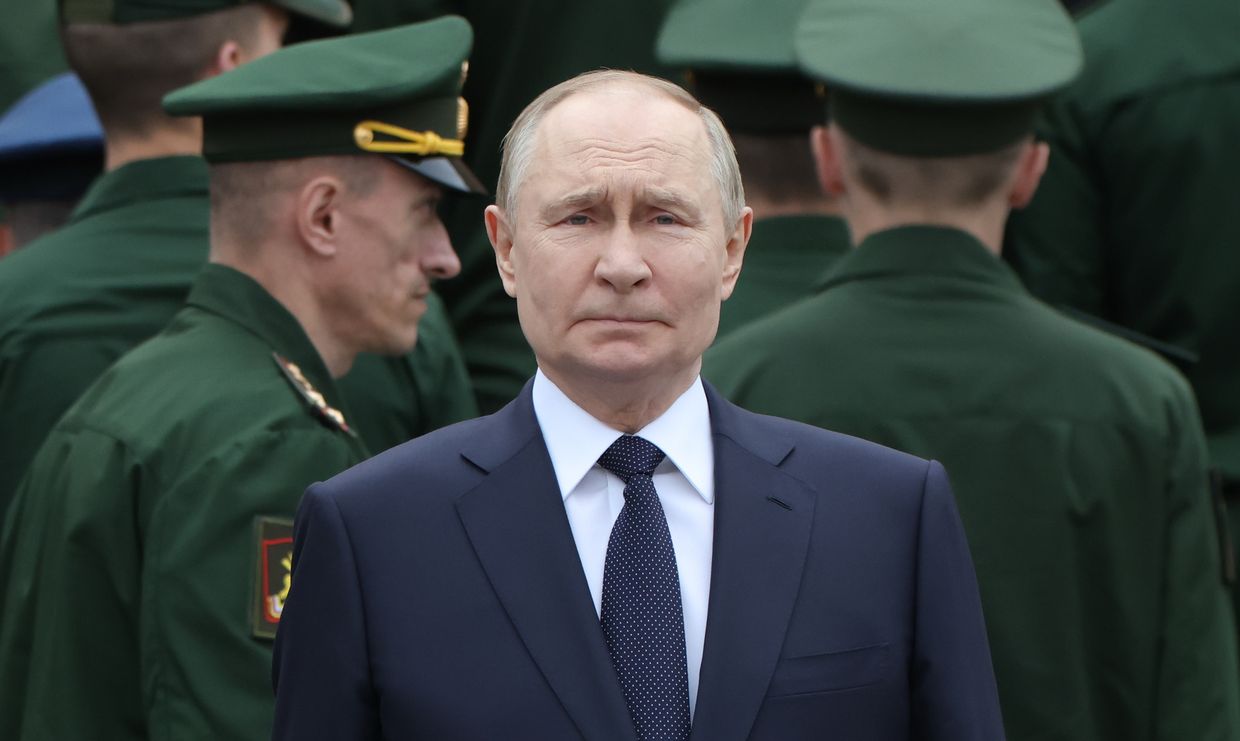
In a rare public sign that all is not well in Russia, two high-ranking Moscow officials last week issued separate warnings about the state of the country’s economy. Russian Central Bank Governor Elvira Nabiullina and Economy Minister Maxim Reshetnikov both highlighted that amid the Kremlin’s full-scale war against Ukraine, the tools Moscow once relied on to maintain wartime growth are nearly exhausted. Almost immediately, Russian President Vladimir Putin on June 20 dismissed the concerns, clai
'Alarms went off everywhere' — Explosions reported in Moscow, Russia claims 50 Ukrainian drones downed across countryThe Kyiv IndependentTim Zadorozhnyy
'Alarms went off everywhere' — Explosions reported in Moscow, Russia claims 50 Ukrainian drones downed across country

Ukrainian drones have forced at least 217 temporary airport closures across Russia since Jan. 1, independent Russian outlet Novaya Gazeta Europe reported on May 14, citing data from Russia's state aviation agency Rosaviatsia.

The figure already surpassed the combined total for all of 2023 and 2024, underscoring Kyiv's growing ability to put pressure on Russia, even in areas far from the border with Ukraine.

According to Serhii Bratchuk, spokesperson for the Ukrainian Defense Army's Southern Division, the surge in disruptions reflects a strategic shift in Ukraine's drone campaign.

"Moscow is the biggest aviation hub in the Russian Federation — flights go everywhere, not only across Russia, but worldwide," he told the Kyiv Independent last month.

"This is about the potential disintegration of Russian regions and the weakening of internal control."

Ukraine has also had remarkable success using first person view (FPV) drones — on June 1, Ukraine launched a game-changing drone attack on four key Russian military airfields, damaging 41 planes, including heavy bombers and rare A-50 spy planes.

Kyiv claimed it disabled 34% of Russia's strategic bomber fleet in what is seen as one of the most daring operations during Russia's full-scale war.

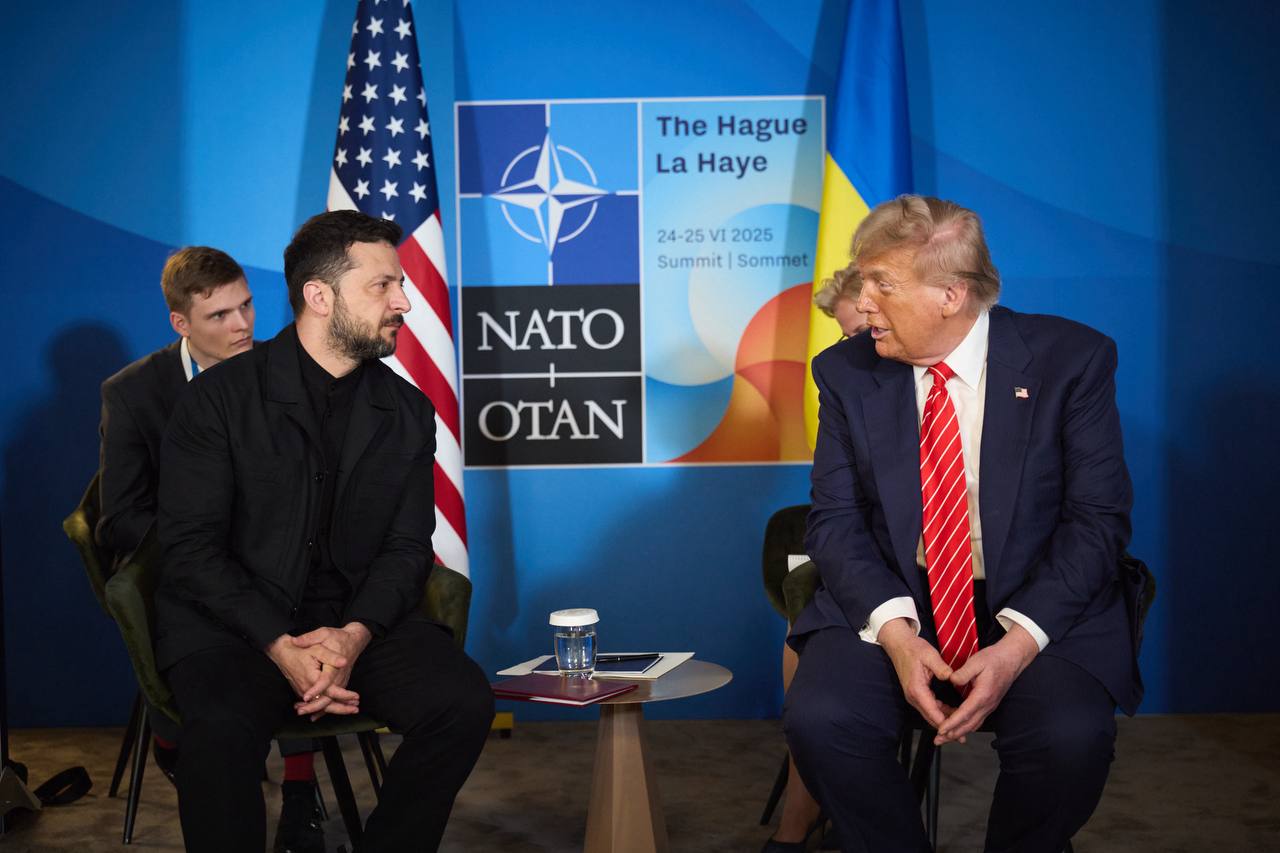
Ukraine war latest: US signals more Patriot missiles for Kyiv after Zelensky-Trump talks at NATO summit
Key developments on June 25: * Zelensky, Trump hold talks on NATO summit sidelines * ‘Something unknown’ hits key Russian drone facility in Taganrog, Ukrainian official says * Russia has launched over 28,000 Shahed drones at Ukraine since 2022, with nearly 10% fired in June alone, Zelensky says * Donetsk Oblast city “on
'Alarms went off everywhere' — Explosions reported in Moscow, Russia claims 50 Ukrainian drones downed across countryThe Kyiv IndependentThe Kyiv Independent news desk
'Alarms went off everywhere' — Explosions reported in Moscow, Russia claims 50 Ukrainian drones downed across country
❌