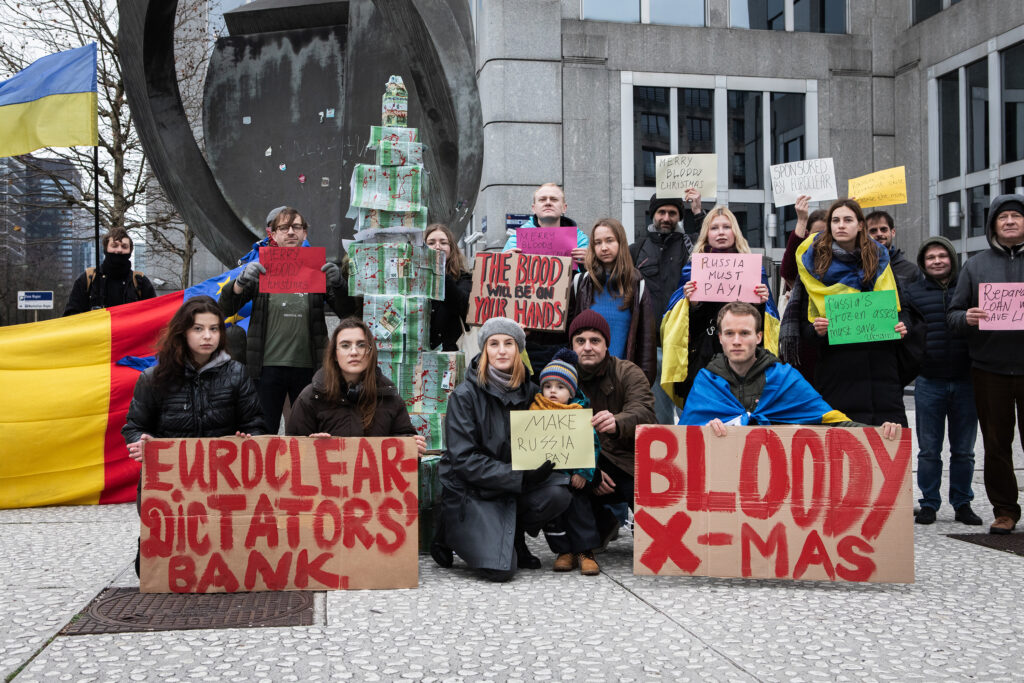
On 14 December, protesters gathered outside Euroclear headquarters with a Christmas tree that looked like it was made of blood-stained banknotes—a symbol of the Belgian profits from holding €200 billion in frozen Russian assets.
The actions were organized by the International Center for Ukrainian Victory, European Network in Solidarity with Ukraine, and Frozen Assets Action.
Two days earlier, activists rallied outside the European Commission under the banner “Ukraini
On 14 December, protesters gathered outside Euroclear headquarters with a Christmas tree that looked like it was made of blood-stained banknotes—a symbol of the Belgian profits from holding €200 billion in frozen Russian assets.
The actions were organized by the International Center for Ukrainian Victory, European Network in Solidarity with Ukraine, and Frozen Assets Action.
Two days earlier, activists rallied outside the European Commission under the banner “Ukrainian lives over profit.” Signs read “Belgium hesitates, Russia kills” and “Is De Wever the next Orbán?”—a reference to Belgian Prime Minister Bart De Wever, who on 2 December called Ukrainian victory “a fairy tale, a complete illusion.”
“Europe stands with Ukraine, Belgium stands with profits”—activists rally outside the European Commission ahead of the 18 December vote on frozen Russian assets, Brussels, 12 December 2025. Photo: Anastasiia Varvarina
Belgium’s opposition could derail a European Council vote on 18 December to approve a reparations loan backed by profits from frozen Russian state assets. If the vote fails, European taxpayers—not Russia—would foot the bill for Ukraine’s defense funding.
Protesters with Ukrainian, Belgian, EU, and free Belarus flags outside the European Commission, Brussels, 12 December 2025. Photo: Anastasiia Varvarina
Euroclear earns substantial revenue simply by holding the assets. Every month the decision is delayed, that revenue continues to flow.
The “blood money Christmas tree”—activists highlight Euroclear’s profits from frozen Russian assets while Ukraine pays in lives, Brussels, 14 December 2025. Photo: Anastasiia Varvarina
“As a father, I cannot stand by while Ukrainian children are murdered and deported by Russia. Belgium has a moral choice to make: protect Russian money, or protect Ukrainian children,” said Antonio Albaladejo Román, who lives in Brussels.
Protesters demand the use of frozen Russian assets for Ukraine outside the European Commission, Brussels, 12 December 2025. Photo: Anastasiia Varvarina
The stakes extend beyond December. In January, the EU’s annual vote to extend sanctions on Russia requires unanimous approval from all 27 member states. Hungary has already announced it will veto. Without sanctions extension, the frozen assets argument becomes moot—and Russia regains access to billions.
Activists with signs reading “Is De Wever the next Orbán?” and “Faisons payer la Russie” (“Make Russia pay”) outside the European Commission, Brussels, 12 December 2025. Photo: Anastasiia Varvarina
The Brussels protests are part of a wider campaign across European capitals. Actions took place in Prague, Warsaw, Vienna, Stockholm, and Copenhagen in the lead-up to the 18 December vote.
Activists are calling on supporters to sign petitions, contact Belgian embassies, and pressure PM De Wever directly on social media using #MakeRussiaPay and #UnblockReparationLoan.
“Make Russia pay” Euroclear protest, Brussels, 14 December 2025. Photo: Anastasiia Varvarina
Ukraine has received $290 million from the World Bank under the RISE project (Resilient, Inclusive, and Sustainable Enterprise), the Ministry of Economy reports.
In November 2024, the World Bank announced a new $593 million program in Ukraine to strengthen the private sector. The program aims to support 20,000 small and medium-sized enterprises and create or preserve at least 40,000 jobs.
The financing comprises $283 million from the ADVANCE Ukraine trust fund suppor
Ukraine has received $290 million from the World Bank under the RISE project (Resilient, Inclusive, and Sustainable Enterprise), the Ministry of Economy reports.
In November 2024, the World Bank announced a new $593 million program in Ukraine to strengthen the private sector. The program aims to support 20,000 small and medium-sized enterprises and create or preserve at least 40,000 jobs.
The financing comprises $283 million from the ADVANCE Ukraine trust fund supported by Japan, $300 million from the International Development Association's (IDA) Special Program for the Recovery of Ukraine and Moldova, and $10 million from the Ukraine Recovery, Reconstruction, Reform, and Relief Trust Fund (URTF).
The latest $290 million tranche was disbursed based on achieving results in key program areas: facilitating small and medium business access to export markets, implementing environmental and social standards in entrepreneurship financing programs, and developing digital services for entrepreneurs and simplifying permit procedures.
Total planned financing under current agreements for the Program stands at $681 million. In 2024 alone, $250 million was already transferred to the state budget upon meeting corresponding indicators.
"Ukraine is successfully fulfilling its commitments to partners, which is why we are implementing large-scale programs to support entrepreneurship. The funds received will strengthen the budget and allow us to continue implementing support and development tools that are already working for small and medium businesses and industry. And we are grateful to the World Bank for this opportunity," said Oleksiy Sobolev, Minister of Economy, Environment and Agriculture of Ukraine.
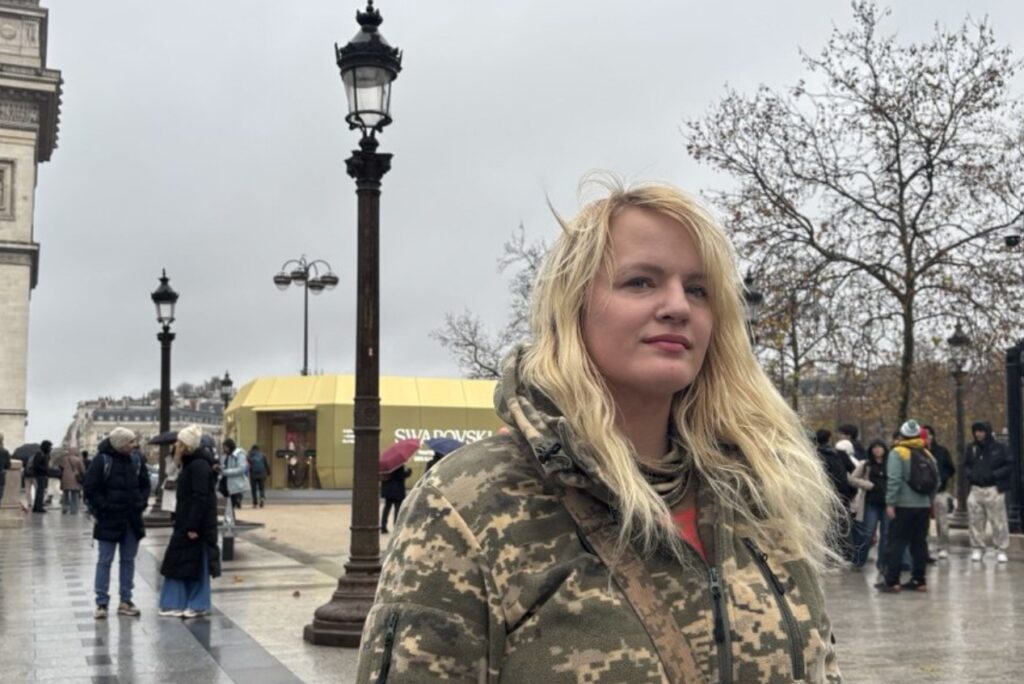
Belgian UAV operator Anne Catherine Maniette, known by her callsign “Ania Tatu”, who serves in the Ukraine's 37th Separate Marine Brigade, stated that Russian President Vladimir Putin will not stop his aggression, even if a peace agreement with Ukraine were signed, per UkrInform. Commenting on European discussions about peace plans, Maniette called them an illusion.
Europe partly responsible for Ukraine's situation
She also noted that European countries are partially to bl
Belgian UAV operator Anne Catherine Maniette, known by her callsign “Ania Tatu”, who serves in the Ukraine's 37th Separate Marine Brigade, stated that Russian President Vladimir Putin will not stop his aggression, even if a peace agreement with Ukraine were signed, per UkrInform. Commenting on European discussions about peace plans, Maniette called them an illusion.
Europe partly responsible for Ukraine's situation
She also noted that European countries are partially to blame for the current situation, as they could have closed Ukrainian airspace earlier or redirected frozen Russian assets toward Ukraine’s defense, but they did not.
Maniette explained that she has spent nearly four years on the frontlines in Donbas, alongside Ukrainian troops, volunteers, and local residents. She is the only foreign female marine with a single leg to have passed the selection process for the Ukrainian Marines.
The war is not only for Ukraine, but for all of Europe
“That’s why I’m here with another message that must be repeated constantly: Putin will not stop,” emphasized Ania Tatu.
She is convinced that even if Ukraine were to agree to certain concessions for peace, it would set a dangerous precedent.
Transferring territory, she said, would only reinforce Putin’s sense of impunity and encourage further aggression.
According to her, the current understanding on the front is that the war is fought not only for Ukraine but for all of Europe.
“The message from the frontline is this: know that this is a war for Europe, not just Ukraine. Ukraine is the wall we hold between Europe and Russia,” she emphasized.
Europe underestimates the threat from Russia and its partners
Speaking about the risk of a potential Russian attack on Europe, Maniette suggested it could have a “wake-up effect”. She expressed a desire to see European politicians react, as she believes they still underestimate the threat.
She added that Europeans should understand what Ukrainians are going through.
Maniette warned that claims about Putin’s lack of resources are misleading, as he receives support from North Korea, China, and certain African countries, and within a few years could fully restore his capacity for new aggression.
In 2025, external financial support for Ukraine is expected to decline to its lowest level since the start of the full-scale Russian war, according to researchers from the Ukraine Support Tracker project of the Kiel Institute. Ukrainian civilians are paying the highest price for this decline.
According to the UN Human Rights Monitoring Mission in Ukraine, the number of civilian casualties from long-range weapons in Ukraine increased by 26% in 2025, while the number of injur
In 2025, external financial support for Ukraine is expected to decline to its lowest level since the start of the full-scale Russian war, according to researchers from the Ukraine Support Tracker project of the Kiel Institute. Ukrainian civilians are paying the highest price for this decline.
According to the UN Human Rights Monitoring Mission in Ukraine, the number of civilian casualties from long-range weapons in Ukraine increased by 26% in 2025, while the number of injured civilians rose by 75%.
For example, in Kyiv, the number of civilian casualties in the first ten months of 2025 was nearly four times higher than for the entire year of 2024. Other major cities, such as Dnipro and Zaporizhzhia, also saw significant increases in civilian casualties.
European military aid declines sharply
Military assistance declined sharply over the summer of 2025, a trend that continued through September and October.
At the current pace, European funds alone are insufficient to fully compensate for the absence of US military aid this year.
Germany, France, and the UK increase spending
Although annual allocations averaged approximately €41.6 billion in 2022–2024 (including Europe, the US, and other donors), in 2025, only €32.5 billion was allocated. To reach previous levels, allies would need to provide an additional €9.1 billion by the end of the year.
By October, internal disparities within Europe also grew. France, Germany, and the UK sharply increased their military allocations compared to 2022–2024: Germany nearly tripled its contributions, while France and the UK more than doubled theirs.
Even so, as a percentage of 2021 GDP, all three countries lag significantly behind leading Scandinavian donors, Denmark, Finland, Norway, and Sweden.
Spain did not send aid, Italy declined PURL
The contrast is even stronger with Italy and Spain, as neither country increased its military allocations in 2025. Italy reduced its already low support by 15% compared to 2022–2024, while Spain provided no new military aid this year.
At the same time, Rome became the first European capital to propose leaving Ukraine without weapons during “peace talks” that have yielded no results after a year of diplomatic efforts by US President Donald Trump.
Italy said it would not participate in the PURL program, which purchases US-made weapons for Ukraine. The most important of them is Patriot air missile systems.
This program is critically important for Kyiv as it is effectively the only formal mechanism for obtaining weapons to counter Putin’s 600,000-strong army in Ukraine, and air-defense systems ahead of winter terror attacks, as US President Donald Trump's administration abandoned military assistance for Kyiv.
This limited participation has significantly weakened overall European support for Ukraine.
Thank you for contacting Google Workspace Account Recovery Support. Before you begin, please try the automated account recovery process at https://accounts.google.com/recovery first.
— Permalien
Thank you for contacting Google Workspace Account Recovery Support. Before you begin, please try the automated account recovery process at https://accounts.google.com/recovery first.
— Permalien
For decades, NATO's Article 3 has required member states to maintain the capacity to resist armed attack. The alliance lists seven baseline requirements for national resilience: energy, communications, transport, food, water, government continuity, and population movement.
Healthcare—the system that sustains all the others—barely appears.
The war in Ukraine proves this is a dangerous oversight. Hospitals aren't secondary assets during conflict—they're strategic infra
For decades, NATO's Article 3 has required member states to maintain the capacity to resist armed attack. The alliance lists seven baseline requirements for national resilience: energy, communications, transport, food, water, government continuity, and population movement.
Healthcare—the system that sustains all the others—barely appears.
The war in Ukraine proves this is a dangerous oversight. Hospitals aren't secondary assets during conflict—they're strategic infrastructure. When healthcare collapses, armies cannot fight, economies cannot function, and civilians flee.
Europe is entering a decisive twelve-month window. NATO's 2026 Summit will formalize member-state commitments to Article 3 resilience, and European governments are rewriting civil-defense budgets right now—without including medical infrastructure. Meanwhile, Russia has shifted its strike pattern toward power infrastructure and critical services, the exact systems hospitals depend on.
What Kharkiv is demonstrating today could become Europe's operational reality within a single escalation cycle.
How hospitals 40 km from Russia stay operational
40 kilometers from the Russian border, Kharkiv's hospitals have operated under sustained attack for three years. What they've built reveals what NATO Article 3 should require.
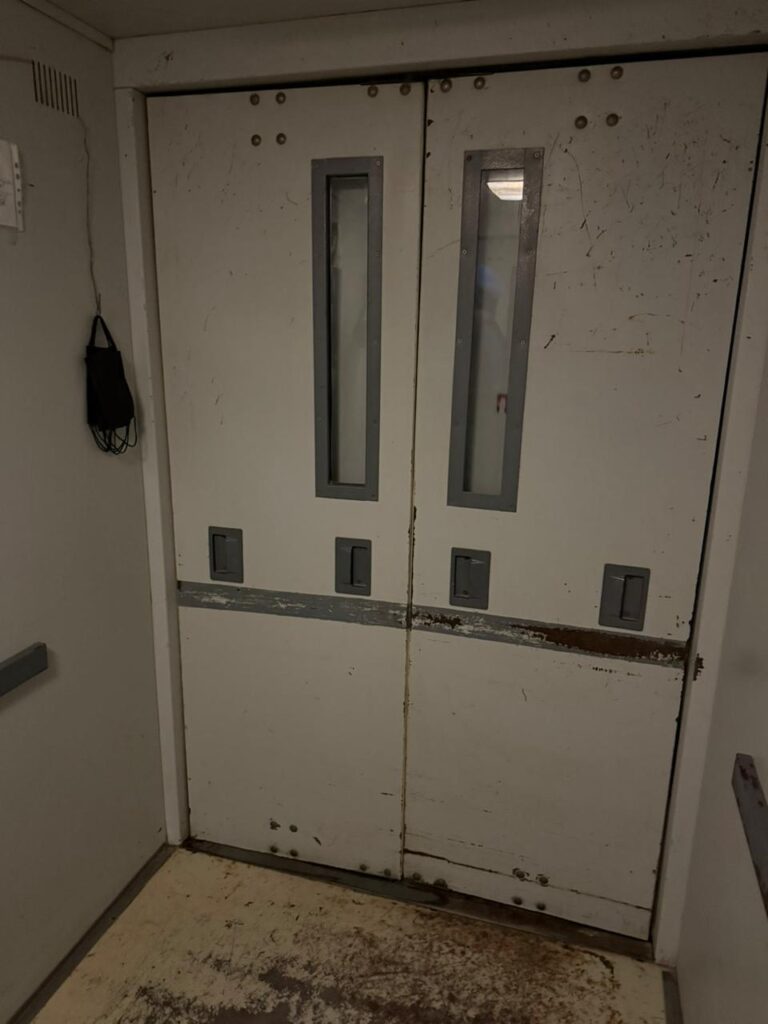
When Professor Rostyslav Smachylo, Chief Surgeon at the Zaitsev Institute, showed me their old elevator via video, he pressed the call button.
The sound that came back was sharp and metallic—a strained groan that only machines past their lifespan make. Years of cannibalizing three Soviet-era lifts into one had left their mark.
Then he turned the camera toward the neighboring shaft: a hollow concrete throat disappearing into darkness. Motionless. Silent.
The Soviet-era hospital elevator in Kharkiv. All three lifts are out of service — forcing staff to carry patients by hand between floors until a new elevator is installed this month. Courtesy photo
The €30,000 replacement elevator we provided through 1 for Ukraine carries 175 patient movements daily—more than one million transfers over its 20-year service life, each one determining whether a patient reaches surgery in time.
This is medical resilience in practice:
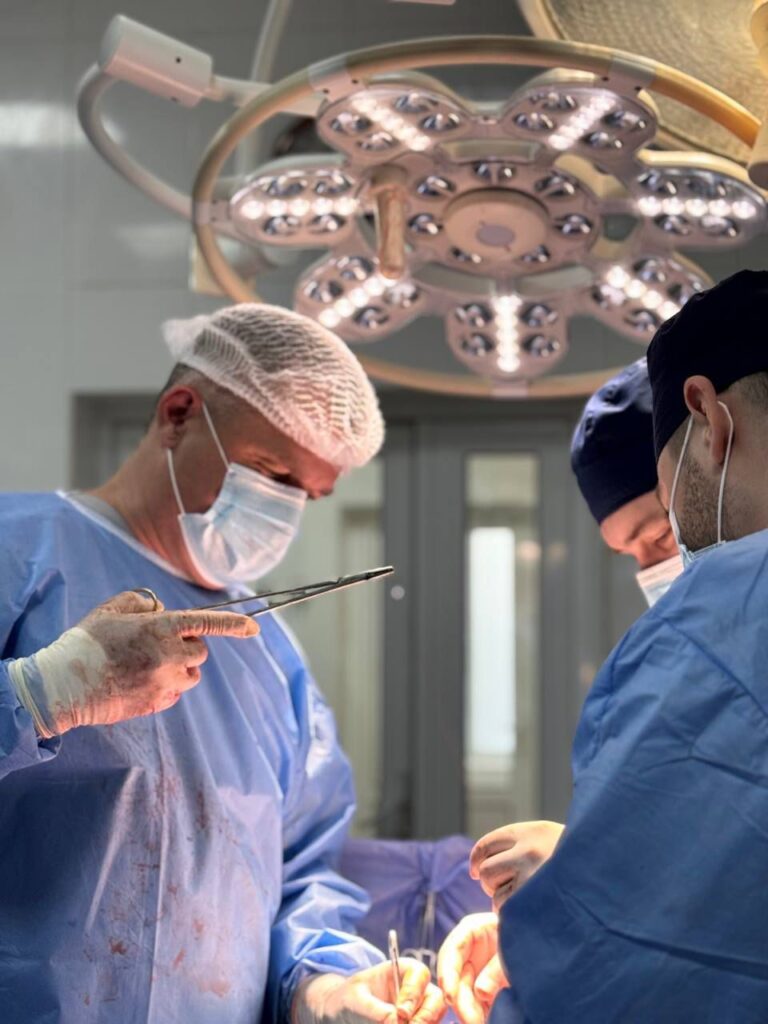
Basement operating rooms with full surgical suites, moving between above-ground and underground based on strike patterns.
Hospitals run on generators as primary power because grid electricity is unreliable.
Decentralized oxygen networks function because centralized storage is vulnerable—drivers unload cylinders during air-raid warnings, no headlights, no delay.
Air-raid sirens in Kharkiv often begin around 2 AM. Medical teams face the same calculation: Moving ICU patients down several floors can destabilize them. Interrupting surgery mid-procedure carries its own risks. The missile threat must be weighed against the medical threat of delay.
A hospital administrator told me simply: "We've stopped assuming the grid exists. We plan as if it doesn't."
Kharkiv is now constructing Europe's first purpose-built underground hospital: approximately six meters below ground, reinforced concrete significantly thicker than civilian standards, triple-redundant power, compartmentalized oxygen and water networks, designed to function during sustained bombardment.
Why a €30,000 elevator outperforms a Patriot missile
Since 2022, 1 for Ukraine has delivered equipment enabling 3,000+ life-changing cases. A €28,000 surgical generator enables 14,000 procedures over its lifetime—less than the cost of a single Patriot missile. Over a ten-year lifecycle, the cost per life saved falls below €10.
But this isn't only about cost-effectiveness. Every time a hospital closes, thousands flee.
Each family that remains in Kharkiv because operating rooms still function saves European governments tens of thousands in refugee costs. Healthcare must be counted as security expenditure, not aid.
Every time a hospital closes, thousands flee, increasing the refugee count.
Working with Ukraine's National Academy of Medical Sciences, equipment deliveries follow verified need assessments with full documentation from procurement to installation. This model demonstrates that medical resilience can be built with transparent accountability—a template for how NATO members could structure similar programs.
When equipment deliveries eliminate impossible choices
Every day, Ukrainian doctors face choices no one should face—who gets the last dose of anesthesia, who gets the only working ventilator. When new equipment arrives, those choices disappear. The relief isn't only medical—it's moral.
To heal under fire proves that civilization still functions. If deterrence is Europe's shield, resilience is its skeleton—and right now the skeleton is missing a vital bone.
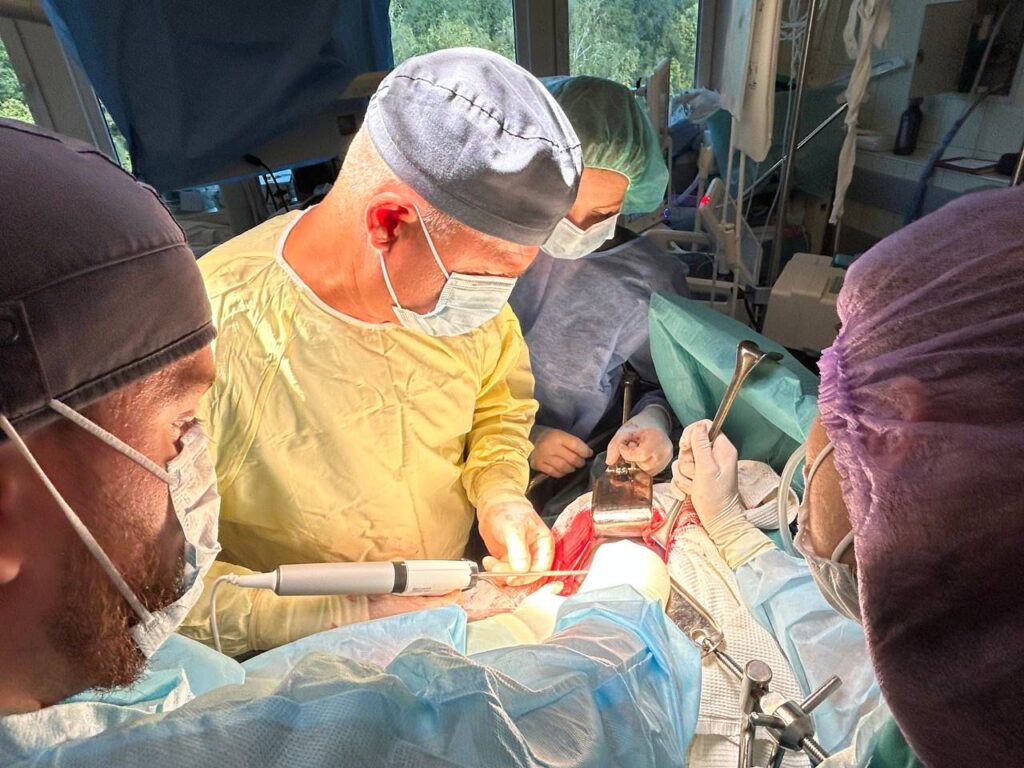
Surgery underway in Kharkiv. Procedures are routinely relocated between above-ground and underground operating rooms depending on missile alerts and power stability. Courtesy photo
What happens when Vilnius loses power for 48 hours
Most hospitals in the Baltic States and Eastern Europe—even in major cities like Vilnius, Riga, and Tallinn—are built to peacetime standards. A single well-timed strike on a key transformer could collapse a city's medical system within hours.
The cascade is predictable: ICU ventilators fail first, then surgical capacity, then trauma services. Within 48 hours, hospitals that can't operate begin evacuating patients. Within a week, families follow.
A single strike on a key transformer could collapse an Eastern European city's medical system within hours.
Kharkiv shows that functioning hospitals are the primary factor preventing mass civilian flight. Europe risks displacement waves comparable to 2015's refugee crisis—not from war zones, but from cities where hospitals failed and populations had nowhere else to go.
Three policy changes NATO can make by 2026
NATO should add an eighth pillar to Article 3: medical resilience.
First: NATO should establish a Medical Resilience Working Group by Q2 2026, with mandate to define minimum operational standards for hospitals under attack—including underground surgical capacity, decentralized oxygen networks, triple-redundant power, and protected reserves of ventilators, anaesthesia systems, electrosurgical devices, and trauma diagnostics. First framework delivered at NATO's July 2026 Summit.
Second: European governments should earmark 2-4% of civil-defense budgets for medical infrastructure continuity starting in FY2027, covering generators, oxygen systems, underground capacity, and the critical equipment that keeps surgical and intensive care functional during power disruptions.
Third: The Baltic States and Poland should launch pilot "Kharkiv Model" hospitals beginning in early 2026. Realistic milestones: pilot hospital designation by March 2026, funding secured by year-end, construction launched in 2027, with operational capacity and progress assessment by the 2028 NATO Summit. These pilots create Europe's proof-of-concept for resilient medical infrastructure.
How to demand hospital resilience from your government
Ask your local hospital how long it can operate without grid power. Request transparency from your health ministry about resilience planning. Support organizations strengthening frontline medical capacity—like 1 for Ukraine. Raise the question in NATO-member parliaments: "Does our healthcare system meet Article 3?"
Kharkiv shows that resilience is built through decisions—and those decisions begin with people who refuse to ignore what this war is teaching.
Europe's next security doctrine won't be written solely in Brussels or Washington. It's already being drafted in hospital basements in Kharkiv, Dnipro, and Zaporizhzhia.
The underground hospital in Kharkiv opens in 2027. That gives NATO exactly one budget cycle, one summit, and one chance to learn these lessons before they're tested under fire in a NATO member state. The knowledge exists. The timeline is clear. What's missing is the political will to treat hospitals as what they actually are: the infrastructure that determines whether societies endure or collapse when attacked.
Kharkiv is showing Europe how to build that resilience. The question is whether Europe acts on it before being forced to.
Jonas Hård af Segerstad is Founder and Strategic Relations Lead of 1 for Ukraine, a Swedish non-profit delivering medical equipment to hospitals in eastern Ukraine.
Editor's note. The opinions expressed in our Opinion section belong to their authors. Euromaidan Press' editorial team may or may not share them.
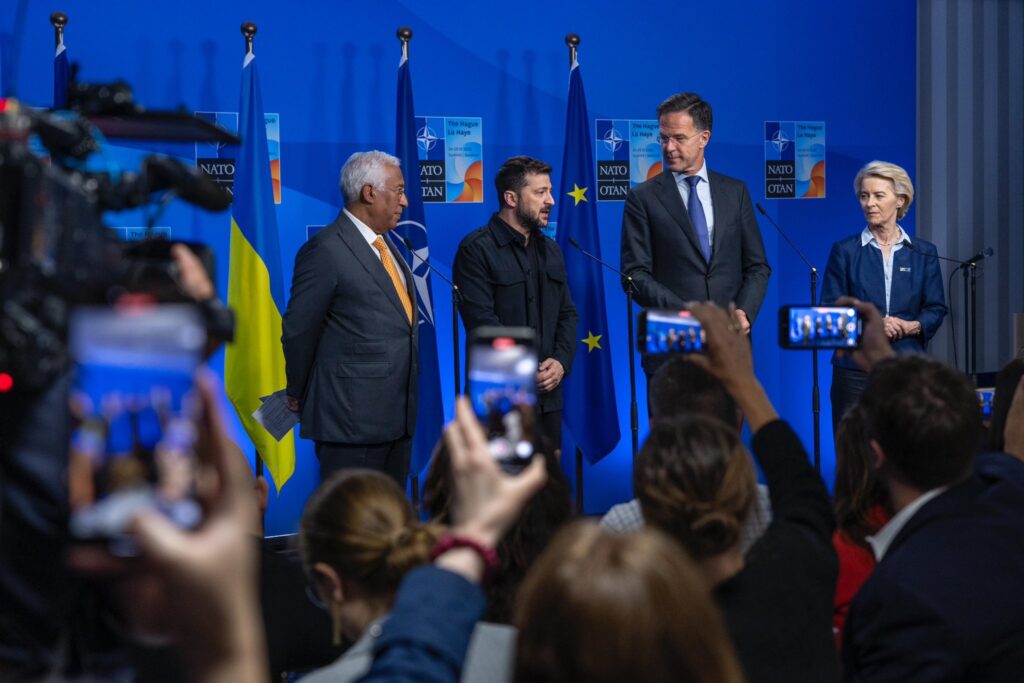
The EU is ready to cover two-thirds of Ukraine’s financial needs over the next two years. The aid is estimated at €90 billion, with the remainder provided by international partners, according to EU Commission President Ursula von der Leyen, as reported by The Guardian.
On 1 December, Russian President Vladimir Putin signed the 2026 budget, allocating nearly 40% of all expenditures to the military and security sector. Moscow is willing to sacrifice social programs and econom
The EU is ready to cover two-thirds of Ukraine’s financial needs over the next two years. The aid is estimated at €90 billion, with the remainder provided by international partners, according to EU Commission President Ursula von der Leyen, as reported by The Guardian.
On 1 December, Russian President Vladimir Putin signed the 2026 budget, allocating nearly 40% of all expenditures to the military and security sector. Moscow is willing to sacrifice social programs and economic development to continue its aggression against Ukraine.
Use of part of Russia’s frozen assets in the EU totaling €210 billion.
Use of funds:
Primarily for the production and purchase of military aid for Ukraine within Europe and the European Economic Area, occasionally including external procurement.
"Since pressure is the only language the Kremlin responds to, we can also dial it up,” von der Leyen states.
The EU will implement control mechanisms to ensure proper use of funds and protect member states from legal claims over the assets.
Earlier, Belgium expressed concerns about the proposal, but the European Commission stated that the majority of risks had been addressed and the decision could be adopted without Belgium, requiring only a qualified majority.
The US reacted positively to the plan.
Since Donald Trump took office, the US has not issued any military aid package for Ukraine. However, it produces weapons under the PURL initiative, financed by Ukraine's allies in NATO.
Von der Leyen emphasized long-term support for Ukraine, noting that Russia has all the means to prolong the war and is still not ready to sit at the negotiation table repeatedly offered by President Zelenskyy.
"We are raising the price for Russia for its aggressive war. And this should be an additional incentive for Russia to sit down at the negotiating table,"said Ursula von der Leyen.
In 2025, Ukraine's Intelligence said Russia spends nearly $1 billion daily on its war against Ukraine.
Ukrainian border guards have received another shipment of defensive assistance from the Czech Republic, including a DITA wheeled self-propelled artillery system and artillery ammunition, reported by the State Border Guard Service of Ukraine.
Earlier, Politico reported that Prague, which supplied Ukraine with 850,000 large-caliber shells in 2025 under the so-called “Czech Initiative,” sharply changed its position on aid to Kyiv following the election victory of the right-wi
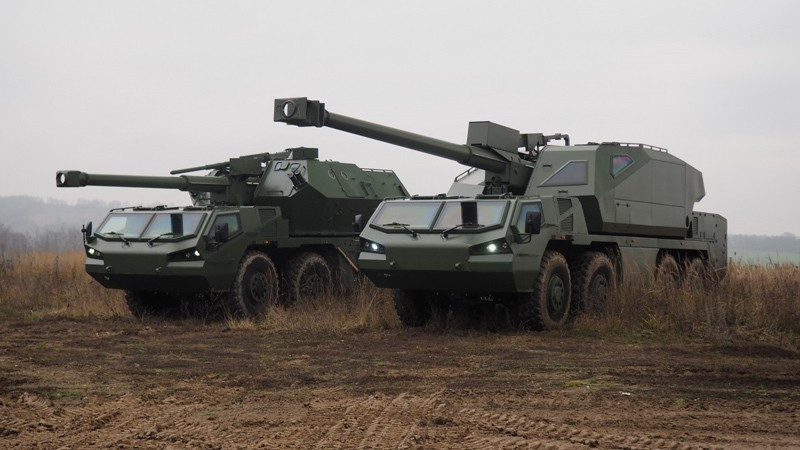
Ukrainian border guards have received another shipment of defensive assistance from the Czech Republic, including a DITA wheeled self-propelled artillery system and artillery ammunition, reported by the State Border Guard Service of Ukraine.
Earlier, Politico reported that Prague, which supplied Ukraine with 850,000 large-caliber shells in 2025 under the so-called “Czech Initiative,” sharply changed its position on aid to Kyiv following the election victory of the right-wing populist ANO movement led by Andrej Babiš.
He criticized Western military assistance to Ukraine and emphasized the need for neutrality, effectively arguing that Kyiv should be left to face Russian aggression on its own.
Second DITA joins border forces
According to the agency, this is the second such self-propelled artillery system provided to Ukrainian border forces.
DITA is a modern artillery system equipped with a 155 mm gun featuring a 45-caliber barrel length. These specifications allow it to achieve a firing range of 39 km when using standard NATO high‑explosive fragmentation shells.
Development of the system began in 2019. The first prototype was completed in 2021 and unveiled at the IDEX-2021 international defense exhibition in Abu Dhabi, Espreso reports.
Later, DITA was showcased at the MSPO-2021 defense industry exhibition in Poland, where the manufacturer demonstrated the gun’s movement, automatic aiming, and loading cycle.
Ukraine's crews of the new systems are already operating at various hotspots along the state border.
The Ukraine-Czech cooperation will continue
During a recent meeting between Border Guard Service Head Serhii Deineko and Czech representatives, priority areas for strengthening Ukraine’s defensive capabilities and next steps for bilateral cooperation were discussed.
“We are very grateful for the support, the assistance, and everything the Czech Republic does to keep Ukraine strong,” Deineko said.
For his part, the Extraordinary and Plenipotentiary Ambassador of the Czech Republic to Ukraine, Luboš Veselý, emphasized the Czech Republic's reliability as a partner and friend of Ukraine.
“We will continue to support you,” he said.
In September 2025, fighters from the "Steel Border" brigade shared their experience in countering the enemy's use of fiber-optic FPV drones.
According to the soldiers, they are less vulnerable to electronic warfare systems but are at the same time heavier and less maneuverable, which gives Ukrainian troops certain tactical advantages.

 Connexion