Vue normale

  • ✇Euromaidan Press
  • 20,000 confirmed hits make General Cherry Ukraine’s top FPV drone maker
    Drones made by Ukrainian company General Cherry recorded more than 20,000 confirmed target hits in June, topping Ukraine's effectiveness ranking for FPV strike systems, the company told Militarnyi. It was the company's third consecutive month at the top, with confirmed hits across the spring exceeding 40,000. General Cherry led in two categories: total "e-points" earned across all strike systems and FPV drone effectiveness. The ranking matters because of what it feeds. Ukra
     

20,000 confirmed hits make General Cherry Ukraine’s top FPV drone maker

15 juillet 2026 à 07:18

interceptor drones General Cherry (Chereshnia)

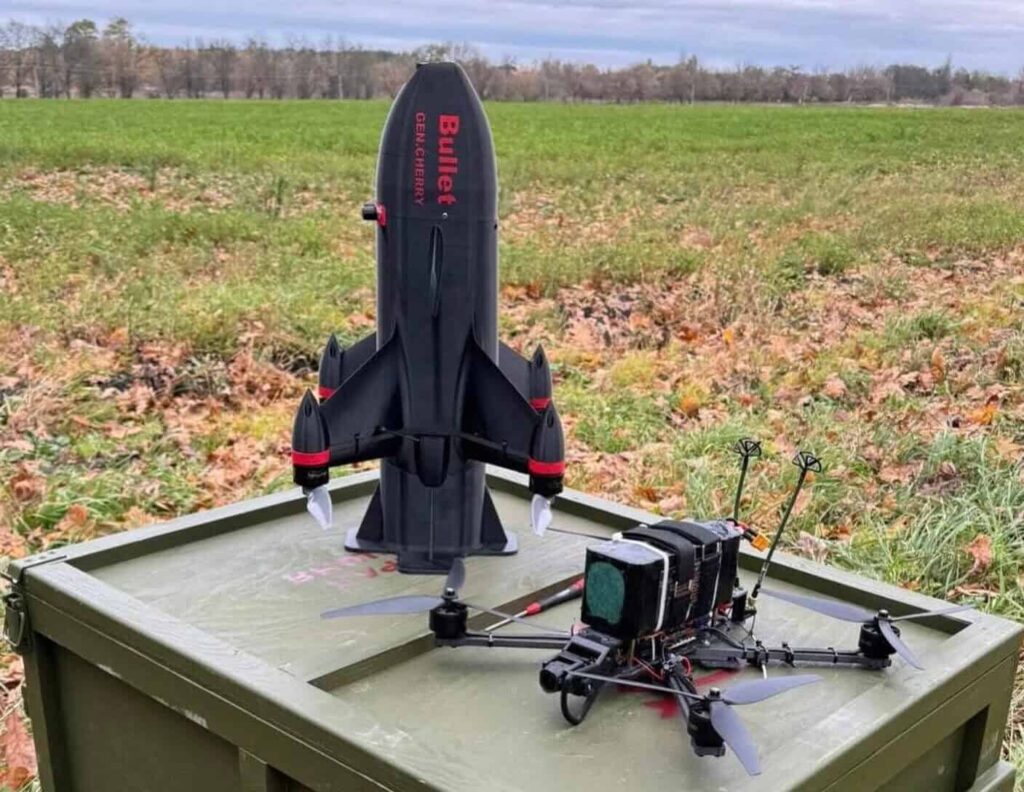
Drones made by Ukrainian company General Cherry recorded more than 20,000 confirmed target hits in June, topping Ukraine's effectiveness ranking for FPV strike systems, the company told Militarnyi. It was the company's third consecutive month at the top, with confirmed hits across the spring exceeding 40,000. General Cherry led in two categories: total "e-points" earned across all strike systems and FPV drone effectiveness.

The ranking matters because of what it feeds. Ukraine runs a combat-into-currency procurement system: frontline units earn "e-points" for verified battlefield results, then spend those points on the Brave1 Market, choosing hardware directly from manufacturers. More than 400 units have ordered over 500,000 systems this way.

The scoring is based on confirmed combat results uploaded and verified through Ukraine's battlefield systems, which means a manufacturer's ranking is not a marketing claim but a running tally of which drones actually convert to kills. A company at the top of that ranking is one whose drone units will keep choosing. 

The company behind the number

General Cherry said its June result rose more than 5,000 confirmed hits over May—the largest month-on-month gain of any manufacturer in the ranking—and attributed the improvement to iteration based on operator feedback from combat units.

Combat footage of Bullet interceptor drones striking Russian Shaheds.

General Chereshnya says its Bullet and AIR interceptors have destroyed dozens of Shahed-type targets.

Interceptor drones create a cheaper, more flexible air defense layer that reduces pressure on… pic.twitter.com/6S09zUVKAc

— Euromaidan Press (@EuromaidanPress) November 28, 2025

The same company builds the General Cherry AIR and Bullet interceptor drones that Ukrainian forces used to shoot down Russia's AI-modified Molniya strike drone on the Zaporizhzhia front—meaning the manufacturer topping the strike-effectiveness ranking is also producing the interceptors defeating Russia's autonomous drones. General Cherry recently developed a reconnaissance drone, Sweetheart, with a range of up to 150 km.

Molniya drone carrier
Explore further

Russia’s AI drone can’t be jammed or detected—so Ukraine shot it down

Why is the manufacturer ranking different?

Ukraine's points system has two visible faces. On the demand side, units compete on a public leaderboard—"Birds of Madyar" topped the unit rankings for 2025, the year Ukrainian drones hit some 820,000 Russian targets in total—and the best-performing units get access to the best hardware first. On the supply side, which the General Cherry result illustrates, manufacturers are ranked by how effectively their systems perform in combat.

The two are linked: units buy what works, verified performance determines what's available, and the manufacturers whose drones score highest get ordered most. It is a feedback loop in which battlefield data, not procurement lobbying, determines market allocation.

That loop is why the West is studying it. The US launched a near-identical marketplace in March 2026, copying Brave1 Market and DOT-Chain Defense. Ukraine produced roughly 4 million drones in 2025, more than all NATO members combined, and aims to reach 7 million in 2026—an output distributed across competing manufacturers whose survival depends on frontline performance.
  • ✇Euromaidan Press
  • Russia’s AI drone can’t be jammed or detected—so Ukraine shot it down
    Ukraine has shot down an autonomous version of Russia's Molniya strike drone. It is the first confirmed intercept of the AI-equipped variant, which cannot be jammed by electronic warfare, Ivan Fedorov, head of the Zaporizhzhia Oblast Military Administration, announced.  Russia's pivot toward autonomous and fiber-optic drone variants is part of a broader effort to neutralize the electronic warfare advantage that has been one of Ukraine's key equalizers in the drone war—forci
     

Russia’s AI drone can’t be jammed or detected—so Ukraine shot it down

9 juillet 2026 à 06:11

Molniya drone carrier

Ukraine has shot down an autonomous version of Russia's Molniya strike drone. It is the first confirmed intercept of the AI-equipped variant, which cannot be jammed by electronic warfare, Ivan Fedorov, head of the Zaporizhzhia Oblast Military Administration, announced. 

Russia's pivot toward autonomous and fiber-optic drone variants is part of a broader effort to neutralize the electronic warfare advantage that has been one of Ukraine's key equalizers in the drone war—forcing Ukraine to develop kinetic intercept at scale as the primary answer to threats that jamming cannot touch.

What makes it different

The standard Molniya—a plywood-and-simple-parts aircraft-type kamikaze drone with a declared range of up to 40 km—normally requires an operator and a radio control link, both of which Ukraine's jammers and drone detectors can target. The AI variant removes both. It carries only a camera and an onboard computer; navigation, target search, and the final attack run are all handled autonomously. With no control antenna, there is no operator link to sever and no radio emissions for Ukraine's electronic warfare systems to lock onto.

Serhii "Flash" Beskrestnov, adviser to Ukraine's defense minister on electronic warfare, noted that the intercepted drone also carries a separate detonation circuit—triggered when the top cover is opened—designed to destroy the drone before it can be examined. He noted that the AI Molniya flies with a low radar cross-section and a reduced infrared signature on top of its near-silent electronics, which can delay detection until the drone is nearly on top of its target.

How Ukraine brought it down

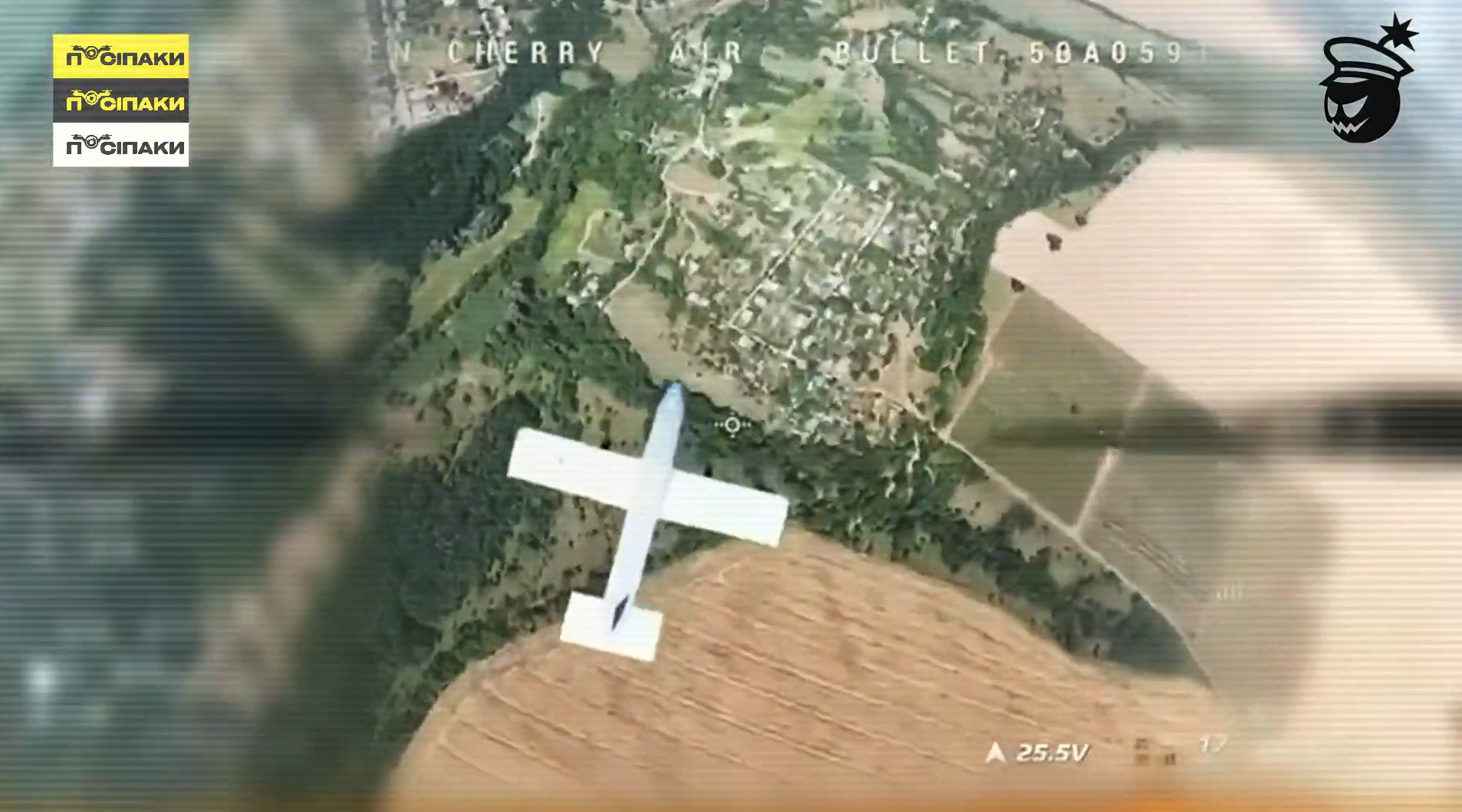
Over Zaporizhzhia, a joint effort by Zaporizhzhia police, National Guard, and interceptor crews brought down the AI Molniya for the first time. The drones were destroyed with domestically produced General Cherry AIR and Bullet interceptors—the same kinetic systems that accounted for 43% of all Molniyas Ukraine brought down in March 2026.

A Molniya drone equipped with artificial intelligence was shot down over Zaporizhzhia
A Molniya drone equipped with artificial intelligence was shot down over Zaporizhzhia. Screenshot from a General Cherry video

The drone and its operators

The Molniya is among the cheapest weapons in Russia's arsenal—a low-cost kamikaze built close to the front, reliable and ubiquitous. Russia launches up to 10 a day in the Zaporizhzhia direction alone, sometimes fitting one with an anti-tank mine or flying it as a mothership for FPV drones. In June, Russia's Rostec presented the drone for export under the name Lightning 13 at the National Security. Belarus-2026 exhibition.

Preliminary Ukrainian assessments point to Russia's 50th Varyag Unmanned Systems Brigade as the main operator of the AI variant, operating alongside the Rubicon unit—two of the formations Russia uses to trial its newest drone technologies on the Zaporizhzhia axis.

What comes next

Beskrestnov has already warned that this may not be the end of the trend. The next step, he says, is a fiber-optic version of the Molniya that is already being tested. Tethered to its operator by a glass fiber rather than relying on radio communications, it would emit no radio signal at all, making it invisible to Ukraine's electronic reconnaissance and immune to jamming.

Fiber-optic FPV drones have already reached the battlefield around Kharkiv. A fiber-optic Molniya-class aircraft would extend the same challenge over much greater distances, further eroding the effectiveness of electronic warfare.

Inexpensive electronic warfare has been one of the defining equalizers of the war, allowing defenders to disable expendable drones without firing far more expensive interceptors. As drones become autonomous or fiber-optic controlled, that advantage begins to disappear. Autonomous target-selection systems are already undergoing combat testing by both Russia and Ukraine.

Ukraine's response is increasingly shifting toward kinetic interception—and that solution is already attracting Western interest. General Cherry, whose interceptors brought down this Molniya, has reached the final stage of the Pentagon's Drone Dominance Program, a Hegseth-era initiative to field low-cost drones capable of operating in contested electronic warfare environments.

The company has also signed a joint venture to manufacture its Bullet interceptors in New Hampshire. Ukraine is becoming the proving ground not only for the drones that future wars may rely on, but also for the systems designed to defeat them.

  • ✇Euromaidan Press
  • Ukrainian drones adopt focused antennas to slip by Russian detection
    Ukrainian attack drone tech is racing to become harder to intercept. Recently, Russian military bloggers have highlighted another development: the use of directional antennas mounted on a dynamic gimbal—something Ukrainian sources confirmed.  Unlike omnidirectional antennas, these beam the connection in a tight cone between a drone and a signal repeater, while the gimbal keeps the antenna pointed in the right direction to avoid losing contact. This reinforces the connec
     

Ukrainian drones adopt focused antennas to slip by Russian detection

16 juin 2026 à 13:19

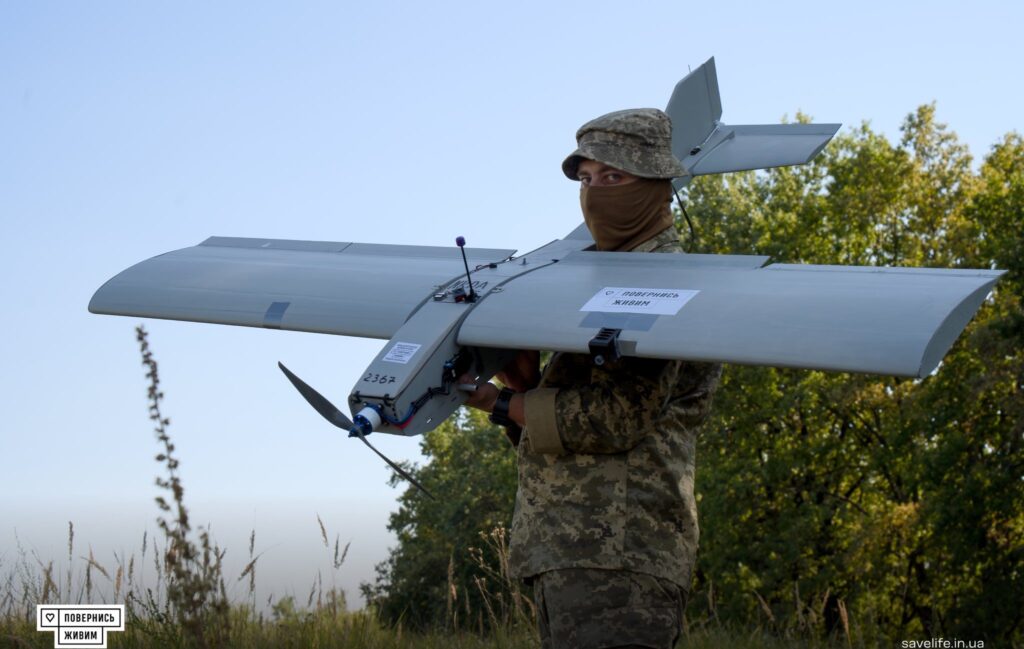
A Ukrainian service member holds a Darts attack drone, which has a reported range of 40-60 kilometers. Russian military sources say that these are among the Ukrainian drones that mount a directional antenna that can dynamically maintain connection with a signal repeater. (Photo: Come Back Alive Foundation)

Ukrainian attack drone tech is racing to become harder to intercept. Recently, Russian military bloggers have highlighted another development: the use of directional antennas mounted on a dynamic gimbal—something Ukrainian sources confirmed. 

Unlike omnidirectional antennas, these beam the connection in a tight cone between a drone and a signal repeater, while the gimbal keeps the antenna pointed in the right direction to avoid losing contact. This reinforces the connection between drone and operator and makes it harder for enemies to detect its presence.  

“Omni antennas are like a bad swimmer. Thrashing around making waves in all directions. He might move in the right direction, but not very efficiently and everyone knows about it,” said James, an American engineer who heads an Azov Corps laboratory. He requested to omit his last name for the sake of operational security. 

“A directional antenna is like a whale. Better swimmer than you or I, but still makes a lot of waves, and takes a lot of power to push through the water. A Yagi-Uda antenna (a type of directional antenna first developed a century ago) is like a shark—sleek & focused. They can really sneak up on you.”

“The latest beamforming phased arrays are like swordfish, or a barracuda,” he concluded. “Just a silver flash.” 

From bombers to mid-range attack drones

According to an Unmanned Systems Forces service member, speaking on condition of anonymity, Ukrainians are using this tech on their Vampire heavy bomber drones and their Baton small attack drones.

“It is quite a simple task in terms of engineering,” they said. “And of course it makes the link stronger.”

They added that it's often simpler to just use Starlink. However, Russia has once again started to deploy large jammers that can disable Starlink in a 20-kilometer area, making it useful for troops to have other tools in their arsenal.

Russian Volna Kupol Garant system, meant to jam Starlink signals in a 20-kilometer area, shortly before being struck by a Ukrainian attack drone. (Video Still: 422nd Separate Unmanned Systems Battalion "Luftwaffe")
Explore further

Russians deploy massive $1.5M Starlink jammers, Ukrainians are blowing them up

Russian military bloggers write that it is also being used for the Darts mid-range kamikaze drones, which, along with the AI-enhanced Hornet drones, have been wreaking havoc on Russian logistics networks. 

“Given these technical capabilities, in addition to a stable and high-quality signal (as losses are minimal due to directionality), the adversary eliminates the detection of their UAV by sensors, and video signal interception devices,” Russian Telegram channel Ruporofbattle wrote.

“In other words, if this UAV flies near you, even with a standard analog transmitter, on a relatively standard frequency, your existing detection equipment will not alert you to its presence.”

Technology marches on

James said that this technology was, for a while, not fully viable to be used on drones due to its size and form factor. However, successful miniaturization has seen it being used on smaller and smaller hardware. 

Ukrainian company Chupakabra provides multiple examples. Its website shows off Yagi-Uda antennas, rotary platforms for automatic antenna angle adjustments, and a quadcopter mounting its proprietary FlyMonkey signal repeater.

"Just don't show this to our ground control station producers, they haven't yet copied (Ukrainian) technology from 2023, have pity on them," Ruporofbattle opines, snidely. 

James said that he’s glad this technology is finally getting its time in the sun. “I am glad they're finally doing this. I've been screaming about it for years in this war.”

❌