❌

Vue lecture

ICE, inflation and Trump: gen Z readers share their concerns heading into the voting booth

Par : Maya Yang

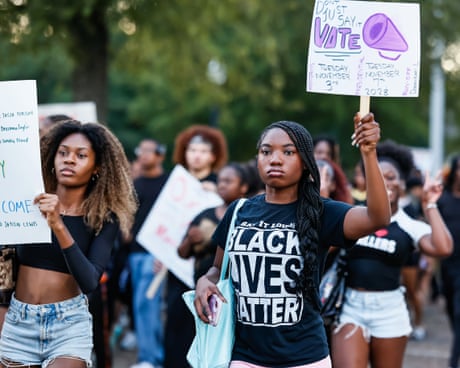
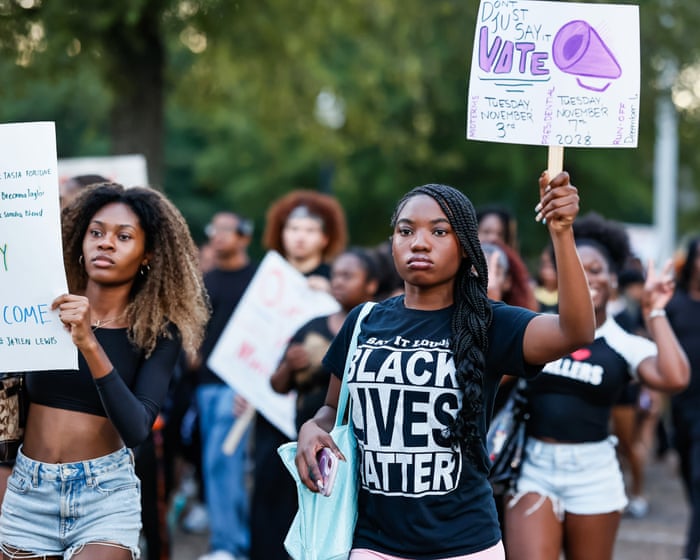
Young voters have many of the same concerns as the larger voting cohort, even if many are not registered to vote

The 2026 US midterms are approaching against a backdrop of growing political uncertainty, with young voters increasingly mobilizing around concerns about the country’s future.

Although nearly 50 million Americans aged 18 to 29 are eligible to vote in the midterms, almost half remain either unregistered or civically disengaged, according to US Census Bureau data.

Continue reading...

© Photograph: Aron Smith/Jackson State University/Getty Images

© Photograph: Aron Smith/Jackson State University/Getty Images

© Photograph: Aron Smith/Jackson State University/Getty Images

  •  

Élections de mi-mandat : quel vote pour les agriculteurs de Caroline du Nord ?

Les élections de mi-mandat ont lieu mardi aux États-Unis, où le président Donald Trump n'a jamais été aussi impopulaire. De nombreux États aux sièges autrefois acquis aux républicains sont vacillants. C'est le cas de la Caroline du Nord, un État profondément rural où un emploi sur cinq est lié à l'agriculture.

  •  

WSJ: US pitches Russian gas through Ukraine’s pipelines as Moscow’s incentive for an energy truce

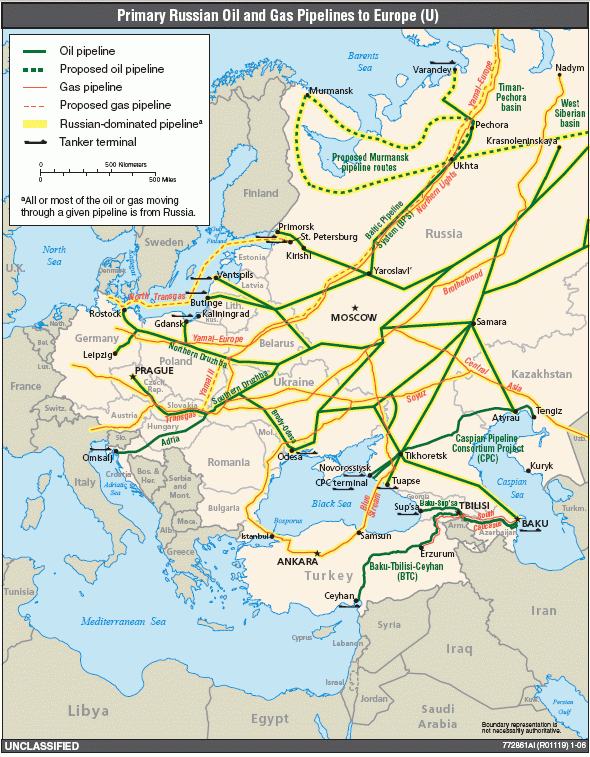
Russia oil gas pipelines to Europe

Trump envoys Jared Kushner and Steve Witkoff floated the idea in Moscow and Kyiv in September, with a US intermediary meant to get around European sanctions, The Wall Street Journal reported on 2 November. European capitals resist it, WSJ said. The Kremlin says the plan cannot work for now, and Kyiv had not commented by Monday afternoon.

The gas is meant to unlock an energy ceasefire between Moscow and Kyiv before winter, US, European, and Ukrainian officials told WSJ. Washington shelved the idea in October, when Ukraine paused strikes on Russian refineries for almost two weeks under US pressure while Russia kept pounding Ukraine’s energy infrastructure. Kyiv’s resumed strikes on 30 October gave the truce push new urgency ahead of US-Russia-Ukraine talks planned for mid-November in Abu Dhabi. Russia has so far rebuffed it.

The pitch

US negotiators see a return to Europe’s gas market as a powerful incentive for Moscow to agree, and argue Kyiv would earn transit fees. People who attended the talks said the deal could be lucrative for American investors. To keep the money from funding the war, White House officials proposed holding the proceeds in a third-country escrow account.

Washington has also cleared Russian diesel sales and is reviewing a request to lift sanctions on the Kremlin’s investment fund.

Europe’s own law

EU rules stand in the way. A Council regulation adopted on 26 January brings a full ban on Russian LNG from the beginning of 2027 and on pipeline gas from autumn 2027. Europe could shift more easily if Kyiv endorsed the gas sales as part of a ceasefire, diplomats told WSJ.

Kremlin spokesman Dmitry Peskov said on 2 November that the situation on the ground showed such plans could not be carried out at the moment. What happens later, he said, depends on buyers and sellers.

Earlier reports from the talks

The New York Times reported on 17 October that the envoys had urged President Volodymyr Zelenskyy to consider restarting the pipelines to help persuade Russia to end the war. Ukraine had let its transit deal expire on 1 January 2025, losing about $1 billion a year in fees, the paper noted. Foreign Minister Andrii Sybiha said then that the move cut off some of Putin’s last leverage over Europe.

Ukraine has cut off more than just Russian gas transit. We have cut off some of Putin’s last remaining leverage over Europe and his use of energy as a weapon. Europe and the world will be safer without Russian gas, oil, and other dependencies, as well as without Russia itself.

— Andrii Sybiha 🇺🇦 (@andrii_sybiha) January 2, 2025

Le Monde reported on 27 October, citing a witness close to the Ukrainian delegation, that Witkoff pushed for fully reopening the pipelines carrying Russian gas and oil through Ukraine at talks in Florida on 9 October. Presidential Office head Kyrylo Budanov rejected the plan, the newspaper reported.

  •  

En Californie, le nombre de traversées illégales de la frontière chute sous l'administration Trump

Rendre la frontière entre les États-Unis et le Mexique plus hermétique pour en finir avec l'immigration illégale : c'était l'une des principales promesses de campagne du président américain Donald Trump. Une promesse largement tenue : le nombre de personnes entrant illégalement aux États-Unis a atteint un niveau historiquement bas depuis l'investiture de l'actuel locataire de la Maison Blanche en janvier 2025. Les tentatives de traversées illégales ont baissé de 93 % si on les compare aux pics de l'administration Biden.

  •  

Ukraine’s and Russia’s human rights commissioners agree to keep working on regular humanitarian missions after the Oleshky evacuation

Residents evacuated from Russian-occupied Oleshky ride a bus in Chernihiv Oblast, Ukraine, 31 October 2026

Ukraine’s and Russia’s human rights commissioners have agreed to keep working on regular humanitarian missions after the evacuation from occupied Oleshky, Ukrainian ombudsman Dmytro Lubinets said on 31 October. A day later, the ceasefire that made the evacuation possible ended.

Without a new truce, the people left behind are back where they were. In July, the Institute for the Study of War concluded that Russia was effectively blockading Oleshky, which lies across the Dnipro from Ukrainian-held Kherson. In May, journalist Zarina Zabrisky said the existing route out, through occupied Crimea, Russia, and Belarus, did not work: only three of 20 people who recently tried it got through.

Oleshky as a first step

Lubinets wrote that he and Russian ombudsman Yana Lantratova had agreed to continue work on regular missions. He said Oleshky should be the first step, since people living near the front line need constant support.

Lantratova claimed the same day that the sides had agreed to hold regular missions.

The truce had been coordinated by US First Lady Melania Trump. On 1 November, Lubinets said both sides had kept their commitments. He added that the two were working through the possibilities of continuing such steps.

Who stayed behind

On 30 October, Lubinets wrote that some buses were heading to Ukraine and others to Russia. About 700 to 1,000 people may remain in Oleshky, The Insider correspondent Tatiana Popova estimated on 31 October. Many feared a provocation or did not want to leave their homes.

Meanwhile, Ukrainian troops used the truce to evacuate 167 civilians, 22 of them children, from Ukrainian-held riverside settlements that came under daily Russian shelling, Ukraine’s General Staff reported on 1 November.

Bodies moved to Henichesk

On 1 November, Ukrainian journalist Oleh Baturin wrote that Henichesk residents had told him dozens of civilians’ bodies were brought there from Oleshky. Volunteer Kseniia Arkhipova confirmed it, he said. By her data, 47 bodies had been kept in the basements of Oleshky’s hospital since May.

How these people died remains unknown. In September, Tetiana Hasanenko, head of Oleshky’s Ukrainian military administration in exile, said more than 100 bodies lay in the basement of the hospital, which had had no electricity for four years.

  •  
❌