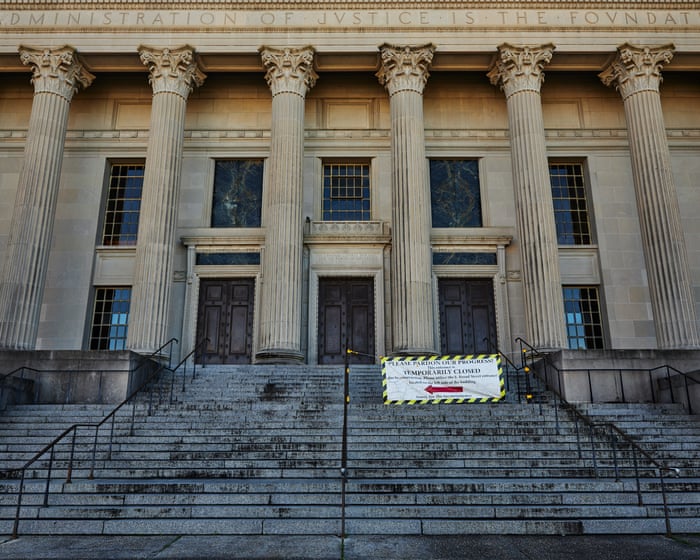
The Bureau of Prisons had argued in court it was merely carrying out an executive order from President Trump instructing a broad swath of government agencies to end collective bargaining with federal unions.
“I don’t deserve to die like this,” said one passenger on Flight 1073 from Dubai to Tel Aviv. The motive of the cockpit stabbing remains unknown, officials said.
A Ukrainian combat simulatorcan now be found and ordered in NATO's supply catalogs by a single code. L7 Simulators, whose trainers have prepared more than 500,000 Ukrainian troops, has had its entire lineup NATO-codified, with each device assigned a 13-digit NATO Stock Number, Defender Media reports.
L7's more than 50 trainers, from the Browning M2 to the Stinger to the NLAW, now carry those codes, and the company can codify new ones itself, opening the door to government procurement in Ukraine and across the alliance. It is another Ukrainian defense maker stepping toward NATO's standards and supply chain.
Every trainer gets a NATO number
A NATO Stock Number is a unique 13-digit code, a kind of military barcode for supplies, that lets defense logistics systems across the alliance identify, catalog, and purchase equipment. Every simulator in L7's catalog now has one, and the firm has also won the status to assign numbers to its future products directly, rather than starting the process over for each one.
The code identifies, not certifies
The company is careful about what the step does and does not mean. Codification is not a certification that the product meets NATO's technical standards, L7 stresses, but rather a mechanism for unambiguously identifying an item within the shared defense-logistics system.
The firm entered that system in December 2024, when its UNITS training platform, already cleared for use by Ukraine's Defense Ministry, received the first number.
Half a million have trained on them
L7's range runs to more than 50 types of trainers, tied together in a single ecosystem the company calls UNITS: fire-training systems, anti-tank and air-defense simulators, and trainers for unmanned aircraft, with models for the Stinger, NLAW, Carl Gustaf, RPG-7, and SPG-9 among them.
The simulators are used by the armed forces, the National Guard, and other security agencies, and more than 500,000 service members have trained on them, with over 70,000 of them free of charge at the company's own training center.
A routine flight turned terrifying when a violent altercation broke out inside the cockpit and the aircraft dropped 17,000 feet in two minutes. Passengers subdued a knife-wielding attacker.
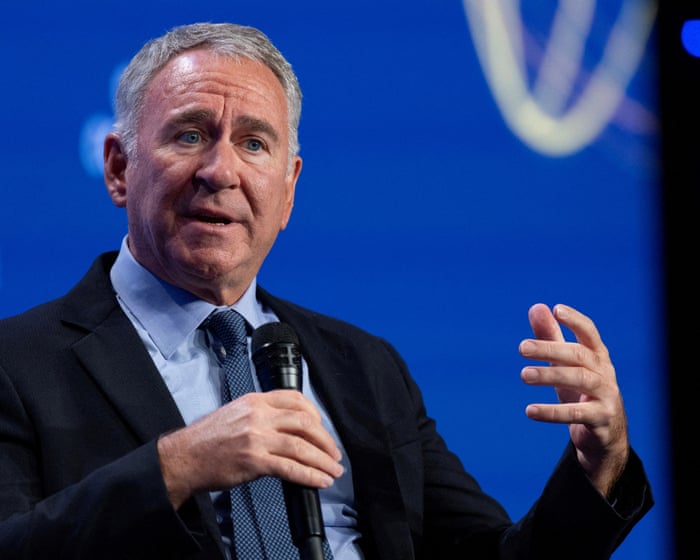
Unprecedented university donation from Citadel CEO Ken Griffin will go toward building a new Miami campus
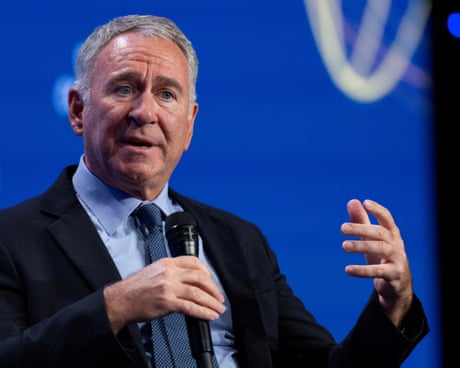
Carnegie Mellon University will receive an unprecedented $3bn donation from the billionaire investor Ken Griffin, making it the largest single donation in the history of US education.
Griffin, 57, is the founder and CEO of Citadel, described as the most profitable hedge fund in history. The money is going toward a new Miami campus as well as big investments at the university’s longtime home in Pittsburgh.
Passengers of a FlyDubai aircraft that made an emergency landing in Saudi Arabia were welcomed at Ben-Gurion International Airport in Israel on Wednesday.
The passenger, Miriam Ohayon, said people on board felt the jet lose control and heard screams. “When they opened the cockpit, there was a lot of blood,” she told Israeli television.
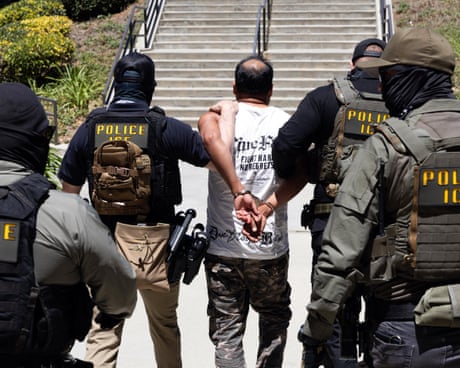
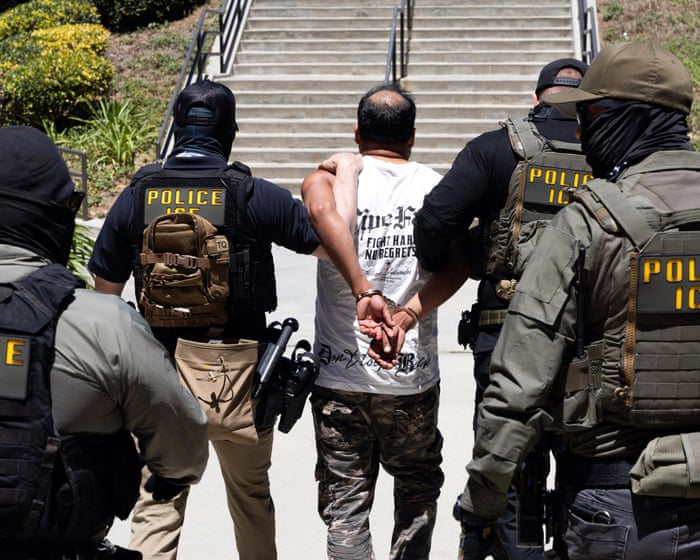
After switching tactics, federal agents are detaining and deporting record numbers of people from the US
When federal agents fatally shot US citizen protesters Alex Pretti and Renee Good in Minneapolis in January during the nation’s largest immigration-enforcement operation ever, it marked a turning point for the second Trump administration’s mass deportation campaign.
Donald Trump in his second term had sparked outrage and huge protests with federal immigration officers descending en masse to one Democratic-run city after another in what some leaders called militarized “invasions”. Los Angeles, Chicago, Charlotte, New Orleans, then Minneapolis saw lines of masked and armored officers swaggering into town to conduct street arrests, ambushes of day workers waiting in Home Depot car parks for hire, and neighborhood sweeps. Adults and kids were whisked off to detention and protests met with aggressive deployment of chemical spray, teargas, fists and batons. The killings in Minneapolis were the culmination of what appeared to many to be a federal shock force increasingly out of control while being defended by federal leaders – and public opinion broadly turned against this violence.
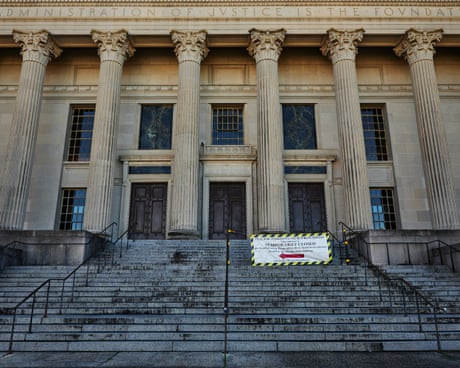
Kimya Holmes’ police report over a news segment on a real-estate transaction invokes law that no longer exists
A New Orleans state court judge filed a police complaint against a local CBS affiliate after it aired a segment scrutinizing a real-estate transaction in which she was involved, with the jurist invoking a section of law that no longer carries criminal penalties, according to the journalist who reported the story.
The situation centering on New Orleans criminal court judge Kimya Holmes and investigative reporter David Hammer was only the latest in a series of high-profile matters pitting Louisiana journalists against members of the state’s court system.
The company that actually assembles Russia's homegrown answer to Starlink has been left off every Western sanctions list, a US research group and a Ukrainian anti-corruption watchdog separately told Euromaidan Press this month.
Both landed on the same gap—the manufacturer, Bureau 1440, and its leaders remain untouched by the West, even though Kyiv has already placed the firm on Ukraine's own sanctions list. They differ on how much a Western designation would achieve, not on where the opening is.
The company no Western government has sanctioned
Rassvet is Russia's low-Earth-orbit satellite constellation, built by the private firm Bureau 1440 to give Moscow's troops communications independent of SpaceX. Bureau 1440 launched its first 16 satellites in March 2026, building the network after SpaceX cut off the Russian units' unauthorized Starlink access. C4ADS, a US-based research organization, confirmed to Euromaidan Press that Bureau 1440 and its leadership sit outside every Western sanctions regime, and called designating the manufacturer the single most visible and effective step available.
Viktoriia Vyshnivska, a senior analyst at the Independent Anti-Corruption Commission (NAKO), a Ukrainian watchdog, was more measured. "We shouldn't expect a magical effect," she said, but sanctions would make the Western boards and components Bureau 1440 depends on harder and costlier to source. Many of those goods are already banned under EU export controls, she noted—yet the manufacturer itself remains off the lists.
The EU named the network but not the firm
The EU has already moved once. Its 21st sanctions package, adopted on 23 July, targeted the Rassvet network but stopped short of the manufacturer, leaving Bureau 1440 and its chief executive off the lists. On 28 August, Ukrainian Foreign Minister Andrii Sybiha said Kyiv had sent a formal note to the UN's telecom agency requesting that Ukraine be excluded from Rassvet's coverage. Days later, he urged EU ministers to sanction the project. Ukraine gave partners a list of nine entities tied to it, Militarnyi reported, citing sources.
For years Ukraine could find, jam, or knock out the communication links Russian forces leaned on. Rassvet may be the first it cannot. Vyshnivska put the useful window to slow it at about a year. Russia, by Ukrainian calculations, needs five to eight years to see it through.
Euromaidan Press examined how Russia built Rassvet, and how far it still has to go.
Group of officers known as ‘riders’ in 2000s prompted longest arrangement of its kind in US history
After 23 years, a district judge has released the Oakland police department (OPD) from federal oversight, marking the end of the longest arrangement of this kind in US history.
In the early 2000s, a group of police officers known as the “riders” were exposed for offenses like planting evidence, falsifying reports and using excessive force against primarily young Black men. These actions led victims to file more than 100 civil lawsuits against the department. In 2003, as a part of the settlement of these cases, OPD was put on a federal court-ordered reform program.
Far-right influencers piled on Gov. Sarah Huckabee Sanders, President Trump’s former press secretary, over a campaign ad about Medicaid work requirements in Arkansas.
Gov. Sarah Huckabee Sanders of Arkansas has come under fire for an ad her campaign produced about the state’s work requirements for Medicaid recipients.
Gov. Sarah Huckabee Sanders of Arkansas has come under fire for an ad her campaign produced about the state’s work requirements for Medicaid recipients.
Douglas Carter, 71, who has spent more than four decades on death row, released on bail until new trial begins
A Utah man who has spent more than four decades on death row was released from jail after newly analyzed DNA evidence showed that he was not connected to a 1985 homicide.
Douglas Stewart Carter, now 71, walked out of the Utah county jail late on Monday night after a judge ordered his release on bail. He will have to wear a GPS monitoring device until a new trial begins.
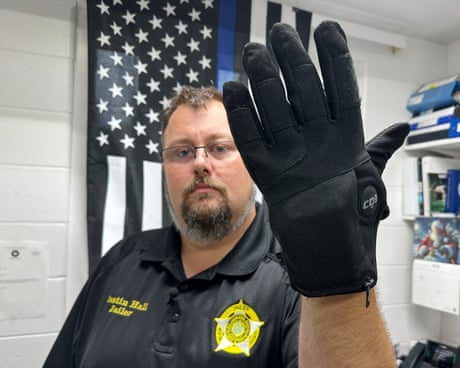
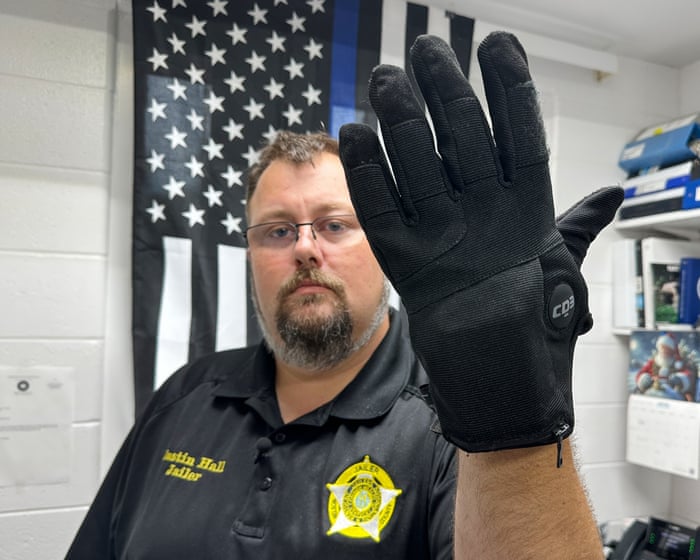
The ban on shock gloves will take effect next year and remain in place until 2030. It comes weeks after US Immigration and Customs Enforcement (ICE) moved to equip its officers with the gloves, which are designed to gain compliance from combative individuals. Last month, the agency awarded a nearly $17m contract to buy 6,000 pairs.
Russia plans to sharply increase military spending in 2027 while expanding the authorized size of its armed forces, according to budget documents seen by Reuters and a report by Novaya Gazeta Europe.
The developments point to Moscow preparing to expand its war effort into next year, even as its battlefield gains remain limited and its campaign increasingly relies on missile and drone attacks against Ukrainian cities and civilian infrastructure. It is also doing so as the Russian government faces a widening budget deficit and falling projected oil and gas revenues.
Russia plans 27% increase in 2027 defense spending despite widening budget deficit
Russia plans to spend 17.1 trillion rubles ($202.6 billion) on defense in 2027, according to government documents reviewed by Reuters. That is about 27% more than the 13.5 trillion rubles originally budgeted for defense in 2027 and would be the highest level of military spending since Russia launched its full-scale invasion of Ukraine in February 2022.
The documents project total defense spending of 50 trillion rubles over the next three years. The actual amount Russia will spend on defense in 2026 is classified, Reuters reported, while some military-related spending can be recorded under other parts of the state budget.
The planned increase comes alongside worsening fiscal pressures. Russia has raised its forecast for the 2026 budget deficit to 3.2% of GDP, from an earlier estimate of 1.6%, according to Reuters. Overall government spending is expected to rise 13.2% this year to 48.6 trillion rubles, or 20.9% of GDP.
The government also expects to increase net borrowing by 26% in 2026 to 5 trillion rubles and withdraw 459 billion rubles from its National Wealth Fund, Reuters reported. Its forecast for 2026 oil and gas revenues has been cut to 7.6 trillion rubles from 8.9 trillion.
Russia is reportedly planning new tax increases for 2027 to help cover the growing deficit. A new windfall tax on metals and mining companies is expected to bring in about 200 billion rubles a year, according to the documents. State debt is projected to rise to 21.7% of GDP in 2027, above the 20% level Russian authorities have previously considered safe.
The draft budget is expected to be submitted to Russia's parliament by October 1.
Army staffing also reaches new high
At the same time, Russian President Vladimir Putin has again increased the authorized size of the country's armed forces.
Putin signed a decree raising the official staffing level of the Russian Armed Forces to 2.44 million people, including 1.55 million military personnel, Novaya Gazeta Europe reported on September 28. The increase is 15,500 personnel compared with the previous decree issued in August.
It is the fourth increase in the authorized size of the Russian military in 2026 and the seventh since the beginning of the full-scale invasion of Ukraine, according to Novaya Gazeta Europe. Before the invasion, the authorized force stood at 1.90 million people, including 1.01 million military personnel.
Russia shifts more of the war into the air
The increases in military staffing and spending come as Russia continues to pursue its maximalist war aims despite limited battlefield progress. The Institute for the Study of War assessed on September 27 that Russia's frontline has remained largely static in recent months and that the Kremlin is increasingly relying on long-range missile and drone strikes as part of its effort to force Ukraine to capitulate during the winter of 2026–27.
ISW assessed that Putin may be trying to make Ukraine's infrastructure and air defense capacity buckle under sustained Russian strikes rather than relying solely on further territorial gains. The institute also said the Kremlin may delay a large-scale mobilization while it assesses whether its expanded long-range strike campaign can achieve its objectives.
The planned increase in military spending and the repeated expansion of the armed forces show that Moscow is preparing to sustain and expand its war effort into 2027, even as its forces make limited territorial gains in Ukraine.
A bus carrying Myanmar nationals being repatriated from Malaysia to their homeland, seen heading toward the Lumut Naval Base, on the outskirts of Kuala Lumpur, on Tuesday.
The industry is engaged in a perverse quest to replace humans. We cannot cede the best tools available to the other side
I don’t need to tell you that people hate AI. The list of grievances is long: slop, cheating, bias, enfeeblement, electricity bills, environmental destruction, exploitation, theft, cybercrime, doom. But resistance to the technology has often taken the form of shaming people for personally using it, with precious little organizing against the companies building the machines. This is perplexing, given that those companies are attempting to render us obsolete.
The executives may contest this framing, offering some bromides about how AI will augment human work or how we’ll simply find new jobs to do. But their clear goals are to create systems that so clearly surpass our abilities that we will have little hope of competing.
The eviction of an 87-year-old set off protests in the country, which has an acute housing shortage. The government presented legislation to protect renters.
María del Carmen Abascal at home in Madrid last week, waiting for the police to arrive before being evicted. Her removal brought large protests in Spain.
A group supporting Dan Osborn, the independent Senate candidate in Nebraska, is airing an ad attacking Senator Pete Ricketts, a Republican, for pardoning a man convicted of sexual assault.
Dartmouth said it would investigate its provost over A.I. accusations. Similar controversies on other campuses have prompted frustration among students.
Dog’s handler resigned from sheriff’s office after it emerged Bart had died due to severe dehydration in nearly 101F heat
The recent death of a Tennessee sheriff’s office dog after being left in an outdoor kennel without water for a day and a half in excessive heat has prompted the animal’s handler to resign amid administrative and criminal investigations, according to authorities.
Bart had been a patrol dog specializing in suspect apprehension, tracking, searches and drug detection before his handler found him dead inside his outdoor kennel on 19 September, Julian Wiser, the Madison county sheriff, said in a social media video announcement.
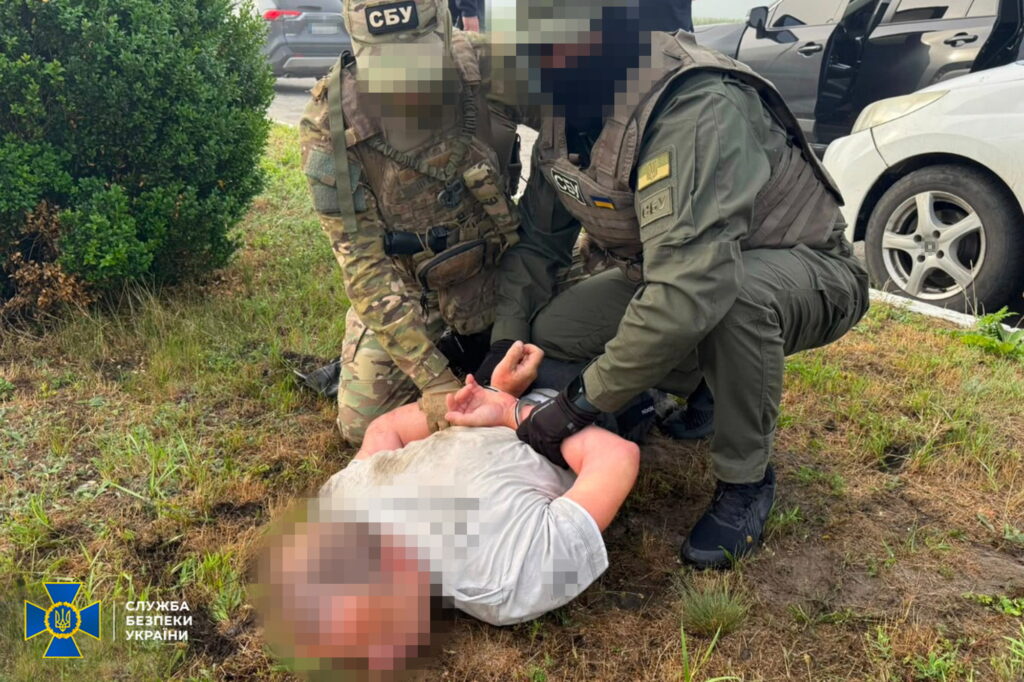
Russian intelligence services have sharply stepped up building websites and social media pages that impersonate Ukrainian state bodies and media, the Security Service of Ukraine (SBU) warned. Moscow uses the fakes to spread disinformation and to steal personal data it can turn into spy recruitment. The SBU says it has already blocked dozens of clones of its own brand.
Counterfeit pages built for propaganda and data theft
The fake sources serve Russian psychological operations and disinformation campaigns, the SBU said on 28 September. Their aim is to destabilize the situation inside Ukraine and damage its position abroad. Russian intelligence also uses them to extract Ukrainians' personal data, the agency said.
Alongside its full-scale invasion, Russia wages war on Ukraine in the cyber domain and through espionage and sabotage. Every agent Russia recruits inside Ukraine can help steer missiles and drones onto targets, and the SBU keeps catching such recruits.
Hacked accounts become recruitment leads
Russians often hack the accounts of users who subscribe to the fake pages and messenger channels, the SBU found. They then use the stolen information for recruitment operations and to collect confidential data.
Moscow is most interested in the combat and operational work of Ukraine's defense and security forces, the agency said. The SBU's cybersecurity department found and blocked more than 50 resources that copied the agency's own branding and positioning.
The fake pages are not Russia's only digital tool. Earlier in September, Anthropic said it had caught Russian spies running a campaign against Kyiv on its Claude AI chatbot.
Explore further
Poland and the Baltics risk Russian sabotage for backing Ukraine, Bloomberg says
How Ukrainians can protect themselves
The SBU urged citizens not to follow suspicious links and to rely only on official sources. Anyone who sees a dubious web address, or gets a message from someone posing as an SBU officer, should call the 1516 hotline, the agency said.
What Russia's recruits are sent to do
The SBU's own reports from the past week show what Russia's recruits are tasked with. A mobilized soldier allegedly recruited by the FSB, Russia's Federal Security Service, tried to direct a Russian missile strike on his own unit in Kharkiv Oblast, the SBU said. His repair battalion restores Ukrainian drones.
A Lviv Oblast resident who worked at a drone production site in western Ukraine was allegedly recruited to guide a missile strike on it, the agency reported. The strike was meant to disrupt the steady supply of strike and reconnaissance drones to Ukrainian troops, the SBU said.
A court also sentenced a 17-year-old agent of Russia's military intelligence (GRU), exposed in November 2024, to 10 years in prison, the SBU announced. She tracked Ukrainian air defenses in Chernihiv Oblast under the cover of taxi rides. She talked to her GRU handler through an anonymous messenger chat.
The outlook for the legislation, which seeks to stabilize the unsettled collegiate sports landscape, is uncertain in the House. It was one of the last congressional actions before the midterms.
The Vanderbilt Commodores playing the Virginia Cavaliers in Charleston, S.C., on Sunday. A series of legal rulings has sowed chaos in college sports, proponents of the legislation say.
Gabe Reilly, a Salt Lake City firefighter who was an experienced BASE jumper, died in an accident near Millville Canyon in northern Utah on Sunday, officials said.
The hackers behind the massive FBI breach told 404 Media on Monday they do not intend to publish the data.
The breach, in which the hackers stole personal information on “all FBI employees and applicants” including physical addresses, job roles, names of spouses, and medical records, represents a significant national security and counterintelligence threat. Criminals in the same ecosystem as the hacking group, called ShinyHunters, have previously used hacked phone data to track and harass the FBI agents investigating them. When 404 Media first broke news of the breach, the group sent the personal data of an agent and their spouse who they said was investigating the group.
Ukraine's government plans to pay for its army, pensions, and public-sector wages first, and freeze the parks, fountains, and repaving. Prime Minister Serhii Koretskyi says his Cabinet reordered its spending priorities because part of the international aid it counted on has not arrived.
The war is costing the country at least $155 billion this year, Koretskyi stated earlier.
Defense and people come first
"We continue to take tough anti-crisis measures to ensure the most important thing, the needs of defense and our people," Koretskyi says.
The state will continue to pay for the army, pensions, social benefits, and the salaries of teachers, doctors, and other public-sector workers. Everything deemed non-critical is on hold: new construction, reconstruction, capital repairs, and tidying-up projects, among them parks, squares, fountains, and repaving.
"It is worth finally ceasing to spend money on non-priority things," he continues, promising the state will return to them later.
The aid runs late
On 27 September, Ukraine's prime minister stated that the shortfall in the defense budget's needs stands at $27 billion.
"The president, the government, and all branches of authority are working with partners to find mechanisms and sources to cover the remaining $20 billion," he stressed.
These funds are critically needed to supply the Defense Forces with drones, missiles, equipment, and other resources ahead of winter.
"The government, for its part, guarantees that by 15 October, all government decisions required to receive the international financial assistance promised by partners will be implemented," he stated.
Local budgets get the same call
Koretskyi extended the order downward, urging local councils to review their own budgets and cut spending that is not a priority now. The message across government is the same: pool what is available for the army and citizens, and leave the fountains and the rest for after the war.
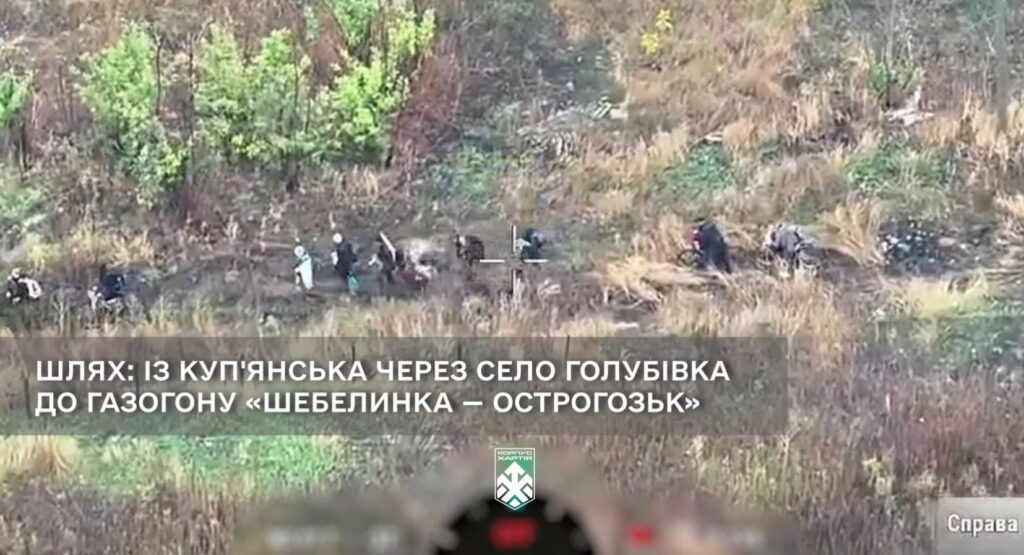
Russian troops retreating near Kupiansk abducted civilians, including children and elderly residents, and drove them into a gas pipeline to cover their withdrawal, the 2nd National Guard Corps Khartia said. The men of military age walking with them in civilian clothes were most likely Russian soldiers who had removed their uniforms, the corps added. Its reconnaissance drones filmed the group on 27 September. Ukrainian forces watched the column but did not open fire because of the civilians, ArmyInform reported.
Ukraine's military has accused Russia of using civilians as human shields in Kupiansk before. During its offensive, Russian troops also tried to enter the city through an inactive gas pipeline. Now, Khartia says, a pipe once used by Russian saboteurs is carrying abducted civilians toward occupied territory.
Nine people forced into the pipeline
Khartia filmed the group as the corps pressed its counteroffensive in the Kupiansk community in Kharkiv Oblast. The footage shows nine people: children, elderly residents, and a person on crutches. Men of military age in civilian clothing walk alongside them.
The group was led from Kupiansk through Holubivka village to the Shebelynka-Ostrohozhsk gas pipeline.
Civilians enter an opening in the ground near the Shebelynka-Ostrohozhsk gas pipeline near Kupiansk, Kharkiv Oblast, 27 September 2026. Screenshot: Khartia Corps
The footage shows them being led into the pipe, where they face a walk of about 10 km in darkness. The pipe exits in a forest, and the civilians will likely be taken to occupied territory.
"We documented this case. The materials will be handed over for a war crimes investigation," the corps said.
Explore further
Russia holds 2,000 people hostage in Oleshky without food or water—Ukraine flew 4,000 kg of food to locals across the Dnipro
Ukrainian forces held fire—Russia counted on it
Ukrainian troops saw the group and did not open fire because children and elderly people were among them. Russia counted on exactly that, Khartia said.
The corps warned that Russian propaganda could present the footage as an "evacuation" or "rescue" of civilians, Militarnyi reported. Khartia calls it an abduction.
Khartia's counteroffensive near Kupiansk comes alongside other Ukrainian advances farther south. In northern Donetsk Oblast, the Third Army Corps' Operation Vivaldi has regained control of 125 km², including 50 km² previously under Russian occupation, and inflicted more than 3,000 Russian personnel losses, the corps said. The operation has effectively erased Russia's planned Lyman pincer. Near Kupiansk, Ukraine's defense forces continue pushing Russian forces toward the Oskil River, and the liberation of forests near Dvorichna and Zapadne has reduced the threat to the city.
Russia's low-Earth-orbit satellite constellation Rassvet went from a few minutes of connectivity over Ukraine to two stable windows lasting more than an hour each in just five months. The system was built by the Russian private company Bureau 1440 as Moscow's answer to Starlink.
As of now, it is nowhere near matching SpaceX's 10,000-satellite network—but the gap between what Russia has now and what it needs is closing, and the tools that could slow it down mostly sit unused. When Ukraine and SpaceX bricked Russian-obtained Starlink terminals earlier this year, Russian assaults froze across the front—proof that cutting satellite command-and-control links matters more than disrupting guidance. Russia is now building its own links. The most consequential tool that could slow that down is Western sanctions against Bureau 1440 itself.
Four years of Western sanctions have failed to cut Russia off from the foreign components its missile and drone factories rely on: parts manufactured after sanctions were imposed still reach Russian assembly lines within months. Rassvet is a new version of the same problem. The system is still being built and relies on imported components whose exact origin is disputed—some experts point to American and European parts reaching Russia through sanctions-evasion networks, others say the core hardware is built from off-the-shelf Chinese components. Its manufacturer remains unsanctioned by any Western government, while some of the infrastructure needed to expand production has already been struck by Ukraine.
Six minutes in March, two hours by August
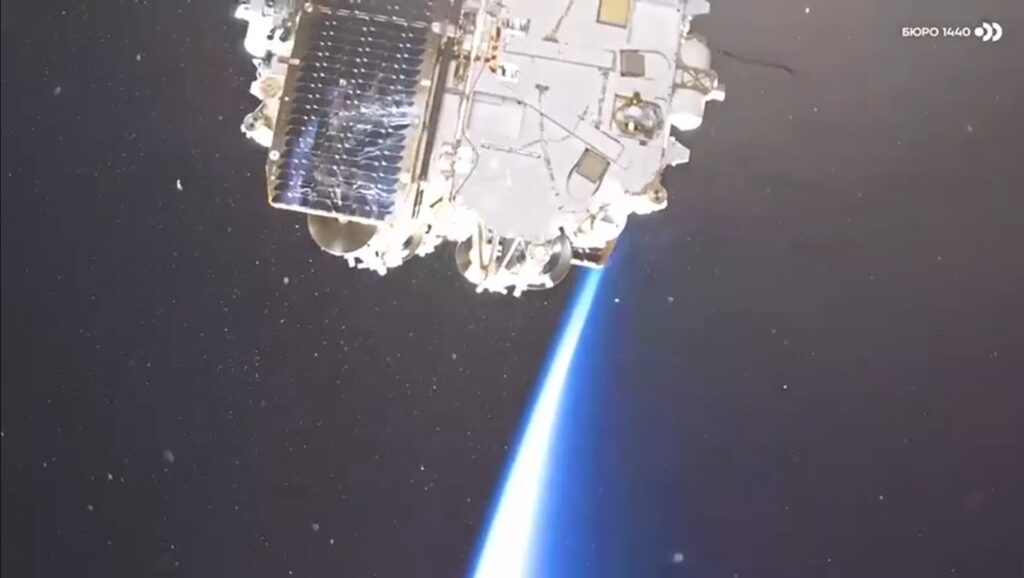
In March 2026, Bureau 1440 launched its first operational batch of 16 Rassvet satellites from Plesetsk Cosmodrome. Each pass over Ukraine created a window of six to 10 minutes, Serhii Beskrestnov, callsign Flash, a Ukrainian presidential adviser on defense technology, estimated at the time.
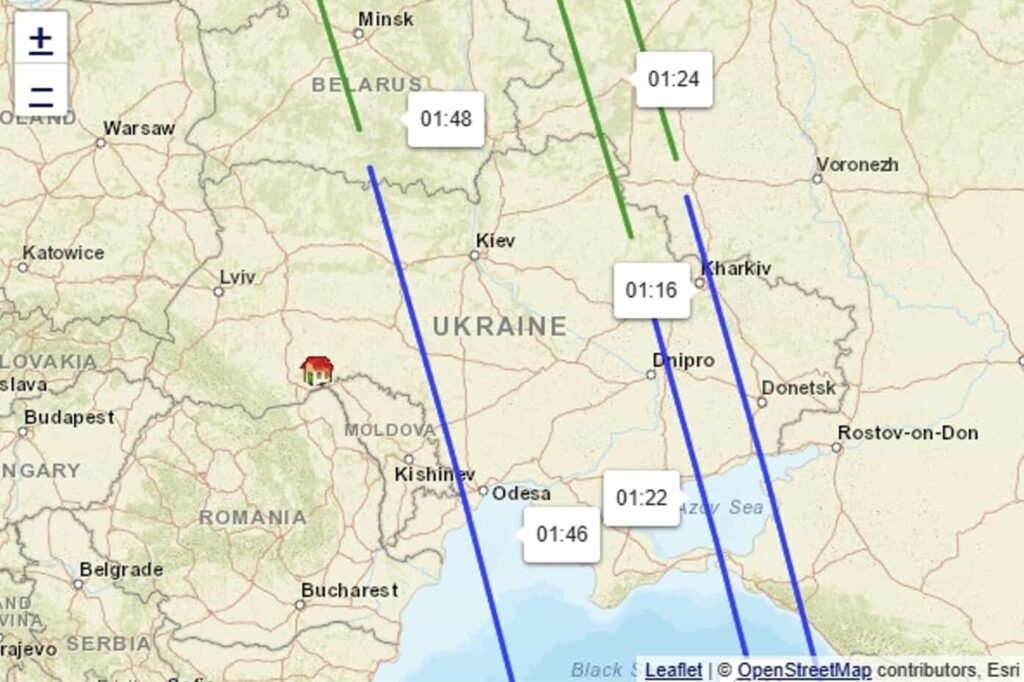
By late August, the picture had changed. Tracking data from N2YO showed four passes a day and two stable communication windows lasting more than an hour each. Satellite communications expert Volodymyr Stepanets said that 12 of the 16 satellites from the first batch had reached their operational altitude of 550 km, three were still ascending, and one had burned up—likely due to a manufacturing defect. A second batch of 16 went into orbit in July, though those satellites struggled to reach their target altitude and some may reenter the atmosphere.
Bureau 1440 shows footage of separation of 16 Rassvet satellites from Soyuz's third stage pic.twitter.com/jhe2krZ1kA
The second batch may be climbing faster than the first did at the same stage. Still, Russia is far from the 200–250 satellites Beskrestnov considers necessary for stable, round-the-clock coverage, and the altitude of roughly 550 km is still short of the roughly 800 km the constellation is designed to reach.
What Rassvet would change on the battlefield
Russia is unlikely to have any civilian use in mind for these communication windows. The satellites transmit in the Ka and Ku bands—high-frequency signals that are difficult to jam and difficult to detect.
Radio frequency spectrum and satellite frequency bands, including Ka and Ku bands used by Russia's Rassvet constellation. Source: Bliley Technologies
Right now, Ukraine's electronic warfare can push Russian drones offline: a Shahed flying low through a jammed zone loses its link and drifts off course. A satellite relay overhead would change that. The drone holds its course, receives updated coordinates mid-flight, stays below radar, and strikes. The constellation could do this for long-range strike and naval drones alike—letting them operate through electronic warfare at very low altitudes, where Ukraine's air defenses struggle to see them.
Bureau 1440 has also developed user terminals small enough to fit on Geran-type attack drones and cruise missiles. Gerans have struck Ukrainian territory, including Kyiv and Kyiv Oblast, almost continuously over the past month. A terminal on a Geran would turn a one-way munition into a weapon that can be redirected after launch. Unlike the Starlink terminals Ukraine relies on, which are geographically restricted, Russian terminals are expected to face no such limits—the same terminal that connects a Geran over Kyiv Oblast would work over Berlin or Paris.
A pass of the Russian Rassvet satellites over Ukraine scheduled for 21 April 2026. Source: www.n2yo.com
The sanctions lever—and the gap in it
Rassvet's parent company, IKS Holding, is one of Russia's largest hardware and software developers. The US sanctioned the holding, its then-owner Anton Cherepennikov, and the subsidiaries Kryptonit and KNS Group on 24 February 2023. Cherepennikov died under unexplained circumstances, but the company keeps operating.
Ukraine's Foreign Intelligence Service (SZRU) says the holding serves as a personnel reserve for the Federal Security Service (FSB). The first deputy CEO of IKS Holding is Boris Korolyov, son of FSB First Deputy Director Sergei Korolyov, according to the SZRU. He took the post at 27 in 2023, after Cherepennikov's death.
More importantly, though, is the company that actually builds the satellites—Bureau 1440—and its leadership. Ukraine has placed the company on its own sanctions list, but Kyiv's unilateral designations carry limited trade enforcement power, because these people and this company are absent from Western lists. At Euromaidan Press's request, the US-based research organization C4ADS confirmed that Bureau 1440 and its leadership sit outside every Western sanctions regime, and called designating the manufacturer the single most visible and effective step available.
From the Ukrainian side, Viktoriia Vyshnivska, a senior analyst at the Independent Anti-Corruption Commission (NAKO), told Euromaidan Press that sanctions on Bureau 1440 are not a magic button—but they are not pointless, either. Because Bureau 1440 uses Western equipment, designating the company would directly affect trade in those boards and components, she said. Any Western manufacturer that kept doing business with the company would also risk investigation and legal consequences.
Given the reach of Russia's sanctions-evasion networks and its close ties with China in joint production and technology sharing.
"We shouldn't expect a magical effect," Vyshnivska said.
But sanctions would make direct trade impossible and raise the cost and difficulty of sourcing Western components.
Even if the useful window is short, making supplies more expensive and harder to find is the point.
Many of the goods Bureau 1440 uses are already banned from sale to Russia under EU export controls, Vyshnivska noted. Yet Bureau 1440 itself is still absent from the sanctions lists. Her recommendation: Bureau 1440, its current owners, its parent company, the key related entities and individuals, and its main suppliers should all be designated.
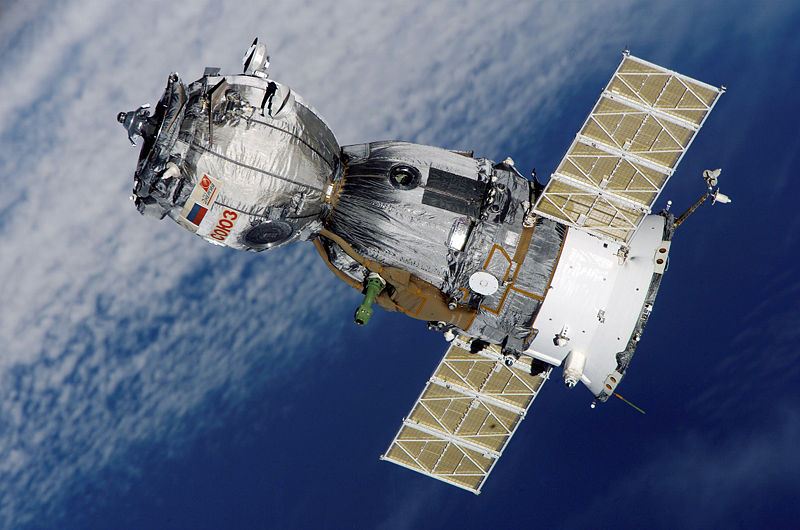
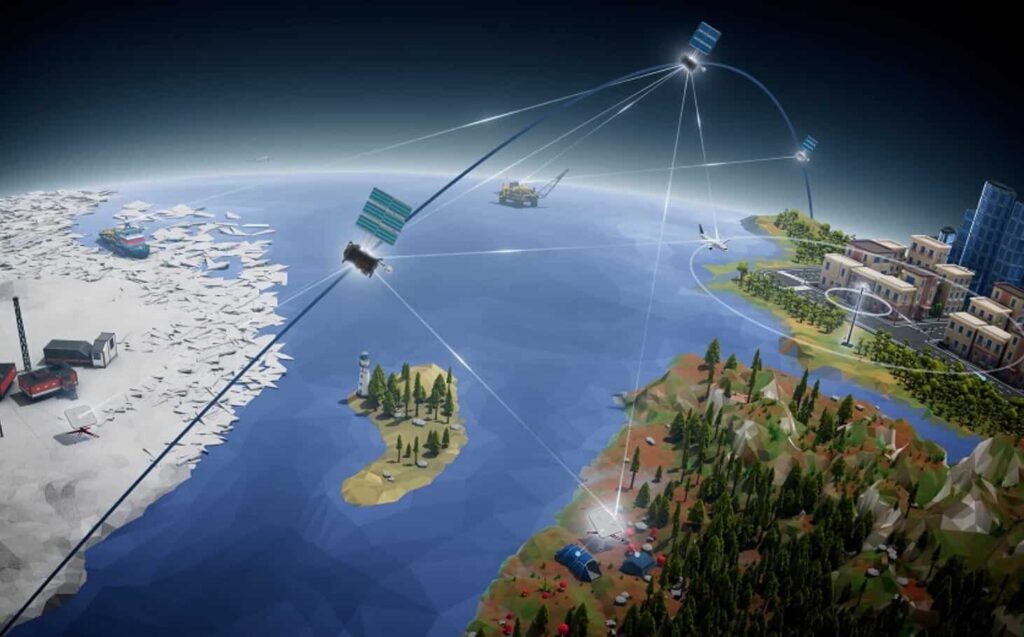
Illustration of the Russian Rassvet satellites by Bureau 1440
Diplomacy: Ukraine goes to the ITU
Beyond that, Ukraine is trying to act on its own on several fronts.
The first is diplomacy. On 28 August, Ukrainian Foreign Minister Andrii Sybiha said Ukraine had sent a formal note to the International Telecommunication Union (ITU), the UN agency that coordinates radio frequencies, demanding that Ukrainian territory be excluded from Rassvet's service areas across all frequency bands. The system's use over Ukraine "has nothing to do with civilian purposes," he wrote on X.
Today, we officially addressed the International Telecommunications Union @ITU requesting an exclusion of Ukraine’s national territory from the declared service areas of all beams of the Russian military satellite system 'Rassvet' satellite networks in all frequency bands.
Days later, at a meeting of EU foreign ministers in Ireland, Sybiha handed partners a list of nine legal entities linked to the project and urged them to impose sanctions.
The EU had already moved once: its 21st sanctions package, adopted on 23 July, targeted the Rassvet network. But the main gap is not closed, and that round stopped short of the manufacturer, leaving Bureau 1440 and its chief executive off the lists.
Hitting the supply chain with weapons
Another lever is direct strikes. In mid-August, Ukrainian-made Flamingo cruise missiles struck an industrial zone in Samara that houses the Progress Rocket Space Center—the only plant in Russia that serially assembles the Soyuz-2.1b rockets used to launch Rassvet into orbit. Satellite imagery published by the Ukrainian Telegram channel Exilenova+ showed a collapsed roof section 85 meters long and 35 meters wide over Building 106A, the hall where crews wire the rockets' control systems and cabling. The channel reported two missile hits on that hall.
The aftermath of a strike by two FP-5 Flamingo cruise missiles on the Progress Rocket and Space Center. Photo: t.me/exilenova_plus
If the hall was destroyed, production could stop entirely, and switching to other Russian launch vehicles would take significantly longer and add complexity. Drones also attempted to strike Plesetsk Cosmodrome, from which both 2026 batches were launched.
Both targets—the factory that builds the rockets and the site that launches them—are needed if Russia is to expand Rassvet production.
The timeline: 5.5 to eight years, if nothing changes
Russia plans to expand the constellation to 292 satellites by the end of 2027, Deputy Chief of Ukraine's Defense Intelligence (HUR) Vadym Skibitskyi said. Moscow's longer-term goal is 924 satellites by 2035.
Explore further
After SpaceX cuts off Starlink access, Russia launches first 16 satellites of its own “Rassvet” alternative
With 32 satellites already launched in two batches, 260 more are needed. At 16 satellites per launch, that requires roughly 17 launches. At a four-month interval between launches, deploying them would take roughly 5.5 years even if every launch succeeded and every satellite reached its target orbit. That most likely won't fully work out: one satellite from the first batch is already lost, two from the second batch may be lost as well, and none of them has yet reached the required altitude.
Russia also depends on the scarce Soyuz-2.1b rocket. The rocket has averaged only six to eight launches per year since 2022—most committed to GLONASS navigation satellites, ISS resupply, and military payloads—limiting Russia to a theoretical maximum of roughly two Rassvet-dedicated launches per year, or 128 Rassvet satellites over four years at that rate.
There is still time to shut this project down or slow it. Vyshnivska put the useful window to slow Rassvet at about a year. Russia, by Ukrainian calculations, needs five to eight years to see it through.
Bread experts weigh in on whether the rye sourdough that bakers ‘feed every day’ is worth that much
A loaf of bread has become New York City’s latest viral hit and, somehow, status symbol.
At Rye, the first US outpost of Austrian bakery Martin Auer, a 3.3lb loaf of 100% rye sourdough sells for $60 in SoHo. Made with just water, flour, salt and time, the bread has attracted the kind of attention once reserved for rainbow bagels, cronuts and skyscraper milkshakes. Which raises the inevitable question – is it actually worth that much?
David Perdue’s remarks come after a Taiwanese minister spoke of the ‘severe’ military threat posed by Beijing to the self-ruled island
Donald Trump offered to sell weapons to China while hosting its leader, Xi Jinping, last week, the US ambassador to China said on Sunday.
David Perdue told Fox News on Sunday: “President Trump continues to say, hey, we sell arms to other people around the world. He actually asked President Xi, would he like to buy some at one point.”
Scientists and entrepreneurs knew the dangers of AI a quarter-century ago. But animated by curiosity and profit, they went ahead anyway
Over the past few weeks, many of us have struggled to concoct a mental image of brains in the cloud jumping their “sandbox”, sneaking on to the internet, recruiting “swarms” of other “agents” to cheat on a test, and, after discussing the ethics of the act, hacking into a wiki platform with the weird name Hugging Face.
We knew that artificial intelligence was devouring our jobs, degrading our kids’ education and deepfaking our politics; that datacenters were sucking up our water and electricity and sending us the bills. But until 8 September, when the Anthropic computer scientist Jacob Coxon posted his existential terror on Twitter/X, few of us suspected AI might be endangering our survival.
The fate of two cotton brokers highlights how the Commodity Futures Trading Commission has scaled back its regulatory actions not just for crypto cases but also for the kinds of cases it has long policed.
The Commodity Futures Trading Commission, led by Michael S. Selig, has slowed enforcement. It has filed an average of one new complaint a month, one-fifth as many as during the Biden administration.
The Russian region of North Ossetia has suffered a heavy toll, yet many accept the Kremlin’s line that the fighting must continue until victory is secured.
Oksana Abaeva and her husband, Khetag Zaseyev, at the grave of her son, Albert Abaev, in Vladikavkaz, the capital of the Russian region of North Ossetia.
Hurricane Nolo is moving away from Hawaiian islands but threat of heavy rain, flash floods and strong winds persists
Hurricane Nolo was moving away from the Hawaiian islands on Sunday, but the threat of heavy rain, flash flooding and strong winds persisted in areas of the island chain still recovering from previous storms.
Nolo was about 365 miles (585km) south-south-west of Honolulu and moving away from the Big Island at about 12mph (19km/h). But the Hawaii county civil defense agency said a high wind warning, wind advisory and high surf advisory remained in effect for parts of the island through Sunday evening as Nolo’s maximum sustained winds rose to 115mph.
President Trump made the offer to Xi Jinping, China’s leader, said David Perdue, the ambassador to China. The White House later said the U.S. had no plans for such a sale.
President Trump made the offer to Xi Jinping, China’s leader, said David Perdue, the ambassador to China. The White House later said the U.S. had no plans for such a sale.
Arizona rider first US champion since Lance Armstrong
Pre-race favourite Evenpoel fails to add second gold
Brandon McNulty, a UAE Emirates teammate of Tadej Pogacar, succeeded the Slovene as world champion with an unexpected solo win in the men’s UCI road race in Montreal.
In the biggest triumph of his career, the 28-year-old American took his country’s first win in the UCI’s blue riband event since Lance Armstrong’s lone victory in Oslo in 1993.

 Connexion
































 (@afec7032)
 (@andrii_sybiha)