Vue normale

  • ✇US news | The Guardian
  • ‘Buy-cott’ boosts Memphis pizza shop after owner refuses to serve national guard
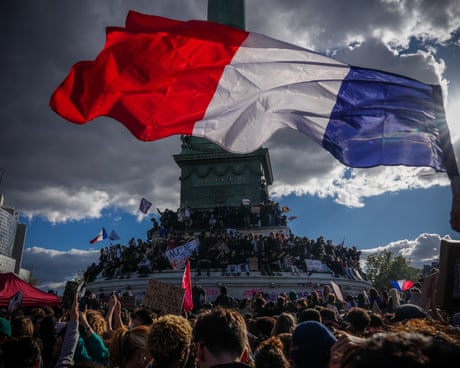
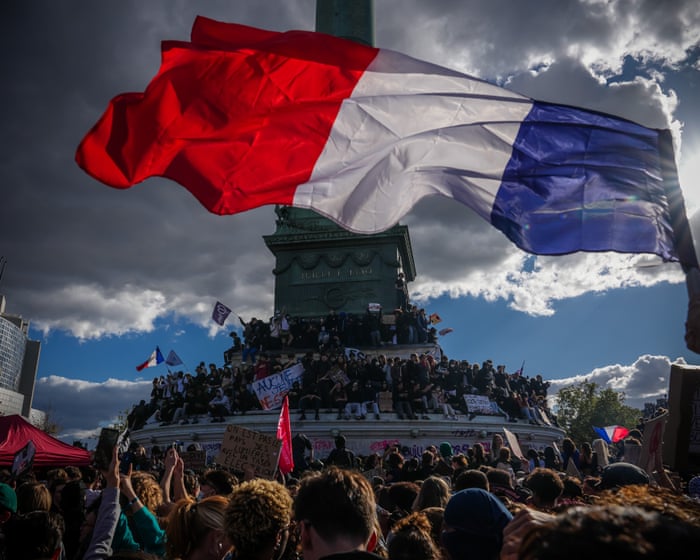
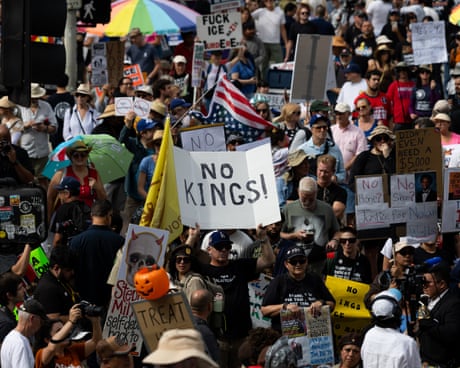
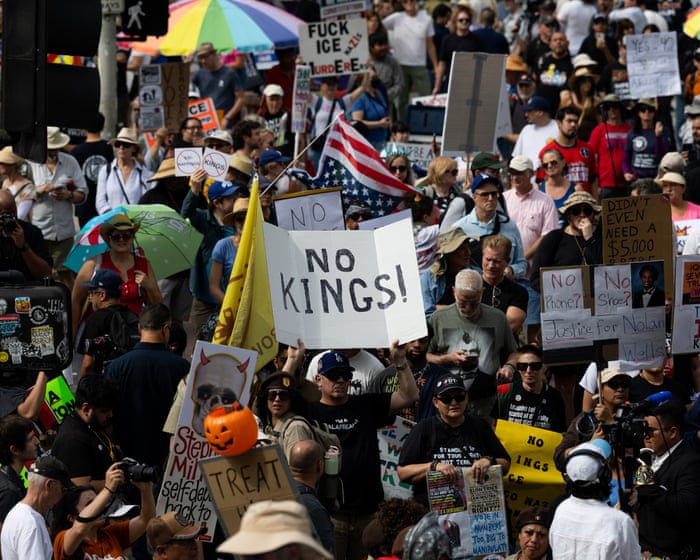
    The city rallied behind Tamboli’s despite online boycott calls, as frustration grows over the Trump administration’s federal taskforce following multiple deathsYou can measure the disconnect between angry internet commentariat and real life Memphis residents by the length of the wait for a table at Tamboli’s Pasta & Pizza.In early July, Miles Tamboli, the owner of the midtown pizza spot, made a decision: he would not serve the national guard deployed to the city by the Trump administration,
     

‘Buy-cott’ boosts Memphis pizza shop after owner refuses to serve national guard

21 juillet 2026 à 09:00

The city rallied behind Tamboli’s despite online boycott calls, as frustration grows over the Trump administration’s federal taskforce following multiple deaths

You can measure the disconnect between angry internet commentariat and real life Memphis residents by the length of the wait for a table at Tamboli’s Pasta & Pizza.

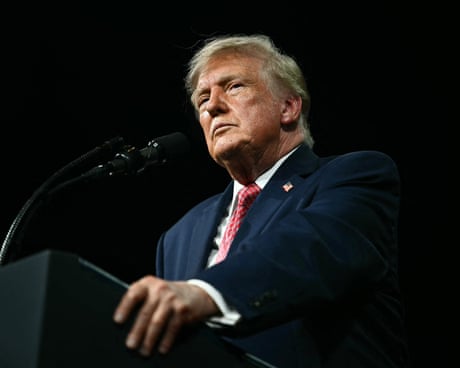
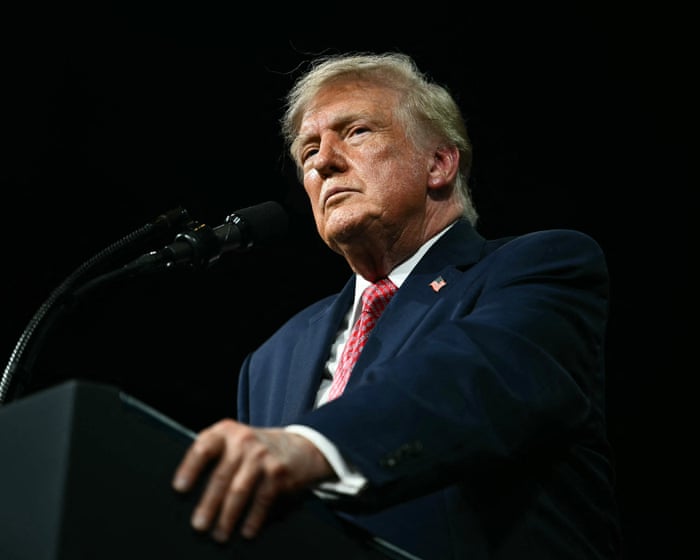
In early July, Miles Tamboli, the owner of the midtown pizza spot, made a decision: he would not serve the national guard deployed to the city by the Trump administration, which the US president claimed would reduce the city’s crime rate. Tamboli’s video announcement came days after troops killed two city residents, bringing the total to four since the initiative started in September.

Continue reading...

© Photograph: Austin Johnson/AFP/Getty Images

© Photograph: Austin Johnson/AFP/Getty Images

© Photograph: Austin Johnson/AFP/Getty Images

  • ✇Euromaidan Press
  • Ukraine’s protesters set a 24 July deadline as Zelenskyy weighs replacing his army chief
    Protesters demanding the return of dismissed defense minister Mykhailo Fedorov have set the government a deadline: reinstate him and remove Commander-in-Chief Oleksandr Syrskyi by 24 July, or they will begin open-ended nightly rallies. The demand came on the fourth straight day of protests that have spread across more than a dozen Ukrainian cities since his dismissal last week.It is the second time in a year that Ukraine’s streets have set terms on one of Volodymyr Zelensk
     

Ukraine’s protesters set a 24 July deadline as Zelenskyy weighs replacing his army chief

20 juillet 2026 à 09:51

protesters at the shevchenko monument in lviv on 19 july 2026

Protesters demanding the return of dismissed defense minister Mykhailo Fedorov have set the government a deadline: reinstate him and remove Commander-in-Chief Oleksandr Syrskyi by 24 July, or they will begin open-ended nightly rallies. The demand came on the fourth straight day of protests that have spread across more than a dozen Ukrainian cities since his dismissal last week.

It is the second time in a year that Ukraine’s streets have set terms on one of Volodymyr Zelenskyy’s wartime decisions. Last summer, a week of rallies forced him to reverse a law that curbed the independence of the country’s anti-corruption agencies. This time, the target is the military command, and the movement has put a clock on a decision the president says he will not rush.

Protesters called 20 July the decisive day to press their case, said they would wait until 24 July for the president and parliament to act.

Protesters set a deadline

The movement’s coordinators set the ultimatum after gathering over the weekend. They called 20 July the decisive day to press their case, said they would wait until 24 July for the president and parliament to act, and warned that an indefinite protest—nightly rallies until the demands are met—would follow if they went unheard. The two conditions are unchanged: dismiss Syrskyi, and renominate Fedorov as defense minister.

Thousands returned for a fourth straight day on 19 July, filling squares in Kyiv, Kharkiv, Odesa, Dnipro, and at least ten other cities, Ukrainian outlet NV reported. Some of the loudest chants were aimed at lawmakers on summer recess—“MPs, back to work,” “Recess is not the time.”

fedorov, koretskyi, svyrydenko collage
Explore further

“They removed the auditor, not the thieves”: why Ukrainians are protesting Zelenskyy’s reshuffle

Reinstating Fedorov is not the president’s decision alone. The defense minister is appointed by parliament on the president’s submission, and MPs closed their July sittings without filling the post, leaving both the defense and foreign ministries vacant until the next scheduled plenary on 18 August.

Under martial law, the Verkhovna Rada can convene at any time, so recalling it early is a political choice, not a legal hurdle—and the push for that runs inside parliament too, with the opposition European Solidarity faction of Petro Poroshenko demanding an extraordinary session to fill the vacant ministries.

It would not be the first recall of the summer. A year ago, with parliament likewise on recess, Speaker Ruslan Stefanchuk convened an extraordinary session on 31 July that pushed that reversal through, 331 votes to none, under the same street protest and Western pressure.

The leverage is thinner now, though: last year, the anti-corruption agencies’ independence was a non-negotiable condition of the European Union’s 90-billion-euro ($97 billion) support package, giving Brussels a direct stake, while the command of the army carries no such external lever.

zelenskyy holds a video call with military commanders on 18 july 2026
President Volodymyr Zelenskyy holds a video call with military commanders on the situation at the front, 18 July 2026. As protests demanding the removal of Commander-in-Chief Oleksandr Syrskyi entered their fourth day, Zelenskyy spent the weekend consulting senior officers and said decisions on the army would be worked out. Photo: Volodymyr Zelenskyy / Telegram

Zelenskyy consults commanders

The president has answered with consultations, not decisions. On 18 July, he said he had spoken at length with both Fedorov and Syrskyi, and that decisions on the army would be worked out.

The next day, he reported having met senior officers—Joint Forces commander Mykhailo Drapatyi, deputy General Staff chief Volodymyr Horbatiuk, and Air Assault Forces commander Oleh Apostol—for a review of the front and the country’s supply needs, naming air defense and the full delivery of drone-production contracts as the priorities. More talks with commanders were promised.

Ukrainian President Volodymyr Zelenskyy met with senior commanders of Ukraine's Armed Forces on 19 July, 2026. Photo: Zelenskyy
Explore further

As rumors swirl over Syrskyi’s future, Zelenskyy meets commanders and top general warns against political infighting

No successor to Syrskyi has been named—the gap the president cites as his reason to wait, and the reason no dismissal has come despite reports he is weighing one, conditional on finding a commander who can hold the 1,200-kilometer front.

A change at the top would meet the street’s most concrete demand. Whether that fixes the command dispute that pushed Fedorov out, or lets the president bank a win while the same problems remain, is what the 24 July deadline brings to a head.

  • ✇Euromaidan Press
  • “They removed the auditor, not the thieves”: why Ukrainians are protesting Zelenskyy’s reshuffle
    In five days, Ukraine dismissed its prime minister, installed a new Cabinet, and removed the defense minister who built its drone war—and for the first time since last summer, thousands of Ukrainians filled the streets of 17 cities against a wartime decision of their own president. The prime minister nobody protested for is gone quietly. Thousands demanded the reformer stay. He is gone anyway. Three forces claim the ground: the constitutional institutions on paper, the
     

“They removed the auditor, not the thieves”: why Ukrainians are protesting Zelenskyy’s reshuffle

17 juillet 2026 à 14:25

fedorov, koretskyi, svyrydenko collage

In five days, Ukraine dismissed its prime minister, installed a new Cabinet, and removed the defense minister who built its drone war—and for the first time since last summer, thousands of Ukrainians filled the streets of 17 cities against a wartime decision of their own president. The prime minister nobody protested for is gone quietly. Thousands demanded the reformer stay. He is gone anyway.

Three forces claim the ground: the constitutional institutions on paper, the Office of the President in practice, and a society.

What the week decided is who now governs Ukraine, and the question reaches past Kyiv into EU accession talks and the shape of postwar politics. Three forces claim the ground: the constitutional institutions on paper, the Office of the President in practice, and a society that has now twice in 12 months forced its leader to answer to the street.

andrii biletskyi, anti corruption-expert and administrative director of acrec
Explore further

Ukraine’s government reshuffle followed the letter of the Constitution. But did it follow its spirit?

Five days, one government

Late on 11 July, President Volodymyr Zelenskyy signaled coming personnel changes on the diplomatic front. The next day, he set out the scope.

“Ukraine is changing its political strategy,” he wrote on Telegram, assigning each foreign-policy priority to “a specific person,” announcing that the Cabinet would be renewed, and thanking Prime Minister Yuliia Svyrydenko for her work while offering her “a new significant direction in relations with a key partner”—wording widely read as the Washington ambassadorship.

On 14 July, Parliament voted 258 to accept Svyrydenko’s resignation, which under the Constitution brought down her entire Cabinet with her.

He named three unfinished reforms: completing the ministry’s NATO-standard reorganization, moving all procurement to open tenders, and building a culture of accountability.

On 15 July, it emerged that Defense Minister Mykhailo Fedorov—the 35-year-old who built Ukraine’s drone ecosystem, and whose first months in the ministry produced an audit exposing $7.2 billion in defense overspending—would not be renominated.

In a parting post, he named three unfinished reforms: completing the ministry’s NATO-standard reorganization, moving all procurement to open tenders, and building a culture of accountability for decisions taken.

In the same accounting, he pointedly noted that Ukraine had tested a ballistic missile developed within the ministry’s area of responsibility on 14 July—the very day the government fell—with its accuracy maximized and its cost cut by 30%. “Symbolically,” he called the timing.

Much of the government stayed: Denys Shmyhal kept the energy portfolio as first deputy prime minister.

Serhii Sternenko, whose foundation delivered over 118,000 FPV drones to the army, resigned as a ministry adviser the same day, calling the state “further from victory.” By evening, the first rallies formed in Lviv.

zelenskyy with koretskyi
President Volodymyr Zelenskyy with newly appointed Prime Minister Serhii Koretskyi. Photo: Zelenskyy / Telegram

On 16 July, Parliament appointed Naftogaz chief Serhii Koretskyi as prime minister with 289 votes, then approved his Cabinet as a package with 264 votes, leaving open the two seats the president alone nominates: defense and foreign affairs.

Much of the government stayed: Denys Shmyhal kept the energy portfolio as first deputy prime minister, and several deputy ministers moved up a chair.

Deputy Air Force commander Pavlo Yelizarov resigned in protest.

Outside, “cardboard protests” spread to Kyiv and at least 16 other cities. Deputy Air Force commander Pavlo Yelizarov resigned in protest, warning that the firing and the blocking of Fedorov’s reforms “will cause numerous casualties and destruction of Ukraine.”

ukraine's deputy air force commander resigns moment fedorov loses ministry · post pavlo yelizarov павло єлізаров ukraine news ukrainian reports
Explore further

Ukraine’s deputy Air Force commander resigns the moment Fedorov loses the ministry

That evening, Zelenskyy did two things at once. He told the crowds they were right to protest even in wartime—then pressed ahead anyway, passing over both Fedorov and Interior Minister Ihor Klymenko, his own reported first choice for defense, to name special-operations commander Yevhenii Khmara acting defense minister.

Ukraine had a defense minister whom Parliament had not confirmed.

Klymenko did not stay at Interior either: the president moved him to run the National Security and Defense Council, and National Police chief Ivan Vyhivskyi took over Interior.

By 17 July, the demonstrations had entered a second day, and Ukraine had a defense minister whom Parliament had not confirmed.

The explanation the president gave

This time, Zelenskyy offered reasons. The reshuffle would refocus the government on energy resilience before another winter of Russian strikes and on EU accession—a logic under which Koretskyi, who ran Naftogaz through Russia’s campaign against the grid, is a defensible pick.

“Together we win, and together we bear responsibility for things that cause confusion and public resonance.”

On Fedorov, the president pointed to a broken relationship between the Defense Ministry and the military command, said he could not choose between the minister and Commander-in-Chief Oleksandr Syrskyi, and refused to assign the blame to either side alone.

“Together we win, and together we bear responsibility for things that cause confusion and public resonance,” he said at a press conference with British Prime Minister Keir Starmer, adding that he still wanted Fedorov on the team.

In a documented conflict between a reforming minister and his commander-in-chief, the president resolved it by removing the minister mid-reform.

The stated reasons leave the central question standing. In a documented conflict between a reforming minister and his commander-in-chief—a conflict Fedorov himself has now described in detail—the president resolved it by removing the minister mid-reform, not the commander. Nothing in the public account says why that was the choice.

fedorov breaks silence ukraine's army chief syrskyi gave ultimatum—then blocked reforms · post mykhailo during briefing 16 2026 михайло федоров під час брифінгу липня року фото мілітарний ukraine news ukrainian
Explore further

Fedorov breaks his silence: Ukraine’s army chief Syrskyi gave him an ultimatum—then blocked his reforms

olexiy haran
Olexiy Haran, professor of comparative politics at Kyiv-Mohyla Academy and research director at the Ilko Kucheriv Democratic Initiatives Foundation. Photo: Olexiy Haran / Facebook

“It was about personal loyalty”

Oleksiy Haran, professor of comparative politics at the National University of Kyiv-Mohyla Academy and research director at the Ilko Kucheriv Democratic Initiatives Foundation, told Euromaidan Press the search for a policy rationale starts from the wrong end.

“Definitely, it was about personal loyalty.”

The problem is not this reshuffle, he argued, but where decisions get made: in the Office of the President, on Bankova Street—under Zelenskyy and, before his dismissal, under his chief of staff Andriy Yermak. “Definitely, it was about personal loyalty,” Haran said.

In his reading, this is a system Zelenskyy built and cannot imagine running any other way: the president “is not democratic in essence” and believes himself a “messianic leader”—a self-conception dented by early wartime failures, then restored by success.

Much of the Cabinet simply stayed or shuffled sideways.

Haran also punctured the “wholesale purge” framing that dominated the week’s commentary. Much of the Cabinet simply stayed or shuffled sideways. “They are just moving around,” he said. Zelenskyy speaks of a new political approach, Haran noted—“but what’s that approach about? I don’t see it.”

One appointment inside that Cabinet showed the deeper pattern. The Digital Transformation Ministry—the body that built the e-governance and digitized document app Diia and reorganized the state around it—appointed Oksana Ferchuk, the first person to lead it who was not part of Fedorov’s founding team.

As Ukrainska Pravda noted, the ministry’s reach had leaned less on its projects than on Fedorov’s political weight and his direct line to the president—a reach Fedorov himself credited to Zelenskyy’s backing.

Ukrainians’ distrust of state institutions is a long-run trend that predates Zelenskyy.

There is a deeper reading: that inner-circle rule is the inheritance of Soviet institutional distrust and the lawless 1990s, when only personal networks could be relied on. Haran is skeptical of the tidy version.

Many Soviet citizens believed the system’s promises of justice, he noted, and Ukrainians’ distrust of state institutions is a long-run trend that predates Zelenskyy rather than a trait he personally embodies. What the war changed, he added, is that trust rose toward the army, the security services, and the anti-corruption bodies.

cardboard protests against zelenskyy's firing fedorov erupt across ukraine · post protesters voice stance government reshuffle rally khmelnytskyi 16 2026 signs read don't do dumb things instead military tech —
Protesters voice their stance on the government reshuffle at a rally in Khmelnytskyi, 16 July 2026. Signs read "Don't do dumb things," "Instead of military tech—total encephalopathy," "Change the system, not Fedorov," and "Innovation, not Soviet ways." Photo: Suspilne Khmelnytskyi

The other trust system

That is the half of the story that the protests made visible. Whatever its roots, personalized power is only one of Ukraine’s two working systems of trust—and this week they collided in the open.

Nearly every career politician on the list is distrusted by more people than trust them.

Polling shows how differently the two are priced. In the latest national survey by the Kyiv International Institute of Sociology, conducted in May, Fedorov’s trust rating climbed to 50% from 38% in January, and his trust-minus-distrust balance now edges slightly ahead of the president’s own, KIIS polling shows.

The figures Ukrainians trust most are military commanders and volunteers; nearly every career politician on the list is distrusted by more people than trust them. Svyrydenko, the dismissed prime minister, was trusted by 27%—and her removal drew not a single placard.

Protesters rally in central Kyiv on 17 July 2026 against the government reshuffle. One cardboard sign reads “Syrskyi out,” referring to Commander-in-Chief Oleksandr Syrskyi. Photo: Euromaidan Press

“The audit showed 300 billion in theft. They removed the auditor, not the thieves.”

Fedorov’s drew thousands. In Lviv, one cardboard sign read: “The audit showed 300 billion in theft. They removed the auditor, not the thieves.” The protesters were not demanding elections or the president’s resignation. They were defending one official on one record—open procurement, a drone industry, an audit—against a decision made without them.

olena shandra protests in kyiv on 17 july 2026
Olena Shandra, 18, protests the government reshuffle in central Kyiv on 17 July 2026. Her sign reads "Ukraine does not need Soviet cheese"—a pun on Commander-in-Chief Oleksandr Syrskyi, whose surname contains the Ukrainian word for cheese, "syr." She is the daughter of Euromaidan Press EiC Alya Shandra and attended the protests independently. Photo: Euromaidan Press

Olena Shandra, 18, stood among them at a downtown Kyiv demonstration on 17 July and told Euromaidan Press what the week looked like from the square. She read it as a contest between “Soviet Ukraine and the new one”—and, for now, the Soviet one winning through Fedorov’s removal, the minister she saw as the one person in government “really wanting to introduce something new.” She had marched last July, too, against the law targeting the anti-corruption agencies.

The president “has overstayed,” but toppling him now would be “senseless and bad for Ukraine.”

Yet she drew a hard line at where the anger should stop: the president “has overstayed,” she said, but toppling him now would be “senseless and bad for Ukraine, because it plays into the hands of our main enemy—the one outside, waiting for exactly that moment.”

It is the same civic reflex that, last July, combined with a freeze on EU aid, forced Zelenskyy to reverse a law stripping the anti-corruption agencies of their independence within days.

Ukraine ends the week with a prime minister chosen for the winter, an acting defense minister awaiting a confirmation vote, a reform program running without its architects.

The president has acknowledged the crowds’ right to stand there. He has not, so far, moved for them. Ukraine ends the week with a prime minister chosen for the winter, an acting defense minister awaiting a confirmation vote, a reform program running without its architects—and, on the squares of 17 cities, a piece of cardboard that reads “Results take time.”

  • ✇Euromaidan Press
  • The Syrskyi feud was not it: why Ukraine really dropped its drone-war minister
    President Volodymyr Zelenskyy has removed the defense minister who built Ukraine’s drone war and pushed Elon Musk to cut Russia off from Starlink—Mykhailo Fedorov, a minister whom Ukrainians, in the last national poll, trust more than the president himself. Analysts and anti-corruption campaigners say the entire government was dissolved to make his removal possible without a scandalous vote.
     

The Syrskyi feud was not it: why Ukraine really dropped its drone-war minister

16 juillet 2026 à 06:21

mykhailo fedorov

President Volodymyr Zelenskyy has removed the defense minister who built Ukraine’s drone war and pushed Elon Musk to cut Russia off from Starlink—Mykhailo Fedorov, a minister whom Ukrainians, in the last national poll, trust more than the president himself. Analysts and anti-corruption campaigners say the entire government was dissolved to make his removal possible without a scandalous vote.

Ukrainian Defense Minister Mykhailo Fedorov in Germany, on 15 April 2026. Source: Fedorov
Explore further

Ukraine’s reformist defense Minister is out after six months. Earlier, his audit exposed $7.2 billion in defense overspending

The move has set off a sharp public backlash, which commentators are comparing to last summer’s anti-corruption protests. A senior air force commander resigned, and cardboard-sign crowds returned to the streets of Kyiv, Lviv, Odesa, and other cities on the morning of 16 July, hours after Russian ballistic missiles killed two people in Kyiv overnight. Parliament is expected to vote on Zelenskyy’s nominee, Interior Minister Ihor Klymenko, later in the day.

By mid-morning, the protests had spread to Ivano-Frankivsk, Kremenchuk, Poltava, Mykolaiv, with crowds in Kyiv chanting “Shame.”

The crowds gathered at the same Kyiv square, beside the Ivan Franko Theatre and in sight of the Office of the President, where they massed a year ago to defend the country’s anti-corruption agencies. This standoff forced Zelenskyy to reverse course within nine days. By mid-morning, the protests had spread to more cities—Ivano-Frankivsk, Kremenchuk, Poltava, Mykolaiv—with crowds in Kyiv chanting “Shame.”

cardboard protests against zelenskyy’s firing fedorov erupt across ukraine · post rally support dismissed defense minister mykhailo odesa 16 2026 signs read bring back ministry needs don’t change what works
Protesters on Rishelievska Street in Odesa on the morning of 16 July rally against the dismissal of Defense Minister Mykhailo Fedorov, one holding a sign reading “The army needs innovation, Ukraine needs Fedorov.” Photo: Телебачення Торонто / @torontotv

A resignation from inside the air force

Pavlo Yelizarov, a deputy commander of the air force, announced his resignation in protest, saying he had joined the armed forces in 2022 to win the war, not to imitate activity, and warning that stalling Fedorov’s air-defense reforms would let more Russian missiles and drones through. He called the dismissal grave harm to the country’s defense but said he would stay in uniform.

ukraine's deputy air force commander resigns moment fedorov loses ministry · post pavlo yelizarov павло єлізаров ukraine news ukrainian reports
Explore further

Ukraine’s deputy Air Force commander resigns the moment Fedorov loses the ministry

Serhii Sternenko, who advised the ministry on drones, also stepped down.

By the figures Fedorov published in his farewell message, the air force’s interception rate for attack drones rose from 83% to 91% during his six months, and for cruise missiles from 47% to 87%—gains he tied to after-action reviews of each mass Russian strike. His team also ran the Logistics Lockdown program, which is choking Russian resupply to occupied Crimea.

olexiy haran
Olexiy Haran, professor of comparative politics at Kyiv-Mohyla Academy and research director at the Ilko Kucheriv Democratic Initiatives Foundation. Photo: Olexiy Haran / Facebook

The minister who outpolled the president

Zelenskyy has cast the decision as a management problem. At a Servant of the People faction meeting on 15 July, he pointed to a running conflict between Fedorov and Commander-in-Chief Oleksandr Syrskyi. He said Fedorov had failed to deliver mobilization reform, according to lawmakers who were there.

The stated reason for dismissing Prime Minister Yulia Svyrydenko—the need for an energy specialist before winter—was unpersuasive.

Olexiy Haran, professor of comparative politics at the National University of Kyiv-Mohyla Academy and research director at the Ilko Kucheriv Democratic Initiatives Foundation, offered Euromaidan Press a different read.

The stated reason for dismissing Prime Minister Yulia Svyrydenko—the need for an energy specialist before winter—was unpersuasive, he said, since outgoing first deputy prime minister and energy minister Denys Shmyhal was already a high-level specialist in the field.

The more convincing explanation lay in Fedorov: dissolving the whole cabinet let Zelenskyy drop him without a targeted dismissal vote that would have drawn a scandal. Anti-corruption campaigner Daria Kaleniuk reached the same conclusion, telling the Kyiv Independent the entire government resignation was conceived to remove Fedorov.

In a recent poll, more Ukrainians trusted Fedorov than distrusted him by a margin of 29 points—wider than Zelenskyy’s 27.

The trigger, Haran said, may be Fedorov’s popularity. In a recent KIIS poll from May and early June, more Ukrainians trusted Fedorov than distrusted him by a margin of 29 points—wider than Zelenskyy’s 27, and beaten only by the Kharkiv mayor and the war’s most-trusted commanders, among them former army chief Valerii Zaluzhnyi.

Zelenskyy, Haran said, may have come to see his defense minister as a rival, and he predicted the removal would only lift Fedorov’s standing.

volodymyr omelyan
Volodymyr Omelyan, former minister of infrastructure of Ukraine. Photo: Volodymyr Omelyan / Facebook

A former minister’s harsher read

Former infrastructure minister Volodymyr Omelyan told Euromaidan Press that the reshuffle could be an attempt to strengthen the government before a hard winter—but only if real professionals are appointed and left to work free of the Office of the President, which he doubted would happen.

He dismissed a theory foreign analysts had raised with Euromaidan Press—that the change is meant to reset relations with Poland—as nonsense.

Zelenskyy’s overriding aim, Omelyan argued, is to consolidate the security services and sideline the opposition to hold power indefinitely, with the war effort, arming the military, and EU integration all ranked behind the private interests of a few people around him.

He dismissed a theory foreign analysts had raised with Euromaidan Press—that the change is meant to reset relations with Poland—as nonsense, saying it would take new presidents in both countries.

liudmyla buimister
Liudmyla Buimister, non-affiliated member of Ukraine's parliament. Photo: Liudmyla Buimister / Facebook

Doubts about the successor

Klymenko, tapped to replace him, brings his own controversy. Non-affiliated MP Liudmyla Buimister warned that handing him defense would endanger a key wartime ministry, saying he had failed outright as interior minister.

She blamed him for the chaotic “busification” mobilization drives—in which men are seized off the street into vans—that police, she said, first stood back from and then made worse, in remarks on Telegram.

A reversal would mean Zelenskyy openly readmitting Fedorov, and the president, he said, is stubborn.

Incoming prime minister Serhii Koretskyi defended the nominee, calling him a results-driven minister. The objection lands on the exact ground Zelenskyy used to justify the swap: he faulted Fedorov for failing on mobilization, and mobilization is the brief on which Buimister says Klymenko has already failed.

Whether the protests move Zelenskyy is the open question. Last summer, mass protests and a freeze on EU aid reversed a similar move in nine days. Haran expects it to be harder this time: a reversal would mean Zelenskyy openly readmitting Fedorov, and the president, he said, is stubborn in such moments.

  • ✇Euromaidan Press
  • “Cardboard” protests against Zelenskyy’s firing of Fedorov erupt across Ukraine
    Peaceful "cardboard protests" against the dismissal of Defense Minister Mykhailo Fedorov broke out in Kyiv and at least 16 other Ukrainian cities on the morning of 16 July. The "cardboard" refers to handmade signs the protesters hold. The rallies were timed to the parliament session set to weigh a wider government reshuffle, and echoed last year's protests over Ukraine's anti-corruption bodies. Their message was to keep Fedorov in the job. Ukraine has spent the war rebuildi
     

“Cardboard” protests against Zelenskyy’s firing of Fedorov erupt across Ukraine

16 juillet 2026 à 04:16

cardboard protests against zelenskyy's firing fedorov erupt across ukraine · post rally support dismissed defense minister mykhailo odesa 16 2026 signs read bring back ministry needs don't change what works

Peaceful "cardboard protests" against the dismissal of Defense Minister Mykhailo Fedorov broke out in Kyiv and at least 16 other Ukrainian cities on the morning of 16 July. The "cardboard" refers to handmade signs the protesters hold. The rallies were timed to the parliament session set to weigh a wider government reshuffle, and echoed last year's protests over Ukraine's anti-corruption bodies. Their message was to keep Fedorov in the job.

Ukraine has spent the war rebuilding its defense procurement around open tenders and a homegrown drone industry, changes that turned on the small circle of officials now being reshuffled mid-war. Losing that circle in the space of a few days—an arms-industry chief and a key minister—hands the next team a running reform to carry without its architects, at a moment when the front depends on the machine they built. 

Kyiv fills the square that hosted last year's protests

In Kyiv, participants gathered from early morning in the square beside the Ivan Franko National Academic Drama Theater.

cardboard protests against zelenskyy's firing fedorov erupt across ukraine · post protesters hold signs rally defense minister mykhailo fedorov's dismissal kyiv 16 2026 read bring back = technological genius more
Protesters hold cardboard signs at a rally against Defense Minister Mykhailo Fedorov's dismissal in Kyiv, 16 July 2026. Signs read "Bring back Fedorov," "Fedorov = technological genius," "Fedorov = more dead Russians. Syrskyi = more dead Ukrainians," "Don't touch it, it works," "Sanych (a colloquial way to address Zelenskyy, — Ed.), what the hell?" Photo: Ukrinform

Suspilne says the action was called by veteran and former combat medic Dmytro Koziatynskyi, one of the organizers of the 2025 protests defending the independence of Ukraine's anti-corruption agencies, the National Anti-Corruption Bureau (NABU) and the Specialized Anti-Corruption Prosecutor's Office (SAP). He asked people to bring cardboard placards and stressed that the action must stay peaceful.

Rally in Kyiv against the dismissal of Defense Minister Fedorov

Hundreds filled a Kyiv square by the President's Office with cardboard signs, chanting "Fedorov is the defense minister!"

📹 Hromadske pic.twitter.com/MaC2QeoiY4

— Euromaidan Press (@EuromaidanPress) July 16, 2026

Protesters oppose the constant reshuffling of officials and the removal of people whose work they consider effective, Koziatynskyi said. Hundreds gathered on the square, most of them young people and students, chanting "Fedorov is defense minister!"

cardboard protests against zelenskyy's firing fedorov erupt across ukraine · post rally support ukraine's defense minister mykhailo ivano-frankivsk 16 2026 signs read decisions strengthen katsaps (russians - ed) fedorov's resignation
A rally in support of Ukraine's Defense Minister Mykhailo Fedorov in Ivano-Frankivsk, 16 July 2026. Signs read "Decisions should strengthen defense" and "Katsaps (Russians, - Ed.) support Fedorov's resignation." Photo: Suspilne Ivano-Frankivsk / Inna Sendetska-Moniuk

From Lviv to Odesa, the same message

Similar rallies ran the same morning in Ivano-Frankivsk, Vinnytsia, Lutsk, Khmelnytskyi, Lviv, Uzhhorod, Dnipro, Ternopil, Odesa, Mykolaiv, Cherkasy, Rivne, Zaporizhzhia, Zhytomyr, Chernivtsi, and Poltava.

cardboard protests against zelenskyy's firing fedorov erupt across ukraine · post rally support dismissed defense minister mykhailo vinnytsia 16 2026 signs read don't destroy what works swap prisoners suspilne у
A rally in support of dismissed Defense Minister Mykhailo Fedorov in Vinnytsia, 16 July 2026. Signs read "Don't destroy what works" and "Swap prisoners, not Fedorov." Photo: Suspilne Vinnytsia

Crowd sizes ranged from a few dozen to around a hundred per city. Several began with a minute of silence for those killed in the Russo-Ukrainian war.

Ivano-Frankivsk rallies against Zelenskyy's firing of Fedorov. Similar rallies ran in Kyiv, Kharkiv, Lviv, Uzhhorod, Ternopil, Lutsk, and Zaporizhzhia.

About 100 people gathered outside the administrative building on Hrushevskoho Street in western Ukraine's Ivano-Frankivsk on… pic.twitter.com/SjdbzhbMy5

— Euromaidan Press (@EuromaidanPress) July 16, 2026

The signs spelled out the anger. In Vinnytsia, people held signs reading "Don't destroy what works," "Bring back Fedorov," and "Don't take away hope." In Lutsk, slogans included "Ukraine needs results, not personnel games." In Lviv, protesters on Svobody Avenue by the Taras Shevchenko monument carried placards asking why one man's ego mattered more than the state's defense, and one that read "The audit showed 300 billion in theft. They removed the auditor, not the thieves."

cardboard protests against zelenskyy's firing fedorov erupt across ukraine · post protesters voice stance government reshuffle rally khmelnytskyi 16 2026 signs read don't do dumb things instead military tech —
Protesters voice their stance on the government reshuffle at a rally in Khmelnytskyi, 16 July 2026. Signs read "Don't do dumb things," "Instead of military tech — total encephalopathy," "Change the system, not Fedorov," and "Innovation, not Soviet ways." Photo: Suspilne Khmelnytskyi

In Mykolaiv, 26 people gathered by the city council with signs reading "Moscow is glad about your decision" and "Swap prisoners, not Fedorov." 

ukraine's deputy air force commander resigns moment fedorov loses ministry · post pavlo yelizarov павло єлізаров ukraine news ukrainian reports
Explore further

Ukraine’s deputy Air Force commander resigns the moment Fedorov loses the ministry

Cherkasy protesters chanted "Klymenko — no" and "Give back prisoners, not Fedorov." Lviv participant Sofia Boiko said she came out for democracy and a free country, calling it wrong to remove someone who had finally started making decisions that worked, and describing Fedorov as the most effective defense minister of the full-scale invasion.

cardboard protests against zelenskyy's firing fedorov erupt across ukraine · post residents rally dismissal defense minister mykhailo dnipro 16 2026 signs read bring [him] back animals why do need system
Residents rally against the dismissal of Defense Minister Mykhailo Fedorov in Dnipro, 16 July 2026. Signs read "Bring [him] back, you animals!", "Why do I need a system that works against me," "Removing Fedorov = helping the Russians," and "Drone lovers for Fedorov." Photo: Suspilne Dnipro

The Ukrainian government–run United24 media platform joined today's protests:

"Today, the UNITED24 Media is pausing all publications to join protests over the dismissal of Defense Minister Mykhailo Fedorov. See you there," the project's X wrote.

What led to the protests

The rallies followed President Volodymyr Zelenskyy's decision not to renominate Fedorov as defense minister. Deputies from the Servant of the People party told Suspilne, after a faction meeting with the President, that he would instead put forward Interior Minister Ihor Klymenko for the post — a figure associated in public perception with a Soviet-style mindset.

Commanders of two National Guard corps, however, supported the nomination of Klymenko. Notably, the National Guard is subordinate to the Interior Ministry, not the Armed Forces.

Ukrainian Defense Minister Mykhailo Fedorov in Germany, on 15 April 2026. Source: Fedorov
Explore further

Ukraine’s reformist defense Minister is out after six months. Earlier, his audit exposed $7.2 billion in defense overspending

On 15 July, Fedorov confirmed he was leaving and summed up his tenure, listing among his results cutting Russian forces off from Starlink, expanding drone-procurement programs, a procurement reform, weapons contracts, and the testing of Ukrainian ballistic missiles.

cardboard protests against zelenskyy's firing fedorov erupt across ukraine · post rally support defense minister mykhailo chernivtsi 16 2026 signs read ministry hope syrskyi skelia mon suspilne учасники акції на
A rally in support of Defense Minister Mykhailo Fedorov in Chernivtsi, 16 July 2026. Signs read "Fedorov to the Defense Ministry," "Fedorov is our hope," "Syrskyi to Skelia, Fedorov to MoN." Photo: Suspilne Chernivtsi


Mykhailo Fedorov summarized his tenure as Defense Minister, citing the cutoff of Russian forces from Starlink, the launch of the Logistics Lockdown campaign to isolate occupied Crimea, increased funding for the Drone Line, and larger drone purchases than last year.

Parliament is due on 16 July to consider the personnel changes, with Fedorov's replacement part of a broader reshuffle. 

Fedorov led the Defense Ministry from January 2026, having replaced Denys Shmyhal. Klymenko took over the Interior Ministry in February 2023 after Denys Monastyrskyi died in a helicopter crash in Brovary. The defense minister is appointed by parliament on the President's nomination, as the post falls under the presidential quota.

  • ✇Euromaidan Press
  • Shot knees and a death sentence: how the Belarusian regime punishes people for supporting Ukraine
    Aliaksandra Pulinovich was a teenager in the city of Baranavichi when she and five other young people spray-painted anti-war and anti-dictatorship slogans on walls. Belarusian authorities accused them of forming an "anarchist cell" under the guidance of Ukrainian special services. A court sentenced Pulinovich to 10 years and three months in prison. US envoy to Belarus John Coale promised to raise the case of Pulinovich on his next trip to Minsk. Around 500 prisoners have a
     

Shot knees and a death sentence: how the Belarusian regime punishes people for supporting Ukraine

21 juin 2026 à 16:41

Trafim Barysau, Dzmitry Zakharoshka, Anastasiya Klimenka, Aliaksandra Pulinovich, Siarhei Zhyhaliou, Maryia Misiuk: The six teenagers were accused of forming an anarchist cell "Black Nightingales" under the guidance of the "National Liberation Army of Ukraine". Klimenka and Misiuk had been released. The others face prison terms up to 12 years. Photo: Reform.news

Aliaksandra Pulinovich was a teenager in the city of Baranavichi when she and five other young people spray-painted anti-war and anti-dictatorship slogans on walls. Belarusian authorities accused them of forming an "anarchist cell" under the guidance of Ukrainian special services. A court sentenced Pulinovich to 10 years and three months in prison. US envoy to Belarus John Coale promised to raise the case of Pulinovich on his next trip to Minsk. Around 500 prisoners have already been freed as a result of Coale's negotiations since the Trump administration began engaging Lukashenka in 2025.

Pulinovich is one of more than 200 political prisoners in Belarus who are behind bars specifically for opposing Russia's war on Ukraine, the Viasna Human Rights Center reported. They include railway saboteurs who disrupted Russian troop movements toward Kyiv, volunteer fighters hunted across continents, and ordinary citizens who donated money. Belarus has turned wartime solidarity into a crime punishable by decades of imprisonment—and in one case, by death. As the US negotiates their release through sanctions relief, Belarusian defectors warn that the reopened financial channels fund Russian arms production.

A decade behind bars for anti-war graffiti

Belarusian authorities claimed that the six teenagers had formed a group called "Black Nightingales" under the guidance of 16-year-old Ukrainian citizen Maryia Misiuk, allegedly acting on behalf of the "National Liberation Army of Ukraine." What the group actually did was write anti-war graffiti on buildings in Baranavichi. The authorities also accused them of attempting to assemble an explosive device.

Misiuk, the Ukrainian citizen, was pardoned and released in November 2025 at the request of the United States. Pulinovich, along with Trafim Barysau, Siarhei Zhyhaliou, and Dzmitry Zakharoshka, remains behind bars. Their sentences range from 10 to 12 years.

Shot in both knees for disabling a railway signal

Vital Melnik was shot in the legs during detention. Photo: t.me/sewerfsefsd

In the first months of Russia's full-scale invasion, Russian forces used Belarusian territory for their offensive on Kyiv. Some Belarusians tried to interfere—disabling signaling equipment and rail infrastructure to slow the movement of troops and military hardware.

Vital Melnik was detained on 30 March 2022, accused of setting fire to a relay cabinet on the Navasady-Barysau railway line. A video aired on Telegram showed him lying with both legs in bandages. The Belarusian prosecutor general's office claimed his car contained weapons and that officers had been "justified in shooting him" because of "a real risk of armed resistance." Melnik was sentenced to 13 years in a maximum-security prison.

Three men from the city of Svietlahorsk—Dzianis Dzikun, Dzmitry Ravich, and Aleh Malchanau—were charged with setting fire to a relay cabinet on 28 February 2022, knocking out traffic lights and railroad switches. They are serving sentences of 21 to 25 years.

The Washington Post reported that a clandestine network of railway workers, hackers, and dissident security forces helped thwart the Russian offensive on Kyiv. Belarus's Cyber Partisans hacked Belarusian Railways before the full-scale invasion, freezing the system and buying Ukraine's defenders time.

The regime labeled such acts "terrorism" and amended criminal legislation. The death penalty can now be applied not only for a "terrorist act" itself but also for an attempt to commit one. In June 2024, German citizen Rico Krieger was sentenced to execution by shooting for "preparing terrorist acts" for Ukrainian intelligence. He was pardoned and released as part of a prisoner exchange on 1 August 2024.

The Machulishchy military base attack

Satellite images of the Russian A-50U AEW&C aircraft at the Machulishchy base. The plane has changed color. It looks as if the aircraft had been polished before repainting. Photo: Motolko.help
Satellite images of the Russian A-50U AEW&C aircraft at the Machulishchy base before and after the attack. The plane has changed color. It looks as if the aircraft had been polished before repainting. Photo: Motolko.help

As of February 2026, the Viasna Human Rights Center counted at least 41 people convicted of sabotage. Among them are those connected to one of the boldest acts of Belarusian resistance.

On 26 February 2023, a Russian A-50 early warning aircraft was damaged at the Machulishchy military airfield near Minsk. The dissident group BYPOL claimed responsibility, saying drones had been used in an operation months in the making. Belarusian partisans had conducted aerial reconnaissance at the airfield for two weeks before the attack. The A-50 is used to guide Russian missile strikes on Ukrainian infrastructure, and Russia has no capacity to build a replacement under sanctions.

Courts handed down rulings against approximately 12 individuals, many convicted in absentia. Maksim Lapatsin, still in custody, was sentenced to eight years. His crime: bringing an individual on a highway. He was severely beaten during arrest. A video aired on Belarusian state television shows him wearing dentures—suggesting his jaw was broken.

Hunted across continents for fighting in Ukrainian ranks

Vasil Verameichyk, a former soldier of the Kalinouski Regiment who fought on Ukraine’s side, was extradited from Vietnam to Belarus. Photo: Sviatlana Tsikhanouskaya via X

Belarusian volunteer units have fought in the Ukrainian army since 2014. The most prominent is the Kalinouski Regiment, whose commander Pavel Shurmei was sentenced in absentia to 25 years. Over 300 Belarusian nationals have been killed fighting for Russia—but it is those who fight for Ukraine whom the regime punishes.

The repression extends beyond Belarus's borders. Vasil Verameichyk, a Kalinouski Regiment veteran, was detained in Vietnam and extradited to Belarus in November 2024 in what is believed to be a coordinated operation by Lukashenka's security services. He was paraded on state television and sentenced to 13 years.

Another veteran, Vasil Hrachykha, was detained by several KGB officers with automatic weapons in a marshy area outside a city, transported by helicopter with a black bag over his head and his hands bound with plastic ties. He was sentenced to five years. Maksim Ralko, a former Kalinouski soldier, was arrested at the Belarusian-Polish border in 2024 while entering the country. He received 10 years.

Even relatives are targeted. The mother of Vasil Parfyankou, a fallen Kalinouski Regiment soldier, was forced to renounce her son on camera for state media.

Five years for a donation

Belarus does not only punish those who fought. According to Viasna, at least 40 people, including many women, have been convicted for donating to Ukraine's armed forces.

IT specialist Maryna Leanovich was detained after returning to Belarus from Georgia. She was convicted of "financing extremist activities" and "financing or other financial support of war" and sentenced to five years. Aliaksandr Darahakupets, also an IT specialist, received five years and six months plus a fine of 2.1 million rubles (more than $620,000).

Why this matters for Ukraine

As of 1 June 2026, the human rights organization Viasna counts 874 political prisoners in Belarus. Some will likely be released in the next round of US-brokered negotiations. Viasna encourages people to write letters to the prisoners to provide emotional support.

US Trump sanctions potash political prisoners lukashenka
Explore further

“A direct investment in ammunition flying across the border”: Belarusian defectors warn US sanctions relief is funding Russia’s war

But the releases come at a price that Ukraine pays. Each round of sanctions relief—on the state airline, potash producers, and most recently the state-run Belinvestbank—has reopened financial channels to the regime. Belarusian defectors documented that Belinvestbank financed Belarusian factories producing artillery shells and rockets—the same calibers Russian forces fire at Ukrainian positions daily. Ukraine expanded its own sanctions on Lukashenka's inner circle in February 2026 over Belarus's role in hosting Russian Shahed drone relays used to strike Ukrainian cities. Washington has since pressured Kyiv to ease those very sanctions.

The paradox is stark. The people being freed were imprisoned for supporting the same cause—Ukraine's defense—that the freed sanctions undermine. The railway partisans slowed the Russian advance on Kyiv. The Machulishchy saboteurs damaged an aircraft used to guide missile strikes on Ukrainian infrastructure. The donors sent money to Ukraine's army. And the sanctions relief they were traded for helps finance the shells fired at the army they tried to help.

Exiled opposition leader Sviatlana Tsikhanouskaya, who met President Zelenskyy in Kyiv on 26 May, has repeatedly warned: "Let's not be naive. Lukashenka hasn't changed his policies, his crackdown continues, and he keeps on supporting Russia's war against Ukraine."

❌