Vue lecture

At G20 Summit, Some U.S. Allies Push Back on Trump’s Economic Approach

At a summit meant to showcase President Trump’s economic policies as a model for the world, Europeans complained about tariffs and the war with Iran.

© Sam Wolfe/Reuters

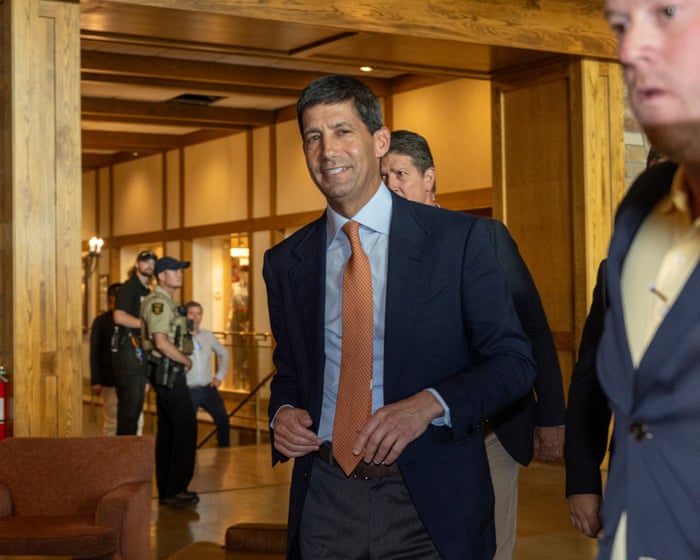
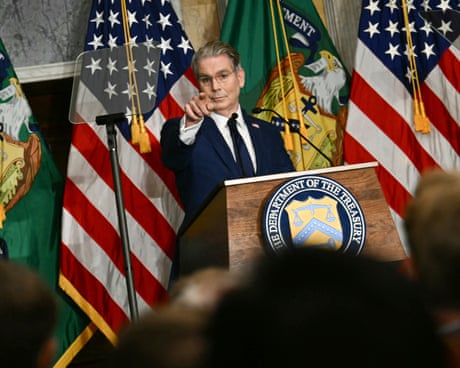
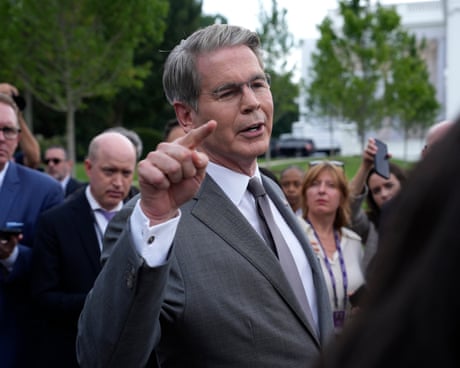
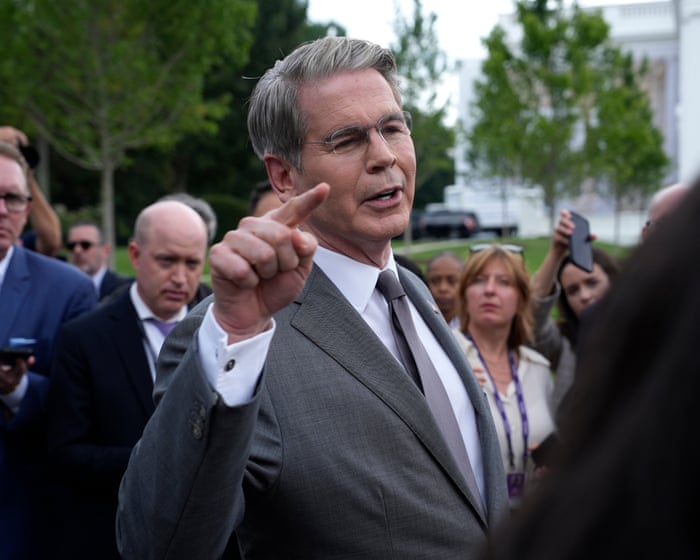
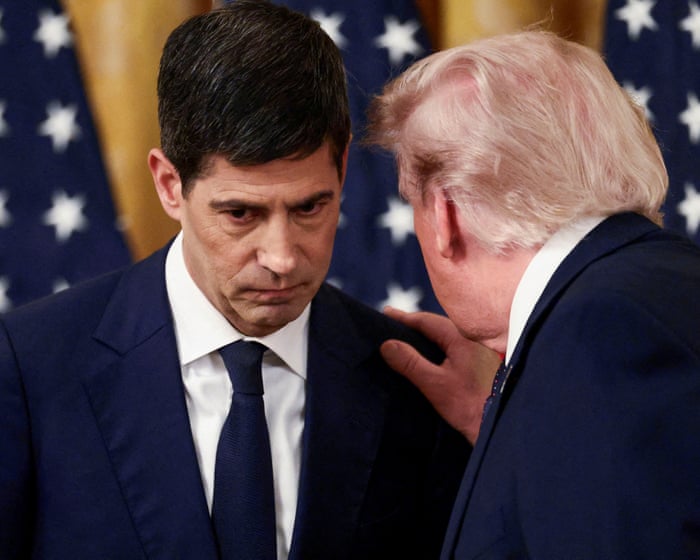
Treasury Secretary Scott Bessent, left, and the Federal Reserve chairman, Kevin M. Warsh, met with Group of 20 finance ministers and central banker governors on Tuesday in Asheville, N.C.
  •  

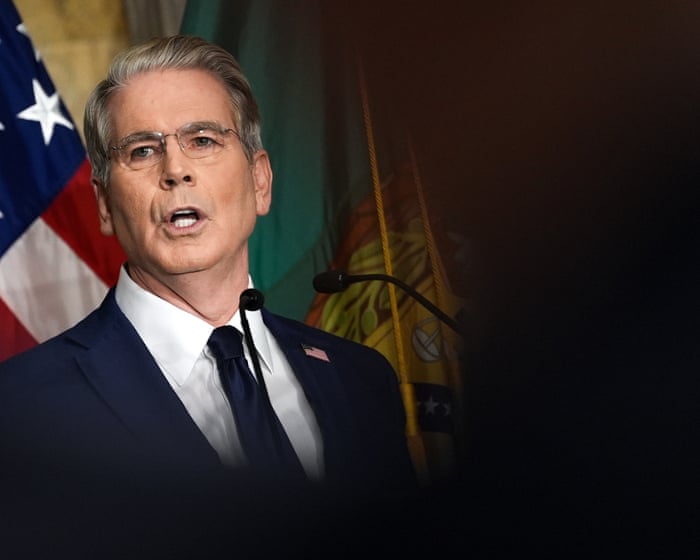
Mark Carney tells US to ‘start being serious’ amid escalating trade war

Canadian PM is set to retaliate against tariffs levied by Donald Trump and criticized US officials over insults

Mark Carney has rebuked Donald Trump’s administration and urged officials in Washington to “start being serious” amid escalating trade tensions between the US and Canada.

Days before Canada is due to retaliate against Trump’s sweeping tariffs with its own duties on US goods, the Canadian prime minister criticized US officials for insulting his country. “It is beneath their office,” he said.

Continue reading...

© Photograph: Jim Watson/AFP/Getty Images

© Photograph: Jim Watson/AFP/Getty Images

© Photograph: Jim Watson/AFP/Getty Images

  •  

Bessent Claims Canada Is Too Small to Fight a Trade War With the U.S.

At gathering of G20 finance ministers, the Treasury secretary accused Canada’s prime minister of starting a “political shouting match” over U.S. trade policies.

© Carlos Osorio/Reuters

The newly opened Gordie Howe International Bridge, linking Detroit and Windsor, Ontario, last month. Both the United States and Canada have announced high tariffs on each other’s products.
  •  

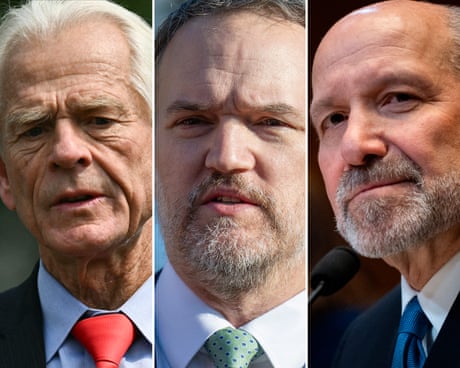
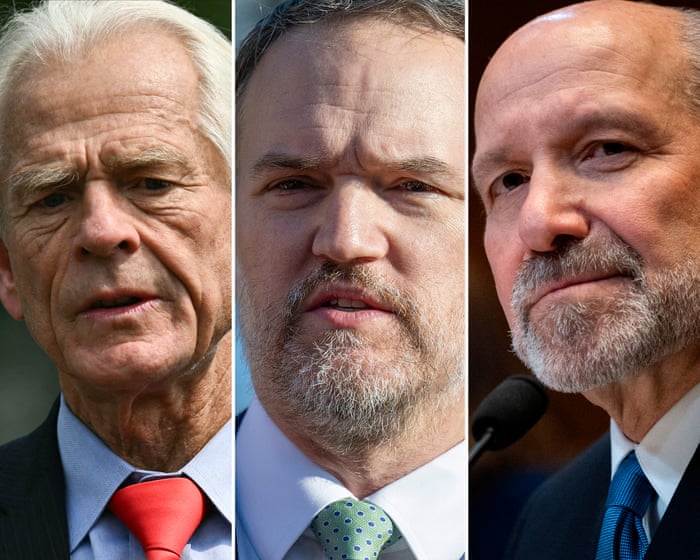
As US-Canada tensions flare, who’s calling the shots in Trump’s trade team?

US trade representative Jamieson Greer has a level-headed reputation but commerce secretary Howard Lutnick and White House adviser Peter Navarro also have key roles

Having reportedly read Victor Hugo’s Les Misérables, in French, during a military tour of duty in Iraq, Jamieson Greer considered himself an unlikely target for accusations of francophobia.

But Donald Trump’s US trade representative, hitherto one of the president’s less high-profile cabinet members, found himself in that uncomfortable position amid the acrimonious collapse of bilateral trade talks with Canada that now threatens to degenerate into an all-out trade war between the two close trading partners whose economies are tightly intertwined.

Continue reading...

© Photograph: Getty Images

© Photograph: Getty Images

© Photograph: Getty Images

  •  

OnlyFans and AI training: why gen Z doesn’t care where our money comes from | Alice Lassman

With traditional goals such as stability and home ownership feeling out of reach, young people are focused on the present

By now, we all know the shape of financial nihilism: the throw-your-money-at-anything reaction to the dissolution of the slow, linear path to wealth; the prediction markets, meme stocks, cryptocurrencies and microluxuries growing in its place. We’re left in an economic no man’s land. But financial nihilism only describes where we put our money. What about how we earn it in the first place?

The modern economy has long relied on our need for stable employment – to pay the mortgage, to keep our kids fed, or, for some, to chase prestige and power – to generate the work ethic that keeps the wheel of production turning. None of this is going well for young people. Our jobs are insecure, we can’t afford houses, we’re deferring having kids (if we have them at all), and only 6% of us say a leadership position is our primary career goal. Hope is one of the economy’s most productive inputs, powering our willingness to endure long hours. When the production function of income – the mechanism that turns hard work into a stable salary, then a mortgage, then a pension – breaks down, so does our relationship with the input. I call this production nihilism: my generation’s growing indifference to the kinds of work we’re willing to participate in, and where we’re willing to earn.

Continue reading...

© Photograph: Michael Simons/Alamy

© Photograph: Michael Simons/Alamy

© Photograph: Michael Simons/Alamy

  •  

‘Inept, incompetent, craven’: Scott Bessent struggles to clean up the president’s mess

There’s little optimism about treasury secretary’s ability to handle Trump’s tariffs, Iran sanctions and colossal US debt

History remembers Gen Dwight Eisenhower, the supreme commander of the allied forces in Europe during the second world war, for his role in the D-day invasion of Normandy. Whether Scott Bessent will achieve similar posterity as the face of the “economic D-day” in Iran remains to be seen.

The US treasury secretary, already trying to manage a $40tn national debt pile, this week took charge of Donald Trump’s effort to reverse-engineer his war of choice. Whereas the US would typically take on an adversary with diplomacy, sanctions and military force, in that order, the US president started with a six-month bombing campaign and now hopes that economic isolation can finish the job.

Continue reading...

© Photograph: Julia Demaree Nikhinson/AP

© Photograph: Julia Demaree Nikhinson/AP

© Photograph: Julia Demaree Nikhinson/AP

  •  

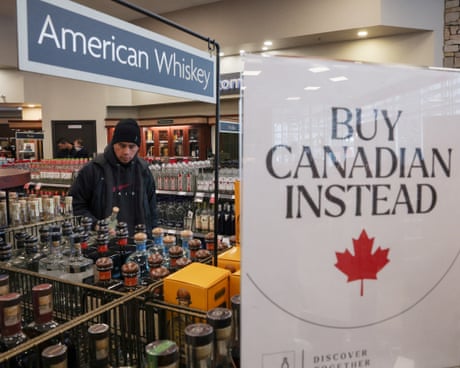
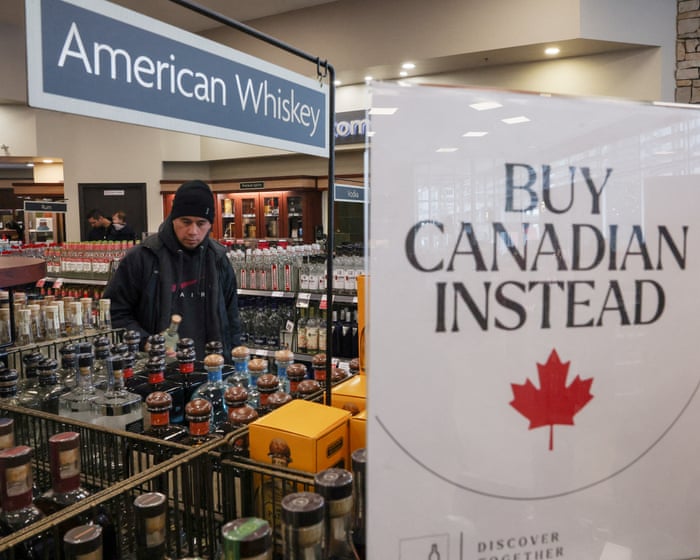
‘If it’s made in the US, I don’t buy it’: Canadians on boycotting Trump’s America

Avoiding US goods and services – from tech to whisky to air travel – has forced many to find a new way of living

For William McDonald, 38, a diesel mechanic from Thunder Bay, Ontario, “Canadian is always the first choice,” even if it means his weekly bills are higher.

“As soon as Trump started putting those tariffs on in February [last year], I started boycotting US goods,” he said. “Avoiding American products has driven my costs up, and I’m still happy to do it.

Continue reading...

© Photograph: Chris Helgren/Reuters

© Photograph: Chris Helgren/Reuters

© Photograph: Chris Helgren/Reuters

  •  

Carney Has Canadians’ Support on Trump. Now Comes the Hard Part.

The U.S.-Canada trade war has galvanized Canadians behind their prime minister’s decision to walk away from negotiations. What happens when the time comes for talks to restart?

© Dave Chan/Agence France-Presse — Getty Images

Canadian Prime Minister Mark Carney speaks at a news conference in Ottawa, Ontario, after trade talks with the US collapsed earlier this month.
  •  

High Debt and Rising Prices Catch Up to Trump, as Midterms Near

Par : Tony Romm
To win in 2024, the president promised an economic course correction. Almost two years later, his agenda has made that fight even harder.

© Haiyun Jiang/The New York Times

A series of concerning economic snapshots for President Trump have been released over the past week.
  •  

For Trump, the Iran War Is Stuck Between Combat and Genuine Peace

The war has deteriorated over the past six months into Mr. Trump’s own version of a “forever war,” with no clear goals and no end in sight.

© Kenny Holston/The New York Times

President Trump has been unable so far to broker an agreement to end the war on satisfactory terms.
  •  

Fed chair says delivering ‘stable prices’ is central bank’s job as inflation persists

However, Kevin Warsh didn’t say if interest rates would change in coming months, as inflation remains stubborn

The US Federal Reserve is not done fighting high inflation, its chair, Kevin Warsh, said in his first major speech in the role on Friday, emphasizing that it was “the Fed’s job to deliver stable prices”.

Warsh did not indicate where the Fed will take interest rates in the coming months, despite US inflation remaining stubbornly above the central bank’s 2% target amid the war in Iran. But his speech was taken by markets as a signal that rates may rise in the coming months, a move that may put him at odds with Donald Trump, who has aggressively called for rates to be cut.

Continue reading...

© Photograph: Natalie Behring/Getty Images

© Photograph: Natalie Behring/Getty Images

© Photograph: Natalie Behring/Getty Images

  •  

Detroit despairs as ‘insanity’ of Trump’s Canada trade war punishes city

Unpopular new policy comes as midterms loom and control of Congress could be decided by several Michigan races

Every day $1bn worth of goods crosses the river dividing Detroit, Michigan, and Windsor, Ontario, two largely blue-collar US and Canadian cities that have come to act as one in the creation of North America’s auto industry.

News this week of Donald Trump’s escalating trade spat with Canada has everyone worried. Political and economic leaders and observers labeled the move an act of “hubris” , blamed Trump’s “ego”, and called the escalation “insanity”.

Continue reading...

© Photograph: Jeff Kowalsky/AFP/Getty Images

© Photograph: Jeff Kowalsky/AFP/Getty Images

© Photograph: Jeff Kowalsky/AFP/Getty Images

  •  

In Trump’s Washington, Ballooning National Debt Stirs Little Action

The relative indifference to the news that the U.S. government now owes $40 trillion demonstrates how drastically the politics of deficit spending has changed.

© Anna Moneymaker/Getty Images

A sign showing the national debt last week at a bus stop in Washington.
  •  

Shares in Russia’s second-largest bank hit record low as Wildberries-linked offering price holds steady

vtb bank branch in svietlahorsk, belarus

Shares in Russia’s second-largest bank VTB fell to an all-time intraday low of just under 50 rubles ($0.60) on 26 August, RBC’s exchange data showed. That was more than 40% below the 87-ruble (about $1) price set for a share sale partly intended to finance its Wildberries partnership. At that price, offering participants would pay about 75% more than investors buying the same shares on the stock market.

In the second quarter, the bank set aside 28% more for troubled loans while its profit fell by one-third.

VTB’s drop came amid a wider decline in Russian stocks. Kommersant’s market report said analysts also linked the fall to VTB’s own large new share issue.

Share issue could cut existing stakes by one-third

Under the bank’s offering plan, VTB could issue almost one new share for every two already in circulation. If VTB sold the full amount, an existing shareholder who bought no new shares would see their ownership stake fall by about one-third. VTB planned to finish the sale and close its Wildberries deal by 1 September.

The bank expected to raise 300–400 billion rubles ($3.6–$4.7 billion). VTB said it had assembled a group of large investors willing to participate but would not disclose who they were. Those investors would receive the same class of shares traded on the Moscow Exchange, but at the price fixed by VTB.

VTB described the partnership primarily as a route into Wildberries’ 80 million users—more than twice the bank’s own customer base. VTB would initially acquire a 5% stake in Wildberries’ banking arm, with the option to increase its holding later.

Reuters described both companies—Wildberries and rival Ozon—as central to Moscow’s plans to use online commerce as an engine of economic growth.

VTB held its price as shares fell

On 9 July, VTB kept its price even after the stock had fallen well below the offering price. The bank said its large, long-term investors were willing to look past short-term price swings.

On 16 July, VTB hit another low as investors prepared for its dividend cutoff and the new share issue. The first drone strikes on Wildberries warehouses followed two days later.

logistics centre in Bashkortostan, Russia,
Explore further

Is a fifth or well over half of Wildberries gone—or can both counts be right?

VTB’s first-half results showed that its profit fell by one-fifth from a year earlier. In the second quarter, the bank set aside 28% more for troubled loans while its profit fell by one-third.

After the attacks, Moscow considered supporting Wildberries and its sellers, with VTB expected to play a central role. VTB shares fell 2.5% on 28 July amid uncertainty over the partnership. “If we receive such a request, we will, of course, be open to various forms of lending support,” VTB’s first deputy CEO Dmitry Pyanov told Reuters.

  •  

We surveyed 6,000 Americans. Here is the winning message for Democrats | Dustin Guastella

It’s about ‘kitchen-table populism’: focusing on Americans’ day-to-day economic struggles

This year’s Democratic primaries look and sound a lot more populist than usual. Brian Poindexter, a union iron worker running on a “workers first” message, won a House primary outside Cleveland. Sherrod Brown is mounting a Senate comeback in Ohio on the same “rigged system” message that has allowed him to outshine other Democrats in Ohio. Troy Jackson, a fifth-generation logger who built his career fighting corporate landowners, is the Democratic Senate nominee in Maine. And Josh Turek, a self-described “prairie populist”, is on the Senate ballot in Iowa.

In fact, according to research we’ve conducted through the Center for Working-Class Politics (CWCP), more than 70% of 2026 Democratic candidates now rely on populist rhetoric in their campaigns, laying the blame for our broken system on rich elites of one kind or another.

Continue reading...

© Photograph: Brian Snyder/Reuters

© Photograph: Brian Snyder/Reuters

© Photograph: Brian Snyder/Reuters

  •  

A warehouse built to hold up to 54 million items burned down in Tambov Oblast, Russia

warehouse built hold 54 million items fire tambov oblast russia · post burned-out buildings wildberries logistics center kotovsk 26 2026 exilenova+ ukraine news ukrainian reports

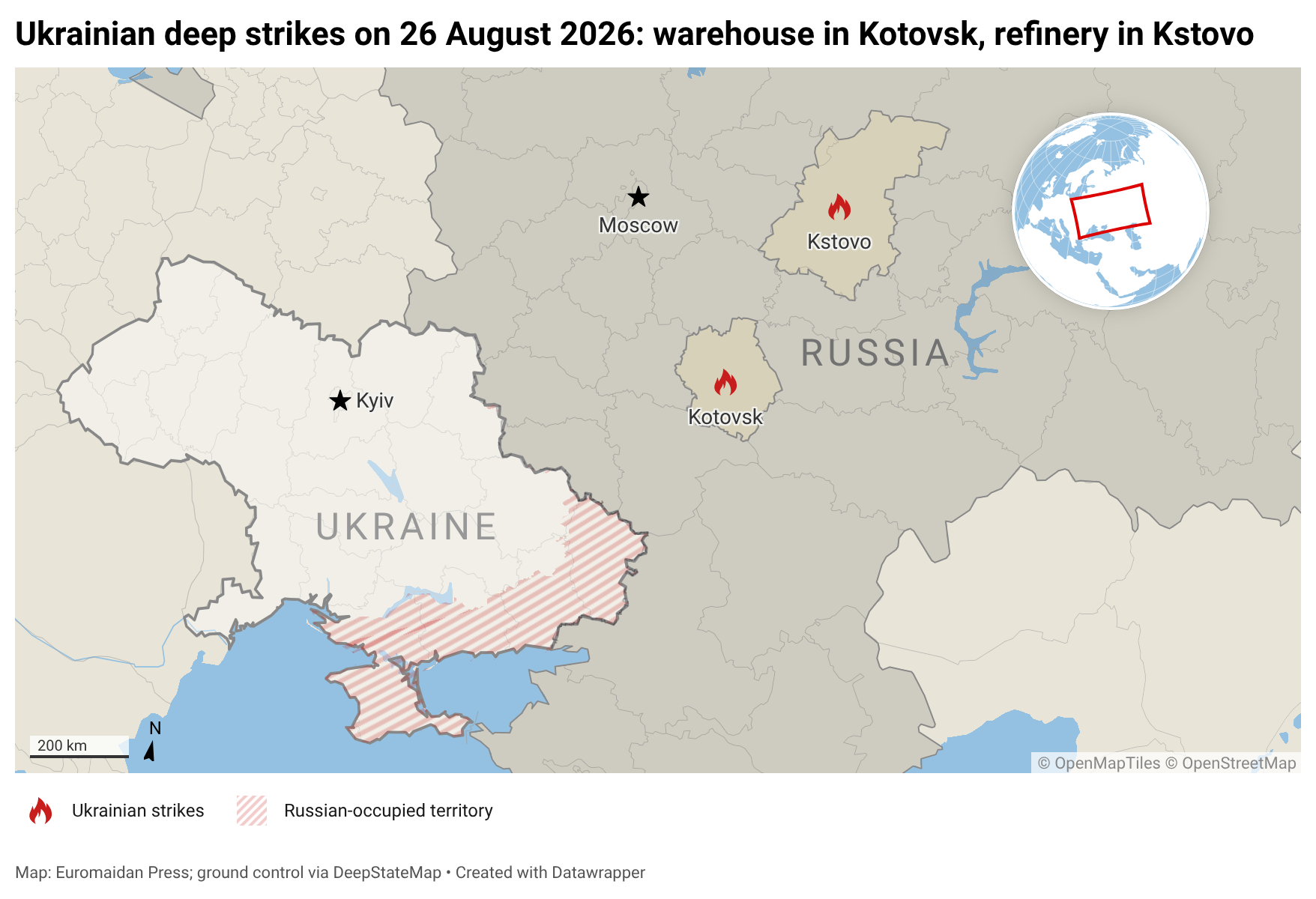
Ukrainian drones struck the Wildberries logistics hub in the Russian town of Kotovsk for the second time in six weeks, Ukrainian monitoring channel Exilenova+ reported. A fire took hold across most of the 108,000-square-meter complex, and by late morning, the regional governor said the warehouse was destroyed. Wildberries, Russia's biggest online store, had restarted the site after a July strike. The facility is located in Tambov Oblast, about 420 km from the war zone in Ukraine.

Since mid-July, Kyiv's long-range drones have been burning through the depots of Wildberries and Ozon, Russia's two biggest online stores, alongside the refineries and fuel depots that remain on the target list. Marketplace hubs are wide, flat, and largely uncovered by air defense, and the space takes months to replace, so the campaign now reaches the part of the Russian economy that touches every household.

The second fire at the same hub

Exilenova+ reported the strike at 01:24, saying Ukraine's Defense Forces had hit the site again and that a fire was burning. Later, the channel continued to share photos and videos from Kotovsk. The Russian news Telegram channel Astra reported that local residents described the warehouse as attacked and alight. Witnesses counted at least 10 explosions in 40 minutes. Wildberries said a drone attack damaged its logistics facility in the oblast and started a fire, and that the site had stopped accepting new deliveries.

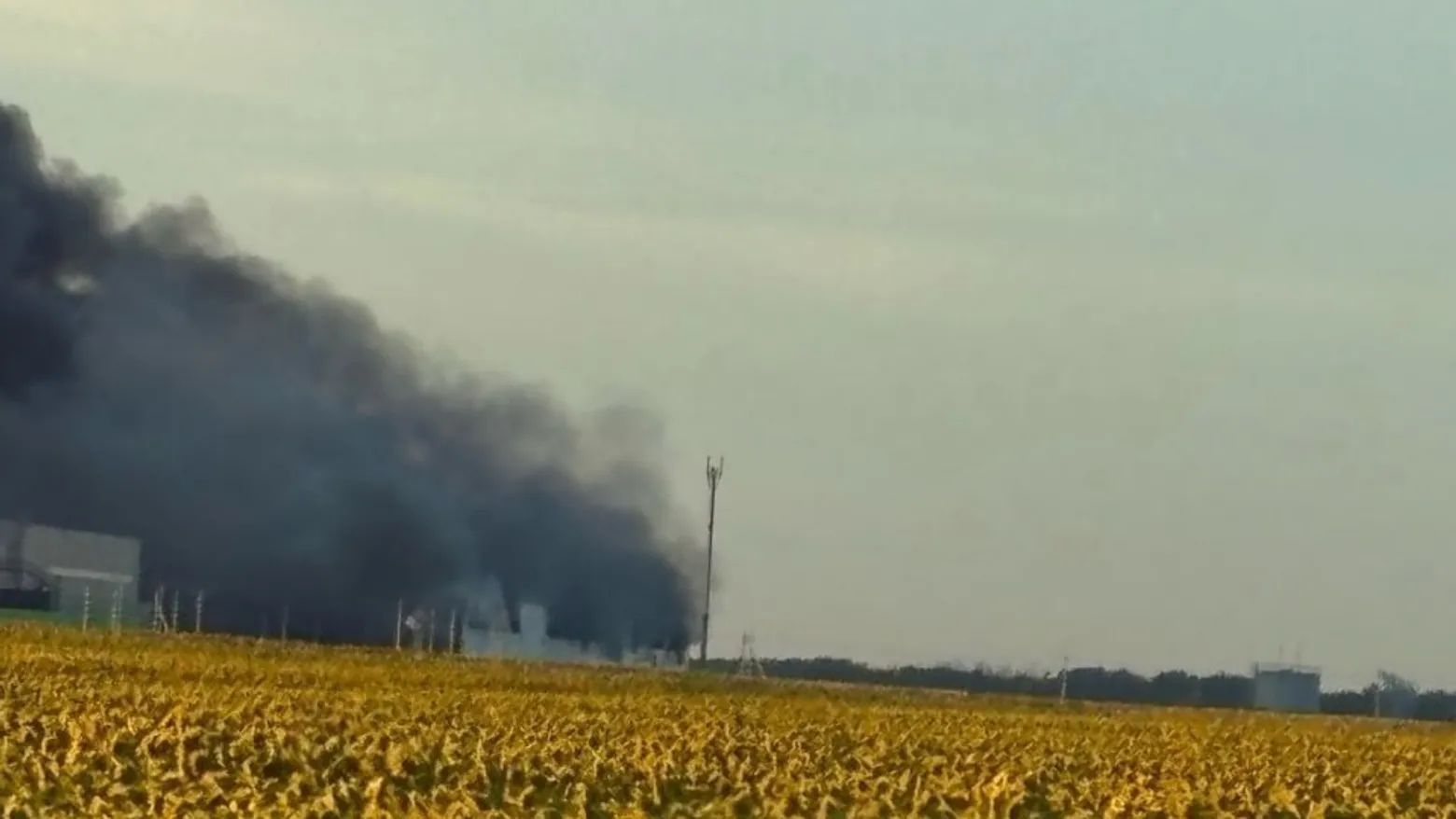
warehouse built hold 54 million items fire tambov oblast russia · post smoke rising wildberries logistics center after drone strike kotovsk 26 2026 supernova+ ukraine news ukrainian reports
Smoke rising from the Wildberries logistics center after the drone strike in Kotovsk, Tambov Oblast, Russia, 26 August 2026. Photo: Supernova+

What the governor said, and what changed by morning

Tambov Oblast governor Yevgeny Pervyshov confirmed the attack and put the burning area at more than 100,000 square meters. He claimed air defenses and mobile fire groups of a regional volunteer reserve unit destroyed 16 drones. He initially reported one Wildberries employee hurt, with concussion from a blast wave, and said a downed Ukrainian drone set a house on fire in a dacha settlement.

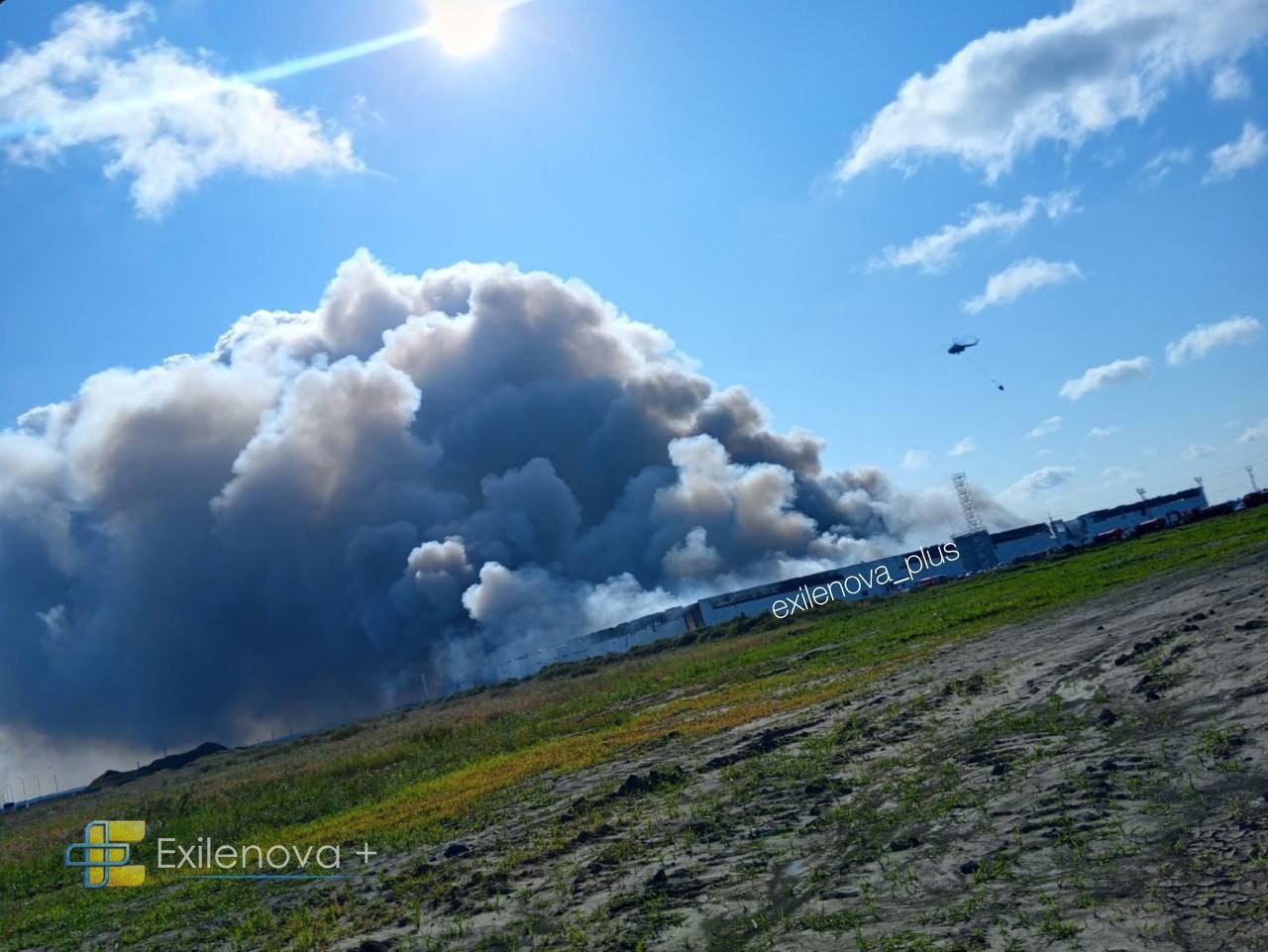
warehouse built hold 54 million items fire tambov oblast russia · post helicopter carrying water bucket above burning wildberries logistics center kotovsk 26 2026 exilenova+ ukraine news ukrainian reports
A helicopter carrying a water bucket above the burning Wildberries logistics center in Kotovsk, Tambov Oblast, Russia, 26 August 2026. Photo: Exilenova+

By 11:17, Pervyshov's account had changed. Fire had destroyed the warehouse completely, and two people were injured, he said. Three strike drones had reached the building, the official stated. He closed by again urging men in the oblast to join the defense of its skies. Earlier, Kotovsk's mayor asked residents not to leave their homes for two days, citing the risk of carbon monoxide poisoning from the burning warehouse.

Russia's Defense Ministry separately claimed it destroyed 426 drones overnight across the country.

Last night, Ukrainian drones struck another warehouse in Russia

The Wildberries hub in Kotovsk, Tambov Oblast, caught fire and the company announced a "temporary" suspension of its operations.

📹Exilenova+ pic.twitter.com/qH0Qi3f6YV

— Euromaidan Press (@EuromaidanPress) August 26, 2026

Ukrainian President Volodymyr Zelenskyy said Ukrainian forces hit 16 targets in Russia over the past day, naming oil facilities — "the Russian oil wallet that finances the war" — along with airfields, a missile unit, a military plant, and Russian logistics. War has to return to where it came from, he said.

Almost no storage left in central Russia

The Kotovsk hub opened in 2025 as one of Wildberries' key logistics sites for central Russia, built to hold up to 54 million items at full capacity. Drones first hit it overnight on 18 July, when seven warehouse staff died and, by the governor's count, 25 more were hurt. The company suspended operations then, too.

By the end of July, the retailer had already lost more than a million square meters of warehouse space, Exile+ calculated, which leaves it physically almost no free capacity in the center of the country.

From one marketplace to the next

Ukrainian drones destroyed eight Wildberries warehouses in July alone, roughly 860,000 square meters or about 15.4% of the company's storage. The campaign widened to Ozon, Russia's second-largest online store, with its biggest Russian complex hit in Orenburg on 23 August, and three southern hubs struck the next night.

  •  

This is the question Democrats should ask voters in order to win this November | Robert Reich

They should ask the question Reagan asked at the end of his debate against Jimmy Carter: ‘Are you better off now than you were before this presidency?’

The midterm elections are already upon us, and every Democrat and independent running against a Republican should ask voters the question Ronald Reagan asked on 28 October 1980, at the end of his televised debate against Jimmy Carter: “Are you better off now than you were before this presidency?”

Unless you’re very, very rich, the answer is obviously: “No, I’m worse off.”

Energy bills have increased three times faster than the rate of inflation while Trump has been president. The national average monthly utility bill reached $280 in early 2026, a 12% increase since the end of 2024, just before the second Trump administration took office.

Continue reading...

© Photograph: Angela Weiss/AFP/Getty Images

© Photograph: Angela Weiss/AFP/Getty Images

© Photograph: Angela Weiss/AFP/Getty Images

  •  

Is the Trump Treasury panicking over the level of US debt?

With the federal deficit near 6% of GDP and the national debt over $40tn, America’s fiscal position looks increasingly precarious

Are we seeing the first signs of panic in Donald Trump’s Treasury? The US is by far the world’s biggest debtor, and the steady rise in global long-term interest rates – which I have long argued was inevitable – is starting to cause real pain.

Until now, the Treasury secretary, Scott Bessent, has dismissed concerns about US debt, which recently surpassed $40tn, as a big nothingburger. Growth, in his telling, will be so spectacular the US will easily be able to meet its interest obligations without any significant tax rises or spending cuts, while the rest of the world will happily keep feeding it money. But if Bessent really believes that, why is he trying to strong-arm the bond market by fiddling with the maturity structure of government debt?

Continue reading...

© Photograph: Kent Nishimura/AFP/Getty Images

© Photograph: Kent Nishimura/AFP/Getty Images

© Photograph: Kent Nishimura/AFP/Getty Images

  •  

Billionaire investor says he used AI to write critique of former mentee Scott Bessent

Stanley Druckenmiller said he was ‘proud of using it’ as wider media grapples with parameters around AI use

Stanley Druckenmiller, a billionaire investor, said he used artificial intelligence to pen his viral Wall Street Journal op-ed in which he sharply criticized the interference of Scott Bessent, the US treasury secretary, in the US bond market.

Many news outlets, including the Guardian, covered the editorial, highlighting Druckenmiller’s rebuke of his former mentee, Bessent. As the story circulated online, some readers questioned rhetorical choices that resembled AI-generated text.

Continue reading...

© Photograph: Brendan McDermid/Reuters

© Photograph: Brendan McDermid/Reuters

© Photograph: Brendan McDermid/Reuters

  •  

The Guardian view on Trump’s economic threats: bullies can overplay their hand | Editorial

Par : Editorial

Tariffs on Canada, threats against Iran’s partners and bond market intervention show a president weaponising US power while making Americans poorer at home

Three moves in the last week have exposed the limits of Donald Trump’s economic bullying. The US slapped 50% tariffs on another $20bn of Canadian goods – then threatened the same rate on the cars, trucks, parts and steel that America Inc depends on. On Monday, the Treasury secretary, Scott Bessent, menaced Iran’s trading partners with exclusion from the US financial network, hoping that coercion can deliver what months of war have not. And as the costs of war, tariffs and pro-billionaire tax cuts helped send US bond yields higher, the Treasury stepped in to tame long-term rates. These are not contradictory policies but a gamble: that US economic power can be repeatedly weaponised without reducing others’ willingness to depend on it.

The Trump administration’s “D-day” sanctions are potentially the most consequential because they expose the scaffolding of American financial power. While markets shrugged off the immediate threat, that calculation might change were the US to target a major Chinese refinery or bank. Such an escalation could spark a trade war with Beijing. The US has leverage. But China has pressure points – especially farmers in Republican states – that make using it costly. In the long run, there is a price to pay. Nations hold one another’s currencies partly because they trust the political relationship. Mr Trump is testing what happens when they don’t.

Continue reading...

© Photograph: Will Oliver/UPI/Shutterstock

© Photograph: Will Oliver/UPI/Shutterstock

© Photograph: Will Oliver/UPI/Shutterstock

  •  

US consumer confidence falls in August as gas prices remain above $4 per gallon

Confidence index drops to 89.4 in August from 90.2 in July amid frustration after five years of elevated inflation

Americans’ confidence in the economy declined again this month as the ongoing conflict in Iran continued to push US gasoline prices above $4 per gallon.

The Conference Board said on Tuesday that its consumer confidence index dipped to 89.4 in August from 90.2 in July. That was the lowest level in seven months but was essentially within the same lukewarm range it has been in since the beginning of the year. In late 2024 and early 2025, readings were consistently above 100.

Continue reading...

© Photograph: Frederic J Brown/AFP/Getty Images

© Photograph: Frederic J Brown/AFP/Getty Images

© Photograph: Frederic J Brown/AFP/Getty Images

  •  

US Treasury’s Scott Bessent ‘will lose’ battle with bond markets, former mentor warns

Trump ally should cut budget deficit rather than try to suppress bond yields, says billionaire Stanley Druckenmiller

Scott Bessent’s attempt to calm the bond markets and push down America’s cost of borrowing have attracted a rebuke from the US Treasury secretary’s former mentor.

The billionaire investor Stanley Druckenmiller, who worked with Bessent at George Soros’s fund management firm in the 1990s, has warned that his former pupil is courting danger by trying to suppress US bond yields.

Continue reading...

© Photograph: Evelyn Hockstein/Reuters

© Photograph: Evelyn Hockstein/Reuters

© Photograph: Evelyn Hockstein/Reuters

  •  

Russia’s biggest electronics chain delays seller payments as it expands online

v.mideo store at grozny mall in chechnya

Independent businesses selling through M.Video, Russia’s largest electronics chain, waited months to receive customer payments for goods already sold. One seller received it only after filing a formal demand that usually precedes a lawsuit, according to a Vedomosti report.

The sellers are independent businesses using M.Video’s website as their storefront. Under M.Video’s seller contract, a customer buys from the independent business while M.Video collects the payment as the seller’s agent.

The business pays M.Video a commission for listing the product and handling payment and delivery. Until M.Video transfers the proceeds, the seller has already handed over the product but has not received the money from the sale.

Some sellers turn to legal demands

Sellers said payments for goods sold in May and June were still missing in August. One sent M.Video a formal demand on 13 August, giving the company five days to pay and waiving interest. The money arrived on 18 August.

Another business said its demand went unanswered, while its assigned manager stopped responding. It continued shipping orders until mid-July because M.Video had promised to transfer payment for its May sales.

Similar complaints had already surfaced two months earlier. M.Video told ABN that transfers were regular, but rapid growth sometimes required additional checks before funds could be released. The same report cited a business that had waited 24 working days after approving its sales statement; its previous transfer had also arrived late.

Independent sellers are taking a larger role in M.Video’s business. M.Video’s annual results show that products from these sellers accounted for one in every ten orders in 2025. According to its half-year marketplace update, turnover from these businesses quadrupled year-on-year as M.Video expanded beyond electronics. The number of products listed grew nearly sixfold.

The shift follows heavy losses in M.Video’s store-based business. M.Video’s annual results show that it lost about 64 billion rubles (about $770 million)—nearly one-fifth of its annual revenue. The chain closed hundreds of underperforming stores and opened only 11.

  •  

U.S. Unveils Campaign to Cripple Iran’s Economy, but Offers Few Details

Treasury Secretary Scott Bessent acknowledged the effort was more of a warning shot that would begin a period of “quiet diplomacy.”

© Evelyn Hockstein/Reuters

Treasury Secretary Scott Bessent said the United States would “tighten the noose” around Iran by imposing sanctions on every source or facilitator of its revenue.
  •  

The treasury bond mess: is this the demise of the US as a safe haven?

The US is scooping up treasury bonds in an effort to raise their price and push yields down – but it’s not working

The bond market is driving the Trump administration crazy. Last week, the treasury secretary, Scott Bessent, announced that the government would sharply ramp up its purchase of treasury bonds, in an effort to raise their price and thus push down their yield, which amounts to the interest rate the government pays on its debt.

It didn’t quite work as planned. Yields on treasurys fell after Bessent’s bond market intervention but soon bounced back. By Friday afternoon, the yield on the 10-year treasury was back near where it was before the secretary’s announcement. The yield on the 30-year bond was again trading around its highest level in 20 years or more.

Continue reading...

© Photograph: Andrew Thomas/CNP/Andrew Thomas - CNP/Shutterstock

© Photograph: Andrew Thomas/CNP/Andrew Thomas - CNP/Shutterstock

© Photograph: Andrew Thomas/CNP/Andrew Thomas - CNP/Shutterstock

  •  

Bessent is expected to announce new measures aimed at isolating Iran.

Treasury Secretary Scott Bessent will hold a news conference outlining the new package of measures.

© Kenny Holston/The New York Times

Treasury Secretary Scott Bessent said last week that countries that continue to do business with Iran would face the “full might and force” of the U.S. government.
  •  

New Fed chair faces critical test at Jackson Hole as inflation fears mount

Investors will hope Kevin Warsh offers ‘comfort blanket’ at annual meeting of central banks amid bond market anxiety

The new US Federal Reserve chair, Kevin Warsh, faces a critical test this week amid anxiety in government bond markets over inflation and Donald Trump’s tax and spending plans.

As the world’s most powerful central bank prepares for its annual Jackson Hole conference, analysts said bond traders would be looking for signals from Warsh over its commitment to fighting inflation.

Continue reading...

© Photograph: Evelyn Hockstein/Reuters

© Photograph: Evelyn Hockstein/Reuters

© Photograph: Evelyn Hockstein/Reuters

  •  

Trump’s Economic Approach Draws Concern From Some Republicans

A plan to lower tariffs on imported beef and trade tensions with Canada have compounded some G.O.P. worries about a central issue in the midterms.

© Al Drago for The New York Times

President Trump arriving aboard Air Force One at Kennedy International Airport on Aug. 14.
  •  

Jumpy bond markets make it clear: Trump risks driving US into debt crisis | Heather Stewart

Treasury secretary Scott Bessent’s attempt to calm bond markets is a sign of weakness not strength

“Look, there’s nothing magic about that $40tn number,” the US Treasury secretary, Scott Bessent, told CNBC insouciantly last week, as the country’s debt mountain surpassed another bleak record.

Yet Bessent’s decision to intervene in government bond markets in an effort to combat soaring yields belied his studied calm in TV interviews – and reignited fears the US may be on the road to a debt crisis.

Continue reading...

© Photograph: Al Drago/EPA

© Photograph: Al Drago/EPA

© Photograph: Al Drago/EPA

  •  

Carney Slams U.S.-Canada Trade Proposal and Vows Retaliation

Prime Minister Mark Carney gave a powerful speech to Canadians on Saturday morning, hours after ordering negotiators to suspend U.S. trade talks despite President Trump’s punishing tariffs.

© Patrick Doyle/The Canadian Press, via Associated Press

Prime Minister Mark Carney of Canada said that he had pulled negotiators out of trade talks with the United States because the Trump administration had “asked too much and offered too little.”
  •  

Carney Stands Up to Trump in U.S.-Canada Trade War

Canada’s prime minister walked away from what he thought was a bad trade deal with the United States. Many Canadians are behind him, but it will be costly.

© Patrick Doyle/The Canadian Press, Associated Press

Mark Carney, Canada’s prime minister, said on Saturday that “Canada is becoming stronger and less dependent on America.”
  •  

Russian strikes on Odesa ports push Ukrainian farms toward bankruptcy, Bloomberg reports

A damaged cargo ship burns at sea as thick black smoke rises from its stern and water sprays across the vessel.

Ravil Dzhamally fled when Russian forces occupied his farm in Kherson Oblast, then returned after liberation to clear mines and plant again. Now, tons of his grain lie unsold in plastic sleeves across his fields because Russian attacks have nearly halted exports through Odesa, Bloomberg reported on 20 August.

Odesa’s Black Sea ports handle almost all of Ukraine’s grain exports, Bloomberg reported. Weekly grain and oilseed exports have fallen by more than 90% since early July, data from commodity-data firm Kpler show. That threatens fall planting and the sector that generates more than half of Ukraine’s export revenue. The disruption is also raising food costs in countries that rely on imported grain, Reuters reported.

Farmers must either store harvests they cannot export or sell locally at about one-third of global prices, Bloomberg reported. They say this year’s crisis is worse than the 2022 blockade because the financial reserves that carried them through six months of disruption then have since been depleted.

Russian attacks drive ships from Ukraine’s grain corridor

Ukraine’s Black Sea grain corridor—the wartime shipping route from Odesa—was never formally closed, Euromaidan Press reported. Four or five ships entered Ukraine’s ports on 21 July. Still, none arrived the next day because shipowners had paused calls, not because Ukraine had restricted navigation, Agriculture Minister Taras Vysotskyi told Ukrainian agricultural outlet Latifundist.

Ukraine’s state railway, Ukrzaliznytsia, subsequently restricted selected wheat and barley shipments to Odesa ports. Its register did not state a reason, and the railway did not publicly link the orders to the shipping disruption.

Oleksandr Havryliuk, who farms near the front in Kharkiv Oblast, told Bloomberg that losing his harvest would probably bankrupt him and force him to sell the farm. The National Bank of Ukraine estimates that Ukraine could lose about $2.5 billion in export revenue during the second half of 2026, Reuters reported. Bloomberg said the disruption could trigger widespread farm bankruptcies.

Ukraine seeks EU aid and export routes as losses mount

Financing was already constrained before the port crisis: available financing and insurance were “enough to keep the sector surviving, not enough to keep it growing,” Vysotskyi told Euromaidan Press in May.

Before Russia’s full-scale invasion, agriculture accounted for more than 10% of Ukraine’s economic output, according to World Bank data cited by Bloomberg.

The sector has since grown more important as Russian attacks have destroyed much of the country’s heavy industry, Evghenia Sleptsova, a senior economist at the economic forecasting firm Oxford Economics, told Bloomberg.

Her firm estimates that the disruption could cost the equivalent of 1.8% of GDP this year and 2.1% in 2027. Under a prolonged severe disruption, the 2027 loss could instead reach 5.3%, Oxford Economics said.

Ukraine could exhaust its grain-storage capacity by early November if exports do not recover, the Agriculture Ministry said, according to Bloomberg. Even using every available route, the country may export only about 30 million tons this season, leaving roughly the same volume stored or rotting, Vysotskyi said.

Ukraine’s Agriculture Ministry requested a €220 million EU grant to subsidize interest and unlock up to €4 billion in loans, the ministry said.

Ukraine and Moldova are also discussing a rail route through Moldova to Romania’s port of Constanța, Reuters reported, citing unnamed sources in both countries. Kyiv estimates the route could carry about 10% of its grain exports.

Western rail corridors have limited capacity, while low water levels restrict traffic through Danube ports. Both alternatives cost more than shipping through the Black Sea, Bloomberg reported.

  •  
❌