❌

Vue lecture

Russia is funneling the Ukrainian children it abducts into military camps and conscription. Ukrainian lawyer says world can legally call this genocide—but lacks the will
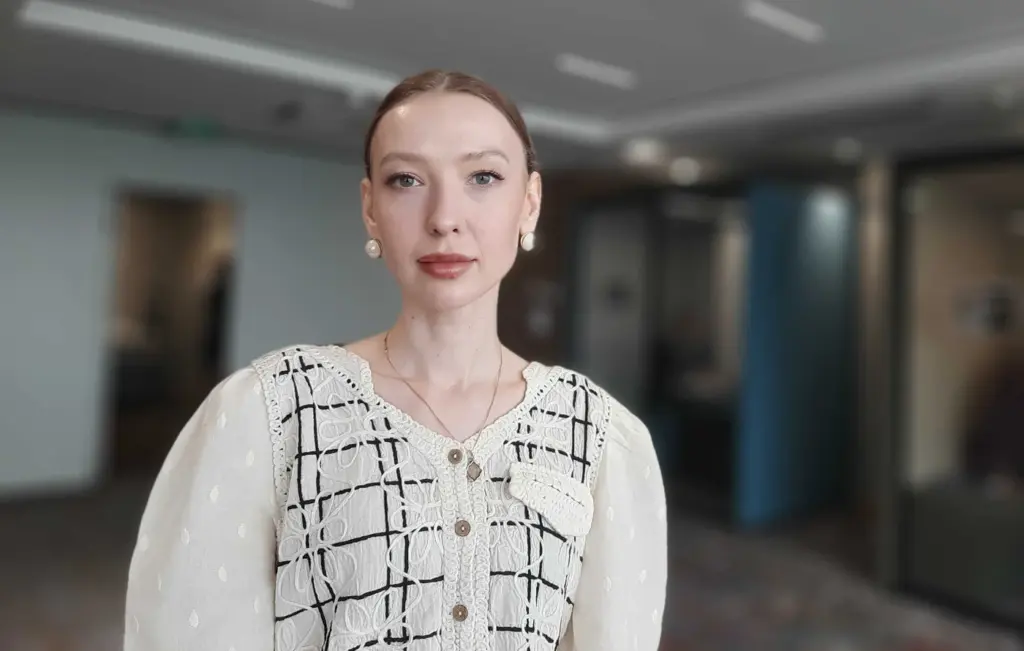
Kateryna Rashevska, legal expert at the Regional Center for Human Rights. Photo: Alya Shandra/Euromaidan Press

Kateryna Rashevska can trace exactly how one Ukrainian child disappears into Russia: the occupied-territory orphanage, the foster placement with a Kremlin-connected family, the re-education camp, the military uniform, the draft notice that arrives at sixteen. A legal expert at Ukraine's Regional Center for Human Rights, she has filed submissions to the International Criminal Court, documented the cases behind recent EU sanctions, and spent years building the argument that this is not only a war crime but genocide.

The law, she says, is ready. In less than five years of war, Russia has forcibly transferred at least 20,651 Ukrainian children from occupied Ukraine, a crime that has already put President Vladimir Putin and his children's-rights commissioner Maria Lvova-Belova in the dock of the ICC. The 1948 Genocide Convention lists the forcible transfer of children as one of the acts that constitute genocide, and the ICC's Ukraine investigation has been mandated to examine the charge since 2022. More than 150 states have signed that convention. None has been willing to say the word about Russia.

"We don't need to change any legal framework," Rashevska says. "We simply still lack the political will to call the crimes by their proper names." She presses the point because, for her, justice is not an afterthought but a deterrent: "Without justice, Russia will feel this resentment in several years, and they will repeat their actions."

And the court that could deliver that justice is collapsing. The ICC is in the deepest crisis of its existence: its prosecutor, Karim Khan, removed, 13 of its judges and prosecutors sanctioned by the United States, and on 9 October 2026 the court itself sanctioned by Washington for the first time, with Secretary of State Marco Rubio vowing to dismantle it "brick by brick." The court called the move unprecedented and warned that "history will judge this moment."

Meanwhile the children remain. Of the more than 20,000 taken, only 2,665 have been returned, as of 7 October 2026. The rest are placed in Russia's adoption system and foster homes, taught to forget they are Ukrainian, to love Russia, and to be willing to die for it: Rashevska cites 344,000 Ukrainian children drawn into the Movement of the First and 55,000 into the Yunarmiya youth army.

Euromaidan Press spoke with Rashevska on the sidelines of GLOBSEC 2026 in Prague about the machine Russia built to steal a generation, and why the world still won't name it.


Alya: You say that Russia’s forcible transfer of Ukrainian children is the crime of genocide. In international law, genocide is defined by Article 6 of the Rome Statute. What would it take to change this legal framework to include the deportation and militarization of Ukrainian children? And is the Office of the Prosecutor in any position to do that work under current US sanctions and Karim Khan’s leave?

Kateryna: We don’t need to change any legal frameworks to prosecute what the Russians are doing with Ukrainian children. Militarization and political indoctrination, as well as Russification of young Ukrainians, is a part of Russia’s bigger strategy to destroy Ukraine as a sovereign state and to subjugate everything in the Ukrainian nation to the Russian influence and control. I don’t see legal problems; we simply still lack the political will to call the crimes by their proper names.

The UN’s 1948 Genocide Convention posits that all states that signed the convention, 154 as of today, should act to stop it—not only those affected by genocide. If the international community recognized what the Russians are doing as a crime of genocide, it would mean that yet another time in history the international community was not able to prevent genocide, to recognize some early warnings, to react properly to what the Russians did, for example, in occupied Crimea or Donbas before 2022. It is not easy, and the international community and world political leaders should be mature enough to face all these challenges, recognize that they were involved in the commission of these crimes through silence and inaction, and finally stop it.

So that is why, according to the Rome Statute, the Office of the Prosecutor can start an investigation of the crime of genocide in the Ukrainian context. It is possible: the ICC’s Ukraine-situation investigation in March 2022, supported by 43 states, included not only war crimes and crimes against humanity, but also the crime of genocide. So we have all the legal tools and means, but politically it is very difficult.

Recently, there has been a global shift towards this—in the context of the war between Arabian states and Israel, not Ukraine. But for example, Israel’s attacks against Gaza’s education have already been termed "scholasticide," so as a part of the genocidal intent, as a part of the crime of genocide. So for us lawyers and human rights defenders, this is the task—to push the international community to do the same with Russia. It is not easy because Russia is one of the five "world policemen" expected to maintain this international legal order.

I believe that, perhaps in decades, but we will see how Russia’s actions will be recognized as the crime of genocide. The forcible transfer of children from one group to another group is the fifth universally recognized element of the crime of genocide.

Kateryna Rashevska, legal expert at the Regional Center for Human Rights. Photo: Alya Shandra/Euromaidan Press

Alya: Your organization was involved in documenting this. How does this pipeline actually work?

Kateryna: Yes, let's take Olga Druzhinina, who fostered four children from the occupied territories of Ukraine. Her story is very interesting: first, it seemed that she could be just an ordinary Russian brainwashed by TV shows about children from Donbas. But then we found that Olga is very close to [former Russian President] Medvedev, and through Medvedev to President Putin. Olga is the head of one non-governmental organization, "Semia Arktiki" [Family of the Arctic], and this organization aims to find foster parents for orphans— now including orphans from occupied territories of Ukraine. The co-head of this organization also fostered Ukrainian children.

It is a very well-built, pre-planned architecture of people involved in the commission of this crime—not some sporadic reaction to the full-scale invasion. They planned to do it. And I will not be surprised if, in the future, we find that these families also adopted children from Crimea or from Donbas even before 2022.

Her husband is a veteran of the Russian Armed Forces. He participated in many wars of the Russian regime, including the wars in Chechnya. It was clearly against the child's best interest to be sent to the family of this Russian serviceman and his wife. So their case was widely publicized. We recorded many different details. Later, we found photos of these children in the "Warrior Center" camp in Novosibirsk, and her foster daughter from occupied Ukraine wearing a St.George’s [Russian imperial] ribbon and in military uniform.

So the Ukrainian identity of these children was completely eradicated. It was prohibited to mention that they were Ukrainians, and the main goal of this family was to repress their unloyalty to the Russian state, to re-educate them, mold them into Russian patriots. Unfortunately, I don’t know the fate of these teenagers from Mariupol, but as far as I know, they were not returned to Ukraine. And now they are already young adults—meaning they will soon be conscripted into the Russian army. They have this military duty because they were forcibly given Russian citizenship. And young children also remain under the control of Olga and his husband.

Olga and her husband are members of the so-called "Putin Team." They were recognized many times as the best family of the Yamalo-Nenets region. The governor of Yamal-Nenets is also Putin's person. His candidacy was supported by Putin for re-election to this position. And this governor has many times mentioned that Ukrainian children from the occupied territories of Ukraine were accepted by foster families from his region, even without the proper documents.
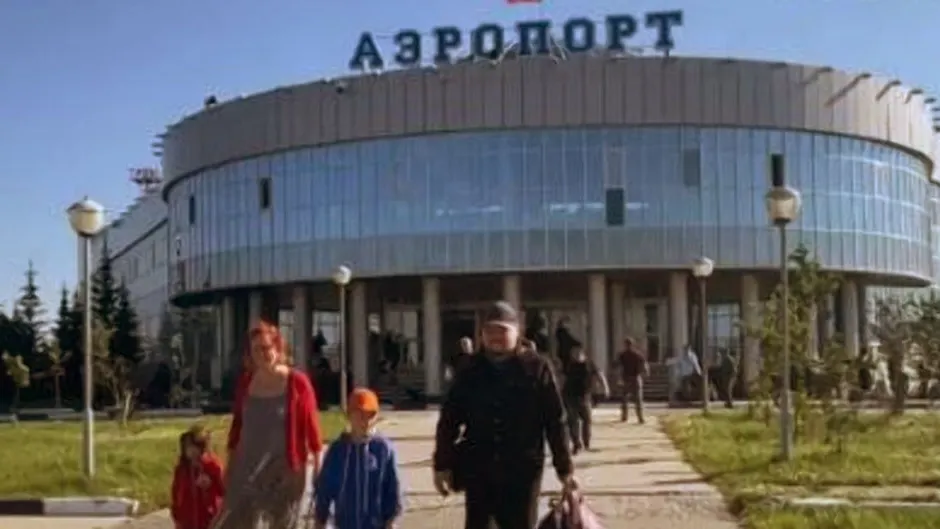
Olga Druzhinina and her husband at Salekhard airport with two children brought from occupied Donetsk Oblast, July 2022. Screenshot: Yamal-Media via Sever-Press

It is very difficult to influence their behavior without sanctions. In this sphere of foster care, the balance between placing children in Russian institutions and Russian families is hard to find. Russia presents only two options for the forcibly transferred Ukrainian children: Russian boarding institutions or Russian foster families. And of course, ordinary people think: a family is better than a boarding institution. The truth is that there is a third option: just return these children to Ukraine, to their homes.

And I would like to highlight that, according to the order of Ukrainian President Zelenskyy, these children from institutions will not be returned to boarding institutions in Ukraine. They will inevitably be placed with a foster family, and they can participate in choosing this family or changing it. Ukraine is doing its best to guarantee that its actions comply with the Convention on the Rights of the Child, but unfortunately, Russians are very hard to persuade to return these orphanage children.

Alya: On 11 May 2026, the EU Council sanctioned 16 individuals and seven entities for the systematic unlawful deportation, forced transfer, and forced assimilation of Ukrainian children, including through indoctrination and militarized education. Your organization pushed for these sanctions. Are they working?

Kateryna: In January–February 2026, we criticized the European Union’s sanctions policy. New persons were being added to lists, but we found that the level of coordination and harmonization of sanctions policies was only 5%. Only 13 individuals and three organizations were under sanctions in all jurisdictions analyzed by us: Ukraine, the United Kingdom, Canada, the United States, the European Union, Switzerland, and Japan. It was terrifying because sanctions exist, yet they are riddled by many loopholes and are actually inefficient.

That is why we started persuading them to do something with this system. And on 11 May, Canada, the United Kingdom, and the European Union synchronized their sanctions packages: the people are included in all jurisdictions. For us, this is a big achievement.
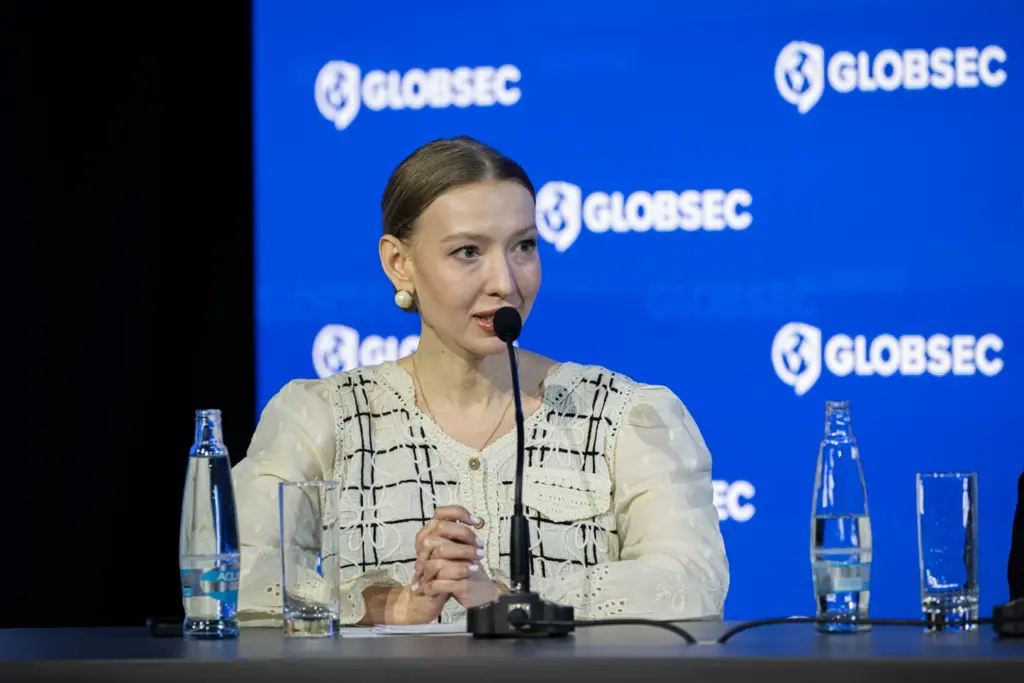
Kateryna Rashevska, legal expert at the Regional Center for Human Rights. Photo: GLOBSEC

Another achievement: a shift in their perception of where this vertical of guilty persons ends. Putin and Maria Lvova-Belova—okay; ministers, children's rights ombudspersons at the regional level, heads of the occupation authorities—okay. But what about the "ordinary" Russian people who fostered poor Ukrainian children and now contribute to their militarization? The 11 May sanctions saw the United Kingdom and Canada listing ordinary Russians, like the family from Yamalo-Nenets that fostered four Ukrainian children, including teenagers from Mariupol, and then sent them to re-education camps of the "Center Warrior" to be militarized as Russian soldiers.

If these results of our work seem small, we must remember that for the Russians, it is a very sensitive issue. They are mad because of the sanctions—and this was visible when the “Yolochka” boarding institution in occupied Crimea’s Simferopol, called a “concentration camp” by ordinary Russians, was sanctioned. Already in December 2014 [after Russia’s occupation of east Ukraine], the first Ukrainian orphans were sent to Russian foster families from this “Yolochka.” 12 years later, children from Kherson boarding institutions also went through “Yolochka.”

Alya: You've documented over 20,500 deported children. How many of that cohort are approaching Russian conscription age?

Kateryna: It is hard to tell because the way the Ukrainian side is collecting statistics is not good enough. So you should address this question to the competent bodies of Ukraine.

But according to our calculations, just to describe the situation in general: all Ukrainian teenagers under Russian control start receiving draft notices at the age of 16. According to the Russian legislation, it should be at the age of 17, but they're so afraid that these children will escape or will return to Ukrainian-controlled territories, that they start this process in violation of their own legislation.

Everything is organized around schools. They’re not about education under occupation, but have become additional buildings of the military commissariat. Specific teachers are responsible for this conscription process. Boys aged 16-17 are being brought to the military commissariat in organized groups. You cannot escape, you cannot refuse, because you will hear “knock-knock” on your door: the occupation authorities and your teacher will ask: “Where are you? You should go.”

Another problem: Russia and Belarus started exchanging data, meaning that if this child receives a draft notice at the age of 18, he will not be able to cross the border—which matters because the checkpoint of Mokrany-Domanove between Belarus and Ukraine is the main point of returning Ukrainian children from Russian control. Every year, the Russians amend their legislation to impose more obstacles to the repatriation process.

So the only way for a Ukrainian teenage boy to escape is to do this several days before a "povestka" [draft notice] comes to his house at 16 years.

Kateryna Rashevska, legal expert at the Regional Center for Human Rights. Photo: Alya Shandra/Euromaidan Press

According to our intelligence, since 2014, 48,000 Ukrainians from occupied territories were forcibly mobilized by Russians, including those from occupied Crimea. Some of them participated in the "special military operation.” Around 20% of all prisoners of war in Ukrainian camps for Russians are originally Ukrainians who were forced to sign a military contract. Many of them were forced, manipulated, or brainwashed, so it was not done of their own will.

But I would like to highlight that the average age of a Russian soldier is 35. This is not the war of young Ukrainians who reached the age of majority and were sent to the battlefield as cannon fodder. We see that the Russians’ main goal is to rebuild the army degraded by the Ukrainian side during the first month of the full-scale invasion, to have officers and other qualified personnel who will develop a strategy and conquer more and more territory. That is why they're investing in all these military patriotic movements and centers.

That is why I was really impressed when I saw that their All-Russian championship on drone racing will be for children aged seven. Should we next expect that children in kindergartens will assemble and disassemble a rifle? Their society is very militarized. This is the biggest problem. And now, Russian soldiers are those who are teaching Ukrainian children to fight tomorrow.

Alya: Thank you so much, Kateryna, for your time.

  •  

Ukrainian grandmother detained in Kazakhstan at Russia’s request while trying to bring grandson back to Ukraine

Russian and Kazakh flags fly as plane contrails form the Russian tricolour above Astana, Kazakhstan, 27 November 2024. Photo via Wikimedia Commons

Kazakhstan detained Ukrainian citizen Liubov Rozhanska in Astana on 1 October at Russia’s request, after she traveled there to receive her grandson, a Ukrainian boy whose father has sought his return to Ukraine, Deutsche Welle (DW) reported.

Russia accuses Rozhanska of attempting to abduct the child and is seeking her detention through the Collective Security Treaty Organization (CSTO), a Russia-led security alliance that includes Kazakhstan. 

She could now face deportation to Russia, despite never having entered the country, according to her lawyers cited by DW. 

A Ukrainian child Russia wants to keep

The case involves a boy born in Odesa in 2018. His mother took him from Ukraine to Russia’s Kaliningrad Oblast in 2021, before Russia’s full-scale invasion. In 2022, she and the child obtained Russian citizenship.

The boy’s Ukrainian father challenged the child’s residence in court. In March 2025, Ukraine’s Supreme Court ruled that the boy should live in Odesa with his father.

According to Rozhanska’s lawyer, Oleksii Pryanishnikov, the boy’s stepfather and step-grandfather contacted her in July 2026 about arranging the child’s transfer to his Ukrainian father and grandmother.

By August, a Kaliningrad court had issued a warrant to detain Rozhanska in connection with an alleged attempt to abduct the child. Russian investigators were also preparing documents to seek her extradition through the CSTO, according to documents cited by DW.

Rozhanska then traveled to Astana and was detained at the airport after arriving from Istanbul.

Kazakh lawyer Riza Nurbaeva told DW that Rozhanska did not know about the Russian criminal case and had never entered Russia. She said the Ukrainian was detained under the Kaliningrad court’s warrant.

Lawyer alleges political motive

Pryanishnikov described the detention as a “planned operation” by Russia’s Federal Security Service and alleged that it has a political dimension connected to Russia’s war against Ukraine.

His allegation comes in the context of Russia’s documented transfer and deportation of Ukrainian children to Russia and efforts to assimilate them into Russian society, grant them Russian citizenship and sever their ties to Ukraine.

In this case, Russia is using international legal mechanisms to potentially prevent a Ukrainian child from returning to his father in Ukraine.

Rozhanska is currently being held in a Kazakh pretrial detention center. A court hearing is expected within three days, according to DW.

  •  

Ukraine brings 14 more children home from Russian-occupied Kherson Oblast. One of them was being forced onto Russia’s military rolls

1-ukraine-kyiv-children-reunited-russia-R003578

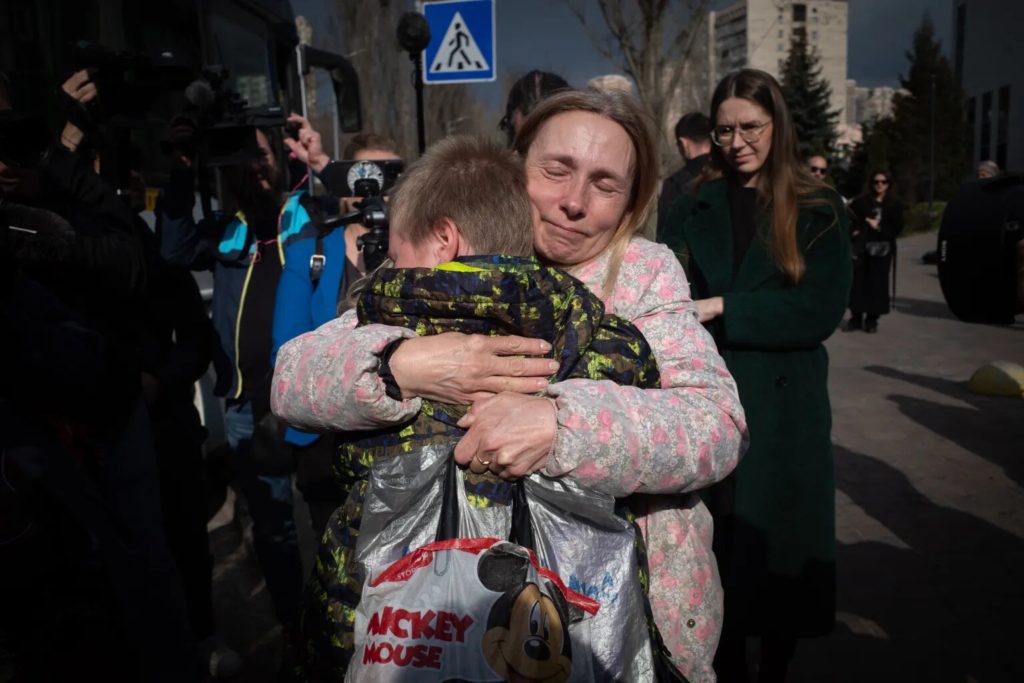
Fourteen more Ukrainian children have crossed from Russian-occupied Kherson Oblast back onto Ukrainian-held ground, the oblast's military administration said on 29 September. They join a years-long effort to recover children from land Russia seized in 2022, with thousands more still deported or unaccounted for.

Ukrainian authorities say Russia has deported nearly 20,000 children since its 2022 full-scale invasion, and Zelenskyy insists the true figure is far higher. Those taken to Russia are placed in institutions or Russian families and pushed through Russian "re-education" aimed at erasing their Ukrainian identity.

These 14 add to roughly 2,000 children Ukraine has brought back since 2022—a recovery effort still dwarfed by the numbers Russia holds and keeps adding to.

Who made it out

The 14 are four boys and 10 girls, aged 6 to 17, said Oleksandr Prokudin, who heads the administration. Rescuers also brought back one young adult who had been deprived of parental care.

Each case shows what pushed the children toward the return. One 16-year-old boy was being forced onto Russia's military registration rolls under occupation, part of a pipeline that moves teenagers from a Russian passport toward conscription at 18. A 17-year-old girl had sought a Ukrainian education despite the risks and Russian control, Prokudin said. A 10-year-old girl, he added, had longed to come home and did all she could to reach safety.

The running tally

The children left through Bring Kids Back UA, the repatriation program President Volodymyr Zelenskyy launched in 2023, working with the Ukrainian charity Save Ukraine. That brings to 204 the number of children returned from occupied Kherson Oblast since the start of 2026, regional authorities said.

The wider deportation campaign

In 2023, the International Criminal Court in The Hague issued arrest warrants for Russian leader Vladimir Putin and his children's rights commissioner, Maria Lvova-Belova, over the illegal deportation of children from occupied Ukraine to Russia.

  •  

Eight months of 2026 brought more Ukrainian civilian casualties than all of last year, UN says

protest Russia hunts targets civilians with drones Do I look like a target stop human safari save kherson

Russian strikes have killed or wounded more Ukrainian civilians in the first eight months of 2026 than in all of last year, a senior United Nations official told the Security Council, Censor.net reported. The official warned that the toll keeps climbing as missiles and drones increasingly reach cities far from the front line. She also cautioned that mounting attacks on Ukraine's battered energy grid could push millions into a dark, cold winter.

In the war's fifth year, Russia's long-range strikes on Ukrainian cities have shifted the danger from the front to the streets where people live, and the rising civilian toll now tracks how far those weapons reach.

Casualties outpace all of 2025

Rosemary DiCarlo, the UN Under-Secretary-General for Political and Peacebuilding Affairs, gave the toll as the Council met on Ukraine, Ukrinform reported.

"In just the first eight months, more civilians were killed or injured in Ukraine than in all of 2025," she said.

The heavy toll already recorded in September shows the trend continuing, she added, as strikes hit populated areas away from the front.

The UN human rights office has confirmed at least 17,257 civilians killed since February 2022, including 835 children. Another 53,693 people have been wounded, among them 3,247 children, and DiCarlo said the real numbers are likely far higher. Kyiv and other cities have faced near-daily attacks in recent weeks, she said, with strikes hitting railways, shopping centers, gas stations, warehouses, and food and logistics firms.

A warning over the coming winter

DiCarlo said the mounting strikes on Ukraine's already-damaged energy infrastructure are especially worrying with another war winter near.

"The cumulative impact of these strikes could plunge millions of people into darkness and cold in the coming months," she said.

She urged an immediate moratorium on strikes on populated areas and urgent action to protect the power grid. Targeting civilians and civilian sites is prohibited under international law, she noted.

The warning follows the deadliest stretch of the war for civilians, when UN monitors counted 437 people killed in July, the worst monthly toll since May 2022. Russia has also renewed strikes on gas production and power plants ahead of the heating season.

  •  

Zelenskyy asks Japan for air-defense technology and offers Ukraine’s drones in return, while courting Chile to expand Ukraine’s reach in Latin America

Volodymyr Zelenskyy and Sanae Takaichi at a meeting in New York.

Ukrainian President Volodymyr Zelenskyy has used the UN General Assembly in New York to court partners outside Ukraine's NATO core, pitching air-defense cooperation with Japan and drone cooperation with Chile, Ukrainska Pravda reported. In a single day of bilateral talks, he met Japan's Prime Minister Sanae Takaichi, Chile's President José Antonio Kast, and UK Prime Minister Andy Burnham.

The meetings turned on shielding civilian infrastructure before winter and trading Ukraine's battlefield-tested technology for capabilities it still needs. More than four years into Russia's war, a nation that entered the war reliant on donated arms now iterates drones faster than many of its Western backers, and that expertise has become leverage in its own diplomacy.

Zelenskyy pitches Ukraine's know-how for Japan's air-defense tech

In their first summit meeting, Zelenskyy cast the relationship as a two-way exchange.

"Ukraine is ready to share its experience and technologies on a mutually beneficial basis," he said.

While Japan has advanced technologies for protecting lives, particularly in air defense, that could carry Ukraine through the winter if Russia again rejects talks, the President's Office reported.

Ukraine walks into winter with two air-defense problems. It is still testing home-built interceptors to catch Russia's jet-powered drones. And it does not have enough Patriot interceptors to stop ballistic missiles over its cities. Japan holds the key to the second one.

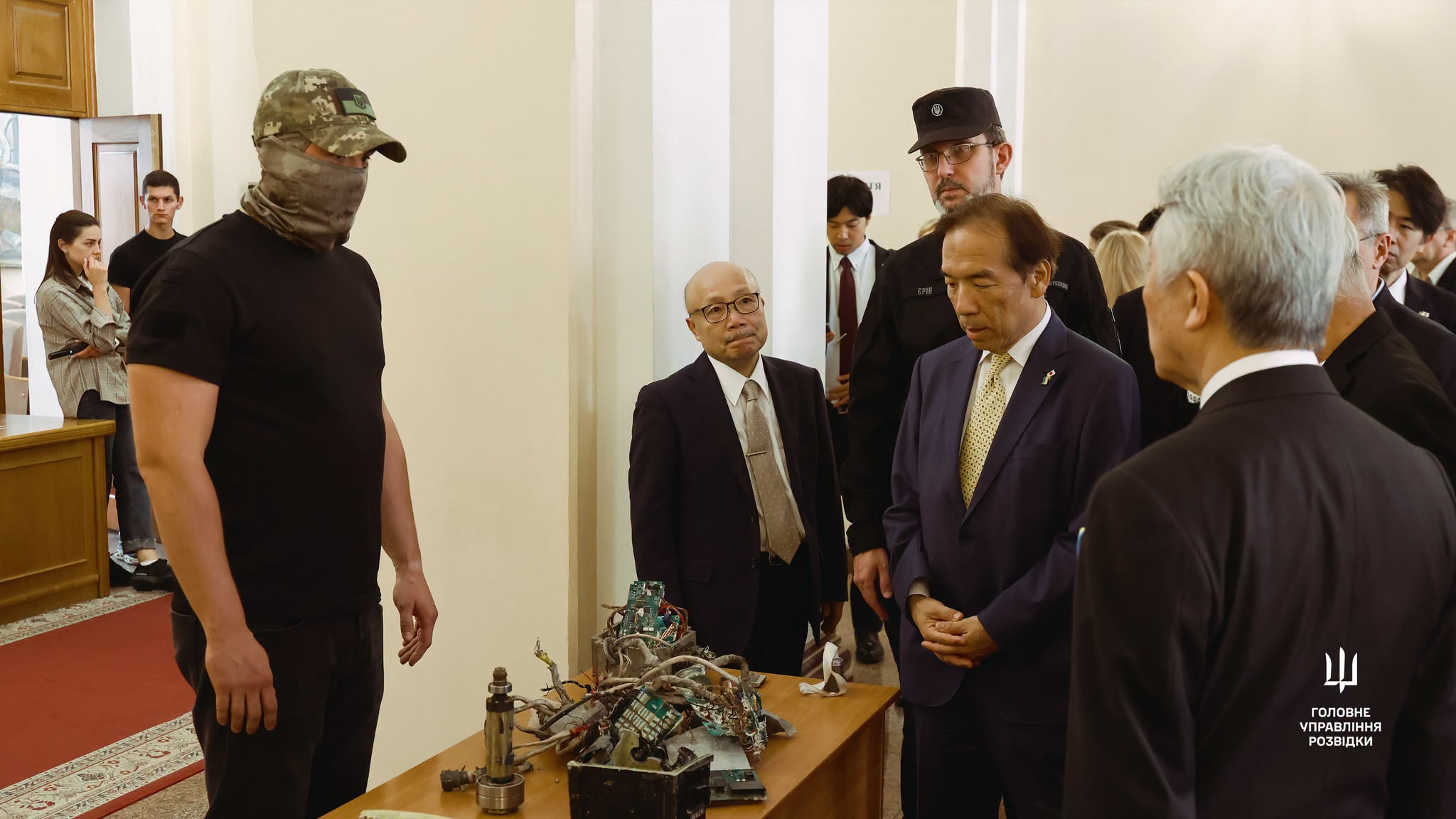
Ukraine's Defense Intelligence has given Eisuke Mori, speaker of Japan's House of Representatives, a close look at a North Korean weapon: the components of a ballistic missile Russia fired at Ukraine. Source: Ukraine's Defense Intelligence
Explore further

North Korea has fired around 150 ballistic missiles at Ukraine, learning from each one. Same missiles threaten Japan, and Kyiv just shows its speaker what is inside them

Mitsubishi Heavy Industries runs the only plant outside the US licensed to assemble the PAC-3, the advanced Patriot interceptor. Japan is also the sole maker of the guidance gyroscopes inside older PAC-2 missiles. It has already shipped Japanese-made PAC-3s to the US to refill stocks drained by transfers to Ukraine, and Zelenskyy has floated Mitsubishi as the model for Ukraine's own Patriot line.

The exchange runs both ways. Russia keeps pressing Japan over the Kuril Islands the Soviet Union seized in 1945. Against that backdrop, Ukraine's combat-tested drones could appeal to Tokyo. Kyiv offers the drone know-how it now leads in, and asks for the air-defense edge Japan already has.

Zelenskyy also thanked Tokyo for its sanctions on Russia, energy packages, and humanitarian projects, and Takaichi assured him of continued support. Zelenskyy invited her to Ukraine, including the Kyiv-Pechersk Lavra, which Japan helped restore after a Russian drone strike in June.

Vladimir Putin visits Etorofu island,
Explore further

Japan weighs sanctions after Putin’s first visit to disputed Kuril Islands

Chile opens a door to Latin America

With Kast, Zelenskyy discussed deepening security and drone-technology ties and thanked Chile for backing Ukraine at international forums and for helping return Ukrainian children abducted by Russia. He welcomed Santiago's willingness to help expand Ukraine's presence across Latin America, calling it an opening for "even more promising opportunities," and invited Kast to visit.

Building on ties already in place

Both partnerships rest on existing ground. Japan, barred by its own laws from sending lethal weapons, has delivered generators, transformers, and non-lethal gear, pledged a $6 billion package for 2026, and agreed to help rebuild the Lavra through UNESCO. Talks in Tokyo in July recast Ukraine as a security partner rather than an aid recipient.

Chile joined the coalition to bring abducted Ukrainian children home and, in an April call, heard Zelenskyy float a security arrangement modeled on Ukraine's Gulf-state pacts. The outreach tracks Kyiv's drive to turn its wartime industry into an export business under its "Drone Deals" framework.

  •  

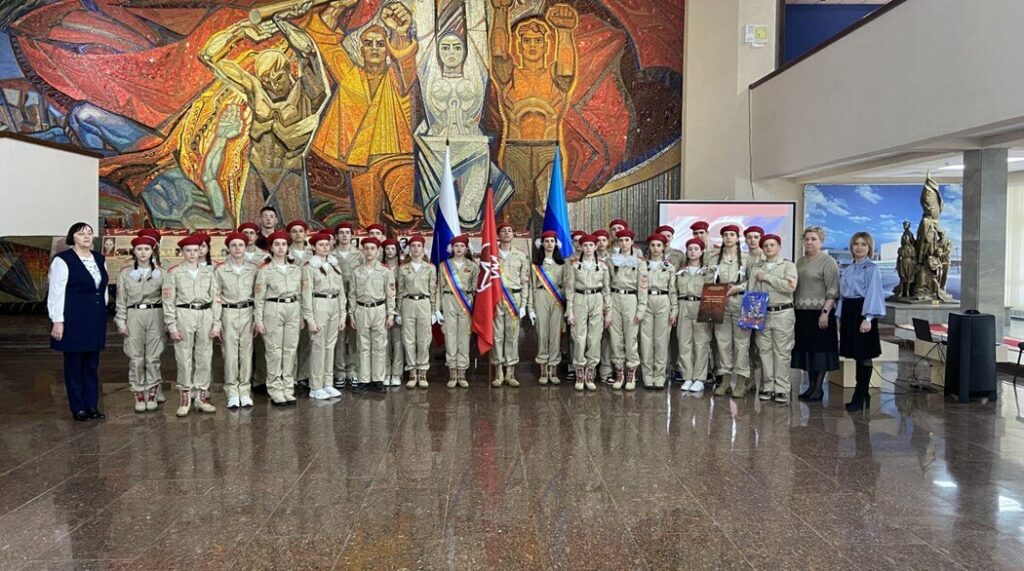
Russia militarizes children from kindergarten to drone training in occupied Ukraine, monitor says

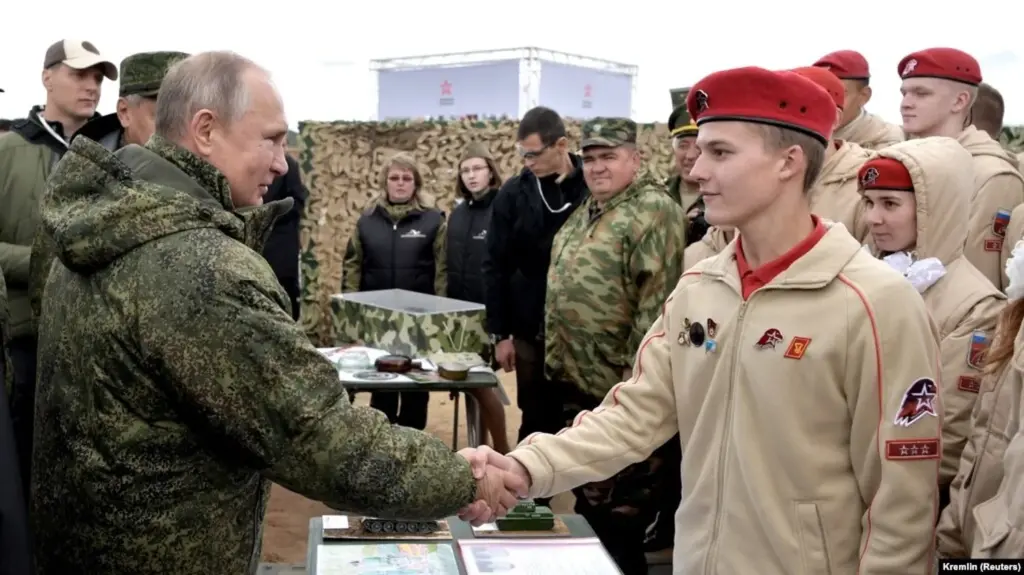
Vladimir Putin shakes hands with a young Yunarmia member wearing a beige uniform and red beret as other members stand behind them.

A Kremlin-backed program aimed at primary-school children claims 10,154 participants in occupied Zaporizhzhia, nearly 30 times Yunarmia's 355 members—Russia's uniformed military youth organization—Petro Andryushchenko, head of the Center for the Study of Occupation, said. Cadet classes in the same region account for another 387, according to Andryushchenko.

Yunarmia may represent only a fraction of Moscow’s system for militarizing Ukrainian children under occupation. Movement of the First, a Kremlin-backed mass youth group covering ages 6 to 18, claims about 65 times Yunarmia's membership in occupied Zaporizhzhia—over 23,000 by the end of 2025, up from about 14,000 a year earlier, according to Andryushchenko's breakdown of the series. A separate infographic in the same series puts the figure at over 19,000. Moscow has sustained the broader campaign throughout the full-scale invasion, combining classroom indoctrination, Kremlin youth movements, military games, and weapons training.

Andryushchenko explains why: Movement of the First is not a military organization, and that is precisely its function—a mass base that enrolls children without their joining any military-patriotic structure, then moves some into specialized programs. Through it, Zarnitsa stopped being a school game and became part of Russia's military-patriotic system. The movement functions as a gateway, not an endpoint.

In Kherson Oblast, the pattern repeated: over 2,700 children and young people passed through Movement of the First events in 2024, and by spring 2025, the registered count had reached 6,200, with primary cells growing from about 70 to 114–115.

From Eaglets to Zarnitsa: programs across occupied Zaporizhzhia

Andryushchenko said Eaglets of Russia, a program aimed at primary-school children aged 6 to 10, claims 10,154 participants across 97 schools and 626 class-teams in occupied Zaporizhzhia, while more than 2,000 children aged 11 to 17 have passed through the Zarnitsa 2.0 military game. In May 2026, children from all four occupied oblasts appeared at a federal Eaglets session alongside children from Russian regions—a sign the occupied territories are already integrated into the system.

He said military-applied instruction now fills about half of the OBZR course, Russia’s “Fundamentals of Security and Defense of the Motherland” subject, in occupation schools. He described a broader system stretching from kindergarten and mass children's organizations through military games and cadet structures to practical training in drones, tactics, weapons, and military medicine.

just deported ukrainian children turned soldiers workers russians so-called dedication ceremony students milove secondary school become members russia's paramilitary organization yunarmia occupied sorokyne (ex-krasnodon) luhansk oblast 2023 lug-inforu grenade drills
So-called "dedication ceremony for students of Milove secondary school to become members" of Russia's paramilitary organization Yunarmia. Occupied Sorokyne (ex-Krasnodon), Luhansk Oblast, April 2023. Image: lug-info.ru.

Military training center claims thousands across four occupied territories

Beyond Zaporizhzhia, Andryushchenko said the Russian military-sports training center VOIN claims 14,450 trained cadets across four occupied Ukrainian territories in his overview post. A later infographic in the series gives 10,381 for the same four territories, suggesting the figures may count differently.

That cannot be read as a count of children because VOIN programs accept participants aged 14 to 35, according to the Center's own website, and no age breakdown was provided. VOIN says it has trained more than 100,000 cadets across 21 Russian regions overall.

Andryushchenko's post opened a six-part series tracing the system "from first grade to cadet"—though the series itself showed the pipeline actually begins in kindergarten, with "Conversations about Important Things" starting at age 5. Part two, published on 22 September, broke down Movement of the First's role as a gateway, with Zarnitsa 2.0 next. The participation totals cited in his post are claims by Russian-run organizations relayed by the Center. They may overlap, have not been independently verified, and do not show how many individual children participated or whether children move from one program to another.

Luhansk school students wearing the uniform of the so-called Young Army. 2022.
Luhansk school students wearing the uniform of the so-called "Young Army." 2022. Photo: lug-info

Militarization has continued throughout the full-scale invasion

These latest participation claims are the newest snapshot of a campaign that has expanded steadily throughout Russia’s full-scale invasion. In 2023, occupation schools were already teaching children to use assault rifles and provide battlefield first aid.

By late 2024, Putin had ordered the expansion of military-sports camps and youth indoctrination programs.

Reports published in 2025 and 2026 described mandatory “patriotism” lessons from first grade and documented Ukrainian orphans who entered cadet schools and later appeared in Russian military uniforms.

  •  

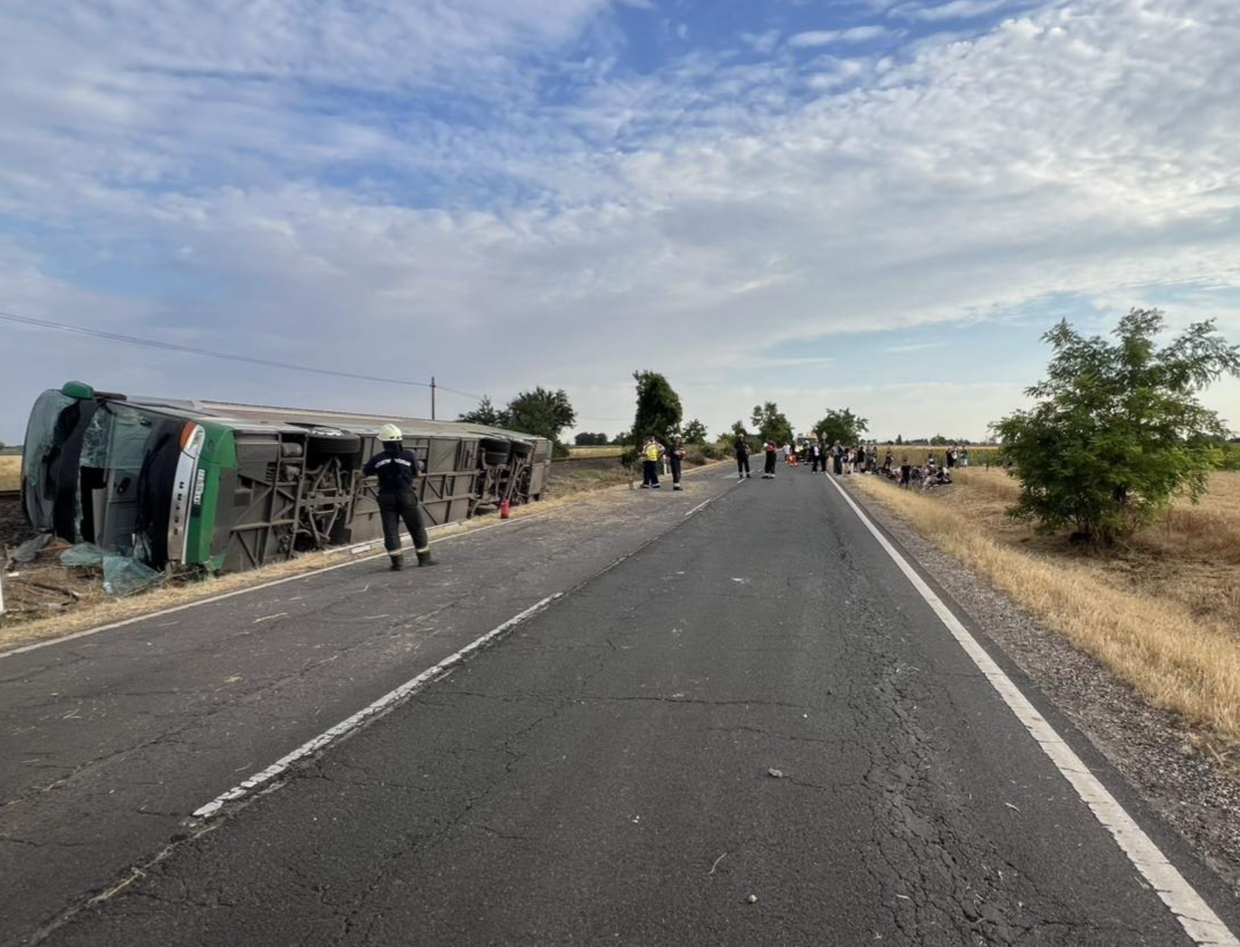
Bus сarrying Ukrainian сhildren сrashes in Hungary, 21 injured

Bus сarrying Ukrainian сhildren сrashes in Hungary, 21 injured

Editor's Note: This story has been updated with additional details from Ukraine's Foreign Ministry.

A bus carrying Ukrainian children veered off the road and overturned on a Hungarian highway on July 6, leaving 21 people injured, Ukraine's embassy in Hungary reported.

The accident occurred at around 5 a.m. local time between the settlements of Kunszentmarton and Tiszafoldvar. According to preliminary information, the driver lost control of the bus and veered off the road into a ditch. Further details as to the cause of the crash have not yet been determined.

The bus was carrying a children's ensemble from the Ukrainian city of Lviv to Ohrid in North Macedonia for a dance festival. There were 77 people aboard at the time of the accident, including two drivers, chaperones, and ensemble members.

Twenty-one people were injured, with four of them reported to be in serious condition. Two of the seriously injured victims are teenagers (ages 14 and 18) while the other two are adults (ages 67 and 71). Four more children suffered moderate injuries, while the remaining victims suffered minor injuries.

No one was killed, according to the embassy's statement.

The victims were transferred to hospitals in the towns of Szolnok, Kecskemetre, and Szentes.

Rescuers are working at the crash site, along with Ukrainian Ambassador Fegyir Sandor and consuls assisting Ukrainian citizens.

The rest of the passengers are staying temporarily at the Kunszentmarton Cultural Center, where they have been provided food and a place to rest. Those suffering moderate and mild injuries will join the main group at this location.

The bus carrier is reportedly taking measures to prevent additional accidents.

Ukraine war latest: Russia pounds Kyiv with record overnight drone, missile attack, 1 dead, 26 injured
Key developments on July 4: * ‘Nothing but terror and murder’ — Russia pounds Kyiv with record overnight drone, missile attack, 1 dead, 26 injured * Zelensky, Trump discuss air defense, joint drone production amid Russian strikes * ‘There is also good news’ — Ukrainian drones hit key military optics plant in Russia, General Staff
Bus сarrying Ukrainian сhildren сrashes in Hungary, 21 injuredThe Kyiv IndependentThe Kyiv Independent news desk
Bus сarrying Ukrainian сhildren сrashes in Hungary, 21 injured
  •  

Number of Ukrainian children killed and injured amid Russian full-scale invasion jumps threefold in recent months

Number of Ukrainian children killed and injured amid Russian full-scale invasion jumps threefold in recent months

Life for children in Ukraine has become increasingly dangerous and deadly, according to the latest U.N. figures, which show a threefold jump in the number of deaths and injuries among children over the three months ending in May.

From March through May, 222 children were killed or injured, compared to 73 in the preceding three months, according to a press release from the U.N. Humanitarian Aid Organization for Children (UNICEF) on July 4.

The statement noted that "the ongoing use of explosive weapons in populated areas has been particularly deadly and destructive."

"There is no respite from the war for children across Ukraine," UNICEF Regional Director for Europe and Central Asia, Regina De Dominicis, said. "The situation for children is at a critical juncture, as intense attacks continue to not only destroy lives but disrupt every aspect of childhood."

In April alone, UNICEF noted, 97 children were killed or maimed, which was the highest figure that the U.N. has been able to verify since June 2022. Among the attacks in April was a strike on a playground in Kryvyi Rih, which killed nine children.

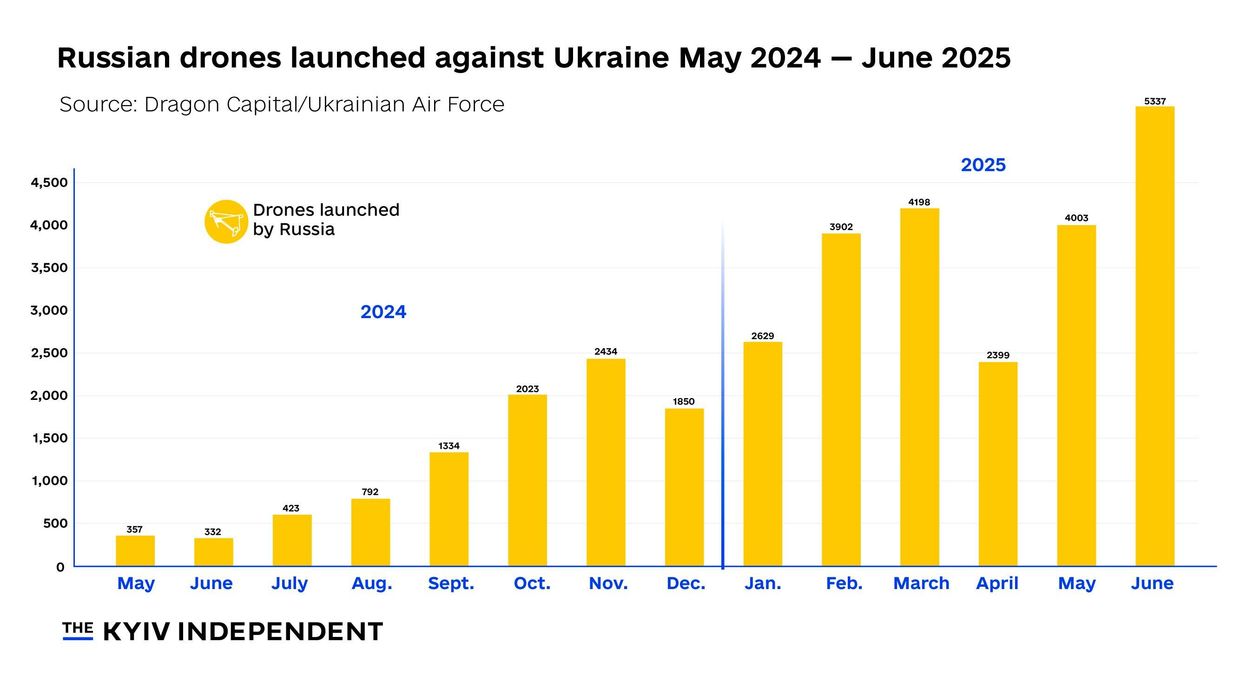
Recent months have seen some of the war's deadliest attacks on civilians, as Russia steps up its aerial strikes on civilian areas and launches record numbers of drones. Russia has dramatically increased its production of these weapons and is now capable of launching in a single night as many drones as it did over an entire month in early summer 2024.

At the same time, the U.S has halted a shipment of weapons that includes air defense missiles, which Ukraine critically needs to defend itself from Russia's attacks.

Number of Ukrainian children killed and injured amid Russian full-scale invasion jumps threefold in recent months
Russian drones launched against Ukraine by month. (Nizar al-Rifai/The Kyiv Independent)
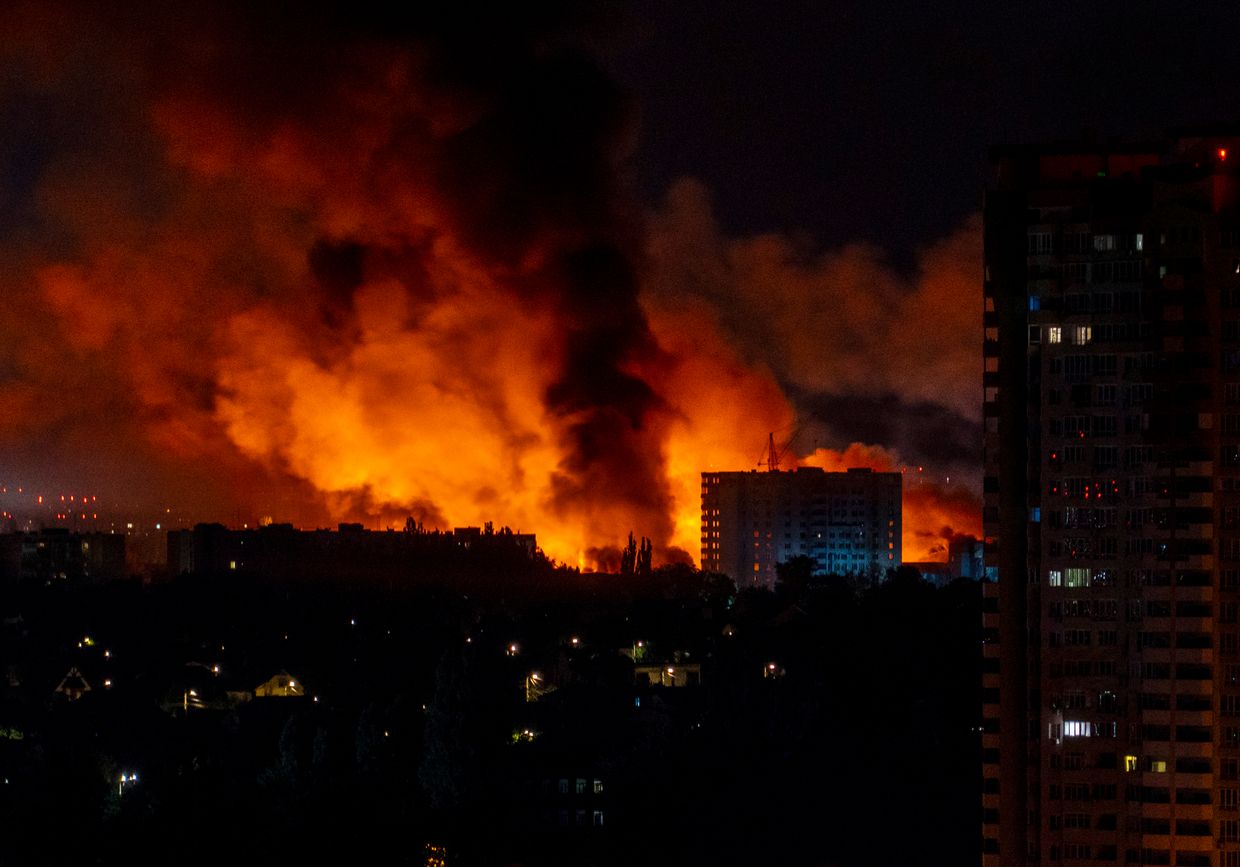
‘Nothing but terror and murder’ — Russia pounds Kyiv with ballistic missiles in massive overnight attack
Fires broke out across the city as Russia attacked the capital overnight on July 4. At least 23 people have been injured, with 14 of the victims hospitalized.
Number of Ukrainian children killed and injured amid Russian full-scale invasion jumps threefold in recent monthsThe Kyiv IndependentThe Kyiv Independent news desk
Number of Ukrainian children killed and injured amid Russian full-scale invasion jumps threefold in recent months
  •  

After Trump cut support, US lawmakers press for action on Russian abductions of Ukrainian children

After Trump cut support, US lawmakers press for action on Russian abductions of Ukrainian children

A bipartisan group of U.S. lawmakers introduced a resolution in Congress demanding the return of Ukrainian children abducted by Russia, according to a press release published on June 30.

Kyiv estimates that Russia has abducted or forcibly displaced at least 19,500 Ukrainian children since the outbreak of the full-scale invasion of 2022, and has deported them to Russia, Belarus, or the occupied territories of Ukraine.

The resolution, introduced in the U.S. House of Representatives by Democratic Congressman Gregory Meeks and Michael McCaul, a Republican chair of the Foreign Affairs Committee, condemns the abductions and calls for the repatriation of children even before a potential peace deal.

Senators Chuck Grassley (Republican) and Amy Klobuchar (Democrat) introduced the resolution in the Senate.

"These children have been stripped of their national identity, adopted into Russian families, or indoctrinated as soldiers for the Kremlin," McCaul said in a statement.

"Russia’s mass-scale child abduction is nothing short of evil; the United States must demonstrate moral leadership by demanding every child be returned to his or her family in Ukraine before true peace can be achieved."

The Trump administration has previously cut funding for a Yale University-based Ukraine Conflict Observatory tracking the abduction of Ukrainian children. Nathaniel Raymond, the executive director of the Humanitarian Research Lab overseeing the effort, has said the operation would cease on July 1 due to the lack of funds.

Since its launch in May 2022, the observatory has compiled evidence of Russian war crimes, including the deportation of Ukrainian children, many of whom were sent to reeducation camps or adopted by Russian families.

The database suggested that the actual number of abducted Ukrainian children could be higher than the figure provided by Ukraine's Children of War database, placing it as high as 30,000. Over 1,360 children have been brought back home.

According to the resolution newly introduced in Congress, "Russia's abduction and Russification of Ukrainian children demonstrates the intent of the Government of the Russian Federation to erase the Ukrainian nation and identity."

The document also says that Russia's invasion "has significantly increased the risks of children being exposed to human trafficking and exploitation, child labor, sexual violence, hunger, injury, trauma, deprivation of education and shelter, and death."

Andriy Yermak, President Volodymyr Zelensky's chief of staff, called the resolution "an important step in support of justice and peace."

The abductions have been widely denounced as war crimes and violations of international law. In 2023, the International Criminal Court issued arrest warrants for Russian President Vladimir Putin and children’s rights ombudsman Maria Lvova-Belova over their roles in the deportation of Ukrainian minors.

Smashing previous monthly record, Russia launches 5,337 kamikaze drones against Ukraine during June
Russia launched a record 5,337 Shahed-type drones against Ukraine in June, according to data from the Ukrainian Air Force and Dragon Capital, smashing the previous record of 4,198 set in March. Russia’s bombardments, a fact of life after three years of full-scale war, have intensified dramatically in May
After Trump cut support, US lawmakers press for action on Russian abductions of Ukrainian childrenThe Kyiv IndependentYuliia Taradiuk
After Trump cut support, US lawmakers press for action on Russian abductions of Ukrainian children
  •  

Russia offers cash to teachers to Russify occupied Ukraine, report says

Russia offers cash to teachers to Russify occupied Ukraine, report says

Russia is using financial incentives to recruit teachers, cultural workers, and coaches to work in occupied parts of Ukraine in a campaign aimed at reshaping local identity and fostering loyalty to Moscow’s regime, according to a report published by the Center for European Policy Analysis (CEPA) on June 26.

The Kremlin is offering up to two million rubles (around $22,000) to Russian teachers who agree to work for five years in occupied areas of Donetsk, Luhansk, Zaporizhzhia, and Kherson oblasts, and one million rubles for positions in Crimea.

The initiative, an extension of Russia’s “Zemskyi Uchitel” (Rural Teacher) program, which originally targeted underserved regions in Russia, was formally launched in the newly occupied Ukrainian territories in 2024 — though Russian educators began arriving as early as 2022.

Over 100 teachers have relocated to Crimea through the program, according to Ukraine’s Regional Center for Human Rights/ Most of them arrived from regions including Krasnodar, Altai Krai, Tomsk, Novosibirsk, Saratov, Tyumen, Ivanovo, and the Republic of Udmurtia.

“We have documented cases of teachers — and people assigned to managerial roles, such as school principals and deputy heads — arriving as early as 2022,” said Kateryna Rashevska of Ukraine’s Regional Center for Human Rights. “The first group came from Dagestan, arriving in the occupied Zaporizhzhia region, and by 2024, there were already 37 teachers from Dagestan working there.”

According to Rashevska, these teachers often lead courses in Russian language, history, and “basics of life safety and defense of the Motherland” — classes focused on conscription and military training. “These people are also involved in reprogramming Ukrainian children, attempting to raise them as Russian patriots and future members of the Russian armed forces,” she added.

In parallel, Russia is also exerting pressure on Ukrainian teachers in occupied areas to adopt the Russian curriculum. Those who refuse face serious consequences. "In Berdiansk, a school principal was deported for refusing to open the school under Russian standards," said Mariia Sulialina, head of Ukrainian NGO Almenda. Sulialina noted that teachers are now required to praise President Vladimir Putin and report "extremist behavior" among students — often defined as pro-Ukrainian views.

Human rights experts say these efforts amount to colonization and are violations of international law, including Article 49 of the Geneva Convention and Article 8 of the Rome Statute.

“Russia plans to move another 100 teachers into occupied areas in 2025 — a clear example of colonization,” Rashevska said. Despite existing legal tools, she added, “The International Criminal Court still doesn’t prioritize colonization… even though these federally coordinated programs involving teachers, cultural workers, and coaches create a clear chain of command.”

Putin under pressure to declare war on Ukraine, but experts say Russia isn’t ready
Despite suffering over 1 million casualties, pounding Ukrainian cities nightly with missiles and drones, and committing countless war crimes, one startling fact about Russia’s full-scale invasion remains — Moscow has yet to officially declare war on Ukraine. In February 2022, Russian President Vladimir Putin described what he believed was going to be a swift victory and the capture of Kyiv within days as a “special military operation.” Nearly three-and-a-half years later, the Kremlin is stuck
Russia offers cash to teachers to Russify occupied Ukraine, report saysThe Kyiv IndependentChris York
Russia offers cash to teachers to Russify occupied Ukraine, report says
  •  

Russia transfers 50 Ukrainian children to so-called 'rehab camp' in Kalmykia, Kyiv says

Russia transfers 50 Ukrainian children to so-called 'rehab camp' in Kalmykia, Kyiv says

Russia has transferred 50 children from the occupied Antratsyt district of Luhansk Oblast to a so-called rehabilitation camp in Kalmykia, Ukraine’s Center for Countering Disinformation (CCD) reported on June 14.

Kalmykia is about 1,170 km (726 miles) by air from Moscow, and its western border lies roughly 300 km (186 miles) from the nearest point on the Russia–Ukraine border.

According to the center, while the "Lesnaya Skazka" ("Forest Fairy Tale") camp is officially described as hosting sports and creative activities, in fact, it functions as a site of "round-the-clock ideological brainwashing, systemic Russification, and an attempt to erase Ukrainian identity."

Since February 2022, at least 20,000 Ukrainian children have been abducted from Russian-occupied territories and sent to other Russian-controlled areas of Ukraine or to Russia itself, according to a Ukrainian national database, "Children of War." Only 1,359 children have been returned thus far.

The center compared the camp in Kalmykia to "Krasnaya Gvozdika," ("Red Carnation") a facility in occupied Zaporizhzhia Oblast, saying both are used not for recreation, but as tools of Russia’s war strategy.

“These camps have become instruments of assimilation where Ukrainian children are taught distorted history, exposed to Russian propaganda, and conditioned to show loyalty to the Putin regime,” the center said. “War and hostility are normalized, with children being groomed as human resources for future conflicts.”

The watchdog emphasized that separating children from their families, culture, and language places them under the full control of the occupying power — a practice it says constitutes a violation of international humanitarian law and forms part of Russia’s broader genocidal policy toward Ukraine.

In response to Russia’s efforts to indoctrinate Ukrainian children, President Volodymyr Zelensky on June 10 imposed sanctions on 48 individuals and nine organizations associated with the deportation of Ukrainian children, according to a decision of Ukraine's National Security and Defense Council (NSDC).

Growing up under missiles — Ukrainian childhoods shaped by war (Photos)
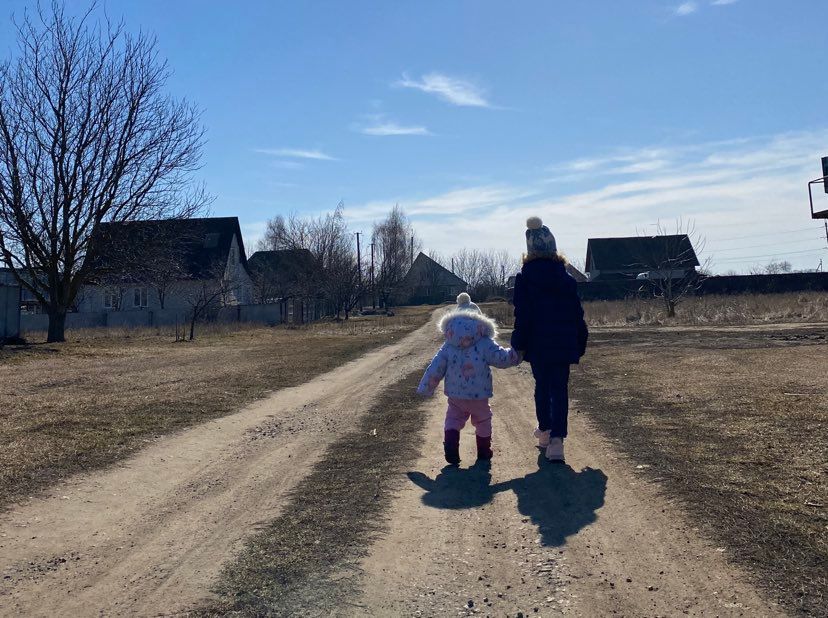
Ukrainian children are growing up in a world entirely reshaped by Russia’s war. Sirens, blackouts, and bomb shelters are nothing extraordinary — but a part of everyday childhood. This photo story follows five families as they raise their children in the shadow of the ongoing invasion. It’s not about
Russia transfers 50 Ukrainian children to so-called 'rehab camp' in Kalmykia, Kyiv saysThe Kyiv IndependentElena Kalinichenko
Russia transfers 50 Ukrainian children to so-called 'rehab camp' in Kalmykia, Kyiv says
  •  

Ukraine secures return of 5 children from Russia, Russian-occupied territories

Ukraine secures return of 5 children from Russia, Russian-occupied territories

Ukraine successfully brought back five children who had been forcibly taken to Russia as well as Russian-occupied territory, Presidential Office head Andriy Yermak announced on June 12.

The children have been returned home under the President of Ukraine’s initiative, Bring Kids Back UA, according to Yermak.

"We are fulfilling the President's mission — to bring back every Ukrainian child," Yermak said in an statement.

Since February 2022, at least 20,000 Ukrainian children have been abducted from Russian-occupied territories and sent to other Russian-controlled areas of Ukraine or to Russia itself, according to a Ukrainian national database, "Children of War." Only 1,359 children have been returned thus far.

Dmytro Lubinets, Ukrainian Parliament’s Commissioner for Human Rights, estimated that Russia has unlawfully deported up to 150,000 Ukrainian children, while the Children’s Ombudswoman, Daria Herasymchuk, puts the figure at 200,000–300,000.

In March 2023, the International Criminal Court (ICC) issued arrest warrants for Russian President Vladimir Putin and Children's Commissioner Maria Lvova-Belova, citing their involvement in the unlawful transfer of Ukrainian children. Russia dismissed the ICC's decision as "outrageous and unacceptable."

Under orders from Putin, children were transported via military aircraft in 2022, reclassified in Russian databases as native-born, and subjected to pro-Russian re-education before being adopted into Russian families. Ukrainian children had been transported to at least 21 regions throughout Russia.

Child abductions have played a key part of U.S.-Russia peace negotiations — all of which Russia has thus far rejected. Ukrainian officials have named their return as a key condition for any future peace agreement with Russia.

President Volodymyr Zelensky said on June 3 that during the Istanbul negotiations, Russian representatives dismissed the issue of abducted Ukrainian children as a "show for childless European old ladies" and acknowledged deporting several hundred children.

CNN reported on June 11 that the Yale University-based Humanitarian Research Lab, which spearheads the Ukraine Conflict Observatory is preparing to shut down after its funding was terminated by the Trump administration.

A Yale study published on Dec. 3 detailed Russia's systematic program of deporting and forcibly assimilating Ukrainian children.

With only 2 weeks of funding left, US group tracking Russian abduction of Ukrainian children prepares to shut down
“Right now, we are running on fumes,” Nathaniel Raymond, the lab’s executive director, told CNN. “As of July 1, we lay off all of our staff across Ukraine and other teams, and our work tracking the kids officially ends.”
Ukraine secures return of 5 children from Russia, Russian-occupied territoriesThe Kyiv IndependentAnna Fratsyvir
Ukraine secures return of 5 children from Russia, Russian-occupied territories


  •  
❌