❌

Vue lecture

A regiment a day: Russia lost 16,130 troops in a week, its worst week of the war by Ukraine’s count
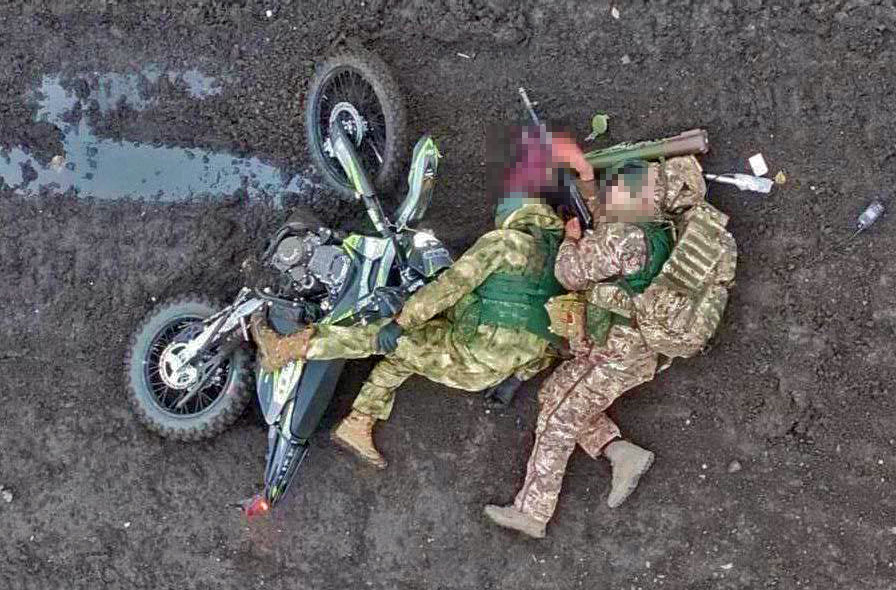
Russian soldiers killed during a failed motorcycle assault in 2025

Russia lost more troops in the first week of November than in any other week of its full-scale war, Ukraine’s General Staff said on 8 November. The new high follows two daily records, and Ukraine’s drone force commander sees Russia feeding even more men into the fight. Germany’s defense minister says the losses are buying Moscow nothing on the ground.

Russia keeps throwing infantry at Ukraine’s defenses in Donbas and the south, day after day. Moscow shows no sign of easing off: its 2027 budget sets aside two rubles for the army for every one spent on welfare, schools, and hospitals. Diplomacy is moving at the same time. The first three-way talks between the US, Ukraine, and Russia since February are due in Abu Dhabi next week. Until Russia agrees to stop, the price of its war is counted in soldiers, week after week.

A Russian regiment a day, by Ukraine’s count

Russian forces lost 16,130 troops killed and wounded from 1 to 7 November, the General Staff wrote. That averages more than 2,300 a day, or nearly a hundred an hour. Each day’s toll equals an average Russian motorized rifle regiment, it added. The figures are Ukraine’s estimates and cannot be independently verified.

The General Staff put the blame on Russia’s commanders. They keep sending soldiers into “senseless ‘meat’ assaults,” it said, while Ukraine’s Defense Forces defend the country “methodically and effectively.”

The weekly record caps a run of daily ones. On 1 November alone, Ukraine’s forces took out 2,500 Russian troops, the most in a single day of the full-scale war, the General Staff reported. That beat the 2,250 of 21 October, the costliest day of a record month in which Russia lost 54,400 troops.

Ukraine’s General Staff estimate of Russian losses since 24 February 2022, as of 8 November 2026
Ukraine’s General Staff estimate of Russian losses since 24 February 2022, as of 8 November 2026. Image: General Staff of the Armed Forces of Ukraine

The heaviest fighting comes near Kostiantynivka

On 7 November, Ukraine’s troops recorded 199 clashes along the front, the General Staff’s morning update showed. The heaviest pressure came near Kostiantynivka in Donetsk Oblast, with 23 Russian assaults. Russian troops also pushed toward Dobropillia and on the Huliaipole direction in Zaporizhzhia Oblast. That day, Russia fired 7,557 kamikaze drones and dropped 235 guided aerial bombs. In one recent week, Russian forces launched nearly 8,000 Molniya and Lancet drones at the front alone.

The day cost Russia another 2,290 troops. Its total since February 2022 now stands at about 1,606,400 killed and wounded, the General Staff’s tally shows.

A building in Izium damaged by a Russian strike on 2 November 2026. Photo: Kharkiv Regional Military Administration
Explore further

Russia steps up attacks on Izium, likely seeking to disrupt Ukrainian logistics along two front-line directions, ISW says

Ukraine’s drone commander sees more Russians at the front, not fewer

Robert Brovdi, callsign Madyar, commands Ukraine’s Unmanned Systems Forces. His drone pilots killed or wounded 751 Russian troops on 5 November, a new daily high for the force, he wrote on Telegram. The previous peak, 708, came on 1 November.

Brovdi tied the climbing count to Russia’s manpower. “This points to an unprecedented buildup of enemy manpower at the front,” he wrote, blaming Russia’s poorly hidden mobilization. Of his pilots’ tally, 71% came on the Dobropillia and Huliaipole directions. On the Huliaipole direction, a Russian division praised for taking Mala Tokmachka a year ago is still trying to capture it.

In Moscow, meanwhile, police detained young people in the central Kitay-gorod area on 7 November and handed adults draft notices, Russian Telegram channel Ostorozhno Novosti reported. “They bring in 10 people at a time, hand out draft notices, and take them away,” released detainees told the channel.
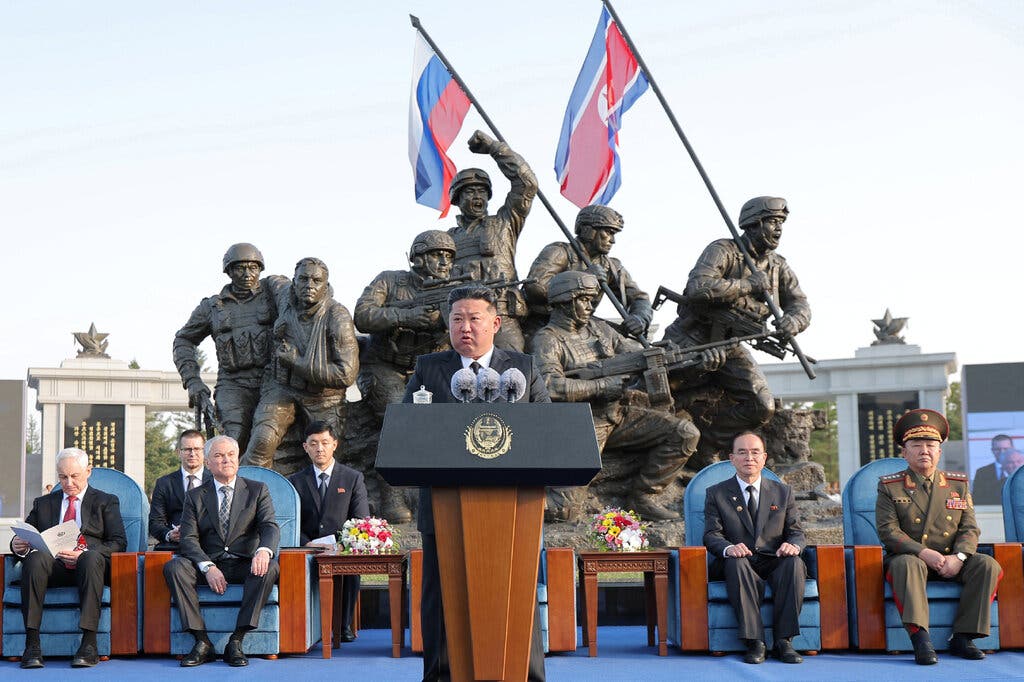
kremlin calls mobilization talk nonsense—zelenskyy says has already begun north korean reinforcements · post leader kim jong-un speaks opening memorial pyongyang russia's defense minister andrei belousov state duma speaker vyacheslav
Explore further

The Kremlin calls mobilization talk “nonsense”—Zelenskyy says it has already begun, with North Korean reinforcements

Germany’s defense minister sees no Russian progress on the ground

German Defense Minister Boris Pistorius gave a lower estimate than Kyiv’s, but described the same battlefield. “On the ground, the Russian armed forces are making no progress, the losses are enormous, 30,000 to 40,000 soldiers a month,” he told the Berliner Morgenpost, Focus Online reported.

The same interview brought bad news for Ukraine’s air defense. Pistorius ruled out more German Patriot systems for now, saying Berlin would not get replacements for what it gives. Other countries now have to do more, he said.

  •  

Ukraine has liberated more territory than Russia has captured since the beginning of fall—a trend that has persisted throughout 2026, Zelenskyy says

ukraine has liberated more territory than russia captured since beginning fall—a trend persisted throughout 2026 zelenskyy says · post ukrainian president volodymyr during evening address 1 image_2026-09-01_23-48-46 news reports

Ukrainian forces have liberated more territory since the beginning of the fall than Russian troops have captured during the same period. This trend has persisted throughout 2026, Ukrainian President Volodymyr Zelenskyy said in his 18 October address. He also reported that Dobropillia, Kostiantynivka, and five other settlements remain under Ukrainian control.

Russia systematically exaggerates its battlefield gains. A recent briefing by Valery Gerasimov, chief of the General Staff of the Russian Armed Forces, in which he claimed that Russian forces had captured 92 settlements since the beginning of September, as well as Kostiantynivka and Dobropillia, and advanced to within 5 kilometers of Zaporizhzhia, was based on “outright lies, manipulation, and exaggerations,” Ukrainian General Staff spokesperson Andrii Kovaliov said.

Ukraine also continues to defend areas near Kramatorsk, Zelenskyy said. He dismissed Russian claims about Zaporizhzhia.

“We are destroying Russians 20 kilometers from Zaporizhzhia, not five, as someone in Russia is fantasizing to Putin,” Zelenskyy said.

Ukrainian forces continue to hold back Russian assaults and destroy groups of occupying troops attempting to infiltrate Dobropillia, the president said. The Defense Forces are also defending positions elsewhere in Donetsk Oblast and in Kharkiv and Zaporizhzhia oblasts.

Zaporizhzhia axis: Russians seek to move artillery closer to the city

Russia seeks to advance on the Zaporizhzhia axis to bring the regional capital within range of its tube artillery, hold forward positions, and protect rear areas from Ukrainian strikes, the Institute for the Study of War (ISW) said on 18 October.

The aftermath of a Russian strike on Zaporizhzhia on 10 October 2026
The aftermath of a Russian strike on Zaporizhzhia on 10 October 2026. Photo: Ukraine's National Police

Maksym Kravchuk, spokesperson for Ukraine's Southern Group of Forces, refuted Gerasimov’s claims that Russian forces had captured Malokaterynivka, located south of Zaporizhzhia, stressing that the settlement remains under Ukrainian control, the Center for Countering Disinformation said on 18 October. Ukrainian troops recorded a video directly from Malokaterynivka to confirm this.

As of 18 October, Russian forces had advanced or infiltrated to within 24 kilometers of Zaporizhzhia, ISW said.

Dobropillia remains under Ukrainian control despite Russian assaults

Dobropillia is now a fortress anchoring Ukrainian positions along the highway leading northeast toward Kramatorsk. Russia first tried to take Dobropillia in August 2025 and is now trying again.

Russia is redeploying reinforcements to the Dobropillia axis and continues to send assault infantry through the village of Nove Shakhove despite heavy losses. Russian command will likely try to encircle or at least envelop Dobropillia and cut off Ukrainian supply routes from the direction of Bilozerske, Ukrainian military analyst Kostiantyn Mashovets wrote on 9 October.

Mashovets sees the push as the southern flank of a Russian effort to envelop the whole Sloviansk–Kramatorsk urban area.

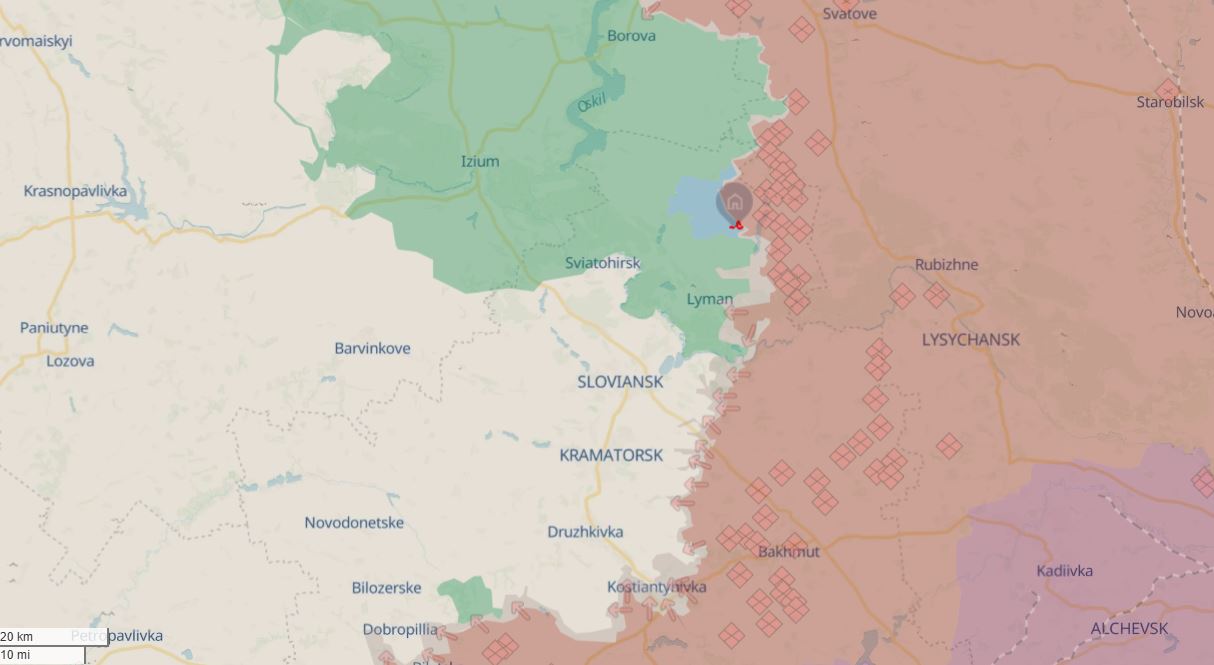
ukraine retook kolodiazi north lyman its drones hit 200-plus russian vehicles operation vivaldi’s last phase commander says · post northern donetsk oblast neighboring areas territory during vivaldi blue 2022 green
Explore further

Ukraine retook Kolodiazi north of Lyman as its drones hit 200-plus Russian vehicles in Operation Vivaldi’s last phase, Ukrainian drone officer says

Dobropillia remains under Ukrainian control, Zelenskyy said. On 18 October, footage located by analysts showed a Russian soldier hoisting a flag in the town's southeast after an infiltration, yet ISW has found no sign that Russian troops have dug in there.

Russia claimed to have captured Kostiantynivka, but ISW found no evidence

Ukrainian troops in and around Kostiantynivka are stopping Russia from locking in its gains in the city or pushing on toward Druzhkivka and Kramatorsk, ISW said on 17 October.

Russian officials claimed that capturing Kostiantynivka was an important step toward establishing control over the Sloviansk–Druzhkivka–Kramatorsk urban agglomeration and the entire Donetsk Oblast, ISW said in August. The Kremlin also claimed that Russian forces had captured the city as early as 5 July, the institute added.

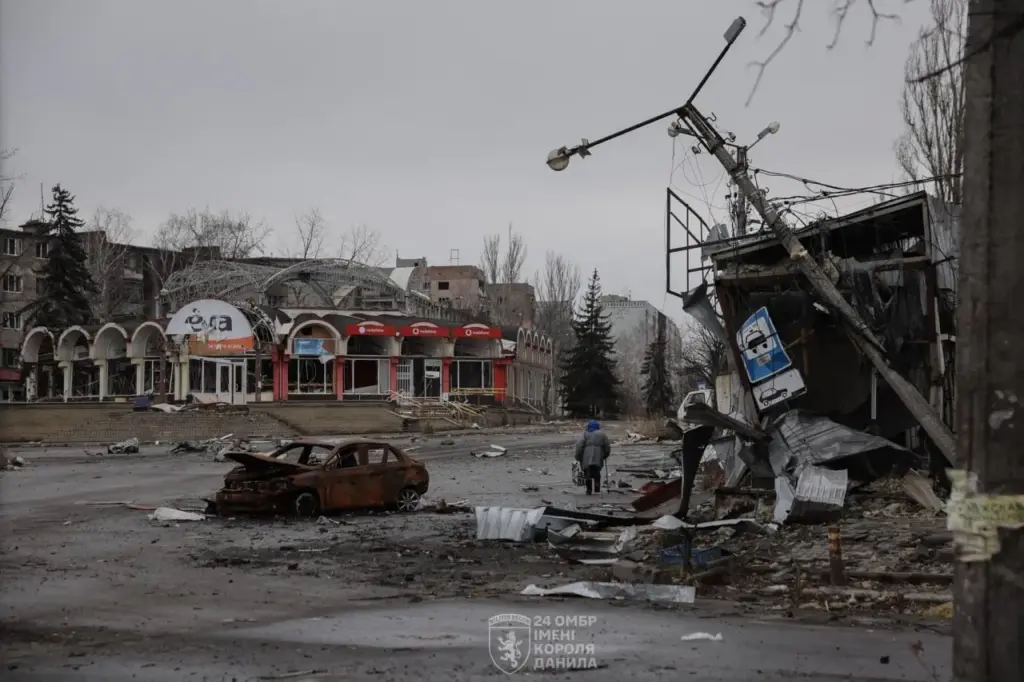
Ruins of a street in Kostiantynivka, Donetsk Oblast, 9 April 2026
Ruins of a street in Kostiantynivka, Donetsk Oblast, 9 April 2026. Photo: UA Land Forces

A Russian military blogger claimed that Russian forces had full control over Kostiantynivka, but ISW found no evidence to support this claim, the institute said in its 16 October assessment. Russian troops had only infiltrated parts of southern and central Kostiantynivka without consolidating positions, and there was no evidence of their presence in its northern part, ISW added.

  •  

“Operation to strike Russian targets deep in swamps continues”: Ukrainian Commander Madiar says his unit hits 7,306 Russian troops in first half of October, up 59% on August

A Ukrainian drone operator.

Ukraine’s operation to strike Russian targets at operational and strategic depth is continuing, Unmanned Systems Forces Commander Robert “Madiar” Brovdi said. He listed data centers, military and strategic sites, and energy hubs “deep in the swamps,” his usual name for Russia.

The fresh statement lands amid fears that a Starlink disruption could break front-line operations.

Overnight into 14 October, the 7th Air Assault Corps said the faster StarShield military package, an advanced version of Starlink that its units depend on, had been throttled, halting a series of missions. Against that backdrop, Brovdi says his branch’s strikes are not falling.

“A serious brawl is underway in conditions of significantly worse weather, drizzle, fog, and precipitation,” Brovdi says, underscoring that the pace held through conditions that usually ground drones.

Over the first two weeks of October, the drone branch verified 7,306 Russian soldiers killed or wounded, up 59.45% on the same period in August and 24.65% in September, he writes on his Telegram page, calling the trend the opposite of de-escalation.

Where the killing climbs fastest, and who is doing it

One sector stands out above the rest. On the Dobropillia-Pokrovsk axis, in the zone of the Azov group, the branch’s drones accounted for 3,221 Russian losses in the first two weeks of October, a 102% jump on August and 42.5 percent on September, Brovdi reports.

The figures cover only the drone branch and are verified in the military’s Delta, the video fixation system, he stresses, so the full count of Russian losses across all Ukrainian forces can be much higher.

The scale of a campaign that will not slow down

The numbers behind the claim are large. Over the first two weeks of October, the branch flew 124,500 combat missions, strike and reconnaissance, and hit 32,172 Russian targets, of which manpower was 22.7%, by his count.

That works out to about 2,298 Russian targets a day, he adds, the kind of tempo that makes any talk of a lull on the front hard to square with what his drones are recording. The deep-strike half of that campaign has grown 1,150% over 2026, reaching military-industrial and energy sites far inside Russia, according to Euromaidan Press.

  •  

Ukraine’s drone pilots hit 76.5% more Russian infantry than two months ago: 2,699 in first five days of October

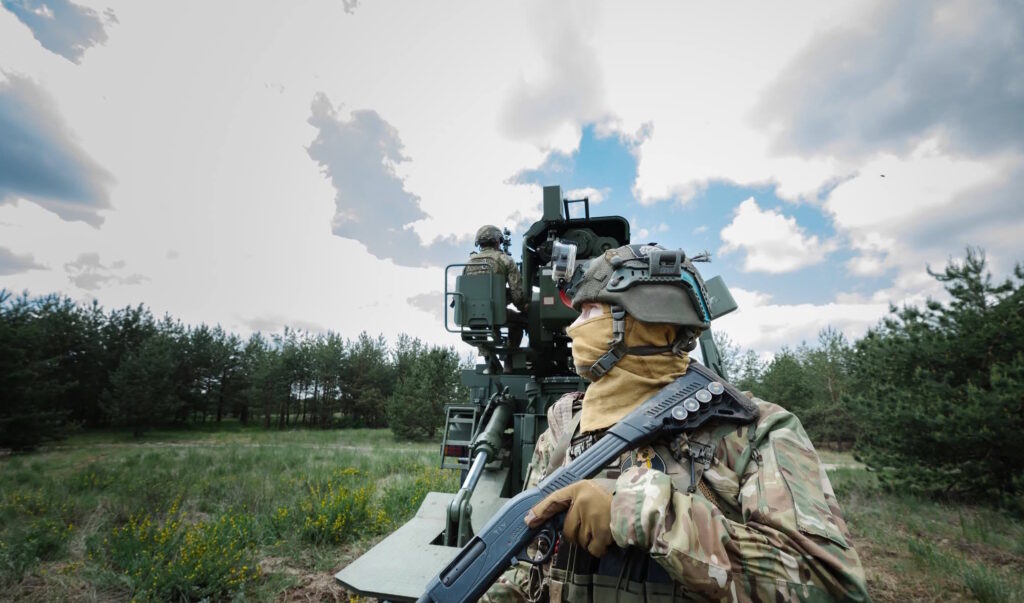
The image shows Ukrainian soldiers. Source: The 80th Separate Air Assault Halytska Brigade

Ukraine's drone pilots are killing and wounding far more Russian infantry than they did a month ago. Ukraine's Unmanned Systems Forces confirmed that their pilots took out 2,699 Russian infantry from 1 to 5 October, 39.7% more than in the first five days of September, Commander Robert "Madiar" Brovdi wrote on Telegram on 6 October.

The Unmanned Systems Forces, the branch of Ukraine's military that fights with drones, count only losses verified by their own pilots in the military's Delta system, so the full picture of Russian losses is larger, Brovdi stressed. Compared with the first five days of August, the rise is 76.5%, from 1,529 losses, which he ties to denser and more frequent Russian assaults.

The sharpest growth occurred in the area of the 1st Azov Corps of Ukraine's National Guard on the Dobropillia-Pokrovsk axis in Donetsk Oblast, as fighting for fortress-belt cities continues. Drone pilots recorded 1,268 Russian losses there, 43% more than the 884 of early September and 91% more than the 664 of early August.

"Russia's hidden mobilization is in action. This is the beginning," Brovdi said ironically.

Russia doubles its monthly recruitment pace

Russian recruitment, mobilization, and contracts run at about 70,000 people a month, twice the 35,000 monthly average from January to August 2026, Brovdi noted on 16 September, when he forecast 12,500 losses for his pilots in September.

He expected the toll to keep climbing. Bigger records still lie ahead because of Russia's unannounced mobilization, Brovdi added on 24 September.

Drone pilots outpaced August by a quarter

September was completed above that forecast. The pilots logged 13,358 Russians killed or wounded, 25.35% more than the 11,010 of August, an average of 445 a day against 355, Brovdi reported. By his count, that equals the full assault infantry of one battalion every day, and his pilots hit a Russian target every 42 seconds.

Two sets of axes took the heaviest toll. In the first 24 days of September, the Dobropillia and Pokrovsk axes accounted for 4,018 losses, and the Oleksandrivka and Huliaipole axes for 3,021, according to Brovdi. The first of those groups covers the same Dobropillia-Pokrovsk axis where the Azov corps zone recorded the sharpest October rise.

  •  
❌