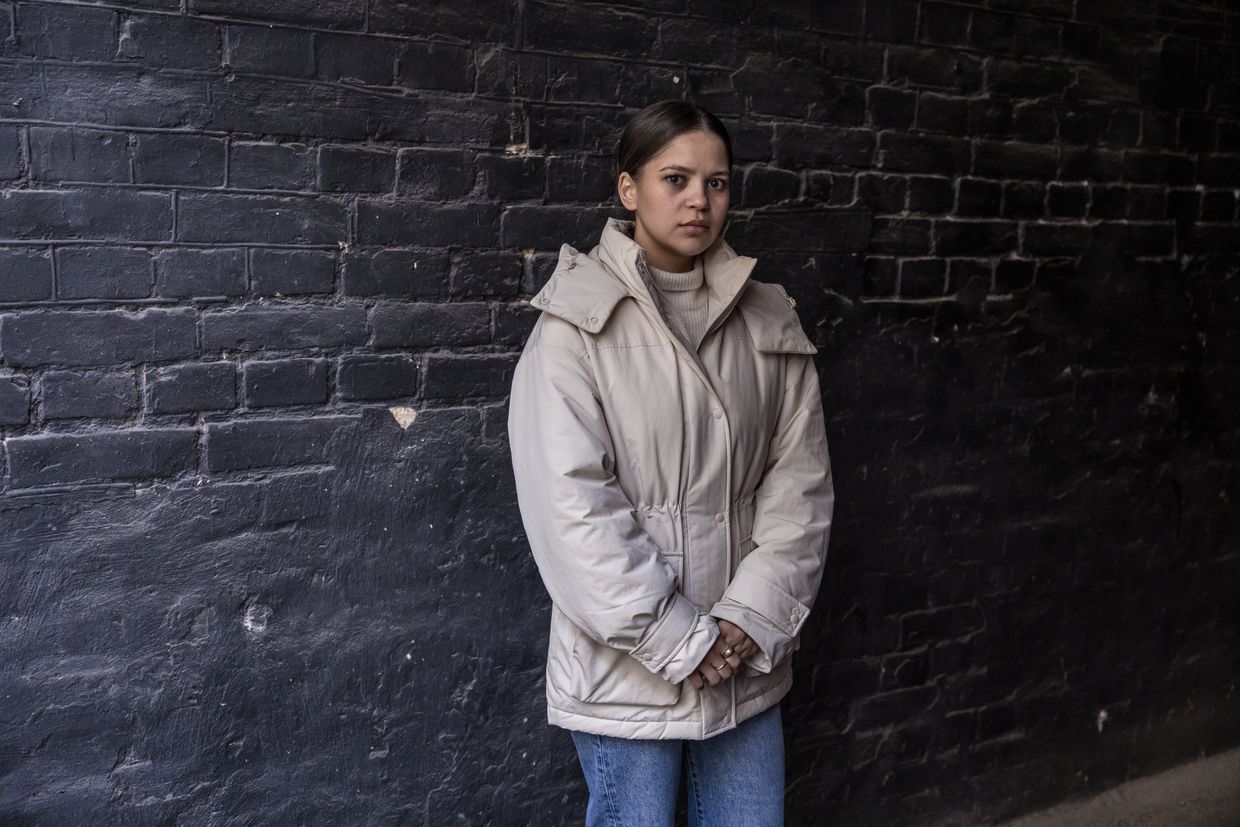
Joining a global movement, President Claudia Sheinbaum signed a decree requiring the removal of a range of material for people under 18 and held out the prospect of tougher measures.
Joining a global movement, President Claudia Sheinbaum signed a decree requiring the removal of a range of material for people under 18 and held out the prospect of tougher measures.
With a narrow presidential election looming, President Luiz Inácio Lula da Silva and his allies claim Meta is trying to give his right-wing rival an advantage.
With a narrow presidential election looming, President Luiz Inácio Lula da Silva and his allies claim Meta is trying to give his right-wing rival an advantage.
The government appointed an overseer to the last big news channel critical of President Recep Tayyip Erdogan. The authorities have now replaced the leadership at five major news outlets.
The government appointed an overseer to the last big news channel critical of President Recep Tayyip Erdogan. The authorities have now replaced the leadership at five major news outlets.
The Hokkaido Shimbun newspaper headquarters in Sapporo, Japan on Wednesday. A journalist from the newspaper was arrested in Russia and accused of spying.
Some of those detained accused security forces of beating them during an intense crackdown on demonstrations in India’s capital over the weekend. Police have said they followed the law.
Some of those detained accused security forces of beating them during an intense crackdown on demonstrations in India’s capital over the weekend. Police have said they followed the law.
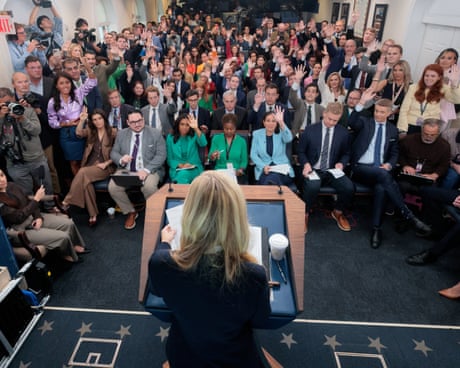
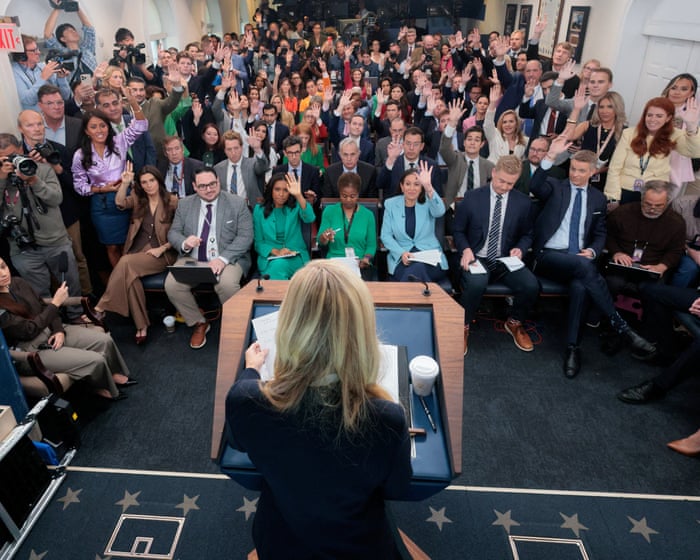
District court judge Timothy Kelly was ruling after Trump administration blocked access to three outlets last monthA federal judge ordered the White House on Tuesday to continue allowing journalists from CNN, MS Now and Politico to access the building as the media coalition’s lawsuit against the Trump administration plays out.Timothy Kelly, a district court judge, had on 24 September granted a 14-day reprieve for the news organizations, which six days earlier had been banned by the president in
District court judge Timothy Kelly was ruling after Trump administration blocked access to three outlets last month
A federal judge ordered the White House on Tuesday to continue allowing journalists from CNN, MS Now and Politico to access the building as the media coalition’s lawsuit against the Trump administration plays out.
Timothy Kelly, a district court judge, had on 24 September granted a 14-day reprieve for the news organizations, which six days earlier had been banned by the president in an extraordinary move from entering the White House grounds “as a result of their constant ‘reporting’ FAKE NEWS”.
Former QB fought with 69-year-old last OctoberFox Sports parted ways with Sanchez over incidentSanchez was charged over Indianapolis confrontation
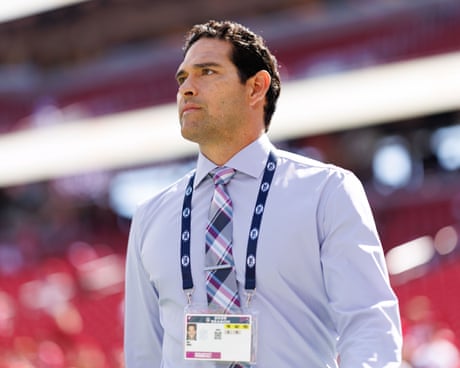
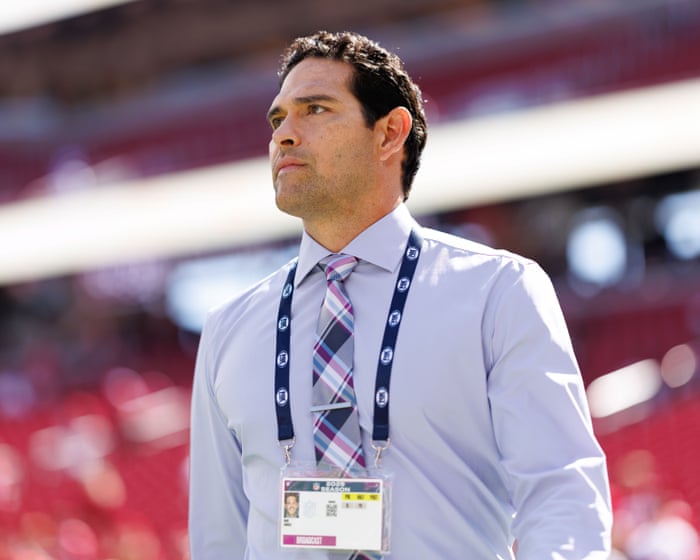
Former NFL quarterback and Fox Sports analyst Mark Sanchez has reached an agreement in principle with the truck driver who stabbed him during an altercation last October, according to the Athletic.Sanchez was stabbed and pepper sprayed by Perry Tole, who was 69 at the time, during the incident in Indianapolis, where the former New York Jets star was
Sanchez was charged over Indianapolis confrontation
Former NFL quarterback and Fox Sports analyst Mark Sanchez has reached an agreement in principle with the truck driver who stabbed him during an altercation last October, according to the Athletic.
Sanchez was stabbed and pepper sprayed by Perry Tole, who was 69 at the time, during the incident in Indianapolis, where the former New York Jets star was due to cover an NFL game between the Colts and Las Vegas Raiders. Prosecutors said Tole used pepper spray and a knife to defend himself after Sanchez attempted to enter his truck during an argument over a parking spot.
The main security service said it had detained a reporter for the Hokkaido Shimbun newspaper in Russia’s far east, where he had been reporting on military recruitment.
The main security service said it had detained a reporter for the Hokkaido Shimbun newspaper in Russia’s far east, where he had been reporting on military recruitment.
À compter du 20 octobre, les Canadiens pourront s’abonner directement à CNN sans avoir à passer par un câblodistributeur. La chaîne américaine d’information lancera son service numérique All Access au Canada et au Royaume-Uni, une première expansion internationale pour cette offre déjà disponible aux États-Unis. Pour 7,99 dollars canadiens par mois, les abonnés auront accès […]
À compter du 20 octobre, les Canadiens pourront s’abonner directement à CNN sans avoir à passer par un câblodistributeur. La chaîne américaine d’information lancera son service numérique All Access au Canada et au Royaume-Uni, une première expansion internationale pour cette offre déjà disponible aux États-Unis. Pour 7,99 dollars canadiens par mois, les abonnés auront accès […]
Amid worries about children’s relationship to tech, the solution is often spending more time talking openly with each otherWe have become obsessed with the idea that screens are destroying human connection.The evidence seems to be everywhere. Each week headlines warn of teenagers addicted to phones, a loneliness epidemic and the dangers of AI. The release of The Social Reckoning leads us to ask, “How bad were those guys at Meta?” and then ultimately wonder, “How bad am I if I still use Instagram
Amid worries about children’s relationship to tech, the solution is often spending more time talking openly with each other
We have become obsessed with the idea that screens are destroying human connection.
The evidence seems to be everywhere. Each week headlines warn of teenagers addicted to phones, a lonelinessepidemic and the dangersof AI. The release of The Social Reckoning leads us to ask, “How bad were those guys at Meta?” and then ultimately wonder, “How bad am I if I still use Instagram?” In our day-to-day, we observe workers eating lunch alone while scrolling and friends choosing online games over offline gatherings.
Quite a few parents aren’t convinced social media and AI are safe, and have been adapting accordinglyWhen it comes to their kids, many parents don’t trust tech companies any more.Social media companies have spent the better part of the last decade arguing that their platforms are safe for teens, but quite a few parents aren’t convinced. They, along with a growing number of regulators, have increasingly accused companies like Meta of designing products that are addictive to younger users. Continu
Quite a few parents aren’t convinced social media and AI are safe, and have been adapting accordingly
When it comes to their kids, many parents don’t trust tech companies any more.
Social media companies have spent the better part of the last decade arguing that their platforms are safe for teens, but quite a few parents aren’t convinced. They, along with a growing number of regulators, have increasingly accused companies like Meta of designing products that are addictive to younger users.
Investigation launched after five broadcasters last month ceased presidential coverage after CNN, MS Now and Politico were barred from White HouseThe US Department of Justice is investigating whether the decision of the White House television press pool to halt coverage of the US president, Donald Trump, last month violated antitrust law, an agency spokesperson said Saturday.A spokesperson for the department said group boycotts among business competitors might violate US law. “The Antitrust Divi
Investigation launched after five broadcasters last month ceased presidential coverage after CNN, MS Now and Politico were barred from White House
The US Department of Justice is investigating whether the decision of the White House television press pool to halt coverage of the US president, Donald Trump, last month violated antitrust law, an agency spokesperson said Saturday.
A spokesperson for the department said group boycotts among business competitors might violate US law. “The Antitrust Division is simply investigating to determine whether these news organizations have violated the antitrust laws,” they said.
Ms. Zacharia is a conservative commentator who is also an adviser to the company that runs President Trump’s social media site, Truth Social. She succeeds Karoline Leavitt.
Ms. Zacharia is a conservative commentator who is also an adviser to the company that runs President Trump’s social media site, Truth Social. She succeeds Karoline Leavitt.
Skits and parodies making fun of the trillion-dollar industry have taken over social media, racking up millions of viewsJohnny Hilbrant Partridge kept getting stuck next to the same kind of finance guy at weddings – the one bragging about his family’s full-time nanny and lavish vacations while name-dropping elite club memberships and private schools.To Partridge, a former fitness instructor, their shameless knack for self-promotion felt ripe for comedy. Using a filter that puts an exaggerated sn
Skits and parodies making fun of the trillion-dollar industry have taken over social media, racking up millions of views
Johnny Hilbrant Partridge kept getting stuck next to the same kind of finance guy at weddings – the one bragging about his family’s full-time nanny and lavish vacations whilename-dropping elite club memberships and private schools.
To Partridge, a former fitness instructor, their shameless knack for self-promotion felt ripe for comedy. Using a filter that puts an exaggerated sneer on his face, Partridge donned a puffer vest and created “The PE Guy”, a caricature of the men who work in the private equity industry.
A plan to house 1,250 asylum seekers on the outskirts of Piddington prompted a symbolic independence vote, highlighting a growing dilemma for the government.
A plan to house 1,250 asylum seekers on the outskirts of Piddington prompted a symbolic independence vote, highlighting a growing dilemma for the government.
Local residents unveiled a “Principality of Piddington” sign in the village of Piddington, Oxfordshire, England, after they voted to become independent in a symbolic “referendum.”
Lawyer for CNN, MS Now and Politico says Trump admitted he banned networks from White House over their coverageDonald Trump continues to be the strongest witness for the media companies arguing that they were unfairly barred from the White House at his direction, a lawyer representing CNN, MS Now and Politico told a federal judge on Thursday afternoon.The media coalition was in court asking the judge to extend the temporary restraining order (TRO) he issued on 24 September requiring the White Ho
Lawyer for CNN, MS Now and Politico says Trump admitted he banned networks from White House over their coverage
Donald Trump continues to be the strongest witness for the media companies arguing that they were unfairly barred from the White House at his direction, a lawyer representing CNN, MS Now and Politico told a federal judge on Thursday afternoon.
The media coalition was in court asking the judge to extend the temporary restraining order (TRO) he issued on 24 September requiring the White House to lift the ban for 14 days. That temporary reprieve was scheduled to expire on Thursday, but district court judge Timothy Kelly, a Trump appointee, said he would extend it until Tuesday and that he would probably rule on a motion for a preliminary injunction by that day. That means the White House will be forced to allow journalists from CNN, MS Now and Politico to continue accessing the building until at least Tuesday.
Ads promoting the president have cost more than $12m and his Super Pac has refused to reimburse taxpayersSign up to The Stakes 2026: your weekly guide to the US midtermsThe Democratic National Committee sued the Trump administration in federal court on Wednesday, asking a judge in Washington DC to stop the president from using taxpayer funds to air a series of ads promoting himself, arguing that the ads are illegal government-sponsored propaganda.The ads promoting Donald Trump, including one rec
The Democratic National Committee sued the Trump administration in federal court on Wednesday, asking a judge in Washington DC to stop the president from using taxpayer funds to air a series of ads promoting himself, arguing that the ads are illegal government-sponsored propaganda.
The ads promoting Donald Trump, including one recycled from his 2024 presidential campaign, have cost taxpayers more than $12m so far, according to the media tracking firm AdImpact.
The professor at Haverford College in Pennsylvania was charged with cyberstalking in connection with what federal prosecutors say was a series of threatening messages to a co-worker.
The professor at Haverford College in Pennsylvania was charged with cyberstalking in connection with what federal prosecutors say was a series of threatening messages to a co-worker.
The U.S. police say a 30-year-old offered the killer advice and cash for supplies at least six months before the rampage in British Columbia that left eight dead.
The U.S. police say a 30-year-old offered the killer advice and cash for supplies at least six months before the rampage in British Columbia that left eight dead.
Lawyers tell judge ABC being unfairly targeted as US regulator seeks review of network’s local TV station licensesLawyers for Disney accused the Trump administration of “blatant violations of the US constitution” and censorship on Tuesday in the first court hearing over the Federal Communications Commission’s early review of the media giant’s eight local television station licenses.District judge Loren AliKhan seemed unswayed by government arguments that the order to force Disney’s ABC to apply
Lawyers tell judge ABC being unfairly targeted as US regulator seeks review of network’s local TV station licenses
Lawyers for Disney accused the Trump administration of “blatant violations of the US constitution” and censorship on Tuesday in the first court hearing over the Federal Communications Commission’s early review of the media giant’s eight local television station licenses.
District judge Loren AliKhan seemed unswayed by government arguments that the order to force Disney’s ABC to apply years early to renew local television station licenses was tied to an investigation into parent company Disney’s hiring practices.
Three African countries have started Tafouk TV, a Russia-partnered broadcast channel, after throwing out Western journalists and cracking down on local media.
Three African countries have started Tafouk TV, a Russia-partnered broadcast channel, after throwing out Western journalists and cracking down on local media.
At a news conference in Bamako, Mali, in May. Military juntas have taken over Mali, Burkina Faso and Niger in recent years, cracking down on journalists and struggling to stop extremist groups like Al Qaeda.
Youngest press secretary in White House history left earlier this year after the birth of her second childKaroline Leavitt, who stepped down as White House press secretary in August, is joining her former boss’s favorite network, Fox News, as an on-air contributor, the channel announced on Monday.Considering that two of her predecessors from Donald Trump’s first administration, Sarah Huckabee Sanders and Kayleigh McEnany, had also joined Fox after leaving office, Leavitt was seen as a logical fi
Youngest press secretary in White House history left earlier this year after the birth of her second child
Karoline Leavitt, who stepped down as White House press secretary in August, is joining her former boss’s favorite network, Fox News, as an on-air contributor, the channel announced on Monday.
Considering that two of her predecessors from Donald Trump’s first administration, Sarah Huckabee Sanders and Kayleigh McEnany, had also joined Fox after leaving office, Leavitt was seen as a logical fit for Fox, on which she will begin providing commentary on 1 November.
The growing use of walk-and-talk social videos can be traced to Zohran Mamdani’s successful campaign for mayor of New York City. But not all candidates are naturals on camera.
The growing use of walk-and-talk social videos can be traced to Zohran Mamdani’s successful campaign for mayor of New York City. But not all candidates are naturals on camera.
Beni Rae Harmony, 24, has been ‘a trusted voice for the Maga movement’ as a correspondent, White House saysThe White House has defended a newly hired press aide who posed for a holiday photograph in 2021 wearing a “Fuck Joe Biden” T-shirt and holding a rifle.Beni Rae Harmony, the new assistant White House press secretary, announced on Friday that she was going to work for Donald Trump just days after covering him as a correspondent for Real America’s Voice, a partisan rightwing outlet originally
Beni Rae Harmony, 24, has been ‘a trusted voice for the Maga movement’ as a correspondent, White House says
The White House has defended a newly hired press aide who posed for a holiday photograph in 2021 wearing a “Fuck Joe Biden” T-shirt and holding a rifle.
Beni Rae Harmony, the new assistant White House press secretary, announced on Friday that she was going to work for Donald Trump just days after covering him as a correspondent for Real America’s Voice, a partisan rightwing outlet originally created as a video podcast platform for the US president’s former adviser Steve Bannon.
The Israeli military published an investigation it said rebuts accusations that it intentionally targeted journalists. But it and a journalists group disagree over 78 people who are on the list.
The Israeli military published an investigation it said rebuts accusations that it intentionally targeted journalists. But it and a journalists group disagree over 78 people who are on the list.
The site, near a hospital in Gaza City, was hit by an Israeli strike that killed an Al Jazeera reporter and several of his colleagues in August last year.
The government claims that reporters from Matsaddash, a well-known news outlet that debunks false reports, spread disinformation for the banned Muslim Brotherhood.
The government claims that reporters from Matsaddash, a well-known news outlet that debunks false reports, spread disinformation for the banned Muslim Brotherhood.
Riot police officers clashing with protesters in Hong Kong in 2019. Tang Ho-wing covered a gathering that marked the anniversary of the storming of Prince Edward station by riot police.
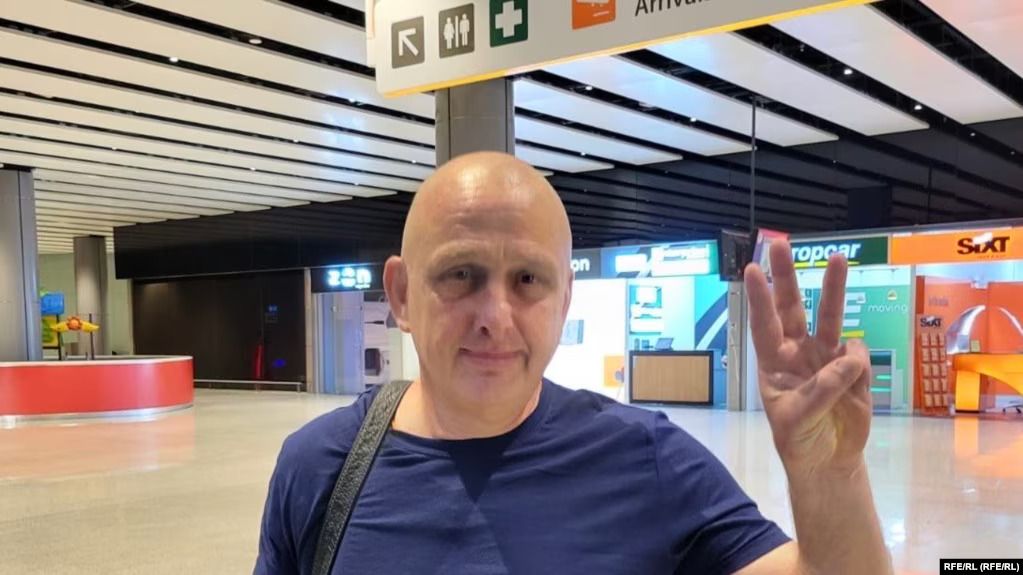
Kirill Nguyen, the founder of Gaga Daily, said he had been imprisoned in Belarus for participating in pro-democracy protests. He resurfaced this week after an absence of more than two years.
Kirill Nguyen, the founder of Gaga Daily, said he had been imprisoned in Belarus for participating in pro-democracy protests. He resurfaced this week after an absence of more than two years.
Asked about the Trump administration’s restrictions on journalists, Leo told reporters accompanying him on a flight to France that they were “all welcome.”
Asked about the Trump administration’s restrictions on journalists, Leo told reporters accompanying him on a flight to France that they were “all welcome.”
NewsGuard veut proposer une autre façon d’utiliser l’intelligence artificielle pour suivre l’actualité. L’entreprise américaine vient de lancer dans plusieurs pays européens NewsGuard AI, un robot conversationnel spécialisé dans l’information qui limite ses réponses à un corpus de sources préalablement évaluées par ses journalistes. Le service avait été lancé une première fois aux États-Unis en juin […]
NewsGuard veut proposer une autre façon d’utiliser l’intelligence artificielle pour suivre l’actualité. L’entreprise américaine vient de lancer dans plusieurs pays européens NewsGuard AI, un robot conversationnel spécialisé dans l’information qui limite ses réponses à un corpus de sources préalablement évaluées par ses journalistes. Le service avait été lancé une première fois aux États-Unis en juin […]
Savez-vous sur quelle plateforme la durée de vie du contenu est la plus longue? Nous allons répondre à toutes vos questions dans cet article!
— Permalien
Savez-vous sur quelle plateforme la durée de vie du contenu est la plus longue? Nous allons répondre à toutes vos questions dans cet article!
— Permalien
C’est danah boyd qui l’explique. « Lorsque les professionnels utilisaient le terme « médias sociaux » pour décrire les outils internet apparus ...
— Permalien
C’est danah boyd qui l’explique. « Lorsque les professionnels utilisaient le terme « médias sociaux » pour décrire les outils internet apparus ...
— Permalien
A funny thing happened on the day OpenAI announced it was shutting down Sora, its video generation app: Iran went all in on synthetic propaganda and very quickly started winning the global meme war. The timing is a coincidence, no doubt, but it is the kind of coincidence that illuminates.
Watching the explosive virality of the clips offers a powerful lesson in asymmetric media operations. They deploy cultural sophistication, an understanding of online communities and the enormously powerful
A funny thing happened on the day OpenAI announced it was shutting down Sora, its video generation app: Iran went all in on synthetic propaganda and very quickly started winning the global meme war. The timing is a coincidence, no doubt, but it is the kind of coincidence that illuminates.
Watching the explosive virality of the clips offers a powerful lesson in asymmetric media operations. They deploy cultural sophistication, an understanding of online communities and the enormously powerful creation tools made available by American tech companies, tools that give everyone on the internet access to a personal reality distortion field — drones, but for your feed.
On Wednesday, as Donald Trump was trying desperately to talk down the oil markets with hints of a deal, a stream of videos, carefully calibrated for U.S., regional and third country audiences rolled out on X via embassy accounts, Russia Today, and disaffected Maga influencers. The clips, by broad social media consensus, are good. Some lean heavily on the extremely online grammar of the U.S. right. Some remix Hollywood characters and likenesses in exactly the way that OpenAI’s now nixed billion-dollar deal with Disney was supposed to sanction. Others lean more heavily into Islamic iconography, featuring Donald Trump and Benjamin Netanyahu as worshippers of Baal, the foreign demon god who figures in both the Quran and the Hebrew Bible. The Lego movie is an especially rich resource, but so are TikTok formats, and the kind of idealized AI figures beloved of Trump administration meme makers. You can watch a few of them here.
Notably, faked war footage is far from the dominant format. All of these clips foreground and celebrate their own artificiality: some are sentimental, some triumphal, many are full of the gleeful adolescent wit of gamers on discord forums.
Researchers have long been warning that generative tools will undercut the authority of visual evidence, compounding and accelerating the damage created by slower, cruder forms of fakery: photoshop, selective editing, even gaming clips passed off as combat footage. Of course, we are already there, and have been for a while. Russia has been the paramount master of this game, in Ukraine and in its ongoing influence operations around the world. But others have learned quickly. Last year, when India and Pakistan were engaged in a brief aerial battle, social media bullshit overwhelmed and compromised traditional coverage. More recently, Israel’s obliteration of Gaza was accompanied by a sustained and comprehensive blizzard of visually compelling misinformation, propaganda, and official lies.
That continues. On March 28, Israel killed three journalists in a targeted strike in Southern Lebanon, claiming without evidence that one of them, Ali Shoaib, was a member of Hezbollah’s Radwan forces. They later distributed a photograph of him in military fatigues to reinforce the point, but explained to Fox news that in fact, they’d had to photoshop the uniform in because no such picture existed.
Meanwhile, in the Trump administration’s domestic war on immigrants and political opponents, we’ve seen a complete resetting of norms around the tone of official communication and any expectation that it is rooted in fact. Nowhere was that more evident than in the altered footage posted by the White House of the arrest of the prominent Minneapolis activist Nekima Levy Armstrong in January. In the video, shared by the official White House handle, a handcuffed Levy Armstrong is sobbing, her skin visibly darkened. In fact, she had faced arrest calmly.
Questioned by reporters about this blatant falsification, deputy White House communications director Kaelan Dorr responded: "Enforcement of the law will continue. The memes will continue.” Collapsing the distinction between a meme and the factual record with the aid of AI is the final step in this administration's insistence that its preferred narrative simply is reality.
The problem for the White House and its allies is that their choices in tech policy, official communication, and press freedom level the playing field for information war in ways that Tehran’s media strategists understand and they, for all their immersion in online worlds, do not.
Iranian propagandists know that the currency of visual information online has already been completely debased. They’ve dealt with it plenty, and no doubt practiced it themselves in regional battles for narrative dominance. Their insight is that as cheap and easy as it is to create and distribute fakes, returns on the effort of mobilizing what disinformation researchers call “coordinated inauthentic action” are diminishing. They still do it, but it isn’t where the action is.
Sam Altman, Elon Musk and Mark Zuckerberg have, in a very practical sense, wrought this moment in concert with Peter Thiel, Alex Karp, JD Vance and Donald Trump. At their urging, the U.S. has surrendered unrivaled dominance in scarce, expensive information and cultural assets in exchange for a political economy of media that widely distributes cheap, abundant ones.
Tech leaders and conservative politicians have worked consistently for a decade to deprecate the trustworthiness of American journalism and constrain its liberties. They have smeared its practitioners as “enemies of the people”; they have captured the commanding heights of the broadcast and culture industries through crony deals, and they have launched an assault on both press freedom and standards, two assets that once made American news outlets the envy of the world. Needless to say, the economic collapse of traditional media companies fostered by Google’s and Meta’s advertising duopoly only served to deepen the damage. Jeff Bezos’s Washington Post shuttered its Middle East bureaus just days before the war began.
Meanwhile, lying from agency podiums and the Oval Office, makes Karoline Leavitt barely distinguishable from Baghdad Bob, Iraq’s minister of information in 2003 whose surreal, truth-dodging press conferences during the U.S.-led invasion made him a global laughingstock. And the DOGEing of both the nominally independent Voice of America, as well as the state department’s Global Engagement Center leaves the administration with neither broadcast nor digital counter-propaganda assets.
When no one can be trusted with the actual truth, we are left with the AI equivalent of 19th-century editorial cartoons, produced at industrial scale and distributed globally. America has little advantage in that war, particularly when it is at a moral, political and legal nadir.
If anything, Iran, which combines repression with an enormously rich literary culture, film scene and advertising market brings serious capabilities to the fight.
Of course, the ebbing of information power was already under way during the first Trump administration, and during Joe Biden’s term in ways that are indissociable from broader democratic decline. The “trust and safety” architecture adopted by big platform companies was designed — implicitly if not always visibly — to conserve information authority, and ensure that it functioned in broadly pro-democratic ways.
After the disastrous failures of the Rohingya genocide — which rights groups and UN investigators blamed Facebook for facilitating — and the fears surrounding the manipulation of the U.S. electoral environment in 2016, there was a clear threat to the commercial and political health of Twitter, Facebook and YouTube. Tech companies, governments, researchers and human rights experts devised rules and norms for content moderation grounded in existing standards, tools for detecting coordinated inauthentic behavior, and a framework for crisis response.
The community of practitioners and institutions that sprung up to combat the flesh-eating virus attacking the body politic were working with bandaids in the battlefield hospital even before Covid, a coordinated attack from the right, and the second Trump victory hit them, but they succeeded in imposing some limits. That project now lies in ruins.
The Stanford Information Laboratory has been shut down. Trust and Safety teams at Meta and X have been disbanded. The national security arm of the project, centered around the State Department is gone, and private funding for countering misinformation has largely dried up.
Where are the hyperscalers, the AI titans, whose tools are being so effectively deployed, in all of this?
The trust and safety people who do work at OpenAI are dutifully putting out reports every few months. They are detailing how they foiled efforts to use ChatGPT for a Chinese influence campaign aimed at Sanae Takaichi, the Japanese prime minister, and exposing a Russian content mill feeding African newspapers. “Pro-tip for governments,” wrote Head of National Security policy Sasha Baker on LinkedIn of the February report. “Please don’t use our products to spread lies online.”
Governments, in the world of Sam Altman’s “democratic AI” do not include that of the United States. OpenAI has not mentioned a single U.S. ally — let alone the administration itself — in these reports.
OpenAI has hired multiple ex-Clinton, Obama and Biden officials, and in their work a weird, attenuated piece of the old national security approach to information integrity lives on, alongside the project of selling products to the Pentagon. The company’s leaders clearly treat these issues as a complement to messaging around Western AI, or a picayune adjunct to the bigger questions of AI risk, which are handled way up in the organizational stratosphere, as they are at Anthropic.
Perhaps the larger lesson is that you can’t really shut down Sora, or put AI-generated video back in its box. If you choose to prosecute an illegal war of choice after surrendering the hard-won high ground of a robust, democratic information environment, high tech weaponry will not offset the deficit. On the contrary, you will have compounded the risk of both tactical failure and strategic geopolitical defeat. When that happens, and in some ways it already has, those who made this war, and their enablers in Silicon Valley, will have only themselves to blame.
[en]
Pour les personnes dont le cerveau reste coincé sur la chaîne catastrophe Crans-Montana (TDAH ou pas): il faut décrocher. Dans cette vidéo j’explique pourquoi et ce qui peut vous aider à y réussir, concrètement. Sorry elle est un peu longue…
Je reproduis ci-dessous ce que j’ai publié sur Facebook:
Il faut absolument (j’insiste) décrocher. Il y a un risque réel de se traumatiser via l’exposition aux contenus autour de cette histoire.
Donc: priorité absolue, faire autre chose.
Il faut absolument (j’insiste) décrocher. Il y a un risque réel de se traumatiser via l’exposition aux contenus autour de cette histoire.
Donc: priorité absolue, faire autre chose. Regarder des films ou des séries. Faire un puzzle ou du nettoyage. Trouver quelqu’un qui va nous traîner dehors pour prendre l’air.
Considérez cette consigne comme une nécessité médicale, vraiment.
Prenez soins de vous et ne vous exposez pas de manière non nécessaire à des images traumatisantes. Protégez-vous, et protégez les enfants et adolescent·es sous votre responsabilité.
Les algorithmes liés aux #Reels (Insta, Facebook, Tiktok) sont susceptibles de vous inonder très rapidement de scènes tragiques et de témoignages terribles et poignants. Les algorithmes sont terriblement efficaces et il y a un risque réel de se laisser prendre dans une spirale de visionnage de contenu potentiellement traumatique #doomscrolling.
Ces vidéos, via des phénomènes d’empathie et d’engagement émotionnel, risquent de provoquer chez vous de la détresse, de l’anxiété, ou même des symptômes qui peuvent s’apparenter à ce qu’on observe suite à l’exposition à des événements traumatisants. Ces risques ont été documentés dans des études scientifiques.
Suivant la situation, on peut aussi essayer d’appeler le 143 (la main tendue) mais le mieux est vraiment, si on n’est pas directement impacté de mettre le paquet (pardon) pour se prendre par la peau des fesses afin de mettre son cerveau sur autre chose. « Mécaniquement », même si on n’a pas envie, même si on est bouleversé, même si on veut comprendre, même si on ne sait pas quoi faire de ses émotions.
Un tuyau: « arrêter » n’est pas une bonne instruction, en fait, il faut vraiment remplacer l’activité non souhaitable par une activité plus souhaitable et incompatible, comme en comportement animal.
Quelle est votre « activité plus souhaitable », même sans être motivé•e? C’est ça la chose à faire, peu importe ce que c’est, juste là. Une série, un puzzle ou une promenade c’est très bien. Et on lâche le tel et l’ordi car sur les réseaux, impossible d’y échapper pour le moment.
Armenian authorities should "seriously" consider banning the broadcast of Russian television channels in Armenia, Armenian Parliament Speaker Alen Simonyan said on July 1, citing concerns over interference and deteriorating ties."We must very seriously discuss the suspension of the Russian television channel broadcast in the territory of Armenia," Simonyan told reporters, according to Armenpress. He criticized recent content aired by Russian state broadcasters, which the Armenian government has
Armenian authorities should "seriously" consider banning the broadcast of Russian television channels in Armenia, Armenian Parliament Speaker Alen Simonyan said on July 1, citing concerns over interference and deteriorating ties.
"We must very seriously discuss the suspension of the Russian television channel broadcast in the territory of Armenia," Simonyan told reporters, according to Armenpress. He criticized recent content aired by Russian state broadcasters, which the Armenian government has denounced as harmful to bilateral ties.
The remarks come as Armenia continues to pivot away from Moscow's sphere of influence and seeks to bolster ties with the West.
Simonyan suggested that individuals connected to Armenian-Russian oligarch Samvel Karapetyan may be financing efforts to meddle in Armenia's internal matters.
"If there are channels that allow themselves to interfere in Armenia’s domestic affairs, perhaps we ought to respond likewise, by at least banning their entry into the homes of our society," he said.
Tensions between Armenia and Russia have mounted since Moscow's failure to intervene during Azerbaijan's military operation in Nagorno-Karabakh in September 2023, which resulted in the mass displacement of ethnic Armenians.
In April, Armenian President Vahagn Khachaturyan signed a law initiating the country's formal accession process to the European Union.
Though symbolic, the legislation marks a significant political shift, embedding European integration into Armenian law. The bill, passed by parliament in March, was backed by 64 lawmakers and opposed by seven.
Armenian Prime Minister Nikol Pashinyan has said that EU membership would require a referendum, while the Kremlin warned that joining both the EU and the Russian-led Eurasian Economic Union (EAEU) is "simply impossible." The EAEU, established in 2015, includes Russia, Belarus, Kazakhstan, Armenia, and Kyrgyzstan.
Editor's note: The story was updated after the Sputnik news agency disclosed the names of those detained in Baku.Azerbaijani police detained two alleged agents of Russia's Federal Security Service (FSB) on June 30 following searches at the Baku office of the Russian state-controlled news agency Sputnik, the Azerbaijani news outlet Apa.az reported.Sputnik later elaborated that Igor Kartavykh, chief editor of Sputnik Azerbaijan, and Yevgeniy Belousov, managing editor, had been detained in Baku. Th
Editor's note: The story was updated after the Sputnik news agency disclosed the names of those detained in Baku.
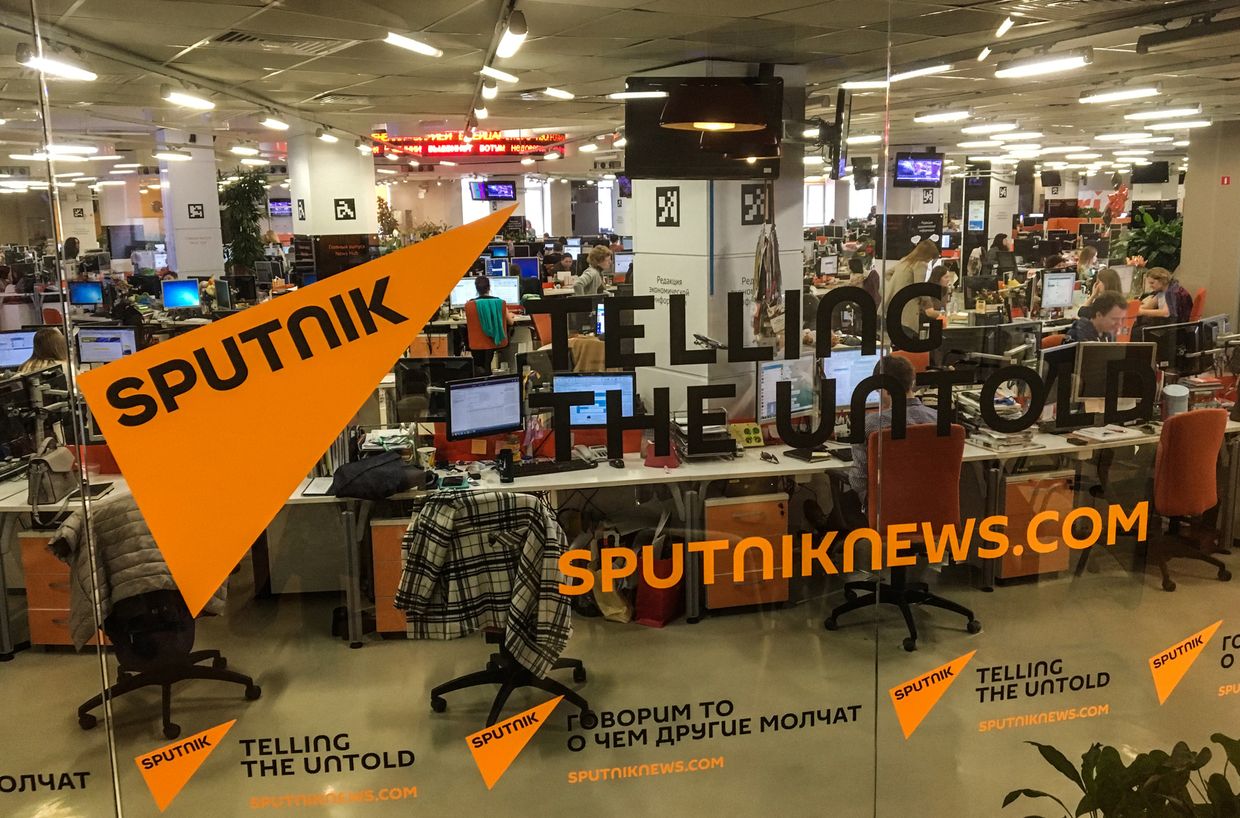
Azerbaijani police detained two alleged agents of Russia's Federal Security Service (FSB) on June 30 following searches at the Baku office of the Russian state-controlled news agency Sputnik, the Azerbaijani news outlet Apa.az reported.
Sputnik later elaborated that Igor Kartavykh, chief editor of Sputnik Azerbaijan, and Yevgeniy Belousov, managing editor, had been detained in Baku. The agency called the allegations that the detainees were FSB agents "absurd."
The move comes amid a major deterioration in Russian-Azerbaijani relations that followed the detention of over 50 Azerbaijanis as part of a murder investigation in Yekaterinburg on June 27. Two people died during the detentions, and three others were seriously injured.
The searches in the office of the Russian propaganda media outlet, which operates as a local branch of Russian state news agency Russia Today (RT), began on June 30.
The Russian propagandist Margarita Simonyan, editor-in-chief of Russia Today, said that representatives of the Russian embassy in Baku were on their way to Sputnik's office. Sputnik employees were offline and probably did not have access to phones, she added.
According to Simonyan, some of Sputnik's employees were Russian citizens.
The Azerbaijani government ordered in February that the activities of Sputnik's Azerbaijani office be suspended.
The authorities said that the move was intended to ensure parity in the activities of Azerbaijan's state media abroad and foreign journalists in the country. This meant that the number of Sputnik Azerbaijan journalists working in Baku was to be equal to the number of journalists of the Azerbaijani news agency Azertadzh in Russia.
As a result, Sputnik Azerbaijan had to reduce its staff from 40 people to one but refused to do so and continued to operate despite the Azerbaijani government's decision, according to Apa.az.
As the Russian-Azerbaijani relations deteriorate, Azerbaijan has cancelled all planned cultural events hosted alongside Russian state and private organizations, the country's Culture Ministry announced on June 29.
The announcement followed the deaths of two Azerbaijani citizens during police raids in the Russian city of Yekaterinburg.
Azerbaijan’s Foreign Ministry said on June 28 that Ziyaddin and Huseyn Safarov had died during a raid carried out by Russian authorities. Azerbaijan called the killings "ethnically motivated" and "unlawful" actions.
Baku called for the perpetrators to be brought to justice and said it expected Moscow to conduct a comprehensive investigation into the incident.
In the meantime, the Russian Foreign Ministry said that the detentions were carried out as part of an investigation into serious crimes. Foreign Ministry spokesperson Maria Zakharova claimed that these were cases related to murders committed in 2001, 2010, and 2011.
Ukrainian journalist Vladyslav Yesypenko was released on June 20 after more than four years of detention in Russian-occupied Crimea, Radio Free Europe/Radio Liberty reported.Yesypenko, a freelance contributor to Crimea.Realities, a regional project of RFE/RL's Ukrainian Service, reported on various issues in Crimea before being detained by Russia’s FSB in March 2021.He was accused of espionage and possession of explosives, charges he denied, and later sentenced to five years in prison by a Russi
Ukrainian journalist Vladyslav Yesypenko was released on June 20 after more than four years of detention in Russian-occupied Crimea, Radio Free Europe/Radio Liberty reported.
Yesypenko, a freelance contributor to Crimea.Realities, a regional project of RFE/RL's Ukrainian Service, reported on various issues in Crimea before being detained by Russia’s FSB in March 2021.
He was accused of espionage and possession of explosives, charges he denied, and later sentenced to five years in prison by a Russian-controlled court.
Yesypenko said he was tortured, including with electric shocks, to force a confession, and was denied access to independent lawyers for nearly a month after his arrest.
RFE/RL welcomed his release, thanking the U.S. and Ukrainian governments for their efforts. Yesypenko has since left Russian-occupied Crimea.
“Vlad was arbitrarily punished for a crime he didn’t commit… he paid too high a price for telling the truth about occupied Crimea,” said RFE/RL President Steven Kapus.
During his imprisonment, Yesypenko became a symbol of press freedom, receiving several prestigious awards, including the Free Media Award and PEN America’s Freedom to Write Award.
His case drew support from human rights groups, the National Union of Journalists of Ukraine, and international advocates for media freedom.
Russia invaded and unlawfully annexed Crimea in 2014, cracking down violently on any opposition to its regime.
Following Russia's full-scale invasion of Ukraine in February 2022, the Kremlin toughened its grip on dissent, passing laws in March 2022 that prohibit what authorities label as "false" criticism of Russia's war.
Since the “social media is bad for teens” myth will not die, I keep having intense conversations with colleagues, journalists, and friends over what the research says and what it doesn’t. (Alice Marwick et. al put together a great little primer in light of the legislative moves.) Along the way, I’ve also started to recognize how slipperiness between two terms creates confusion — and political openings — and so I wanted to call them out in case this is helpful for others thinking about these issu
Since the “social media is bad for teens” myth will not die, I keep having intense conversations with colleagues, journalists, and friends over what the research says and what it doesn’t. (Alice Marwick et. al put together a great little primer in light of the legislative moves.) Along the way, I’ve also started to recognize how slipperiness between two terms creates confusion — and political openings — and so I wanted to call them out in case this is helpful for others thinking about these issues.
In short, “Does social media harm teenagers?” is not the same question as “Can social media be risky for teenagers?”
The language of “harm” in this question is causal in nature. It is also legalistic. Lawyers look for “harms” to place blame on or otherwise regulate actants. By and large, in legal contexts, we talk about PersonA harming PersonB. As such, PersonA is to be held accountable. But when we get into product safety discussions, we also talk about how faulty design creates the conditions for people to be harmed due to intentional, malfeasant actions by the product designer. Making a product liability claim is much harder because it requires proving the link of harm and the intentionality to harm.
Risk is a different matter. Getting out of bed introduces risks into your life. Risk is something to identify and manage. Some environments introduce more potential risks and some actions reduce the risks. Risk management is a skill to develop. And while regulation can be used to reduce certain risks, it cannot eliminate them. And it can also backfire and create more risks. (This is the problem that María Angel and I have with techno-legal solutionism.)
Let’s unpack this a bit by shifting contexts and thinking about how we approach risks more generally.
Skiing is Risky.
Skiing is understood to be a risky sport. As we approach skiing season out here in the Rockies, I’m bracing myself for the uptick in crutches, knee wheelies, and people under 40 using the wheelchair services at the Denver airport. There is also a great deal of effort being put into trying to reduce the risk that someone will leave the slopes in this state. I’m fascinated by the care ski instructors take in trying to ensure that people who come to the mountains learn how to take care. There’s a whole program here for youngins designed to teach them a safety-first approach to skiing.
And there’s a whole host of messaging that will go out each day letting potential skiers know about the conditions. We will also get fear-mongering messages out here, with local news reporting on skiers doing stupid things and warnings of avalanches that too many folks will ignore. And there will be posters at the resorts telling people to not speed on the mountains because they might kill a kid. (I think these posters are more effective as scaring kids than convincing skiers to slow down.)
No matter what messaging goes out, people will still get hurt this season like they do every season. And so there are patrollers whose job it is to look for people in high-risk situations and medics who will be on hand to help people who have been injured. And there’s a whole apparatus structured to get them of the mountain and into long-term care.
Unless you’re off your rocker, you don’t just watch a few YouTube videos and throw yourself down a mountain on skis. People take care to learn how to manage the risks of skiing. Or they’re like me and take one look at that insanity and dream of a warm place by a fire or sitting in a hot tub instead of spending stupid amounts of money to introduce that kind of risk into their lives.
Crossing the Street is Risky.
The stark reality is that every social environment has risks. And one of the key parts of being socialized through childhood into adulthood is learning to assess and respond to risks.
Consider walking down the street in a busy city. As any NYC parent knows, there are countless near-heart attacks that occur when trying to teach a 2-year-old to stop at the corner of the sidewalk. But eventually they learn to stop. And eventually they learn to not bowl people over while riding their scooter down that sidewalk. And then the next stage begins — helping young people learn to look both ways before crossing the street, regardless of what is happening with the light, and convincing them to maintain constant awareness about their environment. And eventually that becomes so normal that you start to teach your child how to J-walk without getting a ticket. And eventually, the child turns into a teenager who wanders the city alone, J-walking with ease while blocking out all audio signals with their headphones. But then take that child — or an American adult — to a city like Hanoi and they’ll have to relearn how to cross a street because nothing one learns in NYC about crossing streets applies to Hanoi.
Is crossing the street risky? Of course. But there’s a lot we can do to make it less risky. Good urban design and functioning streetlights can really help, but they don’t make the risk disappear. And people can actually cross a street in Hanoi, even though I doubt anyone would praise the urban design of streets and there are no streetlights. While design can help, what really matters for navigating risk is rooted in socialization, education, and agency. Mixed into this is, of course, experience. The more that we experience crossing the street, the easier it gets, regardless of what you know about the rules. And still, the risk does not entirely disappear. People are still hit by cars while crossing the street every year.
The Risk of Social Media Can Be Reduced.
Can social media be risky for youth? Of course. So can school. So can friendship. So can the kitchen. So can navigating parents. Can social media be designed better? Absolutely. So can school. So can the kitchen. (So can parents?) Do we always know the best design interventions? No. Might those design interventions backfire? Yes.
Does that mean that we should give up trying to improve social media or other digital environments? Absolutely not. But we must also recognize that trying to cement design into law might backfire. And that, more generally, technologies’ risks cannot be managed by design alone.
Fixating on better urban design is pointless if we’re not doing the work to socialize and educate people into crossing digital streets responsibly. And when we age-gate and think that people can magically wake up on their 13th or 18th birthday and be suddenly able to navigate digital streets just because of how many cycles they took around the sun, we’re fools. Socialization and education are still essential, regardless of how old you are. (Psst to the old people: the September that never ended…)
In the United States, we have a bad habit of thinking that risks can be designed out of every system. I will never forget when I lived in Amsterdam in the 90s, and I remarked to a local about how odd I found it that there were no guardrails to prevent cars from falling into the canals when they were parking. His response was “you’re so American” which of course prompted me to say, “what does THAT mean?” He explained that, in the Netherlands, locals just learned not to drive their cars into the canals, but Americans expected there to be guardrails for everything so that they didn’t have to learn not to be stupid. He then noted out that every time he hears about a car ending up in the canal, it is always an American who put it there. Stupid Americans. (I took umbrage at this until, a few weeks later, I read a news story about a drunk American driving a rental into the canal.)
Better design is warranted, but it is not enough if the goal is risk reduction. Risk reduction requires socialization, education, and enough agency to build experience. Moreover, if we think that people will still get hurt, we should be creating digital patrols who are there to pick people up when they are hurt. (This is why I’ve always argued that “digital street outreach”would be very valuable.)
But What About Harms?
People certainly face risks when encountering any social environment, including social media. This then triggers the next question: Do some people experience harms through social media? Absolutely. But it’s important to acknowledge that most of these harms involve people using social media to harm others. It’s reasonable that they should be held accountable. It’s not reasonable to presume that you can design a system that allows people to interact in a manner where harms will never happen. As every school principal knows, you can’t solve bullying through the design of the physical building.
Returning to our earlier note on product liability, it is reasonable to ask if specific design choices of social media create the conditions for certain kinds of harms to be more likely — and for certain risks to be increased. Researchers have consistently found that bullying is more frequent and more egregious at school than on social media, even if it is more visible on the latter. This makes me wary of a product liability claim regarding social media and bullying. Moreover, it’s important to notice what schools have done in response to this problem. They’ve invested in social-emotional learning programs to strengthen resilience, improve bystander approaches, and build empathy. These interventions are making a huge difference, far more than building design. (If someone wants to tax social media companies to scale these interventions, have a field day.)
Of course, there are harms that I do think are product liability issues vis-a-vis social media. For example, I think that many privacy harms can be mitigated with a design approach that is privacy-by-default. I also think that regulations that mandate universal privacy protections would go a long way in helping people out. But the funny thing is that I don’t think that these harms are unique to children. These are harms that are experienced broadly. And I would argue that older folks tend to experience harms associated with privacy much more acutely.
But even if you think that children are especially vulnerable, I’d like to point out that while children might need a booster seat for the seatbelt to work, everyone would be better off if we put privacy seatbelts in place rather than just saying that kids can’t be in cars.
I have more complex feelings about the situations where we blame technology for societal harms. As I’ve argued for over a decade, the internet mirrors and magnifies the good, bad, and ugly. This includes bullying and harassment, but it also includes racism, xenophobia, sexism, homophobia, and anti-trans attitudes. I wish that these societal harms could be “fixed” by technology; that would be nice. But that is naive.
I get why parents don’t want to expose children to the uglier parts of the world. But if we want to raise children to be functioning adults, we also have to ensure that they are resilient. Besides, protecting children from the ills of society is a luxury that only a small segment of the population is able to enjoy. For example, in the US, Black parents rarely have the option of preventing their children from being exposed to racism. This is why white kids need to be educated to see and resist racism. Letting white kids live in “colorblind” la-la-land doesn’t enable racial justice. It lets racism fester and increases inequality.
As adults, we need to face the ugliness of society head on, with eyes wide open. And we need to intentionally help our children see that ugliness so that they can be agents of change. Social media does make this ugly side more visible, but avoiding social media doesn’t make it go away. Actively engaging young people as they are exposed to the world through dialogue allows them to be prepared to act. Turning on the spicket at a specific age does not.
I will admit that one thing that intrigues me is that many of those who propagate hate are especially interested in blocking children from technology for fear that allowing their children to be exposed to difference might make them more tolerant. (No, gender is not contagious, but developing a recognition that gender is socially and politically constructed — and fighting for a more just world — sure is.) There’s a long history of religious communities trying to isolate youth from kids of other faiths to maintain control.
There’s no doubt that media — including social media — exposes children to a much broader and more diverse world. Anyone who sees themselves as empowering their children to create a more just and equitable world should want to conscientiously help their children see and understand the complexity of the world we live in.
In the early days of social media, I was naive in thinking that just exposing people to people around the world to each other would fundamentally increase our collective tolerance. I had too much faith in people’s openness. I know now that this deterministic thinking was foolish. But I have also come to appreciate the importance of combining exposure with education and empathy.
Isolating people from difference doesn’t increase tolerance or appreciation. And it won’t help us solve the hardest problems in our world — starting with both inequity and ensuring our planet is livable for future generations. Instead, we need to help our children build the skills to live and work together.
Put another way, to raise children who can function in our complex world, we need to teach them how to cross the digital street safely. Skiing is optional.

 Connexion